

A 3-Year Randomized Trial of Lifestyle Intervention for Cardiovascular Risk Reduction in the Primary Care Setting: The Swedish Björknäs Study
Open accessThe DOI matches its Crossref record; 56 of the 56 references it cites were found in a registry or an index.
Abstract
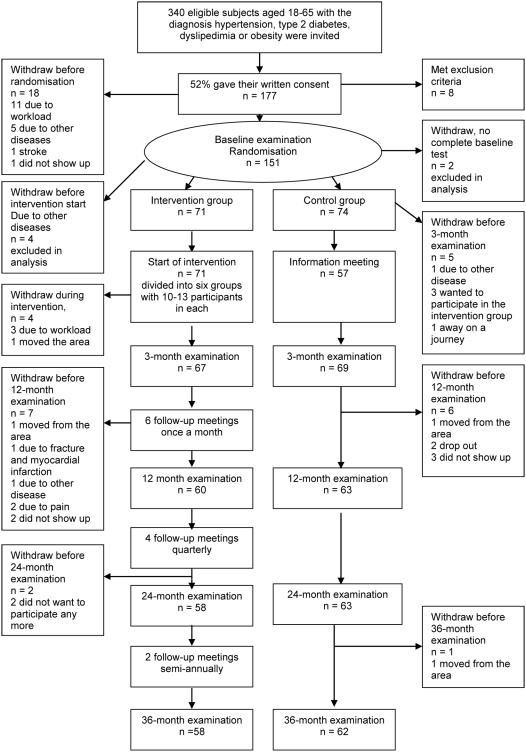
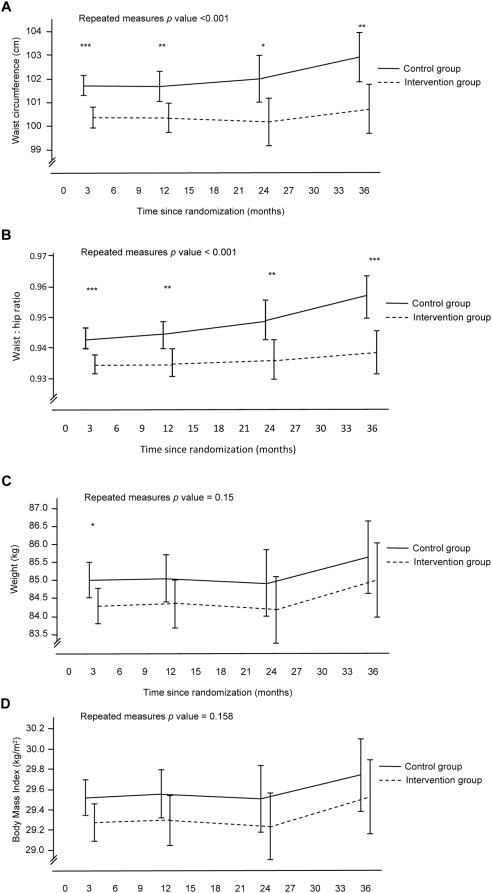
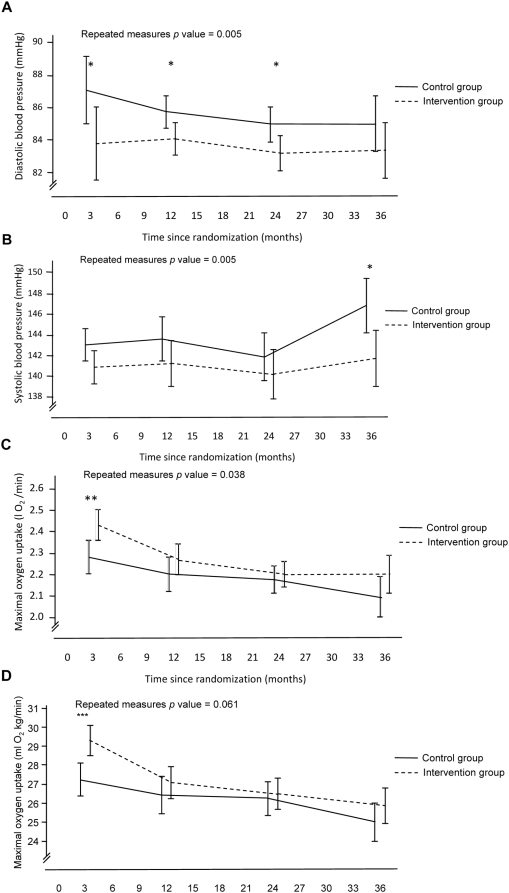
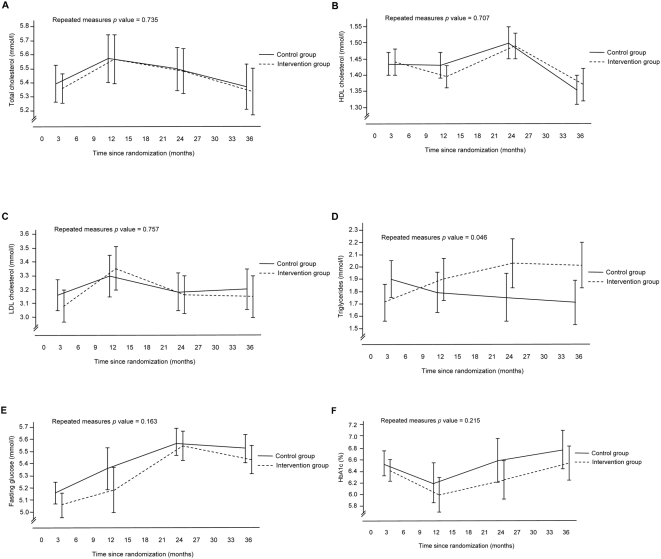
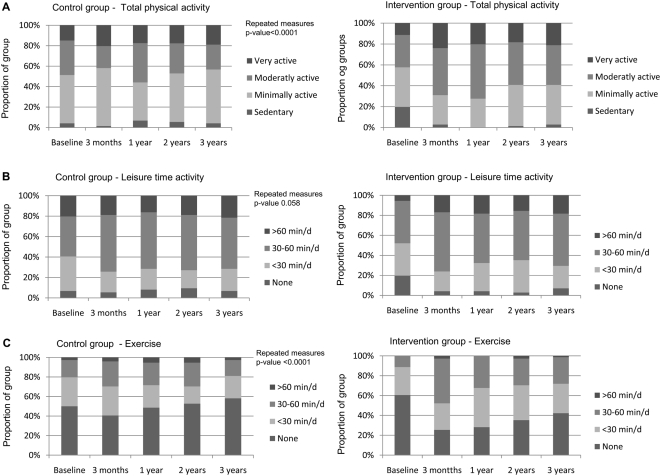
BACKGROUND: Successfully transferring the findings of expensive and tightly controlled programmes of intensive lifestyle modification to the primary care setting is necessary if such knowledge is to be of clinical utility. The objective of this study was to test whether intensive lifestyle modification, shown previously in tightly-controlled clinical trials to be efficacious for diabetes risk-reduction among high-risk individuals, can reduce cardiovascular risk factor levels in the primary care setting. METHODOLOGY / PRINCIPAL FINDINGS: The Swedish Björknäs study was a randomized controlled trial conducted from 2003 to 2006 with follow-up on cardiovascular risk factors at 3, 12, 24 and 36 months. A total of 151 middle-aged men and women at moderate- to high-risk of cardiovascular disease from northern Sweden were randomly assigned to either an intensive lifestyle intervention (n = 75) or control (n = 76) group. The intervention was based broadly on the protocol of the Diabetes Prevention Program. The three-month intervention period was administered in the primary care setting and consisted of supervised exercise sessions and diet counselling, followed by regular group meetings during three years. The control group was given general advice about diet and exercise and received standard clinical care. Outcomes were changes in anthropometrics, aerobic fitness, self-reported physical activity, blood pressure, and metabolic traits. At 36 months post-randomisation, intensive lifestyle modification reduced waist circumference (-2.2 cm: p = 0.001), waist-hip ratio (-0.02: p<0.0001), systolic blood pressure (-4.9 mmHg: p = 0.036), and diastolic blood pressure (-1.6 mmHg: p = 0.005), and improved aerobic fitness (5%; p = 0.038). Changes in lipid or glucose values did not differ statistically between groups. At 36 months, self-reported time spent exercising and total physical activity had increased more in the intervention group than in the control group (p<0.001). CONCLUSION / SIGNIFICANCE: A program of intensive lifestyle modification undertaken in the primary health care setting can favourably influence cardiovascular risk-factor profiles in high-risk individuals. TRIAL REGISTRATION: ClinicalTrials.gov NCT00486941.
Overview
The claims and statistics of this paper haven’t been checked yet.
Free: it reads the open-access text and checks the first 5 claims that cite a source we can check. Create a free account to check every claim.
Integrity signals
Registry
Cites
Statistics
Figures
Verification
Claims the paper makes
The claims and statistics of this paper haven’t been checked yet.
Free: it reads the open-access text and checks the first 5 claims that cite a source we can check. Create a free account to check every claim.
Claims other papers make about this one
Each is checked against this paper’s own text: does it say what the citing paper says it does?
The source backs part of the claim, not all of it — or backs it for a different population, condition or comparison.
In the citing paper
“However, so far, randomized controlled trials evaluating the effectiveness of programs that target lifestyle behavior have shown mixed effects and, if effective, they have generally resulted in only small changes in target behaviors [11-15].”
From Successful behavior change in obesity interventions in adults: a systematic review of self-regulation mediators (2015) · cites this paper as [12]
Experimental — accuracy not yet measured
Self-check
Percentages, sums and reported differences re-computed from the paper’s own numbers.
The self-check needs the paper’s full text.
Citations
Cites
Reduction in the incidence of type 2 diabetes with lifestyle intervention or metformin
(2002) · New England Journal of Medicine · doi:10.1056/nejmoa012512 · Cited by 19,011
Psychophysical bases of perceived exertion
BORG, G. A. V. (1982) · Medicine & Science in Sports & Exercise · doi:10.1249/00005768-198205000-00012 · Cited by 16,580 · cited 1×
“To approximate optimal exercise intensity, the Borg scale of perceived exertion was used [32].”
MethodThe metabolic phenotype in obesity: Fat mass, body fat distribution, and adipose tissue function
Goossens, G. H. (2017) · Obesity Facts · doi:10.1159/000471488 · Cited by 8,481
Yusuf, S., Hawken, S., Ôunpuu, S., Bautista, L., Franzosi, M. G., Commerford, P., Lang, C. C., Rumboldt, Z., Onen, C. L., Lisheng, L., et al. (2005) · The Lancet · doi:10.1016/s0140-6736(05)67663-5 · Cited by 2,903
Colberg, S. R., Sigal, R. J., Fernhall, B., Regensteiner, J. G., Blissmer, B. J., Rubin, R. R., Chasan-Taber, L., Albright, A. L., & Braun, B. (2010) · Diabetes Care · doi:10.2337/dc10-9990 · Cited by 1,955
Boulé, N. G., Haddad, E., Kenny, G. P., Wells, G. A., & Sigal, R. J. (2001) · JAMA · doi:10.1001/jama.286.10.1218 · Cited by 1,889
Lindström, J., Ilanne-Parikka, P., Peltonen, M., Aunola, S., Eriksson, J. G., Hemiö, K., Hämäläinen, H., Härkönen, P., Keinänen-Kiukaanniemi, S., Laakso, M., et al. (2006) · The Lancet · doi:10.1016/s0140-6736(06)69701-8 · Cited by 1,799
Esposito, K., Pontillo, A., Di Palo, C., Giugliano, G., Masella, M., Marfella, R., & Giugliano, D. (2003) · JAMA · doi:10.1001/jama.289.14.1799 · Cited by 1,511
Effect of weight loss with lifestyle intervention on risk of diabetes
Hamman, R. F., Wing, R. R., Edelstein, S. L., Lachin, J. M., Bray, G. A., Delahanty, L., Hoskin, M., Kriska, A. M., Mayer-Davis, E. J., Pi-Sunyer, X., et al. (2006) · Diabetes Care · doi:10.2337/dc06-0560 · Cited by 1,344
Exercise for overweight or obesity
Shaw, K. A., Gennat, H. C., O'Rourke, P., & Del Mar, C. (2006) · Cochrane Database of Systematic Reviews · doi:10.1002/14651858.cd003817.pub3 · Cited by 950
Cited by
Items 101–123 of 123
Trayectorias de vida e infarto agudo de miocardio: vivencias de varones de la ciudad de Bogotá
Universidad Nacional de Colombia. Bogotá, C., Melgarejo, L. M., & Fundación Universitaria de Ciencias de la Salud. Bogotá, C. (2016) · Salud UIS · doi:10.18273/revsal.v48n3-2016011 · Cited by 3
Panagiotopoulos, K. E., Panagiotopoulou, E. E., Katsaros, K., Noikokirakis, G., Mpouziou, M., Stamelou, A., & Toumanidis, S. T. (2016) · International Journal of Cardiology · doi:10.1016/j.ijcard.2016.07.261 · Cited by 1
Eriksson, K. M. (2010) · DiVA at Umeå University (Umeå University) · Cited by 14
Gene x lifestyle interactions in type 2 diabetes mellitus and related traits
Brito, E. C. (2010) · DiVA at Umeå University (Umeå University)
Salvador, E. P. (2012) · Digital Library of Theses and Dissertations (Universidade de São Paulo) · doi:10.11606/t.6.2012.tde-17012013-104018 · Cited by 1
Lifestyle-Modifikation bei hohem Blutdruck
Thonack, J., & Hoffmann, W. U. (2011) · Journal für Kardiologie (Krause & Pachernegg GmbH) · Cited by 6
Cardiovascular disease prevention after spinal cord injury : A new challenge
Wahman, K. (2010) · Figshare
Sipilä, R. (2012) · Helda - University of Helsinki Institutional Repository · Cited by 6
Fazla kilolu ve obez kadınlarda fiziksel aktivite programı girişimi
Bambal, Ö. Ö., Dündar, P. E., Er, G., & Bayturan, Ö. (2015) · Türkiye Halk Sağlığı Dergisi · doi:10.20518/thsd.77974 · Cited by 1
Hassan, A. D. A.-F., & Kulwicki, A. (2017) · Journal of Health, Medicine and Nursing
Østbye, T., Stroo, M., Stankevitz, K., Malhotra, R., & Brouwer, R. J. N. (2018) · Gestão e Sociedade · doi:10.21171/ges.v12i31.2319
Kaur, R. (2018) · FIU - Digital Commons (Florida International University) · doi:10.25148/etd.fidc006852
Schafer, G. (2013) · D-Scholarship@Pitt (University of Pittsburgh)
Dementia diagnostics in primary care : with a focus on cognitive testing
Kvitting, A. S. (2019) · Linköping University medical dissertations · doi:10.3384/diss.diva-160371
Spege, E., Ek, K., Söderberg, S., & Eliasson, M. (2021) · PLoS ONE · doi:10.1371/journal.pone.0256872
Self-citationKurslederkurset "Bra mat for bedre helse”
Smedshaug, G. B. (2010) · Norsk tidsskrift for ernæring · doi:10.18261/ntfe.8.2.4
Obesity Intervention in Sub-Saharan Africa: A systematic review protocolPreprint
Agyemang, K., & Anokye, N. (2023) · medRxiv · doi:10.1101/2023.07.18.23292826
“Nevertheless, there are mixed evidence on the effectiveness of 73 these interventions[7], [36]–[40] which remains a major challenge in the fight against obesity 74 especially in SSA.”
BackgroundHälsorelaterad livskvalitet hos hjärt-kärlsjuka individer
Göransson, E., & Grönqvist, E. U. (2012) · KTH Publication Database DiVA (KTH Royal Institute of Technology)
Västerbottens satsning på storskalig hjärt-kärlprevention
Weinehall, L. (2012) · Läkartidningen/Läkartidningen
Bergum, H., Sandven, I., & Klemsdal, T. O. (2021) · Figshare · doi:10.6084/m9.figshare.14429117
Metadata
- Authors
- Eriksson, M. K., Franks, P. W., & Eliasson, M.
- Affiliations
- Umeå University (SE)
- Sunderby sjukhus (SE)
- Corresponding author
- Eriksson, Margareta K.
- Venue
- PLoS ONE
- Publisher
- Public Library of Science (PLoS)
- Published
- 2009-04-14
- Volume
- 4
- Issue
- 4
- Pages
- e5195
- ISSN
- 1932-6203 (ISSN-L)
- PMC
- PMC2664964
- OpenAlex
- W2076060169
- Cited by
- 123
- References
- 56
- Citations by year
- 2023: 2 · 2022: 3 · 2021: 4 · 2020: 6 · 2019: 4 · 2018: 6 · 2017: 8 · 2016: 8 · 2015: 8 · 2014: 13 · 2013: 19 · 2012: 17
- FWCI
- 9.92
- Type
- journal article
- Language
- en
- Open access
- gold
- doi.org
- Locations
- PLoS ONE (publishedVersion, cc-by)
- PubMed Central (publishedVersion, cc-by)
- PubMed (publishedVersion)
- DiVA at Umeå University (Umeå University) (submittedVersion, other-oa)
- DOAJ (DOAJ: Directory of Open Access Journals) (submittedVersion, cc-by-sa)
- Figshare (submittedVersion, cc-by)
- Topics
- Health Sciences › Medicine › Endocrinology, Diabetes and Metabolism › Diabetes, Cardiovascular Risks, and Lipoproteins
- Health Sciences › Medicine › Public Health, Environmental and Occupational Health › Health Promotion and Cardiovascular Prevention
- Health Sciences › Medicine › Public Health, Environmental and Occupational Health › Physical Activity and Health
- Keywords
- intensive lifestyle intervention, cardiovascular risk reduction, primary care, supervised exercise, nutrition counseling, Diabetes Prevention Program, waist circumference, blood pressure, cardiorespiratory fitness, physical activity, high cardiovascular risk, middle-aged adults, anthropometry
- MeSH terms
- Adolescent, Adult, Aged, Anthropometry, Behavior, Cardiovascular Diseases, Diet, Female, Humans, Life Style, Male, Middle Aged, Motor Activity, Patient Compliance, Patient Education as Topic, Primary Health Care, Sweden, Exercise, Risk Reduction Behavior, Young Adult
About these checks
Registry, retraction, Cites and statistics results are computed, not judged, with one exception: a printed reference that no index lists is read once by a model before it counts as a citation error. Claims are extracted by a model and kept only when their quote appears verbatim in the text; each cited source is then checked, with a model’s help, for whether it says what the claim relies on. Those verdicts can be wrong — read the claim’s quote and the cited source before relying on one.
Statistics and arithmetic are recomputed, not judged.
Confidence bands are shown only for fields calibrated on our annotated test set. None is calibrated yet, so no band is shown.
What counts as a claim ›How we measure confidence ›How we check this ›
Are you an author, or do you see a problem with this page? Request a review
Data sources
Bibliographic data: Semantic Scholar, OpenAlex, Crossref.
Contains information from the Semantic Scholar Academic Graph Datasets, made available under the ODC Attribution License (ODC-BY 1.0).
Semantic Scholar’s data is described in: Kinney, R., et al. (2023). The Semantic Scholar Open Data Platform. arXiv:2301.10140.
