

The DOI matches its Crossref record; 90 of the 90 references it cites were found in a registry or an index.
BDNF Activates mTOR to Regulate GluR1 Expression Required for Memory Formation
Open accessAbstract
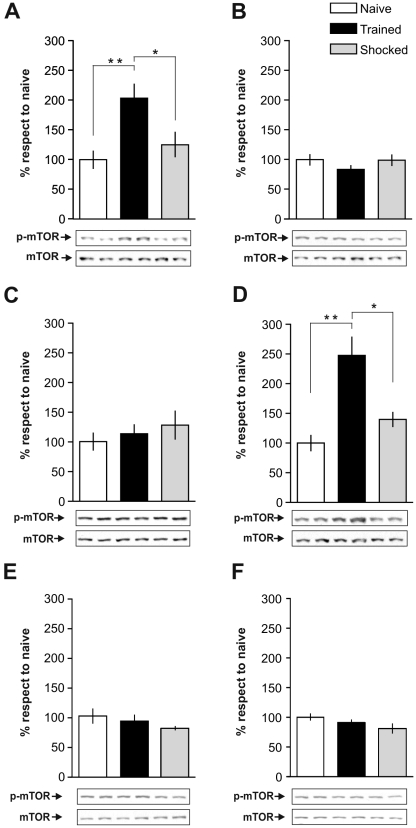
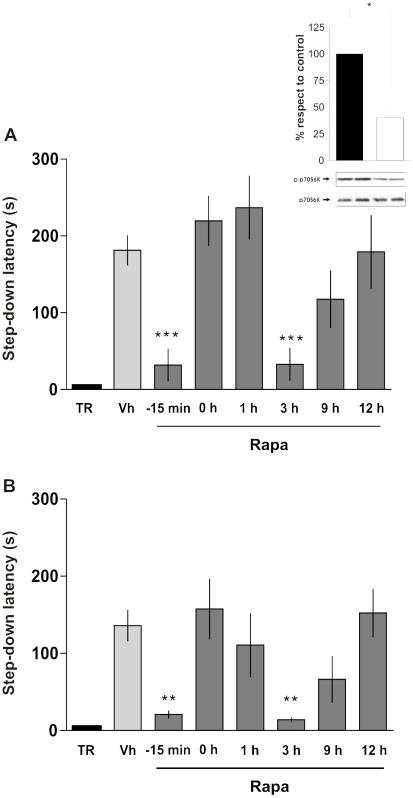
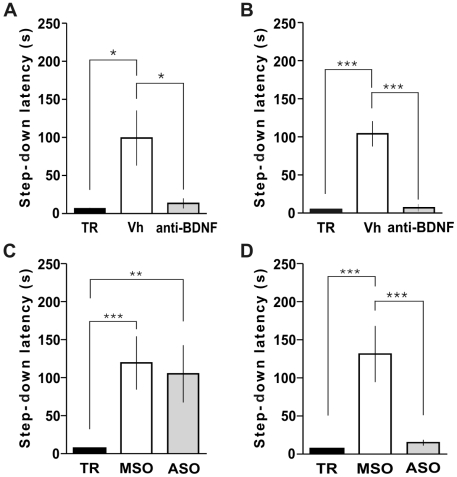
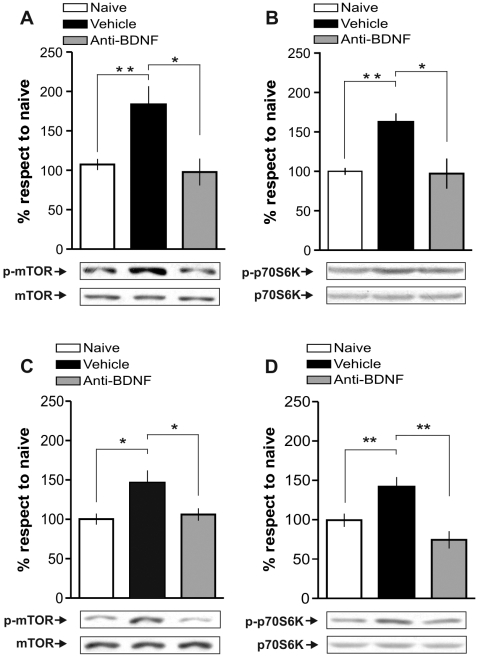
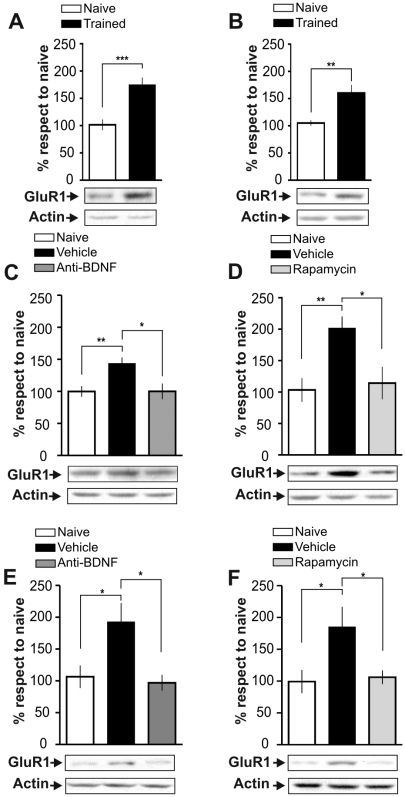
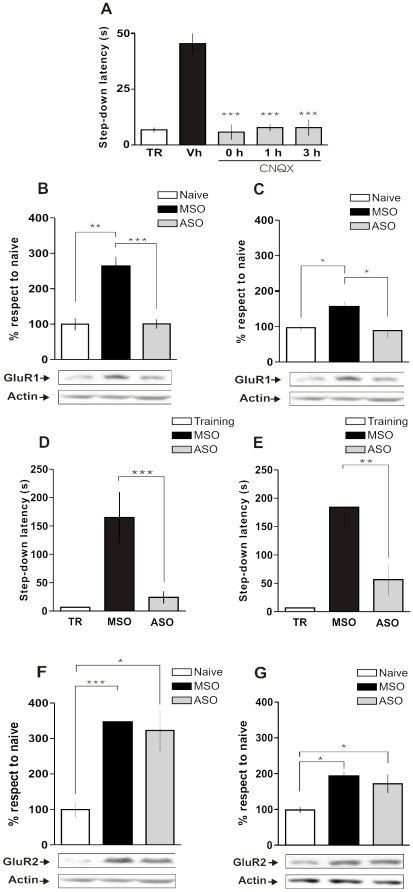
BACKGROUND: The mammalian target of Rapamycin (mTOR) kinase plays a key role in translational control of a subset of mRNAs through regulation of its initiation step. In neurons, mTOR is present at the synaptic region, where it modulates the activity-dependent expression of locally-translated proteins independently of mRNA synthesis. Indeed, mTOR is necessary for different forms of synaptic plasticity and long-term memory (LTM) formation. However, little is known about the time course of mTOR activation and the extracellular signals governing this process or the identity of the proteins whose translation is regulated by this kinase, during mnemonic processing. METHODOLOGY/PRINCIPAL FINDINGS: Here we show that consolidation of inhibitory avoidance (IA) LTM entails mTOR activation in the dorsal hippocampus at the moment of and 3 h after training and is associated with a rapid and rapamycin-sensitive increase in AMPA receptor GluR1 subunit expression, which was also blocked by intra-hippocampal delivery of GluR1 antisense oligonucleotides (ASO). In addition, we found that pre- or post-training administration of function-blocking anti-BDNF antibodies into dorsal CA1 hampered IA LTM retention, abolished the learning-induced biphasic activation of mTOR and its readout, p70S6K and blocked GluR1 expression, indicating that BDNF is an upstream factor controlling mTOR signaling during fear-memory consolidation. Interestingly, BDNF ASO hindered LTM retention only when given into dorsal CA1 1 h after but not 2 h before training, suggesting that BDNF controls the biphasic requirement of mTOR during LTM consolidation through different mechanisms: an early one involving BDNF already available at the moment of training, and a late one, happening around 3 h post-training that needs de novo synthesis of this neurotrophin. CONCLUSIONS/SIGNIFICANCE: IN CONCLUSION, OUR FINDINGS DEMONSTRATE THAT: 1) mTOR-mediated mRNA translation is required for memory consolidation during at least two restricted time windows; 2) this kinase acts downstream BDNF in the hippocampus and; 3) it controls the increase of synaptic GluR1 necessary for memory consolidation.
Overview
The claims and statistics of this paper haven’t been checked yet.
Run the check — free, no account needed. It reads the open-access text and checks the sources it cites.
Integrity signals
Registry
Cites
Statistics
Figures
Verification
Claims the paper makes
The claims and statistics of this paper haven’t been checked yet.
Run the check — free, no account needed. It reads the open-access text and checks the sources it cites.
Claims other papers make about this one
Each is checked against this paper’s own text: does it say what the citing paper says it does?
The cited source says what the claim attributes to it.
In the citing paper
“Previous work has shown that BDNF is a potent activator of mTOR signaling (Jourdi et al., 2009; Takei et al., 2004; Slipczuk et al., 2009), and mTOR is a key integrator for many signaling pathways (see Costa-Mattioli and Monteggia, 2013).”
From BDNF - a key transducer of antidepressant effects (2016) · cites this paper as Slipczuk et al., 2009
Self-check
Percentages, sums and reported differences re-computed from the paper’s own numbers.
The self-check needs the paper’s full text.
Citations
Cites
The rat brain in stereotaxic coordinates
Palkovits, M. (1983) · Neuropeptides · doi:10.1016/0143-4179(83)90049-5 · Cited by 28,959
The Rat Brain in Stereotaxic Coordinates
Paxinos, G., & Watson, C. (1983) · Elsevier eBooks · doi:10.1016/c2009-0-63235-9 · Cited by 28,585
Molecular Mechanisms of Depression: Perspectives on New Treatment Strategies
Lang, U. E., & Borgwardt, S. (2013) · Cellular Physiology and Biochemistry · doi:10.1159/000350094 · Cited by 8,526
AChE-stained horizontal sections of the rat brain in stereotaxic coordinates
Paxinos, G., WATSON, C. R. R., & Emson, P. C. (1980) · Journal of Neuroscience Methods · doi:10.1016/0165-0270(80)90021-7 · Cited by 4,501
Memory - A century of consolidation
McGaugh, J. L. (2000) · Science · doi:10.1126/science.287.5451.248 · Cited by 4,250
Upstream and downstream of mTOR
Hay, N., & Sonenberg, N. (2004) · Genes & Development · doi:10.1101/gad.1212704 · Cited by 4,181
da Luz, A. C. D. D. S., Dias, G. P., Bevilaqua, M. C. D. N., Cocks, G. D., Gardino, P. F., Thuret, S., & Nardi, A. E. (2013) · Neuropsychobiology · doi:10.1159/000353269 · Cited by 4,015
Regulation of Translation Initiation in Eukaryotes: Mechanisms and Biological Targets
Sonenberg, N., & Hinnebusch, A. G. (2009) · Cell · doi:10.1016/j.cell.2009.01.042 · Cited by 3,304
Kim, D., Sarbassov, D. D., Ali, S. M., King, J. E., Latek, R. R., Erdjument‐Bromage, H., Tempst, P., & Sabatini, D. M. (2002) · Cell · doi:10.1016/s0092-8674(02)00808-5 · Cited by 3,051
Targets for Cell Cycle Arrest by the Immunosuppressant Rapamycin in Yeast
Heitman, J., Movva, N. R., & Hall, M. N. (1991) · Science · doi:10.1126/science.1715094 · Cited by 2,010
Cited by
Sorted by citations
Items 201–246 of 246
Sleep, Synaptic Plasticity, and Memory
Golbert, D. C. F., Souza, A. C., Filho, D. A., & Ribeiro, S. T. G. (2017) · Elsevier eBooks · doi:10.1016/b978-0-12-809324-5.21118-8 · Cited by 5
Buhusi, M. C., Griffin, D., & Buhusi, C. V. (2022) · Schizophrenia Bulletin · doi:10.1093/schbul/sbac188 · Cited by 5
Grabrucker, S., & Grabrucker, A. M. (2017) · Elsevier eBooks · doi:10.1016/b978-0-12-804562-6.00009-9 · Cited by 4
Younger, D. S. (2017) · World Journal of Neuroscience · doi:10.4236/wjns.2017.73027 · Cited by 4
Vafaei, Z., Khodagholi, F., Nategh, M., Nikseresht, S., Hashemirad, S. R., Raise‐Abdullahi, P., Vafaei, A. A., & Motamedi, F. (2024) · Peptides · doi:10.1016/j.peptides.2024.171244 · Cited by 4
Almaguer‐Melian, W., Mercerón‐Martínez, D., Alberti‐Amador, E., Alacán‐Ricardo, L., de Bardet, J. C., Orama‐Rojo, N., Pina, A. B., Herrera-Estrada, I., & Bergado, J. A. (2023) · Synapse · doi:10.1002/syn.22282 · Cited by 3
Celebi-Birand, E. D., Karoglu-Eravsar, E. T., Doldur-Balli, F., & Adams, M. M. (2016) · Elsevier eBooks · doi:10.1016/b978-0-12-802733-2.00007-4 · Cited by 3
mTOR and the Regulation of Translational Capacity in Late Forms of Synaptic Plasticity
Tsokas, P., & Blitzer, R. D. (2014) · Springer eBooks · doi:10.1007/978-1-4939-1761-7_7 · Cited by 3
Kafshdouziamin, M., Poorebrahim, M., Najafi, S., Rahimi, H., Karimipoor, M., & Gheibi, N. (2016) · International Journal of Peptide Research and Therapeutics · doi:10.1007/s10989-015-9510-8 · Cited by 3
Translational Control Through the EIF4E Binding Proteins in the Brain
Aguilar‐Valles, A., Matta‐Camacho, E., & Sonenberg, N. (2018) · Oxford University Press eBooks · doi:10.1093/oxfordhb/9780190686307.013.5 · Cited by 3
Brain Pathways of Traumatic Memory: Evidence from an Animal Model of PTSD
Cohen, S., Matar, M. A., Zohar, J., & Cohen, H. (2017) · Springer eBooks · doi:10.1007/978-1-4939-7148-0_11 · Cited by 3
Rapamycin attenuates reconsolidation of a backwards-conditioned aversive stimuli in female mice
Trask, J., MacCallum, P. E., Rideout, H., Preisser, E. L., & Blundell, J. J. (2024) · Psychopharmacology · doi:10.1007/s00213-024-06544-6 · Cited by 2
Almaguer‐Melian, W., Mercerón‐Martínez, D., Alacán‐Ricardo, L., Pina, A. B., Hsieh, C., Bergado, J. A., & Sacktor, T. C. (2024) · Neuroscience · doi:10.1016/j.neuroscience.2025.01.065 · Cited by 2
mTOR Signaling in Cortical Network Development
Lin, T. V., & Bordey, A. (2014) · Elsevier eBooks · doi:10.1016/b978-0-12-415804-7.00015-0 · Cited by 1
BDNF Pretreatment Attenuates Morphine-Induced Learning and Memory Impairment in Rats
Babaei, P., Vahdati, S., & Tehrani, B. S. (2015) · Caspian Journal of Neurological Sciences · doi:10.18869/acadpub.cjns.1.1.12 · Cited by 2
Neurobiological Augmentation of Psychotherapy in Treatment Resistant Depression
Li, S. (2014) · Journal of Depression & Anxiety · doi:10.4172/2167-1044.s2-002 · Cited by 2
Zhang, Y., Smolen, P. D., Alberini, C. M., Baxter, D. A., & Byrne, J. H. (2022) · PLoS Computational Biology · doi:10.1371/journal.pcbi.1010239 · Cited by 2
Aicardi, G. (2012) · Rejuvenation Research · doi:10.1089/rej.2012.1375 · Cited by 1
RetractedMitochondrial Dysfunction and mTOR in Autism Spectrum Disorders
SELAMET, E., & Usta, M. B. (2023) · Psikiyatride Guncel Yaklasimlar - Current Approaches in Psychiatry · doi:10.18863/pgy.1205786 · Cited by 1
Özler, C., Özkan, E., Shomalizadeh, N., Kesibi, J., Sapancı, S., Akpunar, F., Uçar, E. A., & Özdemir, Y. (2025) · Experimental Brain Research · doi:10.1007/s00221-025-07085-w · Cited by 1
Multiple Stages of Memory Formation and Persistence
Medina, J. H., & Cammarota, M. (2017) · Elsevier eBooks · doi:10.1016/b978-0-12-809324-5.21099-7 · Cited by 1
Self-citationInsulin resistance, diabetes, and metabolic syndrome
Farooqui, A. A. (2020) · Elsevier eBooks · doi:10.1016/b978-0-12-819603-8.00002-x · Cited by 1
Younger, D. S. (2017) · Neurology & Neurotherapy Open Access Journal · doi:10.23880/nnoaj-16000117 · Cited by 1
Aicardi, G. (2013) · Rejuvenation Research · doi:10.1089/rej.2013.1448 · Cited by 1
Neurophysiological mechanisms of plasticity induced in adult brain
Popova, D. (2015) · Työväentutkimus Vuosikirja · Cited by 1
Boosting L-type Ca 2+ channel activity in tuberous sclerosis mitigates excess glutamate receptorsPreprint
Niere, F., Cacheaux, L. P., Egido‐Betancourt, H. X., Taylor, W. C., & Raab‐Graham, K. F. (2020) · bioRxiv (Cold Spring Harbor Laboratory) · doi:10.1101/2020.08.26.269209 · Cited by 1
The Role of the E3 Ubiquitin Ligases Nedd4-1 and Nedd4-2 in Synaptic Transmission and Plasticity
Takeda, M. (2013) · eDiss (Georg-August-Universität Göttingen) · doi:10.53846/goediss-3862
Acosta, S. A. (2011) · Digital Commons - University of South Florida (University of South Florida)
NMDA Antagonism in the treatment of Major Depressive Disorder
Chalikiopoulos, A. P. A. (2013) · Utrecht University Repository (Utrecht University)
Beckley, J. T., & Dorit Ron, A. (2016) · Elsevier eBooks · doi:10.1016/b978-0-12-802733-2.00005-0
Translational Control and mTOR in Cancer
Seeböck, R., Golob‐Schwarzl, N., & Krassnig, S. (2017) · Springer eBooks · doi:10.1007/978-3-319-53659-0_5
Lana, D. (2016) · Premio Tesi dottorato/Premio Tesi di dottorato · doi:10.36253/978-88-6655-941-2
Type II Diabetes and Metabolic Syndrome as Risk Factors for Alzheimer’s Disease
Farooqui, A. A. (2017) · Elsevier eBooks · doi:10.1016/b978-0-12-809937-7.00005-7
Whiteman, J. D. (2017) · Memorial University Research Repository (Memorial University)
Mammalian target of rapamycin complexes
Querfurth, H. W., & Lee, H. (2020) · Elsevier eBooks · doi:10.1016/b978-0-12-815868-5.00021-9
Abshenas, R., Artimani, T., Amiri, I., Shahidi, ., & Asl, S. S. (2020) · Physiology and Pharmacology · doi:10.32598/ppj.24.4.50
Kurrey, K., & Paramanik, V. (2021) · World Journal of Neuroscience · doi:10.4236/wjns.2021.111007
Erasing Memories: A Solution for Emotional Trauma?
Low, E. (2012) · Berkeley Scientific Journal · doi:10.5070/bs3151012138
Liu, W., Wu, C., Fu, M., Tain, Y., Liang, C., Chen, I., Hung, C., Lee, Y., & Wu, K. L. H. (2022) · Experimental Neurobiology · doi:10.5607/en22005
Almaguer‐Melian, W., Mercerón‐Martínez, D., Alacán‐Ricardo, L., Pina, A. B., Hsieh, C., Bergado, J. A., & Sacktor, T. C. (2024) · bioRxiv (Cold Spring Harbor Laboratory) · doi:10.1101/2024.09.17.613040
Polishchuk, A., Cilleros‐Mañé, V., Balanyà-Segura, M., Just‐Borràs, L., Forniés-Mariné, A., Silvera-Simón, C., Tomàs, M., Jami-ElHirchi, M., Hurtado, E., Tomàs, J. M., et al. (2024) · Figshare · doi:10.6084/m9.figshare.26360957
Voluntary Exercise and Hippocampal Memory Enhancement: Decoding the Molecular Blueprint
Razazpour, F., Golkar, A., Heidari, M., Seyedi, F., Hedayati‐Moghadam, M., & Baghcheghi, Y. (2026) · Journal of Molecular Neuroscience · doi:10.1007/s12031-026-02577-y
Low-Dose Digoxin Ameliorates Age-Related Motor Learning Deficits in Mice
Hashimoto, J., Kai, M., Matsumoto-Miyai, K., & Kondo, M. (2026) · Neurochemical Research · doi:10.1007/s11064-026-04887-4
Reis, D. S. (2015) · UWM Digital Commons (University of Wisconsin–Milwaukee)
Metadata
- Authors
- Slipczuk, L., Bekinschtein, P., Katche, C., Cammarota, M., Izquierdo, I., & Medina, J. H.
- Affiliations
- Universidad de Buenos Aires (AR)
- Pontifícia Universidade Católica do Rio Grande do Sul (BR)
- Corresponding author
- Medina, Jorge H.
- Venue
- PLoS ONE
- Publisher
- Public Library of Science (PLoS)
- Published
- 2009-06-23
- Volume
- 4
- Issue
- 6
- Pages
- e6007
- ISSN
- 1932-6203 (ISSN-L)
- PMC
- PMC2695538
- OpenAlex
- W2035139662
- Cited by
- 246
- References
- 90
- Citations by year
- 2026: 3 · 2025: 3 · 2024: 8 · 2023: 6 · 2022: 13 · 2021: 10 · 2020: 19 · 2019: 1 · 2018: 14 · 2017: 21 · 2016: 19 · 2015: 20 · 2014: 23 · 2013: 19 · 2012: 29
- FWCI
- 10.85
- Type
- journal article
- Language
- en
- Open access
- gold
- doi.org
- Locations
- PLoS ONE (publishedVersion, cc-by)
- PubMed Central (publishedVersion, cc-by)
- PubMed (publishedVersion)
- DOAJ (DOAJ: Directory of Open Access Journals) (submittedVersion, cc-by-sa)
- Greater South Information System
- Topics
- Life Sciences › Neuroscience › Cognitive Neuroscience › Memory and Neural Mechanisms
- Life Sciences › Neuroscience › Cellular and Molecular Neuroscience › Neuroscience and Neuropharmacology Research
- Life Sciences › Biochemistry, Genetics and Molecular Biology › Molecular Biology › PI3K/AKT/mTOR signaling in cancer
- Keywords
- brain-derived neurotrophic factor, mTOR signaling, GluR1, AMPA receptors, long-term memory consolidation, passive avoidance, fear memory, hippocampus, CA1, p70S6K, antisense oligonucleotides
- MeSH terms
- Animals, Hippocampus, Male, Memory, Models, Biological, Neuronal Plasticity, Protein Kinases, RNA, Messenger, Synapses, Time Factors, Rats, Wistar, Receptors, AMPA, Brain-Derived Neurotrophic Factor, Rats, TOR Serine-Threonine Kinases
About these checks
Registry, retraction, Cites and statistics results are computed, not judged, with one exception: a printed reference that no index lists is read once by a model before it counts as a citation error. Claims are extracted by a model and kept only when their quote appears verbatim in the text; each cited source is then checked, with a model’s help, for whether it says what the claim relies on. Those verdicts can be wrong — read the claim’s quote and the cited source before relying on one.
Statistics and arithmetic are recomputed, not judged.
Confidence bands are shown only for fields calibrated on our annotated test set. None is calibrated yet, so no band is shown.
What counts as a claim ›How we measure confidence ›How we check this ›
Are you an author, or do you see a problem with this page? Request a review
