

The DOI matches its Crossref record; 90 of the 90 references it cites were found in a registry or an index.
BDNF Activates mTOR to Regulate GluR1 Expression Required for Memory Formation
Open accessAbstract
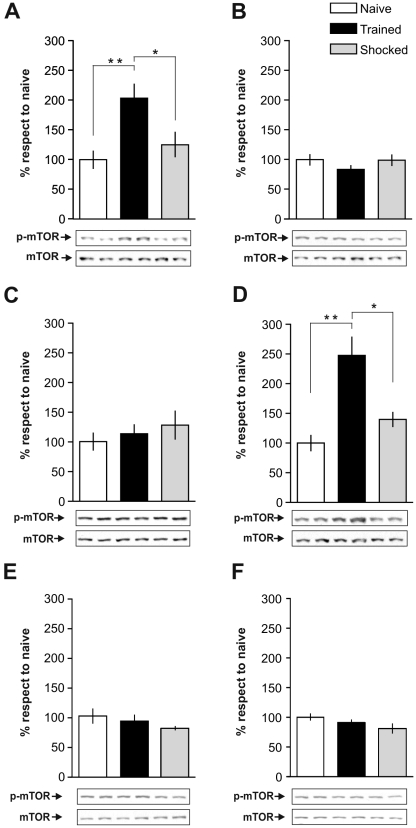
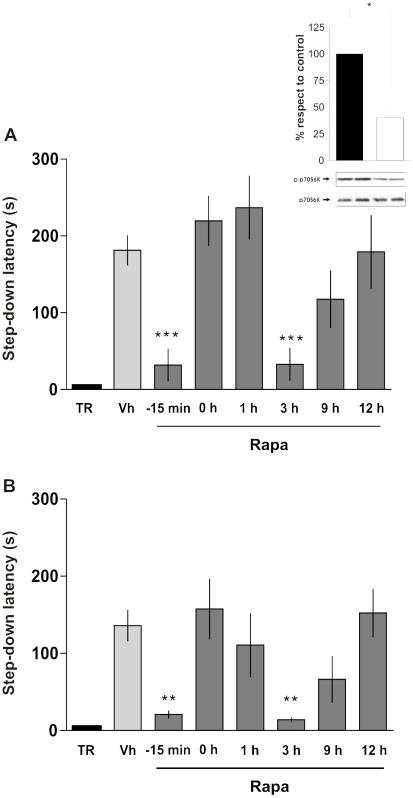
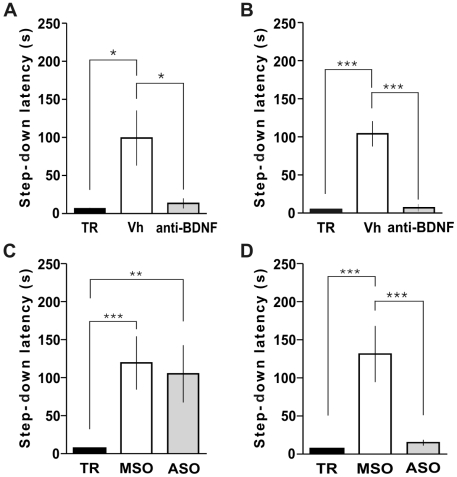
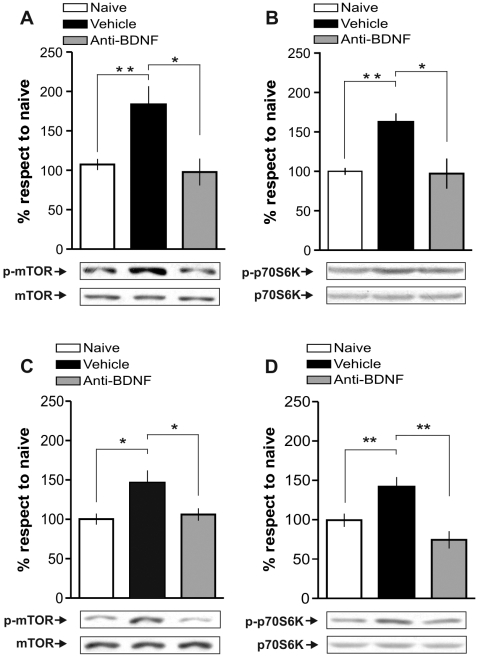
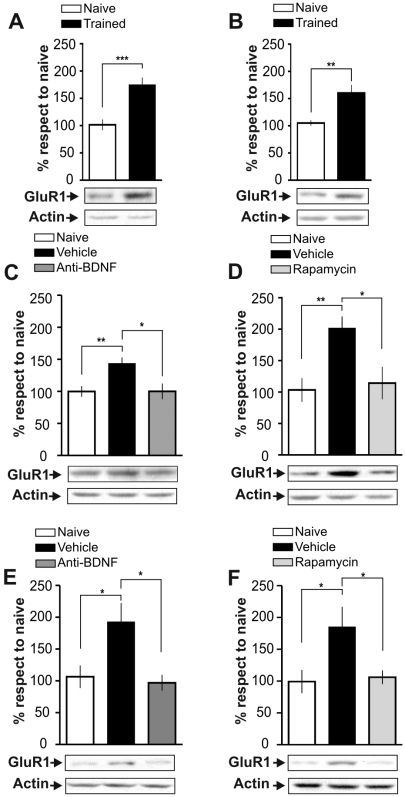
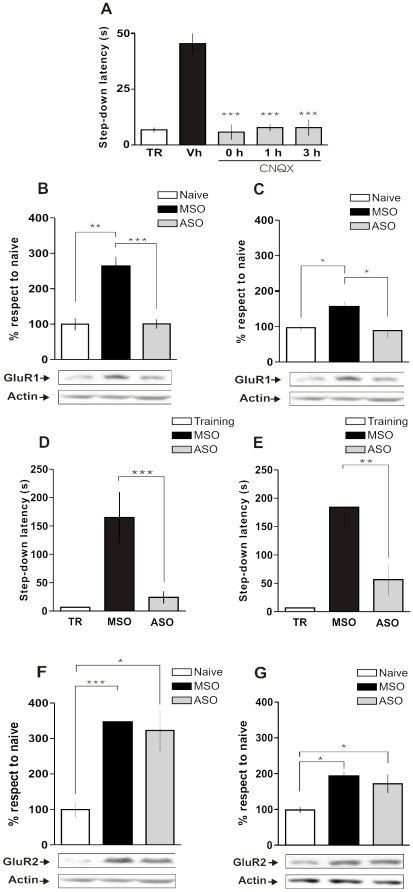
BACKGROUND: The mammalian target of Rapamycin (mTOR) kinase plays a key role in translational control of a subset of mRNAs through regulation of its initiation step. In neurons, mTOR is present at the synaptic region, where it modulates the activity-dependent expression of locally-translated proteins independently of mRNA synthesis. Indeed, mTOR is necessary for different forms of synaptic plasticity and long-term memory (LTM) formation. However, little is known about the time course of mTOR activation and the extracellular signals governing this process or the identity of the proteins whose translation is regulated by this kinase, during mnemonic processing. METHODOLOGY/PRINCIPAL FINDINGS: Here we show that consolidation of inhibitory avoidance (IA) LTM entails mTOR activation in the dorsal hippocampus at the moment of and 3 h after training and is associated with a rapid and rapamycin-sensitive increase in AMPA receptor GluR1 subunit expression, which was also blocked by intra-hippocampal delivery of GluR1 antisense oligonucleotides (ASO). In addition, we found that pre- or post-training administration of function-blocking anti-BDNF antibodies into dorsal CA1 hampered IA LTM retention, abolished the learning-induced biphasic activation of mTOR and its readout, p70S6K and blocked GluR1 expression, indicating that BDNF is an upstream factor controlling mTOR signaling during fear-memory consolidation. Interestingly, BDNF ASO hindered LTM retention only when given into dorsal CA1 1 h after but not 2 h before training, suggesting that BDNF controls the biphasic requirement of mTOR during LTM consolidation through different mechanisms: an early one involving BDNF already available at the moment of training, and a late one, happening around 3 h post-training that needs de novo synthesis of this neurotrophin. CONCLUSIONS/SIGNIFICANCE: IN CONCLUSION, OUR FINDINGS DEMONSTRATE THAT: 1) mTOR-mediated mRNA translation is required for memory consolidation during at least two restricted time windows; 2) this kinase acts downstream BDNF in the hippocampus and; 3) it controls the increase of synaptic GluR1 necessary for memory consolidation.
Overview
The claims and statistics of this paper haven’t been checked yet.
Run the check — free, no account needed. It reads the open-access text and checks the sources it cites.
Integrity signals
Registry
Cites
Statistics
Figures
Verification
Claims the paper makes
The claims and statistics of this paper haven’t been checked yet.
Run the check — free, no account needed. It reads the open-access text and checks the sources it cites.
Claims other papers make about this one
Each is checked against this paper’s own text: does it say what the citing paper says it does?
The cited source says what the claim attributes to it.
In the citing paper
“Previous work has shown that BDNF is a potent activator of mTOR signaling (Jourdi et al., 2009; Takei et al., 2004; Slipczuk et al., 2009), and mTOR is a key integrator for many signaling pathways (see Costa-Mattioli and Monteggia, 2013).”
From BDNF - a key transducer of antidepressant effects (2016) · cites this paper as Slipczuk et al., 2009
Self-check
Percentages, sums and reported differences re-computed from the paper’s own numbers.
The self-check needs the paper’s full text.
Citations
Cites
The rat brain in stereotaxic coordinates
Palkovits, M. (1983) · Neuropeptides · doi:10.1016/0143-4179(83)90049-5 · Cited by 28,959
The Rat Brain in Stereotaxic Coordinates
Paxinos, G., & Watson, C. (1983) · Elsevier eBooks · doi:10.1016/c2009-0-63235-9 · Cited by 28,585
Molecular Mechanisms of Depression: Perspectives on New Treatment Strategies
Lang, U. E., & Borgwardt, S. (2013) · Cellular Physiology and Biochemistry · doi:10.1159/000350094 · Cited by 8,526
AChE-stained horizontal sections of the rat brain in stereotaxic coordinates
Paxinos, G., WATSON, C. R. R., & Emson, P. C. (1980) · Journal of Neuroscience Methods · doi:10.1016/0165-0270(80)90021-7 · Cited by 4,514
Memory - A century of consolidation
McGaugh, J. L. (2000) · Science · doi:10.1126/science.287.5451.248 · Cited by 4,250
Upstream and downstream of mTOR
Hay, N., & Sonenberg, N. (2004) · Genes & Development · doi:10.1101/gad.1212704 · Cited by 4,181
da Luz, A. C. D. D. S., Dias, G. P., Bevilaqua, M. C. D. N., Cocks, G. D., Gardino, P. F., Thuret, S., & Nardi, A. E. (2013) · Neuropsychobiology · doi:10.1159/000353269 · Cited by 4,015
Regulation of Translation Initiation in Eukaryotes: Mechanisms and Biological Targets
Sonenberg, N., & Hinnebusch, A. G. (2009) · Cell · doi:10.1016/j.cell.2009.01.042 · Cited by 3,304
Kim, D., Sarbassov, D. D., Ali, S. M., King, J. E., Latek, R. R., Erdjument‐Bromage, H., Tempst, P., & Sabatini, D. M. (2002) · Cell · doi:10.1016/s0092-8674(02)00808-5 · Cited by 3,072
Targets for Cell Cycle Arrest by the Immunosuppressant Rapamycin in Yeast
Heitman, J., Movva, N. R., & Hall, M. N. (1991) · Science · doi:10.1126/science.1715094 · Cited by 2,055
Cited by
Sorted by citations
mTOR signaling: At the crossroads of plasticity, memory and disease
Hoeffer, C. A., & Klann, E. (2010) · Trends in Neurosciences · doi:10.1016/j.tins.2009.11.003 · Cited by 1,128
BDNF - a key transducer of antidepressant effects
Björkholm, C., & Monteggia, L. M. (2016) · Neuropharmacology · doi:10.1016/j.neuropharm.2015.10.034 · Cited by 958
“Previous work has shown that BDNF is a potent activator of mTOR signaling (Jourdi et al., 2009; Takei et al., 2004; Slipczuk et al., 2009), and mTOR is a key integrator for many signaling pathways (see Costa-Mattioli and Monteggia, 2013).”
BackgroundA simple role for BDNF in learning and memory?
Cunha, C. (2010) · Frontiers in Molecular Neuroscience · doi:10.3389/neuro.02.001.2010 · Cited by 830
BDNF mediates adaptive brain and body responses to energetic challenges
Marosi, K., & Mattson, M. P. (2014) · Trends in Endocrinology & Metabolism · doi:10.1016/j.tem.2013.10.006 · Cited by 568
Signaling pathways underlying the rapid antidepressant actions of ketamine
Duman, R. S., Li, N., Liu, R.-J., Duric, V., & Aghajanian, G. (2012) · Neuropharmacology · doi:10.1016/j.neuropharm.2011.08.044 · Cited by 537
Izquierdo, I., Furini, C. R. G., & Myskiw, J. C. (2016) · Physiological Reviews · doi:10.1152/physrev.00018.2015 · Cited by 453
Self-citationNeural and cellular mechanisms of fear and extinction memory formation
Orsini, C. A., & Maren, S. (2012) · Neuroscience & Biobehavioral Reviews · doi:10.1016/j.neubiorev.2011.12.014 · Cited by 429
A critical role for IGF-II in memory consolidation and enhancement
Chen, D. Y., Stern, S. A., García‐Osta, A., Saunier-Rebori, B., Pollonini, G., Bambah-Mukku, D., Blitzer, R. D., & Alberini, C. M. (2011) · Nature · doi:10.1038/nature09667 · Cited by 423
Liu, R.-J., Lee, F. S., Li, X.-Y., Bambico, F., Duman, R. S., & Aghajanian, G. K. (2012) · Biological Psychiatry · doi:10.1016/j.biopsych.2011.09.030 · Cited by 403
Exercise and time-dependent benefits to learning and memory
Berchtold, N. C., Castello, N. A., & Cotman, C. W. (2010) · Neuroscience · doi:10.1016/j.neuroscience.2010.02.050 · Cited by 397
BDNF release is required for the behavioral actions of ketamine
Lepack, A. E., Fuchikami, M., Dwyer, J. M., Banasr, M., & Duman, R. S. (2015) · International Journal of Neuropsychopharmacology · doi:10.1093/ijnp/pyu033 · Cited by 368
Bekinschtein, P., Cammarota, M., & Medina, J. H. (2013) · Neuropharmacology · doi:10.1016/j.neuropharm.2013.04.024 · Cited by 368
Self-citationSynaptic plasticity in depression: Molecular, cellular and functional correlates
Marsden, W. N. (2012) · Progress in Neuro-Psychopharmacology and Biological Psychiatry · doi:10.1016/j.pnpbp.2012.12.012 · Cited by 323
Mammalian/mechanistic target of rapamycin (mTOR) complexes in neurodegeneration
Querfurth, H., & Lee, H.-K. (2021) · Molecular Neurodegeneration · doi:10.1186/s13024-021-00428-5 · Cited by 288
Bekinschtein, P., Oomen, C. A., Saksida, L. M., & Bussey, T. J. (2011) · Seminars in Cell & Developmental Biology · doi:10.1016/j.semcdb.2011.07.002 · Cited by 272
Self-citationReich, N., & Hölscher, C. (2022) · Frontiers in Neuroscience · doi:10.3389/fnins.2022.970925 · Cited by 248
mTOR: on target for novel therapeutic strategies in the nervous system
Maiese, K., Chong, Z. Z., Shang, Y., & Wang, S. (2012) · Trends in Molecular Medicine · doi:10.1016/j.molmed.2012.11.001 · Cited by 226
Fioriti, L., Myers, C., Huang, Y.-Y., Li, X., Stephan, J. S., Trifilieff, P., Colnaghi, L., Kosmidis, S., Drisaldi, B., Pavlopoulos, E., et al. (2015) · Neuron · doi:10.1016/j.neuron.2015.05.021 · Cited by 221
Mathews, D. C., Henter, I. D., & Zarate, C. A. (2012) · Drugs · doi:10.2165/11633130-000000000-00000 · Cited by 220
Bowers, M. S., Chen, B. T., & Bonci, A. (2010) · Neuron · doi:10.1016/j.neuron.2010.06.004 · Cited by 222
Targeting molecules to medicine with mTOR, autophagy and neurodegenerative disorders
Maiese, K. (2015) · British Journal of Clinical Pharmacology · doi:10.1111/bcp.12804 · Cited by 202
Hippocampal–Prefrontal BDNF and Memory for Fear Extinction
Rosas-Vidal, L. E., Do-Monte, F. H., Sotres-Bayon, F., & Quirk, G. J. (2014) · Neuropsychopharmacology · doi:10.1038/npp.2014.64 · Cited by 184
Talos, D. M., Sun, H., Zhou, X., Fitzgerald, E. C., Jackson, M. C., Klein, P., Lan, V. J., Joseph, A., & Jensen, F. E. (2012) · PLoS ONE · doi:10.1371/journal.pone.0035885 · Cited by 182
Contextual learning requires synaptic AMPA receptor delivery in the hippocampus
Mitsushima, D., Ishihara, K., Sano, A., Kessels, H. W. H. G., & Takahashi, T. (2011) · Proceedings of the National Academy of Sciences · doi:10.1073/pnas.1104558108 · Cited by 163
Clinically Significant Drug Interactions with Newer Antidepressants
Spina, E., Trifirò, G., & Caraci, F. (2011) · CNS Drugs · doi:10.2165/11594710-000000000-00000 · Cited by 164
Mammalian Target of Rapamycin: Hitting the Bull′s‐Eye for Neurological Disorders
Chong, Z. Z., Shang, Y., Zhang, L., Wang, S., & Maiese, K. (2010) · Oxidative Medicine and Cellular Longevity · doi:10.4161/oxim.3.6.14787 · Cited by 149
A Positive Autoregulatory BDNF Feedback Loop via C/EBPβ Mediates Hippocampal Memory Consolidation
Bambah-Mukku, D., Travaglia, A., Chen, D. Y., Pollonini, G., & Alberini, C. M. (2014) · The Journal of Neuroscience · doi:10.1523/jneurosci.0324-14.2014 · Cited by 145
Fortress, A. M., Fan, L., Orr, P. T., Zhao, Z., & Frick, K. M. (2013) · Learning & Memory · doi:10.1101/lm.026732.112 · Cited by 148
Neasta, J., Hamida, S. B., Yowell, Q. V., Carnicella, S., & Dorit Ron, A. (2010) · Proceedings of the National Academy of Sciences · doi:10.1073/pnas.1005554107 · Cited by 136
VGF function in depression and antidepressant efficacy
Jiang, C. S., Lin, W.-J., Sadahiro, M., Labonté, B., Ménard, C., Pfau, M. L., Tamminga, C. A., Turecki, G., Nestler, E. J., Russo, S. J., et al. (2017) · Molecular Psychiatry · doi:10.1038/mp.2017.233 · Cited by 124
Behavioral tagging of extinction learning
Myskiw, J. D. C., Benetti, F., & Izquierdo, I. (2012) · Proceedings of the National Academy of Sciences · doi:10.1073/pnas.1220875110 · Cited by 126
Self-citationmTOR complex 1: a key player in neuroadaptations induced by drugs of abuse
Neasta, J., Barak, S., Hamida, S. B., & Ron, D. (2014) · Journal of Neurochemistry · doi:10.1111/jnc.12725 · Cited by 114
A Critical Kinase Cascade In Neurological Disorders: Pi3K, Akt and Mtor
Chong, Z. Z., Shang, Y., Wang, S., & Maiese, K. (2012) · Future Neurology · doi:10.2217/fnl.12.72 · Cited by 122
Fortin, D. A., Srivastava, T., Dwarakanath, D., Pierre, P., Nygaard, S., Derkach, V. A., & Soderling, T. R. (2012) · Journal of Neuroscience · doi:10.1523/jneurosci.6034-11.2012 · Cited by 120
Shedding new light on neurodegenerative diseases through the mammalian target of rapamycin
Chong, Z. Z., Shang, Y. C., Wang, S., & Maiese, K. (2012) · Progress in Neurobiology · doi:10.1016/j.pneurobio.2012.08.001 · Cited by 119
Lopez, J., Gamache, K., Schneider, R. E., & Nader, K. (2015) · Journal of Neuroscience · doi:10.1523/jneurosci.0735-14.2015 · Cited by 120
Gafford, G. M., Parsons, R. G., & Helmstetter, F. J. (2011) · Neuroscience · doi:10.1016/j.neuroscience.2011.03.023 · Cited by 110
Synaptic regulation of affective behaviors; role of BDNF
Ninan, I. (2013) · Neuropharmacology · doi:10.1016/j.neuropharm.2013.04.011 · Cited by 114
Oxidant Stress and Signal Transduction in the Nervous System with the PI 3-K, Akt, and mTOR Cascade
Maiese, K., Chong, Z. Z., Wang, S., & Shang, Y. C. (2012) · International Journal of Molecular Sciences · doi:10.3390/ijms131113830 · Cited by 109
The Multiple Roles of Autophagy in Neural Function and Diseases
Li, Y., Qin, Z., & Sheng, R. (2023) · Neuroscience Bulletin · doi:10.1007/s12264-023-01120-y · Cited by 109
Lindholm, J., Autio, H., Vesa, L., Antila, H., Lindemann, L., Hoener, M. C., Skolnick, P., Rantamäki, T., & Ċastrén, E. (2011) · Neuropharmacology · doi:10.1016/j.neuropharm.2011.08.015 · Cited by 102
Polman, J. A. E., Hunter, R. G., Speksnijder, N., van den Oever, J. M. E., Korobko, O. B., McEwen, B. S., de Kloet, E. R., & Datson, N. A. (2012) · Endocrinology · doi:10.1210/en.2012-1255 · Cited by 104
Exercise increases mTOR signaling in brain regions involved in cognition and emotional behavior
Lloyd, B. A., Hake, H. S., Ishiwata, T., Farmer, C. E., Loetz, E. C., Fleshner, M., Bland, S. T., & Greenwood, B. N. (2017) · Behavioural Brain Research · doi:10.1016/j.bbr.2017.01.033 · Cited by 105
Ota, K. T., & Duman, R. S. (2013) · Neurobiology of Disease · doi:10.1016/j.nbd.2012.05.022 · Cited by 94
Weber, J. D., & Gutmann, D. H. (2012) · Cell Cycle · doi:10.4161/cc.11.2.19022 · Cited by 97
Frontier of Epilepsy Research - mTOR signaling pathway
Cho, C. (2011) · Experimental & Molecular Medicine · doi:10.3858/emm.2011.43.5.032 · Cited by 93
Jobim, P. F. C., Pedroso, T. R., Christoff, R. R., Werenicz, A., Maurmann, N., Reolon, G. K., & Roesler, R. (2012) · Neurobiology of Learning and Memory · doi:10.1016/j.nlm.2011.10.002 · Cited by 92
The mTOR Signaling Pathway in the Brain: Focus on Epilepsy and Epileptogenesis
Russo, E., Citraro, R., Constanti, A., & Sarro, G. D. (2012) · Molecular Neurobiology · doi:10.1007/s12035-012-8314-5 · Cited by 91
Beckley, J. T., Laguesse, S., Phamluong, K., Morisot, N., Wegner, S. A., & Dorit Ron, A. (2016) · Journal of Neuroscience · doi:10.1523/jneurosci.2254-15.2016 · Cited by 100
Signaling Pathways Mediating Alcohol Effects
Dorit Ron, A., & Messing, R. O. (2011) · Current topics in behavioral neurosciences · doi:10.1007/7854_2011_161 · Cited by 85
Giovannini, M. G., Lana, D., & Pepeu, G. (2015) · Neurobiology of Learning and Memory · doi:10.1016/j.nlm.2014.12.014 · Cited by 93
Garza-Lombó, C., & Gonsebatt, M. E. (2016) · Frontiers in Cellular Neuroscience · doi:10.3389/fncel.2016.00157 · Cited by 90
Wang, C.-C., Held, R. G., & Hall, B. J. (2013) · PLoS ONE · doi:10.1371/journal.pone.0083941 · Cited by 90
Troca-Marín, J. A., Alves-Sampaio, A., & Montesinos, M. L. (2011) · Journal of Neuroscience · doi:10.1523/jneurosci.0011-11.2011 · Cited by 81
Is the mTOR‐signalling cascade disrupted in Schizophrenia?
Gururajan, A., & van den Buuse, M. (2013) · Journal of Neurochemistry · doi:10.1111/jnc.12622 · Cited by 81
Postsynaptic BDNF signalling regulates long‐term potentiation at thalamo‐amygdala afferents
Meis, S., Endres, T., & Leßmann, V. (2011) · The Journal of Physiology · doi:10.1113/jphysiol.2011.220434 · Cited by 78
GABAA Receptor Blockade Enhances Memory Consolidation by Increasing Hippocampal BDNF Levels
Kim, D. H., Kim, J. M., Park, S. J., Cai, M., Liu, X., Lee, S., Shin, C. Y., & Ryu, J. H. (2011) · Neuropsychopharmacology · doi:10.1038/npp.2011.189 · Cited by 75
Bell, J. J. L., Rakhade, S. N., Klein, P., Obeid, M., Jackson, M. C., Joseph, A., & Jensen, F. E. (2013) · Epilepsia · doi:10.1111/epi.12378 · Cited by 79
Mello-Carpes, P. B., da Silva de Vargas, L., Gayer, M. C., Roehrs, R., & Izquierdo, I. (2016) · Neurobiology of Learning and Memory · doi:10.1016/j.nlm.2015.11.014 · Cited by 75
Self-citationAntigenic and mechanistic characterization of anti‐ AMPA receptor encephalitis
Gleichman, A. J., Panzer, J. A., Baumann, B. H., Dalmau, J. O., & Lynch, D. R. (2014) · Annals of Clinical and Translational Neurology · doi:10.1002/acn3.43 · Cited by 76
Molecular signatures and mechanisms of long-lasting memory consolidation and storage
Katche, C., Cammarota, M., & Medina, J. H. (2013) · Neurobiology of Learning and Memory · doi:10.1016/j.nlm.2013.06.018 · Cited by 79
Self-citationLourenco, M. V., Ferreira, S. T., & Felice, F. G. D. (2015) · Progress in Neurobiology · doi:10.1016/j.pneurobio.2015.03.003 · Cited by 74
Maqbool, A., Lattke, M., Wirth, T., & Baumann, B. (2013) · Molecular Neurodegeneration · doi:10.1186/1750-1326-8-40 · Cited by 74
Retrograde Changes in Presynaptic Function Driven by Dendritic mTORC1
Henry, F. E., McCartney, A. J., Neely, R., Perez, A. S., Carruthers, C. J. L., Stuenkel, E. L., Inoki, K., & Sutton, M. A. (2012) · Journal of Neuroscience · doi:10.1523/jneurosci.2149-12.2012 · Cited by 69
Alberini, C. M., Johnson, S. A., & Ye, X. (2013) · Elsevier eBooks · doi:10.1016/b978-0-12-386892-3.00005-6 · Cited by 76
Almaguer‐Melian, W., Bergado, J. A., Fuentes, N. P., Alberti‐Amador, E., Mercerón‐Martínez, D., & Frey, J. U. (2012) · Proceedings of the National Academy of Sciences · doi:10.1073/pnas.1114198109 · Cited by 71
Martyn, A. C., Jaeger, X. D., Magalhães, A. C., Kesarwani, R., Gonçalves, D. F., Raulic, S., Guzmán, M. S., Jackson, M. F., Izquierdo, I., MacDonald, J. F., et al. (2012) · Proceedings of the National Academy of Sciences · doi:10.1073/pnas.1215381109 · Cited by 69
Self-citationJobim, P. F. C., Pedroso, T. R., Werenicz, A., Christoff, R. R., Maurmann, N., Reolon, G. K., Schröder, N., & Roesler, R. (2012) · Behavioural Brain Research · doi:10.1016/j.bbr.2011.12.004 · Cited by 68
Callum, P. M., Hebert, M. A., Adamec, R. E., & Blundell, J. J. (2013) · Neurobiology of Learning and Memory · doi:10.1016/j.nlm.2013.08.014 · Cited by 68
Hypothesized mechanisms through which acute exercise influences episodic memory
Loprinzi, P. D., Ponce, P., & Frith, E. (2018) · Physiology International · doi:10.1556/2060.105.2018.4.28 · Cited by 67
Reimers, J. M., Loweth, J. A., & Wolf, M. E. (2014) · European Journal of Neuroscience · doi:10.1111/ejn.12422 · Cited by 68
β-Hydroxy-β-Methylbutyrate (HMB) Promotes Neurite Outgrowth in Neuro2a Cells
Salto, R., Vílchez, J. D., Girón, M. D., Cabrera, E., Campos, N., Manzano, M., Rueda, R., & López-Pedrosa, J. M. (2015) · PLoS ONE · doi:10.1371/journal.pone.0135614 · Cited by 65
Rapamycin attenuates the expression of cocaine‐induced place preference and behavioral sensitization
Bailey, J., Ma, D., & Szumlinski, K. K. (2012) · Addiction Biology · doi:10.1111/j.1369-1600.2010.00311.x · Cited by 61
BDNF controls object recognition memory reconsolidation
Radiske, A., Rossato, J. I., González, M. C., Köhler, C. A., Bevilaqua, L. R., & Cammarota, M. (2017) · Neurobiology of Learning and Memory · doi:10.1016/j.nlm.2017.02.018 · Cited by 62
Self-citationRosas-Vidal, L. E., Lozada-Miranda, V., Cantres-Rosario, Y. M., Vega-Medina, A., Meléndez, L. M., & Quirk, G. J. (2018) · Neuropsychopharmacology · doi:10.1038/s41386-018-0176-8 · Cited by 63
Wang, J., Gao, F., Cui, S., Yang, S., Gao, F., Wang, X., & Zhu, G. (2022) · Pharmacological Research · doi:10.1016/j.phrs.2022.106079 · Cited by 61
Li, X., & Wolf, M. E. (2011) · European Journal of Neuroscience · doi:10.1111/j.1460-9568.2011.07754.x · Cited by 58
Bambico, F. R., & Belzung, C. (2012) · Current topics in behavioral neurosciences · doi:10.1007/7854_2012_234 · Cited by 61
Signaling mechanisms regulating synapse formation and function in mental retardation
Boda, B., Dubos, A., & Müller, D. (2010) · Current Opinion in Neurobiology · doi:10.1016/j.conb.2010.03.012 · Cited by 63
Elevated lead levels from e-waste exposure are linked to decreased olfactory memory in children
Zhang, B., Huo, X., Xu, L., Cheng, Z., Cong, X., Lu, X., & Xu, X. (2017) · Environmental Pollution · doi:10.1016/j.envpol.2017.07.015 · Cited by 56
Dietary-induced obesity disrupts trace fear conditioning and decreases hippocampal reelin expression
Reichelt, A. C., Maniam, J., Westbrook, R. F., & Morris, M. J. (2014) · Brain Behavior and Immunity · doi:10.1016/j.bbi.2014.07.005 · Cited by 61
Gilbert, M. E., Sánchez-Huerta, K., & Wood, C. R. (2015) · Endocrinology · doi:10.1210/en.2015-1643 · Cited by 56
Targeted delivery of brain-derived neurotrophic factor for the treatment of blindness and deafness
Khalin, I., Kocherga, G., Bakar, M. A., & Alyautdin, R. N. (2015) · International Journal of Nanomedicine · doi:10.2147/ijn.s77480 · Cited by 61
Fukumoto, K., Fogaça, M. V., Liu, R.-J., Duman, C. H., Li, X., Chaki, S., & Duman, R. S. (2020) · Neuropsychopharmacology · doi:10.1038/s41386-020-0705-0 · Cited by 58
Genzer, Y., Dadon‐Freiberg, M., Burg, C., Chapnik, N., & Froy, O. (2016) · Molecular and Cellular Endocrinology · doi:10.1016/j.mce.2016.04.015 · Cited by 54
Thoeringer, C. K., Henes, K., Eder, M., Dahlhoff, M., Wurst, W., Holsboer, F., Deussing, J. M., Moosmang, S., & Wotjak, C. T. (2011) · Neuropsychopharmacology · doi:10.1038/npp.2011.256 · Cited by 53
Henry, F. E., Hockeimer, W., Chen, A., Mysore, S. P., & Sutton, M. A. (2017) · Molecular Brain · doi:10.1186/s13041-017-0330-y · Cited by 56
Parrella, E., & Longo, V. D. (2010) · The Scientific World JOURNAL · doi:10.1100/tsw.2010.8 · Cited by 53
The Possible Role of Brain-derived Neurotrophic Factor in Epilepsy
AlRuwaili, R., Al-Kuraishy, H. M., Al-Gareeb, A. I., Ali, N. H., Alexiou, A. T., Papadakis, M., Saad, . M., & Batiha, G. E. (2023) · Neurochemical Research · doi:10.1007/s11064-023-04064-x · Cited by 52
Dendritic mRNA Targeting and Translation
Kindler, S., & Kreienkamp, H. (2012) · Advances in experimental medicine and biology · doi:10.1007/978-3-7091-0932-8_13 · Cited by 54
Wang, L., Budolfson, K., & Wang, F. (2011) · Neuroscience · doi:10.1016/j.neuroscience.2010.10.035 · Cited by 51
Lauterbach, E. C. (2012) · Medical Hypotheses · doi:10.1016/j.mehy.2012.02.012 · Cited by 53
BDNF-TrkB signalling in fear learning: from genetics to neural networks
Musumeci, G., & Minichiello, L. (2011) · Reviews in the Neurosciences · doi:10.1515/rns.2011.031 · Cited by 51
Initiated by CREB: Resolving Gene Regulatory Programs in Learning and Memory
Kaldun, J. C., & Sprecher, S. G. (2019) · BioEssays · doi:10.1002/bies.201900045 · Cited by 50
Ni, L., Xu, Y., Dong, S., Kong, Y., Wang, H., Lu, G., Wang, Y., Li, Q., Li, C., Du, Z., et al. (2020) · Translational Psychiatry · doi:10.1038/s41398-020-0782-1 · Cited by 46
Angelo, M. F., Aguirre, A. I., Aviles‐Reyes, R. X., Villarreal, A., Lukin, J., Melendez, M. E., Vanasco, V., Barker, P., Álvarez, S., Epstein, A. L., et al. (2014) · PLoS ONE · doi:10.1371/journal.pone.0107901 · Cited by 48
Multistage drug effects of ketamine in the treatment of major depression
Walter, M., Li, S., & Demenescu, L. R. (2014) · European Archives of Psychiatry and Clinical Neuroscience · doi:10.1007/s00406-014-0535-3 · Cited by 49
Role of the mTOR signaling pathway in the rapid antidepressant action of ketamine
Hashimoto, K. (2011) · Expert Review of Neurotherapeutics · doi:10.1586/ern.10.176 · Cited by 47
Dendritic protein synthesis in the normal and diseased brain
Swanger, S. A., & Bassell, G. J. (2012) · Neuroscience · doi:10.1016/j.neuroscience.2012.12.003 · Cited by 51
Ohtake, N., Saito, M., Eto, M., & Seki, K. (2014) · Regulatory Peptides · doi:10.1016/j.regpep.2014.04.003 · Cited by 46
Metadata
- Authors
- Slipczuk, L., Bekinschtein, P., Katche, C., Cammarota, M., Izquierdo, I., & Medina, J. H.
- Affiliations
- Universidad de Buenos Aires (AR)
- Pontifícia Universidade Católica do Rio Grande do Sul (BR)
- Corresponding author
- Medina, Jorge H.
- Venue
- PLoS ONE
- Publisher
- Public Library of Science (PLoS)
- Published
- 2009-06-23
- Volume
- 4
- Issue
- 6
- Pages
- e6007
- ISSN
- 1932-6203 (ISSN-L)
- PMC
- PMC2695538
- OpenAlex
- W2035139662
- Cited by
- 246
- References
- 90
- Citations by year
- 2026: 3 · 2025: 3 · 2024: 8 · 2023: 6 · 2022: 13 · 2021: 10 · 2020: 19 · 2019: 1 · 2018: 14 · 2017: 21 · 2016: 19 · 2015: 20 · 2014: 23 · 2013: 19 · 2012: 29
- FWCI
- 10.85
- Type
- journal article
- Language
- en
- Open access
- gold
- doi.org
- Locations
- PLoS ONE (publishedVersion, cc-by)
- PubMed Central (publishedVersion, cc-by)
- PubMed (publishedVersion)
- DOAJ (DOAJ: Directory of Open Access Journals) (submittedVersion, cc-by-sa)
- Greater South Information System
- Topics
- Life Sciences › Neuroscience › Cognitive Neuroscience › Memory and Neural Mechanisms
- Life Sciences › Neuroscience › Cellular and Molecular Neuroscience › Neuroscience and Neuropharmacology Research
- Life Sciences › Biochemistry, Genetics and Molecular Biology › Molecular Biology › PI3K/AKT/mTOR signaling in cancer
- Keywords
- brain-derived neurotrophic factor, mTOR signaling, GluR1, AMPA receptors, long-term memory consolidation, passive avoidance, fear memory, hippocampus, CA1, p70S6K, antisense oligonucleotides
- MeSH terms
- Animals, Hippocampus, Male, Memory, Models, Biological, Neuronal Plasticity, Protein Kinases, RNA, Messenger, Synapses, Time Factors, Rats, Wistar, Receptors, AMPA, Brain-Derived Neurotrophic Factor, Rats, TOR Serine-Threonine Kinases
About these checks
Registry, retraction, Cites and statistics results are computed, not judged, with one exception: a printed reference that no index lists is read once by a model before it counts as a citation error. Claims are extracted by a model and kept only when their quote appears verbatim in the text; each cited source is then checked, with a model’s help, for whether it says what the claim relies on. Those verdicts can be wrong — read the claim’s quote and the cited source before relying on one.
Statistics and arithmetic are recomputed, not judged.
Confidence bands are shown only for fields calibrated on our annotated test set. None is calibrated yet, so no band is shown.
What counts as a claim ›How we measure confidence ›How we check this ›
Are you an author, or do you see a problem with this page? Request a review
