

Prognostic and Diagnostic Potential of the Structural Neuroanatomy of Depression
Open accessThe DOI matches its Crossref record; 42 of the 42 references it cites were found in a registry or an index.
Abstract
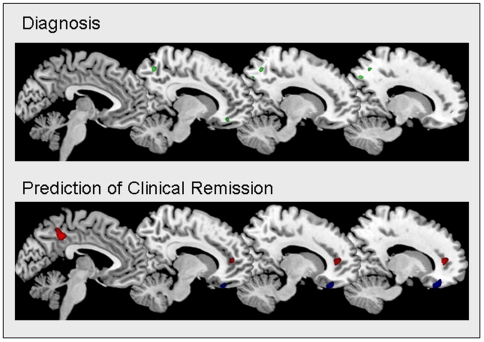
BACKGROUND: Depression is experienced as a persistent low mood or anhedonia accompanied by behavioural and cognitive disturbances which impair day to day functioning. However, the diagnosis is largely based on self-reported symptoms, and there are no neurobiological markers to guide the choice of treatment. In the present study, we examined the prognostic and diagnostic potential of the structural neural correlates of depression. METHODOLOGY AND PRINCIPAL FINDINGS: Subjects were 37 patients with major depressive disorder (mean age 43.2 years), medication-free, in an acute depressive episode, and 37 healthy individuals. Following the MRI scan, 30 patients underwent treatment with the antidepressant medication fluoxetine or cognitive behavioural therapy (CBT). Of the patients who subsequently achieved clinical remission with antidepressant medication, the whole brain structural neuroanatomy predicted 88.9% of the clinical response, prior to the initiation of treatment (88.9% patients in clinical remission (sensitivity) and 88.9% patients with residual symptoms (specificity), p = 0.01). Accuracy of the structural neuroanatomy as a diagnostic marker though was 67.6% (64.9% patients (sensitivity) and 70.3% healthy individuals (specificity), p = 0.027). CONCLUSIONS AND SIGNIFICANCE: The structural neuroanatomy of depression shows high predictive potential for clinical response to antidepressant medication, while its diagnostic potential is more limited. The present findings provide initial steps towards the development of neurobiological prognostic markers for depression.
Overview
The claims and statistics of this paper haven’t been checked yet.
Free: it reads the open-access text and checks the first 5 claims that cite a source we can check. Create a free account to check every claim.
Integrity signals
Registry
Cites
Statistics
Figures
Verification
Claims the paper makes
The claims and statistics of this paper haven’t been checked yet.
Free: it reads the open-access text and checks the first 5 claims that cite a source we can check. Create a free account to check every claim.
Claims other papers make about this one
Each is checked against this paper’s own text: does it say what the citing paper says it does?
In the citing paper
“Recently, several brain imaging studies have attempted to distinguish depressed patients from healthy controls (Fu et al., 2008;Costafreda et al., 2009;Craddock et al., 2009).”
From Identifying major depression using whole-brain functional connectivity: a multivariate pattern analysis (2012) · cites this paper as Costafreda et al., 2009
Self-check
Percentages, sums and reported differences re-computed from the paper’s own numbers.
The self-check needs the paper’s full text.
Citations
Cites
The Nature of Statistical Learning Theory
Vapnik, V. N. (1995) · doi:10.1007/978-1-4757-2440-0 · Cited by 39,138
Hamilton, M. (1960) · Journal of Neurology, Neurosurgery & Psychiatry · doi:10.1136/jnnp.23.1.56 · Cited by 32,817 · cited 1×
“2) [31].”
Voxel-Based Morphometry—The Methods
Ashburner, J., & Friston, K. J. (2000) · NeuroImage · doi:10.1006/nimg.2000.0582 · Cited by 8,676 · cited 1×
“matter (GM), white matter (WM) and cerebrospinal fluid and imported into a rigidly aligned space [32].”
BackgroundSelf-citationA fast diffeomorphic image registration algorithm
Ashburner, J. (2007) · NeuroImage · doi:10.1016/j.neuroimage.2007.07.007 · Cited by 8,122 · cited 1×
“. GM segments were then iteratively registered by non-linear warping to templates generated from all images in each group by the Diffeomorphic Anatomical Registration Through Exponentiated Lie algebra (DARTEL) toolbox”
MethodSelf-citationAn introduction to variable and feature selection
GuyonIsabelle, & ElisseeffAndré (2003) · Journal of Machine Learning Research · doi:10.5555/944919.944968 · Cited by 7,715
The Nature of Statistical Learning Theory
Sain, S. R. (1996) · Technometrics · doi:10.1080/00401706.1996.10484565 · Cited by 5,434
The distributed human neural system for face perception
Haxby, J. V., Hoffman, E. A., & Gobbini, M. I. (2000) · Trends in Cognitive Sciences · doi:10.1016/s1364-6613(00)01482-0 · Cited by 4,891 · cited 2×
“Sad facial expressions are socially relevant, emotional cues which engage a distributed network of regions [4] that show an abnormal response during an acute depressive episode [5–6].”
BackgroundA Voxel-Based Morphometric Study of Ageing in 465 Normal Adult Human Brains
Good, C. D., Johnsrude, I. S., Ashburner, J., Henson, R. N. A., Friston, K. J., & Frackowiak, R. S. J. (2001) · NeuroImage · doi:10.1006/nimg.2001.0786 · Cited by 4,561
Self-citationStructured Clinical Interview for DSM-IV Axis I Disorders
Spitzer, R. L., First, M. B., & Gibbon, M. (1997) · Medical Entomology and Zoology · Cited by 4,096
An empirical comparison of supervised learning algorithms
Caruana, R., & Niculescu-Mizil, A. (2006) · Proceedings of the 23rd international conference on Machine learning - ICML '06 · doi:10.1145/1143844.1143865 · Cited by 2,780 · cited 1×
“Support vector machine is a supervised, multivariate classification method [37] with optimal empirical performance in many classification settings [38] that has previously been utilized in neuroimaging research [2–3,7,9].”
Method
Research works printed but not linked: 1
- [29]American Psychiatric Association 1994 Diagnostic and Statistical Manual of Mental Disorders, 4th Edition (DSM-IV) Washington DC APA Press
Cited by
Items 101–200 of 231
Khushboo, Siddiqi, N. J., Pereira, M. D. L., & Sharma, B. (2022) · Molecular Neurobiology · doi:10.1007/s12035-022-02780-z · Cited by 47
“Some workers have indicated the contribution of serotonin 4 (5-HT4) receptors in behavioral changes after chronic SSRI treatment of depressed people [151, 152].”
BackgroundThe Clinical Added Value of Imaging: A Perspective From Outcome Prediction
Jollans, L., & Whelan, R. (2016) · Biological Psychiatry Cognitive Neuroscience and Neuroimaging · doi:10.1016/j.bpsc.2016.04.005 · Cited by 45
Fu, C. H. Y., Fan, Y., & Davatzikos, C. A. (2019) · NeuroImage Clinical · doi:10.1016/j.nicl.2019.101997 · Cited by 47
“…machine learning to neuroimaging data to classify major depression and to predict clinical outcome (Fu and Costafreda, 2013; Fu et al., 2008a; Costafreda et al., 2009), to replication and progression in international independent datasets (Drysdale et al., 2017; Kambeitz et al., 2017; Sankar…”
Self-citationPattern‐information fMRI: New questions which it opens up and challenges which face it
Raizada, R. D. S., & Kriegeskorte, N. (2010) · International Journal of Imaging Systems and Technology · doi:10.1002/ima.20225 · Cited by 39
“Other groups have also investigated multivoxel anatomical differences in several disorders, including depression (Costafreda et al., 2009), fragile X syndrome (Hoeft et al., 2008) and psychosis (Sun et al., 2009).”
Fu, C. H. Y., Antoniades, M., Erus, G., García, J., Fan, Y., Arnone, D., Arnott, S. R., Chen, T., Choi, K. S., Fatt, C. C., et al. (2024) · Nature Mental Health · doi:10.1038/s44220-023-00187-w · Cited by 41
“Early classification studies were hampered by small sample sizes from a single site 20,21 .”
InfluentialSelf-citationVoegeli, G., Cléry-Melin, M.-L., Ramoz, N., & Gorwood, P. A. P. M. (2017) · Drugs · doi:10.1007/s40265-017-0819-9 · Cited by 44
Bernstein, H., Klix, M., Dobrowolny, H., Brisch, R., Steiner, J., Bielau, H., Gos, T., & Bogerts, B. (2012) · European Archives of Psychiatry and Clinical Neuroscience · doi:10.1007/s00406-012-0300-4 · Cited by 42
Qiu, L., Huang, X., Zhang, J., Wang, Y., Kuang, W., Li, J., Wang, X., Wang, L., Yang, X., Lui, S., et al. (2014) · Journal of Psychiatry and Neuroscience · doi:10.1503/jpn.130034 · Cited by 36
Seeberg, I., Kjærstad, H. L., & Miskowiak, K. W. (2018) · Frontiers in Psychiatry · doi:10.3389/fpsyt.2018.00337 · Cited by 41
“In keeping with this, one study of patients undergoing either pharmacotherapy with fluoxetine or CBT found that clinical remission to pharmacotherapy was predicted by greater GM volume density in the right rostral ACC, left PCC, whereas no prediction was found for CBT (68).”
ResultInfluentialAnterior cingulate cortex in individuals with depressive symptoms: A structural MRI study
Ibrahim, H. M., Kulikova, A., Ly, H., Rush, A. J., & Brown, E. S. (2021) · Psychiatry Research Neuroimaging · doi:10.1016/j.pscychresns.2021.111420 · Cited by 41
Psychiatric Disorders - Trends and Developments
(2011) · InTech eBooks · doi:10.5772/2330 · Cited by 35
Webb, C. A., Olson, E. A., Killgore, W. D. S., Pizzagalli, D. A., Rauch, S. L., & Rosso, I. M. (2018) · Biological Psychiatry: Cognitive Neuroscience and Neuroimaging · doi:10.1016/j.bpsc.2017.08.005 · Cited by 34
Tymofiyeva, O., Yuan, J. P., Huang, C., Connolly, C. G., Blom, E. H., Xu, D., & Yang, T. T. (2019) · NeuroImage Clinical · doi:10.1016/j.nicl.2019.101914 · Cited by 36
Diagnostic potential of structural neuroimaging for depression from a multi-ethnic community sample
Sankar, A., Zhang, T., Gaonkar, B., Doshi, J. J., Erus, G., Costafreda, S. G., Marangell, L. B., Davatzikos, C. A., & Fu, C. H. Y. (2016) · BJPsych Open · doi:10.1192/bjpo.bp.115.002493 · Cited by 37
“43 In multiple sclerosis, greater T1-weighted lesion volumes have been reported in patients of African compared with Caucasian ethnicity.”
InfluentialSelf-citationParrado-Hernández, E., Gómez-Verdejo, V., Martínez‐Ramón, M., Shawe-Taylor, J. S., Alonso, P., Pujol, J., Menchón, J. M., Cardoner, N., & Soriano‐Mas, C. (2014) · Medical Image Analysis · doi:10.1016/j.media.2014.01.006 · Cited by 36
Liu, J., Xu, X., Luo, Q., Luo, Y., Chen, Y., Lui, S., Wu, M. C., Zhu, H., Kemp, G. J., & Gong, Q. (2017) · Scientific Reports · doi:10.1038/s41598-017-10676-5 · Cited by 36
Richter, J., Pittig, A., Hollandt, M., & Lueken, U. (2017) · Zeitschrift für Psychologie · doi:10.1027/2151-2604/a000309 · Cited by 40
Acute trajectories of neural activation predict remission to pharmacotherapy in late-life depression
Karim, H. T., Wang, M. B., Andreescu, C., Tudorascu, D. L., Butters, M. A., Karp, J. F., Reynolds, C. F., & Aizenstein, H. J. (2018) · NeuroImage Clinical · doi:10.1016/j.nicl.2018.06.006 · Cited by 34
“There exists a larger literature in mid-life major depressive disorder (MDD) compared to LLD, and these studies suggest that prediction of treatment response is feasible (Costafreda et al., 2009; Liu et al., 2012; Marquand et al., 2008; Nouretdinov et al., 2011).”
BackgroundTreatment-naïve first episode depression classification based on high-order brain functional network
Zheng, Y., Chen, X., Li, D., Liu, Y., Tan, X. L., Liang, Y., Zhang, H., Qiu, S., & Shen, D. G. (2019) · Journal of Affective Disorders · doi:10.1016/j.jad.2019.05.067 · Cited by 35
“Due to the difficulty in FED subject enrollment, only handful studies had conducted MRIbased computer-aided treatment-naïve FED classification (Costafreda et al., 2009; Fang et al., 2012; Fu et al., 2008).”
BackgroundWu, H., Liu, R., Zhou, J., Feng, L., Wang, Y., Chen, X., Zhang, Z., Cui, J., Zhou, Y., & Wang, G. (2022) · Translational Psychiatry · doi:10.1038/s41398-022-02152-0 · Cited by 32
“For example, gray matter volume was used to predict clinical remission after 8-week treatment of fluoxetine among 18 MDD patients [11].”
MethodResultWu, M., Wu, H. E., Mwangi, B., Sanches, M., Selvaraj, S., Zunta‐Soares, G. B., & Soares, J. C. (2015) · Journal of Psychiatric Research · doi:10.1016/j.jpsychires.2015.01.015 · Cited by 32
“…of in vivo neuroimaging scans together with pattern classification or machine learning algorithms in distinguishing individual patients with neuropsychiatric disorders from healthy controls (Costafreda et al., 2009, Fu et al., 2008, Johnston et al., 2013, Mwangi et al., 2012, J Psychiatr Res.”
BackgroundOta, M., Ishikawa, M., Sato, N., Hori, H., Sasayama, D., Hattori, K., Teraishi, T., Noda, T., Obu, S., Nakata, Y., et al. (2013) · Journal of Psychiatric Research · doi:10.1016/j.jpsychires.2013.06.010 · Cited by 34
“Additionally, one study evaluated the effectiveness of the structural neuroanatomy derived from MRI images as a diagnostic marker of MDD, and showed a relatively low classification rate (Costafreda et al., 2009).”
BackgroundResultLinn, K. A., Gaonkar, B., Satterthwaite, T. D., Doshi, J. J., Davatzikos, C. A., & Shinohara, R. T. (2016) · NeuroImage · doi:10.1016/j.neuroimage.2016.02.044 · Cited by 35
“Examples of MVPA using the SVM include classification of multiple sclerosis patients into disease subgroups [39], the study of Alzheimer’s disease [9, 10], and various classification tasks involving patients with depression [40, 41, 42].”
Zhang, Y., Han, Y. K., Wang, Y., Zhang, Y., Li, L., Jin, E., Deng, L., Watts, B., Golden, T. A., & Wu, N. (2015) · BMC Psychiatry · doi:10.1186/s12888-015-0489-7 · Cited by 30
“The diagnosis of MDD is 99 mainly based on clinical signs and symptoms, and treatment protocols are established based on 100 clinical empirical evidence [2, 3].”
MethodFried, E. I., & Kievit, R. A. (2016) · Molecular Psychiatry · doi:10.1038/mp.2015.199 · Cited by 27
Igual, L., Soliva, J. C., Escalera, S., Gimeno, R., Vilarroya, Ó., & Radeva, P. I. (2012) · Computerized Medical Imaging and Graphics · doi:10.1016/j.compmedimag.2012.08.002 · Cited by 34
Johnston, B. A., Mwangi, B., Matthews, K., Coghill, D., & Steele, J. D. (2012) · European Child & Adolescent Psychiatry · doi:10.1007/s00787-012-0319-0 · Cited by 30
Rathner, E.-M., Djamali, J., Terhorst, Y., Schuller, B., Cummins, N., Salamon, G., Hunger-Schoppe, C., & Baumeister, H. (2018) · Interspeech 2018 · doi:10.21437/interspeech.2018-2040 · Cited by 23
Najafpour, Z., Fatemi, A., Goudarzi, Z., Goudarzi, R., Shayanfard, K., & Noorizadeh, F. (2020) · Journal of Neuroradiology · doi:10.1016/j.neurad.2020.12.003 · Cited by 28
Lueken, U., Hilbert, K., Wïttchen, H., Reif, A., & Hahn, T. (2014) · Journal of Neural Transmission · doi:10.1007/s00702-014-1272-5 · Cited by 28
“Compared to previous studies on severe mental disorders such as schizophrenia, bipolar, autism and depressive disorders (Costafreda et al. 2009; Gong et al. 2011; Lim et al. 2013; Schnack et al. 2014), specific phobia exhibits less clinical impairment.”
BackgroundResultBiological predictors of pharmacological therapy in anxiety disorders
Maron, E., & Nutt, D. J. (2015) · Dialogues in Clinical Neuroscience · doi:10.31887/dcns.2015.17.3/emaron · Cited by 30
Jing, B., Long, Z., Liu, H., Yan, H., Dong, J. Z., Mo, X., Li, D., Liu, C., & Li, J. (2017) · Oncotarget · doi:10.18632/oncotarget.19860 · Cited by 26
“used the support vector machine (SVM) algorithm on anatomical MRI data of MDD patients with pharmacological treatment, and yielded an accuracy of 89% [16].”
MethodAtkinson, L. Z., Sankar, A., Adams, T. M., & Fu, C. H. Y. (2014) · Current Treatment Options in Psychiatry · doi:10.1007/s40501-014-0022-5 · Cited by 26
Self-citationNeuroimaging-based methods for autism identification: a possible translational application?
Retico, A., Tosetti, M., Muratori, F., & Calderoni, S. (2014) · Functional Neurology · doi:10.11138/fneur/2014.29.4.231 · Cited by 29
“Machine learning has already been applied to sMRI data of patients with schizophrenia (Castellani et al., 2012), major depression (Costafreda et al., 2009) and autism (as reported in Table I, and detailed below).”
BackgroundMethodDevelopment of Neuroimaging-Based Biomarkers in Psychiatry
Aydın, O., Ünal‐Aydın, P., & Arslan, A. (2019) · Advances in experimental medicine and biology · doi:10.1007/978-981-32-9721-0_9 · Cited by 28
Batail, J.-M. V., Coloigner, J., Soulas, M., Robert, G. H., Barillot, C., & Drapier, D. (2020) · Psychiatry Research Neuroimaging · doi:10.1016/j.pscychresns.2020.111158 · Cited by 23
“A recent meta-analysis of VBM studies in adults with MDD (Fu et al., 2013) revealed an association between a decrease in GM volume in the left DLPFC and reduced likelihood of antidepressant response (Chen et al., 2007; Costafreda et al., 2009; Li et al., 2010).”
MethodWeng, H. Y., Ikeda, M. P., Lewis‐Peacock, J. A., Chao, M. T., Fullwiley, D., Goldman, V., Skinner, S. N., Duncan, L. G., Gazzaley, A. H., & Hecht, F. M. (2020) · Frontiers in Psychology · doi:10.3389/fpsyg.2020.573134 · Cited by 26
Towards automated detection of depression from brain structural magnetic resonance images
Kipli, K., Kouzani, A. Z., & Williams, L. J. (2013) · Neuroradiology · doi:10.1007/s00234-013-1139-8 · Cited by 19
Beliveau, V., Hedeboe, E., Fisher, P. M., Dam, V. H., Jørgensen, M. B., Frøkjær, V. G., Knudsen, G. M., & Ganz, M. (2022) · NeuroImage Clinical · doi:10.1016/j.nicl.2022.103224 · Cited by 19
Mapping the convergent temporal epileptic network in left and right temporal lobe epilepsy
Fang, P., An, J., Zeng, L., Shen, H., Qiu, S., & Hu, D. (2016) · Neuroscience Letters · doi:10.1016/j.neulet.2016.12.029 · Cited by 17
Early Detection of Depression and Treatment Response Prediction using Machine Learning: A Review
Kharel, P., Sharma, K., Dhimal, S., & Sharma, S. (2019) · International Conference on Advanced Computational and Communication Paradigms (ICACCP) · doi:10.1109/icaccp.2019.8882891 · Cited by 21
“Prior to the treatment the whole brain structural neuroanatomy predicted 88.9%, for the patients who acheived medical remission [12].”
BackgroundInfluentialGao, J., Chen, M., Xiao, D., Li, Y., Zhu, S., Li, Y., Dai, X., Lu, F., Wang, Z., Cai, S., et al. (2022) · Cerebral Cortex · doi:10.1093/cercor/bhac217 · Cited by 21
Is occipital bending a structural biomarker of risk for depression and sensitivity to treatment?
Fullard, K., Maller, J. J., Welton, T., Lyon, M., Gordon, E., Koslow, S. H., & Grieve, S. M. (2019) · Journal of Clinical Neuroscience · doi:10.1016/j.jocn.2019.02.007 · Cited by 17
Liu, Z., Wong, N. M. L., Shao, R., Lee, S., Huang, C.-M., Liu, H., Lin, C., & Lee, T. M. C. (2022) · Journal of Affective Disorders Reports · doi:10.1016/j.jadr.2022.100428 · Cited by 22
Support Vector Machines and Affective Science
Miller, C. H., Sacchet, M. D., & Gotlib, I. H. (2020) · Emotion Review · doi:10.1177/1754073920930784 · Cited by 18
“In the first of these studies, Costafreda, Ashburner, & Fu (2009) were able to correctly predict clinical remission following administration of fluoxetine with 88.9% sensitivity and 88.9% specificity in a cohort of 18 depressed individuals using features derived from VBM.”
BackgroundInfluentialZhang, W., Liu, L., Cheng, Q., Chen, Y., Xu, D. R., & Gong, W. (2020) · Journal of Medical Internet Research · doi:10.2196/23575 · Cited by 18
“EPDS: Edinburgh Postnatal Depression Scale J Med Internet Res 2020 | vol. 22 | iss.”
MethodInfluentialClassification of brain disease in magnetic resonance images using two-stage local feature fusion
Li, T., Li, W., Yang, Y., & Zhang, W. (2017) · PLoS ONE · doi:10.1371/journal.pone.0171749 · Cited by 16
Imaging genetics: implications for research on variable antidepressant drug response
Rabl, U., Scharinger, C., Müller, M., & Pezawas, L. (2010) · Expert Review of Clinical Pharmacology · doi:10.1586/ecp.10.35 · Cited by 17
Huang, Y., Shen, L., Huang, J., Xu, X., Wang, Y., & Jin, H. (2021) · Neuropsychiatric Disease and Treatment · doi:10.2147/ndt.s295945 · Cited by 18
Subthreshold depressive symptoms relate to cuneus structure: Thickness asymmetry and sex differences
Dotson, V. M., Bogoian, H. R., Gradone, A. M., Taiwo, Z., & Minto, L. R. (2021) · Journal of Psychiatric Research · doi:10.1016/j.jpsychires.2021.12.013 · Cited by 16
Ramezani, M., Abolmaesumi, P., Tahmasebi, A. M., Bosma, R. L., Tong, R., Hollenstein, T., Harkness, K. L., & Johnsrude, I. S. (2014) · NeuroImage Clinical · doi:10.1016/j.nicl.2014.11.016 · Cited by 16
“This isconsistentwithpreviousattempts atthe diagnostic classi fi cation of MDDusing brainstructuralneuroanat-omy (67.6% diagnostic accuracy reported by Costafreda et al., 2009 and 77.8% prognosis accuracy reported by Nouretdinov et al., 2011 using adult subjects).”
MethodInfluentialExploratory Boosted Feature Selection and Neural Network Framework for Depression Classification
Arun, V., Krishna, M. S. R., Arunkumar, B. V., Padma, S. K., & Shyam, V. (2018) · International Journal of Interactive Multimedia and Artificial Intelligence · doi:10.9781/ijimai.2018.10.001 · Cited by 13
“Depression diagnosis and feature reduction have been done using Support Vector Machine (SVM) with Voxel based morphometry and Filter method using ANOVA [9].”
MethodKipli, K., & Kouzani, A. Z. (2014) · International Journal of Computer Assisted Radiology and Surgery · doi:10.1007/s11548-014-1130-9 · Cited by 14
MRI-Based Diagnostics of Depression Concomitant with Epilepsy: In Search of the Potential Biomarkers
Sharaev, M., Artemov, A., Kondrateva, E., Sushchinskaya, S., Burnaev, E. V., Bernstein, A., Akzhigitov, R. G., & Andreev, A. (2018) · IEEE International Conference on Data Science and Advanced Analytics (DSAA) · doi:10.1109/dsaa.2018.00071 · Cited by 13
“The potential biomarkers found in Inferior Frontal, Middle Temporal and Supra Marginal gyri, Cingulate (Anterior, Posterior) and Precuneus Left are aligned with the ones known from previous studies [37], [55], [64].”
ResultHooda, M., Saxena, A. R., Madhulika, M., & Yadav, B. (2017) · International Conference on Current Trends in Computer, Electrical, Electronics and Communication (CTCEEC) · doi:10.1109/ctceec.2017.8455078 · Cited by 12
“Costafreda et al, 2009 [18] 74 samples Smoothed grey matter voxel – based intensity values Leave-oneout crossvalidation Voxel based morphometric And Filter method using ANOVA Support vector machines 67.”
MethodOğuzhanoğlu, N. K., Sözeri-Varma, G., Karadağ, F., Tümkaya, S., Efe, M., & Kıroğlu, Y. (2014) · PubMed · Cited by 14
Li, D., Zhang, H., Liu, Y., Liang, X., Chen, Y., Zheng, Y., Qiu, S., & Cui, Y. (2021) · Frontiers in Neurology · doi:10.3389/fneur.2021.724874 · Cited by 12
“Previous studies have found patients with MDD had reduced activation in ventrolateral prefrontal cortex, dorsolateral prefrontal cortex, and anterior cingulate cortex (26, 27), providing primary results for our work to reveal how brain functional alteration relates to verbal fluency deficit.”
ResultEverything you wanted to know about neuroimaging and psychiatry, but were afraid to ask
Martinelli, C., & Shergill, S. S. (2015) · BJPsych Advances · doi:10.1192/apt.bp.114.013763 · Cited by 14
“Important achievements have also been made in major depressive disorder, where MRI at baseline is now able to predict treatment response over time (Costafreda 2009).”
BackgroundThe Residual Center of Mass: An Image Descriptor for the Diagnosis of Alzheimer Disease
Initiative, A. D. N., Yamashita, A. Y., Falcão, A. X., & Leite, N. J. (2018) · Neuroinformatics · doi:10.1007/s12021-018-9390-0 · Cited by 9
“A popular technique used in machine learning applications is the feature selection by ANOVA (Analysis Of Variance) (Chen and Lin 2006; Costafreda et al. 2009; Costafreda et al. 2011; Elssied et al. 2014; Garali et al. 2016; Golugula et al. 2011; Grünauer and Vincze 2015).”
MethodFeature Selection and Imbalanced Data Handling for Depression Detection
Mousavian, M., Chen, J., & Greening, S. G. (2018) · Lecture notes in computer science · doi:10.1007/978-3-030-05587-5_33 · Cited by 9
Ke, F., Liu, H., Zhou, M., Yang, R., & Cao, H. (2021) · IEEE Access · doi:10.1109/access.2021.3071118 · Cited by 9
“…development of neuroimaging technology, it has been successfully applied to the diagnosis of various neurological diseases, such as ASD [9], Alzheimer’s disease [10], [11], Parkinson’s disease [12], [13], schizophrenia [14], [15], depression [16], [17], and mild cognitive impairment [18]–[20], etc.”
MethodMachine Learning and Brain Imaging for Psychiatric Disorders: New Perspectives
Brossollet, I., Gallet, Q., Favre, P., & Houenou, J. (2023) · Neuromethods · doi:10.1007/978-1-0716-3195-9_32 · Cited by 11
Biological Models of Unipolar Depression
Cleare, A. J. (2004) · Wiley eBooks · doi:10.1002/9780470696385.ch2 · Cited by 10
Xiao, W., Woodham, R. D., Cui, Y., Wen, J., Antoniades, M., Srinivasan, D., Fan, Y., Erus, G., García, J., Arnott, S. R., et al. (2025) · Communications Medicine · doi:10.1038/s43856-025-01219-5 · Cited by 49
Self-citationPredicting Antidepressant Treatment Response Using Functional Brain Controllability Analysis
Fang, F. Z., Godlewska, B. R., Selvaraj, S., & Zhang, Y. (2022) · Brain Connectivity · doi:10.1089/brain.2022.0027 · Cited by 7
“…been characterized as potential predictors of antidepressant response in depression patients, such as the right precentral gyrus (Klimes-Dougan et al., 2018), posterior cingulate cortex (Costafreda et al., 2009), insula (McGrath et al., 2013), and inferior parietal cortex (Gyurak et al., 2016).”
Kipli, K., Kouzani, A. Z., & Xiang, Y. (2013) · International Conference on Advanced Computer Science Applications and Technologies · doi:10.1109/acsat.2013.72 · Cited by 7
“It can demonstrate certain patterns of brain changes that may be present at a structural level.”
BackgroundCousins, A., Nakano, L., Schofield, E. C., & Kabaila, R. (2022) · Neural Computing and Applications · doi:10.1007/s00521-021-06710-3 · Cited by 7
Health Status Prediction with Local-Global Heterogeneous Behavior Graph
Ma, X., Yang, X., Gao, J., & Xu, C. (2021) · ACM Transactions on Multimedia Computing Communications and Applications · doi:10.1145/3457893 · Cited by 8
“[16] do a depression classification task with SVM using the smoothed gray matter voxel-based intensity values.”
MethodPoirot, M. G., Boucherie, D. E., Caan, M. W. A., Goya‐Maldonado, R., Belov, V. S., Corruble, E., Colle, R., Couvy‐Duchesne, B., Kamishikiryo, T., Shinzato, H., et al. (2025) · Human Brain Mapping · doi:10.1002/hbm.70053 · Cited by 11
“…relationship between cortical thickness and treatment response in MDD, which is further illustrated by a whole-brain imaging study demonstrating intricate patterns of cortical and subcortical regions involved in the prediction of remission and residual symptoms in MDD (Costafreda et al. 2009).”
SALIENCY-BASED CHARACTERIZATION OF GROUP DIFFERENCES FOR MAGNETIC RESONANCE DISEASE CLASSIFICATION
Rueda, A., Gonzalez, F. A., & Romero, E. (2013) · DYNA · Cited by 9
Computer-aided detection of depression from magnetic resonance images
Kipli, K., Kouzani, A. Z., & Joordens, M. (2012) · ICME International Conference on Complex Medical Engineering (CME) · doi:10.1109/iccme.2012.6275745 · Cited by 8
Shane, M. S., & Denomme, W. J. (2021) · Personality Neuroscience · doi:10.1017/pen.2021.2 · Cited by 8
“Indeed, despite promises of improved diagnostics and precision psychiatry (e.g., Costafreda et al., 2009; Wium-Andersen et al., 2017), modern clinical neuro-imaging has to date been unable to fully unravel the complexity of these and other important questions.”
BackgroundCho, S., Min, H.-K. P., Gibson, W. S., In, M., Lee, K. H., & Jo, H. J. (2020) · Scientific Reports · doi:10.1038/s41598-020-64547-7 · Cited by 6
Detecting depression from fMRI using relational association rules and artificial neural networks
Miholca, D.-L., & Onicas, A. I. (2017) · IEEE International Conference on Intelligent Computer Communication and Processing (ICCP) · doi:10.1109/iccp.2017.8116987 · Cited by 8
“Most of the studies have exploited the applicability of Support Vector Machines (SVM) [20], [21], [22], [23], [24], [25], [26], [27].”
BackgroundMethodNeuroimaging Advance in Depressive Disorder
Peng, D., & Yao, Z. (2019) · Advances in experimental medicine and biology · doi:10.1007/978-981-32-9271-0_3 · Cited by 5
Li, H., Song, S., Wang, D., Zhang, D., Tan, Z., Lian, Z., Wang, Y., Zhou, X. H., Pan, C., & Wu, Y. (2022) · Frontiers in Computational Neuroscience · doi:10.3389/fncom.2022.837093 · Cited by 4
Karimi, I., Yakhchalian, N., Fathi, M., & Miraghaee, S. (2022) · Universal Journal of Pharmaceutical Research · doi:10.22270/ujpr.v7i3.779 · Cited by 4
Voxel-Based Morphometry Imaging Studies in Major Depression
Dusi, N., Delvecchio, G., Rovera, C., Altamura, C. A., & Brambilla, P. (2018) · Neuromethods · doi:10.1007/978-1-4939-7647-8_21 · Cited by 6
Kipli, K., & Kouzani, A. Z. (2013) · Annual International Conference of the IEEE Engineering in Medicine and Biology Society (EMBC) · doi:10.1109/embc.2013.6609767 · Cited by 4
“To date, there are several individual depression detection studies based on sMRI (Costafreda et al.[9], Nouretdinov et al.”
BackgroundMethodEvaluation of feature selection algorithms for detection of depression from brain sMRI scans
Kipli, K., Kouzani, A. Z., & Joordens, M. (2013) · ICME International Conference on Complex Medical Engineering (CME) · doi:10.1109/iccme.2013.6548213 · Cited by 7
Estimating Medication Status via Resting-State Functional Connectivity in Major Depression
Gao, W., Zeng, L., Shen, H., & Hu, D. (2012) · Lecture notes in computer science · doi:10.1007/978-3-642-31919-8_20 · Cited by 6
“This study extended the previous findings on binary classification [9-11], and demonstrated that MVPA methods can predict medication status of depressed patients with clinical remission, suggesting rs-fcMRI can provide potential information for clinical diagnosis and treatment.”
ResultMo, X., Li, X., Liu, M., Hu, L., Li, Q., Wang, J., Deng, H., Lv, F., Zhou, X., Mao, Y. J., et al. (2025) · Frontiers in Psychiatry · doi:10.3389/fpsyt.2025.1675719 · Cited by 5
AUTOMATIC CLASSIFICATION OF STRUCTURAL MRI FOR DIAGNOSIS OF NEURODEGENERATIVE DISEASES
Díaz, G. M., Romero, E., Hernandez-Tamames, J. A., Hernandez-Tamames, J. A., Vicente, P. D., Malpica, N., Ph., D., Bioingenium, G. D. I., & Madrid, J. C. (2010) · Acta Biológica Colombiana · Cited by 4
Chen, J., Guo, H., Cao, X., & Liu, Z. (2013) · Research Journal of Applied Sciences Engineering and Technology · doi:10.19026/rjaset.5.4616 · Cited by 3
Biomarkers for Antidepressant Selection: iSPOT-D Study
Palmer, D. M. (2015) · Current Behavioral Neuroscience Reports · doi:10.1007/s40473-015-0046-1 · Cited by 4
Bansal, R., Hellerstein, D. J., Sawardekar, S., Chen, Y., & Peterson, B. S. (2023) · Psychiatry Research Neuroimaging · doi:10.1016/j.pscychresns.2023.111634 · Cited by 3
Biological Alterations in Depression
Benton, C. S., & Wiltshire, T. (2011) · InTech eBooks · doi:10.5772/27658 · Cited by 5
Advances in clinical neuroimaging: implications for autism spectrum disorders
Barnea‐Goraly, N., & Hardan, A. Y. (2011) · Expert Opinion on Medical Diagnostics · doi:10.1517/17530059.2011.595785 · Cited by 3
“Structural, functional and diffusion MRI studies have shown the ability to predict treatment response in depression [6,26-33].”
BackgroundNeuroimaging in der Psychiatrie: Multivariate Analysetechniken zur Diagnostik und Verlaufsprädiktion
Kambeitz, J. P., & Koutsouleris, N. (2014) · Der Nervenarzt · doi:10.1007/s00115-014-4022-x · Cited by 4
Pattern Recognition Methods in the Prediction of Psychosis
Koutsouleris, N., & Kambeitz, J. P. (2016) · Key issues in mental health (Online)/Key issues in mental health (Print) · doi:10.1159/000440917 · Cited by 4
Big Data Guided Interventions: Predicting Treatment Response
Kautzky, A., Lanzenberger, R. R., & Kasper, S. F. (2019) · Springer eBooks · doi:10.1007/978-3-030-03553-2_4 · Cited by 3
Enneking, V., Dzvonyar, F., Dannlowski, U., & Redlich, R. (2019) · Der Nervenarzt · doi:10.1007/s00115-019-0675-9 · Cited by 4
Oksuz, S., Karahan, A., Yaman, H., & Akkaya, S. (2025) · Journal of Psychiatric Research · doi:10.1016/j.jpsychires.2025.12.048 · Cited by 2
Parrado-Hernández, E., Gómez-Verdejo, V., Martínez‐Ramón, M., Shawe-Taylor, J. S., Alonso, P., Pujol, J., Menchón, J. M., Cardoner, N., & Soriano‐Mas, C. (2012) · International Workshop on Pattern Recognition in NeuroImaging · doi:10.1109/prni.2012.30 · Cited by 2
Sheikh, S., & Shaban, K. B. (2020) · IEEE International Conference on Informatics, IoT, and Enabling Technologies (ICIoT) · doi:10.1109/iciot48696.2020.9089576 · Cited by 2
“Among the various studies about pattern recognition on MDD a study published in 2009, depicted how structural MRI and resting state fMRI studies could produce good accuracies which were achieved from the latter[23][24].”
BackgroundIdentification of OCD-Relevant Brain Areas through Multivariate Feature Selection
Parrado-Hernández, E., Gómez-Verdejo, V., Martínez‐Ramón, M., Alonso, P., Pujol, J., Menchón, J. M., Cardoner, N., & Soriano‐Mas, C. (2012) · Lecture notes in computer science · doi:10.1007/978-3-642-34713-9_8 · Cited by 3
Neural Network in a Projection Learning framework for Depression classification in MYNAH cohort
Arun, V., Prajwal, V., Krishna, M., Arunkumar, B. V., Padma, S. K., & Shyam, V. (2018) · IEEE Symposium Series on Computational Intelligence (SSCI) · doi:10.1109/ssci.2018.8628947 · Cited by 2
“Support Vector Machine (SVM) with Voxel based morphometry and Filter method using ANOVA has been used for depression diagnosis and feature reduction [7].”
MethodNeuroimaging in Affective Disorders: Applications in Clinical Research and Forensic Psychiatry
Savitz, J. B., Simpson, J. R., & Drevets, W. C. (2012) · Wiley eBooks · doi:10.1002/9781119968900.ch8 · Cited by 2
Biological Models of Unipolar Depression
Cleare, A. J., & Rane, L. J. (2013) · Wiley eBooks · doi:10.1002/9781118316153.ch2 · Cited by 5
Lees, J., & Delgadillo, J. (2026) · Behaviour Research and Therapy · doi:10.1016/j.brat.2026.105024 · Cited by 1
Metadata
- Authors
- Costafreda, S. G., Chu, C., Ashburner, J., & Fu, C. H. Y.
- Affiliations
- King's College London (GB)
- Wellcome Centre for Human Neuroimaging (GB)
- Corresponding author
- Fu, Cynthia H. Y.
- Venue
- PLoS ONE
- Publisher
- Public Library of Science (PLoS)
- Published
- 2009-07-27
- Volume
- 4
- Issue
- 7
- Pages
- e6353
- ISSN
- 1932-6203 (ISSN-L)
- PMC
- PMC2712086
- OpenAlex
- W2115449759
- Cited by
- 232
- References
- 42
- Citations by year
- 2026: 1 · 2025: 7 · 2024: 4 · 2023: 3 · 2022: 12 · 2021: 13 · 2020: 15 · 2019: 21 · 2018: 16 · 2017: 18 · 2016: 14 · 2015: 24 · 2014: 25 · 2013: 19 · 2012: 19
- FWCI
- 9.24
- Type
- journal article
- Language
- en
- Open access
- gold
- doi.org
- Locations
- PLoS ONE (publishedVersion, cc-by)
- PubMed Central (publishedVersion, cc-by)
- PubMed (publishedVersion)
- UEL Research Repository (University of East London) (acceptedVersion)
- UEL Research Repository (University of East London) (submittedVersion, cc-by)
- DOAJ (DOAJ: Directory of Open Access Journals) (submittedVersion, cc-by-sa)
- UCL Discovery (University College London) (submittedVersion)
- Research Portal (King's College London) (submittedVersion)
- Funders
- Wellcome Trust
- Topics
- Health Sciences › Medicine › Pharmacology (medical) › Treatment of Major Depression
- Life Sciences › Neuroscience › Cognitive Neuroscience › Neural and Behavioral Psychology Studies
- Social Sciences › Psychology › Experimental and Cognitive Psychology › Anxiety, Depression, Psychometrics, Treatment, Cognitive Processes
- Keywords
- major depressive disorder, neuroimaging biomarkers, treatment response prediction, antidepressant response, fluoxetine, cognitive behavioral therapy, clinical remission, diagnostic accuracy, neurobiological markers
- MeSH terms
- Adult, Combined Modality Therapy, Depression, Female, Fluoxetine, Humans, Magnetic Resonance Imaging, Male, Middle Aged, Prognosis, Cognitive Behavioral Therapy, Case-Control Studies, Selective Serotonin Reuptake Inhibitors
About these checks
Registry, retraction, Cites and statistics results are computed, not judged, with one exception: a printed reference that no index lists is read once by a model before it counts as a citation error. Claims are extracted by a model and kept only when their quote appears verbatim in the text; each cited source is then checked, with a model’s help, for whether it says what the claim relies on. Those verdicts can be wrong — read the claim’s quote and the cited source before relying on one.
Statistics and arithmetic are recomputed, not judged.
Confidence bands are shown only for fields calibrated on our annotated test set. None is calibrated yet, so no band is shown.
What counts as a claim ›How we measure confidence ›How we check this ›
Are you an author, or do you see a problem with this page? Request a review
Data sources
Bibliographic data: Semantic Scholar, OpenAlex, Crossref.
Contains information from the Semantic Scholar Academic Graph Datasets, made available under the ODC Attribution License (ODC-BY 1.0).
Semantic Scholar’s data is described in: Kinney, R., et al. (2023). The Semantic Scholar Open Data Platform. arXiv:2301.10140.
