

Prognostic and Diagnostic Potential of the Structural Neuroanatomy of Depression
Open accessThe DOI matches its Crossref record; 42 of the 42 references it cites were found in a registry or an index.
Abstract
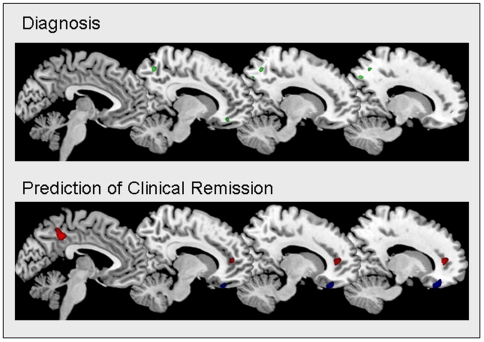
BACKGROUND: Depression is experienced as a persistent low mood or anhedonia accompanied by behavioural and cognitive disturbances which impair day to day functioning. However, the diagnosis is largely based on self-reported symptoms, and there are no neurobiological markers to guide the choice of treatment. In the present study, we examined the prognostic and diagnostic potential of the structural neural correlates of depression. METHODOLOGY AND PRINCIPAL FINDINGS: Subjects were 37 patients with major depressive disorder (mean age 43.2 years), medication-free, in an acute depressive episode, and 37 healthy individuals. Following the MRI scan, 30 patients underwent treatment with the antidepressant medication fluoxetine or cognitive behavioural therapy (CBT). Of the patients who subsequently achieved clinical remission with antidepressant medication, the whole brain structural neuroanatomy predicted 88.9% of the clinical response, prior to the initiation of treatment (88.9% patients in clinical remission (sensitivity) and 88.9% patients with residual symptoms (specificity), p = 0.01). Accuracy of the structural neuroanatomy as a diagnostic marker though was 67.6% (64.9% patients (sensitivity) and 70.3% healthy individuals (specificity), p = 0.027). CONCLUSIONS AND SIGNIFICANCE: The structural neuroanatomy of depression shows high predictive potential for clinical response to antidepressant medication, while its diagnostic potential is more limited. The present findings provide initial steps towards the development of neurobiological prognostic markers for depression.
Overview
The claims and statistics of this paper haven’t been checked yet.
Free: it reads the open-access text and checks the first 5 claims that cite a source we can check. Create a free account to check every claim.
Integrity signals
Registry
Cites
Statistics
Figures
Verification
Claims the paper makes
The claims and statistics of this paper haven’t been checked yet.
Free: it reads the open-access text and checks the first 5 claims that cite a source we can check. Create a free account to check every claim.
Claims other papers make about this one
Each is checked against this paper’s own text: does it say what the citing paper says it does?
In the citing paper
“Recently, several brain imaging studies have attempted to distinguish depressed patients from healthy controls (Fu et al., 2008;Costafreda et al., 2009;Craddock et al., 2009).”
From Identifying major depression using whole-brain functional connectivity: a multivariate pattern analysis (2012) · cites this paper as Costafreda et al., 2009
Self-check
Percentages, sums and reported differences re-computed from the paper’s own numbers.
The self-check needs the paper’s full text.
Citations
Cites
The Nature of Statistical Learning Theory
Vapnik, V. N. (1995) · doi:10.1007/978-1-4757-2440-0 · Cited by 39,138
Hamilton, M. (1960) · Journal of Neurology, Neurosurgery & Psychiatry · doi:10.1136/jnnp.23.1.56 · Cited by 32,817 · cited 1×
“2) [31].”
Voxel-Based Morphometry—The Methods
Ashburner, J., & Friston, K. J. (2000) · NeuroImage · doi:10.1006/nimg.2000.0582 · Cited by 8,676 · cited 1×
“matter (GM), white matter (WM) and cerebrospinal fluid and imported into a rigidly aligned space [32].”
BackgroundSelf-citationA fast diffeomorphic image registration algorithm
Ashburner, J. (2007) · NeuroImage · doi:10.1016/j.neuroimage.2007.07.007 · Cited by 8,122 · cited 1×
“. GM segments were then iteratively registered by non-linear warping to templates generated from all images in each group by the Diffeomorphic Anatomical Registration Through Exponentiated Lie algebra (DARTEL) toolbox”
MethodSelf-citationAn introduction to variable and feature selection
GuyonIsabelle, & ElisseeffAndré (2003) · Journal of Machine Learning Research · doi:10.5555/944919.944968 · Cited by 7,715
The Nature of Statistical Learning Theory
Sain, S. R. (1996) · Technometrics · doi:10.1080/00401706.1996.10484565 · Cited by 5,434
The distributed human neural system for face perception
Haxby, J. V., Hoffman, E. A., & Gobbini, M. I. (2000) · Trends in Cognitive Sciences · doi:10.1016/s1364-6613(00)01482-0 · Cited by 4,891 · cited 2×
“Sad facial expressions are socially relevant, emotional cues which engage a distributed network of regions [4] that show an abnormal response during an acute depressive episode [5–6].”
BackgroundA Voxel-Based Morphometric Study of Ageing in 465 Normal Adult Human Brains
Good, C. D., Johnsrude, I. S., Ashburner, J., Henson, R. N. A., Friston, K. J., & Frackowiak, R. S. J. (2001) · NeuroImage · doi:10.1006/nimg.2001.0786 · Cited by 4,561
Self-citationStructured Clinical Interview for DSM-IV Axis I Disorders
Spitzer, R. L., First, M. B., & Gibbon, M. (1997) · Medical Entomology and Zoology · Cited by 4,096
An empirical comparison of supervised learning algorithms
Caruana, R., & Niculescu-Mizil, A. (2006) · Proceedings of the 23rd international conference on Machine learning - ICML '06 · doi:10.1145/1143844.1143865 · Cited by 2,780 · cited 1×
“Support vector machine is a supervised, multivariate classification method [37] with optimal empirical performance in many classification settings [38] that has previously been utilized in neuroimaging research [2–3,7,9].”
Method
Research works printed but not linked: 1
- [29]American Psychiatric Association 1994 Diagnostic and Statistical Manual of Mental Disorders, 4th Edition (DSM-IV) Washington DC APA Press
Cited by
Pisner, D. A., & Schnyer, D. M. (2020) · Machine Learning · doi:10.1016/b978-0-12-815739-8.00006-7 · Cited by 1,004
Orrù, G., Pettersson-Yeo, W., Marquand, A. F., Sartori, G., & Mechelli, A. (2012) · Neuroscience & Biobehavioral Reviews · doi:10.1016/j.neubiorev.2012.01.004 · Cited by 1,012
Frontocingulate Dysfunction in Depression: Toward Biomarkers of Treatment Response
Pizzagalli, D. A. (2011) · Neuropsychopharmacology · doi:10.1038/npp.2010.166 · Cited by 945
“…(Navarro et al, 2004); 6 studies were excluded because no information was reported to permit computation of effect sizes pertaining to ACC regions (Costafreda et al, 2009b; Little et al, 2005; Marquand et al, 2008; Milak et al, 2009; Siegle et al, 2006; Teneback et al, 1999); 5 studies were…”
BackgroundZeng, L.-L., Shen, H., Liu, L., Wang, L., Li, B., Fang, P., Zhou, Z., Li, Y., & Hu, D. (2012) · Brain · doi:10.1093/brain/aws059 · Cited by 748
“Recently, several brain imaging studies have attempted to distinguish depressed patients from healthy controls (Fu et al., 2008; Costafreda et al., 2009; Craddock et al., 2009).”
BackgroundA Review of Feature Reduction Techniques in Neuroimaging
Mwangi, B., Tian, T. S., & Soares, J. C. (2014) · Neuroinformatics · doi:10.1007/s12021-013-9204-3 · Cited by 559
“Other neuroimaging classification studies using ANOVA for feature reduction include; ASD (Coutanche et al. 2011 ), MDD (Costafreda et al. 2009), schizophrenia (Yoon et al. 2008) and fMRI visual activation classification task (Cox and Savoy 2003).”
InfluentialWhat is Machine Learning? A Primer for the Epidemiologist
Bi, Q., Goodman, K. E., Kaminsky, J., & Lessler, J. (2019) · American Journal of Epidemiology · doi:10.1093/aje/kwz189 · Cited by 496
Fu, C. H. Y., Steiner, H., & Costafreda, S. G. (2013) · Neurobiology of Disease · doi:10.1016/j.nbd.2012.05.008 · Cited by 399
“Our findings further suggest that structural imaging is predictive of response to antidepressant medication (Costafreda et al., 2009a), while functional imaging of an emotional task may be more informative of clinical response to CBT (Costafreda et al., 2009c; Fu et al., 2008a), with non-emotional…”
BackgroundMethodResultInfluentialSelf-citationMachine learning in major depression: from classification to treatment outcome prediction
Gao, S., Calhoun, V. D., & Sui, J. (2018) · CNS Neuroscience & Therapeutics · doi:10.1111/cns.13048 · Cited by 370
Chu, C., Hsu, A.-L., Chou, K.-H., Bandettini, P., & Lin, C. (2012) · NeuroImage · doi:10.1016/j.neuroimage.2011.11.066 · Cited by 319
“…of the input feature space in comparison with the relatively small number of subjects (curse of dimensionality) is a widespread concern, so some form of feature selection is often applied (Costafreda et al., 2009; Fan et al., 2007; Guyon and Elisseeff, 2003; Pelaez-Coca et al., 2010).”
BackgroundInfluentialSelf-citationWolfers, T., Buitelaar, J. K., Beckmann, C. F., Franke, B., & Marquand, A. F. (2015) · Neuroscience & Biobehavioral Reviews · doi:10.1016/j.neubiorev.2015.08.001 · Cited by 290
Diagnostic neuroimaging across diseases
Klöppel, S., Abdulkadir, A., Jack, C. R., Koutsouleris, N., Mourão-Miranda, J., & Vemuri, P. (2012) · NeuroImage · doi:10.1016/j.neuroimage.2011.11.002 · Cited by 279
Phillips, M. L., Chase, H. W., Sheline, Y. I., Etkin, A., Almeida, J. R. C., Deckersbach, T., & Trivedi, M. H. (2015) · American Journal of Psychiatry · doi:10.1176/appi.ajp.2014.14010076 · Cited by 267
“Other Neuroimaging Modalities While the extent to which gray matter abnormalities may predict or moderate treatment outcome in depression is unclear (160, 170, 171) and the extent towhich these andother structural measures maymediate treatment response remains unexamined, a small number of studies suggest that other n…”
BackgroundWang, S., Celebi, M. E., Zhang, Y.-D., Yu, X., Lu, S., Yao, X., Zhou, Q., Miguel, M.-G., Tian, Y., Gorriz, J. M., et al. (2021) · Information Fusion · doi:10.1016/j.inffus.2021.07.001 · Cited by 241
Automated hippocampal shape analysis predicts the onset of dementia in mild cognitive impairment
Costafreda, S. G., Dinov, I. D., Tu, Z., Shi, Y., Liu, C.-Y., Kloszewska, I., Mecocci, P., Soininen, H., Tsolaki, M., Vellas, B., et al. (2011) · NeuroImage · doi:10.1016/j.neuroimage.2011.01.050 · Cited by 215
“…classification, which has been shown to be a powerful tool for statistical pattern recognition in neuroimaging-based clinical prediction (Davatzikos et al., 2005; Fu et al., 2008; Fan et al., 2008b; Kloppel et al., 2008; Vemuri et al., 2008; Costafreda et al., 2009; Nouretdinov et al., in press).”
MethodSelf-citationBruder, G. E., Stewart, J. W., & McGrath, P. J. (2017) · Neuroscience & Biobehavioral Reviews · doi:10.1016/j.neubiorev.2017.04.021 · Cited by 214
“…smaller hippocampal volumes were associated with poorer clinical response in several studies (Stratmann et al., 2014), and studies have reported that volume of left dorsolateral PFC was predictive of clinical response to antidepressants (Costafreda et al., 2009; Li et al., 2010; Liu et al., 2012).”
Mwangi, B., Ebmeier, K. P., Matthews, K., & Douglas Steele, J. (2012) · Brain · doi:10.1093/brain/aws084 · Cited by 207
“…training classifiers that can reliably distin- guish different clinical groups at an individual subject level, e.g. depressive illness (Fu et al., 2008; Costafreda et al., 2009; Gong et al., 2011), psychosis (Koutsouleris et al., 2009), Alzheimer’s disease (Davatzikos et al., 2008; Kloppel et al.,…”
BackgroundPrognostic prediction of therapeutic response in depression using high-field MR imaging
Gong, Q., Wu, Q., Scarpazza, C., Lui, S., Jia, Z., Marquand, A., Huang, X., McGuire, P., & Mechelli, A. (2011) · NeuroImage · doi:10.1016/j.neuroimage.2010.11.079 · Cited by 203
“In addition, one recent study has applied SVM to structural MRI scans in order to predict response to antidepressant medication; this yielded a sensitivity of 88.9% and a specificity of 88.9%, resulting in an overall accuracy of 88.9% (Costafreda et al., 2009a).”
InfluentialCrocker, L. D., Heller, W., Warren, S. L., O'Hare, A. J., Infantolino, Z. P., & Miller, G. A. (2013) · Frontiers in Human Neuroscience · doi:10.3389/fnhum.2013.00261 · Cited by 193
“Measures of pre-treatment structural neuroanatomy, particularly rACC volume, have also been used to predict response to antidepressant medication and CBT in individuals with MDD and PTSD, respectively (Bryant et al., 2008; Costafreda et al., 2009).”
BackgroundMethodClinical application of brain imaging for the diagnosis of mood disorders: the current state of play
Savitz, J. B., Rauch, S. L., & Drevets, W. C. (2013) · Molecular Psychiatry · doi:10.1038/mp.2013.25 · Cited by 189
Salvadore, G., Nugent, A. C., Lemaitre, H., Luckenbaugh, D. A., Tinsley, R., Cannon, D. M., Neumeister, A., Zarate, C. A., & Drevets, W. C. (2011) · NeuroImage · doi:10.1016/j.neuroimage.2010.11.011 · Cited by 187
“…evidence from cross-sectional (Caetano et al., 2006; Yucel et al., 2009) and longitudinal studies (Frodl et al., 2008b; Chen et al., 2007; Costafreda et al., 2009) that GM morphometry might provide biomarkers associated with antidepressant response (Yucel et al., 2009; Chen et al., 2007)…”
Costafreda, S. G., Fu, C. H., Picchioni, M., Toulopoulou, T., McDonald, C., Kravariti, E., Walshe, M., Prata, D., Murray, R. M., & McGuire, P. K. (2011) · BMC Psychiatry · doi:10.1186/1471-244x-11-18 · Cited by 188
“Our work on neuroimaging-based prediction in depression has also shown that functional and structural MRI may convey complementary predictive information [8,17,59].”
BackgroundMethodSelf-citationNeuroimaging biomarkers as predictors of treatment outcome in Major Depressive Disorder
Fonseka, T. M., MacQueen, G. M., & Kennedy, S. H. (2018) · Journal of Affective Disorders · doi:10.1016/j.jad.2017.10.049 · Cited by 185
Unsupervised classification of major depression using functional connectivity MRI
Zeng, L., Shen, H., Liu, L., & Hu, D. (2014) · Human Brain Mapping · doi:10.1002/hbm.22278 · Cited by 182
Studying depression using imaging and machine learning methods
Patel, M. J., Khalaf, A., & Aizenstein, H. J. (2016) · NeuroImage: Clinical · doi:10.1016/j.nicl.2015.11.003 · Cited by 178
“…Features [Imaging modality] Feature reduction method Cross-validation method Machine learning method Results (Note: highest accuracies presented) Costafreda et al. (2009) – 9 responders – 9 non-responders – Smoothed gray matter voxel-based intensity values [T1-weighted] – Voxel based…”
Sparse network-based models for patient classification using fMRI
Rosa, M. J., Portugal, L., Hahn, T., Fallgatter, A. J., Garrido, M. I., Shawe-Taylor, J., & Mourao-Miranda, J. (2015) · NeuroImage · doi:10.1016/j.neuroimage.2014.11.021 · Cited by 169
“Brain structure, including gray and white matter measures, has also been found to be highly predictive of MDD (Costafreda et al., 2009b; Gong et al., 2011; Mwangi et al., 2012; Qiu et al., 2013).”
BackgroundPatel, M. J., Andreescu, C., Price, J. C., Edelman, K. L., Reynolds, C. F., & Aizenstein, H. J. (2015) · International Journal of Geriatric Psychiatry · doi:10.1002/gps.4262 · Cited by 168
“…mid-life depression diagnosis have shown accurate classi fi cations can be obtained using functional (Fu et al., 2008; Marquand et al., 2008; Hahn et al., 2011; Nouretdinov et al., 2011; Zeng et al., 2012) or structural (Costafreda et al., 2009; Mwangi et al., 2012a; Mwangi et al., 2012b) imaging.”
MethodResultInfluentialMaking Individual Prognoses in Psychiatry Using Neuroimaging and Machine Learning
Janssen, R. J., Mourão-Miranda, J., & Schnack, H. G. (2018) · Biological Psychiatry: Cognitive Neuroscience and Neuroimaging · doi:10.1016/j.bpsc.2018.04.004 · Cited by 168
White matter abnormalities and illness severity in major depressive disorder
Cole, J., Chaddock, C. A., Farmer, A. E., Aitchison, K. J., Simmons, A., McGuffin, P., & Fu, C. H. Y. (2012) · British Journal of Psychiatry · doi:10.1192/bjp.bp.111.100594 · Cited by 164
Self-citationQuantifying performance of machine learning methods for neuroimaging data
Jollans, L., Boyle, R., Artiges, E., Banaschewski, T., Desrivières, S., Grigis, A., Martinot, J.-L., Paus, T., Smolka, M. N., Walter, H., et al. (2019) · NeuroImage · doi:10.1016/j.neuroimage.2019.05.082 · Cited by 173
“…algorithms to classify individuals based on structural or functional imaging data using, among other algorithms, Support Vector Machines (e.g. Costafreda et al., 2009; Davatzikos et al., 2011; Koutsouleris et al., 2012), Random Forest (e.g. Ball et al. 2014, Ramirez et al., 2010), and Naïve…”
MethodNouretdinov, I., Costafreda, S. G., Gammerman, A., Chervonenkis, A., Vovk, V., Vapnik, V., & Fu, C. H. Y. (2011) · NeuroImage · doi:10.1016/j.neuroimage.2010.05.023 · Cited by 165
“…predictive of an individual patient's full clinical response to antidepressant medication with an accuracy of 89% (Costafreda et al., 2009a), while functional MRI responses showed the greatest predictive potential for cognitive behavioral therapy with an accuracy of 79% (Costafreda et al., 2009b).”
BackgroundMethodInfluentialSelf-citationvan Waarde, J. A., Scholte, H. S., van Oudheusden, L. J. B., Verwey, B., Denys, D., & van Wingen, G. A. (2015) · Molecular Psychiatry · doi:10.1038/mp.2014.78 · Cited by 164
Clinical prediction from structural brain MRI scans: A large-scale empirical study
Initiative, F. T. A. D. N., Sabuncu, M. R., & Konukoglu, E. (2015) · Neuroinformatics · doi:10.1007/s12021-014-9238-1 · Cited by 161
“Over the last decade, MVPA has been increasingly applied to structural brain MRI scans, largely for developing models to predict clinical conditions at the individual level (Costafreda et al. 2009; Cuingnet et al. 2011; Davatzikos et al. 2008; Davatzikos et al. 2009; Duchesnay et al. 2007; Duchesne et al. 2009; Ecker…”
BackgroundTowards a brain‐based predictome of mental illness
Rashid, B., & Calhoun, V. (2020) · Human Brain Mapping · doi:10.1002/hbm.25013 · Cited by 167
“1 Structural MRI: Using SVM-RFE classifier, Ding and colleagues utilized mean gray matter volume features from sMRI data to predict nicotine dependence with 69.6% accuracy (Ding et al., 2015).”
MethodInfluentialDiffusion tensor imaging predictors of treatment outcomes in major depressive disorder
Korgaonkar, M. S., Williams, L. M., Song, Y. J., Usherwood, T., & Grieve, S. M. (2014) · British Journal of Psychiatry · doi:10.1192/bjp.bp.113.140376 · Cited by 145
Phillips, J. L., Batten, L. A., Tremblay, P., Aldosary, F., & Blier, P. (2015) · International Journal of Neuropsychopharmacology · doi:10.1093/ijnp/pyv037 · Cited by 144
“, 2005), greater GM volume in the right rostral ACC (Costafreda et al., 2009), and diffusion tensor imaging measures of white matter connectivity between the subgenual ACC and limbic regions (Korgaonker et al.”
BackgroundInfluentialLiu, F., Guo, W., Yu, D., Gao, Q., Gao, K., Xue, Z., Du, H., Zhang, J., Tan, C., Liu, Z., et al. (2012) · PLoS ONE · doi:10.1371/journal.pone.0040968 · Cited by 141
“The prognostic and diagnostic potential of these regions in patients with MDD are also found in other studies [3,17].”
BackgroundMethodResultIntegrating Neurobiological Markers of Depression
Hahn, T., Marquand, A. F., Ehlis, A.-C., Dresler, T., Kittel-Schneider, S., Jarczok, T. A., Lesch, K.-P., Jakob, P. M., Mourao-Miranda, J., Brammer, M. J., et al. (2010) · Archives of General Psychiatry · doi:10.1001/archgenpsychiatry.2010.178 · Cited by 142
Biomarkers to Predict Antidepressant Response
Leuchter, A. F., Cook, I. A., Hamilton, S. P., Narr, K. L., Toga, A., Hunter, A. M., Faull, K., Whitelegge, J., Andrews, A. M., Loo, J., et al. (2010) · Current Psychiatry Reports · doi:10.1007/s11920-010-0160-4 · Cited by 140
“The predictive utility of structural data is not limited to the hippocampus, as gray matter density in the ACC and posterior cingulate cortex was also predictive of clinical remission following 8 weeks of fluoxetine treatment [26].”
BackgroundHahn, T., Kircher, T., Straube, B., Wittchen, H.-U., Konrad, C., Ströhle, A., Wittmann, A., Pfleiderer, B., Reif, A., Arolt, V., et al. (2015) · JAMA Psychiatry · doi:10.1001/jamapsychiatry.2014.1741 · Cited by 129
Brain Structural Effects of Antidepressant Treatment in Major Depression
Dusi, N., Barlati, S., Vita, A., & Brambilla, P. (2015) · Current Neuropharmacology · doi:10.2174/1570159x1304150831121909 · Cited by 131
“Larger frontal cortical thickness [131] and medial frontal gyrus, dorsolateral prefrontal cortex (DLPFC) and cingulate cortex volumes [24, 133, 134] predicted remission after antidepressant treatment [84, 128].”
Sparse Network-Based Models for Patient Classification Using fMRI
Rosa, M. J., Portugal, L., Shawe-Taylor, J., & Mourao-Miranda, J. (2013) · 2013 International Workshop on Pattern Recognition in Neuroimaging · doi:10.1109/prni.2013.26 · Cited by 122
Neuroimaging-Based Biomarkers in Psychiatry: Clinical Opportunities of a Paradigm Shift
Fu, C. H. Y., & Costafreda, S. G. (2013) · The Canadian Journal of Psychiatry · doi:10.1177/070674371305800904 · Cited by 120
Self-citationSchmaal, L., Marquand, A. F., Rhebergen, D., van Tol, M.-J., Ruhé, H. G., van der Wee, N. J. A., Veltman, D. J., & Penninx, B. W. J. H. (2015) · Biological Psychiatry · doi:10.1016/j.biopsych.2014.11.018 · Cited by 108
Kang, S., & Cho, S. (2020) · International Journal of Molecular Sciences · doi:10.3390/ijms21062148 · Cited by 138
“9% accuracy, and the gray matter volumes in the middle frontal gyrus, occipital lobe, and cingulate cortex in remitters were larger than in non-remitters [33].”
ResultEnneking, V., Leehr, E. J., Dannlowski, U., & Redlich, R. (2019) · Psychological Medicine · doi:10.1017/s0033291719003660 · Cited by 126
“In contrast, the only study implementing machine learning for the prediction of CBT response did not reveal an adequate classifier based on pre-treatment brain structure (Costafreda et al., 2009).”
BackgroundResultHan, Y., Li, P., Miao, M., Tao, Y., Kang, X., & Zhang, J. (2022) · BMC Anesthesiology · doi:10.1186/s12871-022-01588-7 · Cited by 120
Challenges for molecular neuroimaging with MRI
Lelyveld, V. S., Atanasijevic, T., & Jasanoff, A. (2010) · International Journal of Imaging Systems and Technology · doi:10.1002/ima.20221 · Cited by 110
Diagnostic and therapeutic utility of neuroimaging in depression: an overview
Arnone, D., Wise, T., Cleare, A., Young, A., & Herane, A. (2014) · Neuropsychiatric Disease and Treatment · doi:10.2147/ndt.s50156 · Cited by 106
“Studies have also used machine learning classification techniques to predict response to antidepressant treatment.(113,114,118) In these studies, participants were split into responders and nonresponders after treatment, and machine learning techniques were used to allocate patients to either category according to the…”
Kim, Y., & Na, K. (2017) · Progress in Neuro-Psychopharmacology and Biological Psychiatry · doi:10.1016/j.pnpbp.2017.06.024 · Cited by 112
Zhang, W., Liu, H., Silenzio, V., Qiu, P., & Gong, W. (2020) · JMIR Medical Informatics · doi:10.2196/15516 · Cited by 115
Ma, Q., Zeng, L.-L., Shen, H., Liu, L., & Hu, D. (2013) · Brain Research · doi:10.1016/j.brainres.2012.12.002 · Cited by 95
Fang, P., Zeng, L.-L., Shen, H., Wang, L., Li, B., Liu, L., & Hu, D. (2012) · PLoS ONE · doi:10.1371/journal.pone.0045972 · Cited by 95
Subregional hippocampal deformations in major depressive disorder
Cole, J., Toga, A. W., Hojatkashani, C., Thompson, P., Costafreda, S. G., Cleare, A. J., Williams, S. C. R., Bullmore, E. T., Scott, J. L., & Mitterschiffthaler, M. T. (2010) · Journal of Affective Disorders · doi:10.1016/j.jad.2010.03.004 · Cited by 94
“Furthermore, the present study did not address possible causative mechanisms, such as hippocampal apoptosis and decreased neurogenesis, which may be driven by hypercortisolemia or diminished neurotrophin levels (Czeh and Lucassen, 2007).”
Self-citationPrediction of illness severity in patients with major depression using structural MR brain scans
Mwangi, B., Matthews, K., & Steele, J. D. (2012) · Journal of Magnetic Resonance Imaging · doi:10.1002/jmri.22806 · Cited by 90
“The brain regions which contribute to classification are widely distributed throughout the brain, but there are noticeably more strongly predictive loci in the hippocampus ( 32, 25, 17), superior temporal gyrus (47, 38, 7), and medial brain structures including the cingulate sulcus (12, 45, 18).”
BackgroundWee, C.-Y., Wang, L., Shi, F., Yap, P.-T., & Shen, D. (2014) · Human Brain Mapping · doi:10.1002/hbm.22411 · Cited by 89
“…in press], Alzheimer’s disease [Davatzikos et al., 2008; Kloppel et al., 2008; Magnin et al., 2008; Zhang et al., 2011], Parkinson disease [Haller et al., in press; Pan et al., 2012], depressive illness [Costafreda et al., 2009; Gong et al., 2011], psychosis [Koutsouleris et al., 2009], etc.”
BackgroundHilbert, K., Lueken, U., Muehlhan, M., & Beesdo‐Baum, K. (2017) · Brain and Behavior · doi:10.1002/brb3.633 · Cited by 87
Salience Network Functional Connectivity Predicts Placebo Effects in Major Depression
Sikora, M., Heffernan, J., Avery, E. T., Mickey, B. J., Zubieta, J.-K., & Peciña, M. (2016) · Biological Psychiatry: Cognitive Neuroscience and Neuroimaging · doi:10.1016/j.bpsc.2015.10.002 · Cited by 85
Neuroimaging for psychotherapy research: current trends.
Weingarten, C. P., & Strauman, T. J. (2015) · Psychotherapy Research · doi:10.1080/10503307.2014.883088 · Cited by 81
Cohen, S. E., Zantvoord, J. B., Wezenberg, B. N., Bockting, C., & van Wingen, G. A. (2021) · Translational Psychiatry · doi:10.1038/s41398-021-01286-x · Cited by 93
Hornstein, S., Forman‐Hoffman, V. L., Nazander, A., Ranta, K., & Hilbert, K. (2021) · Digital Health · doi:10.1177/20552076211060659 · Cited by 100
Translational machine learning for psychiatric neuroimaging
Walter, M., Alizadeh, S., Jamalabadi, H., Lueken, U., Dannlowski, U., Walter, H., Olbrich, S., Čolić, L., Kambeitz, J. P., Koutsouleris, N., et al. (2018) · Progress in Neuro-Psychopharmacology and Biological Psychiatry · doi:10.1016/j.pnpbp.2018.09.014 · Cited by 91
Resting-state functional connectivity abnormalities in first-onset unmedicated depression
Chen, J., Guo, H., Cheng, C., Cao, X., Xiang, J., & Zhang, K. (2014) · Neural Regeneration Research · doi:10.4103/1673-5374.125344 · Cited by 76
Gong, Q., Li, L., Tognin, S., Wu, Q., Pettersson-Yeo, W., Lui, S., Huang, X., Marquand, A. F., & Mechelli, A. (2014) · Psychological Medicine · doi:10.1017/s0033291713000561 · Cited by 73
“In recent years, a growing number of studies have applied SVM to neuroimaging data to examine a range of psychiatric and neurological conditions including schizophrenia, depression, Alzheimer’s disease and autistic spectrum disorder (e.g. Davatzikos et al. 2005; Fan et al. 2008a; Fu et al. 2008; Klöppel et al. 2008; C…”
BackgroundBhaumik, R., Jenkins, L. M., Gowins, J. R., Jacobs, R. H., Barba, A., Bhaumik, D. K., & Langenecker, S. A. (2017) · NeuroImage: Clinical · doi:10.1016/j.nicl.2016.02.018 · Cited by 72
Bartlett, E. A., DeLorenzo, C., Sharma, P., Yang, J., Zhang, M., Petkova, E., Weissman, M., McGrath, P. J., Fava, M., Ogden, R. T., et al. (2018) · Neuropsychopharmacology · doi:10.1038/s41386-018-0122-9 · Cited by 72
Structural MRI-Based Predictions in Patients with Treatment-Refractory Depression (TRD)
Johnston, B. A., Steele, J. D., Tolomeo, S., Christmas, D., & Matthews, K. (2015) · PLOS ONE · doi:10.1371/journal.pone.0132958 · Cited by 71
Costafreda, S. G., McCann, P., Saker, P., Cole, J. H., Cohen‐Woods, S., FARMER, A. E., Aitchison, K. J., McGuffin, P., & Fu, C. H. Y. (2013) · Journal of Affective Disorders · doi:10.1016/j.jad.2013.02.028 · Cited by 78
Self-citationMitra, J., Shen, K., Ghose, S., Bourgeat, P., Fripp, J., Salvado, O., Pannek, K., Taylor, D. J., Mathias, J. L., & Rose, S. (2016) · NeuroImage · doi:10.1016/j.neuroimage.2016.01.056 · Cited by 76
Accuracy of automated classification of major depressive disorder as a function of symptom severity
Ramasubbu, R., Brown, M. R. G., Cortese, F., Gaxiola, I., Goodyear, B., Greenshaw, A. J., Dursun, S. M., & Greiner, R. (2016) · NeuroImage: Clinical · doi:10.1016/j.nicl.2016.07.012 · Cited by 71
“Authors reported classi fi cation accuracy for MDD ranging from 67 to 90% using structural MRI data (Costafreda et al., 2009; Gong et al., 2011; Mwangi et al., 2012a), 94% using resting-state fMRI data (Zeng et al., 2012; Zeng et al., 2014), 67 – 86% using task-related fMRI data (Fu et al., 2008;…”
MethodResultSchnyer, D. M., Clasen, P. C., Gonzalez, C. E., & Beevers, C. G. (2017) · Psychiatry Research Neuroimaging · doi:10.1016/j.pscychresns.2017.03.003 · Cited by 81
Shared and distinct homotopic connectivity changes in melancholic and non-melancholic depression
Shan, X., Cui, X., Liu, F., Li, H., Huang, R., Tang, Y., Chen, J., Zhao, J., Guo, W., & Xie, G. (2021) · Journal of Affective Disorders · doi:10.1016/j.jad.2021.03.038 · Cited by 74
Wessa, M., & Lois, G. (2015) · Current Neuropharmacology · doi:10.2174/1570159x13666150416224801 · Cited by 67
“This can be achieved by pattern recognition methods such as support vector machines that have recently shown moderate sensitivity and specificity in discriminating between responders and non-responders at the individual level [62].”
BackgroundAssociation rule-based feature selection method for Alzheimer’s disease diagnosis
Chaves, R., Ramírez, J., Górriz, J. M., & Puntonet, C. G. (2012) · Expert Systems with Applications · doi:10.1016/j.eswa.2012.04.075 · Cited by 77
SMRI Biomarkers Predict Electroconvulsive Treatment Outcomes: Accuracy with Independent Data Sets
Jiang, R., Abbott, C., Jiang, T., Du, Y., Espinoza, R. T., Narr, K. L., Wade, B., Yu, Q., Song, M., Lin, D., et al. (2017) · Neuropsychopharmacology · doi:10.1038/npp.2017.165 · Cited by 66
MacQueen, G. M., Hassel, S., Arnott, S. R., Addington, J., Bowie, C. R., Bray, S. L., Davis, A. D., Downar, J., Foster, J. A., Frey, B. N., et al. (2019) · Journal of Psychiatry and Neuroscience · doi:10.1503/jpn.180036 · Cited by 57
MRI predictors of pharmacotherapy response in major depressive disorder
Gerlach, A. R., Karim, H. T., Peciña, M., Ajilore, O., Taylor, W. D., Butters, M. A., & Andreescu, C. (2022) · NeuroImage: Clinical · doi:10.1016/j.nicl.2022.103157 · Cited by 57
“Two studies reported that larger right ACC volumes were indicative of clinical remission (Costafreda et al., 2009), (SerraBlasco, 2016).”
BackgroundLegge, R. M., Sendi, S., Cole, J. H., Cohen‐Woods, S., Costafreda, S. G., Simmons, A., FARMER, A. E., Aitchison, K. J., McGuffin, P., & Fu, C. H. Y. (2015) · The British Journal of Psychiatry · doi:10.1192/bjp.bp.113.143529 · Cited by 63
“8,31 Similarly, studies of amygdala responsivity have been mixed, with reports of significant effects, 38,39 but more frequently of no impact, 9,40,41 of the BDNF polymorphism.”
Self-citationLong, F., Chen, Y. A., Zhang, Q., Li, Q., Wang, Y., Wang, Y., Li, H., Zhao, Y., McNamara, R. K., DelBello, M. P., et al. (2024) · Molecular Psychiatry · doi:10.1038/s41380-024-02710-6 · Cited by 61
“4).”
Colle, R., Dupong, I., Colliot, O., Deflesselle, E., Hardy, P., Falissard, B., Ducreux, D., Chupin, M., & Corruble, E. (2018) · The World Journal of Biological Psychiatry · doi:10.1080/15622975.2016.1208840 · Cited by 54
“Regarding specifically the hippocampus, they meta-analysed three studies (Chen et al. 2007; Costafreda et al. 2009; Li et al. 2010) (114 patients) excluding older patients.”
MethodSize matters – The olfactory bulb as a marker for depression
Rottstaedt, F., Weidner, K., Strauß, T., Schellong, J., Kitzler, H. H., Wolff-Stephan, S., Hummel, T. R., & Croy, I. (2017) · Journal of Affective Disorders · doi:10.1016/j.jad.2017.12.047 · Cited by 61
Dickie, E. W., Brunet, A., Akerib, V., & Armony, J. L. (2013) · Psychological Medicine · doi:10.1017/s0033291712001328 · Cited by 53
“2005), whereas the latter would be in line with studies of major depression and bipolar disorder showing structural changes in regions such as the putamen and ACC after successful treatment (Costafreda et al. 2009 ; Moore et al. 2009).”
BackgroundResultInfluentialDepression recognition according to heart rate variability using Bayesian Networks
Kuang, D., Yang, R., Chen, X., Lao, G., Wu, F., Huang, X., Lv, R., Zhang, L., Song, C., & Ou, S. (2017) · Journal of Psychiatric Research · doi:10.1016/j.jpsychires.2017.09.012 · Cited by 56
Serpa, M. H., Ou, Y., Schaufelberger, M. S., Doshi, J., Ferreira, L. K., Machado-Vieira, R., Menezes, P. R., Scazufca, M., Davatzikos, C., Busatto, G. F., et al. (2014) · BioMed Research International · doi:10.1155/2014/706157 · Cited by 49
Haller, S., Lovblad, K.-O., Giannakopoulos, P., & Van De Ville, D. (2014) · Brain Topography · doi:10.1007/s10548-014-0360-z · Cited by 49
Bulubas, L., Padberg, F., Bueno, P. V. S., Duran, F., Busatto, G. F., Amaro, E., Benseñor, I. M., Lotufo, P. A., Goerigk, S. A., Gattaz, W. F., et al. (2019) · Brain stimulation · doi:10.1016/j.brs.2019.05.006 · Cited by 52
Queirazza, F., Fouragnan, E. F., Steele, J. D., Cavanagh, J., & Philiastides, M. G. (2019) · Science Advances · doi:10.1126/sciadv.aav4962 · Cited by 53
Pei, C., Sun, Y., Zhu, J., Wang, X., Zhang, Y., Zhang, S., Yao, Z., & Lü, Q. (2019) · Journal of Magnetic Resonance Imaging · doi:10.1002/jmri.27029 · Cited by 49
“Structural biomarkers of increased gray matter in the occipital lobe, anterior cingulate cortex, and posterior cingulate cortex at baseline were shown to predict remission to fluoxetine but not cognitive behavioral therapy (CBT).(3) The volume of hippocampus at baseline was also identified as a predictor for pharmacot…”
BackgroundGuo, H., Cao, X., Liu, Z., Li, H., Chen, J., & Zhang, K. (2012) · NeuroReport · doi:10.1097/wnr.0b013e32835a650c · Cited by 46
Cardoner, N., Andero, R., Cano, M., Marin-Blasco, I., Porta-Casteràs, D., Serra-Blasco, M., Via, E., Vicent-Gil, M., & Portella, M. J. (2024) · Current Neuropharmacology · doi:10.2174/1570159x21666230703091435 · Cited by 45
“In this line, Costafreda et al. [200] described that achieving clinical remission after taking antidepressant medication could be predicted from the observation of increased density in the right ACC, among other frontolimbic areas such as the left PCC [200].”
BackgroundPredicting methylphenidate response in attention deficit hyperactivity disorder: A preliminary study
Johnston, B. A., Coghill, D., Matthews, K., & Steele, J. D. (2015) · Journal of Psychopharmacology · doi:10.1177/0269881114548438 · Cited by 44
“Using the same data as Costafreda et al. (2009a), but a different machine learning technique, Nouretdinov et al. (2011) report results comparable to the Costafreda results.”
BackgroundMethodResultInfluentialPredicting clinical responses in major depression using intrinsic functional connectivity
Qin, J., Shen, H., Zeng, L.-L., Jiang, W., Liu, L., & Hu, D. (2015) · NeuroReport · doi:10.1097/wnr.0000000000000407 · Cited by 43
Imaging predictors of remission to anti-depressant medications in major depressive disorder
Kee, F., Korgaonkar, M. S., & Grieve, S. M. (2015) · Journal of Affective Disorders · doi:10.1016/j.jad.2015.07.002 · Cited by 49
“More consistent findings have been seen with the anterior and posterior cingulate cortices, with larger sizes of both structures predicting remission (Costafreda et al., 2009; Gunning et al., 2009; Jarnum et al., 2011).”
BackgroundInfluentialKlimes‐Dougan, B., Schreiner, M. W., Thai, M., Gunlicks‐Stoessel, M., Reigstad, K. M., & Cullen, K. R. (2017) · Progress in Neuro-Psychopharmacology and Biological Psychiatry · doi:10.1016/j.pnpbp.2017.10.015 · Cited by 43
“Early work showed increased grey matter density in the anterior and posterior cingulate cortex predicted response to SSRIs (Costafreda et al., 2009), but perhaps some of the most consistent evidence implicates the anterior cingulate cortex (ACC) as a predictor of clinical response (e.g.,…”
BackgroundInfluentialMonté, G. C., Falcón, C., Pomarol‐Clotet, E., & Ashburner, J. (2018) · NeuroImage · doi:10.1016/j.neuroimage.2018.05.065 · Cited by 47
“In the last ten years, pattern recognition techniques have been widely applied to structural data, mainly for predicting clinical status at the individual level (Kl € oppel et al. 2008, 2012; Costafreda et al., 2009; Nieuwenhuis et al., 2012; Mourao-Miranda et al., 2012).”
MethodSelf-citationOta, M., Noda, T., Sato, N., Hattori, K., Teraishi, T., Hori, H., Nagashima, A., Shimoji, K., Higuchi, T., & Kunugi, H. (2014) · Journal of Affective Disorders · doi:10.1016/j.jad.2014.04.032 · Cited by 51
Addressing Confounding in Predictive Models with an Application to Neuroimaging
Linn, K. A., Gaonkar, B., Doshi, J., Davatzikos, C., & Shinohara, R. T. (2016) · The International Journal of Biostatistics · doi:10.1515/ijb-2015-0030 · Cited by 44
“[40] for various classification tasks involving patients with depression.”
The role of machine learning in neuroimaging for drug discovery and development
Doyle, O., Mehta, M. A., & Brammer, M. J. (2015) · Psychopharmacology · doi:10.1007/s00213-015-3968-0 · Cited by 42
“Using a sample cohort (N=18, 9 per group), Costafreda et al. (2009) applied SVMs to voxel-based morphometry data extracted from structural brain images in order to predict clinical response to antidepressant medication with an accuracy of 88.”
MethodInfluentialPredictive Neuroimaging Markers of Psychotherapy Response: A Systematic Review
Chakrabarty, T., Ogrodniczuk, J. S., & Hadjipavlou, G. A. (2016) · Harvard Review of Psychiatry · doi:10.1097/hrp.0000000000000132 · Cited by 45
“Seven studies examined predictors of differential response to pharmacotherapy versus psychotherapy by comparing the baseline neuroimaging signatures of medication and psychotherapy responders.(9,18,19,21,24,29,32) Of these studies, one found a region that could potentially distinguish between these two groups, with Mc…”
ResultChen, F., Lv, X., Fang, J., Yu, S. P., Sui, J., Fan, L., Li, T., Yang, H., Wang, X., Wang, W., et al. (2015) · Journal of Affective Disorders · doi:10.1016/j.jad.2015.04.030 · Cited by 46
“Moreover, decreased grey matter density in the precuneus (BA 7) has been showed to contribute to the diagnosis of depression (Costafreda et al., 2009).”
BackgroundGhobadi‐Azbari, P., Jamil, A., Yavari, F., Esmaeilpour, Z., Malmir, N., Khayati, R. M., Soleimani, G., Cha, Y., Shereen, A. D., Nitsche, M. A., et al. (2020) · Progress in Neuro-Psychopharmacology and Biological Psychiatry · doi:10.1016/j.pnpbp.2020.110149 · Cited by 47
Metadata
- Authors
- Costafreda, S. G., Chu, C., Ashburner, J., & Fu, C. H. Y.
- Affiliations
- King's College London (GB)
- Wellcome Centre for Human Neuroimaging (GB)
- Corresponding author
- Fu, Cynthia H. Y.
- Venue
- PLoS ONE
- Publisher
- Public Library of Science (PLoS)
- Published
- 2009-07-27
- Volume
- 4
- Issue
- 7
- Pages
- e6353
- ISSN
- 1932-6203 (ISSN-L)
- PMC
- PMC2712086
- OpenAlex
- W2115449759
- Cited by
- 232
- References
- 42
- Citations by year
- 2026: 1 · 2025: 7 · 2024: 4 · 2023: 3 · 2022: 12 · 2021: 13 · 2020: 15 · 2019: 21 · 2018: 16 · 2017: 18 · 2016: 14 · 2015: 24 · 2014: 25 · 2013: 19 · 2012: 19
- FWCI
- 9.24
- Type
- journal article
- Language
- en
- Open access
- gold
- doi.org
- Locations
- PLoS ONE (publishedVersion, cc-by)
- PubMed Central (publishedVersion, cc-by)
- PubMed (publishedVersion)
- UEL Research Repository (University of East London) (acceptedVersion)
- UEL Research Repository (University of East London) (submittedVersion, cc-by)
- DOAJ (DOAJ: Directory of Open Access Journals) (submittedVersion, cc-by-sa)
- UCL Discovery (University College London) (submittedVersion)
- Research Portal (King's College London) (submittedVersion)
- Funders
- Wellcome Trust
- Topics
- Health Sciences › Medicine › Pharmacology (medical) › Treatment of Major Depression
- Life Sciences › Neuroscience › Cognitive Neuroscience › Neural and Behavioral Psychology Studies
- Social Sciences › Psychology › Experimental and Cognitive Psychology › Anxiety, Depression, Psychometrics, Treatment, Cognitive Processes
- Keywords
- major depressive disorder, neuroimaging biomarkers, treatment response prediction, antidepressant response, fluoxetine, cognitive behavioral therapy, clinical remission, diagnostic accuracy, neurobiological markers
- MeSH terms
- Adult, Combined Modality Therapy, Depression, Female, Fluoxetine, Humans, Magnetic Resonance Imaging, Male, Middle Aged, Prognosis, Cognitive Behavioral Therapy, Case-Control Studies, Selective Serotonin Reuptake Inhibitors
About these checks
Registry, retraction, Cites and statistics results are computed, not judged, with one exception: a printed reference that no index lists is read once by a model before it counts as a citation error. Claims are extracted by a model and kept only when their quote appears verbatim in the text; each cited source is then checked, with a model’s help, for whether it says what the claim relies on. Those verdicts can be wrong — read the claim’s quote and the cited source before relying on one.
Statistics and arithmetic are recomputed, not judged.
Confidence bands are shown only for fields calibrated on our annotated test set. None is calibrated yet, so no band is shown.
What counts as a claim ›How we measure confidence ›How we check this ›
Are you an author, or do you see a problem with this page? Request a review
Data sources
Bibliographic data: Semantic Scholar, OpenAlex, Crossref.
Contains information from the Semantic Scholar Academic Graph Datasets, made available under the ODC Attribution License (ODC-BY 1.0).
Semantic Scholar’s data is described in: Kinney, R., et al. (2023). The Semantic Scholar Open Data Platform. arXiv:2301.10140.
