

Tolerance Induction to Cytoplasmic β-Galactosidase by Hepatic AAV Gene Transfer — Implications for Antigen Presentation and Immunotoxicity
Open accessThe DOI matches its Crossref record; 48 of the 48 references it cites were found in a registry or an index.
Abstract
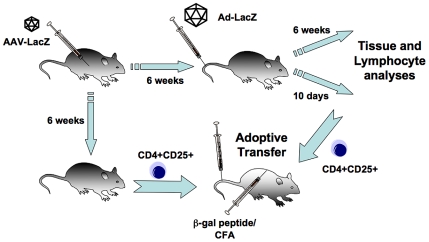
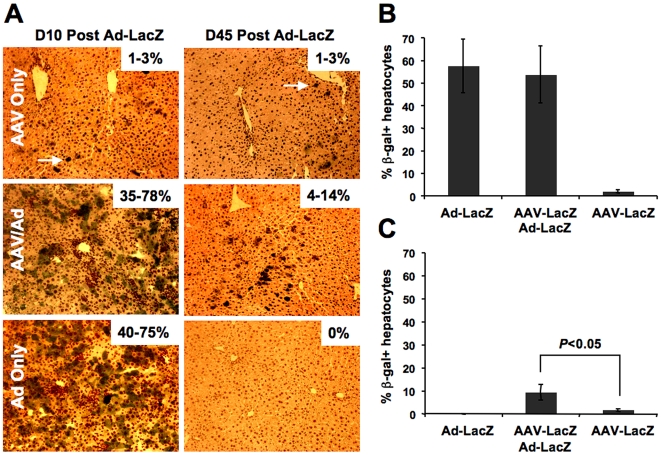
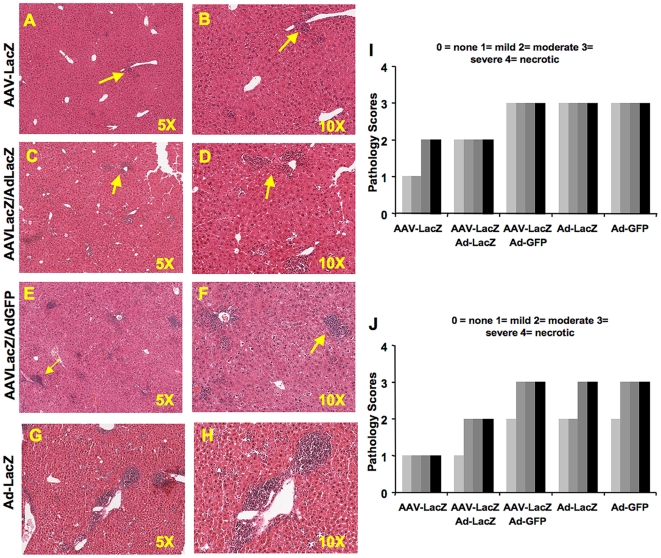
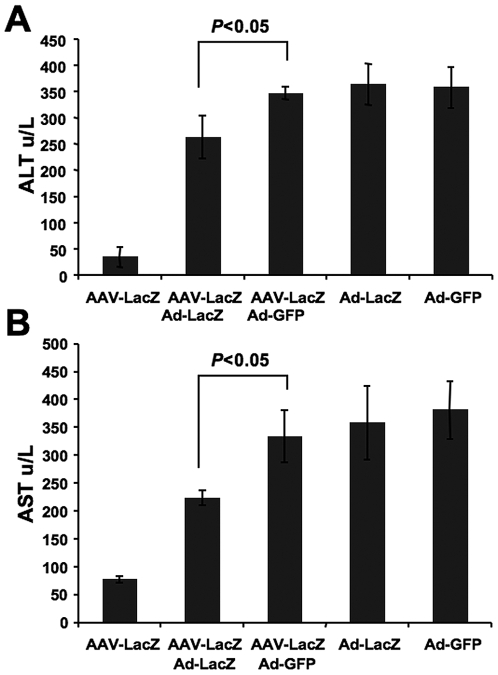
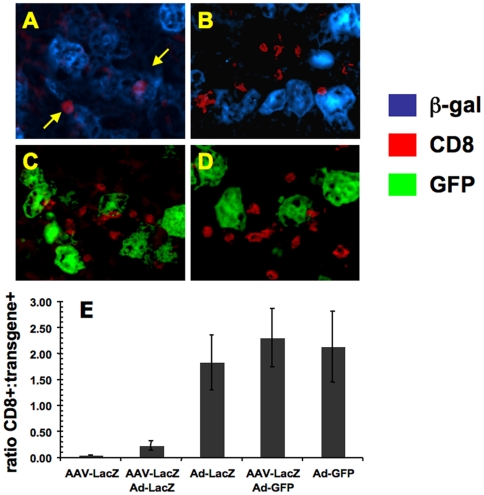
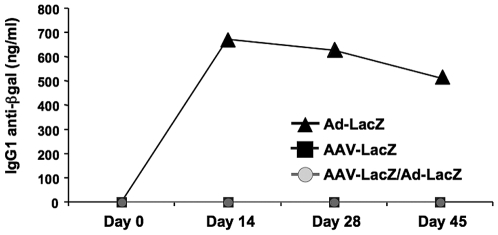
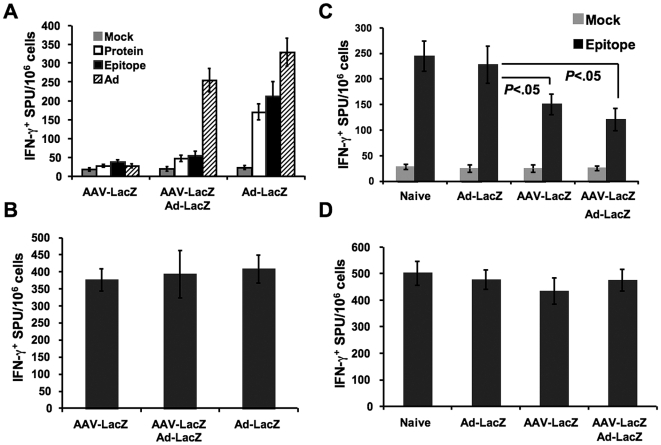
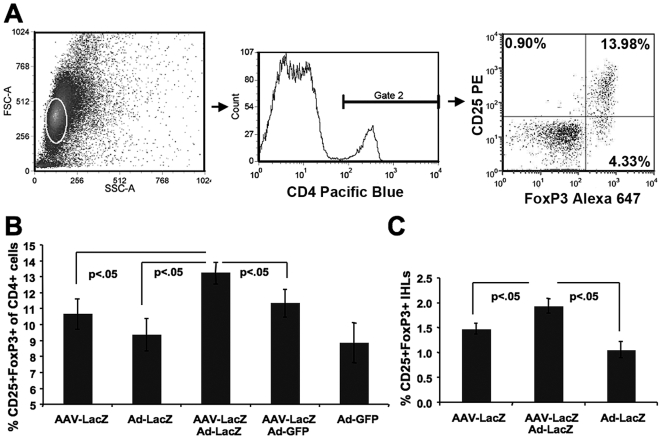
BACKGROUND: Hepatic gene transfer, in particular using adeno-associated viral (AAV) vectors, has been shown to induce immune tolerance to several protein antigens. This approach has been exploited in animal models of inherited protein deficiency for systemic delivery of therapeutic proteins. Adequate levels of transgene expression in hepatocytes induce a suppressive T cell response, thereby promoting immune tolerance. This study addresses the question of whether AAV gene transfer can induce tolerance to a cytoplasmic protein. MAJOR FINDINGS: AAV-2 vector-mediated hepatic gene transfer for expression of cytoplasmic beta-galactosidase (beta-gal) was performed in immune competent mice, followed by a secondary beta-gal gene transfer with E1/E3-deleted adenoviral Ad-LacZ vector to provoke a severe immunotoxic response. Transgene expression from the AAV-2 vector in approximately 2% of hepatocytes almost completely protected from inflammatory T cell responses against beta-gal, eliminated antibody formation, and significantly reduced adenovirus-induced hepatotoxicity. Consequently, approximately 10% of hepatocytes continued to express beta-gal 45 days after secondary Ad-LacZ gene transfer, a time point when control mice had lost all Ad-LacZ derived expression. Suppression of inflammatory T cell infiltration in the liver and liver damage was linked to specific transgene expression and was not seen for secondary gene transfer with Ad-GFP. A combination of adoptive transfer studies and flow cytometric analyses demonstrated induction of Treg that actively suppressed CD8(+) T cell responses to beta-gal and that was amplified in liver and spleen upon secondary Ad-LacZ gene transfer. CONCLUSIONS: These data demonstrate that tolerance induction by hepatic AAV gene transfer does not require systemic delivery of the transgene product and that expression of a cytoplasmic neo-antigen in few hepatocytes can induce Treg and provide long-term suppression of inflammatory responses and immunotoxicity.
Overview
The claims and statistics of this paper haven’t been checked yet.
Free: it reads the open-access text and checks the first 5 claims that cite a source we can check. Create a free account to check every claim.
Integrity signals
Registry
Cites
Statistics
Figures
Verification
Claims the paper makes
The claims and statistics of this paper haven’t been checked yet.
Free: it reads the open-access text and checks the first 5 claims that cite a source we can check. Create a free account to check every claim.
Claims other papers make about this one
Each is checked against this paper’s own text: does it say what the citing paper says it does?
The cited source says what the claim attributes to it.
In the citing paper
“mouse studies have shown liver-directed AAV gene therapy results in tolerogenic responses by the induction of Tregs,52, 53, 54, 55, 56, 57, 58, 59”
From Modulating immune responses to AAV by expanded polyclonal T-regs and capsid specific chimeric antigen receptor T-regulatory cells (2021) · cites this paper as [58]
Self-check
Percentages, sums and reported differences re-computed from the paper’s own numbers.
The self-check needs the paper’s full text.
Citations
Cites
Foxp3+CD25+CD4+ natural regulatory T cells in dominant self‐tolerance and autoimmune disease
Sakaguchi, S., Ono, M., Setoguchi, R., Yagi, H., Hori, S., Fehervari, Z., Shimizu, J., Takahashi, T., & Nomura, T. (2006) · Immunological Reviews · doi:10.1111/j.0105-2896.2006.00427.x · Cited by 1,555
Hauswirth, W. W., Aleman, T. S., Kaushal, S., Cideciyan, A. V., Schwartz, S. B., Wang, L., Conlon, T. J., Boye, S. L., Flotte, T. R., Byrne, B. J., et al. (2008) · Human Gene Therapy · doi:10.1089/hum.2008.107 · Cited by 954 · cited 1×
“treatment of patients with Leber’s Congenital Amaurosis, a rare form of inherited blindness, correction of sarcoglycan deficiency in skeletal muscle of dystrophic patients, and multi-year correction of hemophilia in canine models by a single hepatic administration [12,13].”
BackgroundSelf-citationThe inflammasome recognizes cytosolic microbial and host DNA and triggers an innate immune response
Muruve, D. A., Pétrilli, V., Zaiss, A. K., White, L. R., Clark, S. A., Ross, P. J., Parks, R. J., & Tschopp, J. (2008) · Nature · doi:10.1038/nature06664 · Cited by 936
Xiao, X., Li, J., & Samulski, R. J. (1996) · Journal of Virology · doi:10.1128/jvi.70.11.8098-8108.1996 · Cited by 912
Recombinant adeno-associated virus for muscle directed gene therapy
Fisher, K. J., Jooss, K., Alston, J., Yang, Y., Haecker, S. E., High, K., Pathak, R., Raper, S. E., & Wilson, J. M. (1997) · Nature Medicine · doi:10.1038/nm0397-306 · Cited by 654 · cited 1×
“an adeno-associated viral (AAV) vector instead of adenovirus [5–8].”
BackgroundKessler, P. D., Podsakoff, G. M., Chen, X., McQuiston, S. A., Colosi, P. C., Matelis, L. A., Kurtzman, G. J., & Byrne, B. J. (1996) · Proceedings of the National Academy of Sciences · doi:10.1073/pnas.93.24.14082 · Cited by 614
Self-citationSawa, A., Wiegand, G. W., Cooper, J., Margolis, R. L., Sharp, A. H., Lawler, J. F., Greenamyre, J. T., Snyder, S. H., & Ross, C. A. (1999) · Nature Medicine · doi:10.1038/13518 · Cited by 552
Brown, B. D., Venneri, M. A., Zingale, A., Sergi, L. S., & Naldini, L. (2006) · Nature Medicine · doi:10.1038/nm1398 · Cited by 484
Herzog, R. W., Hagstrom, J. N., Kung, S.-H., Tai, S. J., Wilson, J. M., Fisher, K. J., & High, K. A. (1997) · Proceedings of the National Academy of Sciences · doi:10.1073/pnas.94.11.5804 · Cited by 474
Self-citationJooss, K., Yang, Y., Fisher, K. J., & Wilson, J. M. (1998) · Journal of Virology · doi:10.1128/jvi.72.5.4212-4223.1998 · Cited by 470 · cited 2×
“This is in contrast to findings by others on muscle gene transfer, showing that secondary Ad-LacZ gene transfer eliminates previously AAV-LacZ transduced skeletal muscle fibers [4].”
BackgroundResult
Cited by
Immune responses to AAV vectors: overcoming barriers to successful gene therapy
Mingozzi, F., & High, K. A. (2013) · Blood · doi:10.1182/blood-2013-01-306647 · Cited by 955
Emerging issues in AAV-mediated in vivo gene therapy
Colella, P., Ronzitti, G., & Mingozzi, F. (2018) · Molecular Therapy - Methods & Clinical Development · doi:10.1016/j.omtm.2017.11.007 · Cited by 881
Progress and prospects: immune responses to viral vectors
Nayak, S., & Herzog, R. W. (2010) · Gene Therapy · doi:10.1038/gt.2009.148 · Cited by 634
Self-citationAAV-Mediated Gene Therapy for Research and Therapeutic Purposes
Samulski, R. J., & Muzyczka, N. (2014) · Annual Review of Virology · doi:10.1146/annurev-virology-031413-085355 · Cited by 551
How Tolerogenic Dendritic Cells Induce Regulatory T Cells
Maldonado, R. A., & von Andrian, U. H. (2010) · Advances in Immunology · doi:10.1016/b978-0-12-380995-7.00004-5 · Cited by 541
Martino, A. T., Suzuki, M., Markusic, D. M., Zolotukhin, I., Ryals, R. C., Moghimi, B., Ertl, H. C. J., Muruve, D. A., Lee, B., & Herzog, R. W. (2011) · Blood · doi:10.1182/blood-2010-10-314518 · Cited by 246
Self-citationUnraveling the complex story of immune responses to AAV vectors trial after trial.
Vandamme, C., Adjali, O., & Mingozzi, F. (2017) · Human Gene Therapy · doi:10.1089/hum.2017.150 · Cited by 234
Innate Immune Responses to AAV Vectors
Rogers, G. L., Martino, A. T., Aslanidi, G. V., Jayandharan, G. R., Srivastava, A., & Herzog, R. W. (2011) · Frontiers in Microbiology · doi:10.3389/fmicb.2011.00194 · Cited by 178
Self-citationQiao, C., Yuan, Z., Li, J., He, B., Zheng, H., Mayer, C., Li, J., & Xiao, X. (2011) · Gene Therapy · doi:10.1038/gt.2010.157 · Cited by 163
Immunogenicity assessment of AAV-based gene therapies: An IQ consortium industry white paper
Yang, T., Braun, M., Lembke, W., McBlane, F., Kamerud, J., DeWall, S. L., Tarcsa, E., Fang, X., Hofer, L., Kavita, U., et al. (2022) · Molecular Therapy — Methods & Clinical Development · doi:10.1016/j.omtm.2022.07.018 · Cited by 136
Dion, S., Bourgine, M., Godon, O., Levillayer, F., & Michel, M.-L. (2013) · Journal of Virology · doi:10.1128/jvi.03134-12 · Cited by 132
The Complex and Evolving Story of T cell Activation to AAV Vector-encoded Transgene Products
Mays, L. E., & Wilson, J. M. (2011) · Molecular Therapy · doi:10.1038/mt.2010.250 · Cited by 125
Microglia-specific targeting by novel capsid-modified AAV6 vectors
Rosario, A. M., Cruz, P. E., Ceballos-Diaz, C., Strickland, M. R., Siemienski, Z., Pardo, M., Schob, K.-L., Li, A., Aslanidi, G. V., Srivastava, A., et al. (2016) · Molecular Therapy - Methods & Clinical Development · doi:10.1038/mtm.2016.26 · Cited by 118
Immune Response Mechanisms against AAV Vectors in Animal Models
Martino, A. T., & Markusic, D. M. (2020) · Molecular Therapy - Methods & Clinical Development · doi:10.1016/j.omtm.2019.12.008 · Cited by 97
Self-citationCell-Mediated Immunity to AAV Vectors, Evolving Concepts and Potential Solutions
Basner-Tschakarjan, E., & Mingozzi, F. (2014) · Frontiers in Immunology · doi:10.3389/fimmu.2014.00350 · Cited by 95
Byrne, B. J., Falk, D. J., Pacak, C. A., Nayak, S., Herzog, R. W., Elder, M. E., Collins, S. W., Conlon, T. J., Clement, N., Cleaver, B. D., et al. (2011) · Human Molecular Genetics · doi:10.1093/hmg/ddr174 · Cited by 91
Self-citationLiver induced transgene tolerance with AAV vectors
Keeler, G. D., Markusic, D. M., & Hoffman, B. E. (2019) · Cellular Immunology · doi:10.1016/j.cellimm.2017.12.002 · Cited by 81
Self-citationThe next step in gene delivery: Molecular engineering of adeno-associated virus serotypes
Wang, J., Faust, S. M., & Rabinowitz, J. E. (2010) · Journal of Molecular and Cellular Cardiology · doi:10.1016/j.yjmcc.2010.10.017 · Cited by 75
Hoffman, B. E., Martino, A. T., Sack, B. K., Cao, O., Liao, G., Terhorst, C., & Herzog, R. W. (2011) · Molecular Therapy · doi:10.1038/mt.2011.33 · Cited by 72
Self-citationParaquat induced oxidative stress, DNA damage, and cytotoxicity in lymphocytes
Alizadeh, S., Sarab, G. A., Amiri, H. M., & Hashemi, M. (2022) · Heliyon · doi:10.1016/j.heliyon.2022.e09895 · Cited by 72
Development of gene transfer for induction of antigen-specific tolerance
Sack, B. K., Herzog, R. W., Terhorst, C., & Markusic, D. M. (2014) · Molecular Therapy - Methods & Clinical Development · doi:10.1038/mtm.2014.13 · Cited by 70
Self-citationViral vectors as vaccine carriers
Ertl, H. C. J. (2016) · Current Opinion in Virology · doi:10.1016/j.coviro.2016.06.001 · Cited by 65
Mays, L. E., Wang, L., Lin, J., Bell, P., Crawford, A., Wherry, E. J., & Wilson, J. M. (2014) · Molecular Therapy · doi:10.1038/mt.2013.134 · Cited by 62
Herzog, R. W. (2015) · Frontiers in Bioscience · doi:10.2741/4324 · Cited by 55
Self-citationGreig, J. A., Peng, H., Ohlstein, J., Medina-Jaszek, C. A., Ahonkhai, O., Mentzinger, A., Grant, R. L., Roy, S., Chen, S.-J., Bell, P., et al. (2014) · PLoS ONE · doi:10.1371/journal.pone.0112268 · Cited by 55
Somanathan, S., Breous, E., Bell, P., & Wilson, J. M. (2010) · Molecular Therapy · doi:10.1038/mt.2010.40 · Cited by 54
Genetic Therapeutic Approaches for Duchenne Muscular Dystrophy
Foster, H., Popplewell, L. J., & Dickson, G. (2012) · Human Gene Therapy · doi:10.1089/hum.2012.099 · Cited by 54
Pompe disease gene therapy: neural manifestations require consideration of CNS directed therapy
Byrne, B. J., Fuller, D. D., Smith, B. K., Clement, N., Coleman, K., Cleaver, B., Vaught, L., Falk, D. J., McCall, A., & Corti, M. (2019) · Annals of Translational Medicine · doi:10.21037/atm.2019.05.56 · Cited by 51
Self-citationRogers, G. L., Martino, A. T., Zolotukhin, I., Ertl, H. C., & Herzog, R. W. (2014) · Journal of Translational Medicine · doi:10.1186/1479-5876-12-25 · Cited by 45
Self-citationArjomandnejad, M., Sylvia, K., Blackwood, M., Nixon, T., Tang, Q., Muhuri, M., Gruntman, A. M., Gao, G., Flotte, T. R., & Keeler, A. M. (2021) · Molecular Therapy - Methods & Clinical Development · doi:10.1016/j.omtm.2021.10.010 · Cited by 44
Perrin, G. Q., Zolotukhin, I., Sherman, A., Biswas, M., de Jong, Y. P., Terhorst, C., Davidoff, A. M., & Herzog, R. W. (2016) · Molecular Therapy - Methods & Clinical Development · doi:10.1038/mtm.2016.83 · Cited by 40
Self-citationGreig, J. A., Wang, Q., Reicherter, A. L., Chen, S.-J., Hanlon, A. L., Tipper, C. H., Clark, K. R., Wadsworth, S., Wang, L., & Wilson, J. M. (2017) · Human Gene Therapy · doi:10.1089/hum.2016.128 · Cited by 40
AAV-Mediated Gene Delivery to the Liver: Overview of Current Technologies and Methods
Palaschak, B., Herzog, R. W., & Markusic, D. M. (2019) · Methods in molecular biology · doi:10.1007/978-1-4939-9139-6_20 · Cited by 40
Self-citationChung, C. W., Kudchodkar, S. B., Chung, C. N., Park, Y. K., Xu, Z., Pardi, N., Abdel‐Mohsen, M., & Muthumani, K. (2023) · Antibodies · doi:10.3390/antib12030046 · Cited by 40
Herzog, R. W., Cooper, M., Perrin, G. Q., Biswas, M., Martino, A. T., Morel, L., Terhorst, C., & Hoffman, B. E. (2019) · Cellular Immunology · doi:10.1016/j.cellimm.2017.07.012 · Cited by 39
Self-citationPre-Clinical Assessment of Immune Responses to Adeno-Associated Virus (AAV) Vectors
Basner-Tschakarjan, E., Bijjiga, E., & Martino, A. T. (2014) · Frontiers in Immunology · doi:10.3389/fimmu.2014.00028 · Cited by 39
Self-citationNovel Adeno-associated Viruses Derived From Pig Tissues Transduce Most Major Organs in Mice
Bello, A., Chand, A., Aviles, J., Soule, G., Auricchio, A., & Kobinger, G. (2014) · Scientific Reports · doi:10.1038/srep06644 · Cited by 39
Xiang, Z., Kuranda, K., Quinn, W. J., Chekaoui, A., Ambrose, R., Hasanpourghadi, M., Novikov, M., Newman, D., Cole, C., Zhou, X., et al. (2022) · Human Gene Therapy · doi:10.1089/hum.2021.258 · Cited by 37
Liver-Directed Adeno-Associated Viral Gene Therapy for Hemophilia
Markusic, D. M., & Herzog, R. W. (2013) · Journal of Genetic Syndromes & Gene Therapy · doi:10.4172/2157-7412.s1-009 · Cited by 36
Self-citationImmune responses in liver-directed lentiviral gene therapy
Annoni, A., Goudy, K., Akbarpour, M., Naldini, L., & Roncarolo, M. G. (2013) · Translational research · doi:10.1016/j.trsl.2012.12.018 · Cited by 35
BALB/c Mice Show Impaired Hepatic Tolerogenic Response Following AAV Gene Transfer to the Liver
Breous, E., Somanathan, S., & Wilson, J. M. (2010) · Molecular Therapy · doi:10.1038/mt.2009.301 · Cited by 33
Towards the clinical translation of optogenetic skeletal muscle stimulation
Gundelach, L. A., Hüser, M. A., Beutner, D., Ruther, P., & Bruegmann, T. (2020) · Pflügers Archiv - European Journal of Physiology · doi:10.1007/s00424-020-02387-0 · Cited by 30
Borkham‐Kamphorst, E., Huss, S., de Leur, E. V., Haas, U., & Weiskirchen, R. (2012) · Liver International · doi:10.1111/j.1478-3231.2012.02837.x · Cited by 24
Gene Therapy in Skeletal Muscle Mediated by Adeno-Associated Virus Vectors
Qiao, C., Koo, T., Li, J., Xiao, X., & Dickson, J. G. (2011) · Methods in molecular biology · doi:10.1007/978-1-61779-370-7_5 · Cited by 18
Optimized Adeno-Associated Viral-Mediated Human Factor VIII Gene Therapy in Cynomolgus Macaques
Greig, J. A., Nordin, J. M. L., White, J. W., Wang, Q., Bote, E., Goode, T. L., Calcedo, R., Wadsworth, S. C., Wang, L., & Wilson, J. M. (2018) · Human Gene Therapy · doi:10.1089/hum.2018.080 · Cited by 17
The Role of Apoptosis in Immune Hyporesponsiveness Following AAV8 Liver Gene Transfer
Faust, S. M., Bell, P., Zhu, Y., Sanmiguel, J., & Wilson, J. M. (2013) · Molecular Therapy · doi:10.1038/mt.2013.94 · Cited by 17
Structure of the AAVhu.37 capsid by cryoelectron microscopy
Kaelber, J. T., Yost, S. A., Webber, K., Firlar, E., Liu, Y., Danos, O., & Mercer, A. C. (2020) · Acta Crystallographica Section F Structural Biology Communications · doi:10.1107/s2053230x20000308 · Cited by 15
Myint, M., Limberis, M. P., Bell, P. L., Somanathan, S., Haczku, A., Wilson, J. M., & Diamond, S. L. (2014) · Human Gene Therapy · doi:10.1089/hum.2014.002 · Cited by 15
Carrig, S., Bijjiga, E., Wopat, M. J., & Martino, A. T. (2016) · Human Gene Therapy · doi:10.1089/hum.2016.073 · Cited by 7
Self-citationAAV Vector-Based Gene Therapy, Progress and Current Challenges
Kuranda, K., & Mingozzi, F. (2017) · Springer eBooks · doi:10.1007/978-3-319-53457-2_5 · Cited by 5
Taming immune responses to AAV gene therapy by programmed in vivo Treg expansion
Gwalani, L. A., Park, M., Ysasi, A. B., Motwani, M., Jackson, R., Bu, J., Luo, Z., Bladon, J. H., Pfister, E. L., Mueller, C., et al. (2026) · Molecular Therapy · doi:10.1016/j.ymthe.2026.02.019 · Cited by 1
Detection of Humoral Response to Transgene Protein and Gene Editing Reagents
Buchlis, G., & Gorovits, B. (2024) · Wiley eBooks · doi:10.1002/9781119852810.ch12 · Cited by 1
Bello, A. J. A. (2014) · Mspace (University of Manitoba) · Cited by 1
AAV-based approaches to model and treat spinal muscular atrophy
Bevan, A. K. (2012) · OhioLink ETD Center (Ohio Library and Information Network)
Intrathecal Delivery of Viral Vector-Mediated Gene Therapy
Keifer, O. P. (2023) · Springer eBooks · doi:10.1007/978-3-031-39558-1_16
Mingozzi, F., & Junge, N. (2021) · Elsevier eBooks · doi:10.1016/b978-0-323-63671-1.00033-1
Cellular Immunity in Recombinant Adeno-Associated Virus Vector Mediated Gene Therapy
Xu, D. (2011) · OhioLink ETD Center (Ohio Library and Information Network)
Modeling HCV infection, immunopathogenesis, and therapy in humanized mice
Washburn, M. L. (2010) · Carolina Digital Repository (University of North Carolina at Chapel Hill) · doi:10.17615/zed0-re37
Carpentier, M. (2013) · theses.fr (ABES) · doi:10.70675/fa69ca30zf46az45f1z9638z003bd41555e4
Siew, S. (2014) · The Sydney eScholarship Repository (The University of Sydney)
ENHANCEMENT OF hFVIII ACTIVITY THROUGH LC MODIFICATIONS FOR GENE THERAPY OF HEMOPHILIA A
Firrman, J. (2015) · TUScholarShare (Temple University)
Myint, M. (2015) · Scholarly Commons (University of Pennsylvania)
Metadata
- Authors
- Martino, A. T., Nayak, S., Hoffman, B. E., Cooper, M., Liao, G., Markusic, D. M., Byrne, B. J., Terhorst, C., & Herzog, R. W.
- Affiliations
- University of Florida Health (US)
- University of Florida (US)
- Beth Israel Deaconess Medical Center (US)
- Corresponding author
- Herzog, Roland W.
- ORCID
- Venue
- PLoS ONE
- Publisher
- Public Library of Science (PLoS)
- Published
- 2009-08-04
- Volume
- 4
- Issue
- 8
- Pages
- e6376
- ISSN
- 1932-6203 (ISSN-L)
- PMC
- PMC2715858
- OpenAlex
- W2120423141
- Cited by
- 54
- References
- 48
- Citations by year
- 2026: 1 · 2024: 1 · 2023: 2 · 2022: 3 · 2021: 2 · 2020: 2 · 2019: 3 · 2018: 1 · 2017: 6 · 2016: 4 · 2015: 1 · 2014: 8 · 2013: 6 · 2012: 2
- FWCI
- 2.71
- Type
- journal article
- Language
- en
- Open access
- gold
- doi.org
- Locations
- PLoS ONE (publishedVersion, cc-by)
- PubMed Central (publishedVersion, cc-by)
- PubMed (publishedVersion)
- Digital Access to Scholarship at Harvard (DASH) (Harvard University) (submittedVersion, cc-by)
- DOAJ (DOAJ: Directory of Open Access Journals) (submittedVersion, cc-by-sa)
- Funders
- American Heart Association
- University of Florida
- National Institutes of Health
- National Heart, Lung, and Blood Institute (P01HL078810)
- National Institute of Allergy and Infectious Diseases (R01AI051390, AI/HL51390)
- National Institute of Diabetes and Digestive and Kidney Diseases (T32DK074367)
- Topics
- Life Sciences › Biochemistry, Genetics and Molecular Biology › Genetics › Virus-based gene therapy research
- Life Sciences › Immunology and Microbiology › Immunology › Immunotherapy and Immune Responses
- Life Sciences › Biochemistry, Genetics and Molecular Biology › Molecular Biology › RNA Interference and Gene Delivery
- Keywords
- immune tolerance induction, adeno-associated virus vectors, hepatic gene transfer, antigen presentation, immunotoxicity, regulatory T cells, CD8+ T cell suppression, adoptive transfer, liver inflammation
- MeSH terms
- Dependovirus, Animals, beta-Galactosidase, Cytoplasm, Genetic Vectors, Immune Tolerance, Liver, Mice, Inbred BALB C, Mice, Inbred C57BL, Transduction, Genetic, Gene Transfer Techniques, Mice
About these checks
Registry, retraction, Cites and statistics results are computed, not judged, with one exception: a printed reference that no index lists is read once by a model before it counts as a citation error. Claims are extracted by a model and kept only when their quote appears verbatim in the text; each cited source is then checked, with a model’s help, for whether it says what the claim relies on. Those verdicts can be wrong — read the claim’s quote and the cited source before relying on one.
Statistics and arithmetic are recomputed, not judged.
Confidence bands are shown only for fields calibrated on our annotated test set. None is calibrated yet, so no band is shown.
What counts as a claim ›How we measure confidence ›How we check this ›
Are you an author, or do you see a problem with this page? Request a review
Data sources
Bibliographic data: Semantic Scholar, OpenAlex, Crossref.
Contains information from the Semantic Scholar Academic Graph Datasets, made available under the ODC Attribution License (ODC-BY 1.0).
Semantic Scholar’s data is described in: Kinney, R., et al. (2023). The Semantic Scholar Open Data Platform. arXiv:2301.10140.
