

Primary Cilia Are Not Required for Normal Canonical Wnt Signaling in the Mouse Embryo
Open accessThe DOI matches its Crossref record; 58 of the 58 references it cites were found in a registry or an index.
Abstract
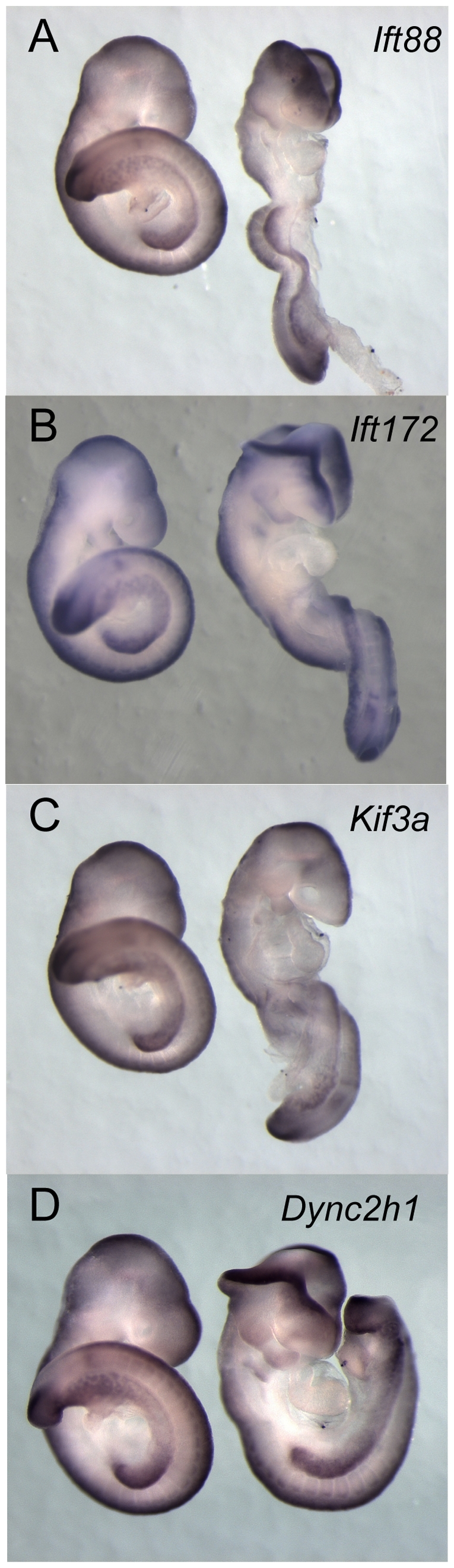
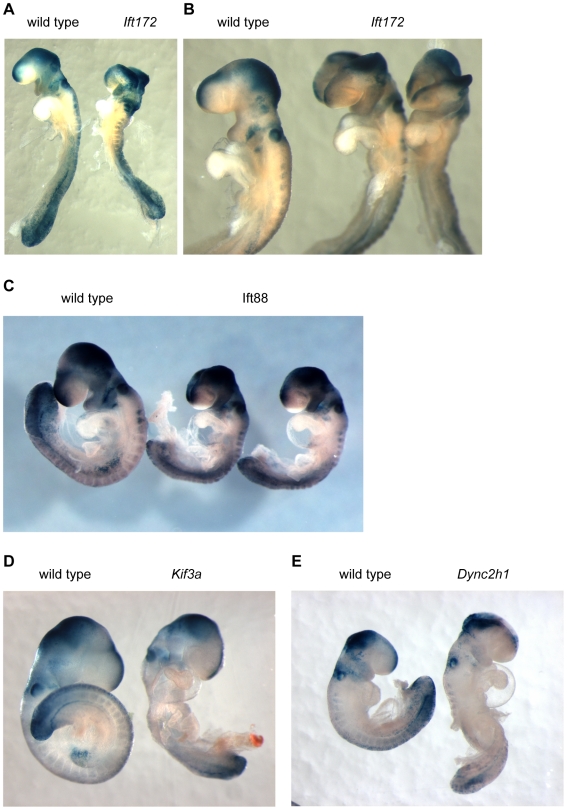
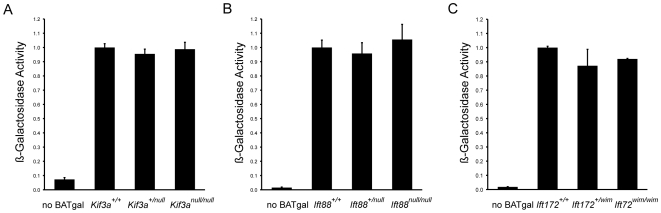
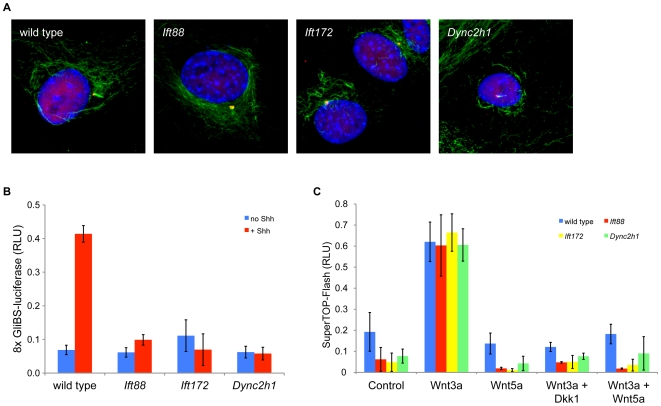
BACKGROUND: Sonic hedgehog (Shh) signaling in the mouse requires the microtubule-based organelle, the primary cilium. The primary cilium is assembled and maintained through the process of intraflagellar transport (IFT) and the response to Shh is blocked in mouse mutants that lack proteins required for IFT. Although the phenotypes of mouse IFT mutants do not overlap with phenotypes of known Wnt pathway mutants, recent studies report data suggesting that the primary cilium modulates responses to Wnt signals. METHODOLOGY/PRINCIPAL FINDINGS: We therefore carried out a systematic analysis of canonical Wnt signaling in mutant embryos and cells that lack primary cilia because of loss of the anterograde IFT kinesin-II motor (Kif3a) or IFT complex B proteins (Ift172 or Ift88). We also analyzed mutant embryos with abnormal primary cilia due to defects in retrograde IFT (Dync2h1). The mouse IFT mutants express the canonical Wnt target Axin2 and activate a transgenic canonical Wnt reporter, BAT-gal, in the normal spatial pattern and to the same quantitative level as wild type littermates. Similarly, mouse embryonic fibroblasts (MEFs) derived from IFT mutants respond normally to added Wnt3a. The switch from canonical to non-canonical Wnt also appears normal in IFT mutant MEFs, as both wild-type and mutant cells do not activate the canonical Wnt reporter in the presence of both Wnt3a and Wnt5a. CONCLUSIONS: We conclude that loss of primary cilia or defects in retrograde IFT do not affect the response of the midgestation embryo or embryo-derived fibroblasts to Wnt ligands.
Overview
The claims and statistics of this paper haven’t been checked yet.
Free: it reads the open-access text and checks the first 5 claims that cite a source we can check. Create a free account to check every claim.
Integrity signals
Registry
Cites
Statistics
Figures
Verification
Claims the paper makes
The claims and statistics of this paper haven’t been checked yet.
Free: it reads the open-access text and checks the first 5 claims that cite a source we can check. Create a free account to check every claim.
Claims other papers make about this one
Each is checked against this paper’s own text: does it say what the citing paper says it does?
The check wasn’t confident either way, so it gives no verdict — never disputed.
In the citing paper
“in lung cancer cell lines, KIF3A restricts WNT canonical signalling, but independently of the primary cilium by restricting β-arrestin interaction with DVL2 and AXIN as well by modulating WNT ligand secretion 201.”
From Cellular signalling by primary cilia in development, organ function and disease (2019) · cites this paper as [201]
Experimental — accuracy not yet measured
Self-check
Percentages, sums and reported differences re-computed from the paper’s own numbers.
The self-check needs the paper’s full text.
Citations
Cites
Jho, E.-H., Zhang, T., Domon, C., Joo, C.-K., Freund, J.-N., & Costantini, F. (2002) · Molecular and Cellular Biology · doi:10.1128/mcb.22.4.1172-1183.2002 · Cited by 1,678
Dickkopf-1 is a member of a new family of secreted proteins and functions in head induction
Glinka, A., Wu, W., Delius, H., Monaghan, A. P., Blumenstock, C., & Niehrs, C. (1998) · Nature · doi:10.1038/34848 · Cited by 1,608 · cited 1×
“Dkk1 is a potent inhibitor of b-catenin dependent Wnt signaling [31].”
BackgroundVertebrate Smoothened functions at the primary cilium
Corbit, K. C., Aanstad, P., Singla, V., Norman, A. R., Stainier, D. Y. R., & Reiter, J. F. (2005) · Nature · doi:10.1038/nature04117 · Cited by 1,481 · cited 1×
“Strong support for the cilia hypothesis has been provided by experiments that show that all of the core Hh signal transduction components that have been analyzed are enriched in cilia [5–8].”
BackgroundPatched1 Regulates Hedgehog Signaling at the Primary Cilium
Rohatgi, R., Milenkovic, L., & Scott, M. P. (2007) · Science · doi:10.1126/science.1139740 · Cited by 1,426
Hedgehog signalling in the mouse requires intraflagellar transport proteins
Huangfu, D., Liu, A., Rakeman, A. S., Murcia, N. S., Niswander, L., & Anderson, K. V. (2003) · Nature · doi:10.1038/nature02061 · Cited by 1,425 · cited 4×
“Kif3a encodes a subunit of the kinesin-II motor that drives anterograde trafficking from the base to the tip of the cilium and Kif3a mutants do not generate cilia [3,19,20].”
BackgroundInfluentialSelf-citationVeeman, M. T., Axelrod, J. D., & Moon, R. T. (2003) · Developmental Cell · doi:10.1016/s1534-5807(03)00266-1 · Cited by 1,359
Purified Wnt5a Protein Activates or Inhibits β-Catenin–TCF Signaling Depending on Receptor Context
Mikels, A. J., & Nusse, R. (2006) · PLoS Biology · doi:10.1371/journal.pbio.0040115 · Cited by 1,252
Zebrafish Prickle, a Modulator of Noncanonical Wnt/Fz Signaling, Regulates Gastrulation Movements
Veeman, M. T., Slusarski, D. C., Kaykas, A., Louie, S. H., & Moon, R. T. (2003) · Current Biology · doi:10.1016/s0960-9822(03)00240-9 · Cited by 945 · cited 1×
“To measure the Wntresponsiveness of the cells, we transfected the MEFs with the SuperTOPFlash reporter [30] and stimulated the cells with 100 ng/mL of Wnt3a (Figure 4C).”
MethodZeng, L., Fagotto, F., Zhang, T., Hsu, W., Vasicek, T. J., Perry, W. L., Lee, J. J., Tilghman, S. M., Gumbiner, B. M., & Costantini, F. (1997) · Cell · doi:10.1016/s0092-8674(00)80324-4 · Cited by 907 · cited 2×
“of the Wnt pathway [37,40].”
BackgroundHaycraft, C. J., Banizs, B., Aydin-Son, Y., Zhang, Q., Michaud, E. J., & Yoder, B. K. (2005) · PLoS Genetics · doi:10.1371/journal.pgen.0010053 · Cited by 902 · cited 1×
“Strong support for the cilia hypothesis has been provided by experiments that show that all of the core Hh signal transduction components that have been analyzed are enriched in cilia [5–8].”
Background
Cited by
Items 101–164 of 164
Unraveling the intricate cargo-BBSome coupling mechanism at the ciliary tip
Liu, Y., Li, W., Zhang, R., Sun, S., & Fan, Z. (2023) · Proceedings of the National Academy of Sciences · doi:10.1073/pnas.2218819120 · Cited by 13
“Since many GPCRs like somatostatin receptor 3 and GPR161 and smoothened (Smo) of 93 hedgehog signaling (Hh) pathway couple with the BBSome for loading onto retrograde IFT trains for 94 ciliary retrieval (31-37), roles of ARL13 and ARL3 in PLD coupling with the BBSome (ARL13) and 95 PLD-laden BBSome diffusion through t…”
Ciliary membrane, localised lipid modification and cilia function
Dutta, P., & Ray, K. (2022) · Journal of Cellular Physiology · doi:10.1002/jcp.30787 · Cited by 13
“The canonical Wnt pathway, involving Frizzled and the Low‐ Density Lipoprotein receptor‐related Protein 6 (LPR6), does not require a primary cilium during embryonic development (Mao et al., 2001; Ocbina et al., 2009).”
BackgroundWnt signalling escapes to cilia
Ajima, R., & Hamada, H. (2011) · Nature Cell Biology · doi:10.1038/ncb0611-636 · Cited by 14
Canonical Wnt signaling regulates soft palate development by mediating ciliary homeostasis
Janečková, E., Feng, J., Guo, T., Han, X., Ghobadi, A., Araujo-Villalba, A., Rahman, M. S., Ziaei, H., Ho, T., Pareek, S., et al. (2023) · Development · doi:10.1242/dev.201189 · Cited by 10
Čajánek, L., Smite, S., Ivashchenko, O., & Huranová, M. (2025) · Cell & Bioscience · doi:10.1186/s13578-025-01403-z · Cited by 12
“Conversely, mutation of ciliary regulators in vivo (e.g. IFT88, IFT172, INVS, DYNC2H1, and KIF3A) does not seem to cause major defects in WNT/β-catenin signaling, even though cilio-genesis and/or HH pathway are severely dysregulated [226], [227], [228].”
Perutina, I., Kelam, N., Maglica, M., Racetin, A., Ogorevc, M., Filipović, N., Katsuyama, Y., Mišković, J., & Vukojević, K. (2023) · Biomedicines · doi:10.3390/biomedicines11051321 · Cited by 10
“There is enough evidence to indicate that Wnt signaling not only regulates ciliogenesis but that ciliary-mediated inhibition of the canonical Wnt pathway through the regulation of DVL-1 and the proteasome also appears to occur [23,24].”
BackgroundMitchell, E., & Serra, R. A. (2014) · Cilia · doi:10.1186/2046-2530-3-4 · Cited by 11
“Even though Wnt signaling is key to mammary development, recent data suggest PC do not directly regulate Wnt/ß-catenin signaling [53,54].”
BackgroundPrimary Cilia in Pancreatic β- and α-Cells: Time to Revisit the Role of Insulin-Degrading Enzyme
Pablos, M. I., Casanueva-Álvarez, E., González-Casimiro, C. M., Merino, B., Perdomo, G., & Cózar‐Castellano, I. (2022) · Frontiers in Endocrinology · doi:10.3389/fendo.2022.922825 · Cited by 13
“There are reports showing that primary cilium disruption leads to upregulation of the pathway activity (118–121), and conversely, studies that refute any involvement of primary cilium in Wnt signaling (122, 123).”
BackgroundSevere skeletal abnormalities caused by defects in retrograde intraflagellar transport dyneins
Schmidts, M., & Mitchison, H. M. (2017) · Elsevier eBooks · doi:10.1016/b978-0-12-809470-9.00015-1 · Cited by 11
Aquatic models of human ciliary diseases
Corkins, M. E., Krneta‐Stankic, V., Kloc, M., & Miller, R. K. (2021) · genesis · doi:10.1002/dvg.23410 · Cited by 11
Primary and Motile Cilia: Their Ultrastructure and Ciliogenesis
Hoyer‐Fender, S. (2012) · Springer eBooks · doi:10.1007/978-94-007-5808-7_1 · Cited by 14
Functions of the primary cilium in the kidney and its connection with renal diseases
Clearman, K. R., Haycraft, C. J., Croyle, M. J., Collawn, J. F., & Yoder, B. K. (2023) · Current topics in developmental biology/Current Topics in Developmental Biology · doi:10.1016/bs.ctdb.2023.07.001 · Cited by 8
A new cell culture resource for investigations of reptilian gene function
Samudra, S. P., Park, S., Esser, E. A., McDonald, T. P., Borges, A. M., Eggenschwiler, J. T., & Menke, D. B. (2024) · Development · doi:10.1242/dev.204275 · Cited by 11
Evaluation of Planar-Cell-Polarity Phenotypes in Ciliopathy Mouse Mutant Cochlea
May‐Simera, H. (2016) · Journal of Visualized Experiments · doi:10.3791/53559 · Cited by 9
Ciliopathic micrognathia is caused by aberrant skeletal differentiation and remodeling
Paese, C. L. B., Brooks, E. C., Aarnio, M., & Brugmann, S. A. (2021) · Development · doi:10.1242/dev.194175 · Cited by 9
RABL2 promotes the outward transition zone passage of signaling proteins in cilia via ARL3
Zhang, R., Sun, W.-Y., Liu, Y., Zhang, E. Y., & Fan, Z. (2023) · Proceedings of the National Academy of Sciences · doi:10.1073/pnas.2302603120 · Cited by 8
“In rodents, smoothened (Smo) and several other GPCRs need to couple with the BBSome prior to exporting from cilia (37–39).”
BackgroundPrimary cilia shape postnatal astrocyte development through Sonic Hedgehog signaling
Bear, R. M., Sloan, S. A., & Caspary, T. (2025) · Journal of Cell Science · doi:10.1242/jcs.263965 · Cited by 7
Low fluid shear stress promoted ciliogenesis via Dvl2 in hUVECs
Sheng, X., Sheng, Y., Gao, S., Fan, F., & Wang, J. (2020) · Histochemistry and Cell Biology · doi:10.1007/s00418-020-01908-3 · Cited by 8
Langhans, M. T., Gao, J., Tang, Y., Wang, B., Alexander, P. G., & Tuan, R. S. (2021) · BMC Developmental Biology · doi:10.1186/s12861-021-00241-9 · Cited by 8
“Additionally, prior studies have demonstrated that while Wnt signaling is perturbed in cilia deficient mutants, this is a downstream effect of the alteration of hedgehog signaling [57].”
BackgroundWiegering, A., Anselme, I., Brunetti, L., Metayer-Derout, L., Calderon, D., Thomas, S., Nedelec, S., Eschstruth, A., Serpieri, V., Catala, M., et al. (2025) · Nature Communications · doi:10.1038/s41467-025-58554-3 · Cited by 8
Romani, S., Illi, B., Mori, R. D., Savino, M., Gleeson, J. G., & Valente, E. M. (2014) · Differentiation · doi:10.1016/j.diff.2014.02.005 · Cited by 6
“Both positive and negative effects on the canonical wnt pathway have been reported (Lancaster et al., 2009; Ocbina et al., 2009) and it has recently been shown that primary cilia down-regulate the wnt/β-catenin signaling through a spatial mechanism involving compartimentalization of specific downstream signaling compo…”
BackgroundGazea, M., Tasouri, E., Heigl, T., Bosch, V., Tucker, K. L., & Blaess, S. (2016) · Neurogenesis · doi:10.1080/23262133.2016.1248206 · Cited by 7
“On the other hand, canonical WNT signaling is not altered in Kif3a, Ift88 and Ift172 mutant mice.(25) Thus, the role of the primary cilium in WNT signaling remains controversial.”
BackgroundThe primary cilium as a multifunctional organelle: emerging roles and unanswered questions
Corbeil, D., Thamm, K., Karbanová, J., Fargeas, C. A., & Jászai, J. (2025) · Cell Communication and Signaling · doi:10.1186/s12964-025-02403-9 · Cited by 10
“Of note, there has been some debate regarding the role of ciliary structures in the canonical Wnt/β-catenin signaling [98, 99].”
Primer and interviews: Diverse connections between primary cilia and Hedgehog signaling
Kiefer, J. C. (2010) · Developmental Dynamics · doi:10.1002/dvdy.22278 · Cited by 7
“, 2007) although the latter finding is controversial (Huang and Schier, 2009; Ocbina et al., 2009).”
Genes and Mechanisms in Human Ciliopathies
Jenkins, D., & Beales, P. L. (2013) · Elsevier eBooks · doi:10.1016/b978-0-12-383834-6.00174-9 · Cited by 5
Deretic, J., Cengiz-Emek, S., Seyrek, E., & Firat‐Karalar, E. N. (2025) · PLoS Biology · doi:10.1371/journal.pbio.3003313 · Cited by 4
“Stability assay by dilution was performed as previously described [90,91].”
Ciliopatie – choroby spowodowane nieprawidłowym funkcjonowaniem rzęsek
Fabczak, H., Joachimiak, E., Włoga, D., & Filipek, A. (2018) · Postępy Biochemii · doi:10.18388/pb.2018_148 · Cited by 4
Primary Cilia and Brain Development
Tasouri, E., Willaredt, M. A., & Tucker, K. L. (2012) · Springer eBooks · doi:10.1007/978-94-007-5808-7_3 · Cited by 3
Primary cilium and its role in tumorigenesis
Hongmei, M. A. O., & Sun, Y. (2021) · Journal of Zhejiang University (Medical Sciences) · doi:10.3724/zdxbyxb-2021-0048 · Cited by 3
“通路。Ift88、Ift172、Kif3a或Dync2h1缺失的突变小 鼠胚胎未显示Wnt信号通路活性的改变;从Ift突 变小鼠分离出的 MEF 细胞不能形成原纤毛, 对 Shh配体无应答,但对Wnt信号通路的应答与 对照组比较无明显差异[123]。另外一项研究也显 示,Ift88突变斑马鱼胚胎的经典Wnt信号通路的 毛红美,等.”
BackgroundPrimary cilia and Sonic hedgehog signaling in adrenal gland physiology and cancer
Mateska, I. (2024) · Current Opinion in Endocrine and Metabolic Research · doi:10.1016/j.coemr.2024.100507 · Cited by 5
Tying TAZ and Nek1 into Polycystic Kidney Disease through Polycystin 2 Levels
Dutcher, S. K., & Lin, H. (2011) · Journal of the American Society of Nephrology · doi:10.1681/asn.2011030256 · Cited by 2
The TRPP Signaling Module: TRPP2/Polycystin-1 and TRPP2/PKD1L1
Hofherr, A. (2012) · Methods in pharmacology and toxicology · doi:10.1007/978-1-62703-077-9_10 · Cited by 2
Introduction to β‐Catenin‐Independent Wnt Signaling Pathways
Kühl, S. J., & Kühl, M. (2014) · Wiley eBooks · doi:10.1002/9781118444122.ch6 · Cited by 3
Liao, M., Kravitz, A., Haak, D. C., Sriranganathan, N., & Cockrum, R. (2026) · Animals · doi:10.3390/ani16050811 · Cited by 1
Generating Diversity and Specificity through Developmental Cell Signaling
Hoch, R. V., & Soriano, P. M. (2014) · Elsevier eBooks · doi:10.1016/b978-0-12-405945-0.00001-6 · Cited by 3
Renal Cilia Structure, Function, and Physiology
Pieczynski, J. N., & Yoder, B. K. (2012) · Elsevier eBooks · doi:10.1016/b978-0-12-381462-3.00011-2 · Cited by 1
Primary Cilia and Inner Ear Sensory Epithelia
Grimsley‐Myers, C. M., & Chen, P. (2012) · Springer eBooks · doi:10.1007/978-94-007-5808-7_5 · Cited by 1
Ciliopathies: Their Role in Pediatric Renal Disease
Schmidts, M., & Beales, P. L. (2016) · Springer eBooks · doi:10.1007/978-3-662-52972-0_11 · Cited by 1
Primary Cilia and Brain Cancer
Hou, S., & Han, Y.-G. (2012) · Springer eBooks · doi:10.1007/978-94-007-5808-7_8
Establishment of a bipartite ciliary signaling compartment in a C. elegans thermosensory neuron
Nguyen, T. P. A. (2014) · Summit (Simon Fraser University)
Epithelial Organization of Adult Neurogenic Germinal Niches
Mirzadeh, Z., Han, Y.-G., García‐Verdugo, J. M., & Álvarez-Buylla, A. (2011) · Springer eBooks · doi:10.1007/978-4-431-53933-9_12
Parker, D. S., & Katsanis, N. (2010) · Endocrine updates · doi:10.1007/978-1-4419-7034-3_4
Planar cell polarity (PCP) and Wnt signaling in renal disease
Ganner, A., Lienkamp, S. S., & Walz, G. (2013) · Drug Discovery Today Disease Mechanisms · doi:10.1016/j.ddmec.2013.12.001
Allard, B. A. (2017) · KU ScholarWorks (The University of Kansas)
A Role for Intraflagellar Transport Proteins in Mitosis: A Dissertation
Bright, A. (2013) · The Journal of the American Medical Association (JAMA) Network (American Medical Association) · doi:10.13028/m2fs4m
Stottmann, R. W. (2013) · Faculty Opinions – Post-Publication Peer Review of the Biomedical Literature · doi:10.3410/f.717988867.793472760
Sipe, C. W. (2013) · doi:10.18130/v3156m · Cited by 1
Ciliopathies: Their Role in Pediatric Kidney Disease
Schmidts, M., & Beales, P. L. (2023) · Springer eBooks · doi:10.1007/978-3-031-11665-0_9
Roles of Primary Cilia in the Oligodendrocyte Lineage
Subedi, A. (2018) · University of North Texas Digital Library (University of North Texas) · doi:10.12794/metadc1404594
Centrosome‐Signaling Pathway Crosstalk: A Core Hub From Cellular Homeostasis to Disease
Pan, M., Li, J., & Fu, J. (2025) · Cytoskeleton · doi:10.1002/cm.70027 · Cited by 1
“Additionally, centrosome-derived cilia can influence Wnt signal transduction but are not essential for activating the core Wnt/β-catenin pathway (Ocbina et al. 2009).”
Coschiera, A., Yoshihara, M., Lauter, G., Ezer, S., Pucci, M., Li, H., Kavšek, A., Riedel, C. G., Kere, J., & Swoboda, P. (2024) · Figshare · doi:10.6084/m9.figshare.25303175
Coschiera, A., Yoshihara, M., Lauter, G., Ezer, S., Pucci, M., Li, H., Kavšek, A., Riedel, C. G., Kere, J., & Swoboda, P. (2024) · Figshare · doi:10.6084/m9.figshare.25303088
Coschiera, A., Yoshihara, M., Lauter, G., Ezer, S., Pucci, M., Li, H., Kavšek, A., Riedel, C. G., Kere, J., & Swoboda, P. (2024) · Figshare · doi:10.6084/m9.figshare.26686062
Langhans, M. T., Gao, J., Tang, Y. M., Wang, B., Alexander, P., & Tuan, R. S. (2021) · Figshare · doi:10.6084/m9.figshare.14913804
Cilium-by-cilium: unveiling hidden proteomic diversity and the molecular basis of ciliopathies
Chiong, M., Li, H., & Lavandero, S. (2026) · Signal Transduction and Targeted Therapy · doi:10.1038/s41392-025-02555-7
Rôle du facteur de transcription de ciliogenèse RFX3 dans le développement pulmonaire chez la souris
Sagnol, S. (2010) · theses.fr (ABES) · doi:10.70675/14a7d542zc175z46f8zae0dz6d1422b55477
Étude fonctionnelle de gènes candidats impliqués dans les ciliopathies
Dupont, M. A. (2019) · theses.fr (ABES) · doi:10.70675/bacdf99fz72bbz4a7dzb3d7z04fb4ac2b74e
Role of VDAC1 hypoxic form, VDAC1-∆C, in the expression of primary cilia and tumor progression
Fabbri, L. (2019) · theses.fr (ABES) · doi:10.70675/7a53239dzc652z4ea4z8b95z4a71961c83b4
Garfa‐Traoré, M. (2021) · theses.fr (ABES) · doi:10.70675/0c87092cza7f2z4b89z8bebz0c92ab37f9f7
Klawonn, A., Himanshu, H., Bakey, Z., Tholen, S., Skatulla, I., Li, Y., Schröder, C. M., Arnold, S. J., Köttgen, A., Schilling, O., et al. (2026) · bioRxiv (Cold Spring Harbor Laboratory) · doi:10.64898/2026.05.21.726337
Ciliary-Mediated Mechanotransduction in Skeletal Development and Diseases
Faisal, M., Tran, L., Gutierrez, Y. V., Bi, J., Yamaguchi, H., & Komatsu, Y. (2026) · Results and problems in cell differentiation · doi:10.1007/978-3-032-19509-8_12
Aberrant ciliogenesis induced by enhanced BMP signaling causes heterotopic ossificationPreprint
Yamaguchi, H., Wang, J., Yan, F., Bi, J., Darabi, R., Lagor, W. R., Zhao, Z., Economides, A. N., Mishina, Y. M., & Komatsu, Y. (2026) · bioRxiv (Cold Spring Harbor Laboratory) · doi:10.64898/2026.07.02.735922
“To investigate the transcriptional landscape initiating HO, we utilized a transgenic mouse model permitting conditional, Cre-inducible expression of a constitutively active ACVR1 variant (Acvr1 Q207D ) (28).”
Primary cilia: master conductors of cellular communication in development and disease
Thomsen, O. K., Pigino, G., Pedersen, L. B., Pazour, G. J., Wachten, D., & Christensen, S. T. (2026) · Nature Reviews Nephrology · doi:10.1038/s41581-026-01129-2
Metadata
- Authors
- Ocbina, P. J. R., Tuson, M., & Anderson, K. V.
- Affiliations
- Cornell University (US)
- Corresponding author
- Anderson, Kathryn V.
- Venue
- PLoS ONE
- Publisher
- Public Library of Science (PLoS)
- Published
- 2009-08-31
- Volume
- 4
- Issue
- 8
- Pages
- e6839
- ISSN
- 1932-6203 (ISSN-L)
- PMC
- PMC2729396
- OpenAlex
- W1995292541
- Cited by
- 164
- References
- 58
- Citations by year
- 2026: 6 · 2025: 8 · 2024: 5 · 2023: 12 · 2022: 6 · 2021: 8 · 2020: 1 · 2019: 9 · 2018: 8 · 2017: 6 · 2016: 7 · 2015: 11 · 2014: 13 · 2013: 9 · 2012: 18
- FWCI
- 10.66
- Type
- journal article
- Language
- en
- Open access
- gold
- doi.org
- Locations
- PLoS ONE (publishedVersion, cc-by)
- Europe PMC (PubMed Central) (publishedVersion, cc-by)
- PubMed Central (publishedVersion, cc-by)
- PubMed (publishedVersion)
- DOAJ (DOAJ: Directory of Open Access Journals) (submittedVersion, cc-by-sa)
- Funders
- National Institutes of Health
- National Institute of Diabetes and Digestive and Kidney Diseases (P30DK074038)
- Topics
- Life Sciences › Biochemistry, Genetics and Molecular Biology › Genetics › Genetic and Kidney Cyst Diseases
- Life Sciences › Biochemistry, Genetics and Molecular Biology › Molecular Biology › Wnt/β-catenin signaling in development and cancer
- Life Sciences › Biochemistry, Genetics and Molecular Biology › Molecular Biology › Hedgehog Signaling Pathway Studies
- Keywords
- primary cilia, Wnt/β-catenin signaling, intraflagellar transport, IFT172, IFT88, DYNC2H1, Axin2, Wnt3a, Wnt5a, non-canonical Wnt signaling, mouse embryo, mouse embryonic fibroblasts
- MeSH terms
- Animals, Cells, Cultured, Cilia, Signal Transduction, Wnt Proteins, Mice
About these checks
Registry, retraction, Cites and statistics results are computed, not judged, with one exception: a printed reference that no index lists is read once by a model before it counts as a citation error. Claims are extracted by a model and kept only when their quote appears verbatim in the text; each cited source is then checked, with a model’s help, for whether it says what the claim relies on. Those verdicts can be wrong — read the claim’s quote and the cited source before relying on one.
Statistics and arithmetic are recomputed, not judged.
Confidence bands are shown only for fields calibrated on our annotated test set. None is calibrated yet, so no band is shown.
What counts as a claim ›How we measure confidence ›How we check this ›
Are you an author, or do you see a problem with this page? Request a review
Data sources
Bibliographic data: Semantic Scholar, OpenAlex, Crossref.
Contains information from the Semantic Scholar Academic Graph Datasets, made available under the ODC Attribution License (ODC-BY 1.0).
Semantic Scholar’s data is described in: Kinney, R., et al. (2023). The Semantic Scholar Open Data Platform. arXiv:2301.10140.
