

Primary Cilia Are Not Required for Normal Canonical Wnt Signaling in the Mouse Embryo
Open accessThe DOI matches its Crossref record; 58 of the 58 references it cites were found in a registry or an index.
Abstract
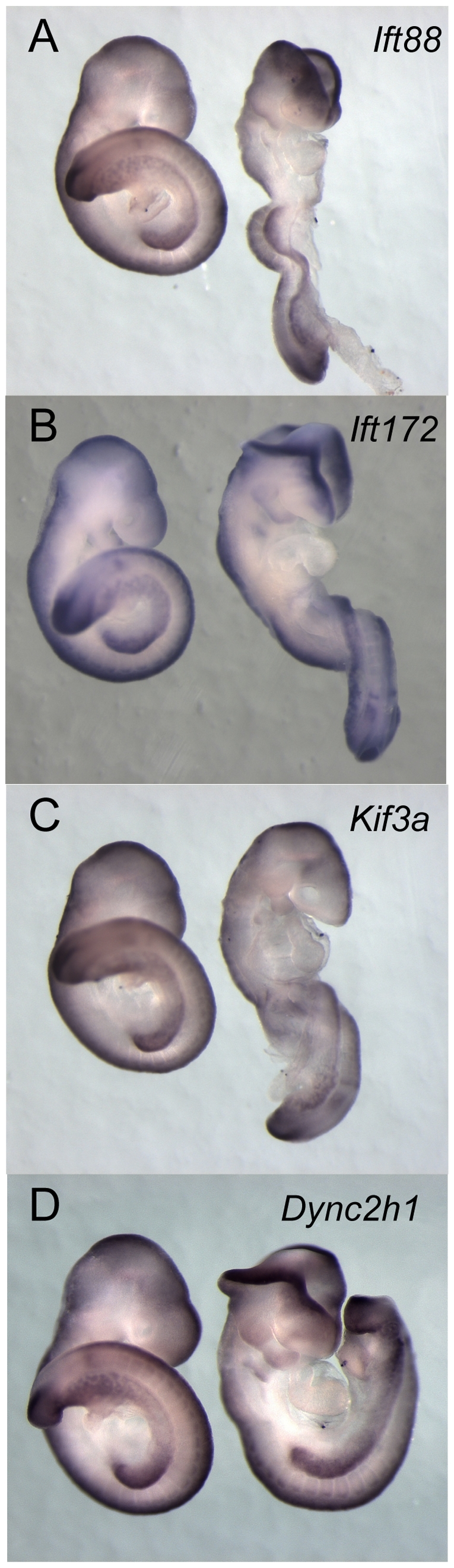
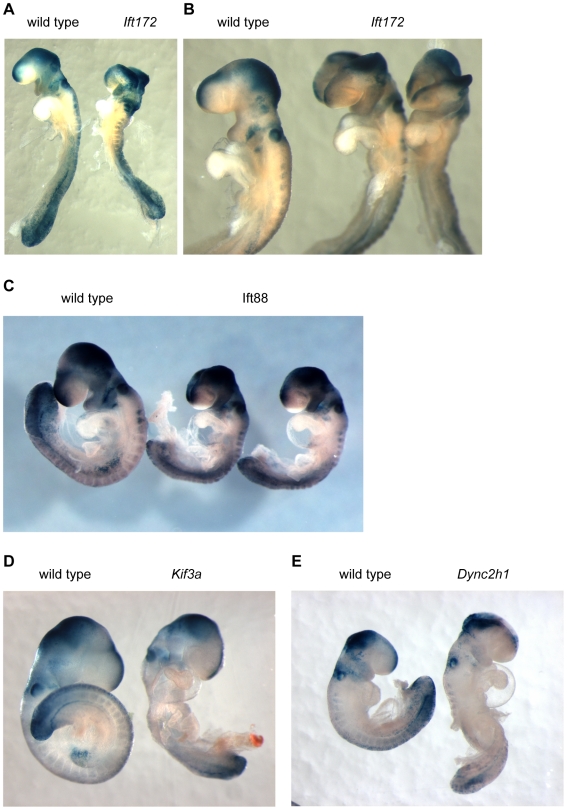
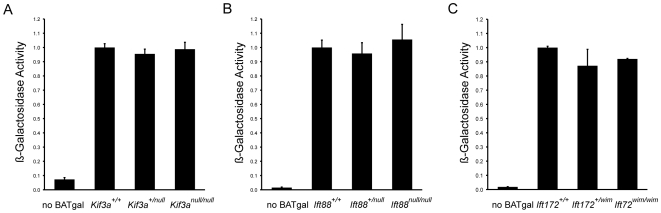
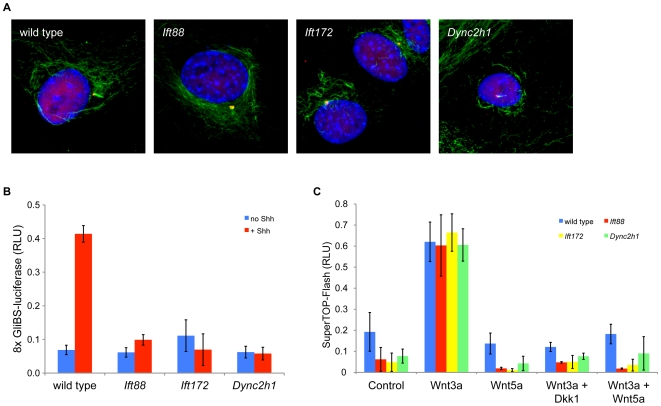
BACKGROUND: Sonic hedgehog (Shh) signaling in the mouse requires the microtubule-based organelle, the primary cilium. The primary cilium is assembled and maintained through the process of intraflagellar transport (IFT) and the response to Shh is blocked in mouse mutants that lack proteins required for IFT. Although the phenotypes of mouse IFT mutants do not overlap with phenotypes of known Wnt pathway mutants, recent studies report data suggesting that the primary cilium modulates responses to Wnt signals. METHODOLOGY/PRINCIPAL FINDINGS: We therefore carried out a systematic analysis of canonical Wnt signaling in mutant embryos and cells that lack primary cilia because of loss of the anterograde IFT kinesin-II motor (Kif3a) or IFT complex B proteins (Ift172 or Ift88). We also analyzed mutant embryos with abnormal primary cilia due to defects in retrograde IFT (Dync2h1). The mouse IFT mutants express the canonical Wnt target Axin2 and activate a transgenic canonical Wnt reporter, BAT-gal, in the normal spatial pattern and to the same quantitative level as wild type littermates. Similarly, mouse embryonic fibroblasts (MEFs) derived from IFT mutants respond normally to added Wnt3a. The switch from canonical to non-canonical Wnt also appears normal in IFT mutant MEFs, as both wild-type and mutant cells do not activate the canonical Wnt reporter in the presence of both Wnt3a and Wnt5a. CONCLUSIONS: We conclude that loss of primary cilia or defects in retrograde IFT do not affect the response of the midgestation embryo or embryo-derived fibroblasts to Wnt ligands.
Overview
The claims and statistics of this paper haven’t been checked yet.
Free: it reads the open-access text and checks the first 5 claims that cite a source we can check. Create a free account to check every claim.
Integrity signals
Registry
Cites
Statistics
Figures
Verification
Claims the paper makes
The claims and statistics of this paper haven’t been checked yet.
Free: it reads the open-access text and checks the first 5 claims that cite a source we can check. Create a free account to check every claim.
Claims other papers make about this one
Each is checked against this paper’s own text: does it say what the citing paper says it does?
The check wasn’t confident either way, so it gives no verdict — never disputed.
In the citing paper
“in lung cancer cell lines, KIF3A restricts WNT canonical signalling, but independently of the primary cilium by restricting β-arrestin interaction with DVL2 and AXIN as well by modulating WNT ligand secretion 201.”
From Cellular signalling by primary cilia in development, organ function and disease (2019) · cites this paper as [201]
Experimental — accuracy not yet measured
Self-check
Percentages, sums and reported differences re-computed from the paper’s own numbers.
The self-check needs the paper’s full text.
Citations
Cites
Jho, E.-H., Zhang, T., Domon, C., Joo, C.-K., Freund, J.-N., & Costantini, F. (2002) · Molecular and Cellular Biology · doi:10.1128/mcb.22.4.1172-1183.2002 · Cited by 1,678
Dickkopf-1 is a member of a new family of secreted proteins and functions in head induction
Glinka, A., Wu, W., Delius, H., Monaghan, A. P., Blumenstock, C., & Niehrs, C. (1998) · Nature · doi:10.1038/34848 · Cited by 1,608 · cited 1×
“Dkk1 is a potent inhibitor of b-catenin dependent Wnt signaling [31].”
BackgroundVertebrate Smoothened functions at the primary cilium
Corbit, K. C., Aanstad, P., Singla, V., Norman, A. R., Stainier, D. Y. R., & Reiter, J. F. (2005) · Nature · doi:10.1038/nature04117 · Cited by 1,481 · cited 1×
“Strong support for the cilia hypothesis has been provided by experiments that show that all of the core Hh signal transduction components that have been analyzed are enriched in cilia [5–8].”
BackgroundPatched1 Regulates Hedgehog Signaling at the Primary Cilium
Rohatgi, R., Milenkovic, L., & Scott, M. P. (2007) · Science · doi:10.1126/science.1139740 · Cited by 1,426
Hedgehog signalling in the mouse requires intraflagellar transport proteins
Huangfu, D., Liu, A., Rakeman, A. S., Murcia, N. S., Niswander, L., & Anderson, K. V. (2003) · Nature · doi:10.1038/nature02061 · Cited by 1,425 · cited 4×
“Kif3a encodes a subunit of the kinesin-II motor that drives anterograde trafficking from the base to the tip of the cilium and Kif3a mutants do not generate cilia [3,19,20].”
BackgroundInfluentialSelf-citationVeeman, M. T., Axelrod, J. D., & Moon, R. T. (2003) · Developmental Cell · doi:10.1016/s1534-5807(03)00266-1 · Cited by 1,359
Purified Wnt5a Protein Activates or Inhibits β-Catenin–TCF Signaling Depending on Receptor Context
Mikels, A. J., & Nusse, R. (2006) · PLoS Biology · doi:10.1371/journal.pbio.0040115 · Cited by 1,252
Zebrafish Prickle, a Modulator of Noncanonical Wnt/Fz Signaling, Regulates Gastrulation Movements
Veeman, M. T., Slusarski, D. C., Kaykas, A., Louie, S. H., & Moon, R. T. (2003) · Current Biology · doi:10.1016/s0960-9822(03)00240-9 · Cited by 945 · cited 1×
“To measure the Wntresponsiveness of the cells, we transfected the MEFs with the SuperTOPFlash reporter [30] and stimulated the cells with 100 ng/mL of Wnt3a (Figure 4C).”
MethodZeng, L., Fagotto, F., Zhang, T., Hsu, W., Vasicek, T. J., Perry, W. L., Lee, J. J., Tilghman, S. M., Gumbiner, B. M., & Costantini, F. (1997) · Cell · doi:10.1016/s0092-8674(00)80324-4 · Cited by 907 · cited 2×
“of the Wnt pathway [37,40].”
BackgroundHaycraft, C. J., Banizs, B., Aydin-Son, Y., Zhang, Q., Michaud, E. J., & Yoder, B. K. (2005) · PLoS Genetics · doi:10.1371/journal.pgen.0010053 · Cited by 902 · cited 1×
“Strong support for the cilia hypothesis has been provided by experiments that show that all of the core Hh signal transduction components that have been analyzed are enriched in cilia [5–8].”
Background
Cited by
The primary cilium: a signalling centre during vertebrate development
Goetz, S. C., & Anderson, K. V. (2010) · Nature Reviews Genetics · doi:10.1038/nrg2774 · Cited by 1,824
“Despite the enrichment of SMO in the cilium in response to SHH, in the absence of ligand SMO also accumulates in cilia in cells that lack the dynein retrograde IFT moto”
BackgroundSelf-citationCellular signalling by primary cilia in development, organ function and disease
Anvarian, Z., Mykytyn, K., Mukhopadhyay, S., Pedersen, L. B., & Christensen, S. T. (2019) · Nature Reviews Nephrology · doi:10.1038/s41581-019-0116-9 · Cited by 845
Signaling through the Primary Cilium
Wheway, G., Nazlamova, L., & Hancock, J. T. (2018) · Frontiers in Cell and Developmental Biology · doi:10.3389/fcell.2018.00008 · Cited by 483
“IFT mutant zebrafish lacking cilia retain normal canonical and non-canonical Wnt signaling (Huang and Schier, 2009) and IFT mutant mice show normal expression of Wnt targets, normal activation of a transgenic Wnt reporter, and normal response to Wnt ligands in culture (Ocbina et al., 2009).”
BackgroundMotile and non-motile cilia in human pathology: From function to phenotypes
Mitchison, H. M., & Valente, E. M. (2017) · The Journal of Pathology · doi:10.1002/path.4843 · Cited by 448
“On the other hand, other evidence suggests a negative ciliary regulation of the Wnt pathway [77], or even no Wnt signalling defects [78], indicating that the interplay between primary cilia and Wnt may be more complex than currently appreciated such that the influence on Wnt could vary according to distinct settings.”
BackgroundWallingford, J. B., & Mitchell, B. (2011) · Genes & Development · doi:10.1101/gad.2008011 · Cited by 307
“Likewise, another analysis found that the Wnt target gene Axin2 and a transgenic Wnt reporter were both normal in mouse embryos lacking ift88, ift72, or kif3a (Ocbina et al. 2009).”
BackgroundMethodPrimary Cilia in the Developing and Mature Brain
Guemez-Gamboa, A., Coufal, N. G., & Gleeson, J. G. (2014) · Neuron · doi:10.1016/j.neuron.2014.04.024 · Cited by 296
Subcellular spatial regulation of canonical Wnt signalling at the primary cilium
Lancaster, M. A., Schroth, J., & Gleeson, J. G. (2011) · Nature Cell Biology · doi:10.1038/ncb2259 · Cited by 267
“However, in other models of cilia disruption such regulation of the Wnt pathway has not been apparen”
BackgroundCilia in the CNS: The Quiet Organelle Claims Center Stage
Louvi, A., & Grove, E. A. (2011) · Neuron · doi:10.1016/j.neuron.2011.03.002 · Cited by 253
“…based on recent observations that mice deficient in Kif3a, Ift88, Ift172, and Dync2h1 show normal canonical Wnt responses in several assays (Ocbina et al., 2009) and that zebrafish lacking both maternal and zygotic Ift88 display defective Hh signaling but no overt disruption in canonical…”
International Union of Basic and Clinical Pharmacology. LXXX. The Class Frizzled Receptors
Schulte, G. (2010) · Pharmacological Reviews · doi:10.1124/pr.110.002931 · Cited by 231
“On the other hand, there is also evidence against requirement of the primary cilium for WNT signaling (Huang and Schier, 2009; Ocbina et al., 2009). on at A SPE T Journals on D ecem ber 24, 2022 Pharm rev.aspetjournals.org D ow nloaded from”
BackgroundIns and outs of GPCR signaling in primary cilia
Schou, K. B., Pedersen, L. B., & Christensen, S. T. (2015) · The EMBO Reports · doi:10.15252/embr.201540530 · Cited by 221
“Numerous studies have addressed how the primary cilium may coordinate the balance between canonical ( b -catenin-dependent) and non-canonical ( b -catenin-independent) WNT signaling during development and in tissue homeostasis [82 – 84].”
Functional aspects of primary cilia in signaling, cell cycle and tumorigenesis
Basten, S. G., & Giles, R. H. (2013) · Cilia · doi:10.1186/2046-2530-2-6 · Cited by 208
“(A) Can dampen Wnt-signaling; DVL is recruited by INVS/NPHP2 to the cilium, norm signaling off, Jouberin (Jbn) sequesters a pool of β-catenin and recruits it t recruit DVL, which translocates to the membrane and activates Wnt-signali and β-catenin potentiate Wnt-signaling as a larger pool can translocate to in a polyc…”
ResultInfluentialMechanism and evolution of cytosolic Hedgehog signal transduction
Wilson, C. W., & Chuang, P.-T. (2010) · Development · doi:10.1242/dev.045021 · Cited by 195
“However, there are conflicting reports concerning the role of cilia and IFT in canonical Wnt signaling (Corbit et al., 2008; Ocbina et al., 2009).”
BackgroundA role for primary cilia in glutamatergic synaptic integration of adult-born neurons
Kumamoto, N., Gu, Y., Wang, J., Janoschka, S., Takemaru, K.-I., Levine, J., & Ge, S. (2012) · Nature Neuroscience · doi:10.1038/nn.3042 · Cited by 196
“Such stage-specific differences in the pathways requiring functional primary cilia may explain why other studies found that primary cilia have no predominant roles in transducing canonical Wnt signaling in developing organism”
Arrestin Development: Emerging Roles for β-arrestins in Developmental Signaling Pathways
Kovacs, J. J., Hara, M. R., Davenport, C. L., Kim, J., & Lefkowitz, R. J. (2009) · Developmental Cell · doi:10.1016/j.devcel.2009.09.011 · Cited by 196
“However, it should be noted that recent studies suggest that primary cilia are not required for canonical Wnt signaling in developing mice or zebrafish (Huang and Schier, 2009; Ocbina et al., 2009).”
BackgroundThe relationship between sonic Hedgehog signaling, cilia, and neural tube defects
Murdoch, J. N., & Copp, A. J. (2010) · Birth Defects Research Part A: Clinical and Molecular Teratology · doi:10.1002/bdra.20686 · Cited by 190
“Cilia have also been proposed to be required for canonical Wnt signaling (Berbari et al., 2009), although other evidence argues against this idea (Ocbina et al., 2009).”
BackgroundCilium structure, assembly, and disassembly regulated by the cytoskeleton
Mirvis, M., Stearns, T., & James Nelson, W. (2018) · Biochemical Journal · doi:10.1042/bcj20170453 · Cited by 190
Primary Cilia in Brain Development and Diseases
Youn, Y. H., & Han, Y.-G. (2018) · The American Journal of Pathology · doi:10.1016/j.ajpath.2017.08.031 · Cited by 175
Liu, H., Kiseleva, A. A., & Golemis, E. A. (2018) · Nature Reviews Cancer · doi:10.1038/s41568-018-0023-6 · Cited by 172
Cilia in vertebrate development and disease
Oh, E. C., & Katsanis, N. (2012) · Development · doi:10.1242/dev.050054 · Cited by 161
“Dync2h1 (Ocbina et al., 2009), and in zebrafish without cilia (for”
BackgroundInfluentialCilia, Wnt signaling, and the cytoskeleton
May-Simera, H. L., & Kelley, M. W. (2012) · Cilia · doi:10.1186/2046-2530-1-7 · Cited by 152
“At midgestation Ift88, Ift72, and Kif3a mutant mouse embryos, all of which lack primary cilia, show normal expression of the canonical Wnt target gene, Axin2, and normal activation of a transgenic canonical Wnt reporter [51].”
BackgroundInfluentialCilia and cell cycle re-entry: More than a coincidence
Kim, S., & Tsiokas, L. (2011) · Cell Cycle · doi:10.4161/cc.10.16.17009 · Cited by 148
Role of primary cilia in brain development and cancer
Han, Y.-G., & Alvarez-Buylla, A. (2010) · Current Opinion in Neurobiology · doi:10.1016/j.conb.2009.12.002 · Cited by 152
“The role of primary cilia in Wnt signaling remains controversial [23,24] and it is unknown whether primary cilia have a role in PDGF signaling in vivo.”
BackgroundA primary cilia-dependent etiology for midline facial disorders
Brugmann, S. A., Allen, N. C., James, A. W., Mekonnen, Z., Madan, E., & Helms, J. A. (2010) · Human Molecular Genetics · doi:10.1093/hmg/ddq030 · Cited by 148
“Although some studies indicate that primary cilia are not essential for Wnt signal transduction (34,35), other experiments suggest a key role for primary cilia in regulating b-catenin-dependent Wnt signaling (23).”
BackgroundBBS proteins interact genetically with the IFT pathway to influence SHH-related phenotypes
Zhang, Q., Seo, S., Bugge, K., Stone, E. M., & Sheffield, V. C. (2012) · Human Molecular Genetics · doi:10.1093/hmg/dds004 · Cited by 145
“In Dync2h1 mutant MEFs, Smo is constitutively present in cilia but the presence of Smo is not sufficient to activate the hedgehog pathway.”
ResultInfluentialRoles of Primary Cilia in the Developing Brain
Park, S. M., Jang, H. J., & Lee, J. H. (2019) · Frontiers in Cellular Neuroscience · doi:10.3389/fncel.2019.00218 · Cited by 128
“Notwithstanding, several studies have reported that ciliary dysfunction does not affect Wnt signaling, as evidenced by constant activity of Wnt signaling reporter and expression of Wnt target genes (Huang and Schier, 2009; Ocbina et al., 2009).”
BackgroundCaron, A. A., Xu, X., & Lin, X. (2011) · Development · doi:10.1242/dev.071746 · Cited by 149
“, 2005); others suggest a dispensable function of cilia in the Wnt pathways (Huang and Schier, 2009; Ocbina et al., 2009).”
BackgroundKnorz, V. J., Spalluto, C. M., Lessard, M. D., Purvis, T. L., Adigun, F. F., Collin, G. B., Hanley, N. A., Wilson, D. I., & Hearn, T. (2010) · Molecular Biology of the Cell · doi:10.1091/mbc.e10-03-0246 · Cited by 127
“…cohesion has recently been linked with the Wnt/ -catenin signaling pathway (Bahmanyar et al., 2008; Hadjihannas et al., 2010), a pathway reported to be restrained by the cilium and/or basal body (Gerdes et al., 2007; Corbit et al., 2008; though see also Huang and Schier, 2009; Ocbina et al., 2009).”
BackgroundWiens, C. J., Tong, Y., Esmail, M. A., Oh, E., Gerdes, J. M., Wang, J., Tempel, W., Rattner, J. B., Katsanis, N., Park, H.-W., et al. (2010) · Journal of Biological Chemistry · doi:10.1074/jbc.m109.070953 · Cited by 110
Function and regulation of primary cilia and intraflagellar transport proteins in the skeleton
Yuan, X., Serra, R. A., & Yang, S. (2015) · Annals of the New York Academy of Sciences · doi:10.1111/nyas.12463 · Cited by 106
Primary Cilia Regulate Branching Morphogenesis during Mammary Gland Development
McDermott, K. M., Liu, B. Y., Tlsty, T. D., & Pazour, G. J. (2010) · Current Biology · doi:10.1016/j.cub.2010.02.048 · Cited by 100
“The role of cilia in regulating Wnt in early mouse development is controversial [9,35] but is more established in organ development [30,36].”
Mixed signals from the cell's antennae: primary cilia in cancer
Eguether, T., & Hahne, M. (2018) · EMBO Reports · doi:10.15252/embr.201846589 · Cited by 111
“…an increased susceptibility to Wnt ligand in mouse embryos as well as murine embryonic fibroblasts (MEFs) deficient for the ciliary genes Kif3a , Ift88 or Ofd1 , whereas another study observed no altered response to Wnt ligands in embryos or MEFs deficient for Kif3a , Ift88, or Dync2h1 [28].”
Abdelhamed, Z. A., Wheway, G., Szymanska, K., Natarajan, S., Toomes, C., Inglehearn, C., & Johnson, C. A. (2013) · Human Molecular Genetics · doi:10.1093/hmg/dds546 · Cited by 102
“In contrast, studies in other ciliopathy models with cilia defects demonstrate that the Wnt pathway was not disrupted in zebrafish (20) or mouse embryos (21).”
ResultSipe, C. W., & Lu, X. (2011) · Development · doi:10.1242/dev.065961 · Cited by 109
“In addition, the PCP pathway is also required for extension of the cochlear duct (Rida and Chen, 2009).”
BackgroundInversin, Wnt signaling and primary cilia
Lienkamp, S. S., Ganner, A., & Walz, G. (2011) · Differentiation · doi:10.1016/j.diff.2011.11.012 · Cited by 116
Ciliopathy proteins regulate paracrine signaling by modulating proteasomal degradation of mediators
Liu, Y. P., Tsai, I.-C., Morleo, M., Oh, E. C., Leitch, C. C., Massa, F., Lee, B.-H., Parker, D. S., Finley, D., Zaghloul, N. A., et al. (2014) · Journal of Clinical Investigation · doi:10.1172/jci71898 · Cited by 95
“Some data have raised the possibility that a fraction of these defects, especially Wnt, are driven by nonciliary functions of ciliary and basal body proteins (2, 4); other findings have indicated that the cilium/basal body Wnt roles are likely specific to discrete spatiotemporal contexts (5–9).”
Primary Cilium in Cancer Hallmarks
Fabbri, L., Bost, F., & Mazure, N. M. (2019) · International Journal of Molecular Sciences · doi:10.3390/ijms20061336 · Cited by 102
“, Ift88, Ift72, Dync2h1 and Kif3a) had no effect in Wnt responsiveness or Axin2 expression [125,126], in cancer, it seems that cilium disassembly acts as a tumor promoter by enhancing Wnt activity and dysregulating cell proliferation and differentiation.”
BackgroundCystic kidney disease: the role of Wnt signaling
Lancaster, M. A., & Gleeson, J. G. (2010) · Trends in Molecular Medicine · doi:10.1016/j.molmed.2010.05.004 · Cited by 105
Cilia and coordination of signaling networks during heart development
Koefoed, K., Veland, I. R., Pedersen, L. B., Larsen, L. A., & Christensen, S. T. (2014) · Organogenesis · doi:10.4161/org.27483 · Cited by 84
The emerging face of primary cilia
Zaghloul, N. A., & Brugmann, S. A. (2011) · genesis · doi:10.1002/dvg.20728 · Cited by 84
“Recently, conflicting evidence has emerged in mouse and zebrafish IFT mutants where no Wnt defects were observed (Huang and Schier, 2009; Ocbina et al., 2009).”
BackgroundEmerging principles of primary cilia dynamics in controlling tissue organization and function
Gopalakrishnan, J., Feistel, K., Friedrich, B. M., Grapin‐Botton, A., Jurisch‐Yaksi, N., Mass, E., Mick, D. U., Müller, R., May‐Simera, H., Schermer, B., et al. (2023) · The EMBO Journal · doi:10.15252/embj.2023113891 · Cited by 91
“In mice, loss of IFT or dynein-2 genes leads to early death during embryonic development (Gorivodsky et al , 2009; Ocbina et al , 2009, 2011) due to cilia loss or severe cilia shortening (Pazour et al , 2000; Ocbina & Anderson, 2008; Jonassen et al , 2012; Liem et al , 2012).”
Ciliary proteins Bbs8 and Ift20 promote planar cell polarity in the cochlea
May‐Simera, H., Petralia, R. S., Montcouquiol, M., Wang, Y., Szarama, K. B., Liu, Y., Lin, W., Deans, M. R., Pazour, G. J., & Kelley, M. W. (2015) · Development · doi:10.1242/dev.113696 · Cited by 85
“For example, Ift88 zebrafish mutants lack all cilia, but have normal canonical and noncanonical Wnt signaling (Borovina and Ciruna, 2013; Huang and Schier, 2009), as do Ift88, Ift172 and Kif3a mutant mouse embryos (Ocbina et al., 2009).”
A PKA Inhibitor Motif within Smoothened Controls Hedgehog Signal Transduction
Happ, J. T., Arveseth, C. D., Bruystens, J., Bertinetti, D., Nelson, I. B., Olivieri, C., Hedeen, D. S., Zhu, J.-F., Capener, J. L., Bröckel, J. W., et al. (2021) · doi:10.1101/2021.07.05.451193 · Cited by 74
Context-Dependent Regulation of Wnt Signaling through the Primary Cilium
Oh, E. C., & Katsanis, N. (2013) · Journal of the American Society of Nephrology · doi:10.1681/asn.2012050526 · Cited by 73
Sending mixed signals: Cilia-dependent signaling during development and disease
Elliott, K. H., & Brugmann, S. A. (2018) · Developmental Biology · doi:10.1016/j.ydbio.2018.03.007 · Cited by 76
“Additional support for rejecting a role for cilia in Wnt signal transduction came with the failure of ciliopathic mouse models to present with phenotypes indicative of disrupted Wnt signaling (Ocbina et al., 2009).”
BackgroundResultInfluentialKeeping the Balance Between Proliferation and Differentiation:The Primary Cilium
Irigoin, F., & L. Badano, J. (2011) · Current Genomics · doi:10.2174/138920211795860134 · Cited by 68
“Similarly, mouse embryos and cells where primary cilia are affected by the loss of Kif3a, Ift88 or Ift172 have been shown to normally express the canonical Wnt target Axin2, activate a canonical Wnt reporter gene to levels that are comparable with controls and respond to the ligand Wnt3a similarly to controls [118].”
BackgroundBryja, V., Červenka, I., & Čajánek, L. (2017) · Critical Reviews in Biochemistry and Molecular Biology · doi:10.1080/10409238.2017.1350135 · Cited by 76
“In summary, despite some conflicting results, it seems that centrosomes/cilia are not required to activate the core Wnt/b-catenin pathway – as indicated by grossly normal Wnt signaling in multiple mouse strains lacking cilia (Huang and Schier 2009, Ocbina et al. 2009).”
Berbari, N. F., Kin, N. W., Sharma, N., Michaud, E. J., Kesterson, R. A., & Yoder, B. K. (2011) · Developmental Biology · doi:10.1016/j.ydbio.2011.09.001 · Cited by 64
“This result was in direct contrast to data reported in several other studies, but largely agrees with findings by Ocbina et al. (Ocbina et al., 2009) analyzing several additional mouse mutants in IFT proteins.”
Intraflagellar Transport Proteins Are Essential for Cilia Formation and for Planar Cell Polarity
Cao, Y., Park, A., & Sun, Z. (2010) · Journal of the American Society of Nephrology · doi:10.1681/asn.2009091001 · Cited by 63
Pedersen, L. B., Schrøder, J. M., Satir, P., & Christensen, S. T. (2012) · Comprehensive Physiology · doi:10.1002/cphy.c110043 · Cited by 56
New frontiers: discovering cilia‐independent functions of cilia proteins
Vertii, A., Bright, A., Delaval, B., Hehnly, H., & Doxsey, S. (2015) · EMBO Reports · doi:10.15252/embr.201540632 · Cited by 64
“Moreover, there is no defect in switching between canonical and noncanonical Wnt signaling under these conditions [145].”
Cystic diseases of the kidney: ciliary dysfunction and cystogenic mechanisms
Gascue, C., Katsanis, N., & Badano, J. L. (2011) · Pediatric Nephrology · doi:10.1007/s00467-010-1697-5 · Cited by 65
“For example, it has been shown recently that midgestation embryos and mouse embryonic fibroblasts bearing mutations in different components of the IFT machinery retain normal canonical Wnt activity and the ability to switch to noncanonical signaling [ 100 ], perhaps intimating that the requirement for cilia-mediated p…”
BackgroundThe ciliary flow sensor and polycystic kidney disease
Kotsis, F., Boehlke, C. S., & Kuehn, E. W. (2013) · Nephrology Dialysis Transplantation · doi:10.1093/ndt/gfs524 · Cited by 64
“It must be noted, however, that cilia-deficient mouse embryos failed to show evidence of altered canonical Wnt signalling [50], which suggests that the regulation of β-catenin-dependent signalling by cilia involves a level of complexity that is currently not understood.”
BackgroundGazea, M., Tasouri, E., Tolve, M., Bosch, V., Kabanova, A., Gojak, C., Kurtulmus, B., Novikov, O., Spatz, J., Pereira, G., et al. (2016) · Developmental Biology · doi:10.1016/j.ydbio.2015.10.033 · Cited by 56
“However, comprehensive studies examining early development in zebrafish and mice lacking primary cilia observed no defects in classic Wnt-dependent developmental processes (Huang and Schier, 2009; Ocbina et al., 2009; Tran et al., 2008).”
BackgroundLinking the Primary Cilium to Cell Migration in Tissue Repair and Brain Development
Veland, I. R., Lindbæk, L., & Christensen, S. T. (2014) · BioScience · doi:10.1093/biosci/biu179 · Cited by 51
“…cilia in coordinating Wnt signaling is unclear and subjected to much debate due to conflicting results on the requirement of the cilium in organizing individual steps in Wnt signaling during embryonic or fetal development (Ocbina et al. 2009, Wallingford and Mitchell 2011, Oh and Katsanis 2013).”
BackgroundRegulation of ciliary membrane protein trafficking and signalling by kinesin motor proteins
Morthorst, S. K., Christensen, S. T., & Pedersen, L. B. (2018) · The FEBS Journal · doi:10.1111/febs.14583 · Cited by 49
Primary cilia and organogenesis: is Hedgehog the only sculptor?
Tasouri, E., & Tucker, K. L. (2011) · Cell and Tissue Research · doi:10.1007/s00441-011-1192-8 · Cited by 52
“, midgestation) or in fibroblasts (Ocbina et al. 2009).”
BackgroundInfluentialCao, M., & Zhong, Q. (2015) · Cilia · doi:10.1186/s13630-016-0027-3 · Cited by 55
“Interestingly, Ift88, Ift172, and Kif3a mutant mice, which also lack functional primary cilia, failed to show any phenotype caused by upregulated Wnt signaling [46].”
BackgroundDiscovery, Diagnosis, and Etiology of Craniofacial Ciliopathies
Schock, E. N., & Brugmann, S. A. (2017) · Cold Spring Harbor Perspectives in Biology · doi:10.1101/cshperspect.a028258 · Cited by 46
“Other studies, however, suggest that loss of cilia does not have an effect on Wnt signaling (Huang and Schier 2009; Ocbina et al. 2009; 10 Advanced Online Article.”
BackgroundQiu, N., Cao, L., David, V., Quarles, L. D., & Xiao, Z. (2010) · PLoS ONE · doi:10.1371/journal.pone.0015240 · Cited by 51
“Primary cilia and polycystins are co-expressed in cells within the osteoblast lineage [8] where they have been postulated to regulate skeletogenesis [4,9,25,26,27].”
BackgroundPrimary cilia are WNT-transducing organelles whose biogenesis is controlled by a WNT-PP1 axis
Zhang, K., Da Silva, F., Seidl, C., Wilsch-Bräuninger, M., Herbst, J., Huttner, W. B., & Niehrs, C. (2023) · Developmental Cell · doi:10.1016/j.devcel.2022.12.006 · Cited by 44
Zebrafish Nkd1 promotes Dvl degradation and is required for left–right patterning
Schneider, I., Schneider, P. N., Derry, S. W., Lin, S., Barton, L. J., Westfall, T. A., & Slusarski, D. C. (2010) · Developmental Biology · doi:10.1016/j.ydbio.2010.08.040 · Cited by 56
“Yet, Wnt activity in early embryogenesis is cilia independent (Huang and Schier, 2009; Ocbina et al., 2009).”
BackgroundHorner, V. L., & Caspary, T. (2011) · Developmental Biology · doi:10.1016/j.ydbio.2011.04.019 · Cited by 48
“, 2008), but not in others (Ocbina et al., 2009).”
LaGuardia, J. S., Shariati, K., Bedar, M., Ren, X., Moghadam, S., Huang, K. X., Chen, W., Kang, Y., Yamaguchi, D. T., & Lee, J. C. (2023) · Advanced Healthcare Materials · doi:10.1002/adhm.202301081 · Cited by 43
Andreu‐Cervera, A., Anselme, I., Karam, A., Laclef, C., Catala, M., & Schneider‐Maunoury, S. (2019) · Journal of Neuroscience · doi:10.1523/jneurosci.2199-18.2019 · Cited by 57
“The Wnt/ -catenin pathway appears unperturbed in the Ftm / embryonic diencephalon Perturbations in the Wnt/ -catenin pathway have been observed in ciliary gene mutants but their extent and nature depend on the tissue and gene analyzed (Simons et al., 2005; Ocbina et al., 2009; Lancaster et al., 2011).”
BackgroundLiu, B., Chen, S., Johnson, C. A., & Helms, J. A. (2014) · Reproductive Toxicology · doi:10.1016/j.reprotox.2014.05.009 · Cited by 45
Steere, N., Chae, V., Burke, M., Li, F., Takemaru, K., & Kuriyama, R. (2012) · PLoS ONE · doi:10.1371/journal.pone.0041077 · Cited by 44
Cilia in cystic kidney and other diseases
Pazour, G. J., Quarmby, L. M., Smith, A. O., Desai, P. B., & Schmidts, M. (2019) · Cellular Signalling · doi:10.1016/j.cellsig.2019.109519 · Cited by 43
“did not find evidence for altered Wnt signaling in a cilium mutant [14].”
BackgroundMoore, E. R., & Jacobs, C. R. (2017) · Journal of Orthopaedic Research® · doi:10.1002/jor.23732 · Cited by 45
Chang, C., Schock, E. N., Attia, A. C., Stottmann, R. W., & Brugmann, S. A. (2015) · Current topics in developmental biology/Current Topics in Developmental Biology · doi:10.1016/bs.ctdb.2014.11.004 · Cited by 42
“Furthermore, wild-type and ciliary mutant MEFs displayed no difference in response to exposure to both Wnt3a and Wnt5a ligands (Ocbina et al., 2009).”
BackgroundYanardag, S., & Pugacheva, E. N. (2021) · Cells · doi:10.3390/cells10061428 · Cited by 43
“It should be noted that the reporter assay results of a similar study conducted by another group did not lead to the same conclusion [70]; however, nuclear vs.”
ResultKim, M., Suh, Y., Oh, J., Lee, B., Kim, J., & Jang, S. J. (2016) · Scientific Reports · doi:10.1038/srep32770 · Cited by 44
Huntingtin is required for ciliogenesis and neurogenesis during early Xenopus development
Haremaki, T., Deglincerti, A., & Brivanlou, A. H. (2015) · Developmental Biology · doi:10.1016/j.ydbio.2015.07.013 · Cited by 47
“In fact, as loss of cilia has no lethal phenotype (Ocbina et al., 2009), while the Htt / mouse embryos die at gastrulation, it is tempting to speculate that loss of cellular polarity, which is required for planar cell-polarity mediated movements, is the basis of the Htt / lethal phenotype.”
BackgroundWhat are those cilia doing in the neural tube?
Bay, S., & Caspary, T. (2012) · Cilia · doi:10.1186/2046-2530-1-19 · Cited by 39
Cilia Ift protein and motor -related bone diseases and mouse models
Yang, S. (2015) · Frontiers in bioscience · doi:10.2741/4323 · Cited by 38
“Different mutations in cilia/Ift proteins cause different changes in Wnt signaling pathway (64, 66, 67).”
BackgroundPrimary cilia and forebrain development
Willaredt, M. A., Tasouri, E., & Tucker, K. L. (2012) · Mechanisms of Development · doi:10.1016/j.mod.2012.10.003 · Cited by 38
“Comprehensive analysis of Wnt-dependent developmental processes in zebrafish and the mouse revealed no role for primary cilia (Huang and Schier, 2009; Ocbina et al., 2009), but perturbations in Wnt signaling have been recorded in the later development of many organ systems, including the forebrain, cerebellum, kidney,…”
The primary cilium as a multiple cellular signaling scaffold in development and disease
Ko, H. W. (2012) · BMB Reports · doi:10.5483/bmbrep.2012.45.8.167 · Cited by 33
Gavino, C., & Richard, S. (2011) · Molecular and Cellular Neuroscience · doi:10.1016/j.mcn.2011.03.004 · Cited by 29
“Interestingly, the presence of primary cilia in vertebrates is required for Shh, Wnt and PDGF receptor α signal transduction (Huangfu et al., 2003; Ocbina et al., 2009; Schneider et al., 2005).”
Role of cilia in normal pancreas function and in diseased states
diIorio, P. J., Rittenhouse, A. R., Bortell, R., & Jurczyk, A. (2014) · Birth Defects Research Part C Embryo Today Reviews · doi:10.1002/bdrc.21064 · Cited by 34
“Ciliary deficiency in kidney and pancreas also leads to activation of Wnt signaling (Lin et al., 2003; Cano et al., 2004), whereas others found Wnt signaling to be independent of cilia (Huang and Schier, 2009; Ocbina et al., 2009).”
BackgroundPrimary cilia and cancer: a tale of many faces
Collinson, R. S., & Tanos, B. E. (2025) · Oncogene · doi:10.1038/s41388-025-03416-x · Cited by 35
“Additionally, cilia depletion experiments in both the mouse embryo [50] and zebra fi sh [51] showed cilia were not required for canonical Wnt signaling, as cilia ablation did not affect the pathway.”
Hunkapiller, J., Singla, V., Seol, A. D., & Reiter, J. F. (2010) · Stem Cells and Development · doi:10.1089/scd.2010.0362 · Cited by 32
“Although Kif3a has functions beyond cilia formation, many phenotypes in Ift88, Kif3a, and Ofd1 null embryos are attributed to loss of cilia [22,25,27,37,39].”
Primary cilia promote the differentiation of human neurons through the WNT signaling pathway
Coschiera, A., Yoshihara, M., Lauter, G., Ezer, S., Pucci, M., Li, H., Kavšek, A., Riedel, C. G., Kere, J., & Swoboda, P. (2024) · BMC Biology · doi:10.1186/s12915-024-01845-w · Cited by 26
Osborn, D. P. S., Roccasecca, R. M., McMurray, F., Hernández-Hernández, V., Mukherjee, S., Barroso, I., Stemple, D. L., Cox, R., Beales, P. L., & Christou-Savina, S. (2014) · PLoS ONE · doi:10.1371/journal.pone.0087662 · Cited by 32
“Whilst there is evidence for a constrained role of cilia in Wnt and PCP signaling [16,17], there is also evidence to the contrary [18,41].”
BackgroundSonic Hedgehog Regulates Wnt Activity During Neural Circuit Formation
Wilson, N. H., & Stoeckli, E. T. (2012) · Vitamins and hormones · doi:10.1016/b978-0-12-394622-5.00008-0 · Cited by 31
Primary Cilia–An Underexplored Topic in Major Mental Illness
Pruski, M., & Lang, B. (2019) · Frontiers in Psychiatry · doi:10.3389/fpsyt.2019.00104 · Cited by 26
Zhu, P., Xu, X., & Lin, X. (2015) · Biology Open · doi:10.1242/bio.012088 · Cited by 23
“However, other investigators argue against a function of cilia in regulating Wnt signaling (Huang and Schier, 2009; Ocbina et al., 2009).”
Hyperglycemia in the absence of cilia accelerates cystogenesis and induces renal damage
Sas, K. M., Yin, H. J., Fitzgibbon, W. R., Baicu, C. F., Zile, M. R., Steele, S. L., Amria, M. Y., Saigusa, T., Funk, J. A., Bunni, M. A., et al. (2015) · American Journal of Physiology-Renal Physiology · doi:10.1152/ajprenal.00652.2014 · Cited by 22
“There is evidence for the activation of -catenin/Wnt signaling in Wilms’ tumors (8), and it has been suggested that -catenin/Wnt signaling is activated in PKD as well (22, 32), although this is debatable, as it does not appear to be true in all models (26).”
BackgroundPrimary cilia: Structure, dynamics, and roles in cancer cells and tumor microenvironment
Guan, Y., Zhang, C., Zhang, H., Wei, W., Yue, W., Zhao, W., & Zhang, D. (2023) · Journal of Cellular Physiology · doi:10.1002/jcp.31092 · Cited by 25
Primary Cilia Formation Does Not Rely on WNT/β-Catenin Signaling
Bernatík, O., Paclíková, P., Kotrbova, A. V., Bryja, V., & Čajánek, L. (2021) · Frontiers in Cell and Developmental Biology · doi:10.3389/fcell.2021.623753 · Cited by 24
Atmin mediates kidney morphogenesis by modulating Wnt signaling
Goggolidou, P., Hadjirin, N. F., Bak, A., Papakrivopoulou, E., Hilton, H., Norris, D. P., & Dean, C. H. (2014) · Human Molecular Genetics · doi:10.1093/hmg/ddu246 · Cited by 21
Constructing and Deconstructing Roles for the Primary Cilium in Tissue Architecture and Cancer
Seeley, E. S., & Nachury, M. V. (2009) · Methods in cell biology · doi:10.1016/s0091-679x(08)94015-2 · Cited by 19
Establishing dorsal-ventral patterning in human neural tube organoids with synthetic organizers
Luo, T., Liu, C., Cheng, T., Zhao, G.-Q., Huang, Y., Luan, J.-Y., Guo, J., Liu, X., Wang, Y.-F., Dong, Y., et al. (2025) · Cell stem cell · doi:10.1016/j.stem.2025.04.011 · Cited by 22
Loss of ARL13 impedes BBSome-dependent cargo export from Chlamydomonas cilia
Dai, J., Zhang, G., Alkhofash, R. A., Mekonnen, B., Saravanan, S., Xue, B., Fan, Z., Betleja, E., Cole, D. G., Liu, P., et al. (2022) · The Journal of Cell Biology · doi:10.1083/jcb.202201050 · Cited by 20
“A similar defect in the distribution of Smo is also characteristic for defects in retrograde IFT, which removes proteins from cilia (Firestone et al., 2012; Kim et al., 2009; Ocbina et al., 2009).”
A Comparison of Ci/Gli Activity as Regulated by Sufu in Drosophila and Mammalian Hedgehog Response
Oh, S., Kato, M., Zhang, C., Guo, Y., & Beachy, P. A. (2015) · PLoS ONE · doi:10.1371/journal.pone.0135804 · Cited by 19
“This accumulation does not require Hh-induced de novo initiation of ciliary transport, as Gli2 and Smo appear to traffic through the cilium constitutively, even in the absence of Hh stimulation [48,66].”
BackgroundPrimary Cilia: A Cellular Regulator of Articular Cartilage Degeneration
Zhou, H., Wu, S., Ling, H., Zhang, C., & Kong, Y. (2022) · Stem Cells International · doi:10.1155/2022/2560441 · Cited by 21
“For example, the IFT mutant mouse model did not change its Wnt activity compared to the wild-type [93].”
BackgroundThe complex relationship of Wnt-signaling pathways and cilia
Vuong, L. T., & Mlodzik, M. (2023) · Current topics in developmental biology/Current Topics in Developmental Biology · doi:10.1016/bs.ctdb.2023.09.002 · Cited by 19
Cleft Palate and Aglossia Result from Perturbations in Wnt and Hedgehog Signaling
Yuan, G., Singh, G., Chen, S., Perez, K. C., Wu, Y. L., Liu, B., & Helms, J. A. (2016) · The Cleft Palate-Craniofacial Journal · doi:10.1597/15-178 · Cited by 15
Conduit, S. E., Pearce, W. P., Bhamra, A., Bilanges, B., Bozal‐Basterra, L., Foukas, L. C., Cobbaut, M., Castillo, S. D., Danesh, M. A., Adil, M., et al. (2024) · Nature Communications · doi:10.1038/s41467-024-51354-1 · Cited by 16
Cilia in cell signaling and human disorders
Duldulao, N. A., Li, J., & Sun, Z. (2010) · Protein & Cell · doi:10.1007/s13238-010-0098-7 · Cited by 13
“In mouse, no obvious Wnt-like phenotypes were reported in several IFT mutants (Ocbina et al., 2009).”
BackgroundUncovering cilia function in glial development
Bear, R. M., & Caspary, T. (2023) · Annals of Human Genetics · doi:10.1111/ahg.12519 · Cited by 13
“Cilia play more indirect roles in regulating other signaling pathways, and the link to cilia is highly context dependent (Lancaster et al., 2011; Ocbina et al., 2009).”
BackgroundLu, S., Zhao, L., Chen, X., Papasian, C. J., Wu, K., Tan, L., Wang, Z.-E., Pei, Y., Tian, Q., & Deng, H. (2016) · Journal of Bone and Mineral Metabolism · doi:10.1007/s00774-016-0802-7 · Cited by 13
“A systematic analysis of canonical Wnt signaling in mutant mouse embryos with abnormal primary cilia due to defects in DYNC2H1 showed that DYNC2H1 may play an indirect role in Wnt signaling [24], which is recognized as a classic signaling pathway related to bone development.”
Background
Metadata
- Authors
- Ocbina, P. J. R., Tuson, M., & Anderson, K. V.
- Affiliations
- Cornell University (US)
- Corresponding author
- Anderson, Kathryn V.
- Venue
- PLoS ONE
- Publisher
- Public Library of Science (PLoS)
- Published
- 2009-08-31
- Volume
- 4
- Issue
- 8
- Pages
- e6839
- ISSN
- 1932-6203 (ISSN-L)
- PMC
- PMC2729396
- OpenAlex
- W1995292541
- Cited by
- 164
- References
- 58
- Citations by year
- 2026: 6 · 2025: 8 · 2024: 5 · 2023: 12 · 2022: 6 · 2021: 8 · 2020: 1 · 2019: 9 · 2018: 8 · 2017: 6 · 2016: 7 · 2015: 11 · 2014: 13 · 2013: 9 · 2012: 18
- FWCI
- 10.66
- Type
- journal article
- Language
- en
- Open access
- gold
- doi.org
- Locations
- PLoS ONE (publishedVersion, cc-by)
- Europe PMC (PubMed Central) (publishedVersion, cc-by)
- PubMed Central (publishedVersion, cc-by)
- PubMed (publishedVersion)
- DOAJ (DOAJ: Directory of Open Access Journals) (submittedVersion, cc-by-sa)
- Funders
- National Institutes of Health
- National Institute of Diabetes and Digestive and Kidney Diseases (P30DK074038)
- Topics
- Life Sciences › Biochemistry, Genetics and Molecular Biology › Genetics › Genetic and Kidney Cyst Diseases
- Life Sciences › Biochemistry, Genetics and Molecular Biology › Molecular Biology › Wnt/β-catenin signaling in development and cancer
- Life Sciences › Biochemistry, Genetics and Molecular Biology › Molecular Biology › Hedgehog Signaling Pathway Studies
- Keywords
- primary cilia, Wnt/β-catenin signaling, intraflagellar transport, IFT172, IFT88, DYNC2H1, Axin2, Wnt3a, Wnt5a, non-canonical Wnt signaling, mouse embryo, mouse embryonic fibroblasts
- MeSH terms
- Animals, Cells, Cultured, Cilia, Signal Transduction, Wnt Proteins, Mice
About these checks
Registry, retraction, Cites and statistics results are computed, not judged, with one exception: a printed reference that no index lists is read once by a model before it counts as a citation error. Claims are extracted by a model and kept only when their quote appears verbatim in the text; each cited source is then checked, with a model’s help, for whether it says what the claim relies on. Those verdicts can be wrong — read the claim’s quote and the cited source before relying on one.
Statistics and arithmetic are recomputed, not judged.
Confidence bands are shown only for fields calibrated on our annotated test set. None is calibrated yet, so no band is shown.
What counts as a claim ›How we measure confidence ›How we check this ›
Are you an author, or do you see a problem with this page? Request a review
Data sources
Bibliographic data: Semantic Scholar, OpenAlex, Crossref.
Contains information from the Semantic Scholar Academic Graph Datasets, made available under the ODC Attribution License (ODC-BY 1.0).
Semantic Scholar’s data is described in: Kinney, R., et al. (2023). The Semantic Scholar Open Data Platform. arXiv:2301.10140.
