

The DOI matches its Crossref record; 42 of the 42 references it cites were found in a registry or an index.
The Warburg Effect Is Genetically Determined in Inherited Pheochromocytomas
Open accessAbstract
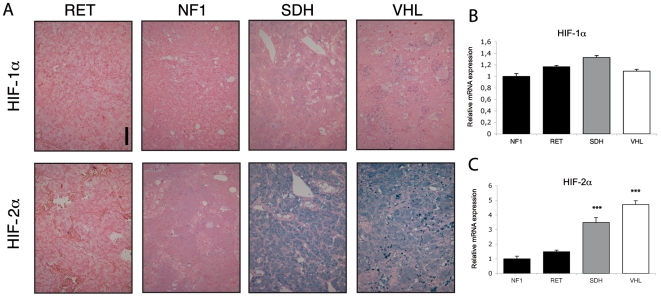
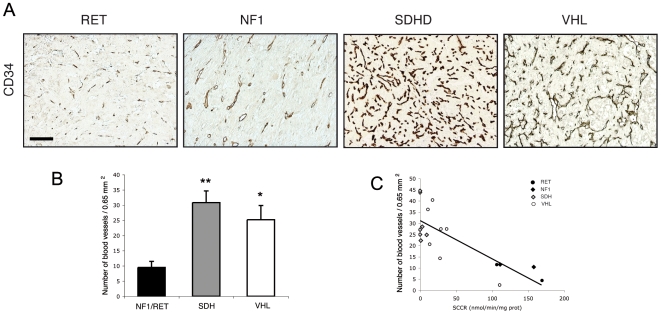
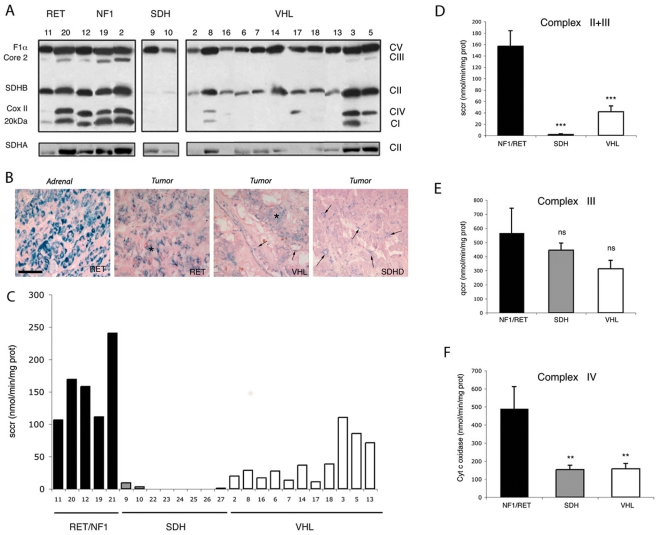
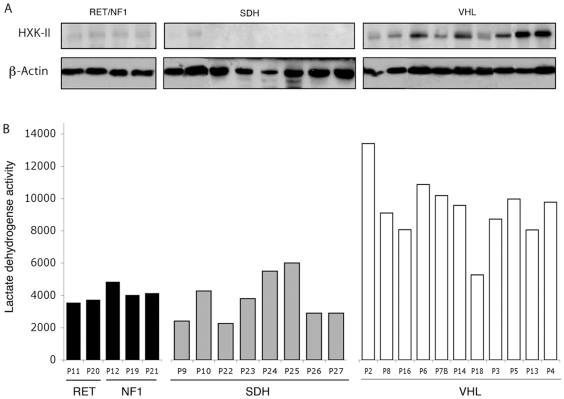
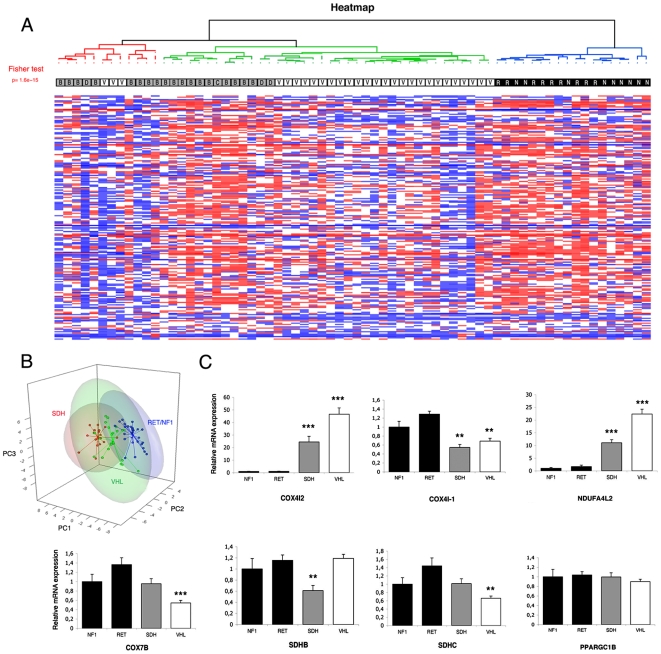
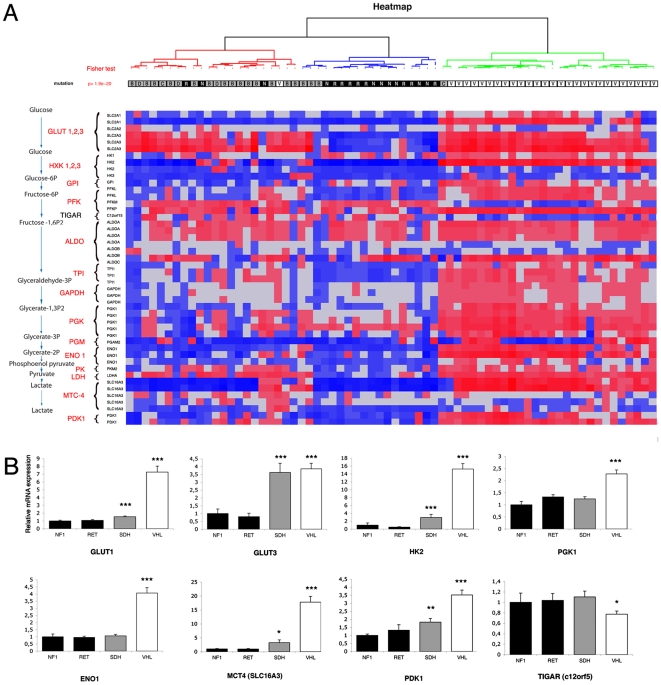
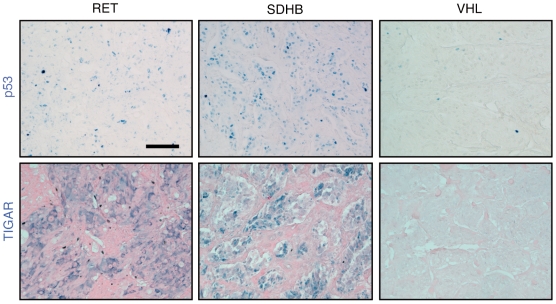
The Warburg effect describes how cancer cells down-regulate their aerobic respiration and preferentially use glycolysis to generate energy. To evaluate the link between hypoxia and Warburg effect, we studied mitochondrial electron transport, angiogenesis and glycolysis in pheochromocytomas induced by germ-line mutations in VHL, RET, NF1 and SDH genes. SDH and VHL gene mutations have been shown to lead to the activation of hypoxic response, even in normoxic conditions, a process now referred to as pseudohypoxia. We observed a decrease in electron transport protein expression and activity, associated with increased angiogenesis in SDH- and VHL-related, pseudohypoxic tumors, while stimulation of glycolysis was solely observed in VHL tumors. Moreover, microarray analyses revealed that expression of genes involved in these metabolic pathways is an efficient tool for classification of pheochromocytomas in accordance with the predisposition gene mutated. Our data suggest an unexpected association between pseudohypoxia and loss of p53, which leads to a distinct Warburg effect in VHL-related pheochromocytomas.
Overview
The claims and statistics of this paper haven’t been checked yet.
Run the check — free, no account needed. It reads the open-access text and checks the sources it cites.
Integrity signals
Registry
Cites
Statistics
Figures
Verification
Claims the paper makes
The claims and statistics of this paper haven’t been checked yet.
Run the check — free, no account needed. It reads the open-access text and checks the sources it cites.
Claims other papers make about this one
Each is checked against this paper’s own text: does it say what the citing paper says it does?
The source backs part of the claim, not all of it — or backs it for a different population, condition or comparison.
In the citing paper
“Interestingly, the tumorigenesis of these closely related tumors seems to involve aberrant HIF-2 signaling, resulting in pseudohypoxic phenotypes linked to disseminated disease (Eisenhofer et al., 2004;Pietras et al., 2008;Favier et al., 2009).”
From Therapeutic targeting of hypoxia and hypoxia-inducible factors in cancer (2016) · cites this paper as Favier et al., 2009
Experimental — accuracy not yet measured
Self-check
Percentages, sums and reported differences re-computed from the paper’s own numbers.
The self-check needs the paper’s full text.
Citations
Cites
Understanding the Warburg Effect: The Metabolic Requirements of Cell Proliferation
Vander Heiden, M. G., Cantley, L. C., & Thompson, C. B. (2009) · Science · doi:10.1126/science.1160809 · Cited by 16,197
Bioconductor: open software development for computational biology and bioinformatics
Gentleman, R. C., Carey, V. J., Bates, D. M., Bolstad, B., Dettling, M., Dudoit, S., Ellis, B., Gautier, L., Ge, Y., Gentry, J., et al. (2004) · Genome biology · doi:10.1186/gb-2004-5-10-r80 · Cited by 12,082
Exploration, normalization, and summaries of high density oligonucleotide array probe level data
Irizarry, R. A. (2003) · Biostatistics · doi:10.1093/biostatistics/4.2.249 · Cited by 10,603
Targeting HIF-1 for cancer therapy
Semenza, G. L. (2003) · Nature Reviews Cancer · doi:10.1038/nrc1187 · Cited by 6,717
On Respiratory Impairment in Cancer Cells
Warburg, O. H. (1956) · Science · doi:10.1126/science.124.3215.269 · Cited by 3,472
Succinate links TCA cycle dysfunction to oncogenesis by inhibiting HIF-α prolyl hydroxylase
Selak, M. A., Armour, S. M., MacKenzie, E. D., Boulahbel, H., Watson, D. G., Mansfield, K. D., Pan, Y., Simon, M. C., Thompson, C. B., & Gottlieb, E. (2005) · Cancer Cell · doi:10.1016/j.ccr.2004.11.022 · Cited by 2,108
TIGAR, a p53-Inducible Regulator of Glycolysis and Apoptosis
Bensaad, K., Tsuruta, A., Selak, M. A., Vidal, M. N. C., Nakano, K., Bartrons, R., Gottlieb, E., & Vousden, K. H. (2006) · Cell · doi:10.1016/j.cell.2006.05.036 · Cited by 2,019
p53 Regulates Mitochondrial Respiration
Matoba, S., Kang, J.-G., Patino, W. D., Wragg, A., Boehm, M., Gavrilova, O., Hurley, P. J., Bunz, F., & Hwang, P. M. (2006) · Science · doi:10.1126/science.1126863 · Cited by 1,650
HIF-1 Regulates Cytochrome Oxidase Subunits to Optimize Efficiency of Respiration in Hypoxic Cells
Fukuda, R., Zhang, H., Kim, J.-W., Shimoda, L., Dang, C. V., & Semenza, G. L. (2007) · Cell · doi:10.1016/j.cell.2007.01.047 · Cited by 1,225
Role of VHL Gene Mutation in Human Cancer
Kim, W. Y., & Kaelin, W. G. (2004) · Journal of Clinical Oncology · doi:10.1200/jco.2004.05.061 · Cited by 953
Zhang, H., Gao, P., Fukuda, R., Kumar, G., Krishnamachary, B., Zeller, K. I., Dang, C. V., & Semenza, G. L. (2007) · Cancer Cell · doi:10.1016/j.ccr.2007.04.001 · Cited by 885
Genetic Testing in Pheochromocytoma or Functional Paraganglioma
Amar, L., Bertherat, J. Y., Baudin, É., Ajzenberg, C., Paillerets, B. B., Chabre, O., Chamontin, B., Delemer, B., Giraud, S., Murat, A., et al. (2005) · Journal of Clinical Oncology · doi:10.1200/jco.2005.03.1484 · Cited by 683
Self-citationSuccinate dehydrogenase and fumarate hydratase: linking mitochondrial dysfunction and cancer
King, A., Selak, M. A., & Gottlieb, E. (2006) · Oncogene · doi:10.1038/sj.onc.1209594 · Cited by 672
Kim, J.-W., Gao, P., Liu, Y.-C., Semenza, G. L., & Dang, C. V. (2007) · Molecular and Cellular Biology · doi:10.1128/mcb.00440-07 · Cited by 658
Uldry, M., Yang, W., St‐Pierre, J., Lin, J. D., Seale, P., & Spiegelman, B. M. (2006) · Cell Metabolism · doi:10.1016/j.cmet.2006.04.002 · Cited by 651
Tian, H., Hammer, R. E., Matsumoto, A. M., Russell, D. W., & McKnight, S. L. (1998) · Genes & Development · doi:10.1101/gad.12.21.3320 · Cited by 647
Mathupala, S. P., Ko, Y. H., & Pedersen, P. L. (2008) · Seminars in Cancer Biology · doi:10.1016/j.semcancer.2008.11.006 · Cited by 585
van Nederveen, F. H., Gaal, J., Favier, J., Korpershoek, E., Oldenburg, R. A., de Bruyn, E. M., Sleddens, H. F. B. M., Derkx, P., Rivière, J., Dannenberg, H., et al. (2009) · The Lancet Oncology · doi:10.1016/s1470-2045(09)70164-0 · Cited by 554
Self-citationRoles of p53, MYC and HIF-1 in regulating glycolysis–the seventh hallmark of cancer
Yeung, S. J., Pan, J., & Lee, M.-H. (2008) · Cellular and Molecular Life Sciences · doi:10.1007/s00018-008-8224-x · Cited by 514
Amar, L., Baudin, É., Burnichon, N., Peyrard, S., Silvera, S., Bertherat, J. Y., BERTAGNA, X. Y., Schlumberger, M. J., Jeunemaı̂tre, X., Gimenez‐Roqueplo, A., et al. (2007) · The Journal of Clinical Endocrinology & Metabolism · doi:10.1210/jc.2007-0709 · Cited by 447
Self-citationA HIF1α Regulatory Loop Links Hypoxia and Mitochondrial Signals in Pheochromocytomas
Dahia, P. L. M., Ross, K. N., Wright, M. E., Hayashida, C. Y., Santagata, S., Barontini, M., Kung, A. L., Sanso, G., Powers, J. F., Tischler, A. S., et al. (2005) · PLoS Genetics · doi:10.1371/journal.pgen.0010008 · Cited by 443
Samudio, I. J., Fiegl, M., & Andreeff, M. (2009) · Cancer Research · doi:10.1158/0008-5472.can-08-3722 · Cited by 309
Hu, C., Iyer, S. R., Sataur, A., Covello, K. L., Chodosh, L. A., & Simon, M. C. (2006) · Molecular and Cellular Biology · doi:10.1128/mcb.26.9.3514-3526.2006 · Cited by 270
Unwin, R. D., Craven, R. A., Harnden, P., Hanrahan, S. J., Totty, N., Knowles, M. A., Ian Eardley, C., Selby, P. J., & Banks, R. E. (2003) · PROTEOMICS · doi:10.1002/pmic.200300464 · Cited by 246
p53 Stabilization and Transactivation by a von Hippel-Lindau Protein
Roe, J., Kim, H., Lee, S.-M., Kim, S.-T., Cho, E., & Youn, H. (2006) · Molecular Cell · doi:10.1016/j.molcel.2006.04.006 · Cited by 245
Eisenhofer, G., Huynh, T.-T., Pacak, K., Brouwers, F. M., Walther, M. M., Linehan, W. M., Munson, P. J., Mannelli, M., Goldstein, D. S., & Elkahloun, A. G. (2004) · Endocrine-Related Cancer · doi:10.1677/erc.1.00838 · Cited by 207
Lebedeva, M. A., Eaton, J. S., & Shadel, G. S. (2009) · Biochimica et Biophysica Acta (BBA) - Bioenergetics · doi:10.1016/j.bbabio.2009.01.004 · Cited by 191
Brière, J.-J., Favier, J., Bénit, P., Ghouzzi, V. E., Lorenzato, A., Rabier, D., Renzo, M. F. D., Gimenez‐Roqueplo, A., & Rustin, P. (2005) · Human Molecular Genetics · doi:10.1093/hmg/ddi359 · Cited by 162
Self-citationPollard, P. J., El-Bahrawy, M. A., Poulsom, R., Elia, G., Killick, P., Kelly, G. P., Hunt, T., Jeffery, R. E., Seedhar, P., Barwell, J., et al. (2006) · The Journal of Clinical Endocrinology & Metabolism · doi:10.1210/jc.2006-0920 · Cited by 140
Bénit, P., Gonçalves, S., Dassa, E. P., Brière, J.-J., Martin, G. R., & Rustin, P. (2006) · Clinica Chimica Acta · doi:10.1016/j.cca.2006.05.034 · Cited by 101
Self-citationHereditary Paraganglioma/Pheochromocytoma and Inherited Succinate Dehydrogenase Deficiency
Favier, J., Brière, J.-J., Strompf, L., Amar, L., Filali, M., Jeunemaı̂tre, X., Rustin, P., & Gimenez‐Roqueplo, A. (2005) · Hormone Research in Paediatrics · doi:10.1159/000084685 · Cited by 92
Self-citationHervouet, É. (2004) · Carcinogenesis · doi:10.1093/carcin/bgi001 · Cited by 91
Satake, N., Ishida, Y., Otoh, Y., Hinohara, S., Kobayashi, H., Sakashita, A., Maseki, N., & Kaneko, Y. (1997) · Genes Chromosomes and Cancer · doi:10.1002/(sici)1098-2264(199709)20:1 · Cited by 91
Proteomic analysis of primary cell lines identifies protein changes present in renal cell carcinoma
Craven, R. A., Stanley, A. J., Hanrahan, S. J., Dods, J. S., Unwin, R. D., Totty, N., Harnden, P., Ian Eardley, C., Selby, P. J., & Banks, R. E. (2006) · PROTEOMICS · doi:10.1002/pmic.200500549 · Cited by 76
Nilsson, H., Jögi, A., Beckman, S., Harris, A. L., Poellinger, L., & Påhlman, S. (2005) · Experimental Cell Research · doi:10.1016/j.yexcr.2004.10.003 · Cited by 75
Zelinka, T., Timmers, H. J. L. M., Kozupa, A., Chen, C. C., Carrasquillo, J. A., Reynolds, J. C., Ling, A. L., Eisenhofer, G., Lazúrová, I., Adams, K. T., et al. (2008) · Endocrine Related Cancer · doi:10.1677/erc-07-0217 · Cited by 67
Cloning and expression pattern of EPAS1 in the chicken embryo
Favier, J., Kempf, H., Corvol, P. L., & Gasc, J. (1999) · FEBS Letters · doi:10.1016/s0014-5793(99)01476-3 · Cited by 51
Self-citationRustin, P., & Kroemer, G. (2008) · Ernst Schering Research Foundation workshop/Ernst Schering Foundation Symposium proceedings · doi:10.1007/2789_2008_086 · Cited by 46
Self-citationThe relatively high frequency of p53 gene mutations in multiple and malignant phaeochromocytomas
Yoshimoto, T., Naruse, M., Zeng, Z., Nishikawa, T., Kasajima, T., Toma, H., Yamamori, S., Matsumoto, H., Tanabe, A., Naruse, K., et al. (1998) · Journal of Endocrinology · doi:10.1677/joe.0.1590247 · Cited by 40
Petri, B., Speel, E. M., Korpershoek, E., Claessen, S. M. H., van Nederveen, F. H., Giesen, V., Dannenberg, H., van der Harst, E., Dinjens, W. N. M., & de Krijger, R. R. (2008) · Modern Pathology · doi:10.1038/modpathol.3801013 · Cited by 29
Transcriptional adaptation of neuroblastoma cells to hypoxia
Fredlund, E., Ovenberger, M., Borg, Å., & Påhlman, S. (2008) · Biochemical and Biophysical Research Communications · doi:10.1016/j.bbrc.2007.12.074 · Cited by 25
Owens, K. M., Modica-Napolitano, J. S., & Singh, K. K. (2008) · Springer eBooks · doi:10.1007/978-0-387-84835-8_1 · Cited by 21
Cited by
Sorted by citations
SDH mutations establish a hypermethylator phenotype in paraganglioma
Letouzé, E., Martinelli, C., Loriot, C., Burnichon, N., Abermil, N., Ottolenghi, C., Janin, M., Menara, M., Nguyen, A. T., Benit, P., et al. (2013) · Cancer Cell · doi:10.1016/j.ccr.2013.04.018 · Cited by 776
Self-citationTherapeutic targeting of hypoxia and hypoxia-inducible factors in cancer
Wigerup, C., Påhlman, S., & Bexell, D. (2016) · Pharmacology & Therapeutics · doi:10.1016/j.pharmthera.2016.04.009 · Cited by 687
“Interestingly, the tumorigenesis of these closely related tumors seems to involve aberrant HIF-2 signaling, resulting in pseudohypoxic phenotypes linked to disseminated disease (Eisenhofer et al., 2004; Pietras et al., 2008; Favier et al., 2009).”
BackgroundSeyfried, T. N., & Shelton, L. M. (2010) · Nutrition & Metabolism · doi:10.1186/1743-7075-7-7 · Cited by 675
SDHA is a tumor suppressor gene causing paraganglioma
Burnichon, N., Brière, J.-J., Libé, R., Vescovo, L., Rivière, J., Tissier, F., Jouanno, E., Jeunemaı̂tre, X., Bénit, P., Tzagoloff, A., et al. (2010) · Human Molecular Genetics · doi:10.1093/hmg/ddq206 · Cited by 645
Self-citationExome sequencing identifies MAX mutations as a cause of hereditary pheochromocytoma
Comino‐Méndez, I., Gracia-Aznárez, F. J., Schiavi, F., Landa, I., Leandro-Garcia, L. J., Letón, R., Honrado, E., Ramos‐Medina, R., Caronia, D., Pita, G., et al. (2011) · Nature Genetics · doi:10.1038/ng.861 · Cited by 528
Metadata
- Authors
- Favier, J., Brière, J.-J., Burnichon, N., Rivière, J., Vescovo, L., Benit, P., Giscos-Douriez, I., De Reyniès, A., Bertherat, J., Badoual, C., Tissier, F., Amar, L., Libé, R., Plouin, P.-F., Jeunemaitre, X., Rustin, P., & Gimenez-Roqueplo, A.-P.
- Affiliations
- Inserm (FR)
- La Ligue Contre le Cancer (FR)
- Assistance Publique – Hôpitaux de Paris (FR)
- Hôpital Cochin (FR)
- Corresponding author
- Favier, Judith
- ORCID
- Venue
- PLoS ONE
- Publisher
- Public Library of Science (PLoS)
- Published
- 2009-09-18
- Volume
- 4
- Issue
- 9
- Pages
- e7094
- ISSN
- 1932-6203 (ISSN-L)
- PMC
- PMC2738974
- OpenAlex
- W2063687158
- Cited by
- 232
- References
- 42
- Citations by year
- 2026: 7 · 2025: 3 · 2024: 4 · 2023: 4 · 2022: 10 · 2021: 7 · 2020: 12 · 2019: 13 · 2018: 14 · 2017: 11 · 2016: 15 · 2015: 28 · 2014: 27 · 2013: 16 · 2012: 27
- FWCI
- 20.62
- Type
- journal article
- Language
- en
- Open access
- gold
- doi.org
- Locations
- PLoS ONE (publishedVersion, cc-by)
- PubMed Central (publishedVersion, cc-by)
- PubMed (publishedVersion)
- DOAJ (DOAJ: Directory of Open Access Journals) (submittedVersion, cc-by-sa)
- Funders
- Association pour la Recherche sur le Cancer
- Agence Nationale de la Recherche
- GIS-Institut des Maladies Rares
- Topics
- Health Sciences › Medicine › Surgery › Adrenal and Paraganglionic Tumors
- Life Sciences › Biochemistry, Genetics and Molecular Biology › Cancer Research › Cancer, Hypoxia, and Metabolism
- Health Sciences › Medicine › Oncology › Ear and Head Tumors
- Keywords
- Warburg effect, pheochromocytoma, pseudohypoxia, VHL gene, SDH genes, RET proto-oncogene, NF1 gene, mitochondrial electron transport chain, angiogenesis, glycolysis, p53 deficiency, cancer metabolism, germline mutations, gene expression profiling
- MeSH terms
- Adolescent, Adult, Aged, Hypoxia, Child, Electron Transport, Female, Glycolysis, Humans, Male, Middle Aged, Mitochondria, Neovascularization, Pathologic, Oxidative Phosphorylation, Pheochromocytoma, Genes, p53, Germ-Line Mutation, Oligonucleotide Array Sequence Analysis
About these checks
Registry, retraction, Cites and statistics results are computed, not judged, with one exception: a printed reference that no index lists is read once by a model before it counts as a citation error. Claims are extracted by a model and kept only when their quote appears verbatim in the text; each cited source is then checked, with a model’s help, for whether it says what the claim relies on. Those verdicts can be wrong — read the claim’s quote and the cited source before relying on one.
Statistics and arithmetic are recomputed, not judged.
Confidence bands are shown only for fields calibrated on our annotated test set. None is calibrated yet, so no band is shown.
What counts as a claim ›How we measure confidence ›How we check this ›
Are you an author, or do you see a problem with this page? Request a review
