The DOI matches its Crossref record; 139 of the 139 references it cites were found in a registry or an index.
Comparative Genomics of Flowering Time Pathways Using Brachypodium distachyon as a Model for the Temperate Grasses
Open accessAbstract
Brachypodium distachyon (Brachypodium) is a model for the temperate grasses which include important cereals such as barley, wheat and oats. Comparison of the Brachypodium genome (accession Bd21) with those of the model dicot Arabidopsis thaliana and the tropical cereal rice (Oryza sativa) provides an opportunity to compare and contrast genetic pathways controlling important traits. We analysed the homologies of genes controlling the induction of flowering using pathways curated in Arabidopsis Reactome as a starting point. Pathways include those detecting and responding to the environmental cues of day length (photoperiod) and extended periods of low temperature (vernalization). Variation in these responses has been selected during cereal domestication, providing an interesting comparison with the wild genome of Brachypodium. Brachypodium Bd21 has well conserved homologues of circadian clock, photoperiod pathway and autonomous pathway genes defined in Arabidopsis and homologues of vernalization pathway genes defined in cereals with the exception of VRN2 which was absent. Bd21 also lacked a member of the CO family (CO3). In both cases flanking genes were conserved showing that these genes are deleted in at least this accession. Segmental duplication explains the presence of two CO-like genes in temperate cereals, of which one (Hd1) is retained in rice, and explains many differences in gene family structure between grasses and Arabidopsis. The conserved fine structure of duplications shows that they largely evolved to their present structure before the divergence of the rice and Brachypodium. Of four flowering-time genes found in rice but absent in Arabidopsis, two were found in Bd21 (Id1, OsMADS51) and two were absent (Ghd7, Ehd1). Overall, results suggest that an ancient core photoperiod pathway promoting flowering via the induction of FT has been modified by the recruitment of additional lineage specific pathways that promote or repress FT expression.
Overview
The claims and statistics of this paper haven’t been checked yet.
Run the check — free, no account needed. It reads the open-access text and checks the sources it cites.
Integrity signals
Registry
Cites
Statistics
Figures
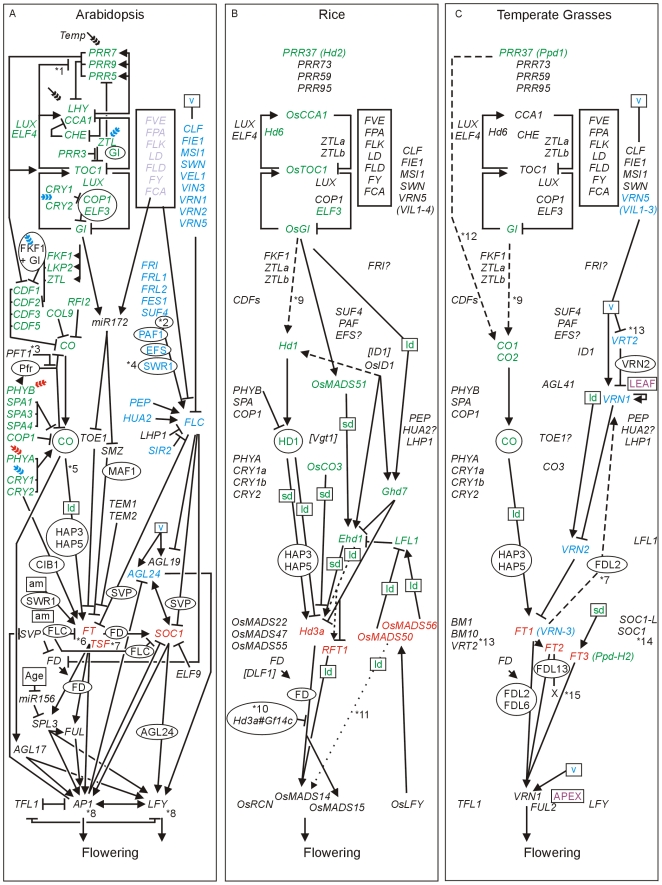
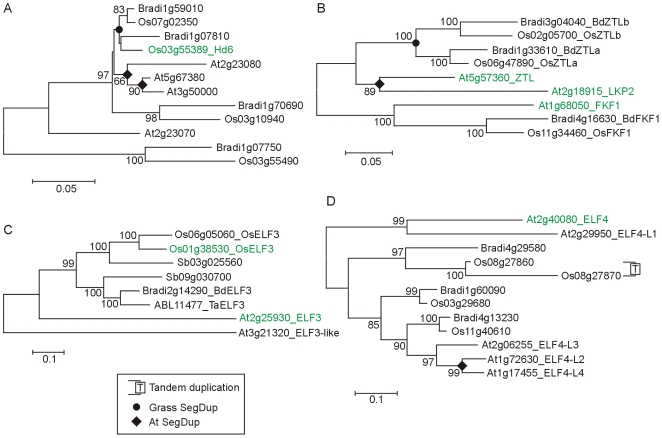
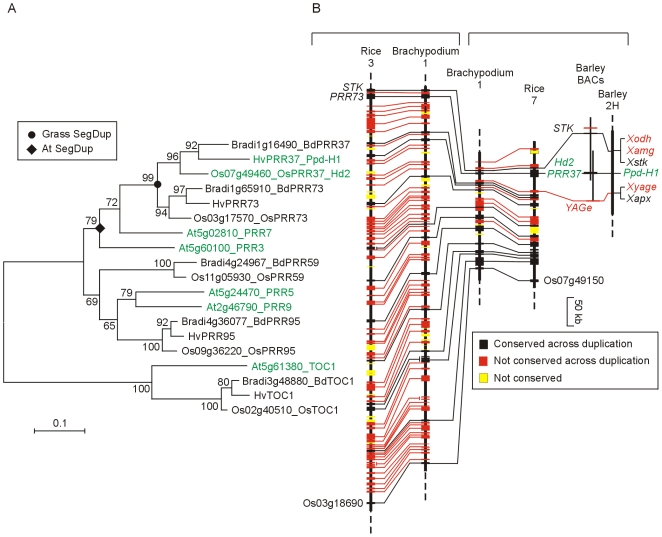
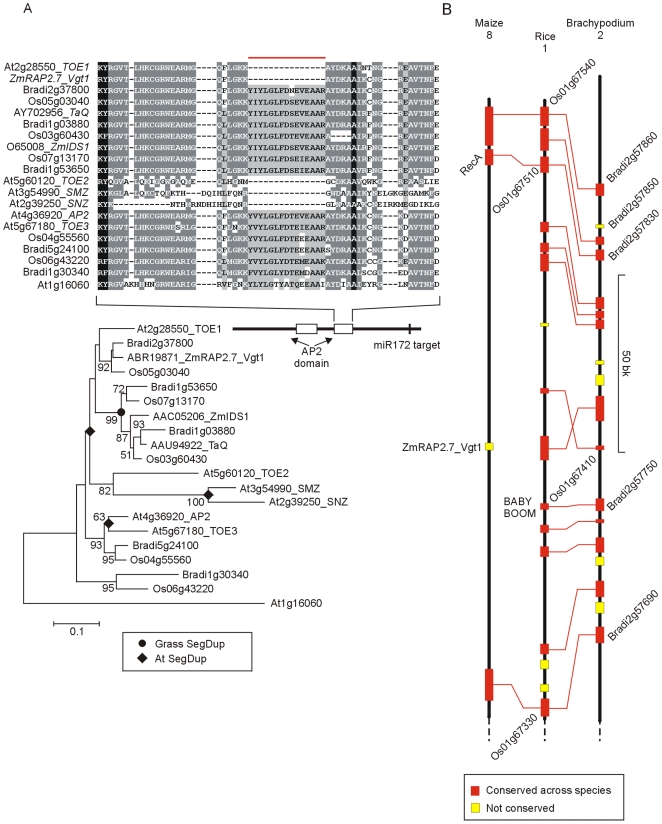
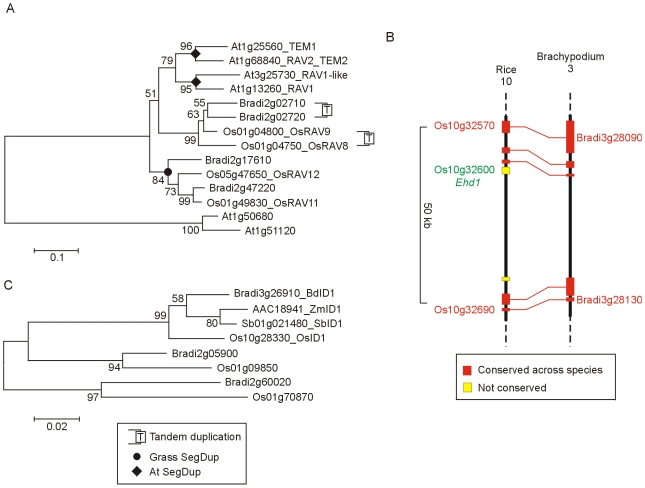
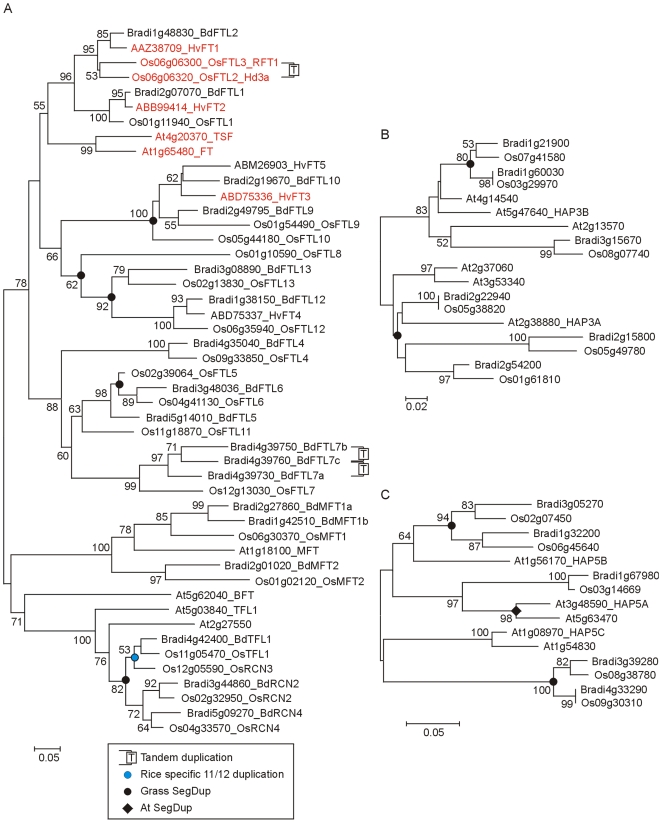
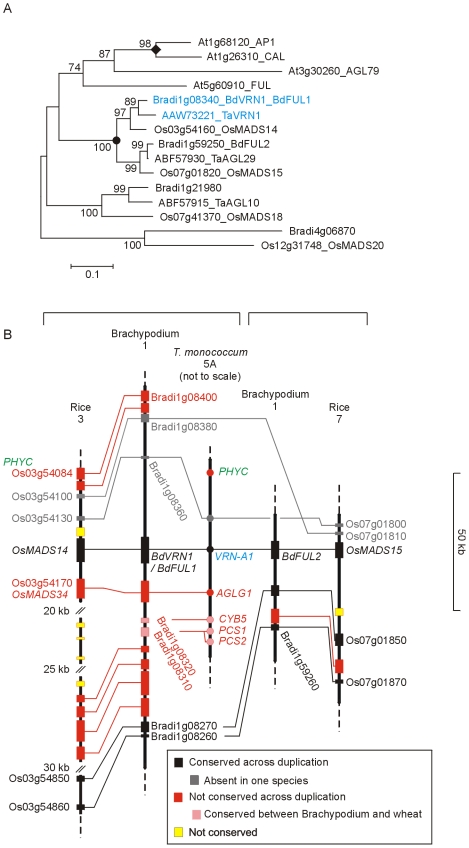
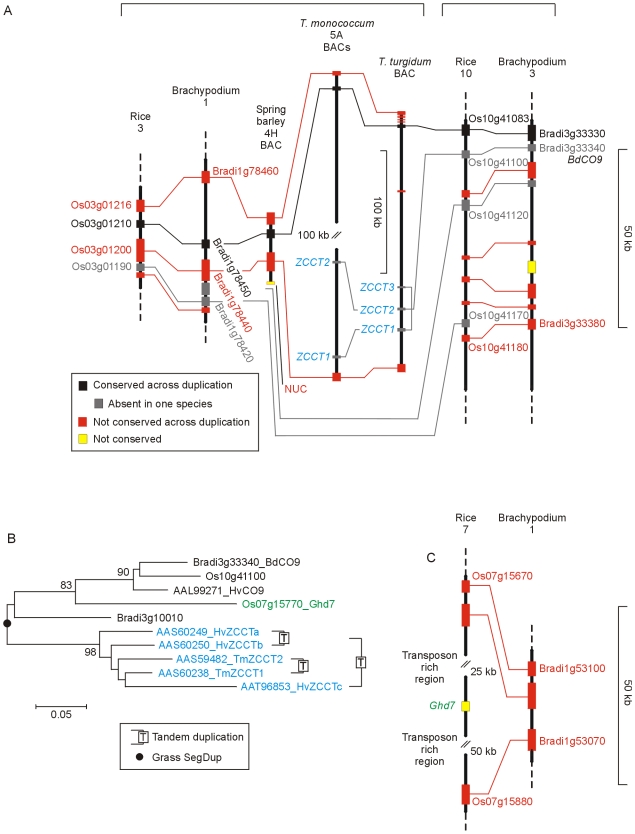
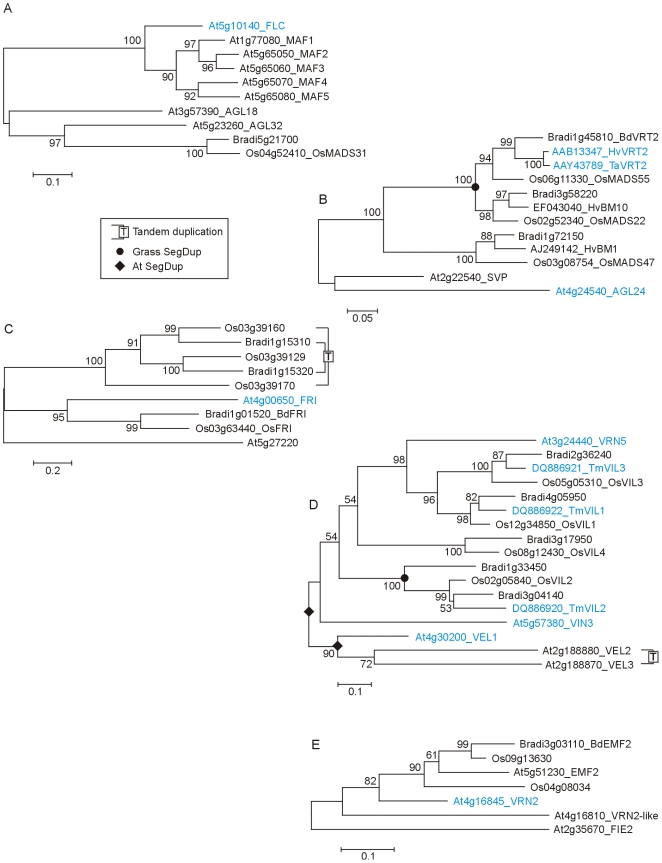
![Figure 1 Genetic pathways controlling flowering in Arabidopsis, rice and temperate grasses. Arrows show promoting effects, T-bars show repressing effects. Environmental cues are shown as lower case letters in square boxes; v is extended cold (vernalization); ld is long days; sd is short days; am is ambient (non-vernalizing) temperature. Genes are shown in italics and proteins in non-italics in ovals. Proteins are clearly involved at all stages but we make this distinction only in cases where separate controls are known to exist for transcription and protein function or stability. # indicates inhibition of protein function. The pathways were compiled from the following reviews [1], [2], [3], [4], [5], [6], [7], [8], [9], [11], [12], [13], [14], [16], [17], [18], [19] plus individual articles referenced in the text. Box A. In Arabidopsis genes assigned to pathways are shown in colour (photoperiod pathway in green, vernalization pathway in blue, autonomous pathway in light blue). Flowering pathway integrators are shown in red. Triple headed arrows indicate activation by red or blue light. Box B. Rice genes identified as homologues of those in Arabidopsis are shown in black. Ambiguous homology is indicated with a question mark. Genes with published roles in photoperiod regulated flowering are shown in green and orthologues of pathway integrators in red. Box C. In the temperate grasses box Brachypodium genes identified as homologues of those of Arabidopsis or rice are shown in black. The VRN2 and CO3 genes from barley and wheat are also included. Genes with published roles in photoperiod or vernalization regulated flowering in barley or wheat are shown in green or blue, respectively, and orthologues of pathway integrators in red. In B and C likely orthologues of Arabidopsis genes are shown in equivalent positions within the figure (e.g. Hd1 is the rice orthologue of CO and Hd3a and RFT1 are rice orthologues of FT). Tables 1 and S1 gives information on gene names and synonyms. Square brackets in box B show three maize genes with known flowering time effects. Notes: *1 TOC1 represses PRR9, PRR7 and PRR5 [130]. *2 SUF4 interacts with FRI and FRL1. LD blocks SUF4 action to reduce FLC expression [110]. *3 Cerdan and Chory [131] identified PFT1 and proposed that it promotes flowering by a photoperiod independent pathway activating FT. The model here follows Wollenberg et al. [132] who propose an alternative in which PFT1 acts by repressing Pfr phytochrome signalling. *4 SWR1 is a protein complex including SWC6, ARP6 and PIE1. *5 CO expression from phloem-specific promoters complements the co mutation, but expression from meristem-specific promoters does not. CO triggers flowering from the phloem by the cell-autonomous activation of FT expression [133]. *6 High temperatures (27°C vs 23°C) in short days induce flowering by a mechanism that requires FT and gibberellic acid and likely involves MAF1 (FLM). High temperature induction of flowering is independent of the photoperiod pathway but is repressed by FLC and by autonomous pathway mutations that increase FLC levels [122]. Kumar and Wigge [123] showed that ambient temperature responses, including the activation of FT, involve the replacement of histone H2A.Z with H2A in nucleosomes. Mutation of ARP6 (part of the SWR1 complex) blocks this process. The late-flowering phenotype of dominant fwa mutants is caused by hypomethylation in the FWA locus leading to ectopic expression of a homeodomain leucine zipper (HD-ZIP) protein. The FWA protein interacts with FT protein and so ectopic expression of FWA delays flowering by impairing FT function [134]. FWA is not expressed during the vegetative phase in wild type plants and normally has no role in flowering so homologues are not considered in this paper. *7 TWIN SISTER OF FT (TSF) is closely related to FT, is activated by CO, has a similar role in flowering and is repressed by SVP ([135]; reviewed by [4], [102]). *8 Activation of AP1 and LFY requires two paralogous homeobox genes (PENNYWISE (PNY; aka BELLRINGER and REPLUMLESS) and POUND-FOOLISH (PNF)). Double null mutants express SOC1 and FUL but not AP1 or LFY. The double mutants can receive floral inductive signals but do not properly restructure the shoot apical meristem to make flowers [136], [137]. *9 GI promotion of Hd1/CO is shown directly but could act through the FKF1/CDF route as in Arabidopsis. *10 Mayfield et al. [80] found that 14-3-3 proteins physically interact with CO in Arabidopsis. *11 It is unclear if there is a direct connection between OsMADS50 and OsMADS14/15 as well as the connection via Edh1. *12 Ppd-H1 promotion of CO is shown directly but could act through the FKF1/CDF route as in Arabidopsis. *13 Downregulation of VRT2 by vernalization and a role in repressing VRN1 is proposed by Kane et al. [107], [108] but is not supported by Trevaskis et al. [109] so VRT2 is shown in two positions. *14 Shitsukawa et al. [89] found that WSOC1 was expressed preferentially in leaves. Expression was not affected by photoperiod or vernalization but was upregulated in seedlings by a GA treatment. *15 X indicates an unknown target gene [97]. Key to figures of phylogenetic trees A PRANK alignment of protein sequences (shown in the supplementary datasets) was used to construct phylogenetic trees using the neighbor-joining algorithm (subsequently NJ trees) with bootstrap support from 1000 iterations (values of ≥50% shown). Gene identifiers show the species as follows: At for Arabidopsis thaliana, Bradi for Brachypodium distachyon, Os for Orzya sativa (rice), Hv for Hordeum vulgare (barley), Ta for Triticum aestivum (bread wheat), Tm for Triticum monococcum (einkorn wheat), Sb for Sorghum bicolour (sorghum) and Zm for Zea mays (maize). Barley and wheat proteins are highly homologous and usually only one is shown. Gene names follow the identifiers where relevant to the text and genes with known flowering time roles are shown in colour following Figure 1. In several instances we identified pairs of genes in grasses (paralogues) in segmental duplications (SegDup) which likely result from a grass whole genome duplication that predates the divergence of the rice, maize, sorghum, Brachypodium, barley and wheat lineages. These duplication events are shown as solid circles. Similarly, solid diamonds showduplication events in Arabidopsis; these are independent from the duplication event in the grasses. Boxed T shows tandem or closely arranged paralogues resulting from duplications within individual species. Where the protein belongs to a large family we show small clades containing genes of interest selected from analyses of whole families. The clades were identified either by using an online interrogatory tree of the transcription factor family using known flowering-time genes as query sequences [98] or from the family trees shown in the supplementary material. Key to figures of segmental duplications In these figures the size and spacing of genes in the respective genomic sequences is shown to the physical scale indicated in each figure. The components of each half of the duplication are grouped under the bars at the top of the figure. For example, Figure 3 shows part of rice chromosome 3 which is colinear with part of Brachypodium chromosome 1 and is related to part of rice chromosome 7 by segmental duplication. This section of rice 7 is colinear with a separate section of Brachypodium 1. Identifiers and names of flowering-time genes and their homologues are shown, with colours following Figure 1. Gene identifiers are also shown at the top and bottom of each segment to allow orientation to the respective genome browsers. The segmental duplications are recognized by conserved genes (black boxes connected by black lines). Some figures have grey boxes which show genes that are not conserved across the duplication in all species. Within these regions, other genes are conserved between species but not across the duplication (red boxes connected by red lines). These are deletion/insertion events that occurred after the duplication arose but before the divergence of the respective species. Genes in yellow are not conserved across species and represent candidates for deletion/insertion events that occurred after species divergence. Hypothetical genes and sequences annotated as transposons are excluded. In most cases the segmental duplications extend further than shown as we only use those portions that are relevant to the relationships of the flowering-time genes discussed in the text.](/paper-figures/8288023f488844eb94fba0451a918400/comparative-genomics-of-flowering-time-pathways-using-brachypodium-distachyon-as-figure-1.jpg)

![Figure 3 Phylogenetic relationship of PRR proteins. A) NJ tree of PSEUDO-RESPONSE REGULATOR proteins based on alignment of the PSEUDO-RECEIVER (PF00072) and CCT (PF06203) domains; Dataset S6; Full length Barley sequences; Dataset S1). B) Structure of a segmental duplication originally defined in rice using RFLP markers [138] that contains the PRR37 (Ppd-H1, Hd2) and PRR73 genes.](/paper-figures/f8ce29a69d6c4a0fbb86ec098c7aa9d1/comparative-genomics-of-flowering-time-pathways-using-brachypodium-distachyon-as-figure-3.jpg)
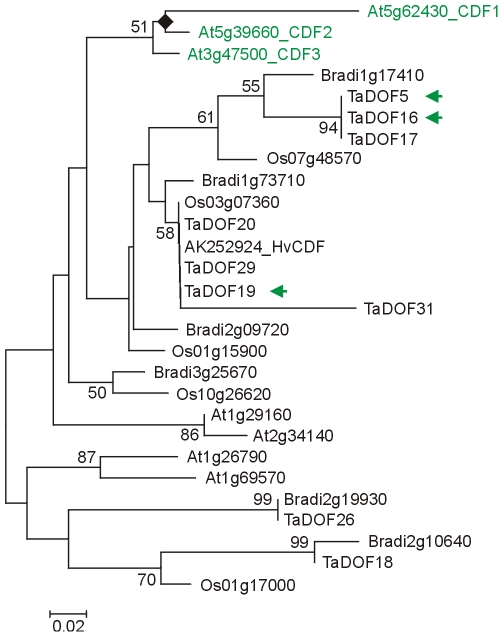
![Figure 4 Phylogenetic relationship of CDF proteins. NJ tree of CYCLING DOF FACTOR proteins (whole protein alignment; Dataset S7). The CDF subgroup was identified with an online interrogatory tree using known Arabidopsis flowering-time genes as query sequences [93]. Wheat DOF proteins were taken from Shaw et al. [139] and include three (green arrows) whose expression patterns resembled that of Arabidopsis CDFs involved in flowering.](/paper-figures/617451fadc3842f28e50670505f7cdb4/comparative-genomics-of-flowering-time-pathways-using-brachypodium-distachyon-as-figure-4.jpg)
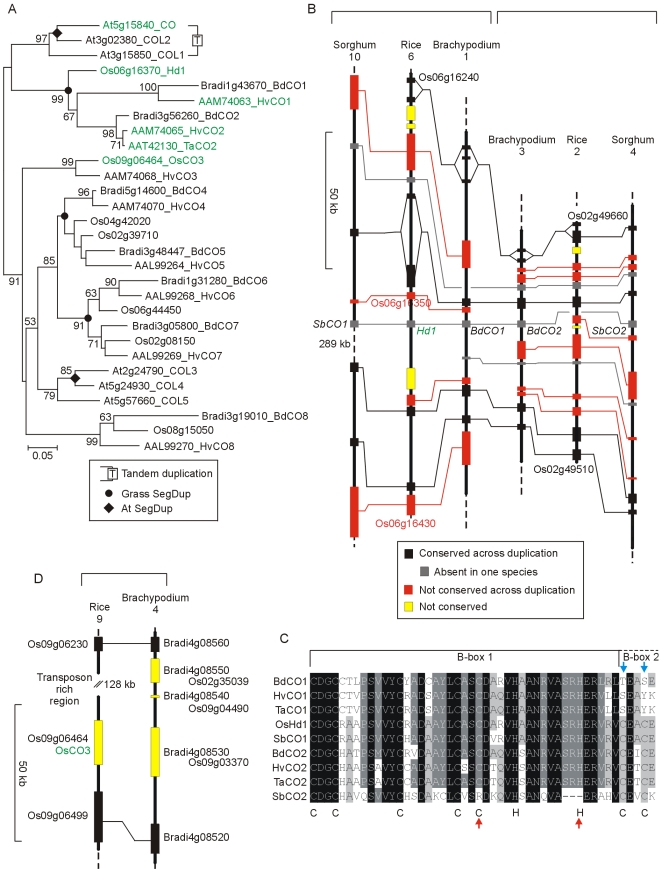
![Figure 5 Phylogenetic relationship of CO proteins and physical maps of the CO1 and CO2 gene regions. A) NJ tree of CONSTANS and related proteins (whole protein alignment; Dataset S8). This diagram does not contain the diverged group IV CO-like proteins defined by Griffiths et al. [51] as these are described in Figure 11. B) Structure of the segmental duplication containing the CO1 and CO2 genes of the grasses. C) Amino-acid sequences of B-box1 and the start of B-box2 from rice, barley, Brachypodium and sorghum proteins. Blue arrows – conserved C residues not present in B-box 2 of the temperate species. Red arrows – conserved C and H residues missing from B-box 1 of the sorghum CO2 protein. Conserved amino acids defining B-boxes are shown below. D) Colinear segments of rice chromosome 9 and Brachypodium chromosome 4 showing the absence of the CO3 gene from Brachypodium.](/paper-figures/e80f2b254ac74b04a681acc2bdb8aeee/comparative-genomics-of-flowering-time-pathways-using-brachypodium-distachyon-as-figure-5.jpg)

![Figure 7 Phylogenetic relationships of TEM, ID1 and Ehd1 proteins. A) NJ tree of TEMPRANILLO and related proteins (whole protein alignment; Dataset S10). The TEM subgroup was identified with an online interrogatory tree using known Arabidopsis flowering-time genes as query sequences [98]. B) Colinear segments of rice chromosome 10 and Brachypodium chromosome 3 showing the absence of Ehd1 from Brachypodium. C) NJ tree of INDETERMINATE1 proteins (using an alignment of the ID domain; Dataset S11). Two related IDD proteins are included to show that ID proteins are a distinct subgroup of the C2H2 zinc-finger transcription factor family (Figure S3).](/paper-figures/386214b06dd24091a213d28ba3480830/comparative-genomics-of-flowering-time-pathways-using-brachypodium-distachyon-as-figure-7.jpg)

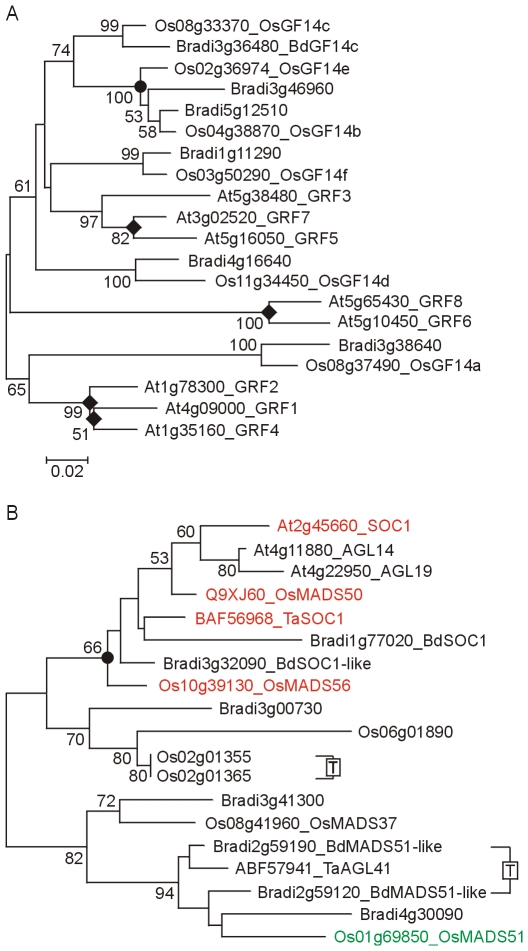
![Figure 9 Phylogenetic relationship of 14-3-3 and SOC1 proteins. A) NJ tree of 14-3-3 and related proteins (whole protein alignment; Dataset S15). Only the 14-3-3 clade selected from Figure S6 is shown, this includes rice GF14c and Arabidopsis GRF5 (GF14υ) but excludes GRF9 (GF14μ) [80]. B) NJ tree of SUPRESSOR of CONSTANS 1 and related MADS-box proteins (whole protein alignment; Dataset S16). The SOC1 clade, including the MADS51 group, selected from Figure S7 is shown including the OsMADS50 (Q9XJ60) protein which spans Os03g03070 and Os03g03100.](/paper-figures/709ceaf062034e55b21b0584ccdcc009/comparative-genomics-of-flowering-time-pathways-using-brachypodium-distachyon-as-figure-9.jpg)


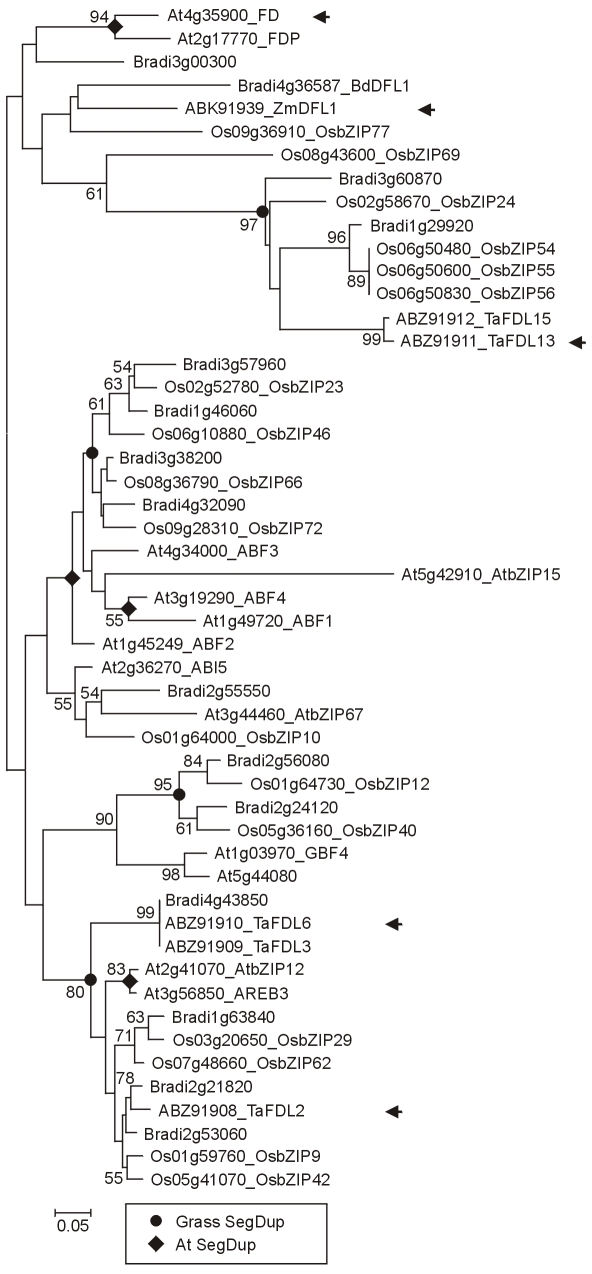
![Figure 12 Phylogenetic relationship of FD and related bZIP proteins. NJ tree of FD and related basic region leucine zipper domain proteins (BRLZ (SM00338) domain alignment; Dataset S19). The bZIP clade was identified with an online interrogatory tree using known Arabidopsis flowering-time genes as query sequences [98]. Black arrows show genes with roles in flowering as described in [66], [67], [92], [94].](/paper-figures/5fdbfdd5708543a392f39f866c645e9f/comparative-genomics-of-flowering-time-pathways-using-brachypodium-distachyon-as-figure-12.jpg)

Verification
Claims the paper makes
The claims and statistics of this paper haven’t been checked yet.
Run the check — free, no account needed. It reads the open-access text and checks the sources it cites.
Claims other papers make about this one
Each is checked against this paper’s own text: does it say what the citing paper says it does?
In the citing paper
“though at least some flowering time genes that contribute to perenniality seem to be conserved between monocots and dicots (Wang et al., 2009;Higgins et al., 2010), in a way that root architecture is not (see above).”
From Breeding crop plants with deep roots: their role in sustainable carbon, nutrient and water sequestration (2011) · cites this paper as Higgins et al., 2010
Self-check
Percentages, sums and reported differences re-computed from the paper’s own numbers.
The self-check needs the paper’s full text.
Citations
Cites
PHYLIP-Phylogeny inference package (Version 3.2)
Felsenstein, J. (1989) · Cladistics · Cited by 17,682
Eddy, S. R. (1998) · Bioinformatics · doi:10.1093/bioinformatics/14.9.755 · Cited by 5,515
MEGA: A biologist-centric software for evolutionary analysis of DNA and protein sequences
Kumar, S., Nei, M., Dudley, J. T., & Tamura, K. (2008) · Briefings in Bioinformatics · doi:10.1093/bib/bbn017 · Cited by 3,511
Genome sequencing and analysis of the model grass Brachypodium distachyon
Initiative, T. I. B. (2010) · Nature · doi:10.1038/nature08747 · Cited by 1,862
FD, a bZIP Protein Mediating Signals from the Floral Pathway Integrator FT at the Shoot Apex
Abe, M., Kobayashi, Y., Yamamoto, S., Daimon, Y., Yamaguchi, A., Ikeda, Y., Ichinoki, H., Notaguchi, M., Goto, K., & Araki, T. (2005) · Science · doi:10.1126/science.1115983 · Cited by 1,661
Synteny and Collinearity in Plant Genomes
Tang, H., Bowers, J., Wang, X., Ming, R., Alam, M. S., & Paterson, A. H. (2008) · Science · doi:10.1126/science.1153917 · Cited by 1,620
Natural variation in Ghd7 is an important regulator of heading date and yield potential in rice
Xue, W., Xing, Y., Weng, X., Zhao, Y. J., Tang, W., Wang, L., Zhou, H., Yu, S., Xu, C., Li, X., et al. (2008) · Nature Genetics · doi:10.1038/ng.143 · Cited by 1,615
Yano, M., Katayose, Y., Ashikari, M., Yamanouchi, U., Monna, L., Fuse, T., Baba, T., Yamamoto, K., Umehara, Y., Nagamura, Y., et al. (2000) · The Plant Cell · doi:10.1105/tpc.12.12.2473 · Cited by 1,609
Integration of Spatial and Temporal Information During Floral Induction in Arabidopsis
Wigge, P. A., Kim, M. C., Jaeger, K. E., Busch, W., Schmid, M., Lohmann, J. U., & Weigel, D. (2005) · Science · doi:10.1126/science.1114358 · Cited by 1,492
Positional cloning of the wheat vernalization gene VRN1
Yan, L., Loukoianov, A., Tranquilli, G. E., Helguera, M., Fahima, T., & Dubcovsky, J. (2003) · Proceedings of the National Academy of Sciences · doi:10.1073/pnas.0937399100 · Cited by 1,438
Cited by
Sorted by citations
MCScanX: a toolkit for detection and evolutionary analysis of gene synteny and collinearity
Wang, Y., Tang, H., DeBarry, J. D., Tan, X., Li, J., Wang, X., Lee, T.-H., Jin, H., Marler, B., Guo, H., et al. (2012) · Nucleic Acids Research · doi:10.1093/nar/gkr1293 · Cited by 7,093
Reference genome sequence of the model plant Setaria
Bennetzen, J. L., Schmutz, J., Wang, H., Percifield, R. J., Hawkins, J., Pontaroli, A. C., Estep, M. C., Feng, L., Vaughn, J. N., Grimwood, J., et al. (2012) · Nature Biotechnology · doi:10.1038/nbt.2196 · Cited by 923
PGDD: a database of gene and genome duplication in plants
Lee, T., Tang, H., Wang, X., & Paterson, A. H. (2012) · Nucleic Acids Research · doi:10.1093/nar/gks1104 · Cited by 582
Jia, G., Huang, X., Zhi, H., Zhao, Y., Zhao, Q., Li, W., Yang, C., Yang, L., Liu, K., Lu, H., et al. (2013) · Nature Genetics · doi:10.1038/ng.2673 · Cited by 460
Díaz, A., Zikhali, M., Turner, A. S., Isaac, P. G., & Laurie, D. A. (2012) · PLoS ONE · doi:10.1371/journal.pone.0033234 · Cited by 459
Self-citation
Metadata
- Authors
- Higgins, J. A., Bailey, P. C., & Laurie, D. A.
- Affiliations
- John Innes Centre (GB)
- Corresponding author
- Higgins, Janet A.
- Venue
- PLoS ONE
- Publisher
- Public Library of Science (PLoS)
- Published
- 2010-04-19
- Volume
- 5
- Issue
- 4
- Pages
- e10065
- ISSN
- 1932-6203 (ISSN-L)
- PMC
- PMC2856676
- OpenAlex
- W1988145565
- Cited by
- 280
- References
- 139
- Citations by year
- 2026: 6 · 2025: 4 · 2024: 5 · 2023: 7 · 2022: 18 · 2021: 12 · 2020: 17 · 2019: 14 · 2018: 22 · 2017: 15 · 2016: 28 · 2015: 15 · 2014: 18 · 2013: 38 · 2012: 32
- FWCI
- 38.11
- Type
- journal article
- Language
- en
- Open access
- gold
- doi.org
- Locations
- PLoS ONE (publishedVersion, cc-by)
- PubMed Central (publishedVersion, cc-by)
- PubMed (publishedVersion)
- DOAJ (DOAJ: Directory of Open Access Journals) (submittedVersion, cc-by-sa)
- Figshare (submittedVersion, cc-by)
- Funders
- Gatsby Charitable Foundation
- Biotechnology and Biological Sciences Research Council (BBS/E/J/000CA286)
- Topics
- Life Sciences › Agricultural and Biological Sciences › Plant Science › Plant Molecular Biology Research
- Life Sciences › Biochemistry, Genetics and Molecular Biology › Genetics › Chromosomal and Genetic Variations
- Life Sciences › Biochemistry, Genetics and Molecular Biology › Genetics › Genetic Mapping and Diversity in Plants and Animals
- Keywords
- flowering time, Brachypodium distachyon, temperate grass, photoperiod pathway, vernalization pathway, autonomous pathway, circadian clock, CONSTANS, segmental duplication, gene family evolution, cereal domestication, Arabidopsis thaliana, rice, gene homology, MADS-box genes
- MeSH terms
- Poaceae, Temperature, Genes, Plant, Photoperiod, Genome, Plant, Genomics, Flowers, Metabolic Networks and Pathways
About these checks
Registry, retraction, Cites and statistics results are computed, not judged, with one exception: a printed reference that no index lists is read once by a model before it counts as a citation error. Claims are extracted by a model and kept only when their quote appears verbatim in the text; each cited source is then checked, with a model’s help, for whether it says what the claim relies on. Those verdicts can be wrong — read the claim’s quote and the cited source before relying on one.
Statistics and arithmetic are recomputed, not judged.
Confidence bands are shown only for fields calibrated on our annotated test set. None is calibrated yet, so no band is shown.
What counts as a claim ›How we measure confidence ›How we check this ›
Are you an author, or do you see a problem with this page? Request a review