

The DOI matches its Crossref record; 52 of the 53 references it cites were found in a registry or an index.
Vitamin C: Intravenous Use by Complementary and Alternative Medicine Practitioners and Adverse Effects
Open accessAbstract
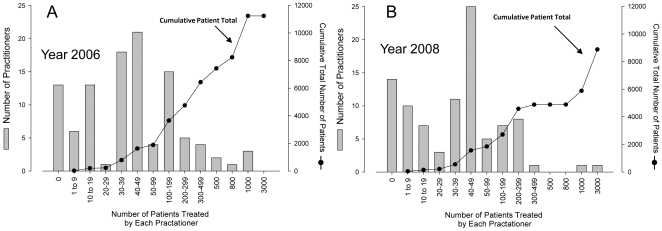
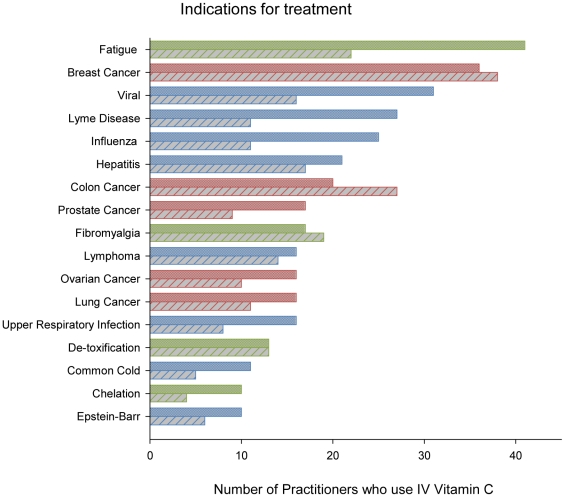
BACKGROUND: Anecdotal information and case reports suggest that intravenously administered vitamin C is used by Complementary and Alternate Medicine (CAM) practitioners. The scale of such use in the U.S. and associated side effects are unknown. METHODS AND FINDINGS: We surveyed attendees at annual CAM Conferences in 2006 and 2008, and determined sales of intravenous vitamin C by major U.S. manufacturers/distributors. We also queried practitioners for side effects, compiled published cases, and analyzed FDA's Adverse Events Database. Of 199 survey respondents (out of 550), 172 practitioners administered IV vitamin C to 11,233 patients in 2006 and 8876 patients in 2008. Average dose was 28 grams every 4 days, with 22 total treatments per patient. Estimated yearly doses used (as 25 g/50 ml vials) were 318,539 in 2006 and 354,647 in 2008. Manufacturers' yearly sales were 750,000 and 855,000 vials, respectively. Common reasons for treatment included infection, cancer, and fatigue. Of 9,328 patients for whom data is available, 101 had side effects, mostly minor, including lethargy/fatigue in 59 patients, change in mental status in 21 patients and vein irritation/phlebitis in 6 patients. Publications documented serious adverse events, including 2 deaths in patients known to be at risk for IV vitamin C. Due to confounding causes, the FDA Adverse Events Database was uninformative. Total numbers of patients treated in the US with high dose vitamin C cannot be accurately estimated from this study. CONCLUSIONS: High dose IV vitamin C is in unexpectedly wide use by CAM practitioners. Other than the known complications of IV vitamin C in those with renal impairment or glucose 6 phosphate dehydrogenase deficiency, high dose intravenous vitamin C appears to be remarkably safe. Physicians should inquire about IV vitamin C use in patients with cancer, chronic, untreatable, or intractable conditions and be observant of unexpected harm, drug interactions, or benefit.
Overview
The claims and statistics of this paper haven’t been checked yet.
Run the check — free, no account needed. It reads the open-access text and checks the sources it cites.
Integrity signals
Registry
Cites
Statistics
Figures
Verification
Claims the paper makes
The claims and statistics of this paper haven’t been checked yet.
Run the check — free, no account needed. It reads the open-access text and checks the sources it cites.
Claims other papers make about this one
Each is checked against this paper’s own text: does it say what the citing paper says it does?
The cited source says what the claim attributes to it.
In the citing paper
“Interestingly, even very high doses of i.v. vitamin C (ranging from 1 to 200 g and given repeatedly) are apparently well tolerated in most patients [206].”
From Vitamin C-Sources, Physiological Role, Kinetics, Deficiency, Use, Toxicity, and Determination (2021) · cites this paper as [206]
Self-check
Percentages, sums and reported differences re-computed from the paper’s own numbers.
The self-check needs the paper’s full text.
Citations
Cites
Complementary and alternative medicine use among adults: United States, 2002
Barnes, P. M., Powell‐Griner, E., McFann, K., & Nahin, R. L. (2004) · Seminars in Integrative Medicine · doi:10.1016/j.sigm.2004.07.003 · Cited by 2,183
Vitamin C pharmacokinetics in healthy volunteers: evidence for a recommended dietary allowance
Levine, M., Conry-Cantilena, C., Wang, Y., Welch, R. W., Washko, P. W., Dhariwal, K. R., Park, J. B., Lazarev, A., Graumlich, J. F., King, J., et al. (1996) · Proceedings of the National Academy of Sciences · doi:10.1073/pnas.93.8.3704 · Cited by 1,325
Self-citationChen, Q., Espey, M. G., Krishna, M. C., Mitchell, J. B., Corpe, C. P., Buettner, G. R., Shacter, E., & Levine, M. (2005) · Proceedings of the National Academy of Sciences · doi:10.1073/pnas.0506390102 · Cited by 1,075
Self-citationVitamin C pharmacokinetics: Implications for oral and intravenous use
Padayatty, S. J., Sun, H., Wang, Y., Riordan, H. D., Hewitt, S. M., Katz, A., Wesley, R. A., & Levine, M. (2004) · Annals of Internal Medicine · doi:10.7326/0003-4819-140-7-200404060-00010 · Cited by 992
Self-citationKennedy, C. O. (1971) · British Homeopathic journal · doi:10.1016/s0007-0785(71)80027-3 · Cited by 976
Chen, Q., Espey, M. G., Sun, A. Y., Pooput, C., Kirk, K. L., Krishna, M. C., Khosh, D. B., Drisko, J., & Levine, M. (2008) · Proceedings of the National Academy of Sciences · doi:10.1073/pnas.0804226105 · Cited by 854
Self-citationCameron, E., & Pauling, L. (1976) · Proceedings of the National Academy of Sciences · doi:10.1073/pnas.73.10.3685 · Cited by 710
Chen, Q., Espey, M. G., Sun, A. Y., Lee, J.-H., Krishna, M. C., Shacter, E., Choyke, P. L., Pooput, C., Kirk, K. L., Buettner, G. R., et al. (2007) · Proceedings of the National Academy of Sciences · doi:10.1073/pnas.0702854104 · Cited by 676
Self-citationMoertel, C. G., Fleming, T. R., Creagan, E. T., Rubin, J., O'Connell, M. J., & Ames, M. M. (1985) · New England Journal of Medicine · doi:10.1056/nejm198501173120301 · Cited by 637
Creagan, E. T., Moertel, C. G., O'Fallon, J. R., Schutt, A. J., O'Connell, M. J., Rubin, J., & Frytak, S. (1979) · New England Journal of Medicine · doi:10.1056/nejm197909273011303 · Cited by 584
Research works printed but not linked: 1
- HD Riordan, 1990, Case study: high-dose intravenous vitamin C in the treatment of a patient with adenocarcinoma of the kidney., J Orthomolecular Med, 5, 5
Cited by
Sorted by citations
Items 201–300 of 304
Carr, A. C., Vissers, M. C. M., Vissers, M. C. M., Cook, J. S., & Cook, J. S. (2015) · Case Reports in Clinical Pathology · doi:10.5430/crcp.v2n2p57 · Cited by 7
Liu, Y. Z., Mi, W., Xiong, M.-M., Zhang, X.-G., & Fang, M. (2020) · Pain Research and Management · doi:10.1155/2020/8857287 · Cited by 6
Athanasiou, A., Charalambous, M., Anastasiou, T., Aggeli, K. D., & Soteriades, E. S. (2024) · Annals of Medicine and Surgery · doi:10.1097/ms9.0000000000002112 · Cited by 5
Klener, P., Alexander, M. S., Cullen, J. J., Stejskal, V. D. M., Slíva, J., Kotlářová, L., Kostiuk, P., Procházka, Z., & Kučerová, M. (2020) · Journal of Applied Biomedicine · doi:10.32725/jab.2020.003 · Cited by 5
Fasting and cancer: from yeast to mammals
Tano, M. D., & Longo, V. D. (2022) · International review of cytology · doi:10.1016/bs.ircmb.2022.02.005 · Cited by 6
Leischner, C., Marongiu, L., Piotrowsky, A., Niessner, H., Venturelli, S., Burkard, M., & Renner, O. (2023) · Antioxidants · doi:10.3390/antiox12040916 · Cited by 6
Chiropractic management of a patient with persistent headache
West, J., & Phillips, R. B. (2013) · Journal of Chiropractic Medicine · doi:10.1016/j.jcm.2013.08.006 · Cited by 5
Pandey, N. (2016) · Nutrition and Food Technology Open Access · doi:10.16966/2470-6086.102 · Cited by 5
Investigation of system complexity and addition of vitamin C on calcium oxalate precipitation
Stanković, A., Šafranko, S., Jurišić, K., Balić, I., Bijelić, J., Jokić, S., & Medvidović‐Kosanović, M. (2020) · Chemical Papers · doi:10.1007/s11696-020-01157-7 · Cited by 5
Role of high dose vitamin C in management of hospitalised COVID-19 patients: A minireview
Juneja, D., Gupta, A., Kataria, S., & Singh, O. (2022) · World Journal of Virology · doi:10.5501/wjv.v11.i5.300 · Cited by 6
Schedule Dependence in Cancer Therapy: Intravenous Vitamin C and the Systemic Saturation Hypothesis.
González, M. J., Miranda-Massari, J. R., Duconge-Soler, J., Riordan, N. H., & Ichim, T. E. (2012) · PubMed · Cited by 5
Conte, E., Rizzolo, E., Flower, G., Legacy, M., & Seely, D. (2024) · CAND Journal · doi:10.54434/candj.149 · Cited by 4
Therapeutic Potential of Ascorbic Acid in the Management of Alzheimer's Disease: An Update
Semwal, B. C., Singh, B. K., Murti, Y., & Singh, S. K. (2023) · Current Pharmaceutical Biotechnology · doi:10.2174/1389201024666230804102617 · Cited by 4
Vitamin C biochemistry: From scurvy to COVID-19 treatment
Zakić, T., Soskic, M. B., Kalezic, A., Korać, A., Janković, A., & Korać, B. (2020) · Hrana i ishrana · doi:10.5937/hraish2002059z · Cited by 4
Goodman, A. (2015) · AIMS Medical Science · doi:10.3934/medsci.2016.1.41 · Cited by 6
Vitamin C in clinical therapeutics
Hemilä, H. (2017) · Clinical Therapeutics · doi:10.1016/j.clinthera.2017.08.005 · Cited by 3
Analysis of the Effect of Vitamin C at IC50 on RAW264.7 and K562 Cells Based on 1H NMR Metabonomics
Li, H., Lu, Y., & Geng, Y. (2021) · ACS Food Science & Technology · doi:10.1021/acsfoodscitech.1c00125 · Cited by 3
Parra, P., & Rodrigo, R. (2016) · InTech eBooks · doi:10.5772/63658 · Cited by 3
Kimura, T., Kozawa, J., Matsui, M., Nishizawa, H., Yasuda, T., Otsuki, M., Iwahashi, H., Kaneto, H., Funahashi, T., Hidaka, Y., et al. (2013) · Journal of Diabetes Investigation · doi:10.1111/jdi.12108 · Cited by 3
Folk, E., Downs, T. M., & Ordman, A. R. (2015) · Journal of Cancer Therapy · doi:10.4236/jct.2015.62019 · Cited by 3
The role of ascorbate in the regulation of HIF-1 in cancer cells
Kuiper, C. (2013) · Otago University Research Archive (University of Otago) · Cited by 2
Functional and molecular insights in topical wound healing by ascorbic acid
Jha, B., Majie, A., Roy, K., & Gorain, B. (2025) · Naunyn-Schmiedeberg s Archives of Pharmacology · doi:10.1007/s00210-025-04180-1 · Cited by 2
Ascorbic acid, myelination and associated disorders
Rahman, F., & Fontés, M. (2013) · PharmaNutrition · doi:10.1016/j.phanu.2013.04.003 · Cited by 2
The Role of Nutrition in Integrative Oncology
Henrich, C. (2020) · Springer eBooks · doi:10.1007/978-3-030-30730-1_26 · Cited by 4
Huang, Y., Wang, W., Tang, Y., & Yue, S. (2020) · Briefings in Bioinformatics · doi:10.1093/bib/bbaa330 · Cited by 2
Acute Renal Failure Due to Vitamin C: Case Report and Review of the Literature
Abudayyeh, A. (2020) · Open Access Journal of Cancer & Oncology · doi:10.23880/oajco-16000155 · Cited by 2
Riad, O. K. M., Forsan, H. F., Abdulsamad, B., Selim, H. M. R. M., & Khalaf, W. S. (2025) · Folia Microbiologica · doi:10.1007/s12223-025-01289-x · Cited by 2
Witamina C w leczeniu nowotworów i profilaktyce chorób niezakaźnych
Kalemba-Drożdż, M. (2018) · Państwo i Społeczeństwo · doi:10.31749/pismzp2018/20848 · Cited by 2
Current Possible Drug Therapies for Ovarian Cancer
Seoung, J., Park, Y.-H., Rhim, C. C., & Kim, S. (2014) · Journal of Cancer Therapy · doi:10.4236/jct.2014.513122 · Cited by 2
Orthomolecular Approaches for the Use of Intravenous Vitamin C
Drisko, J. (2020) · CRC Press eBooks · doi:10.1201/9781003017493-8 · Cited by 2
Self-citationUse of vitamin C in anticancer therapy? – preclinical and clinical data overview
Regulska, K., & Litwiniuk, M. M. (2020) · Farmacja Polska · doi:10.32383/farmpol/123816 · Cited by 2
Vitamin C impact on genistein-induced cell death in prostate cancer
Famuyiwa, T. O., Kumi-Diaka, J. K., Boe, A. F., Jebelli, J., Noonburg, E. G., & Esiobu, N. (2015) · doi:10.3390/ecms-1-b004 · Cited by 2
Vitamin C and Cancer: Clarification of a Recent News Brief
Miranda-Massari, J. R., & Alfaro, I. (2019) · Journal of Restorative Medicine · doi:10.14200/jrm.2019.0115 · Cited by 1
Olaku, O. O., Conley, B. A., Ivy, S. P., McShane, L. M., Staudt, L. M., King, S. M., Sansevere, M., Kim, B. B., & White, J. D. (2022) · Translational Oncology · doi:10.1016/j.tranon.2022.101484 · Cited by 1
Micronutrients and Dengue Fever: Exploring their Role in Effective Management Strategies
Saha, D., Mandal, S., Roy, S., Mahanty, S., Sinha, N. K., Maiti, R., & Majumder, S. (2025) · Current Nutrition & Food Science · doi:10.2174/0115734013340202241108062720 · Cited by 2
To IV or Not to IV: The Science Behind Intravenous Vitamin Therapy
Alangari, A. (2025) · Cureus · doi:10.7759/cureus.86527 · Cited by 1
Effect of Ascorbic Acid on SH-SY5Y Cells at Different pH Levels
Sancer, O., & Koşar, P. A. (2025) · SDÜ Tıp Fakültesi Dergisi · doi:10.17343/sdutfd.1614378 · Cited by 1
Monga, V., Rieth, J. M., Miller, B., Hoshi, H., Chan, C. H. F., Allen, B., Anderson, C., Plichta, K., Tanas, M. R., Davick, J., et al. (2025) · JCO oncology advances. · doi:10.1200/oa-25-00109 · Cited by 1
Microplastic particles and infusion therapy — Evidence, implications, and unanswered questions
von Pawlowski, M., Saur, L., Röthele, J., & Pylatiuk, C. (2026) · Journal of Hazardous Materials Advances · doi:10.1016/j.hazadv.2026.101068 · Cited by 2
Hou, Y.-N., Gubili, J., & Mao, J. J. J. (2026) · Seminars in Radiation Oncology · doi:10.1016/j.semradonc.2026.151035 · Cited by 1
Vitamins, intravenous solutions, and drugs and formulations used in nutrition
Aronson, J. K. (2012) · Side effects of drugs annual · doi:10.1016/b978-0-444-59499-0.00034-9 · Cited by 1
Pros and Cons of Ascorbic Acid (Vitamin C) Use In Cancers
Founder, P. &. C., & Menaa, F. (2014) · International Journal of Food Science Nutrition and Dietetics · doi:10.19070/2326-3350-140004e · Cited by 1
Oxalate nephropathy from high-dose intravenous vitamin C in a patient with multiple myeloma
Zou, G., Lim, J. G., & Rosenberg, A. Z. (2024) · Journal of Nephrology · doi:10.1007/s40620-024-02078-4 · Cited by 1
Yeşildal, F., & İşman, F. K. (2020) · Turkish Journal of Biochemistry · doi:10.1515/tjb-2020-0237 · Cited by 1
Vitamin C and Percutaneous Coronary Intervention: Some Answers, More Questions
Gebhard, C., & Tardif, J. (2013) · Canadian Journal of Cardiology · doi:10.1016/j.cjca.2013.10.018 · Cited by 1
Chen, C. (2015) · The University of Queensland · doi:10.14264/uql.2015.292 · Cited by 1
Dachs, G. U., Gandhi, J., Wohlrab, C., Carr, A. C., Morrin, H. R., Pullar, J. M., Bayer, S. B., Eglinton, T., Robinson, B. A., & Vissers, M. C. M. (2020) · doi:10.21203/rs.3.rs-65137/v1 · Cited by 1
Potential Therapeutics for Vitamin C and Cancer
González, M. J., & Miranda-Massari, J. R. (2014) · Springer eBooks · doi:10.1007/978-1-4939-1890-4_3
Estimation of polyphenol intake and the association with cognitive performance in UK women
Yahya, H. M. (2013) · White Rose eTheses Online (University of Leeds, The University of Sheffield, University of York)
Commercial Enteral Formulas and Nutritional Support Team
Pedrón‐Giner, C., Navas‐López, V. M., Martínez‐Costa, C., & Martínez-Zazo, A. B. (2015) · Springer eBooks · doi:10.1007/978-1-4614-7836-2_75
A Rational Approach for Improving the Ascorbate Antineoplastic Activity
Bocci, V. A., Zanardi, I., & Travagli, V. (2014) · Cancer Investigation · doi:10.3109/07357907.2013.877477
May, B. (2015) · UWSpace (University of Waterloo)
de Oliveira, A. B. (2012) · Americanae (AECID Library)
Aïm, F., Klouche, S., Frison, A., Bauer, T., & Hardy, P. P. (2016) · Hand surgery & rehabilitation · doi:10.1016/j.hansur.2016.10.054
Holt, S. (2016) · Focus on Alternative and Complementary Therapies · doi:10.1111/fct.12274
Inflammatory Sequelae After Chikungunya Virus Infection: Proposed Nutritional Treatment
Adrover-López, P. A., González, M. J., Miranda-Massari, J. R., Duconge-Soler, J., & Berdiel, M. J. (2016) · Journal of Restorative Medicine · doi:10.14200/jrm.2016.5.0103
Ewer, T. (2016) · Focus on Alternative and Complementary Therapies · doi:10.1111/fct.12275
High-dose Vitamin C therapy in Methemoglobinemia
Lee, K.-W., Kang, T. S., & Park, S. Y. (2014) · 대한응급의학회지
Prather, C. P., Koroma-Nelson, M., & Коган, М. И. (2017) · doi:10.1093/med/9780190466268.003.0017
Chemotherapy and Functional Medicine in a Patient With Metastatic Breast Cancer: A Case Report.
Taxman, E. T., Conlon, E. D., Speers, A., Dismuke, K. L., Heyman, T. S., & Taxman, T. L. (2016) · Europe PMC (PubMed Central)
The vitamin C, thiamine and steroids (VICTAS) in sepsis
Akkaya, P. N. (2020) · Demiroglu Science University Florence Nightingale Transplantation Journal · doi:10.5606/dsufnjt.2020.011
A systems pharmacology model to improve clinical outcomes in non-small cell lung cancer
Schneider, B. K. (2020) · Iowa State University Digital Repository (Iowa State University) · doi:10.31274/etd-20210114-132
Efficacy of continuous ascorbate infusion on lymphopenia and neutrophil counts in cancer patients
Mikirova, N. A. (2020) · Journal of Translational Science · doi:10.15761/jts.1000375
La vitamine C et le SARS Cov-2
Scudeller, G. (2021) · HEGEL - HEpato-GastroEntérologie Libérale · doi:10.3917/heg.112.0132
(2010) · Focus on Alternative and Complementary Therapies · doi:10.1111/j.2042-7166.2010.01056.x
Pharmacological possibilities of vitamin C in oncology
Lapka, M. (2022) · Vnitřní lékařství · doi:10.36290/vnl.2022.025
Vitamin C, Extremity Trauma, and Surgery
Shibuya, N., Agarwal, M. R., & Jupiter, D. C. (2014) · Springer eBooks · doi:10.1007/978-1-4614-8503-2_128-1
Vitamin C, Extremity Trauma and Surgery
Shibuya, N., Agarwal, M. R., & Jupiter, D. C. (2015) · Springer eBooks · doi:10.1007/978-1-4614-7836-2_128
Aïm, F., Klouche, S., Frison, A., Bauer, T. W., & Hardy, P. P. (2017) · Revue de Chirurgie Orthopédique et Traumatologique · doi:10.1016/j.rcot.2017.02.016
Ascorbic Acid Therapy in Hematological Malignancies - The Current Knowledge and Future DirectionsPreprint
Lam, W. K., Ha, C. Y., & Yip, S. F. (2022) · doi:10.32388/pmlz1t.2
Ascorbic Acid Therapy in Hematological Malignancies - The Current Knowledge and Future DirectionsPreprint
Lam, W. K., Ha, C. Y., & Yip, S. F. (2022) · doi:10.32388/pmlz1t
Ascorbic Acid Therapy in Hematological Malignancies - The Current Knowledge and Future DirectionsPreprint
Lam, W. K., Ha, C. Y., & Yip, S. F. (2022) · doi:10.32388/pmlz1t.3
Ascorbic Acid Therapy in Hematological Malignancies - The Current Knowledge and Future DirectionsPreprint
Lam, W. K., Ha, C. Y., & Yip, S. F. (2022) · doi:10.32388/pmlz1t.4
Ascorbic Acid Therapy in Hematological Malignancies - The Current Knowledge and Future DirectionsPreprint
Lam, W. K., Ha, C. Y., & Yip, S. F. (2022) · doi:10.32388/pmlz1t.5
Tsao, S. Y. (2022) · Clinical and Translational Discovery · doi:10.1002/ctd2.128
Vitamin C: is there a place in anticancer treatment?
Gerk, I., & Moiseenko, V. M. (2022) · Practical oncology · doi:10.31917/2303133
Lubis, N. Z., & Putri, H. Y. W. (2022) · Sumatera Medical Journal · doi:10.32734/sumej.v5i1.6514
Peredaran Vitamin C Injeksi Ilegal di Indonesia
Rastika, D. G. B., Triwinanti, N., & Salaffudin, M. G. (2022) · Eruditio Indonesia Journal of Food and Drug Safety · doi:10.54384/eruditio.v2i2.109
ACCP Position Statement on Hydration and Vitamin Infusion Clinics
Bonate, P. L., Prokopienko, A. J., & Gries, J. (2023) · The Journal of Clinical Pharmacology · doi:10.1002/jcph.2364
Vitamin C induced hemolysis: Meta summary and review of literaturePreprint
Jain, R., Juneja, D., & Nasa, P. (2024) · doi:10.22541/au.170668025.58150924/v1
Rozemeijer, S., Hemilä, H., van Baaren, M., & de Man, A. (2023) · Figshare · doi:10.6084/m9.figshare.24181022
The Story of Vitamin C and its Versions in Sepsis and COVID-19: Traditional Review
HEMDAN, O. A. M., Sanajou, S., & Baydar, T. (2024) · Journal of Literature Pharmacy Sciences · doi:10.5336/pharmsci.2024-101309
Paller, C. J., ZAHURAK, M. L., Mandl, A., Metri, N. A., Lalji, A., Heath, E. I., Kelly, W. K., Hoimes, C. J., Barata, P. C., Taksey, J. D., et al. (2024) · doi:10.1158/2767-9764.26788888.v1
Self-citationPaller, C. J., ZAHURAK, M. L., Mandl, A., Metri, N. A., Lalji, A., Heath, E. I., Kelly, W. K., Hoimes, C. J., Barata, P. C., Taksey, J. D., et al. (2024) · doi:10.1158/2767-9764.26788888
Self-citationWang, G., Zhang, Y., Yu, D., Li, X., Yang, Z., Zhang, Y., & Li, Y. (2024) · Research Square · doi:10.21203/rs.3.rs-5228461/v1
Iizuka, N., Akizuki, Y., Umeno, T., Suzuki, N., Usui, K., Yoshihara, D., Naganuma, T., & Karasawa, S. (2024) · ACS Applied Nano Materials · doi:10.1021/acsanm.4c04997
Saporito-Magriñá, C., Lopez-Montañana, L., Facio, M. L., Pagano, G., Topp, N., Danzi, A., Bellida, J. I., Silva, A., Albizzati, M., & Repetto, M. G. (2025) · Journal of Inorganic Biochemistry · doi:10.1016/j.jinorgbio.2025.112905
Vitamin C and Its Requirements: A New Public Health Narrative
Carr, A. C. (2025) · Springer eBooks · doi:10.1007/978-3-031-32047-7_124-1
Ali, T., Ponnamperumage, T. N. F., Miller, C. J., Li, D., Awoyera, W. O., Peterson, A. K., Gao, H., Pandey, J., Jakusz, J. A. R., Fan, H., et al. (2026) · Redox Biology · doi:10.1016/j.redox.2026.104229
Rozemeijer, S., Hemilä, H., van Baaren, M., & de Man, A. M. E. (2023) · Figshare · doi:10.6084/m9.figshare.24181019
Vitamin C in the Treatment of Colorectal Cancer: Between Hope and Despair
Wasmer, M., Weber, M., & Faes, S. (2026) · Cancers · doi:10.3390/cancers18040654
Prescribing and resources for supplements and botanicals in integrative oncology
Feaster, R., & Lam, C. S. (2026) · Elsevier eBooks · doi:10.1016/b978-0-443-30194-0.00028-x
Vitamin C in integrative oncology
Kechagioglou, P., Metri, N. A., & Paller, C. J. (2026) · Elsevier eBooks · doi:10.1016/b978-0-443-30194-0.00032-1
Cibles thérapeutiques d'analogues de l'acide ascorbique
Bordignon, B. (2013) · theses.fr (ABES) · doi:10.70675/8e6fcabez9d2fz4067z94d7z2502295175a7
Nanomedicine for retinoblastoma: overcoming ocular barriers and advancing precision drug delivery
Grace, S. R., Alexander, A., & Enoch, I. V. M. V. (2026) · Next research. · doi:10.1016/j.nexres.2026.102207
Metadata
- Authors
- Padayatty, S. J., Sun, A. Y., Chen, Q., Espey, M. G., Drisko, J., & Levine, M.
- Affiliations
- National Institutes of Health (US)
- University of Kansas Medical Center (US)
- Corresponding author
- Levine, Mark
- Venue
- PLoS ONE
- Publisher
- Public Library of Science (PLoS)
- Published
- 2010-07-07
- Volume
- 5
- Issue
- 7
- Pages
- e11414
- ISSN
- 1932-6203 (ISSN-L)
- PMC
- PMC2898816
- OpenAlex
- W2108045872
- Cited by
- 304
- References
- 53
- Citations by year
- 2026: 8 · 2025: 9 · 2024: 17 · 2023: 15 · 2022: 25 · 2021: 25 · 2020: 27 · 2019: 15 · 2018: 23 · 2017: 13 · 2016: 21 · 2015: 20 · 2014: 24 · 2013: 29 · 2012: 16
- FWCI
- 49.62
- Type
- journal article
- Language
- en
- Open access
- gold
- doi.org
- Licence
- Locations
- PLoS ONE (publishedVersion, public-domain)
- PubMed Central (publishedVersion, public-domain)
- PubMed (publishedVersion)
- RePEc: Research Papers in Economics (submittedVersion)
- DOAJ (DOAJ: Directory of Open Access Journals) (submittedVersion, cc-by-sa)
- Figshare (submittedVersion, cc-by)
- Funders
- National Institutes of Health
- National Institute of Diabetes and Digestive and Kidney Diseases
- Topics
- Health Sciences › Medicine › Complementary and alternative medicine › Complementary and Alternative Medicine Studies
- Health Sciences › Nursing › Nutrition and Dietetics › Vitamin C and Antioxidants Research
- Health Sciences › Medicine › Public Health, Environmental and Occupational Health › Nutrition and Health Studies
- Keywords
- intravenous vitamin C, high-dose vitamin C, adverse effects, phlebitis, lethargy, cancer therapy, drug interactions, renal dysfunction, glucose-6-phosphate dehydrogenase deficiency
- MeSH terms
- Complementary Therapies, Ascorbic Acid, Data Collection, Humans, Injections, Intravenous, United States, United States Food and Drug Administration
About these checks
Registry, retraction, Cites and statistics results are computed, not judged, with one exception: a printed reference that no index lists is read once by a model before it counts as a citation error. Claims are extracted by a model and kept only when their quote appears verbatim in the text; each cited source is then checked, with a model’s help, for whether it says what the claim relies on. Those verdicts can be wrong — read the claim’s quote and the cited source before relying on one.
Statistics and arithmetic are recomputed, not judged.
Confidence bands are shown only for fields calibrated on our annotated test set. None is calibrated yet, so no band is shown.
What counts as a claim ›How we measure confidence ›How we check this ›
Are you an author, or do you see a problem with this page? Request a review
