

The DOI matches its Crossref record; 45 of the 45 references it cites were found in a registry or an index.
Social Network Sensors for Early Detection of Contagious Outbreaks
Open accessAbstract
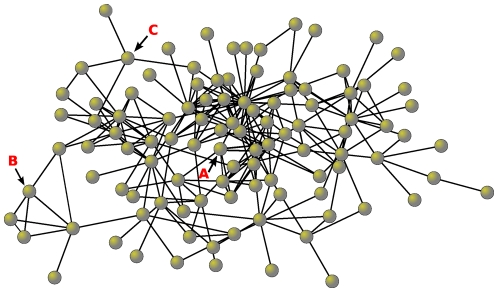
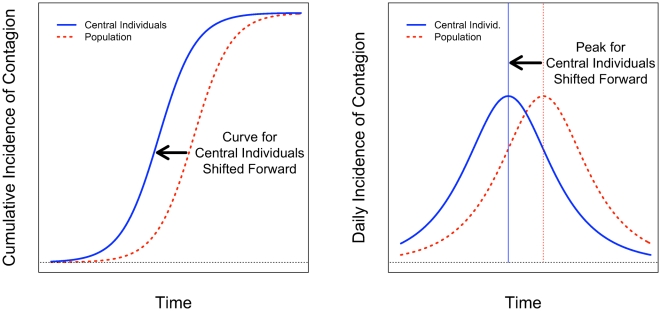
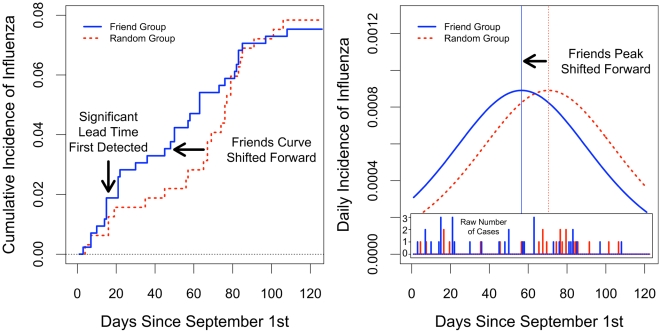
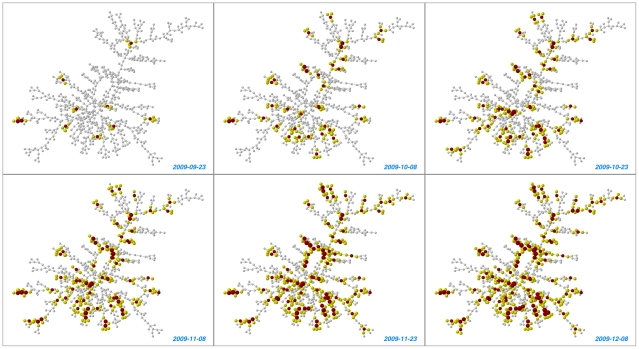
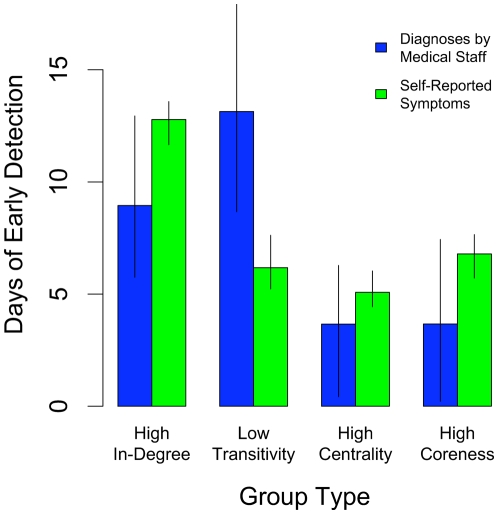
Current methods for the detection of contagious outbreaks give contemporaneous information about the course of an epidemic at best. It is known that individuals near the center of a social network are likely to be infected sooner during the course of an outbreak, on average, than those at the periphery. Unfortunately, mapping a whole network to identify central individuals who might be monitored for infection is typically very difficult. We propose an alternative strategy that does not require ascertainment of global network structure, namely, simply monitoring the friends of randomly selected individuals. Such individuals are known to be more central. To evaluate whether such a friend group could indeed provide early detection, we studied a flu outbreak at Harvard College in late 2009. We followed 744 students who were either members of a group of randomly chosen individuals or a group of their friends. Based on clinical diagnoses, the progression of the epidemic in the friend group occurred 13.9 days (95% C.I. 9.9-16.6) in advance of the randomly chosen group (i.e., the population as a whole). The friend group also showed a significant lead time (p<0.05) on day 16 of the epidemic, a full 46 days before the peak in daily incidence in the population as a whole. This sensor method could provide significant additional time to react to epidemics in small or large populations under surveillance. The amount of lead time will depend on features of the outbreak and the network at hand. The method could in principle be generalized to other biological, psychological, informational, or behavioral contagions that spread in networks.
Overview
The claims and statistics of this paper haven’t been checked yet.
Run the check — free, no account needed. It reads the open-access text and checks the sources it cites.
Integrity signals
Registry
Cites
Statistics
Figures
Verification
Claims the paper makes
The claims and statistics of this paper haven’t been checked yet.
Run the check — free, no account needed. It reads the open-access text and checks the sources it cites.
Self-check
Percentages, sums and reported differences re-computed from the paper’s own numbers.
The self-check needs the paper’s full text.
Citations
Cites
Rogers, E. M., Singhal, A., & Quinlan, M. M. (2019) · Routledge eBooks · doi:10.4324/9780203710753-35 · Cited by 37,670
Mack, P., & Rogers, E. (1964) · Encyclopedia of Sport Management · doi:10.2307/3319808 · Cited by 23,677
A set of measures of centrality based upon betweenness
Freeman, L. (1977) · Sociometry · doi:10.2307/3033543 · Cited by 10,557
Stanton, B. F., & Rogers, E. M. (1963) · Journal of Farm Economics · doi:10.2307/1235767 · Cited by 6,726
Detecting influenza epidemics using search engine query data
Ginsberg, J., Mohebbi, M. H., Patel, R. S., Brammer, L., Smolinski, M. S., & Brilliant, L. (2009) · Nature · doi:10.1038/nature07634 · Cited by 4,295
Nonlinear Regression Analysis and Its Applications
Bates, D. M., & Watts, D. G. (1988) · Wiley series in probability and statistics · doi:10.1002/9780470316757 · Cited by 4,017
Social Contacts and Mixing Patterns Relevant to the Spread of Infectious Diseases
Mossong, J., Hens, N., Jit, M., Beutels, P., Auranen, K., Mikolajczyk, R., Massari, M., Salmaso, S., Tomba, G. S., Wallinga, J., et al. (2008) · PLoS Medicine · doi:10.1371/journal.pmed.0050074 · Cited by 2,900
An algorithm for drawing general undirected graphs
Kamada, T., & Kawai, S. (1989) · Information Processing Letters · doi:10.1016/0020-0190(89)90102-6 · Cited by 2,750
Cost-effective outbreak detection in networks
Leskovec, J., Krause, A., Guestrin, C., Faloutsos, C., VanBriesen, J. M., & Glance, N. (2007) · ACM SIGKDD Conference on Knowledge Discovery and Data Mining (KDD) · doi:10.1145/1281192.1281239 · Cited by 2,614
The collective dynamics of smoking in a large social network
Christakis, N. A., & Fowler, J. H. (2008) · New England Journal of Medicine · doi:10.1056/nejmsa0706154 · Cited by 2,390
Self-citationCritical phenomena in complex networks
Dorogovtsev, S. N., Goltsev, A. V., & Mendes, J. F. F. (2008) · Reviews of Modern Physics · doi:10.1103/revmodphys.80.1275 · Cited by 2,220
The Empirical Distribution Function with Arbitrarily Grouped, Censored and Truncated Data
Turnbull, B. W. (1976) · Journal of the Royal Statistical Society Series B (Statistical Methodology) · doi:10.1111/j.2517-6161.1976.tb01597.x · Cited by 1,835
Immunization of complex networks
Pastor‐Satorras, R., & Vespignani, A. (2002) · Physical review. E, Statistical physics, plasmas, fluids, and related interdisciplinary topics · doi:10.1103/physreve.65.036104 · Cited by 1,296
Efficient Immunization Strategies for Computer Networks and Populations
Reuven Cohen, C., Havlin, S., & ben‐Avraham, D. (2003) · Physical Review Letters · doi:10.1103/physrevlett.91.247901 · Cited by 1,175
Chains of affection: the structure of adolescent romantic and sexual networks
Bearman, P. S., Moody, J., & Stovel, K. (2004) · American Journal of Sociology · doi:10.1086/386272 · Cited by 817
Google Trends: A Web‐Based Tool for Real‐Time Surveillance of Disease Outbreaks
Carneiro, H. A., & Mylonakis, E. E. (2009) · Clinical Infectious Diseases · doi:10.1086/630200 · Cited by 815
Cooperative behavior cascades in human social networks
Fowler, J. H., & Christakis, N. A. (2010) · Proceedings of the National Academy of Sciences · doi:10.1073/pnas.0913149107 · Cited by 767
Self-citationHalting viruses in scale-free networks
Dezső, Z., & Barabási, A.-Ĺ. (2002) · Physical review. E, Statistical physics, plasmas, fluids, and related interdisciplinary topics · doi:10.1103/physreve.65.055103 · Cited by 585
Why Your Friends Have More Friends Than You Do
Feld, S. L. (1991) · American Journal of Sociology · doi:10.1086/229693 · Cited by 559
Social network determinants of depression
Rosenquist, J. N., Fowler, J. H., & Christakis, N. A. (2011) · Molecular Psychiatry · doi:10.1038/mp.2010.13 · Cited by 543
Self-citationHousehold Transmission of 2009 Pandemic Influenza A (H1N1) Virus in the United States
Cauchemez, S., Donnelly, C. A., Reed, C., Ghani, A. C., Fraser, C., Kent, C. K., Finelli, L., & Ferguson, N. M. (2009) · New England Journal of Medicine · doi:10.1056/nejmoa0905498 · Cited by 472
Nonlinear Regression Analysis and Its Applications.
Kass, R. E., Bates, D. M., Watts, D. G., Seber, G. A. F., & Wild, C. J. (1990) · Journal of the American Statistical Association · doi:10.2307/2289810 · Cited by 397
Infection in Social Networks: Using Network Analysis to Identify High-Risk Individuals
Christley, R., Pinchbeck, G. L., Bowers, R., Clancy, D., French, N. P., Bennett, R., & Turner, J. (2005) · American Journal of Epidemiology · doi:10.1093/aje/kwi308 · Cited by 390
Geographic Dependence, Surveillance, and Origins of the 2009 Influenza A (H1N1) Virus
Trifonov, V. A., Khiabanian, H., & Rabadán, R. (2009) · New England Journal of Medicine · doi:10.1056/nejmp0904572 · Cited by 331
Pre-existing immunity against swine-origin H1N1 influenza viruses in the general human population
Greenbaum, J., Kotturi, M. F., Kim, Y., Oseroff, C., Vaughan, K. C., Salimi, N., Vita, R., Ponomarenko, J. V., Scheuermann, R. H., Sette, A., et al. (2009) · Proceedings of the National Academy of Sciences · doi:10.1073/pnas.0911580106 · Cited by 317
Outbreak of 2009 Pandemic Influenza A (H1N1) at a New York City School
Lessler, J., Reich, N. G., & Cummings, D. A. T. (2009) · New England Journal of Medicine · doi:10.1056/nejmoa0906089 · Cited by 308
Ego-centered networks and the ripple effect
Newman, M. E. J. (2003) · Social Networks · doi:10.1016/s0378-8733(02)00039-4 · Cited by 287
Dushoff, J. G., Plotkin, J. B., Viboud, C. G., Earn, D. J. D., & Simonsen, L. (2005) · American Journal of Epidemiology · doi:10.1093/aje/kwj024 · Cited by 257
Exploiting Social Networks to Mitigate the Obesity Epidemic
Bahr, D. B., Browning, R. C., Wyatt, H. R., & Hill, J. O. (2009) · Obesity · doi:10.1038/oby.2008.615 · Cited by 197
Pajek Program for Analysis and Visualization of Large Networks
Batagelj, V., & Mrvar, A. (2007) · Cited by 183
Rescattering of Ultralow-Energy Electrons for Single Ionization of Ne in the Tunneling Regime
Moshammer, R., Ullrich, J., Feuerstein, B., Fischer, D., Dorn, A., Schröter, C. D., López-Urrutia, J. R. C., Hoehr, C., Rottke, H., Trump, C., et al. (2003) · Physical Review Letters · doi:10.1103/physrevlett.91.113002 · Cited by 171
The popularity contest at work: Who wins, why, and what do they receive?
Scott, B. A., & Judge, T. A. (2009) · Journal of Applied Psychology · doi:10.1037/a0012951 · Cited by 167
SOME A PRIORI PATHOMETRIC EQUATIONS
Ross, R. S. (1915) · BMJ · doi:10.1136/bmj.1.2830.546 · Cited by 151
Use of Prediction Markets to Forecast Infectious Disease Activity
Polgreen, P. M., Nelson, F. D., Neumann, G. R., & Weinstein, R. A. (2006) · Clinical Infectious Diseases · doi:10.1086/510427 · Cited by 124
Zuckerman, E. W., & Jost, J. T. (2001) · Social Psychology Quarterly · doi:10.2307/3090112 · Cited by 120
Effectiveness and Cost-Effectiveness of Vaccination Against Pandemic Influenza (H1N1) 2009
Khazeni, N., Hutton, D. W., Garber, A. M., Hupert, N., & Owens, D. K. (2009) · Annals of Internal Medicine · doi:10.7326/0000605-200912150-00157 · Cited by 98
Effectiveness and cost-effectiveness of vaccination against pandemic influenza (H1N1) 2009
Khazeni, N., Hutton, D. W., Garber, A. M., Hupert, N., & Owens, D. K. (2009) · Digital Access to Scholarship at Harvard (DASH) (Harvard University) · Cited by 96
Statistical Tools for Nonlinear Regression: A Practical Guide with S-PLUS Examples.
Pinheiro, J. C., Hue, S., Bouvier, A., Poursat, M.-A., & Jolivet, E. (1997) · Journal of the American Statistical Association · doi:10.2307/2965596 · Cited by 91
Statistical Tools for Nonlinear Regression: a Practical Guide With S-PLUS and R Examples
Anderson‐Cook, C. M. (2004) · Journal of the American Statistical Association · doi:10.1198/jasa.2004.s351 · Cited by 84
Davey, V. J., Glass, R. J., Min, H. J., Beyeler, W., & Glass, L. M. (2008) · PLoS ONE · doi:10.1371/journal.pone.0002606 · Cited by 67
Identifying influential spreaders in complex networksPreprint
Kitsak, M., Gallos, L. K., Havlin, S., Liljeros, F., Muchnik, L., Stanley, E., & Makse, H. A. (2010) · arXiv (Cornell University) · Cited by 66
Update: influenza activity - United States, August 30, 2009-January 9, 2010.
Brammer, L., Epperson, S., Blanton, L., Wallis, T. R., Fiore, A. E., Gubareva, L. V., Bresee, J., Kamimoto, L., Xu, X., Klimov, A. I., et al. (2010) · MMWR Morbidity and Mortality Weekly Report · Cited by 48
Update: influenza activity--United States, August 30, 2009-January 9, 2010.
(2010) · PubMed · Cited by 29
Link-space formalism for network analysis
Smith, D. M., Lee, C. F., Onnela, J.-P. “., & Johnson, N. F. (2008) · Physical Review E · doi:10.1103/physreve.77.036112 · Cited by 10
Effectiveness and cost-effectiveness of vaccination against pandemic influenza (H1N1) 2009.
Khazeni, N., Hutton, D. W., Garber, A. M., et al. (2009) · PubMed · doi:10.7326/0003-4819-151-12-200912150-00157 · Cited by 5
Cited by
Sorted by citations
Using social and behavioural science to support COVID-19 pandemic response
Bavel, J. J. V., Baicker, K., Boggio, P. S., Capraro, V., Cichocka, A., Cikara, M., Crockett, M. J., Crum, A. J., Douglas, K. M., Druckman, J. N., et al. (2020) · Nature Human Behaviour · doi:10.1038/s41562-020-0884-z · Cited by 4,964
Self-citationEpidemic processes in complex networks
Pastor-Satorras, R., Castellano, C., Van Mieghem, P., & Vespignani, A. (2015) · Reviews of Modern Physics · doi:10.1103/revmodphys.87.925 · Cited by 3,697
Social contagion theory: examining dynamic social networks and human behavior
Christakis, N. A., & Fowler, J. H. (2013) · Statistics in Medicine · doi:10.1002/sim.5408 · Cited by 1,303
Self-citationIncreasing Vaccination: Putting Psychological Science Into Action
Brewer, N. T., Chapman, G. B., Rothman, A. J., Leask, J., & Kempe, A. (2017) · Psychological Science in the Public Interest · doi:10.1177/1529100618760521 · Cited by 1,233
Statistical physics of vaccination
Wang, Z., Bauch, C. T., Bhattacharyya, S., d’Onofrio, A., Manfredi, P., Perc, M., Perra, N., Salathé, M., & Zhao, D. (2016) · Physics Reports · doi:10.1016/j.physrep.2016.10.006 · Cited by 973
Metadata
- Authors
- Christakis, N. A., & Fowler, J. H.
- Affiliations
- Harvard University (US)
- University of California San Diego (US)
- Corresponding author
- Christakis, Nicholas A.
- Venue
- PLoS ONE
- Publisher
- Public Library of Science (PLoS)
- Published
- 2010-09-15
- Volume
- 5
- Issue
- 9
- Pages
- e12948
- ISSN
- 1932-6203 (ISSN-L)
- PMC
- PMC2939797
- OpenAlex
- W2140095656
- Cited by
- 535
- References
- 44
- Citations by year
- 2026: 8 · 2025: 8 · 2024: 21 · 2023: 19 · 2022: 33 · 2021: 49 · 2020: 38 · 2019: 31 · 2018: 40 · 2017: 50 · 2016: 40 · 2015: 48 · 2014: 44 · 2013: 36 · 2012: 46
- FWCI
- 24.74
- Type
- journal article
- Language
- en
- Open access
- gold
- doi.org
- Locations
- PLoS ONE (publishedVersion, cc-by)
- PubMed Central (publishedVersion, cc-by)
- PubMed (publishedVersion)
- arXiv (Cornell University) (submittedVersion)
- eScholarship (California Digital Library) (submittedVersion)
- Digital Access to Scholarship at Harvard (DASH) (Harvard University) (submittedVersion, cc-by)
- DOAJ (DOAJ: Directory of Open Access Journals) (submittedVersion)
- Figshare (submittedVersion, cc-by)
- arXiv (Cornell University)
- Funders
- Robert Wood Johnson Foundation
- McKnight Foundation
- Harvard University
- National Institute on Aging (P01AG031093)
- National Institute of General Medical Sciences (P41GM103504)
- Topics
- Health Sciences › Medicine › Epidemiology › Data-Driven Disease Surveillance
- Physical Sciences › Physics and Astronomy › Statistical and Nonlinear Physics › Complex Network Analysis Techniques
- Physical Sciences › Mathematics › Applied Mathematics › Mathematical and Theoretical Epidemiology and Ecology Models
- Keywords
- influenza outbreak, 2009 H1N1 pandemic, Harvard College, network centrality, lead time, disease surveillance
- MeSH terms
- Disease Outbreaks, Female, Humans, Influenza, Human, Male, Social Support, Early Diagnosis, Young Adult, Epidemics
About these checks
Registry, retraction, Cites and statistics results are computed, not judged, with one exception: a printed reference that no index lists is read once by a model before it counts as a citation error. Claims are extracted by a model and kept only when their quote appears verbatim in the text; each cited source is then checked, with a model’s help, for whether it says what the claim relies on. Those verdicts can be wrong — read the claim’s quote and the cited source before relying on one.
Statistics and arithmetic are recomputed, not judged.
Confidence bands are shown only for fields calibrated on our annotated test set. None is calibrated yet, so no band is shown.
What counts as a claim ›How we measure confidence ›How we check this ›
Are you an author, or do you see a problem with this page? Request a review
