

The DOI matches its Crossref record; 45 of the 45 references it cites were found in a registry or an index.
Social Network Sensors for Early Detection of Contagious Outbreaks
Open accessAbstract
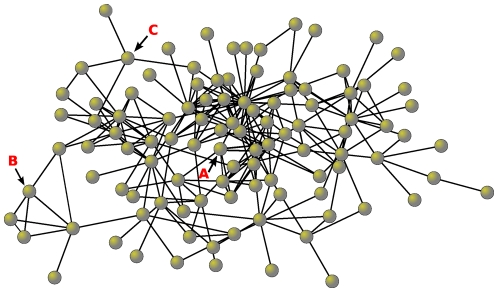
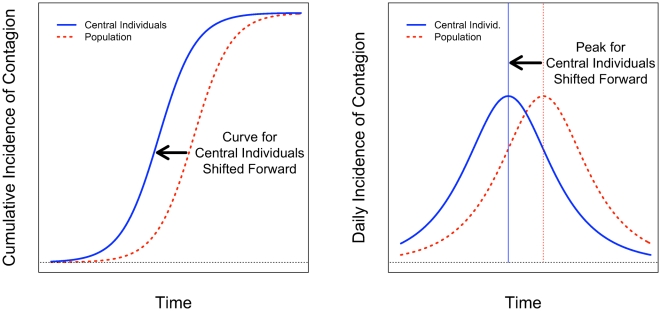
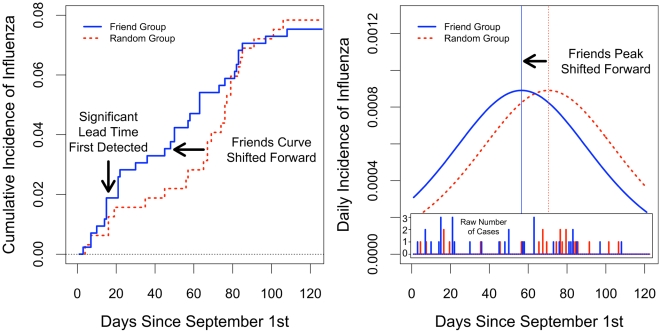
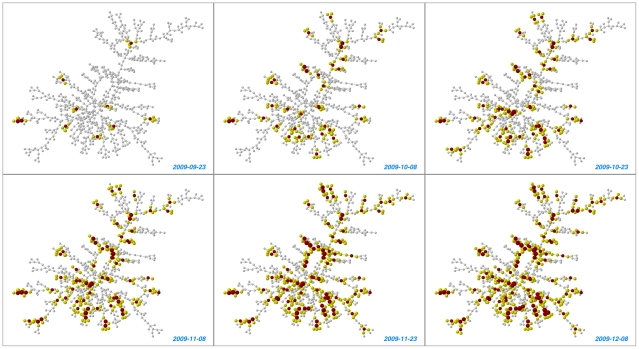
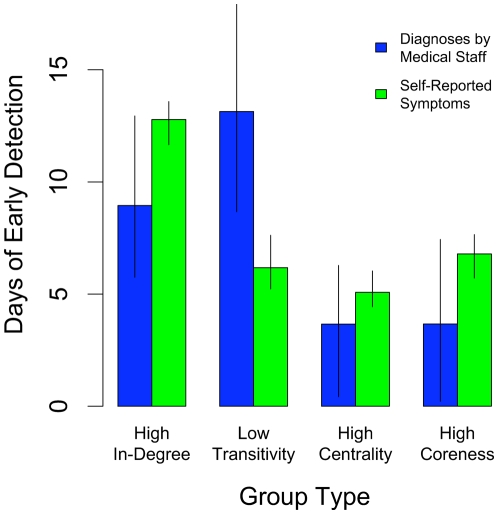
Current methods for the detection of contagious outbreaks give contemporaneous information about the course of an epidemic at best. It is known that individuals near the center of a social network are likely to be infected sooner during the course of an outbreak, on average, than those at the periphery. Unfortunately, mapping a whole network to identify central individuals who might be monitored for infection is typically very difficult. We propose an alternative strategy that does not require ascertainment of global network structure, namely, simply monitoring the friends of randomly selected individuals. Such individuals are known to be more central. To evaluate whether such a friend group could indeed provide early detection, we studied a flu outbreak at Harvard College in late 2009. We followed 744 students who were either members of a group of randomly chosen individuals or a group of their friends. Based on clinical diagnoses, the progression of the epidemic in the friend group occurred 13.9 days (95% C.I. 9.9-16.6) in advance of the randomly chosen group (i.e., the population as a whole). The friend group also showed a significant lead time (p<0.05) on day 16 of the epidemic, a full 46 days before the peak in daily incidence in the population as a whole. This sensor method could provide significant additional time to react to epidemics in small or large populations under surveillance. The amount of lead time will depend on features of the outbreak and the network at hand. The method could in principle be generalized to other biological, psychological, informational, or behavioral contagions that spread in networks.
Overview
The claims and statistics of this paper haven’t been checked yet.
Run the check — free, no account needed. It reads the open-access text and checks the sources it cites.
Integrity signals
Registry
Cites
Statistics
Figures
Verification
Claims the paper makes
The claims and statistics of this paper haven’t been checked yet.
Run the check — free, no account needed. It reads the open-access text and checks the sources it cites.
Self-check
Percentages, sums and reported differences re-computed from the paper’s own numbers.
The self-check needs the paper’s full text.
Citations
Cites
Rogers, E. M., Singhal, A., & Quinlan, M. M. (2019) · Routledge eBooks · doi:10.4324/9780203710753-35 · Cited by 37,670
Mack, P., & Rogers, E. (1964) · Encyclopedia of Sport Management · doi:10.2307/3319808 · Cited by 23,677
A set of measures of centrality based upon betweenness
Freeman, L. (1977) · Sociometry · doi:10.2307/3033543 · Cited by 10,557
Stanton, B. F., & Rogers, E. M. (1963) · Journal of Farm Economics · doi:10.2307/1235767 · Cited by 6,726
Detecting influenza epidemics using search engine query data
Ginsberg, J., Mohebbi, M. H., Patel, R. S., Brammer, L., Smolinski, M. S., & Brilliant, L. (2009) · Nature · doi:10.1038/nature07634 · Cited by 4,295
Nonlinear Regression Analysis and Its Applications
Bates, D. M., & Watts, D. G. (1988) · Wiley series in probability and statistics · doi:10.1002/9780470316757 · Cited by 4,017
Social Contacts and Mixing Patterns Relevant to the Spread of Infectious Diseases
Mossong, J., Hens, N., Jit, M., Beutels, P., Auranen, K., Mikolajczyk, R., Massari, M., Salmaso, S., Tomba, G. S., Wallinga, J., et al. (2008) · PLoS Medicine · doi:10.1371/journal.pmed.0050074 · Cited by 2,900
An algorithm for drawing general undirected graphs
Kamada, T., & Kawai, S. (1989) · Information Processing Letters · doi:10.1016/0020-0190(89)90102-6 · Cited by 2,750
Cost-effective outbreak detection in networks
Leskovec, J., Krause, A., Guestrin, C., Faloutsos, C., VanBriesen, J. M., & Glance, N. (2007) · ACM SIGKDD Conference on Knowledge Discovery and Data Mining (KDD) · doi:10.1145/1281192.1281239 · Cited by 2,614
The collective dynamics of smoking in a large social network
Christakis, N. A., & Fowler, J. H. (2008) · New England Journal of Medicine · doi:10.1056/nejmsa0706154 · Cited by 2,390
Self-citation
Cited by
Sorted by citations
Using social and behavioural science to support COVID-19 pandemic response
Bavel, J. J. V., Baicker, K., Boggio, P. S., Capraro, V., Cichocka, A., Cikara, M., Crockett, M. J., Crum, A. J., Douglas, K. M., Druckman, J. N., et al. (2020) · Nature Human Behaviour · doi:10.1038/s41562-020-0884-z · Cited by 4,964
Self-citationEpidemic processes in complex networks
Pastor-Satorras, R., Castellano, C., Van Mieghem, P., & Vespignani, A. (2015) · Reviews of Modern Physics · doi:10.1103/revmodphys.87.925 · Cited by 3,697
Social contagion theory: examining dynamic social networks and human behavior
Christakis, N. A., & Fowler, J. H. (2013) · Statistics in Medicine · doi:10.1002/sim.5408 · Cited by 1,303
Self-citationIncreasing Vaccination: Putting Psychological Science Into Action
Brewer, N. T., Chapman, G. B., Rothman, A. J., Leask, J., & Kempe, A. (2017) · Psychological Science in the Public Interest · doi:10.1177/1529100618760521 · Cited by 1,233
Statistical physics of vaccination
Wang, Z., Bauch, C. T., Bhattacharyya, S., d’Onofrio, A., Manfredi, P., Perc, M., Perra, N., Salathé, M., & Zhao, D. (2016) · Physics Reports · doi:10.1016/j.physrep.2016.10.006 · Cited by 973
Population flow drives spatio-temporal distribution of COVID-19 in China
Jia, J. S., Lu, X., Yuan, Y., Xu, G., Jia, J., & Christakis, N. A. (2020) · Nature · doi:10.1038/s41586-020-2284-y · Cited by 835
Self-citationIntuitive Cooperation and the Social Heuristics Hypothesis: Evidence from 15 Time Constraint Studies
Rand, D. G., Peysakhovich, A., Kraft‐Todd, G., Newman, G. E., Wurzbacher, O., Nowak, M. A., & Greene, J. D. (2013) · Nature Communications · doi:10.1038/ncomms4677 · Cited by 772
Systems Science Methods in Public Health: Dynamics, Networks, and Agents
Luke, D. A., & Stamatakis, K. A. (2012) · Annual Review of Public Health · doi:10.1146/annurev-publhealth-031210-101222 · Cited by 740
The “majority illusion” in social networks
Lerman, K., Yan, X., & Wu, X.-Z. (2016) · PLOS ONE · doi:10.1371/journal.pone.0147617 · Cited by 669
Social Connectedness: Measurement, Determinants, and Effects
Bailey, M., Cao, R., Kuchler, T., Stroebel, J., & Wong, A. (2018) · The Journal of Economic Perspectives · doi:10.1257/jep.32.3.259 · Cited by 600
Instagram photos reveal predictive markers of depression
Reece, A. G., & Danforth, C. M. (2017) · EPJ Data Science · doi:10.1140/epjds/s13688-017-0110-z · Cited by 519
#Earthquake: Twitter as a Distributed Sensor System
Crooks, A. T., Croitoru, A., Stefanidis, A., & Radzikowski, J. (2012) · Transactions in GIS · doi:10.1111/j.1467-9671.2012.01359.x · Cited by 470
Mathematical modeling of infectious disease dynamics
Siettos, C. I., & Russo, L. (2013) · Virulence · doi:10.4161/viru.24041 · Cited by 494
The Economic Consequences of Social-Network Structure
Jackson, M. O., Rogers, B. W., & Zénou, Y. (2017) · Journal of Economic Literature · doi:10.1257/jel.20150694 · Cited by 486
Forecasting the onset and course of mental illness with Twitter data
Reece, A. G., Reagan, A. J., Lix, K. L. M., Dodds, P. S., Danforth, C. M., & Langer, E. J. (2017) · Scientific Reports · doi:10.1038/s41598-017-12961-9 · Cited by 401
Internet addiction in adolescence: neurobiological, psychosocial and clinical issues
Cerniglia, L., Zoratto, F., Cimino, S., Laviola, G., Ammaniti, M., & Adriani, W. (2017) · Neuroscience & Biobehavioral Reviews · doi:10.1016/j.neubiorev.2016.12.024 · Cited by 371
Kim, D. A., Hwong, A. R., Stafford, D., Hughes, D. A., O'Malley, A. J., Fowler, J. H., & Christakis, N. A. (2015) · The Lancet · doi:10.1016/s0140-6736(15)60095-2 · Cited by 350
Self-citationControl Centrality and Hierarchical Structure in Complex Networks
Liu, Y., Slotine, J.-J. E., & Barabási, A.-Ĺ. (2012) · PLoS ONE · doi:10.1371/journal.pone.0044459 · Cited by 319
Helbing, D. (2012) · Understanding complex systems · doi:10.1007/978-3-642-24004-1_2 · Cited by 337
The Critical Node Detection Problem in networks: A survey
Lalou, M., Tahraoui, M. A., & Kheddouci, H. (2018) · Computer Science Review · doi:10.1016/j.cosrev.2018.02.002 · Cited by 328
Edge-based compartmental modelling for infectious disease spread
Miller, J. C., Slim, A. C., & Volz, E. (2011) · Journal of The Royal Society Interface · doi:10.1098/rsif.2011.0403 · Cited by 280
Spreading dynamics in complex networks
Pei, S., & Makse, H. A. (2013) · Journal of Statistical Mechanics Theory and Experiment · doi:10.1088/1742-5468/2013/12/p12002 · Cited by 258
Absence of influential spreaders in rumor dynamics
Borge‐Holthoefer, J., & Moreno, Y. (2012) · Physical Review E · doi:10.1103/physreve.85.026116 · Cited by 248
Monitoring Influenza Epidemics in China with Search Query from Baidu
Yuan, Q., Nsoesie, E. O., Lv, B., Peng, G., Chunara, R., & Brownstein, J. S. (2013) · PLoS ONE · doi:10.1371/journal.pone.0064323 · Cited by 233
Centrality measures in networks
Bloch, F., Jackson, M. O., & Tebaldi, P. (2023) · Social Choice and Welfare · doi:10.1007/s00355-023-01456-4 · Cited by 363
Herd Immunity and Implications for SARS-CoV-2 Control
Omer, S. B., Yildirim, I. B., & Forman, H. P. (2020) · JAMA · doi:10.1001/jama.2020.20892 · Cited by 216
Liou, J.-W., & Chang, H. (2012) · Archivum Immunologiae et Therapiae Experimentalis · doi:10.1007/s00005-012-0178-x · Cited by 205
A measure of individual role in collective dynamics
Klemm, K., Serrano, M. Á., Eguı́luz, V. M., & Miguel, M. S. (2012) · Scientific Reports · doi:10.1038/srep00292 · Cited by 168
RETRACTED: Global impacts of pre- and post-COVID-19 pandemic: Focus on socio-economic consequences
Mishra, N. T. P., Das, S. S., Yadav, S., Khan, W., Afzal, M. F., AlArifi, A. S., Kenawy, E.-R., Ansari, M. T., Hasnain, M. S., & Nayak, A. K. (2020) · Sensors International · doi:10.1016/j.sintl.2020.100042 · Cited by 191
RetractedSuppressing epidemics with a limited amount of immunization units
Schneider, C., Mihaljev, T., Havlin, S., & Herrmann, H. J. (2011) · Physical Review E · doi:10.1103/physreve.84.061911 · Cited by 165
Al-Hasan, A., Yim, D., & Khuntia, J. (2020) · Journal of Medical Internet Research · doi:10.2196/20634 · Cited by 150
Cascading outbreak prediction in networks
Cui, P., Jin, S., Yu, L., Wang, F., Zhu, W., & Yang, S. (2013) · ACM SIGKDD Conference on Knowledge Discovery and Data Mining (KDD) · doi:10.1145/2487575.2487639 · Cited by 139
The effectiveness of backward contact tracing in networks
Kojaku, S., Hébert‐Dufresne, L., Mones, E., Lehmann, S., & Ahn, Y. (2021) · Nature Physics · doi:10.1038/s41567-021-01187-2 · Cited by 141
Performance of Social Network Sensors during Hurricane Sandy
Kryvasheyeu, Y., Chen, H., Moro, E., Hentenryck, P. V., & Cebrián, M. (2015) · PLoS ONE · doi:10.1371/journal.pone.0117288 · Cited by 145
The Economic Consequences of Social Network StructurePreprint
Jackson, M. O., Rogers, B. W., & Zénou, Y. (2015) · SSRN Electronic Journal · doi:10.2139/ssrn.2467812 · Cited by 133
Trending Now: Using Social Media to Predict and Track Disease Outbreaks
Schmidt, C. W. (2011) · Environmental Health Perspectives · doi:10.1289/ehp.120-a30 · Cited by 131
Centrality Measures in NetworksPreprint
Bloch, F., Jackson, M. O., & Tebaldi, P. (2016) · SSRN Electronic Journal · doi:10.2139/ssrn.2749124 · Cited by 131
Maiya, A. S., & Berger-Wolf, T. Y. (2011) · ACM SIGKDD Conference on Knowledge Discovery and Data Mining (KDD) · doi:10.1145/2020408.2020431 · Cited by 107
Nebeker, C., Harlow, J., Giacinto, R. E., Linares-Orozco, R., Bloss, C. S., & Weibel, N. (2017) · AJOB Empirical Bioethics · doi:10.1080/23294515.2017.1403980 · Cited by 107
Causal Inference for Social Network Data
Ogburn, E. L., Sofrygin, O., Diaz, I. M., & van der Laan, M. J. (2022) · Journal of the American Statistical Association · doi:10.1080/01621459.2022.2131557 · Cited by 153
Can Network Theory-based Targeting Increase Technology Adoption?
Beaman, L., BenYishay, A., Magruder, J., & Mobarak, A. M. (2018) · National Bureau of Economic Research · doi:10.3386/w24912 · Cited by 106
Fernández-Luque, L., & Imran, M. (2018) · International Journal of Medical Informatics · doi:10.1016/j.ijmedinf.2018.01.015 · Cited by 106
Beyond collective intelligence: Collective adaptation
Galešić, M., Barkoczi, D., Berdahl, A. M., Biro, D., Carbone, G., Giannoccaro, I., Goldstone, R. L., González, C., Kandler, A., Kao, A. B., et al. (2023) · Journal of The Royal Society Interface · doi:10.1098/rsif.2022.0736 · Cited by 121
Shakya, H. B., Stafford, D., Hughes, D., Keegan, T., Negron, R., Broome, J., McKnight, M., Nicoll, L., Nelson, J., Iriarte, E., et al. (2017) · BMJ Open · doi:10.1136/bmjopen-2016-012996 · Cited by 104
Self-citationThe Friendship Paradox and Systematic Biases in Perceptions and Social Norms
Jackson, M. O. (2016) · Journal of Political Economy · doi:10.1086/701031 · Cited by 102
Human social sensing is an untapped resource for computational social science
Galešić, M., de Bruin, W. B., Dalege, J., Feld, S. L., Kreuter, F., Olsson, H., Prelec, D., Stein, D. L., & van der Does, T. (2021) · Nature · doi:10.1038/s41586-021-03649-2 · Cited by 106
Eom, Y.-H., & Jo, H.-H. (2015) · Scientific Reports · doi:10.1038/srep09752 · Cited by 100
Using Friends as Sensors to Detect Global-Scale Contagious Outbreaks
García–Herranz, M., Moro, E., Cebrián, M., Christakis, N. A., & Fowler, J. H. (2014) · PLoS ONE · doi:10.1371/journal.pone.0092413 · Cited by 97
Self-citationGeneralized friendship paradox in complex networks: The case of scientific collaboration
Eom, Y.-H., & Jo, H.-H. (2014) · Scientific Reports · doi:10.1038/srep04603 · Cited by 102
Friendship Paradox Redux: Your Friends Are More Interesting Than You
Hodas, N. O., Kooti, F., & Lerman, K. (2021) · Proceedings of the International AAAI Conference on Web and Social Media · doi:10.1609/icwsm.v7i1.14440 · Cited by 101
Motter, A. E. (2015) · Chaos An Interdisciplinary Journal of Nonlinear Science · doi:10.1063/1.4931570 · Cited by 94
From social data mining to forecasting socio-economic crises
Helbing, D., & Balietti, S. (2011) · The European Physical Journal Special Topics · doi:10.1140/epjst/e2011-01401-8 · Cited by 95
Detecting Influential Spreaders in Complex, Dynamic Networks
Basaras, P., Katsaros, D., & Tassiulas, L. (2013) · Computer · doi:10.1109/mc.2013.75 · Cited by 91
Haim, D. A. (2016) · Journal of Peace Research · doi:10.1177/0022343316630938 · Cited by 91
Towards multiscale modeling of influenza infection
Murillo, L. N., Murillo, M. S., & Perelson, A. S. (2013) · Journal of Theoretical Biology · doi:10.1016/j.jtbi.2013.03.024 · Cited by 90
Information cascades in complex networks
Jalili, M., & Perc, M. (2017) · Journal of Complex Networks · doi:10.1093/comnet/cnx019 · Cited by 248
Behavioral Immune Trade-Offs: Interpersonal Value Relaxes Social Pathogen Avoidance
Tybur, J. M., Lieberman, D., Fan, L., Kupfer, T. R., & de Vries, R. E. (2020) · Psychological Science · doi:10.1177/0956797620960011 · Cited by 86
How Should Health Data Be Used?
Kaplan, B. (2016) · Cambridge Quarterly of Healthcare Ethics · doi:10.1017/s0963180115000614 · Cited by 76
Using friends as sensors to detect planetary-scale contagious outbreaks
Cebrián, M. (2012) · doi:10.1145/2390034.2390041 · Cited by 83
Epidemiologically Optimal Static Networks from Temporal Network Data
Holme, P. (2013) · PLoS Computational Biology · doi:10.1371/journal.pcbi.1003142 · Cited by 84
Transmission of Vaccination Attitudes and Uptake Based on Social Contagion Theory: A Scoping Review
Konstantinou, P., Georgiou, K., Kumar, N., Kyprianidou, M., Nicolaides, C., Karekla, M., & Kassianos, A. P. (2021) · Vaccines · doi:10.3390/vaccines9060607 · Cited by 89
Momeni, N., & Rabbat, M. (2016) · PLoS ONE · doi:10.1371/journal.pone.0143633 · Cited by 81
Social network predictors of latrine ownership
Shakya, H. B., Christakis, N. A., & Fowler, J. H. (2014) · Social Science & Medicine · doi:10.1016/j.socscimed.2014.03.009 · Cited by 85
Self-citationUsing Social and Behavioural Science to Support COVID-19 Pandemic ResponsePreprint
Bavel, J. J. V., D, K. B. A., Boggio, P. S., Capraro, V., Cichocka, A. K., Cikara, M., Crockett, M. J., Crum, A. J., Douglas, K. M., Druckman, J. N., et al. (2022) · SSRN Electronic Journal · doi:10.2139/ssrn.4178356 · Cited by 89
Self-citationMisinformation in Online Social Networks
Zhang, H., Alim, M. A., Li, X. R., Thai, M. T., & Nguyen, H. P. N. (2016) · ACM Transactions on Information Systems · doi:10.1145/2885494 · Cited by 74
Sensing, Understanding, and Shaping Social Behavior
Shmueli, E., Singh, V. K., Lepri, B., & Pentland, A. (2014) · IEEE Transactions on Computational Social Systems · doi:10.1109/tcss.2014.2307438 · Cited by 74
Erratic Flu Vaccination Emerges from Short-Sighted Behavior in Contact Networks
Cornforth, D. M., Reluga, T. C., Shim, E., Bauch, C. T., Galvani, A. P., & Ancel, L. W. (2011) · PLoS Computational Biology · doi:10.1371/journal.pcbi.1001062 · Cited by 72
Dueling biological and social contagions
Fu, F., Christakis, N. A., & Fowler, J. H. (2017) · Scientific Reports · doi:10.1038/srep43634 · Cited by 71
Self-citationUsing Networks to Combine “Big Data” and Traditional Surveillance to Improve Influenza Predictions
Davidson, M. W., Haim, D. A., & Radin, J. M. (2015) · Scientific Reports · doi:10.1038/srep08154 · Cited by 68
Mining Social Media Data for Biomedical Signals and Health-Related Behavior
Correia, R. B., Wood, I. B., Bollen, J., & Rocha, L. M. (2020) · Annual Review of Biomedical Data Science · doi:10.1146/annurev-biodatasci-030320-040844 · Cited by 69
How People Interact in Evolving Online Affiliation Networks
Gallos, L. K., Diego Rybski, A., Liljeros, F., Havlin, S., & Makse, H. A. (2012) · Physical Review X · doi:10.1103/physrevx.2.031014 · Cited by 65
Disease Surveillance on Complex Social Networks
Herrera, J. L., Srinivasan, R., Brownstein, J. S., Galvani, A. P., & Ancel, L. W. (2016) · PLoS Computational Biology · doi:10.1371/journal.pcbi.1004928 · Cited by 66
Cornwell, B. T., & Schafer, M. H. (2015) · Elsevier eBooks · doi:10.1016/b978-0-12-417235-7.00009-3 · Cited by 69
Syndromic surveillance of Flu on Twitter using weakly supervised temporal topic models
Chen, L., Hossain, K. S. M. T., Butler, P., Ramakrishnan, N., & Prakash, B. A. (2015) · Data Mining and Knowledge Discovery · doi:10.1007/s10618-015-0434-x · Cited by 62
Association between tuberculosis in men and social network structure in Kampala, Uganda
Miller, P. B., Zalwango, S. K., Galiwango, R. M., Kakaire, R., Sekandi, J. N., Steinbaum, L., Drake, J. M., Whalen, C. C., & Kiwanuka, N. (2021) · BMC Infectious Diseases · doi:10.1186/s12879-021-06475-z · Cited by 61
Flu Gone Viral: Syndromic Surveillance of Flu on Twitter Using Temporal Topic Models
Chen, L., Hossain, K. S. M. T., Butler, P., Ramakrishnan, N., & Prakash, B. A. (2014) · Proceedings · doi:10.1109/icdm.2014.137 · Cited by 61
Obadimu, A., Khaund, T., Mead, E. L., Marcoux, T., & Agarwal, N. (2021) · Information Processing & Management · doi:10.1016/j.ipm.2021.102660 · Cited by 63
Mobile crowd sensing of human-like intelligence using social sensors: A survey
Xu, Z., Mei, L., Choo, K. R., Lv, Z., Hu, C., Luo, X., & Liu, Y. (2017) · Neurocomputing · doi:10.1016/j.neucom.2017.01.127 · Cited by 58
Fast influencers in complex networks
Zhou, F., Lü, L., & Mariani, M. S. (2019) · Communications in Nonlinear Science and Numerical Simulation · doi:10.1016/j.cnsns.2019.01.032 · Cited by 58
Contact tracing – Old models and new challenges
Müller, J., & Kretzschmar, M. (2020) · Infectious Disease Modelling · doi:10.1016/j.idm.2020.12.005 · Cited by 56
Using global diversity and local topology features to identify influential network spreaders
Fu, Y.-H., Huang, C.-Y., & Sun, C. (2015) · Physica A Statistical Mechanics and its Applications · doi:10.1016/j.physa.2015.03.042 · Cited by 55
A change of perspective in network centrality
Sciarra, C., Chiarotti, G., Laio, F., & Ridolfi, L. (2018) · Scientific Reports · doi:10.1038/s41598-018-33336-8 · Cited by 53
Vaccines, contagion, and social networks
Ogburn, E. L., & VanderWeele, T. J. (2017) · The Annals of Applied Statistics · doi:10.1214/17-aoas1023 · Cited by 56
Polio vaccine hesitancy in the networks and neighborhoods of Malegaon, India
Onnela, J.-P. “., Landon, B. E., Kahn, A.-L., Ahmed, D., Verma, H., O’Malley, A. J., Bahl, S. K., Sutter, R. W., & Christakis, N. A. (2016) · Social Science & Medicine · doi:10.1016/j.socscimed.2016.01.024 · Cited by 52
Self-citationCounteracting structural errors in ensemble forecast of influenza outbreaks
Pei, S., & Shaman, J. L. (2017) · Nature Communications · doi:10.1038/s41467-017-01033-1 · Cited by 52
Forecasting Influenza Levels Using Real-Time Social Media Streams
Lee, K., Agrawal, A., & Choudhary, A. (2017) · IEEE International Conference on Healthcare Informatics (ICHI) · doi:10.1109/ichi.2017.68 · Cited by 51
Efficient surveillance for healthcare-associated infections spreading between hospitals
Ciccolini, M., Donker, T., Grundmann, H., Bonten, M. J. M., & Woolhouse, M. E. J. (2014) · Proceedings of the National Academy of Sciences · doi:10.1073/pnas.1308062111 · Cited by 51
The Coming of a Networked Criminology
Papachristos, A. (2017) · Routledge eBooks · doi:10.4324/9780203785997-5 · Cited by 132
Fadda, M., Allam, A., & Schulz, P. J. (2015) · Vaccine · doi:10.1016/j.vaccine.2015.11.007 · Cited by 48
Three faces of node importance in network epidemiology: Exact results for small graphs
Holme, P. (2017) · Physical review. E · doi:10.1103/physreve.96.062305 · Cited by 48
Proactive Defense for Evolving Cyber Threats
Sandia National Laboratories (SNL-NM), A., Colbaugh, R., (NNSA), U. N. N. S. A., & Glass, K. (2012) · OSTI OAI (U.S. Department of Energy Office of Scientific and Technical Information) · doi:10.2172/1059470 · Cited by 49
Shah, N. S., Iveniuk, J., Muth, S. Q., Michaels, S., Jose, J., Laumann, E. O., & Schneider, J. A. (2013) · AIDS and Behavior · doi:10.1007/s10461-013-0677-8 · Cited by 47
Induction of social contagion for diverse outcomes in structured experiments in isolated villages
Airoldi, E. M., & Christakis, N. A. (2024) · Science · doi:10.1126/science.adi5147 · Cited by 69
Self-citationBam, K., Haseen, F., Rajendra Kumar, B. C., Newman, M. S., Chaudhary, A. H., Thapa, R., & Bhuiya, I. (2015) · American journal of public health research · doi:10.12691/ajphr-3-2-1 · Cited by 46
Reducing gunshot victimization in high-risk social networks through direct and spillover effects
Wood, G., & Papachristos, A. (2019) · Nature Human Behaviour · doi:10.1038/s41562-019-0688-1 · Cited by 11
The diffusion of a new method of suicide: charcoal-burning suicide in Hong Kong and Taiwan
Chen, Y., YIP, P. S. F., Lee, C. K., Gunnell, D., & Wu, K. C. (2014) · Social Psychiatry and Psychiatric Epidemiology · doi:10.1007/s00127-014-0910-4 · Cited by 44
Mining Social Media and Web Searches for Disease Detection
Yang, Y. T., Horneffer, M., & DiLisio, N. (2013) · Journal of Public Health Research · doi:10.4081/jphr.2013.e4 · Cited by 44
Social network analysis in epidemiology: Current trends and perspectives
Stattner, E., & Vidot, N. (2011) · International Conference on Research Challenges in Information Science (RCIS) · doi:10.1109/rcis.2011.6006866 · Cited by 44
Analyzing Temporal Networks in Social Media
Holme, P. (2014) · Proceedings of the IEEE · doi:10.1109/jproc.2014.2361326 · Cited by 44
Shakya, H. B., Hughes, D. A., Stafford, D., Christakis, N. A., Fowler, J. H., & Silverman, J. G. (2016) · BMC Public Health · doi:10.1186/s12889-016-2893-4 · Cited by 48
Self-citation
Metadata
- Authors
- Christakis, N. A., & Fowler, J. H.
- Affiliations
- Harvard University (US)
- University of California San Diego (US)
- Corresponding author
- Christakis, Nicholas A.
- Venue
- PLoS ONE
- Publisher
- Public Library of Science (PLoS)
- Published
- 2010-09-15
- Volume
- 5
- Issue
- 9
- Pages
- e12948
- ISSN
- 1932-6203 (ISSN-L)
- PMC
- PMC2939797
- OpenAlex
- W2140095656
- Cited by
- 535
- References
- 44
- Citations by year
- 2026: 8 · 2025: 8 · 2024: 21 · 2023: 19 · 2022: 33 · 2021: 49 · 2020: 38 · 2019: 31 · 2018: 40 · 2017: 50 · 2016: 40 · 2015: 48 · 2014: 44 · 2013: 36 · 2012: 46
- FWCI
- 24.74
- Type
- journal article
- Language
- en
- Open access
- gold
- doi.org
- Locations
- PLoS ONE (publishedVersion, cc-by)
- PubMed Central (publishedVersion, cc-by)
- PubMed (publishedVersion)
- arXiv (Cornell University) (submittedVersion)
- eScholarship (California Digital Library) (submittedVersion)
- Digital Access to Scholarship at Harvard (DASH) (Harvard University) (submittedVersion, cc-by)
- DOAJ (DOAJ: Directory of Open Access Journals) (submittedVersion)
- Figshare (submittedVersion, cc-by)
- arXiv (Cornell University)
- Funders
- Robert Wood Johnson Foundation
- McKnight Foundation
- Harvard University
- National Institute on Aging (P01AG031093)
- National Institute of General Medical Sciences (P41GM103504)
- Topics
- Health Sciences › Medicine › Epidemiology › Data-Driven Disease Surveillance
- Physical Sciences › Physics and Astronomy › Statistical and Nonlinear Physics › Complex Network Analysis Techniques
- Physical Sciences › Mathematics › Applied Mathematics › Mathematical and Theoretical Epidemiology and Ecology Models
- Keywords
- influenza outbreak, 2009 H1N1 pandemic, Harvard College, network centrality, lead time, disease surveillance
- MeSH terms
- Disease Outbreaks, Female, Humans, Influenza, Human, Male, Social Support, Early Diagnosis, Young Adult, Epidemics
About these checks
Registry, retraction, Cites and statistics results are computed, not judged, with one exception: a printed reference that no index lists is read once by a model before it counts as a citation error. Claims are extracted by a model and kept only when their quote appears verbatim in the text; each cited source is then checked, with a model’s help, for whether it says what the claim relies on. Those verdicts can be wrong — read the claim’s quote and the cited source before relying on one.
Statistics and arithmetic are recomputed, not judged.
Confidence bands are shown only for fields calibrated on our annotated test set. None is calibrated yet, so no band is shown.
What counts as a claim ›How we measure confidence ›How we check this ›
Are you an author, or do you see a problem with this page? Request a review
