

The DOI matches its Crossref record; 72 of the 73 references it cites were found in a registry or an index.
Evolutionary Innovations and the Organization of Protein Functions in Genotype Space
Open accessAbstract
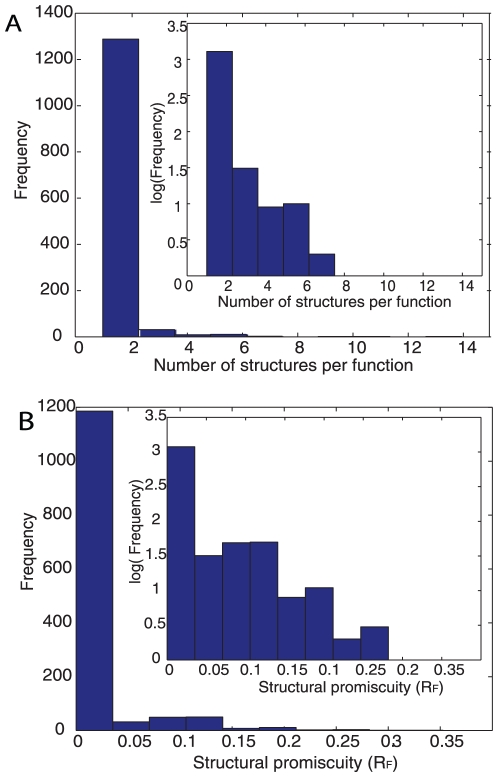
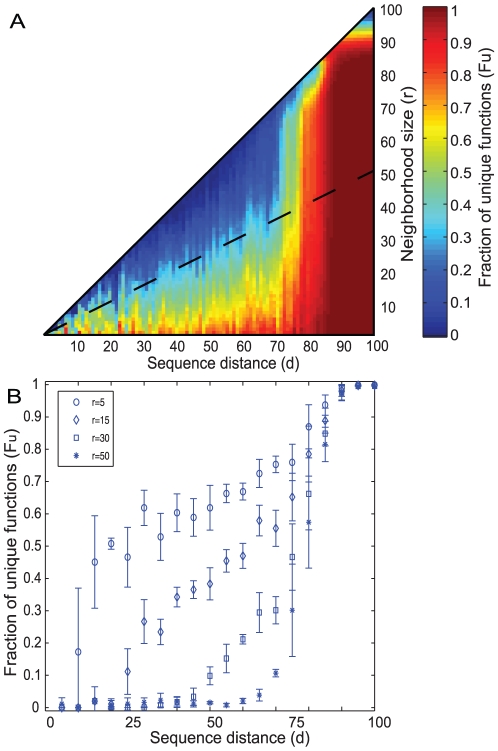
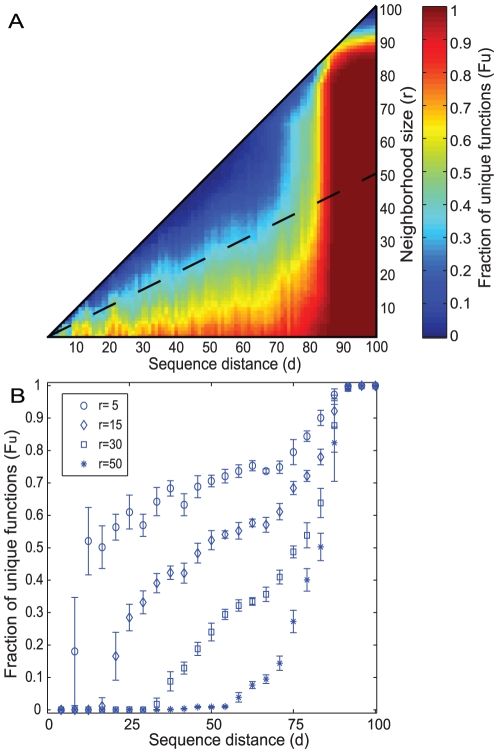
The organization of protein structures in protein genotype space is well studied. The same does not hold for protein functions, whose organization is important to understand how novel protein functions can arise through blind evolutionary searches of sequence space. In systems other than proteins, two organizational features of genotype space facilitate phenotypic innovation. The first is that genotypes with the same phenotype form vast and connected genotype networks. The second is that different neighborhoods in this space contain different novel phenotypes. We here characterize the organization of enzymatic functions in protein genotype space, using a data set of more than 30,000 proteins with known structure and function. We show that different neighborhoods of genotype space contain proteins with very different functions. This property both facilitates evolutionary innovation through exploration of a genotype network, and it constrains the evolution of novel phenotypes. The phenotypic diversity of different neighborhoods is caused by the fact that some functions can be carried out by multiple structures. We show that the space of protein functions is not homogeneous, and different genotype neighborhoods tend to contain a different spectrum of functions, whose diversity increases with increasing distance of these neighborhoods in sequence space. Whether a protein with a given function can evolve specific new functions is thus determined by the protein's location in sequence space.
Overview
The claims and statistics of this paper haven’t been checked yet.
Run the check — free, no account needed. It reads the open-access text and checks the sources it cites.
Integrity signals
Registry
Cites
Statistics
Figures
Verification
Claims the paper makes
The claims and statistics of this paper haven’t been checked yet.
Run the check — free, no account needed. It reads the open-access text and checks the sources it cites.
Claims other papers make about this one
Each is checked against this paper’s own text: does it say what the citing paper says it does?
The source backs part of the claim, not all of it — or backs it for a different population, condition or comparison.
In the citing paper
“The authors estimated a probability of 1 in 10 11 to find an ATP binding protein, suggesting a higher probability than found by Axe.”
From Using statistical methods to model the fine-tuning of molecular machines and systems (2020) · cites this paper as Ferrada and Wagner, 2010
Experimental — accuracy not yet measured
Self-check
Percentages, sums and reported differences re-computed from the paper’s own numbers.
The self-check needs the paper’s full text.
Citations
Cites
Thompson, J. D., Higgins, D. G., & Gibson, T. J. (1994) · Nucleic Acids Research · doi:10.1093/nar/22.22.4673 · Cited by 64,617
Berman, H. M. (2000) · Nucleic Acids Research · doi:10.1093/nar/28.1.235 · Cited by 40,196
T-coffee: a novel method for fast and accurate multiple sequence alignment 1 1Edited by J. Thornton
Notredame, C., Higgins, D. G., & Heringa, J. (2000) · Journal of Molecular Biology · doi:10.1006/jmbi.2000.4042 · Cited by 6,964
Murzin, A. G., Brenner, S. E., Hubbard, T., & Chothia, C. (1995) · Journal of Molecular Biology · doi:10.1016/s0022-2836(05)80134-2 · Cited by 6,435
Eddy, S. R. (1998) · Bioinformatics · doi:10.1093/bioinformatics/14.9.755 · Cited by 5,515
The Universal Protein Resource (UniProt)
Bairoch, A. (2004) · Nucleic Acids Research · doi:10.1093/nar/gki070 · Cited by 3,774
The relation between the divergence of sequence and structure in proteins.
Chothia, C., & Lesk, A. M. (1986) · The EMBO Journal · doi:10.1002/j.1460-2075.1986.tb04288.x · Cited by 2,458
Twilight zone of protein sequence alignments
Rost, B. (1999) · Protein Engineering, Design and Selection · doi:10.1093/protein/12.2.85 · Cited by 1,833
Smith, J. M., Burian, R. M., Kauffman, S. A., Alberch, P., Campbell, J., Goodwin, B. C., Lande, R., Raup, D. M., & Wolpert, L. (1985) · The Quarterly Review of Biology · doi:10.1086/414425 · Cited by 1,442
Bairoch, A. (2000) · Nucleic Acids Res. · doi:10.1093/nar/28.1.304 · Cited by 1,182
EUKARYOTIC TRANSLESION SYNTHESIS DNA POLYMERASES: Specificity of Structure and Function
Prakash, S., Johnson, R. E., & Prakash, L. (2005) · Annual Review of Biochemistry · doi:10.1146/annurev.biochem.74.082803.133250 · Cited by 1,020
Current opinion in structural biology
(1992) · Current Opinion in Structural Biology · doi:10.1016/0959-440x(92)90120-v · Cited by 929
DNA Polymerases: Structural Diversity and Common Mechanisms
Steitz, T. A. (1999) · Journal of Biological Chemistry · doi:10.1074/jbc.274.25.17395 · Cited by 848
The 'evolvability' of promiscuous protein functions
Aharoni, A., Gaidukov, L., Khersonsky, O., Gould, S. M., Roodveldt, C., & Tawfik, D. S. (2004) · Nature Genetics · doi:10.1038/ng1482 · Cited by 833
From sequences to shapes and back: a case study in RNA secondary structures
Schuster, P., Fontana, W., Stadler, P. F., & Hofacker, I. L. (1994) · Proceedings of the Royal Society B Biological Sciences · doi:10.1098/rspb.1994.0040 · Cited by 802
Protein superfamilles and domain superfolds
Orengo, C. A., Jones, D. T., & Thornton, J. M. (1994) · Nature · doi:10.1038/372631a0 · Cited by 783
Hamming, R. W. (1980) · Cited by 693
The Early Evolution of Eukaryotes: A Geological Perspective
Knoll, A. H. (1992) · Science · doi:10.1126/science.1585174 · Cited by 684
Todd, A. E., Orengo, C. A., & Thornton, J. M. (2001) · Journal of Molecular Biology · doi:10.1006/jmbi.2001.4513 · Cited by 681
Touring protein fold space with Dali/FSSP
Holm, L. (1998) · Nucleic Acids Research · doi:10.1093/nar/26.1.316 · Cited by 667
Emergence of Preferred Structures in a Simple Model of Protein Folding
Li, H., Helling, R. C., Tang, C., & Wingreen, N. S. (1996) · Science · doi:10.1126/science.273.5275.666 · Cited by 649
Nagano, N., Orengo, C., & Thornton, J. (2002) · Journal of Molecular Biology · doi:10.1016/s0022-2836(02)00649-6 · Cited by 631
The Universal Protein Resource (UniProt) 2009
The UniProt Consortium (2008) · Nucleic Acids Research · doi:10.1093/nar/gkn664 · Cited by 546
Functional proteins from a random-sequence library
Keefe, A. D., & Szostak, J. W. (2001) · Nature · doi:10.1038/35070613 · Cited by 540
Natural Selection and the Concept of a Protein Space
Smith, J. (1970) · Nature · doi:10.1038/225563a0 · Cited by 488
Adams, K. L., Qiu, Y., Stoutemyer, M., & Palmer, J. D. (2002) · Proceedings of the National Academy of Sciences · doi:10.1073/pnas.042694899 · Cited by 479
Continuity in evolution: on the nature of transitions.
Fontana, W., & Schuster, P. (1998) · Science · doi:10.1126/science.280.5368.1451 · Cited by 456
Simons, K. T., Ruczinski, I., Kooperberg, C. L., Fox, B. A., Bystroff, C., & Baker, D. A. (1999) · Proteins Structure Function and Bioinformatics · doi:10.1002/(sici)1097-0134(19990101)34:1 · Cited by 443
Hegyi, H., & Gerstein, M. (1999) · Journal of Molecular Biology · doi:10.1006/jmbi.1999.2661 · Cited by 421
T-Coffee: A Novel Method for Fast and Accurate Multiple Sequence Alignment
Switzerland, L., & Ireland, C. (2000) · Cited by 406
Robustness can evolve gradually in complex regulatory gene networks with varying topology
Ciliberti, S., Martin, O. C., & Wagner, A. (2007) · PLoS Computational Biology · doi:10.1371/journal.pcbi.0030015 · Cited by 390 · cited 1×
“In a variety of biological systems, the existence of extended genotype networks facilitates the evolution of novel phenotypes [36–38].”
BackgroundSelf-citationBookstein, A. (1981) · Information Processing & Management · doi:10.1016/0306-4573(81)90053-4 · Cited by 387
Enzyme Function Less Conserved than Anticipated
Rost, B. (2002) · Journal of Molecular Biology · doi:10.1016/s0022-2836(02)00016-5 · Cited by 383
Wilson, C. A., Kreychman, J., & Gerstein, M. (2000) · Journal of Molecular Biology · doi:10.1006/jmbi.2000.3550 · Cited by 367
Practical limits of function prediction
Devos, D. P., & Valencia, A. (2000) · Proteins Structure Function and Bioinformatics · doi:10.1002/1097-0134(20001001)41:1 · Cited by 358
Punctuated Evolution Caused by Selection of Rare Beneficial Mutations
Elena, S. F., Cooper, V. S., & Lenski, R. E. (1996) · Science · doi:10.1126/science.272.5269.1802 · Cited by 340
COEVOLUTION IN ECOSYSTEMS: RED QUEEN EVOLUTION OR STASIS?
Stenseth, N. C., & Smith, J. M. (1984) · Evolution · doi:10.1111/j.1558-5646.1984.tb00358.x · Cited by 334
Systematic mutation of bacteriophage T4 lysozyme
Rennell, D., Bouvier, S. E., Hardy, L. W., & Poteete, A. R. (1991) · Journal of Molecular Biology · doi:10.1016/0022-2836(91)90738-r · Cited by 330
Greene, L. H., Lewis, T. E., Addou, S., Cuff, A. L., Dallman, T. J., Dibley, M., Redfern, O., Pearl, F. M. G., Nambudiry, R., Reid, A. J., et al. (2006) · Nucleic Acids Research · doi:10.1093/nar/gkl959 · Cited by 300
Evo-devo and constraints on selection
Brakefield, P. M. (2006) · Trends in Ecology & Evolution · doi:10.1016/j.tree.2006.05.001 · Cited by 292
Modeling evolutionary landscapes: Mutational stability, topology, and superfunnels in sequence space
Bornberg‐Bauer, E., & Chan, H. S. (1999) · Proceedings of the National Academy of Sciences · doi:10.1073/pnas.96.19.10689 · Cited by 254
Martin, A. C. R., Orengo, C. A., Hutchinson, E. G., Jones, S., Karmirantzou, M., Laskowski, R. A., Mitchell, J. B. O., Taroni, C., & Thornton, J. M. (1998) · Structure · doi:10.1016/s0969-2126(98)00089-6 · Cited by 217
Two Concepts of Constraint: Adaptationism and the Challenge from Developmental Biology
Amundson, R. (1994) · Philosophy of Science · doi:10.1086/289822 · Cited by 210
Shaping Space: the Possible and the Attainable in RNA Genotype–phenotype Mapping
Fontana, W., & Schuster, P. M. (1998) · Journal of Theoretical Biology · doi:10.1006/jtbi.1998.0771 · Cited by 204
Amino Acid Sequence Determinants of β-Lactamase Structure and Activity
Huang, W., Petrosino, J. F., Hirsch, M., Shenkin, P. S., & Palzkill, T. G. (1996) · Journal of Molecular Biology · doi:10.1006/jmbi.1996.0279 · Cited by 174
Genetic studies of the lac repressor
Kleina, L. G., & Miller, J. H. (1990) · Journal of Molecular Biology · doi:10.1016/0022-2836(90)90126-7 · Cited by 173
Metal binding and folding properties of a minimalist Cys2His2 zinc finger peptide.
Michael, S. F., Kilfoil, V. J., Schmidt, M. H., Amann, B. T., & Berg, J. M. (1992) · Proceedings of the National Academy of Sciences · doi:10.1073/pnas.89.11.4796 · Cited by 164
Protein engineering 20 years on
Brannigan, J. A., & Wilkinson, A. J. (2002) · Nature Reviews Molecular Cell Biology · doi:10.1038/nrm975 · Cited by 162
Modelling neutral and selective evolution of protein folding
Lipman, D. J., & Wilbur, W. J. (1991) · Proceedings of the Royal Society B Biological Sciences · doi:10.1098/rspb.1991.0081 · Cited by 149
How are model protein structures distributed in sequence space?
Bornberg‐Bauer, E. (1997) · Biophysical Journal · doi:10.1016/s0006-3495(97)78268-7 · Cited by 134
Evolutionary Plasticity and Innovations in Complex Metabolic Reaction Networks
Rodrigues, J. F. M., & Wagner, A. (2009) · PLoS Computational Biology · doi:10.1371/journal.pcbi.1000613 · Cited by 130
Self-citationQuantitative sequence-function relationships in proteins based on gene ontology
Sangar, V., Blankenberg, D. J., Altman, N., & Lesk, A. M. (2007) · BMC Bioinformatics · doi:10.1186/1471-2105-8-294 · Cited by 106
Advances in zinc finger engineering
Choo, Y., & Isalan, M. (2000) · Current Opinion in Structural Biology · doi:10.1016/s0959-440x(00)00107-x · Cited by 95
Simulating protein evolution in sequence and structure space
Xia, Y., & Levitt, M. (2004) · Current Opinion in Structural Biology · doi:10.1016/j.sbi.2004.03.001 · Cited by 88
The Evolution of Protein StructuresPreprint
Chothia, C., & Lesk, A. M. (1987) · Cold Spring Harbor Symposia on Quantitative Biology · doi:10.1101/sqb.1987.052.01.046 · Cited by 88
Estimating the prevalence of protein sequences adopting functional enzyme folds
Axe, D. D. (2004) · Journal of Molecular Biology · doi:10.1016/j.jmb.2004.06.058 · Cited by 86
Functionally acceptable substitutions in two α‐helical regions of λ repressor
Reidhaar-Olson, J. F., & Sauer, R. T. (1990) · Proteins Structure Function and Bioinformatics · doi:10.1002/prot.340070403 · Cited by 84
Plasticity and constraints in development and evolution
Hodin, J. (2000) · Journal of Experimental Zoology · doi:10.1002/(sici)1097-010x(20000415)288:1 · Cited by 77
Searching sequence space for protein catalysts
Taylor, S. V., Walter, K. U., Kast, P., & Hilvert, D. (2001) · Proceedings of the National Academy of Sciences · doi:10.1073/pnas.191159298 · Cited by 65
Predicting enzyme function from sequence: a systematic appraisal.
Shah, I., & Hunter, L. (1997) · PubMed · Cited by 59
Quantification of tertiary structural conservation despite primary sequence drift in the globin fold
Aronson, H. G., Hendrickson, W. A., & Royer, W. E. (1994) · Protein Science · doi:10.1002/pro.5560031009 · Cited by 55
Exploring Protein Sequence Space Using Knowledge-based Potentials
Babajide, A., Farber, R., Hofacker, I. L., Inman, J., Lapedes, A. S., & Stadler, P. F. (2001) · Journal of Theoretical Biology · doi:10.1006/jtbi.2001.2343 · Cited by 54
Distance measures for biological sequences: Some recent approaches
Mantaci, S., Restivo, A., & Sciortino, M. (2007) · International Journal of Approximate Reasoning · doi:10.1016/j.ijar.2007.03.011 · Cited by 51
Combined-method phylogenetic analysis of Hox and ParaHox genes of the metazoa
Kourakis, M. J., & Martindale, M. Q. (2000) · Journal of Experimental Zoology · doi:10.1002/1097-010x(20000815)288:2 · Cited by 51
Boltzmann-like Statistics of Protein Architectures
Finkelstein, A. V., Gutin, A. M., & Badretdinov, A. Y. (1995) · Sub-cellular biochemistry/Subcellular biochemistry · doi:10.1007/978-1-4899-1727-0_1 · Cited by 47
DNA Polymerases: Structural Diversity and Common Mechanisms
Steitz, T. A. (2020) · WORLD SCIENTIFIC eBooks · doi:10.1142/9789811215865_0037 · Cited by 43
Proteins: Structure, Function, and Engineering
Biswas, B. B., & Roy, S. (1995) · Sub-cellular biochemistry/Subcellular biochemistry · doi:10.1007/978-1-4899-1727-0 · Cited by 42
SENSITIVE SEQUENCE COMPARISON AS PROTEIN FUNCTION PREDICTOR
Pawłowski, K., Jaroszewski, L., Rychlewski, L., & Godzik, A. (1999) · Pacific Symposium on Biocomputing (PSB) · doi:10.1142/9789814447331_0005 · Cited by 32
Hegyi, H., & Gerstein, M. (1999) · Defense Technical Information Center (DTIC) · doi:10.21236/ada472211 · Cited by 22
The properties of protein family space depend on experimental design
Kunin, V., Teichmann, S. A., Huynen, M. A., & Ouzounis, C. (2005) · Computer applications in the biosciences · doi:10.1093/bioinformatics/bti386 · Cited by 13
The Designability Hypothesis and Protein Evolution
Kussell, E. L. (2005) · Protein and Peptide Letters · doi:10.2174/0929866053005881 · Cited by 13
Equivalence Classes of Optimal Structures in HP Protein Models Including Side ChainsPreprint
Mann, M., Backofen, R., & Will, S. (2009) · arXiv (Cornell University) · doi:10.48550/arxiv.0910.3848 · Cited by 4
Research works printed but not linked: 2
- [20]Buchler NEG Goldstein RA 1999 Effect of alphabet size and foldability requirements on protein structure designability. Proteins Struct Funct Bioinf 34 113 124 10336377
- [30]Todd AE Orengo CA Thornton JM 2001 Evolution of function in protein superfamilies, from a structural perspective. J Mol Biol 307 1113 1143 11286560
Cited by
Sorted by citations
Currin, A., Swainston, N., Day, P. J., & Kell, D. B. (2014) · Chemical Society Reviews · doi:10.1039/c4cs00351a · Cited by 393
The molecular origins of evolutionary innovations
Wagner, A. (2011) · Trends in Genetics · doi:10.1016/j.tig.2011.06.002 · Cited by 127
Self-citationStructural properties of genotype–phenotype maps
Ahnert, S. E. (2017) · Journal of The Royal Society Interface · doi:10.1098/rsif.2017.0275 · Cited by 110
Schaper, S., & Louis, A. A. (2014) · PLoS ONE · doi:10.1371/journal.pone.0086635 · Cited by 90
Manrubia, S., Cuesta, J. A., Aguirre, J., Ahnert, S. E., Altenberg, L., Cano, A. V., Catalán, P., Diaz-Uriarte, R., Elena, S. F., García-Martín, J. A., et al. (2021) · Physics of Life Reviews · doi:10.1016/j.plrev.2021.03.004 · Cited by 88
Metadata
- Authors
- Ferrada, E., & Wagner, A.
- Affiliations
- SIB Swiss Institute of Bioinformatics (CH)
- Corresponding author
- Ferrada, Evandro
- Venue
- PLoS ONE
- Publisher
- Public Library of Science (PLoS)
- Published
- 2010-11-30
- Volume
- 5
- Issue
- 11
- Pages
- e14172
- ISSN
- 1932-6203 (ISSN-L)
- PMC
- PMC2994758
- OpenAlex
- W2082738116
- Cited by
- 51
- References
- 73
- Citations by year
- 2026: 2 · 2025: 3 · 2024: 2 · 2023: 4 · 2021: 6 · 2020: 4 · 2019: 2 · 2018: 1 · 2017: 1 · 2016: 7 · 2015: 2 · 2014: 6 · 2013: 2 · 2012: 4
- FWCI
- 1.98
- Type
- journal article
- Language
- en
- Open access
- gold
- doi.org
- Locations
- PLoS ONE (publishedVersion, cc-by)
- PubMed Central (publishedVersion, cc-by)
- PubMed (publishedVersion)
- Zurich Open Repository and Archive (University of Zurich) (acceptedVersion, cc-by)
- DOAJ (DOAJ: Directory of Open Access Journals) (submittedVersion, cc-by-sa)
- Figshare (submittedVersion, cc-by)
- Zurich Open Repository and Archive (University of Zurich) (submittedVersion, cc-by)
- Zurich Open Repository and Archive (University of Zurich)
- Funders
- National Science Foundation
- Schweizerischer Nationalfonds zur Förderung der Wissenschaftlichen Forschung (315200, 315230, 119697, 129708, 116814)
- Universität Zürich
- SystemsX.ch
- Topics
- Life Sciences › Biochemistry, Genetics and Molecular Biology › Genetics › Evolution and Genetic Dynamics
- Life Sciences › Biochemistry, Genetics and Molecular Biology › Molecular Biology › Protein Structure and Dynamics
- Life Sciences › Biochemistry, Genetics and Molecular Biology › Molecular Biology › RNA and protein synthesis mechanisms
- Keywords
- protein function evolution, genotype space, sequence spaces, enzyme function, protein structure-function relationship, genotype networks, phenotypic innovation, functional diversity
- MeSH terms
- Algorithms, Binding Sites, Enzymes, Genotype, Proteins, Substrate Specificity, Protein Structure, Tertiary, Evolution, Molecular, Databases, Protein, Biocatalysis
About these checks
Registry, retraction, Cites and statistics results are computed, not judged, with one exception: a printed reference that no index lists is read once by a model before it counts as a citation error. Claims are extracted by a model and kept only when their quote appears verbatim in the text; each cited source is then checked, with a model’s help, for whether it says what the claim relies on. Those verdicts can be wrong — read the claim’s quote and the cited source before relying on one.
Statistics and arithmetic are recomputed, not judged.
Confidence bands are shown only for fields calibrated on our annotated test set. None is calibrated yet, so no band is shown.
What counts as a claim ›How we measure confidence ›How we check this ›
Are you an author, or do you see a problem with this page? Request a review
