

The Timing of the Cognitive Cycle
Open accessThe DOI matches its Crossref record; 109 of the 116 references it cites were found in a registry or an index.
Abstract
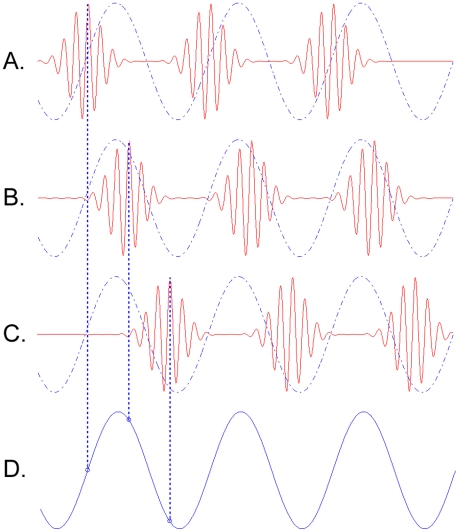
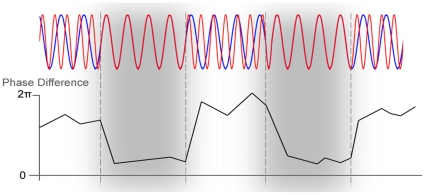
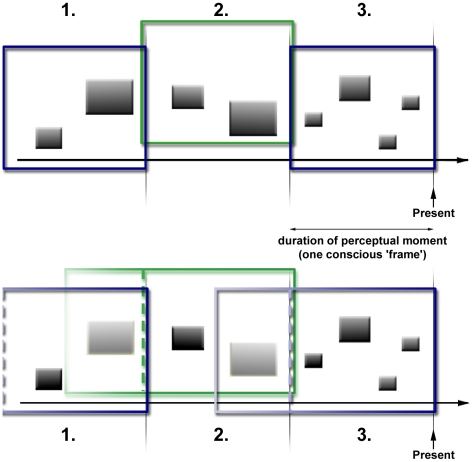
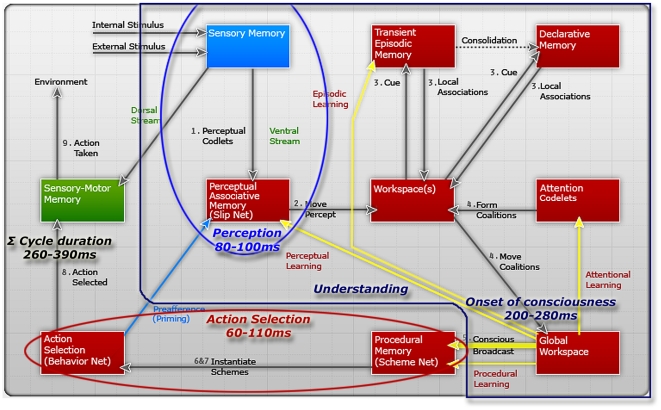
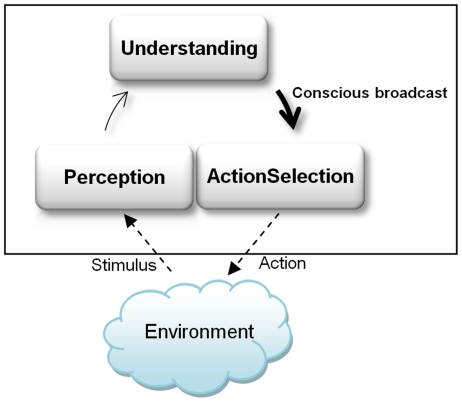
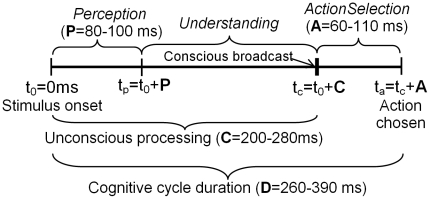
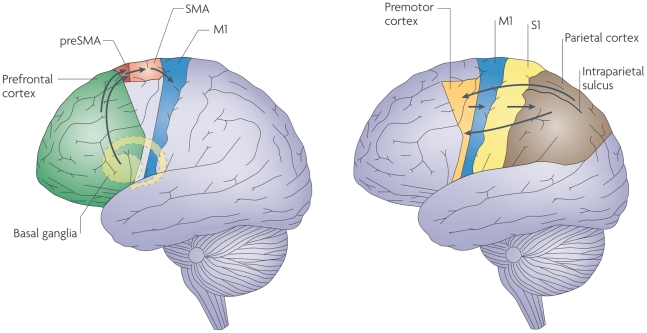
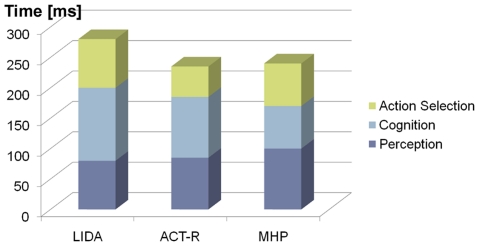
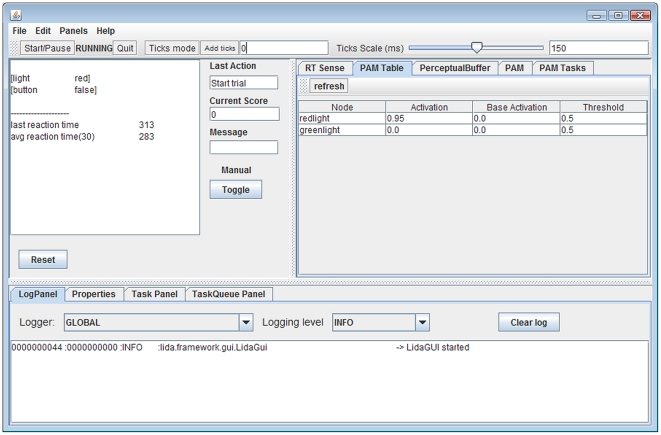
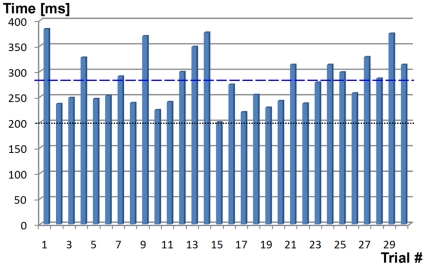
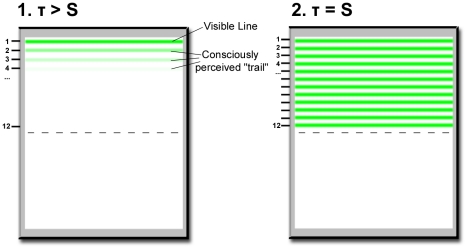
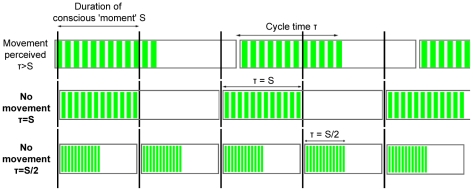
We propose that human cognition consists of cascading cycles of recurring brain events. Each cognitive cycle senses the current situation, interprets it with reference to ongoing goals, and then selects an internal or external action in response. While most aspects of the cognitive cycle are unconscious, each cycle also yields a momentary "ignition" of conscious broadcasting. Neuroscientists have independently proposed ideas similar to the cognitive cycle, the fundamental hypothesis of the LIDA model of cognition. High-level cognition, such as deliberation, planning, etc., is typically enabled by multiple cognitive cycles. In this paper we describe a timing model LIDA's cognitive cycle. Based on empirical and simulation data we propose that an initial phase of perception (stimulus recognition) occurs 80-100 ms from stimulus onset under optimal conditions. It is followed by a conscious episode (broadcast) 200-280 ms after stimulus onset, and an action selection phase 60-110 ms from the start of the conscious phase. One cognitive cycle would therefore take 260-390 ms. The LIDA timing model is consistent with brain evidence indicating a fundamental role for a theta-gamma wave, spreading forward from sensory cortices to rostral corticothalamic regions. This posteriofrontal theta-gamma wave may be experienced as a conscious perceptual event starting at 200-280 ms post stimulus. The action selection component of the cycle is proposed to involve frontal, striatal and cerebellar regions. Thus the cycle is inherently recurrent, as the anatomy of the thalamocortical system suggests. The LIDA model fits a large body of cognitive and neuroscientific evidence. Finally, we describe two LIDA-based software agents: the LIDA Reaction Time agent that simulates human performance in a simple reaction time task, and the LIDA Allport agent which models phenomenal simultaneity within timeframes comparable to human subjects. While there are many models of reaction time performance, these results fall naturally out of a biologically and computationally plausible cognitive architecture.
Overview
The claims and statistics of this paper haven’t been checked yet.
Free: it reads the open-access text and checks the first 5 claims that cite a source we can check. Create a free account to check every claim.
Integrity signals
Registry
Cites
Statistics
Figures
Verification
Claims the paper makes
The claims and statistics of this paper haven’t been checked yet.
Free: it reads the open-access text and checks the first 5 claims that cite a source we can check. Create a free account to check every claim.
Claims other papers make about this one
Each is checked against this paper’s own text: does it say what the citing paper says it does?
The source backs part of the claim, not all of it — or backs it for a different population, condition or comparison.
In the citing paper
“Along these lines, by enabling the generation of inferences with rapidity and reliability, SOHMs could afford approximate models capable of guiding action–perception cycles and decision-making (von Uexküll, 1957; Fuster, 2009; Madl et al., 2011; Vul et al., 2014; Linson et al., 2018; Parr and Friston, 2018b).”
From An Integrated World Modeling Theory (IWMT) of Consciousness (2020) · cites this paper as Madl et al., 2011
Experimental — accuracy not yet measured
Self-check
Percentages, sums and reported differences re-computed from the paper’s own numbers.
The self-check needs the paper’s full text.
Citations
Cites
Baddeley, A. D., & Hitch, G. (1974) · Psychology of Learning and Motivation · doi:10.1016/s0079-7421(08)60452-1 · Cited by 9,860
Barsalou, L. W. (1999) · Behavioral and Brain Sciences · doi:10.1017/s0140525x99002149 · Cited by 6,887
The Embodied Mind: Cognitive Science and Human Experience
Varela, F. J., Rosch, E. H., & Thompson, E. T. (2017) · Project Muse (Johns Hopkins University) · Cited by 5,910
Buzsáki, G. (2006) · doi:10.1093/acprof:oso/9780195301069.001.0001 · Cited by 4,873 · cited 3×
“most exact and reliable data, but they require surgery and cannot be used in healthy humans [39].”
BackgroundThe brainweb: phase synchronization and large-scale integration
Varela, F., Lachaux, J.-P., Rodriguez, E., & Martinerie, J. (2001) · Nature Reviews Neuroscience · doi:10.1038/35067550 · Cited by 4,761 · cited 2×
“(based on [26]).”
BackgroundHandbook of perception and human performance
Boff, K. R., Kaufman, L., & Thomas, J. P. (1986) · Wiley eBooks · Cited by 4,129
(1988) · Cited by 3,656
Self-citationSpeed of processing in the human visual system
Thorpe, S., Fize, D., & Marlot, C. (1996) · Nature · doi:10.1038/381520a0 · Cited by 3,538
Ericsson, K. A., & Kintsch, W. (1995) · Psychological Review · doi:10.1037/0033-295x.102.2.211 · Cited by 3,498 · cited 1×
“Based primarily on global workspace theory [25], the model implements and fleshes out central ideas from a number of psychological and neuropsychological theories including situated (embodied) cognition [26,27], perceptual symbol systems [28], working memory [29], memory by affordances [30], long-term working memory […”
MethodAn Integrated Theory of the Mind.
Anderson, J. R., Bothell, D., Byrne, M. D., Douglass, S., Lebiere, C., & Qin, Y. (2004) · Psychological Review · doi:10.1037/0033-295x.111.4.1036 · Cited by 2,978 · cited 4×
“In other cognitive models, such as ACT-R or EPIC, the cognition phase includes the matching, selection and execution of production rules [64,65].”
MethodInfluential
Research works printed but not linked: 4
- Willis J Todorov A 2006 First Impressions: Making Up Your Mind After a 100-Ms Exposure to a Face. Psychological Science (Wiley-Blackwell) 17 592 598 doi: 10.1111/j.1467-9280.2006.01750.x 16866745 · DOI · Paper page
- Kosinski B Cummings J 1999 The Scientific Method: An Introduction Using Reaction Time. Tested studies for laboratory teaching (ABLE Proceedings) 25 219 234
- Martinez-Conde S Macknik S Martinez MM Alonso J Tse PU 2006 Visual Perception Part 1, Volume 154: Fundamentals of Vision: Low and Mid-Level Processes in Perception. 1st ed. Elsevier Science
- Maes P 1989 How To Do the Right Thing. CONNECTION SCIENCE JOURNAL 1 291 323 · DOI · Paper page
Cited by
Items 101–129 of 129
Smith, A. (2017) · IEEE Engineering Management Review · doi:10.1109/emr.2017.2768507
“Along with the parameters calculated and recorded from the data analysis, we estimate the stochastic statistics of qn; qi; un; ui and Tp based upon the research of Madl et al. (2011). Madl et al. (2011) quantify the timing of each step within the cognitive cycle from detection to action. Using the results from other e…”
InfluentialYu, E. S. K. (2021) · REFSQ Workshops
Learning the Meaning of the Vervet Alarm Calls using a Cognitive and Computational Model
Khayi-Enyinda, N. A. (2013)
Number of autonomous agents in a neural networkPreprint
Kak, S. C. (2021) · doi:10.36227/techrxiv.16943194.v1
Koziol, L. F. (2014) · SpringerBriefs in neuroscience · doi:10.1007/978-3-319-04477-4_7
Multiple object categorization and effect of spatial frequenciesPreprint
Šoliūnas, A., Pleskačiauskas, A., & Daktariūnas, A. (2018) · doi:10.7287/peerj.preprints.26666
A hypothetical neural mechanism for inattentional blindness
Silkis, I. G. (2022) · Integrative Physiology · doi:10.33910/2687-1270-2022-3-1-23-40
“При оптимальных усло-виях осознанное распознавание эпизода про-исходит через 200–280 мс после предъявления стимула (Madl et al. 2011).”
InfluentialTime, Consciousness, and the Readiness Potential
Sannita, W. G. (2022) · Journal of Psychophysiology · doi:10.1027/0269-8803/a000304
Rising Stars In: Consciousness Research 2021
Raffone, A., Srinivasan, N., Simione, L., Arsiwalla, X. D., & Kleiner, J. (2023) · Frontiers research topics · doi:10.3389/978-2-8325-3851-7
Dong, D. (2024) · Proceedings of the AAAI Symposium Series · doi:10.1609/aaaiss.v2i1.27666 · Cited by 1
“These phases are functioning continually in a cognitive cycle (~10 Hz) and may (partially) overlap among multiple cycles (Madl, Baars, & Franklin, 2011).”
BackgroundLes patients en état de conscience altérée sont-ils sensibles à la prosodie ?
Pruvost‐Robieux, E. (2023) · theses.fr (ABES) · doi:10.70675/09592882z37c8z439azb32dz7cae24ef4846
Neuro-Symbolic LIDA’s Semantic Vision System
DiGilio, N., & Agrawal, P. (2025) · Lecture notes in computer science · doi:10.1007/978-3-032-00686-8_14
Exploring Metacognitive Experiences by Simulating Internal Decisions of Information Access
Ukov, T. G., & Tsochev, G. (2025) · Systems · doi:10.3390/systems13110982
A User Evaluation on Mouse Movements in Visual Interfaces
Burch, M., Wallner, G., von Ah, I., & Pehar, F. (2025) · International Symposium on Visual Information Communication and Interaction (VINCI) · doi:10.1145/3769534.3769536
Content-State Dimensions Characterize Different Types of Neural Correlates of ConsciousnessPreprint
Pérez, P., Manasova, D., Hermann, B., Raimondo, F., Bekinschtein, T. A., Naccache, L., Arzi, A., & Sitt, J. D. (2023) · PsyArXiv (OSF Preprints) · doi:10.31234/osf.io/xkeuv
Discrepancies in the neuroprognostic evaluation of disorders of consciousness
Lévi‐Strauss, J. (2023) · HAL
Modeling Pedestrian Movement in a Crowd Context with Urgency Preemption
Aros, S. K., & Frakes, D. (2025) · Winter Simulation Conference · doi:10.1109/wsc68292.2025.11339043
“First, urgent situations can arise any 1-second time-step in the simulation, and realistically a human is able to produce a basic reaction decision within 1 second; however, more complex decision-making takes more time (Madl et al. 2011).”
Models and methods for decision support based on electroencephalographic data
Mykhalchuk, V. (2025) · eKNUTSHIR
How consciousness modifies the motivation of belonging in agents
Moreno, H. D., Torres, I. R., Ramos, F., Díaz, D. E. M., & Aguirre, F. A. R. (2026) · Cognitive Systems Research · doi:10.1016/j.cogsys.2026.101469
Cortical oscillations as temporal reference frames for perception
Kösem, A. (2014) · theses.fr (ABES) · doi:10.70675/0e7411cfz042az4869za73ez508b7f671fc2 · Cited by 1
Ali, B. B. (2018) · theses.fr (ABES) · doi:10.70675/eb56190az9de6z461fz9edcza040de225392 · Cited by 2
Manasova, D. (2024) · theses.fr (ABES) · doi:10.70675/17dac50cz609bz4938z8c8dz6bf34bfbe92f
Benghanem, S. (2024) · theses.fr (ABES) · doi:10.70675/0b749b06zd186z4d5cz903dz2724cd132465
Baars, B. J., & Geld, N. (2026) · Studies in systems, decision and control · doi:10.1007/978-3-032-00242-6_12
Self-citationBrunner, P., Bogenberger, K., & Huber, W. (2026) · SSRN Electronic Journal · doi:10.2139/ssrn.7559998
Metadata
- Authors
- Madl, T., Baars, B. J., & Franklin, S.
- Affiliations
- University of Vienna (AT)
- Neurosciences Institute (US)
- University of Memphis (US)
- Corresponding author
- Madl, Tamas
- Venue
- PLoS ONE
- Publisher
- Public Library of Science (PLoS)
- Published
- 2011-04-25
- Volume
- 6
- Issue
- 4
- Pages
- e14803
- ISSN
- 1932-6203 (ISSN-L)
- PMC
- PMC3081809
- OpenAlex
- W2079798818
- Cited by
- 116
- References
- 116
- Citations by year
- 2026: 2 · 2025: 13 · 2024: 7 · 2023: 8 · 2022: 14 · 2021: 14 · 2020: 4 · 2019: 2 · 2018: 9 · 2017: 6 · 2016: 5 · 2015: 4 · 2014: 8 · 2013: 9 · 2012: 9
- FWCI
- 8.52
- Type
- journal article
- Language
- en
- Open access
- gold
- doi.org
- Licence
- cc-by
- Locations
- PLoS ONE (publishedVersion, cc-by)
- PubMed Central (publishedVersion, cc-by)
- PubMed (publishedVersion)
- DOAJ (DOAJ: Directory of Open Access Journals) (submittedVersion, cc-by-sa)
- Topics
- Physical Sciences › Computer Science › Artificial Intelligence › Psychiatry, Mental Health, Neuroscience
- Life Sciences › Neuroscience › Cognitive Neuroscience › Neural dynamics and brain function
- Life Sciences › Neuroscience › Cognitive Neuroscience › Cognitive Science and Education Research
- Keywords
- cognitive cycle, conscious perception, timing models, stimulus recognition, action selection, theta-gamma oscillations, thalamocortical system, reaction time, cognitive architecture
- MeSH terms
- Brain, Cognition, Consciousness, Decision Making, Humans, Models, Psychological, Movement, Perception, Reaction Time, Time Factors
About these checks
Registry, retraction, Cites and statistics results are computed, not judged, with one exception: a printed reference that no index lists is read once by a model before it counts as a citation error. Claims are extracted by a model and kept only when their quote appears verbatim in the text; each cited source is then checked, with a model’s help, for whether it says what the claim relies on. Those verdicts can be wrong — read the claim’s quote and the cited source before relying on one.
Statistics and arithmetic are recomputed, not judged.
Confidence bands are shown only for fields calibrated on our annotated test set. None is calibrated yet, so no band is shown.
What counts as a claim ›How we measure confidence ›How we check this ›
Are you an author, or do you see a problem with this page? Request a review
Data sources
Bibliographic data: Semantic Scholar, OpenAlex, Crossref.
Contains information from the Semantic Scholar Academic Graph Datasets, made available under the ODC Attribution License (ODC-BY 1.0).
Semantic Scholar’s data is described in: Kinney, R., et al. (2023). The Semantic Scholar Open Data Platform. arXiv:2301.10140.
