

The DOI matches its Crossref record; 39 of the 39 references it cites were found in a registry or an index.
Hepatocyte Growth Factor Modulates Interleukin-6 Production in Bone Marrow Derived Macrophages: Implications for Inflammatory Mediated Diseases
Open accessAbstract
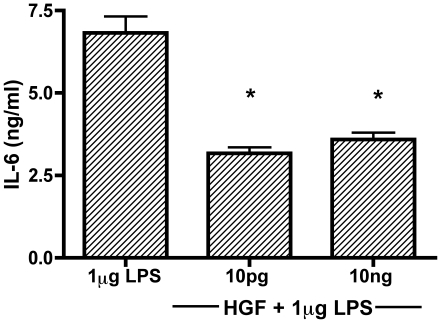
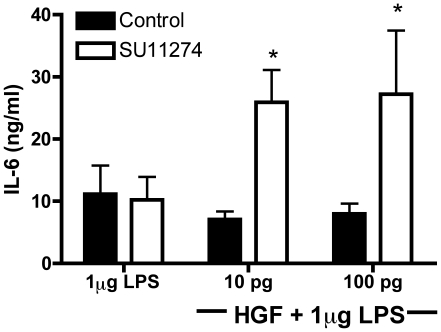
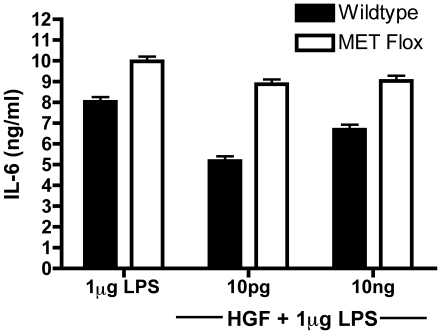
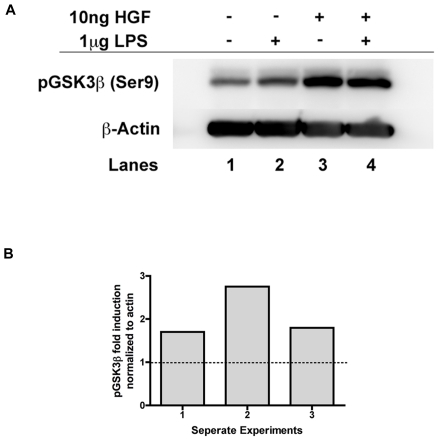
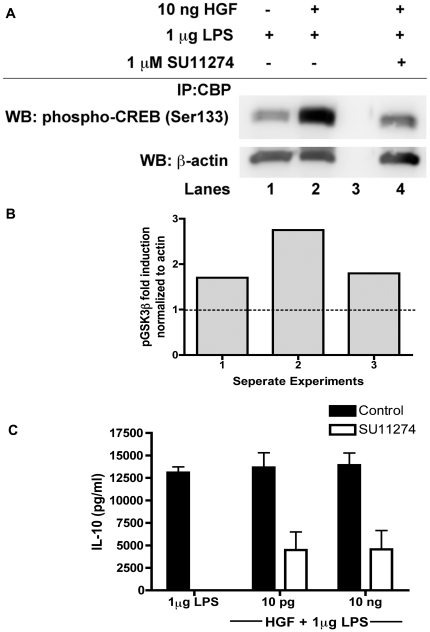
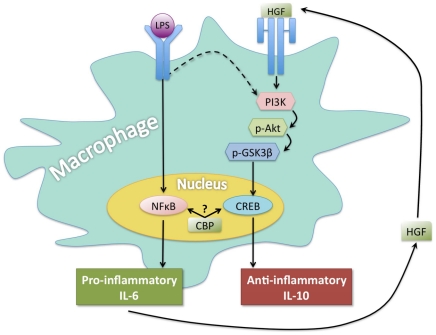
The generation of the pro-inflammatory cytokines IL-6, TNF-α, and IL-1β fuel the acute phase response (APR). To maintain body homeostasis, the increase of inflammatory proteins is resolved by acute phase proteins via presently unknown mechanisms. Hepatocyte growth factor (HGF) is transcribed in response to IL-6. Since IL-6 production promotes the generation of HGF and induces the APR, we posited that accumulating HGF might be a likely candidate for quelling excess inflammation under non-pathological conditions. We sought to assess the role of HGF and how it influences the regulation of inflammation utilizing a well-defined model of inflammatory activation, lipopolysaccharide (LPS)-stimulation of bone marrow derived macrophages (BMM). BMM were isolated from C57BL6 mice and were stimulated with LPS in the presence or absence of HGF. When HGF was present, there was a decrease in production of the pro-inflammatory cytokine IL-6, along with an increase in the anti-inflammatory cytokine IL-10. Altered cytokine production correlated with an increase in phosphorylated GSK3β, increased retention of the phosphorylated NFκB p65 subunit in the cytoplasm, and an enhanced interaction between CBP and phospho-CREB. These changes were a direct result of signaling through the HGF receptor, MET, as effects were reversed in the presence of a selective inhibitor of MET (SU11274) or when using BMM from macrophage-specific conditional MET knockout mice. Combined, these data provide compelling evidence that under normal circumstances, HGF acts to suppress the inflammatory response.
Overview
The claims and statistics of this paper haven’t been checked yet.
Run the check — free, no account needed. It reads the open-access text and checks the sources it cites.
Integrity signals
Registry
Cites
Statistics
Figures

Verification
Claims the paper makes
The claims and statistics of this paper haven’t been checked yet.
Run the check — free, no account needed. It reads the open-access text and checks the sources it cites.
Claims other papers make about this one
Each is checked against this paper’s own text: does it say what the citing paper says it does?
The source backs part of the claim, not all of it — or backs it for a different population, condition or comparison.
In the citing paper
“in cultured macrophages HGF suppresses production of IL-6”
From Synthesis of IL-6 by Hepatocytes Is a Normal Response to Common Hepatic Stimuli (2014) · cites this paper as [10]
Experimental — accuracy not yet measuredThe cited source says what the claim attributes to it.
In the citing paper
“As we have previously shown HGF suppresses LPS-induced production of IL-6 in cultured macrophages via the MET receptor [10]”
From Synthesis of IL-6 by Hepatocytes Is a Normal Response to Common Hepatic Stimuli (2014) · cites this paper as [10]
The cited source says what the claim attributes to it.
In the citing paper
“hepatocellular IL-6 induction in response to HGF is exactly the opposite of what we recently observed with regard to HGF and IL-6 in cultured macrophages [10]”
From Synthesis of IL-6 by Hepatocytes Is a Normal Response to Common Hepatic Stimuli (2014) · cites this paper as [10]
The cited source says what the claim attributes to it.
In the citing paper
“As we have previously shown that HGF can suppress IL-6 production in LPS-stimulated macrophages [10]”
From Synthesis of IL-6 by Hepatocytes Is a Normal Response to Common Hepatic Stimuli (2014) · cites this paper as [10]
The cited source says what the claim attributes to it.
In the citing paper
“In a recent publication we demonstrated that unlike what we now see with hepatocytes, HGF instead suppresses IL-6 production in macrophages via signaling through the MET receptor [10].”
From Synthesis of IL-6 by Hepatocytes Is a Normal Response to Common Hepatic Stimuli (2014) · cites this paper as [10]
Self-check
Percentages, sums and reported differences re-computed from the paper’s own numbers.
The self-check needs the paper’s full text.
Citations
Cites
Janeway, C. A., & Medzhitov, R. (2002) · Annual Review of Immunology · doi:10.1146/annurev.immunol.20.083001.084359 · Cited by 8,394
Acute-Phase Proteins and Other Systemic Responses to Inflammation
Gabay, C., & Kushner, I. (1999) · New England Journal of Medicine · doi:10.1056/nejm199902113400607 · Cited by 6,734
Nuclear Factor-κB — A Pivotal Transcription Factor in Chronic Inflammatory Diseases
Barnes, P. J., & Karin, M. (1997) · New England Journal of Medicine · doi:10.1056/nejm199704103361506 · Cited by 4,622
The regulation of IL-10 production by immune cells
Saraiva, M., & O’Garra, A. (2010) · Nature reviews. Immunology · doi:10.1038/nri2711 · Cited by 3,293
Medzhitov, R. M., & Janeway, C. A. (2000) · New England Journal of Medicine · doi:10.1056/nejm200008033430506 · Cited by 1,827
Xing, Z., Gauldie, J., Cox, G., Baumann, H., Jordana, M., Lei, X.-F., & Achong, M. K. (1998) · Journal of Clinical Investigation · doi:10.1172/jci1368 · Cited by 1,578
The glamour and gloom of glycogen synthase kinase-3
Jope, R. S., & Johnson, G. V. W. (2004) · Trends in Biochemical Sciences · doi:10.1016/j.tibs.2003.12.004 · Cited by 1,535
Interleukin-6 and chronic inflammation
Gabay, C. (2006) · Arthritis Research & Therapy · doi:10.1186/ar1917 · Cited by 1,468
Zhong, H., Voll, R. E., & Ghosh, S. (1998) · Molecular Cell · doi:10.1016/s1097-2765(00)80066-0 · Cited by 1,210
Martin, M., Rehani, K., Jope, R. S., & Michalek, S. M. (2005) · Nature Immunology · doi:10.1038/ni1221 · Cited by 1,099
Glycogen synthase kinase-3 (GSK3): Inflammation, diseases, and therapeutics
Jope, R. S., Yuskaitis, C. J., & Beurel, E. (2007) · Neurochemical Research · doi:10.1007/s11064-006-9128-5 · Cited by 774
Huh, C.-G., Factor, V. M., Sánchez, A., Uchida, K., Conner, E. A., & Thorgeirsson, S. S. (2004) · Proceedings of the National Academy of Sciences · doi:10.1073/pnas.0306068101 · Cited by 750
The many faces of hepatocyte growth factor: from hepatopoiesis to hematopoiesis.
Zarnegar, R., & Michalopoulos, G. K. (1995) · The Journal of Cell Biology · doi:10.1083/jcb.129.5.1177 · Cited by 569
IFN-γ Suppresses IL-10 Production and Synergizes with TLR2 by Regulating GSK3 and CREB/AP-1 Proteins
Hu, X., Paik, P. K., Chen, J., Yarilina, A., Kockeritz, L. K., Lu, T. T., Woodgett, J. R., & Ivashkiv, L. B. (2006) · Immunity · doi:10.1016/j.immuni.2006.02.014 · Cited by 414
Innate and adaptive immune responses regulated by glycogen synthase kinase-3 (GSK3)
Beurel, E., Michalek, S. M., & Jope, R. S. (2009) · Trends in Immunology · doi:10.1016/j.it.2009.09.007 · Cited by 378
Nikoulina, S. E., Ciaraldi, T. P., Mudaliar, S., Mohideen, P., Carter, L., & Henry, R. R. (2000) · Diabetes · doi:10.2337/diabetes.49.2.263 · Cited by 357 · cited 1×
“Traditionally, GSK3b is known for regulating glycogen synthase and the storage of glycogen into peripheral sites[34,35], but recent evidence suggests this kinase may also function as a key player in modulating inflammation[7,17].”
BackgroundSander, L. E., Sackett, S. D., Dierssen, U., Beraza, N., LINKE, R. P., Müller, M. M., Blander, J. M., Tacke, F., & Trautwein, C. (2010) · The Journal of Experimental Medicine · doi:10.1084/jem.20091474 · Cited by 346
Increased glycogen synthase kinase-3 activity in diabetes- and obesity-prone C57BL/6J mice.
Eldar-Finkelman, H., Schreyer, S. A., Shinohara, M. M., LeBoeuf, R. C., & Krebs, E. G. (1999) · Diabetes · doi:10.2337/diabetes.48.8.1662 · Cited by 252
BindingDB (2025) · PubMed · doi:10.7270/q2dv1qm3 · Cited by 235
Tse, H. M., Milton, M. J., & Piganelli, J. D. (2003) · Free Radical Biology and Medicine · doi:10.1016/j.freeradbiomed.2003.10.029 · Cited by 199
Self-citationBerthou, S., Aebersold, D. M., Schmidt, L. S., Stroka, D., Heigl, C., Streit, B., Stalder, D., Gruber, G., Liang, C., Howlett, A. R., et al. (2004) · Oncogene · doi:10.1038/sj.onc.1207691 · Cited by 177
Mars, W. M., Liu, M.-L., Kitson, R. P., Goldfarb, R. H., Gabauer, M. K., & Michalopoulos, G. K. (1995) · Hepatology · doi:10.1002/hep.1840210631 · Cited by 168
Self-citationGlycogen Synthase Kinase-3β Regulates NF-κB1/p105 Stability
Demarchi, F., Bertoli, C., Sandy, P., & Schneider, C. (2003) · Journal of Biological Chemistry · doi:10.1074/jbc.m305676200 · Cited by 163
Structural and functional characterization of the mouse hepatocyte growth factor gene promoter.
Liu, Y., Michalopoulos, G. K., & Zarnegar, R. (1994) · Journal of Biological Chemistry · doi:10.1016/s0021-9258(17)41756-x · Cited by 162
Giannopoulou, M., Dai, C., Tan, X., Wen, X., Michalopoulos, G. K., & Liu, Y. (2008) · The American Journal of Pathology · doi:10.2353/ajpath.2008.070583 · Cited by 126
Li, W., Liang, X., Leu, J. I., Kovalovich, K., Ciliberto, G., & Taub, R. (2001) · Hepatology · doi:10.1053/jhep.2001.24431 · Cited by 114
Gong, R., Rifai, A., Tolbert, E. M., Biswas, P., Centracchio, J. N., & Dworkin, L. D. (2004) · Journal of the American Society of Nephrology · doi:10.1097/01.asn.0000141962.44300.3a · Cited by 112
Anti-Inflammatory Effect of Hepatocyte Growth Factor in Chronic Kidney Disease
Gong, R., Rifai, A., & Dworkin, L. D. (2006) · Journal of the American Society of Nephrology · doi:10.1681/asn.2006020185 · Cited by 98
Gong, R., Rifai, A., Ge, Y., Chen, S., & Dworkin, L. D. (2008) · Journal of Biological Chemistry · doi:10.1074/jbc.m710396200 · Cited by 96
Tjin, E. P. M., Groen, R. W. J., Vogelzang, I., Derksen, P. W. B., Klok, M. D., Meijer, H. P., van Eeden, S., Pals, S. T., & Spaargaren, M. (2005) · Blood · doi:10.1182/blood-2005-05-1929 · Cited by 95
GSK3: an in-Toll-erant protein kinase?
Woodgett, J. R., & Ohashi, P. S. (2005) · Nature Immunology · doi:10.1038/ni0805-751 · Cited by 94
Götschel, F., Kern, C., Lang, S., Sparna, T., Markmann, C., Schwager, J., McNelly, S., von Weizsäcker, F., Laufer, S., Hecht, A., et al. (2008) · Experimental Cell Research · doi:10.1016/j.yexcr.2007.12.015 · Cited by 77
Vines, A., Sientay, C., Goldberg, I. J., Saxena, U., & Pillarisetti, S. (2006) · Journal of Biological Chemistry · doi:10.1074/jbc.m602446200 · Cited by 51
Homsi, E., Janino, P., Amano, M. T., & Câmara, N. O. S. (2008) · American Journal of Nephrology · doi:10.1159/000159275 · Cited by 44
Nakamura (2009) · International Journal of Molecular Medicine · doi:10.3892/ijmm_00000219 · Cited by 42
Multi-target anti-inflammatory action of hepatocyte growth factor.
Gong, R. (2008) · PubMed · Cited by 38
To, Y., Dohi, M., Matsumoto, K., Tanaka, R., Satō, A., Nakagome, K., Nakamura, T., & Yamamoto, K. (2002) · American Journal of Respiratory Cell and Molecular Biology · doi:10.1165/ajrcmb.27.2.4804 · Cited by 38
Anti-Allergic Inflammatory Effects of Hepatocyte Growth Factor
Ito, W., Takeda, M., Tanabe, M., Kihara, J., Kato, H., Chiba, T., Yamaguchi, K., Ueki, S., Kanehiro, A., Kayaba, H., et al. (2008) · International Archives of Allergy and Immunology · doi:10.1159/000126067 · Cited by 14
Cited by
Sorted by citations
Platelet-rich plasma for managing pain and inflammation in osteoarthritis
Andı́a, I., & Maffulli, N. (2013) · Nature Reviews Rheumatology · doi:10.1038/nrrheum.2013.141 · Cited by 476
Known and novel roles of the MET oncogene in cancer: a coherent approach to targeted therapy
Comoglio, P. M., Trusolino, L., & Boccaccio, C. (2018) · Nature reviews. Cancer · doi:10.1038/s41568-018-0002-y · Cited by 385
Dupuis-Maguiraga, L., Noret, M., Brun, S., Grand, R. L., Gras, G. S., & Roques, P. (2012) · PLoS neglected tropical diseases · doi:10.1371/journal.pntd.0001446 · Cited by 317
Good, M. L., Sodhi, C. P., Egan, C. E., Afrazi, A., Jia, H., Yamaguchi, Y., Lü, P., Branca, M. F., Ma, C., Prindle, T., et al. (2015) · Mucosal Immunology · doi:10.1038/mi.2015.30 · Cited by 231
What turns CREB on? And off? And why does it matter?
Steven, A., Friedrich, M., Jank, P., Heimer, N., Budczies, J., Denkert, C., & Seliger, B. (2020) · Cellular and Molecular Life Sciences · doi:10.1007/s00018-020-03525-8 · Cited by 220
Metadata
- Authors
- Coudriet, G. M., He, J., Trucco, M., Mars, W. M., & Piganelli, J. D.
- Affiliations
- University of Pittsburgh (US)
- Corresponding author
- Piganelli, Jon D.
- Venue
- PLoS ONE
- Publisher
- Public Library of Science (PLoS)
- Published
- 2010-11-02
- Volume
- 5
- Issue
- 11
- Pages
- e15384
- ISSN
- 1932-6203 (ISSN-L)
- PMC
- PMC2970559
- OpenAlex
- W2164624420
- Cited by
- 155
- References
- 39
- Citations by year
- 2026: 2 · 2025: 6 · 2024: 17 · 2023: 6 · 2022: 13 · 2021: 14 · 2020: 12 · 2019: 9 · 2018: 10 · 2017: 8 · 2016: 17 · 2015: 6 · 2014: 11 · 2013: 9 · 2012: 10
- FWCI
- 5.04
- Type
- journal article
- Language
- en
- Open access
- gold
- doi.org
- Locations
- PLoS ONE (publishedVersion, cc-by)
- PubMed Central (publishedVersion, cc-by)
- PubMed (publishedVersion)
- D-Scholarship@Pitt (University of Pittsburgh) (acceptedVersion)
- DOAJ (DOAJ: Directory of Open Access Journals) (submittedVersion)
- Funders
- American Diabetes Association (CDA 7.07)
- American Heart Association
- University of Pittsburgh
- Medical Center, University of Pittsburgh
- Children's Hospital of Pittsburgh
- Topics
- Health Sciences › Medicine › Hepatology › Liver physiology and pathology
- Life Sciences › Immunology and Microbiology › Immunology › Cytokine Signaling Pathways and Interactions
- Life Sciences › Biochemistry, Genetics and Molecular Biology › Cancer Research › NF-κB Signaling Pathways
- Keywords
- hepatocyte growth factor, interleukin-6, bone marrow-derived macrophages, lipopolysaccharide stimulation, acute phase response, inflammation resolution, GSK3β, NF-κB p65, CREB, CBP, IL-10, anti-inflammatory cytokines
- MeSH terms
- Glycogen Synthase Kinase 3 beta, Animals, Bone Marrow Cells, Cells, Cultured, Dose-Response Relationship, Drug, Female, Indoles, Inflammation, Lipopolysaccharides, Macrophages, Male, Membrane Proteins, Mice, Inbred C57BL, Phosphoproteins, Phosphorylation, Piperazines, Protein Binding, Sulfonamides, Blotting, Western, Interleukin-6, Hepatocyte Growth Factor, Cyclic AMP Response Element-Binding Protein, Mice, Knockout, Proto-Oncogene Proteins c-met, Glycogen Synthase Kinase 3, Immunoprecipitation, Mice, Transcription Factor RelA, Mice, 129 Strain
About these checks
Registry, retraction, Cites and statistics results are computed, not judged, with one exception: a printed reference that no index lists is read once by a model before it counts as a citation error. Claims are extracted by a model and kept only when their quote appears verbatim in the text; each cited source is then checked, with a model’s help, for whether it says what the claim relies on. Those verdicts can be wrong — read the claim’s quote and the cited source before relying on one.
Statistics and arithmetic are recomputed, not judged.
Confidence bands are shown only for fields calibrated on our annotated test set. None is calibrated yet, so no band is shown.
What counts as a claim ›How we measure confidence ›How we check this ›
Are you an author, or do you see a problem with this page? Request a review
