

SLC11A1 (NRAMP1) Polymorphisms and Tuberculosis Susceptibility: Updated Systematic Review and Meta-Analysis
Open accessThe DOI matches its Crossref record; 46 of the 47 references it cites were found in a registry or an index.
Abstract
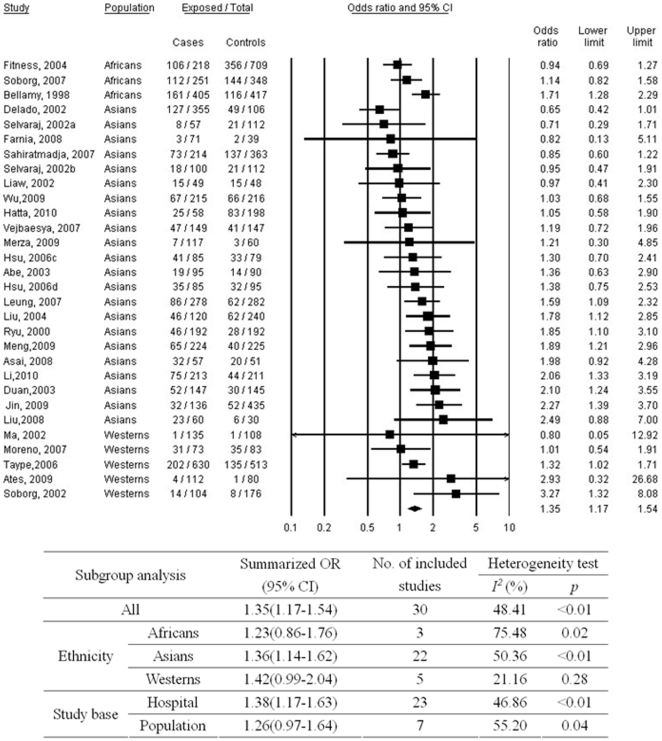
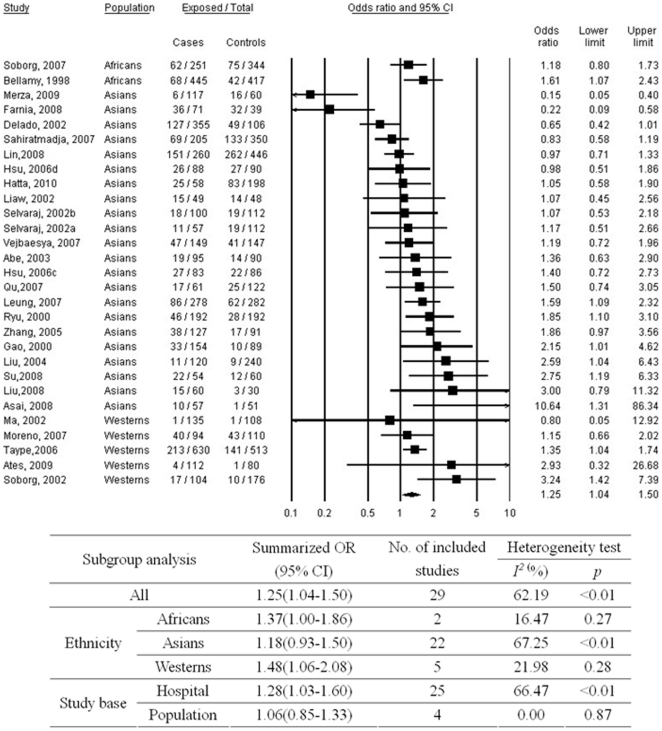
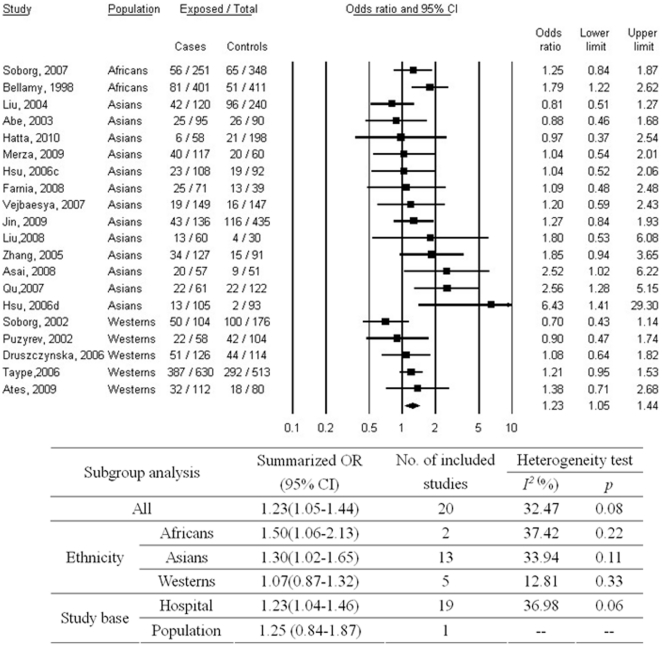
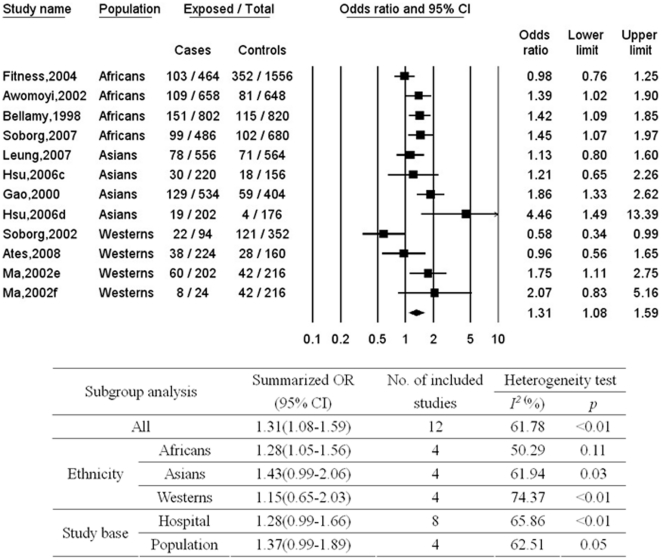
BACKGROUND: Natural resistance associated macrophage protein 1 (NRAMP1), encoded by the SLC11A1 gene, has been described to regulate macrophage activation and be associated with infectious and autoimmune diseases. The relation between SLC11A1 polymorphisms and tuberculosis susceptibility has been studied in different populations. METHODS: We systematically reviewed published studies on SLC11A1 polymorphisms and tuberculosis susceptibility until September 15, 2010 and quantitatively summarized associations of the most widely studied polymorphisms using meta-analysis. RESULTS: In total, 36 eligible articles were included in this review. In Meta-analysis, significant associations were observed between tuberculosis risk and widely studied SLC11A1 polymorphisms with summarized odds ratio of 1.35 (95%CI, 1.17-1.54), 1.25 (95% CI, 1.04-1.50), 1.23 (95% CI, 1.04-1.44), 1.31 (95%CI, 1.08-1.59) for 3' UTR, D543N, INT4, and 5' (GT)n, respectively. Heterogeneity between studies was not pronounced, and the associations did not remarkably vary in the stratified analysis with respect to study population and study base. CONCLUSIONS: The association between SLC11A1 polymorphisms and tuberculosis susceptibility observed in our analyses supports the hypothesis that NRAMP1 might play an important role in the host defense to the development of tuberculosis.
Overview
The claims and statistics of this paper haven’t been checked yet.
Free: it reads the open-access text and checks the first 5 claims that cite a source we can check. Create a free account to check every claim.
Integrity signals
Registry
Cites
Statistics
Figures
Verification
Claims the paper makes
The claims and statistics of this paper haven’t been checked yet.
Free: it reads the open-access text and checks the first 5 claims that cite a source we can check. Create a free account to check every claim.
Claims other papers make about this one
Each is checked against this paper’s own text: does it say what the citing paper says it does?
The source backs part of the claim, not all of it — or backs it for a different population, condition or comparison.
In the citing paper
“NRAMP1 polymorphisms can modulate the sensitivity of humans and mice to intracellular bacterial infections. 111”
From The battle for iron in enteric infections (2020) · cites this paper as [111]
Experimental — accuracy not yet measuredIn the citing paper
“NRAMP1 variants are associated with an increased risk of tuberculosis in humans75, supporting an important contribution of this mechanism to resistance against intracellular infections.”
From Iron homeostasis in host defence and inflammation (2015) · cites this paper as [75]
Self-check
Percentages, sums and reported differences re-computed from the paper’s own numbers.
The self-check needs the paper’s full text.
Citations
Cites
Variations in the NRAMP1 Gene and Susceptibility to Tuberculosis in West Africans
Bellamy, R., Ruwende, C., Corrah, T., McAdam, K. P. W. J., Whittle, H. C., & Hill, A. V. S. (1998) · New England Journal of Medicine · doi:10.1056/nejm199803053381002 · Cited by 735 · cited 1×
“In 1998, for the first time, relation between SLC11A1 polymorphisms and TB susceptibility was reported in a population from West Africa [7].”
BackgroundThe Population Dynamics and Control of Tuberculosis
Dye, C., & Williams, B. G. (2010) · Science · doi:10.1126/science.1185449 · Cited by 604 · cited 1×
“As estimated, that one-third of the world’s population is infected, but that only a minority of those infected ever develop TB [4].”
BackgroundEpidemiological benefits of more-effective tuberculosis vaccines, drugs, and diagnostics
Abu-Raddad, L. J., Sabatelli, L., Achterberg, J. T., Sugimoto, J. D., Longini, I. M., Dye, C., & Halloran, M. E. (2009) · Proceedings of the National Academy of Sciences · doi:10.1073/pnas.0901720106 · Cited by 348 · cited 1×
“Early diagnosis, drug resistance, vaccine and HIV co-infection are major factors influencing efficiency of TB prevention and control [44].”
BackgroundEthnic‐Specific Genetic Associations with Pulmonary Tuberculosis
Delgado, J. C., Baena, A., Thim, S., & Goldfeld, A. E. (2002) · The Journal of Infectious Diseases · doi:10.1086/344891 · Cited by 261 · cited 1×
“05) in controls were observed for three studies for any of their studied polymorphisms [12,38,42].”
BackgroundSLC11A1 (formerly NRAMP1) and disease resistance. Microreview
Blackwell, J. M., Goswami, T., Evans, C. A. W., Sibthorpe, D., Papo, N., White, J. K., Searle, S., Miller, E. N., Peacock, C. S., Mohammed, H., et al. (2001) · Cellular Microbiology · doi:10.1046/j.1462-5822.2001.00150.x · Cited by 242 · cited 1×
“Therefore, NRAMP1 has also been suggested to play a role in determining host susceptibility to other intracellular pathogens and autoimmune diseases [47].”
BackgroundFITNESS, J., FLOYD, S., WARNDORFF, D. K., SICHALI, L., MWAUNGULU, L., CRAMPIN, A. C., FINE, P. E. M., & HILL, A. V. S. (2004) · The American Journal of Tropical Medicine and Hygiene · doi:10.4269/ajtmh.2004.71.330 · Cited by 229
Genetic susceptibility to infectious diseases: big is beautiful, but will bigger be even better?
Burgner, D., Jamieson, S. E., & Blackwell, J. M. (2006) · The Lancet Infectious Diseases · doi:10.1016/s1473-3099(06)70601-6 · Cited by 226 · cited 1×
“Host genetic susceptibility to infectious disease has been widely studied in recent years, which is helpful for high-risk population identification and therefore promotes diseases prevention and early diagnosis [1,2].”
BackgroundGao, L., Tao, Y., Zhang, L., & Jin, Q. (2010) · PubMed · Cited by 161
Self-citationThe Nramp1 Protein and Its Role in Resistance to Infection and Macrophage Function
Canonne‐Hergaux, F., Gruenheid, S., Govoni, G., & Gros, P. (1999) · Proceedings of the Association of American Physicians · doi:10.1046/j.1525-1381.1999.99236.x · Cited by 159 · cited 2×
“Natural resistance associated macrophage protein 1 (NRAMP1), encoded by the SLC11A1 gene, has multiple effects on macrophage activation and has been reported to play an important role in host innate immune response against infections [3].”
BackgroundInterleukin‐10, Polymorphism in SLC11A1(formerly NRAMP1), and Susceptibility to Tuberculosis
Awomoyi, A. A., Marchant, A., Howson, J. M. M., McAdam, K. P. W. J., Blackwell, J. M., & Newport, M. J. (2002) · The Journal of Infectious Diseases · doi:10.1086/345920 · Cited by 153 · cited 2×
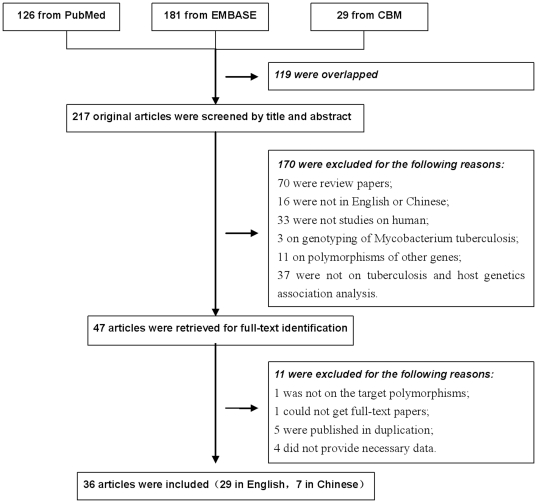
“Finally, 38 studies from 36 articles, 29 in English [7,9–36]and 7 in Chinese [37–43], were included in this review and meta-analysis.”
Background
Research works printed but not linked: 4
- Selvaraj; P 2002 NRAMP1 gene polymorphism in pulmonary and spinal tuberculosis. Curr Sci 82 4
- Lin R Bo JP Cai WW Li X Lin F 2008 Study on relationship between DNA polymorphisms of natural resistance associated macrophage proteinl gene and susceptibility to tuberculosis in Hainan Li ethnic group. J Clin Med in Practic 12 61 64
- Liu ZB Xiao HP Sha W Zheng RJ Liu YD 2008 A case-control study on distribution of SLCllA1 gene polymorphisms between new and recrudescent cases of pulmonary tuberculosis. J Tongji Uni (Med Sci) 29 19 23
- Wu JD Li CZ Meng XJ Liu JM Wu F 2009 A study on the association of 3 UTR polymorphisms of NRAM P1 gene with susceptibility to tuberculosis in Hans. J Nongkan Med 31 16 19
Cited by
Host–microbe interactions have shaped the genetic architecture of inflammatory bowel disease
The International IBD Genetics Consortium (IIBDGC), Jostins, L., Ripke, S., Weersma, R. K., Duerr, R. H., McGovern, D. P., Hui, K. Y., Lee, J. C., Philip Schumm, L., Sharma, Y., et al. (2012) · Nature · doi:10.1038/nature11582 · Cited by 4,722
“Additional funds were provided by funding to JHC (DK062429-S1 and Crohn’s & Colitis Foundation of America, Senior Investigator Award (5-2229)), and RHD (CA141743).”
Iron homeostasis in host defence and inflammation
Ganz, T., & Nemeth, E. (2015) · Nature Reviews Immunology · doi:10.1038/nri3863 · Cited by 843
Innate Immune Gene Polymorphisms in Tuberculosis
Azad, A. K., Sadee, W., & Schlesinger, L. S. (2012) · Infection and Immunity · doi:10.1128/iai.00443-12 · Cited by 312
“Further results of a recent meta-analysis in China support SLC11A1’s role in host defense against TB (122).”
ResultMa, F., Yang, Y., Li, X., Zhou, F., Gao, C., Li, M., & Gao, L. (2013) · PLoS ONE · doi:10.1371/journal.pone.0054685 · Cited by 309
“05 was considered indicative of statistically significant publication bias) [40].”
BackgroundSelf-citationMycobacteria, metals, and the macrophage
Neyrolles, O., Wolschendorf, F., Mitra, A., & Niederweis, M. (2015) · Immunological Reviews · doi:10.1111/imr.12265 · Cited by 216
Host-Directed Therapeutics for Tuberculosis: Can We Harness the Host?
Hawn, T. R., Matheson, A. I., Maley, S. N., & Vandal, O. H. (2013) · Microbiology and Molecular Biology Reviews · doi:10.1128/mmbr.00032-13 · Cited by 175
“Natural polymorphisms in Nramp1 in humans are associated with variable outcomes with respect to TB (112).”
BackgroundThe Concise Guide to PHARMACOLOGY 2013/14: Transporters
Alexander, S. P. H., Benson, H. E., Faccenda, E., Pawson, A. J., Sharman, J. L., Spedding, M., Peters, J. A., Harmar, A. J., & Collaborators, C. (2013) · British Journal of Pharmacology · doi:10.1111/bph.12450 · Cited by 126
Manganese homeostasis and utilization in pathogenic bacteria
Juttukonda, L. J., & Skaar, E. P. (2015) · Molecular Microbiology · doi:10.1111/mmi.13034 · Cited by 121
“A detailed discussion of NRAMP1 structure and function can be found in a previous review (Cellier et al., 2007).”
BackgroundInfluentialMolecular Mechanism of Nramp-Family Transition Metal Transport
Bozzi, A. T., & Gaudet, R. (2021) · Journal of Molecular Biology · doi:10.1016/j.jmb.2021.166991 · Cited by 113
A genome wide association study of pulmonary tuberculosis susceptibility in Indonesians
Png, E., Alisjahbana, B., Sahiratmadja, E., Marzuki, S., Nelwan, R. H. H., Михайловна, Б. Я., Nikolayevskyy, V., Drobniewski, F. A., Nejentsev, S., Adnan, I. A., et al. (2012) · BMC Medical Genetics · doi:10.1186/1471-2350-13-5 · Cited by 128
“Genetic variants of this gene have been associated with susceptibility to TB and leprosy [37,38].”
BackgroundGenetic influences on the human oral microbiome
Demmitt, B. A., Corley, R. P., Huibregtse, B. M., Keller, M. C., Hewitt, J. K., McQueen, M. B., Knight, R., McDermott, I., & Krauter, K. S. (2017) · BMC Genomics · doi:10.1186/s12864-017-4008-8 · Cited by 97
“Examples include MHC genes [9], SLC11A1 [10], the MEFV gene [11], FUT2 gene [12], and loci linked to susceptibility to infectious disease [13].”
BackgroundCardoso, C. C., Pereira, A. C., de Sales Marques, C., & Moraes, M. O. (2011) · Future Microbiology · doi:10.2217/fmb.11.39 · Cited by 98
“Nevertheless, a metaanalysis including several SLC11A1 mark ers resulted in positive evidence for an associa tion with TB [59].”
Background‘Ride on the ferrous wheel’ – The cycle of iron in macrophages in health and disease
Nairz, M., Schroll, A., Demetz, E., Tancevski, I., Theurl, I., & Weiss, G. (2015) · Immunobiology · doi:10.1016/j.imbio.2014.09.010 · Cited by 89
McDermid, J. M., Hennig, B. J., van der Sande, M., Hill, A. V., Whittle, H. C., Jaye, A., & Prentice, A. M. (2013) · BMC Infectious Diseases · doi:10.1186/1471-2334-13-48 · Cited by 75
“This research demonstrates that iron redistribution at the time of HIV diagnosis is associated with a significantly greater probability of developing TB, and SLC11A1 genotypes may influence TB susceptibility in individuals with HIV co-infection like has been demonstrated among HIV-negative individuals [10].”
BackgroundResultQanbari, S., Strom, T. M., Haberer, G., Weigend, S., Gheyas, A., Turner, F. S., Burt, D. W., Preisinger, R., Gianola, D., & Simianer, H. (2012) · PLoS ONE · doi:10.1371/journal.pone.0049525 · Cited by 85
“001 Natural resistance to Salmonella infection and macrophage function [30], [31]”
BackgroundVilchèze, C., Kim, J., & Jacobs, W. R. (2018) · Antimicrobial Agents and Chemotherapy · doi:10.1128/aac.02165-17 · Cited by 73
“Human Nramp1 polymorphisms, which have been associated with TB resistance (18), as well as polymorphisms found in the vitamin C transporters encoded by SLC23A1 and SLC23A2 (19), may indicate that the host genotype could impact the efficacy of vitamin C as an adjunct therapy.”
BackgroundHost genetics and tuberculosis : Theory of genetic polymorphism and tuberculosis.
Aravindan, P. P. (2019) · Lung India · doi:10.4103/0970-2113.257707 · Cited by 87
Polymorphisms in TICAM2 and IL1B are associated with TB
Hall, N. B., Igo, R. P., Malone, L., Truitt, B. J., Schnell, A., Tao, L., Okware, B., Nsereko, M., Chervenak, K. A., Lancioni, C., et al. (2014) · Genes and Immunity · doi:10.1038/gene.2014.77 · Cited by 63
“SLC11A1 has been associated with TB in meta-analyses (39-41), so the lack of statistically significant associations might be surprising.”
Zhang, G., Zhou, B., Wang, W., Zhang, M., Zhao, Y., Wang, Z., Yang, L., Zhai, J., Feng, C. G., Wang, J., et al. (2012) · The Journal of Infectious Diseases · doi:10.1093/infdis/jis266 · Cited by 59
The battle for iron in enteric infections
Sousa Gerós, A., Simmons, A., Drakesmith, H., Aulicino, A., & Frost, J. N. (2020) · Immunology · doi:10.1111/imm.13236 · Cited by 58
Archer, N., Nassif, N. T., & O’Brien, B. A. (2015) · Genes and Immunity · doi:10.1038/gene.2015.8 · Cited by 56
Peracino, B., Buracco, S., & Bozzaro, S. (2012) · Journal of Cell Science · doi:10.1242/jcs.116210 · Cited by 58
“Mutations in humans may genetically predispose an individual to diseases, including tuberculosis, leishmaniasis and autoimmune diseases (Courville et al., 2006; Li et al., 2011; Malik et al., 2005; Nevo and Nelson, 2006; Taylor and Kelly, 2010; Velez et al., 2009; Wick, 2011).”
BackgroundMilano, M., Moraes, M. O., Rodenbusch, R., de Carvalho, C. X., Delcroix, M., Mousquer, G. T., da Costa, L. L., Unis, G., Costa, E. R. D., & Rossetti, M. L. R. (2016) · PLoS ONE · doi:10.1371/journal.pone.0147814 · Cited by 50
Genetics of leprosy reactions: an overview
Fava, V. M., Orlova, M., Cobat, A., Alcaïs, A., Mira, M. T., & Schurr, E. (2012) · Memórias do Instituto Oswaldo Cruz · doi:10.1590/s0074-02762012000900020 · Cited by 49
“A meta-analysis of 36 studies confirmed the association of NRAMP1 polymorphism with tuberculosis susceptibility (Li et al. 2011).”
Background(2012) · Current Topics in Membranes · doi:10.1016/b978-0-12-394390-3.00010-0 · Cited by 47
The Role of Host Genetics (and Genomics) in Tuberculosis
Naranbhai, V. (2016) · Microbiology Spectrum · doi:10.1128/microbiolspec.tbtb2-0011-2016 · Cited by 45
A Sardinian Map for Multiple Sclerosis
Cossu, D., Masala, S., & Sechi, L. A. (2013) · Future Microbiology · doi:10.2217/fmb.12.135 · Cited by 50
Minchella, P. A., Armitage, A. E., Darboe, B., Jallow, M. W., Drakesmith, H., Jaye, A., Prentice, A. M., & McDermid, J. M. (2015) · The Journal of Nutrition · doi:10.3945/jn.114.203158 · Cited by 39
Host genetic studies in adult pulmonary tuberculosis
Meyer, C. G., & Thye, T. (2014) · Seminars in Immunology · doi:10.1016/j.smim.2014.09.005 · Cited by 48
Polymorphisms in HLA-DRB1 Gene and the Risk of Tuberculosis: A Meta-analysis of 31 Studies
Tong, X., Chen, L., Liu, S., Yan, Z., Peng, S., Zhang, Y., & Fan, H. S. (2015) · Lung · doi:10.1007/s00408-015-9692-z · Cited by 39
“Previous studies found that the vitamin D, NRAMP1, interferon-c, and interleukin-10 gene polymorphisms might be important risk factors during the phase when infected individuals develop active tuberculosis disease [45–48].”
ResultSelf-citationInherited disorders of transition metal metabolism: an update
Clayton, P. T. (2017) · Journal of Inherited Metabolic Disease · doi:10.1007/s10545-017-0030-x · Cited by 40
“In man, meta-analysis confirms an association between SLC11A1 polymorphisms and tuberculosis (Li et al. 2011), supporting the hypothesis that NRAMP1 is important in human defence against TB.”
Genetics of upper and lower airway diseases in the horse
Gerber, V., Tessier, C., & Marti, E. (2014) · Equine Veterinary Journal · doi:10.1111/evj.12289 · Cited by 37
Sabri, A., Grant, A. V., Cosker, K., Azbaoui, S. E., Abid, A., Rhorfi, I. A., Souhi, H., Janah, H., Alaoui-Tahiri, K., Gharbaoui, Y., et al. (2014) · The Journal of Infectious Diseases · doi:10.1093/infdis/jiu140 · Cited by 41
Competition for Manganese at the Host–Pathogen Interface
Kelliher, J. L., & Kehl-Fie, T. E. (2016) · Progress in Molecular Biology and Translational Science · doi:10.1016/bs.pmbts.2016.05.002 · Cited by 34
Yang, Y., Li, X., Cui, W., Guan, L., Shen, F., Xu, J., Zhou, F., Li, M., Gao, C., Jin, Q., et al. (2013) · BMC Infectious Diseases · doi:10.1186/1471-2334-13-511 · Cited by 37
“; licensee BioMed Central Lt Commons Attribution License (http://creativec reproduction in any medium, provided the or employed to investigate the relationships between TB and candidate genetic markers, and have been comprehensively reviewed previously [6-9].”
BackgroundSelf-citationPotential Role of Vitamins A, B, C, D and E in TB Treatment and Prevention: A Narrative Review
Patti, G., Pellegrino, C., Ricciardi, A., Novara, R., Cotugno, S., Papagni, R., Guido, G., Totaro, V., Iaco, G. D., Romanelli, F., et al. (2021) · Antibiotics · doi:10.3390/antibiotics10111354 · Cited by 45
“Human Nramp1 polymorphisms, which have been associated with TB resistance [62], as well as polymorphisms found in the VC transporters encoded by SLC23A1 and SLC23A2 [63], may indicate that the host genotype could impact the efficacy of VC as an adjunct therapy [64,65].”
BackgroundShen, C., Wu, X., Jiao, W., Sun, L., Feng, W., Xiao, J., Miao, Q., Liu, F., Yin, Q.-Q., Zhang, C., et al. (2013) · PLoS ONE · doi:10.1371/journal.pone.0067816 · Cited by 36
“tuberculosis-contained endosome with lysosome) [37], were proven to be associated with TB susceptibility.”
BackgroundHuman immune system: Exploring diversity across individuals and populations
Nguyen, K. H. H., Le, N. V., Nguyen, P., Nguyen, H. H. T., Hoang, D. M., & Huynh, C. D. (2025) · Heliyon · doi:10.1016/j.heliyon.2025.e41836 · Cited by 52
Lei, X., Zhu, H., Zha, L., & Wang, Y. (2012) · Infection Genetics and Evolution · doi:10.1016/j.meegid.2012.05.011 · Cited by 29
“Study reference rs1135791 rs9061 rs11556887 rs3948464 rs1346311 T C G A C T C T C T Li et al. (2011), Liang et al. (2011) 516/963 98/261 481/987 131/223 533/1141 59/73 NA NA NA NA Abhimanyu et al. (2011)a NAc NA 48/48 172/108 183/126 37/30 17/10 203/146 204/139 16/17 Abhimanyu et al. (2011)b 40/97…”
BackgroundAssociation of LMP/TAP Gene Polymorphisms with Tuberculosis Susceptibility in Li Population in China
Wang, D., Zhou, Y., Li-min, J., He, T., Lin, F., Lin, R., Lin, T., & Mo, Y. (2012) · PLoS ONE · doi:10.1371/journal.pone.0033051 · Cited by 29
Molecular epidemiology of M. tuberculosis in Ethiopia: A systematic review and meta-analysis
Mekonnen, D. S., Derbie, A., Yehun, A. C., Shumet, A., Biadglegne, F., Kassahun, Y., Bobosha, K., Mihret, A., Wassie, L., Munshea, A., et al. (2019) · Tuberculosis · doi:10.1016/j.tube.2019.101858 · Cited by 28
Genetic Susceptibility and Predictors of Paradoxical Reactions in Buruli Ulcer
Barogui, Y. T., Klis, S., Johnson, R. C., Phillips, R. O., van der Veer, E., van Diemen, C. C., van der Werf, T. S., & Stienstra, Y. (2016) · PLoS neglected tropical diseases · doi:10.1371/journal.pntd.0004594 · Cited by 27
Gene polymorphisms in patients with pulmonary tuberculosis from Mozambique
Mabunda, N. J., Alvarado-Arnez, L. E., Vubil, A. S., Mariamo, A., Pacheco, A. G., Jani, I. V., & Moraes, M. O. (2014) · Molecular Biology Reports · doi:10.1007/s11033-014-3741-1 · Cited by 26
“Metaanalysis aided to combine published data from different populations with distinct ethnic backgrounds enabling consensus estimates for genetic polymorphisms in association with TB for several candidate genes such as: IFNG, TNF, IL10, CCL2, DC-SIGN, NRAMP1, P2X7, VDR, and MBL [13–20].”
MethodWu, J., Lu, L., Zhang, L., Ding, Y., Wu, F., Zuo, W., & Zhang, W. (2015) · Disease Markers · doi:10.1155/2015/671272 · Cited by 30
Ben-Selma, W., Harizi, H., Letaief, M., & Boukadida, J. (2012) · International Journal of Infectious Diseases · doi:10.1016/j.ijid.2011.11.016 · Cited by 27
Association of TAP1 and TAP2 Gene Polymorphisms with Susceptibility to Pulmonary Tuberculosis.
Naderi, M., Hashemi, M. M., & Amininia, S. (2016) · PubMed · Cited by 24
Knops blood group polymorphism and susceptibility to Mycobacterium tuberculosis infection
Noumsi, G. T., Tounkara, A., Diallo, H., Billingsley, K. L., Moulds, J. J., & Moulds, J. M. (2011) · Transfusion · doi:10.1111/j.1537-2995.2011.03161.x · Cited by 24
Association of SLC11A1 (NRAMP1) polymorphisms with pulmonary Mycobacterium avium complex infection
Sapkota, B. R., Hijikata, M., Matsushita, I., Tanaka, G., Ieki, R., Kobayashi, N., Toyota, E., Nagai, H., Kurashima, A., Tokunaga, K., et al. (2012) · Human Immunology · doi:10.1016/j.humimm.2012.02.008 · Cited by 23
SLC11A1 genetic variation and low expression may cause immune response impairment in TB patients
Shahzad, F., Bashir, N., Ali, A., Nadeem, A., Ammar, A., Kashif, M., Javaid, K., Jahan, S., Tahir, R., Rizwan, M., et al. (2022) · Genes and Immunity · doi:10.1038/s41435-022-00165-9 · Cited by 26
“All study participants were genotyped for the two most frequent TB-associated SLC11A1 SNPs [rs3731865 (INT4) (469+ 14G/C) and rs17235409 (D543N) (Asp543Asn)] [7] using the PCRRFLP approach.”
BackgroundMethodChang, K., Deng, S., Lu, W., Wang, F., Jia, S., Li, F., Yu, L., & Chen, M. (2012) · PLoS ONE · doi:10.1371/journal.pone.0041519 · Cited by 23
Betsou, F., Parida, S. K., & Guillerm, M. (2011) · Tuberculosis · doi:10.1016/j.tube.2011.07.006 · Cited by 21
Ma, Y., Zhan, L., Yang, J., & Zhang, J. (2022) · Frontiers in Pharmacology · doi:10.3389/fphar.2022.984555 · Cited by 22
“SLC11A1 was initially reported to fight several types of pathogens, and some studies have shown that SLC11A1 plays a role in innate immunity, autoimmune diseases, and infection (Stewart et al., 2010; Li et al., 2011; Neves et al., 2011; Cunrath and Bumann, 2019).”
BackgroundYoung, B. N., Rendón, A., Rosas-Taraco, A. G., Baker, J., Healy, M. E., Gross, J., Long, J. C., Burgos, M. V., & Hunley, K. (2014) · PLoS ONE · doi:10.1371/journal.pone.0094303 · Cited by 22
“In contrast, a second meta-analysis in 2011 found no heterogeneity among African and European groups for TB disease risk [17].”
ResultBhattacharyya, C., Majumder, P. P., & Pandit, B. (2019) · Infection Genetics and Evolution · doi:10.1016/j.meegid.2019.03.006 · Cited by 19
The role of human host genetics in tuberculosis resistance
Kinnear, C. J., Hoal, E. G., Schurz, H., van Helden, P. D., & Möller, M. (2017) · Expert Review of Respiratory Medicine · doi:10.1080/17476348.2017.1354700 · Cited by 22
A Meta-Analysis of P2X7 Gene-762T/C Polymorphism and Pulmonary Tuberculosis Susceptibility
Yi, L., Cheng, D., Shi, H., Huo, X., Zhang, K., & Zhen, G. (2014) · PLoS ONE · doi:10.1371/journal.pone.0096359 · Cited by 19
Witas, H. W., Donoghue, H. D., Kubiak, D., Lewandowska, M., & Gładykowska-Rzeczycka, J. J. (2015) · European Journal of Clinical Microbiology & Infectious Diseases · doi:10.1007/s10096-015-2427-5 · Cited by 24
“tuberculosis and leprosy is based on the solute carrier family 11 SLC11A1, formerly known as natural resistance-associated macrophage protein 1 (NRMAP1) [92].”
BackgroundSLC11A1 polymorphisms and host susceptibility to cutaneous leishmaniasis in Pakistan
Sophie, M., Hameed, A., Muneer, A., Samdani, A. J., Saleem, S., & Azhar, A. (2017) · Parasites & Vectors · doi:10.1186/s13071-016-1934-2 · Cited by 18
“Restriction and subsequent resolution of intracellular parasites following phagocytosis by macrophages has made SLC11A1 a strong candidate for predisposition to different infectious diseases like tuberculosis and leprosy [16, 17].”
BackgroundZhou, H., Peng, Y., Huo, X., Li, B., Liu, H., Wang, J., & Zhang, G. (2025) · Journal of Inflammation Research · doi:10.2147/jir.s497418 · Cited by 19
Li, T., Wang, L., Guo, C., Zhang, H., Xu, P., Liu, S., Hu, X., & Gao, Q. (2022) · Infection Genetics and Evolution · doi:10.1016/j.meegid.2021.105202 · Cited by 19
Cell-Type Specific Determinants of NRAMP1 Expression in Professional Phagocytes
Cellier, M. F. (2013) · Biology · doi:10.3390/biology2010233 · Cited by 15
“M. tuberculosis (Mtb) is a successful pathogen, responsible for the worldwide human infection tuberculosis (TB), which is latent in more than 2 billion people.”
BackgroundInfluentialLe, K. T. T., Matzaraki, V., Netea, M. G., Wijmenga, C., Moser, J., & Kumar, V. (2019) · Frontiers in Immunology · doi:10.3389/fimmu.2019.01949 · Cited by 12
Mechanobiological Dynamics‐Inspired Mechanomodulatory Biomaterials
Yang, L., Jiang, P., Stein, J. B., Hou, Y., Zhou, C. W., Kang, H., & Lee, K. (2025) · Advanced Science · doi:10.1002/advs.202416992 · Cited by 18
Brochado, M. J. F., Gatti, M. F. C., Zago, M. A., & Roselino, A. M. F. (2016) · Memórias do Instituto Oswaldo Cruz · doi:10.1590/0074-02760150326 · Cited by 12
“A meta-analysis study has confirmed the association of Slc11a1/Nramp1 gene polymorphisms with susceptibility to tuberculosis (Li et al. 2011).”
BackgroundSalinas-Delgado, Y. D. L. Á., Galavíz-Hernández, C., García-Toral, R., Ávila-Rejón, C., Reyes‐López, M. Á., Martínez, A. R., Martínez‐Aguilar, G., & Sosa‐Macías, M. (2015) · Drug Metabolism and Personalized Therapy · doi:10.1515/dmpt-2015-0019 · Cited by 13
“conducted a metaanalysis involving 36 studies on the relationship between TB and four polymorphisms, one of which, D543N, showed a significant association with TB susceptibility [5].”
BackgroundChittoor, G., Arya, R., Farook, V. S., David, R. E., Puppala, S., Resendez, R. G., Rivera-Chavira, B. E., Leal‐Berumen, I., Zenteno‐Cuevas, R., López-Alvarenga, J. C., et al. (2013) · Tuberculosis · doi:10.1016/s1472-9792(13)70014-3 · Cited by 15
Gao, J., Tian, G., Han, X., & Zhu, Q. (2017) · Molecular Medicine Reports · doi:10.3892/mmr.2017.8256 · Cited by 14
“The multi‑pass membrane protein SLC11A1, also known as natural resistance-associated macrophage protein 1 (NRAMP1), serves important role in host innate immune response against infections (34).”
Association of SLC11A1 Polymorphisms With Tuberculosis Susceptibility in the Chinese Han Population
Hu, B., Wang, Y., Wang, Z., He, X., Wang, L., Yuan, D., He, Y., Jin, T., & He, S.-M. (2022) · Frontiers in Genetics · doi:10.3389/fgene.2022.899124 · Cited by 10
“In addition, the results of three meta-analysis studies showed that SLC11A1 polymorphisms ((D543N, 3′UTR TGTG ins/del, INT4, [GT]n), rs3731865, and rs17235416)) were significantly associated with TB risk (Li et al., 2011; Meilang et al., 2012; Archer et al., 2015).”
ResultRole of SLC11A1 gene in disease resistance
Thomas, N., & Joseph, S. (2012) · Biotechnology in Animal Husbandry · doi:10.2298/bah1201099t · Cited by 10
Human Genetic Variation Influences Enteric Fever Progression
Ma, P. Y., Tan, J. E., Hee, E. W., Yong, D. W. X., Heng, Y. S., Low, W. X., Wu, X. H., Cletus, C., Chellappan, D. K., Aung, K., et al. (2021) · Cells · doi:10.3390/cells10020345 · Cited by 10
“Variations in NRAMP1 gene at chromosome 2 is therefore expected to cause a broad range of susceptibility to infection [1,68,69].”
BackgroundKhokhar, M., Tomo, S., Gadwal, A., & Purohit, P. (2022) · International Journal of Yoga · doi:10.4103/ijoy.ijoy_146_21 · Cited by 10
“Natural resistance‐associated macrophage protein 1, encoded by the SLC11A1 gene, regulates macrophage activation and has been associated with infectious, autoimmune diseases and tuberculosis susceptibility.[53] Several of the aforementioned genes have been associated with various diseases in their suppressed state.”
BackgroundMeng, C., Chen, G., Wen, D., Dong, L., Cui, X., Jing, X., Cui, J., Gao, Y., Liu, Y., Bu, H., et al. (2023) · Tuberculosis · doi:10.1016/j.tube.2023.102414 · Cited by 10
Genomic Interactions Between Mycobacterium tuberculosis and Humans
Palittapongarnpim, P., Tantivitayakul, P., Aiewsakun, P., Mahasirimongkol, S., & Jaemsai, B. (2024) · Annual Review of Genomics and Human Genetics · doi:10.1146/annurev-genom-021623-101844 · Cited by 11
Kadkhodazadeh, M., Ebadian, A. R., Amid, R., Zarnegarnia, P., Mollaverdi, F., & Aghamohammadi, N. (2016) · PubMed · Cited by 8
Iron-regulatory genes are associated with Neuroimaging measures in HIV infection
for the CHARTER Study Group, Fennema‐Notestine, C., Thornton‐Wells, T. A., Hulgan, T., Letendre, S. L., Ellis, R. J., Franklin, D. R., Anderson, A. M. L., Heaton, R. K., Bloss, C. S., et al. (2019) · Brain Imaging and Behavior · doi:10.1007/s11682-019-00153-0 · Cited by 7
Han, J., Ning, P., Ge, A., Ma, X., Burton, J. A., Yang, C., Cui, X., Wu, C., Hao, J., & Li, D. (2021) · Human Immunology · doi:10.1016/j.humimm.2021.02.008 · Cited by 10
Identification of HLA-DQA1 as a Susceptibility Gene for Spinal Tuberculosis by Exome Sequencing
Shen, J., Shi, S., & Lai, Z. (2018) · Medical Science Monitor · doi:10.12659/msm.907864 · Cited by 8
Positive selection in the SLC11A1 gene in the family Equidae
Bayerová, Z., Jánová, E., Matiašovic, J., Orlando, L., & Hořín, P. (2016) · Immunogenetics · doi:10.1007/s00251-016-0905-2 · Cited by 7
Siddiqi, U. R., Yasutan, H. C., Nakajima, C., Saitoh, H., Ashino, Y., Usami, O., Shiratori, B., Usuzawa, M., Suzuki, Y., & Hattori, T. (2012) · The Tohoku Journal of Experimental Medicine · doi:10.1620/tjem.226.313 · Cited by 7
“…effect could be explained by the natural resistance associated macrophage protein 1 (NRAMP1) because it was reported as host genetic factor for development of both tuberculosis and NTM, however the involvement of NRAMP1 in OPN production was not studied (Li et al. 2011; Sapkota et al. 2012).”
BackgroundRoodgar, M., Ross, C. T., Tarara, R. P., Lowenstine, L., Dandekar, S., & Smith, D. G. (2015) · Infection Genetics and Evolution · doi:10.1016/j.meegid.2015.10.010 · Cited by 7
“NRAMP1 expression levels pre-infection show no reliable association with TB severity (Figure 2h); however, expression levels of NRAMP1 post-infection show a marginally reliable positive association with TB severity, especially in the months immediately prior to euthanization (04-01-2009 to euthanization).”
InfluentialLewandowska, M., Jędrychowska-Dańska, K., Płoszaj, T., Witas, P., Zamerska, A., Mańkowska-Pliszka, H., & Witas, H. W. (2018) · Infection Genetics and Evolution · doi:10.1016/j.meegid.2018.05.008 · Cited by 8
Araujo, Z., Camargo, M., Pérez, D. A. M., Wide, A., Pacheco, D., Arévalo, D. D., Celis-Giraldo, C. T., Salas, S., de Waard, J. H., & Patarroyo, M. A. (2023) · Human Immunology · doi:10.1016/j.humimm.2023.06.003 · Cited by 6
Manganese and fungal pathogens: Metabolism and potential association with virulence
Kinskovski, U. P., & Staats, C. C. (2022) · Fungal Biology Reviews · doi:10.1016/j.fbr.2022.06.003 · Cited by 5
Mycobacterium tuberculosis adaptation to host environment
Banerjee, A., Sengupta, S., Nandanwar, N., Pandey, M., Tripathi, D., Pandey, S., Kumar, A., & Peddireddy, V. (2022) · Elsevier eBooks · doi:10.1016/b978-0-323-91806-0.00005-9 · Cited by 4
Polymorphisms in the STAT4 gene and tuberculosis susceptibility in a Chinese Han population
Wu, S., Wang, M.-G., Wang, Y., Zhang, M., & He, J. (2019) · Microbial Pathogenesis · doi:10.1016/j.micpath.2019.01.024 · Cited by 5
Crisà, A., MATTEIS, G. D., Scatà, M. C., & Moioli, B. (2013) · Genetics and Molecular Research · doi:10.4238/2013.december.19.15 · Cited by 5
“The SLC11A1 gene has a critical role in the innate defense against intracellular infections, and different regions of the gene have been associated with the resistance or susceptibility to various disease, both in humans and in other animals (Liu et al., 2003; Reddacliff et al., 2005; Awomoyi, 2007; Paixão et al., 200…”
BackgroundPutera, I., Pakasi, T. A., Syahmar, I., Bramantyo, A. A., Karyadi, E., Melani, A., & Sahiratmadja, E. (2015) · The Journal of Infection in Developing Countries · doi:10.3855/jidc.5047 · Cited by 5
Collocating Novel Targets for Tuberculosis (TB) Drug Discovery
Gandhi, K., & Patel, M. M. (2020) · Current Drug Discovery Technologies · doi:10.2174/1570163817666200121143036 · Cited by 5
Lewandowska, M., Jędrychowska-Dańska, K., Zamerska, A., Płoszaj, T., & Witas, H. W. (2016) · Infection Genetics and Evolution · doi:10.1016/j.meegid.2016.11.011 · Cited by 5
Inflammatory Bowel Diseases: Pathogenesis
Ananthakrishnan, A. N., Xavier, R. J., & Podolsky, D. K. (2015) · Wiley eBooks · doi:10.1002/9781118512074.ch70 · Cited by 4
Larcombe, L., Mookherjee, N., & Lodge, A. M. (2015) · Mycobacterial Diseases · doi:10.4172/2161-1068.1000193 · Cited by 5
“Among host genetic factors, gene polymorphisms in the natural resistance-associated macrophage protein 1 (NRAMP1) (also called SLC11A1 (solute carrier family 11A member 1)) have been associated with tuberculosis in Africa, Japan, Korea, and in North American indigenous groups [7-15].”
BackgroundResultShafiek, H., Shabana, A. A., El-Seedy, A. S., & Khalil, Y. M. (2022) · Egyptian Journal of Medical Human Genetics · doi:10.1186/s43042-022-00304-x · Cited by 4
The CD14 −159C/T polymorphisms and the risks of tuberculosis: A meta-analysis
Guo, F., Xie, Q., An, R., Zeng, T., & Zhou, W. (2013) · Infection Genetics and Evolution · doi:10.1016/j.meegid.2013.06.001 · Cited by 2
Kadkhodazadeh, M., Ebadian, A. R., Tabari, Z. A., Amid, R., & Moscowchi, A. (2020) · Journal of Advanced Periodontology & Implant Dentistry · doi:10.34172/japid.2020.006 · Cited by 2
Current immunogenetic predisposition to tuberculosis in the Moroccan population
Qrafli, M., Najimi, M., Aouad, R. E., & Sadki, K. (2017) · International Journal of Immunogenetics · doi:10.1111/iji.12340 · Cited by 3
“…conducted by Li et al. (2011) confirmed the potential impact of 3′ UTR, D543N, INT4 and 5′ (GT)n polymorphisms on the susceptibility to TB, while Li et al. (2011) also observed significant and limited differences in the data when taking the stratification of the populations into consideration…”
BackgroundMethodResultInfluentialSouza, K. S., Félix, K. C. D. S., Carvas, N., Pereira, R. B., da Silva, M. R. F., Miranda, F. S. L., de Oliveira, M. B. M., dos Santos, G., Lima, F. L. O., Silva, R. R. D. S., et al. (2020) · Research Society and Development · doi:10.33448/rsd-v9i11.9708 · Cited by 2
Interplay between the host genome, autoimmune disease and infection
Martin, M., Sanchiz, Á., & Navasa, N. (2025) · Advances in genetics · doi:10.1016/bs.adgen.2025.02.006 · Cited by 1
Yuan, Z., Chen, R., Fan, R., He, Y., Sun, S., Ji, L., Qiu, C., Wu, Z., Li, D., Zeng, Q., et al. (2025) · International Immunopharmacology · doi:10.1016/j.intimp.2025.115428 · Cited by 2
Polymorphism in the NRAMP1 gene as a risk factor for pulmonary tuberculosis -A case control study
Paul, D., Saikia, L., & Parween, W. (2019) · Indian Journal of Microbiology Research · doi:10.18231/j.ijmr.2019.058 · Cited by 1
Bhowmik, S., Hajra, A., & Bandyopadhyay, D. (2025) · World Journal of Clinical Cases · doi:10.12998/wjcc.v13.i13.101438 · Cited by 1
Metadata
- Authors
- Li, X., Yang, Y., Zhou, F., Zhang, Y., Lu, H., Jin, Q., & Gao, L.
- Affiliations
- Chinese Academy of Medical Sciences & Peking Union Medical College (CN)
- Fudan University (CN)
- Corresponding author
- Jin, Qi
- Gao, Lei
- Venue
- PLoS ONE
- Publisher
- Public Library of Science (PLoS)
- Published
- 2011-01-25
- Volume
- 6
- Issue
- 1
- Pages
- e15831
- ISSN
- 1932-6203 (ISSN-L)
- PMC
- PMC3026788
- OpenAlex
- W1996491681
- Cited by
- 126
- References
- 47
- Citations by year
- 2026: 4 · 2025: 11 · 2024: 2 · 2023: 3 · 2022: 8 · 2021: 7 · 2020: 4 · 2019: 8 · 2018: 4 · 2017: 9 · 2016: 9 · 2015: 13 · 2014: 9 · 2013: 14 · 2012: 18
- FWCI
- 1.75
- Type
- journal article
- Language
- en
- Open access
- gold
- doi.org
- Locations
- PLoS ONE (publishedVersion, cc-by)
- PubMed Central (publishedVersion, cc-by)
- PubMed (publishedVersion)
- RePEc: Research Papers in Economics (submittedVersion)
- DOAJ (DOAJ: Directory of Open Access Journals) (submittedVersion, cc-by-sa)
- Figshare (submittedVersion, cc-by)
- Topics
- Health Sciences › Medicine › Infectious Diseases › Tuberculosis Research and Epidemiology
- Life Sciences › Biochemistry, Genetics and Molecular Biology › Genetics › Genetic Associations and Epidemiology
- Health Sciences › Medicine › Infectious Diseases › Infectious Diseases and Tuberculosis
- Keywords
- SLC11A1, NRAMP1, tuberculosis susceptibility, genetic polymorphism, host defense, macrophage activation, 3'UTR polymorphism, genetic association
- MeSH terms
- Natural Resistance-associated Macrophage Protein 1, Humans, Polymorphism, Genetic, Tuberculosis, Genetic Predisposition to Disease, Cation Transport Proteins
About these checks
Registry, retraction, Cites and statistics results are computed, not judged, with one exception: a printed reference that no index lists is read once by a model before it counts as a citation error. Claims are extracted by a model and kept only when their quote appears verbatim in the text; each cited source is then checked, with a model’s help, for whether it says what the claim relies on. Those verdicts can be wrong — read the claim’s quote and the cited source before relying on one.
Statistics and arithmetic are recomputed, not judged.
Confidence bands are shown only for fields calibrated on our annotated test set. None is calibrated yet, so no band is shown.
What counts as a claim ›How we measure confidence ›How we check this ›
Are you an author, or do you see a problem with this page? Request a review
Data sources
Bibliographic data: Semantic Scholar, OpenAlex, Crossref.
Contains information from the Semantic Scholar Academic Graph Datasets, made available under the ODC Attribution License (ODC-BY 1.0).
Semantic Scholar’s data is described in: Kinney, R., et al. (2023). The Semantic Scholar Open Data Platform. arXiv:2301.10140.
