

Variability and Diversity of Nasopharyngeal Microbiota in Children: A Metagenomic Analysis
Open accessThe DOI matches its Crossref record; 30 of the 30 references it cites were found in a registry or an index.
Abstract
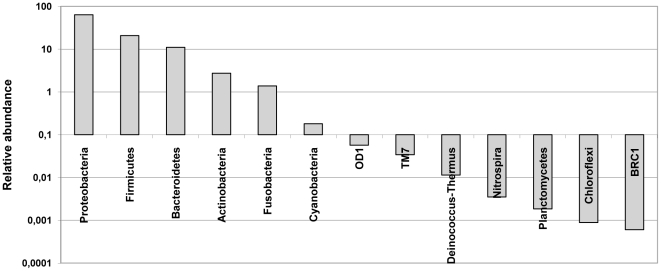
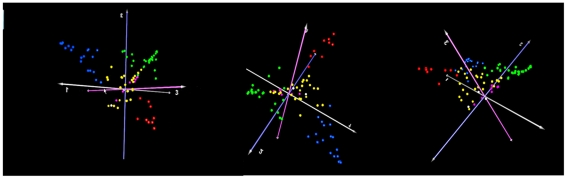
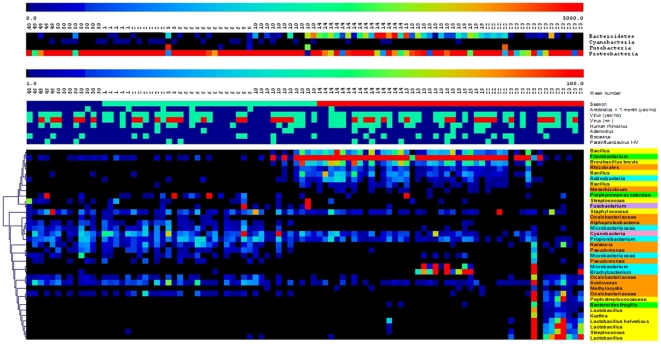
The nasopharynx is the ecological niche for many commensal bacteria and for potential respiratory or invasive pathogens like Streptococcus pneumoniae, Haemophilus influenzae, and Neisseria meningitidis. Disturbance of a balanced nasopharyngeal (NP) microbiome might be involved in the onset of symptomatic infections with these pathogens, which occurs primarily in fall and winter. It is unknown whether seasonal infection patterns are associated with concomitant changes in NP microbiota. As young children are generally prone to respiratory and invasive infections, we characterized the NP microbiota of 96 healthy children by barcoded pyrosequencing of the V5-V6 hypervariable region of the 16S-rRNA gene, and compared microbiota composition between children sampled in winter/fall with children sampled in spring. The approximately 1,000,000 sequences generated represented 13 taxonomic phyla and approximately 250 species-level phyla types (OTUs). The 5 most predominant phyla were Proteobacteria (64%), Firmicutes (21%), Bacteroidetes (11%), Actinobacteria (3%) and Fusobacteria (1,4%) with Moraxella, Haemophilus, Streptococcus, Flavobacteria, Dolosigranulum, Corynebacterium and Neisseria as predominant genera. The inter-individual variability was that high that on OTU level a core microbiome could not be defined. Microbiota profiles varied strongly with season, with in fall/winter a predominance of Proteobacteria (relative abundance (% of all sequences): 75% versus 51% in spring) and Fusobacteria (absolute abundance (% of children): 14% versus 2% in spring), and in spring a predominance of Bacteroidetes (relative abundance: 19% versus 3% in fall/winter, absolute abundance: 91% versus 54% in fall/winter), and Firmicutes. The latter increase is mainly due to (Brevi)bacillus and Lactobacillus species (absolute abundance: 96% versus 10% in fall/winter) which are like Bacteroidetes species generally related to healthy ecosystems. The observed seasonal effects could not be attributed to recent antibiotics or viral co-infection.The NP microbiota of young children is highly diverse and appears different between seasons. These differences seem independent of antibiotic use or viral co-infection.
Overview
The claims and statistics of this paper haven’t been checked yet.
Free: it reads the open-access text and checks the first 5 claims that cite a source we can check. Create a free account to check every claim.
Integrity signals
Registry
Cites
Statistics
Figures
Verification
Claims the paper makes
The claims and statistics of this paper haven’t been checked yet.
Free: it reads the open-access text and checks the first 5 claims that cite a source we can check. Create a free account to check every claim.
Claims other papers make about this one
Each is checked against this paper’s own text: does it say what the citing paper says it does?
The source backs part of the claim, not all of it — or backs it for a different population, condition or comparison.
In the citing paper
“In addition, season, vaccination, presence of siblings, day-care attendance, exposure to smoke and prior infections can also affect the infant microbiota22,31,32,33,34,35, which indicates that the microbiota during early life is dynamic and affected by numerous host and environmental factors (Fig. 2).”
From The microbiota of the respiratory tract: gatekeeper to respiratory health (2017) · cites this paper as [31]
Experimental — accuracy not yet measuredThe source backs part of the claim, not all of it — or backs it for a different population, condition or comparison.
In the citing paper
“These studies have reported an overall detection rate of 67% for respiratory viruses in healthy asymptomatic children, including human rhinovirus (HRV), human bocavirus, polyomaviruses, human adenovirus and human coronavirus31,53.”
From The microbiota of the respiratory tract: gatekeeper to respiratory health (2017) · cites this paper as [31]
Experimental — accuracy not yet measuredThe cited source says what the claim attributes to it.
In the citing paper
“In addition to bacterial inhabitants, PCR-based studies suggest the extensive presence of viral pathogens in the URT.”
From The microbiota of the respiratory tract: gatekeeper to respiratory health (2017) · cites this paper as [31]
In the citing paper
“Changes in nasopharyngeal microbiome diversity were observed across seasons, with a predominance of Proteobacteria and Fusobacteria in fall-winter and Bacteroidetes and Firmicutes in spring; these differences were independent of recent antibiotics and viral co-infection (114).”
From Respiratory viral infection-induced microbiome alterations and secondary bacterial pneumonia. (2018) · cites this paper as [114]
In the citing paper
“In healthy children, the major phyla among nasopharyngeal microbiotas are Proteobacteria, Firmicutes, Bacteroidetes, Actinobacteria, and Fusobacteria, with Moraxella, Haemophilus, Streptococcus, Flavobacteria, Dolosigranulum, Corynebacterium, and Neisseria as predominant genera.”
From Respiratory viral infection-induced microbiome alterations and secondary bacterial pneumonia. (2018) · cites this paper as [114]
Self-check
Percentages, sums and reported differences re-computed from the paper’s own numbers.
The self-check needs the paper’s full text.
Citations
Cites
In silico prediction of protein-protein interactions in human macrophages
Souiai, O., Guerfali, F., Ben Miled, S., Brun, C., & Benkahla, A. (2014) · BMC Research Notes · doi:10.1186/1756-0500-7-157 · Cited by 10,803
Significance analysis of microarrays applied to the ionizing radiation response
Tusher, V. G., Tibshirani, R., & Chu, G. (2001) · Proceedings of the National Academy of Sciences · doi:10.1073/pnas.091062498 · Cited by 10,568
A core gut microbiome in obese and lean twins
Turnbaugh, P. J., Hamady, M., Yatsunenko, T., Cantarel, B. L., Duncan, A., Ley, R. E., Sogin, M. L., Jones, W. J., Roe, B. A., Affourtit, J. P., et al. (2009) · Nature · doi:10.1038/nature07540 · Cited by 7,823 · cited 1×
“In other microbiota like the gastrointestinal and vaginal tract they are highly related to maintenance of a balanced microbiome as well [17] [18] [19] .”
BackgroundPruesse, E., Quast, C., Knittel, K., Fuchs, B. M., Ludwig, W., Peplies, J., & Glockner, F. O. (2007) · Nucleic Acids Research · doi:10.1093/nar/gkm864 · Cited by 6,668 · cited 1×
“We then used the GAST algorithm [24] to calculate the percent difference between each unique sequence and its closest match in a database of 69816 unique Eubacterial and 2779 unique Archaeal V5–V6 sequences, representing 323499 SSU rRNA sequences from the SILVA database [25].”
MethodFrank, D. N., St. Amand, A. L., Feldman, R. A., Boedeker, E. C., Harpaz, N., & Pace, N. R. (2007) · Proceedings of the National Academy of Sciences · doi:10.1073/pnas.0706625104 · Cited by 4,611 · cited 1×
“In other microbiota like the gastrointestinal and vaginal tract they are highly related to maintenance of a balanced microbiome as well [17] [18] [19] .”
BackgroundMicrobial diversity in the deep sea and the underexplored “rare biosphere”
Sogin, M. L., Morrison, H. G., Huber, J. A., Welch, D. M., Huse, S. M., Neal, P. R., Arrieta, J. M., & Herndl, G. J. (2006) · Proceedings of the National Academy of Sciences · doi:10.1073/pnas.0605127103 · Cited by 3,701 · cited 2×
“The operational taxonomic units (OTUs) were created by aligning unique sequences and calculating distance matrices as previously described [23] and using DOTUR [27] to create clusters at the 3% level.”
MethodSelf-citationBacterial Community Variation in Human Body Habitats Across Space and Time
Costello, E. K., Lauber, C. L., Hamady, M., Fierer, N., Gordon, J. I., & Knight, R. (2009) · Science · doi:10.1126/science.1177486 · Cited by 3,231 · cited 5×
“With this definition we observed a core microbiome of Moraxella, Haemophilus influenzae, Enhydrobacter (Proteobacteria), Streptococcus, Dolosigranulum (Firmicutes), and Corynebacterium (Actinobacteria) (Table 1).”
BackgroundInfluentialSchloss, P. D., & Handelsman, J. (2005) · Applied and Environmental Microbiology · doi:10.1128/aem.71.3.1501-1506.2005 · Cited by 2,501 · cited 1×
“The operational taxonomic units (OTUs) were created by aligning unique sequences and calculating distance matrices as previously described [23] and using DOTUR [27] to create clusters at the 3% level.”
Method[9] TM4 Microarray Software Suite
Saeed, A. I., Bhagabati, N. K., Braisted, J. C., Liang, W., Sharov, V., Howe, E. A., Li, J., Thiagarajan, M., White, J. A., & Quackenbush, J. (2006) · Methods in Enzymology · doi:10.1016/s0076-6879(06)11009-5 · Cited by 1,983 · cited 2×
“Seasonal differences in OTU patterns as well as potential correlations between respiratory viruses and OTU patterns were studied by the Significant Analysis of Microarrays (SAM analysis) - a nonparametric statistical technique for finding significant differences between microarray data of groups based on experimental…”
MethodStreptococcus pneumoniae colonisation: the key to pneumococcal disease
Bogaert, D., de Groot, R., & Hermans, P. (2004) · The Lancet Infectious Diseases · doi:10.1016/s1473-3099(04)00938-7 · Cited by 1,929 · cited 3×
“Although colonization by the ‘‘potential pathogens’’ of the NP microbiome is mainly asymptomatic, progression towards upper respiratory tract infections, pneumonia or even sepsis and meningitis may occur [3,4].”
BackgroundSelf-citationThe Ribosomal Database Project (RDP-II): sequences and tools for high-throughput rRNA analysis
Cole, J. R. (2004) · Nucleic Acids Research · doi:10.1093/nar/gki038 · Cited by 1,475 · cited 1×
“Taxa were assigned to each full-length reference sequence using several sources including Entrez Genome entries, cultured strain identities, SILVA, and the Ribosomal Database Project Classifier [26].”
MethodKunin, V., Engelbrektson, A., Ochman, H., & Hugenholtz, P. (2010) · Environmental Microbiology · doi:10.1111/j.1462-2920.2009.02051.x · Cited by 1,277 · cited 1×
“Being aware of the current discussions on the artefacts that may be introduced by pyrosequencing [13,14], we applied a stringent protocol for filtering and clustering of sequences.”
MethodExploring Microbial Diversity and Taxonomy Using SSU rRNA Hypervariable Tag Sequencing
Huse, S. M., Dethlefsen, L., Huber, J. A., Welch, D. M., Relman, D. A., & Sogin, M. L. (2008) · PLoS Genetics · doi:10.1371/journal.pgen.1000255 · Cited by 1,001 · cited 1×
“We then used the GAST algorithm [24] to calculate the percent difference between each unique sequence and its closest match in a database of 69816 unique Eubacterial and 2779 unique Archaeal V5–V6 sequences, representing 323499 SSU rRNA sequences from the SILVA database [25].”
MethodSelf-citationAccurate determination of microbial diversity from 454 pyrosequencing data
Quince, C., Lanzén, A., Curtis, T. P., Davenport, R. J., Hall, N., Head, I. M., Read, L. F., & Sloan, W. T. (2009) · Nature Methods · doi:10.1038/nmeth.1361 · Cited by 1,000 · cited 1×
“Being aware of the current discussions on the artefacts that may be introduced by pyrosequencing [13,14], we applied a stringent protocol for filtering and clustering of sequences.”
MethodWhat are the consequences of the disappearing human microbiota?
Blaser, M. J., & Falkow, S. (2009) · Nature Reviews Microbiology · doi:10.1038/nrmicro2245 · Cited by 855 · cited 1×
“The human microbiome in general is assumed beneficial to the host due to stimulation and maturation of immune systems, promotion of mucosal structure and function and providing actual ‘colonization resistance’ against pathogen invasion [2].”
BackgroundPneumococcal conjugate vaccine for childhood immunization--WHO position paper.
(2007) · PubMed · Cited by 755
Dynamics of nasopharyngeal colonization by potential respiratory pathogens
García-Rodríguez, J. Á., & Fresnadillo Martínez, M. J. (2002) · Journal of Antimicrobial Chemotherapy · doi:10.1093/jac/dkf506 · Cited by 404 · cited 2×
“Although colonization by the ‘‘potential pathogens’’ of the NP microbiome is mainly asymptomatic, progression towards upper respiratory tract infections, pneumonia or even sepsis and meningitis may occur [3,4].”
BackgroundHuman polymicrobial infections
BROGDEN, K., Guthmiller, J. M., & TAYLOR, C. (2005) · The Lancet · doi:10.1016/s0140-6736(05)17745-9 · Cited by 370 · cited 1×
“The exact mechanisms by which this occurs remain largely unknown, although an imbalance in the composition of microbiota, for example by acquisition of new pathogens, viral coinfection or other host or environmental factors have been suggested [5] [6] [7] [8] .”
BackgroundProbiotics for the treatment of bacterial vaginosis
Senok, A. C., Verstraelen, H., Temmerman, M., & Botta, G. A. (2009) · Cochrane Database of Systematic Reviews · doi:10.1002/14651858.cd006289.pub2 · Cited by 189
Meningococcal carriage in the African meningitis belt
Trotter, C. L., & Greenwood, B. M. (2007) · The Lancet Infectious Diseases · doi:10.1016/s1473-3099(07)70288-8 · Cited by 174
van Gils, E. J. M., Veenhoven, R. H., Hak, E., Rodenburg, G. D., Bogaert, D., IJzerman, E. P. F., Bruin, J. P., van Alphen, L., & Sanders, E. A. M. (2009) · JAMA · doi:10.1001/jama.2009.975 · Cited by 161 · cited 1×
“We randomly selected 150 NP samples from a cohort of 330 healthy children 18 months of age who had participated in a randomised controlled trial studying the effect of reduced-dose schedules of 7-valent pneumococcal conjugate vaccine (PCV-7) performed in a general community in the Western part of The Netherlands where…”
MethodSelf-citationWatson, K., Carville, K., Bowman, J., Jacoby, P., Riley, T. V., Leach, A. J., & Lehmann, D. (2006) · Pediatric Infectious Disease Journal · doi:10.1097/01.inf.0000232705.49634.68 · Cited by 145 · cited 1×
“pathogens of the upper respiratory tract [9,10], a phenomenon that cannot be fully explained by concomitant changes in colonization rates of the individual pathogenic bacteria [11,12].”
BackgroundBrook, I. (1999) · Critical Reviews in Microbiology · doi:10.1080/10408419991299211 · Cited by 127
White, A. N., Ng, V., Spain, C. V., Johnson, C. C., Kinlin, L. M., & Fisman, D. N. (2009) · BMC Infectious Diseases · doi:10.1186/1471-2334-9-196 · Cited by 70
Kinlin, L. M., Spain, C. V., Ng, V., Johnson, C. C., White, A. N. J., & Fisman, D. N. (2008) · American Journal of Epidemiology · doi:10.1093/aje/kwn383 · Cited by 40 · cited 2×
“pathogens of the upper respiratory tract [9,10], a phenomenon that cannot be fully explained by concomitant changes in colonization rates of the individual pathogenic bacteria [11,12].”
BackgroundEffects of exposure to smoking on the microbial flora of children and their parents
Brook, I. (2010) · International Journal of Pediatric Otorhinolaryngology · doi:10.1016/j.ijporl.2010.01.006 · Cited by 37 · cited 2×
“tion of factors might be important for the observed shifts in microbiota profiles [3,16,20].”
BackgroundHuman Bocavirus and KI/WU Polyomaviruses in Pediatric Intensive Care Patients
van de Pol, A. C., Wolfs, T. F. W., Jansen, N. J. G., Kimpen, J. L. L., van Loon, A. M., & Rossen, J. W. A. (2009) · Emerging infectious diseases · doi:10.3201/eid1503.081203 · Cited by 35 · cited 2×
“Real-time PCR procedures were performed as described previously [22] Briefly, samples were assayed in duplicate in a 25 ml reaction mixture containing 10 ml (c)DNA, 12.”
MethodSelf-citationBrook, I., & Gober, A. E. (2005) · Archives of Otolaryngology - Head and Neck Surgery · doi:10.1001/archotol.131.6.509 · Cited by 30 · cited 1×
“The exact mechanisms by which this occurs remain largely unknown, although an imbalance in the composition of microbiota, for example by acquisition of new pathogens, viral coinfection or other host or environmental factors have been suggested [5] [6] [7] [8] .”
BackgroundSevillano, D., Aguilar, L., Alou, L., Giménez, M.-J., González, N., Torrico, M., Cafini, F., Coronel, P., & Prieto, J. (2008) · PLoS ONE · doi:10.1371/journal.pone.0003846 · Cited by 13 · cited 1×
“. The exact mechanisms by which this occurs remain largely unknown, although an imbalance in the composition of microbiota, for example by acquisition of new pathogens, viral co-infection or other host or environmental factors have been suggested”
BackgroundDoes Cold Environment Affect Streptococcus pneumoniae Adherence to Rat Buccal Epithelium?
Öztuna, F., Özlü, T., Bülbül, Y., Buruk, C. K., & Topbaş, M. (2005) · Respiration · doi:10.1159/000090160 · Cited by 8 · cited 1×
“tion of factors might be important for the observed shifts in microbiota profiles [3,16,20].”
Background
Cited by
The human microbiome: at the interface of health and disease
Cho, I., & Blaser, M. J. (2012) · Nature Reviews Genetics · doi:10.1038/nrg3182 · Cited by 3,449
The microbiota of the respiratory tract: gatekeeper to respiratory health
Man, W. H., de Steenhuijsen Piters, W. A. A., & Bogaert, D. (2017) · Nature Reviews Microbiology · doi:10.1038/nrmicro.2017.14 · Cited by 1,384
Self-citationTeo, S. M., Mok, D., Pham, K., Kusel, M., Serralha, M., Troy, N., Holt, B. J., Hales, B. J., Walker, M. L., Hollams, E., et al. (2015) · Cell Host & Microbe · doi:10.1016/j.chom.2015.03.008 · Cited by 953
“(Bogaert et al., 2011; Hilty et al., 2010; Vissers et al., 2014); however, no study has investigated the airway microbiome during the critical infancy period (0–12 months).”
BackgroundResultInfluentialViral and Bacterial Interactions in the Upper Respiratory Tract
Bosch, A. A. T. M., Biesbroek, G., Trzcinski, K., Sanders, E. A. M., & Bogaert, D. (2013) · PLoS Pathogens · doi:10.1371/journal.ppat.1003057 · Cited by 651
“Recently, we described the extreme complexity of the microbial population in the upper respiratory niche, with high diversity of bacteria and high variability between individuals [110].”
BackgroundSelf-citationThe Role of Lung and Gut Microbiota in the Pathology of Asthma
Barcik, W., Boutin, R. C. T., Sokolowska, M., & Finlay, B. B. (2020) · Immunity · doi:10.1016/j.immuni.2020.01.007 · Cited by 613
“Human rhinovirus (RV), bocavirus, adenovirus, coronavirus, polymavirus, and Anneloviridae family viruses have been identified in the URT of large proportions of healthy asymptomatic children using PCR-based methods and metagenomics, even in geographically isolated locations (van den Bergh et al., 2012; Bogaert et al.,…”
Metadata
- Authors
- Bogaert, D., Keijser, B., Huse, S., Rossen, J., Veenhoven, R., van Gils, E., Bruin, J., Montijn, R., Bonten, M., & Sanders, E.
- Affiliations
- University Medical Center Utrecht (NL)
- Netherlands Organisation for Applied Scientific Research (NL)
- Marine Biological Laboratory (US)
- Elisabeth-TweeSteden Ziekenhuis (NL)
- Spaarne Ziekenhuis (NL)
- Corresponding author
- Bogaert, Debby
- Venue
- PLoS ONE
- Publisher
- Public Library of Science (PLoS)
- Published
- 2011-02-28
- Volume
- 6
- Issue
- 2
- Pages
- e17035
- ISSN
- 1932-6203 (ISSN-L)
- PMC
- PMC3046172
- OpenAlex
- W2096511107
- Cited by
- 454
- References
- 30
- Citations by year
- 2026: 14 · 2025: 23 · 2024: 30 · 2023: 27 · 2022: 37 · 2021: 41 · 2020: 33 · 2019: 38 · 2018: 39 · 2017: 36 · 2016: 34 · 2015: 25 · 2014: 30 · 2013: 23 · 2012: 20
- FWCI
- 30.30
- Type
- journal article
- Language
- en
- Open access
- gold
- doi.org
- Locations
- PLoS ONE (publishedVersion, cc-by)
- PubMed Central (publishedVersion, cc-by)
- PubMed (publishedVersion)
- TNO Repository (submittedVersion)
- DOAJ (DOAJ: Directory of Open Access Journals) (submittedVersion, cc-by-sa)
- Figshare (submittedVersion, cc-by)
- Repository hosted by TU Delft Library (TU Delft) (submittedVersion)
- Data Archiving and Networked Services (DANS) (submittedVersion, other-oa)
- Funders
- GlaxoSmithKline
- Nederlandse Organisatie voor Wetenschappelijk Onderzoek
- Topics
- Health Sciences › Dentistry › Periodontics › Oral microbiology and periodontitis research
- Life Sciences › Biochemistry, Genetics and Molecular Biology › Molecular Biology › Gut microbiota and health
- Life Sciences › Immunology and Microbiology › Microbiology › Microbial infections and disease research
- Keywords
- nasopharyngeal microbiota, seasonal variation, children, interindividual variability, Proteobacteria, Bacteroidetes, Firmicutes, Fusobacteria, Streptococcus, Haemophilus, Neisseria, Moraxella, Lactobacillus, respiratory infections, invasive infections, Streptococcus pneumoniae
- MeSH terms
- Heptavalent Pneumococcal Conjugate Vaccine, Bacteria, Child, Preschool, Humans, Individuality, Infant, Nasopharynx, Pneumococcal Infections, RNA, Ribosomal, 16S, Seasons, Cluster Analysis, Case-Control Studies, Randomized Controlled Trials as Topic, Genetic Heterogeneity, Pneumococcal Vaccines, Metagenome, Metagenomics
About these checks
Registry, retraction, Cites and statistics results are computed, not judged, with one exception: a printed reference that no index lists is read once by a model before it counts as a citation error. Claims are extracted by a model and kept only when their quote appears verbatim in the text; each cited source is then checked, with a model’s help, for whether it says what the claim relies on. Those verdicts can be wrong — read the claim’s quote and the cited source before relying on one.
Statistics and arithmetic are recomputed, not judged.
Confidence bands are shown only for fields calibrated on our annotated test set. None is calibrated yet, so no band is shown.
What counts as a claim ›How we measure confidence ›How we check this ›
Are you an author, or do you see a problem with this page? Request a review
Data sources
Bibliographic data: Semantic Scholar, OpenAlex, Crossref.
Contains information from the Semantic Scholar Academic Graph Datasets, made available under the ODC Attribution License (ODC-BY 1.0).
Semantic Scholar’s data is described in: Kinney, R., et al. (2023). The Semantic Scholar Open Data Platform. arXiv:2301.10140.
