

The DOI matches its Crossref record; 82 of the 82 references it cites were found in a registry or an index.
Genetic-Background Modulation of Core and Variable Autistic-Like Symptoms in Fmr1 Knock-Out Mice
Open accessAbstract
BACKGROUND: No animal models of autism spectrum disorders (ASD) with good construct validity are currently available; using genetic models of pathologies characterized by ASD-like deficits, but with known causes, may be therefore a promising strategy. The Fmr1-KO mouse is an example of this approach, modeling Fragile X syndrome, a well-known genetic disorder presenting ASD symptoms. The Fmr1-KO is available on different genetic backgrounds (FVB versus C57BL/6), which may explain some of the conflicting results that have been obtained with these mutants up till now. METHODS: Fmr1 KO and their wild-type littermates on both the FVB and C57BL/6 genetic backgrounds were examined on a battery of tests modeling the clinical symptoms of ASD, including the triad of core symptoms (alterations in social interaction and communication, presence of repetitive behaviors), as well as the secondary symptoms (disturbances in sensori-motor reactivity and in circadian patterns of activity, epileptic events). RESULTS: Fmr1-KO mice displayed autistic-like core symptoms of altered social interaction and occurrence of repetitive behaviors with additional hyperactivity. The genetic background modulated the effects of the Fmr1 deletion and it appears that the C57BL/6 background may be more suitable for further research on core autistic-like symptoms. CONCLUSIONS: The Fmr1-mouse line does not recapitulate all of the main core and secondary ASD symptoms, but still can be useful to elucidate the neurobiological mechanisms underlying specific ASD-like endophenotypes.
Overview
The claims and statistics of this paper haven’t been checked yet.
Run the check — free, no account needed. It reads the open-access text and checks the sources it cites.
Integrity signals
Registry
Cites
Statistics
Figures
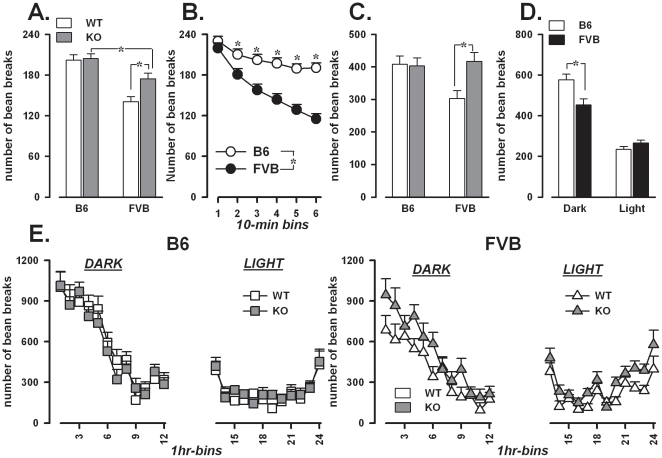
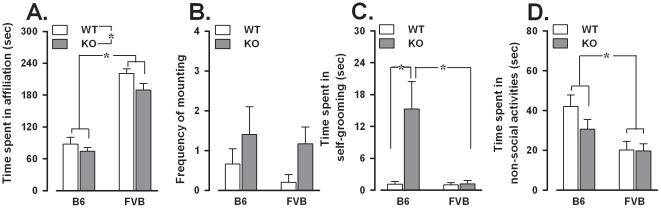
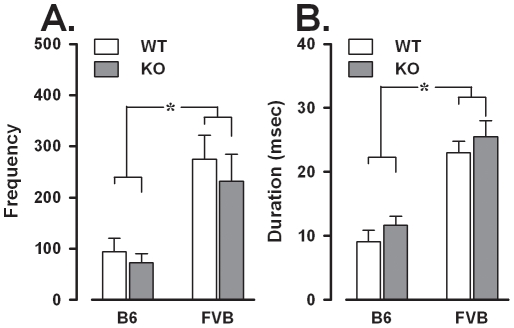
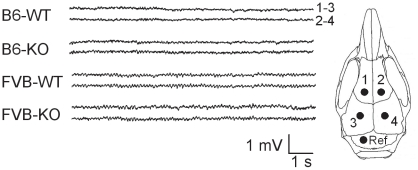
Verification
Claims the paper makes
The claims and statistics of this paper haven’t been checked yet.
Run the check — free, no account needed. It reads the open-access text and checks the sources it cites.
Claims other papers make about this one
Each is checked against this paper’s own text: does it say what the citing paper says it does?
In the citing paper
“Fmr1 KO, in comparison to the wild-type (WT) strain, are described as having lower than normal levels of initial social interactions (Mineur et al., 2006), fail to show a preference for social novelty, and display inappropriate social responses (Pietropaolo et al., 2011).”
From Oxytocin and vasopressin systems in genetic syndromes and neurodevelopmental disorders (2014) · cites this paper as Pietropaolo et al., 2011
In the citing paper
“They found the Fmr1 KO on the B6 background to be a good model for FXS and a suitable model for ASD (Pietropaolo et al., 2011; Yan et al., 2004).”
From Oxytocin and vasopressin systems in genetic syndromes and neurodevelopmental disorders (2014) · cites this paper as Pietropaolo et al., 2011
Self-check
Percentages, sums and reported differences re-computed from the paper’s own numbers.
The self-check needs the paper’s full text.
Citations
Cites
Diagnostic and Statistical Manual of Mental Disorders (DSM-IV)
Hu, R. J. (2003) · Elsevier eBooks · doi:10.1016/b0-12-226870-9/01070-4 · Cited by 9,168
Verkerk, A. J. M. H., Pieretti, M., Sutcliffe, J. S., Fu, Y.-H., Kuhl, D. P. A., Pizzuti, A., Reiner, O., Richards, S., Victoria, M. F., Zhang, F., et al. (1991) · Cell · doi:10.1016/0092-8674(91)90397-h · Cited by 3,481
Moy, S. S., Nadler, J. J., Perez, A., Barbaro, R. P., Johns, J. M., Magnuson, T. R., Piven, J., & Crawley, J. N. (2004) · Genes, Brain and Behavior · doi:10.1111/j.1601-1848.2004.00076.x · Cited by 1,522
Fmr1 knockout mice: A model to study fragile X mental retardation
THEDUTCHBELGIANFRAGILEXCONSOR (1994) · Cell · doi:10.1016/0092-8674(94)90569-x · Cited by 1,108
Time to give up on a single explanation for autism
Happé, F., Ronald, A., & Plomin, R. (2006) · Nature Neuroscience · doi:10.1038/nn1770 · Cited by 987
Autism‐like behavioral phenotypes in BTBR T+tf/J mice
McFarlane, H. G., Kusek, G. K., Yang, M., Phoenix, J. L., Bolivar, V. J., & Crawley, J. N. (2008) · Genes, Brain and Behavior · doi:10.1111/j.1601-183x.2007.00330.x · Cited by 812
Automated apparatus for quantitation of social approach behaviors in mice
Nadler, J. J., Moy, S. S., Dold, G., Trang, D., Simmons, N., Perez, A., Young, N. B., Barbaro, R. P., Piven, J., Magnuson, T. R., et al. (2004) · Genes, Brain and Behavior · doi:10.1111/j.1601-183x.2004.00071.x · Cited by 775
Tuchman, R. F., & Rapin, I. (2002) · The Lancet Neurology · doi:10.1016/s1474-4422(02)00160-6 · Cited by 727
Hughes, R. N. (2004) · Neuroscience & Biobehavioral Reviews · doi:10.1016/j.neubiorev.2004.06.006 · Cited by 641 · cited 1×
“Spontaneous alternation, expressed as a percentage, refers to that proportion of arm choices differing from the previous two [58,59].”
BackgroundEfficacy of sensory and motor interventions for children with autism
Baranek, G. T. (2002) · Journal of Autism and Developmental Disorders · doi:10.1023/a:1020541906063 · Cited by 601
Research works printed but not linked: 1
- BK Yee, 2005, The expression of prepulse inhibition of the acoustic startle reflex as a function of three pulse stimulus intensities, three prepulse stimulus intensities, and three levels of startle responsiveness in C57BL6/J mice., Behav Brain Res, 163, 265, 10.1016/j.bbr.2005.05.013 · DOI
Cited by
Sorted by citations
Modeling fragile X syndrome in the Fmr1 knockout mouse
Kazdoba, T. M., Leach, P. T., Silverman, J. L., & Crawley, J. N. (2014) · Intractable & Rare Diseases Research · doi:10.5582/irdr.2014.01024 · Cited by 241
Dissecting the contribution of host genetics and the microbiome in complex behaviors
Buffington, S. A., Dooling, S. W., Sgritta, M., Noecker, C. A., Murillo, O. D., Felice, D., Turnbaugh, P. J., & Costa‐Mattioli, M. (2021) · Cell · doi:10.1016/j.cell.2021.02.009 · Cited by 214
Host microbiota modulates development of social preference in mice
Arentsen, T., Raith, H., Qian, Y., Forssberg, H., & Heijtz, R. D. (2015) · Microbial Ecology in Health and Disease · doi:10.3402/mehd.v26.29719 · Cited by 207
The neurobiological basis of human aggression: A review on genetic and epigenetic mechanisms
Waltes, R., Chiocchetti, A. G., & Freitag, C. M. (2016) · American Journal of Medical Genetics Part B: Neuropsychiatric Genetics · doi:10.1002/ajmg.b.32388 · Cited by 182
Arbogast, T., Ouagazzal, A.-M., Chevalier, C., Kopanitsa, M., Afinowi, N., Migliavacca, E., Cowling, B. S., Birling, M.-C., Champy, M.-F., Reymond, A., et al. (2016) · PLOS Genetics · doi:10.1371/journal.pgen.1005709 · Cited by 151
Metadata
- Authors
- Pietropaolo, S., Guilleminot, A., Martin, B., D'Amato, F. R., & Crusio, W. E.
- Affiliations
- Centre National de la Recherche Scientifique (FR)
- Inserm (FR)
- National Research Council (IT)
- Corresponding author
- Crusio, Wim E.
- Venue
- PLoS ONE
- Publisher
- Public Library of Science (PLoS)
- Published
- 2011-02-22
- Volume
- 6
- Issue
- 2
- Pages
- e17073
- ISSN
- 1932-6203 (ISSN-L)
- PMC
- PMC3043074
- OpenAlex
- W2002465714
- Cited by
- 178
- References
- 82
- Citations by year
- 2026: 7 · 2025: 7 · 2024: 15 · 2023: 11 · 2022: 13 · 2021: 12 · 2020: 10 · 2019: 12 · 2018: 10 · 2017: 10 · 2016: 15 · 2015: 15 · 2014: 15 · 2013: 9 · 2012: 11
- FWCI
- 8.18
- Type
- journal article
- Language
- en
- Open access
- gold
- doi.org
- Locations
- PLoS ONE (publishedVersion, cc-by)
- PubMed Central (publishedVersion, cc-by)
- PubMed (publishedVersion)
- HAL (submittedVersion, other-oa)
- DOAJ (DOAJ: Directory of Open Access Journals) (submittedVersion, cc-by-sa)
- Funders
- March of Dimes Foundation (12-FY05-1198)
- Institut National de la Santé et de la Recherche Médicale
- Centre National de la Recherche Scientifique (12-FY05-1198)
- Université de Bordeaux (12-FY05-1198)
- Topics
- Life Sciences › Biochemistry, Genetics and Molecular Biology › Genetics › Genetics and Neurodevelopmental Disorders
- Life Sciences › Neuroscience › Cognitive Neuroscience › Autism Spectrum Disorder Research
- Life Sciences › Neuroscience › Developmental Neuroscience › Williams Syndrome Research
- Keywords
- autism spectrum disorder, Fmr1 knockout mice, fragile X syndrome, genetic background, FVB mice, C57BL/6 mice, social interaction deficits, repetitive behavior, hyperactivity, circadian activity, animal models of autism, endophenotypes
- MeSH terms
- Animals, Autistic Disorder, Behavior, Animal, Disease Models, Animal, Learning, Male, Mice, Inbred C57BL, Motor Activity, Phenotype, Mice, Knockout, Genetic Heterogeneity, Genetic Predisposition to Disease, Mice, Fragile X Messenger Ribonucleoprotein 1, Endophenotypes
About these checks
Registry, retraction, Cites and statistics results are computed, not judged, with one exception: a printed reference that no index lists is read once by a model before it counts as a citation error. Claims are extracted by a model and kept only when their quote appears verbatim in the text; each cited source is then checked, with a model’s help, for whether it says what the claim relies on. Those verdicts can be wrong — read the claim’s quote and the cited source before relying on one.
Statistics and arithmetic are recomputed, not judged.
Confidence bands are shown only for fields calibrated on our annotated test set. None is calibrated yet, so no band is shown.
What counts as a claim ›How we measure confidence ›How we check this ›
Are you an author, or do you see a problem with this page? Request a review
