

The DOI matches its Crossref record; 82 of the 82 references it cites were found in a registry or an index.
Genetic-Background Modulation of Core and Variable Autistic-Like Symptoms in Fmr1 Knock-Out Mice
Open accessAbstract
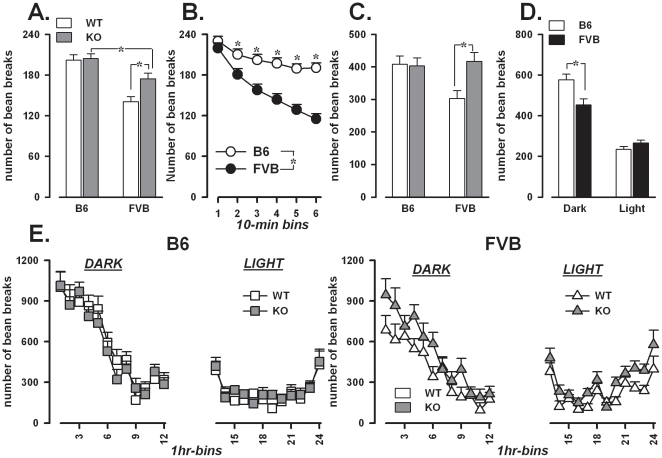
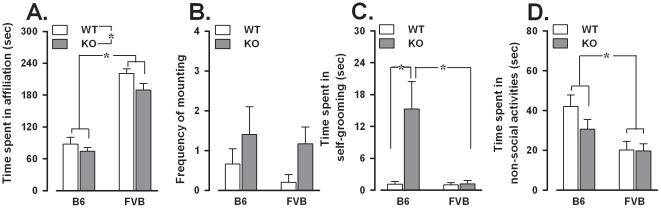
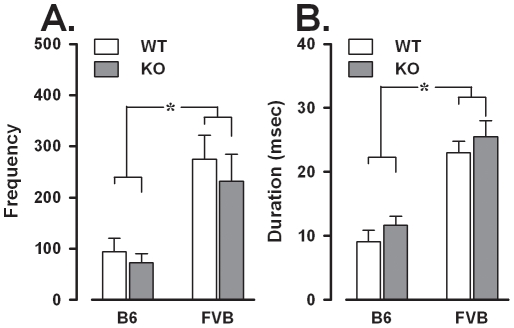
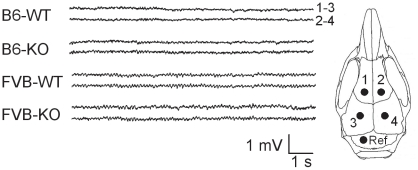
BACKGROUND: No animal models of autism spectrum disorders (ASD) with good construct validity are currently available; using genetic models of pathologies characterized by ASD-like deficits, but with known causes, may be therefore a promising strategy. The Fmr1-KO mouse is an example of this approach, modeling Fragile X syndrome, a well-known genetic disorder presenting ASD symptoms. The Fmr1-KO is available on different genetic backgrounds (FVB versus C57BL/6), which may explain some of the conflicting results that have been obtained with these mutants up till now. METHODS: Fmr1 KO and their wild-type littermates on both the FVB and C57BL/6 genetic backgrounds were examined on a battery of tests modeling the clinical symptoms of ASD, including the triad of core symptoms (alterations in social interaction and communication, presence of repetitive behaviors), as well as the secondary symptoms (disturbances in sensori-motor reactivity and in circadian patterns of activity, epileptic events). RESULTS: Fmr1-KO mice displayed autistic-like core symptoms of altered social interaction and occurrence of repetitive behaviors with additional hyperactivity. The genetic background modulated the effects of the Fmr1 deletion and it appears that the C57BL/6 background may be more suitable for further research on core autistic-like symptoms. CONCLUSIONS: The Fmr1-mouse line does not recapitulate all of the main core and secondary ASD symptoms, but still can be useful to elucidate the neurobiological mechanisms underlying specific ASD-like endophenotypes.
Overview
The claims and statistics of this paper haven’t been checked yet.
Run the check — free, no account needed. It reads the open-access text and checks the sources it cites.
Integrity signals
Registry
Cites
Statistics
Figures
Verification
Claims the paper makes
The claims and statistics of this paper haven’t been checked yet.
Run the check — free, no account needed. It reads the open-access text and checks the sources it cites.
Claims other papers make about this one
Each is checked against this paper’s own text: does it say what the citing paper says it does?
In the citing paper
“Fmr1 KO, in comparison to the wild-type (WT) strain, are described as having lower than normal levels of initial social interactions (Mineur et al., 2006), fail to show a preference for social novelty, and display inappropriate social responses (Pietropaolo et al., 2011).”
From Oxytocin and vasopressin systems in genetic syndromes and neurodevelopmental disorders (2014) · cites this paper as Pietropaolo et al., 2011
In the citing paper
“They found the Fmr1 KO on the B6 background to be a good model for FXS and a suitable model for ASD (Pietropaolo et al., 2011; Yan et al., 2004).”
From Oxytocin and vasopressin systems in genetic syndromes and neurodevelopmental disorders (2014) · cites this paper as Pietropaolo et al., 2011
Self-check
Percentages, sums and reported differences re-computed from the paper’s own numbers.
The self-check needs the paper’s full text.
Citations
Cites
Diagnostic and Statistical Manual of Mental Disorders (DSM-IV)
Hu, R. J. (2003) · Elsevier eBooks · doi:10.1016/b0-12-226870-9/01070-4 · Cited by 9,168
Verkerk, A. J. M. H., Pieretti, M., Sutcliffe, J. S., Fu, Y.-H., Kuhl, D. P. A., Pizzuti, A., Reiner, O., Richards, S., Victoria, M. F., Zhang, F., et al. (1991) · Cell · doi:10.1016/0092-8674(91)90397-h · Cited by 3,481
Moy, S. S., Nadler, J. J., Perez, A., Barbaro, R. P., Johns, J. M., Magnuson, T. R., Piven, J., & Crawley, J. N. (2004) · Genes, Brain and Behavior · doi:10.1111/j.1601-1848.2004.00076.x · Cited by 1,522
Fmr1 knockout mice: A model to study fragile X mental retardation
THEDUTCHBELGIANFRAGILEXCONSOR (1994) · Cell · doi:10.1016/0092-8674(94)90569-x · Cited by 1,108
Time to give up on a single explanation for autism
Happé, F., Ronald, A., & Plomin, R. (2006) · Nature Neuroscience · doi:10.1038/nn1770 · Cited by 987
Autism‐like behavioral phenotypes in BTBR T+tf/J mice
McFarlane, H. G., Kusek, G. K., Yang, M., Phoenix, J. L., Bolivar, V. J., & Crawley, J. N. (2008) · Genes, Brain and Behavior · doi:10.1111/j.1601-183x.2007.00330.x · Cited by 812
Automated apparatus for quantitation of social approach behaviors in mice
Nadler, J. J., Moy, S. S., Dold, G., Trang, D., Simmons, N., Perez, A., Young, N. B., Barbaro, R. P., Piven, J., Magnuson, T. R., et al. (2004) · Genes, Brain and Behavior · doi:10.1111/j.1601-183x.2004.00071.x · Cited by 775
Tuchman, R. F., & Rapin, I. (2002) · The Lancet Neurology · doi:10.1016/s1474-4422(02)00160-6 · Cited by 727
Hughes, R. N. (2004) · Neuroscience & Biobehavioral Reviews · doi:10.1016/j.neubiorev.2004.06.006 · Cited by 641 · cited 1×
“Spontaneous alternation, expressed as a percentage, refers to that proportion of arm choices differing from the previous two [58,59].”
BackgroundEfficacy of sensory and motor interventions for children with autism
Baranek, G. T. (2002) · Journal of Autism and Developmental Disorders · doi:10.1023/a:1020541906063 · Cited by 601
(1994) · PubMed · Cited by 565
Unusual repertoire of vocalizations in the BTBR T+tf/J mouse model of autism
Scattoni, M. L., Gandhy, S. U., Ricceri, L., & Crawley, J. N. (2008) · PLoS ONE · doi:10.1371/journal.pone.0003067 · Cited by 550
Mouse Behavioral Assays Relevant to the Symptoms of Autism*
Crawley, J. N. (2007) · Brain Pathology · doi:10.1111/j.1750-3639.2007.00096.x · Cited by 541 · cited 3×
“to the view that the ideal ASD model should reproduce all core symptoms and some secondary ones [23], the Fmr1-KO should”
BackgroundResultAtypical behaviors in children with autism and children with a history of language impairment
Dominick, K. C., Davis, N. O., Lainhart, J. E., Tager-Flusberg, H. B., & Folstein, S. E. (2006) · Research in Developmental Disabilities · doi:10.1016/j.ridd.2006.02.003 · Cited by 526
Suppression of two major Fragile X Syndrome mouse model phenotypes by the mGluR5 antagonist MPEP
Yan, Q. J., Rammal, M., Tranfaglia, M., & Bauchwitz, R. P. (2005) · Neuropharmacology · doi:10.1016/j.neuropharm.2005.06.004 · Cited by 521
Rogers, S. J., Wehner, E. A., & Hagerman, R. J. (2001) · Journal of Developmental & Behavioral Pediatrics · doi:10.1097/00004703-200112000-00008 · Cited by 487
Neuroligin-1 Deletion Results in Impaired Spatial Memory and Increased Repetitive Behavior
Blundell, J., Blaiss, C. A., Etherton, M. R., Espinosa, F., Tabuchi, K., Walz, C., Bolliger, M. F., Südhof, T. C., & Powell, C. M. (2010) · The Journal of Neuroscience · doi:10.1523/jneurosci.4517-09.2010 · Cited by 450
Etherton, M. R., Blaiss, C. A., Powell, C. M., & Südhof, T. C. (2009) · Proceedings of the National Academy of Sciences · doi:10.1073/pnas.0910297106 · Cited by 447
Brain anatomy and sensorimotor gating in Asperger's syndrome
McAlonan, G. M. (2002) · Brain · doi:10.1093/brain/awf150 · Cited by 447
Swerdlow, N. R., BRAFF, D. L., & Geyer, M. A. (2000) · Behavioural Pharmacology · doi:10.1097/00008877-200006000-00002 · Cited by 394
Comorbid anxiety symptoms in children with pervasive developmental disorders
Muris, P., Steerneman, P., Merckelbach, H., Holdrinet, I., & Meesters, C. (1998) · Journal of Anxiety Disorders · doi:10.1016/s0887-6185(98)00022-x · Cited by 368
Autistic behavior in children with fragile X syndrome: Prevalence, stability, and the impact of FMRP
Hatton, D. D., Sideris, J., Skinner, M., Mankowski, J., Bailey, D. B., Roberts, J., & Mirrett, P. (2006) · American Journal of Medical Genetics Part A · doi:10.1002/ajmg.a.31286 · Cited by 359
Sensorimotor gating deficits in adults with autism
Perry, W., Minassian, A., Lopez, B., Maron, L., & Lincoln, A. (2007) · Biological Psychiatry · doi:10.1016/j.biopsych.2005.09.025 · Cited by 352
Altered anxiety‐related and social behaviors in the Fmr1 knockout mouse model of fragile X syndrome
Spencer, C. M., Alekseyenko, O., Serysheva, E., Yuva‐Paylor, L. A., & Paylor, R. (2005) · Genes, Brain and Behavior · doi:10.1111/j.1601-183x.2005.00123.x · Cited by 349
Fragile X mice develop sensory hyperreactivity to auditory stimuli
Chen, L., & Toth, M. (2001) · Neuroscience · doi:10.1016/s0306-4522(01)00036-7 · Cited by 345
Sleep problems in children with autism
Williams, P. G., Sears, L. L., & Allard, A. (2004) · Journal of Sleep Research · doi:10.1111/j.1365-2869.2004.00405.x · Cited by 335
Synaptic regulation of protein synthesis and the fragile X protein
Greenough, W. T., Klintsova, A. Y., Irwin, S. A., Galvez, R., Bates, K. E., & Weiler, I. J. (2001) · Proceedings of the National Academy of Sciences · doi:10.1073/pnas.141145998 · Cited by 317
Rescue of behavioral phenotype and neuronal protrusion morphology in Fmr1 KO mice
de Vrij, F. M. S., Levenga, J., van der Linde, H. C., Koekkoek, S. K., De Zeeuw, C. I., Nelson, D. L., Oostra, B. A., & Willemsen, R. (2008) · Neurobiology of Disease · doi:10.1016/j.nbd.2008.04.002 · Cited by 313
Paradee, W., Melikian, H. E., Rasmussen, D. L., Kenneson, A., Conn, P. J., & Warren, S. T. (1999) · Neuroscience · doi:10.1016/s0306-4522(99)00285-7 · Cited by 305
Vergnes, M., Marescaux, C., Micheletti, G., Reis, J. J., Depaulis, A., Rumbach, L., & Warter, J. (1982) · Neuroscience Letters · doi:10.1016/0304-3940(82)90136-7 · Cited by 299
Restivo, L., Ferrari, F., Passino, E., Sgobio, C., Bock, J., Oostra, B. A., Bagni, C., & Ammassari-Teule, M. (2005) · Proceedings of the National Academy of Sciences · doi:10.1073/pnas.0504984102 · Cited by 299
Deficits in trace fear memory and long-term potentiation in a mouse model for fragile X syndrome
Zhao, M.-G., Toyoda, H., Ko, S. W., Ding, H.-K., Wu, L.-J., & Zhuo, M. (2005) · The Journal of Neuroscience · doi:10.1523/jneurosci.1520-05.2005 · Cited by 296
Audiogenic Seizures Susceptibility in Transgenic Mice with Fragile X Syndrome
Musumeci, S. A., Bosco, P., Calabrese, G., Bakker, C., De Sarro, G. B., Elia, M., Ferri, R., & Oostra, B. A. (2000) · Epilepsia · doi:10.1111/j.1528-1157.2000.tb01499.x · Cited by 289
A survey of sleep problems in autism, Asperger's disorder and typically developing children
Polimeni, M., Richdale, A. L., & Francis, A. J. P. (2005) · Journal of Intellectual Disability Research · doi:10.1111/j.1365-2788.2005.00642.x · Cited by 278
Sensorimotor gating abnormalities in young males with fragile X syndrome and Fmr1-knockout mice.
Frankland, P. W., Wang, Y., Rosner, B., Shimizu, T., Balleine, B. W., Dykens, E. M., Ornitz, E. M., & Silva, A. J. (2004) · Molecular Psychiatry · doi:10.1038/sj.mp.4001432 · Cited by 275
Autistic behavior in young boys with fragile X syndrome
Bailey, D. B., Mesibov, G. B., Hatton, D. D., Clark, R. D., Roberts, J. E., & Mayhew, L. (1998) · Journal of Autism and Developmental Disorders · doi:10.1023/a:1026048027397 · Cited by 260
Behavioral characterization of the Tg2576 transgenic model of Alzheimer's disease through 19 months
King, D. L., & Arendash, G. W. (2002) · Physiology & Behavior · doi:10.1016/s0031-9384(02)00639-x · Cited by 250
Mines, M. A., Yuskaitis, C. J., King, M. K., Beurel, E., & Jope, R. S. (2010) · PLoS ONE · doi:10.1371/journal.pone.0009706 · Cited by 220
Measurement of Startle Response, Prepulse Inhibition, and Habituation
Geyer, M. A., & Swerdlow, N. R. (1998) · Current Protocols in Neuroscience · doi:10.1002/0471142301.ns0807s03 · Cited by 219
Behavioral and neuroanatomical characterization of the Fmr1 knockout mouse
Mineur, Y. S., Sluyter, F., de Wit, S., Oostra, B. A., & Crusio, W. E. (2002) · Hippocampus · doi:10.1002/hipo.10005 · Cited by 216
A phenotypic and molecular characterization of the fmr1‐tm1Cgr Fragile X mouse
Yan, Q. J., Asafo‐Adjei, P. K., Arnold, H. M., Brown, R. E., & Bauchwitz, R. P. (2004) · Genes, Brain and Behavior · doi:10.1111/j.1601-183x.2004.00087.x · Cited by 213
Mildly impaired water maze performance in maleFmr1 knockout mice
D'Hooge, R., Nagels, G., Franck, F., Bakker, C. E., Reyniers, E., Storm, K., Kooy, R. F., Oostra, B. A., Willems, P. J., & De Deyn, P. P. (1997) · Neuroscience · doi:10.1016/s0306-4522(96)00224-2 · Cited by 208
Bailey, D. B., Hatton, D. D., Skinner, M. L., & Mesibov, G. B. (2001) · Journal of Autism and Developmental Disorders · doi:10.1023/a:1010747131386 · Cited by 207
FMR1 Knockout mice: A model to study fragile X mental retardation
Oostra, B. A., Bakker, C. E., & Reyniers, E. (1994) · The American Journal of Human Genetics · Cited by 181
Fmr1 knockout mouse has a distinctive strain-specific learning impairment
Dobkin, C., Rabe, A., Dumas, R., El Idrissi, A., Haubenstock, H., & Ted Brown, W. (2000) · Neuroscience · doi:10.1016/s0306-4522(00)00292-x · Cited by 179
Social behavior deficits in the Fmr1 mutant mouse
Mineur, Y. S., Huynh, L. X., & Crusio, W. E. (2006) · Behavioural Brain Research · doi:10.1016/j.bbr.2005.11.004 · Cited by 177
Self-citationFmr1 KO Mice as a Possible Model of Autistic Features
Bernardet, M., & Crusio, W. E. (2006) · The Scientific World JOURNAL · doi:10.1100/tsw.2006.220 · Cited by 175
Self-citationEvidence for social anxiety and impaired social cognition in a mouse model of fragile X syndrome.
McNaughton, C. H., Moon, J., Strawderman, M. S., Maclean, K. N., Evans, J., & Strupp, B. J. (2008) · Behavioral Neuroscience · doi:10.1037/0735-7044.122.2.293 · Cited by 174
Lithium ameliorates phenotypic deficits in a mouse model of fragile X syndrome
Liu, Z., Chuang, D., & Smith, C. B. (2010) · The International Journal of Neuropsychopharmacology · doi:10.1017/s1461145710000520 · Cited by 168
Ontogeny of amicable social behavior in the mouse: Gender differences and ongoing isolation outcomes
Terranova, M. L., Laviola, G., & Alleva, E. (1993) · Developmental Psychobiology · doi:10.1002/dev.420260805 · Cited by 160
Nielsen, D. M., Derber, W. J., McClellan, D. A., & Crnic, L. S. (2002) · Brain Research · doi:10.1016/s0006-8993(01)03309-1 · Cited by 154
Dam, D. V., D’Hooge, R., Hauben, E., Reyniers, E., Gantois, I., Bakker, C. E., Oostra, B. A., Kooy, R. F., & Deyn, P. P. D. (2000) · Behavioural Brain Research · doi:10.1016/s0166-4328(00)00296-5 · Cited by 145
Self‐injurious behavior in young boys with fragile X syndrome
Symons, F. J., Clark, R. D., Hatton, D. D., Skinner, M. L., & Bailey, D. B. (2003) · American Journal of Medical Genetics Part A · doi:10.1002/ajmg.a.10078 · Cited by 141
Mouse models of autism spectrum disorders: The challenge for behavioral genetics
Moy, S. S., Nadler, J. J., Magnuson, T., & Crawley, J. N. (2006) · American Journal of Medical Genetics Part C Seminars in Medical Genetics · doi:10.1002/ajmg.c.30081 · Cited by 141
Molecular and cognitive predictors of the continuum of autistic behaviours in fragile X
Loesch, D. Z., Bui, M., Dissanayake, C., Clifford, S. M., Gould, E. L., Bulhak‐Paterson, D., Tassone, F., Taylor, A. K., Hessl, D. R., Hagerman, R. J., et al. (2006) · Neuroscience & Biobehavioral Reviews · doi:10.1016/j.neubiorev.2006.09.007 · Cited by 136
Reduced ultrasonic vocalizations in vasopressin 1b knockout mice
Scattoni, M. L., McFarlane, H. G., Zhodzishsky, V., Caldwell, H. K., YOUNG, W., Ricceri, L., & Crawley, J. N. (2007) · Behavioural Brain Research · doi:10.1016/j.bbr.2007.09.034 · Cited by 134
Pacey, L. K. K., Heximer, S. P., & Hampson, D. R. (2009) · Molecular Pharmacology · doi:10.1124/mol.109.056127 · Cited by 133
Risperidone and Explosive Aggressive Autism
Horrigan, J. P., & Barnhill, L. J. (1997) · Journal of Autism and Developmental Disorders · doi:10.1023/a:1025854532079 · Cited by 123
Ventura, R., Pascucci, T., Catania, M. V., Musumeci, S. A., & Puglisi‐Allegra, S. (2004) · Behavioural Pharmacology · doi:10.1097/00008877-200409000-00018 · Cited by 121
Knockout mouse model for Fxr2: a model for mental retardation
Bontekoe, C. J. M. (2002) · Human Molecular Genetics · doi:10.1093/hmg/11.5.487 · Cited by 120
On the influence of baseline startle reactivity on the indexation of prepulse inhibition.
Csomor, P., Yee, B. K., Vollenweider, F. X., Feldon, J., Nicolet, T., & Quednow, B. B. (2008) · Behavioral Neuroscience · doi:10.1037/0735-7044.122.4.885 · Cited by 119
Brodkin, E. S., McDougle, C. J., NAYLOR, S. T., Cohen, D. J., & Price, L. H. (1997) · Journal of Child and Adolescent Psychopharmacology · doi:10.1089/cap.1997.7.109 · Cited by 102
Risperidone for Young Children with Mood Disorders and Aggressive Behavior
Schreier, H. A. (1998) · Journal of Child and Adolescent Psychopharmacology · doi:10.1089/cap.1998.8.49 · Cited by 97
Yee, B. K., Chang, D. T., & Feldon, J. (2004) · Neuropsychopharmacology · doi:10.1038/sj.npp.1300480 · Cited by 92
Ultrasonic vocalization by female mice in the presence of a conspecific carrying food cues
Moles, A., & D'Amato, F. R. (2000) · Animal Behaviour · doi:10.1006/anbe.2000.1504 · Cited by 91
Self-citationStartle modulation studies in autism
Ornitz, E. M., Lane, S. J., Sugiyama, T., & de Traversay, J. (1993) · Journal of Autism and Developmental Disorders · doi:10.1007/bf01046105 · Cited by 91
Yee, B. K., Chang, T., Pietropaolo, S., & Feldon, J. (2005) · Behavioural Brain Research · doi:10.1016/j.bbr.2005.05.013 · Cited by 83
Self-citationThe value of incomplete mouse models of Alzheimer’s disease
Radde, R., Duma, C. C., Goedert, M., & Jucker, M. (2008) · European Journal of Nuclear Medicine and Molecular Imaging · doi:10.1007/s00259-007-0704-y · Cited by 83
The postweaning social isolation in C57BL/6 mice: preferential vulnerability in the male sex
Pietropaolo, S., Singer, P., Feldon, J., & Yee, B. K. (2008) · Psychopharmacology · doi:10.1007/s00213-008-1081-3 · Cited by 80
Self-citationBrief Report: Sensorimotor Gating in Idiopathic Autism and Autism Associated with Fragile X Syndrome
Yuhas, J. M., Cordeiro, L., Tassone, F., Ballinger, E. C., Schneider, A., Long, J. M., Ornitz, E. M., & Hessl, D. R. (2010) · Journal of Autism and Developmental Disorders · doi:10.1007/s10803-010-1040-9 · Cited by 78
Yee, B. K., Russig, H. D., & Feldon, J. (2003) · Neuropsychopharmacology · doi:10.1038/sj.npp.1300323 · Cited by 70
Altered mossy fiber distributions in adult Fmr1 (FVB) knockout mice
Ivanco, T. L., & Greenough, W. T. (2002) · Hippocampus · doi:10.1002/hipo.10004 · Cited by 65
Qin, M., Kang, J. Y., & Smith, C. B. (2005) · Neuroscience · doi:10.1016/j.neuroscience.2005.06.081 · Cited by 64
Rodent models for autism: A critical review
Belzung, C., Leman, S., Vourc’h, P., & Andres, C. R. (2005) · Drug Discovery Today Disease Models · doi:10.1016/j.ddmod.2005.05.004 · Cited by 43
Low Platelet-Poor Plasma Levels of Serotonin in Adult Autistic Patients
Spivak, B., Golubchik, P., Mozes, T., Vered, Y., Nechmad, A., Weizman, A., & Strous, R. D. (2004) · Neuropsychobiology · doi:10.1159/000079108 · Cited by 42
Reunion of Separated Sibling Mice: Neurobiological and Behavioral Aspects
D'Amato, F. R., & Pavone, F. (1996) · Neurobiology of Learning and Memory · doi:10.1006/nlme.1996.0002 · Cited by 42
Self-citationDistinguishing features of autism in boys with fragile X syndrome
Brock, M. E., & Hatton, D. (2010) · Journal of Intellectual Disability Research · doi:10.1111/j.1365-2788.2010.01315.x · Cited by 41
Strain-Dependent Changes in Acoustic Startle Response and its Plasticity Across Adolescence in Mice
Pietropaolo, S., & Crusio, W. E. (2009) · Behavior Genetics · doi:10.1007/s10519-009-9291-y · Cited by 34
Self-citationWild-Type Male Offspring of fmr-1+/− Mothers Exhibit Characteristics of the Fragile X Phenotype
Zupan, B., & Tóth, M. (2008) · Neuropsychopharmacology · doi:10.1038/sj.npp.1301651 · Cited by 33
Limbic Epileptogenesis in a Mouse Model of Fragile X Syndrome
Qiu, L.-F., Lu, T., Hu, X.-L., Yi, Y., Liao, W., & Xiong, Z. (2008) · Cerebral Cortex · doi:10.1093/cercor/bhn163 · Cited by 33
Csomor, P., Vollenweider, F. X., Feldon, J., & Yee, B. K. (2005) · Behavioural Brain Research · doi:10.1016/j.bbr.2005.03.020 · Cited by 24
Nonphysical contact between cagemates alleviates the social isolation syndrome in C57BL/6 male mice.
Pietropaolo, S., Feldon, J., & Yee, B. K. (2008) · Behavioral Neuroscience · doi:10.1037/0735-7044.122.3.505 · Cited by 22
Self-citation
Research works printed but not linked: 1
- BK Yee, 2005, The expression of prepulse inhibition of the acoustic startle reflex as a function of three pulse stimulus intensities, three prepulse stimulus intensities, and three levels of startle responsiveness in C57BL6/J mice., Behav Brain Res, 163, 265, 10.1016/j.bbr.2005.05.013 · DOI
Cited by
Sorted by citations
Modeling fragile X syndrome in the Fmr1 knockout mouse
Kazdoba, T. M., Leach, P. T., Silverman, J. L., & Crawley, J. N. (2014) · Intractable & Rare Diseases Research · doi:10.5582/irdr.2014.01024 · Cited by 241
Dissecting the contribution of host genetics and the microbiome in complex behaviors
Buffington, S. A., Dooling, S. W., Sgritta, M., Noecker, C. A., Murillo, O. D., Felice, D., Turnbaugh, P. J., & Costa‐Mattioli, M. (2021) · Cell · doi:10.1016/j.cell.2021.02.009 · Cited by 214
Host microbiota modulates development of social preference in mice
Arentsen, T., Raith, H., Qian, Y., Forssberg, H., & Heijtz, R. D. (2015) · Microbial Ecology in Health and Disease · doi:10.3402/mehd.v26.29719 · Cited by 207
The neurobiological basis of human aggression: A review on genetic and epigenetic mechanisms
Waltes, R., Chiocchetti, A. G., & Freitag, C. M. (2016) · American Journal of Medical Genetics Part B: Neuropsychiatric Genetics · doi:10.1002/ajmg.b.32388 · Cited by 182
Arbogast, T., Ouagazzal, A.-M., Chevalier, C., Kopanitsa, M., Afinowi, N., Migliavacca, E., Cowling, B. S., Birling, M.-C., Champy, M.-F., Reymond, A., et al. (2016) · PLOS Genetics · doi:10.1371/journal.pgen.1005709 · Cited by 151
Metadata
- Authors
- Pietropaolo, S., Guilleminot, A., Martin, B., D'Amato, F. R., & Crusio, W. E.
- Affiliations
- Centre National de la Recherche Scientifique (FR)
- Inserm (FR)
- National Research Council (IT)
- Corresponding author
- Crusio, Wim E.
- Venue
- PLoS ONE
- Publisher
- Public Library of Science (PLoS)
- Published
- 2011-02-22
- Volume
- 6
- Issue
- 2
- Pages
- e17073
- ISSN
- 1932-6203 (ISSN-L)
- PMC
- PMC3043074
- OpenAlex
- W2002465714
- Cited by
- 178
- References
- 82
- Citations by year
- 2026: 7 · 2025: 7 · 2024: 15 · 2023: 11 · 2022: 13 · 2021: 12 · 2020: 10 · 2019: 12 · 2018: 10 · 2017: 10 · 2016: 15 · 2015: 15 · 2014: 15 · 2013: 9 · 2012: 11
- FWCI
- 8.18
- Type
- journal article
- Language
- en
- Open access
- gold
- doi.org
- Locations
- PLoS ONE (publishedVersion, cc-by)
- PubMed Central (publishedVersion, cc-by)
- PubMed (publishedVersion)
- HAL (submittedVersion, other-oa)
- DOAJ (DOAJ: Directory of Open Access Journals) (submittedVersion, cc-by-sa)
- Funders
- March of Dimes Foundation (12-FY05-1198)
- Institut National de la Santé et de la Recherche Médicale
- Centre National de la Recherche Scientifique (12-FY05-1198)
- Université de Bordeaux (12-FY05-1198)
- Topics
- Life Sciences › Biochemistry, Genetics and Molecular Biology › Genetics › Genetics and Neurodevelopmental Disorders
- Life Sciences › Neuroscience › Cognitive Neuroscience › Autism Spectrum Disorder Research
- Life Sciences › Neuroscience › Developmental Neuroscience › Williams Syndrome Research
- Keywords
- autism spectrum disorder, Fmr1 knockout mice, fragile X syndrome, genetic background, FVB mice, C57BL/6 mice, social interaction deficits, repetitive behavior, hyperactivity, circadian activity, animal models of autism, endophenotypes
- MeSH terms
- Animals, Autistic Disorder, Behavior, Animal, Disease Models, Animal, Learning, Male, Mice, Inbred C57BL, Motor Activity, Phenotype, Mice, Knockout, Genetic Heterogeneity, Genetic Predisposition to Disease, Mice, Fragile X Messenger Ribonucleoprotein 1, Endophenotypes
About these checks
Registry, retraction, Cites and statistics results are computed, not judged, with one exception: a printed reference that no index lists is read once by a model before it counts as a citation error. Claims are extracted by a model and kept only when their quote appears verbatim in the text; each cited source is then checked, with a model’s help, for whether it says what the claim relies on. Those verdicts can be wrong — read the claim’s quote and the cited source before relying on one.
Statistics and arithmetic are recomputed, not judged.
Confidence bands are shown only for fields calibrated on our annotated test set. None is calibrated yet, so no band is shown.
What counts as a claim ›How we measure confidence ›How we check this ›
Are you an author, or do you see a problem with this page? Request a review
