

Subcellular Localization of Hexokinases I and II Directs the Metabolic Fate of Glucose
Open accessThe DOI matches its Crossref record; 30 of the 30 references it cites were found in a registry or an index.
Abstract
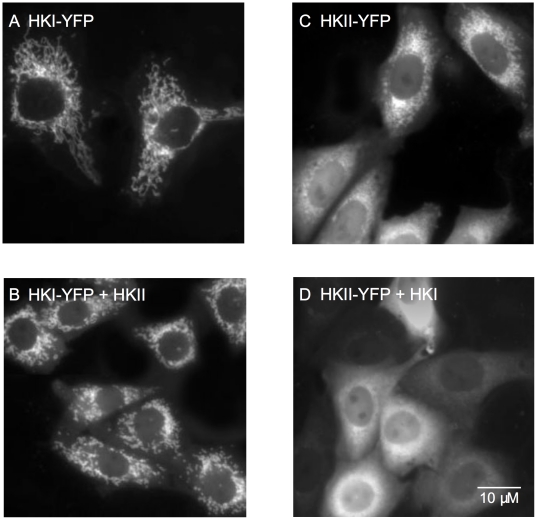
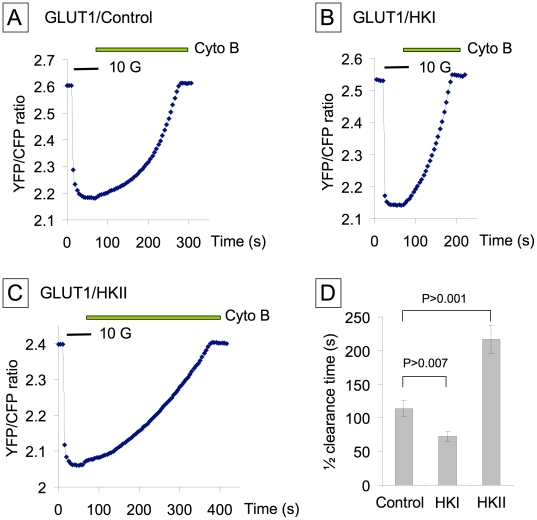
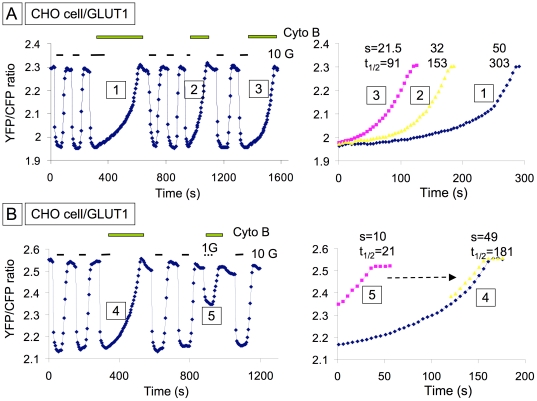
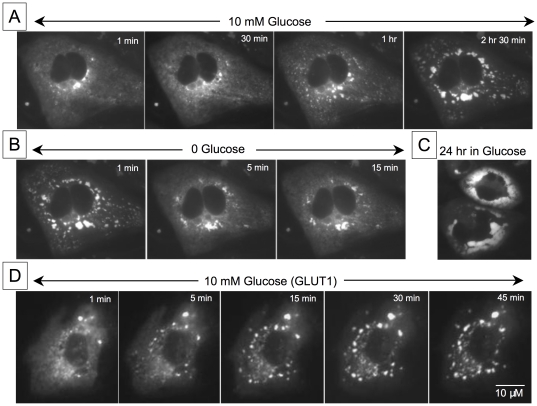
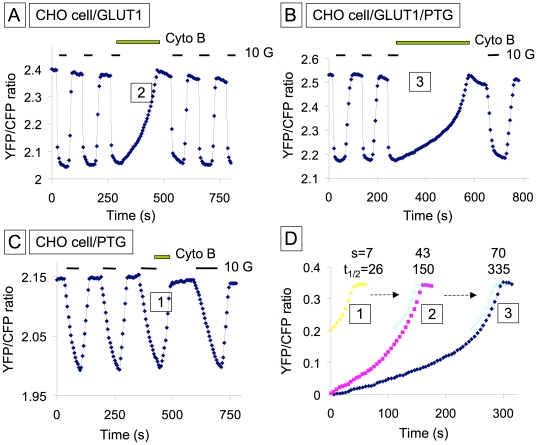
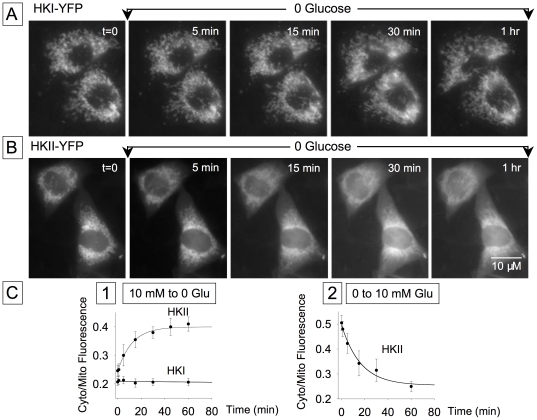
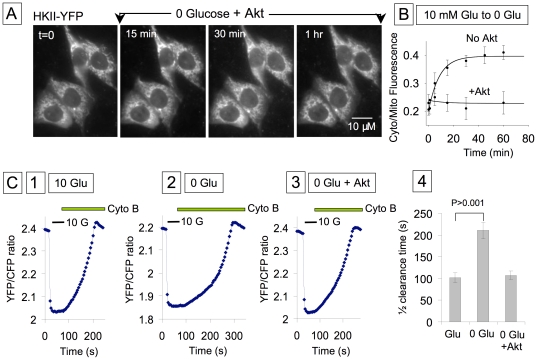
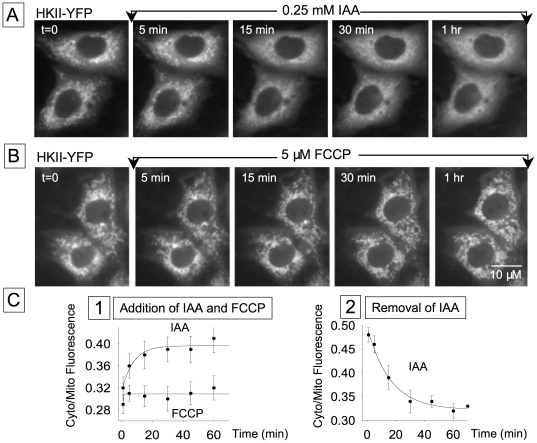
BACKGROUND: The first step in glucose metabolism is conversion of glucose to glucose 6-phosphate (G-6-P) by hexokinases (HKs), a family with 4 isoforms. The two most common isoforms, HKI and HKII, have overlapping tissue expression, but different subcellular distributions, with HKI associated mainly with mitochondria and HKII associated with both mitochondrial and cytoplasmic compartments. Here we tested the hypothesis that these different subcellular distributions are associated with different metabolic roles, with mitochondrially-bound HK's channeling G-6-P towards glycolysis (catabolic use), and cytoplasmic HKII regulating glycogen formation (anabolic use). METHODOLOGY/PRINCIPAL FINDINGS: To study subcellular translocation of HKs in living cells, we expressed HKI and HKII linked to YFP in CHO cells. We concomitantly recorded the effects on glucose handling using the FRET based intracellular glucose biosensor, FLIPglu-600 mM, and glycogen formation using a glycogen-associated protein, PTG, tagged with GFP. Our results demonstrate that HKI remains strongly bound to mitochondria, whereas HKII translocates between mitochondria and the cytosol in response to glucose, G-6-P and Akt, but not ATP. Metabolic measurements suggest that HKI exclusively promotes glycolysis, whereas HKII has a more complex role, promoting glycolysis when bound to mitochondria and glycogen synthesis when located in the cytosol. Glycogen breakdown upon glucose removal leads to HKII inhibition and dissociation from mitochondria, probably mediated by increases in glycogen-derived G-6-P. CONCLUSIONS/SIGNIFICANCE: These findings show that the catabolic versus anabolic fate of glucose is dynamically regulated by extracellular glucose via signaling molecules such as intracellular glucose, G-6-P and Akt through regulation and subcellular translocation of HKII. In contrast, HKI, which activity and regulation is much less sensitive to these factors, is mainly committed to glycolysis. This may be an important mechanism by which HK's allow cells to adapt to changing metabolic conditions to maintain energy balance and avoid injury.
Overview
The claims and statistics of this paper haven’t been checked yet.
Free: it reads the open-access text and checks the first 5 claims that cite a source we can check. Create a free account to check every claim.
Integrity signals
Registry
Cites
Statistics
Figures
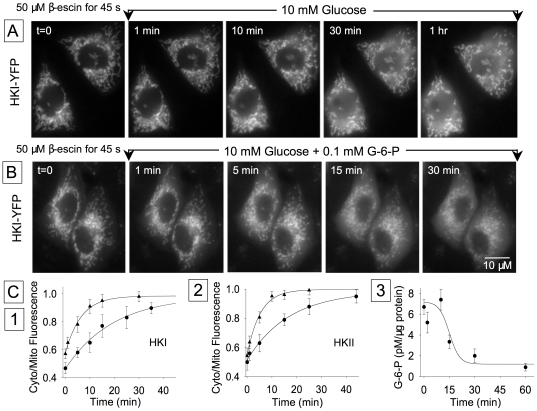
Verification
Claims the paper makes
The claims and statistics of this paper haven’t been checked yet.
Free: it reads the open-access text and checks the first 5 claims that cite a source we can check. Create a free account to check every claim.
Claims other papers make about this one
Each is checked against this paper’s own text: does it say what the citing paper says it does?
The source backs part of the claim, not all of it — or backs it for a different population, condition or comparison.
In the citing paper
“hexokinases I and II can translocate to the mitochondrial outer membrane where their catalytic activities are less sensitive to product inhibition (Azoulay-Zohar et al., 2004; Hashimoto and Wilson, 2002; John et al., 2011).”
From Lipid-Induced Mitochondrial Stress and Insulin Action in Muscle (2012) · cites this paper as John et al., 2011
Experimental — accuracy not yet measuredThe cited source says what the claim attributes to it.
In the citing paper
“Additionally, it has been proposed that HK1 remains associated with mitochondria to promote glycolysis whereas HK2 dynamically translocates between cytosol and mitochondria where it directs the metabolic fate of glucose between anabolic (glycogen synthesis and pentose phosphate shunt) and catabolic (glycolysis) metabolism (Wilson, 2003;John et al., 2011).”
From Human ApoE Isoforms Differentially Modulate Brain Glucose and Ketone Body Metabolism: Implications for Alzheimer's Disease Risk Reduction and Early Intervention (2018) · cites this paper as John et al., 2011
Self-check
Percentages, sums and reported differences re-computed from the paper’s own numbers.
The self-check needs the paper’s full text.
Citations
Cites
Isozymes of mammalian hexokinase: structure, subcellular localization and metabolic function
Wilson, J. E. (2003) · Journal of Experimental Biology · doi:10.1242/jeb.00241 · Cited by 1,085 · cited 6×
“The idea that differing subcellular locations of HKI and HKII are important was postulated by Wilson when he stated that ‘‘the Type I isozyme bound to actively phosphorylating mitochondria facilitates introduction of glucose into glycolysis, with the final stages of glucose metabolism occurring in the mitochondria.”
BackgroundInfluentialGottlob, K., Majewski, N., Kennedy, S., Kandel, E., Robey, R. B., & Hay, N. (2001) · Genes & Development · doi:10.1101/gad.889901 · Cited by 961 · cited 2×
“Since then, Wilson and others [10,11,12,13,14,15,16,17,18] have shown that the interaction of HKs with mitochondria is not static, but is regulated by factors such as glucose, G-6-P and kinases such as Akt and GSK-3.”
BackgroundThe Relationships between Substrates and Enzymes of Glycolysis in Brain
Lowry, O. H., & Passonneau, J. V. (1964) · Journal of Biological Chemistry · doi:10.1016/s0021-9258(18)51741-5 · Cited by 552 · cited 2×
“3A [1]), to allow more time for glycogen synthesis, glucose clearance by metabolism was delayed, occurring very slow initially, followed by rapid clearance similar to that after the short exposure to glucose.”
BackgroundDepre, C., Vanoverschelde, J.-L. J., & Taegtmeyer, H. (1999) · Circulation · doi:10.1161/01.cir.99.4.578 · Cited by 425 · cited 1×
“In adult muscle, fatty acids as well as glucose and glycogen are available as substrates to support oxidative metabolism [5].”
BackgroundAZOULAY-ZOHAR, H., ISRAELSON, A., ABU-HAMAD, S., & SHOSHAN-BARMATZ, V. (2004) · Biochemical Journal · doi:10.1042/bj20031465 · Cited by 408
Pastorino, J. G., Hoek, J. B., & Shulga, N. (2005) · Cancer Research · doi:10.1158/0008-5472.can-05-1925 · Cited by 398 · cited 1×
“Since then, Wilson and others [10,11,12,13,14,15,16,17,18] have shown that the interaction of HKs with mitochondria is not static, but is regulated by factors such as glucose, G-6-P and kinases such as Akt and GSK-3.”
BackgroundRose, I. A., & Warms, J. V. B. (1967) · Journal of Biological Chemistry · doi:10.1016/s0021-9258(18)96139-9 · Cited by 397
Miyamoto, S., Murphy, A. N., & Brown, J. H. (2008) · Cell Death & Differentiation · doi:10.1038/sj.cdd.4402285 · Cited by 339 · cited 3×
“Phosphorylation of residue T473 by Akt in the linker region between the N and C terminal domain of HKII may facilitate its interaction with mitochondria [14].”
BackgroundImaging of the Dynamics of Glucose Uptake in the Cytosol of COS-7 Cells by Fluorescent Nanosensors
Fehr, M., Lalonde, S., Lager, I., Wolff, M. W., & Frommer, W. B. (2003) · Journal of Biological Chemistry · doi:10.1074/jbc.m301333200 · Cited by 295 · cited 1×
“Concomitantly, we measured changes in intracellular glucose using a genetically-encoded intracellular glucose biosensor, FLIPglu-600 mM, which undergoes changes in FRET upon binding glucose [25] and assessed glycogen formation, also in live cells, using a glycogen targeting protein, PTG, tagged with GFP.”
MethodMajewski, N., Nogueira, V., Robey, R. B., & Hay, N. (2004) · Molecular and Cellular Biology · doi:10.1128/mcb.24.2.730-740.2004 · Cited by 289 · cited 2×
“Since then, Wilson and others [10,11,12,13,14,15,16,17,18] have shown that the interaction of HKs with mitochondria is not static, but is regulated by factors such as glucose, G-6-P and kinases such as Akt and GSK-3.”
Background
Cited by
Items 101–200 of 267
What role for cellular metabolism in the control of hepatitis viruses?
Diaz, O., Vidalain, P., Ramière, C., Lotteau, V., & Perrin‐Cocon, L. (2022) · Frontiers in Immunology · doi:10.3389/fimmu.2022.1033314 · Cited by 30
“The subcellular localization of HK2 dynamically regulates the catabolic versus anabolic fate of glucose-6phosphate, promoting glycolysis when bound to the mitochondria and glycogen synthesis when located in the cytosol (22).”
BackgroundWaskova-Arnostova, P., Elsnicová, B., Kašparová, D., Šebesta, O., Novotný, J., Neckář, J., Kolář, F., & Zurmanova, J. M. (2013) · Cellular Physiology and Biochemistry · doi:10.1159/000343350 · Cited by 30
Martín, A. S., Arce‐Molina, R., Aburto, C., Baeza‐Lehnert, F., Barros, L. F., Contreras‐Baeza, Y., Pinilla, A., Ruminot, I., Rauseo, D., & Sandoval, P. Y. (2022) · Free Radical Biology and Medicine · doi:10.1016/j.freeradbiomed.2022.02.012 · Cited by 29
Cellular Energy Metabolism in T-Lymphocytes
Gaber, T., Strehl, C., Sawitzki, B., Hoff, P., & Buttgereit, F. (2014) · International Reviews of Immunology · doi:10.3109/08830185.2014.956358 · Cited by 29
“Both Akt and mTORC1 are capable of promoting aerobic glycolysis to support effector T-cell growth and function by: (i) promotion of glucose transporter 1 (GLUT1) translocation to the cell surface [43]; (ii) prevention of GLUT1 internalization upon activation [43]; (iii) induction of amino acid transporter expression […”
BackgroundImmunometabolism regulates TCR recycling and iNKT cell functions
Fu, S., Zhu, S., Tian, C., Bai, S., Zhang, J., Zhan, C., Xie, D., Wang, L., Li, Z., Li, J., et al. (2019) · Science Signaling · doi:10.1126/scisignal.aau1788 · Cited by 27
How Do Hexokinases Inhibit Receptor-Mediated Apoptosis?
Schoeniger, A., Wolf, P., & Edlich, F. (2022) · Biology · doi:10.3390/biology11030412 · Cited by 26
Waskova-Arnostova, P., Elsnicová, B., Kašparová, D., Hornikova, D., Kolář, F., Novotný, J., & Zurmanova, J. M. (2015) · Journal of Applied Physiology · doi:10.1152/japplphysiol.01035.2014 · Cited by 26
“The cytoprotective mechanism of HK lies in its binding with mitochondria, which can be enhanced under ischemic conditions (43), by increased level of insulin (43, 49), by morphine administration (49), or by increased concentration of glucose (13).”
BackgroundSpatial control of neuronal metabolism through glucose-mediated mitochondrial transport regulation
Agrawal, A., Pekkurnaz, G., & Koslover, E. F. (2018) · eLife · doi:10.7554/elife.40986 · Cited by 26
Electrical control of the cell energy metabolism at the level of mitochondrial outer membrane
Lemeshko, V. V. (2020) · Biochimica et Biophysica Acta (BBA) - Biomembranes · doi:10.1016/j.bbamem.2020.183493 · Cited by 26
Budny, V., Ruminot, I., Wybitul, M., Treyer, V., Barros, L. F., & Tackenberg, C. (2025) · Translational Psychiatry · doi:10.1038/s41398-025-03550-w · Cited by 25
Yasudome, R., Seki, N., Asai, S., Goto, Y., Kita, Y., Hozaka, Y., Wada, M., Tanabe, K., Idichi, T., Mori, S., et al. (2022) · International Journal of Molecular Sciences · doi:10.3390/ijms231911616 · Cited by 25
ErbB2-upregulated HK1 and HK2 promote breast cancer cell proliferation, migration and invasion
Ma, X., Chen, J., Huang, B., Fu, S., Qu, S., Yu, R., & Zhao, Y. (2023) · Medical Oncology · doi:10.1007/s12032-023-02008-7 · Cited by 25
“The sequences of siHK1 were as follows: siHK1-A, 5′-CGA UGU AGU CAC CUU ACU AdTdT-3′ (sense) [9] and siHK1-B, 5′-AAC GTG AAT CCC ACA GGT AAC TTC TTG-3′ (sense) [20].”
MethodRabbani, N., & Thornalley, P. J. (2024) · Diabetes Research and Clinical Practice · doi:10.1016/j.diabres.2024.111905 · Cited by 25
Golshani-Hebroni, S. G. (2015) · Gene · doi:10.1016/j.gene.2015.12.046 · Cited by 24
Yu, S., Yan, X., Tian, R., Xu, L., Zhao, Y., Sun, L., & Su, J. (2021) · International Journal of Molecular Sciences · doi:10.3390/ijms22083983 · Cited by 24
“Mitochondrial localisation of HKII has become the main target of cisplatin resistance research [28,31].”
BackgroundThe impact of glycolysis on ischemic stroke: from molecular mechanisms to clinical applications
Liu, Y., Hu, P., Cheng, H., Xu, F., & Ye, Y. (2025) · Frontiers in Neurology · doi:10.3389/fneur.2025.1514394 · Cited by 24
Bolado‐Carrancio, A., Riancho, J. A., Sainz, J., & Rodríguez-Rey, J. C. (2014) · Biochemical and Biophysical Research Communications · doi:10.1016/j.bbrc.2014.03.010 · Cited by 23
Bearham, J., Garnett, J. P., Schroeder, V., Biggart, M., & Baines, D. L. (2019) · American Journal of Physiology-Cell Physiology · doi:10.1152/ajpcell.00193.2019 · Cited by 23
“muscle cells, it shuttles to the mitochondria in response to elevated extracellular glucose driving glycolysis and glycogen storage (6, 17).”
BackgroundInfluentialTherapeutic Implications of Targeting Energy Metabolism in Breast Cancer
Sakharkar, M. K., Shashni, B., Sharma, K., Dhillon, S. K., Ranjekar, P. R., & Sakharkar, K. R. (2013) · PPAR Research · doi:10.1155/2013/109285 · Cited by 23
“Four importantmammalian hexokinase isozymes that vary in subcellular locations and kinetics with respect to different substrates and conditions and physiological functions are known and designated as HK1-4 [47].”
BackgroundLu, J., Liang, X., Gao, Y., Fu, G., & Shen, Q. (2019) · Journal of Cellular Biochemistry · doi:10.1002/jcb.29278 · Cited by 22
“It is also known that HK2 supports aerobic glycolysis in response to altered glucose levels.(19) HK2 is also related to the modulation of apoptosis via regulating the functions of the mitochondrial membrane.”
BackgroundLi, J., Fang, Y. H., & Wu, D. (2021) · Current topics in membranes · doi:10.1016/bs.ctm.2021.07.003 · Cited by 20
“competition for ATP (Ottaway & Mowbray, 1977) or to divert energy between anabolic or catabolic processes (John et al., 2011).”
BackgroundKolář, D., Grešíková, M., Waskova-Arnostova, P., Elsnicová, B., Kohutova, J., Hornikova, D., Vebr, P., Neckář, J., Dusilová, T., Kašparová, D., et al. (2017) · Molecular and Cellular Biochemistry · doi:10.1007/s11010-017-3001-5 · Cited by 20
García, S., Saldana-Caboverde, A., Anwar, M. R., Raval, A. P., Nissanka, N., Pinto, M., Moraes, C. T., & Díaz, F. (2021) · Human Molecular Genetics · doi:10.1093/hmg/ddab282 · Cited by 20
Metabolic Plasticity in Dendritic Cell Responses: Implications in Allergic Asthma
Mishra, A. (2017) · Journal of Immunology Research · doi:10.1155/2017/5134760 · Cited by 19
Hypothalamic arcuate nucleus glucokinase regulates insulin secretion and glucose homeostasis
Ma, Y., Ratnasabapathy, R., Izzi‐Engbeaya, C. N., Nguyen‐Tu, M., Richardson, E., Hussain, S., Backer, I. D., Holton, C. M., Norton, M., Carrat, G., et al. (2018) · Diabetes Obesity and Metabolism · doi:10.1111/dom.13359 · Cited by 19
“These differences in sub-cellular localization are likely to result in a different metabolic fate for glucose, with alternative signalling pathways activated in response, thus resulting in different physiological responses.(15) Finally, adenovirus transfects tanycytes and astrocytes as well as neurons.”
BackgroundMitochondrial Kinase Signaling for Cardioprotection
Boengler, K., Eickelmann, C., & Kleinbongard, P. (2024) · International Journal of Molecular Sciences · doi:10.3390/ijms25084491 · Cited by 18
“In H9C2 cells, simulated hypoxia/reoxygenation decreases mitochondrial Src phosphorylation, an effect prevented by the inhibition of JNK [20].”
BackgroundHowden, J. H., Hakansson, H., Nieto‐Rostro, M., McAdam, R. L., Arber, C., Brandon, N. J., & Kittler, J. T. (2025) · Cell Reports · doi:10.1016/j.celrep.2025.115809 · Cited by 18
Baqader, N. O., Radulović, M., Crawford, M., Stoeber, K., & Godovac‐Zimmermann, J. (2014) · Journal of Proteome Research · doi:10.1021/pr500638h · Cited by 16
Investigations into photoreceptor energy metabolism during experimental retinal detachment
Chidlow, G., Chan, W. O., Wood, J. P. M., & Casson, R. J. (2022) · Frontiers in Cellular Neuroscience · doi:10.3389/fncel.2022.1036834 · Cited by 15
“HK2 constitutes the primary regulated isoform of hexokinase and its expression, as well as cellular distribution, undergo dynamic change in conditions of metabolic stress (Mathupala et al., 2001; John et al., 2011).”
BackgroundMetabolism, a Blossoming Target for Small-Molecule Anticancer Drugs
Puxeddu, M., Silvestri, R., & Regina, G. L. (2025) · Molecules · doi:10.3390/molecules30173457 · Cited by 16
“Both isoforms were localized to the mitochondrial outer membrane; HK2 ′ s membrane association was found to be partially dependent on G6P [84].”
Zambon, A., Zoso, A., Luni, C., Frommer, W. B., & Elvassore, N. (2013) · Integrative Biology · doi:10.1039/c3ib40204e · Cited by 15
Nederlof, R., Xie, C., Eerbeek, O., Koeman, A., Milstein, D. M. J., Hollmann, M. W., Mik, E. G., Warley, A., Southworth, R., Akar, F. G., et al. (2013) · Circulation Research · doi:10.1161/circresaha.112.274308 · Cited by 15
“Interestingly, ΔΨ m depolarization was associated with the initiation of sustained ventricular fibrillation within 21.1±3.2 minutes of TAT-HKII administration in all treated hearts (Figure 1D, red trace).”
BackgroundInfluentialHexokinase 2: The preferential target of trehalose‐6‐phosphate over hexokinase 1
Magalhães, R. S. S., Boechat, F. C., Brasil, A. D. A., Neto, J. R. M., Ribeiro, G. D., Paranhos, L. H., de Souza, N. N., Vieira, T. C. R. G., Outeiro, T. F., Neves, B. C., et al. (2022) · Journal of Cellular Biochemistry · doi:10.1002/jcb.30317 · Cited by 15
“HK2 N‐terminal binds to the outer membrane of the mitochondrion through VDAC1, forming an interaction between the inner and outer membranes of the mitochondrion.7,31 The binding to mitochondria gives to HK2 direct access to ATP produced by oxidative phosphorylation, in addition to attenuating HK2 inhibition by G6P.7,8…”
BackgroundInfluentialButler, M., Chotiwan, N., Brewster, C. D., DiLisio, J. E., Ackart, D. F., Podell, B. K., Basaraba, R. J., Perera, R. M., Quackenbush, S. L., & Rovnak, J. (2020) · Viruses · doi:10.3390/v12060654 · Cited by 15
XU, G.-K., SUN, C.-Y., QIN, X.-Y., HAN, Y., LI, Y., XIE, G.-Y., & Min-Jian, Q. (2017) · Chinese Journal of Natural Medicines · doi:10.1016/s1875-5364(17)30087-0 · Cited by 14
Paradoski, B. T., Hou, S., Mejia, E. M., Olayinka‐Adefemi, F., Fowke, D., Hatch, G. M., Saleem, A., Banerji, V., Hay, N., Zeng, H., et al. (2024) · iScience · doi:10.1016/j.isci.2024.110939 · Cited by 14
JIANG, S., Zhang, C., Xiao, P. A. N., Storey, K. B., & Zhang, W. (2024) · Integrative Zoology · doi:10.1111/1749-4877.12804 · Cited by 14
Nederlof, R., Denis, S. W., Lauzier, B., Rosiers, C. D., Laakso, M., Hagen, J., Argmann, C., Wanders, R. J. A., Houtkooper, R. H., Hollmann, M. W., et al. (2017) · Metabolism · doi:10.1016/j.metabol.2017.04.008 · Cited by 14
Epigenome-wide association study of asthma and wheeze characterizes loci within HK1
Everson, T. M., Zhang, H., Lockett, G. A., Kaushal, A., Forthofer, M. S., Ewart, S., Burrows, K., Relton, C. L., Sharp, G. C., Henderson, A. J., et al. (2019) · Allergy Asthma and Clinical Immunology · doi:10.1186/s13223-019-0356-z · Cited by 14
Glucose metabolism provide distinct prosurvival benefits to non-small cell lung carcinomas
Wu, R., Galán-Acosta, L., & Norberg, E. (2015) · Biochemical and Biophysical Research Communications · doi:10.1016/j.bbrc.2015.03.071 · Cited by 14
Busch, C., Schröter, T. M., Grabolle, M., Wenzel, M., Kempe, H., Kaiser, W. A., Resch‐Genger, U., & Hilger, I. (2012) · Journal of Nuclear Medicine · doi:10.2967/jnumed.111.094391 · Cited by 14
Huggler, K. S., Flickinger, K. M., Forsberg, M. H., Fritz, C. M., Chang, G. R., McGuire, M. F., Capitini, C. M., & Cantor, J. R. (2026) · Nature Metabolism · doi:10.1038/s42255-025-01428-1 · Cited by 13
“…of HK2 localizes to the OMM regardless of culture in HPLM or RPMI, whereas fractional enrichment of HK1 at the OMM is up to fourfold higher in HPLM. Previous reports proposed that HK–OMM binding supports glycolysis, while OMM-detached (‘cytosolic’) HK directs G6P to other pathways 19,28,29,36 .”
InfluentialLiver-specific overexpression of HKDC1 increases hepatocyte size and proliferative capacity
Pusec, C. M., Ilievski, V., Jesus, A. D., Farooq, Z., Zapater, J. L., Sweis, N. S., Ismail, H., Khan, M. W., Ardehali, H., Córdoba‐Chacón, J., et al. (2023) · Scientific Reports · doi:10.1038/s41598-023-33924-3 · Cited by 13
A Hexokinase 2 Modulator for Field-Directed Treatment of Experimental Actinic Keratoses
Behar, V., Pahima, H. T., Kozminsky‐Atias, A., Arbel, N., Loeb, E., Herzberg, M., & Becker, O. M. (2018) · Journal of Investigative Dermatology · doi:10.1016/j.jid.2018.05.028 · Cited by 13
“Moreover, under normal conditions, the subcellular distribution of HK1 and HK2 is different, with HK1 associated mainly with mitochondria and HK2 present primarily in the cytoplasm (John et al., 2011).”
BackgroundTIGAR inclusion pathology is specific for Lewy body diseases
Robles-Lopez, K., Simpson, J. E., Watson, L. C., Mortiboys, H., Hautbergue, G. M., Bandmann, O., & Highley, J. R. (2018) · Brain Research · doi:10.1016/j.brainres.2018.09.032 · Cited by 13
Pinto, G., Alhaiek, A. A. M., & Godovac‐Zimmermann, J. (2015) · Expert Review of Proteomics · doi:10.1586/14789450.2015.1002474 · Cited by 13
“This is a large number compared to previous studies of highly purified mitochondria/nuclei, which we believe reflects the stripping of important proteins by stringent organelle purification methods, for example, NRF2 or HK1 and HK2 from the glycolysis enzymatic cascade that are known to shuttle between mitochondria an…”
ResultLoss of hexokinase 1 sensitizes ovarian cancer to high-dose metformin
Šimčíková, D., Gardáš, D., Hložková, K., Hruda, M., Žáček, P., Rob, L., & Heneberg, P. (2021) · Cancer & Metabolism · doi:10.1186/s40170-021-00277-2 · Cited by 12
“HK2 can translocate between mitochondria and the cytosol depending on glucose, glucose 6-phosphate, and PKB/Akt, regardless of ATP, whereas HK1 remains bound to mitochondria [9].”
BackgroundYang, X., Li, S., Xu, C., Liu, S., Zhang, X., Lian, B., & Li, M. (2024) · Cancer Biology & Therapy · doi:10.1080/15384047.2024.2365449 · Cited by 12
“13 The HK2 functions in tumor cells include metabolic rewiring toward aerobic glycolysis, autophagy tuning to handle nutrient shortages, and shielding from cell death stimuli.”
BackgroundLemeshko, V. V. (2017) · Biological and medical physics, biomedical engineering · doi:10.1007/978-3-319-55539-3_9 · Cited by 12
Real‐time imaging of sodium glucose transporter (SGLT1) trafficking and activity in single cells
Ghezzi, C., Calmettes, G., Morand, P., Ribalet, B., & John, S. (2017) · Physiological Reports · doi:10.14814/phy2.13062 · Cited by 12
“Although CHO cells are routinely used as an expression system for many proteins, including GLUTs, ion channels, hexokinases, and FRET-based sensors (John et al. 2011), the level of expression of our SGLT1 constructs in these cells was very low.”
BackgroundMethodInfluentialSelf-citationNedvědová, I., Kolář, D., Elsnicová, B., Hornikova, D., Novotný, J., Kalous, M., Pravenec, M., Neckář, J., Kolář, F., & Zurmanova, J. M. (2018) · Physiological Genomics · doi:10.1152/physiolgenomics.00040.2017 · Cited by 12
“RESEARCH ARTICLE Genetics of Metabolic Syndrome Mitochondrial genome modulates myocardial Akt/Glut/HK salvage pathway in spontaneously hypertensive rats adapted to chronic hypoxia Iveta Nedvedova,1 David Kolar,1 Barbara Elsnicova,1 Daniela Hornikova,1 Jiri Novotny,1 Martin Kalous,1 Michal Pravenec,2 Jan Neckar,2 Frant…”
BackgroundInfluentialThe role of glycolysis in immune response
Budikhina, A. S., & Pashenkov, M. V. (2021) · Immunologiya · doi:10.33029/0206-4952-2021-42-1-5-20 · Cited by 12
Li, X., Li, D., Liu, S., Wang, Y., Fan, X., Yan, Z., Tan, S., Zhuang, P., & Zhang, Y. (2025) · Phytomedicine · doi:10.1016/j.phymed.2025.157529 · Cited by 11
Fu, J., Yu, S., Zhao, X., Zhang, C., Shen, L., Liu, Y., & Yu, H. (2022) · International Journal of Molecular Sciences · doi:10.3390/ijms232416034 · Cited by 11
“HK2 localized in mitochondria acts as the ratelimiting enzyme of glycolysis, while HK2 localized in cytoplasm promotes the pentose phosphate pathway and glycogen synthesis pathway [34].”
BackgroundMicro-RNAs in breast cancer progression and metastasis: A chromatin and metabolic perspective
Sikder, S., Bhattacharya, A., Agrawal, A., Sethi, G., & Kundu, T. K. (2024) · Heliyon · doi:10.1016/j.heliyon.2024.e38193 · Cited by 11
“There are four different isoforms of hexokinase (HK1-4) [109 – 111] among which HK2 is upregulated in a variety of cancers including breast cancer [112].”
BackgroundGlucose-6-Phosphate Upregulates Txnip Expression by Interacting With MondoA
Zhang, X., Fu, T., He, Q., Gao, X., & Luo, Y. (2020) · Frontiers in Molecular Biosciences · doi:10.3389/fmolb.2019.00147 · Cited by 11
“Extracellular glucose enters the cell via a glucose transporter protein (Glut 1 and Glut 4) and is phosphorylated by the glycolytic kinase (HK) (John et al., 2011) in the glycolytic pathway to produce glucose 6-phosphate (G6P).”
BackgroundSuzuki, C., Han, S., Kesavamoorthy, G., Kosugi, M., Araki, K., Harada, N., Kanazawa, M., Tsukada, H., Magata, Y., & Ouchi, Y. (2021) · Scientific Reports · doi:10.1038/s41598-021-92436-0 · Cited by 11
Hossain, M. I., Lee, J. H., Gagné, J., Khan, J., Poirier, G. G., King, P. H., Dawson, V. L., Dawson, T. M., & Andrabi, S. A. (2024) · The FASEB Journal · doi:10.1096/fj.202302559r · Cited by 11
“HK-1 is the neuronal HK (John et al., 2011), and our results confirmed that PARP is activated in OGD and PAR binds HK-1 and likely inhibits its activity as reported previously (Andrabi et al.”
ResultAcquired Unilateral Melanocytic Nevi in Otherwise Normal Skin
Yu, X., Nagai, H., Nishigori, C., & Horikawa, T. (2008) · Dermatology · doi:10.1159/000124341 · Cited by 11
Spatial and temporal dynamics of the cardiac mitochondrial proteome
Lau, E., Huang, D., Cao, Q., Dincer, T. U., Black, C. M., Lin, A. J., Lee, J. M., Wang, D., Liem, D. A., Lam, M. P., et al. (2015) · Expert Review of Proteomics · doi:10.1586/14789450.2015.1024227 · Cited by 11
“Parkin PINK1 MAPL Peroxisome Lysosome VDAC UQCRC2 Vesicle formation VDACs PGAM5 Anchor Hypothesized channel MDV A B C informahealthcare.com 139 potentially attributable to compensatory effects from decreased protein synthesis of the Pim1 substrates in Pim1D strains.”
BackgroundInfluentialTian, Z., Zheng, H., Fan, Y., Li, B., Huang, Z., Wang, M., Zhang, J., Zhao, J., Wang, S., & Xie, J. (2025) · Cells · doi:10.3390/cells14131004 · Cited by 10
“HK2 is localized to two primary cellular compartments: cytosol and mitochondria [55].”
Rajendran, M., Rosencrans, W. M., Bautista, N. A., Fitzgerald, W., Huynh, D., Beyene, B. G., Quan, B., Petersen, J. D., Hwang, J., Chou, T., et al. (2025) · Journal of Biological Chemistry · doi:10.1016/j.jbc.2025.111009 · Cited by 11
“Previous studies have shown that the mitochondrial localization of HK can regulate energy metabolism (63, 64).”
Lu, X., Sharko, O. L., Shmanai, V. V., Shchepinov, M. S., & Markworth, J. F. (2026) · Free Radical Biology and Medicine · doi:10.1016/j.freeradbiomed.2026.02.037 · Cited by 12
Михайловна, М. А., Maximchik, P. V., Chkadua, G. Z., & Pashenkov, M. V. (2023) · Frontiers in Immunology · doi:10.3389/fimmu.2023.1006002 · Cited by 10
Mi, W., Qiao, S., Zhang, X., Wu, D., Zhou, L., & Lai, H. (2021) · Annals of Translational Medicine · doi:10.21037/atm-20-7362 · Cited by 10
“Based on the evidence, AKT, another possible signaling pathway, regulates cell activation by modulating glycolysis through phosphorylation and activation of HK-II (9,53), which is located on the mitochondrial surface and contains an AKT phosphorylation consensus sequence.”
BackgroundNovel myristoylation of the sperm-specific hexokinase 1 isoform regulates its atypical localization
Kumar, S., Parameswaran, S., & Sharma, R. K. (2015) · Biology Open · doi:10.1242/bio.012831 · Cited by 10
“Among the major hexokinase isoforms: HK1, HK2, HK3, and HK4 (also known as glucokinase), HK1 is the most ubiquitous isoform that associates with mitochondria via its porin binding domain (PBD) in the N-terminal segment of the protein (Sun et al., 2008; Wilson, 2003).”
The potential role of glycogen metabolism in diffuse large B-cell lymphoma
Jalali, S., & Ansell, S. M. (2019) · Leukemia & lymphoma/Leukemia and lymphoma · doi:10.1080/10428194.2019.1702185 · Cited by 10
“HK-I and HK-II are localized in the cytosol and can interact with mitochondrial outer membrane to shuttle Glu-6-p toward glycolytic pathway [7,8].”
BackgroundDeme, P., Rojas, C. J., Slusher, B. S., Rais, R., Afghah, Z., Geiger, J. D., & Haughey, N. J. (2020) · Experimental Neurology · doi:10.1016/j.expneurol.2020.113181 · Cited by 10
“, 1991), and the relative activity of hexokinase bound to mitochondria is far greater than the activity of cytosolic hexokinase (John et al., 2011).”
BackgroundMetabolic Targets in CRC: The Emerging Role of Cytochrome P450 Inhibitors
Alshakarchi, H. I., Azari, H., Jeddoa, Z. M. A., Jafar, N. N. A., Khazaei, Y., Gataa, I. S., Ferns, G. A., & Avan, A. (2025) · Current Pharmaceutical Design · doi:10.2174/0113816128341167250520063502 · Cited by 9
Aslam, M., Syed, N., & Jahan, S. (2021) · Journal of Ethnopharmacology · doi:10.1016/j.jep.2021.113897 · Cited by 9
Codocedo, J. F., & Landreth, G. E. (2022) · Immunometabolism · doi:10.1097/in9.0000000000000011 · Cited by 9
“HK1 is predominantly associated with mitochondria, suggesting that HK1 principally performs a catabolic function, channeling glucose into glycolysis for ATP production [3,8].”
BackgroundFarina, S., Voorsluijs, V., Fixemer, S., Bouvier, D. S., Claus, S., Ellisman, M. H., Bordas, S., & Skupin, A. (2023) · PLoS Computational Biology · doi:10.1371/journal.pcbi.1011464 · Cited by 10
Chen, X., Liu, Z., Gu, Y., Zhang, Y., Liu, Y., Wang, L., & Song, L. (2021) · Developmental & Comparative Immunology · doi:10.1016/j.dci.2021.104083 · Cited by 9
Modelling the Phosphorylation of Glucose by Human hexokinase I
Mai, V. Q., & Meere, M. (2021) · Mathematics · doi:10.3390/math9182315 · Cited by 9
“It is also noteworthy that the time scale over which the phosphorylation process was completed was of the order of ten seconds, a prediction that is consistent with the literature values [61,62].”
ResultCardiac expression and location of hexokinase changes in a mouse model of pure creatine deficiency
Branovets, J., Karro, N., Barsunova, K., Laasmaa, M., Lygate, C. A., Vendelin, M., & Birkedal, R. (2020) · American Journal of Physiology-Heart and Circulatory Physiology · doi:10.1152/ajpheart.00188.2020 · Cited by 9
Large scale, single-cell FRET-based glucose uptake measurements within heterogeneous populations
Wollman, A. J. M., Kioumourtzoglou, D., Ward, R. H., Gould, G. W., & Bryant, N. J. (2022) · iScience · doi:10.1016/j.isci.2022.104023 · Cited by 9
Tumor Metabolism: Focused on Tumor Glycolysis, Progress, and Prospects in Cancer Therapy
Kumar, A., Singh, M., Sharma, D., Kumar, V., & Rani, R. (2021) · Wiley eBooks · doi:10.1002/0471266949.bmc286 · Cited by 9
Flores-Sauceda, M. A., Leyva‐Carrillo, L., Camacho‐Jiménez, L., Gómez‐Jiménez, S., Peregrino-Uriarte, A. B., & Yepiz-Plascencia, G. M. (2024) · Comparative Biochemistry and Physiology Part A Molecular & Integrative Physiology · doi:10.1016/j.cbpa.2024.111637 · Cited by 8
Mitochondrial bound hexokinase type I in normal and streptozotocin diabetic rat retina
Ramírez-Pérez, G., Sánchez‐Chávez, G., & Salceda, R. (2020) · Mitochondrion · doi:10.1016/j.mito.2020.04.004 · Cited by 8
HK1 and HK2 Beyond Glycolysis: Mitochondrial Interactions and Dual Roles in Metabolism and Cell Fate
Pesce, N. A., Seminara, G., Giarrusso, G., & Tomasello, M. F. (2025) · Advanced Biology · doi:10.1002/adbi.202500472 · Cited by 7
“Through this dynamic redistribution, HK functions as a metabolic sensor that fine-tuns glucose partitioning between glycolytic energy production and anabolic biosynthetic pathways enabling cells to adjust fuel utilization in response to specific requirements [22, 28].”
Ho, W., Chang, J., Lei, C.-J., Chen, T., Wang, J.-K., Chang, S.-W., Yang, M., Jou, T., & Wang, I. (2025) · Investigative Ophthalmology & Visual Science · doi:10.1167/iovs.66.1.51 · Cited by 7
“32,33 Indeed, we found that, although the overall levels of HK1 and HK2 remained unchanged, the recruitment of HK1 and HK2 to the mitochondria was enhanced under monensin stress.”
Hexokinases in gastrointestinal cancers: From molecular insights to therapeutic opportunities
Liang, G., Ma, Y., Deng, P., Li, S., He, C., He, H., Liu, H., Fan, Y., & Li, Z. (2025) · Seminars in Oncology · doi:10.1016/j.seminoncol.2025.152351 · Cited by 7
Metabolic targeting of malignant tumors: a need for systemic approach
Margetis, A. T. (2022) · Journal of Cancer Research and Clinical Oncology · doi:10.1007/s00432-022-04212-w · Cited by 7
“Although it is yet not fully understood why HK-2 is preferentially upregulated in cancer, compared to HK-1 bound in mitochondria and promoting exclusively glycolysis, HK-2 is located in both cytosol and mitochondria serving a more complex role integrating metabolic status, cellular protection and growth; furthermore,…”
BackgroundLemeshko, V. V. (2017) · Biochimica et Biophysica Acta (BBA) - Biomembranes · doi:10.1016/j.bbamem.2017.09.001 · Cited by 8
El papel de la membrana mitocondrial externa en el control del metabolismo energético celular
Lemeshko, V. V. (2018) · Revista de la Academia Colombiana de Ciencias Exactas Físicas y Naturales · doi:10.18257/raccefyn.549 · Cited by 7
The Non-canonical Role of Metabolic Enzymes in Immune Cells and Its Impact on Diseases
Alves, R. W., Doretto-Silva, L., da Silva, E. M., Fürstenau, C. R., & Andrade‐Oliveira, V. (2020) · Current Tissue Microenvironment Reports · doi:10.1007/s43152-020-00020-x · Cited by 7
CRISPR/Cas9-mediated MSTN gene editing induced mitochondrial alterations in C2C12 myoblast cells
Wang, L., Ma, S., Ding, Q., Wang, X., & Chen, Y. (2019) · Electronic Journal of Biotechnology · doi:10.1016/j.ejbt.2019.03.009 · Cited by 7
Exploring Mechanisms of Glucose Uptake Regulation and Dilution Resistance in Growing Cancer CellsPreprint
Tveit, D. M., Fjeld, G., Drengstig, T., Filipp, F. V., Ruoff, P., & Thorsen, K. (2020) · bioRxiv (Cold Spring Harbor Laboratory) · doi:10.1101/2020.01.02.892729 · Cited by 8
“One mechanism of regulating GLUT1 and HK2 activity is through translocation between biological membranes and the cytosol, indicating that the activity of these species can respond quickly, and that regulation of glucose uptake in cancer may achieve dilution resistance through the formation of quasi-ICMs (39, 55, 80).”
BackgroundPark, S., Kim, G., & Yang, H. (2024) · Sensors and Actuators B Chemical · doi:10.1016/j.snb.2024.135934 · Cited by 6
Regulating the discriminatory response to antigen by T-cell receptor
Gangopadhyay, K., Roy, S., Gupta, S. S., Chandradasan, A. C., Chowdhury, S., & Das, R. (2022) · Bioscience Reports · doi:10.1042/bsr20212012 · Cited by 6
John, S., Calmettes, G., Xu, S., & Ribalet, B. (2023) · PLoS ONE · doi:10.1371/journal.pone.0286660 · Cited by 5
“In contrast, HKI strongly binds to OMM and cannot be displaced by most metabolic perturbations [11,35–38].”
BackgroundMethodSelf-citationBlazey, T., Lee, J. J., Snyder, A. Z., Goyal, M. S., Hershey, T. G., Arbeláez, A. M., & Raichle, M. E. (2025) · Journal of Cerebral Blood Flow & Metabolism · doi:10.1177/0271678x251329714 · Cited by 5
Biochemical heterogeneity of T-lymphocytes
Шейбак, В. М., & Pauliukavets, A. Y. (2018) · Vestnik of Vitebsk State Medical University · doi:10.22263/2312-4156.2018.6.7 · Cited by 5
John, S., Calmettes, G., Xu, S., & Ribalet, B. (2024) · PLoS ONE · doi:10.1371/journal.pone.0300150 · Cited by 5
“It has been known for many years that HKs bind to the mitochondria outer membrane (MOM) with HKI binding more strongly than HKII [18–20].”
BackgroundSelf-citationKochel, K., Tomczyk, M. D., Simões, R. F., Frączek, T. M., Soboń, A., Oliveira, P. J., Walczak, K., & Koceva‐Chyła, A. (2016) · Bioorganic & Medicinal Chemistry Letters · doi:10.1016/j.bmcl.2016.12.055 · Cited by 5
The effect of fullerenols on streptozotocin-induced diabetic rats
You, Y. H., Li, J., Wang, M., Yan, L., & Zhao, F. (2021) · Fullerenes Nanotubes and Carbon Nanostructures · doi:10.1080/1536383x.2021.1954620 · Cited by 4
“Hexokinase (HK), as the forerunner of glycolysis pathway,([64]) initiates the glucose catabolism through catalyzing glucose to generate glucose-6-phosphate in the first step.([65,66]) Activated HK promotes glycogen synthesis, glycolysis and reduces blood glucose levels.”
BackgroundLi, F., Mitchell, H. D., Mensch, A. C., Hu, D., Laudadio, E. D., Orbeck, J., Hamers, R. J., & Orr, G. (2022) · ACS Nano · doi:10.1021/acsnano.1c08934 · Cited by 4
Carbohydrate kinase inhibition: a promising strategy in cancer treatment
Jain, A., Das, R., Giri, M., Mane, P., & Shard, A. (2025) · Drug Discovery Today · doi:10.1016/j.drudis.2025.104308 · Cited by 4
Chowdhury, H. H. (2020) · Biophysical Chemistry · doi:10.1016/j.bpc.2020.106377 · Cited by 4
Santos, R. B., da Silva, R. P., Otsuka, F. A. M., Trindade, D. D. J., Santos, A. C., & Matos, H. R. (2018) · Biomedical Chromatography · doi:10.1002/bmc.4473 · Cited by 4
Metadata
- Authors
- John, S., Weiss, J. N., & Ribalet, B.
- Affiliations
- University of California, Los Angeles (US)
- Corresponding author
- Ribalet, Bernard
- Venue
- PLoS ONE
- Publisher
- Public Library of Science (PLoS)
- Published
- 2011-03-09
- Volume
- 6
- Issue
- 3
- Pages
- e17674
- ISSN
- 1932-6203 (ISSN-L)
- PMC
- PMC3052386
- OpenAlex
- W2064263174
- Cited by
- 239
- References
- 30
- Citations by year
- 2026: 11 · 2025: 22 · 2024: 16 · 2023: 18 · 2022: 24 · 2021: 20 · 2020: 21 · 2019: 16 · 2018: 16 · 2017: 14 · 2016: 9 · 2015: 16 · 2014: 11 · 2013: 15 · 2012: 8
- FWCI
- 4.54
- Type
- journal article
- Language
- en
- Open access
- gold
- doi.org
- Locations
- PLoS ONE (publishedVersion, cc-by)
- PubMed Central (publishedVersion, cc-by)
- PubMed (publishedVersion)
- DOAJ (DOAJ: Directory of Open Access Journals) (submittedVersion, cc-by-sa)
- eScholarship (California Digital Library) (submittedVersion)
- eScholarship (California Digital Library) (submittedVersion, cc-by)
- Figshare (submittedVersion, cc-by)
- Funders
- National Institutes of Health
- National Heart, Lung, and Blood Institute (R37 HL60025, P01 HL071870, R37HL060025, R01HL071870)
- Topics
- Life Sciences › Biochemistry, Genetics and Molecular Biology › Molecular Biology › Metabolism, Diabetes, and Cancer
- Life Sciences › Biochemistry, Genetics and Molecular Biology › Biochemistry › Glycogen Storage Diseases and Myoclonus
- Life Sciences › Biochemistry, Genetics and Molecular Biology › Cancer Research › Cancer, Hypoxia, and Metabolism
- Keywords
- hexokinase 1, hexokinase 2, subcellular localization, glucose metabolism, glucose-6-phosphate, glycolysis, glycogen synthesis, glycogenolysis, mitochondrial translocation, Akt signaling, glucose biosensor, CHO cells, energy homeostasis
- MeSH terms
- Animals, Carbonyl Cyanide p-Trifluoromethoxyphenylhydrazone, Cell Membrane Permeability, Cricetulus, Cytosol, Glucose, Glycogen, Cricetinae, Hexokinase, Mitochondria, Protein Binding, Subcellular Fractions, Time Factors, Transfection, CHO Cells, Glucose-6-Phosphate, Protein Transport, Proto-Oncogene Proteins c-akt, Glucose Transporter Type 1, Rats
About these checks
Registry, retraction, Cites and statistics results are computed, not judged, with one exception: a printed reference that no index lists is read once by a model before it counts as a citation error. Claims are extracted by a model and kept only when their quote appears verbatim in the text; each cited source is then checked, with a model’s help, for whether it says what the claim relies on. Those verdicts can be wrong — read the claim’s quote and the cited source before relying on one.
Statistics and arithmetic are recomputed, not judged.
Confidence bands are shown only for fields calibrated on our annotated test set. None is calibrated yet, so no band is shown.
What counts as a claim ›How we measure confidence ›How we check this ›
Are you an author, or do you see a problem with this page? Request a review
Data sources
Bibliographic data: Semantic Scholar, OpenAlex, Crossref.
Contains information from the Semantic Scholar Academic Graph Datasets, made available under the ODC Attribution License (ODC-BY 1.0).
Semantic Scholar’s data is described in: Kinney, R., et al. (2023). The Semantic Scholar Open Data Platform. arXiv:2301.10140.
