

A Practical Comparison of De Novo Genome Assembly Software Tools for Next-Generation Sequencing Technologies
Open accessThe DOI matches its Crossref record; 32 of the 32 references it cites were found in a registry or an index.
Abstract
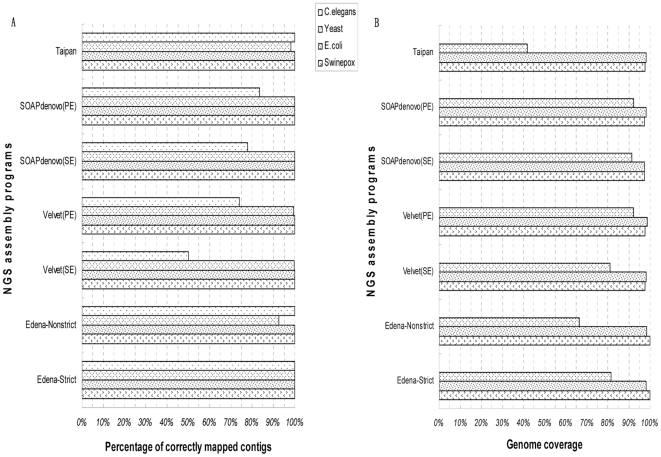
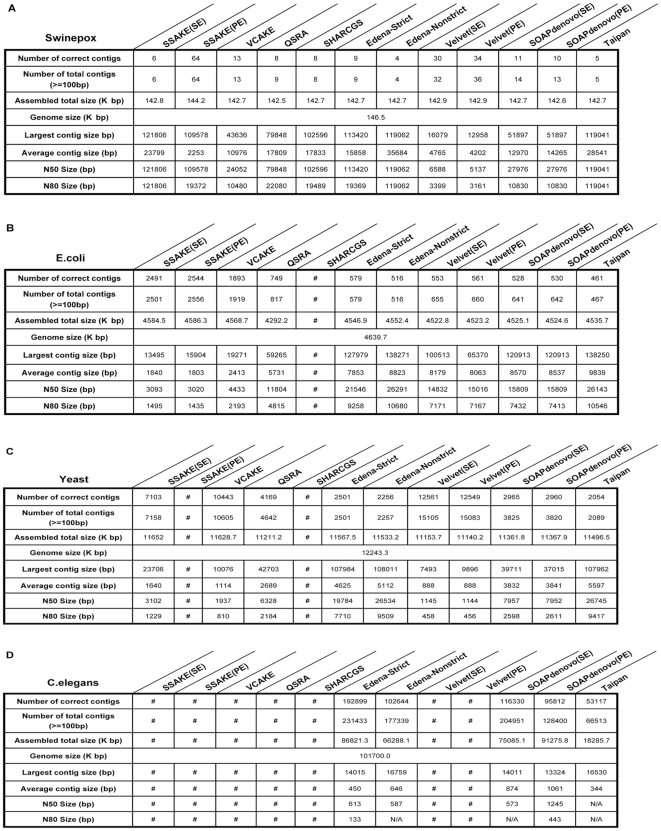
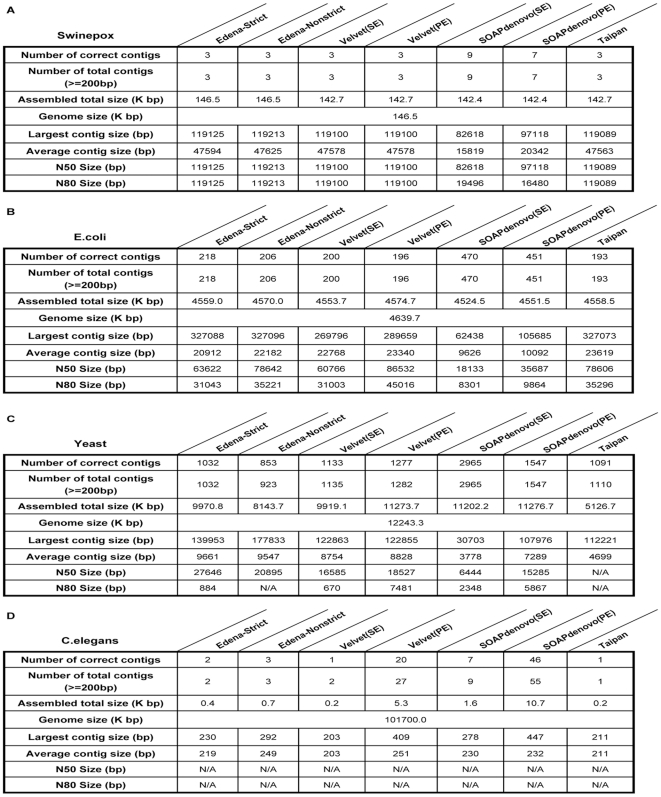
The advent of next-generation sequencing technologies is accompanied with the development of many whole-genome sequence assembly methods and software, especially for de novo fragment assembly. Due to the poor knowledge about the applicability and performance of these software tools, choosing a befitting assembler becomes a tough task. Here, we provide the information of adaptivity for each program, then above all, compare the performance of eight distinct tools against eight groups of simulated datasets from Solexa sequencing platform. Considering the computational time, maximum random access memory (RAM) occupancy, assembly accuracy and integrity, our study indicate that string-based assemblers, overlap-layout-consensus (OLC) assemblers are well-suited for very short reads and longer reads of small genomes respectively. For large datasets of more than hundred millions of short reads, De Bruijn graph-based assemblers would be more appropriate. In terms of software implementation, string-based assemblers are superior to graph-based ones, of which SOAPdenovo is complex for the creation of configuration file. Our comparison study will assist researchers in selecting a well-suited assembler and offer essential information for the improvement of existing assemblers or the developing of novel assemblers.
Overview
The claims and statistics of this paper haven’t been checked yet.
Free: it reads the open-access text and checks the first 5 claims that cite a source we can check. Create a free account to check every claim.
Integrity signals
Registry
Cites
Statistics
Figures
Verification
Claims the paper makes
The claims and statistics of this paper haven’t been checked yet.
Free: it reads the open-access text and checks the first 5 claims that cite a source we can check. Create a free account to check every claim.
Claims other papers make about this one
Each is checked against this paper’s own text: does it say what the citing paper says it does?
The cited source says what the claim attributes to it.
In the citing paper
“Different assemblers have different applicability and performance [15], [16].”
From Digital Gene Expression Analysis Based on Integrated De Novo Transcriptome Assembly of Sweet Potato [Ipomoea batatas (L.) Lam.] (2012) · cites this paper as [15]
Self-check
Percentages, sums and reported differences re-computed from the paper’s own numbers.
The self-check needs the paper’s full text.
Citations
Cites
Basic local alignment search tool
Altschul, S. F., Gish, W., Miller, W., Myers, E. W., & Lipman, D. J. (1990) · Journal of Molecular Biology · doi:10.1006/jmbi.1990.9999 · Cited by 98,669 · cited 1×
“2.20 for Windows 32bit machine [32], of which with size no shorter than Ybp (Y is 100 bp for 36mer datasets and 200 bp for 75mer datasets) and at least 98% of each read completely match to the reference sequence were presumed to be correct.”
BackgroundInfluentialVelvet: Algorithms for de novo short read assembly using de Bruijn graphs
Zerbino, D. R., & Birney, E. (2008) · Genome Research · doi:10.1101/gr.074492.107 · Cited by 9,491 · cited 1×
“Several assemblers, such as SSAKE [9], SOAPdenovo [11], AbySS [12], Velvet [14,15], exploit PE sequencing information to reduce gaps from assembled contigs.”
MethodTandem repeats finder: a program to analyze DNA sequences
Benson, G. (1999) · Nucleic Acids Research · doi:10.1093/nar/27.2.573 · Cited by 9,374 · cited 1×
“Before the assembly procedure implemented, we detected the repeat elements in reference genomes with Tandem Repeats Finder [31].”
MethodNext-generation DNA sequencing
Shendure, J., & Ji, H. (2008) · Nature Biotechnology · doi:10.1038/nbt1486 · Cited by 4,509 · cited 2×
“In recent years, the next-generation sequencing (or deep sequencing) technologies have been evolving rapidly, with the potential to accelerate biological and biomedical research dramatically [1].”
BackgroundResultInfluentialABySS: A parallel assembler for short read sequence data
Simpson, J. T., Wong, K., Jackman, S. D., Schein, J. E., Jones, S. J. M., & Birol, İ. (2009) · Genome Research · doi:10.1101/gr.089532.108 · Cited by 3,608 · cited 5×
“Three hierarchies of parallelization are taken into implementation: multi-thread on a single machine [11], multi-process with cluster machines [12,25] and cloud computation (http://sourceforge.net/apps/mediawiki/contrail-bio/index. php?title = Contrail).”
BackgroundMethodInfluentialDe novo assembly of human genomes with massively parallel short read sequencing
Li, R., Zhu, H., Ruan, J., Qian, W., Fang, X., Shi, Z., Li, Y., Li, S., Shan, G., Kristiansen, K., et al. (2010) · Genome Research · doi:10.1101/gr.097261.109 · Cited by 2,926 · cited 5×
“However, short reads from eukaryote genomes, with features of gargantuan size and high repetitiveness, make sky-high requirement for assembly strategies and computer hardware [10,11,23,24].”
BackgroundMethodInfluentialHigh-quality draft assemblies of mammalian genomes from massively parallel sequence data
Gnerre, S., MacCallum, I., Przybylski, D., Ribeiro, F. J., Burton, J. N., Walker, B. J., Sharpe, T., Hall, G., Shea, T. P., Sykes, S., et al. (2011) · Proceedings of the National Academy of Sciences · doi:10.1073/pnas.1017351108 · Cited by 1,533 · cited 4×
“For large datasets of more than hundred millions of short reads, De Bruijn graph-based assemblers could have commendable resolutions due to their short runtime and low RAM occupancy, of which SOAPdenovo performs well on very short reads, while ALLPATHS-LG could be a good choice for ,100 bp short reads assembly, as it…”
BackgroundMethodInfluentialAn Eulerian path approach to DNA fragment assembly
Pevzner, P. A., Tang, H., & Waterman, M. S. (2001) · Proceedings of the National Academy of Sciences · doi:10.1073/pnas.171285098 · Cited by 1,352 · cited 1×
“DNA fragment assembly has a long history since the emergence of the first generation of sequencing technologies [2,3].”
BackgroundThe sequence and de novo assembly of the giant panda genome
Li, R., Fan, W., Tian, G., Zhu, H., He, L., Cai, J., Huang, Q., Cai, Q., Li, B., Bai, Y., et al. (2010) · Nature · doi:10.1038/nature08696 · Cited by 1,180 · cited 2×
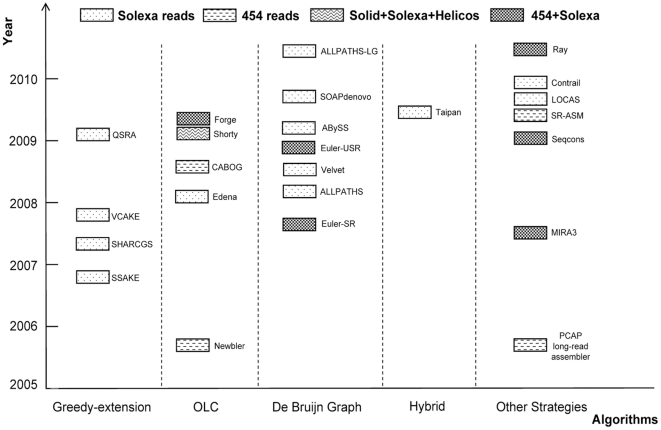
“String-based assem-blers, implemented with Greedy-extension algorithm, are mainly reported for the assembly of small genomes [5,7,8,9], while the latter ones are designed aiming at handling complex genomes [10,11,12].”
BackgroundAssembly algorithms for next-generation sequencing data
Miller, J. R., Koren, S., & Sutton, G. (2010) · Genomics · doi:10.1016/j.ygeno.2010.03.001 · Cited by 1,154 · cited 2×
“Genome sequence assembly is greatly challenged by repeat sequences, especially when the repeats are longer than short reads [4].”
Background
Cited by
Items 101–200 of 265
Do, D. T., Yang, M.-R., Vo, T. N. S., Le, N. Q. K., & Wu, Y. (2024) · Computational and Structural Biotechnology Journal · doi:10.1016/j.csbj.2024.04.035 · Cited by 18
“…and characterize the genomic context of a k-mer for a specific population. cDBGs are a well-established structure used in genome assembly [19,20] and variant calling that link overlapping k-mers (short fragments of DNA), resulting in a concise summary of all variations present in a group of…”
BackgroundHybrid de novo tandem repeat detection using short and long reads
Fertin, G., Jean, G., Radulescu, A., & Rusu, I. (2015) · BMC Medical Genomics · doi:10.1186/1755-8794-8-s3-s5 · Cited by 18
“To compute the local greedy assemblies, we chose SSAKE [41] due to its low running time and simple setup needed to obtain satisfying results [17].”
BackgroundMethodInfluentialVAGUE: a graphical user interface for the Velvet assembler
Powell, D., & Seemann, T. (2012) · Bioinformatics · doi:10.1093/bioinformatics/bts664 · Cited by 17
“It has become popular because it is relatively simple to install, has no dependencies, produces good results, runs fast and has a strong user community (Zhang et al. , 2011).”
BackgroundEllis, M., Guidi, G., Buluç, A., Oliker, L., & Yelick, K. (2019) · Proceedings of the International Conference on Parallel Processing · doi:10.1145/3337821.3337919 · Cited by 17
“One of the biggest challenges for the analysis of sequencing data is de novo assembly [34], which is the process of eliminating errors and assembling a more complete version of the genome.”
BackgroundRNA-seq Transcriptome Profiling of the Halophyte Salicornia persica in Response to Salinity
Aliakbari, M., Razi, H., Alemzadeh, A., & Tavakol, E. (2020) · Journal of Plant Growth Regulation · doi:10.1007/s00344-020-10134-z · Cited by 18
“The high-quality reads from each library were independently de novo assembled into transcripts using DeBruijn graph-based de novo assembly program (Zhang et al. 2011) in CLC Genomics Workbench 9.”
MethodXiao, W., Wu, L., Yavaş, G., Simonyan, V. V., Ning, B., & Hong, H. (2016) · Pharmaceutics · doi:10.3390/pharmaceutics8020015 · Cited by 18
“While OLC works better for relatively longer reads (100–800 bp), a de Bruijn graph is more suitable for short reads (25–100 bp) and requires much higher computational memory [70].”
BackgroundElucidating the role and use of bioinformatics software in life science research
Morrison-Smith, S., Boucher, C. A., Bunt, A., & Ruiz, J. (2015) · British HCI Conference · doi:10.1145/2783446.2783581 · Cited by 16
Berbers, B., Vanneste, K., Roosens, N. H. C., Marchal, K., Ceyssens, P., & Keersmaecker, S. C. J. D. (2023) · Microbial Genomics · doi:10.1099/mgen.0.000925 · Cited by 19
“Alternatively, a possible reason for the differences between plasmids of other studies is that many research institutions use different DNA extraction, sequencing protocols and bioinformatics approaches, which can all slightly change the final de novo assembly of the ESBL plasmids [90–92].”
Olsson, S., Seoane, P., Bautista, R., Claros, M. G., González‐Martínez, S. C., Scotti, I., Scotti‐Saintagne, C., Hardy, O. J., & Heuertz, M. (2016) · Molecular Ecology Resources · doi:10.1111/1755-0998.12605 · Cited by 20
“Methods using de Brujin graphs generally perform well on large genomes (Zhang et al. 2011).”
MethodGardner, P. P., Paterson, J. M., Ghomi, F. A., Umu, S. U., McGimpsey, S., & Pawlik, A. (2016) · Figshare · doi:10.6084/m9.figshare.4299320 · Cited by 14
PASQUAL: Parallel Techniques for Next Generation Genome Sequence Assembly
Liu, X., Pande, P. R., Meyerhenke, H., & Bader, D. A. (2012) · IEEE Transactions on Parallel and Distributed Systems · doi:10.1109/tpds.2012.190 · Cited by 16
Ghosh, M., Cho, H.-W., Park, J.-W., Choi, J., Chung, Y.-H., Sharma, N., Singh, A. K., Kim, N. E., Mongre, R. K., Huynh, D. L., et al. (2016) · Applied Biochemistry and Biotechnology · doi:10.1007/s12010-016-2118-4 · Cited by 16
“Therefore, NGS has emerged as a revolutionary tool in genetics, genomics, and epigenomics including single-nucleotide polymorphisms (SNPs), epigenetic events, copy number variants, differential expression, and alternative splicing methods [9, 10].”
MethodAn update on bioinformatics resources for plant genomics research
Basantani, M. K., Gupta, D., Mehrotra, R., Mehrotra, S., Vaish, S., & Singh, A. (2017) · Current Plant Biology · doi:10.1016/j.cpb.2017.12.002 · Cited by 15
Słomnicka, R., Olczak-Woltman, H., Oskiera, M., Schollenberger, M., Niemirowicz‐Szczytt, K., & Bartoszewski, G. (2017) · European Journal of Plant Pathology · doi:10.1007/s10658-017-1401-8 · Cited by 13
“Paired-end sequencing combined with two types of libraries (500 bp and 6500 bp inserts) was used as a solution as it partly compensated for the lack of long reads (Zhang et al. 2011).”
MethodAljahdali, M. O., Molla, M. H. R., & Filfilan, W. M. (2021) · Journal of Marine Science and Engineering · doi:10.3390/jmse9050506 · Cited by 12
“1 software was used for the de novo assembling of the Oreochromis spilurus genome [10].”
BackgroundMethodNorling, M., Lindsjö, O. K., Gourlé, H., Bongcam‐Rudloff, E., & Hayer, J. (2016) · PLoS ONE · doi:10.1371/journal.pone.0160334 · Cited by 11
Gupta, A., & Kumar, M. (2022) · OMICS A Journal of Integrative Biology · doi:10.1089/omi.2022.0042 · Cited by 10
“Different studies present the evaluation and comparison of genome assembly algorithms based on different measures (Bao et al., 2011; Earl et al., 2011; Finotello et al., 2012; Magoc et al., 2013; Salzberg et al., 2012; Zhang et al., 2011).”
Next generation sequencing under de novo genome assembly
Nimmy, S. F., & Kamal, M. S. (2015) · International Journal of Biomathematics · doi:10.1142/s1793524515300018 · Cited by 10
Deciphering the regulatory codes in bacterial genomes
Cho, B., Palsson, B. Ø., & Zengler, K. (2011) · Biotechnology Journal · doi:10.1002/biot.201000349 · Cited by 12
“However, improvements in read lengths and the ability to sequence paired-end reads will make it possible in the near future to assemble any bacterial genome de novo [37].”
BackgroundSmall World Asynchronous Parallel Model for Genome Assembly
Meng, J., Yuan, J., Cheng, J., Wei, Y., & Feng, S. (2012) · Lecture notes in computer science · doi:10.1007/978-3-642-35606-3_17 · Cited by 13
“Perl scripts [23] are used to generate the following two theoretical datasets: 50x coverage of Yeast chromosomes containing 17 million reads, and 50x coverage of C.”
MethodSun, E., Ren, F., Liu, S., Ge, S., Zhang, M., Guo, H., Jiang, L., Zhang, H., & Zhao, L. (2015) · Journal of Biotechnology · doi:10.1016/j.jbiotec.2015.06.399 · Cited by 13
“The reads were assembled into 12 scaffolds using the SOAPdenovo 1.05 program(Zhang et al., 2011).”
MethodInfluentialCoupling FACS and Genomic Methods for the Characterization of Uncultivated Symbionts
Thompson, A., Bench, S. R., Carter, B., & Zehr, J. P. (2013) · Methods in enzymology on CD-ROM/Methods in enzymology · doi:10.1016/b978-0-12-407863-5.00003-4 · Cited by 11
“com/products/analysis-software/), but the best program for de novo assembly of Illumina data is debated (for detailed discussion of assemblers, see Paszkiewicz & Studholme, 2010; Zhang et al., 2011).”
BackgroundFinishing monkeypox genomes from short reads: assembly analysis and a neural network method
Zhao, K., Wohlhueter, R. M., & Yu, L. (2016) · BMC Genomics · doi:10.1186/s12864-016-2826-8 · Cited by 10
“Although, this is the first report of simulation results based on the monkeypox genome, the phenomenon of diminishing returns with increasing sequencing effort has been reported before [14].”
BackgroundGMASS: a novel measure for genome assembly structural similarity
Kwon, D., Lee, J., & Kim, J. (2019) · BMC Bioinformatics · doi:10.1186/s12859-019-2710-z · Cited by 10
ccTSA: A Coverage-Centric Threaded Sequence Assembler
Ahn, J. H. (2012) · PLoS ONE · doi:10.1371/journal.pone.0039232 · Cited by 9
“These assemblers [6–10] are all parallelized in order to meet the computational demands of de-novo assembly.”
TIGER: tiled iterative genome assembler
Wu, X.-L., Heo, Y., Hajj, I. E., Hwu, W., Chen, D., & Ma, J. (2012) · BMC Bioinformatics · doi:10.1186/1471-2105-13-s19-s18 · Cited by 10
“Besides the limitation on computing resources, several works have compared NGS de novo assemblers [14-20] and it is acknowledged that no assembler is the best across all applications and datasets.”
BackgroundDu, R., Mercante, D. E., & Fang, Z. (2013) · PLoS ONE · doi:10.1371/journal.pone.0058669 · Cited by 10
“It affects the assembly accuracy and integrity [27].”
BackgroundAn FPGA-Based Computing Infrastructure Tailored to Efficiently Scaffold Genome Sequences
Zeni, A., Crespi, M., Tucci, L. D., & Santambrogio, M. D. (2019) · IEEE International Symposium on Field-Programmable Custom Computing Machines (FCCM) · doi:10.1109/fccm.2019.00074 · Cited by 9
“When there is no reference genome to guide the assembly, the process is called de-novo, and is particularly computationally intensive [1], requiring highly optimized algorithms and architectures capable of managing the huge amount of data coming from the sequencer.”
BackgroundMarine Microbial Communities of North and South Shelves of Iceland
Jégousse, C., Vannier, P., Groben, R., Guðmundsson, K., & Marteinsson, V. (2022) · Frontiers in Marine Science · doi:10.3389/fmars.2022.795835 · Cited by 9
Genomes correction and assembling: present methods and tools
Wojcieszek, M., Pawełkowicz, M. E., Nowak, R. M., & Przybecki, Z. (2014) · Proceedings of SPIE, the International Society for Optical Engineering/Proceedings of SPIE · doi:10.1117/12.2075624 · Cited by 8
“A hybrid between OLC and greedy graph is implemented in Taipan [33] where nodes are the reads and edges represent the overlaps, and the graph is traversed to find a greedy path rather than a Hamiltonian path, as in the OLC approach [34].”
MethodSparseAssembler: de novo Assembly with the Sparse de Bruijn GraphPreprint
Ye, C., Ma, Z. S., Cannon, C. H., Pop, M., & Yu, D. W. (2011) · arXiv (Cornell University) · doi:10.48550/arxiv.1106.2603 · Cited by 11
“These studies [16,17] therefore suggest that comparing with a few of the deployed packages, rather than all existing ones, should be sufficient to gauge the relative performance of our approach.”
BackgroundResultAccelerating Genome Assembly Using Hard Embedded Blocks in FPGAs
Varma, B. S. C., Paul, K., & Balakrishnan, S. (2014) · International Conference on VLSI Design · doi:10.1109/vlsid.2014.59 · Cited by 7
“have compared different NGS softwares used for genome assembly [2].”
MethodPuzzleCluster: A Novel Unsupervised Clustering Algorithm for Binning DNA Fragments in Metagenomics
Siegel, K., Altenburger, K. M., Hon, Y.-S., Lin, J., & Yu, C. (2015) · Current Bioinformatics · doi:10.2174/157489361002150518150716 · Cited by 7
Mohammadi, M. A., Harandi, M. F., McManus, D. P., & Mansouri, M. (2021) · Parasites & Vectors · doi:10.1186/s13071-021-05067-9 · Cited by 9
“Notably, the annotation of genes in the reference genome of many organisms is still far from complete, and many novel genes/transcripts remain to be identified [24, 25].”
BackgroundLi, R. W. (2015) · Springer eBooks · doi:10.1007/978-81-322-2401-3_16 · Cited by 8
Deep Sequencing Data Analysis: Challenges and Solutions
Isakov, O., & Shomro, N. (2011) · InTech eBooks · doi:10.5772/18399 · Cited by 9
“A recent overview comparing the performance of a variety of tools for assembly under different conditions (Zhang et al., 2011), recommended the use of OLC based assemblers (Hernandez et al.”
BackgroundNext generation shotgun sequencing and the challenges of de novo genome assembly
Schlebusch, S. A., & Illing, N. (2012) · South African Journal of Science · doi:10.4102/sajs.v108i11/12.1256 · Cited by 15
Ghangal, R., Chaudhary, S., Jain, M., Purty, R. S., & Sharma, P. C. (2013) · PLoS ONE · doi:10.1371/annotation/8af6a452-11e9-45c1-995d-7fee9b0456eb · Cited by 7
Bonham-Carter, O., Ali, H., & Bastola, D. K. (2012) · IEEE International Conference on Bioinformatics and Biomedicine Workshops (BIBMW) · doi:10.1109/bibmw.2012.6470222 · Cited by 7
“[8], compare the performance of eight distinct tools (i.”
BackgroundA base composition analysis of natural patterns for the preprocessing of metagenome sequences
Bonham-Carter, O., Ali, H., & Bastola, D. K. (2013) · BMC Bioinformatics · doi:10.1186/1471-2105-14-s11-s5 · Cited by 7
“[12] who compared the performance of eight distinct tools (i.”
BackgroundThe NGS WikiBook: a dynamic collaborative online training effort with long-term sustainability
Li, J., Bolser, D. M., Manske, M., Giorgi, F. M., Vyahhi, N., Usadel, B., Clavijo, B., Chan, T., Wong, N., Zerbino, D. R., et al. (2013) · Briefings in Bioinformatics · doi:10.1093/bib/bbt045 · Cited by 6
NGS-FC: A Next-Generation Sequencing Data Format Converter
Yu, C., Wu, W., Wang, J., Lin, Y., Yang, Y., Chen, J., Zhu, F., & Shen, B. (2017) · IEEE Transactions on Computational Biology and Bioinformatics · doi:10.1109/tcbb.2017.2722442 · Cited by 6
“[21] considered many assemblers but they lacked a unified output for-”
Self-citationGayk, Z. G., Duc, D. L., Horn, J., & Lindsay, A. R. (2018) · BMC Evolutionary Biology · doi:10.1186/s12862-018-1181-6 · Cited by 6
“We assembled the genome using the raw short read sequence read data with ABySS [22], which performs particularly well with complex vertebrate genomes [23].”
MethodMR-CUDASW - GPU accelerated Smith-Waterman algorithm for medium-length (meta)genomic data
Muhammadzadeh, A. (2014) · University Library - University of Saskatchewan (University of Saskatchewan) · Cited by 8
Representing Genetic Determinants in Bacterial GWAS with Compacted De Bruijn GraphsPreprint
Jaillard, M., Tournoud, M., Lima, L., Lacroix, V., Veyrieras, J., & Jacob, L. (2017) · bioRxiv (Cold Spring Harbor Laboratory) · doi:10.1101/113563 · Cited by 9
“Our proposed representation is based on compacted De Bruijn graphs (de Bruijn, 1946) (DBG), which are widely used for de novo genome assembly (Pevzner et al., 2001; Zhang et al., 2011) and variant calling (Iqbal et al.”
MethodAssembly of repetitive regions using next-generation sequencing dataPreprint
Nowak, R. M. (2016) · Cited by 6
Assembly of repetitive regions using next-generation sequencing data
Nowak, R. M. (2015) · Journal of Applied Biomedicine · doi:10.1016/j.bbe.2014.12.001 · Cited by 5
“Currently more than 50 genome assemblers are available [6; 7; 8; 9], but the assembly products are incomplete due to the repetitive regions, the uncovered areas and the sequencing errors.”
BackgroundDistributed-Memory Parallel Contig Generation for De Novo Long-Read Genome Assembly
Guidi, G., Raulet, G., Rokhsar, D. S., Oliker, L., Yelick, K., & Buluç, A. (2022) · Proceedings of the International Conference on Parallel Processing · doi:10.1145/3545008.3545050 · Cited by 5
“It is especially true for de novo genome assembly [42], that is decoding the sequence of an unknown genome from redundant and erroneous short sequences.”
BackgroundDExTaR: Detection of exact tandem repeats based on the de Bruijn graph
Fertin, G., Jean, G., Radulescu, A., & Rusu, I. (2014) · IEEE International Conference on Bioinformatics and Biomedicine (BIBM) · doi:10.1109/bibm.2014.6999134 · Cited by 5
“Since repeats can be of numerous types and various lengths, they are responsible for many mis-assemblies and missing parts from the original genome [6], [7].”
BackgroundMethodChen, Y., Cao, Q., Tao, X., Shao, H., Zhang, K., Zhang, Y., & Tan, X. (2016) · Bioscience Biotechnology and Biochemistry · doi:10.1080/09168451.2016.1182418 · Cited by 6
Hardware acceleration of de novo genome assembly
Varma, B. S. C., Paul, K., Balakrishnan, M., & Lavenier, D. (2017) · International Journal of Embedded Systems · doi:10.1504/ijes.2017.10002593 · Cited by 8
“For evaluating our approach, we generated the single ended readset with 100× coverage for read-length 36 and 75 and 1% error rate similar to what was reported by Zhang et al. (2011).”
InfluentialComparative Analysis of de Bruijn Graph Parallel Genome Assemblers
Gamboa-Venegas, C., & Meneses, E. (2018) · IEEE International Work Conference on Bioinspired Intelligence (IWOBI) · doi:10.1109/iwobi.2018.8464194 · Cited by 5
“GPU computational method has been applied in other two short reads analysis procedures [12].”
MethodDLPAlign: A Deep Learning based Progressive Alignment Method for Multiple Protein Sequences
Kuang, M., Liu, Y., & Gao, L. (2020) · International Conference Computational Systems-Biology and Bioinformatics · doi:10.1145/3429210.3429221 · Cited by 9
“More and more biological modeling methods rely on the assembly of precise MSAs [5], [57].”
MethodGobernado, I., Sánchez-Herranz, A., & Jiménez‐Escrig, A. (2014) · Comprehensive analytical chemistry · doi:10.1016/b978-0-444-62651-6.00003-9 · Cited by 5
Environmental Metagenomics: The Data Assembly and Data Analysis Perspectives
Kumar, V., Maitra, S. S., & Shukla, R. N. (2015) · Journal of The Institution of Engineers (India) Series A · doi:10.1007/s40030-014-0102-y · Cited by 6
“These algorithms mainly compare two standard methods: overlap approach and Bruijin graph approach [72].”
Mining Polymorphic SSRs from Individual Genome Sequences
Sio, C.-P., Lu, Y.-L., Chen, C., Pai, T., & Chang, H. (2013) · ... International Conference on Complex, Intelligent and Software Intensive Systems · doi:10.1109/cisis.2013.103 · Cited by 4
Analysis Considerations for Utilizing RNA-Seq to Characterize the Brain Transcriptome
ZHENG, C. L., Kawane, S., Bottomly, D., & Wilmot, B. (2014) · International review of neurobiology · doi:10.1016/b978-0-12-801105-8.00002-3 · Cited by 4
Computational analysis for plant virus analysis using next-generation sequencing
Nehra, C., Verma, R. K., Petrov, N., Stoyanova, M., Sharma, P. K., & Gaur, R. K. (2022) · Elsevier eBooks · doi:10.1016/b978-0-323-89778-5.00013-1 · Cited by 5
Daniels, B. N., Andrasz, C. L., Zarate, N., Lee, A., López, C., Anderson, P. E., Toonen, R. J., Christie, M. R., White, C., & Davidson, J. M. (2023) · Frontiers in Marine Science · doi:10.3389/fmars.2023.1278131 · Cited by 4
Determination of Nucleopolyhedrovirus’ Taxonomic Position
Nai, Y., Huang, Y., Chen, T.-H., Chiu, K., & Wang, C. (2017) · InTech eBooks · doi:10.5772/66634 · Cited by 4
“SOAPdenovo [130] is one of the DBG assembler that has an extreme speed by utilizing threads parallelization [131].”
MethodBiomarker discovery, high performance and cloud computing: A comprehensive review
Blayney, J. K., Haberland, V., Lightbody, G., & Browne, F. (2015) · IEEE International Conference on Bioinformatics and Biomedicine (BIBM) · doi:10.1109/bibm.2015.7359900 · Cited by 4
Efficient algorithms and data structures for indexing DNA sequence data
Salikhov, K. (2017) · theses.fr (ABES) · doi:10.70675/f7083451z2c9ez4a0az92b5z7b3d49e21d74 · Cited by 6
Theoretical Basis of a New Method for DNA Fragment Assembly in k-mer Graphs
Couto, A. D., Cerqueira, F. R., Guerra, R. L., Gonçalves, L. B., Goulart, C. D. C., Siqueira‐Batista, R., Ferreira, R. D. S., & Oliveira, A. D. P. (2012) · International Conference of the Chilean Computer Science Society (SCCC) · doi:10.1109/sccc.2012.16 · Cited by 4
“Such small sizes mean a much higher input to fragment assembly algorithms as well as a significant augmentation of the problem complexity since the possibilities of ambiguity (many putative positions for a read in the assembly) are considerably increased [18].”
BackgroundGenome Assembler for Repetitive Sequences
Nowak, R. M. (2012) · Lecture notes in computer science · doi:10.1007/978-3-642-31196-3_42 · Cited by 3
Kono, N., Tomita, M., & Arakawa, K. (2017) · BMC Genomics · doi:10.1186/s12864-017-4162-z · Cited by 4
Approaches to DNA de novo assembly
Sović, I., Skala, K., & Šikić, M. (2013) · International Convention on Information and Communication Technology, Electronics and Microelectronics · Cited by 7
Next-generation nematode genomes
Kumar, S. (2013) · ERA · Cited by 4
Development of genomic resources for ornamental lilies (Lilium L.)
Shahin, A. (2012) · doi:10.18174/212113 · Cited by 5
“1 % error rate) derived from four different genomes (nematode, yeast, bacteria, and virus), was published (Zhang et al., 2011).”
BackgroundCorrection: ccTSA: A Coverage-Centric Threaded Sequence Assembler
Ahn, J. H. (2012) · PLoS ONE · doi:10.1371/annotation/6d56179d-39e8-4ee8-bf3e-ceab773bab20 · Cited by 4
Metagenomic analysis of Mariana Trench sediment samples
Carvalho, V. (2013) · Portuguese National Funding Agency for Science, Research and Technology (RCAAP Project by FCT) · Cited by 3
Natarajan, S., KrishnaKumar, N., Anuchan, H. V., Pal, D., & Nandy, S. K. (2018) · Lecture notes in computer science · doi:10.1007/978-3-319-78890-6_45 · Cited by 4
Assessment of Next-Generation Sequence Assembly
El‐Metwally, S., Ouda, O. M., & Helmy, M. (2014) · SpringerBriefs in systems biology · doi:10.1007/978-1-4939-0715-1_10 · Cited by 2
Next-Generation Sequence Assembly Overview
El‐Metwally, S., Ouda, O. M., & Helmy, M. (2014) · SpringerBriefs in systems biology · doi:10.1007/978-1-4939-0715-1_8 · Cited by 2
Sánchez‐Flores, A. (2013) · Systems Biomedicine · doi:10.4161/sysb.23113 · Cited by 3
“The assembly task is not trivial but many assembly algorithms and tools have been developed and reviewed elsewhere.(27,28) Researchers need to keep track for updates of the current algorithms and new ones that are constantly being published.”
BackgroundDeng, X., Katz, L. S., Fields, P. I., & Zhang, W. (2014) · Wiley eBooks · doi:10.1002/9781118278666.ch4 · Cited by 2
Self-citationGhosh, A., & Mehta, A. (2017) · Springer eBooks · doi:10.1007/978-3-319-67156-7_9 · Cited by 2
New Solution For a (Scaff)Old Problem: an FPGA Approach
Zeni, A., Sozzo, E. D., Branchini, B., Tucci, L. D., & Santambrogio, M. D. (2023) · IEEE International Symposium on Parallel & Distributed Processing, Workshops and Phd Forum · doi:10.1109/ipdpsw59300.2023.00024 · Cited by 2
“Scaffolding (Figure 1) is one of the most computationally intensive stages within this pipeline [3], as it requires the exact alignment of a massive amount of sequences.”
BackgroundAn FPGA-Based Data Pre-Processing Architecture to Accelerate De-Novo Genome Assembly
Galanos, G., Malakonakis, P., & Dollas, A. (2021) · IEEE International Conference on Bioinformatics and Bioengineering (BIBE) · doi:10.1109/bibe52308.2021.9635499 · Cited by 1
“There are two major categories of genome assembly, the reference-based mapping assembly [1] and the De-novo assembly [2].”
BackgroundAli, M. A., Mahato, R., & Lee, J. (2024) · Bangladesh Journal of Plant Taxonomy · doi:10.3329/bjpt.v31i2.78750 · Cited by 3
Safari, M., Ghahroodian, S., Abyarazimi, M. V., Rahmaniyan, S., Heydaryan, F., Rezaei, M., & Yakhchali, B. (2025) · Microbiology Spectrum · doi:10.1128/spectrum.02892-24 · Cited by 1
“Whole-genome sequencing using next-generation sequencing technologies, along with developing novel assembling methods and annotation analysis of the genomic data, paves the way for researchers to achieve this goal (15, 16).”
A CUDA-based Implementation of the SSAKE Genomics Application
D’Agostino, D., Clematis, A., Guffanti, A., Milanesi, L., & Merelli, I. (2012) · Euromicro International Conference on Parallel, Distributed and Network-Based Processing (PDP) · doi:10.1109/pdp.2012.16 · Cited by 1
“A practical comparison of the 24 academic de novo genome assembly based on one of these three approaches is presented in [13].”
BackgroundKong, F., & Wang, X. (2016) · Journal of Plant Biochemistry & Physiology · doi:10.4172/2329-9029.1000109 · Cited by 1
“7) [7] with default parameters, except for the minimum overlap length (50).”
BackgroundVectorizing the computation of k-mers
Parra, N. E. V. (2018) · Iberian Conference on Information Systems and Technologies (CISTI) · doi:10.23919/cisti.2018.8399264 · Cited by 1
“Sin embargo, conforme aumenta el tamaño del genoma (por ejemplo, un cromosoma de un mamífero), aumentan las capacidades de cómputo requeridas para realizar este proceso [3].”
BackgroundOn the Sound Covering Cycle Problem in Paired de Bruijn Graphs
Komusiewicz, C., & Radulescu, A. (2015) · Lecture notes in computer science · doi:10.1007/978-3-319-19647-3_14 · Cited by 1
“For this new type of data, de novo assembly is a challenging task [3, 5, 11, 13].”
BackgroundHigh Level Design Approach to Accelerate De Novo Genome Assembly Using FPGAs
Varma, B. S. C., Paul, K., & Balakrishnan, S. (2014) · Euromicro Conference on Digital System Design (DSD) · doi:10.1109/dsd.2014.95 · Cited by 1
“A comparison of various algorithms is shown and the perl scripts to generate reads are provided by Zhang et al.[18].”
MethodThe DNA assembler for next generation sequencers
Twardowski, J., & Nowak, R. M. (2013) · Proceedings of SPIE, the International Society for Optical Engineering/Proceedings of SPIE · doi:10.1117/12.2032637 · Cited by 1
“New assemblers must be efficient enough to work with the new generation data.(3,4)”
BackgroundDe Bruijn Graph based De novo Genome Assembly
Khan, M. I., & Kamal, M. S. (2014) · Journal of Software · doi:10.4304/jsw.9.8.2160-2168 · Cited by 1
“But some assembler can vary in respect of graph formation, graph design, graph traversing and graph resolution [4].”
BackgroundBig data challenges for estimating genome assembler quality
Biswas, A. G., Gauthier, D. T., Ranjan, D., & Zubair, M. (2014) · ACM International Conference on Bioinformatics, Computational Biology, and Health Informatics (ACM-BCB) · doi:10.1145/2649387.2660821 · Cited by 1
Learning pair-wise gene functional similarity by multiplex gene expression maps
An, L., Ling, H., Zoran Obradovic, A., Smith, D., & Megalooikonomou, V. (2012) · BMC Bioinformatics · doi:10.1186/1471-2105-13-s3-s1 · Cited by 1
De novo assembly of nucleotide sequences in a compressed feature space
Tapinos, A., & Robertson, D. L. (2017) · IEEE Conference on Computational Intelligence in Bioinformatics and Computational Biology (CIBCB) · doi:10.1109/cibcb.2017.8058556 · Cited by 1
“Modern de novo assemblers generally leverage either de Bruijn graphs or read overlap graphs as part of the approach known as OLC graphs [10].”
BackgroundRecent Advances in Gene and Genome Assembly: Challenges and Implications
Agarwal, T., Suravajhala, R., Bhushan, M., Goswami, P., Iddamalgoda, L., Malik, B., Valadi, J. K., & Suravajhala, P. (2020) · Springer eBooks · doi:10.1007/978-981-15-0081-7_12 · Cited by 1
Cheng, J., Liu, W., Chang, T., Hsieh, S., & Tseng, V. S. M. (2020) · International Computer Symposium · doi:10.1109/ics51289.2020.00038 · Cited by 1
“Common software tools are used for analyzing NGS , including De novo fragment assembly tools [7] used to assemble and splice reads, and reads mapping tools [8] used to align reads with reference genome sequences to obtain the most likely corresponding correct position in the reference sequence.”
MethodIndustrially Important Genes from Trichoderma
Özkaya, Ş. Ç., Soykam, H. O., & Akçapınar, G. B. (2022) · Fungal biology · doi:10.1007/978-3-030-91650-3_16 · Cited by 2
Tang, T., Hutvágner, G., Wang, W., & Li, J. (2022) · Briefings in Functional Genomics · doi:10.1093/bfgp/elac016 · Cited by 1
Fernández, L. A., Martín-Mayor, V., & Yllanes, D. (2024) · Physical review. E · doi:10.1103/physreve.109.014133 · Cited by 3
“The universality of our result should not be taken to mean that all algorithms are equally good or, more to the point, that sophisticated methods based on heuristics and de Bruijn graphs [11, 12] are not useful.”
MethodGenomic Divergence in Differentially Adapted Wild and Domesticated Barley
Girma, B. (2014) · Epsilon Open Archive (Sveriges lantbruksuniversitet biblioteket (Swedish University of Agricultural Sciences)) · Cited by 1
Olsen, L. J. (2019) · RIT Scholar Works (Rochester Institute of Technology) · Cited by 1
Application of high performance compute technology in bioinformatics
Warris, S. (2019) · doi:10.18174/499180 · Cited by 2
Haiminen, N., Kuhn, D. N., Parida, L., & Rigoutsos, I. (2011) · PLoS ONE · doi:10.1371/annotation/bb125f93-80d3-4dd1-adfe-03d9fb740f3b · Cited by 1
Fine mapping of antibiotic resistance determinants
Jaillard, M. (2018) · theses.fr (ABES) · doi:10.70675/cd224ff0z17dez4103z8cbbzb7ca42fa1663 · Cited by 2
Metadata
- Authors
- Zhang, W., Chen, J., Yang, Y., Tang, Y., Shang, J., & Shen, B.
- Affiliations
- Soochow University (CN)
- Corresponding author
- Shen, Bairong
- Venue
- PLoS ONE
- Publisher
- Public Library of Science (PLoS)
- Published
- 2011-03-14
- Volume
- 6
- Issue
- 3
- Pages
- e17915
- ISSN
- 1932-6203 (ISSN-L)
- PMC
- PMC3056720
- OpenAlex
- W2167719367
- Cited by
- 250
- References
- 32
- Citations by year
- 2026: 1 · 2025: 1 · 2024: 4 · 2023: 6 · 2022: 9 · 2021: 6 · 2020: 11 · 2019: 7 · 2018: 14 · 2017: 27 · 2016: 27 · 2015: 25 · 2014: 37 · 2013: 32 · 2012: 28
- FWCI
- 14.53
- Type
- journal article
- Language
- en
- Open access
- gold
- doi.org
- Locations
- PLoS ONE (publishedVersion, cc-by)
- PubMed Central (publishedVersion, cc-by)
- PubMed (publishedVersion)
- DOAJ (DOAJ: Directory of Open Access Journals) (submittedVersion, cc-by-sa)
- Figshare (submittedVersion, cc-by)
- Funders
- National Natural Science Foundation of China (31040020)
- Topics
- Life Sciences › Biochemistry, Genetics and Molecular Biology › Molecular Biology › Genomics and Phylogenetic Studies
- Physical Sciences › Mathematics › Theoretical Computer Science › Algorithms and Data Compression
- Life Sciences › Biochemistry, Genetics and Molecular Biology › Molecular Biology › Fractal and DNA sequence analysis
- Keywords
- de novo genome assembly, next-generation sequencing, Illumina sequencing, simulated sequencing data, assembly accuracy, computational performance
- MeSH terms
- Animals, Base Sequence, Humans, Reference Standards, Software, Time Factors, Genome, Sequence Analysis, DNA, Computational Biology, Contig Mapping, Databases, Nucleic Acid
About these checks
Registry, retraction, Cites and statistics results are computed, not judged, with one exception: a printed reference that no index lists is read once by a model before it counts as a citation error. Claims are extracted by a model and kept only when their quote appears verbatim in the text; each cited source is then checked, with a model’s help, for whether it says what the claim relies on. Those verdicts can be wrong — read the claim’s quote and the cited source before relying on one.
Statistics and arithmetic are recomputed, not judged.
Confidence bands are shown only for fields calibrated on our annotated test set. None is calibrated yet, so no band is shown.
What counts as a claim ›How we measure confidence ›How we check this ›
Are you an author, or do you see a problem with this page? Request a review
Data sources
Bibliographic data: Semantic Scholar, OpenAlex, Crossref.
Contains information from the Semantic Scholar Academic Graph Datasets, made available under the ODC Attribution License (ODC-BY 1.0).
Semantic Scholar’s data is described in: Kinney, R., et al. (2023). The Semantic Scholar Open Data Platform. arXiv:2301.10140.
