

Structure-Activity Determinants in Antifungal Plant Defensins MsDef1 and MtDef4 with Different Modes of Action against Fusarium graminearum
Open accessThe DOI matches its Crossref record; 48 of the 48 references it cites were found in a registry or an index.
Abstract
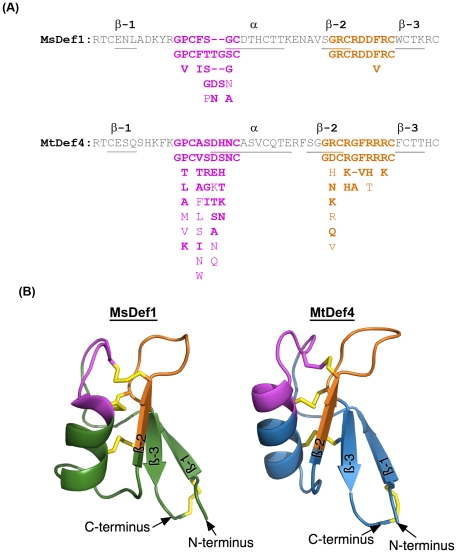
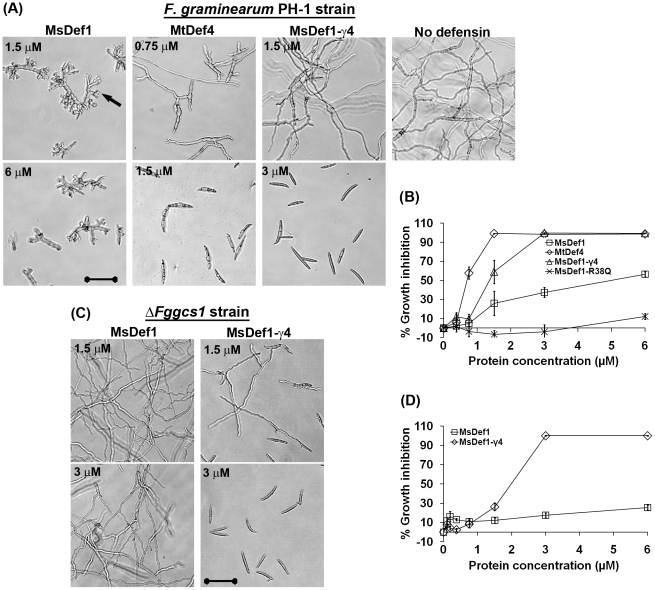
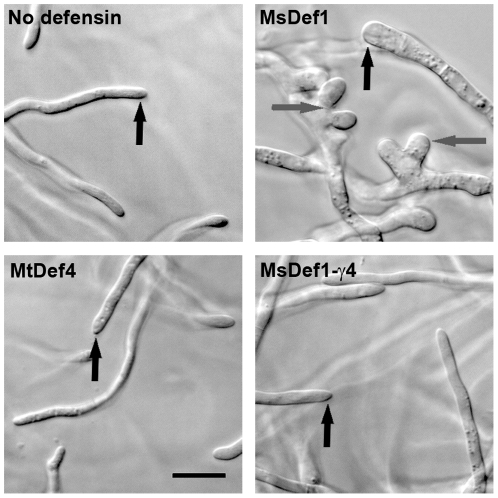
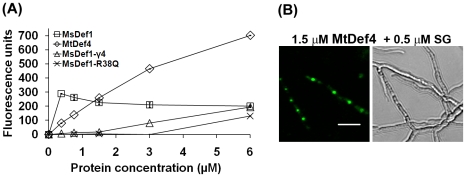
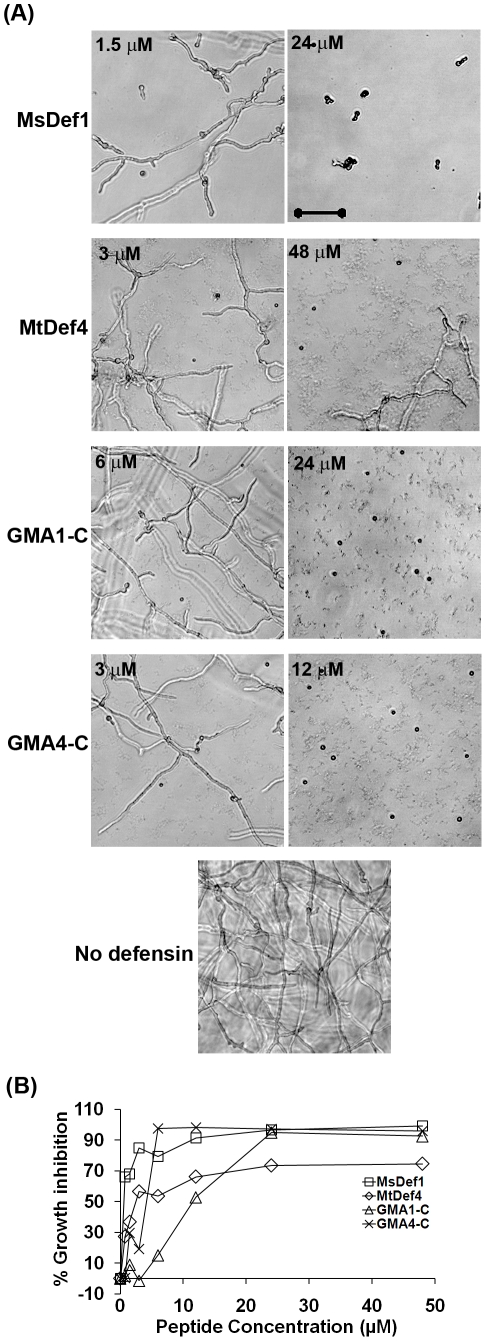
Plant defensins are small cysteine-rich antimicrobial proteins. Their three-dimensional structures are similar in that they consist of an α-helix and three anti-parallel β-strands stabilized by four disulfide bonds. Plant defensins MsDef1 and MtDef4 are potent inhibitors of the growth of several filamentous fungi including Fusarium graminearum. However, they differ markedly in their antifungal properties as well as modes of antifungal action. MsDef1 induces prolific hyperbranching of fungal hyphae, whereas MtDef4 does not. Both defensins contain a highly conserved γ-core motif (GXCX(3-9)C), a hallmark signature present in the disulfide-stabilized antimicrobial peptides, composed of β2 and β3 strands and the interposed loop. The γ-core motifs of these two defensins differ significantly in their primary amino acid sequences and in their net charge. In this study, we have found that the major determinants of the antifungal activity and morphogenicity of these defensins reside in their γ-core motifs. The MsDef1-γ4 variant in which the γ-core motif of MsDef1 was replaced by that of MtDef4 was almost as potent as MtDef4 and also failed to induce hyperbranching of fungal hyphae. Importantly, the γ-core motif of MtDef4 alone was capable of inhibiting fungal growth, but that of MsDef1 was not. The analysis of synthetic γ-core variants of MtDef4 indicated that the cationic and hydrophobic amino acids were important for antifungal activity. Both MsDef1 and MtDef4 induced plasma membrane permeabilization; however, kinetic studies revealed that MtDef4 was more efficient in permeabilizing fungal plasma membrane than MsDef1. Furthermore, the in vitro antifungal activity of MsDef1, MsDef1-γ4, MtDef4 and peptides derived from the γ-core motif of each defensin was not solely dependent on their ability to permeabilize the fungal plasma membrane. The data reported here indicate that the γ-core motif defines the unique antifungal properties of each defensin and may facilitate de novo design of more potent antifungal peptides.
Overview
The claims and statistics of this paper haven’t been checked yet.
Free: it reads the open-access text and checks the first 5 claims that cite a source we can check. Create a free account to check every claim.
Integrity signals
Registry
Cites
Statistics
Figures
Verification
Claims the paper makes
The claims and statistics of this paper haven’t been checked yet.
Free: it reads the open-access text and checks the first 5 claims that cite a source we can check. Create a free account to check every claim.
Claims other papers make about this one
Each is checked against this paper’s own text: does it say what the citing paper says it does?
The source backs part of the claim, not all of it — or backs it for a different population, condition or comparison.
In the citing paper
“More likely, the γ-core provides a structural scaffold, while the surrounding sequence, physicochemical properties, and structural context determine the final antimicrobial phenotype [18,19,20,21,22,23,24,31].”
From Ovotransferrin and Its γ-Core-Containing Peptides Impair Pma1-Dependent Proton Homeostasis in Candida albicans (2026) · cites this paper as [19]
Experimental — accuracy not yet measuredThe cited source says what the claim attributes to it.
In the citing paper
“However, activity is not conferred by the GXC/CXG sequence consensus alone and may depend on the integrity of the motif, its charge and hydrophobicity, the contribution of flanking residues, and preservation of an appropriate conformational context [19,20,21,22].”
From Ovotransferrin and Its γ-Core-Containing Peptides Impair Pma1-Dependent Proton Homeostasis in Candida albicans (2026) · cites this paper as [19]
The cited source says what the claim attributes to it.
In the citing paper
“Experimental studies have further shown that peptides encompassing complete γ-core regions can reproduce antimicrobial properties of their parent molecules.”
From Ovotransferrin and Its γ-Core-Containing Peptides Impair Pma1-Dependent Proton Homeostasis in Candida albicans (2026) · cites this paper as [19]
Self-check
Percentages, sums and reported differences re-computed from the paper’s own numbers.
The self-check needs the paper’s full text.
Citations
Cites
Gapped BLAST and PSI-BLAST: a new generation of protein database search programs
Altschul, S. (1997) · Nucleic Acids Research · doi:10.1093/nar/25.17.3389 · Cited by 73,302 · cited 1×
“A search of the NCBI database using Blast P [23] resulted in the identification of 16 legume-specific plant defensin sequences sharing high sequence homology with MsDef1 (Figure S1A).”
MethodThompson, J. D., Higgins, D. G., & Gibson, T. J. (1994) · Nucleic Acids Research · doi:10.1093/nar/22.22.4673 · Cited by 64,617 · cited 1×
“CLUSTAL W alignment [24] of 18 amino acid sequences of the homologs of MsDef1 identified a consensus c-core motif with the sequence ‘GXCRDD(F/V)RC’ (Figure 1A), whereas similar analysis of 28 MtDef4 homologs identified a consensus c-core motif with the sequence ‘GXC(R/H/K)(G/A/_)(F/V)(R/H/ T)R(R/K)C’ (Figure 1A).”
Antimicrobial peptides of multicellular organisms
Zasloff, M. (2002) · Nature · doi:10.1038/415389a · Cited by 8,457 · cited 1×
“Plants are sessile organisms that are continually challenged by microbial pathogens during their life cycle. To ward off pathogen attack, plants produce a number of cationic antimicrobial peptides. These include defensins that are one of the largest families of antimicrobial peptides found in plants. These basic, cyst…”
BackgroundI-TASSER: a unified platform for automated protein structure and function prediction
Roy, A., Kucukural, A., & Zhang, Y. (2010) · Nature Protocols · doi:10.1038/nprot.2010.5 · Cited by 6,170
I-TASSER server for protein 3D structure prediction
Zhang, Y. (2008) · BMC Bioinformatics · doi:10.1186/1471-2105-9-40 · Cited by 5,124
Plant Defensins: Novel Antimicrobial Peptides as Components of the Host Defense System
Broekaert, W. F., Terras, F., Cammue, B., & Osborn, R. W. (1995) · Plant Physiology · doi:10.1104/pp.108.4.1353 · Cited by 765 · cited 2×
“different modes of antifungal action [16,17].”
BackgroundThomma, B., Cammue, B., & Thevissen, K. (2002) · Planta · doi:10.1007/s00425-002-0902-6 · Cited by 661
Nitrate Nonutilizing Mutants of Fusarium oxysporum and Their Use in Vegetative Compatibility Tests
Correll, J. C. (1987) · Phytopathology · doi:10.1094/phyto-77-1640 · Cited by 628
Analysis of two novel classes of plant antifungal proteins from radish (Raphanus sativus L.) seeds.
Terras, F. R., Schoofs, H. M., De Bolle, M. F., Van Leuven, F., Rees, S. B., Vanderleyden, J., Cammue, B. P., & Broekaert, W. F. (1992) · Journal of Biological Chemistry · doi:10.1016/s0021-9258(19)49534-3 · Cited by 581 · cited 2×
“different modes of antifungal action [16,17].”
BackgroundBacterial viability and antibiotic susceptibility testing with SYTOX green nucleic acid stain
Roth, B. L., Poot, M., Yue, S. T., & Millard, P. J. (1997) · Applied and Environmental Microbiology · doi:10.1128/aem.63.6.2421-2431.1997 · Cited by 579 · cited 1×
“500-fold upon binding to nucleic acids thus allowing quantitative analysis and fluorescence microscopy [27].”
Background
Research works printed but not linked: 1
- Murad AM Pelegrini PB Neto SM Franco OL 2007 Novel findings of defensins and their utilization in construction of transgenic plants. Transgenic Plant Journal 1 39 48
Cited by
The Plant Peptidome: An Expanding Repertoire of Structural Features and Biological Functions
Tavormina, P., De Coninck, B., Nikonorova, N., De Smet, I., & Cammue, B. P. A. (2015) · The Plant Cell · doi:10.1105/tpc.15.00440 · Cited by 400
“…d1, have been well studied and point toward specific interactions with various fungal sphingolipids and phospholipids (Thevissen et al., 2004, 2012; Aerts et al., 2007; Lobo et al., 2007; Ramamoorthy et al., 2007; van der Weerden et al., 2008, 2010; Sagaram et al., 2011, 2013;Muñoz et al., 2014).”
BackgroundThe evolution, function and mechanisms of action for plant defensins
Parisi, K., Shafee, T. M. A., Quimbar, P., van der Weerden, N. L., Bleackley, M. R., & Anderson, M. A. (2019) · Seminars in Cell & Developmental Biology · doi:10.1016/j.semcdb.2018.02.004 · Cited by 231
Antifungal defensins and their role in plant defense
Lacerda, A. F., Vasconcelos, Ã. A. R., Pelegrini, P. B., & Grossi de Sa, M. F. (2014) · Frontiers in Microbiology · doi:10.3389/fmicb.2014.00116 · Cited by 236
“Recently, it was reported that the amino acid residues located in the γ-core motif of MtDef4 are key tools for its antifungal activity and its specificity towards pathogenic fungi (Sagaram et al., 2011).”
BackgroundMethodInfluentialAntifungal Plant Defensins: Mechanisms of Action and Production
Vriens, K., Cammue, B., & Thevissen, K. (2014) · Molecules · doi:10.3390/molecules190812280 · Cited by 229
“, important for antifungal activity [15,47,63]; blue boxes represent peptide fragments that exhibit antifungal activity similar to the parental peptide and hence, are important for antifungal activity [43,47,63,64].”
BackgroundResultInfluentialAntifungal proteins: More than antimicrobials?
Hegedüs, N., & Marx, F. (2013) · Fungal Biology Reviews · doi:10.1016/j.fbr.2012.07.002 · Cited by 193
“Most plant defensins are active against numerous filamentous ascomycetes (Carvalho Ade and Gomes, 2009), including phytopathogenic fungi such as Fusarium graminearum (Sagaram et al., 2011), B.”
BackgroundPhosphoinositide-mediated oligomerization of a defensin induces cell lysis
Poon, I. K., Baxter, A. A., Lay, F. T., Mills, G. D., Adda, C. G., Payne, J. A., Phan, T. K., Ryan, G. F., White, J. A., Veneer, P. K., et al. (2014) · eLife · doi:10.7554/elife.01808 · Cited by 185
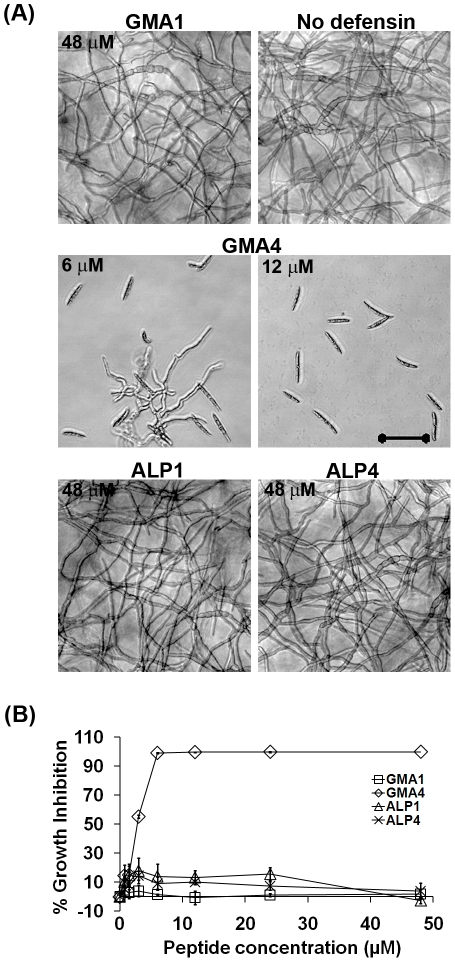
“…this region of MsDef1 with the equivalent region of MtDef4 (a functionally distinct defensin that does not bind sphingolipid) resulted in functional conversion into a defensin able to inhibit the growth of a glucosylceramidedeficient, MsDef1-resistant F. graminearum strain (Sagaram et al., 2011).”
BackgroundPlant defensins: Common fold, multiple functions
van der Weerden, N. L., & Anderson, M. A. (2012) · Fungal Biology Reviews · doi:10.1016/j.fbr.2012.08.004 · Cited by 161
Sagaram, U. S., El‐Mounadi, K., Buchko, G. W., Berg, H. R., Kaur, J., Pandurangi, R. S., Smith, T. J., & Shah, D. M. (2013) · PLoS ONE · doi:10.1371/journal.pone.0082485 · Cited by 131
“graminearum in vitro, further substantiating the importance of this motif in the antifungal action of this defensin [22].”
BackgroundMethodSelf-citationDefensins: antifungal lessons from eukaryotes
Silva, P. M., Gonçalves, S., & Santos, N. C. (2014) · Frontiers in Microbiology · doi:10.3389/fmicb.2014.00097 · Cited by 125
“…references: Medicago sativa defensin 1 (MsDef1) and Medicago truncatula defensin 4 (MtDef4; Spelbrink et al., 2004; Ramamoorthy et al., 2007a,b; Sagaram et al., 2011); Dahlia merckii AMP 1 (DmAMP1; Thevissen et al., 1999, 2000a,b, 2003b; Jha et al., 2009; Salahinejad et al., 2013); Phaseolus…”
BackgroundModes of antifungal action and in planta functions of plant defensins and defensin-like peptides
Coninck, B. D., Cammue, B. P. A., & Thevissen, K. (2012) · Fungal Biology Reviews · doi:10.1016/j.fbr.2012.10.002 · Cited by 149
“, 2009b), Vitis vinifera VvAMP1 (de Beer and Vivier, 2008); Medicago truncatula MtDef4 (Sagaram et al., 2011).”
BackgroundMembrane-Interacting Antifungal Peptides
Struyfs, C., Cammue, B. P. A., & Thevissen, K. (2021) · Frontiers in Cell and Developmental Biology · doi:10.3389/fcell.2021.649875 · Cited by 140
“In N. crassa, the internalization of MtDef4 depends on the presence of phospholipase D, whereas this is not the case in Fusarium graminearum (Sagaram et al., 2011; El-Mounadi et al., 2016).”
BackgroundMaróti, G., Downie, J. A., & Kondorosi, É. (2015) · Current Opinion in Plant Biology · doi:10.1016/j.pbi.2015.05.031 · Cited by 113
“The different mechanisms of action of defensins can be explained by the variable primary sequences; the major determinants of the antifungal and morphogen activities of defensins reside in their g-core motifs [18,30].”
BackgroundSchmitt, P., Rosa, R. D., & Destoumieux‐Garzón, D. (2015) · Biochimica et Biophysica Acta (BBA) - Biomembranes · doi:10.1016/j.bbamem.2015.10.011 · Cited by 118
“of action, sites important for antifungal activity include the -core region GXC X(4-8) C (Figure 2B) [94,95].”
BackgroundPeanuts that keep aflatoxin at bay: a threshold that matters
Sharma, K. K., Pothana, A., Prasad, K., Shah, D. M., Kaur, J., Bhatnagar, D., Chen, Z.-Y., Raruang, Y., Cary, J. W., Rajasekaran, K., et al. (2017) · Plant Biotechnology Journal · doi:10.1111/pbi.12846 · Cited by 118
“A. flavus ITS2 region using a pair of FLAV sequence-specific primers (Sardinas et al., 2011) was amplified for qPCR. Cycling conditions used were 95 °C for 3 min, 40 cycles of 95 °C for 10 s and 60 °C for 30 s (during which the fluorescence was measured).”
MethodSelf-citationPlant Defensins from a Structural Perspective
Kovaleva, V. A., Bukhteeva, I., Kit, O. Y., & Nesmelova, I. V. (2020) · International Journal of Molecular Sciences · doi:10.3390/ijms21155307 · Cited by 144
“For example, the γ-core motif of MtDef1 alone is not sufficient for antifungal activity, whereas the full protein is [42].”
BackgroundInfluentialEmerging Agricultural Biotechnologies for Sustainable Agriculture and Food Security
Anderson, J. A. H., Gipmans, M., Hurst, S., Layton, R. J., Nehra, N. S., Pickett, J. A., Shah, D. M., de Souza, T. L. P. O., & Tripathi, L. (2016) · Journal of Agricultural and Food Chemistry · doi:10.1021/acs.jafc.5b04543 · Cited by 99
Self-citationVriens, K., Cools, T. L., Harvey, P. J., Craik, D. J., Spincemaille, P., Cassiman, D. M., Braem, A., Vleugels, J., Nibbering, P. H., Drijfhout, J. W., et al. (2015) · PLoS ONE · doi:10.1371/journal.pone.0132701 · Cited by 99
“Blue boxes represent peptide fragments that exhibit antifungal activity similar to the parental peptide, and hence, are important for antifungal activity [4,64–66].”
BackgroundPlant Defensin Peptides have Antifungal and Antibacterial Activity Against Human and Plant Pathogens
Sathoff, A. E., Velivelli, S. L. S., Shah, D. M., & Samac, D. A. (2018) · Phytopathology · doi:10.1094/phyto-09-18-0331-r · Cited by 90
Self-citationXuan, T. D., Gangqiang, G., Minh, T. N., Quý, T. N., & Khanh, T. D. (2018) · Foods · doi:10.3390/foods7020021 · Cited by 103
“Other studies noted that avocado exerted strong antimicrobial activity, including the defensin PaDef which has a γ-core motif, which was also important for structure stabilization [41,42].”
BackgroundNatural Antifungal Peptides/Proteins as Model for Novel Food Preservatives
Thery, T. L. C., Lynch, K. M., & Arendt, E. K. (2019) · Comprehensive Reviews in Food Science and Food Safety · doi:10.1111/1541-4337.12480 · Cited by 86
Shwaiki, L. N., Lynch, K. M., & Arendt, E. K. (2021) · Trends in Food Science & Technology · doi:10.1016/j.tifs.2021.04.010 · Cited by 85
Cools, T. L., Struyfs, C., Cammue, B. P. A., & Thevissen, K. (2017) · Future Microbiology · doi:10.2217/fmb-2016-0181 · Cited by 80
Velivelli, S. L. S., Czymmek, K. J., Li, H., Shaw, J., Buchko, G. W., & Shah, D. M. (2020) · Proceedings of the National Academy of Sciences · doi:10.1073/pnas.2003526117 · Cited by 83
Self-citationAntibacterial Activity of Plant Defensins
Sathoff, A. E., & Samac, D. A. (2018) · Molecular Plant-Microbe Interactions · doi:10.1094/mpmi-08-18-0229-cr · Cited by 83
Su, T., Han, M., Cao, D., & Xu, M. (2020) · Journal of Fungi · doi:10.3390/jof6040220 · Cited by 71
Antimicrobial Peptides: Their History, Evolution, and Functional Promiscuity
Phoenix, D. A., Dennison, S. R., & Harris, F. (2013) · Wiley eBooks · doi:10.1002/9783527652853.ch1 · Cited by 85
de Beer, A., & Vivier, M. A. (2011) · BMC Research Notes · doi:10.1186/1756-0500-4-459 · Cited by 74
“Recently it was shown that the overall charge of the Lb2b3 loop (also termed the g-core) is a determinant for the differential activities observed between closely related plant defensin peptides and might explain the differential antifungal activity observed between the Hc-AFP defensins [88].”
BackgroundAntimicrobial Peptides: Mechanisms, Applications, and Therapeutic Potential
Alzain, M., Daghistani, H., Shamrani, T., Almoghrabi, Y. M., Daghistani, Y., Alharbi, O., Sait, A. M., Mufrrih, M., Alhazmi, W. A., Alqarni, M. A., et al. (2025) · Infection and Drug Resistance · doi:10.2147/idr.s514825 · Cited by 73
Plant-Derived Antimicrobial Peptides: Novel Preservatives for the Food Industry
Baindara, P., & Mandal, S. M. (2022) · Foods · doi:10.3390/foods11162415 · Cited by 62
Guzmán-Rodríguez, J. J., López-Gómez, R., Suárez-Rodríguez, L. M., Salgado‐Garciglia, R., Rodríguez‐Zapata, L. C., Ochoa‐Zarzosa, A., & López-Meza, J. E. (2013) · BioMed Research International · doi:10.1155/2013/986273 · Cited by 58
Overexpression of a Defensin Enhances Resistance to a Fruit-Specific Anthracnose Fungus in Pepper
Seo, H.-H., Park, S., Park, S., Oh, B.-J., Back, K., Han, O., Kim, J., & Kim, Y. S. (2014) · PLoS ONE · doi:10.1371/journal.pone.0097936 · Cited by 64
Kaur, J., Fellers, J. P., Adholeya, A., Velivelli, S. L. S., El‐Mounadi, K., Nersesian, N., Clemente, T. E., & Shah, D. M. (2016) · Transgenic Research · doi:10.1007/s11248-016-9978-9 · Cited by 56
“2 (previously reported as MtDef4, MTR_8g070770), encodes a precursor protein consisting of a 29-amino acid signal peptide and a 47-amino acid mature defensin (Sagaram et al. 2011).”
BackgroundSelf-citationMuñoz, A., Chu, M., Marris, P. I., Sagaram, U. S., Kaur, J., Shah, D. M., & Read, N. D. (2014) · Molecular Microbiology · doi:10.1111/mmi.12634 · Cited by 61
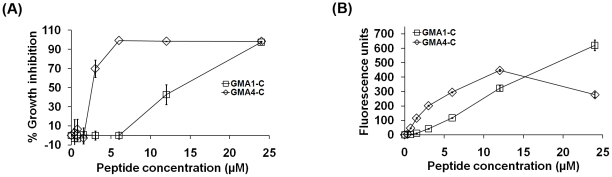
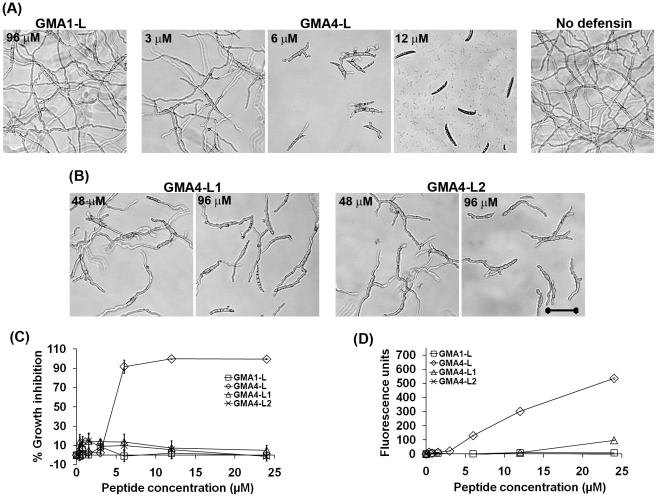
“…+3 −1.207 0.00 1905.21 Sagaram et al. (2011) GMA1 GRCRDDFRC +1 −1.456 0.00 1127.26 Sagaram et al. (2011) GMA1-L RDDFR 0 −2.640 0.00 707.74 Sagaram et al. (2011) MtDef4 RTCESQSHKFKGPCASDHNSASVCQTERFSGGRCRGFRRRCFCTTHC +6 −1.011 10.43 5343.01 Ramamoorthy et al. (2007b) GMA4-C…”
BackgroundMethodInfluentialSelf-citationIslam, K. T., Velivelli, S. L. S., Berg, R. H., Oakley, B., & Shah, D. M. (2017) · Scientific Reports · doi:10.1038/s41598-017-16508-w · Cited by 53
Self-citationEl‐Mounadi, K., Islam, K. T., Hernández-Ortíz, P., Read, N. D., & Shah, D. M. (2016) · Molecular Microbiology · doi:10.1111/mmi.13333 · Cited by 56
“…images of conidia from the wild type Dpld, DpldA and Dpld1-H treated with 1 mM of TMR-MtDef4 for 3 h. VC 2016 The Authors Molecular Microbiology Published by John Wiley & Sons Ltd, Molecular Microbiology, 100, 542–559 phospholipid PA in vitro (Sagaram et al., 2011; Sagaram et al., 2013a).”
BackgroundMethodSelf-citationGhag, S. B., Shekhawat, U. K. S., & Ganapathi, T. R. (2014) · Plant Cell Tissue and Organ Culture (PCTOC) · doi:10.1007/s11240-014-0529-x · Cited by 49
“Additionally, the Sm-AMP-D1 protein shares good homology with two well studied plant defensins namely MtDef4 and MsDef1 (Sagaram et al. 2011, 2013).”
BackgroundSonderegger, C., Váradi, G., Galgóczy, L., Kocsubé, S., Posch, W., Borics, A., Dubrac, S., Tóth, G. K., Wilflingseder, D., & Marx, F. (2018) · Frontiers in Microbiology · doi:10.3389/fmicb.2018.01655 · Cited by 48
“Indeed, this motif was already found to be an important functional determinant of antifungal plant defensins and deduced γ-core peptide fragments showed antifungal activity (Sagaram et al., 2011).”
BackgroundInfluentialSoares, J. R., de Melo, É. J. T., Cunha, M. D., Fernandes, K. V. S., Taveira, G. B., Pereira, L. D. S., Pimenta, S., Trindade, F. G., Regente, M. C., Pinedo, M., et al. (2016) · Biochimica et Biophysica Acta (BBA) - General Subjects · doi:10.1016/j.bbagen.2016.09.005 · Cited by 48
Huber, A. L., Galgóczy, L., Váradi, G., Holzknecht, J., Kakar, A., Malanović, N., Leber, R., Koch, J. M., Keller, M. A., Batta, G., et al. (2020) · Biochimica et Biophysica Acta (BBA) - Biomembranes · doi:10.1016/j.bbamem.2020.183246 · Cited by 52
“Synthetic peptides derived from specific plant defensins that span this motif exhibit antimicrobial activity per se [41].”
Zarinpanjeh, N., Motallebi, M., Zamani, M. R., & Ziaei, M. (2016) · Journal of Applied Genetics · doi:10.1007/s13353-016-0340-y · Cited by 46
“graminearum (Sagaram et al. 2011) and Picea glauca defensin on B.”
BackgroundDracatos, P. M., van der Weerden, N. L., Carroll, K., Johnson, E. D., Plummer, K. M., & Anderson, M. A. (2013) · Molecular Plant Pathology · doi:10.1111/mpp.12066 · Cited by 45
“When Sagaram and co-workers grafted the γ-core motif of MtDef4 onto MsDef1 (a similar class I defensin with weaker antifungal activity), the hybrid molecule showed antifungal activity against Fgr that was equivalent to MtDef4 (Sagaram et al., 2011).”
BackgroundResultInfluentialKaur, J., Sagaram, U. S., & Shah, D. M. (2011) · Fungal Biology Reviews · doi:10.1016/j.fbr.2011.07.004 · Cited by 45
Self-citationBleackley, M. R., Payne, J. A. E., Hayes, B. M. E., Durek, T., Craik, D. J., Shafee, T. M. A., Poon, I. K. H., Hulett, M. D., van der Weerden, N. L., & Anderson, M. A. (2016) · Antimicrobial Agents and Chemotherapy · doi:10.1128/aac.01479-16 · Cited by 47
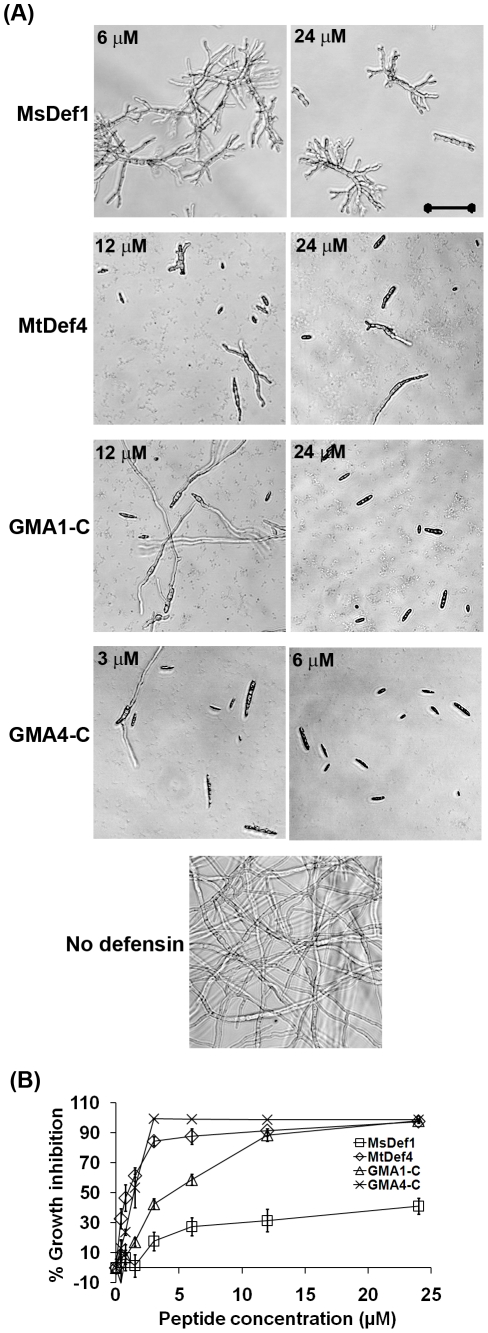
“One of these, MtDef4 from Medicago truncatula, has potent antifungal activity and has been well studied (28).”
BackgroundMedicinal Potentialities of Plant Defensins: A Review with Applied Perspectives
Ishaq, N., Bilal, M., & Iqbal, H. M. N. (2019) · Medicines · doi:10.3390/medicines6010029 · Cited by 51
“The mutagenesis studies of the RGFRRR region from MtDef4 revealed that the replacement of Arg and Phe at positions 4 and 3, respectively (positively charged hydrophobic r sidues), with Al residues led to a significant deterioration of antifungal activity [29].”
BackgroundInfluentialTóth, L., Váradi, G., Borics, A., Batta, G., Kele, Z., Vendrinszky, Á., Tóth, R., Ficze, H., Tóth, G. K., Vágvölgyi, C., et al. (2018) · Frontiers in Microbiology · doi:10.3389/fmicb.2018.00393 · Cited by 44
“Previous studies demonstrated that synthetic peptide fragments of antifungal proteins and their rational-designed variants show remarkable inhibitory potential on fungi if they are hydrophilic and have high positive net-charge (Sagaram et al., 2011; Garrigues et al., 2017).”
BackgroundAntimicrobial peptides as effective tools for enhanced disease resistance in plants
Iqbal, A., Khan, R. S., Shehryar, K., Imran, A., Ali, F. L., Attia, S., Shah, S., & Mii, M. (2019) · Plant Cell Tissue and Organ Culture (PCTOC) · doi:10.1007/s11240-019-01668-6 · Cited by 50
Ixodes ricinus defensins attack distantly-related pathogens
Tonk, M., Cabezas‐Cruz, A., Valdés, J. J., Rego, R. O. M., Grubhoffer, L., Estrada‐Peña, A., Vilcinskas, A., Kotsyfakis, M., & Rahnamaeian, M. (2015) · Developmental & Comparative Immunology · doi:10.1016/j.dci.2015.08.001 · Cited by 46
“The remainder are cationic, which is thought to be necessary for their activity (Sagaram et al., 2011).”
BackgroundGoyal, R. K., & Mattoo, A. K. (2016) · Springer eBooks · doi:10.1007/978-3-319-32949-9_5 · Cited by 41
Fungitoxic and insecticidal plant polypeptides
Becker‐Ritt, A. B., & Carlini, C. R. (2012) · Biopolymers · doi:10.1002/bip.22097 · Cited by 46
Odintsova, T. I., Shcherbakova, L. A., Slezina, M. P., Pasechnik, T., Kartabaeva, B. B., Istomina, E. A., & Dzhavakhiya, V. G. (2020) · International Journal of Molecular Sciences · doi:10.3390/ijms21217912 · Cited by 43
“The gamma-core is postulated to be vital for the antimicrobial activity of AMPs [38,39].”
BackgroundCools, T. L., Struyfs, C., Drijfhout, J. W., Kucharíková, S., Romero, C. L., Dijck, P. V., Ramada, M. H. S., Bloch, C., Cammue, B. P. A., & Thevissen, K. (2017) · Frontiers in Microbiology · doi:10.3389/fmicb.2017.02051 · Cited by 41
“However, both regions are still situated in the γ-core region, which is a region that is important for the antifungal activity of many plant defensins (De Samblanx et al., 1996; Sagaram et al., 2011).”
BackgroundTonk, M., Cabezas‐Cruz, A., Valdés, J. J., Rego, R. O. M., Chrudimská, T., Strnad, M., Šíma, R., Bell‐Sakyi, L., Franta, Z., Vilcinskas, A., et al. (2014) · Parasites & Vectors · doi:10.1186/preaccept-8265353130225079 · Cited by 38
Mello, É. D. O., Taveira, G. B., Carvalho, A. D. O., & Gomes, V. M. (2019) · International Journal of Nanomedicine · doi:10.2147/ijn.s187957 · Cited by 39
“Many studies have already shown that the activity of plant defensins is related to this structural domain.(22,23,36) Figure 6 Images of reactive oxygen species assay detection in Candida buinensis cells after treatment with γ33-41PνD1 ++ (25 μM) for 24 hours.”
BackgroundRigano, M. M., Romanelli, A., Fulgione, A., Nocerino, N., D’Agostino, N., Avitabile, C., Frusciante, L., Barone, A., Capuano, F., & Capparelli, R. (2012) · Journal of Peptide Science · doi:10.1002/psc.2462 · Cited by 35
Antifungal Activity of (KW)n or (RW)n Peptide against Fusarium solani and Fusarium oxysporum
Gopal, R., Na, H., Seo, C., & Park, Y. (2012) · International Journal of Molecular Sciences · doi:10.3390/ijms131115042 · Cited by 36
“For example, both defensin and MtDef4 require cationic and hydrophobic amino acids for their antifungal activities [9].”
BackgroundLeannec-Rialland, V., Atanasova‐Pénichon, V., Chéreau, S., Tonk, M., Cabezas‐Cruz, A., & Richard-Forget, F. C. (2022) · Journal of Fungi · doi:10.3390/jof8030229 · Cited by 40
“truncatula [35,56] and Nad1 and Nad2 from N.”
BackgroundPlant Antimicrobial Peptides and Their Main Families and Roles: A Review of the Literature
de Oliveira, S. S. S., Cherene, M. B., Taveira, G. B., Mello, É. D. O., Carvalho, A. D. O., & Gomes, V. M. (2024) · Current Issues in Molecular Biology · doi:10.3390/cimb47010001 · Cited by 42
Kaur, J., Thokala, M., Robert‐Seilaniantz, A., Zhao, P. X., Peyret, H., Berg, R. H., Pandey, S., Jones, J. D. G., & Shah, D. M. (2012) · Molecular Plant Pathology · doi:10.1111/j.1364-3703.2012.00813.x · Cited by 34
“2 (previously called MtDef4), encodes a protein that has a net positive charge of +6 (Sagaram et al., 2011) and inhibits the growth of several filamentous fungi.”
BackgroundSelf-citationRice Defensin OsAFP1 is a New Drug Candidate against Human Pathogenic Fungi
Ochiai, A., Ogawa, K., Fukuda, M., 大堀, 正., Kanaoka, T., Tanaka, T., Taniguchi, M., & Sagehashi, Y. (2018) · Scientific Reports · doi:10.1038/s41598-018-29715-w · Cited by 34
Identification and partial characterisation of new members of the Ixodes ricinus defensin family
Tonk, M., Cabezas‐Cruz, A., Valdés, J. J., Rego, R. O. M., Rudenko, N., Golovchenko, M., Bell‐Sakyi, L., de la Fuente, J., & Grubhoffer, L. (2014) · Gene · doi:10.1016/j.gene.2014.03.002 · Cited by 39
“The basic isoelectric point in defensins is an important factor for function (Sagaram et al., 2011).”
BackgroundSouhail, Q. A., Hiromasa, Y., Rahnamaeian, M., Giraldo, M. C., Takahashi, D., Valent, B. S., Vilcinskas, A., & Kanost, M. R. (2016) · Developmental & Comparative Immunology · doi:10.1016/j.dci.2016.03.006 · Cited by 39
Tetorya, M., Li, H., Djami‐Tchatchou, A. T., Buchko, G. W., Czymmek, K. J., & Shah, D. M. (2023) · Molecular Plant Pathology · doi:10.1111/mpp.13336 · Cited by 31
Self-citationMith, O., Benhamdi, A., Castillo, T., Bergé, M., MacDiarmid, C. W., Steffen, J., Eide, D. J., Perrier, V., Subileau, M., Gosti, F., et al. (2015) · MicrobiologyOpen · doi:10.1002/mbo3.248 · Cited by 38
“Furthermore, an emerging idea is that plant defensins are multifunctional proteins (Franco 2011) and that, if their mode of action is still not fully clear, it is because their biological activities are diverse and are probably the basis of several modes of action (Sagaram et al. 2011; Munoz et al. 2014).”
BackgroundGarrigues, S., Gandía, M., Borics, A., Marx, F., Manzanares, P., & Marcos, J. F. (2017) · Frontiers in Microbiology · doi:10.3389/fmicb.2017.00592 · Cited by 32
“Most of the studies based on peptides derived from antifungal CRPs have focused on defensins and the highly conserved γ-motif (Sagaram et al., 2011; Avitabile et al., 2013; van der Weerden and Anderson, 2013; Muñoz et al., 2014; Kaewklom et al., 2016), but not on fungal AFPs.”
BackgroundLi, H., Velivelli, S. L. S., & Shah, D. M. (2019) · Molecular Plant-Microbe Interactions · doi:10.1094/mpmi-08-19-0224-r · Cited by 33
Self-citationTóth, L., Boros, É., Poór, P., Ördög, A., Kele, Z., Váradi, G., Holzknecht, J., Bratschun-Khan, D., Nagy, I., Tóth, G. K., et al. (2020) · Microbial Biotechnology · doi:10.1111/1751-7915.13559 · Cited by 38
“The c-core motif can be found in pro- and eukaryotic, cysteine-rich antimicrobial peptides and proteins (Yount and Yeaman, 2006) and plays an important role in the antifungal action of plant defensins (Sagaram et al., 2011).”
BackgroundDefensins of Grasses: A Systematic Review
Odintsova, T. I., Slezina, M. P., & Istomina, E. A. (2020) · Biomolecules · doi:10.3390/biom10071029 · Cited by 32
Coyne, C. J., Pilet‐Nayel, M., McGee, R. J., Porter, L. D., Smýkal, P., & Grünwald, N. J. (2015) · Plant Breeding · doi:10.1111/pbr.12287 · Cited by 31
Analysis of structures, functions, and transgenicity of phytopeptides defensin and thionin: a review
Azmi, S., & Hussain, M. K. (2021) · Beni-Suef University Journal of Basic and Applied Sciences · doi:10.1186/s43088-020-00093-5 · Cited by 31
“toward phytopathogenic fungal strains, as like MtDef4 [67].”
BackgroundInfluentialTóth, L., Váradi, G., Boros, É., Borics, A., Ficze, H., Nagy, I., Tóth, G. K., Rákhely, G., Marx, F., & Galgóczy, L. (2020) · Frontiers in Microbiology · doi:10.3389/fmicb.2020.00820 · Cited by 29
“NFAP induced extensive hyperbranching, similarly to the report on the effect of the morphogenic defensin MsDef1 from Medicago sativa (Sagaram et al., 2011) or PAF from P. chrysogenum (Kaiserer et al., 2003).”
BackgroundАлексеевна, К. О., Kliukova, M. S., Afonin, A. М., Sulima, A. S., Zhukov, V. A., & Tikhonovich, I. A. (2020) · Biological Communications · doi:10.21638/spbu03.2020.205 · Cited by 30
“Interaction with the target on the fungal membrane, which can be located on the cell wall and plasma membrane (Sagaram et al., 2011; De Coninck et al., 2013); activation of the ROS response and apoptosis (Aerts et al., 2007, 2011; Weerden et al., 2008), effects on the cell cycle (Lobo et al., 2007).”
BackgroundInfluentialPlant defensin antibacterial mode of action against Pseudomonas species
Sathoff, A. E., Lewenza, S., & Samac, D. A. (2020) · BMC Microbiology · doi:10.1186/s12866-020-01852-1 · Cited by 32
Slezina, M. P., Istomina, E. A., Korostyleva, T. V., Kovtun, A. S., Kasianov, A. S., Конопкин, А. А., Shcherbakova, L. A., & Odintsova, T. I. (2021) · International Journal of Molecular Sciences · doi:10.3390/ijms22115741 · Cited by 31
“This short peptide alone was shown to exhibit antifungal activity [18]; therefore, tomato defensins harboring this motif are antifungal.”
BackgroundPicart, P., Pirttilä, A. M., Raventós, D., Kristensen, H., & Sahl, H. (2012) · BMC Plant Biology · doi:10.1186/1471-2229-12-180 · Cited by 29
“Microscopical analyses of fungal hyphae treated with PgD5 did not reveal increased hyphal branching and morphologically altered hyphae that are typically induced by some plant defensins [7,50,52] (Figure 6).”
BackgroundSimilarities between Reproductive and Immune Pistil Transcriptomes of Arabidopsis Species
Mondragón‐Palomino, M., John-Arputharaj, A., Pallmann, M., & Dresselhaus, T. (2017) · PLANT PHYSIOLOGY · doi:10.1104/pp.17.00390 · Cited by 32
“Like other DEFLs, these LCR and SCRL genes potentially encode antifungal peptides (Thevissen et al., 2004; Sagaram et al., 2011).”
BackgroundStructural and biological features of a novel plant defensin from Brugmansia x candida
Kaewklom, S., Wongchai, M., Petvises, S., Hanpithakphong, W., & Aunpad, R. (2018) · PLoS ONE · doi:10.1371/journal.pone.0201668 · Cited by 28
Mansfeld, B. N., Colle, M., Zhang, C., Lin, Y., & Grumet, R. (2020) · BMC Genomics · doi:10.1186/s12864-020-07040-9 · Cited by 32
Avitabile, C., Capparelli, R., Rigano, M. M., Fulgione, A., Barone, A., Pedone, C., & Romanelli, A. (2013) · Journal of Peptide Science · doi:10.1002/psc.2479 · Cited by 24
Moyer, T. B., Allen, J. L., Shaw, L. N., & Hicks, L. M. (2021) · Journal of Natural Products · doi:10.1021/acs.jnatprod.0c01203 · Cited by 28
Biological Functions and Applications of Antimicrobial Peptides
Jin, L., Dong, H., Sun, D., Wang, L., Qu, L., Lin, S., Yang, Q., & Zhang, X. (2022) · Current Protein and Peptide Science · doi:10.2174/1389203723666220519155942 · Cited by 26
Badrhadad, A., Firouzabadi, F. N., & Ismaili, A. (2018) · 3 Biotech · doi:10.1007/s13205-018-1416-7 · Cited by 24
Fighting pathogenic yeasts with plant defensins and anti-fungal proteins from fungi
Manzanares, P., Giner‐Llorca, M., Marcos, J. F., & Garrigues, S. (2024) · Applied Microbiology and Biotechnology · doi:10.1007/s00253-024-13118-1 · Cited by 25
“Although plant defensins contain two γ-motifs, only the C-terminal one in its dextromeric isoform has been shown to contain determinants of anti-fungal activity (Sagaram et al. 2011).”
BackgroundFernández, A., Colombo, M. L., Curto, L. M., Gómez, G. E., Delfino, J. M., Guzmán, F., Bakás, L. S., Malbrán, I., & Cavalli, S. V. (2021) · Frontiers in Microbiology · doi:10.3389/fmicb.2021.632008 · Cited by 28
Modes of action and potential as a peptide‐based biofungicide of a plant defensin MtDef4
Li, H., Kalunke, R. M., Tetorya, M., Czymmek, K. J., & Shah, D. M. (2024) · Molecular Plant Pathology · doi:10.1111/mpp.13458 · Cited by 20
“It exhibits potent broad-spectrum antifungal activity against fungal pathogens including Botrytis cinerea , Fusarium graminearum , Fusarium oxysporum and Phoma medicaginis (El-Mounadi et al., 2016; Sagaram et al., 2011; Sathoff et al., 2019; Tetorya et al., 2023).”
BackgroundSelf-citationIn vivo antimicrobial evaluation of an alanine-rich peptide derived from Pleuronectes americanus
Teixeira, L. D., Silva, O. N., Migliolo, L., Fensterseifer, I. C. M., & Franco, O. L. (2013) · Peptides · doi:10.1016/j.peptides.2013.02.001 · Cited by 23
Vijayan, S., Imani, J., Tanneeru, K., Guruprasad, L., Kogel, K.-H., & Kirti, P. B. (2012) · Peptides · doi:10.1016/j.peptides.2011.12.020 · Cited by 21
Revealing the Properties of Plant Defensins through Dynamics
Valente, A. P., Paula, V. S. D., & Almeida, F. C. L. (2013) · Molecules · doi:10.3390/molecules180911311 · Cited by 24
“According to these authors, although the γ-core motif exhibits antimicrobial activity, the full-lenght protein is more efficient; this finding suggests that not only the primary sequence but also additional features are responsible for the antimicrobial activity of these defensins [63].”
BackgroundKhairutdinov, B. I., Ermakova, E. A., Yusypovych, Y. M., Bessolicina, E. K., Tarasova, N. B., Toporkova, Y. Y., Kovaleva, V. A., Zuev, Y. F., & Nesmelova, I. V. (2017) · Biochimica et Biophysica Acta (BBA) - Proteins and Proteomics · doi:10.1016/j.bbapap.2017.05.012 · Cited by 24
“The γ-core motif has a net positive charge and is thought to be significant for the activity of plant defensins [22-26].”
BackgroundNanni, V., Schumacher, J., Giacomelli, L., Brazzale, D., Sbolci, L., Moser, C., Tudzynski, P., & Baraldi, E. (2013) · Plant Pathology · doi:10.1111/ppa.12170 · Cited by 23
Lay, F. T., Ryan, G. F., Caria, S., Phan, T. K., Veneer, P. K., White, J. A., Kvansakul, M., & Hulett, M. D. (2019) · The FASEB Journal · doi:10.1096/fj.201802540r · Cited by 20
“PA binding has been implicated in the antifungal activity of theMedicago truncatuladefensin (MtDef) 4 via its RGFRRR cationic loop (same sequence as that inNsD7,whichalsobindsPA) (29, 49).”
BackgroundSouza, G. S., de Carvalho, L. P., de Melo, É. J. T., da Silva, F. C. V., Machado, O. L. T., Gomes, V. M., & Carvalho, A. D. O. (2019) · Amino Acids · doi:10.1007/s00726-019-02800-8 · Cited by 19
Plant compounds for the potential reduction of food waste – a focus on antimicrobial peptides
Shwaiki, L. N., Arendt, E. K., & Lynch, K. M. (2021) · Critical Reviews in Food Science and Nutrition · doi:10.1080/10408398.2021.1873733 · Cited by 22
The γ-Core Motif Peptides of Plant AMPs as Novel Antimicrobials for Medicine and Agriculture
Slezina, M. P., Istomina, E. A., Korostyleva, T. V., & Odintsova, T. I. (2022) · International Journal of Molecular Sciences · doi:10.3390/ijms24010483 · Cited by 19
“However, there exist certain exceptions: for example, the short positively charged peptide MBG07 of five amino acids derived from the C-terminal region of the Rs-AFP2 γ-core and the hexapeptide RGFRRR found in the γ-cores of different defensins [9,22].”
BackgroundInfluentialUpdate on the Basic Understanding of Fusarium graminearum Virulence Factors in Common Wheat Research
Buttar, Z. A., Cheng, M., Wei, P., Zhang, Z., Lv, C., Zhu, C., Ali, N. F., Kang, G., Wang, D., & Zhang, K. (2024) · Plants · doi:10.3390/plants13081159 · Cited by 21
“It has been observed that MsDef1 and MtDef4 are produced in Medicago spp. to resist against F. graminearum growth [60].”
BackgroundTalactac, M. R., Yada, Y., Yoshii, K., Hernandez, E. P., Kusakisako, K., Maeda, H., Galay, R. L., Fujisaki, K., Mochizuki, M., & Tanaka, T. (2016) · Developmental & Comparative Immunology · doi:10.1016/j.dci.2016.11.013 · Cited by 18
“The predicted charge or isoelectric point is considered one important element in the defensin function (Tonk et al., 2014b; Sagaram et al., 2011).”
BackgroundNanni, V., Zanetti, M., Bellucci, M., Moser, C., Bertolini, P., Guella, G., Serra, M. D., & Baraldi, E. (2012) · Plant Pathology · doi:10.1111/j.1365-3059.2012.02648.x · Cited by 18
“Despite their low sequence similarity, defensins share highly conserved a- ⁄ c-core primary sequence motifs (Yount & Yeaman, 2004; Sagaram et al., 2011) and a cysteine-stabilized a ⁄ b (CS a ⁄ b) tertiary structure (Cornet et al., 1995).”
BackgroundMcColl, A. I., Bleackley, M. R., Anderson, M. A., & Lowe, R. G. T. (2018) · Frontiers in Microbiology · doi:10.3389/fmicb.2018.01648 · Cited by 22
“They are also expressed in response to infections and environmental stress (Lay et al., 2003; Sagaram et al., 2011).”
BackgroundRecent Advances in Nanomaterial-Based Approaches for Plant Disease Management and Early Detection
Salam, A., Khan, S. M., Afridi, M. S., Khan, A. R., Zeeshan, M., Rehman, M., Wu, H., Iqbal, A., Zhang, Z., & Zhao, C. (2026) · Journal of Agricultural and Food Chemistry · doi:10.1021/acs.jafc.5c12329 · Cited by 19
Toledo, E. B., Lucas, D. R., Simão, T. L. B. V., Calixto, S. D., Lasunskaia, E., Muzitano, M. F., Damica, F. Z., Gomes, V. M., & Carvalho, A. D. O. (2021) · Amino Acids · doi:10.1007/s00726-020-02929-x · Cited by 18
Li, F., Gao, Z., Wang, K., Zhao, Y., Wang, H., Zhao, M., Zhao, Y., Bai, L., Yu, Z., & Yang, X. (2021) · Experimental and Applied Acarology · doi:10.1007/s10493-020-00584-1 · Cited by 17
Metadata
- Authors
- Sagaram, U. S., Pandurangi, R., Kaur, J., Smith, T. J., & Shah, D. M.
- Affiliations
- Donald Danforth Plant Science Center (US)
- Corresponding author
- Shah, Dilip M.
- Venue
- PLoS ONE
- Publisher
- Public Library of Science (PLoS)
- Published
- 2011-04-13
- Volume
- 6
- Issue
- 4
- Pages
- e18550
- ISSN
- 1932-6203 (ISSN-L)
- PMC
- PMC3076432
- OpenAlex
- W1966880324
- Cited by
- 185
- References
- 47
- Citations by year
- 2026: 11 · 2025: 7 · 2024: 13 · 2023: 7 · 2022: 12 · 2021: 24 · 2020: 15 · 2019: 9 · 2018: 14 · 2017: 7 · 2016: 13 · 2015: 9 · 2014: 12 · 2013: 13 · 2012: 16
- FWCI
- 13.01
- Type
- journal article
- Language
- en
- Open access
- gold
- doi.org
- Locations
- PLoS ONE (publishedVersion, cc-by)
- Europe PMC (PubMed Central) (publishedVersion, cc-by)
- PubMed Central (publishedVersion, cc-by)
- PubMed (publishedVersion)
- DOAJ (DOAJ: Directory of Open Access Journals) (submittedVersion)
- Figshare (submittedVersion, cc-by)
- Funders
- National Science Foundation (0924124)
- Donald Danforth Plant Science Center
- Topics
- Life Sciences › Immunology and Microbiology › Microbiology › Antimicrobial Peptides and Activities
- Life Sciences › Agricultural and Biological Sciences › Plant Science › Plant-Microbe Interactions and Immunity
- Life Sciences › Immunology and Microbiology › Applied Microbiology and Biotechnology › Microbial Natural Products and Biosynthesis
- Keywords
- plant defensins, Fusarium graminearum, antifungal activity, plasma membrane permeabilization, structure-activity relationship, antimicrobial peptides, cysteine-rich peptides, fungal growth inhibition
- MeSH terms
- Amino Acid Sequence, Antifungal Agents, Chromatography, High Pressure Liquid, Fusarium, Models, Molecular, Molecular Sequence Data, Structure-Activity Relationship, Defensins
About these checks
Registry, retraction, Cites and statistics results are computed, not judged, with one exception: a printed reference that no index lists is read once by a model before it counts as a citation error. Claims are extracted by a model and kept only when their quote appears verbatim in the text; each cited source is then checked, with a model’s help, for whether it says what the claim relies on. Those verdicts can be wrong — read the claim’s quote and the cited source before relying on one.
Statistics and arithmetic are recomputed, not judged.
Confidence bands are shown only for fields calibrated on our annotated test set. None is calibrated yet, so no band is shown.
What counts as a claim ›How we measure confidence ›How we check this ›
Are you an author, or do you see a problem with this page? Request a review
Data sources
Bibliographic data: Semantic Scholar, OpenAlex, Crossref.
Contains information from the Semantic Scholar Academic Graph Datasets, made available under the ODC Attribution License (ODC-BY 1.0).
Semantic Scholar’s data is described in: Kinney, R., et al. (2023). The Semantic Scholar Open Data Platform. arXiv:2301.10140.
