

Structure-Activity Determinants in Antifungal Plant Defensins MsDef1 and MtDef4 with Different Modes of Action against Fusarium graminearum
Open accessThe DOI matches its Crossref record; 48 of the 48 references it cites were found in a registry or an index.
Abstract
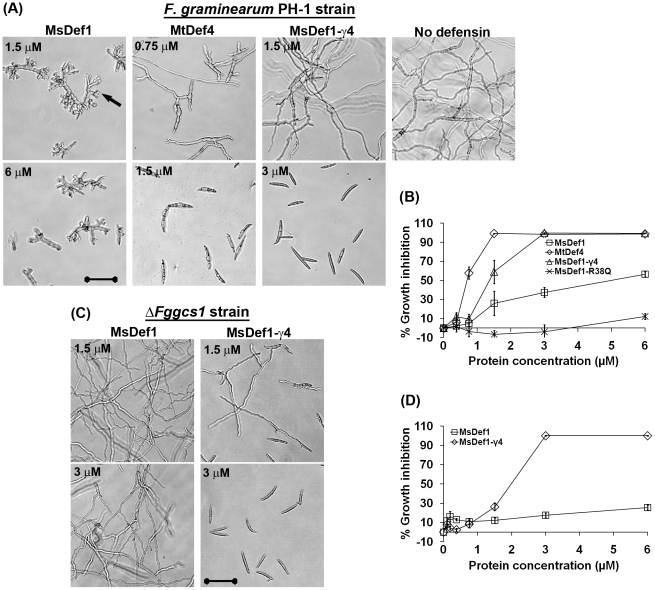
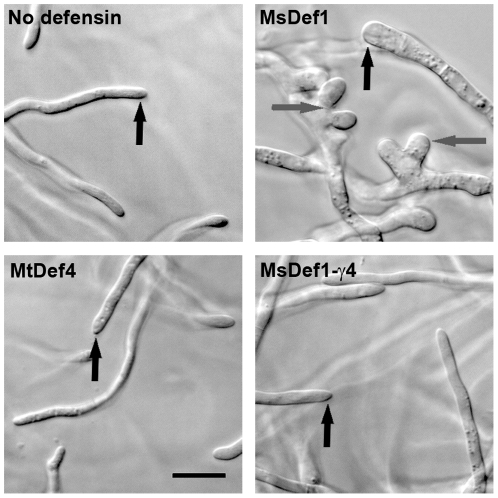
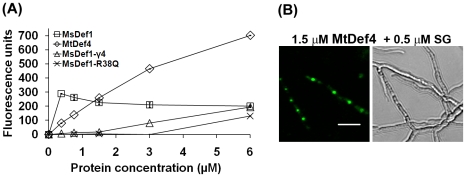
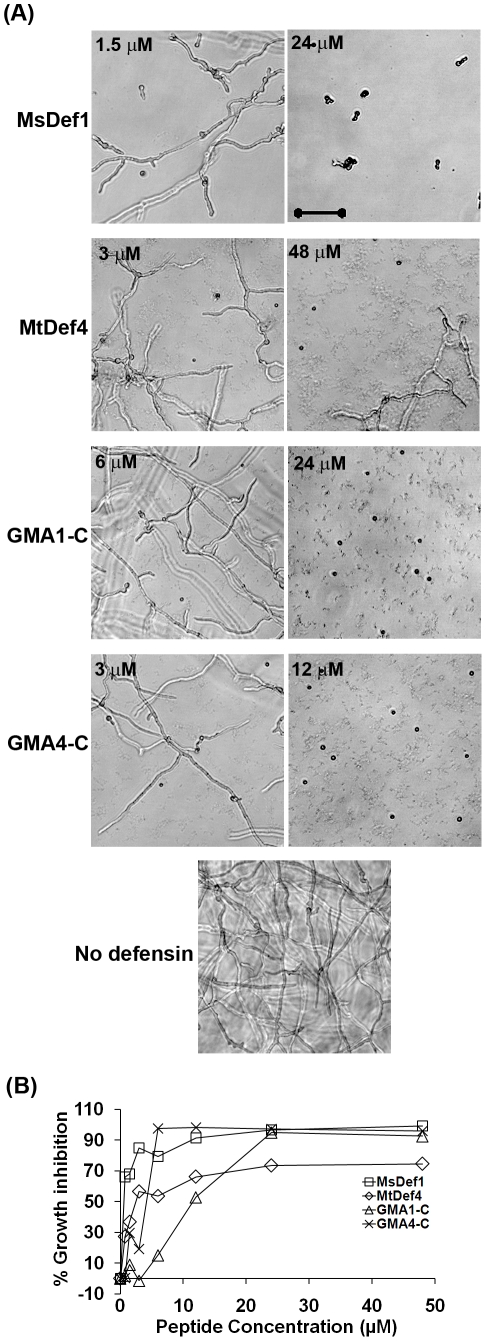
Plant defensins are small cysteine-rich antimicrobial proteins. Their three-dimensional structures are similar in that they consist of an α-helix and three anti-parallel β-strands stabilized by four disulfide bonds. Plant defensins MsDef1 and MtDef4 are potent inhibitors of the growth of several filamentous fungi including Fusarium graminearum. However, they differ markedly in their antifungal properties as well as modes of antifungal action. MsDef1 induces prolific hyperbranching of fungal hyphae, whereas MtDef4 does not. Both defensins contain a highly conserved γ-core motif (GXCX(3-9)C), a hallmark signature present in the disulfide-stabilized antimicrobial peptides, composed of β2 and β3 strands and the interposed loop. The γ-core motifs of these two defensins differ significantly in their primary amino acid sequences and in their net charge. In this study, we have found that the major determinants of the antifungal activity and morphogenicity of these defensins reside in their γ-core motifs. The MsDef1-γ4 variant in which the γ-core motif of MsDef1 was replaced by that of MtDef4 was almost as potent as MtDef4 and also failed to induce hyperbranching of fungal hyphae. Importantly, the γ-core motif of MtDef4 alone was capable of inhibiting fungal growth, but that of MsDef1 was not. The analysis of synthetic γ-core variants of MtDef4 indicated that the cationic and hydrophobic amino acids were important for antifungal activity. Both MsDef1 and MtDef4 induced plasma membrane permeabilization; however, kinetic studies revealed that MtDef4 was more efficient in permeabilizing fungal plasma membrane than MsDef1. Furthermore, the in vitro antifungal activity of MsDef1, MsDef1-γ4, MtDef4 and peptides derived from the γ-core motif of each defensin was not solely dependent on their ability to permeabilize the fungal plasma membrane. The data reported here indicate that the γ-core motif defines the unique antifungal properties of each defensin and may facilitate de novo design of more potent antifungal peptides.
Overview
The claims and statistics of this paper haven’t been checked yet.
Free: it reads the open-access text and checks the first 5 claims that cite a source we can check. Create a free account to check every claim.
Integrity signals
Registry
Cites
Statistics
Figures
Verification
Claims the paper makes
The claims and statistics of this paper haven’t been checked yet.
Free: it reads the open-access text and checks the first 5 claims that cite a source we can check. Create a free account to check every claim.
Claims other papers make about this one
Each is checked against this paper’s own text: does it say what the citing paper says it does?
The source backs part of the claim, not all of it — or backs it for a different population, condition or comparison.
In the citing paper
“More likely, the γ-core provides a structural scaffold, while the surrounding sequence, physicochemical properties, and structural context determine the final antimicrobial phenotype [18,19,20,21,22,23,24,31].”
From Ovotransferrin and Its γ-Core-Containing Peptides Impair Pma1-Dependent Proton Homeostasis in Candida albicans (2026) · cites this paper as [19]
Experimental — accuracy not yet measuredThe cited source says what the claim attributes to it.
In the citing paper
“However, activity is not conferred by the GXC/CXG sequence consensus alone and may depend on the integrity of the motif, its charge and hydrophobicity, the contribution of flanking residues, and preservation of an appropriate conformational context [19,20,21,22].”
From Ovotransferrin and Its γ-Core-Containing Peptides Impair Pma1-Dependent Proton Homeostasis in Candida albicans (2026) · cites this paper as [19]
The cited source says what the claim attributes to it.
In the citing paper
“Experimental studies have further shown that peptides encompassing complete γ-core regions can reproduce antimicrobial properties of their parent molecules.”
From Ovotransferrin and Its γ-Core-Containing Peptides Impair Pma1-Dependent Proton Homeostasis in Candida albicans (2026) · cites this paper as [19]
Self-check
Percentages, sums and reported differences re-computed from the paper’s own numbers.
The self-check needs the paper’s full text.
Citations
Cites
Gapped BLAST and PSI-BLAST: a new generation of protein database search programs
Altschul, S. (1997) · Nucleic Acids Research · doi:10.1093/nar/25.17.3389 · Cited by 73,302 · cited 1×
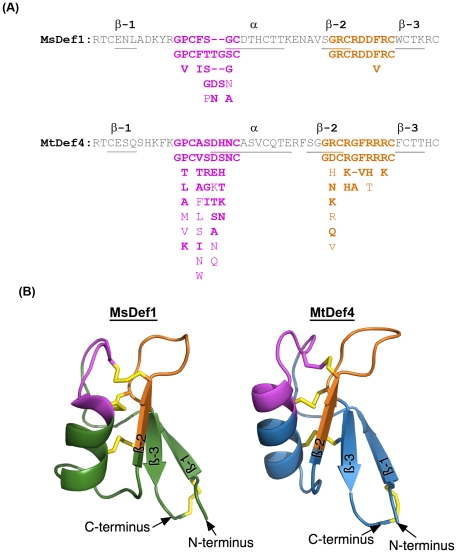
“A search of the NCBI database using Blast P [23] resulted in the identification of 16 legume-specific plant defensin sequences sharing high sequence homology with MsDef1 (Figure S1A).”
MethodThompson, J. D., Higgins, D. G., & Gibson, T. J. (1994) · Nucleic Acids Research · doi:10.1093/nar/22.22.4673 · Cited by 64,617 · cited 1×
“CLUSTAL W alignment [24] of 18 amino acid sequences of the homologs of MsDef1 identified a consensus c-core motif with the sequence ‘GXCRDD(F/V)RC’ (Figure 1A), whereas similar analysis of 28 MtDef4 homologs identified a consensus c-core motif with the sequence ‘GXC(R/H/K)(G/A/_)(F/V)(R/H/ T)R(R/K)C’ (Figure 1A).”
Antimicrobial peptides of multicellular organisms
Zasloff, M. (2002) · Nature · doi:10.1038/415389a · Cited by 8,457 · cited 1×
“Plants are sessile organisms that are continually challenged by microbial pathogens during their life cycle. To ward off pathogen attack, plants produce a number of cationic antimicrobial peptides. These include defensins that are one of the largest families of antimicrobial peptides found in plants. These basic, cyst…”
BackgroundI-TASSER: a unified platform for automated protein structure and function prediction
Roy, A., Kucukural, A., & Zhang, Y. (2010) · Nature Protocols · doi:10.1038/nprot.2010.5 · Cited by 6,170
I-TASSER server for protein 3D structure prediction
Zhang, Y. (2008) · BMC Bioinformatics · doi:10.1186/1471-2105-9-40 · Cited by 5,124
Plant Defensins: Novel Antimicrobial Peptides as Components of the Host Defense System
Broekaert, W. F., Terras, F., Cammue, B., & Osborn, R. W. (1995) · Plant Physiology · doi:10.1104/pp.108.4.1353 · Cited by 765 · cited 2×
“different modes of antifungal action [16,17].”
BackgroundThomma, B., Cammue, B., & Thevissen, K. (2002) · Planta · doi:10.1007/s00425-002-0902-6 · Cited by 661
Nitrate Nonutilizing Mutants of Fusarium oxysporum and Their Use in Vegetative Compatibility Tests
Correll, J. C. (1987) · Phytopathology · doi:10.1094/phyto-77-1640 · Cited by 628
Analysis of two novel classes of plant antifungal proteins from radish (Raphanus sativus L.) seeds.
Terras, F. R., Schoofs, H. M., De Bolle, M. F., Van Leuven, F., Rees, S. B., Vanderleyden, J., Cammue, B. P., & Broekaert, W. F. (1992) · Journal of Biological Chemistry · doi:10.1016/s0021-9258(19)49534-3 · Cited by 581 · cited 2×
“different modes of antifungal action [16,17].”
BackgroundBacterial viability and antibiotic susceptibility testing with SYTOX green nucleic acid stain
Roth, B. L., Poot, M., Yue, S. T., & Millard, P. J. (1997) · Applied and Environmental Microbiology · doi:10.1128/aem.63.6.2421-2431.1997 · Cited by 579 · cited 1×
“500-fold upon binding to nucleic acids thus allowing quantitative analysis and fluorescence microscopy [27].”
Background
Research works printed but not linked: 1
- Murad AM Pelegrini PB Neto SM Franco OL 2007 Novel findings of defensins and their utilization in construction of transgenic plants. Transgenic Plant Journal 1 39 48
Cited by
Items 101–185 of 185
Crystal structure of rice defensin OsAFP1 and molecular insight into lipid-binding
Ochiai, A., Ogawa, K., Fukuda, M., Suzuki, M., Ito, K. R., Tanaka, T., Sagehashi, Y., & Taniguchi, M. (2020) · Journal of Bioscience and Bioengineering · doi:10.1016/j.jbiosc.2020.02.011 · Cited by 16
Slezina, M. P., Istomina, E. A., Kulakovskaya, E. V., Abashina, T. N., & Odintsova, T. I. (2021) · Current Issues in Molecular Biology · doi:10.3390/cimb43030087 · Cited by 16
“It has been generally acknowledged that the antimicrobial activity of plant AMPs is associated with their γ-core motifs, which are short sequences with a GXCX3-9C signature adopting a β-hairpin structure [15,16].”
BackgroundInfluentialMeindre, F., Lelièvre, D., Loth, K., Mith, O., Aucagne, V., Berthomieu, P., Marqués, L. P., Delmas, A. F., Landon, C., & Paquet, F. (2014) · Biochemistry · doi:10.1021/bi501285k · Cited by 15
Mulla, J. A., Kibe, A., Deore, D. D., Jadhav, A. R., & Tamhane, V. A. (2021) · Plant Gene · doi:10.1016/j.plgene.2021.100284 · Cited by 15
dos Santos-Silva, C. A., Vilela, L. M. B., Silva, R. L. D. O., da Silva, J. B., Machado, A. R., Bezerra-Neto, J. P., Crovella, S., & Benko‐Iseppon, A. M. (2021) · Biochimie · doi:10.1016/j.biochi.2021.03.012 · Cited by 19
Santana, F. L., Arenas, I., Haney, E. F., Estrada, K., Hancock, R. E. W., & Corzo, G. A. (2021) · Peptides · doi:10.1016/j.peptides.2021.170549 · Cited by 17
Analysis of a gene family for PDF-like peptides from Arabidopsis
Omidvar, R., Vosseler, N., Abbas, A., Gutmann, B., Grünwald‐Gruber, C., Altmann, F., Siddique, S., & Bohlmann, H. (2021) · Scientific Reports · doi:10.1038/s41598-021-98175-6 · Cited by 17
Pandurangi, R. S., Karwa, A., Sagaram, U. S., Henzler‐Wildman, K. A., & Shah, D. M. (2023) · Frontiers in Oncology · doi:10.3389/fonc.2023.1141755 · Cited by 17
Self-citationKhaliq, B., Abdalla, M., Mehmood, S., Saeed, A., Munawar, A., Saeed, M. Q., Saeed, Q., Ibrahim, M. K., Ali, Z., Hussain, S., et al. (2022) · Current Medicinal Chemistry · doi:10.2174/0929867329666220608163645 · Cited by 13
Antifungal Peptides: Exploiting Non-Lytic Mechanisms and Cell Penetration Properties
Marcos, J. F., Gandía, M., Harries, E., Carmona, L., & Muñoz, A. (2012) · ACS symposium series · doi:10.1021/bk-2012-1095.ch016 · Cited by 17
Moyer, T. B., Purvis, A. L., Wommack, A. J., & Hicks, L. M. (2021) · BMC Microbiology · doi:10.1186/s12866-021-02176-4 · Cited by 16
“1 (a) 3D structure of Medicago truncatula defensin MtDef4 (PDB: 2LR3, figure generated in Pymol) [15] with its γ-core motif (GXCX3-9C, where Xn is the number of residues between cysteines) highlighted in green.”
BackgroundLee, J., Gopal, R., Seo, C. H., Cheong, H., & Park, Y. (2012) · International Journal of Molecular Sciences · doi:10.3390/ijms13044021 · Cited by 13
“Plants have been shown to make several types of proteins (peptides) that mediate defense against pathogens and invading organisms, including ribosome-inactivating proteins [9], lectins [10], protease inhibitors [11,12], and antifungal proteins [13].”
BackgroundAI-Accelerated Identification of Novel Antimicrobial Peptides for Inhibiting Fusarium graminearum.
Ran, Y., Li, S., Wang, Y.-J., Liang, J.-H., Jiang, W., & Yu, M.-J. (2025) · Journal of Agricultural and Food Chemistry · doi:10.1021/acs.jafc.5c03429 · Cited by 13
Molecular Identification and Antifungal Activity of a Defensin (PaDef) from Spruce
Liu, Y., Liu, L., Yang, C., Yang, S., Yang, S., Liu, G., Zeng, Q., & Liu, Y. (2021) · Journal of Plant Growth Regulation · doi:10.1007/s00344-021-10316-3 · Cited by 12
Structure, dynamics, and function of PsDef2 defensin from Pinus sylvestris
Bukhteeva, I., Hrunyk, N. I., Yusypovych, Y. M., Shalovylo, Y. I., Kovaleva, V. A., & Nesmelova, I. V. (2022) · Structure · doi:10.1016/j.str.2022.03.001 · Cited by 13
Characterization of defense-related genes in the ‘Qinguan’ apple in response to Marssonina coronaria
Zhou, Q. X., Gao, H., Wang, M., Xu, Y., Guo, Y., Wan, Y., & Zhao, Z. (2012) · South African Journal of Botany · doi:10.1016/j.sajb.2012.01.005 · Cited by 12
“Plant defensins constitute a part of the innate immune system and primarily fight against fungal pathogens (Zhu et al., 2007; Stotz et al., 2009; Sagaram et al., 2011).”
BackgroundSagaram, U. S., Kaur, J., & Shah, D. M. (2012) · ACS symposium series · doi:10.1021/bk-2012-1095.ch015 · Cited by 12
Self-citationCui, J., Jiang, N., Meng, J., Hou, X., Yang, G., & Luan, Y. (2018) · Physiological and Molecular Plant Pathology · doi:10.1016/j.pmpp.2018.04.003 · Cited by 12
Bioinformatic analysis of wheat defensin gene family and function verification of candidate genes
Dong, Y., Wang, Y., Tang, M., Chen, W., Chai, Y., & Wang, W. (2023) · Frontiers in Plant Science · doi:10.3389/fpls.2023.1279502 · Cited by 14
Turgut, B. A., & Bezırganoğlu, İ. (2022) · Physiological and Molecular Plant Pathology · doi:10.1016/j.pmpp.2022.101926 · Cited by 11
Giner‐Llorca, M., del Sol, F. G., Marcos, J. F., Marina, A., & Manzanares, P. (2022) · International Journal of Biological Macromolecules · doi:10.1016/j.ijbiomac.2022.11.280 · Cited by 13
Seed-derived defensins from Scots pine: structural and functional features
Shalovylo, Y. I., Yusypovych, Y. M., Hrunyk, N. I., Roman, I., Zaika, V. K., Krynytskyy, H., Nesmelova, I. V., & Kovaleva, V. A. (2021) · Planta · doi:10.1007/s00425-021-03788-w · Cited by 13
“2016) and the mechanism of their antifungal action (Sagaram et al. 2011).”
BackgroundVáradi, G., Kele, Z., Czajlik, A., Borics, A., Bende, G., Papp, C., Rákhely, G., Tóth, G. K., Batta, G., & Galgóczy, L. (2023) · Protein Science · doi:10.1002/pro.4692 · Cited by 10
“It was already demonstrated at antifungal active plants defensins (de Oliveira et al., 2019; Olsen et al., 2004; Sagaram et al., 2011), and at the P. chrysogenum PAF (Sonderegger et al., 2018) that rational substitutions of negatively charged and neutral amino acid residues with positively charged…”
BackgroundNew Antimicrobial Agents of Plant Origin
Sampedro, J., & Valdivia, E. R. (2013) · Springer eBooks · doi:10.1007/978-3-642-40444-3_4 · Cited by 15
“The second and third strands of the bsheet together with the intermediate loop form the c-motif or c-core which is critical for antimicrobial activity and can indeed maintain this activity on its own (Sagaram et al. 2011).”
BackgroundMuñoz, A., & Read, N. D. (2012) · Frontiers in Immunology · doi:10.3389/fimmu.2012.00248 · Cited by 10
“Recently, the γ-core motif within the related Medicago defensins MsDef1 and MtDef4 has been shown to contain the major determinants which contribute to their morphogenicity and antifungal activity against the phytopathogenic fungus Fusarium graminearum (Sagaram et al2011).”
BackgroundRodríguez‐García, M. J., García‐Reina, A., Machado, V., & Galián, J. (2016) · Gene · doi:10.1016/j.gene.2016.05.030 · Cited by 11
“…six cysteines (Ganz and Lehrer, 1994; Wanniarachchi et al., 2011); ii) the basic molecular charge, due to the positively charged defensin interacting with the negatively charged microbial membrane components (Sagaram et al., 2011); and iii) the CSαβ three dimensional structure (Bulet et al., 2004).”
BackgroundParisi, K., Doyle, S. R., Lee, E., Lowe, R. G. T., van der Weerden, N. L., Anderson, M. A., & Bleackley, M. R. (2019) · Antimicrobial Agents and Chemotherapy · doi:10.1128/aac.01097-19 · Cited by 11
Mass Spectrometric Identification of Antimicrobial Peptides from Medicinal Seeds
Moyer, T. B., Brechbill, A. M., & Hicks, L. M. (2021) · Molecules · doi:10.3390/molecules26237304 · Cited by 10
“(B) Defensins, such as MtDef4 (Medicago truncatula, 2LR3) [5] usually contain”
BackgroundAntimicrobial Activities of Novel Peptides Derived from Defensin Genes of Brassica hybrid cv Pule
Kaewklom, S., Euanorasetr, J., Intra, B., Panbangred, W., & Aunpad, R. (2015) · International Journal of Peptide Research and Therapeutics · doi:10.1007/s10989-015-9488-2 · Cited by 10
“The major determinants of the antifungal activity of MsDef1 and MtDef4 defensins reside in their c-core motif (Sagaram et al. 2011).”
BackgroundInfluentialInsights into the Adsorption Mechanisms of the Antimicrobial Peptide CIDEM-501 on Membrane Models
Alpízar-Pedraza, D., Roque-Diaz, Y., Garay, H., Rosenau, F., Ständker, L., & Montero-Alejo, V. (2024) · Antibiotics · doi:10.3390/antibiotics13020167 · Cited by 10
Rational Design and Biotechnological Production of Novel AfpB-PAF26 Chimeric Antifungal Proteins
Heredero, M., Garrigues, S., Gandía, M., Marcos, J. F., & Manzanares, P. (2018) · Microorganisms · doi:10.3390/microorganisms6040106 · Cited by 10
“In plant defensins, which are other cysteine-rich antifungal proteins structurally related to fungal AFPs, some γ-core motifs have been reported to have antifungal activity, as it is the case of MtDef4 from Medicago truncatula [45] and BhDef2 from Brassica hybrid [46], while in other cases a structural role for this γ…”
BackgroundRibeiro, S. M., Porto, W. F., Silva, O. N., Santos, M. D. O., Dias, S. C., & Franco, O. L. (2013) · Elsevier eBooks · doi:10.1016/b978-0-12-385095-9.00026-9 · Cited by 10
Natural Antimicrobial Peptides from Eukaryotic Organisms
Condé, R., Argüello, M., Izquierdo, J., Noguez, R., Moreno‐García, M., & Lanz, H. (2012) · InTech eBooks · doi:10.5772/33293 · Cited by 9
“Indeed there is a gamma-core motif (GXCX(3-9)C), considered the structural signature of the disulfide-stabilized antimicrobial peptides that present two beta strands with an interposed loop (Sagaram et al., 2011).”
BackgroundInfluentialDeep learning enables the design of functional de novo antimicrobial proteinsPreprint
Caceres‐Delpiano, J., Ibañez, R., Alegre, P., Sanhueza, C., Paz-Fiblas, R., Correa, S., Retamal, P. A., Jiménez, J. C., & Álvarez, L. (2020) · bioRxiv (Cold Spring Harbor Laboratory) · doi:10.1101/2020.08.26.266940 · Cited by 9
Sun, T., Zhang, Y., Wang, Q., Jiang, Y., Li, H., Ma, R., Wang, S., & Zhao, Y. (2021) · Australasian Plant Pathology · doi:10.1007/s13313-021-00821-0 · Cited by 7
Transgenic Implications for Biotic and Abiotic Stress Tolerance in Agricultural Crops
Sircaik, S., Dhiman, K., Gambhir, G., Kumar, P., & Srivastava, D. K. (2021) · Springer eBooks · doi:10.1007/978-981-16-2339-4_9 · Cited by 10
Cheng, C., Wu, H., & Zhang, Y. (2024) · aBIOTECH · doi:10.1007/s42994-024-00146-8 · Cited by 6
“Positively charged amino acid residues in PDFs are conducive to their interactions with negatively charged microbial membranes (Sagaram et al. 2011; Xu et al. 2023).”
BackgroundIn Silico Identification of Plant-Derived Antimicrobial Peptides
Clara, M., & Calsa, T. (2011) · InTech eBooks · doi:10.5772/21172 · Cited by 10
“Both MsDef1 and MtDef4 defensins, potent growth inhibitors of several filamentous fungi including Fusarium graminearum, induced plasma membrane permeabilization; however, MtDef4 is more efficient based on its unique ┛-core motif, indicating that it defines specific antifungal properties of each defensin, and so may he…”
BackgroundPlant Elicitor Peptide Mediated Signalling Cascades During Plant–Pathogen Interaction
Roychoudhury, A., Manna, S., & Banerjee, D. (2024) · Springer eBooks · doi:10.1007/978-981-97-6374-0_3 · Cited by 5
Chen, J., Liu, Z., Liu, Y., Zhang, X., & Zeng, J. (2021) · Phytochemistry · doi:10.1016/j.phytochem.2021.112667 · Cited by 5
Istomina, E. A., Korostyleva, T. V., Kovtun, A. S., Slezina, M. P., & Odintsova, T. I. (2024) · Journal of Fungi · doi:10.3390/jof10040258 · Cited by 5
Liu, M., Ding, H., Cao, Y., Liu, L., Xue, Q., & Hu, Y. (2024) · Food Science and Human Wellness · doi:10.26599/fshw.2024.9250381 · Cited by 5
Antimicrobial peptide: a competent tool for plant disease control in mulberry-a review
Paul, M., Chowdhury, T., & Saha, S. (2022) · Vegetos · doi:10.1007/s42535-022-00455-7 · Cited by 4
Defensins in plants: Diversity and role in plant defense
Moola, A. K., Gurusamy, D., Arya, S. K., Sivakumar, J. S., Elavarasan, K., Vasanth, K., & Balasubramani, S. (2024) · Elsevier eBooks · doi:10.1016/b978-0-443-13236-0.00010-5 · Cited by 4
Production of Soluble Bioactive NmDef02 Plant Defensin in Escherichia coli
Ceballo, Y., Gonzalez, C., Ramos, O., Tiel, K., Limonta, L., Piloto, S., López, A., & Hernández, A. (2021) · International Journal of Peptide Research and Therapeutics · doi:10.1007/s10989-021-10338-1 · Cited by 4
“Plant and specifically seed defensins have antifungal activity against a wide variety of plant and animal pathogens (Almeida et al. 2000; Sagaram et al. 2011; Mello et al. 2011), while bactericidal activity is less frequent (Sathoff and Samac 2019; Sathoff et al.”
BackgroundFungiGuard: identification of plant antifungal peptides with artificial intelligence
Li, X., Fang, Y., Wu, Y., & Yu, X. (2026) · Genome biology · doi:10.1186/s13059-026-03983-6 · Cited by 3
“Representative plant AFPs include RsAFP2 from Raphanus sativus and MsDef1 from Medicago sativa , both members of the plant defensin family (PDF) [14–16].”
Capra, V., Ropero‐Pérez, C., Ruiz, M. E., Zotti, M., Marcos, J. F., Manzanares, P., & Garrigues, S. (2025) · International Journal of Biological Macromolecules · doi:10.1016/j.ijbiomac.2025.147125 · Cited by 4
Fernández, A., González, M., Malbrán, I., Vázquez, R. F., Maté, S. M., Guzmán, F., Bakás, L. S., & Cavalli, S. V. (2022) · Antibiotics · doi:10.3390/antibiotics11111501 · Cited by 3
“The induction of ROS is hypothesized to be another significant event in the antifungal action of various plant AMPs, including defensins [46,47].”
BackgroundInfluentialRecent Progress in Research on Plant Antifungal Proteins: A Review
Ng, T. B., Cheung, R. C. F., & Wong, J. H. (2013) · Springer eBooks · doi:10.1007/978-3-642-38076-1_7 · Cited by 3
A Review of Antifungal Peptides: Basis to New Era of Antifungal Drugs
Akkam, Y. (2016) · Jordan Journal of Pharmaceutical Sciences · Cited by 3
Plant Defensins for the Development of Fungal Pathogen Resistance in Transgenic Crops
Ghag, S. B., Shekhawat, U. K. S., & Ganapathi, T. R. (2015) · Elsevier eBooks · doi:10.1016/b978-0-12-802259-7.00034-8 · Cited by 3
Mode of action studies of defensin peptides from native South African Brassicaceae species
Barkhuizen, H. (2013) · SUNScholar (Stellenbosch University) · Cited by 4
Pandurangi, R. S., Karwa, A., Sagaram, U. S., & Shah, D. M. (2021) · bioRxiv (Cold Spring Harbor Laboratory) · doi:10.1101/2021.02.13.431112 · Cited by 3
Self-citationReshi, Q. M., Lone, T. A., Ahmed, I., Jan, N., Sidiq, M., & Dar, R. A. (2025) · Wiley eBooks · doi:10.1002/9781394186426.ch2 · Cited by 4
Hou, F., Xu, H., Bai, H., Lu, J., Zhu, B., Hu, J., & Zhang, T. (2025) · Phytopathology · doi:10.1094/phyto-09-25-0293-r · Cited by 2
Utilization of Biodiversity for Sustainable Plant Disease Management
Wong, M., Kwan, Y.-M., & Hamid, S. (2024) · Springer eBooks · doi:10.1007/978-3-031-59268-3_12 · Cited by 2
Diana, A., ra, N. A.-R., Oscar, J. V.-B., Elizabeth, M.-P., Jonh, J. M.-A., Jose, F., Solanilla‐Duque, J. F., & Walter, M. A. (2014) · AFRICAN JOURNAL OF BIOTECHNOLOGY · doi:10.5897/ajb2013.12810 · Cited by 3
Plant-Derived Antimicrobial Peptides: A Plant Defense Weapon against Biotic and Abiotic StressesPreprint
Nguyen, T. T. M., Ha-Tran, D. M., Tran, B. V., Hung, S.-H. W., & Huang, C. (2023) · Preprints.org · doi:10.20944/preprints202311.1458.v1 · Cited by 1
Karemera, K. J., Váradi, G., Bende, G., Merber, R., Dán, K., Papp, C., Farkas, A., Maróti, G., Tóth, G. K., Borics, A., et al. (2026) · Probiotics and Antimicrobial Proteins · doi:10.1007/s12602-025-10890-y · Cited by 2
“Depending on the amino acid composi - tion and the resulting physicochemical properties, peptides rationally designed on the basis of the γ-core motifs of plant AFPs induce hyperbranching in hyphae, thus inhibit - ing fungal growth, or disrupt fungal membranes, leading to cell lysis [11, 12].”
Zhang, M., Yang, X. P., Xu, J., Liu, G.-L., Yao, X. F., Li, P., & Zhu, L. (2016) · Acta Horticulturae · doi:10.17660/actahortic.2016.1110.8 · Cited by 1
Zhang, E. A., Yang, X., Xu, J., Liu, G., Yao, X. F., & Li, P. F. (2013) · The Journal of Horticultural Science and Biotechnology · doi:10.1080/14620316.2013.11513033 · Cited by 1
Genetically Engineered Crops Against Bacterial and Fungal Diseases
Singh, S. K., Verma, S., & Verma, P. K. (2016) · Elsevier eBooks · doi:10.1016/b978-0-444-63661-4.00006-2 · Cited by 3
Velivelli, S. L. S., Islam, K. T., & Shah, D. M. (2019) · The Model Legume Medicago truncatula · doi:10.1002/9781119409144.ch50 · Cited by 1
Self-citationXu, H., Guo, X., Bai, H., Yu, J., Shi, H., Lu, J., Zhu, B., & Zhang, T. (2023) · Research Square · doi:10.21203/rs.3.rs-2831027/v1 · Cited by 1
Antuña, V., Fierro, P., Fierro, J. F., Álvarez, Á. L., & Andrés, M. T. (2026) · International Journal of Molecular Sciences · doi:10.3390/ijms27167415
“However, activity is not conferred by the GXC/CXG sequence consensus alone and may depend on the integrity of the motif, its charge and hydrophobicity, the contribution of flanking residues, and preservation of an appropriate conformational context [19–22].”
Amin, N. M., Bunawan, H., & Bakar, N. T. A. (2014) · Advances in Environmental Biology
Sarasgani, M. R., Firoozrai, M., & Bahreini, E. (2018) · International Journal of Medical Laboratory
Producción y utilización Biotecnológica de nuevas proteínas antifúngicas de hongos filamentosos
Garrigues, S. (2018) · RiuNet (Universitat Politècnica de València) · doi:10.4995/thesis/10251/113162
Aslam, M. T., Hussain, F., Ahmed, N. W., & Jamil, A. (2022) · Journal of Pharmaceutical Research International · doi:10.9734/jpri/2022/v34i41b36280
Estudio de defensinas de flores de cardos con potencial aplicación biotecnológica
Fernández, A. (2022) · El Servicio de Difusión de la Creación Intelectual (National University of La Plata) · doi:10.35537/10915/139985
Nature-inspired peptide of MtDef4 C-terminus tail enables protein delivery in mammalian cells
Lifshits, L. A., Breuer, Y., Sova, M., Gupta, S., Kadosh, D., Weinberg, E., Hayouka, Z., Bar, D. Z., & Gal, M. (2024) · Scientific Reports · doi:10.1038/s41598-024-55274-4
Advances in fungal biotechnology in agriculture
Moussa, T. A. A., Hafez, R. M., Mostafa, A. A., & Ali, M. (2024) · Elsevier eBooks · doi:10.1016/b978-0-443-18866-4.00016-x · Cited by 1
Turgut, B. A., Örtücü, S., & Bezırganoğlu, İ. (2025) · Biochemical and Biophysical Research Communications · doi:10.1016/j.bbrc.2025.151617
Papp, R., Poór, P., Czékus, Z., Váradi, G., Kele, Z., Borics, A., Bende, G., Horváti, K., Tóth, G. K., Galgóczy, L., et al. (2025) · Probiotics and Antimicrobial Proteins · doi:10.1007/s12602-025-10865-z · Cited by 1
“However, the antifungal properties of this peptide have been less extensively explored, although the γ-core motifs with the RGFRRR signature have been studied in several reports [27, 28, 60].”
InfluentialMoyer, T. B., Purvis, A. L., Wommack, A. J., & Hicks, L. M. (2021) · Figshare · doi:10.6084/m9.figshare.14404142
Mansfeld, B. N., Colle, M., Zhang, C., Lin, Y.-C., & Grumet, R. (2020) · Figshare · doi:10.6084/m9.figshare.12948106
Mansfeld, B. N., Colle, M., Zhang, C., Lin, Y.-C., & Grumet, R. (2020) · Figshare · doi:10.6084/m9.figshare.12948103
Plant-derived peptides and their emerging applications in agricultural biotechnology
Belay, Z. A., Mohamed, G., Masikane, N. N., Hart, R., & Ndimba, B. K. (2026) · Elsevier eBooks · doi:10.1016/b978-0-443-15652-6.00003-5
Characterization of two novel defensins Han-Def1 and Han-Def2 from Hyalomma anatolicum
Luo, T., Ma, Z., Guo, Q. Y., Yang, D., Yang, S., Hu, W., Wu, Q., Hu, Z., Gailike, B., & Hu, E. (2026) · Frontiers in Microbiology · doi:10.3389/fmicb.2026.1823759 · Cited by 1
“…properties showed that Han-Def1 and Han-Def2 are typical cationic defensins, which is consistent with the initial step of the mechanism by which most antimicrobial peptides target negatively charged microbial membranes through electrostatic interaction (Sagaram et al., 2011; Tonk et al., 2014b).”
Styela clava-Derived Peptide Cla-H Is a Promising Green Biofungicide for Crop Protection
Xu, Y., Su, L., Zhang, Y., Li, C., & Zhang, Y. (2026) · Biomolecules · doi:10.3390/biom16091326
Ibrahim, A., Ali, M. S. B. M., Leow, T. C., Noor, N. D. M., Muhamad, A., & Shariff, F. M. (2026) · Probiotics and Antimicrobial Proteins · doi:10.1007/s12602-026-11216-2
Structure–Activity Relationships and Rational Engineering of Plant Defense and Toxic Peptides
Nguyen, U. N. P., Pham, Y., Hoàng, V. Đ., Quang, Đ. N., Thang, T. D., Лам, Т. Д., & Dang, T. T. (2026) · Journal of Peptide Science · doi:10.1002/psc.70132
“Loop L3 constitutes a positively charged functional domain, and its conserved charged and hydrophobic residues are critical for maintaining the structural connection between the β2 and β3 strands [3, 73].”
Sun, M.-C., Le, T.-D., Zhao, C., Suttikhana, I., & Ashaolu, T. J. (2026) · Probiotics and Antimicrobial Proteins · doi:10.1007/s12602-026-11244-y
Souza, T. A. M., Mello, É. D. O., Trindade, F. G., Moreira, F. F., Taveira, G. B., Cherene, M. B., Resende, L. M., Seabra, S. H., Cunha, M. D., Carvalho, A. D. O., et al. (2026) · Current Microbiology · doi:10.1007/s00284-026-05197-2
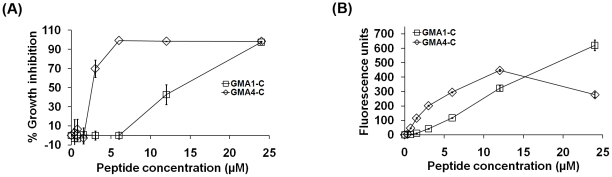
“In 2011, Sagaram et al. [8] demonstrated that the synthesis of peptides extending beyond the γ-core motif is capable of improving antifungal activity and that the synthetic peptide (GMA-4 C) derived from the γ-core motif that contains the C-terminus of the MtDef4 defensin, which has cationic and…”
Metadata
- Authors
- Sagaram, U. S., Pandurangi, R., Kaur, J., Smith, T. J., & Shah, D. M.
- Affiliations
- Donald Danforth Plant Science Center (US)
- Corresponding author
- Shah, Dilip M.
- Venue
- PLoS ONE
- Publisher
- Public Library of Science (PLoS)
- Published
- 2011-04-13
- Volume
- 6
- Issue
- 4
- Pages
- e18550
- ISSN
- 1932-6203 (ISSN-L)
- PMC
- PMC3076432
- OpenAlex
- W1966880324
- Cited by
- 185
- References
- 47
- Citations by year
- 2026: 11 · 2025: 7 · 2024: 13 · 2023: 7 · 2022: 12 · 2021: 24 · 2020: 15 · 2019: 9 · 2018: 14 · 2017: 7 · 2016: 13 · 2015: 9 · 2014: 12 · 2013: 13 · 2012: 16
- FWCI
- 13.01
- Type
- journal article
- Language
- en
- Open access
- gold
- doi.org
- Locations
- PLoS ONE (publishedVersion, cc-by)
- Europe PMC (PubMed Central) (publishedVersion, cc-by)
- PubMed Central (publishedVersion, cc-by)
- PubMed (publishedVersion)
- DOAJ (DOAJ: Directory of Open Access Journals) (submittedVersion)
- Figshare (submittedVersion, cc-by)
- Funders
- National Science Foundation (0924124)
- Donald Danforth Plant Science Center
- Topics
- Life Sciences › Immunology and Microbiology › Microbiology › Antimicrobial Peptides and Activities
- Life Sciences › Agricultural and Biological Sciences › Plant Science › Plant-Microbe Interactions and Immunity
- Life Sciences › Immunology and Microbiology › Applied Microbiology and Biotechnology › Microbial Natural Products and Biosynthesis
- Keywords
- plant defensins, Fusarium graminearum, antifungal activity, plasma membrane permeabilization, structure-activity relationship, antimicrobial peptides, cysteine-rich peptides, fungal growth inhibition
- MeSH terms
- Amino Acid Sequence, Antifungal Agents, Chromatography, High Pressure Liquid, Fusarium, Models, Molecular, Molecular Sequence Data, Structure-Activity Relationship, Defensins
About these checks
Registry, retraction, Cites and statistics results are computed, not judged, with one exception: a printed reference that no index lists is read once by a model before it counts as a citation error. Claims are extracted by a model and kept only when their quote appears verbatim in the text; each cited source is then checked, with a model’s help, for whether it says what the claim relies on. Those verdicts can be wrong — read the claim’s quote and the cited source before relying on one.
Statistics and arithmetic are recomputed, not judged.
Confidence bands are shown only for fields calibrated on our annotated test set. None is calibrated yet, so no band is shown.
What counts as a claim ›How we measure confidence ›How we check this ›
Are you an author, or do you see a problem with this page? Request a review
Data sources
Bibliographic data: Semantic Scholar, OpenAlex, Crossref.
Contains information from the Semantic Scholar Academic Graph Datasets, made available under the ODC Attribution License (ODC-BY 1.0).
Semantic Scholar’s data is described in: Kinney, R., et al. (2023). The Semantic Scholar Open Data Platform. arXiv:2301.10140.
