

GoldenBraid: an iterative cloning system for standardized assembly of reusable genetic modules.
Open accessThe DOI matches its Crossref record; 34 of the 34 references it cites were found in a registry or an index.
Abstract
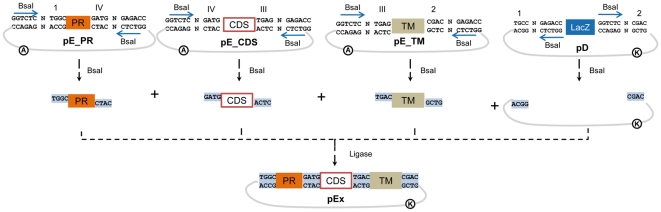
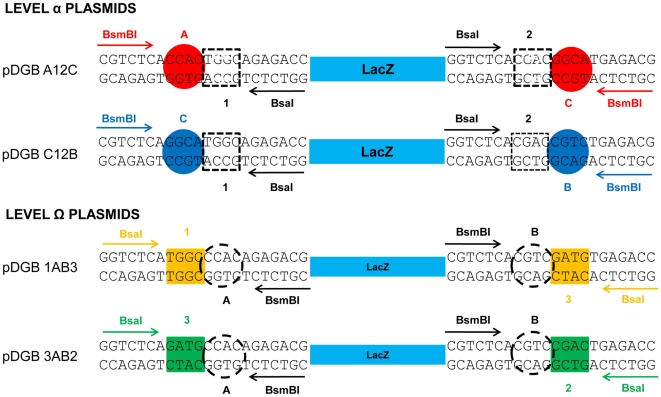
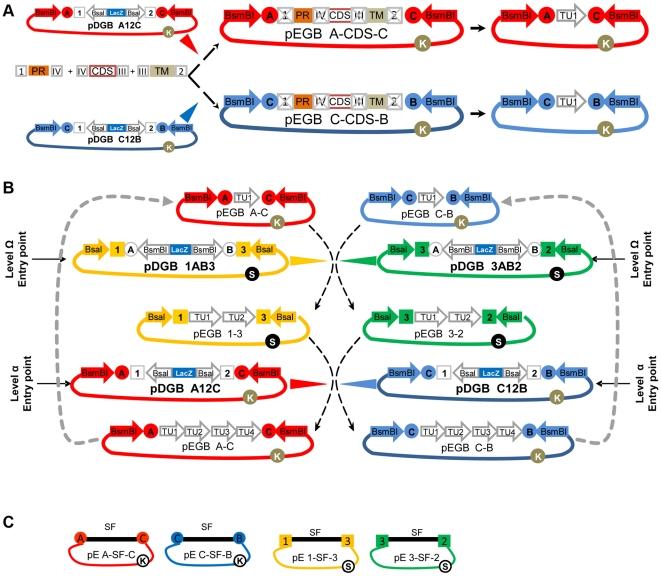
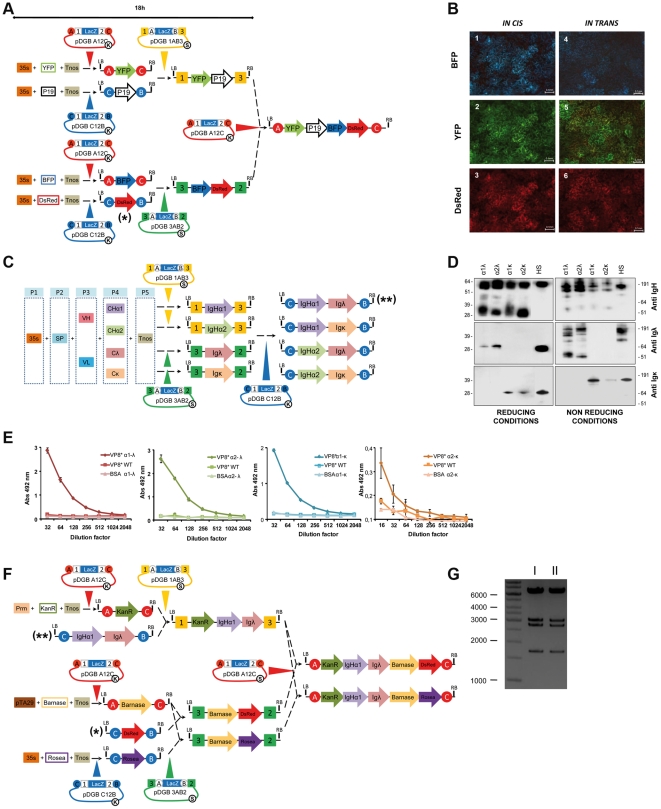
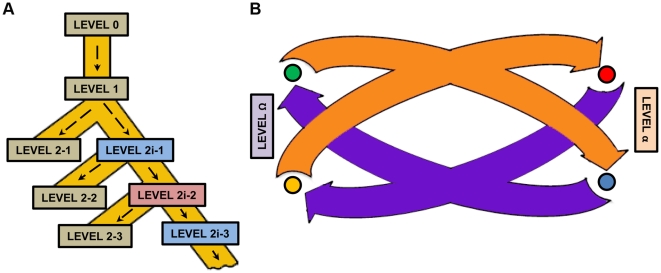
Synthetic Biology requires efficient and versatile DNA assembly systems to facilitate the building of new genetic modules/pathways from basic DNA parts in a standardized way. Here we present GoldenBraid (GB), a standardized assembly system based on type IIS restriction enzymes that allows the indefinite growth of reusable gene modules made of standardized DNA pieces. The GB system consists of a set of four destination plasmids (pDGBs) designed to incorporate multipartite assemblies made of standard DNA parts and to combine them binarily to build increasingly complex multigene constructs. The relative position of type IIS restriction sites inside pDGB vectors introduces a double loop ("braid") topology in the cloning strategy that allows the indefinite growth of composite parts through the succession of iterative assembling steps, while the overall simplicity of the system is maintained. We propose the use of GoldenBraid as an assembly standard for Plant Synthetic Biology. For this purpose we have GB-adapted a set of binary plasmids for A. tumefaciens-mediated plant transformation. Fast GB-engineering of several multigene T-DNAs, including two alternative modules made of five reusable devices each, and comprising a total of 19 basic parts are also described.
Overview
The claims and statistics of this paper haven’t been checked yet.
Free: it reads the open-access text and checks the first 5 claims that cite a source we can check. Create a free account to check every claim.
Integrity signals
Registry
Cites
Statistics
Figures
Verification
Claims the paper makes
The claims and statistics of this paper haven’t been checked yet.
Free: it reads the open-access text and checks the first 5 claims that cite a source we can check. Create a free account to check every claim.
Claims other papers make about this one
Each is checked against this paper’s own text: does it say what the citing paper says it does?
The cited source says what the claim attributes to it.
In the citing paper
“The assembly of multimodular constructs for expression in plants is no longer an insurmountable challenge, thanks to the development of methods like the Gateway-mediated cloning (reviewed by Dafny-Yelin and Tzfira, 2007), Golden Gate (Binder et al., 2014), GoldenBraid (Sarrion-Perdigones et al., 2011), to name a few.”
From Cannabis sativa: The Plant of the Thousand and One Molecules (2016) · cites this paper as Sarrion-Perdigones et al., 2011
Self-check
Percentages, sums and reported differences re-computed from the paper’s own numbers.
The self-check needs the paper’s full text.
Citations
Cites
Enzymatic assembly of DNA molecules up to several hundred kilobases
Gibson, D. G., Young, L., Chuang, R.-Y., Venter, J. C., Hutchison, C. A., & Smith, H. O. (2009) · Nature Methods · doi:10.1038/nmeth.1318 · Cited by 9,996 · cited 1×
“On the opposite side, increasingly efficient homologous recombination methods have enormously facilitated the assembly of large DNA sequences up to the genome range [6], with the synthesis of a complete bacterial genome serving as best example [7,8].”
BackgroundGATEWAY™ vectors for Agrobacterium-mediated plant transformation
Karimi, M., Inzé, D., & Depicker, A. (2002) · Trends in Plant Science · doi:10.1016/s1360-1385(02)02251-3 · Cited by 3,635 · cited 1×
“Plant genetic engineering currently relies on assembly methodologies poorly adaptable to Synthetic Biology. In an attempt to facilitate versatile cloning into plant binary vectors, we and others have developed plasmid collections based on Gateway technology”
MethodCreation of a Bacterial Cell Controlled by a Chemically Synthesized Genome
Gibson, D. G., Glass, J. I., Lartigue, C., Noskov, V. N., Chuang, R.-Y., Algire, M. A., Benders, G. A., Montague, M. G., Ma, L., Moodie, M. M., et al. (2010) · Science · doi:10.1126/science.1190719 · Cited by 2,638 · cited 1×
“On the opposite side, increasingly efficient homologous recombination methods have enormously facilitated the assembly of large DNA sequences up to the genome range [6], with the synthesis of a complete bacterial genome serving as best example [7,8].”
BackgroundA One Pot, One Step, Precision Cloning Method with High Throughput Capability
Engler, C., Kandzia, R., & Marillonnet, S. (2008) · PLoS ONE · doi:10.1371/journal.pone.0003647 · Cited by 2,389 · cited 1×
“[11] using BsaI, BsmBI and BbsI as restriction enzymes in 25 cycle digestion/ligation reactions.”
MethodCermak, T., Doyle, E. L., Christian, M., Wang, L., Zhang, Y., Schmidt, C., Baller, J. A., Somia, N. V., Bogdanove, A. J., & Voytas, D. F. (2011) · Nucleic Acids Research · doi:10.1093/nar/gkr218 · Cited by 1,787
pGreen: a versatile and flexible binary Ti vector for Agrobacterium-mediated plant transformation
Hellens, R. P., Edwards, E. A., Leyland, N. R., Bean, S., & Mullineaux, P. M. (2000) · Plant Molecular Biology · doi:10.1023/a:1006496308160 · Cited by 1,562 · cited 1×
“The original binary plasmid (pGreen II) [32] was deconstructed in four pieces involving the LacZ cassette, antibiotic resistance, and two additional pieces containing replication origins and each of the T-DNA borders.”
MethodA Modular Cloning System for Standardized Assembly of Multigene Constructs
Weber, E., Engler, C., Gruetzner, R., Werner, S., & Marillonnet, S. (2011) · PLoS ONE · doi:10.1371/journal.pone.0016765 · Cited by 1,377
Butelli, E., Titta, L., Giorgio, M., Mock, H.-P., Matros, A., Peterek, S., Schijlen, E. G. W. M., Hall, R. D., Bovy, A. G., Luo, J., et al. (2008) · Nature Biotechnology · doi:10.1038/nbt.1506 · Cited by 1,238 · cited 1×
“Next, two alternative ‘‘Identity Preservation’’ devices were considered: the previously described pEGB_C-DsRed-B conferring red fluorescence to the plant, and the newly constructed Rosea1, consisting of a 35S, Nos terminator and the Antirrhinum majus Rosea1 transcription factor that confers purple color to the cells […”
BackgroundGolden Gate Shuffling: A One-Pot DNA Shuffling Method Based on Type IIs Restriction Enzymes
Engler, C., Gruetzner, R., Kandzia, R., & Marillonnet, S. (2009) · PLoS ONE · doi:10.1371/journal.pone.0005553 · Cited by 1,023 · cited 1×
“genetic devices and modules [11,12].”
Efficient construction of sequence-specific TAL effectors for modulating mammalian transcription
Zhang, F., Cong, L., Lodato, S., Kosuri, S., Church, G. M., & Arlotta, P. (2011) · Nature Biotechnology · doi:10.1038/nbt.1775 · Cited by 712 · cited 1×
“to facilitate modular assembling of TAL effectors [28–31],”
Background
Cited by
Items 101–200 of 372
Otto, M., Skrekas, C., Gossing, M., Gustafsson, J., Siewers, V., & David, F. (2021) · ACS Synthetic Biology · doi:10.1021/acssynbio.1c00408 · Cited by 40
Visualizing protein–protein interactions in plants by rapamycin-dependent delocalization
Winkler, J., Mylle, E., Meyer, A. D., Pavie, B., Merchie, J., Grones, P., & Damme, D. V. (2021) · The Plant Cell · doi:10.1093/plcell/koab004 · Cited by 39
High molecular weight DNA assembly in vivo for synthetic biology applications
Juhas, M., & Ajioka, J. W. (2016) · Critical Reviews in Biotechnology · doi:10.3109/07388551.2016.1141394 · Cited by 38
“DNA molecules.[38,40] Allowing assembly of larger, multigene pathways, Golden Braid and MoClo are still not used for”
MethodJuárez, P., Virdi, V., Depicker, A., & Orzáez, D. (2016) · Plant Biotechnology Journal · doi:10.1111/pbi.12541 · Cited by 37
“Plant Biotechnology Journal published by Society for Experimental Biology and The Association of Applied Biologists and John Wiley & Sons Ltd., 1–9 towards the Spanish Ministry of Economy and Competiveness for her FPU fellowship and towards the International Society for Plant Molecular Farming for their generous bursa…”
BackgroundMethodInfluentialSelf-citationEnhancing the performance of brewing yeasts
Karabín, M., Jelínek, L., Kotrba, P., Cejnar, R., & Dostálek, P. (2017) · Biotechnology Advances · doi:10.1016/j.biotechadv.2017.12.014 · Cited by 41
Yeast synthetic biology toolbox and applications for biofuel production
Tsai, C., Kwak, S., Turner, T. L., & Jin, Y. (2014) · FEMS Yeast Research · doi:10.1111/1567-1364.12206 · Cited by 40
“…recognition site to clone; the restriction enzyme sites are removed during cloning; hence, the connection is seamless Engler et al. (2009) and Sarrion-Perdigones et al. (2011) MASTER (Methylation-assisted tailorable ends rational) Specifically using type IIS RE MspJI to do Golden Gate…”
BackgroundMethodAdvancement of Metabolic Engineering Assisted by Synthetic Biology
Lee, H., Vo, P. N. L., & Na, D. (2018) · Catalysts · doi:10.3390/catal8120619 · Cited by 36
“Other common methods are Golden Gate cloning [42], Golden Braid [43], MoClo [44], and MODAL [45].”
MethodPérez‐González, A., & Caro, E. (2019) · Scientific Reports · doi:10.1038/s41598-019-44836-6 · Cited by 34
“Modular pieces were cloned into pFranki (chiMARs and TBS) or into GoldenBraid pUPD2 (Rb7 and AtS/ MAR10) vectors, as described in (Sarrion-Perdigones et al., 2011)19. pFranki is a home-made vector adapted to 1724 GCGCCGTCTCGCTCGGGAGGCTCAGAAAACGGCAGTTGG 1725 GCGCCGTCTCGACCGCTCTAGGAAATTTAAGG 1726…”
Enrichment of health-promoting lutein and zeaxanthin in tomato fruit through metabolic engineering
Wu, Y., Yuan, Y., Jiang, W., Zhang, X., Ren, S., Wang, H., Zhang, X., & Zhang, Y. (2022) · Synthetic and Systems Biotechnology · doi:10.1016/j.synbio.2022.08.005 · Cited by 37
“0 assembly system [28,29], three recombinant binary vectors for lutein synthesis and one vector for zeaxanthin synthesis were constructed.”
BackgroundMethodModular construction of plasmids by parallel assembly of linear vector components
Gao, X., Yan, P., Shen, W., Li, X., Zhou, P., & Li, Y. (2013) · Analytical Biochemistry · doi:10.1016/j.ab.2013.02.028 · Cited by 34
Singh, K., Davies, G., Alenazi, Y., Eaton, J. R. O., Kawamura, A., & Bhattacharya, S. (2017) · Scientific Reports · doi:10.1038/s41598-017-04378-1 · Cited by 38
Combinatorial Analysis of Secretory Immunoglobulin A (sIgA) Expression in Plants
Juárez, P., Huet, E., Sarrion‐Perdigones, A., Falconi, E. E., Granell, A., & Orzáez, D. (2013) · International Journal of Molecular Sciences · doi:10.3390/ijms14036205 · Cited by 33
Self-citationCharacterization and Evaluation of Transgenic Rice Pyramided with the Pi Genes Pib, Pi25 and Pi54
Peng, M., Lin, X., Xiang, X., Ren, H., Fan, X., & Chen, K. (2021) · Rice · doi:10.1186/s12284-021-00512-w · Cited by 34
Emerging Advanced Technologies to Mitigate the Impact of Climate Change in Africa
Ribeiro, P. F., & Rodriguez, A. V. C. (2020) · Plants · doi:10.3390/plants9030381 · Cited by 33
Neutralizing antibodies against rotavirus produced in transgenically labelled purple tomatoes
Juárez, P., Presa, S., Espí, J., Pineda, B., Antón, T., Moreno, V., Buesa, J., Granell, A., & Orzáez, D. (2011) · Plant Biotechnology Journal · doi:10.1111/j.1467-7652.2011.00666.x · Cited by 34
Self-citationBoehm, C. R., Pollak, B., Purswani, N., Patron, N. J., & Haseloff, J. P. (2017) · Cold Spring Harbor Perspectives in Biology · doi:10.1101/cshperspect.a023887 · Cited by 33
ERFVIIs as transducers of oxygen-sensing in the evolution of land plant response to hypoxia
Carbonare, L. D., van Veen, H., Shukla, V., Perri, M., Bui, L. T., Holdsworth, M. J., & Licausi, F. (2025) · Molecular Plant · doi:10.1016/j.molp.2025.05.015 · Cited by 30
A Modular Cloning Toolbox for the Generation of Chloroplast Transformation Vectors
Vafaee, Y., Staniek, A., Mancheno-Solano, M., & Warzecha, H. (2014) · PLoS ONE · doi:10.1371/journal.pone.0110222 · Cited by 31
“GB cassettes with the lacZ gene were recloned from the appropriate pDGB1_V vectors [28].”
BackgroundMethodEngineering of human-type O-glycosylation inNicotiana benthamianaplants
Strasser, R. (2012) · Bioengineered · doi:10.4161/bioe.22857 · Cited by 30
Conservation of Thermospermine Synthase Activity in Vascular and Non-vascular Plants
Solé-Gil, A., Hernández‐García, J., López-Gresa, M. P., Blázquez, M. A., & Agustí, J. (2019) · Frontiers in Plant Science · doi:10.3389/fpls.2019.00663 · Cited by 29
Dušek, J., Plchová, H., Čeřovská, N., Pobořilová, Z., Navrátil, O., Kratochvílová, K., Gunter, C. J., Jacobs, R., Hitzeroth, I. I., Rybicki, E. P., et al. (2020) · Frontiers in Plant Science · doi:10.3389/fpls.2020.522059 · Cited by 28
Phytobricks: Manual and Automated Assembly of Constructs for Engineering Plants
Cai, Y., Carrasco, J. A., & Patron, N. J. (2020) · Methods in molecular biology · doi:10.1007/978-1-0716-0908-8_11 · Cited by 30
Sleight, S. C., & Sauro, H. M. (2013) · ACS Synthetic Biology · doi:10.1021/sb4000542 · Cited by 27
DNA assembly standards: Setting the low-level programming code for plant biotechnology
Vázquez‐Vilar, M., Orzáez, D., & Patron, N. J. (2018) · Plant Science · doi:10.1016/j.plantsci.2018.02.024 · Cited by 28
Giménez, E. M., Gandía, M., Sáez, Z., Manzanares, P., Yenush, L., Orzáez, D., Marcos, J. F., & Garrigues, S. (2023) · Frontiers in Bioengineering and Biotechnology · doi:10.3389/fbioe.2023.1222812 · Cited by 27
Environmental and Genetic Factors Associated with Solanesol Accumulation in Potato Leaves
Campbell, R., Freitag, S., Bryan, G. J., Stewart, D., & Taylor, M. A. (2016) · Frontiers in Plant Science · doi:10.3389/fpls.2016.01263 · Cited by 27
“Constructs used for the transient expression of various Methylerythritol 4-phosphate pathway (MEP) genes in N. benthamiana were constructed using the GoldenBraid 2.0 modular assembly system (Sarrion-Perdigones et al., 2011).”
MethodInfluentialMultigene Engineering by GoldenBraid Cloning: From Plants to Filamentous Fungi and Beyond
Vázquez‐Vilar, M., Gandía, M., García‐Carpintero, V., Marqués, E., Sarrion‐Perdigones, A., Yenush, L., Polaina, J., Manzanares, P., Marcos, J. F., & Orzáez, D. (2020) · Current Protocols in Molecular Biology · doi:10.1002/cpmb.116 · Cited by 27
“Most screened white colonies are correct (Sarrion-Perdigones et al., 2011).”
Self-citationElastic and pH-Responsive Hybrid Interfaces Created with Engineered Resilin and Nanocellulose
Fang, W., Paananen, A., Vitikainen, M., Koskela, S., Westerholm‐Parvinen, A., Joensuu, J. J., Landowski, C. P., Penttilä, M. E., Linder, M. B., & Laaksonen, P. H. (2017) · Biomacromolecules · doi:10.1021/acs.biomac.7b00294 · Cited by 26
Radeck, J., Meyer, D., Lautenschläger, N., & Mascher, T. (2017) · Scientific Reports · doi:10.1038/s41598-017-14329-5 · Cited by 27
Multiplexed drug-based selection and counterselection genetic manipulations in Drosophila
Matinyan, N., Karkhanis, M. S., Gonzalez, Y., Jain, A., Saltzman, A. B., Malovannaya, A., Sarrion‐Perdigones, A., Dierick, H. A., & Venken, K. J. T. (2021) · Cell Reports · doi:10.1016/j.celrep.2021.109700 · Cited by 26
Self-citationSEVAtile: a standardised DNA assembly method optimised for Pseudomonas
Lammens, E., Boon, M., Grimon, D., Briers, Y., & Lavigne, R. (2021) · Microbial Biotechnology · doi:10.1111/1751-7915.13922 · Cited by 25
Tunable control of insect pheromone biosynthesis in Nicotiana benthamiana
Kallam, K., Giménez, E. M., Fernández, R. M., Tansley, C., Gianoglio, S., Orzáez, D., & Patron, N. J. (2023) · Plant Biotechnology Journal · doi:10.1111/pbi.14048 · Cited by 25
AssemblX: a user-friendly toolkit for rapid and reliable multi-gene assemblies
Hochrein, L., Machens, F., Gremmels, J., Schulz, K., Messerschmidt, K., & Mueller‐Roeber, B. (2017) · Nucleic Acids Research · doi:10.1093/nar/gkx034 · Cited by 28
Fresquet-Corrales, S., Roque, E., Sarrion‐Perdigones, A., Rochina, M., López-Gresa, M. P., Díaz-Mula, H. M., Bellés, J. M., Tomás-Barberán, F. A., Beltrán, J. P., & Cañas, L. A. (2017) · PLoS ONE · doi:10.1371/journal.pone.0184839 · Cited by 26
Self-citationQuaglia, D., Alejaldre, L., Ouadhi, S., Rousseau, O., & Pelletier, J. N. (2019) · PLoS ONE · doi:10.1371/journal.pone.0210100 · Cited by 25
How to use CRISPR/Cas9 in plants: from target site selection to DNA repair
Přibylová, A., & Fischer, L. (2024) · Journal of Experimental Botany · doi:10.1093/jxb/erae147 · Cited by 26
Genetic Toolkits to Design and Build Mammalian Synthetic Systems
Blasi, R. D., Zouein, A., Ellis, T., & Ceroni, F. (2021) · Trends in biotechnology · doi:10.1016/j.tibtech.2020.12.007 · Cited by 24
Gandía, M., Giménez, E. M., Giner‐Llorca, M., Garrigues, S., Ropero‐Pérez, C., Locascio, A., Martínez‐Culebras, P. V., Marcos, J. F., & Manzanares, P. (2022) · Microbial Biotechnology · doi:10.1111/1751-7915.14006 · Cited by 25
SubtiToolKit: a bioengineering kit for Bacillus subtilis and Gram-positive bacteria
Caro‐Astorga, J., Rogan, M., Malcı, K., Ming, H., DeBenedictis, E. A., James, P., & Ellis, T. (2025) · Trends in biotechnology · doi:10.1016/j.tibtech.2025.02.004 · Cited by 23
MacPherson, M., & Saka, Y. (2016) · ACS Synthetic Biology · doi:10.1021/acssynbio.6b00165 · Cited by 23
Malla, A., Murugan, S. B., Balamurugan, S., & Ramalingam, S. (2016) · Molecular Biology · doi:10.1134/s0026893316010131 · Cited by 23
Opportunities in plant synthetic biology
Cook, C., Martin, L., & Bastow, R. (2014) · Journal of Experimental Botany · doi:10.1093/jxb/eru013 · Cited by 23
“This limits the number of parts it is possible to assemble in one run, but as each destination plasmid has two different Type IIS restriction sites, they can be re-arranged multiple times (Sarrion-Perdigones et al., 2011).”
BackgroundLund, S. R., Potapov, V., Johnson, S. R., Buss, J. A., & Tanner, N. A. (2024) · ACS Synthetic Biology · doi:10.1021/acssynbio.3c00694 · Cited by 25
Synthetic Biology of Plants and Microbes for Agriculture, Environment, and Future Applications
Clauer, P. R., Nou, A., Toth, T., Yu, Q., Chemla, Y., Boo, A., Yoon, K. S., & Voigt, C. A. (2026) · Chemical Reviews · doi:10.1021/acs.chemrev.4c00687 · Cited by 24
Taparia, Y., Zarka, A., Leu, S., Zarivach, R., Boussiba, S., & Khozin‐Goldberg, I. (2019) · Scientific Reports · doi:10.1038/s41598-019-44710-5 · Cited by 23
Kumar, U., Dwivedi, D., & Das, U. (2025) · Biotechnology Journal · doi:10.1002/biot.70148 · Cited by 23
“Building CRISPR multiplex vectors can be complex, but modular cloning systems like Golden Gate [93], MoClo [94], and Gold-enBraid [95] streamline the process.”
Genome Editing in Penicillium chrysogenum Using Cas9 Ribonucleoprotein Particles
Pohl, C., Mózsik, L., Driessen, A. J. M., Bovenberg, R. A. L., & Nygård, Y. (2018) · Methods in molecular biology · doi:10.1007/978-1-4939-7795-6_12 · Cited by 23
A GoldenBraid cloning system for synthetic biology in social amoebae
Kundert, P., Sarrion‐Perdigones, A., Gonzalez, Y., Katoh‐Kurasawa, M., Hirose, S., Lehmann, P., Venken, K. J. T., & Shaulsky, G. (2020) · Nucleic Acids Research · doi:10.1093/nar/gkaa185 · Cited by 22
“We designed oligonucleotide primers (purchased from IDT, Coralville, IA, USA) to amplify and to add grammatical extensions to each part as described (7,8).”
BackgroundMethodSelf-citationTargeted Inter-Homologs Recombination in Arabidopsis Euchromatin and Heterochromatin
Hayut, S. F., Kniazev, K., Melamed‐Bessudo, C., & Levy, A. A. (2021) · International Journal of Molecular Sciences · doi:10.3390/ijms222212096 · Cited by 22
“All plasmids used for Arabidopsis transformation were cloned using the GoldenBraid cloning system [66].”
Methodj5 DNA Assembly Design Automation
Hillson, N. J. (2013) · Methods in molecular biology · doi:10.1007/978-1-62703-764-8_17 · Cited by 25
Modular cell design for rapid, efficient strain engineering toward industrialization of biology
Trinh, C. T., & Mendoza, B. J. (2016) · Current Opinion in Chemical Engineering · doi:10.1016/j.coche.2016.07.005 · Cited by 23
Genome Engineering Tools in Plant Synthetic Biology
Mohan, K., Ghose, K., Rai, A., Singh, H., Srivastava, R., & Mendu, V. (2019) · Elsevier eBooks · doi:10.1016/b978-0-444-64085-7.00003-4 · Cited by 22
Behrendt, G., Frohwitter, J., Vlachonikolou, M., Klamt, S., & Bettenbrock, K. (2022) · ACS Synthetic Biology · doi:10.1021/acssynbio.2c00428 · Cited by 22
Garagounis, C., Beritza, K., Georgopoulou, M. E., Sonawane, P. D., Haralampidis, K., Goossens, A., Aharoni, A., & Papadopoulou, K. Κ. (2020) · Plant Physiology and Biochemistry · doi:10.1016/j.plaphy.2020.06.011 · Cited by 21
“new high-throughput cloning methods [4, 5] and large-scale transcriptomic dataset acquisition, in conjunction with metabolic network modeling and prediction [6].”
MethodMaioli, A., Marchi, F. D., Valentino, D., Gianoglio, S., Patono, D. L., Miloro, F., Bai, Y., Comino, C., Lanteri, S., Lovisolo, C., et al. (2024) · Plant Stress · doi:10.1016/j.stress.2024.100541 · Cited by 19
Kubalová, M., Griffiths, J., Müller, K., Levenets, T., Tylová, E., Tarkowská, D., Jones, A. M., & Fendrych, M. (2025) · Proceedings of the National Academy of Sciences · doi:10.1073/pnas.2425574122 · Cited by 20
“We used GoldenBraid methodology (51) as a cloning strategy.”
Impact of the genetic improvement of fermenting yeasts on the organoleptic properties of beer
Astola, A., Durán, E., Díaz, A. B., Lasanta, C., & Castro, R. (2023) · European Food Research and Technology · doi:10.1007/s00217-023-04251-8 · Cited by 19
Synthetic strategies for plant signalling studies: molecular toolbox and orthogonal platforms
Braguy, J., & Zurbriggen, M. D. (2016) · The Plant Journal · doi:10.1111/tpj.13218 · Cited by 22
“This include for instance i) the generalized use of more efficient and inexpensive cloning approaches such as Golden Gate/Golden Braid (Sarrion-Perdigones et al., 2011; Weber et al., 2011), Gibson (Gibson et al., 2009) and AQUA (Beyer et al., 2015), in combination with DNA synthesis and computational tools for constru…”
MethodInfluentialCritical considerations and computational tools in plant genome editing
Saha, D., Panda, A. K., & Datta, S. (2024) · Heliyon · doi:10.1016/j.heliyon.2024.e41135 · Cited by 19
Considerations for Domestication of Novel Strains of Filamentous Fungi
Pullen, R. M., Decker, S. R., Subramanian, V., Adler, M. J., Tobias, A. V., Perisin, M., Sund, C. J., Servinsky, M. D., & Kozlowski, M. T. (2025) · ACS Synthetic Biology · doi:10.1021/acssynbio.4c00672 · Cited by 18
Real-time monitoring of PtaHMGB activity in poplar transactivation assays
Ramos-Sánchez, J. M., Triozzi, P. M., Moreno, A., Conde, D., Perales, M., & Allona, I. (2017) · Plant Methods · doi:10.1186/s13007-017-0199-x · Cited by 18
“We used Golden Braid (GB) technology [65] to generate overexpression and knock-down constructs in this work.”
MethodSynthetic developmental biology: molecular tools to re-design plant shoots and roots
Kocaoglan, E. G., Radhakrishnan, D., & Nakayama, N. (2023) · Journal of Experimental Botany · doi:10.1093/jxb/erad169 · Cited by 18
Lukan, T., Machens, F., Coll, A., Baebler, Š., Messerschmidt, K., & Gruden, K. (2018) · PLoS ONE · doi:10.1371/journal.pone.0190526 · Cited by 18
“MoClo [25], GoldenBraid [26] and GreenGate [27].”
BackgroundLiu, S., Xiao, H., Zhang, F., Zheng, L., Zhang, Y., Deng, A., Li, Z., Yang, C. P., & Wen, T. (2019) · Biotechnology for Biofuels · doi:10.1186/s13068-019-1520-x · Cited by 19
Evolution-aided engineering of plant specialized metabolism
Irfan, M., Chavez, B. G., Rizzo, P., D’Auria, J. C., & Moghe, G. D. (2021) · aBIOTECH · doi:10.1007/s42994-021-00052-3 · Cited by 17
Li, M. V., Shukla, D. M., Rhodes, B. H., Lall, A., Shu, J., Moriarity, B. S., & Largaespada, D. A. (2014) · PLoS ONE · doi:10.1371/journal.pone.0100948 · Cited by 16
“Efforts have been made to apply the principles of modern engineering to the field of synthetic biology, namely, by standardizing the DNA parts and their assembly process, such as BioBricks [2], Golden Gate [3], and GoldenBraid systems [4].”
MethodModular assembly of transposon integratable multigene vectors using RecWay assembly
Moriarity, B. S., Rahrmann, E. P., Keng, V. W., Manlove, L. S., Beckmann, D. A., Wolf, N. K., Khurshid, T., Bell, J. B., & Largaespada, D. A. (2013) · Nucleic Acids Research · doi:10.1093/nar/gkt115 · Cited by 16
Harnessing the power of microbial metabolism
Santero, E., Floriano, B., & Govantes, F. (2016) · Current Opinion in Microbiology · doi:10.1016/j.mib.2016.03.003 · Cited by 18
TrichoGate: An Improved Vector System for a Large Scale of Functional Analysis of Trichoderma Genes
Nogueira-López, G., Padilla-Arizmendi, F., Inwood, S. N., Lyne, S., Steyaert, J. M., Nieto-Jacobo, M. F., Stewart, A., & Mendoza‐Mendoza, A. (2019) · Frontiers in Microbiology · doi:10.3389/fmicb.2019.02794 · Cited by 16
The uncharacterized gene EVE contributes to vessel element dimensions in Populus
Ribeiro, C., Conde, D., Balmant, K. M., Dervinis, C., Johnson, M. G., McGrath, A. P., Szewczyk, P., Unda, F., Finegan, C., Schmidt, H. W., et al. (2020) · Proceedings of the National Academy of Sciences · doi:10.1073/pnas.1912434117 · Cited by 17
“Golden Braid technology (68) was employed to place the 35S::PtaSND1, PtaVND6 or PtaVND7::tNOS (effector) together with 35S::GUS::tNOS (reporter) and pEVE::LUC::tNOS in the 2omega1 plasmid.”
Zhang, Y., Zhou, L., Tang, K., Xu, M., & Miao, Z. (2020) · ACS Omega · doi:10.1021/acsomega.0c04391 · Cited by 15
Ipecac alkaloid biosynthesis in two evolutionarily distant plants
Colinas, M., Morweiser, C., Dittberner, O., Chioca, B., Alam, R. M., Leucke, H., Nakamura, Y., Guerrero, D. A. S., Heinicke, S., Kunert, M., et al. (2025) · Nature Chemical Biology · doi:10.1038/s41589-025-01926-z · Cited by 15
“Constructs (level 1) were assembled using BsaI (New England Biolabs), T4 DNA ligase (New England Biolabs), the pDGB3_ ɑ 1 vector 88 , pUPD_pSIUbq10 and pUPD_TeSlUbq10 86,89 and the gel-purified PCR products .”
The PLOS ONE Synthetic Biology Collection: Six Years and Counting
Peccoud, J., & Isalan, M. (2012) · PLoS ONE · doi:10.1371/journal.pone.0043231 · Cited by 15
“[6], that also uses type IIs restriction enzymes, but applies them iteratively to standardized DNA parts (see the ‘Biological parts’ section below).”
Silva‐Rocha, R., Pontelli, M. C., Furtado, G. P., Zaramela, L. S., & Koide, T. (2015) · PLoS ONE · doi:10.1371/journal.pone.0129215 · Cited by 15
“Standard formats for genetic tools have been proposed for different organisms to facilitate the implementation of synthetic circuits and the distribution of material between different laboratories [18,21,22,23].”
BackgroundGoldenGateway: A DNA Assembly Method for Plant Biotechnology
Karimi, M., & Jacobs, T. B. (2020) · Trends in Plant Science · doi:10.1016/j.tplants.2020.10.004 · Cited by 15
A MATLAB toolbox for modeling genetic circuits in cell-free systems†
Singhal, V., Tuza, Z. A., Sun, Z. Z., & Murray, R. M. (2021) · Synthetic Biology · doi:10.1093/synbio/ysab007 · Cited by 18
Qin, G., Wu, S., Zhang, L., Li, Y., Liu, C., Yu, J., Deng, L., Xiao, G., & Zhang, Z. (2022) · Plants · doi:10.3390/plants11040488 · Cited by 15
“The GoldenBraid [12] approach uses Type IIS restriction enzymes iteratively to assemble standardized modules.”
MethodBioBrick-based ‘Quick Gene Assembly’ in vitro
Yamazaki, K.-I., de Mora, K., & Saitoh, K. (2017) · Synthetic Biology · doi:10.1093/synbio/ysx003 · Cited by 15
“BsaI, the Golden Braid system (6), the Modular cloning system (7), the VEGAS method (8) that were developed by improving the Golden Gate assembly method, the MASTER ligation method (9) employing type IIM restriction enzyme, MspJI (10–13).”
MethodSoftware-Assisted Stacking of Gene Modules Using GoldenBraid 2.0 DNA-Assembly Framework
Vázquez‐Vilar, M., Sarrion‐Perdigones, A., Ziarsolo, P., Blanca, J., Granell, A., & Orzáez, D. (2015) · Methods in molecular biology · doi:10.1007/978-1-4939-2444-8_20 · Cited by 17
Self-citationParallel assembly for multiple site-directed mutagenesis of plasmids
Yan, P., Gao, X., Shen, W., Zhou, P., & Duan, J. (2012) · Analytical Biochemistry · doi:10.1016/j.ab.2012.07.029 · Cited by 14
Chaudhary, V. K., Shrivastava, N., Verma, V., Das, S., Kaur, C., Grover, P., & Gupta, A. (2014) · PLoS ONE · doi:10.1371/journal.pone.0111538 · Cited by 14
“The strategy of insert preparation by T4 DNA polymerase in the presence of single dNTPs can also be used to produce modules with compatible ends to ligate multiple fragments thus expanding the scope of previously described strategy which is based on the use of type IIs restriction endonucleases, which limits the use o…”
MethodSarrion‐Perdigones, A., Gonzalez, Y., & Venken, K. J. T. (2020) · Current Protocols in Molecular Biology · doi:10.1002/cpmb.121 · Cited by 14
“…2020), GoldenBraid (Vazquez-Vilar et al., 2020), and their successors use type IIS restriction enzymes for DNA assembly (Engler et al., 2008; Sarrion-Perdigones et al., 2011; Sarrion-Perdigones et al., 2013; Vazquez-Vilar et al., 2017; Weber, Engler, Gruetzner, Werner, & Marillonnet, 2011;…”
BackgroundMethodSelf-citationRapid Assembly of Multi-Gene Constructs using Modular Golden Gate Cloning
Mukherjee, M., Carroll, E., & Wang, Z. Q. (2021) · Journal of Visualized Experiments · doi:10.3791/61993 · Cited by 14
Multigene engineering in plants: Technologies, applications, and future prospects
Rajput, R., Boone, B. A., Mandlik, R., Islam, M. T., Qi, Y., Wang, J., Barrangou, R., Sozzani, R., Eckert, C. A., Tuskan, G. A., et al. (2025) · Biotechnology Advances · doi:10.1016/j.biotechadv.2025.108697 · Cited by 15
A rapid and scalable approach to build synthetic repetitive hormone‐responsive promoters
Fernández-Moreno, J.-P., Yaschenko, A. E., Neubauer, M., Marchi, A. J., Zhao, C., Ascencio‐Ibáñez, J. T., Alonso, J. M., & Stepanova, A. N. (2024) · Plant Biotechnology Journal · doi:10.1111/pbi.14313 · Cited by 13
Engineering Tobacco for Plant Natural Product Production
Stephenson, M. J., Reed, J., Patron, N. J., Lomonossoff, G. P., & Osbourn, A. (2019) · Elsevier eBooks · doi:10.1016/b978-0-12-409547-2.14724-9 · Cited by 15
Linshiz, G., Goldberg, A., Konry, T., & Hillson, N. J. (2012) · Perspectives in biology and medicine · doi:10.1353/pbm.2012.0044 · Cited by 13
Последние достижения в области молекулярного клонирования
Malla, A., Murugan, S. B., Balamurugan, S., & Ramalingam, S. (2016) · Molecular Biology · doi:10.7868/s0026898416010134 · Cited by 13
Yin, K., & Tsai, C. (2025) · The Plant Journal · doi:10.1111/tpj.70527 · Cited by 15
“…independent control of each gRNA, and constructs are often built using Gateway or Golden Gate cloning systems and their derivatives ( Cerm (cid:2) ak et al., 2017; Lowder et al., 2015; Ma, Zhang, et al., 2015; Marillonnet & Gr € utzner, 2020; Sarrion-Perdigones et al., 2011; Zhang et al., 2020).”
Demeester, W., Baets, J. D., Duchi, D., Mey, M. D., & Paepe, B. D. (2023) · Biosensors · doi:10.3390/bios13060590 · Cited by 13
Methylase-assisted subcloning for high throughput BioBrick assembly
Matsumura, I. (2020) · PeerJ · doi:10.7717/peerj.9841 · Cited by 12
“Cloning standards for Type IIS restriction endonucleases, such as MoClo (Weber et al., 2011), Phytobricks (Patron et al., 2015), Golden Braid (Sarrion-Perdigones et al., 2011) or Loop assembly (Pollak et al., 2019), facilitate some repurposing of parts for other devices.”
BackgroundDNA Assembly Tools and Strategies for the Generation of Plasmids
Baek, C.-H., Liss, M. A., Clancy, K., Chesnut, J. D., & Katzen, F. (2014) · Microbiology Spectrum · doi:10.1128/microbiolspec.plas-0014-2013 · Cited by 12
“1A) and has been used for (i) assembling gene variants or repetitive sequences (29, 30), (ii) generating iterative cloning systems (31), and (iii) obtaining standardized parts for multigene assemblies (32).”
MethodWeber, E., Birkenfeld, J., Franz, J. K., Gritzan, U., Lindén, L., & Trautwein, M. (2017) · PLoS ONE · doi:10.1371/journal.pone.0176314 · Cited by 12
Engineering Plants for the Future: Farming with Value-Added Harvest
Massa, S., Presenti, O., & Benvenuto, E. (2018) · Progress in botany · doi:10.1007/124_2018_20 · Cited by 15
“The evolution of molecular techniques has led to the development of systems like the Gateway-mediated cloning (reviewed by Dafny-Yelin and Tzfira 2007), Golden Gate (Binder et al. 2014) and GoldenBraid (Sarrion-Perdigones et al. 2011) just to name a few, thanks to which even the assembly of multi-modular constructs fo…”
BackgroundDesign and construction towards a pan-microbial toolkitPreprint
Gilbert, C., Crits‐Christoph, A., Ledieu-Dherbécourt, E., Kang, S. C., Brumwell, S. L., Lee, H. H., & Ostrov, N. (2024) · bioRxiv (Cold Spring Harbor Laboratory) · doi:10.1101/2024.02.23.581749 · Cited by 12
Neubauer, M., Vollen, K., Zhao, C., Ascencio‐Ibáñez, J. T., Hanley-Bowdoin, L. K., Stepanova, A. N., & Alonso, J. M. (2025) · Plant Biotechnology Journal · doi:10.1111/pbi.70320 · Cited by 11
“GB cloning was employed to generate clones used in this study (Sarrion-Perdigones et al. 2011).”
Buj, R., Iglesias, N., Planas, A. M., & Santalucía, T. (2013) · BMC Molecular Biology · doi:10.1186/1471-2199-14-18 · Cited by 11
“platforms such as Golden Gate, Golden Braid, and MoClo [33,36,37], which have shown great potential for scalability in the construction of multipartite expression vectors, could also be adapted for the seamless cloning of fusion proteins with the possibility of using peptide-encoding modules in high-throughput applica…”
BackgroundRecursive DNA Assembly Using Protected Oligonucleotide Duplex Assisted Cloning (PODAC)
Hove, B. V., Guidi, C., Wannemaeker, L. D., Maertens, J., & Mey, M. D. (2017) · ACS Synthetic Biology · doi:10.1021/acssynbio.7b00017 · Cited by 11
Combinatorial biosynthesis of small molecules in plants: Engineering strategies and tools
Gerasymenko, I. M., Sheludko, Y. V., Fräbel, S., Staniek, A., & Warzecha, H. (2019) · Methods in enzymology on CD-ROM/Methods in enzymology · doi:10.1016/bs.mie.2018.12.005 · Cited by 11
Repository-based plasmid design
Timmons, J. J., & Densmore, D. (2020) · PLoS ONE · doi:10.1371/journal.pone.0223935 · Cited by 11
Metadata
- Authors
- Sarrion-Perdigones, A., Falconi, E. E., Zandalinas, S. I., Juárez, P., Fernández-del-Carmen, A., Granell, A., & Orzaez, D.
- Affiliations
- Consejo Superior de Investigaciones Científicas (ES)
- Venue
- PLoS ONE
- Publisher
- Public Library of Science (PLoS)
- Published
- 2011-07-07
- Volume
- 6
- Issue
- 7
- Pages
- e21622
- ISSN
- 1932-6203 (ISSN-L)
- PMC
- PMC3131274
- OpenAlex
- W2042033410
- Semantic Scholar
- 16f57d0471f64a5a5bd8a3392484e62e36db926d
- Cited by
- 348
- References
- 34
- Citations by year
- 2026: 16 · 2025: 36 · 2024: 29 · 2023: 22 · 2022: 29 · 2021: 16 · 2020: 35 · 2019: 28 · 2018: 24 · 2017: 23 · 2016: 23 · 2015: 18 · 2014: 17 · 2013: 20 · 2012: 10
- FWCI
- 6.37
- Type
- journal article
- Language
- en
- Open access
- gold
- doi.org
- Locations
- PLoS ONE (publishedVersion, cc-by)
- PubMed Central (publishedVersion, cc-by)
- PubMed (publishedVersion)
- DIGITAL.CSIC (Spanish National Research Council (CSIC)) (submittedVersion, cc-by)
- DOAJ (DOAJ: Directory of Open Access Journals) (submittedVersion, cc-by-sa)
- RiuNet (Universitat Politècnica de València) (submittedVersion, cc-by-nc-nd)
- Funders
- Ministerio de Ciencia e Innovación
- Topics
- Life Sciences › Biochemistry, Genetics and Molecular Biology › Molecular Biology › CRISPR and Genetic Engineering
- Life Sciences › Biochemistry, Genetics and Molecular Biology › Molecular Biology › Microbial Metabolic Engineering and Bioproduction
- Life Sciences › Biochemistry, Genetics and Molecular Biology › Genetics › Bacterial Genetics and Biotechnology
- Keywords
- DNA assembly, type IIS restriction enzymes, gene modules, plant synthetic biology, Agrobacterium tumefaciens transformation, T-DNA
- MeSH terms
- Base Sequence, Cloning, Molecular, DNA, Lac Operon, Models, Genetic, Plasmids, Nicotiana, Transformation, Genetic, Reproducibility of Results, Deoxyribonucleases, Type II Site-Specific, Polymerase Chain Reaction, Agrobacterium tumefaciens, Plants, Genetically Modified
About these checks
Registry, retraction, Cites and statistics results are computed, not judged, with one exception: a printed reference that no index lists is read once by a model before it counts as a citation error. Claims are extracted by a model and kept only when their quote appears verbatim in the text; each cited source is then checked, with a model’s help, for whether it says what the claim relies on. Those verdicts can be wrong — read the claim’s quote and the cited source before relying on one.
Statistics and arithmetic are recomputed, not judged.
Confidence bands are shown only for fields calibrated on our annotated test set. None is calibrated yet, so no band is shown.
What counts as a claim ›How we measure confidence ›How we check this ›
Are you an author, or do you see a problem with this page? Request a review
Data sources
Bibliographic data: Semantic Scholar, OpenAlex, Crossref.
Contains information from the Semantic Scholar Academic Graph Datasets, made available under the ODC Attribution License (ODC-BY 1.0).
Semantic Scholar’s data is described in: Kinney, R., et al. (2023). The Semantic Scholar Open Data Platform. arXiv:2301.10140.
