

The DOI matches its Crossref record; 74 of the 74 references it cites were found in a registry or an index.
Graph Theoretical Analysis of Functional Brain Networks: Test-Retest Evaluation on Short- and Long-Term Resting-State Functional MRI Data
Open accessAbstract
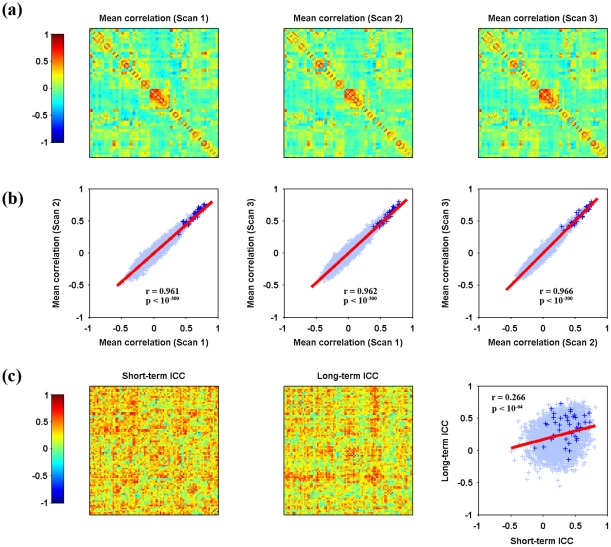
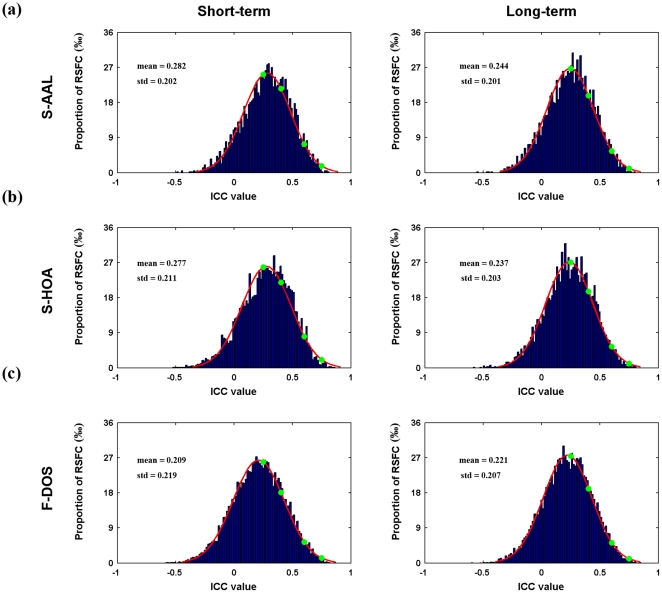
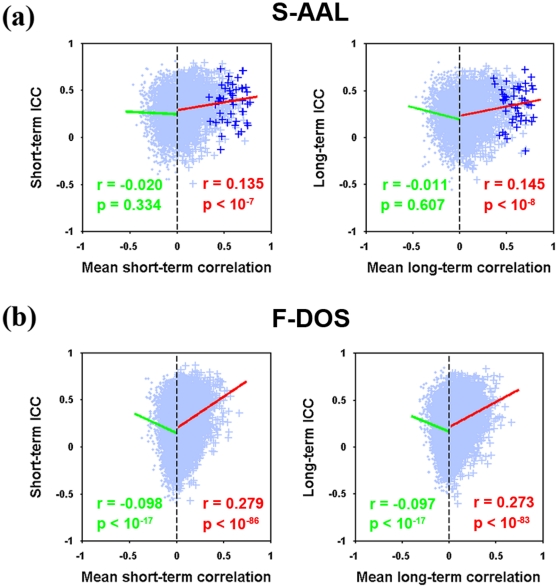
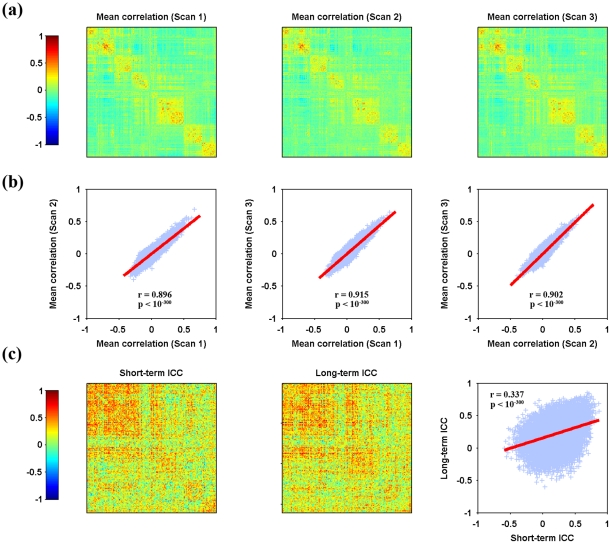
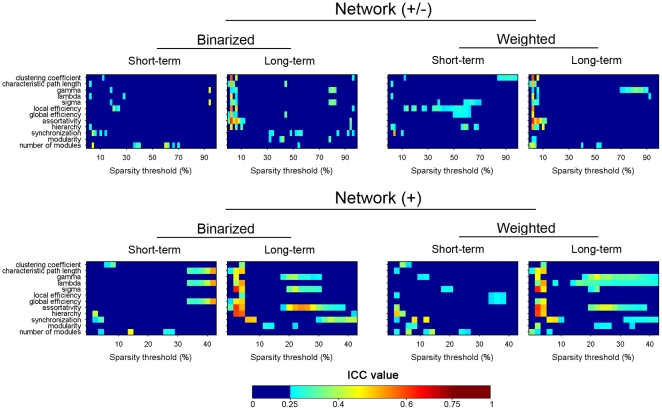
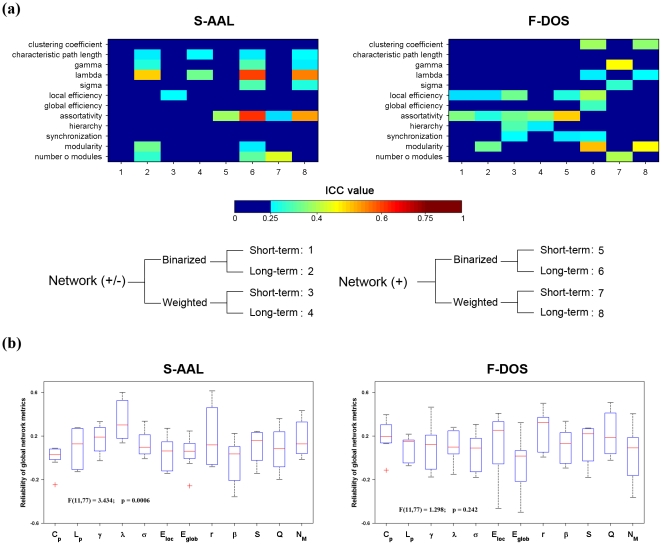
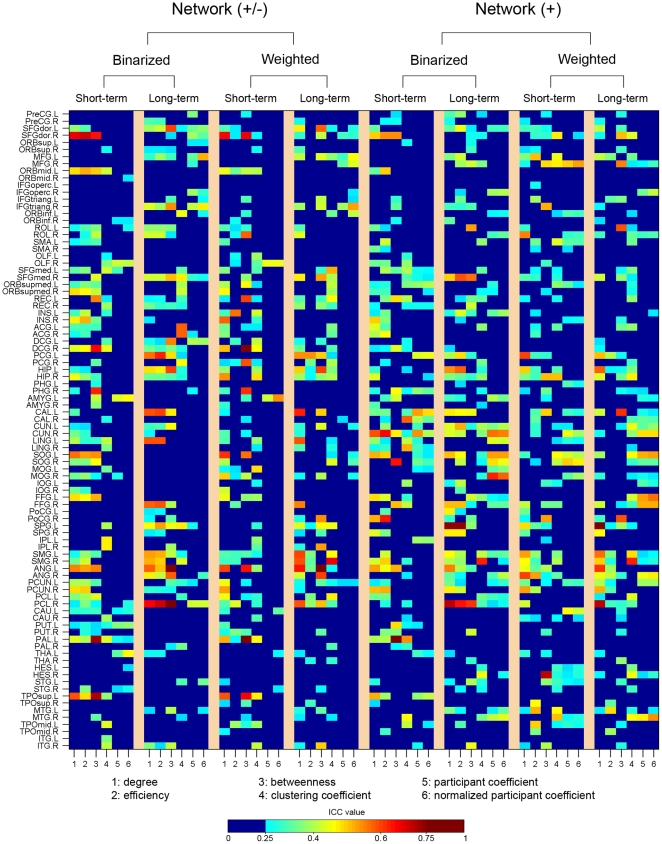
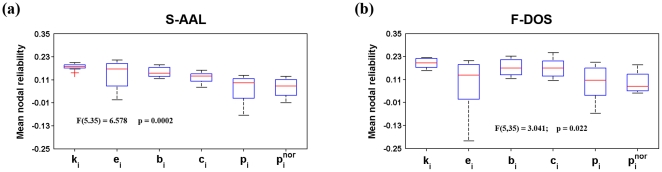
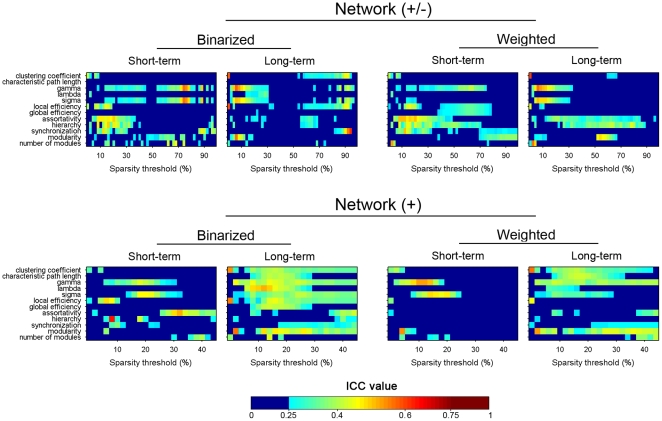
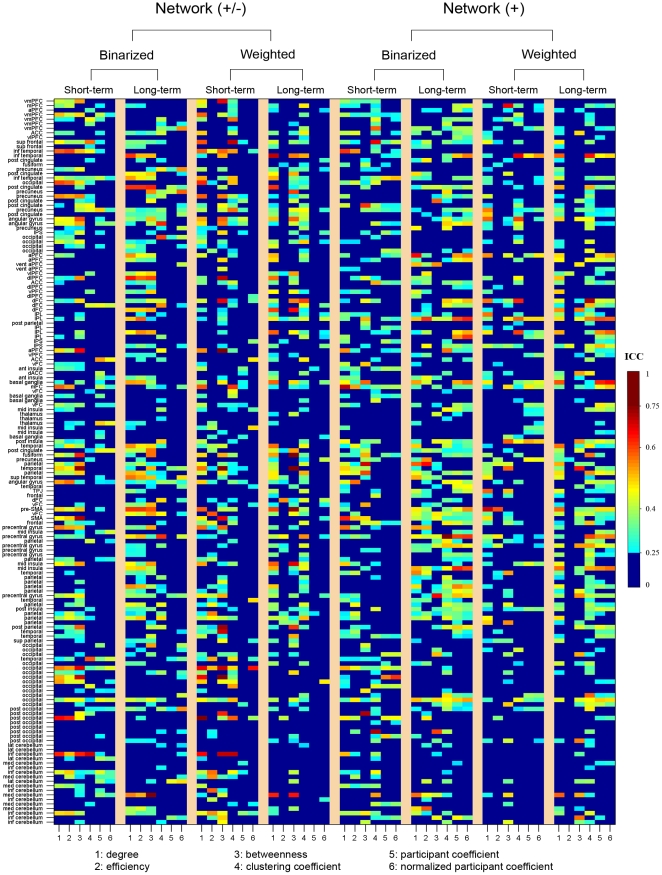
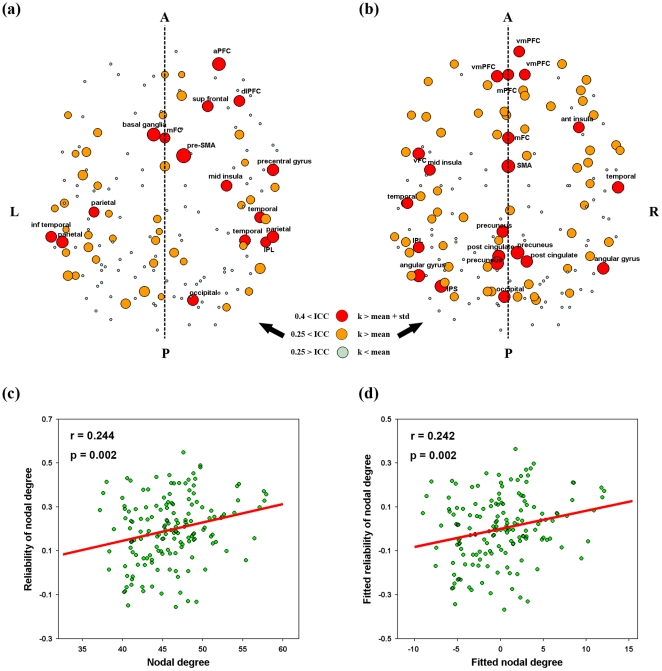
Graph-based computational network analysis has proven a powerful tool to quantitatively characterize functional architectures of the brain. However, the test-retest (TRT) reliability of graph metrics of functional networks has not been systematically examined. Here, we investigated TRT reliability of topological metrics of functional brain networks derived from resting-state functional magnetic resonance imaging data. Specifically, we evaluated both short-term (<1 hour apart) and long-term (>5 months apart) TRT reliability for 12 global and 6 local nodal network metrics. We found that reliability of global network metrics was overall low, threshold-sensitive and dependent on several factors of scanning time interval (TI, long-term>short-term), network membership (NM, networks excluding negative correlations>networks including negative correlations) and network type (NT, binarized networks>weighted networks). The dependence was modulated by another factor of node definition (ND) strategy. The local nodal reliability exhibited large variability across nodal metrics and a spatially heterogeneous distribution. Nodal degree was the most reliable metric and varied the least across the factors above. Hub regions in association and limbic/paralimbic cortices showed moderate TRT reliability. Importantly, nodal reliability was robust to above-mentioned four factors. Simulation analysis revealed that global network metrics were extremely sensitive (but varying degrees) to noise in functional connectivity and weighted networks generated numerically more reliable results in compared with binarized networks. For nodal network metrics, they showed high resistance to noise in functional connectivity and no NT related differences were found in the resistance. These findings provide important implications on how to choose reliable analytical schemes and network metrics of interest.
Overview
The claims and statistics of this paper haven’t been checked yet.
Run the check — free, no account needed. It reads the open-access text and checks the sources it cites.
Integrity signals
Registry
Cites
Statistics
Figures
Verification
Claims the paper makes
The claims and statistics of this paper haven’t been checked yet.
Run the check — free, no account needed. It reads the open-access text and checks the sources it cites.
Claims other papers make about this one
Each is checked against this paper’s own text: does it say what the citing paper says it does?
In the citing paper
“Multiple studies have found evidence for limited test-retest reliability using a multitude of conventional rs-fcMRI network characteristics and analytic approaches (Braun et al., 2012; Wang et al., 2011; Wisner et al., 2013; Zuo et al., 2010; Zuo and Xing, 2014).”
From Development of large-scale functional networks from birth to adulthood: A guide to the neuroimaging literature (2017) · cites this paper as Wang et al., 2011
Self-check
Percentages, sums and reported differences re-computed from the paper’s own numbers.
The self-check needs the paper’s full text.
Citations
Cites
Statistical principles in experimental design.
Winer, B. J. (1962) · McGraw-Hill Book Company · doi:10.1037/11774-000 · Cited by 27,137
Intraclass correlations: Uses in assessing rater reliability.
Shrout, P. E., & Fleiss, J. L. (1979) · Psychological Bulletin · doi:10.1037/0033-2909.86.2.420 · Cited by 24,532
Tzourio-Mazoyer, N., Landeau, B., Papathanassiou, D., Crivello, F., Etard, O., Delcroix, N., Mazoyer, B., & Joliot, M. (2002) · NeuroImage · doi:10.1006/nimg.2001.0978 · Cited by 16,319
Complex brain networks: graph theoretical analysis of structural and functional systems
Bullmore, E., & Sporns, O. (2009) · Nature Reviews Neuroscience · doi:10.1038/nrn2575 · Cited by 11,820
Complex network measures of brain connectivity: Uses and interpretations
Rubinov, M., & Sporns, O. (2010) · NeuroImage · doi:10.1016/j.neuroimage.2009.10.003 · Cited by 11,522
Complex networks: structure and dynamics
BOCCALETTI, S., LATORA, V, MORENO, Y., CHAVEZ, M., & HWANG, D. (2006) · Physics Reports · doi:10.1016/j.physrep.2005.10.009 · Cited by 11,010
Functional connectivity in the motor cortex of resting human brain using echo‐planar mri
Biswal, B., Zerrin Yetkin, F., Haughton, V. M., & Hyde, J. S. (1995) · Magnetic Resonance in Medicine · doi:10.1002/mrm.1910340409 · Cited by 9,812
Self-citationThe human brain is intrinsically organized into dynamic, anticorrelated functional networks
Fox, M. D., Snyder, A. Z., Vincent, J. L., Corbetta, M., Van Essen, D. C., & Raichle, M. E. (2005) · Proceedings of the National Academy of Sciences · doi:10.1073/pnas.0504136102 · Cited by 8,553
Statistical Principles in Experimental Design
Myers, J. L., & Winer, B. J. (1964) · The American Journal of Psychology · doi:10.2307/1419292 · Cited by 8,111
Network motifs: simple building blocks of complex networks.
Milo, R., Shen-Orr, S., Itzkovitz, S., Kashtan, N., Chklovskii, D., & Alon, U. (2002) · Science · doi:10.1126/science.298.5594.824 · Cited by 7,368
Research works printed but not linked: 1
- R Salvador, 2005, Undirected graphs of frequency-dependent functional connectivity in whole brain networks., Phil Trans R Soc B 360, 937–946
Cited by
Sorted by citations
GRETNA: a graph theoretical network analysis toolbox for imaging connectomics
Wang, J., Wang, X., Xia, M., Liao, X., Evans, A. C., & Yong He, A. (2015) · Frontiers in Human Neuroscience · doi:10.3389/fnhum.2015.00386 · Cited by 1,439
Self-citationNetwork Centrality in the Human Functional Connectome
Zuo, X., Ehmke, R. C., Mennes, M., Imperati, D., Castellanos, F. X., Sporns, O., & Milham, M. P. (2011) · Cerebral Cortex · doi:10.1093/cercor/bhr269 · Cited by 1,190
Self-citationQuestions and controversies in the study of time-varying functional connectivity in resting fMRI
Lurie, D. J., Kessler, D., Bassett, D. S., Betzel, R. F., Breakspear, M., Kheilholz, S., Kucyi, A., Liégeois, R., Lindquist, M. A., McIntosh, A. R., et al. (2020) · Network Neuroscience · doi:10.1162/netn_a_00116 · Cited by 648
Noble, S., Scheinost, D., & Constable, R. T. (2019) · NeuroImage · doi:10.1016/j.neuroimage.2019.116157 · Cited by 601
Zuo, X., Xu, T., Jiang, L., Yang, Z., Cao, X., Yong He, A., Zang, Y., Castellanos, F. X., & Milham, M. P. (2012) · NeuroImage · doi:10.1016/j.neuroimage.2012.10.017 · Cited by 510
Self-citation
Metadata
- Authors
- Wang, J.-H., Zuo, X.-N., Gohel, S., Milham, M. P., Biswal, B. B., & He, Y.
- Affiliations
- Chinese Academy of Sciences (CN)
- University of Medicine and Dentistry of New Jersey (US)
- NYU Langone Health (US)
- Venue
- PLoS ONE
- Publisher
- Public Library of Science (PLoS)
- Published
- 2011-07-19
- Volume
- 6
- Issue
- 7
- Pages
- e21976
- ISSN
- 1932-6203 (ISSN-L)
- PMC
- PMC3139595
- OpenAlex
- W2020617938
- Cited by
- 416
- References
- 74
- Citations by year
- 2026: 21 · 2025: 24 · 2024: 29 · 2023: 35 · 2022: 30 · 2021: 33 · 2020: 27 · 2019: 19 · 2018: 27 · 2017: 36 · 2016: 19 · 2015: 40 · 2014: 27 · 2013: 25 · 2012: 19
- FWCI
- 12.50
- Type
- journal article
- Language
- en
- Open access
- gold
- doi.org
- Locations
- PLoS ONE (publishedVersion, cc-by)
- Europe PMC (PubMed Central) (publishedVersion, cc-by)
- PubMed Central (publishedVersion, cc-by)
- PubMed (publishedVersion)
- Institutional Repository of Institute of Psychology, Chinese Academy of Sciences (Institute of Psychology, Chinese Academy of Sciences) (submittedVersion, cc-by)
- RePEc: Research Papers in Economics (submittedVersion)
- DOAJ (DOAJ: Directory of Open Access Journals) (submittedVersion, cc-by-sa)
- Figshare (submittedVersion, cc-by)
- Institutional Repository of Institute of Psychology, Chinese Academy of Sciences (Institute of Psychology, Chinese Academy of Sciences) (submittedVersion, cc-by-nc-sa)
- Funders
- National Natural Science Foundation of China (30870667, 81030028)
- Topics
- Life Sciences › Neuroscience › Cognitive Neuroscience › Functional Brain Connectivity Studies
- Physical Sciences › Physics and Astronomy › Statistical and Nonlinear Physics › Complex Network Analysis Techniques
- Health Sciences › Medicine › Radiology, Nuclear Medicine and Imaging › Advanced Neuroimaging Techniques and Applications
- Keywords
- test-retest reliability, functional brain networks, resting-state functional connectivity, graph theory, hub regions, association cortex, noise sensitivity, network topology
- MeSH terms
- Adult, Brain, Computer Simulation, Female, Humans, Magnetic Resonance Imaging, Male, Models, Neurological, Nerve Net, Rest, Statistics as Topic, Time Factors, Reproducibility of Results
About these checks
Registry, retraction, Cites and statistics results are computed, not judged, with one exception: a printed reference that no index lists is read once by a model before it counts as a citation error. Claims are extracted by a model and kept only when their quote appears verbatim in the text; each cited source is then checked, with a model’s help, for whether it says what the claim relies on. Those verdicts can be wrong — read the claim’s quote and the cited source before relying on one.
Statistics and arithmetic are recomputed, not judged.
Confidence bands are shown only for fields calibrated on our annotated test set. None is calibrated yet, so no band is shown.
What counts as a claim ›How we measure confidence ›How we check this ›
Are you an author, or do you see a problem with this page? Request a review
