

Differential Neural Responses to Food Images in Women with Bulimia versus Anorexia Nervosa
Open accessThe DOI matches its Crossref record; 38 of the 39 references it cites were found in a registry or an index.
Abstract
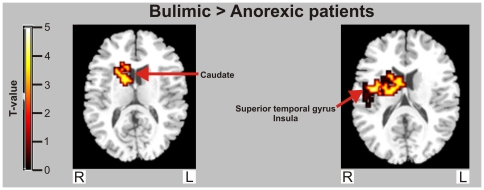
BACKGROUND: Previous fMRI studies show that women with eating disorders (ED) have differential neural activation to viewing food images. However, despite clinical differences in their responses to food, differential neural activation to thinking about eating food, between women with anorexia nervosa (AN) and bulimia nervosa (BN) is not known. METHODS: We compare 50 women (8 with BN, 18 with AN and 24 age-matched healthy controls [HC]) while they view food images during functional Magnetic Resonance Imaging (fMRI). RESULTS: In response to food (vs non-food) images, women with BN showed greater neural activation in the visual cortex, right dorsolateral prefrontal cortex, right insular cortex and precentral gyrus, women with AN showed greater activation in the right dorsolateral prefrontal cortex, cerebellum and right precuneus. HC women activated the cerebellum, right insular cortex, right medial temporal lobe and left caudate. Direct comparisons revealed that compared to HC, the BN group showed relative deactivation in the bilateral superior temporal gyrus/insula, and visual cortex, and compared to AN had relative deactivation in the parietal lobe and dorsal posterior cingulate cortex, but greater activation in the caudate, superior temporal gyrus, right insula and supplementary motor area. CONCLUSIONS: Women with AN and BN activate top-down cognitive control in response to food images, yet women with BN have increased activation in reward and somatosensory regions, which might impinge on cognitive control over food consumption and binge eating.
Overview
The claims and statistics of this paper haven’t been checked yet.
Free: it reads the open-access text and checks the first 5 claims that cite a source we can check. Create a free account to check every claim.
Integrity signals
Registry
Cites
Statistics
Figures
Verification
Claims the paper makes
The claims and statistics of this paper haven’t been checked yet.
Free: it reads the open-access text and checks the first 5 claims that cite a source we can check. Create a free account to check every claim.
Claims other papers make about this one
Each is checked against this paper’s own text: does it say what the citing paper says it does?
The cited source doesn’t support the claim as written.
In the citing paper
“In another study, BN participants displayed low activity in the insula to food images, while AN showed higher activity in the caudate and insula (Brooks et al., 2011).”
From Cortico-striatal-thalamic loop circuits of the salience network: A central pathway in psychiatric disease and treatment (2016) · cites this paper as Brooks et al., 2011
Checked by a reasoning model — may be wrong.
Experimental — accuracy not yet measuredThe source backs part of the claim, not all of it — or backs it for a different population, condition or comparison.
In the citing paper
“Brooks and colleagues [327] found that in response to food-reward outcomes, individuals with anorexia had greater activation of the dorsolateral prefrontal cortex, the cerebellum, and the right pre-cuneus relative to controls.”
From Reward circuitry dysfunction in psychiatric and neurodevelopmental disorders and genetic syndromes: animal models and clinical findings (2012) · cites this paper as [327]
Experimental — accuracy not yet measuredIn the citing paper
“Brooks et al. [327] compared neural responses to food-reward outcomes in individuals with BN and with anorexia nervosa (AN), and found that individuals with BN had relatively greater activation in the dorsolateral prefrontal cortex, the insular cortex, and the pre-central gyrus.”
From Reward circuitry dysfunction in psychiatric and neurodevelopmental disorders and genetic syndromes: animal models and clinical findings (2012) · cites this paper as [327]
In the citing paper
“They also had greater activation of the caudate, superior temporal gyrus, right insula, and supplementary motor area, and greater deactivation in the parietal lobe and dorsal posterior cingulate cortex relative to those with bulimia.”
From Reward circuitry dysfunction in psychiatric and neurodevelopmental disorders and genetic syndromes: animal models and clinical findings (2012) · cites this paper as [327]
Self-check
Percentages, sums and reported differences re-computed from the paper’s own numbers.
The self-check needs the paper’s full text.
Citations
Cites
The Hospital Anxiety and Depression Scale
Zigmond, A. S., & Snaith, R. P. (1983) · Acta Psychiatrica Scandinavica · doi:10.1111/j.1600-0447.1983.tb09716.x · Cited by 47,139
Neural systems of reinforcement for drug addiction: from actions to habits to compulsion
Everitt, B. J., & Robbins, T. W. (2005) · Nature Neuroscience · doi:10.1038/nn1579 · Cited by 3,785 · cited 1×
“Furthermore, activation of the caudate and motor regions (precentral gyrus, SMA) are implicated in addictive behaviour [25,26] and thus might suggest that there are some similarities in neural systems between addiction and binge eating.”
Background“Liking” and “wanting” food rewards: Brain substrates and roles in eating disorders
Berridge, K. C. (2009) · Physiology & Behavior · doi:10.1016/j.physbeh.2009.02.044 · Cited by 1,147 · cited 1×
“Furthermore, activation of the caudate and motor regions (precentral gyrus, SMA) are implicated in addictive behaviour [25,26] and thus might suggest that there are some similarities in neural systems between addiction and binge eating.”
BackgroundThe cognitive control network: Integrated cortical regions with dissociable functions
Cole, M. W., & Schneider, W. (2007) · NeuroImage · doi:10.1016/j.neuroimage.2007.03.071 · Cited by 1,091 · cited 1×
“The DLPFC forms part of the cognitive control network, and is associated with restriction of appetitive responses [27,28,29].”
BackgroundAnxiety, restraint, and eating behavior.
Herman, C. P., & Polivy, J. (1975) · Journal of Abnormal Psychology · doi:10.1037//0021-843x.84.6.666 · Cited by 886 · cited 1×
“Additionally, the women with BN had significantly higher restraint scores (EDE-Q) than those with AN, and the women with BPAN had the highest restraint score, which is in line with observations that people who binge are often relapsing from attempts at restraint [36] But this may also reflect and support a recent find…”
ResultNew insights into symptoms and neurocircuit function of anorexia nervosa
Kaye, W. H., Fudge, J. L., & Paulus, M. (2009) · Nature Reviews Neuroscience · doi:10.1038/nrn2682 · Cited by 843 · cited 1×
“Furthermore, dysregulation of the insula seems to be prominent in the pathophysiology underlying neural activation in people with eating disorders [33,34].”
BackgroundEstimating sample size in functional MRI (fMRI) neuroimaging studies: Statistical power analyses
Desmond, J. E., & Glover, G. H. (2002) · Journal of Neuroscience Methods · doi:10.1016/s0165-0270(02)00121-8 · Cited by 716 · cited 1×
“05 threshold for eighty percent power per voxel [18].”
BackgroundCraig, A. D. (. (2010) · Brain Structure and Function · doi:10.1007/s00429-010-0248-y · Cited by 600 · cited 1×
“The insular cortex functions as an intermediary between the PFC and striatum activation, with dense functional connectivity between these regions, creating an emergent sentience of bodily state [32].”
BackgroundIndividual Differences in Reward Drive Predict Neural Responses to Images of Food
Beaver, J. D., Lawrence, A. D., van Ditzhuijzen, J., Davis, M. H., Woods, A., & Calder, A. J. (2006) · The Journal of Neuroscience · doi:10.1523/jneurosci.0350-06.2006 · Cited by 594 · cited 1×
“Increased motor responses to food images may reflect an anticipated desire for food consumption, as these regions are also activated in healthy people who have fasted and report a craving for food [21,22,23,24].”
BackgroundHow psychotherapy changes the brain – the contribution of functional neuroimaging
Linden, D. E. J. (2006) · Molecular Psychiatry · doi:10.1038/sj.mp.4001816 · Cited by 491 · cited 1×
“As this might alter neural activation [19] independent t-tests were run to check whether differences occurred in neural activation between those were/ were not taking SSRIs.”
Method
Research works printed but not linked: 1
- Brammer M 2003 Statistical analysis of functional magnetic resonance imaging data: current state and recent developments. Stat Methods Med Res 12 373 374 14599001
Cited by
Items 101–200 of 256
Functional neuroanatomy of body checking in people with anorexia nervosa
Suda, M., Brooks, S. J., Giampietro, V., Friederich, H., Uher, R., Brammer, M. J., Williams, S., Campbell, I. C., & Treasure, J. L. (2013) · International Journal of Eating Disorders · doi:10.1002/eat.22150 · Cited by 31
Self-citationPauligk, S., Seidel, M., Fürtjes, S., King, J. A., Geisler, D., Hellerhoff, I., Roessner, V., Schmidt, U. H., Goschke, T., Walter, H., et al. (2021) · Translational Psychiatry · doi:10.1038/s41398-021-01405-8 · Cited by 30
Cerasa, A., Castiglioni, I., Salvatore, C., Funaro, A., Martino, I., Alfano, S., Donzuso, G., Perrotta, P., Gioia, M. C., Gilardi, M. C., et al. (2015) · Behavioural Neurology · doi:10.1155/2015/924814 · Cited by 32
“Although altered functional activity of the occipital lobe has been reported in both AN and BN individuals [52], body image disturbance is fundamentally considered one of the core characteristics of AN.”
BackgroundCeleghin, A., Palermo, S., Giampaolo, R., Fini, G. D., Gandino, G., & Civilotti, C. (2023) · Brain Sciences · doi:10.3390/brainsci13030465 · Cited by 29
“[68] 2011 BN AN 8 BN (16–50) 42 AN (16–50) 24 (16–50)”
Wang, L., Bi, K., Song, Z., Zhang, Z., Li, K., Kong, Q., Li, X.-N., Lü, Q., & Si, T. (2020) · The International Journal of Neuropsychopharmacology · doi:10.1093/ijnp/pyaa023 · Cited by 29
“, 2011), others reported increased dorsolateral PFC and striatal activation during the receipt of food images (Brooks et al., 2011; Simon et al., 2016; Lee et al., 2017) and the learning of probabilistic categories (Brooks et al.”
BackgroundIncreased Set Shifting Costs in Fasted Healthy Volunteers
Bolton, H., Burgess, P. W., Gilbert, S. J., & Serpell, L. (2014) · PLoS ONE · doi:10.1371/journal.pone.0101946 · Cited by 29
“Given recent evidence of differential neural responses in eating disorders to food and non-food stimuli [52,53] we decided to develop a novel setshifting task which included both food and non-food images.”
BackgroundGodier-McBard, L. R., Scaife, J. C., Braeutigam, S., & Park, R. J. (2016) · Psychiatry Journal · doi:10.1155/2016/1795901 · Cited by 29
“Increased neural activity at 150ms post-stimulus in the AN-C group was observed in the primary motor cortex (precentral gyrus), previously suggested to reflect an increased appetitive response to food pictures in AN [50].”
BackgroundResultInfluentialAffective Responses in Different Stages of Anorexia Nervosa: Results from a Startle‐reflex Paradigm
Erdur, L., Weber, C., Zimmermann‐Viehoff, F., Rose, M., & Deter, H. (2017) · European Eating Disorders Review · doi:10.1002/erv.2502 · Cited by 29
“…AN, it is suggested that a hyperactive ‘top-down’ system of cognitive control suppresses subcortical ‘bottom-up’ processing (O’Hara, Campbell & Schmidt, 2015), such as reward or motivational systems (Bailer et al., 2013; Brooks et al., 2011; Epstein et al., 2001; Wierenga et al., 2014, 2015).”
BackgroundStapleton, P., Buchan, C., MItchell, I., McGrath, Y., Gorton, P., & Carter, B. (2019) · OBM Integrative and Complementary Medicine · doi:10.21926/obm.icm.1901010 · Cited by 29
“Food images significantly increase activation in healthy controls in this brain area too [58].”
BackgroundFoerde, K., Walsh, B. T., Dalack, M. N., Daw, N. D., Shohamy, D., & STEINGLASS, J. E. (2021) · Journal of Eating Disorders · doi:10.1186/s40337-021-00402-y · Cited by 28
Neural correlates of taste reward value across eating disorders
Olsavsky, A. K., Shott, M. E., DeGuzman, M. C., & Frank, G. (2018) · Psychiatry Research Neuroimaging · doi:10.1016/j.pscychresns.2018.08.010 · Cited by 29
Abnormal structural brain network and hemisphere-specific changes in bulimia nervosa
Wang, L., Bi, K., An, J., Li, M., Li, K., Kong, Q., Li, X.-N., Lü, Q., & Si, T. (2019) · Translational Psychiatry · doi:10.1038/s41398-019-0543-1 · Cited by 28
Behavioral assessment of activity-based-anorexia: how cognition can become the drive wheel
Lamanna, J., Sulpizio, S., Ferro, M., Martoni, R. M., Abutalebi, J., & Malgaroli, A. (2019) · Physiology & Behavior · doi:10.1016/j.physbeh.2019.01.016 · Cited by 27
Advances in the neurobiology of eating disorders
Elburg, A. A. V., & Treasure, J. L. (2013) · Current Opinion in Psychiatry · doi:10.1097/yco.0b013e328365a2e7 · Cited by 27
“In contrast, people suffering from the binge/purge subtype of anorexia nervosa show decreased dorsolateral prefrontal activity in contrast to restrictive anorexia nervosa [39], maybe suggesting less cognitive control.”
BackgroundSelf-citationJaššová, K., Albrecht, J., Papežová, H., & Anders, M. (2018) · Medical Science Monitor · doi:10.12659/msm.908250 · Cited by 26
“, the striatum), and parietal somatosensory regions [2].”
BackgroundMattavelli, G. C., Gallucci, A., Schiena, G., D’Agostino, A., Sassetti, T., Bonora, S., Bertelli, S., Benetti, A., Tugnoli, E., Ruggiero, G. M., et al. (2019) · International Journal of Eating Disorders · doi:10.1002/eat.23046 · Cited by 26
“On the other hand, previous studies suggest that responses to food images in the visual cortex and temporo-parietal junction can be related to cognitive strategies that control food desire and self-reflection (Brooks et al., 2011; Hollmann et al., 2012).”
Dahlberg, L. S., Wiemerslage, L., Swenne, I., Larsen, A. L., Stark, J., Rask‐Andersen, M., Salonen‐Ros, H., Larsson, E., Schiöth, H. B., & Brooks, S. J. (2016) · Nordic Journal of Psychiatry · doi:10.1080/08039488.2016.1250948 · Cited by 27
“Functional imaging studies have previously reported an increase in DLPFC activation in response to food images in AN (21,25).”
BackgroundSelf-citationEddy, K. T., Plessow, F., Breithaupt, L. E., Becker, K. R., Slattery, M. J., Mancuso, C. J., Izquierdo, A. M., Water, A. L. V. D., Kahn, D. L., Dreier, M. J., et al. (2023) · Translational Psychiatry · doi:10.1038/s41398-023-02494-3 · Cited by 25
Forester, G., Schaefer, L. M., Johnson, J. S., Amponsah, T., Dvorak, R. D., & Wonderlich, S. A. (2023) · Appetite · doi:10.1016/j.appet.2023.107151 · Cited by 24
Cognitive reappraisal of food craving and emotions: a coordinate-based meta-analysis of fMRI studies
Gerosa, M., Canessa, N., Morawetz, C., & Mattavelli, G. C. (2023) · Social Cognitive and Affective Neuroscience · doi:10.1093/scan/nsad077 · Cited by 23
“…weight individuals have been reported as hyper-active in individuals with obesity and in patients with bulimia nervosa, which might be related to individual differences in inhibitory control (Brooks et al ., 2011, 2013; Kennedy and Dimitropoulos, 2014; Pursey et al ., 2014; Devoto et al ., 2018).”
BackgroundFranssen, S., Jansen, A. T. M., van den Hurk, J., Roebroeck, A. F., & Roefs, A. (2020) · Appetite · doi:10.1016/j.appet.2020.104609 · Cited by 23
A systematic review of implicit attitudes and their neural correlates in eating behaviour
Gallucci, A., Mauro, L. D., Pisoni, A., Lauro, L. J. R., & Mattavelli, G. C. (2020) · Social Cognitive and Affective Neuroscience · doi:10.1093/scan/nsaa156 · Cited by 23
Hay, P., & Katsikitis, M. (2014) · Eating Behaviors · doi:10.1016/j.eatbeh.2014.04.016 · Cited by 23
Human brain responses to gustatory and food stimuli: A meta-evaluation of neuroimaging meta-analyses
Yeung, A. W. K., Wong, N. S. M., Lau, H. C., & Eickhoff, S. B. (2019) · NeuroImage · doi:10.1016/j.neuroimage.2019.116111 · Cited by 23
Central Regulation of Eating Behaviors in Humans: Evidence from Functional Neuroimaging Studies
Chae, Y., & Lee, I. (2023) · Nutrients · doi:10.3390/nu15133010 · Cited by 22
“For example, patients with BN were asked to think about eating the presented food, and they showed decreased activation in the insula and superior temporal gyrus compared to healthy controls [97].”
BackgroundMattavelli, G. C., Gorrino, I., Tornaghi, D., & Canessa, N. (2023) · Cortex · doi:10.1016/j.cortex.2023.10.008 · Cited by 23
Favieri, F., Forte, G., Marotta, A., & Casagrande, M. (2020) · Nutrients · doi:10.3390/nu12020492 · Cited by 22
Young, K. S., Rennalls, S. J., Leppänen, J., Mataix‐Cols, D., Simmons, A., Suda, M., Campbell, I. C., O’Daly, O., & Cardi, V. (2020) · Journal of Affective Disorders · doi:10.1016/j.jad.2020.05.077 · Cited by 22
Self-citationEvidence for alterations of cortical folding in anorexia nervosa
Schultz, C. C., Wagner, G., de la Cruz, F., Berger, S., Reichenbach, J. R., Sauer, H., & Bar, K. J. (2015) · European Archives of Psychiatry and Clinical Neuroscience · doi:10.1007/s00406-015-0666-1 · Cited by 21
Brooks, S. J., Dahlberg, L. S., Swenne, I., Aronsson, M., Zarei, S., Lundberg, L., Jacobsson, J. A., Rask‐Andersen, M., Salonen‐Ros, H., Rosling, A., et al. (2014) · Psychiatry Research Neuroimaging · doi:10.1016/j.pscychresns.2014.10.001 · Cited by 21
“Brooks et al. / Psychiatry Research: Neuroimaging 224 (2014) 246–253 247”
MethodSelf-citationPhysiological, emotional and neural responses to visual stimuli in eating disorders: a review
Burmester, V., Graham, E., & Nicholls, D. (2021) · Journal of Eating Disorders · doi:10.1186/s40337-021-00372-1 · Cited by 20
Murray, S. M., Brown, C. S., Kaye, W. H., & Wierenga, C. E. (2021) · Current topics in behavioral neurosciences · doi:10.1007/7854_2021_287 · Cited by 20
Physiological Needs: Sensations and Predictions in the Insular Cortex
Prilutski, Y., & Livneh, Y. (2022) · Physiology · doi:10.1152/physiol.00019.2022 · Cited by 20
Neural correlates of eating disorders: translational potential
McAdams, C. J., & Smith, W. (2015) · Neuroscience and Neuroeconomics · doi:10.2147/nan.s76699 · Cited by 19
“47 Similarly, people with BN have shown heightened activation in response to food images in reward regions 54 as well as reduced activation in response to the taste of food in the insula and medial frontal gyrus.”
Sultson, H., van Meer, F., Sanders, N. M., Elburg, A. A. V., Danner, U. N., Hoek, H. W., Adan, R. A. H., & Smeets, P. A. M. (2016) · Psychiatry Research Neuroimaging · doi:10.1016/j.pscychresns.2016.07.004 · Cited by 20
“This approach has been used previously in imaging studies about visual image processing in AN (Brooks et al., 2012, 2011; Kim et al., 2012).”
InfluentialKerem, L., Holsen, L. M., Fazeli, P. K., Bredella, M. A., Mancuso, C., Resulaj, M., Holmes, T. M., Klibanski, A., & Lawson, E. A. (2020) · Physiological Reports · doi:10.14814/phy2.14639 · Cited by 19
“, 2012) and hyperactivation of the DLPFC in response to high-calorie food images (Brooks et al., 2011).”
BackgroundSiciliano, L., Olivito, G., & Leggio, M. G. (2022) · Neuroscience & Biobehavioral Reviews · doi:10.1016/j.neubiorev.2022.104863 · Cited by 19
An FMRI meta-analysis of interoception in eating disorders
Datta, N., Hughes, A. E., Modafferi, M., & Klabunde, M. (2024) · NeuroImage · doi:10.1016/j.neuroimage.2024.120933 · Cited by 17
Provocation of Symmetry/Ordering Symptoms in Anorexia nervosa: A Functional Neuroimaging Study
Suda, M., Brooks, S. J., Giampietro, V., Uher, R., Mataix‐Cols, D., Brammer, M. J., Williams, S., Treasure, J. L., & Campbell, I. C. (2014) · PLoS ONE · doi:10.1371/journal.pone.0097998 · Cited by 17
“differences in the functioning of the frontostriatal pathways (lateral striatum, medial prefrontal cortex, and orbitofrontal cortex) associated with compulsivity, motivation, and habits [11].”
BackgroundSelf-citationBrede, S., Sputh, A., Hartmann, A.-C., Hallschmid, M., Lehnert, H., & Klement, J. (2017) · Appetite · doi:10.1016/j.appet.2017.07.001 · Cited by 17
FMRI Study of Neural Responses to Implicit Infant Emotion in Anorexia Nervosa
Leppänen, J., Cardi, V., Paloyelis, Y., Simmons, A., Tchanturia, K., & Treasure, J. L. (2017) · Frontiers in Psychology · doi:10.3389/fpsyg.2017.00780 · Cited by 16
“…negatively valenced social words or view provoking stimuli, such as food images, people with AN show greater recruitment of cortical regions, including the dorsolateral PFC and insula, relative to healthy control (HC) participants (Brooks et al., 2011, 2012a; Miyake et al., 2012; Brooks, 2016).”
BackgroundSelf-citationIncreased anticipatory brain response to pleasant touch in women remitted from bulimia nervosa
Wierenga, C. E., Bischoff‐Grethe, A., Berner, L. A., Simmons, A. N., Bailer, U. F., Paulus, M. P., & Kaye, W. H. (2020) · Translational Psychiatry · doi:10.1038/s41398-020-00916-0 · Cited by 16
Donnelly, B., Foroughi, N., Williams, M., Touyz, S. W., Madden, S., Kohn, M. R., Clark, S., Sachdev, P. S., Peduto, A. J., Caterson, I. D., et al. (2022) · Frontiers in Psychology · doi:10.3389/fpsyg.2022.687849 · Cited by 15
Increased experience amplifies the activation of task-irrelevant category representations
Wu, R., Pruitt, Z. M., Zinszer, B. D., & Cheung, O. S. (2016) · Attention Perception & Psychophysics · doi:10.3758/s13414-016-1254-9 · Cited by 15
“Patients with anorexia nervosa or bulimia nervosa have heightened top-down control when viewing food images (e.g., Brooks et al., 2011), which originate from frontal-striatal networks that underlie habitual behavior (Foerde, Steinglass, Shohamy, &Walsh, 2015).”
BackgroundTabri, N., & Palmer, L. (2020) · International Journal of Eating Disorders · doi:10.1002/eat.23391 · Cited by 15
Kot, E., Kucharska, K., Monteleone, A. M., & Monteleone, P. (2019) · European Eating Disorders Review · doi:10.1002/erv.2713 · Cited by 15
Altered regional gray matter volume in Chinese female patients with bulimia nervosa
Li, X., Liu, X., Wang, Y., Li, L., Zheng, L., Liu, Y., Ma, J., & Zhang, L. (2020) · BMC Psychiatry · doi:10.1186/s12888-020-02493-4 · Cited by 14
Gearhardt, A. N., Boswell, R. G., & Potenza, M. N. (2014) · Springer eBooks · doi:10.1007/978-3-642-45378-6_4 · Cited by 15
Convergent dysregulation of frontal cortical cognitive and reward systems in eating disorders
Kream, R. M. (2013) · Medical Science Monitor · doi:10.12659/msm.889133 · Cited by 13
“The authors conclude that women with AN and BN activate top-down cognitive control in response to food images, yet women with BN have increased activation in reward and somatosensory regions, which might impinge on cognitive control over eating [36,37].”
BackgroundNothing Tastes as Good as Skinny Feels: the Neurobiology of Anorexia Nervosa
Kaye, W. H., Wierenga, C. E., Bailer, U. F., Simmons, A. N., & Bischoff‐Grethe, A. (2014) · FOCUS The Journal of Lifelong Learning in Psychiatry · doi:10.1176/appi.focus.120413 · Cited by 13
Galusca, B., Sigaud, T., Costes, N., Redouté, J., Massoubre, C., & Estour, B. (2014) · The World Journal of Biological Psychiatry · doi:10.3109/15622975.2014.942358 · Cited by 13
Serfling, G., Buades‐Rotger, M., Harbeck, B., Krämer, U. M., & Brabant, G. E. (2018) · Psychoneuroendocrinology · doi:10.1016/j.psyneuen.2018.09.007 · Cited by 13
Forester, G., Schaefer, L. M., Dodd, D. R., & Johnson, J. S. (2022) · International Journal of Eating Disorders · doi:10.1002/eat.23821 · Cited by 12
Frausto, H. R., Roesmann, K., Klinkenberg, I. A. G., Rehbein, M. A., Föcker, M., Romer, G., Junghoefer, M., & Wessing, I. (2021) · Psychological Medicine · doi:10.1017/s003329172100088x · Cited by 12
“…motivation (e.g. striatum, insula), cognitive control (e.g. frontal cortex), and visual perception and attention (e.g. OCC) (Boehm et al., 2018; Brooks et al., 2011, 2012a; Foerde, Steinglass, Shohamy, & Walsh, 2015; Gordon et al., 2001; Joos et al., 2011; Kim, Ku, Lee, Lee, & Jung, 2012;…”
Wang, Y., Tang, L., Wang, M., Wu, G., Li, W., Wang, X., Wang, J., Yang, Z., Li, X., Li, Z., et al. (2023) · International Journal of Eating Disorders · doi:10.1002/eat.24038 · Cited by 11
Murray, S. B., Diaz‐Fong, J. P., Duval, C. J., Balkchyan, A. A., Nagata, J. M., Lee, D. J., Ganson, K. T., Toga, A. W., Siegel, S. J., & Jann, K. (2022) · Psychological Medicine · doi:10.1017/s0033291722003269 · Cited by 11
“Additional studies of adults with binge-type eating disorders have illustrated altered activity in precentral gyri in response to food cues (Brooks et al., 2011).”
BackgroundNeuronal Substrate of Eating Disorders
Calvez, J. (2014) · Brain Disorders & Therapy · doi:10.4172/2168-975x.1000121 · Cited by 10
“Indeed, perturbations of the reward-related brain areas have been demonstrated in patients with BN [256-261].”
BackgroundAltered anticipatory brain responses in eating disorders: A neuroimaging meta‐analysis
Yu, X., & Desrivières, S. (2023) · European Eating Disorders Review · doi:10.1002/erv.2967 · Cited by 10
“However, neuroimaging studies using a similar food‐viewing paradigm, have reported hypoactivation either in the insula and the visual cortex (Brooks et al., 2011) or in the anterior cingulate, lateral prefrontal cortex, right middle temporal lobe and midcingulate cortex (Joos, Saum, et al., 2011)…”
MethodZhang, H., Liu, Z., Zheng, H., Xu, T., Liu, L., Xu, T., Yuan, T., & Han, X. (2024) · BMC Public Health · doi:10.1186/s12889-024-18015-w · Cited by 11
“Increased insula activation is involved in the neurological processing of food-related stimuli [110, 111].”
BackgroundAltered cortical excitability in anorexia nervosa
Khedr, E. M., Elfetoh, N. A., Bieh, E. E., Ali, A., & Karim, A. A. (2014) · Neurophysiologie Clinique · doi:10.1016/j.neucli.2014.08.002 · Cited by 10
Jaššová, K., Albrecht, J., Čerešňáková, S., Papežová, H., & Anders, M. (2019) · Neuropsychiatric Disease and Treatment · doi:10.2147/ndt.s203486 · Cited by 10
“Simultaneously, functional neuroimaging studies of AN patients using symptoms-provocation paradigms have proposed either aberrant functioning of “top-down” prefrontal regions (executive control) and/or subcortical regions promoting “bottom-up” (stimulus-driven) responses, anxiety-related mesolimbic circuits, reward-re…”
BackgroundThe neural correlates of value representation: From single items to bundles
Zyuzin, J., Combs, D., Melrose, J., Kodaverdian, N., Leather, C., Carrillo, J. D., Monterosso, J. R., & Brocas, I. (2022) · Human Brain Mapping · doi:10.1002/hbm.26137 · Cited by 9
“…et al., 2008; Hall et al., 2017), to be involved in self-regulation and self-control (Chen et al., 2018; Harris et al., 2013; Hutcherson et al., 2012), and to be associated with eating disorders (Brooks et al., 2011; Dalton et al., 2020; Foerde et al., 2015; He et al., 2019; Lowe et al., 2019).”
Hu, Y., Pan, Y., Yue, L., & Gao, X. (2024) · Psychoradiology · doi:10.1093/psyrad/kkae003 · Cited by 8
Zheng, L., Jing, M., Wang, Y., Wang, M., Liu, Y., Li, J., Li, T., & Zhang, L. (2024) · Frontiers in Psychiatry · doi:10.3389/fpsyt.2023.1326271 · Cited by 8
Brede, S., Lutzke, B., Albers, E., Man, C. D., Cobelli, C., Hallschmid, M., Klement, J., & Lehnert, H. (2020) · Physiology & Behavior · doi:10.1016/j.physbeh.2020.113071 · Cited by 8
Uncommon case of complete loss of hunger following an isolated left insular stroke
Hébert-Seropian, B., Boucher, O., Jutras‐Aswad, D., & Nguyen, D. K. (2021) · Neurocase · doi:10.1080/13554794.2021.1966044 · Cited by 8
“…for both gustatory and interoceptive input (Avery et al., 2015), and fMRI studies have provided evidence of altered insular function and structure (Brooks et al., 2011; Carnell et al., 2012; Kaye et al., 2011) as well as dysfunctional interoceptive systems (Berner et al., 2018; Kerr et al., 2016)…”
BackgroundPauligk, S., Seidel, M., Ritschel, F., Geisler, D., Doose, A., Boehm, I., Hellerhoff, I., Ludwicki, F., Roessner, V., King, J. A., et al. (2025) · International Journal of Clinical and Health Psychology · doi:10.1016/j.ijchp.2025.100544 · Cited by 7
Huang, K., & Foldi, C. J. (2022) · Journal of Clinical Medicine · doi:10.3390/jcm11092594 · Cited by 7
“Excessive self-control in food choice is associated with enhanced dlPFC activity [80], which is exaggerated both in patients who are currently ill with AN (acute phase of AN) and weight-recovered from AN, and leads to attenuated reward processing and the avoidance of food [83,84].”
BackgroundMurray, S. B., Zbozinek, T. D., Craske, M. G., Tadayonnejad, R., Strober, M. A., Bari, A., O’Doherty, J. P., & Feusner, J. D. (2022) · Journal of Eating Disorders · doi:10.1186/s40337-022-00546-5 · Cited by 8
“In the context of food cues, studies have generally noted reduced cortico-striatal activity among those with AN [34, 35], which extends to the taste, smell, and sight of palatable foods [34, 36–38].”
BackgroundDalton, M. (2013) · White Rose eTheses Online (University of Leeds, The University of Sheffield, University of York) · Cited by 7
Dąbkowska-Mika, A., Steiger, R., Gander, M., Haid-Stecher, N., Fuchs, M., Sevecke, K., & Gizewski, E. R. (2023) · Journal of Eating Disorders · doi:10.1186/s40337-023-00761-8 · Cited by 6
Dazzi, F., & Leone, F. G. D. (2013) · Eating and Weight Disorders - Studies on Anorexia Bulimia and Obesity · doi:10.1007/s40519-013-0076-1 · Cited by 6
Gravina, D., Violi, M., Bordacchini, A., Diadema, E., Fantasia, S., Simoncini, M., & Carmassi, C. (2025) · Brain Sciences · doi:10.3390/brainsci15040372 · Cited by 5
“…in PFC regions such as the dorsolateral prefrontal cortex (DLPFC), the medial prefrontal cortex (mPFC), the orbitofrontal cortex (OFC), and the anterior cingulate cortex (ACC), which are strictly interlinked to ensure complex tasks such as cognitive evaluation and executive functioning [61–63].”
Lowe, C. J., & Bodell, L. P. (2024) · Developmental Cognitive Neuroscience · doi:10.1016/j.dcn.2024.101377 · Cited by 6
“However, other studies have found decreased activation in the insula (Brooks et al., 2011), visual cortex (Brooks et al., 2011), and rostro-ventral and lateral parts of the anterior cingulate cortex (ACC) (Joos et al., 2011) in response to visual food cues in small samples of women with bulimia…”
ResultRząd, Z., Róg, J., Kajka, N., Szewczyk, P., Krukow, P., & Karakuła‐Juchnowicz, H. (2024) · Frontiers in Psychiatry · doi:10.3389/fpsyt.2024.1284675 · Cited by 5
Snack food as a modulator of human resting-state functional connectivity
Mendez-Torrijos, A., Kreitz, S., Ivan, C., Konerth, L., Rösch, J., Pischetsrieder, M., Moll, G. H., Kratz, O., Dörfler, A., Horndasch, S., et al. (2018) · CNS Spectrums · doi:10.1017/s1092852918000767 · Cited by 5
Joos, A. A. B., Saum, B., Hartmann, A., Tüscher, O., van Elst, L. T., & Zeeck, A. (2012) · Psychotherapy and Psychosomatics · doi:10.1159/000337747 · Cited by 5
Ursumando, L., Ponzo, V., Monteleone, A. M., Menghini, D., Fucà, E., Lazzaro, G., Esposito, R., Picazio, S., Koch, G., Zanna, V., et al. (2023) · Journal of Eating Disorders · doi:10.1186/s40337-023-00852-6 · Cited by 5
“Indeed, DLPFC plays a key role in cognitive control [20, 21], in self-control in a dietary context [22, 23] and in regulating the valence of emotional experiences [24].”
BackgroundInfluentialKiortsis, D. N., Σπυρίδωνος, Π. Π., Margariti, P. N., Xydis, V. G., Alexiou, G. Α., Astrakas, L. G., & Argyropoulou, M. I. (2018) · HORMONES · doi:10.1007/s42000-018-0053-1 · Cited by 5
Lee, M., & Lee, J.-H. (2020) · Eating Behaviors · doi:10.1016/j.eatbeh.2020.101471 · Cited by 5
Neural Response to High and Low Energy Food Images in Anorexia Nervosa
Foroughi, N., Donnelly, B., Williams, M., Madden, S., Kohn, M. R., Clarke, S. P., Sachdev, P. S., Touyz, S. W., & Hay, P. (2021) · OBM Neurobiology · doi:10.21926/obm.neurobiol.2103107 · Cited by 5
“The observed differences may reflect the methodological variations in the design of the studies, including studies of not satiated participants [3], different experimental paradigms such as instructing participants to think about their perception of hunger when viewing the images [47] and sample differences (e.”
BackgroundWitt, A. A., & Lowe, M. R. (2015) · iDEA - Drexel University Institutional Repository · doi:10.17918/etd-6400 · Cited by 5
Neurobiological, Genetic, and Epigenetic Foundations of Eating Disorders in Youth
Cerniglia, L. (2024) · Children · doi:10.3390/children11030274 · Cited by 6
“For example, malnutrition and stress, common in individuals with anorexia nervosa, can induce reversible epigenetic alterations that affect gene expression related to mental status, metabolism, and immunity [21–24].”
BackgroundCoquery, N., Som, M., Serrand, Y., Guittière, M.-O., Bannier, É., Lainé, F., Constant, A., Moirand, R., Stice, E. M., Val‐Laillet, D., et al. (2025) · Clinical Nutrition · doi:10.1016/j.clnu.2025.06.001 · Cited by 4
“In bulimia nervosa compared with anorexia nervosa, Brooks and al [61]. also detected an increased brain response in the PrCG, associated with an increased response in caudate and motor areas, and suggested that these higher responses reflect an increased appetitive response to food pictures.”
Neural correlates of preferred activities: development of an interest-specific go/nogo task
Bos, D. J., Ajodan, E. L., Silverman, M. R., Dyke, J. P., Durston, S., Power, J. D., & Jones, R. M. (2017) · Social Cognitive and Affective Neuroscience · doi:10.1093/scan/nsx127 · Cited by 4
“For example, food, non-food and physical activity cues have been used to study eating disorders (Brooks et al., 2011; Kullmann et al., 2014; Teslovich et al., 2014), pictures of alcohol, drugs or gambling to study various addictions (Noël et al., 2007; van Holst et al., 2012; Pike et al., 2013,…”
BackgroundWan, X., Zhang, P., Jiang, Y., Liu, G., Ma, L., Zhang, J., & Zhang, J. P. (2025) · European Archives of Psychiatry and Clinical Neuroscience · doi:10.1007/s00406-024-01946-1 · Cited by 4
“The precuneus plays a role in self-referential processing and cognitive control (particularly attentional control) [110, 111].”
Anhedonia in anorexia nervosa: a narrative review
Ceres, R., & Cascino, G. (2024) · Giornale italiano di psicopatologia/Journal of psychopathology/Italian journal of psychopathology · Cited by 4
Imperatori, C., Massullo, C., Carbone, G. A., Farina, B., Colmegna, F., Riboldi, I., di Giacomo, E., Clerici, M., & Dakanalis, A. (2019) · Eating and Weight Disorders - Studies on Anorexia Bulimia and Obesity · doi:10.1007/s40519-019-00801-w · Cited by 4
Value computation and modulation: A neuroeconomic theory of self-control as constrained optimization
Brocas, I., & Carrillo, J. D. (2021) · Journal of Economic Theory · doi:10.1016/j.jet.2021.105366 · Cited by 4
“dθ̄ dh′ = αG(j(h′)) [ 1− g(j(h ′)) G(j(h′)) j(h′)j′(h′) ] > 0 (18)”
Osborne, A. K., & Riby, L. M. (2016) · Psychology and Behavioral Sciences · doi:10.12691/rpbs-4-1-1 · Cited by 6
“Due to the complex nature of working memory and its processes [27,28], brain activations during memory tasks are widespread and are dependent upon the task [29].”
BackgroundMolina-Ruiz, R. M. (2014) · LA Referencia (Red Federada de Repositorios Institucionales de Publicaciones Científicas) · Cited by 4
Loizou, P., Παναγιώτου, Γ., Zanos, P., & Paraskevopoulos, E. (2024) · PLoS ONE · doi:10.1371/journal.pone.0299529 · Cited by 3
Peel, H. J., Reggente, N., Strober, M., & Feusner, J. D. (2025) · NeuroImage Clinical · doi:10.1016/j.nicl.2025.103896 · Cited by 3
“…AN would show more variable (inconsistent) reward responses (lower RS) during neutral emotional states in reward regions compared to controls, reflecting the behavioural and neural evidence of disrupted reward processing in AN (Brooks et al., 2011; Berridge et al., 2009; Sweitzer et al., 2018).”
Scherma, M., Satta, V., Fratta, W., & Fadda, P. (2015) · Elsevier eBooks · doi:10.1016/b978-0-12-417041-4.00016-3 · Cited by 3
Compulsivity in anorexia nervosa
Godier-McBard, L. R. (2015) · Oxford University Research Archive (ORA) (University of Oxford) · doi:10.5287/ora-dqgmdvajz · Cited by 3
da Silva, N. A. (2018) · Americanae (AECID Library) · Cited by 3
Grosselin, A., Sevos, J., Gay, A., Pellet, J., & Massoubre, C. (2018) · L’Année psychologique · doi:10.3917/anpsy1.182.0099 · Cited by 2
Goetz, J. L. (2024) · Elsevier eBooks · doi:10.1016/b978-0-323-95702-1.00095-6 · Cited by 2
Murray, S. B., Diaz‐Fong, J. P., Mak, V. W. T., & Feusner, J. D. (2024) · Brain and Behavior · doi:10.1002/brb3.3573 · Cited by 2
“In the context of foodcues,fMRIstudieshavegenerallynoteddiminishedcorticostriatal activity in AN (Brooks et al., 2011; Jiang et al., 2019), which extends to the taste, smell, and sight of palatable foods (Holsen et al., 2012; Jiang etal.,2019;McFaddenetal.,2014;Oberndorferetal.,2013).”
BackgroundValue computation and value modulation: a dual-process theory of self-control
Brocas, I., & Carrillo, J. D. (2014) · Cited by 2
Metadata
- Authors
- Brooks, S. J., O′Daly, O. G., Uher, R., Friederich, H.-C., Giampietro, V., Brammer, M., Williams, S. C. R., Schiöth, H. B., Treasure, J., & Campbell, I. C.
- Affiliations
- Uppsala University (SE)
- King's College London (GB)
- Heidelberg University (DE)
- Corresponding author
- Brooks, Samantha J.
- ORCID
- Venue
- PLoS ONE
- Publisher
- Public Library of Science (PLoS)
- Published
- 2011-07-20
- Volume
- 6
- Issue
- 7
- Pages
- e22259
- ISSN
- 1932-6203 (ISSN-L)
- PMC
- PMC3140495
- OpenAlex
- W2093856632
- Cited by
- 231
- References
- 39
- Citations by year
- 2026: 4 · 2025: 8 · 2024: 12 · 2023: 13 · 2022: 14 · 2021: 16 · 2020: 14 · 2019: 17 · 2018: 22 · 2017: 19 · 2016: 14 · 2015: 16 · 2014: 17 · 2013: 23 · 2012: 21
- FWCI
- 21.35
- Type
- journal article
- Language
- en
- Open access
- gold
- doi.org
- Locations
- PLoS ONE (publishedVersion, cc-by)
- Europe PMC (PubMed Central) (publishedVersion, cc-by)
- PubMed Central (publishedVersion, cc-by)
- PubMed (publishedVersion)
- Liverpool John Moores University (acceptedVersion)
- DOAJ (DOAJ: Directory of Open Access Journals) (submittedVersion, cc-by-sa)
- Research Portal (King's College London) (submittedVersion)
- Funders
- Psychiatry Research Trust
- Uppsala Universitet
- Topics
- Social Sciences › Psychology › Clinical Psychology › Eating Disorders and Behaviors
- Health Sciences › Nursing › Nutrition and Dietetics › Nutrition, Health and Food Behavior
- Life Sciences › Neuroscience › Endocrine and Autonomic Systems › Regulation of Appetite and Obesity
- Keywords
- bulimia nervosa, anorexia nervosa, food images, eating disorders, dorsolateral prefrontal cortex, insula, cerebellum, caudate nucleus, cognitive control, reward processing, binge eating, women
- MeSH terms
- Adolescent, Adult, Anorexia Nervosa, Anxiety, Brain, Bulimia, Cognition, Female, Food, Humans, Magnetic Resonance Imaging, Middle Aged, Photic Stimulation, Thinking, Visual Cortex, Case-Control Studies, Neostriatum, Selective Serotonin Reuptake Inhibitors, Prefrontal Cortex, Young Adult
About these checks
Registry, retraction, Cites and statistics results are computed, not judged, with one exception: a printed reference that no index lists is read once by a model before it counts as a citation error. Claims are extracted by a model and kept only when their quote appears verbatim in the text; each cited source is then checked, with a model’s help, for whether it says what the claim relies on. Those verdicts can be wrong — read the claim’s quote and the cited source before relying on one.
Statistics and arithmetic are recomputed, not judged.
Confidence bands are shown only for fields calibrated on our annotated test set. None is calibrated yet, so no band is shown.
What counts as a claim ›How we measure confidence ›How we check this ›
Are you an author, or do you see a problem with this page? Request a review
Data sources
Bibliographic data: Semantic Scholar, OpenAlex, Crossref.
Contains information from the Semantic Scholar Academic Graph Datasets, made available under the ODC Attribution License (ODC-BY 1.0).
Semantic Scholar’s data is described in: Kinney, R., et al. (2023). The Semantic Scholar Open Data Platform. arXiv:2301.10140.
