

GLP-1 Analogs Reduce Hepatocyte Steatosis and Improve Survival by Enhancing the Unfolded Protein Response and Promoting Macroautophagy
Open accessThe DOI matches its Crossref record; 50 of the 50 references it cites were found in a registry or an index.
Abstract
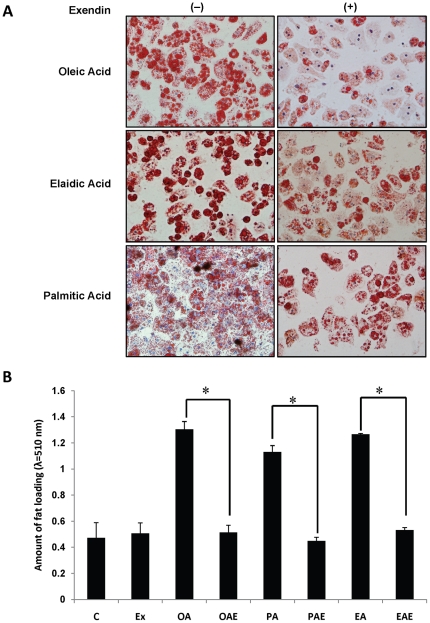
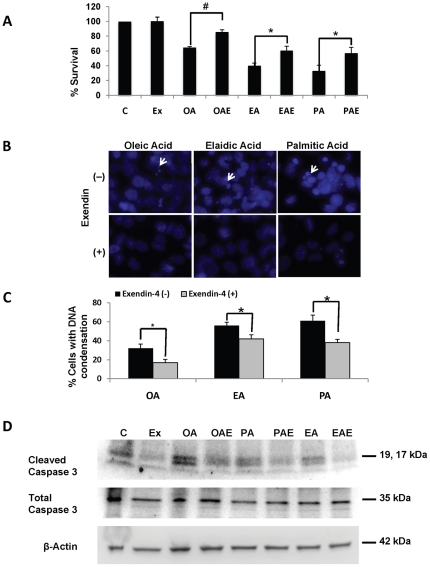
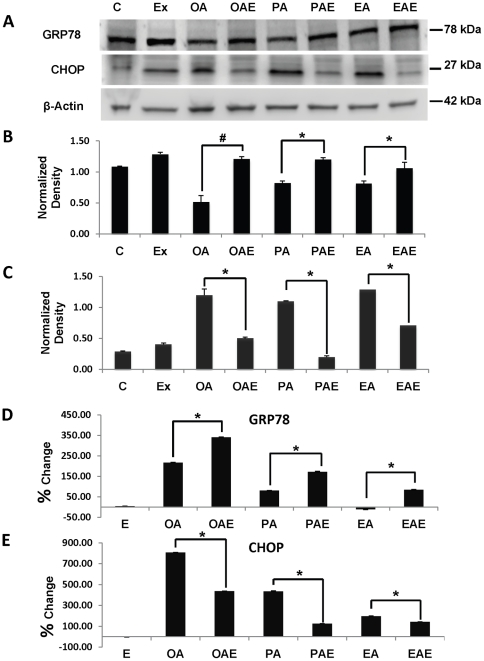
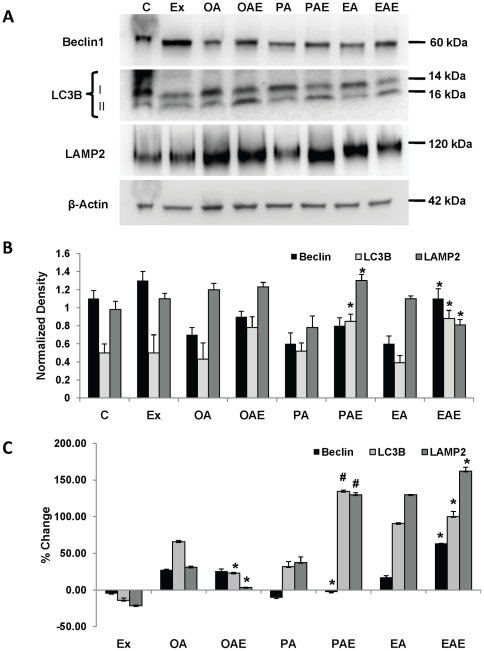
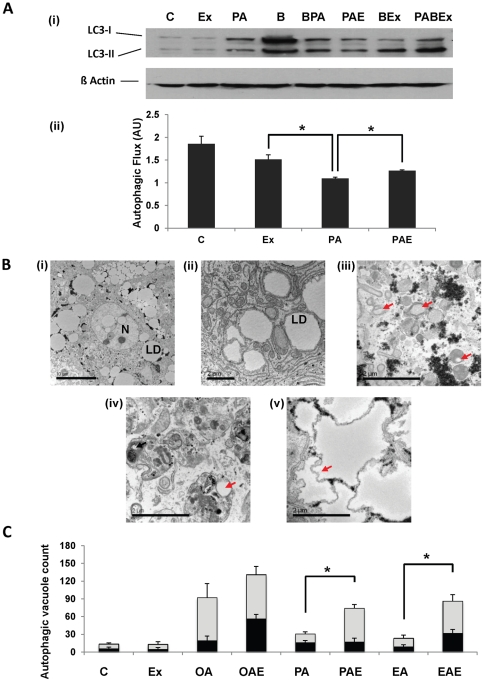
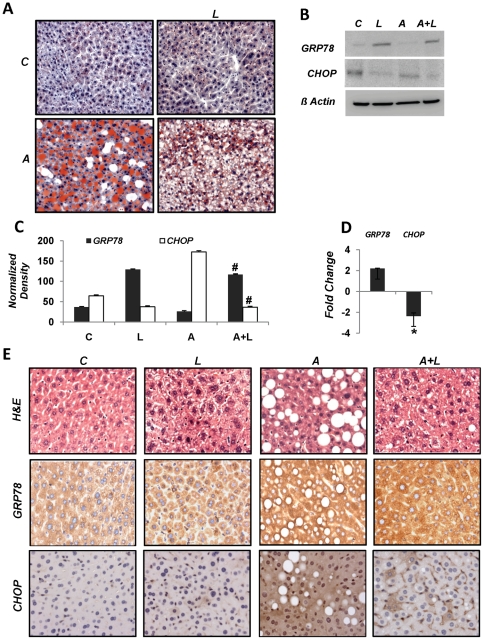
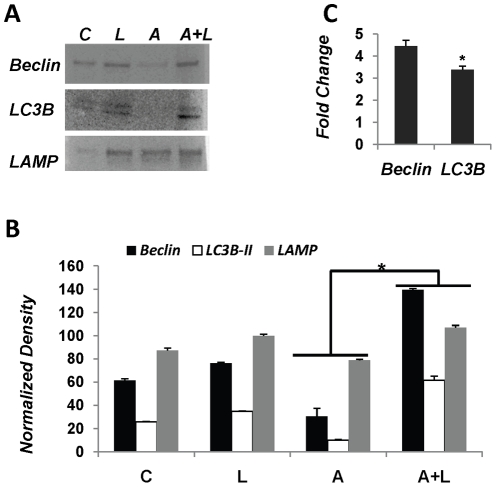
BACKGROUND: Nonalcoholic fatty liver disease (NAFLD) is a known outcome of hepatosteatosis. Free fatty acids (FFA) induce the unfolded protein response (UPR) or endoplasmic reticulum (ER) stress that may induce apoptosis. Recent data indicate ER stress to be a major player in the progression of fatty liver to more aggressive lesions. Autophagy on the other hand has been demonstrated to be protective against ER stress-induced cell death. We hypothesized that exendin-4 (GLP-1 analog) treatment of fat loaded hepatocytes can reduce steatosis by autophagy which leads to reduced ER stress-related hepatocyte apoptosis. METHODOLOGY/PRINCIPAL FINDINGS: Primary human hepatocytes were loaded with saturated, cis- and trans-unsaturated fatty acids (palmitic, oleic and elaidic acid respectively). Steatosis, induced with all three fatty acids, was significantly resolved after exendin-4 treatment. Exendin-4 sustained levels of GRP78 expression in fat-loaded cells when compared to untreated fat-loaded cells alone. In contrast, CHOP (C/EBP homologous protein); the penultimate protein that leads to ER stress-related cell death was significantly decreased by exendin-4 in hepatocytes loaded with fatty acids. Finally, exendin-4 in fat loaded hepatocytes clearly promoted gene products associated with macroautophagy as measured by enhanced production of both Beclin-1 and LC3B-II, markers for autophagy; and visualized by transmission electron microscopy (TEM). Similar observations were made in mouse liver lysates after mice were fed with high fat high fructose diet and treated with a long acting GLP-1 receptor agonist, liraglutide. CONCLUSIONS/SIGNIFICANCE: GLP-1 proteins appear to protect hepatocytes from fatty acid-related death by prohibition of a dysfunctional ER stress response; and reduce fatty acid accumulation, by activation of both macro-and chaperone-mediated autophagy. These findings provide a novel role for GLP-1 proteins in halting the progression of more aggressive lesions from underlying steatosis in humans afflicted with NAFLD.
Overview
The claims and statistics of this paper haven’t been checked yet.
Free: it reads the open-access text and checks the first 5 claims that cite a source we can check. Create a free account to check every claim.
Integrity signals
Registry
Cites
Statistics
Figures
Verification
Claims the paper makes
The claims and statistics of this paper haven’t been checked yet.
Free: it reads the open-access text and checks the first 5 claims that cite a source we can check. Create a free account to check every claim.
Claims other papers make about this one
Each is checked against this paper’s own text: does it say what the citing paper says it does?
The cited source says what the claim attributes to it.
In the citing paper
“The effect of GLP-1RA on hepatic steatosis was observed in several mice models (including leptin-deficient ob/ob mice, leptin receptor-deficient db/db mice, and high-fat diet (HFD) fed mice that showed a decrease after exenatide treatment [160,161,162] or liraglutide [163].”
From Gut-pancreas-liver Axis as a target for treatment of NAFLD/NASH (2020) · cites this paper as [163]
In the citing paper
“Indeed, in liraglutide-treated mice, the reduction in hepatic steatosis and endoplasmic reticulum oxidative stress occurred regardless of body weight loss (see below) [91,92].”
From GLP-1 Receptor Agonists in Non-Alcoholic Fatty Liver Disease: Current Evidence and Future Perspectives (2023) · cites this paper as [91]
In the citing paper
“A further protective mechanism that could explain the effects of GLP-1 RAs in NAFLD is represented by the potential role in preventing hepatocyte apoptosis [91].”
From GLP-1 Receptor Agonists in Non-Alcoholic Fatty Liver Disease: Current Evidence and Future Perspectives (2023) · cites this paper as [91]
In the citing paper
“Sharma et al. [91] demonstrated that GLP-1R stimulation is able to activate autophagy mechanisms and mitigate ER-stress mediated apoptosis, reducing the intrahepatocyte accumulation of fatty acids.”
From GLP-1 Receptor Agonists in Non-Alcoholic Fatty Liver Disease: Current Evidence and Future Perspectives (2023) · cites this paper as [91]
Self-check
Percentages, sums and reported differences re-computed from the paper’s own numbers.
The self-check needs the paper’s full text.
Citations
Cites
Autophagy regulates lipid metabolism
Singh, R., Kaushik, S., Wang, Y., Xiang, Y., Novak, I., Komatsu, M., Tanaka, K., Cuervo, A. M., & Czaja, M. J. (2009) · Nature · doi:10.1038/nature07976 · Cited by 3,975 · cited 3×
“Singh et al. (2009) recently demonstrated that a fatty acid load in mouse hepatocytes is reduced by macroautophagy [10].”
BackgroundInfluentialRegulation mechanisms and signaling pathways of autophagy
He, C., & Klionsky, D. J. (2009) · Annual Review of Genetics · doi:10.1146/annurev-genet-102808-114910 · Cited by 3,609 · cited 1×
“Depending upon the kind and severity of stress it is possible that autophagy may determine cell fate [32,33].”
BackgroundRoles of CHOP/GADD153 in endoplasmic reticulum stress
Oyadomari, S., & Mori, M. (2004) · Cell Death & Differentiation · doi:10.1038/sj.cdd.4401373 · Cited by 2,828 · cited 1×
“C/EBP homologous protein (CHOP) has been identified as a crucial link between a dysfunctional ER stress and apoptosis and is a highly expressed gene during ER stress [18].”
BackgroundProtein degradation and protection against misfolded or damaged proteins.
Goldberg, A. L. (2003) · Nature · doi:10.1038/nature02263 · Cited by 2,088 · cited 1×
“In addition to defective protein degradation, lysosomes have also been shown to degrade other intracellular components, including whole organelles, lipid deposits, proteinaceous inclusions and aggregates [8,9].”
BackgroundNonalcoholic steatohepatitis: association of insulin resistance and mitochondrial abnormalities
Sanyal, A. J., Campbell–Sargent, C., Mirshahi, F., Rizzo, W. B., Contos, M. J., Sterling, R. K., Luketic, V. A., Shiffman, M. L., & Clore, J. N. (2001) · Gastroenterology · doi:10.1053/gast.2001.23256 · Cited by 2,078 · cited 1×
“This concentration of fatty acids was similar fasting plasma concentrations of fatty acids under human nonalcoholic steatohepatitis conditions [43,44].”
BackgroundA placebo-controlled trial of pioglitazone in subjects with nonalcoholic steatohepatitis
Belfort, R., Harrison, S. A., Brown, K., Darland, C., Finch, J., Hardies, J., Balas, B., Gastaldelli, A., Tio, F., Pulcini, J., et al. (2006) · New England Journal of Medicine · doi:10.1056/nejmoa060326 · Cited by 1,827
Ron, D., & Habener, J. F. (1992) · Genes & Development · doi:10.1101/gad.6.3.439 · Cited by 1,168 · cited 1×
“However, it is robustly expressed by perturbations that induce stress [25].”
BackgroundProteolysis: from the lysosome to ubiquitin and the proteasome
Ciechanover, A. (2005) · Nature Reviews Molecular Cell Biology · doi:10.1038/nrm1552 · Cited by 1,133
Autophagy and aging: The importance of maintaining "clean" cells
Cuervo, A. M., Bergamini, E., Brunk, U. T., Dröge, W., Ffrench, M., & Terman, A. (2005) · Autophagy · doi:10.4161/auto.1.3.2017 · Cited by 792 · cited 1×
“Another type of autophagy, chaperone mediated autophagy (CMA) has also been demonstrated to reduce cell stress by removing proteins that have a signal sequence [11].”
BackgroundWei, Y., Wang, D., Topczewski, F., & Pagliassotti, M. J. (2006) · American Journal of Physiology-Endocrinology and Metabolism · doi:10.1152/ajpendo.00644.2005 · Cited by 735 · cited 2×
“Fatty acids are known to induce the unfolded protein response (UPR), a compensatory cellular mechanism to handle cell stress [7].”
Background
Cited by
Items 201–273 of 273
Madhu, D., Hammad, M. M., Kavalakatt, S., Khadir, A., & Tiss, A. (2017) · PROTEOMICS - CLINICAL APPLICATIONS · doi:10.1002/prca.201600169 · Cited by 9
Brea, Á., Pintó, X., Ascaso, J. F., Blasco, M., Rodríguez, Á. D., González‐Santos, P., Hernández‐Mijares, A., Mantilla, T., Millán, J., & Pedro‐Botet, J. (2016) · Clínica e Investigación en Arteriosclerosis · doi:10.1016/j.arteri.2016.06.002 · Cited by 9
Müller, F. A., Stamou, M., Englert, F. H., Frenzel, O., Diedrich, S., Suter‐Dick, L., Wambaugh, J. F., & Sturla, S. J. (2023) · Archives of Toxicology · doi:10.1007/s00204-023-03490-8 · Cited by 8
Berković, M. C., Režić, T., Bilić-Čurčić, I., & Mrzljak, A. (2022) · World Journal of Clinical Cases · doi:10.12998/wjcc.v10.i20.6759 · Cited by 10
Subcellular expression of CYP2E1 in HepG2 cells impacts response to free oleic and palmitic acid
Killingsworth, Z. K., Misare, K. R., Ryan, A. S., Ampolini, E. A., Mendenhall, T. T., Engevik, M. A., & Hartman, J. H. (2024) · Current Research in Toxicology · doi:10.1016/j.crtox.2024.100195 · Cited by 8
“These concentrations have been used previously for in vitro studies of lipid accumulation in primary hepatocytes (Sharma et al., 2011; Wanninger et al., 2011), HepG2 cells (Cui et al., 2010; G ´ omez-Lech ´ on et al., 2007), and HepaRG cells (Michaut et al., 2016).”
MethodBorges, R. D. S., de Abreu, E. S., Berton, G. G., de Paula, L. H., Conegundes, A. F., Martins, J. M. B., Martins, M. A. B., Dahbour, A., Fernandes, M. V., & Abdelmalek, M. F. (2025) · JHEP Reports · doi:10.1016/j.jhepr.2025.101708 · Cited by 14
Elsabagh, M., Taniguchi, D., Sugino, T., & Obitsu, T. (2016) · Animal Science Journal · doi:10.1111/asj.12614 · Cited by 9
Fontana, J., Kučera, O., Mezera, V., Anděl, M., & Červinková, Z. (2017) · Physiological Research · doi:10.33549/physiolres.933464 · Cited by 8
“Concurrently, only few studies evaluated effect of GLP-1 and its analogues on proliferation and apoptosis of hepatocytes in vitro (Aviv et al. 2009, Sharma et al. 2011) and to our best knowledge, there are no studies assessing the effect of GLP-1 analogues on liver regeneration induced by PHx.…”
BackgroundResultInfluentialAutophagy in Non-Alcoholic Fatty Liver Disease (NAFLD)
Kwanten, W. J., Martinet, W., & Francque, S. (2016) · InTech eBooks · doi:10.5772/64534 · Cited by 9
“In vivo there is also impaired adjustment of autophagy, as external lipid load by prolonged HFD decreases autophagy efficiency [31, 41, 42, 58].”
BackgroundMethodBrea, Á., Pintó, X., Ascaso, J. F., Blasco, M., Díaz, Á., González‐Santos, P., Hernández‐Mijares, A., Mantilla, T., Millán, J., & Pedro‐Botet, J. (2017) · Clínica e Investigación en Arteriosclerosis (English Edition) · doi:10.1016/j.artere.2017.07.001 · Cited by 6
GLP-1/GLP-1RAs: New Options for the Drug Treatment of NAFLD
Jiang, H., & Zang, L. (2024) · Current Pharmaceutical Design · doi:10.2174/0113816128283153231226103218 · Cited by 7
Badi, R. M., Khaleel, E. F., El-Bidawy, M. H., Satti, H. H., & Mostafa, D. G. (2020) · Folia Biologica · doi:10.14712/fb2020066050186 · Cited by 8
“Also, exendin-4 prevented hepatic steatosis in mice and improved their survival by promoting autophagy (Sharma et al., 2011).”
BackgroundZakaria, E. M., Abdel-Ghany, R. H., Elgharbawya, A. S., Alsemehb, A. E., & Metwally, S. S. (2023) · Life Sciences · doi:10.1016/j.lfs.2023.121509 · Cited by 9
Schütz, F., Longo, L., Keingeski, M. B., Filippi‐Chiela, E. C., Cruz, C. U., & Álvares‐da‐Silva, M. R. (2024) · World Journal of Hepatology · doi:10.4254/wjh.v16.i12.1468 · Cited by 6
Lee, W. (2017) · Endocrinology and Metabolism · doi:10.3803/enm.2017.32.1.1 · Cited by 6
Gut–Liver–Adipose (GLA) Modular Multi-Organ Chip for Disease Model of NAFLD
Kim, S. H., Kim, R., & Sung, J. H. (2025) · BioChip Journal · doi:10.1007/s13206-025-00248-5 · Cited by 5
Khalifa, O., & Arredouani, A. (2026) · Pharmaceuticals · doi:10.3390/ph19030408 · Cited by 8
Luetić, M., Kretzschmar, G., Grobe, M., Jerčić, L., Bota, I., Ivić, V., Balog, M., Zjalić, M., Uljević, M. V., Heffer, M., et al. (2021) · Acta Histochemica · doi:10.1016/j.acthis.2021.151817 · Cited by 6
3D microscaffolds with triple-marker sensitive nanoprobes for studying fatty liver disease in vitro
Rainu, S. K., & Singh, N. (2024) · Nanoscale · doi:10.1039/d4nr00434e · Cited by 4
Zheng, S., Huang, H., Chen, H., & Liu, Y. (2023) · Applied Biochemistry and Biotechnology · doi:10.1007/s12010-023-04505-x · Cited by 5
Silva, B. M., & Bragança, J. (2025) · World Journal of Stem Cells · doi:10.4252/wjsc.v17.i2.99331 · Cited by 4
Supaglutide alleviates hepatic steatosis in monkeys with spontaneous MASH
Wang, Q., Zhou, Y., Ni, Y., Wang, Z., Lou, Y.-R., Yang, Z., Gong, L., Liang, Y., Zeng, W., & Prud’homme, G. J. (2024) · Diabetology & Metabolic Syndrome · doi:10.1186/s13098-024-01513-7 · Cited by 4
Concepts and Treatment Approaches in Nonalcoholic Fatty Liver Disease
Marzio, D. H., & Fenkel, J. M. (2014) · Advances in Hepatology · doi:10.1155/2014/357965 · Cited by 4
Sleeve gastrectomy decreased hepatic lipid accumulation by inducing autophagy via AMPK/mTOR pathway
Zeng, R., Zeng, Y., Wang, Q., Li, X., Liu, J., Li, B., Zhang, G., & Hu, S. (2023) · Biochemical and Biophysical Research Communications · doi:10.1016/j.bbrc.2023.02.071 · Cited by 3
Castro, M. C., Villagarcía, H. G., Schinella, G. R., Massa, M. L., & Francini, F. (2023) · Biochimica et Biophysica Acta (BBA) - Molecular and Cell Biology of Lipids · doi:10.1016/j.bbalip.2023.159363 · Cited by 4
Mechanisms of Fibrosis in Steatohepatitis
Marra, F., Provenzano, A., & Vivoli, E. (2014) · Current Hepatology Reports · doi:10.1007/s11901-014-0228-4 · Cited by 4
Mahalingam, S., Kharbanda, K. K., Casey, C. A., & Rasineni, K. (2026) · Frontiers in Pharmacology · doi:10.3389/fphar.2026.1752204 · Cited by 3
“…an area of active debate within the field; while some studies report direct hepatocyte GLP-1R signaling (Shantaram et al., 2025; Hu et al., 2025; Sharma et al., 2011; Gupta et al., 2012; Ding et al., 2006; Wang et al., 2015), others suggest that many hepatic benefits may be indirect, mediated…”
Wang, X., Lu, G., Zhou, Y., & Zhao, G. (2026) · Journal of Endocrinological Investigation · doi:10.1007/s40618-026-02891-7 · Cited by 4
“…- sion of the protective chaperone GRP78 and substantially reduced the level of the proapoptotic transcription factor CHOP (analysis of the published data indicated approxi - mate changes of 80% and 56%, respectively), consequently attenuating ER stress and reducing hepatocyte apoptosis [88].”
Mohamed, M. M., Rashed, L. A., El-Boghdady, N. A., & Said, M. M. (2023) · PubMed Central · doi:10.52547/rbmb.12.1.42 · Cited by 2
Park, J., Kim, J. W., & Lim, S. (2025) · Annals of Nutrition and Metabolism · doi:10.1159/000547347 · Cited by 4
“…GLP-1RA treatment is associated with improvements in hepatic steatosis, alongside changes in various signaling pathways, including reductions in insulin resistance [23], inflammation [24, 25], and oxidative stress [26]; induction of Sirt1 expression [27, 28]; and promotion of autophagy [27].”
Bernsmeier, C., Meyer‐Gerspach, A. C., Blaser, L. S., Jeker, L., Steinert, R. E., Heim, M. H., & Beglinger, C. (2013) · Journal of Hepatology · doi:10.1016/s0168-8278(13)61317-3 · Cited by 2
Traitement de la stéatose et de la stéatohépatite non alcoolique par les traitements antidiabétiques
Vergès, B. L. (2017) · Médecine des Maladies Métaboliques · doi:10.1016/s1957-2557(17)30166-9 · Cited by 2
Endoplasmic reticulum stress in nonalcoholic fatty liver disease
Foufelle, F., & Ferré, P. (2015) · Wiley eBooks · doi:10.1002/9781118663387.ch10 · Cited by 1
Kahal, H. (2013) · Repository@Hull (Worktribe) (University of Hull) · Cited by 2
Das, S., Ravi, H., Babu, A., Banerjee, M., Ramasubbu, K., Sivaraman, D., Rajeswari, V. D., Venkatraman, G., & Ramanathan, G. (2024) · Advances in protein chemistry and structural biology · doi:10.1016/bs.apcsb.2023.12.017 · Cited by 1
Challenging the Dogma: Reversal of End-Stage Liver Fibrosis with Tirzepatide in MASH Cirrhosis
Nguyen, T.-D., Lam-Himlin, D. M., Lizaola‐Mayo, B., & Chascsa, D. M. H. (2025) · Transplantology · doi:10.3390/transplantology6030025 · Cited by 1
“GLP-1 RAs have been found to upregulate genes that mitigate dysfunctional endoplasmic reticulum stress responses, which can trigger apoptosis [12,13].”
Uriostegui-Campos, M. A., Castro-Murrieta, S. A., Lopez-Cesati, X. I., Colín-Delgado, R., Carballo-López, G. I., Cervantes-Luévano, K., Moreno‐Ulloa, A., & Castro-Ceseña, A. B. (2025) · RSC Advances · doi:10.1039/d5ra06552f · Cited by 2
Targeting ER Stress of GLP-1 Receptor Agonist in Diabetic Retinopathy
Huang, H., Wang, Y., Gao, S., Li, N., Zhong, Y., & Shen, X. P. (2025) · Biochemical Pharmacology · doi:10.1016/j.bcp.2025.117623 · Cited by 2
A Narrative Review of the Metabolic Benefits of GLP-1 and GIP Receptor Agonists in Obesity
Lee, A.-H., & Holmes-Walker, D. J. (2026) · Healthcare · doi:10.3390/healthcare14060734 · Cited by 2
“Similarly, there is both preclinical [60] and clinical evidence [61] to suggest that at least some of the improvements in MASLD outcomes are weight loss-independent.”
Котлярова, А. А., & Kotlyarov, S. N. (2026) · International Journal of Molecular Sciences · doi:10.3390/ijms27104453 · Cited by 1
“Classic 2D models of PHHs are represented by several protocols [175–178], which share a short exposure time (24 h) and the use of PA and/or OA as inducers.”
Leber und Diabetes: Leber als Opfer und Täter des metabolischen Syndroms
Jaeckel, E., Taubert, R., & Manns, M. P. (2014) · Der Diabetologe · doi:10.1007/s11428-014-1255-z · Cited by 2
Novel Therapeutics in Nonalcoholic Fatty Liver Disease: A Focus on Adult Stem Cells
Nandula, S. R., Nylén, E., & Sen, S. (2023) · Metabolic Syndrome and Related Disorders · doi:10.1089/met.2022.0069 · Cited by 3
“30 Both liraglutide and semaglutide studies are underway evaluating liver responses, as shown in Table 2.”
Fontana, J., Kučera, O., Anděl, M., & Červinková, Z. (2019) · General Physiology and Biophysics · doi:10.4149/gpb_2019016 · Cited by 2
“2). described previously in in vitro models of NAFLD/NASH induced by cultivation of primary human hepatocytes (Sharma et al. 2011), HepG2 cells (Lee et al. 2014) and primary cultures of rat hepatocytes (Moravcová et al. 2015) with different FA.”
BackgroundMethodInfluentialEndothelial dysfunction: basis for many local and systemic conditions
Münzel, T. F., Hahad, O., & Daiber, A. (2022) · Elsevier eBooks · doi:10.1016/b978-0-12-822546-2.00011-3 · Cited by 1
What is Non‐Alcoholic Fatty Liver Disease (NAFLD), and Why is it Important?
Farrell, G. C., McCullough, A. J., & Day, C. P. (2013) · Wiley eBooks · doi:10.1002/9781118556153.ch1 · Cited by 3
Exenatide Stimulates Hippocampal Autophagic Activity in Alzeheimer Rat ModelPreprint
Abdo, E., Saad, M. A., Firgany, A. E. D., Mosaad, Y. M., & Eldusoky, S. (2020) · Authorea · doi:10.22541/au.159103395.53489994
Glucagon-like peptide-1 in nonalcoholic steatohepatitis
Armstrong, M. J. (2014) · University of Birmingham Institutional Research Archive (University of Birmingham)
Current and Emerging Therapies for Nonalcoholic Fatty Liver Disease
Gawrieh, S., & Chalasani, N. (2015) · Springer eBooks · doi:10.1007/978-3-319-20538-0_16
Affect of late-onset prenatal care on antenatal diagnosis.
Bodurtha, J. N., Corey, L., & Nance, W. E. (1986) · Virginia medical
Taher, J. (2017) · TSpace (University of Toronto) · Cited by 1
The pathophysiology of gut–liver connection
Maroni, L., Fianchi, F., Miele, L., & Svegliati‐Baroni, G. (2021) · Elsevier eBooks · doi:10.1016/b978-0-12-821927-0.00002-4
Li, M., & Yang, L. (2021) · Elsevier eBooks · doi:10.1016/b978-0-12-822003-0.00014-0
Martjanova, M. V., Laevskaya, M. Y., Робертовна, М. А., Bregovskiy, V. B., & Babenko, A. Y. (2021) · Экспериментальная и клиническая гастроэнтерология · doi:10.31146/1682-8658-ecg-194-10-82-90
Kanamarlapudi, V. (2020) · Faculty Opinions – Post-Publication Peer Review of the Biomedical Literature · doi:10.3410/f.734616040.793572407
Efficacy and Safety of Therapeutic Proteins
Gupta, P. P., Parab, M. M., Chhajed, S. S., & Bastikar, V. A. (2023) · Springer eBooks · doi:10.1007/978-981-19-8249-1_10
Effect of Incretogenic Peptides on Non-Alcoholic Fatty Liver Disease
苏, 怡. (2023) · Advances in Clinical Medicine · doi:10.12677/acm.2023.1361396
Park, S. J., Ha, Y., Lee, J. H., Lee, K., & Chon, Y. E. (2024) · Research Square · doi:10.21203/rs.3.rs-4183955/v1
Mesbah, M. M., Rashed, L. A., El-Boghdady, N. A., & Said, M. M. (2023) · Reports of Biochemistry and Molecular Biology · doi:10.61186/rbmb.12.1.42 · Cited by 5
Impact of HCV elimination on metabolism markers in people living with HIV
de la Casa, A. D., Grande‐García, S., Arca-Lafuente, S., Llamas-Adán, M., Lara‐Aguilar, V., Martín‐Carbonero, L., Lagarde, M., Ryan, P., Santos, I. D. L., Fernández‐Rodríguez, A., et al. (2025) · Scientific Reports · doi:10.1038/s41598-025-99107-4
Sato, K., Irie, Y., Asai, H., Yoshioka, S., Murakawa, K., Sho, H., Inui, R., Kosugi, M., Hazama, Y., & Yasuda, T. (2025) · Internal Medicine · doi:10.2169/internalmedicine.6239-25 · Cited by 1
Huang, H.-L., Shi, S. Y., & Li, D. (2025) · Exploration of Endocrine and Metabolic Diseases · doi:10.37349/eemd.2025.101443
Deng, M., Wen, Y., Yan, J., Fan, Y., Wang, Z., Zhang, R., Ren, L., Ba, Y., Wang, H., Lu, Q., et al. (2023) · Figshare · doi:10.6084/m9.figshare.24580347
Gül, A., Özkan, H., Güvenç, M., & Çalışır, T. (2025) · Interdisciplinary Medical Journal · doi:10.17944/interdiscip.1782720
Effect of Submaximal-Dose Semaglutide on MASLD Biopsy-Free Scoring Systems in Patients with Obesity
Focko, B., Péč, M. J., Miertová, Z., Jurica, J., Miert, A., Kubikova, L., Tudík, P., Nagy, N., Lecký, P., Ságová, I., et al. (2026) · Livers · doi:10.3390/livers6010003
Modeling fatty liver disease and progression with stem cell derived hepatocytes
Wang, Y., Berlin, D., Li, Y., Ko, L. M., Qi, Z., Feng, J., Clark, C. T., Cheng, D., Andrade, M. J., Potma, E. O., et al. (2026) · Scientific Reports · doi:10.1038/s41598-025-34762-1 · Cited by 1
Pawlowski, V., Plaisance, V., Lucas, M., Giovanelli, E., Derasse, C., Barras, A., & Abderrahmani, A. (2026) · Pharmacological Reports · doi:10.1007/s43440-026-00828-8
Design and evaluation of therapeutic particles modulating autophagy
Zagkou, S. (2021) · theses.fr (ABES) · doi:10.70675/945352cczdaf3z45fczb8dezdc79d3ca5100
GLP-1 receptor and Mitochondria-ER Contact Sites: an emerging mechanism of metabolic regulation
Cruz, P., Puebla-Huerta, A., Troncoso, M. F., Silva-Pavez, E., Hidalgo, Y., & Ahumada-Castro, U. (2026) · Frontiers in Physiology · doi:10.3389/fphys.2026.1826699
“In hepatocytes, these mechanisms have been shown to enhance autophagy and the clearance of lipid droplets, which is critical for preventing the progression of MASH (Fang et al., 2020; Sharma et al., 2011).”
Effects of GLP-1 Receptor Agonist Exenatide on Mitochondrial Dysfunction After Spinal Cord Injury
Kishi, T., Katoh, H., Suyama, K., Hattori, N., Okada, K., & Watanabe, M. (2026) · Neurotrauma Reports · doi:10.1177/2689288x261454812
“Because GLP-1 receptor agonists have been reported to enhance the ER stress response in myocardial ischemia, cerebral ischemia, renal injury, and hepatic injury, 30 – 33 we focused on exenatide, a GLP-1 receptor agonist that can cross the blood – brain barrier, in the present SCI model.”
Maher, O. W., El-Sayed, N. M., El‐Awady, E., El-Orabi, N. F., & Radwan, A. (2026) · Biomedicines · doi:10.3390/biomedicines14081714 · Cited by 1
Foia, L. G., Goriuc, A., Luchian, I. A., Budală, D. G., Toma, V., Bogdán, M., Minea, B., & Ghemiș, L. (2026) · International Journal of Molecular Sciences · doi:10.3390/ijms27177917
“…that GLP-1 RAs may exert direct hepatoprotective effects by activating GLP-1 receptor signaling, thereby reducing intracellular triglyceride accumulation, enhancing autophagy, attenuating endoplasmic reticulum stress, and protecting hepatocytes against fatty acid-induced apoptosis [224,225].”
Chirapongsathorn, S., & Tacke, F. (2026) · Digestion · doi:10.1159/dig/acmag014
Metadata
- Authors
- Sharma, S., Mells, J. E., Fu, P. P., Saxena, N. K., & Anania, F. A.
- Affiliations
- Emory University (US)
- Corresponding author
- Anania, Frank A.
- Venue
- PLoS ONE
- Publisher
- Public Library of Science (PLoS)
- Published
- 2011-09-21
- Volume
- 6
- Issue
- 9
- Pages
- e25269
- ISSN
- 1932-6203 (ISSN-L)
- PMC
- PMC3177901
- OpenAlex
- W1973102191
- Cited by
- 272
- References
- 50
- Citations by year
- 2026: 13 · 2025: 16 · 2024: 19 · 2023: 21 · 2022: 14 · 2021: 15 · 2020: 21 · 2019: 14 · 2018: 14 · 2017: 20 · 2016: 26 · 2015: 13 · 2014: 26 · 2013: 19 · 2012: 18
- FWCI
- 15.60
- Type
- journal article
- Language
- en
- Open access
- gold
- doi.org
- Locations
- PLoS ONE (publishedVersion, cc-by)
- SSRN Electronic Journal (acceptedVersion)
- Europe PMC (PubMed Central) (publishedVersion, cc-by)
- PubMed Central (publishedVersion, cc-by)
- PubMed (publishedVersion)
- DOAJ (DOAJ: Directory of Open Access Journals) (submittedVersion)
- Figshare (submittedVersion, cc-by)
- Funders
- U.S. Department of Veterans Affairs (I01 BX001746)
- Emory University
- National Institutes of Health
- National Institute of Diabetes and Digestive and Kidney Diseases (K01DK077137, R24DK064399, R01DK075397, R01DK062092, R03DK089130)
- Topics
- Health Sciences › Medicine › Hepatology › Liver Disease Diagnosis and Treatment
- Life Sciences › Biochemistry, Genetics and Molecular Biology › Cell Biology › Endoplasmic Reticulum Stress and Disease
- Life Sciences › Biochemistry, Genetics and Molecular Biology › Cell Biology › Autophagy in Disease and Therapy
- Keywords
- GLP-1 analogues, exendin-4, liraglutide, non-alcoholic fatty liver disease, hepatocyte steatosis, endoplasmic reticulum stress, unfolded protein response, macroautophagy, hepatocyte apoptosis, free fatty acids, GRP78, CHOP, Beclin-1, LC3B, chaperone-mediated autophagy, high-fat high-fructose diet
- MeSH terms
- Exenatide, Endoplasmic Reticulum Chaperone BiP, Animals, Autophagy, Dietary Carbohydrates, Fatty Liver, Fructose, Humans, Life Style, Male, Mice, Inbred C57BL, Obesity, Peptides, Venoms, Survival Analysis, Apoptosis, Adipocytes, Hepatocytes, Mice, Glucagon-Like Peptide 1, Unfolded Protein Response, Diet, High-Fat, Endoplasmic Reticulum Stress
About these checks
Registry, retraction, Cites and statistics results are computed, not judged, with one exception: a printed reference that no index lists is read once by a model before it counts as a citation error. Claims are extracted by a model and kept only when their quote appears verbatim in the text; each cited source is then checked, with a model’s help, for whether it says what the claim relies on. Those verdicts can be wrong — read the claim’s quote and the cited source before relying on one.
Statistics and arithmetic are recomputed, not judged.
Confidence bands are shown only for fields calibrated on our annotated test set. None is calibrated yet, so no band is shown.
What counts as a claim ›How we measure confidence ›How we check this ›
Are you an author, or do you see a problem with this page? Request a review
Data sources
Bibliographic data: Semantic Scholar, OpenAlex, Crossref.
Contains information from the Semantic Scholar Academic Graph Datasets, made available under the ODC Attribution License (ODC-BY 1.0).
Semantic Scholar’s data is described in: Kinney, R., et al. (2023). The Semantic Scholar Open Data Platform. arXiv:2301.10140.
