

Sequence Analysis of the Human Virome in Febrile and Afebrile Children
Open accessThe DOI matches its Crossref record; 30 of the 30 references it cites were found in a registry or an index.
Abstract
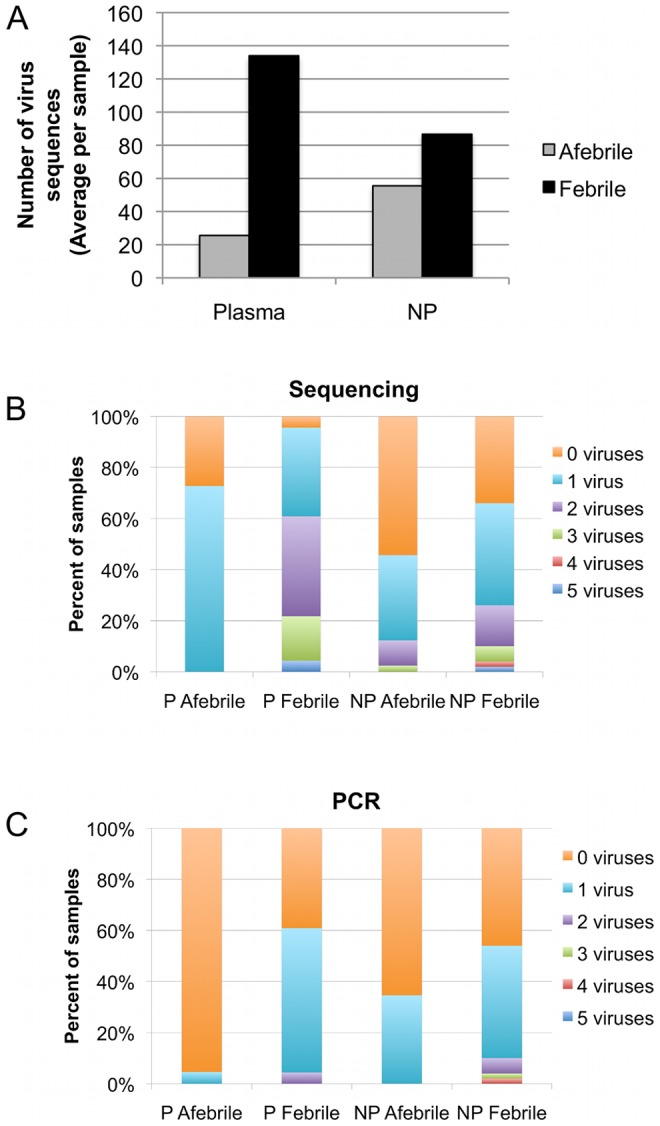
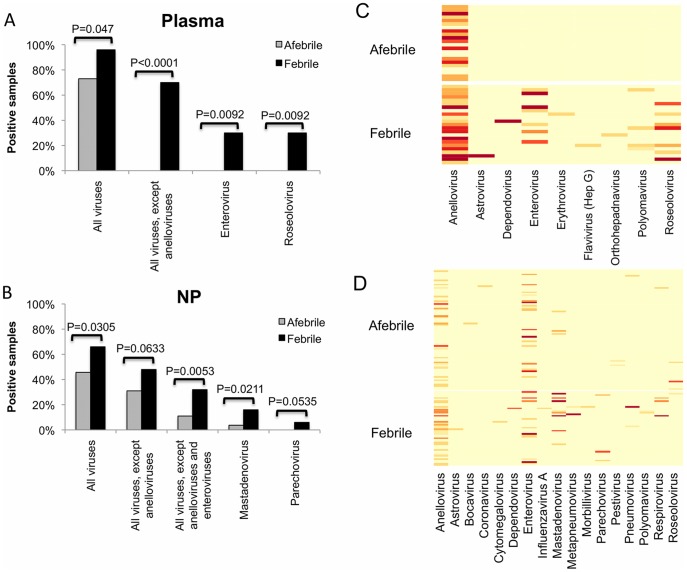
Unexplained fever (UF) is a common problem in children under 3 years old. Although virus infection is suspected to be the cause of most of these fevers, a comprehensive analysis of viruses in samples from children with fever and healthy controls is important for establishing a relationship between viruses and UF. We used unbiased, deep sequencing to analyze 176 nasopharyngeal swabs (NP) and plasma samples from children with UF and afebrile controls, generating an average of 4.6 million sequences per sample. An analysis pipeline was developed to detect viral sequences, which resulted in the identification of sequences from 25 viral genera. These genera included expected pathogens, such as adenoviruses, enteroviruses, and roseoloviruses, plus viruses with unknown pathogenicity. Viruses that were unexpected in NP and plasma samples, such as the astrovirus MLB-2, were also detected. Sequencing allowed identification of virus subtype for some viruses, including roseoloviruses. Highly sensitive PCR assays detected low levels of viruses that were not detected in approximately 5 million sequences, but greater sequencing depth improved sensitivity. On average NP and plasma samples from febrile children contained 1.5- to 5-fold more viral sequences, respectively, than samples from afebrile children. Samples from febrile children contained a broader range of viral genera and contained multiple viral genera more frequently than samples from children without fever. Differences between febrile and afebrile groups were most striking in the plasma samples, where detection of viral sequence may be associated with a disseminated infection. These data indicate that virus infection is associated with UF. Further studies are important in order to establish the range of viral pathogens associated with fever and to understand of the role of viral infection in fever. Ultimately these studies may improve the medical treatment of children with UF by helping avoid antibiotic therapy for children with viral infections.
Overview
The claims and statistics of this paper haven’t been checked yet.
Free: it reads the open-access text and checks the first 5 claims that cite a source we can check. Create a free account to check every claim.
Integrity signals
Registry
Cites
Statistics
Figures
Verification
Claims the paper makes
The claims and statistics of this paper haven’t been checked yet.
Free: it reads the open-access text and checks the first 5 claims that cite a source we can check. Create a free account to check every claim.
Claims other papers make about this one
Each is checked against this paper’s own text: does it say what the citing paper says it does?
The cited source says what the claim attributes to it.
In the citing paper
“For example, the recently discovered Anelloviridae family was identified as the most prevalent virus family in the virome of the URT54,55.”
From The microbiota of the respiratory tract: gatekeeper to respiratory health (2017) · cites this paper as [55]
The cited source says what the claim attributes to it.
In the citing paper
“However, recent advances in metagenomics have revealed that the entire respiratory virome contains many other viruses.”
From The microbiota of the respiratory tract: gatekeeper to respiratory health (2017) · cites this paper as [55]
Self-check
Percentages, sums and reported differences re-computed from the paper’s own numbers.
The self-check needs the paper’s full text.
Citations
Cites
Basic local alignment search tool
Altschul, S. F., Gish, W., Miller, W., Myers, E. W., & Lipman, D. J. (1990) · Journal of Molecular Biology · doi:10.1006/jmbi.1990.9999 · Cited by 98,669 · cited 1×
“gov/blast/db/) using WU-BLAST (BlastX) [31] with the following parameters: filter seg, W 6, WINK 6, nogap.”
Gapped BLAST and PSI-BLAST: a new generation of protein database search programs
Altschul, S. (1997) · Nucleic Acids Research · doi:10.1093/nar/25.17.3389 · Cited by 73,302 · cited 1×
“This was adapted from that used for the analysis of 454 sequences, which used BLASTn and tBLASTx [28] to align sequences to references in the NT database (ftp://ftp.”
Viruses in the faecal microbiota of monozygotic twins and their mothers
Reyes, A., Haynes, M., Hanson, N., Angly, F. E., Heath, A. C., Rohwer, F., & Gordon, J. I. (2010) · Nature · doi:10.1038/nature09199 · Cited by 1,194
The Marine Viromes of Four Oceanic Regions
Angly, F. E., Felts, B., Breitbart, M., Salamon, P., Edwards, R. A., Carlson, C., Chan, A. M., Haynes, M., Kelley, S., Liu, H., et al. (2006) · PLoS Biology · doi:10.1371/journal.pbio.0040368 · Cited by 952 · cited 1×
“Next generation sequencing technologies have been used successfully for viral metagenomic analyses [7–11] and discovery of novel viruses [13–15].”
Microarray-based detection and genotyping of viral pathogens
Wang, D., Coscoy, L., Zylberberg, M., Avila, P. C., Boushey, H. A., Ganem, D., & DeRisi, J. L. (2002) · Proceedings of the National Academy of Sciences · doi:10.1073/pnas.242579699 · Cited by 810 · cited 1×
“For samples from afebrile and febrile children, sequencing libraries were prepared to look for DNA and RNA viruses. DNA and RNA were prepared as previously described”
A Fast and Symmetric DUST Implementation to Mask Low-Complexity DNA Sequences
Morgulis, A., Gertz, E. M., Schäffer, A. A., & Agarwala, R. (2006) · Journal of Computational Biology · doi:10.1089/cmb.2006.13.1028 · Cited by 496 · cited 1×
“Low complexity sequences were then masked using Dust [29].”
Briese, T., Paweska, J. T., McMullan, L. K., Hutchison, S. K., Street, C., Palacios, G., Khristova, M. L., Weyer, J., Swanepoel, R., Egholm, M., et al. (2009) · PLoS Pathogens · doi:10.1371/journal.ppat.1000455 · Cited by 493 · cited 1×
“Virus discovery using high-throughput sequencing methods has been very productive in recent years”
MethodViral Discovery and Sequence Recovery Using DNA Microarrays
Wang, D., Urisman, A., Liu, Y.-T., Springer, M., Ksiazek, T. G., Erdman, D. D., Mardis, E. R., Hickenbotham, M., Magrini, V., Eldred, J., et al. (2003) · PLoS Biology · doi:10.1371/journal.pbio.0000002 · Cited by 465 · cited 1×
“DNA and RNA were prepared as previously described [26–27].”
Willner, D., Furlan, M., Haynes, M., Schmieder, R., Angly, F. E., Silva, J., Tammadoni, S., Nosrat, B., Conrad, D., & Rohwer, F. (2009) · PLoS ONE · doi:10.1371/journal.pone.0007370 · Cited by 441 · cited 1×
“Next generation sequencing technologies have been used successfully for viral metagenomic analyses [7–11] and discovery of novel viruses [13–15].”
Félix, M.-A., Ashe, A., Piffaretti, J., Wu, G., Nuez, I., Bélicard, T., Jiang, Y., Zhao, G., Franz, C. J., Goldstein, L. D., et al. (2011) · PLoS Biology · doi:10.1371/journal.pbio.1000586 · Cited by 416 · cited 1×
“Next generation sequencing technologies have been used successfully for viral metagenomic analyses [7–11] and discovery of novel viruses [13–15].”
Cited by
Items 101–194 of 194
Structure of the divergent human astrovirus MLB capsid spike
Delgado-Cunningham, K., López, T., Khatib, F., Arias, C. F., & DuBois, R. M. (2022) · Structure · doi:10.1016/j.str.2022.10.010 · Cited by 24
Neonatal Fc receptor is a functional receptor for classical human astrovirus
Haga, K., Tokui, T., Miyamoto, K., Takai‐Todaka, R., Kudo, S., Ishikawa, A., Ishiyama, R., Kato, A., Yokoyama, M., Katayama, K., et al. (2024) · Genes to Cells · doi:10.1111/gtc.13160 · Cited by 24
Precision monitoring of immunotherapies in solid organ and hematopoietic stem cell transplantation
DiLoreto, R., Khush, K. K., & Vlaminck, I. D. (2017) · Advanced Drug Delivery Reviews · doi:10.1016/j.addr.2017.06.009 · Cited by 21
“pathogenic in others; cfDNA may be of limited use in such cases as it lacks body-site specificity [199,208].”
BackgroundMorris, C. S., Lee, Y. S., & Yoon, S. (2021) · Current Opinion in Biotechnology · doi:10.1016/j.copbio.2021.06.027 · Cited by 25
Capai, L., Piorkowski, G., Maestrini, O., Casabianca, F., Masse, S., de Lamballerie, X. N., Charrel, R. N., & Falchi, A. (2022) · PLoS ONE · doi:10.1371/journal.pone.0260161 · Cited by 22
Mollerup, S., Asplund, M., Friis-Nielsen, J., Kjartansdóttir, K. R., Fridholm, H., Hansen, T. A., Herrera, J. A. R., Barnes, C. J., Jensen, R. H., Richter, S. R., et al. (2019) · The Journal of Infectious Diseases · doi:10.1093/infdis/jiz318 · Cited by 19
“With the introduction of high-throughput sequencing, description of the virome of various tissues of both healthy and diseased individuals has accelerated [4],[5],[6],[7],[8],[9],[10],[11],[12],[13], generating important knowledge about the viral species hosted by humans.”
Langat, S. K., Eyase, F. L., Bulimo, W., Lutomiah, J., Oyola, S. O., Imbuga, M., & Sang, R. C. (2021) · mSphere · doi:10.1128/msphere.00551-21 · Cited by 25
Cordey, S., Zanella, M.-C., Wagner, N., Turin, L., & Kaiser, L. (2018) · Journal of Medical Virology · doi:10.1002/jmv.25246 · Cited by 19
“[11] [12] [13] Here, we report the results of a one-year period-prevalence survey of novel and classical HAstV in URT samples collected in pediatric patients in a tertiary care hospital in Switzerland and describe the case presentations of two novel HAstV-positive patients.”
BackgroundConservation of streptococcal CRISPRs on human skin and saliva
Robles‐Sikisaka, R., Naidu, M., Ly, M., Salzman, J., Abeles, S. R., Boehm, T. K., & Pride, D. T. (2014) · BMC Microbiology · doi:10.1186/1471-2180-14-146 · Cited by 20
“Relative to their bacterial counterparts, there have been comparatively few studies characterizing human viral communities [3-9].”
BackgroundThe Human Virome: Implications for Clinical Practice in Transplantation Medicine
Tan, S. K., Relman, D. A., & Pinsky, B. A. (2017) · Journal of Clinical Microbiology · doi:10.1128/jcm.00489-17 · Cited by 19
“Despite this, metagenomic NGS approaches can still fail to 72 detect viral nucleic acids known to be present by a targeted molecular assay (17-19).”
BackgroundDetection of novel astroviruses MLB1 and MLB2 in the sera of febrile Tanzanian children
Cordey, S., Hartley, M., Keitel, K., Laubscher, F., Brito, F., Junier, T., Kagoro, F., Samaka, J., Masimba, J., Said, Z., et al. (2018) · Emerging Microbes & Infections · doi:10.1038/s41426-018-0025-1 · Cited by 19
Human Astrovirus MLB Replication In Vitro : Persistence in Extraintestinal Cell Lines
Vu, D., Bosch, A., Pintó, R. M., Ribes, E., & Guix, S. (2019) · Journal of Virology · doi:10.1128/jvi.00557-19 · Cited by 21
“Other unexpected clinical manifestations recently associated with human and animal astroviruses include respiratory tract infections (31–37), fever of unknown etiology (38, 39), hepatitis (40, 41), and severe gout in geese (42).”
BackgroundAdvanced Molecular Surveillance of Hepatitis C Virus
Rossi, L. M. G., Escobar‐Gutiérrez, A., & Rahal, P. (2015) · Viruses · doi:10.3390/v7031153 · Cited by 22
“Analysis of the human virome in febrile and afebrile children allowed the identification of a wide range of viruses that correlated with the outcome of disease, as well as virus subtyping [208].”
BackgroundKutikhin, A. G., Yuzhalin, A. E., & Брусина, Е. Б. (2014) · PubMed Central · doi:10.3205/dgkh000236 · Cited by 22
“In addition, the results of previous studies identified sequences related to members of families of the order Megavirales in human blood, nasopharyngeal samples, or stools [40], [41], [42], [43], [44], [45], [46].”
ResultIntroduction to Techniques and Methodologies for Characterizing the Human Respiratory Virome
Mitchell, A. B., & Glanville, A. R. (2018) · Methods in molecular biology · doi:10.1007/978-1-4939-8682-8_9 · Cited by 17
Maarala, A. I., Bzhalava, Z., Dillner, J., Heljanko, K., & Bzhalava, D. (2017) · Bioinformatics · doi:10.1093/bioinformatics/btx702 · Cited by 16
Wylie, T., & Wylie, K. M. (2021) · Microbiology Resource Announcements · doi:10.1128/mra.01468-20 · Cited by 14
Self-citationOgunbayo, A. E., Mogotsi, M. T., Sondlane, H., Nkwadipo, K. R., Sabiu, S., & Nyaga, M. M. (2022) · Viruses · doi:10.3390/v14112516 · Cited by 16
“Moreover, analysis of the human respiratory virome may reveal differences in viral species between patients with high/low disease severity and healthy individuals [12,14,20].”
BackgroundResultInfluentialInnovative engineering approaches to model host-microbiome interactions in vitro
Azamar, K. M. M., Sudi, S. D., Mohammadalizadeh, Z., Coffin, C., Parker, I., & Porras, A. M. (2025) · Advanced Drug Delivery Reviews · doi:10.1016/j.addr.2025.115677 · Cited by 15
In action—an early warning system for the detection of unexpected or novel pathogens
Santos, P. D., Ziegler, U., Szillat, K. P., Szentiks, C. A., Strobel, B., Skuballa, J., Merbach, S., Grothmann, P., Tews, B. A., Beer, M., et al. (2021) · Virus Evolution · doi:10.1093/ve/veab085 · Cited by 13
Spirometry filters can be used to detect exhaled respiratory viruses
Mitchell, A. B., Mourad, B., Tovey, E. R., Buddle, L., Peters, M. J., Morgan, L. C., & Oliver, B. G. G. (2016) · Journal of Breath Research · doi:10.1088/1752-7155/10/4/046002 · Cited by 14
Next Generation Sequencing Approaches to Characterize the Respiratory Tract Virome
Sandybayev, N. T., Beloussov, V., Strochkov, V. M., Solomadin, M., Granica, J., & Yegorov, S. (2022) · Microorganisms · doi:10.3390/microorganisms10122327 · Cited by 14
“A review of viruses found in the human respiratory tract under various pathological conditions [35] included picornaviruses—rhinoviruses A, B, and/or C [36], enteroviruses [37], parechovirus [38]; paramyxoviruses—respiratory syncytial virus [37], parainfluenza viruses 1–4 [39], metapneumovirus [40], measles virus [41]…”
BackgroundThe plasma virome in longitudinal samples from pregnant patients
Stout, M. J., Brar, A. K., Herter, B. N., Rankin, A. N., & Wylie, K. M. (2023) · Frontiers in Cellular and Infection Microbiology · doi:10.3389/fcimb.2023.1061230 · Cited by 12
“This is expected since this viruses is consistently the predominant virus in the blood starting during childhood (McElvania TeKippe et al., 2012; Wylie et al., 2012; Moustafa et al., 2017; Sloan et al., 2022).”
BackgroundSelf-citationBurrell, C. J., Howard, C. R., & Murphy, F. A. (2016) · Elsevier eBooks · doi:10.1016/b978-0-12-375156-0.00039-4 · Cited by 14
Respiratory viruses in mechanically ventilated patients: a pilot study
Nazareth, R., Chasqueira, M. D. J., Rodrigues, M.-L., Paulino, M. C., Conceição, C., Lêdo, L. S. A., Segura, Ú., Santos, M., Messias, A. M., Póvoa, P. M. S. R., et al. (2020) · BMC Pulmonary Medicine · doi:10.1186/s12890-020-1082-5 · Cited by 12
“There are few studies available in the literature on the characterization of the respiratory tract virome, especially of the lower airways [9] [10] [11] [12] [13] [14] .”
BackgroundRutvisuttinunt, W., Klungthong, C., Thaisomboonsuk, B., Chinnawirotpisan, P., Ajariyakhajorn, C., Manasatienkij, W., Phonpakobsin, T., Lon, C., Saunders, D., Wangchuk, S., et al. (2017) · Journal of Clinical Virology · doi:10.1016/j.jcv.2017.07.004 · Cited by 11
“Long sequence reads with high depth of coverage (DOC) are optimal to identify diverse types of viruses from various types of clinical specimens [29] [30] [31] [32] .”
Gato, W. E., Posick, C., Williams, A. A., & Mays, C. A. (2017) · Deviant Behavior · doi:10.1080/01639625.2017.1410373 · Cited by 12
“Louis, MO, analyzed the nasal microbiome of children presenting with fevers not explained by other causes (Wylie et al. 2012).”
BackgroundMethodRogers, G. B. (2017) · Emerging Topics in Life Sciences · doi:10.1042/etls20170043 · Cited by 10
Dias, M., Pattabiraman, C., Siddappa, S., Gowda, M., Shet, A., Smith, D. J., Muehlemann, B., Tamma, K., Solomon, T., Jones, T. C., et al. (2019) · Wellcome Open Research · doi:10.12688/wellcomeopenres.14438.2 · Cited by 8
“Unbiased metagenomic sequencing of clinical material 116 from patients with acute fever can overcome these limitations [3, 11].”
BackgroundFirst parechovirus reported case in Saudi Arabia in hospitalized immunocompromised adult patient
Alshammari, A., Alotaibi, J., Almaghrabi, R. S., Bawazeer, R. A., Althawadi, S., & Tayeb, H. T. (2024) · Virology Journal · doi:10.1186/s12985-024-02372-4 · Cited by 9
“Given these potential advantages, it is imperative to acknowledge that incorporating WGS into routine pathogen identification protocols can provide early diagnosis and prompt initiation of appropriate treatment [3–6].”
BackgroundPurcell, M., Ackland, J., Staples, K. J., Freeman, A. T., & Wilkinson, T. M. A. (2025) · European Respiratory Review · doi:10.1183/16000617.0284-2024 · Cited by 12
“The respiratory tract virome in health Much of our current understanding of the healthy respiratory virome derives from clinically well or asymptomatic individuals recruited to studies of acute and CLD [12, 17, 25 – 27, 60, 174, 176 – 180].”
InfluentialKatureebe, Y., Turyamureeba, S., Rahim, A., Eze, C. E., & Eze, V. H. U. (2023) · International Journal of Humanities Management and Social Science (IJ-HuMaSS) · doi:10.36079/lamintang.ij-humass-0602.600 · Cited by 24
The Roles of the 5′ and 3′ Untranslated Regions in Human Astrovirus Replication
Wildi, N., & Seuberlich, T. (2023) · Viruses · doi:10.3390/v15061402 · Cited by 7
Model Organisms Proteomics—From Holobionts to Human Nutrition
Tholey, A., Treitz, C., Kussmann, M., Bendixen, E., Schrimpf, S., & Hengartner, M. O. (2013) · PROTEOMICS · doi:10.1002/pmic.201370144 · Cited by 7
“natural competition or the transference of antibiotic resistance [10, 11], in addition to being a disease factor for the human host [12].”
BackgroundNucleic Acid-Based Screening of Maternal Serum to Detect Viruses in Women with Labor or PROM
Shah, A. A., Wang, D., & Hirsch, E. (2020) · Reproductive Sciences · doi:10.1007/s43032-019-00051-2 · Cited by 6
Pattabiraman, C., Dias, M., Siddappa, S., Gowda, M., Shet, A., Smith, D. J., Muehlemann, B., Tamma, K., Solomon, T., Jones, T. C., et al. (2018) · Wellcome Open Research · doi:10.12688/wellcomeopenres.14438.1 · Cited by 6
Foulongne, V. (2015) · Revue Francophone des Laboratoires · doi:10.1016/s1773-035x(15)72822-4 · Cited by 8
“De nombreuses études de métagénomique virale se sont intéressées à des situations pathologiques chez l’homme, et ont donc été conduites sur des échantillons provenant de patients présentant des diarrhées [17, 18], des pneumopathies [19], des fièvres inexpliquées [20] ou encore des pathologies tumorales [21, 22].”
Nikolskiy, M. A. (2014) · Russian Journal of Infection and Immunity · doi:10.15789/2220-7619-2013-1-15-20 · Cited by 5
The Respiratory Virome in Chronic Obstructive Pulmonary Disease
García-Núñez, M., Gallego, M., Montón, C., Capilla, S., Millares, L., Pomares, X., Espasa, M., Ferrari, R. G., Moyá, A., Monsó, E., et al. (2018) · Future Virology · doi:10.2217/fvl-2018-0027 · Cited by 5
Metagenomic Next-Generation Sequencing for Pathogen Detection and Identification
Miller, S. A., & Chiu, C. Y. (2018) · Springer eBooks · doi:10.1007/978-3-319-95111-9_25 · Cited by 8
Porto, B. N., & Moraes, T. J. (2021) · Expert Review of Respiratory Medicine · doi:10.1080/17476348.2021.1893168 · Cited by 9
Unveiling pathogens and contaminants: refining metagenomics for clinical diagnostics
Ibañez‐Lligoña, M., Colomer‐Castell, S., de Campos, C. F., González-Camuesco, A., Llauradó, A., Garcia-Larroy, J., Sánchez‐Tejerina, D., Rando‐Segura, A., Andrés, C., Esperalba, J., et al. (2026) · Frontiers in Microbiology · doi:10.3389/fmicb.2026.1786985 · Cited by 4
“…HPIV-3, RV and human coronavirus HKU1, possibly due to smaller genome sizes (Nayfach et al., 2020; Smits et al., 2015; Smits et al., 2014) and the nature of NP swabs, which typically exhibit lower levels of host nucleic acid background (Wylie et al., 2012), thereby improving signal-to-noise ratios.”
Identification and characterization of novel CRESS-DNA viruses in the human respiratory tract
Zhang, H., Fu, Y., Cao, C., Jiang, H., Tang, R., Dai, Z., & Zhang, W. (2025) · Virology Journal · doi:10.1186/s12985-025-02742-6 · Cited by 4
Mora, M., Wicaksono, W. A., Egamberdieva, D., Krause, R. G. E., Martínez, J. L., Cernava, T., & Berg, G. (2021) · The Science of The Total Environment · doi:10.1016/j.scitotenv.2021.148494 · Cited by 4
“For such applications, short-read high-throughput sequencing allows to perform viral community profiling, detection of rare and even novel viruses (Cheval et al., 2011; Wylie et al., 2012; Zhang et al., 2021).”
InfluentialYao, X. H., Zou, X., & Cao, B. (2025) · Advanced Genetics · doi:10.1002/ggn2.202500022 · Cited by 5
Human Herpes virus 7 infections in children. Clinical and laboratory aspects
Роальдовна, Ф. Г., Алексеевич, А. В., & Musina, A. R. (2021) · Journal Infectology · doi:10.22625/2072-6732-2020-12-5-114-122 · Cited by 3
Coronaviruses in children with febrile neutropenia
Alvares, P. A., Berezin, E. N., Botelho, A. C. A., Tiemi, D., Spinardi, J., Maruyama, C., Bruniera, P., Passos, S. D., & Mimiça, M. J. (2013) · The Brazilian Journal of Infectious Diseases · doi:10.1016/j.bjid.2013.07.009 · Cited by 3
“In 18 of the 23 episodes, a clinical diagnosis of infection was possible, including upper respiratory infection (5) oral candidiasis (5), gastrointestinal infection (3), catheter-related infection (2), lower respiratory tract infection (1), herpes zoster (1), and necrotizing fasciitis (1).”
BackgroundReyes, A. C., Egwu, E., Yu, E., Sanchez, A. N., Linda De La, O., Elijah, O. E., Muschalek, T. J., Zhang, W., Ji, H., Ehsan, H., et al. (2020) · Gene · doi:10.1016/j.gene.2020.145335 · Cited by 4
Investigators' Perspectives on Translating Human Microbiome Research into Clinical Practice
Slashinski, M. J., Whitney, S. N., Achenbaum, L. S., Keitel, W., McCurdy, S., & McGuire, A. L. (2013) · Public Health Genomics · doi:10.1159/000350308 · Cited by 4
Uncovering the hidden villain within the human respiratory microbiome
Lee, C. K., & Bent, S. J. (2014) · Diagnosis · doi:10.1515/dx-2014-0039 · Cited by 6
“Among the disease-specific studies, there were two comparative studies which differentiate the respiratory virome compositions between the healthy and disease states to identify distinctive virome patterns [11, 63].”
BackgroundProbe-based metagenomic pathogen detection: advancing laboratory capacity for complex diagnosis
Ferreira, R., Coelho, L., Santos, J. D., Sobral, D., Isidro, J., Mixão, V., Pinto, M., Nunes, A., Borrego, M. J., Lopo, S., et al. (2025) · Frontiers in Microbiology · doi:10.3389/fmicb.2025.1656831 · Cited by 3
“%) of all generated sequences have host origin (Wylie et al., 2012; Hasan et al., 2016; Salzberg et al., 2016; Mongkolrattanothai et al., 2017), with a residual proportion of sequences deriving from microorganisms, which may include the actual pathogen(s), resident microbiota or even contaminant…”
Developments and insights into the analysis of the human microbiome
Rücker, O., Dangel, A., & Klein, H. (2013) · Journal of Laboratory Medicine · doi:10.1515/labmed-2013-0018 · Cited by 2
“In the mentioned study, advantages of both long read lengths and a highsequencing depth were elucidated [40].”
BackgroundNokhova, A., Dubovitskiy, N., Derko, A., Khozyainova, A., Kurskaya, O., Shestopalov, A., & Sharshov, K. (2025) · Acta virologica · doi:10.3389/av.2025.13512 · Cited by 2
“…as it is usually associated with gastrointestinal disorders (Finkbeiner et al., 2009; Kapoor et al., 2009), however there are also some studies reporting the presence of this virus in nasopharyngeal swabs from febrile children (Wylie et al., 2012; Cordey et al., 2016; Cordey et al., 2018).”
Guo, K., Li, L., Zhang, Q., Yu, J., & Yan, Y. (2019) · Evolutionary Bioinformatics · doi:10.1177/1176934319864922 · Cited by 2
van Boheemen, S., van Rijn, A. L., Pappas, N., Carbo, E. C., Vorderman, R. H. P., Hof, P. V. ‘., Mei, H., Claas, E. C. J., Kroes, A. C. M., & de Vries, J. J. C. (2018) · bioRxiv (Cold Spring Harbor Laboratory) · doi:10.1101/492835 · Cited by 2
“98 After bioinformatics classification, the challenge remains to discriminate between viruses that 99 play a role in aetiology and bona fide viruses [16].”
MethodHPD-Kit: a comprehensive toolkit for pathogen detection and analysis
Que, T., Li, W., Zhang, Z., He, Y., He, K., Qiu, H. Y., Huang, J., Lü, Z., Jiang, C., Huang, Y., et al. (2025) · Frontiers in Cellular and Infection Microbiology · doi:10.3389/fcimb.2025.1580165 · Cited by 1
“Due to its broad-spectrum, mNGS typically generates over 99% host-derived reads (Kostic et al., 2012; Wylie et al., 2012).”
Langenfeld, K. L., Arts, P. J., Monahan, A., Criswell, A., Wigginton, K. R., & Duhaime, M. B. (2026) · mSphere · doi:10.1128/msphere.00113-26 · Cited by 1
“However, the few prior studies on nasal cavity viruses resulted in a small number of vOTUs, suggesting low viral richness (41, 50).”
Ensemble Deep Learning Models on Raw DNA Sequences for Viral Genome Identification in Human Samples
Nat, M. D., Boscolo, S., Gallo, S. P., Nanni, L., & Fusaro, D. (2026) · Sensors · doi:10.3390/s26072238 · Cited by 2
“Virome composition varies across individuals and has been linked to disease, yet its full influence on human health remains incompletely understood [11,12].”
Feletti, R., Mori, A., Zaffagnini, A., Castilletti, C., & Pomari, E. (2026) · Microorganisms · doi:10.3390/microorganisms14050969 · Cited by 2
“…specific viral families—notably Anelloviridae, Adenoviridae and Polyomaviridae —particularly in severe or immunologically compromised settings, suggesting that acute viral infection may disrupt the virome and reduce immune control over commensal or persistent viruses [52,136,150,151,155,159,160].”
Lung Microbiome Diversity, Infection Dynamics, and Microbe‐Mediated Cross‐Protection
Arooj, S., Zubair, A., Batool, S. Z., Niaz, G., Ali, M., Waheed, Y., Elsharkawy, E. R., & Afghan, N. (2026) · MicrobiologyOpen · doi:10.1002/mbo3.70349 · Cited by 1
“Research has shown that the airways of healthy children and adults contain a mix of DNA and RNA viruses, including bacteriophages, highlighting that the lungs host a complex and diverse viral community, even during infection (Willner et al. 2009; Wylie et al. 2012).”
da Silva, A. S., de Campos, G. M., Altizani, G. M., Carvalho, E., Barros, A. C., Cella, E., Kashima, S. H., Sampaio, S. C., Elias, M. C., Giovanetti, M., et al. (2025) · Viruses · doi:10.3390/v17030345 · Cited by 1
“Furthermore, it underscores the need for further investigation into emerging or previously unsuspected viruses that may contribute to this severe condition.”
Parechovirus como agente etiológico de meningitis y/o sepsis viral en lactantes
Gutiérrez, V., Martínez-Valdebenito, C., Montecinos, L., Alarcón, R., Gárate, C., & Ferrés, M. (2016) · Revista chilena de infectología · doi:10.4067/s0716-10182016000400002 · Cited by 4
Viruses and the lung microbiome
Flight, W. G., Turkington, C. J. R., & Clokie, M. R. J. (2019) · European Respiratory Society eBooks · doi:10.1183/2312508x.10016018 · Cited by 2
Next-Generation Sequencing in Clinical Virology
van Rijn, A. L., de Vries, J. J. C., & Claas, E. C. J. (2021) · Springer eBooks · doi:10.1007/978-3-030-62155-1_6 · Cited by 2
Tu, N. T. K. (2021) · Helda - University of Helsinki Institutional Repository · Cited by 2
Nokhova, A. R., Dubovitskiy, N., Derko, A., Khozyainova, A. A., Kurskaya, O., Shestopalov, A. M., & Sharshov, K. (2024) · Preprints.org · doi:10.20944/preprints202404.1211.v1 · Cited by 1
Vogl, I., Benet‐Pagès, A., Eck, S. H., Kuhn, M., Vosberg, S., Greif, P. A., Metzeler, K. H., Biskup, S., Müller‐Reible, C., & Klein, H. (2013)
Nikolskiy, M. A. (2013)
The Future of Periprosthetic Joint Infections
George, D. A., & Haddad, F. S. (2016) · Springer eBooks · doi:10.1007/978-3-319-30091-7_29
The Human Microbiome and Clinical Immunology
Bushman, F. D. (2016) · ASM Press eBooks · doi:10.1128/9781555818722.ch3
mBLAST: Keeping up with the Sequencing Explosion for (Meta) Genome
Kota, K., Baldhandapani, V., Gong, W., Abubucker, S., Becker, E., Martin, J. C., Wylie, K. M., Radhika, K. R., Hudson, M. E., Weinstock, G. M., et al. (2013)
Self-citationRespiratory Epithelial Cells in Innate Immunity against Respiratory Viruses
Rodriguez-Mier, D., Torres-López, E., Salinas-Carmona, M. C., & Rosas-Taraco, A. G. (2021) · Medicina Universitaria · doi:10.24875/rmu.m18000004
Characterization of emerging novel human astrovirus: form bedside to bench
Cantero, D.-L. V. (2020) · Dipòsit Digital de la Universitat de Barcelona (Universitat de Barcelona)
The development of the respiratory microbiota in infants and children
Powell, E. A. (2019) · doi:10.25560/82376
Bronchoalveolar Lavage: Microbial Evaluation
Downes, K. J., Bouso, J. M., & Planet, P. J. (2020) · Respiratory medicine · doi:10.1007/978-3-030-54924-4_9 · Cited by 1
Using mosquito excreta to enhance mosquito-borne disease surveillance
Ramírez, A. L. (2019) · ResearchOnline - JCU (James Cook University) · doi:10.25903/mdqe-vc16
Fernández, G., & Dary, L. (2021)
Virome: Sentinels or Marauders in the Microbiome
Nag, J., Kumar, N. A., Mukesh, R. K., Kunnakkadan, U., & Johnson, J. B. (2022) · Springer eBooks · doi:10.1007/978-981-16-7672-7_10
Faculty Opinions recommendation of The vaginal eukaryotic DNA virome and preterm birth.
Larsen, B. (2018) · Faculty Opinions – Post-Publication Peer Review of the Biomedical Literature · doi:10.3410/f.733200403.793546190
Virome in the context of health and pathology of the human respiratory system
Стома, И. О. (2023) · Health and Ecology Issues · doi:10.51523/2708-6011.2022-19-4-01
Understanding virus–bacteria–human tripartite interactions: strategies and challenges
Yadav, A., Shinde, P. B., Ahlawat, S., & Sharma, K. K. (2023) · Elsevier eBooks · doi:10.1016/b978-0-323-95332-0.00006-5 · Cited by 1
Zhao, Y., Dai, Z., Zhang, W., Lei, Z., Wang, A., Fan, L., & Gao, S.-H. (2024) · Elsevier eBooks · doi:10.1016/b978-0-443-14170-6.00034-2 · Cited by 1
Commensal virome and mycobiome
Zárate, S. (2024) · Elsevier eBooks · doi:10.1016/b978-0-323-90144-4.00007-0
Novel murine model of human astrovirus infection reveals cardiovascular tropism
Owen, M. C., Zhou, Y., Dudley, H. M., Feehley, T., Hahn, A., Yokoyama, C. C., Axelrod, M. L., Lin, C., Wang, D., & Janowski, A. B. (2025) · Journal of Virology · doi:10.1128/jvi.00240-25
Diagnosis and Treatment of Chronic Skin Infection Caused by Scedosporium apiospermum
Zhang, Q., Zou, X., Zhou, H., Dong, Y., Alhaskawi, A., Zhou, W., & Lu, H. J. (2025) · Journal of Visualized Experiments · doi:10.3791/68901 · Cited by 1
Recherche et caractérisation des virus entérotropes excrétés par les primates d'Afrique Centrale
Mombo, I. M. (2015) · theses.fr (ABES) · doi:10.70675/bb03c69aze7aez4c4dz8125z177edb9ac61e
周, 梓. (2026) · Advances in Clinical Medicine · doi:10.12677/acm.2026.1641707
Astrovirus infection dysregulates goblet cell-associated antigen passages
Gulman, J., Heredia-Osuna, N., Ohanyan, M., Poot, A., Vargas, C., Auerbuch, V., McDonald, K. G., Newberry, R. D., & Cortez, V. A. (2026) · iScience · doi:10.1016/j.isci.2026.117046
Human astroviruses: molecular virology
Lentz, A., López, T., Ykema, M., Tao, Y. J., DuBois, R. M., & Arias, C. F. (2026) · Microbiology and Molecular Biology Reviews · doi:10.1128/mmbr.00255-25
“Both classical and non-classical astroviruses have been detected in respiratory specimens from young children and immunocompromised patients with mild symptoms such as cough, rhinorrhea, or odynophagia (24, 33, 38–40).”
Vaginal Virome and Preterm Birth (See companion study SDY1206)
Stout, M. (2019) · ImmPort · doi:10.21430/m31k9qn0om
Metadata
- Authors
- Wylie, K. M., Mihindukulasuriya, K. A., Sodergren, E., Weinstock, G. M., & Storch, G. A.
- Affiliations
- Washington University in St. Louis (US)
- Corresponding author
- Wylie, Kristine M.
- ORCID
- Venue
- PLoS ONE
- Publisher
- Public Library of Science (PLoS)
- Published
- 2012-06-13
- Volume
- 7
- Issue
- 6
- Pages
- e27735
- ISSN
- 1932-6203 (ISSN-L)
- PMC
- PMC3374612
- OpenAlex
- W2130734615
- Cited by
- 193
- References
- 30
- Citations by year
- 2026: 8 · 2025: 10 · 2024: 5 · 2023: 6 · 2022: 9 · 2021: 18 · 2020: 14 · 2019: 14 · 2018: 25 · 2017: 17 · 2016: 15 · 2015: 12 · 2014: 16 · 2013: 20 · 2012: 4
- FWCI
- 12.35
- Type
- journal article
- Language
- en
- Open access
- gold
- doi.org
- Locations
- PLoS ONE (publishedVersion, cc-by)
- PubMed Central (publishedVersion, cc-by)
- PubMed (publishedVersion)
- Digital Commons@Becker (Washington University School of Medicine) (submittedVersion)
- DOAJ (DOAJ: Directory of Open Access Journals) (submittedVersion)
- Figshare (submittedVersion, cc-by)
- Funders
- National Institutes of Health (UL1TR000448)
- National Human Genome Research Institute (U54HG003079, U54HG004968)
- National Institute of Allergy and Infectious Diseases (1UAH2AI083266-01, UH2AI083266)
- National Center for Research Resources (UL1RR024992)
- National Center for Advancing Translational Sciences
- Topics
- Health Sciences › Medicine › Epidemiology › Respiratory viral infections research
- Health Sciences › Medicine › Pediatrics, Perinatology and Child Health › Literature Analysis and Criticism
- Health Sciences › Medicine › Infectious Diseases › Viral Infections and Immunology Research
- Keywords
- fever of unknown origin, virome, viral infection, children, nasopharyngeal swab, plasma viral RNA, adenovirus, enterovirus, disseminated infection, viral subtyping
- MeSH terms
- Child, DNA, Viral, Fever, Humans, Viruses, Case-Control Studies, Polymerase Chain Reaction, Sequence Analysis, DNA
About these checks
Registry, retraction, Cites and statistics results are computed, not judged, with one exception: a printed reference that no index lists is read once by a model before it counts as a citation error. Claims are extracted by a model and kept only when their quote appears verbatim in the text; each cited source is then checked, with a model’s help, for whether it says what the claim relies on. Those verdicts can be wrong — read the claim’s quote and the cited source before relying on one.
Statistics and arithmetic are recomputed, not judged.
Confidence bands are shown only for fields calibrated on our annotated test set. None is calibrated yet, so no band is shown.
What counts as a claim ›How we measure confidence ›How we check this ›
Are you an author, or do you see a problem with this page? Request a review
Data sources
Bibliographic data: Semantic Scholar, OpenAlex, Crossref.
Contains information from the Semantic Scholar Academic Graph Datasets, made available under the ODC Attribution License (ODC-BY 1.0).
Semantic Scholar’s data is described in: Kinney, R., et al. (2023). The Semantic Scholar Open Data Platform. arXiv:2301.10140.
