

Sequence Analysis of the Human Virome in Febrile and Afebrile Children
Open accessThe DOI matches its Crossref record; 30 of the 30 references it cites were found in a registry or an index.
Abstract
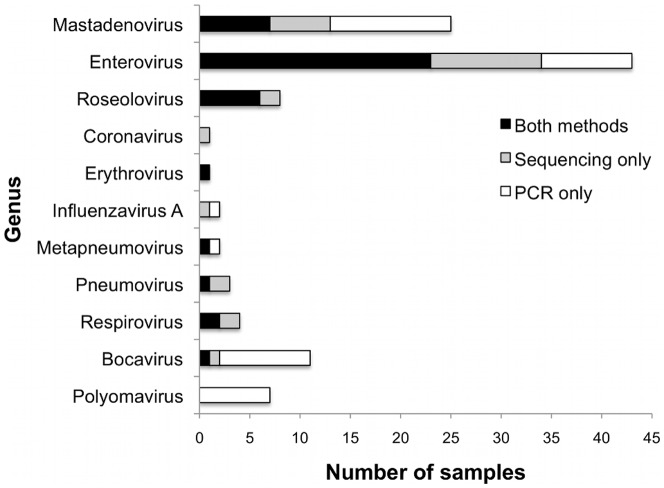
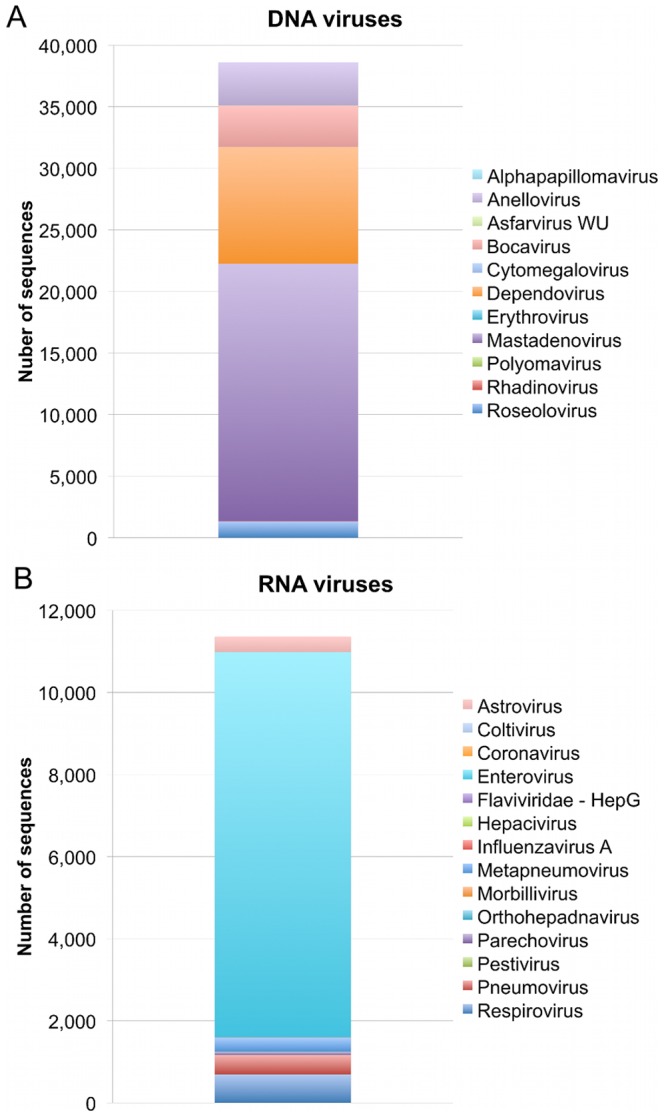
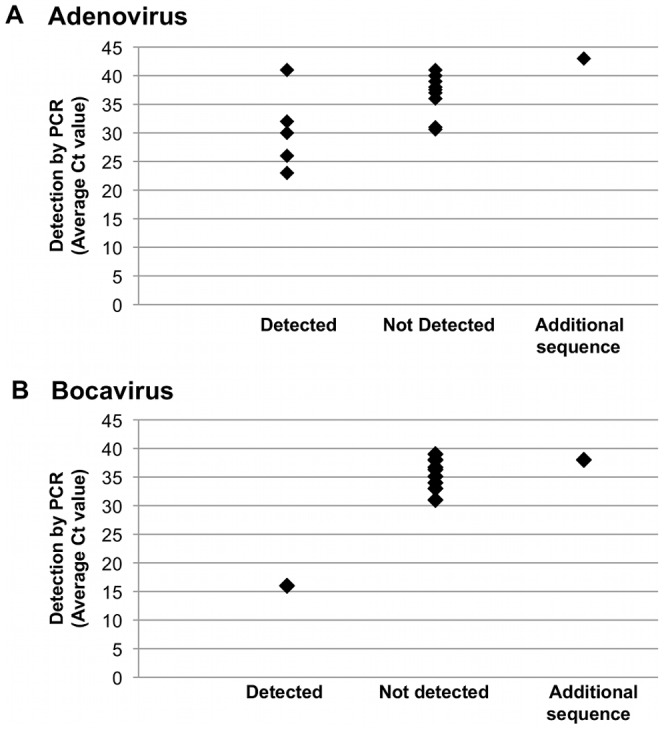
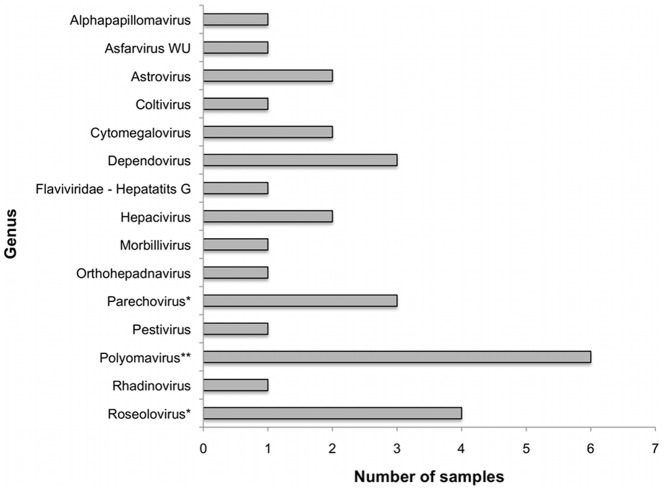
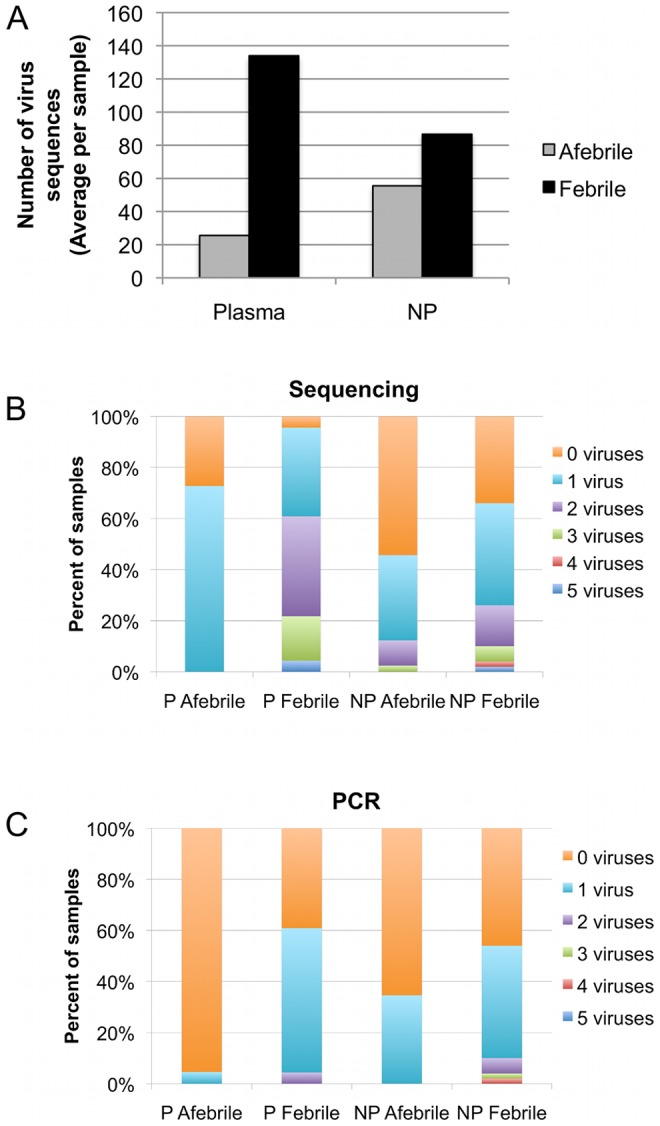
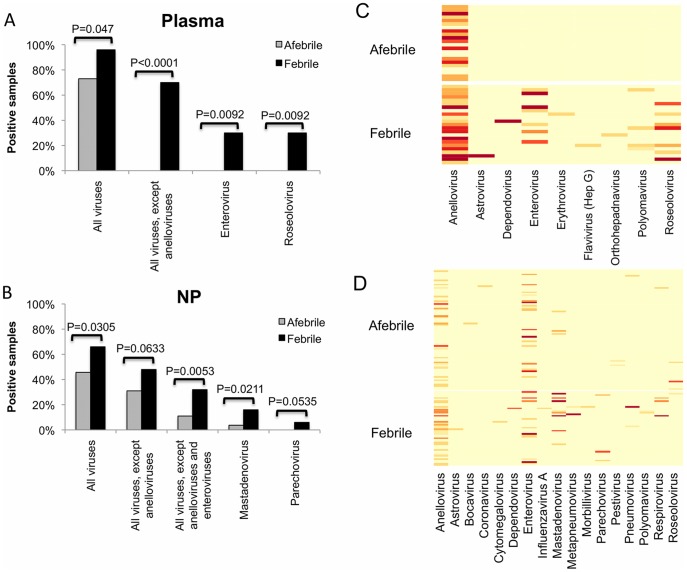
Unexplained fever (UF) is a common problem in children under 3 years old. Although virus infection is suspected to be the cause of most of these fevers, a comprehensive analysis of viruses in samples from children with fever and healthy controls is important for establishing a relationship between viruses and UF. We used unbiased, deep sequencing to analyze 176 nasopharyngeal swabs (NP) and plasma samples from children with UF and afebrile controls, generating an average of 4.6 million sequences per sample. An analysis pipeline was developed to detect viral sequences, which resulted in the identification of sequences from 25 viral genera. These genera included expected pathogens, such as adenoviruses, enteroviruses, and roseoloviruses, plus viruses with unknown pathogenicity. Viruses that were unexpected in NP and plasma samples, such as the astrovirus MLB-2, were also detected. Sequencing allowed identification of virus subtype for some viruses, including roseoloviruses. Highly sensitive PCR assays detected low levels of viruses that were not detected in approximately 5 million sequences, but greater sequencing depth improved sensitivity. On average NP and plasma samples from febrile children contained 1.5- to 5-fold more viral sequences, respectively, than samples from afebrile children. Samples from febrile children contained a broader range of viral genera and contained multiple viral genera more frequently than samples from children without fever. Differences between febrile and afebrile groups were most striking in the plasma samples, where detection of viral sequence may be associated with a disseminated infection. These data indicate that virus infection is associated with UF. Further studies are important in order to establish the range of viral pathogens associated with fever and to understand of the role of viral infection in fever. Ultimately these studies may improve the medical treatment of children with UF by helping avoid antibiotic therapy for children with viral infections.
Overview
The claims and statistics of this paper haven’t been checked yet.
Free: it reads the open-access text and checks the first 5 claims that cite a source we can check. Create a free account to check every claim.
Integrity signals
Registry
Cites
Statistics
Figures
Verification
Claims the paper makes
The claims and statistics of this paper haven’t been checked yet.
Free: it reads the open-access text and checks the first 5 claims that cite a source we can check. Create a free account to check every claim.
Claims other papers make about this one
Each is checked against this paper’s own text: does it say what the citing paper says it does?
The cited source says what the claim attributes to it.
In the citing paper
“For example, the recently discovered Anelloviridae family was identified as the most prevalent virus family in the virome of the URT54,55.”
From The microbiota of the respiratory tract: gatekeeper to respiratory health (2017) · cites this paper as [55]
The cited source says what the claim attributes to it.
In the citing paper
“However, recent advances in metagenomics have revealed that the entire respiratory virome contains many other viruses.”
From The microbiota of the respiratory tract: gatekeeper to respiratory health (2017) · cites this paper as [55]
Self-check
Percentages, sums and reported differences re-computed from the paper’s own numbers.
The self-check needs the paper’s full text.
Citations
Cites
Basic local alignment search tool
Altschul, S. F., Gish, W., Miller, W., Myers, E. W., & Lipman, D. J. (1990) · Journal of Molecular Biology · doi:10.1006/jmbi.1990.9999 · Cited by 98,669 · cited 1×
“gov/blast/db/) using WU-BLAST (BlastX) [31] with the following parameters: filter seg, W 6, WINK 6, nogap.”
Gapped BLAST and PSI-BLAST: a new generation of protein database search programs
Altschul, S. (1997) · Nucleic Acids Research · doi:10.1093/nar/25.17.3389 · Cited by 73,302 · cited 1×
“This was adapted from that used for the analysis of 454 sequences, which used BLASTn and tBLASTx [28] to align sequences to references in the NT database (ftp://ftp.”
Viruses in the faecal microbiota of monozygotic twins and their mothers
Reyes, A., Haynes, M., Hanson, N., Angly, F. E., Heath, A. C., Rohwer, F., & Gordon, J. I. (2010) · Nature · doi:10.1038/nature09199 · Cited by 1,194
The Marine Viromes of Four Oceanic Regions
Angly, F. E., Felts, B., Breitbart, M., Salamon, P., Edwards, R. A., Carlson, C., Chan, A. M., Haynes, M., Kelley, S., Liu, H., et al. (2006) · PLoS Biology · doi:10.1371/journal.pbio.0040368 · Cited by 952 · cited 1×
“Next generation sequencing technologies have been used successfully for viral metagenomic analyses [7–11] and discovery of novel viruses [13–15].”
Microarray-based detection and genotyping of viral pathogens
Wang, D., Coscoy, L., Zylberberg, M., Avila, P. C., Boushey, H. A., Ganem, D., & DeRisi, J. L. (2002) · Proceedings of the National Academy of Sciences · doi:10.1073/pnas.242579699 · Cited by 810 · cited 1×
“For samples from afebrile and febrile children, sequencing libraries were prepared to look for DNA and RNA viruses. DNA and RNA were prepared as previously described”
A Fast and Symmetric DUST Implementation to Mask Low-Complexity DNA Sequences
Morgulis, A., Gertz, E. M., Schäffer, A. A., & Agarwala, R. (2006) · Journal of Computational Biology · doi:10.1089/cmb.2006.13.1028 · Cited by 496 · cited 1×
“Low complexity sequences were then masked using Dust [29].”
Briese, T., Paweska, J. T., McMullan, L. K., Hutchison, S. K., Street, C., Palacios, G., Khristova, M. L., Weyer, J., Swanepoel, R., Egholm, M., et al. (2009) · PLoS Pathogens · doi:10.1371/journal.ppat.1000455 · Cited by 493 · cited 1×
“Virus discovery using high-throughput sequencing methods has been very productive in recent years”
MethodViral Discovery and Sequence Recovery Using DNA Microarrays
Wang, D., Urisman, A., Liu, Y.-T., Springer, M., Ksiazek, T. G., Erdman, D. D., Mardis, E. R., Hickenbotham, M., Magrini, V., Eldred, J., et al. (2003) · PLoS Biology · doi:10.1371/journal.pbio.0000002 · Cited by 465 · cited 1×
“DNA and RNA were prepared as previously described [26–27].”
Willner, D., Furlan, M., Haynes, M., Schmieder, R., Angly, F. E., Silva, J., Tammadoni, S., Nosrat, B., Conrad, D., & Rohwer, F. (2009) · PLoS ONE · doi:10.1371/journal.pone.0007370 · Cited by 441 · cited 1×
“Next generation sequencing technologies have been used successfully for viral metagenomic analyses [7–11] and discovery of novel viruses [13–15].”
Félix, M.-A., Ashe, A., Piffaretti, J., Wu, G., Nuez, I., Bélicard, T., Jiang, Y., Zhao, G., Franz, C. J., Goldstein, L. D., et al. (2011) · PLoS Biology · doi:10.1371/journal.pbio.1000586 · Cited by 416 · cited 1×
“Next generation sequencing technologies have been used successfully for viral metagenomic analyses [7–11] and discovery of novel viruses [13–15].”
Cited by
Clinical Metagenomic Next-Generation Sequencing for Pathogen Detection
Gu, W., Miller, S., & Chiu, C. Y. (2019) · Annual Review of Pathology: Mechanisms of Disease · doi:10.1146/annurev-pathmechdis-012418-012751 · Cited by 1,458
The microbiota of the respiratory tract: gatekeeper to respiratory health
Man, W. H., de Steenhuijsen Piters, W. A. A., & Bogaert, D. (2017) · Nature Reviews Microbiology · doi:10.1038/nrmicro.2017.14 · Cited by 1,384
The Integrative Human Microbiome Project
The Integrative HMP (iHMP) Research Network Consortium, Proctor, L. M., Creasy, H. H., Fettweis, J. M., Lloyd-Price, J., Mahurkar, A., Zhou, W., Buck, G. A., Snyder, M. P., Strauss, J. F., et al. (2019) · Nature · doi:10.1038/s41586-019-1238-8 · Cited by 1,381
Self-citationThe human virome: assembly, composition and host interactions
Liang, G., & Bushman, F. D. (2021) · Nature Reviews Microbiology · doi:10.1038/s41579-021-00536-5 · Cited by 624
The Role of Lung and Gut Microbiota in the Pathology of Asthma
Barcik, W., Boutin, R. C. T., Sokolowska, M., & Finlay, B. B. (2020) · Immunity · doi:10.1016/j.immuni.2020.01.007 · Cited by 613
“Human rhinovirus (RV), bocavirus, adenovirus, coronavirus, polymavirus, and Anneloviridae family viruses have been identified in the URT of large proportions of healthy asymptomatic children using PCR-based methods and metagenomics, even in geographically isolated locations (van den Bergh et al., 2012; Bogaert et al.,…”
Genomic approaches to studying the human microbiota
Weinstock, G. M. (2012) · Nature · doi:10.1038/nature11553 · Cited by 539
Self-citation(2014) · Cell Host & Microbe · doi:10.1016/j.chom.2014.08.014 · Cited by 536
“…Consortium, 2012a, 2012b; Martin et al., 2012) for computation of taxonomic representation and breadth and depth of coverage, for variant calling in metagenomic data (Schloissnig et al., 2013), for pathway analysis (Abubucker et al., 2012), and for virome analysis (Wylie et al., 2012a, 2012b).”
BackgroundPetabase-scale sequence alignment catalyses viral discovery
Edgar, R. C., Taylor, B., Lin, V., Altman, T., Barbera, P., Meleshko, D., Lohr, D., Novakovsky, G., Buchfink, B., Al-Shayeb, B., et al. (2022) · Nature · doi:10.1038/s41586-021-04332-2 · Cited by 498
“In a 2010 virome sequencing study [16] of children with febrile illness, we identified sequencing runs from two children, one febrile (id:9007) and one afebrile (id:9090) with reads mapping to the (βCoV), Murine Hepatitis Virus (MHV).”
BackgroundNaccache, S. N., Federman, S., Veeraraghavan, N., Zaharia, M., Lee, D., Samayoa, E., Bouquet, J., Greninger, A. L., Luk, K.-C., Enge, B., et al. (2014) · Genome Research · doi:10.1101/gr.171934.113 · Cited by 460
“There is great interest in the use of unbiased next-generation sequencing (NGS) technology for comprehensive detection of pathogens from clinical samples (Dunne et al. 2012; Wylie et al. 2012; Chiu 2013; Firth and Lipkin 2013).”
BackgroundBosch, A., Pintó, R. M., & Guix, S. (2014) · Clinical Microbiology Reviews · doi:10.1128/cmr.00013-14 · Cited by 371
“Since HAstV-MLB2 viruses have also been isolated in the plasma and nasopharynx of a child with an upper respiratory infection (112, 113), the authors have hypothesized that HAstV-MLB pathogenicity may affect extraenteric tissues and that its presence in stool may simply be a consequence of its mode of transmission.”
BackgroundIdentification of Viral Pathogen Diversity in Sewage Sludge by Metagenome Analysis
Bibby, K., & Peccia, J. (2013) · Environmental Science & Technology · doi:10.1021/es305181x · Cited by 384
Enhanced virome sequencing using targeted sequence capture
Wylie, T. N., Wylie, K. M., Herter, B. N., & Storch, G. A. (2015) · Genome Research · doi:10.1101/gr.191049.115 · Cited by 263
“Viruses were identified in samples based on clinical laboratory test results in the Diagnostic Virology Laboratory at St. Louis Children’s Hospital or by PCR assays and sequencing results carried out in previous studies (Colvin et al. 2012; McElvania TeKippe et al. 2012; Wylie et al. 2012).”
BackgroundMethodInfluentialSelf-citationHigh‐Throughput Metagenomics for Identification of Pathogens in the Clinical Settings
Li, N., Cai, Q., Miao, Q., Song, Z., Fang, Y., & Hu, B. (2021) · Small Methods · doi:10.1002/smtd.202000792 · Cited by 255
Virological and Immunological Outcomes of Coinfections
Kumar, N., Sharma, S., Barua, S., Tripathi, B. N., & Rouse, B. T. (2018) · Clinical Microbiology Reviews · doi:10.1128/cmr.00111-17 · Cited by 228
“Treatment with organic solvents to eliminate enveloped viruses Unsuccessful if the concn of the organic solvents required for complete inactivation of the virus particles is toxic to the target cells Removal of hemagglutinating viruses Complete adsorption of hemagglutinating virus is difficult to achieve Plaque assay…”
BackgroundInfluentialRecent insights into the tick microbiome gained through next-generation sequencing
Greay, T. L., Gofton, A. W., Paparini, A., Ryan, U. M., Oskam, C. L., & Irwin, P. J. (2018) · Parasites & Vectors · doi:10.1186/s13071-017-2550-5 · Cited by 226
“Although greater sensitivity with qPCR compared to NGS has been demonstrated in some studies [62, 63], other studies have shown that increasing the sequencing depth can increase the chances of detecting rare species [64].”
ResultMetagenomic analysis of double-stranded DNA viruses in healthy adults
Wylie, K. M., Mihindukulasuriya, K. A., Zhou, Y., Sodergren, E., Storch, G. A., & Weinstock, G. M. (2014) · BMC Biology · doi:10.1186/preaccept-4291631291397469 · Cited by 224
“This analysis is an improved version of the pipeline we described previously [35].”
MethodResultSelf-citationApplication of Next Generation Sequencing in Laboratory Medicine
Zhong, Y., Xu, F., Wu, J., Schubert, J., & Li, M. M. (2021) · Annals of Laboratory Medicine · doi:10.3343/alm.2021.41.1.25 · Cited by 215
Astrovirus Biology and Pathogenesis
Cortez, V., Meliopoulos, V. A., Karlsson, E. A., Hargest, V., Johnson, C., & Schultz-Cherry, S. (2017) · Annual Review of Virology · doi:10.1146/annurev-virology-101416-041742 · Cited by 213
Graf, E. H., Simmon, K. E., Tardif, K. D., Hymas, W., Flygare, S., Eilbeck, K., Yandell, M., & Schlaberg, R. (2016) · Journal of Clinical Microbiology · doi:10.1128/jcm.03060-15 · Cited by 204
Epidemiology of Classic and Novel Human Astrovirus: Gastroenteritis and Beyond
Vu, D.-L., Bosch, A., Pintó, R., & Guix, S. (2017) · Viruses · doi:10.3390/v9020033 · Cited by 199
Reproducible protocols for metagenomic analysis of human faecal phageomes
Shkoporov, A. N., Ryan, F. J., Draper, L. A., Forde, A., Stockdale, S. R., Daly, K. M., McDonnell, S. A., Nolan, J. A., Sutton, T. D. S., Dalmasso, M., et al. (2018) · Microbiome · doi:10.1186/s40168-018-0446-z · Cited by 200
“With a few notable exceptions [3, 58, 59], most of the studies of human gut phageomes published thus far have focused on DNA viruses and any RNA-containing viral species were neglected.”
Studying the microbiology of the indoor environment
Kelley, S. T., & Gilbert, J. A. (2013) · Genome Biology · doi:10.1186/gb-2013-14-2-202 · Cited by 183
“Recent studies have used deep-sequencing approaches to characterize viral diversity and gene content for bacteriophage [71,72] and eukaryotic viruses [73] in the human microbiome, and similar approaches could be applied in the BE.”
MethodViraMiner: Deep learning on raw DNA sequences for identifying viral genomes in human samples
Tampuu, A., Bzhalava, Z., Dillner, J., & Vicente, R. (2019) · PLOS ONE · doi:10.1371/journal.pone.0222271 · Cited by 146
“Many different viruses are present in human samples and their composition appears to be different in diseased individuals[1, 2].”
Emerging view of the human virome
Wylie, K. M., Weinstock, G. M., & Storch, G. A. (2012) · Translational Research · doi:10.1016/j.trsl.2012.03.006 · Cited by 143
“The short lengths seem to be sufficient for detecting novel viruses within a sample of a microbial community.(27) Assembly of Illumina sequences can also be used to achieve longer contiguous sequences,(27) and assembly programs such as PRICE have been developed to extend a fragment of sequence from a novel organism it…”
BackgroundSelf-citationA decade of RNA virus metagenomics is (not) enough
Greninger, A. L. (2018) · Virus Research · doi:10.1016/j.virusres.2017.10.014 · Cited by 141
“Even today concerns over whether metagenomics is sufficiently sensitive bedevil its use as a gold standard (Schlaberg et al., 2017; Wylie et al., 2012).”
BackgroundAstrovirus evolution and emergence
Wohlgemuth, N., Honce, R., & Schultz‐Cherry, S. (2019) · Infection Genetics and Evolution · doi:10.1016/j.meegid.2019.01.009 · Cited by 165
Abbas, A. A., Taylor, L. J., Dothard, M. I., Leiby, J. S., Fitzgerald, A. S., Khatib, L. A., Collman, R. G., & Bushman, F. D. (2019) · Cell Host & Microbe · doi:10.1016/j.chom.2019.04.001 · Cited by 146
Deep sequencing: Becoming a critical tool in clinical virology
Quiñones‐Mateu, M. E., Ávila, S., Reyes‐Terán, G., & Martínez, M. Á. (2014) · Journal of Clinical Virology · doi:10.1016/j.jcv.2014.06.013 · Cited by 158
The human virome: new tools and concepts
Lecuit, M., & Éloit, M. (2013) · Trends in Microbiology · doi:10.1016/j.tim.2013.07.001 · Cited by 131
“Recently, plasma samples from febrile and afebrile children under the age of 3 years were compared using PCR and NGS [10] .”
BackgroundMethodLecuit, M., & Éloit, M. (2014) · Frontiers in Cellular and Infection Microbiology · doi:10.3389/fcimb.2014.00025 · Cited by 128
Metagenomic Approach for Identification of the Pathogens Associated with Diarrhea in Stool Specimens
Zhou, Y., Wylie, K. M., El Feghaly, R. E., Mihindukulasuriya, K. A., Elward, A., Haslam, D. B., Storch, G. A., & Weinstock, G. M. (2016) · Journal of Clinical Microbiology · doi:10.1128/jcm.01965-15 · Cited by 125
“, 20 million reads/ sample) strengthens vial signals and allows for novel viral detection (8).”
BackgroundMethodSelf-citationEvidence of the megavirome in humans
Colson, P., Fancello, L., Gimenez, G., Armougom, F., Desnues, C., Fournous, G., Yoosuf, N., Million, M., Scola, B. L., & Raoult, D. (2013) · Journal of Clinical Virology · doi:10.1016/j.jcv.2013.03.018 · Cited by 124
Abbas, A. A., Diamond, J. M., Chehoud, C., Chang, B., Kotzin, J. J., Young, J. C., Imai, I., Haas, A. R., Cantu, E., Lederer, D. J., et al. (2017) · American Journal of Transplantation · doi:10.1111/ajt.14076 · Cited by 112
Exploring the Potential of Next-Generation Sequencing in Detection of Respiratory Viruses
Prachayangprecha, S., Schapendonk, C. M. E., Koopmans, M., Osterhaus, A. D. M. E., Schürch, A. C., Pas, S. D., van der Eijk, A. A., Poovorawan, Y., Haagmans, B. L., & Smits, S. L. (2014) · Journal of Clinical Microbiology · doi:10.1128/jcm.01641-14 · Cited by 120
“In line with previous observations, virus type information was obtained even when only a few sequence reads were available (31).”
BackgroundResultSearching for the proverbial needle in a haystack: advances in mosquito-borne arbovirus surveillance
Ramírez, A. L., van den Hurk, A. F., Meyer, D. B., & Ritchie, S. A. (2018) · Parasites & Vectors · doi:10.1186/s13071-018-2901-x · Cited by 108
“NGS is less sensitive than qRT-PCR for the detection of samples with low virus titres [84].”
MethodHu, B., Tao, Y., Shao, Z., Zheng, Y., Zhang, R., Yang, X., Liu, J., Li, X., & Sun, R.-H. (2021) · Frontiers in Microbiology · doi:10.3389/fmicb.2021.641202 · Cited by 103
Somasekar, S., Lee, D., Rule, J., Naccache, S. N., Stone, M., Busch, M. P., Sanders, C., Lee, W. M., & Chiu, C. Y. (2017) · Clinical Infectious Diseases · doi:10.1093/cid/cix596 · Cited by 99
“Previous studies have shown that mNGS is useful for viral surveillance [10, 11] and identification of novel viruses circulating in blood [12, 13].”
BackgroundKolawole, A. O., Mirabelli, C., Hill, D. R., Svoboda, S. A., Janowski, A. B., Passalacqua, K. D., Rodriguez, B. N., Dame, M. K., Freiden, P. J., Berger, R. P., et al. (2019) · PLoS Pathogens · doi:10.1371/journal.ppat.1008057 · Cited by 107
“HAstV-MLB2 has been associated with the upper respiratory infection of a child [46, 47] and CNS disease, while HAstV-VA has been associated with celiac disease [48] and encephalitis [49].”
BackgroundWang, Q., Jia, P., & Zhao, Z. (2015) · Genome Medicine · doi:10.1186/s13073-015-0126-6 · Cited by 111
“…(NGS) technologies over the past several years and their potential to unbiasedly and comprehensively identify pathogens in clinical samples [3-6], numerous studies were conducted recently to shed light on disease-associated viruses, such as hepatitis B virus (HBV), human immunodeficiency…”
BackgroundNovel human astroviruses: Novel human diseases?
Vu, D., Cordey, S., Brito, F., & Kaiser, L. (2016) · Journal of Clinical Virology · doi:10.1016/j.jcv.2016.07.004 · Cited by 98
Fischer, N., Indenbirken, D., Meyer, T., Lütgehetmann, M., Lellek, H., Spohn, M., Aepfelbacher, M., Alawi, M., & Grundhoff, A. (2015) · Journal of Clinical Microbiology · doi:10.1128/jcm.02495-14 · Cited by 95
“A strong correlation between NGS reads and CT values was observed, and adenoviral sequences were detected up to a CT of 35, while human bocavirus was detected up to only a CT value of 30 (42).”
BackgroundResultWhite, S. L., Rawlinson, W. D., Boan, P., Sheppeard, V. K., Wong, G., Waller, K. M. J., Opdam, H. I., Kaldor, J. M., Fink, M. A., Verran, D. J., et al. (2018) · Transplantation Direct · doi:10.1097/txd.0000000000000852 · Cited by 107
“Metagenomic studies of samples from cystic fibrosis patients and lung transplant recipients have found that up to 88%of lung virome sequences were unknown.(264,265) These studies identified a wide range of bacteriophages, as well as herpes virus, adenovirus, human papillomavirus, and torque teno virus.”
BackgroundThe vaginal eukaryotic DNA virome and preterm birth
Wylie, K. M., Wylie, T., Cahill, A. G., Macones, G. A., Tuuli, M. G., & Stout, M. J. (2018) · American Journal of Obstetrics and Gynecology · doi:10.1016/j.ajog.2018.04.048 · Cited by 94
Self-citationUnraveling the viral dark matter through viral metagenomics
Santiago-Rodríguez, T. M., & Hollister, E. B. (2022) · Frontiers in Immunology · doi:10.3389/fimmu.2022.1005107 · Cited by 107
Vázquez-Castellanos, J. F., García-López, R., Pérez‐Brocal, V., Pignatelli, M., & Moyá, A. (2014) · BMC Genomics · doi:10.1186/1471-2164-15-37 · Cited by 98
“This version enhances the sensitivity to distantly related sequences and has been used widely in viral metagenomic projects [12,14,16,19,44-46].”
BackgroundWang, Y., Zhu, N., Li, Y., Lu, R., Wang, H., Liu, G., Zou, X., Xie, Z., & Tan, W. (2016) · Clinical Microbiology and Infection · doi:10.1016/j.cmi.2016.01.006 · Cited by 85
“Previous research about the virome in febrile and afebrile groups came to a similar conclusion [24].”
Metagenomic identification of viral pathogens
Bibby, K. J. (2013) · Trends in biotechnology · doi:10.1016/j.tibtech.2013.01.016 · Cited by 85
Zárate, S., Taboada, B., Yocupicio‐Monroy, M., & Arias, C. F. (2017) · Archives of Medical Research · doi:10.1016/j.arcmed.2018.01.005 · Cited by 106
van Boheemen, S., van Rijn, A. L., Pappas, N., Carbo, E. C., Vorderman, R. H. P., Sidorov, I. A., Hof, P. V. ‘., Mei, H., Claas, E. C. J., Kroes, A. C. M., et al. (2019) · Journal of Molecular Diagnostics · doi:10.1016/j.jmoldx.2019.10.007 · Cited by 91
“After bioinformatics classification, the challenge remains to discriminate between viruses that play a role in disease etiology and nonpathogenic viruses.(16) Before considering mNGS in routine diagnostics, there is a need for critical evaluation and validation of every step in the procedure.”
Geographic variation in the eukaryotic virome of human diarrhea
Holtz, L. R., Cao, S., Zhao, G., Bauer, I. K., Denno, D. M., Klein, E. J., Antonio, M., Stine, O. C., Snelling, T., Kirkwood, C. D., et al. (2014) · Virology · doi:10.1016/j.virol.2014.09.012 · Cited by 83
“The level of concordance observed was similar to that observed in other studies comparing next generation sequencing to PCR (Wylie et al., 2012).”
ResultIncreased Prevalence of Anellovirus in Pediatric Patients with Fever
McElvania, E., Wylie, K. M., Deych, E., Sodergren, E. J., Weinstock, G. M., & Storch, G. A. (2012) · PLoS ONE · doi:10.1371/journal.pone.0050937 · Cited by 68
“High-throughput sequencing was chosen because it is an unbiased approach that can lead to identification of known viruses and has the possibility of uncovering novel viruses as well [50].”
BackgroundSelf-citationMachine Learning for detection of viral sequences in human metagenomic datasets
Bzhalava, Z., Tampuu, A., Bała, P., Vicente, R., & Dillner, J. (2018) · BMC Bioinformatics · doi:10.1186/s12859-018-2340-x · Cited by 70
The Virome of the Human Respiratory Tract
Wylie, K. M. (2017) · Clinics in Chest Medicine · doi:10.1016/j.ccm.2016.11.001 · Cited by 65
Self-citationDescribing the Silent Human Virome with an Emphasis on Giant Viruses
Popgeorgiev, N., Temmam, S., Raoult, D., & Desnues, C. (2013) · Intervirology · doi:10.1159/000354561 · Cited by 72
Carbo, E. C., Buddingh, E. P., Karelioti, E., Sidorov, I. A., Feltkamp, M. C. W., Borne, P. A. V. D., Verschuuren, J. J. G. M., Kroes, A. C. M., Claas, E. C. J., & de Vries, J. J. C. (2020) · Journal of Clinical Virology · doi:10.1016/j.jcv.2020.104566 · Cited by 66
Horiba, K., Kawada, J., Okuno, Y., Tetsuka, N., Suzuki, T., Ando, S., Kamiya, Y., Torii, Y., Yagi, T., Takahashi, Y., et al. (2018) · Scientific Reports · doi:10.1038/s41598-018-22133-y · Cited by 63
Translational Aspects of the Human Respiratory Virome
Mitchell, A. B., Oliver, B. G. G., & Glanville, A. R. (2016) · American Journal of Respiratory and Critical Care Medicine · doi:10.1164/rccm.201606-1278ci · Cited by 59
Enhanced growth of influenza A virus by coinfection with human parainfluenza virus type 2
Goto, H., Ihira, H., Morishita, K., Tsuchiya, M., Ohta, K., Yumine, N., Tsurudome, M., & Nishio, M. (2015) · Medical Microbiology and Immunology · doi:10.1007/s00430-015-0441-y · Cited by 64
“Indeed, incidents of coinfection with multiple viruses were detected using multi-target analysis such as multiplex PCR or nextgeneration sequencing [2] [3] [4] [5] [6] [7] .”
Wylie, K. M., Wylie, T., Buller, R. S., Herter, B. N., Cannella, M. T., & Storch, G. A. (2018) · Journal of Clinical Microbiology · doi:10.1128/jcm.01123-18 · Cited by 60
Self-citationThe potential of whole genome NGS for infectious disease diagnosis
Lecuit, M., & Éloit, M. (2015) · Expert Review of Molecular Diagnostics · doi:10.1586/14737159.2015.1111140 · Cited by 57
Law, J. L., Jovel, J., Patterson, J., Ford, G., O’Keefe, S. L., Wang, W., Meng, B., Song, D., Zhang, Y., Tian, Z., et al. (2013) · PLoS ONE · doi:10.1371/journal.pone.0060595 · Cited by 60
“The incorporation of a viral preparation step increased the ratio of virus to human sequences (1:229) by nearly two log-fold in comparison to a recent metagenomic study of febrile and afebrile children’s nasopharyngeal swabs and plasma samples, where approximately 1:16,000 viral to human sequences were reported [16].”
MethodResultZanella, M.-C., Cordey, S., & Kaiser, L. (2020) · Clinical Microbiology Reviews · doi:10.1128/cmr.00027-20 · Cited by 57
Giant Viruses of Amoebae as Potential Human Pathogens
Colson, P., Scola, B. L., & Raoult, D. (2013) · Intervirology · doi:10.1159/000354558 · Cited by 55
Research on the human virome: where are we and what is next
Zou, S., Caler, L., Colombini-Hatch, S., Glynn, S. A., & Srinivas, P. R. (2016) · Microbiome · doi:10.1186/s40168-016-0177-y · Cited by 57
“Currently, a few virome studies suggest that viruses may have either beneficial or detrimental effects on human health, depending on their interactions with the host, other viruses, and bacteria [6–16].”
Byrd, A. L., Perez-Rogers, J. F., Manimaran, S., Castro‐Nallar, E., Toma, I., McCaffrey, T. A., Siegel, M., Benson, G., Crandall, K. A., & Johnson, W. E. (2014) · BMC Bioinformatics · doi:10.1186/1471-2105-15-262 · Cited by 59
“In particular, assigning a viral rather than bacterial cause to an infection may help alleviate the antibiotic overuse that is common in clinical practice today [25].”
BackgroundWright, W. F., Simner, P. J., Carroll, K. C., & Auwaerter, P. G. (2021) · Clinical Infectious Diseases · doi:10.1093/cid/ciab155 · Cited by 58
Bidirectional transfer of Anelloviridae lineages between graft and host during lung transplantation
Abbas, A. A., Young, J. C., Clarke, E., Diamond, J. M., Imai, I., Haas, A. R., Cantu, E., Lederer, D. J., Meyer, K. C., Milewski, R. K., et al. (2018) · American Journal of Transplantation · doi:10.1111/ajt.15116 · Cited by 52
Geospatial distribution of viromes in tropical freshwater ecosystems
Gu, X., Tay, Q. X. M., Te, S. H., Saeidi, N., Goh, S. G., Kushmaro, A., Thompson, J. R., & Gin, K. Y. (2018) · Water Research · doi:10.1016/j.watres.2018.03.017 · Cited by 47
“This was subsequently tested in reclaimed water, plasma samples, wastewater and ballast water (Bibby and Peccia, 2013; Kim et al., 2015; Rosario et al., 2009; Wylie et al., 2012).”
BackgroundRomero-Espinoza, J. A., Moreno‐Valencia, Y., Coronel‐Tellez, R. H., Castillejos-López, M. D. J., Hernández, A., Domínguez‐López, A., Miliar-García, Á., Barbachano-Guerrero, A., Pérez‐Padilla, R., Alejandre‐Garcia, A., et al. (2018) · PLoS ONE · doi:10.1371/journal.pone.0192878 · Cited by 47
“While bacterial composition of the microbiome is called bacteriome, the virome (or viral metagenome) refers to the viral fraction comprising viruses responsible for acute, persistent, or latent infections, and viruses integrated into the host genome such as endogenous retroviruses [12] .”
BackgroundResultPorcine astrovirus viremia and high genetic variability in pigs on large holdings in Croatia.
Brnić, D., Prpić, J., Keros, T., Roić, B., Starešina, V., & Jemeršić, L. (2013) · Infection, Genetics and Evolution · doi:10.1016/j.meegid.2012.12.027 · Cited by 42
Virome in the Lungs: The Role of Anelloviruses in Childhood Respiratory Diseases
Dodi, G., Attanasi, M., Filippo, P. D., Pillo, S. D., & Chiarelli, F. (2021) · Microorganisms · doi:10.3390/microorganisms9071357 · Cited by 49
“For instance, AVs seem to be responsible for a portion of fever of unknown origin in children [25,36].”
BackgroundMetagenomic Analysis of the Virome of Mosquito Excreta
Ramírez, A. L., Colmant, A. M. G., Warrilow, D., Huang, B., Pyke, A. T., McMahon, J., Meyer, D. B., Graham, R., Jennison, A. V., Ritchie, S. A., et al. (2020) · mSphere · doi:10.1128/msphere.00587-20 · Cited by 44
“A possible explanation for this is the likelihood that NGS is not as sensitive as RT-rtPCR for detection of viruses with low titers (31) and those present in complex samples (32).”
BackgroundThe microbiome of the nasopharynx
Flynn, M. F., & Dooley, J. S. G. (2021) · Journal of Medical Microbiology · doi:10.1099/jmm.0.001368 · Cited by 57
Fu, Z., Zhang, H., Zhang, Y., Cui, P., Zhou, Y., Wang, H., Lin, K., Zhou, X., Wu, J. Q., Wu, H., et al. (2022) · Frontiers in Cellular and Infection Microbiology · doi:10.3389/fcimb.2021.745156 · Cited by 47
Microbiome: paediatricians’ perspective
Arora, S., Dewan, P., & Gupta, P. (2015) · Indian Journal of Medical Research · doi:10.4103/0971-5916.171275 · Cited by 39
Virome genomics: a tool for defining the human virome
Wylie, K. M., Weinstock, G. M., & Storch, G. A. (2013) · Current Opinion in Microbiology · doi:10.1016/j.mib.2013.04.006 · Cited by 41
“In another study, co-infections were found to be common in patients presenting to the emergency room with fever without a source, based on metagenomic sequencing [25] and PCR assays [26] , with as many as five viral genera detected in samples from some subjects [25] .”
Self-citationThe Human Respiratory Microbiome: Implications and Impact
Mitchell, A. B., & Glanville, A. R. (2018) · Seminars in Respiratory and Critical Care Medicine · doi:10.1055/s-0037-1617441 · Cited by 43
A Multicenter Study To Evaluate the Performance of High-Throughput Sequencing for Virus Detection
Khan, A. S., Ng, S. H. S., Vandeputte, O., Aljanahi, A., Deyati, A., Cassart, J.-P., Charlebois, R. L., & Taliaferro, L. P. (2017) · mSphere · doi:10.1128/msphere.00307-17 · Cited by 38
“(34) showed by comparing the viromes of febrile and afebrile children that HTS can possibly reach a sensitivity comparable with that of qPCR (especially for mastadenoviruses, roseoloviruses, and enteroviruses), but that depending on the virus family (polyomaviruses and bocaviruses), optimization of the HTS workflow wa…”
BackgroundCortez, V. A., Margolis, E. B., & Schultz‐Cherry, S. (2019) · Current Opinion in Virology · doi:10.1016/j.coviro.2019.05.002 · Cited by 37
Is There Still Room for Novel Viral Pathogens in Pediatric Respiratory Tract Infections?
Taboada, B., Espinoza, M. A., Iša, P., Aponte, F., Arias-Ortiz, M. A., Monge-Martínez, J., Rodríguez-Vázquez, R., Díaz-Hernández, F., Zárate-Vidal, F., Wong‐Chew, R. M., et al. (2014) · PLoS ONE · doi:10.1371/journal.pone.0113570 · Cited by 41
“This study contributes to the description of the viral and bacterial populations present in nasopharyngeal samples from children with lower and upper ARIs using a metagenomic approach, which so far has been employed in limited studies [21,22,23], and suggests that the current diagnostic methods likely miss known respi…”
ResultBrinkmann, A., Ergünay, K., Radonić, A., Tufan, Z. K., Domingo, C., & Nitsche, A. (2017) · PLoS neglected tropical diseases · doi:10.1371/journal.pntd.0006075 · Cited by 50
“specimen, including the host genome [10,11].”
Hata, A., Katayama, H., Kitajima, M., & Furumai, H. (2015) · Applied and Environmental Microbiology · doi:10.1128/aem.00563-15 · Cited by 31
“All MLB-AstV strains found in this study were classified as type 2 strains, which have been found in nasopharyngeal swab and plasma samples obtained from febrile children and have been hypothesized to infect extraenteric tissues (7, 50, 51).”
BackgroundRhinosinusitis and asthma-microbiome and new perspectives
Suzaki, H., Watanabe, S., & Pawankar, R. (2012) · Current Opinion in Allergy and Clinical Immunology · doi:10.1097/aci.0b013e32835b34f6 · Cited by 36
Xie, M., Zhou, Z., Guo, S., Li, Z., Zhao, H., & Deng, J. (2019) · Medicine · doi:10.1097/md.0000000000016985 · Cited by 35
Fahsbender, E., da Costa, A. C., Gill, D. E., Milagres, F. A. D. P., Brustulin, R., Monteiro, F. J. C., Rêgo, M. O. D. S., Ribeiro, E. S. D., Sabino, É. C., & Delwart, E. (2020) · PLoS ONE · doi:10.1371/journal.pone.0229993 · Cited by 39
“Plasma or serum from 25 US men [2], 123 Nicaraguans [3], 23 US children [4], 498 Kenyans [5], 195 Nigerians [6], 90 Ugandans [7], 88 Peruvians [8], 12 and 135 Tanzanians [9, 10], and PLOS ONE”
BackgroundBlood virosphere in febrile Tanzanian children
Cordey, S., Laubscher, F., Hartley, M., Junier, T., Keitel, K., Docquier, M., Guex, N., Iseli, C., Vieille, G., Mercier, P. L., et al. (2021) · Emerging Microbes & Infections · doi:10.1080/22221751.2021.1925161 · Cited by 34
Beyond the Gastrointestinal Tract: The Emerging and Diverse Tissue Tropisms of Astroviruses
Janowski, A. B. (2021) · Viruses · doi:10.3390/v13050732 · Cited by 40
mBLAST: Keeping up with the Sequencing Explosion for (Meta) Genome Analysis
Davis, C. (2013) · Journal of Data Mining in Genomics & Proteomics · doi:10.4172/2153-0602.1000135 · Cited by 29
“This enhances the viral signal in the sample, and additional reads can enhance or enable contig assembly, virus subtyping, and comparative genomics [22].”
BackgroundMethodInfluentialReconceptualizing major depressive disorder as an infectious disease
Canli, T. (2014) · Biology of Mood & Anxiety Disorders · doi:10.1186/2045-5380-4-10 · Cited by 35
“Humans also carry vast numbers of viruses, which can be unknown and go undetected until subjected to a concerted search using new approaches such as deep sequencing [60].”
BackgroundAltered respiratory microbiota composition and functionality associated with asthma early in life
Bataineh, M. T. A., Hamoudi, R., Dash, N. R., Ramakrishnan, R. K., Almasalmeh, M. A., Sharif, H. A., Al‐Hajjaj, M. S., & Hamid, Q. A. (2020) · BMC Infectious Diseases · doi:10.1186/s12879-020-05427-3 · Cited by 37
Williams, S. C. P. (2013) · Proceedings of the National Academy of Sciences · doi:10.1073/pnas.1300923110 · Cited by 30
Zhao, Y., Huang, F., Wang, W., Gao, R. C., Fan, L., Wang, A., & Gao, S.-H. (2023) · The Science of The Total Environment · doi:10.1016/j.scitotenv.2023.165867 · Cited by 32
Cleary, D. W., & Clarke, S. C. (2017) · Emerging Topics in Life Sciences · doi:10.1042/etls20170041 · Cited by 33
Extension of the viral ecology in humans using viral profile hidden Markov models
Bzhalava, Z., Hultin, E., & Dillner, J. (2018) · PLoS ONE · doi:10.1371/journal.pone.0190938 · Cited by 29
Saghafian‐Hedengren, S., Mathew, J. L., Hagel, E., Singhi, S. C., Ray, P., Ygberg, S. E., & Nilsson, A. (2016) · The Pediatric Infectious Disease Journal · doi:10.1097/inf.0000000000001364 · Cited by 38
The concept of commensal viruses almost 20 years later: redefining borders in clinical virology
Vu, D., & Kaiser, L. (2017) · Clinical Microbiology and Infection · doi:10.1016/j.cmi.2017.03.005 · Cited by 32
“Interestingly, community-acquired respiratory viruses have been identified in children with unexplained fever, as well as in afebrile controls, again raising the question of the spectrum of associated diseases and the way viruses may express their pathogenic role [27].”
BackgroundGobyWeb: Simplified Management and Analysis of Gene Expression and DNA Methylation Sequencing Data
Dorff, K. C., Chambwe, N., Zeno, Z., Simi, M., Shaknovich, R., & Campagne, F. (2013) · PLoS ONE · doi:10.1371/journal.pone.0069666 · Cited by 26
“is also of great interest [12].”
BackgroundThe Viruses of the Gut Microbiota
Lecuit, M., & Éloit, M. (2017) · Elsevier eBooks · doi:10.1016/b978-0-12-804024-9.00021-5 · Cited by 35
“Technological pipelines uncover viruses referenced in databases with a threshold of sensitivity equivalent to that of quantitative PCRs, and are now becoming even more sensitive than PCR with the increasing depth of sequencing [1] [2] [3] [4] .”
Insights Into the Role of the Lung Virome During Respiratory Viral Infections
Porto, B. N. (2022) · Frontiers in Immunology · doi:10.3389/fimmu.2022.885341 · Cited by 29
“Also, samples from febrile children contained a broader range of viral genera and exhibited multiple viral generamore frequently than samples from afebrile children (26, 36).”
BackgroundUse of the Microbiome in the Practice of Epidemiology: A Primer on -Omic Technologies
Foxman, B., & Martin, E. T. (2015) · American Journal of Epidemiology · doi:10.1093/aje/kwv102 · Cited by 29
Metadata
- Authors
- Wylie, K. M., Mihindukulasuriya, K. A., Sodergren, E., Weinstock, G. M., & Storch, G. A.
- Affiliations
- Washington University in St. Louis (US)
- Corresponding author
- Wylie, Kristine M.
- ORCID
- Venue
- PLoS ONE
- Publisher
- Public Library of Science (PLoS)
- Published
- 2012-06-13
- Volume
- 7
- Issue
- 6
- Pages
- e27735
- ISSN
- 1932-6203 (ISSN-L)
- PMC
- PMC3374612
- OpenAlex
- W2130734615
- Cited by
- 193
- References
- 30
- Citations by year
- 2026: 8 · 2025: 10 · 2024: 5 · 2023: 6 · 2022: 9 · 2021: 18 · 2020: 14 · 2019: 14 · 2018: 25 · 2017: 17 · 2016: 15 · 2015: 12 · 2014: 16 · 2013: 20 · 2012: 4
- FWCI
- 12.35
- Type
- journal article
- Language
- en
- Open access
- gold
- doi.org
- Locations
- PLoS ONE (publishedVersion, cc-by)
- PubMed Central (publishedVersion, cc-by)
- PubMed (publishedVersion)
- Digital Commons@Becker (Washington University School of Medicine) (submittedVersion)
- DOAJ (DOAJ: Directory of Open Access Journals) (submittedVersion)
- Figshare (submittedVersion, cc-by)
- Funders
- National Institutes of Health (UL1TR000448)
- National Human Genome Research Institute (U54HG003079, U54HG004968)
- National Institute of Allergy and Infectious Diseases (1UAH2AI083266-01, UH2AI083266)
- National Center for Research Resources (UL1RR024992)
- National Center for Advancing Translational Sciences
- Topics
- Health Sciences › Medicine › Epidemiology › Respiratory viral infections research
- Health Sciences › Medicine › Pediatrics, Perinatology and Child Health › Literature Analysis and Criticism
- Health Sciences › Medicine › Infectious Diseases › Viral Infections and Immunology Research
- Keywords
- fever of unknown origin, virome, viral infection, children, nasopharyngeal swab, plasma viral RNA, adenovirus, enterovirus, disseminated infection, viral subtyping
- MeSH terms
- Child, DNA, Viral, Fever, Humans, Viruses, Case-Control Studies, Polymerase Chain Reaction, Sequence Analysis, DNA
About these checks
Registry, retraction, Cites and statistics results are computed, not judged, with one exception: a printed reference that no index lists is read once by a model before it counts as a citation error. Claims are extracted by a model and kept only when their quote appears verbatim in the text; each cited source is then checked, with a model’s help, for whether it says what the claim relies on. Those verdicts can be wrong — read the claim’s quote and the cited source before relying on one.
Statistics and arithmetic are recomputed, not judged.
Confidence bands are shown only for fields calibrated on our annotated test set. None is calibrated yet, so no band is shown.
What counts as a claim ›How we measure confidence ›How we check this ›
Are you an author, or do you see a problem with this page? Request a review
Data sources
Bibliographic data: Semantic Scholar, OpenAlex, Crossref.
Contains information from the Semantic Scholar Academic Graph Datasets, made available under the ODC Attribution License (ODC-BY 1.0).
Semantic Scholar’s data is described in: Kinney, R., et al. (2023). The Semantic Scholar Open Data Platform. arXiv:2301.10140.
