

Complex Carbohydrate Utilization by the Healthy Human Microbiome
Open accessThe DOI matches its Crossref record; 43 of the 43 references it cites were found in a registry or an index.
Abstract
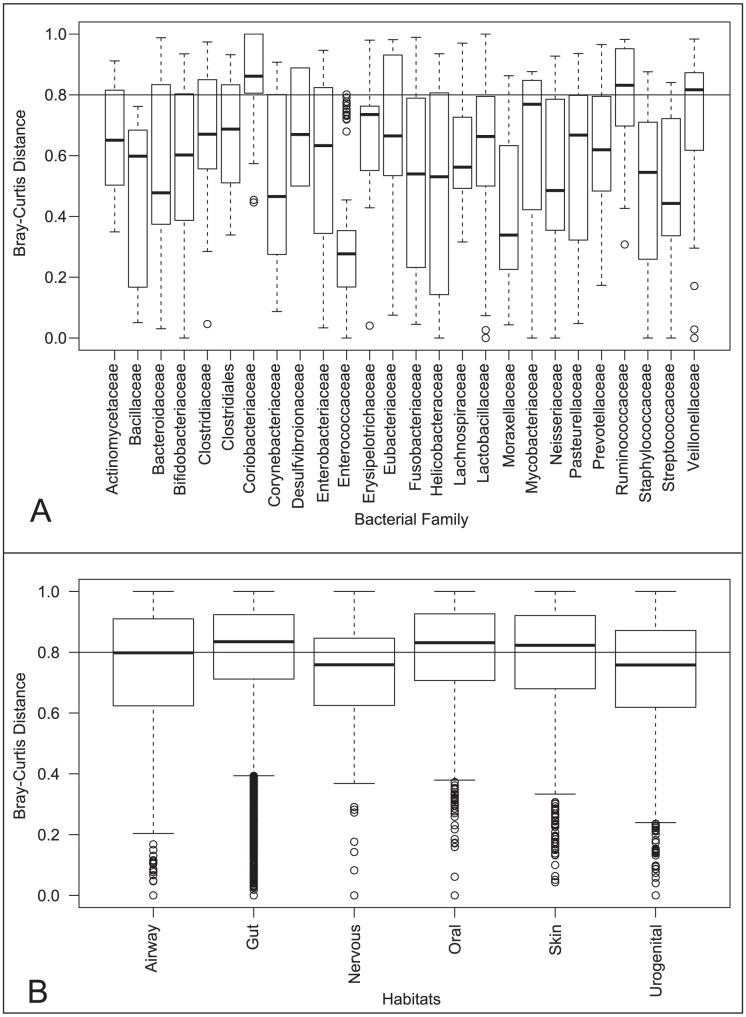
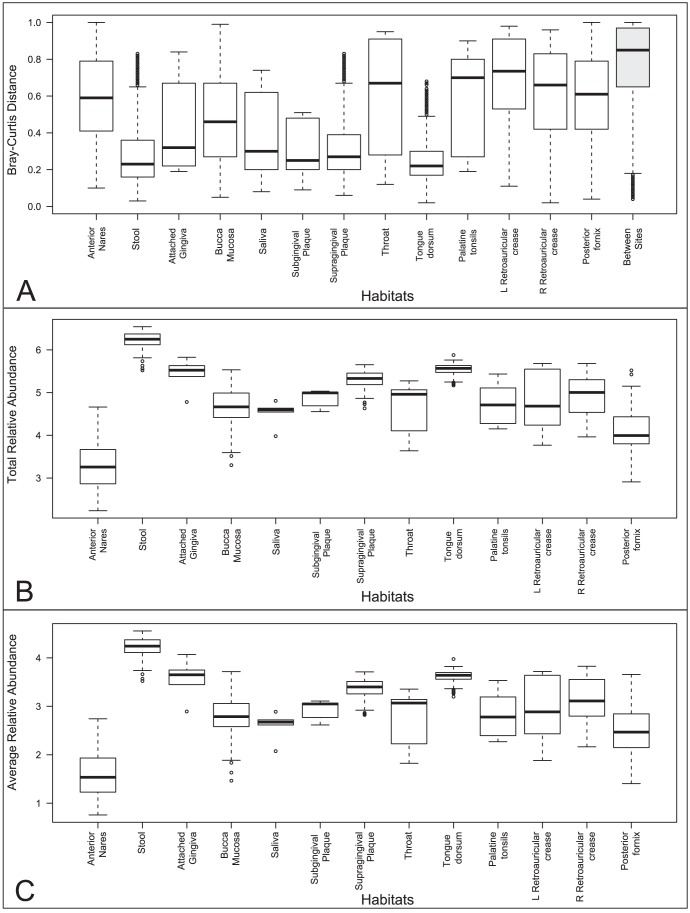
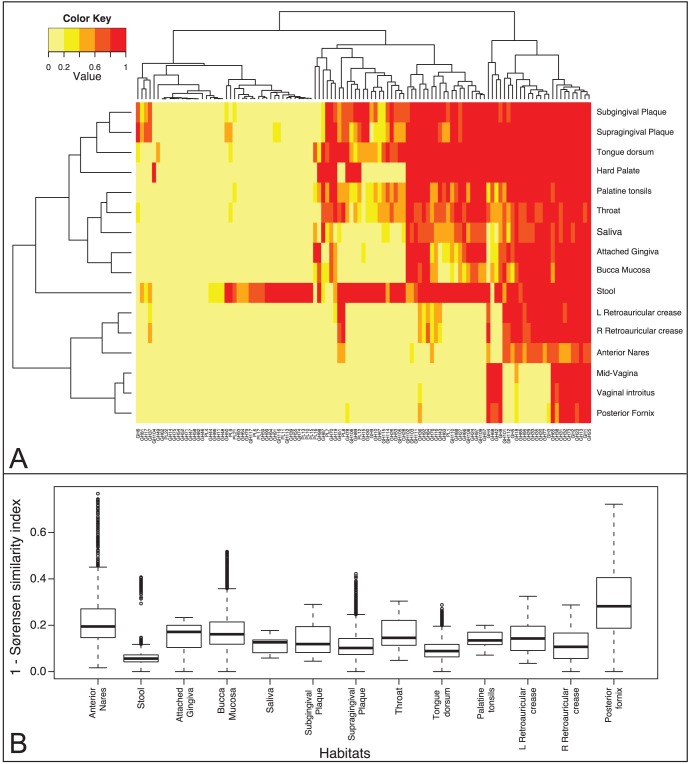
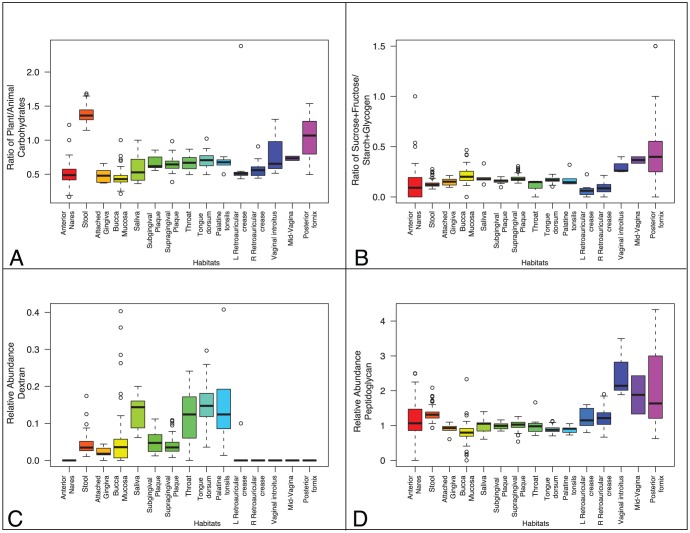
The various ecological habitats in the human body provide microbes a wide array of nutrient sources and survival challenges. Advances in technology such as DNA sequencing have allowed a deeper perspective into the molecular function of the human microbiota than has been achievable in the past. Here we aimed to examine the enzymes that cleave complex carbohydrates (CAZymes) in the human microbiome in order to determine (i) whether the CAZyme profiles of bacterial genomes are more similar within body sites or bacterial families and (ii) the sugar degradation and utilization capabilities of microbial communities inhabiting various human habitats. Upon examination of 493 bacterial references genomes from 12 human habitats, we found that sugar degradation capabilities of taxa are more similar to others in the same bacterial family than to those inhabiting the same habitat. Yet, the analysis of 520 metagenomic samples from five major body sites show that even when the community composition varies the CAZyme profiles are very similar within a body site, suggesting that the observed functional profile and microbial habitation have adapted to the local carbohydrate composition. When broad sugar utilization was compared within the five major body sites, the gastrointestinal track contained the highest potential for total sugar degradation, while dextran and peptidoglycan degradation were highest in oral and vaginal sites respectively. Our analysis suggests that the carbohydrate composition of each body site has a profound influence and probably constitutes one of the major driving forces that shapes the community composition and therefore the CAZyme profile of the local microbial communities, which in turn reflects the microbiome fitness to a body site.
Overview
The claims and statistics of this paper haven’t been checked yet.
Free: it reads the open-access text and checks the first 5 claims that cite a source we can check. Create a free account to check every claim.
Integrity signals
Registry
Cites
Statistics
Figures
Verification
Claims the paper makes
The claims and statistics of this paper haven’t been checked yet.
Free: it reads the open-access text and checks the first 5 claims that cite a source we can check. Create a free account to check every claim.
Claims other papers make about this one
Each is checked against this paper’s own text: does it say what the citing paper says it does?
In the citing paper
“Much of it can be fermented to short-chain fatty acids (SCFAs) such as acetate, propionate, and butyrate (see Table 1 in Michel and MacFarlane 1996; Cantarel et al. 2012) which both nourish the epithelia of the large intestine and offer other benefits to the host (Terada et al. 1995; Michel and MacFarlane 1996).”
From Algae as nutritional and functional food sources: revisiting our understanding. (2017) · cites this paper as Cantarel et al. 2012
In the citing paper
“our analyses indicated that Clostridium XIVa strains are characterized by overproportional rich carbohydrate-active enzyme (CAZyme) repertoires within the Lachnospiraceae [13]”
From Uncovering the trimethylamine-producing bacteria of the human gut microbiota (2017) · cites this paper as [13]
Self-check
Percentages, sums and reported differences re-computed from the paper’s own numbers.
The self-check needs the paper’s full text.
Citations
Cites
A core gut microbiome in obese and lean twins
Turnbaugh, P. J., Hamady, M., Yatsunenko, T., Cantarel, B. L., Duncan, A., Ley, R. E., Sogin, M. L., Jones, W. J., Roe, B. A., Affourtit, J. P., et al. (2009) · Nature · doi:10.1038/nature07540 · Cited by 7,823 · cited 1×
“Thus far, the GH6 family of enzymes has not been identified in any animal gut sample [35,36,37,38,39], suggesting that this enzyme specificity is perhaps driven by environmental factors.”
BackgroundSelf-citationEnterotypes of the human gut microbiome
MetaHIT Consortium (additional members), Arumugam, M., Raes, J., Pelletier, E., Le Paslier, D., Yamada, T., Mende, D. R., Fernandes, G. R., Tap, J., Bruls, T., et al. (2011) · Nature · doi:10.1038/nature09944 · Cited by 7,548 · cited 1×
“When we compare the oral sites to the gut, the starch and glycogen utilization appears much reduced in stool, suggesting specialization in digestion, whereby most of these sugars are likely degraded by human salivary amylase and oral flora and taken up in the small intestine by the host [32].”
BackgroundSørensen, T. B., Sorensen, T., Biering-Sørensen, T., Ti, S., & Sorensen, J. (1948) · Medical Entomology and Zoology · Cited by 6,214
The Carbohydrate-Active EnZymes database (CAZy): an expert resource for Glycogenomics
Cantarel, B. L., Coutinho, P. M., Rancurel, C., Bernard, T., Lombard, V., & Henrissat, B. (2009) · Nucleic Acids Research · doi:10.1093/nar/gkn663 · Cited by 5,972 · cited 3×
“Functional annotations were performed by BLASTX searches against proteins in the CAZy database [6], using thresholds: Evalue ,1e26 and bits/position .”
MethodInfluentialSelf-citationHost-Bacterial Mutualism in the Human Intestine
Bäckhed, F., Ley, R. E., Sonnenburg, J. L., Peterson, D. A., & Gordon, J. I. (2005) · Science · doi:10.1126/science.1104816 · Cited by 5,277 · cited 1×
“microbes, with the human gut thought to contain about 7000 different strains”
BackgroundVaginal microbiome of reproductive-age women
Ravel, J., Gajer, P., Abdo, Z., Schneider, G. M., Koenig, S. S. K., McCulle, S. L., Karlebach, S., Gorle, R., Russell, J., Tacket, C. O., et al. (2011) · Proceedings of the National Academy of Sciences · doi:10.1073/pnas.1002611107 · Cited by 4,254 · cited 2×
“These results are consistent with other studies of this dataset based on taxonomy [23] and KEGG Orthologs (KOs) groups [24]; in these studies and in a publication by Ravel and colleagues, the posterior fornix is shown to have the most diverse repertoire of functional capability [23,24] and a few distinct community typ…”
BackgroundResultA classification of glycosyl hydrolases based on amino acid sequence similarities
Henrissat, B. (1991) · Biochemical Journal · doi:10.1042/bj2800309 · Cited by 3,188
Self-citationTopping, D. L., & Clifton, P. M. (2001) · Physiological Reviews · doi:10.1152/physrev.2001.81.3.1031 · Cited by 3,091
Varki, A. P., Cummings, R. D., Esko, J. D., Freeze, H. H., Stanley, P., Bertozzi, C. R., Hart, G. W., & Etzler, M. E. (1999) · Cited by 2,384
Structural and sequence-based classification of glycoside hydrolases
Henrissat, B., & Davies, G. (1997) · Current Opinion in Structural Biology · doi:10.1016/s0959-440x(97)80072-3 · Cited by 1,664 · cited 1×
“org) [6,7,8,9,10].”
Self-citation
Cited by
Items 201–300 of 404
Song, T., Xu, H., Wei, C., Jiang, T., Qin, S., Zhang, W., Cao, Y., Hu, C., Zhang, F., Qiao, D., et al. (2016) · Scientific Reports · doi:10.1038/srep34103 · Cited by 23
Li, Q., & Pan, Y. (2020) · Frontiers in Microbiology · doi:10.3389/fmicb.2020.591462 · Cited by 26
Brandt, S., Brognaro, H., Ali, A., Ellinger, B., Maibach, K., Rühl, M., Wrenger, C., Schlüter, H., Schäfer, W., Betzel, C., et al. (2021) · Biotechnology for Biofuels · doi:10.1186/s13068-021-01927-9 · Cited by 22
“Examples include the GH5, GH7, GH11, GH45 and PL3 families, which are frequently associated with CBM1 (which typically binds cellulose) [72].”
BackgroundExtracellular Glycoside Hydrolase Activities in the Human Oral Cavity
Inui, T., Walker, L. C., Dodds, M. W. J., & Hanley, A. B. (2015) · Applied and Environmental Microbiology · doi:10.1128/aem.01180-15 · Cited by 25
“While the sample size is small in this study, these results are in line with what has been reported previously for microbiota in saliva and dental plaque: the dental plaque environment favors organisms that are able to metabolize complex organic molecules (14, 15).”
ResultWatson, M. (2018) · University of Edinburgh · doi:10.7488/ds/2438 · Cited by 21
Wan, P., Liu, H., Ding, M., Zhang, K., Shang, Z., Wang, Y., & Ma, Y. (2023) · International Journal of Biological Macromolecules · doi:10.1016/j.ijbiomac.2023.126881 · Cited by 22
Cluster Analysis of Microbiome Data by Using Mixtures of Dirichlet–Multinomial Regression Models
Subedi, S. D., Neish, D., Bak, S., & Feng, Z. Z. (2020) · Journal of the Royal Statistical Society Series C (Applied Statistics) · doi:10.1111/rssc.12432 · Cited by 27
“Specifically, human microbiota have been shown to play important roles in digestive enzyme activity (Cantarel et al. , 2012), pathogen protection (Round et al. , 2009), vitamin synthesis (LeBlanc et al. , 2013) and so on.”
BackgroundChauhan, N. S., Monika, Kumar, T., Sharma, P., & Goyal, K. (2020) · Elsevier eBooks · doi:10.1016/b978-0-12-817193-6.00005-4 · Cited by 27
Yadav, D. K., Singh, A., Agrawal, V., & Yadav, N. (2021) · Wiley eBooks · doi:10.1002/9781119718017.ch15 · Cited by 24
Zhao, M., Lu, C., Hu, X., & Ma, Z. (2024) · Food Chemistry · doi:10.1016/j.foodchem.2024.140914 · Cited by 19
Catania, F., Baedke, J., Fábregas‐Tejeda, A., Delgado, A. N., Vitali, V., & Long, L. A. N. (2021) · BioEssays · doi:10.1002/bies.202100049 · Cited by 21
Almasaudi, S. B., Kaoutari, A. E., Drula, É., Redwan, E. M. M. M., Lombard, V., & Henrissat, B. (2019) · International Microbiology · doi:10.1007/s10123-019-00068-2 · Cited by 21
Self-citationIablokov, S. N., Klimenko, N. S., Efimova, D. A., Shashkova, T., Novichkov, P. S., Rodionov, D. A., & Tyakht, A. (2021) · Frontiers in Molecular Biosciences · doi:10.3389/fmolb.2020.603740 · Cited by 21
“Strikingly, unlike GH families positively associated with CD that were mainly involved in mucus degradation, the GH94 family phosphorylases that cleave β-glycosidic bonds in cellobiose and cellodextrin are involved in plant cell wall degradation (Cantarel et al., 2012).”
BackgroundRajeev, R., Seethalakshmi, P. S., Jena, P. K., Prathiviraj, R., Kiran, G. S., & Selvin, J. (2021) · Critical Reviews in Food Science and Nutrition · doi:10.1080/10408398.2021.1916429 · Cited by 20
Integrative functional analysis uncovers metabolic differences between Candida species
Begum, N., Lee, S., Portlock, T., Pellón, A., Nasab, S. D. S., Nielsen, J., Uhlén, M., Moyes, D. L., & Shoaie, S. (2022) · Communications Biology · doi:10.1038/s42003-022-03955-z · Cited by 21
Xu, T., Sun, R., Zhang, Y., Zhang, C., Wang, Y., Wang, Z. A., & Du, Y. (2022) · Molecules · doi:10.3390/molecules27217622 · Cited by 21
A bélmikrobiom, a metabolikus betegségek és a hypertonia kapcsolatának irodalmi áttekintése
Barna, I., Nyúl, D., Szentes, T., & Schwab, R. (2018) · Orvosi Hetilap · doi:10.1556/650.2018.30787 · Cited by 18
“[2] Brandi L, Cantarel BL, Lombard V, et al.”
BackgroundDadwal, A., Sharma, S., & Satyanarayana, T. (2019) · Springer eBooks · doi:10.1007/978-981-13-8487-5_15 · Cited by 17
Bai, D.-P., Lin, X., Hu, Y., Chen, Z., Chen, L., Huang, Y.-F., Huang, X., & Li, J. (2020) · Electronic Journal of Biotechnology · doi:10.1016/j.ejbt.2020.12.001 · Cited by 18
Expression and purification of two Family GH31 α-glucosidases from Bacteroides thetaiotaomicron
Chaudet, M. M., Allen, J.-L., & Rose, D. R. (2012) · Protein Expression and Purification · doi:10.1016/j.pep.2012.09.009 · Cited by 20
Liang, Y., Huang, Z., Fan, S., Li, C., Huang, L.-T., Huang, C., Hutchins, A. P., Fang, C., & Zhang, X. (2024) · Microbiology Spectrum · doi:10.1128/spectrum.01521-24 · Cited by 18
Novel opportunities for the exploitation of host–microbiome interactions in the intestine
Claes, I. J. J., Garcia, C. V., & Lebeer, S. (2014) · Current Opinion in Biotechnology · doi:10.1016/j.copbio.2014.10.008 · Cited by 17
“rhamnsosus GG and Campylobacter jejuni [39], and metagenomes similar as for the glycan-degrading enzymes [40] will be highly relevant for a better understanding of the role of glycans in niche-specific microbiome–host interactions.”
BackgroundYe, L., Das, P., Li, P., Ji, B., & Nielsen, J. (2019) · FEMS Microbiology Ecology · doi:10.1093/femsec/fiz159 · Cited by 18
Shi, Z., Lan, Y., Wang, Y., Yan, X., Ma, X., Hassan, F., Rushdi, H. E., Xu, Z., Wang, W., & Deng, T. (2024) · mSystems · doi:10.1128/msystems.01348-23 · Cited by 18
“It has been reported that AAs are involved in the catabolism of carbohydrates (76).”
BackgroundThe exciting and magical journey of components from compound formulae to where they fight
Meng, N., Lyu, Y., Zhang, X., Chai, X., Li, K., & Wang, Y. (2022) · Acupuncture and Herbal Medicine · doi:10.1097/hm9.0000000000000047 · Cited by 16
“Intriguingly, they can be fermented[77] into SCFAs by”
BackgroundThe Gut Microbiome, Obesity, and Weight Control in Women’s Reproductive Health
Greathouse, K. L., Faucher, M. A., & Hastings‐Tolsma, M. (2017) · Western Journal of Nursing Research · doi:10.1177/0193945917697223 · Cited by 16
Genome-scale metabolic modelling of human gut microbes to inform rational community design
Ortiz, J. P. M., McClure, D. D., Holmes, A. J., Rice, S. A., Read, M. N., & Shanahan, E. R. (2025) · Gut Microbes · doi:10.1080/19490976.2025.2534673 · Cited by 16
Coelho, E. D., Santiago, A. M., Arrais, J. P., & Oliveira, J. L. (2015) · Journal of Bioinformatics and Computational Biology · doi:10.1142/s0219720015500237 · Cited by 14
Highlander, S. K., Versalovic, J. A., & Petrosino, J. F. (2011) · Wiley eBooks · doi:10.1128/9781555816728.ch13 · Cited by 16
Gut Microorganisms and Neurological Disease Perspectives
Faruqui, N. A., Prium, D. H., Mowna, S. A., Ullah, M. A., Araf, Y., Sarkar, B., Zohora, U. S., & Rahman, M. S. (2021) · Future Neurology · doi:10.2217/fnl-2020-0026 · Cited by 16
Microbial Communities of Red Sea Coral Reefs
Neave, M. J., Apprill, A. M., Aeby, G. S., Miyake, S., & Voolstra, C. R. (2019) · Coral reefs of the world · doi:10.1007/978-3-030-05802-9_4 · Cited by 14
Wilkowska, A., Motyl, I., Antczak-Chrobot, A., Wojtczak, M., Nowak, A., Czyżowska, A., & Motyl, W. (2021) · Fermentation · doi:10.3390/fermentation7040224 · Cited by 15
Sha, Y., Yan, Q., Liu, J., Yu, J., Xu, S., He, Z., Ren, J., Qu, J., Zheng, S., Wang, G., et al. (2023) · Frontiers in Microbiology · doi:10.3389/fmicb.2023.1195137 · Cited by 14
“As animals have limited evolved abilities to digest complex polysaccharides (Cantarel et al., 2012), the enzymes produced by intestinal microorganisms are needed to metabolize carbohydrate (e.”
BackgroundDevaraj, S., Hemarajata, P., & Versalovic, J. A. (2013) · Redalyc (Universidad Autónoma del Estado de México) · Cited by 28
Microbial metabolites derived from colonic fermentation of non-digestible compounds
Tabernero, M., & de Cedrón, M. G. (2017) · Current Opinion in Food Science · doi:10.1016/j.cofs.2017.03.005 · Cited by 15
A LacI-Family Regulator Activates Maltodextrin Metabolism of Enterococcus faecium
Zhang, X., Rogers, M. R. C., Bierschenk, D., Bonten, M. J. M., Willems, R. J. L., & van Schaik, W. (2013) · PLoS ONE · doi:10.1371/journal.pone.0072285 · Cited by 13
“Carbohydrate utilization is a fundamental metabolic function in bacteria and is an important determinant for niche-adaptation by commensal bacteria [9,34,35].”
BackgroundLiu, J., Dhital, S., Junejo, S. A., Fu, X., Huang, Q., & Zhang, B. (2024) · Food Research International · doi:10.1016/j.foodres.2024.114639 · Cited by 12
Temporal response patterns of human gut microbiota to dietary fiber
Lin, X., Wang, C., Liu, B., Zhu, Y., Zhai, R., & Zhang, C. (2025) · iMeta · doi:10.1002/imt2.70046 · Cited by 14
“With respect to carbohydrate metabolism, CAGs with increased abundance were enriched in CAZy genes related to the utilization of inulin and sucrose/fructans, which were contributed by enzymes from four glycoside hydrolase (GH) families [47].”
Jiang, Q., Liu, X., Yang, Q.-F., Chen, L., & Yang, D. (2021) · Frontiers in Cellular and Infection Microbiology · doi:10.3389/fcimb.2021.774453 · Cited by 12
“Some GHs are biomarkers of dental plaque biofilm formation, and take part in polysaccharide synthesis (Cantarel et al., 2012).”
BackgroundSantiago-Rodríguez, T. M., Cano, R. J., & Jiménez‐Flores, R. (2016) · Food & Function · doi:10.1039/c6fo00317f · Cited by 12
Synergism of Diet, Genetics, and Microbiome on Health
Das, P., Banka, R., Ghosh, J., Singh, K., Choudhury, S. R., & Koner, S. (2024) · Advances in medical diagnosis, treatment, and care (AMDTC) book series · doi:10.4018/979-8-3693-5528-2.ch006 · Cited by 11
Yin, Y., Feng, W., Chen, X., Chen, J., Wang, G., Xia, L., & Wu, K. (2024) · The Innovation Medicine · doi:10.59717/j.xinn-med.2024.100092 · Cited by 15
Ma, J., Lu, Q., Zhao, Y., Liu, X., Ding, G., Wang, Y., Wang, X., Chen, Y., Zhang, T., & Cheng, X. (2024) · Brain Research Bulletin · doi:10.1016/j.brainresbull.2024.111171 · Cited by 15
Improving the Proteome-Mining of Schizophyllum commune to Enhance Medicinal Mushroom Applications
Desiderio, A., Goppa, L., Santambrogio, C., Brocca, S., Buratti, S., Girometta, C. E., Sarkar, M., Venuti, M. T., Savino, E., Rossi, P., et al. (2025) · Journal of Fungi · doi:10.3390/jof11020120 · Cited by 11
“The present proteomic analysis also detected 2 out of 6 major classes in the family of CAZy family carbohydrate-active enzymes [54,55]: glycosyl hydrolases (GHs) and glycosyl transferases (GTs).”
Human microbiome and cardiovascular diseases
Alam, J., Puppala, V., Uppulapu, S. K., Das, B., & Banerjee, S. (2022) · Progress in molecular biology and translational science · doi:10.1016/bs.pmbts.2022.07.012 · Cited by 11
Ant may well destroy a whole dam: glycans of colonic mucus barrier disintegrated by gut bacteria
Li, S., Chen, M., Wang, Z., Abudourexiti, W., Zhang, L., Ding, C., Ding, L., & Gong, J. (2024) · Microbiological Research · doi:10.1016/j.micres.2023.127599 · Cited by 11
The therapeutic effects of marine sulfated polysaccharides on diabetic nephropathy
Wu, L., Zhang, X., Zhao, J., Yang, M., Yang, J. B., & Qiu, P. (2024) · International Journal of Biological Macromolecules · doi:10.1016/j.ijbiomac.2024.129269 · Cited by 14
Silk, E. T., Bayer, S. B., Foster, M., Roy, N. C., Taylor, M. W., Vatanen, T., & Gearry, R. B. (2024) · mSystems · doi:10.1128/msystems.00909-24 · Cited by 11
Cornish, M. L., Mouritsen, O. G., & Critchley, A. T. (2019) · Journal of Oceanology and Limnology · doi:10.1007/s00343-019-8104-2 · Cited by 12
Impact of Daily Consumption of Whole-Grain Quinoa-Enriched Bread on Gut Microbiome in Males
Li, L., Houghton, D., Lietz, G., Watson, A., Stewart, C. J., Bal, W., & Seal, C. J. (2022) · Nutrients · doi:10.3390/nu14224888 · Cited by 13
“The gut microbiome has attracted much attention over the last decade, primarily due to improvements in sequencing technologies, computational and molecular methods [16].”
BackgroundComplex Oligosaccharide Utilization Pathways in Lactobacillus
Zúñiga, M., Yebra, M. J., & Monedero, V. (2018) · Caister Academic Press eBooks · doi:10.21775/9781910190890.03 · Cited by 12
Gu, J., & Zhou, L. (2021) · Animals · doi:10.3390/ani11051390 · Cited by 10
“The higher diversity of intestinal bacteria might be beneficial for the Hooded Cranes at Shengjin Lake to obtain nutrients effectively from indigestible and nutrient-limited food [53].”
BackgroundMicrobial Enzymes for Conversion of Biomass to Bioenergy
Raghavendra, M. P., Nayaka, S. C., & Gupta, V. K. (2016) · Biofuel and biorefinery technologies · doi:10.1007/978-3-319-43679-1_1 · Cited by 14
Protein language models uncover carbohydrate-active enzyme function in metagenomics
Thurimella, K., Mohamed, A. M. T., Li, C., Vatanen, T., Graham, D. B., Owens, R. M., La Rosa, S. L., Plichta, D. R., Bacallado, S., & Xavier, R. J. (2025) · BMC Bioinformatics · doi:10.1186/s12859-025-06286-y · Cited by 9
“Carbohydrate-active enzymes (CAZymes) play fundamental roles in various biological processes, including cell structure, signaling, energy storage, and nutrient processing [14–16].”
Erdody, D. S., Griffin, N. G., & Berlemont, R. (2025) · Scientific Reports · doi:10.1038/s41598-025-08859-6 · Cited by 11
Zhou, C., Hibberd, M. C., Lee, E. M., Pilgaard, B., Vuillemin, M., Kiehn, E., Henrissat, S., Crane, M., Cheng, J., Pfaff, L., et al. (2025) · Proceedings of the National Academy of Sciences · doi:10.1073/pnas.2521522122 · Cited by 11
“Humans lack the CAZymes necessary to cleave either of these two β-1,4 linkages (24); therefore, host utilization of this glycan must be initiated by gut microbial enzymes.”
Self-citationAli‐Ahmad, A., Garron, M.-L., Roig-Zamboni, V., Lenfant, N., Nurizzo, D., Henrissat, B., Berrin, J., Bourne, Y., & Vincent, F. (2016) · Journal of Structural Biology · doi:10.1016/j.jsb.2016.11.004 · Cited by 11
“The genome of a single Bacteroides species carries dozens of distinct PULs to efficiently harvest glycoconjugates, and each PUL may target a particular complex carbohydrate (Cantarel et al. 2012; Terrapon et al. 2014).”
Self-citationHiggins, K. V., Woodie, L. N., Hallowell, H. A., Greene, M. W., & Schwartz, E. H. (2021) · Frontiers in Cellular and Infection Microbiology · doi:10.3389/fcimb.2021.671926 · Cited by 10
“Resident commensal bacteria carry out important functions for the host such as synthesis of vitamins and short chain fatty acids, degradation of host dietary oxalates, andmanyothermetabolic functions (Cantarel et al., 2012; Hollister et al., 2014).”
BackgroundMetabolomic Discovery of Microbiota Dysfunction as the Cause of Pathology
Nv, B., Grechko, A. V., & Olenin, A. Y. (2019) · IntechOpen eBooks · doi:10.5772/intechopen.87176 · Cited by 9
Poudel, S., Rahman, F. A., Granados, E. A. F., Adhikari, Y., Naeem, M., Rochell, S. J., & Bourassa, D. V. (2025) · Poultry Science · doi:10.1016/j.psj.2025.106072 · Cited by 9
“Colonized microbiota plays an essential role in the host ’ s immune maturation, metabolic function, and disease resistance (Cantarel et al., 2012; Cisek and Binek, 2014).”
Functional guilds and drivers of diversity in seaweed-associated bacteria
Khan, T., Song, W., Nappi, J., Marzinelli, E. M., Egan, S., & Thomas, T. (2023) · FEMS Microbes · doi:10.1093/femsmc/xtad023 · Cited by 9
“Similarl y, the taxonomic r ank of famil y was pr e viousl y shown to be a poor predictor of the GH and PL CAZyme gene abundances in human-associated bacterial genomes (Cantarel et al. 2012 ).”
BackgroundWang, H., An, J., Fan, C., Zhai, Z., Zhang, H., & Hao, Y. (2022) · BMC Microbiology · doi:10.1186/s12866-022-02474-5 · Cited by 8
“Plant derived carbohydrates, such as cellulose, could be catalyzed to produce soluble cellobiose by cellobiohydrolases in the human gut [37].”
BackgroundFour functional profiles for fibre and mucin metabolism in the human gut microbiome
Labarthe, S., Plancade, S., Raguideau, S., Oñate, F. P., Chatelier, E. L., Leclerc, M., & Laroche, B. (2023) · Microbiome · doi:10.1186/s40168-023-01667-y · Cited by 10
Vegetarian Diets and the Microbiome
Orlich, M. J., Segovia‐Siapco, G., & Jung, S. M. (2017) · Elsevier eBooks · doi:10.1016/b978-0-12-803968-7.00024-1 · Cited by 10
Vuillemin, M., Prieto, E. S. M., Pilgaard, B., Siebenhaar, S., Holck, J., Henrissat, B., Bahieldin, A., Hakeem, K. R., & Alghamdi, K. M. (2024) · International Journal of Biological Macromolecules · doi:10.1016/j.ijbiomac.2024.129783 · Cited by 7
Self-citationValderrama, B., Daly, I., Gunnigle, E., O’Riordan, K. J., Chichlowski, M., Banerjee, S., Skowronski, A. A., Pandey, N., Cryan, J. F., Clarke, G. A., et al. (2025) · Food & Function · doi:10.1039/d4fo03932g · Cited by 8
Human gut microbiota and endocrinology: paradigm shift from genome to its regulation
Lamaudière, M. T. F., Turner, M. C., Arasaradnam, R. P., & Morozov, I. Y. (2023) · Journal of Endocrinology · doi:10.1530/joe-23-0348 · Cited by 12
Meier, S. (2014) · Analytical and Bioanalytical Chemistry · doi:10.1007/s00216-014-8231-8 · Cited by 7
“Plants have a particularly elaborate carbohydrate metabolism [1].”
BackgroundAlteration of Community Metabolism by Prebiotics and Medicinal Herbs
Peterson, C. T., Pérez‐Santiago, J., Iablokov, S. N., Rodionov, D. A., & Peterson, S. N. (2023) · Microorganisms · doi:10.3390/microorganisms11040868 · Cited by 7
“The selective and spatially segregated absorption of dietary nutrients and generalized loss of gylcosyl hydrolases (GHs) function in the human genome [3] select microbes in order to encode numerous and diverse GH functions to ensure efficient utilization of available energy sources that ultimately drive cooperative cr…”
BackgroundCE: Health and the Human Microbiome A Primer for Nurses
McElroy, K. G., Chung, S.-Y., & Regan, M. B. (2017) · AJN American Journal of Nursing · doi:10.1097/01.naj.0000520917.73358.99 · Cited by 11
Protein Language Models Uncover Carbohydrate-Active Enzyme Function in Metagenomics
Thurimella, K., Mohamed, A. M. T., Graham, D. B., Owens, R. M., La Rosa, S. L., Plichta, D. R., Bacallado, S., & Xavier, R. J. (2023) · doi:10.1101/2023.10.23.563620 · Cited by 7
“Carbohydrate-active enzymes (CAZymes) play fundamental roles in various biological processes, including cell structure, signaling, energy storage, and nutrient processing 15–17 .”
BackgroundFacimoto, C. T., Clements, K. D., White, W. L., & Handley, K. M. (2024) · mSystems · doi:10.1128/msystems.01007-24 · Cited by 8
“The presence of algae-associated CAZy families has been reported in human microbiomes (alginate: PL17, PL15, and PL6; agar: GH50, GH86, and GH117) (58, 59) and linked to human seaweed consumption.”
The promising path of Oral MOFs: Redefining strategies for gastrointestinal detoxification
Quan, Y., Wu, Y., Wang, K., Ren, H., Zhang, G., Zhao, Y., & Miao, Y. (2025) · Coordination Chemistry Reviews · doi:10.1016/j.ccr.2025.217168 · Cited by 6
Characterization and Spatial Mapping of the Human Gut Metasecretome
Velez‐Cortes, F., & Wang, H. H. (2022) · mSystems · doi:10.1128/msystems.00717-22 · Cited by 6
“Several glycoside hydrolases were more likely to be secreted in Bacteroidetes MAGs than in other phyla, including plant cell wall hydrolases (GH2, GH3, GH5, GH29, GH31, GH36, GH43, GH51, and GH127), peptidoglycan hydrolases (GH23, GH25, and GH73), sucrose or fructan hydrolases (GH32), and animal November/December 2022…”
BackgroundResultInfluentialKhezri, M. R., Esmaeili, A., & Ghasemnejad‐Berenji, M. (2023) · ACS Chemical Neuroscience · doi:10.1021/acschemneuro.3c00418 · Cited by 8
Borrego-Ruiz, A. (2025) · Food Nutrition Chemistry · doi:10.18686/fnc278 · Cited by 6
“Diets provide specific nutrients that intervene in the growth kinetics of intestinal bacteria, such as glycans (e.g., cellulose, fructooligosaccharides, inulin, lignin, and pectin), which constitute non-digestible carbohydrates for both animals and humans [12].”
Helicobacter Pylori and Gastric Microbiota Homeostasis: Progress and Prospects
Wang, Z., Shao, S.-L., Xu, X.-H., Zhao, X., Wang, M., Chen, A., & Cong, H. (2023) · Future Microbiology · doi:10.2217/fmb-2022-0102 · Cited by 8
[Research progress on carbohydrate active enzymes of human microbiome].
Zhou, Z., Xu, X., & Zhou, Y. (2019) · PubMed · doi:10.7518/hxkq.2019.06.017 · Cited by 7
Cepon‐Robins, T. J. (2015) · Scholars' Bank (University of Oregon) · Cited by 6
Gut microbiota and carcinogenesis: actual aspects
Poveshchenko, A. F., Cherkas, V. N., Кабаков, А. В., & Васильевич, К. О. (2023) · Journal of microbiology epidemiology immunobiology · doi:10.36233/0372-9311-356 · Cited by 6
“Геном человека содержит в себе потенциал для расщепления лишь небольшого количества гликанов — сахара, крахмала, лактозы, тогда как микробиота в кишечнике способна расщеплять десятки видов гликанов за счёт ферментов: гликозидгидролазы, эстеразы, гликозилтрансферазы и полисахаридлиазы [61].”
Zhang, E., Wei, Q., Li, X., & Song, S. (2024) · Marine Drugs · doi:10.3390/md22030125 · Cited by 5
Influencia de la dieta vegetariana en el microbioma intestinal humano
Borrego-Ruiz, A., & Borrego, J. J. (2024) · Nutrición clínica y dietética hospitalaria/Nutrición clínica, dietética hospitalaria · doi:10.12873/443borrego · Cited by 11
Characterization of Dysbiotic Changes of Skin Microbiota in Contact Sports Athletes
Сафовна, М. Д., Давлетова, Н. Х., Андреевич, З. И., Mugallimov, S. M., Мунирович, А. А., Karamova, N. S., Malanin, S. Y., Laikov, A. V., Markelova, M., Siniagina, M., et al. (2017) · BioNanoScience · doi:10.1007/s12668-017-0396-0 · Cited by 5
Zhang, C., Virk, A. K., KHAN, I. A., & Qin, H. (2020) · Springer eBooks · doi:10.1007/978-981-15-4759-1_2 · Cited by 5
Polysaccharides and radiation technology
del Mastro, N. L. (2021) · Elsevier eBooks · doi:10.1016/b978-0-323-85672-0.00015-5 · Cited by 7
Safety of cellobiose as a novel food pursuant to regulation (EU) 2015/2283
EFSA Panel on Nutrition, N. F. A. F. A. (., Turck, D., Bohn, T., Castenmiller, J. J. M., Henauw, S. D., Hirsch‐Ernst, K. I., Maciuk, A., Mangelsdorf, I., McArdle, H. J., Naska, A., et al. (2022) · EFSA Journal · doi:10.2903/j.efsa.2022.7596 · Cited by 9
Gut microbiome recovery after antibiotic usage is mediated by specific bacterial speciesPreprint
Nandi, T., Lee, I. R., Ghosh, T. S., Ng, A. H. Q., Chng, K. R., Li, C., Tan, Y. H., Lye, D. C., Barkham, T., Chen, S. L., et al. (2018) · bioRxiv (Cold Spring Harbor Laboratory) · doi:10.1101/350470 · Cited by 6
Wang, S., Yu, L., Tian, F., Chen, W., & Zhai, Q. (2024) · Food Science and Human Wellness · doi:10.26599/fshw.2024.9250252 · Cited by 4
Ullah, H., 黃碩傑, Pei, Q., Gui, P., Shi, H., & Hu, X. (2026) · International Journal of Biological Macromolecules · doi:10.1016/j.ijbiomac.2026.152569 · Cited by 5
Outlier Detection for Minor Compositional Variations in Taxonomic Abundance Data
Ishiya, K., & Aburatani, S. (2019) · Applied Sciences · doi:10.3390/app9071355 · Cited by 4
“Some gut microbes support the breaking down of proteins, lipids, and carbohydrates into nutrients that humans can efficiently absorb through the gastrointestinal tract [12].”
BackgroundMetaGeneHunt for protein domain annotation in short-read metagenomes
Berlemont, R., Winans, N. M., Talamantes, D., Dang, H. T., & Tsai, H. (2020) · Scientific Reports · doi:10.1038/s41598-020-63775-1 · Cited by 4
Study on biotransformation and absorption of genistin based on fecal microbiota and Caco-2 cell
Li, Z., Wang, Y., Wang, Z., Wu, D., Zhao, Y., Gong, X., Jiang, Q., & Xia, C. (2024) · Frontiers in Pharmacology · doi:10.3389/fphar.2024.1437020 · Cited by 7
Versalovic, J. A., Highlander, S. K., & Petrosino, J. F. (2015) · ASM Press eBooks · doi:10.1128/9781555817381.ch15 · Cited by 5
Isolation and Probiotic Functions of Bacillus subtilis and Its Inhibitory Effects on Colitis
Guan, N., Li, C., Liu, W. Y., Wu, Q. D., Zhu, J., Gao, T., Song, H., Guo, R., Yuan, F., Tian, Y., et al. (2025) · Biology · doi:10.3390/biology14121786 · Cited by 3
“Among these enzymes, glycoside hydrolases catalyze the hydrolysis of glycosidic bonds and play a crucial role in the breakdown and synthesis of sugars and sugar conjugates in biological systems [29].”
Zheng, R., Yao, G., Qin, X. G., Qiao, H., Yan, J., & Zhang, W. (2026) · LWT · doi:10.1016/j.lwt.2026.119062 · Cited by 3
Chronic kidney disease and diet
Uchiyama‐Tanaka, Y. (2025) · Renal Replacement Therapy · doi:10.1186/s41100-025-00668-x · Cited by 4
“Even in hemodialysis patients, moderate blood magnesium levels are associated with the lowest risk of death [88].”
Pierre, J. F., & Leone, V. (2020) · Elsevier eBooks · doi:10.1016/b978-0-323-66162-1.00037-8 · Cited by 3
Effect of chitosan-oleuropein nanoparticles on dentin collagen cross-linking
Wang, Y., Mei, L., Zhao, S., Xing, X., & Wu, G. (2022) · Technology and Health Care · doi:10.3233/thc-220195 · Cited by 3
“Previous researches have shown GHs play an important role in the development of supergingival and subgingival biofilm [45].”
The Relationship between the Gut Microbiota and Exercise: A Narrative Review
Domínguez-Balmaseda, D., & García-Pérez-de-Sevilla, G. (2022) · Hygiene · doi:10.3390/hygiene2040014 · Cited by 3
“The best example among these organisms is Bacteroides thetaiotaomicron, which is endowed with a genome encoding more than 260 hydrolases [22].”
BackgroundPREBIOTICS AS A «FUNCTIONAL» COMPONENT OF CHILD NUTRITION
Makarova, S. G. (2013) · Вопросы современной педиатрии · doi:10.15690/vsp.v12i5.792 · Cited by 7
Metadata
- Authors
- Cantarel, B. L., Lombard, V., & Henrissat, B.
- Affiliations
- University of Maryland, Baltimore (US)
- Centre National de la Recherche Scientifique (FR)
- Corresponding author
- Cantarel, Brandi L.
- Venue
- PLoS ONE
- Publisher
- Public Library of Science (PLoS)
- Published
- 2012-06-13
- Volume
- 7
- Issue
- 6
- Pages
- e28742
- ISSN
- 1932-6203 (ISSN-L)
- PMC
- PMC3374616
- OpenAlex
- W2060637207
- Cited by
- 378
- References
- 43
- Citations by year
- 2026: 13 · 2025: 22 · 2024: 35 · 2023: 24 · 2022: 43 · 2021: 47 · 2020: 31 · 2019: 19 · 2018: 22 · 2017: 25 · 2016: 25 · 2015: 25 · 2014: 19 · 2013: 18 · 2012: 9
- FWCI
- 9.07
- Type
- journal article
- Language
- en
- Open access
- gold
- doi.org
- Locations
- PLoS ONE (publishedVersion, cc-by)
- PubMed Central (publishedVersion, cc-by)
- PubMed (publishedVersion)
- DOAJ (DOAJ: Directory of Open Access Journals) (submittedVersion, cc-by-sa)
- Figshare (submittedVersion, cc-by)
- Funders
- National Institutes of Health
- National Human Genome Research Institute (U01HG004866)
- Topics
- Life Sciences › Biochemistry, Genetics and Molecular Biology › Molecular Biology › Gut microbiota and health
- Life Sciences › Biochemistry, Genetics and Molecular Biology › Molecular Biology › Genomics and Phylogenetic Studies
- Physical Sciences › Environmental Science › Ecology › Microbial Community Ecology and Physiology
- Keywords
- human microbiome, carbohydrate-active enzymes, sugar degradation, metagenomics, bacterial genomes, body site comparison, oral microbiota, vaginal microbiota, gastrointestinal microbiome, dextran degradation, peptidoglycan degradation, microbial community composition, host-microbe interactions
- MeSH terms
- Humans, Reference Values, Carbohydrate Metabolism, Metagenome
About these checks
Registry, retraction, Cites and statistics results are computed, not judged, with one exception: a printed reference that no index lists is read once by a model before it counts as a citation error. Claims are extracted by a model and kept only when their quote appears verbatim in the text; each cited source is then checked, with a model’s help, for whether it says what the claim relies on. Those verdicts can be wrong — read the claim’s quote and the cited source before relying on one.
Statistics and arithmetic are recomputed, not judged.
Confidence bands are shown only for fields calibrated on our annotated test set. None is calibrated yet, so no band is shown.
What counts as a claim ›How we measure confidence ›How we check this ›
Are you an author, or do you see a problem with this page? Request a review
Data sources
Bibliographic data: Semantic Scholar, OpenAlex, Crossref.
Contains information from the Semantic Scholar Academic Graph Datasets, made available under the ODC Attribution License (ODC-BY 1.0).
Semantic Scholar’s data is described in: Kinney, R., et al. (2023). The Semantic Scholar Open Data Platform. arXiv:2301.10140.
