

Complex Carbohydrate Utilization by the Healthy Human Microbiome
Open accessThe DOI matches its Crossref record; 43 of the 43 references it cites were found in a registry or an index.
Abstract
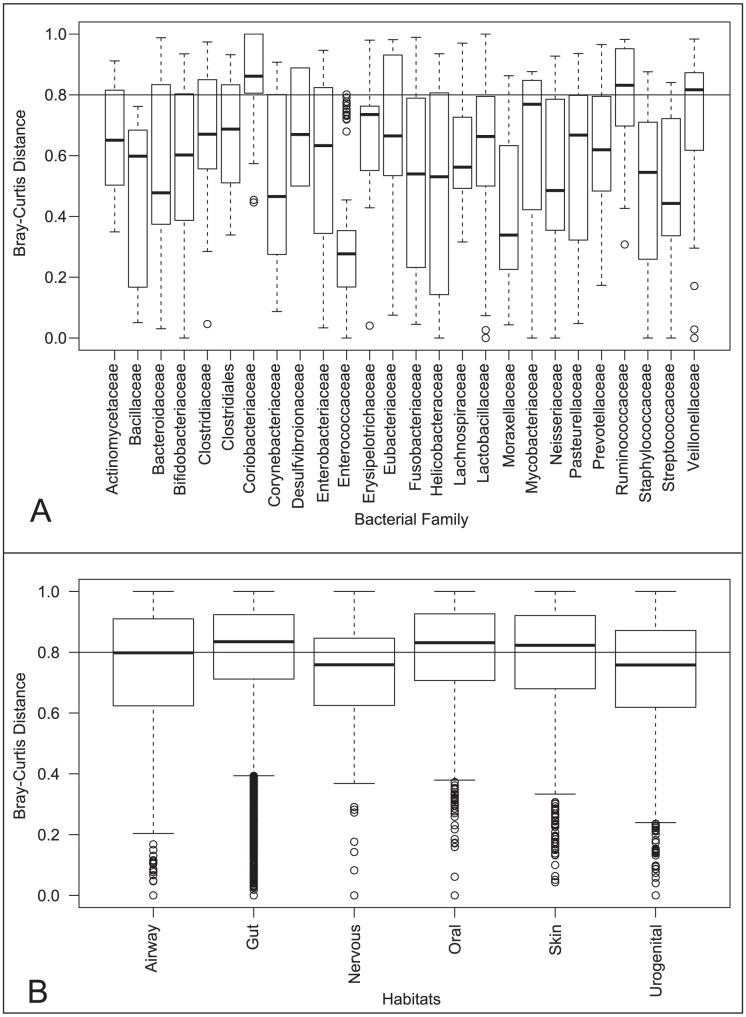
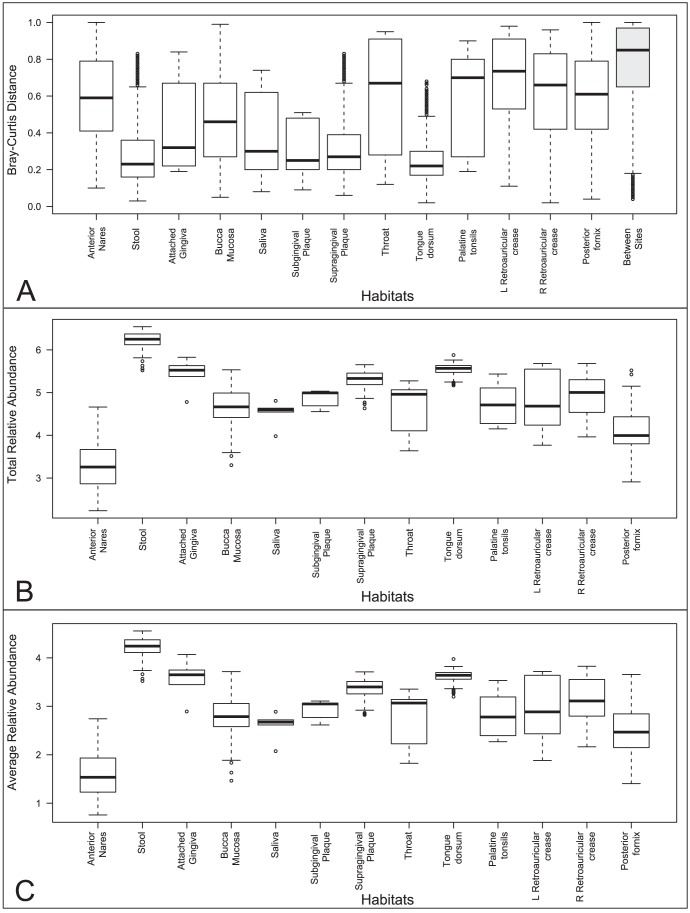
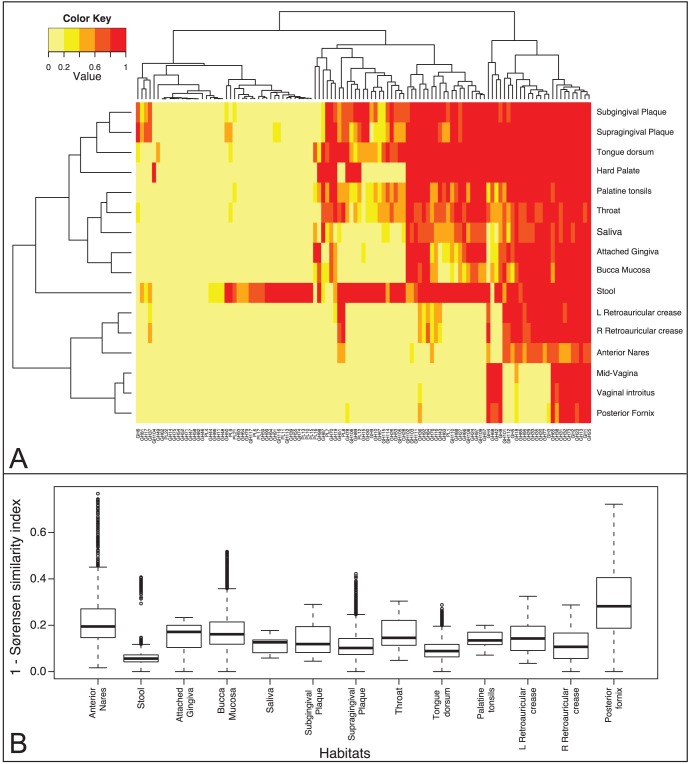
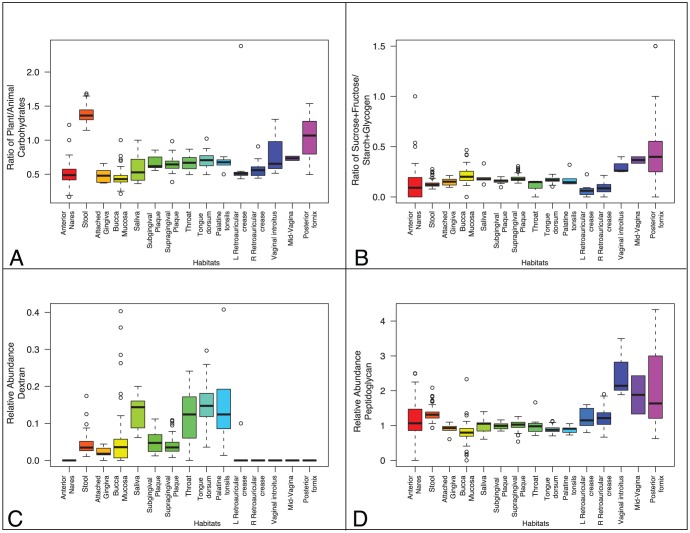
The various ecological habitats in the human body provide microbes a wide array of nutrient sources and survival challenges. Advances in technology such as DNA sequencing have allowed a deeper perspective into the molecular function of the human microbiota than has been achievable in the past. Here we aimed to examine the enzymes that cleave complex carbohydrates (CAZymes) in the human microbiome in order to determine (i) whether the CAZyme profiles of bacterial genomes are more similar within body sites or bacterial families and (ii) the sugar degradation and utilization capabilities of microbial communities inhabiting various human habitats. Upon examination of 493 bacterial references genomes from 12 human habitats, we found that sugar degradation capabilities of taxa are more similar to others in the same bacterial family than to those inhabiting the same habitat. Yet, the analysis of 520 metagenomic samples from five major body sites show that even when the community composition varies the CAZyme profiles are very similar within a body site, suggesting that the observed functional profile and microbial habitation have adapted to the local carbohydrate composition. When broad sugar utilization was compared within the five major body sites, the gastrointestinal track contained the highest potential for total sugar degradation, while dextran and peptidoglycan degradation were highest in oral and vaginal sites respectively. Our analysis suggests that the carbohydrate composition of each body site has a profound influence and probably constitutes one of the major driving forces that shapes the community composition and therefore the CAZyme profile of the local microbial communities, which in turn reflects the microbiome fitness to a body site.
Overview
The claims and statistics of this paper haven’t been checked yet.
Free: it reads the open-access text and checks the first 5 claims that cite a source we can check. Create a free account to check every claim.
Integrity signals
Registry
Cites
Statistics
Figures
Verification
Claims the paper makes
The claims and statistics of this paper haven’t been checked yet.
Free: it reads the open-access text and checks the first 5 claims that cite a source we can check. Create a free account to check every claim.
Claims other papers make about this one
Each is checked against this paper’s own text: does it say what the citing paper says it does?
In the citing paper
“Much of it can be fermented to short-chain fatty acids (SCFAs) such as acetate, propionate, and butyrate (see Table 1 in Michel and MacFarlane 1996; Cantarel et al. 2012) which both nourish the epithelia of the large intestine and offer other benefits to the host (Terada et al. 1995; Michel and MacFarlane 1996).”
From Algae as nutritional and functional food sources: revisiting our understanding. (2017) · cites this paper as Cantarel et al. 2012
In the citing paper
“our analyses indicated that Clostridium XIVa strains are characterized by overproportional rich carbohydrate-active enzyme (CAZyme) repertoires within the Lachnospiraceae [13]”
From Uncovering the trimethylamine-producing bacteria of the human gut microbiota (2017) · cites this paper as [13]
Self-check
Percentages, sums and reported differences re-computed from the paper’s own numbers.
The self-check needs the paper’s full text.
Citations
Cites
A core gut microbiome in obese and lean twins
Turnbaugh, P. J., Hamady, M., Yatsunenko, T., Cantarel, B. L., Duncan, A., Ley, R. E., Sogin, M. L., Jones, W. J., Roe, B. A., Affourtit, J. P., et al. (2009) · Nature · doi:10.1038/nature07540 · Cited by 7,823 · cited 1×
“Thus far, the GH6 family of enzymes has not been identified in any animal gut sample [35,36,37,38,39], suggesting that this enzyme specificity is perhaps driven by environmental factors.”
BackgroundSelf-citationEnterotypes of the human gut microbiome
MetaHIT Consortium (additional members), Arumugam, M., Raes, J., Pelletier, E., Le Paslier, D., Yamada, T., Mende, D. R., Fernandes, G. R., Tap, J., Bruls, T., et al. (2011) · Nature · doi:10.1038/nature09944 · Cited by 7,548 · cited 1×
“When we compare the oral sites to the gut, the starch and glycogen utilization appears much reduced in stool, suggesting specialization in digestion, whereby most of these sugars are likely degraded by human salivary amylase and oral flora and taken up in the small intestine by the host [32].”
BackgroundSørensen, T. B., Sorensen, T., Biering-Sørensen, T., Ti, S., & Sorensen, J. (1948) · Medical Entomology and Zoology · Cited by 6,188
The Carbohydrate-Active EnZymes database (CAZy): an expert resource for Glycogenomics
Cantarel, B. L., Coutinho, P. M., Rancurel, C., Bernard, T., Lombard, V., & Henrissat, B. (2009) · Nucleic Acids Research · doi:10.1093/nar/gkn663 · Cited by 5,972 · cited 3×
“Functional annotations were performed by BLASTX searches against proteins in the CAZy database [6], using thresholds: Evalue ,1e26 and bits/position .”
MethodInfluentialSelf-citationHost-Bacterial Mutualism in the Human Intestine
Bäckhed, F., Ley, R. E., Sonnenburg, J. L., Peterson, D. A., & Gordon, J. I. (2005) · Science · doi:10.1126/science.1104816 · Cited by 5,277 · cited 1×
“microbes, with the human gut thought to contain about 7000 different strains”
BackgroundVaginal microbiome of reproductive-age women
Ravel, J., Gajer, P., Abdo, Z., Schneider, G. M., Koenig, S. S. K., McCulle, S. L., Karlebach, S., Gorle, R., Russell, J., Tacket, C. O., et al. (2011) · Proceedings of the National Academy of Sciences · doi:10.1073/pnas.1002611107 · Cited by 4,254 · cited 2×
“These results are consistent with other studies of this dataset based on taxonomy [23] and KEGG Orthologs (KOs) groups [24]; in these studies and in a publication by Ravel and colleagues, the posterior fornix is shown to have the most diverse repertoire of functional capability [23,24] and a few distinct community typ…”
BackgroundResultA classification of glycosyl hydrolases based on amino acid sequence similarities
Henrissat, B. (1991) · Biochemical Journal · doi:10.1042/bj2800309 · Cited by 3,188
Self-citationTopping, D. L., & Clifton, P. M. (2001) · Physiological Reviews · doi:10.1152/physrev.2001.81.3.1031 · Cited by 3,091
Varki, A. P., Cummings, R. D., Esko, J. D., Freeze, H. H., Stanley, P., Bertozzi, C. R., Hart, G. W., & Etzler, M. E. (1999) · Cited by 2,384
Structural and sequence-based classification of glycoside hydrolases
Henrissat, B., & Davies, G. (1997) · Current Opinion in Structural Biology · doi:10.1016/s0959-440x(97)80072-3 · Cited by 1,664 · cited 1×
“org) [6,7,8,9,10].”
Self-citation
Cited by
Items 301–400 of 404
Peptidoglycan of Bacterial Cell Wall Affects Competitive Properties of Microorganisms
Semenov, A. V. (2021) · Bulletin of Experimental Biology and Medicine · doi:10.1007/s10517-021-05356-4 · Cited by 3
“Analysis of the human microbiome for the prevalence of hydrolases directly showed that the main families of these enzymes were involved in energy production and PG degradation [4].”
BackgroundZhang, S., Chen, W., Ma, C., Luo, Y., Dong, L., Hu, X., Chen, F., & Li, D. (2024) · Food Science and Human Wellness · doi:10.26599/fshw.2024.9250215 · Cited by 2
“The gut microbiome encode tens of thousands of carbohydrate-active enzymes (CAZymes), including glycoside hydrolases (GH), glycosyltransferases, polysaccharide lyases, and sugar esterases, which are capable of hydrolyzing MAC to produce SCFAs [11, 104].”
Microbial adaptation and host signaling: Bacteroides–bile acid interactions in gut health
Silva, C. M. G., Ferreira, R. B. R., & Lobo, L. A. (2026) · Anaerobe · doi:10.1016/j.anaerobe.2026.103041 · Cited by 2
Potential Public Health Impact of Human Milk Oligosaccharides
Morrow, A. L., & Yu, Y. Q. (2016) · Elsevier eBooks · doi:10.1016/b978-0-12-802725-7.00007-5 · Cited by 2
Jo, H., Baek, C., Heo, Y. M., Kim, H., Lee, H., Kang, S., Mun, S., Oh, Y., Ko, D., Han, K., et al. (2023) · Antonie van Leeuwenhoek · doi:10.1007/s10482-023-01873-6 · Cited by 3
Tian, Y., Luo, X., Chen, J. ‐., Rong, H., Wang, H., Li, B., Li, J., & You, X. (2024) · Allergy · doi:10.1111/all.16244 · Cited by 2
Song, J., Ji, B., Peng, Y., Ye, Z., Wang, Z., Zhao, T., & Liang, Y. (2024) · Journal of Animal and Feed Sciences · doi:10.22358/jafs/189181/2024 · Cited by 2
“The levels of IgG, IgM, IgA, interleukin 2 (IL-2), interleukin 6 (IL-6) and tumour necrosis factor-α (TNF-α) in the serum were quantified using appropriate ELISA kits (H106-1-2, H109-1-2, H108-1-2, H003-1-1, H007-1-2 and H023-1-1, respectively) following the manufacturer’s instructions (Jiancheng Bioengineering Instit…”
BackgroundInfluentialMicrobiome in Human Gastrointestinal Cancers
Coker, O. O., & Yu, J. Q. (2021) · Physiology in health and disease · doi:10.1007/978-3-030-67951-4_2 · Cited by 2
SHAJI, A., RUKSAR, S. S., MANISHA, T., & MOHANADAS, R. (2022) · EXPERIMENTAL & CLINICAL MEDICINE GEORGIA · doi:10.52340/jecm.2022.02.20 · Cited by 2
Introduction and Background to Microbiome Research
Pierre, J. F. (2022) · Royal Society of Chemistry eBooks · doi:10.1039/9781839160950-00001 · Cited by 2
Associations of dietary patterns with risk of gastrointestinal disorders: a prospective cohort study
Chen, W., Zhao, Y., Lu, H., Yi, J., Li, J., Song, X., Zhang, J., Yang, S., Ni, J., Wang, Z., et al. (2024) · Food & Function · doi:10.1039/d4fo01668h · Cited by 1
Safety Assessment of Cellobiose as a Novel Food for Use in Food and Food Supplements (RP1109)
Food Standards Agency, & Scotland, F. S. (2024) · FSA research and evidence. · doi:10.46756/001c.125427 · Cited by 1
McDonnell, K. (2025) · Journal of Clinical Medicine · doi:10.3390/jcm14062040 · Cited by 2
Prebiotic properties of resistant starch
Bojarczuk, A. (2024) · Biuletyn Głównej Biblioteki Lekarskiej · doi:10.2478/bgbl-2024-0008 · Cited by 1
In-vitro production of fucoidan from Sargassum polycystum and its biopharmacological potential
Emambocus, Z., Soulange, J. G., & Nazurally, N. (2025) · Western Indian Ocean Journal of Marine Science · doi:10.4314/wiojms.v24i1.12 · Cited by 1
Gut Microbiota Dynamics in Obesity and Metabolic Regulation
Farhood, A. H., & Shalal, S. H. (2025) · Academia Open · doi:10.21070/acopen.10.2025.12579 · Cited by 1
“Methane-producing microorganisms, classified as Archaea, are found in about half of the population [52].”
Belmonte, A., Leanza, Y., Polizzi, A., Romano, A., Allegra, A., Leonardi, R. M., Panuzzo, C., & Isola, G. (2025) · Oral · doi:10.3390/oral5040101 · Cited by 2
“The oral cavity, as the second most abundant source of these metabolites, highlights its contribution to carbohydrate fermentation [62].”
McCartney, C., Hajjar, R., & Santos, M. M. (2026) · Frontiers in Microbiology · doi:10.3389/fmicb.2026.1774501 · Cited by 1
“The human gut microbiota is made up of more than 10 13 micro-organisms (Sender et al., 2016), together encoding more than 150x the genetic material found in the human genome (Cantarel et al., 2012).”
Viborg, A. H. (2015) · Trends in Glycoscience and Glycotechnology · doi:10.4052/tigg.1436.4j · Cited by 1
Viborg, A. H. (2015) · Trends in Glycoscience and Glycotechnology · doi:10.4052/tigg.1436.4e · Cited by 1
Jacobs, S., Payne, C., Shaboodien, S., Kgatla, T., Pretorius, A., Jumaar, C., Sanni, O., BUTROUS, G. S., & Maarman, G. J. (2023) · Pulmonary Circulation · doi:10.1002/pul2.12277 · Cited by 1
Estavoyer, B., & Soudja, S. M. (2018) · médecine/sciences · doi:10.1051/medsci/20183406027 · Cited by 1
Influence of functional ingredients of baby food on immunity
Николаевна, К. О., & Хавкин, А. И. (2019) · Meditsinskiy sovet = Medical Council · doi:10.21518/2079-701x-2019-17-37-44 · Cited by 1
Boger, M. C. L. (2020) · University of Groningen research database (University of Groningen / Centre for Information Technology) · doi:10.33612/diss.111903379 · Cited by 1
Functional screening of human faecal microbiome metagenome library for glycoside hydrolase enzymes
Mulualem, D. M. (2020) · Arrow@dit (Dublin Institute of Technology) · doi:10.13025/16923 · Cited by 1
Smith, B. J. (2019) · Deep Blue (University of Michigan) · Cited by 1
Carbohydrate-Active Enzymes Database, Metagenomic Expert Resource
Cantarel, B. L., Coutinho, P. M., & Henrissat, B. (2012) · Springer eBooks · doi:10.1007/978-1-4614-6418-1_25-10 · Cited by 1
Self-citationGourdine, J.-P. F., Pacentine, I. V., Barstad, A., Dahl, E. M., Gregory, W. T., Wolfe, A. J., Sysoeva, T. A., & Karstens, L. (2025) · bioRxiv (Cold Spring Harbor Laboratory) · doi:10.1101/2025.04.02.646827 · Cited by 4
“Similar to the microbiota associated with other body sites (e.g., gut, oral cavity), glycoside hydrolases of bladder microbiota are predominated by families involved by energy production such as GH13, GH32, GH1 and peptidoglycan breakdown (GH25, GH73) 64,87 .”
Functional genomics of Enterococcus faecium: antibiotic resistance and niche adaptation
Zhang, X. (2013) · Utrecht University Repository (Utrecht University)
Gastrointestinal microbiota, diet and brain functioning
Gondalia, S. V., & Scholey, A. B. (2015) · Microbiology Australia · doi:10.1071/ma15008 · Cited by 1
Makarova, S. G., & Russian Federation (2013)
24. Heart health and microorganisms: the unexpected beat
Castoldi, Â., Ignácio, A., Takiishi, T., & Câmara, N. O. S. (2017) · Wageningen Academic Publishers eBooks · doi:10.3920/978-90-8686-853-7_24
Dietary Impacts on the Composition of Microbiota in Human Health and Disease
Verma, A. K., Kumari, R., Bhattacharya, A., & Paul, J. (2017) · Springer eBooks · doi:10.1007/978-981-10-5708-3_21
Yap, T. W.-C., & Chen, W. (2017) · University of Malaya Students Repository
Abraham, A. (2017) · Mspace (University of Manitoba)
Utilization of Faecal Microbiota in Humans and Animals
kwang-keun, C., Kim, S.-H., Park, S.-Y., Lee, J. M., & Jo, S.-Y. (2020) · Journal of Agriculture & Life Science · doi:10.14397/jals.2020.54.1.1
Dietary Modulation of the Gut Microbiome—Probing the Role of Small RNAs
Yang, J., Hirschi, K. D., Karri, V., & Spinler, J. K. (2020) · Elsevier eBooks · doi:10.1016/b978-0-08-100596-5.22722-4
Han, S., Gupta, S., Park, H., Jang, J., & Oh, T. (2021) · SSRN Electronic Journal · doi:10.2139/ssrn.3918964
Nolte, F. S. (2018) · Elsevier eBooks · doi:10.1016/b978-0-12-816061-9.00005-9
“An important point that emerged from these early studies is that although the microbial communities varied among individuals, the metabolic pathways encoded by these organisms were consistently present, forming a functional “core” to the microbiome at all body sites.(268,270,271) Although the pathways and processes of…”
van Trijp, M. P. H. (2022) · doi:10.18174/558735 · Cited by 1
Carbohydrate-Active Enzymes Database, Metagenomic Expert Resource
Cantarel, B. L., Coutinho, P. M., & Henrissat, B. (2015) · Springer eBooks · doi:10.1007/978-1-4899-7478-5_25
Self-citationEffects of Dietary Fiber on Diet and Intestinal Microflora
Tian, P. (2022) · Advances in Social Science, Education and Humanities Research/Advances in social science, education and humanities research · doi:10.2991/assehr.k.220504.076
Environment Impact on Algal Food Quality
Vasumathi, K., Sundar, K., & Premalatha, M. (2022) · BENTHAM SCIENCE PUBLISHERS eBooks · doi:10.2174/9789815051872122010007
Kasprowicz, J. N., & Savi, D. C. (2022) · VITTALLE - Revista de Ciências da Saúde · doi:10.14295/vittalle.v34i3.13950 · Cited by 3
“Por meio de enzimas ativas para carboidratos (CAZymes) algumas bactérias conseguem degradar os glicanos, consequentemente liberando glicose e, que após ser fermentada forma acetato, propionato, formato, butirato, lactato e succinato, denominados ácidos graxos de cadeia curta (SCFAs, do inglês, short-chain fatty acid)…”
BackgroundInfluence of the Gut Microbiome on Cardiovascular Health and Hypertension
Kumar, S., Choubey, A., Sharma, A., Jedhe, A., Pandey, K., Prakash, A., & Khan, A. U. (2023) · Springer eBooks · doi:10.1007/978-981-99-3126-2_15
An Insight towards the Role of Micro-Biota in Vaccine Development for COVID-19
Dubey, A. (2020) · Bioinformatics & Proteomics Open Access Journal · doi:10.23880/bpoj-16000132
A szénhidrátok és a gastrointestinalis rendszer
Lőrinczi, C., & Iliás, Á. (2023) · Magyar Belorvosi Archívum · doi:10.59063/mba.2023.76.5-6.2
Régulation et fonctions du facteur de transcription ChREBP dans l'épithélium intestinal
Charifi, W. (2021) · theses.fr (ABES) · doi:10.70675/89543c3fz31abz4d56zaa7bz77c2c07ffd69
Functional Applications of Human Microbiome Diversity Studies
Nkera-Gutabara, C. K., Hurrell, T., & Naidoo, J. (2024) · Elsevier eBooks · doi:10.1016/b978-0-443-13320-6.00039-1
Wang, H., An, J., Fan, C., Zhai, Z., Zhang, H., & Hao, Y. (2022) · Figshare · doi:10.6084/m9.figshare.19234610
Why the need for microbiome? An updated perspective
Michael, O. S., Adetunji, J. B., Akinwale, E. O., Adetunji, C. O., & Soladoye, A. O. (2024) · Elsevier eBooks · doi:10.1016/b978-0-323-91190-0.00002-3 · Cited by 1
Tree-extracted mucilages: Arabinogalactan
Li, S., & Tan, H. (2025) · Elsevier eBooks · doi:10.1016/b978-0-443-21630-5.00007-1
Preventive Role of Soluble Dietary Fiber Against Inflammatory and Life Style Related Diseases
Arshad, R., Humayun, S., Jahangeer, A., Sharif, H. R., & Nasir, M. A. (2024) · RADS Journal of Food Biosciences · doi:10.37962/jfbs.v3i1.28
Nutritional significance of short-chain fatty acids
Karadağ, M. G., Tuğ, T. A., Ağagündüz, D., & Özoğul, F. (2025) · Elsevier eBooks · doi:10.1016/b978-0-443-33296-8.00005-8
Tap, J., Störsrud, S., Nevé, B. L., Cotillard, A., Pons, N., Dore, J. M., Öhman, L., Törnblom, H., Derrien, M., & Simrén, M. (2021) · Figshare · doi:10.6084/m9.figshare.14329549
Xiang, X., Jin, L., Yang, Z., Zhang, N., & Zhang, F. (2021) · Figshare · doi:10.6084/m9.figshare.13514626
Xiang, X., Jin, L., Yang, Z., Zhang, N., & Zhang, F. (2021) · Figshare · doi:10.6084/m9.figshare.13514629
Tap, J., Störsrud, S., Nevé, B. L., Cotillard, A., Pons, N., Dore, J. M., Öhman, L., Törnblom, H., Derrien, M., & Simrén, M. (2021) · Figshare · doi:10.6084/m9.figshare.14329546
Brandt, S., Brognaro, H., Ali, A., Ellinger, B., Maibach, K., Rühl, M., Wrenger, C., Schlüter, H., Schäfer, W., Betzel, C., et al. (2021) · Figshare · doi:10.6084/m9.figshare.14253803
Wang, H., An, J., Fan, C., Zhai, Z., Zhang, H., & Hao, Y. (2022) · Figshare · doi:10.6084/m9.figshare.19234613
Tap, J., Störsrud, S., Nevé, B. L., Cotillard, A., Pons, N., Dore, J. M., Öhman, L., Törnblom, H., Derrien, M., & Simrén, M. (2021) · Figshare · doi:10.6084/m9.figshare.14329543
Tap, J., Störsrud, S., Nevé, B. L., Cotillard, A., Pons, N., Dore, J. M., Öhman, L., Törnblom, H., Derrien, M., & Simrén, M. (2021) · Figshare · doi:10.6084/m9.figshare.14329552
Diacova, T. (2024) · eScholarship (California Digital Library)
Effect of β-glucan molecular weight and viscosity on the mechanism of cholesterol lowering in humans
Wang, Y. (2015) · Mspace (University of Manitoba) · Cited by 1
Payling, L. M. (2022) · Massey Research Online (Massey University) · Cited by 1
Rizzo, N. R. (2023) · eScholarship (California Digital Library)
Characterization of Early Biofilm Formation and Physiology in Neisseria gonorrhoeae
Eckenrode, K. (2019) · CUNY Academic Works (City University of New York) · Cited by 1
Xu, L., Yang, X., Li, X., Liu, Y., Yin, J., Dong, G., Li, C. W., Ni, W., Zhang, S., Ye, B., et al. (2025) · Molecular Microbiology · doi:10.1111/mmi.70040
Guimarães, S. P., Trindade, L. M., Rocha, M. L. D. D., Borges, A. D., Andrade, M. E. R., Thomas‐Valdés, S., Maurício, S. F., da Silva, R. G., & Generoso, S. D. V. (2026) · Letters in Applied Microbiology · doi:10.1093/lambio/ovag001
Huang, P., Cao, L., Cao, T., Wang, X., Cui, S., Jiang, S., Chen, H., Di, L., Li, S., & Huang, L. (2026) · CNS Neuroscience & Therapeutics · doi:10.1002/cns.70748
“Because the host genome lacks the polysaccharide lyases necessary to digest many complex carbohydrates, these substrates are instead fermented in the colon by gut bacteria possessing carbohydrate-active enzymes (CAZymes)—such as Lactobacillus and Bifidobacterium —to produce SCFAs [34, 35].”
O PAPEL DA MICROBIOTA INTESTINAL E O USO DOS PROBIÓTICOS NO TRANSTORNO DEPRESSIVO MAIOR
Sancção, L. G., de Sá, L. S., & Ferriani, L. O. (2026) · Editora Científica Digital eBooks · doi:10.37885/260121007
Kaoutari, A. E. (2013) · theses.fr (ABES) · doi:10.70675/a3cd353bz6951z420az8569zdc04ef79ce1c
Enzymes de dépolymérisation d'exopolysaccharides bactériens marins
Lelchat, F. (2014) · theses.fr (ABES) · doi:10.70675/7d97d701z704az49a0zaae1zc717e1910080 · Cited by 2
Ali‐Ahmad, A. (2016) · theses.fr (ABES) · doi:10.70675/3c22b944zb96fz4c07zbaa3zf72eaa846584
Schmitt, C. C. (2016) · theses.fr (ABES) · doi:10.70675/a1cd5d6azf620z4554z9020zdff30c94abab · Cited by 2
Ufarté, L. (2016) · theses.fr (ABES) · doi:10.70675/ec5e2b3dzcf40z48a5z85d6z37c5d133f25b · Cited by 1
Role of bacteria in obesity : iimplication of Lactobacillus sp. genomes in weight gain
Drissi, F. (2015) · theses.fr (ABES) · doi:10.70675/d5854359za512z40b2z99cbz89d2c15552ee
Métabolomique permettant la découverte de biomarqueurs pertinents
Rezig, L. (2016) · theses.fr (ABES) · doi:10.70675/7b02aedbzd20cz46fbzb0a9zdecf28d88809
Patrascu, I. (2017) · theses.fr (ABES) · doi:10.70675/7d5af581z6a02z4e82z847ez65956986b54c
Giraud, C. (2023) · theses.fr (ABES) · doi:10.70675/a2e25d6fzc86fz4127za381z3f3f3e22f7f7
Diversity, dynamics and functions of planktonic Fungi in coastal areas
Laymand, E. (2024) · theses.fr (ABES) · doi:10.70675/52e51f47z002ez4ffaz9f4dz8b8d474a9c75 · Cited by 1
Palanivishwanath, S., Nagappan, S., Tripathi, K., & Mishra, S. (2026) · Springer eBooks · doi:10.1007/978-981-95-7234-2_5
Carvajal, M. J. C. (2026) · Investigative News in Education (Universidad de Costa Rica)
Gut Microbiome, Disease, and Diet: Leveraging Big Data for Precise Nutrition
Huang, Z., Ye, C., Liu, K., Ma, W., Liu, Q., & Li, D. Y. (2026) · Food Science and Human Wellness · doi:10.26599/fshw.2026.9251155
Tonkie, J. N. (2026) · Massey Research Online (Massey University)
Functional effects of microbial metabolites in dental caries
Aili, M., Yu, S., Wang, X., Ye, D., Fang, Y., Wu, Y., Long, Y., Wang, S., Zou, J., & Ma, Q. (2026) · Critical Reviews in Microbiology · doi:10.1080/1040841x.2026.2719588
“the oral cavity harbors a diverse array of carbohydrate-active enzymes, making it one of the most metabolically active sites for carbohydrate degradation, second only to the gastrointestinal tract (cantarel et al. 2012).”
Tang, J., Li, N., Zhou, W., Pan, R., Suo, L., Li, B., & Zhao, H. (2026) · Biology · doi:10.3390/biology15171530
“…differentially abundant CAZy families were nasopharyngeal—including glycoside hydrolases (GH13_29, GH39, GH103) and a sialate O-acetylesterase (CE14) acting on host sialic-acid glycans—pointing to an airway toolkit for host-glycan foraging rather than gut-type plant-fiber degradation [53–55].”
Li, T., Guo, T., Wang, P., Zhi, Z., Cao, Y., Cui, M., & Zhang, J. (2026) · Poultry Science · doi:10.1016/j.psj.2026.107762
“The distribution of these CAZyme classes is consistent with the capacity of gut microbial communities to process structurally diverse dietary glycans (Cantarel et al., 2012; Kaoutari et al., 2013).”
Metadata
- Authors
- Cantarel, B. L., Lombard, V., & Henrissat, B.
- Affiliations
- University of Maryland, Baltimore (US)
- Centre National de la Recherche Scientifique (FR)
- Corresponding author
- Cantarel, Brandi L.
- Venue
- PLoS ONE
- Publisher
- Public Library of Science (PLoS)
- Published
- 2012-06-13
- Volume
- 7
- Issue
- 6
- Pages
- e28742
- ISSN
- 1932-6203 (ISSN-L)
- PMC
- PMC3374616
- OpenAlex
- W2060637207
- Cited by
- 378
- References
- 43
- Citations by year
- 2026: 13 · 2025: 22 · 2024: 35 · 2023: 24 · 2022: 43 · 2021: 47 · 2020: 31 · 2019: 19 · 2018: 22 · 2017: 25 · 2016: 25 · 2015: 25 · 2014: 19 · 2013: 18 · 2012: 9
- FWCI
- 9.07
- Type
- journal article
- Language
- en
- Open access
- gold
- doi.org
- Locations
- PLoS ONE (publishedVersion, cc-by)
- PubMed Central (publishedVersion, cc-by)
- PubMed (publishedVersion)
- DOAJ (DOAJ: Directory of Open Access Journals) (submittedVersion, cc-by-sa)
- Figshare (submittedVersion, cc-by)
- Funders
- National Institutes of Health
- National Human Genome Research Institute (U01HG004866)
- Topics
- Life Sciences › Biochemistry, Genetics and Molecular Biology › Molecular Biology › Gut microbiota and health
- Life Sciences › Biochemistry, Genetics and Molecular Biology › Molecular Biology › Genomics and Phylogenetic Studies
- Physical Sciences › Environmental Science › Ecology › Microbial Community Ecology and Physiology
- Keywords
- human microbiome, carbohydrate-active enzymes, sugar degradation, metagenomics, bacterial genomes, body site comparison, oral microbiota, vaginal microbiota, gastrointestinal microbiome, dextran degradation, peptidoglycan degradation, microbial community composition, host-microbe interactions
- MeSH terms
- Humans, Reference Values, Carbohydrate Metabolism, Metagenome
About these checks
Registry, retraction, Cites and statistics results are computed, not judged, with one exception: a printed reference that no index lists is read once by a model before it counts as a citation error. Claims are extracted by a model and kept only when their quote appears verbatim in the text; each cited source is then checked, with a model’s help, for whether it says what the claim relies on. Those verdicts can be wrong — read the claim’s quote and the cited source before relying on one.
Statistics and arithmetic are recomputed, not judged.
Confidence bands are shown only for fields calibrated on our annotated test set. None is calibrated yet, so no band is shown.
What counts as a claim ›How we measure confidence ›How we check this ›
Are you an author, or do you see a problem with this page? Request a review
Data sources
Bibliographic data: Semantic Scholar, OpenAlex, Crossref.
Contains information from the Semantic Scholar Academic Graph Datasets, made available under the ODC Attribution License (ODC-BY 1.0).
Semantic Scholar’s data is described in: Kinney, R., et al. (2023). The Semantic Scholar Open Data Platform. arXiv:2301.10140.
