

The DOI matches its Crossref record; 62 of the 62 references it cites were found in a registry or an index.
Impairments of Social Motor Coordination in Schizophrenia
Open accessAbstract
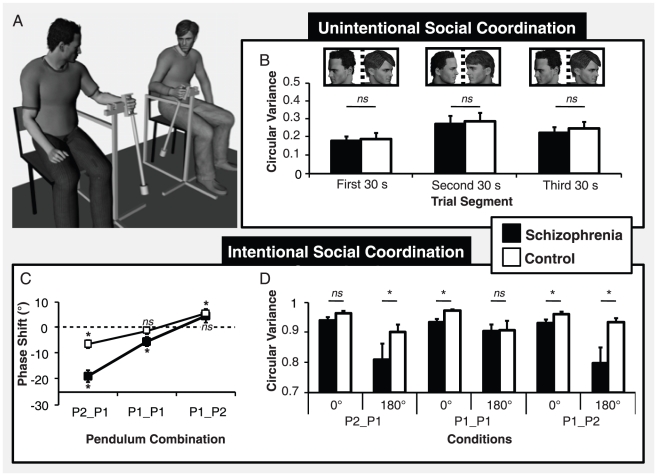
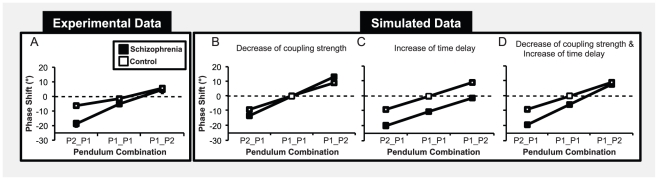
It has been demonstrated that motor coordination of interacting people plays a crucial role in the success of social exchanges. Abnormal movements have been reported during interpersonal interactions of patients suffering from schizophrenia and a motor coordination breakdown could explain this social interaction deficit, which is one of the main and earliest features of the illness. Using the dynamical systems framework, the goal of the current study was (i) to investigate whether social motor coordination is impaired in schizophrenia and (ii) to determine the underlying perceptual or cognitive processes that may be affected. We examined intentional and unintentional social motor coordination in participants oscillating hand-held pendulums from the wrist. The control group consisted of twenty healthy participant pairs while the experimental group consisted of twenty participant pairs that included one participant suffering from schizophrenia. The results showed that unintentional social motor coordination was preserved while intentional social motor coordination was impaired. In intentional coordination, the schizophrenia group displayed coordination patterns that had lower stability and in which the patient never led the coordination. A coupled oscillator model suggests that the schizophrenia group coordination pattern was due to a decrease in the amount of available information together with a delay in information transmission. Our study thus identified relational motor signatures of schizophrenia and opens new perspectives for detecting the illness and improving social interactions of patients.
Overview
The claims and statistics of this paper haven’t been checked yet.
Run the check — free, no account needed. It reads the open-access text and checks the sources it cites.
Integrity signals
Registry
Cites
Statistics
Figures
Verification
Claims the paper makes
The claims and statistics of this paper haven’t been checked yet.
Run the check — free, no account needed. It reads the open-access text and checks the sources it cites.
Claims other papers make about this one
Each is checked against this paper’s own text: does it say what the citing paper says it does?
The cited source says what the claim attributes to it.
In the citing paper
“This finding is in line with imaging and TMS studies showing intact [14][15][16][17] or even enhanced 14,24 MNS activity in patients during action observation or imitation and with work done on social motor coordination in schizophrenia, where spontaneous coordination is preserved.62”
From Enhanced Automatic Action Imitation and Intact Imitation-Inhibition in Schizophrenia (2019) · cites this paper as [62]
Self-check
Percentages, sums and reported differences re-computed from the paper’s own numbers.
The self-check needs the paper’s full text.
Citations
Cites
Diagnostic and Statistical Manual of Mental Disorders
Williams, J. B. W., & First, M. B. (2013) · Oxford University Press eBooks · doi:10.1093/acrefore/9780199975839.013.104 · Cited by 109,845
The Positive and Negative Syndrome Scale (PANSS) for schizophrenia.
Kay, S. R., Fiszbein, A., & Opler, L. A. (1987) · Schizophrenia Bulletin · doi:10.1093/schbul/13.2.261 · Cited by 21,378 · cited 5×
“These results suggest that examining intentional social motor coordination of patients might objectively and quantitatively assess abnormal social features that are not captured by the PANSS.”
MethodInfluentialSynchronization a universal concept in nonlinear sciences
PIKOVSKY, A. S., Rosenblum, M. G., & Kurths, J. (2001) · Cited by 5,640
The chameleon effect: the perception–behavior link and social interaction
Chartrand, T. L., & Bargh, J. A. (1999) · Journal of Personality and Social Psychology · doi:10.1037/0022-3514.76.6.893 · Cited by 3,674 · cited 3×
“It is however important to note that the coordination dynamics observed in this laboratory task reflect the ones observed for example between hand, arm or postural movements in more ecological situations, which have been demonstrated as directly influencing the success of our social interactions [1–7,14].”
BackgroundSpeed of processing in the human visual system
Thorpe, S., Fize, D., & Marlot, C. (1996) · Nature · doi:10.1038/381520a0 · Cited by 3,538
Neurocognitive deficit in schizophrenia: A quantitative review of the evidence.
Heinrichs, R. W., & Zakzanis, K. K. (1998) · Neuropsychology · doi:10.1037/0894-4105.12.3.426 · Cited by 2,798 · cited 2×
“More specifically, we assumed that the stability of the coordination could be decreased in schizophrenia because of either (i) a modification of their preferred frequency of movement due to their motor disorder [25–26] or (ii) a decrease in the strength of the perceptual coupling due to general impairments in attentio…”
BackgroundResultA theoretical model of phase transitions in human hand movements.
Haken, H., Kelso, J. A. S., & Bunz, H. (1985) · Biological Cybernetics · doi:10.1007/bf00336922 · Cited by 2,328 · cited 2×
“(1) to test whether a decrease of the strength or/and an increase of the time delay in the coupling function captured patients’ impairments of intentional social motor coordination [42–43].”
BackgroundResultA Systematic Review of the Prevalence of Schizophrenia
Saha, S., Chant, D., Welham, J., & McGrath, J. (2005) · PLoS Medicine · doi:10.1371/journal.pmed.0020141 · Cited by 2,168 · cited 1×
“Moreover, such abnormal movements may be the earliest sign of schizophrenia and be used as a marker for earlier diagnostics of this illness that affects almost one percent of the world population [10–13].”
BackgroundThe Functional Significance of Social Cognition in Schizophrenia: A Review
Couture, S. M. (2006) · Schizophrenia Bulletin · doi:10.1093/schbul/sbl029 · Cited by 1,363 · cited 1×
“More particularly, mirror neuron system disorders, which corresponds to the brain area that may also moderate social motor coordination [47–48], may play a crucial role in such a deficit and in social interactions deficits in general [49–50].”
BackgroundUsing nonconscious behavioral mimicry to create affiliation and rapport
Lakin, J. L., & Chartrand, T. L. (2003) · Psychological Science · doi:10.1111/1467-9280.14481 · Cited by 1,297 · cited 3×
“It is however important to note that the coordination dynamics observed in this laboratory task reflect the ones observed for example between hand, arm or postural movements in more ecological situations, which have been demonstrated as directly influencing the success of our social interactions [1–7,14].”
Background
Cited by
Sorted by citations
Impairments of Social Motor Synchrony Evident in Autism Spectrum Disorder
Fitzpatrick, P., Frazier, J. A., Cochran, D., Mitchell, T. V., Coleman, C., & Schmidt, R. C. (2016) · Frontiers in Psychology · doi:10.3389/fpsyg.2016.01323 · Cited by 192
“(Note: Convention comparable with Varlet et al., 2012; −0.1 indicates parent should lead, +0.1 indicates child should lead.) between groups (p = 0.4) but the slopes were significantly different (p < 0.001).”
BackgroundMethodResultInfluentialInviting affordances and agency
Withagen, R., Araújo, D., & de Poel, H. J. (2017) · New Ideas in Psychology · doi:10.1016/j.newideapsych.2016.12.002 · Cited by 160
“…þ u22x2 ¼ h2ðA2 þ B2½x2 x1 Þð _x2 _x1Þ (3b) Parameter hi (for the present purposes we take 0<hi <1) serves to scale the coupling strength inflicted on component i (for related modeling strategies in this context, see De Poel, 2016; Kelso, de Guzman, Reveley, & Tognoli, 2009; Varlet et al., 2012).”
Measuring the Dynamics of Interactional Synchrony
Schmidt, R. C., Morr, S., Fitzpatrick, P., & Richardson, M. J. (2012) · Journal of Nonverbal Behavior · doi:10.1007/s10919-012-0138-5 · Cited by 136
“2012; Trevarthen and Daniel 2005), and schizophrenia (Condon and Ogston 1967; Varlet et al. 2012).”
Kupper, Z., Ramseyer, F., Hoffmann, H., & Tschacher, W. (2015) · PLoS ONE · doi:10.1371/journal.pone.0145882 · Cited by 136
“experimental setting [22], and with unintentional social coordination in a triadic setting involving one patient and two healthy interactants [36,53].”
BackgroundA comprehensive review of the functions of YB-1 in cancer stemness, metastasis and drug resistance
Alkrekshi, A., Wang, W., Rana, P. S., Marković, V. G., & Sossey‐Alaoui, K. (2021) · Cellular Signalling · doi:10.1016/j.cellsig.2021.110073 · Cited by 104
Georgescu, A. L., Koeroglu, S., Hamilton, A. F. D. C., Vogeley, K. T., Falter‐Wagner, C. M., & Tschacher, W. (2020) · Molecular Autism · doi:10.1186/s13229-019-0305-1 · Cited by 126
“It has also been associated with various psychopathological conditions like schizophrenia [22, 23], social anxiety disorder [24] and borderline personality disorder [25].”
BackgroundFitzpatrick, P., Diorio, R., Richardson, M. J., & Schmidt, R. C. (2013) · Frontiers in Integrative Neuroscience · doi:10.3389/fnint.2013.00021 · Cited by 111
“…found that breakdowns in social motor coordination are associated with psychological dysfunction such as schizophrenia (Ramseyer and Tschachter, 2011; Varlet et al., 2012) and borderline personality disorders (Gratier and Apter-Danon, 2008) as well as marital dissatisfaction (Julien et al., 2000).”
BackgroundNovembre, G., Sammler, D., & Keller, P. E. (2016) · Neuropsychologia · doi:10.1016/j.neuropsychologia.2016.07.027 · Cited by 99
“…(Hove and Risen, 2009; Wiltermuth and Heath, 2009), prosocial behavior (Kirschner and Tomasello, 2010; Kokal et al., 2011; Cirelli et al., 2014), and is impaired in a variety of social disorders including schizophrenia, social anxiety and autism (Varlet et al., 2012, 2014; Marsh et al., 2013).”
BackgroundSocial Motor Synchronization: Insights for Understanding Social Behavior in Autism
Fitzpatrick, P., Romero, V., Amaral, J. L., Duncan, A. W., Barnard, H. D., Richardson, M. J., & Schmidt, R. C. (2017) · Journal of Autism and Developmental Disorders · doi:10.1007/s10803-017-3124-2 · Cited by 95
Richardson, M. J., Harrison, S. J., Kallen, R. W., Walton, A. E., Eiler, B. A., Saltzman, E. L., & Schmidt, R. C. (2015) · Journal of Experimental Psychology Human Perception & Performance · doi:10.1037/xhp0000041 · Cited by 80
The coordination dynamics of social neuromarkers
Tognoli, E., & Kelso, J. A. S. (2015) · Frontiers in Human Neuroscience · doi:10.3389/fnhum.2015.00563 · Cited by 77
Friends and Symptom Dimensions in Patients with Psychosis: A Pooled Analysis
Giacco, D., McCabe, R., Kallert, T. W., Hansson, L. I., Fiorillo, A., & Priebe, S. (2012) · PLoS ONE · doi:10.1371/journal.pone.0050119 · Cited by 77
Fitzpatrick, P., Frazier, J. A., Cochran, D., Mitchell, T. V., Coleman, C., & Schmidt, R. C. (2018) · Frontiers in Psychology · doi:10.3389/fpsyg.2018.01337 · Cited by 69
Varlet, M., Marín, L., Capdevielle, D., Del-Monte, J., Schmidt, R. C., Salesse, R. N., Boulenger, J., Bardy, B. G., & Raffard, S. (2014) · Frontiers in Behavioral Neuroscience · doi:10.3389/fnbeh.2014.00029 · Cited by 66
Patterns of Joint Improvisation in Adults with Autism Spectrum Disorder
Brezis, R. S., Noy, L., Alony, T., Gotlieb, R., Cohen, R., Golland, Y., & Levit‐Binnun, N. (2017) · Frontiers in Psychology · doi:10.3389/fpsyg.2017.01790 · Cited by 65
“By contrast, reduced interpersonal motor synchronization has been found in individuals with schizophrenia (Varlet et al., 2012; Lavelle et al., 2014), and social anxiety disorder (Varlet et al.”
BackgroundLahnakoski, J. M., Forbes, P., McCall, C., & Schilbach, L. (2020) · Royal Society Open Science · doi:10.1098/rsos.191815 · Cited by 65
“Conversely, abnormalities of non-verbal behaviour have also been reported in a range of psychiatric disorders, including schizophrenia [7,8], social anxiety disorder [9] and autism [10–13], which may explain some of the social difficulties faced by persons affected by these conditions.”
BackgroundGOLPH3 promotes glioblastoma cell migration and invasion via the mTOR‐YB1 pathway in vitro
Zhang, X., Ding, Z., Mo, J., Sang, B., Shi, Q., Hu, J., Xie, S. P., Zhan, W., Lu, D., Yang, M., et al. (2014) · Molecular Carcinogenesis · doi:10.1002/mc.22197 · Cited by 65
Coordination dynamics in a socially situated nervous system
Coey, C. A., Varlet, M., & Richardson, M. J. (2012) · Frontiers in Human Neuroscience · doi:10.3389/fnhum.2012.00164 · Cited by 73
Laroche, J., Berardi, A. M., & Brangier, É. (2014) · Frontiers in Psychology · doi:10.3389/fpsyg.2014.01180 · Cited by 70
“For instance, deficits in social coordination might be rooted in a loss of complexity, possibly at both the individual and the collective level (for recent dynamical studies, see Lazerges et al., 2011; Varlet et al., 2012, 2014; Lavelle et al., 2013; Marsh et al., 2013).”
Galbusera, L., Finn, M. T. M., & Fuchs, T. A. E. (2016) · Psychotherapy Research · doi:10.1080/10503307.2016.1216624 · Cited by 62
“Recently, a few empirical studies have measured the temporal dynamics of interpersonal coordination (i.e., interactional synchrony), showing an impairment of social motor coordination in schizophrenia (Kupper, Ramseyer, Hoffmann, & Tschacher, 2016; Raffard et al., 2015; Varlet et al., 2012).”
BackgroundRiehle, M., Kempkensteffen, J., & Lincoln, T. M. (2017) · Journal of Nonverbal Behavior · doi:10.1007/s10919-016-0246-8 · Cited by 55
Dynamics of Simultaneous and Imitative Bodily Coordination in Trust and Distrust
Cornejo, C., Hurtado, E., Cuadros, Z., Torres‐Araneda, A., Mayor, J. P., Olivares, H., Carre, D. J., & Robledo, J. P. (2018) · Frontiers in Psychology · doi:10.3389/fpsyg.2018.01546 · Cited by 51
“, 2014) and schizophrenia (Varlet et al., 2012) have been reported to be less able to coordinate with others.”
BackgroundRomero, V., Fitzpatrick, P., Roulier, S., Duncan, A. W., Richardson, M. J., & Schmidt, R. C. (2018) · PLoS ONE · doi:10.1371/journal.pone.0193906 · Cited by 62
Emergent complexity matching in interpersonal coordination: Local dynamics and global variability.
Fine, J. M., Likens, A. D., Amazeen, E. L., & Amazeen, P. G. (2015) · Journal of Experimental Psychology Human Perception & Performance · doi:10.1037/xhp0000046 · Cited by 48
Raffard, S., Salesse, R. N., Marín, L., Del-Monte, J., Schmidt, R. C., Varlet, M., Bardy, B. G., Boulenger, J., & Capdevielle, D. (2015) · Scientific Reports · doi:10.1038/srep08156 · Cited by 45
Interpersonal Coordination in Schizophrenia: A Scoping Review of the Literature
Dean, D. J., Scott, J., & Park, S. (2021) · Schizophrenia Bulletin · doi:10.1093/schbul/sbab072 · Cited by 46
Bridging the gap between emotion and joint action
Bieńkiewicz, M. M. N., Smykovskyi, A., Olugbade, T., Janaqi, S., Camurri, A., Bianchi‐Berthouze, N., Björkman, M., & Bardy, B. G. (2021) · Neuroscience & Biobehavioral Reviews · doi:10.1016/j.neubiorev.2021.08.014 · Cited by 50
Unravelling socio-motor biomarkers in schizophrenia
Słowiński, P., Alderisio, F., Zhai, C., Shen, Y., Peter Tiňo, B., Bortolon, C., Capdevielle, D., Cohen, L., Khoramshahi, M., Billard, A., et al. (2017) · Schizophrenia · doi:10.1038/s41537-016-0009-x · Cited by 44
“In contrast coordination measures extracted from the leader–follower condition capture changes related to psychomotor slowing(21,25) and deficits in interpersonal synchrony.(22,29,32) In so doing, the two distinct conditions of the mirror game make it possible to capture and quantify complementary characteristics of i…”
BackgroundMethodInfluentialModulation of individual auditory-motor coordination dynamics through interpersonal visual coupling
Miyata, K., Varlet, M., Miura, A., Kudo, K., & Keller, P. E. (2017) · Scientific Reports · doi:10.1038/s41598-017-16151-5 · Cited by 43
Are We in Time? How Predictive Coding and Dynamical Systems Explain Musical Synchrony
Palmėr, C., & Demos, A. P. (2022) · Current Directions in Psychological Science · doi:10.1177/09637214211053635 · Cited by 47
Raffard, S., Bortolon, C., Khoramshahi, M., Salesse, R. N., Burca, M., Marín, L., Bardy, B. G., Billard, A., Macioce, V., & Capdevielle, D. (2016) · Schizophrenia Research · doi:10.1016/j.schres.2016.06.001 · Cited by 39
“Patients generate fewer nonverbal behaviors during social interaction (Del-Monte et al., 2013), have difficulties to synchronize their movement with others (Varlet et al., 2012), inducing in their interactive partner poorer feeling of connectedness toward themselves (Raffard et al., 2015).”
Ayache, J., Connor, A. M., Marks, S., Kuss, D. J., Rhodes, D., Sumich, A. L., & Heym, N. (2021) · Frontiers in Psychology · doi:10.3389/fpsyg.2021.718237 · Cited by 42
Autism in Action: Reduced Bodily Connectedness during Social Interactions?
Peper, C. E., van der Wal, S. J., & Begeer, S. (2016) · Frontiers in Psychology · doi:10.3389/fpsyg.2016.01862 · Cited by 34
“There is a particular scarcity of measures that assess elementary social limitations during direct social interactions, taking into account who initiates the interaction, how interactants are influenced by social triggers, and to what extent they contribute to the interaction in a balanced manner.”
BackgroundSá, F., Marques, A. J., Rocha, N., Trigueiro, M. J., Campos, C., & Schröder, J. (2014) · Somatosensory & Motor Research · doi:10.3109/08990220.2014.969838 · Cited by 34
“These deficits have assumed particular clinical importance in schizophrenia and undoubtedly have an impact on long-term outcomes, affecting social, academic, emotional, and daily functioning (Manschreck 1992; Putzhammer and Klein 2006; Varlet et al. 2012).”
BackgroundRiehle, M., & Lincoln, T. M. (2018) · Journal of Abnormal Psychology · doi:10.1037/abn0000319 · Cited by 36
Influence of stimulus velocity profile on rhythmic visuomotor coordination.
Varlet, M., Coey, C. A., Schmidt, R., Marin, L., Bardy, B., & Richardson, M. (2014) · Journal of Experimental Psychology: Human Perception and Performance · doi:10.1037/a0037417 · Cited by 34
Neural tracking and integration of ‘self’ and ‘other’ in improvised interpersonal coordination
Varlet, M., Nozaradan, S., Nijhuis, P., & Keller, P. E. (2019) · NeuroImage · doi:10.1016/j.neuroimage.2019.116303 · Cited by 35
Enhanced emotional responses during social coordination with a virtual partner
Zhang, M., Dumas, G., Kelso, J. A. S., & Tognoli, E. (2016) · International Journal of Psychophysiology · doi:10.1016/j.ijpsycho.2016.04.001 · Cited by 31
Motor function deficits in schizophrenia: an fMRI and VBM study
Singh, S., Goyal, S., Modi, S., Kumar, P., Singh, N., Triptish Bhatia, A., Deshpande, S. N., & Khushu, S. (2014) · Neuroradiology · doi:10.1007/s00234-014-1325-3 · Cited by 30
Influence of facial feedback during a cooperative human-robot task in schizophrenia
Cohen, L., Khoramshahi, M., Salesse, R. N., Bortolon, C., Słowiński, P., Zhai, C., Tsaneva-Atanasova, K. T., di Bernardo, M., Capdevielle, D., Marín, L., et al. (2017) · Scientific Reports · doi:10.1038/s41598-017-14773-3 · Cited by 28
“This extends previous findings of synchrony impairments in schizophrenia in human-human interactions 20,21 to the interaction with humanoid robots.”
Macpherson, M. C., Marie, D., Schön, S., & Miles, L. K. (2019) · British Journal of Psychology · doi:10.1111/bjop.12426 · Cited by 29
Modality-specific attractor dynamics in dyadic entrainment
Rosso, M., Maes, P., & Leman, M. (2021) · Scientific Reports · doi:10.1038/s41598-021-96054-8 · Cited by 31
Broni, E., Striegel, A., Ashley, C. N., Sakyi, P. O., Peracha, S., Velazquez, M., Bebla, K., Sodhi, M., Kwofie, S. K., Ademokunwa, A., et al. (2023) · International Journal of Molecular Sciences · doi:10.3390/ijms24076795 · Cited by 29
Khoramshahi, M., Shukla, A., Raffard, S., Bardy, B. G., & Billard, A. (2016) · PLoS ONE · doi:10.1371/journal.pone.0156874 · Cited by 31
Impairments of interpersonal synchrony evident in attention deficit hyperactivity disorder (ADHD)
Gvirts, H. Z., Lavi, D., Yozevitch, R., Sherman, M., Hagay, Y., & Dahan, A. (2020) · Acta Psychologica · doi:10.1016/j.actpsy.2020.103210 · Cited by 29
Social context facilitates visuomotor synchrony and bonding in children and adults
Howard, E. M., Ropar, D., Newport, R., & Tunçgenç, B. (2021) · Scientific Reports · doi:10.1038/s41598-021-02372-2 · Cited by 32
Characterization of the cork oak transcriptome dynamics during acorn development
Miguel, A., Vega, J. J. D., Marum, L., Chaves, I., Santo, T., Leitão, J. M., Varela, M. C., & Miguel, C. M. G. (2015) · BMC Plant Biology · doi:10.1186/s12870-015-0534-1 · Cited by 28
Aberrant Force Processing in Schizophrenia
Martinelli, C., Rigoli, F., & Shergill, S. S. (2016) · Schizophrenia Bulletin · doi:10.1093/schbul/sbw092 · Cited by 25
“32 Participants were excluded if they had: (1) current drug or alcohol dependence, (2) brain disease or damage, or if they (3) used psychotropic medication (except patients).”
Riehle, M., & Lincoln, T. M. (2017) · Journal of Behavior Therapy and Experimental Psychiatry · doi:10.1016/j.jbtep.2017.01.003 · Cited by 26
“…2003; Tickle-Degnen & Rosenthal, 1990) and recent studies have shown that people with schizophrenia exhibit deficits both in the voluntary and spontaneous synchronization of body movements (Kupper, Ramseyer, Hoffmann, & Tschacher, 2015; Lavelle, 2011; Raffard et al., 2015; Varlet et al., 2012).”
BackgroundDel-Monte, J., Capdevielle, D., Varlet, M., Marín, L., Schmidt, R. C., Salesse, R. N., Bardy, B. G., Boulenger, J., Gély-Nargeot, M. C., Attal, J., et al. (2013) · Frontiers in Behavioral Neuroscience · doi:10.3389/fnbeh.2013.00137 · Cited by 24
Complex versus Complicated Models of Cognition
Hartigh, R. J. R. D., Cox, R. F. A., & van Geert, P. L. C. (2017) · Springer eBooks · doi:10.1007/978-3-319-30526-4_30 · Cited by 25
Romero, V., Fitzpatrick, P., Schmidt, R. C., & Richardson, M. J. (2016) · Springer proceedings in physics · doi:10.1007/978-3-319-29922-8_12 · Cited by 25
Hasnain, S. K., Mostafaoui, G., & Gaussier, P. (2012) · Paladyn Journal of Behavioral Robotics · doi:10.2478/s13230-013-0111-y · Cited by 22
The enfacement illusion boosts facial mimicry
Minio-Paluello, I., Porciello, G., Gandolfo, M., Boukarras, S., & Aglioti, S. M. (2019) · Cortex · doi:10.1016/j.cortex.2019.10.001 · Cited by 21
Informational constraints on spontaneous visuomotor entrainment
Varlet, M., Bucci, C., Richardson, M. J., & Schmidt, R. C. (2015) · Human Movement Science · doi:10.1016/j.humov.2015.03.011 · Cited by 22
Virtual Reality as a Tool to Learn Interpersonal Coordination: Example of Team Rowing
Varlet, M., Filippeschi, A., Ben-Sadoun, G., Ratto, M., Marín, L., Ruffaldi, E., & Bardy, B. G. (2013) · PRESENCE Virtual and Augmented Reality · doi:10.1162/pres_a_00151 · Cited by 20
The Potential Role of Dopamine in Mediating Motor Function and Interpersonal Synchrony
Gvirts, H. Z., & Dahan, A. (2021) · Biomedicines · doi:10.3390/biomedicines9040382 · Cited by 22
“, in schizophrenia [144,145] and in autism spectrum disorder (ASD) [119,146], where interpersonal synchronization was suggested to be significantly associated with social skills [11,40,44].”
BackgroundChallenges for the understanding of the dynamics of social coordination
Lagarde, J. (2013) · Frontiers in Neurorobotics · doi:10.3389/fnbot.2013.0001 · Cited by 23
de Poel, H. J. (2016) · Frontiers in Psychology · doi:10.3389/fpsyg.2016.01947 · Cited by 23
“Regarding anisotropic interaction, some studies examined dyads in which agents differed in terms of their social competences or interactive skills (e.g., Schmidt et al., 1994; Varlet et al., 2012).”
BackgroundInfluentialAlpha band signatures of social synchrony
Fitzpatrick, P., Mitchell, T. V., Schmidt, R. C., Kennedy, D. N., & Frazier, J. A. (2019) · Neuroscience Letters · doi:10.1016/j.neulet.2019.01.037 · Cited by 19
“Verifying past research [7, 10, 21], the spontaneous condition had the weakest 233”
BackgroundMethodImpaired Visual Motor Coordination in Obese Adults
Gaul, D., Mat, A., O'Shea, D. B., & Issartel, J. (2016) · Journal of Obesity · doi:10.1155/2016/6178575 · Cited by 17
“This allowed us to compare performance output between studies assessing normal participants and participants withmotor difficulties such as schizophrenia and autism [19, 20].”
BackgroundUnintentional entrainment effect in a context of Human Robot Interaction: An experimental study
Ansermin, E., Mostafaoui, G., Sargentini, X., & Gaussier, P. (2017) · IEEE RO-MAN · doi:10.1109/roman.2017.8172442 · Cited by 18
“synchronization remains intact [17].”
Dynamic Modulation of Beta Band Cortico-Muscular Coupling Induced by Audio–Visual Rhythms
Varlet, M., Nozaradan, S., Trainor, L. J., & Keller, P. E. (2020) · Cerebral Cortex Communications · doi:10.1093/texcom/tgaa043 · Cited by 18
Cognition and interpersonal coordination of patients with schizophrenia who have sports habits
Fujii, K., Yoshihara, Y., Matsumoto, Y., Tose, K., Takeuchi, H., Isobe, M., Mizuta, H., Maniwa, D., Okamura, T., Murai, T., et al. (2020) · PLoS ONE · doi:10.1371/journal.pone.0241863 · Cited by 16
“The previous studies investigated interpersonal coordination using the hand-held pendulum synchronization tasks [15, 16] and demonstrated that intentional social motor coordination was impaired in patients with schizophrenia.”
BackgroundIntuitive human robot interaction based on unintentional synchrony: A psycho-experimental study
Hasnain, S. K., Mostafaoui, G., Salesse, R. N., Marín, L., & Gaussier, P. (2013) · IEEE International Conference on Development and Learning (ICDL) · doi:10.1109/devlrn.2013.6652569 · Cited by 17
“This study demonstrates that unconscious communication sustains even though the patients are suffering from social interaction disorder [25].”
BackgroundEnhanced Automatic Action Imitation and Intact Imitation-Inhibition in Schizophrenia
Simonsen, A., Fusaroli, R., Skewes, J. C., Roepstorff, A., Campbell-Meiklejohn, D., Mors, O., & Bliksted, V. (2019) · Schizophrenia Bulletin · doi:10.1093/schbul/sby006 · Cited by 16
Using Learning to Control Artificial Avatars in Human Motor Coordination Tasks
Lombardi, M., Liuzza, D., & di Bernardo, M. (2021) · IEEE Transactions on Robotics · doi:10.1109/tro.2021.3073771 · Cited by 16
Association of visual motor processing and social cognition in schizophrenia
Lu, P.-Y., Huang, Y., Huang, P.-C., Liu, Y.-C., Wei, S., Hsu, W.-Y., Chen, K. C., Chen, P. S., Wu, W.-C., Yang, Y. K., et al. (2021) · Schizophrenia · doi:10.1038/s41537-021-00150-7 · Cited by 15
Chen, X., Chen, J., Liao, M., & Wang, G. (2022) · Journal of Autism and Developmental Disorders · doi:10.1007/s10803-022-05472-8 · Cited by 17
“In addition, the motor synchrony breaks down during interactions involving persons with social pathologies, such as schizophrenia (Varlet et al., 2012).”
BackgroundGesture-speech synchrony in schizophrenia: A pilot study using a kinematic-acoustic analysis
Lozano-Goupil, J., Raffard, S., Capdevielle, D., Aigoin, E., & Marín, L. (2022) · Neuropsychologia · doi:10.1016/j.neuropsychologia.2022.108347 · Cited by 12
Lucarini, V., Grice, M., Wehrle, S., Cangemi, F., Giustozzi, F., Amorosi, S., Rasmi, F., Fascendini, N., Magnani, F., Marchesi, C., et al. (2024) · Psychiatry Research · doi:10.1016/j.psychres.2024.116102 · Cited by 12
The Effect of Pairing Individuals With Different Social Skills on Interpersonal Motor Coordination
Mukai, K., Miura, A., Kudo, K., & Tsutsui, S. (2018) · Frontiers in Psychology · doi:10.3389/fpsyg.2018.01708 · Cited by 13
A systematic review of computational modeling of interpersonal dynamics in psychopathology
Zavlis, O., Story, G. W., Friedrich, C., Fonagy, P., & Moutoussis, M. (2025) · Nature Mental Health · doi:10.1038/s44220-025-00465-9 · Cited by 13
“…three studies applied dynamical systems to reveal various pathogenic coordination markers, such as detached patterns in infants with autism 35 , motor incoordination in those with psychosis 36 and misaligned coregulation in those with borderline personality vis-à-vis their partners 37 .”
Influence of Internal and External Noise on Spontaneous Visuomotor Synchronization
Varlet, M., Schmidt, R. C., & Richardson, M. J. (2015) · Journal of Motor Behavior · doi:10.1080/00222895.2015.1050548 · Cited by 11
Aubin, L., Mostafaoui, G., Amiel, C., Serre, H., Capdevielle, D., de Menibus, M. H., Boiché, J., Schmidt, R. C., Raffard, S., & Marín, L. (2021) · International Journal of Social Robotics · doi:10.1007/s12369-021-00750-4 · Cited by 11
“Indeed, we know that unintentional coordination (using preferred frequencies) is not altered by schizophrenia [44].”
BackgroundMethodInfluentialMacpherson, M. C., & Miles, L. K. (2022) · Journal of Experimental Social Psychology · doi:10.1016/j.jesp.2022.104439 · Cited by 13
[Re]moving Bodies – A Shared Diminished Reality Installation for Exploring Relational Movement
Laroche, J., Vuarnesson, L., Endaltseva, A., Dumit, J., & Bachrach, A. (2021) · Frontiers in Psychology · doi:10.3389/fpsyg.2021.539596 · Cited by 11
“…as relation can potentially be the locus of a variety of disorders related to disembodiment as well as “relational”syndromes (for schizophrenia, see Varlet et al., 2012; Kyselo, 2016; (for autism, see for example De Jaegher, 2013; Koch et al., 2015; Fitzpatrick et al., 2016; Peper et al., 2016).”
BackgroundNeurologically Motivated Coupling Functions in Models of Motor Coordination
Słowiński, P., Al-Ramadhani, S. T., & Tsaneva-Atanasova, K. T. (2020) · SIAM Journal on Applied Dynamical Systems · doi:10.1137/19m1279381 · Cited by 10
“3) might help to explain changes observed in coordination patterns in people with neuropsychiatric and developmental disorders [14, 15, 16, 17, 19, 20, 21, 31, 42, 45, 49, 57, 58].”
BackgroundMethodIndividual contributions to (re-)stabilizing interpersonal movement coordination
Peper, C. E., Stins, J. F., & de Poel, H. J. (2013) · Neuroscience Letters · doi:10.1016/j.neulet.2013.10.031 · Cited by 10
Fattal, J., McAdams, D. P., & Mittal, V. A. (2025) · Neuroscience & Biobehavioral Reviews · doi:10.1016/j.neubiorev.2025.106037 · Cited by 10
Broni, E., Ashley, C. N., Velazquez, M., Khan, S. A., Striegel, A., Sakyi, P. O., Peracha, S., Bebla, K., Sodhi, M., Kwofie, S. K., et al. (2023) · International Journal of Molecular Sciences · doi:10.3390/ijms241612612 · Cited by 8
Collective Rhythm as an Emergent Property During Human Social Coordination
Farrera, A., & Ramos‐Fernández, G. (2022) · Frontiers in Psychology · doi:10.3389/fpsyg.2021.772262 · Cited by 10
Vial, I., Moskalewicz, M., Szuła, A., SCHWARTZ, M. A., & Fuchs, T. A. E. (2024) · Frontiers in Psychiatry · doi:10.3389/fpsyt.2024.1445615 · Cited by 7
Bardy, B. G., Salesse, R. N., Gueugnon, M., Zhao, Z., Lagarde, J., & Marín, L. (2014) · Conference proceedings/Conference proceedings - IEEE International Conference on Systems, Man, and Cybernetics · doi:10.1109/smc.2014.6974004 · Cited by 7
“Research in this area has investigated whether such an informationally-based interpersonal entrainment can operate unconsciously in natural interactions, and has demonstrated that relative phase angles also concentrate around 0° and 180° when participants are not instructed to synchronize, or when they perform an expl…”
BackgroundCollaborative rule learning promotes interbrain information alignment
Moerel, D., Grootswagers, T., Quek, G. L., Smit, S., & Varlet, M. (2025) · PLOS Biology · doi:10.1371/journal.pbio.3003479 · Cited by 4
Effects of time-delay in a model of intra- and inter-personal motor coordination
Słowiński, P., Tsaneva-Atanasova, K. T., & Krauskopf, B. (2016) · The European Physical Journal Special Topics · doi:10.1140/epjst/e2015-50327-6 · Cited by 6
“In this paper, we present a bifurcation study, by means of numerical continuation, of the HKB model with time delays that investigates further and explains simulation results in [31].”
MethodResultTwo dimensionless parameters and a mechanical analogue for the HKB model of motor coordination
Cass, J. F., & Hogan, S. J. (2021) · Biological Cybernetics · doi:10.1007/s00422-021-00879-5 · Cited by 6
Gesticulation in individuals with at risk mental states for psychosis
Lopes-Rocha, A. C., Ramos, W. H. D. P., Argôlo, F. C., Gondim, J. M., Mota, N. B., Andrade, J. C., Jafet, A. F., de Medeiros, M. W., Serpa, M. H., Cecchi, G., et al. (2023) · Schizophrenia · doi:10.1038/s41537-023-00360-1 · Cited by 5
Lazzari, G., Sacheli, L. M., Benoit, C.-É., Lega, C., & van Vugt, F. T. (2024) · Frontiers in Human Neuroscience · doi:10.3389/fnhum.2024.1472632 · Cited by 5
Yozevitch, R., Dahan, A., Seada, T., Appel, D., & Gvirts, H. Z. (2023) · Scientific Reports · doi:10.1038/s41598-023-37316-5 · Cited by 7
“IS is linked to prosocial behaviours 5,49 and reduced IS was found to be associated with deficits in social cognition, e.g., in schizophrenia 50–53 , in ASD 54,55 and in ADHD 56 .”
BackgroundRankins, E. M., Quinn, A., McKeever, K. H., & Malinowski, K. (2024) · Frontiers in Psychiatry · doi:10.3389/fpsyt.2024.1390212 · Cited by 5
“Synchrony can only be measured in dyads, and the standard for this type of task is to use a healthy individual as the other part of the dyad (37, 38).”
BackgroundMethodResultInfluentialA computational and multi-brain signature for aberrant social coordination in schizophrenia
Wang, Y., Wen, Y., Zheng, L., Ji, C., Lin, Z., & Pan, Y. (2024) · Progress in Neuro-Psychopharmacology and Biological Psychiatry · doi:10.1016/j.pnpbp.2024.111225 · Cited by 5
Socio-Motor Improvisation in Schizophrenia: A Case-Control Study in a Sample of Stable Patients
Salesse, R. N., Casties, J.-F., Capdevielle, D., & Raffard, S. (2021) · Frontiers in Human Neuroscience · doi:10.3389/fnhum.2021.676242 · Cited by 5
"Synchrony" as a Way to Choose an Interacting Partner
Hasnain, S. K., Gaussier, P., & Mostafaoui, G. (2012) · HAL · Cited by 4
“Synchrony” as a way to choose an interacting partner
Hasnain, S. K., Gaussier, P., & Mostafaoui, G. (2012) · IEEE International Conference on Development and Learning (ICDL) · doi:10.1109/devlrn.2012.6400882 · Cited by 4
“This study demonstrate that unconscious communication sustains even though patients suffering from social interaction disorders [5].”
Varlet, M., Schmidt, R. C., & Richardson, M. J. (2017) · Experimental Brain Research · doi:10.1007/s00221-017-5055-8 · Cited by 4
Understanding the motor dynamics of interpersonal interactions
Schmidt, R. C., & Fitzpatrick, P. (2014) · Conference proceedings/Conference proceedings - IEEE International Conference on Systems, Man, and Cybernetics · doi:10.1109/smc.2014.6974002 · Cited by 4
“Similarly recent research on autism [5] and schizophrenia [19] has found that such relative phase dynamics may be an important behavioral marker for those deficits.”
BackgroundRhythms of interaction – the timescales of social coordination and why they matter
Hamilton, A. F. D. C., Southgate, V., Miskowiak, K. W., Bjertrup, A. J., Lomoriello, A. S., Felice, S. D., Liu, R., & Konvalinka, I. (2026) · Neuroscience & Biobehavioral Reviews · doi:10.1016/j.neubiorev.2026.106827 · Cited by 8
“Other studies found that spontaneous coordination is preserved in adults with schizophrenia, but intentional coordination was less stable(Varlet et al., 2012).”
Silverstein, S. M., Zolnik, T. A., Larkum, M. E., & Thompson, J. L. (2026) · Current Research in Neurobiology · doi:10.1016/j.crneur.2026.100165 · Cited by 4
“…violates a repeating stimulus pattern) (Catts et al., 1995; Mazer et al., 2024), reduced coordination in motor behavior (Carr and Wale, 1986; Varlet et al., 2012), disturbances in the experience of the temporal continuity of time (Vogeley and Kupke, 2007; Vogel et al., 2019; Fuchs, 2007;…”
Design and validation of feedback controller for social motor coordination with time-varying delays
Zhai, C., He, Y. M., & Zhang, C. (2021) · Control Engineering Practice · doi:10.1016/j.conengprac.2021.104756 · Cited by 3
Metadata
- Authors
- Varlet, M., Marin, L., Raffard, S., Schmidt, R. C., Capdevielle, D., Boulenger, J.-P., Del-Monte, J., & Bardy, B. G.
- Affiliations
- Université Montpellier 1 (FR)
- Université de Montpellier (FR)
- College of the Holy Cross (US)
- Inserm (FR)
- Corresponding author
- Varlet, Manuel
- ORCID
- Venue
- PLoS ONE
- Publisher
- Public Library of Science (PLoS)
- Published
- 2012-01-17
- Volume
- 7
- Issue
- 1
- Pages
- e29772
- ISSN
- 1932-6203 (ISSN-L)
- PMC
- PMC3260163
- OpenAlex
- W2119382114
- Cited by
- 127
- References
- 60
- Citations by year
- 2026: 4 · 2025: 7 · 2024: 10 · 2023: 6 · 2022: 5 · 2021: 16 · 2020: 7 · 2019: 6 · 2018: 10 · 2017: 12 · 2016: 12 · 2015: 9 · 2014: 10 · 2013: 7 · 2012: 6
- FWCI
- 15.40
- Type
- journal article
- Language
- en
- Open access
- gold
- doi.org
- Locations
- PLoS ONE (publishedVersion, cc-by)
- Europe PMC (PubMed Central) (publishedVersion, cc-by)
- PubMed Central (publishedVersion, cc-by)
- PubMed (publishedVersion)
- HAL (submittedVersion, other-oa)
- RePEc: Research Papers in Economics (submittedVersion)
- DOAJ (DOAJ: Directory of Open Access Journals) (submittedVersion, cc-by-sa)
- Funders
- Agence Nationale de la Recherche (ANR-09-BLAN-0405)
- Topics
- Social Sciences › Psychology › Social Psychology › Action Observation and Synchronization
- Health Sciences › Medicine › Psychiatry and Mental health › Schizophrenia research and treatment
- Life Sciences › Neuroscience › Cognitive Neuroscience › Motor Control and Adaptation
- Keywords
- schizophrenia, interpersonal coordination, coupled oscillators, dynamical systems, coordination stability, information transmission delay, social interaction deficits
- MeSH terms
- Adult, Algorithms, Analysis of Variance, Female, Humans, Male, Middle Aged, Models, Biological, Movement, Musculoskeletal Physiological Phenomena, Neuropsychological Tests, Psychomotor Performance, Schizophrenia, Social Behavior, Young Adult
About these checks
Registry, retraction, Cites and statistics results are computed, not judged, with one exception: a printed reference that no index lists is read once by a model before it counts as a citation error. Claims are extracted by a model and kept only when their quote appears verbatim in the text; each cited source is then checked, with a model’s help, for whether it says what the claim relies on. Those verdicts can be wrong — read the claim’s quote and the cited source before relying on one.
Statistics and arithmetic are recomputed, not judged.
Confidence bands are shown only for fields calibrated on our annotated test set. None is calibrated yet, so no band is shown.
What counts as a claim ›How we measure confidence ›How we check this ›
Are you an author, or do you see a problem with this page? Request a review
