

Trypacidin, a Spore-Borne Toxin from Aspergillus fumigatus, Is Cytotoxic to Lung Cells
Open accessThe DOI matches its Crossref record; 51 of the 51 references it cites were found in a registry or an index.
Abstract
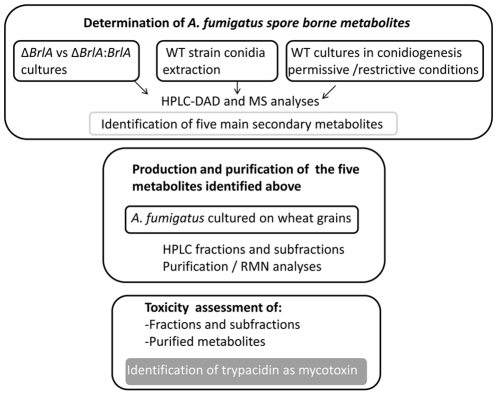
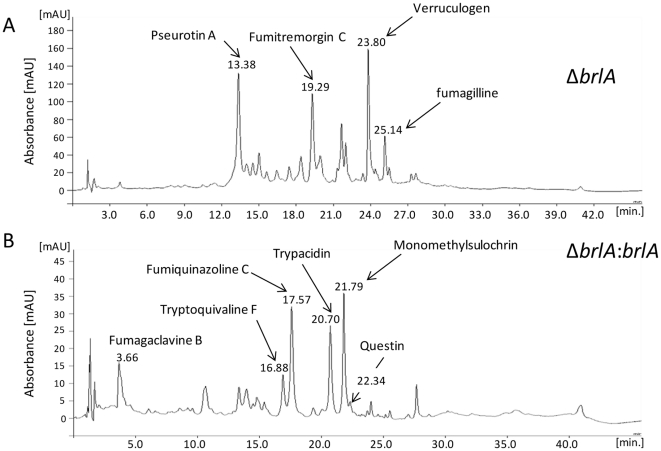
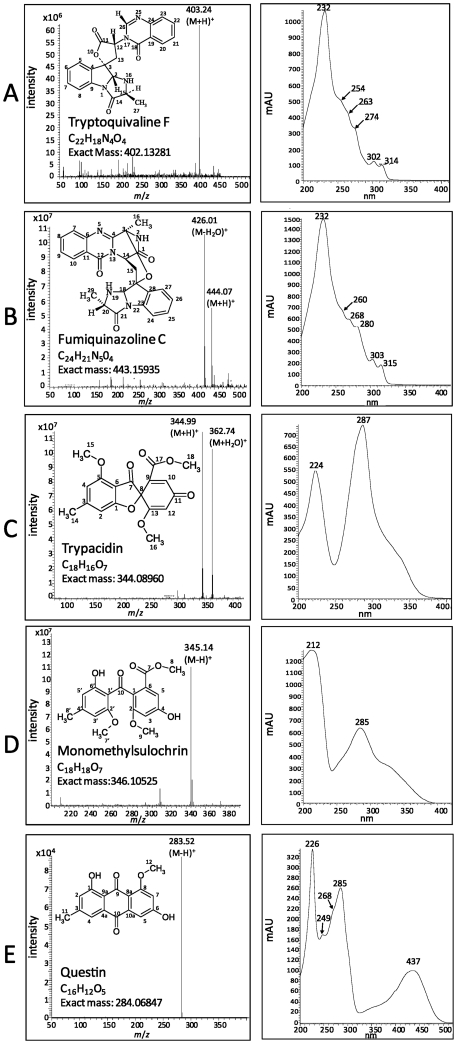
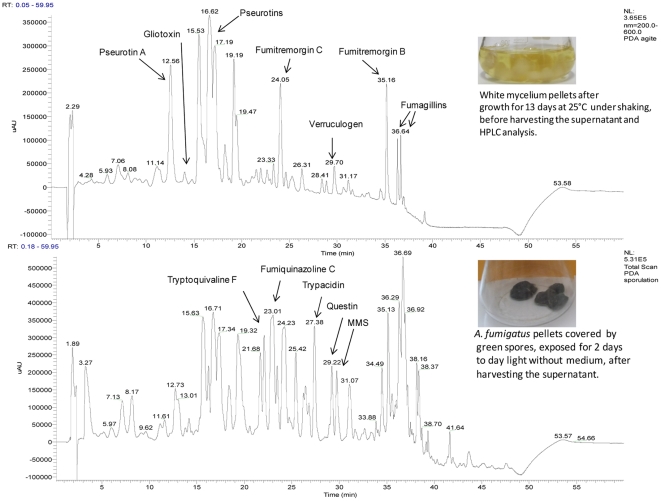
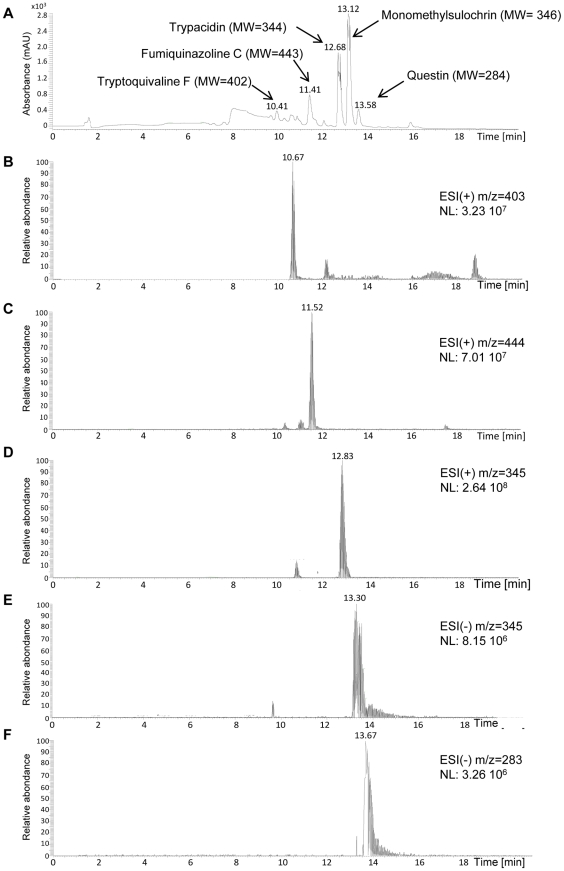
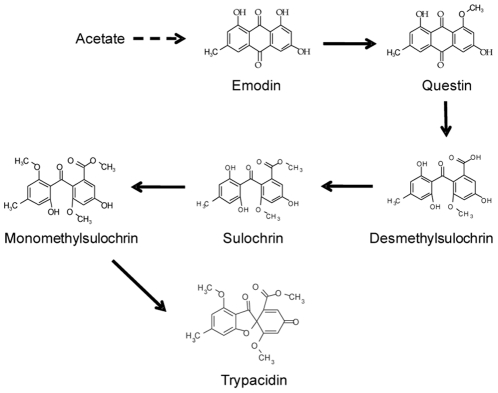
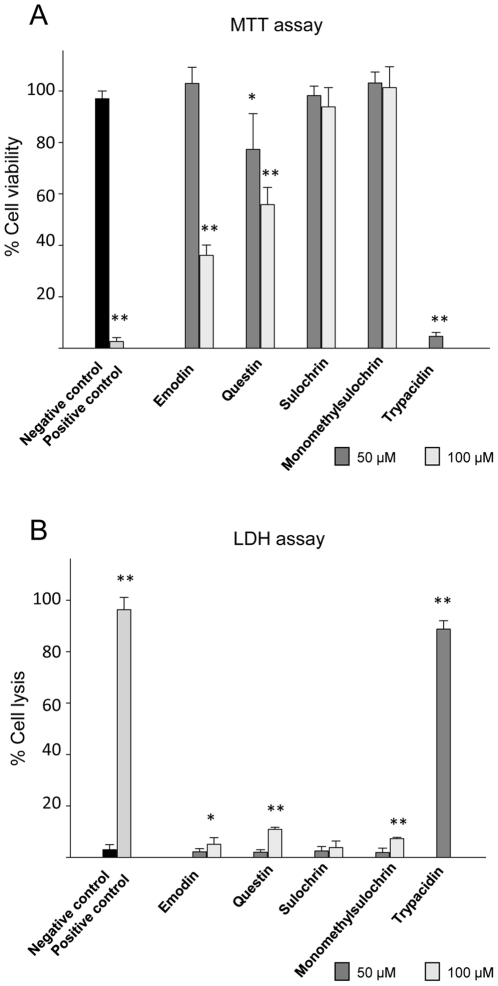
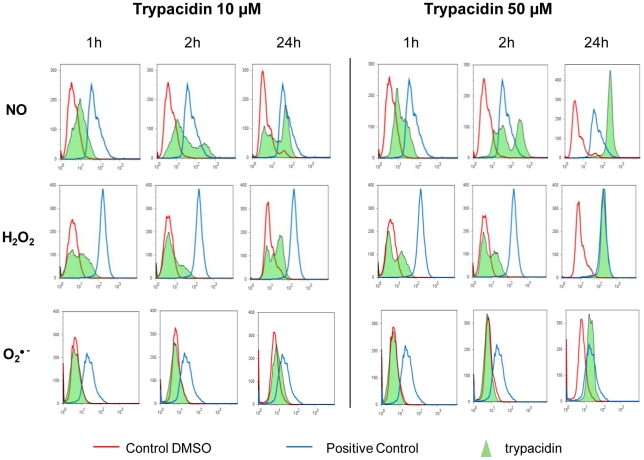
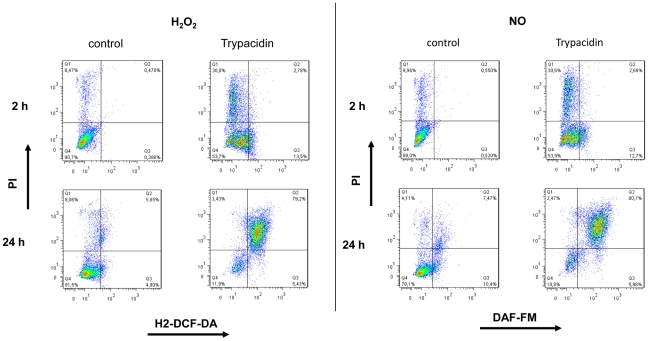
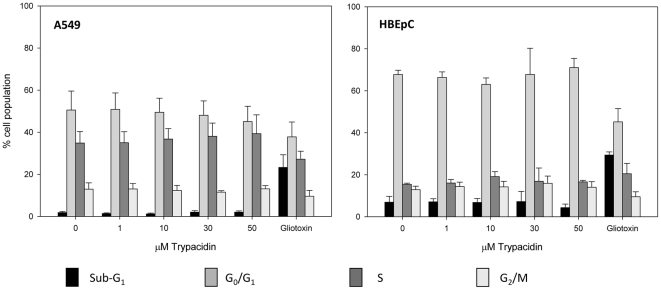
Inhalation of Aspergillus fumigatus conidia can cause severe aspergillosis in immunosuppressed people. A. fumigatus produces a large number of secondary metabolites, some of which are airborne by conidia and whose toxicity to the respiratory tract has not been investigated. We found that spores of A. fumigatus contain five main compounds, tryptoquivaline F, fumiquinazoline C, questin, monomethylsulochrin and trypacidin. Fractionation of culture extracts using RP-HPLC and LC-MS showed that samples containing questin, monomethylsulochrin and trypacidin were toxic to the human A549 lung cell line. These compounds were purified and their structure verified using NMR in order to compare their toxicity against A549 cells. Trypacidin was the most toxic, decreasing cell viability and triggering cell lysis, both effects occurring at an IC₅₀ close to 7 µM. Trypacidin toxicity was also observed in the same concentration range on human bronchial epithelial cells. In the first hour of exposure, trypacidin initiates the intracellular formation of nitric oxide (NO) and hydrogen peroxide (H₂O₂). This oxidative stress triggers necrotic cell death in the following 24 h. The apoptosis pathway, moreover, was not involved in the cell death process as trypacidin did not induce apoptotic bodies or a decrease in mitochondrial membrane potential. This is the first time that the toxicity of trypacidin to lung cells has been reported.
Overview
The claims and statistics of this paper haven’t been checked yet.
Free: it reads the open-access text and checks the first 5 claims that cite a source we can check. Create a free account to check every claim.
Integrity signals
Registry
Cites
Statistics
Figures
Verification
Claims the paper makes
The claims and statistics of this paper haven’t been checked yet.
Free: it reads the open-access text and checks the first 5 claims that cite a source we can check. Create a free account to check every claim.
Claims other papers make about this one
Each is checked against this paper’s own text: does it say what the citing paper says it does?
The source backs part of the claim, not all of it — or backs it for a different population, condition or comparison.
In the citing paper
“Toxic secondary metabolites produced by A. fumigatus (fumigaclavin, trypacidin, helvolic acid, gliotoxin, fumitremorgin, fumagillin, and pseurotin) do impact host cells (433, 440–443).”
From Aspergillus fumigatus and Aspergillosis in 2019 (2019) · cites this paper as [441]
Experimental — accuracy not yet measured
Self-check
Percentages, sums and reported differences re-computed from the paper’s own numbers.
The self-check needs the paper’s full text.
Citations
Cites
Green, D. R., & Reed, J. C. (1998) · Science · doi:10.1126/science.281.5381.1309 · Cited by 8,965
Aspergillus fumigatus and Aspergillosis
Latgé, J.-P. (1999) · Clinical Microbiology Reviews · doi:10.1128/cmr.12.2.310 · Cited by 2,307 · cited 1×
“This fungus causes different pathologies including occupational rhinitis in people working in damp and mouldy places [6], allergic aspergillosis and invasive forms of aspergillosis in immunosuppressed patients [7].”
Genomic sequence of the pathogenic and allergenic filamentous fungus Aspergillus fumigatus
Nierman, W. C., Pain, A., Anderson, M. J., Wortman, J. R., Kim, H. S., Arroyo, J., Berriman, M., Abe, K., Archer, D. B., Bermejo, C., et al. (2005) · Nature · doi:10.1038/nature04332 · Cited by 1,391 · cited 2×
“fumigatus genome putatively involved in secondary metabolism [12,13].”
Pathogenesis of Aspergillus fumigatus in Invasive Aspergillosis
Dagenais, T. R. T., & Keller, N. P. (2009) · Clinical Microbiology Reviews · doi:10.1128/cmr.00055-08 · Cited by 993 · cited 1×
“fumigatus to cause invasive disease are not currently understood [11].”
SMURF: Genomic mapping of fungal secondary metabolite clusters
Khaldi, N., Seifuddin, F. T., Turner, G., Haft, D., Nierman, W. C., Wolfe, K. H., & Fedorova, N. D. (2010) · Fungal Genetics and Biology · doi:10.1016/j.fgb.2010.06.003 · Cited by 771 · cited 1×
“fumigatus [14].”
Fungal secondary metabolites – Strategies to activate silent gene clusters
Brakhage, A. A., & Schroeckh, V. (2011) · Fungal Genetics and Biology · doi:10.1016/j.fgb.2010.04.004 · Cited by 729 · cited 1×
“clusters silent under standard laboratory conditions [46,47], our results do not exclude the possibility of cryptic spore-born products not activated in our culture conditions, but induced in field conditions.”
Transcriptional Regulation of Chemical Diversity in Aspergillus fumigatus by LaeA
Perrin, R. M., Fedorova, N. D., Bok, J. W., Cramer, R. A., Wortman, J. R., Kim, H. S., Nierman, W. C., & Keller, N. P. (2007) · PLoS Pathogens · doi:10.1371/journal.ppat.0030050 · Cited by 352 · cited 2×
“fumigatus genome putatively involved in secondary metabolism [12,13].”
Shen, H.-M., Shi, C.-Y., Shen, Y., & Ong, C.-N. (1996) · Free Radical Biology and Medicine · doi:10.1016/0891-5849(96)00019-6 · Cited by 308 · cited 1×
“These included a porcine renal proximal tubular cell line [39], hepatic stellate cells [40], hepatocytes [41], hepatoma cells HepG2 [42], and colon HT29 cells [43].”
Eduard, W. (2009) · Critical Reviews in Toxicology · doi:10.3109/10408440903307333 · Cited by 251 · cited 1×
“The spores are commonly found in the environment and can exceed 10(4) spores/m(3) in damp buildings or even 10 to 100 times more in waste or compost handling facilities [4].”
Polyphasic taxonomy of Aspergillus fumigatus and related species
Hong, S.-B., Go, S.-J., Shin, H.-D., Frisvad, J. C., & Samson, R. A. (2005) · Mycologia · doi:10.1080/15572536.2006.11832738 · Cited by 234 · cited 1×
“This was also seen in other previous studies [34,35,36].”
Cited by
Aspergillus fumigatus and Aspergillosis in 2019
Latgé, J.-P., & Chamilos, G. (2019) · Clinical Microbiology Reviews · doi:10.1128/cmr.00140-18 · Cited by 1,400
Oxidative Cyclization in Natural Product Biosynthesis
Tang, M.-C., Zou, Y., Watanabe, K., Walsh, C. T., & Tang, Y. (2017) · Chemical Reviews · doi:10.1021/acs.chemrev.6b00478 · Cited by 425
Translating biosynthetic gene clusters into fungal armor and weaponry
Keller, N. P. (2015) · Nature Chemical Biology · doi:10.1038/nchembio.1897 · Cited by 275
Alassane-Kpembi, I., Kolf-Clauw, M., Gauthier, T., Abrami, R., Abiola, F. A., Oswald, I. P., & Puel, O. (2013) · Toxicology and Applied Pharmacology · doi:10.1016/j.taap.2013.05.023 · Cited by 208
Self-citationHow to achieve high-level expression of microbial enzymes: Strategies and perspectives
Liu, L., Yang, H., Shin, H.-D., Chen, R. R., Li, J., Du, G., & Chen, J. (2013) · Bioengineered · doi:10.4161/bioe.24761 · Cited by 170
Analysis of Flavonoids in Rhamnus davurica and Its Antiproliferative Activities
Chen, G., Li, X., Saleri, F., & Guo, M. (2016) · Molecules · doi:10.3390/molecules21101275 · Cited by 171
“As a result, Peak 31 was determined to be physcion (calculated for C16H12O5, 284 Da), whose fragment ions were also consistent with those observed using ESI-MS/MS [35].”
ResultAlassane‐Kpembi, I., Puel, O., & Oswald, I. P. (2014) · Archives of Toxicology · doi:10.1007/s00204-014-1309-4 · Cited by 176
Self-citationInteractions of Aspergillus fumigatus Conidia with Airway Epithelial Cells: A Critical Review
Croft, C. A., Culibrk, L., Moore, M. M., & Tebbutt, S. J. (2016) · Frontiers in Microbiology · doi:10.3389/fmicb.2016.00472 · Cited by 142
Applications of CRISPR/Cas9 in the Synthesis of Secondary Metabolites in Filamentous Fungi
Jiang, C., Lv, G., Tu, Y., Cheng, X., Duan, Y., Zeng, B., & He, B. (2021) · Frontiers in Microbiology · doi:10.3389/fmicb.2021.638096 · Cited by 124
“nidulans to secrete microperfuranone, and Penicillium chrysogenum to biosynthesize sorbicillin (Gauthier et al., 2012; Kakule et al., 2015; Yun et al., 2017; Shi et al., 2019).”
BackgroundGauthier, G. M., & Keller, N. P. (2013) · Fungal Genetics and Biology · doi:10.1016/j.fgb.2013.08.016 · Cited by 128
“Gauthier, N.P. Keller / Fungal Genetics and Biology xxx (2013) xxx–xxx YFGBI 2598 No.”
BackgroundMicrobial metabolomics in open microscale platforms
Barkal, L. J., Theberge, A. B., Guo, C., Spraker, J. E., Rappert, L., Berthier, J., Brakke, K. A., Wang, C. C. C., Beebe, D. J., Keller, N. P., et al. (2016) · Nature Communications · doi:10.1038/ncomms10610 · Cited by 118
Advances in space microbiology
Bijlani, S., Stephens, E. N., Singh, N. K., Venkateswaran, K. J., & Wang, C. C. C. (2021) · iScience · doi:10.1016/j.isci.2021.102395 · Cited by 116
Secondary metabolite arsenal of an opportunistic pathogenic fungus
Bignell, E., Cairns, T. C., Throckmorton, K., Nierman, W. C., & Keller, N. P. (2016) · Philosophical Transactions of the Royal Society B: Biological Sciences · doi:10.1098/rstb.2016.0023 · Cited by 92
Hagiwara, D., Sakai, K., Suzuki, S., Umemura, M., Nogawa, T., Kato, N., Osada, H., Watanabe, A., Kawamoto, S., Gonoi, T., et al. (2017) · PLoS ONE · doi:10.1371/journal.pone.0177050 · Cited by 102
Extrolites of Aspergillus fumigatus and Other Pathogenic Species in Aspergillus Section Fumigati
Frisvad, J. C., & Larsen, T. O. (2016) · Frontiers in Microbiology · doi:10.3389/fmicb.2015.01485 · Cited by 108
Recent advances in the genome mining of Aspergillus secondary metabolites (covering 2012–2018)
Romsdahl, J., & Wang, C. C. C. (2019) · MedChemComm · doi:10.1039/c9md00054b · Cited by 103
Functional Reconstitution of a Fungal Natural Product Gene Cluster by Advanced Genome Editing
Weber, J., Valiante, V., Nødvig, C. S., Mattern, D. J., Slotkowski, R., Mortensen, U. H., & Brakhage, A. A. (2016) · ACS Synthetic Biology · doi:10.1021/acssynbio.6b00203 · Cited by 88
Spatial and temporal control of fungal natural product synthesis
Lim, F. Y., & Keller, N. P. (2014) · Natural Product Reports · doi:10.1039/c4np00083h · Cited by 91
Steenwyk, J. L., Mead, M. E., Knowles, S. L., Raja, H. A., Roberts, C. D., Bader, O., Houbraken, J. A. M. P., Goldman, G. H., Oberlies, N. H., & Rokas, A. (2020) · Genetics · doi:10.1534/genetics.120.303549 · Cited by 81
Throckmorton, K., Lim, F. Y., Kontoyiannis, D. P., Zheng, W., & Keller, N. P. (2016) · Environmental Microbiology · doi:10.1111/1462-2920.13007 · Cited by 75
“…are thought to facilitate the pathogenicity of this fungus (Amitani et al., 1995; Bok et al., 2005; 2006; Spikes et al., 2008; Lodeiro et al., 2009; Gauthier et al., 2012; Berthier et al., 2013; Chooi et al., 2013; Yin et al., 2013), although their ecological role may relate to their antimicrobial…”
InfluentialChemistry of the fumiquinazolines and structurally related alkaloids
Resende, D. I. S. P., Boonpothong, P., Sousa, E., Kijjoa, A., & Pinto, M. M. M. (2018) · Natural Product Reports · doi:10.1039/c8np00043c · Cited by 76
Ten decadal advances in fungal biology leading towards human well-being
Mapook, A., Hyde, K. D., Hassan, K., Kemkuignou, B. M., Čmoková, A., Surup, F., Kuhnert, E., Paomephan, P., Cheng, T., de Hoog, S., et al. (2022) · Fungal Diversity · doi:10.1007/s13225-022-00510-3 · Cited by 86
Rush, T. A., Shrestha, H. K., Meena, M. G., Spangler, M. K., Ellis, J. C., Labbé, J., & Abraham, P. E. (2021) · Frontiers in Fungal Biology · doi:10.3389/ffunb.2021.716511 · Cited by 85
“…genera where metabolite has been characterized References Trypacidin Polyketide Cytotoxic, antibiotic Not characterized in Trichoderma Aspergillus Gauthier et al., 2012 Tryptoquialanine NRP Phytotoxin, insecticide, antifungal Genes responsible for the biosynthesis of Tryptoquialanine, homologs…”
BackgroundInfluentialMolecular Genetics of Secondary Chemistry in Metarhizium Fungi
Donzelli, B. G. G., & Krasnoff, S. B. (2016) · Advances in genetics · doi:10.1016/bs.adgen.2016.01.005 · Cited by 70
Mattern, D. J., Schoeler, H., Weber, J., Novohradská, S., Kraibooj, K., Dahse, H., Hillmann, F., Valiante, V., Figge, M. T., & Brakhage, A. A. (2015) · Applied Microbiology and Biotechnology · doi:10.1007/s00253-015-6898-1 · Cited by 69
Lim, F. Y., Ames, B. D., Walsh, C. T., & Keller, N. P. (2014) · Cellular Microbiology · doi:10.1111/cmi.12284 · Cited by 70
“A recent study also reported the isolation of fumiquinazoline C (FqC) from the conidial extracts of A. fumigatus (Gauthier et al., 2012).”
BackgroundResultInfluentialLind, A. L., Lim, F. Y., Soukup, A. A., Keller, N. P., & Rokas, A. (2018) · mSphere · doi:10.1128/msphere.00050-18 · Cited by 64
“While BrlA is required for production of trypacidin when cultures are grown on solid plates (20), it is possible that the liquid shake conditions used here impact trypacidin production.”
BackgroundAnti-Aspergillus Activities of the Respiratory Epithelium in Health and Disease
Bertuzzi, M., Hayes, G., Icheoku, U., Van Rhijn, N., Denning, D., Osherov, N., & Bignell, E. (2018) · Journal of Fungi · doi:10.3390/jof4010008 · Cited by 64
“In A549 epithelial cells, lysis was detectable as early as 1 h post exposure and was directly proportional to the dose of trypacidin used [68].”
BackgroundMethodInfluentialDistribution and toxigenicity of Aspergillus section Flavi in spices marketed in Morocco
Mahgubi, A. E., Puel, O., Bailly, S., Tadrist, S., Quérin, A., Ouadia, A., Oswald, I. P., & Bailly, J. (2012) · Food Control · doi:10.1016/j.foodcont.2012.11.013 · Cited by 74
Self-citationYang, Y., Yu, S., Tan, Y., Liu, N., & Wu, A. (2017) · Toxins · doi:10.3390/toxins9030096 · Cited by 65
“Combination assays were taken by using the following mixtures: DON + 15-ADON, DON + NIV, DON + FX, 15-ADON + FX, 15-ADON + NIV, and FX + NIV, with exposure times of 24 h with the combined toxin ratios (1:1, 3:1, 3:1, 3:1, 3:1, 1:1) based on the ratio of its individual EC50 value on the basis of the principle of attain…”
MethodYang, J., Zhu, A., Xiao, S., Zhang, T., Wang, L., Wang, Q., & Han, L. (2019) · Phytomedicine · doi:10.1016/j.phymed.2019.153059 · Cited by 56
Novohradská, S., Ferling, I., & Hillmann, F. (2017) · Frontiers in Cellular and Infection Microbiology · doi:10.3389/fcimb.2017.00497 · Cited by 58
Nanoparticles in Pest Incidences and Plant Disease Control
Ramezani, M., Ramezani, F., & Gerami, M. (2019) · Springer eBooks · doi:10.1007/978-981-32-9374-8_12 · Cited by 59
Hussein, M. E., Mohamed, O. G., El-Fishawy, A. M., El‐Askary, H. I., El-Senousy, A. S., El‐Beih, A. A., Nossier, E. S., Naglah, A. M., Almehizia, A. A., Tripathi, A., et al. (2022) · Molecules · doi:10.3390/molecules27031117 · Cited by 57
Multi-microbial metabolites in fonio millet (acha) and sesame seeds in Plateau State, Nigeria
Ezekiel, C. N., Sulyok, M., Warth, B., & Krska, R. (2012) · European Food Research and Technology · doi:10.1007/s00217-012-1755-2 · Cited by 52
Steenwyk, J. L., Mead, M. E., de Castro, P. A., Valero, C., Damásio, A., Santos, R., LaBella, A. L., Li, Y., Knowles, S. L., Raja, H. A., et al. (2021) · Microbiology Spectrum · doi:10.1128/spectrum.00010-21 · Cited by 43
Blachowicz, A., Chiang, A. J., Romsdahl, J., Kalkum, M., Wang, C. C. C., & Venkateswaran, K. J. (2019) · Fungal Genetics and Biology · doi:10.1016/j.fgb.2019.01.001 · Cited by 47
Cano, P. M., Jamin, E. L., Tadrist, S., Bourdaud’hui, P., Péan, M., Debrauwer, L., Oswald, I. P., Delaforge, M., & Puel, O. (2013) · Analytical Chemistry · doi:10.1021/ac401872f · Cited by 46
Self-citationFungal air contamination in distinct sites within a municipal landfill area
Frączek, K., Kozdrój, J., Górny, R. L., Cyprowski, M., & Gołofit-Szymczak, M. (2017) · International Journal of Environmental Science and Technology · doi:10.1007/s13762-017-1344-9 · Cited by 43
“This cytotoxicity is usually related to mycotoxins produced by pathogenic strains (Hedayati et al. 2007; Gauthier et al. 2012; Sudini et al. 2015).”
BackgroundInfluentialThrockmorton, K., Wiemann, P., & Keller, N. P. (2015) · Toxins · doi:10.3390/toxins7093572 · Cited by 40
“Trypacidin and endocrocin in particular have been shown to exhibit toxic and neutrophil inhibitory properties, respectively, in pathogenicity studies [75,86].”
BackgroundChen, G., Wu, J., Li, N., & Guo, M. (2018) · Analytical and Bioanalytical Chemistry · doi:10.1007/s00216-018-0953-6 · Cited by 37
Chen, G., & Guo, M. (2017) · Frontiers in Plant Science · doi:10.3389/fpls.2017.01521 · Cited by 35
“With the same [M-H] ion at m/z 283 in the ESI-MS in the negative ion mode (Table 1), compounds 7 and 8 were identified as questin and physcion in accordance with a C16H12O5 formula, considering the retention times, elution profile in C18 columns and the similar collision-induced dissociation (CID) pathways reported fo…”
BackgroundMethodDeoxynivalenol impairs the immune functions of neutrophils
Gauthier, T., Waché, Y., Laffitte, J., Țăranu, I., Kouzehkonani, N. S., Mori, Y., & Oswald, I. P. (2013) · Molecular Nutrition & Food Research · doi:10.1002/mnfr.201200755 · Cited by 37
Self-citationAspergillus fumigatus Cell Wall Promotes Apical Airway Epithelial Recruitment of Human Neutrophils
Feldman, M. B., Dutko, R. A., Wood, M. A., Ward, R., Leung, H. M., Snow, R. F., Flor, D. J. D. L., Yonker, L. M., Reedy, J. L., Tearney, G. J., et al. (2019) · Infection and Immunity · doi:10.1128/iai.00813-19 · Cited by 29
“Conidia produce epithelial toxins, including tryptoquivaline F, fumiquinazoline C, questin, monomethylsulochrin, and trypacidin (53).”
BackgroundGauthier, T., Vignard, J., Boutet-Robinet, E. A., Sulyok, M., Snini, S. P., Alassane‐Kpembi, I., Lippi, Y., Puel, S., Oswald, I. P., & Puel, O. (2020) · Environment International · doi:10.1016/j.envint.2020.105568 · Cited by 34
Self-citationShakour, Z. T. A., & Farag, M. A. (2021) · Journal of Advanced Research · doi:10.1016/j.jare.2021.11.007 · Cited by 30
“fumigatus has been considered as the most common airborne fungal pathogen, that can severely infect immunosuppressed individuals causing aspergillosis disease [126].”
BackgroundFungal Contamination in Two Portuguese Wastewater Treatment Plants
Viegas, C. S. B., Faria, T., Gomes, A. Q., Sabino, R., Seco, A., & Viegas, S. (2014) · Journal of Toxicology and Environmental Health · doi:10.1080/15287394.2014.866925 · Cited by 28
“Since other saprophytic fungal species will not grow at this temperature and all the collected samples were incubated at 27◦C, data on the presence of this fungus in these settings may be underestimated with conventional methodologies (Gauthier et al., 2012).”
BackgroundInfluentialSzulc, J., Okrasa, M., Majchrzycka, K., Sulyok, M., Nowak, A., Szponar, B., Górczyńska, A., Ryngajłło, M., & Gutarowska, B. (2021) · Journal of Environmental Management · doi:10.1016/j.jenvman.2021.114257 · Cited by 25
2 Insight into Fungal Secondary Metabolism from Ten Years of LaeA Research
Bok, J. W., & Keller, N. P. (2016) · Springer eBooks · doi:10.1007/978-3-319-27790-5_2 · Cited by 24
Antitubercular metabolites from the marine-derived fungus strain Aspergillus fumigatus MF029
Song, Z., Liu, Y., Gao, J., Hu, J., He, H., Dai, S., Wang, L., Dai, H., Zhang, L., & Song, F. (2019) · Natural Product Research · doi:10.1080/14786419.2019.1660331 · Cited by 22
“Trypacidin (6) was reported to inhibit the growth of parasites (Balan et al. 1963), be cytotoxic (Gauthier et al. 2012), anti-bacteria and fungi (Zhang, Ma et al. 2012; Zhang, Li et al. 2012, Pinheiro et al. 2013).”
BackgroundInfluentialZetina-Serrano, C., Rocher, O., Naylies, C., Lippi, Y., Oswald, I. P., Lorber, S., & Puel, O. (2020) · International Journal of Molecular Sciences · doi:10.3390/ijms21186660 · Cited by 25
“fumigatus not only yielded strains lacking conidiophores but that were also unable to produce the ergot alkaloids (festuclavine and fumigaclavines A, B, and C) fumiquinazoline C, trypacidin, and its two precursors (monomethylsulochrin questin), present in the conidia of the WT strain [64,92].”
BackgroundSelf-citationSeo, H., Wassano, N. S., Rawa, M. S. A., Nickles, G., Damásio, A., & Keller, N. P. (2024) · Journal of Fungi · doi:10.3390/jof10040266 · Cited by 22
“This metabolite selectively accumulates in A. fumigatus conidia [70,71], where it provides some protection against UV radiation [6].”
Natural products in the predatory defence of the filamentous fungal pathogen Aspergillus fumigatus
Boysen, J. M., Saeed, N., & Hillmann, F. (2021) · Beilstein Journal of Organic Chemistry · doi:10.3762/bjoc.17.124 · Cited by 19
Jeffress, S., Arun-Chinnappa, K. S., Stodart, B. J., Vaghefi, N., Tan, Y. P., & Ash, G. J. (2020) · PLoS ONE · doi:10.1371/journal.pone.0227396 · Cited by 23
Antibiotics from Extremophilic Micromycetes
Baranova, A. A., Alferova, V. A., Аркадьевич, К. В., & Tyurin, A. P. (2020) · Russian Journal of Bioorganic Chemistry · doi:10.1134/s1068162020060023 · Cited by 16
Adelusi, O. A., Gbashi, S., Adebo, J. A., Makhuvele, R., Aasa, A. O., Oladeji, O. M., Khoza, M., Okoth, S., & Njobeh, P. B. (2022) · Journal of Fungi · doi:10.3390/jof8111192 · Cited by 16
“Fumigatus, the most abundant fungal species in this study, is known for its potential to produce trypacidin, a mycotoxin confirmed to be cytotoxic to human lung cells [75].”
BackgroundEndothelin‐1 mediates Aspergillus fumigatus‐induced airway inflammation and remodelling
Labram, B., Namvar, S., Hussell, T., & Herrick, S. E. (2019) · Clinical & Experimental Allergy · doi:10.1111/cea.13367 · Cited by 17
Satterlee, T. R., Nepal, B., Lorber, S., Puel, O., & Calvo, A. M. (2019) · Applied and Environmental Microbiology · doi:10.1128/aem.01779-19 · Cited by 16
“Similarly, chaetominine is absent in the aconidial ΔbrlA mutant strain (misidentified as tryptoquivaline F) (20).”
BackgroundSelf-citationBen-Ghazzi, N., Moreno-Velásquez, S. D., Seidel, C., Thomson, D. D., Denning, D. W., Read, N. D., Bowyer, P., & Gago, S. (2021) · Journal of Fungi · doi:10.3390/jof7060454 · Cited by 19
Viegas, C. S. B., Peixoto, C., Gomes, B., Dias, M., Cervantes, R., Pena, P., Slezáková, K., Pereira, M. D. C., Morais, S., Carolino, E., et al. (2024) · Environmental Pollution · doi:10.1016/j.envpol.2024.123976 · Cited by 15
rtfA controls development, secondary metabolism, and virulence in Aspergillus fumigatus
Myers, R. R., Smith, T. D., Elsawa, S. F., Puel, O., Tadrist, S., & Calvo, A. M. (2017) · PLoS ONE · doi:10.1371/journal.pone.0176702 · Cited by 14
Self-citationAspergillus fumigatus from Pathogenic Fungus to Unexplored Natural Treasure: Changing the Concept
Ibrahim, S. R. M., Mohamed, H. M., Aljahdali, A. S., Murshid, S. S. A., Mohamed, S. G. A., Abdallah, H. M., & Mohamed, G. A. (2025) · Journal of Microbiology and Biotechnology · doi:10.4014/jmb.2411.11082 · Cited by 13
“It initiated the NO (nitric oxide) and H 2 O 2 (hydrogen peroxide) intracellular formation that triggered necrotic cell death and reduced mitochondrial membrane potential [13].”
Nepal, B., Myers, R. R., Lohmar, J. M., Puel, O., Thompson, B., Cura, M. V., & Calvo, A. M. (2019) · PLoS ONE · doi:10.1371/journal.pone.0216092 · Cited by 12
Self-citationPandit, S. S., Zheng, J., Yin, Y., Lorber, S., Puel, O., Dhingra, S., Espeso, E. A., & Calvo, A. M. (2023) · PLoS ONE · doi:10.1371/journal.pone.0286271 · Cited by 10
Self-citationRocha, M. C., Fabri, J. H. T. M., Silva, L. P., Angolini, C. F. F., Bertolini, M. C., da Cunha, A. F., Valiante, V., Goldman, G. H., Fill, T. P., & Malavazi, I. (2021) · Genetics · doi:10.1093/genetics/iyab036 · Cited by 11
Hydrogen peroxide-induced secondary necrosis in conidia of Aspergillus fumigatus
Oliveira, M. T. D. S., Pereira, C., Bessa, C., Araújo, R., & Saraiva, L. (2015) · Canadian Journal of Microbiology · doi:10.1139/cjm-2015-0561 · Cited by 11
Shin, S., Ye, M., Lee, D., & Chae, M. (2022) · International Journal of Molecular Sciences · doi:10.3390/ijms23063030 · Cited by 10
“fumigatus can also produce several epithelial toxins, such as tryptoquivaline, questin, and trypacidin and can induce an impaired mucociliary clearance mechanism [21].”
BackgroundCytotoxicity of Aspergillus Section Fumigati Isolated from Health Care Environments
Viegas, C. S. B., Twarużek, M., Almeida, B., Dias, M., Ribeiro, E., Carolino, E., Soszczyńska, E., & Caetano, L. A. (2021) · Journal of Fungi · doi:10.3390/jof7100839 · Cited by 9
Wang, Y., Zhang, L., Sun, Y., & Zhang, Y. (2025) · International Archives of Allergy and Immunology · doi:10.1159/000547550 · Cited by 10
“Its aspartic proteases, subtilisin-like proteases, and glyco-sidases degrade airway mucins and utilize mucin glycans as nutrient sources, helping the fungus evade mucociliary clearance [35, 36]. c-Jun N-terminal kinase (JNK) reduces cell viability, and promotes cell lysis [37].”
Aspergillus fumigatus: a mere airborne particle or a powerful biohazard?
Oliveira, M. T. D. S., & Caramalho, R. (2014) · NACC: Nova acta científica compostelana. Bioloxía · Cited by 17
Role of the osaA Gene in Aspergillus fumigatus Development, Secondary Metabolism and Virulence
Dabholkar, A., Pandit, S. S., Devkota, R., Dhingra, S., Lorber, S., Puel, O., & Calvo, A. M. (2024) · Journal of Fungi · doi:10.3390/jof10020103 · Cited by 7
“A. fumigatus produces several toxic secondary metabolites, such as fumitoxin, fumigaclavines, fumigatin, fumagillin, verruculogen, fumitremorgins, gliotoxin, trypacidin, and helvolic acid [16,47–49].”
BackgroundSelf-citationMicrobial Assessment in A Rare Norwegian Book Collection: A One Health Approach to Cultural Heritage
Sequeira, S. O., Pasnak, E., Viegas, C., Gomes, B., Dias, M., Cervantes, R., Pena, P., Twarużek, M., Kosicki, R., Viegas, S., et al. (2024) · Microorganisms · doi:10.3390/microorganisms12061215 · Cited by 6
“Other toxins from Aspergillus section Fumigati , such as trypacidin, are also reported to be cytotoxic for lung cells [27].”
BackgroundAzhari, M., Merliani, N., Singgih, M., Arai, M., & Julianti, E. (2025) · Marine Drugs · doi:10.3390/md23070279 · Cited by 7
“Other compounds such as 18 , 104 , 119 , and 124 were found to exhibit cytotoxicity against human cells, neurotoxicity, and immunotoxicity [115,117,122].”
Berry, S. B., Haack, A. J., Theberge, A. B., Brighenti, S., & Svensson, M. (2020) · Frontiers in Medicine · doi:10.3389/fmed.2020.00537 · Cited by 8
“Trypacidin, found to localize to fungal conidia, induces high levels of nitric oxide (NO) and hydrogen peroxide (H2O2) production in bronchial epithelial cells, leading to severe oxidative stress and cell necrosis (34).”
Background2 Aspergillus fumigatus: Saprotroph to Pathogen
Bignell, E. (2013) · Springer eBooks · doi:10.1007/978-3-642-39432-4_2 · Cited by 9
Harnessing the CRISPR/Cas9 in filamentous fungi for the production of secondary metabolites
Karim, M. D., Abuhena, M., Rahman, L., & Al-Rashid, J. (2025) · Systems Microbiology and Biomanufacturing · doi:10.1007/s43393-025-00346-3 · Cited by 6
“A previous study showed that CRISPRa is a useful and easy-to-use tool by improving the efficiency of secondary metabolite transcription in Myxococcus xanthus [135].”
Masaphy, S., & Ezr, R. (2016) · Journal of Microbial & Biochemical Technology · doi:10.4172/1948-5948.1000324 · Cited by 6
“In other words, a dead spore can still be a source of toxin [51,52].”
BackgroundEnayati, S., Davari, M., Habibi‐Yangjeh, A., Ebadollahi, A., & Feizpoor, S. (2021) · Toxin Reviews · doi:10.1080/15569543.2021.2007405 · Cited by 3
“Pathogenic fungi alone cause reduction in main food products by 20% throughout the world (Fisher et al. 2012, Gauthier et al. 2012, Jampilek 2016).”
BackgroundRetractedSteinert, K., Atanasoff-Kardjalieff, A. K., Messner, E., Gorfer, M., Niehaus, E., Humpf, H., Studt, L., & Kalinina, S. A. (2024) · Fungal Genetics and Biology · doi:10.1016/j.fgb.2024.103892 · Cited by 2
Arsić-Arsenijević, V. S., Pekmezovic, M. G., Rajković, K., Vekić, B., Barac, A. M., Otašević, S., & Petković, L. (2014) · International Journal of Medical Sciences · doi:10.7150/ijms.8325 · Cited by 2
“fumigatus metabolites [18, 19] and cytotoxicity of its spore-borne metabolite to A549 tumor lung cell line were also shown [9].”
BackgroundAllergische bronchopulmonale Aspergillose
Virchow, J. C., Jr. (2016) · Springer eBooks · doi:10.1007/978-3-662-48419-7_32 · Cited by 2
Li, Q., Zhang, G., & Du, G. (2021) · Elsevier eBooks · doi:10.1016/b978-0-12-823506-5.00015-1 · Cited by 2
Enayati, S., Davari, M., Habibi‐Yangjeh, A., Ebadollahi, A., & Feizpoor, S. (2021) · Research Square · doi:10.21203/rs.3.rs-276102/v1 · Cited by 2
Aspergillus fumigatus occupational exposure in waste sorting and incineration plants
Viegas, C. S. B., Gomes, A. Q., Graça, T., & Sabino, R. (2014) · Journal of the Air & Waste Management Association · doi:10.1080/10962247.2014.907839 · Cited by 1
RetractedSteenwyk, J. L., Mead, M. E., Knowles, S. L., Raja, H. A., Roberts, C. D., Bader, O., Houbraken, J. A. M. P., Goldman, G. H., Oberlies, N. H., & Rokas, A. (2020) · bioRxiv (Cold Spring Harbor Laboratory) · doi:10.1101/2020.04.09.033902 · Cited by 1
“…hand, we found that both A. fumigatus and A. oerlinghausenensis biosynthesized fumagillin and trypacidin, whose effects include broad suppression of the immune response system and lung cell damage (Ishikawa et al., 2009; Fallon et al., 2010, 2011; Gauthier et al., 2012), but A. fischeri did not.”
BackgroundZetina-Serrano, C. (2020) · theses.fr (ABES) · doi:10.70675/a9a1920dz4cfcz454dz945fz5bbeaffced5a · Cited by 3
Chemical Constituents from Marine-derived Fungus Penicillium glabrum
민, 진., 박, 소., & 심, 상. (2014)
Machi, H. A. (2019) · eDiss (Georg-August-Universität Göttingen) · doi:10.53846/goediss-7556
Avaliação da produção e composição de vesículas extracelulares de Aspergillus fumigatus
Pessoni, A. M. (2021) · Digital Library of Theses and Dissertations (Universidade de São Paulo) · doi:10.11606/d.17.2021.tde-08092021-112744
Allergische bronchopulmonale Aspergillose
Virchow, J. C., Jr. (2022) · Springer eBooks · doi:10.1007/978-3-662-63651-0_34
Effect of Crude Drug Extracts on Trypacidin Production in Aspergillus fumigatus
Wakana, D., Inoue, N., Takeda, H., & Hosoe, T. (2022) · Advances in Microbiology · doi:10.4236/aim.2022.129037
The intestinal toxicity of mycotoxins : analysis of the interactions between type B trichothecenes
Alassane‐Kpembi, I. (2013) · theses.fr (ABES) · doi:10.70675/6bb8e312z7e16z4612zbaf8zfcf24b2abcf2
Assaf, C. E. H. (2018) · theses.fr (ABES) · doi:10.70675/80192b7fz8515z4988z9f6fz0020151150f6 · Cited by 4
Boulanger, M. (2019) · theses.fr (ABES) · doi:10.70675/523ce818ze955z496azb709zfb6889166e7e · Cited by 2
Noviany, N., Fatrika, O., Wahyudi, S. T., Hadi, S., Suwandi, J. F., & Aminah, N. S. (2026) · Pure and Applied Chemistry · doi:10.1515/pac-2025-0707
All you need is fungi: Exploring secondary metabolites as a source of novel amoebicidal agents
João, M., Moura, D. D. S., da Rocha, A. D. A., Braga, M., Antoniolli, H. R. M., Ramos, M. L., Loch, S., & Staats, C. (2026) · Genetics and Molecular Biology · doi:10.1590/1678-4685-gmb-2025-0199
“Trypacidin triggers oxidative stress, inducing early production of H₂O₂, NO, and O₂⁻, which culminates in LDH release, independently of mitochondrial apoptotic pathways (Gauthier et al. , 2012).”
InfluentialShchebentovska, O. M., Blishch, H. I., & Kostyniuk, A. (2026) · Regulatory Mechanisms in Biosystems · doi:10.15421/0226024
Metadata
- Authors
- Gauthier, T., Wang, X., Sifuentes Dos Santos, J., Fysikopoulos, A., Tadrist, S., Canlet, C., Artigot, M. P., Loiseau, N., Oswald, I. P., & Puel, O.
- Affiliations
- Université Toulouse III - Paul Sabatier (FR)
- Corresponding author
- Puel, Olivier
- ORCID
- Venue
- PLoS ONE
- Publisher
- Public Library of Science (PLoS)
- Published
- 2012-02-03
- Volume
- 7
- Issue
- 2
- Pages
- e29906
- ISSN
- 1932-6203 (ISSN-L)
- PMC
- PMC3272003
- OpenAlex
- W2008978825
- Cited by
- 97
- References
- 51
- Citations by year
- 2026: 3 · 2025: 4 · 2024: 5 · 2023: 1 · 2022: 6 · 2021: 14 · 2020: 8 · 2019: 12 · 2018: 5 · 2017: 6 · 2016: 11 · 2015: 5 · 2014: 8 · 2013: 7 · 2012: 2
- FWCI
- 5.18
- Type
- journal article
- Language
- en
- Open access
- gold
- doi.org
- Locations
- PLoS ONE (publishedVersion, cc-by)
- PubMed Central (publishedVersion, cc-by)
- PubMed (publishedVersion)
- HAL (submittedVersion, other-oa)
- DOAJ (DOAJ: Directory of Open Access Journals) (submittedVersion, cc-by-sa)
- Figshare (submittedVersion, cc-by)
- Topics
- Life Sciences › Immunology and Microbiology › Applied Microbiology and Biotechnology › Microbial Natural Products and Biosynthesis
- Life Sciences › Agricultural and Biological Sciences › Plant Science › Mycotoxins in Agriculture and Food
- Life Sciences › Pharmacology, Toxicology and Pharmaceutics › Toxicology › Bioactive Compounds and Antitumor Agents
- Keywords
- Aspergillus fumigatus, secondary metabolites, cytotoxicity, A549 cells, bronchial epithelial cells, aspergillosis, oxidative stress, nitric oxide, hydrogen peroxide, necrosis, apoptosis, fungal conidia
- MeSH terms
- Aspergillus fumigatus, Bronchi, Cell Line, Epithelial Cells, Humans, Lung Diseases, Mycotoxins, Spores, Fungal, Molecular Structure, Apoptosis, Oxidative Stress
About these checks
Registry, retraction, Cites and statistics results are computed, not judged, with one exception: a printed reference that no index lists is read once by a model before it counts as a citation error. Claims are extracted by a model and kept only when their quote appears verbatim in the text; each cited source is then checked, with a model’s help, for whether it says what the claim relies on. Those verdicts can be wrong — read the claim’s quote and the cited source before relying on one.
Statistics and arithmetic are recomputed, not judged.
Confidence bands are shown only for fields calibrated on our annotated test set. None is calibrated yet, so no band is shown.
What counts as a claim ›How we measure confidence ›How we check this ›
Are you an author, or do you see a problem with this page? Request a review
Data sources
Bibliographic data: Semantic Scholar, OpenAlex, Crossref.
Contains information from the Semantic Scholar Academic Graph Datasets, made available under the ODC Attribution License (ODC-BY 1.0).
Semantic Scholar’s data is described in: Kinney, R., et al. (2023). The Semantic Scholar Open Data Platform. arXiv:2301.10140.
