

The DOI matches its Crossref record; 68 of the 68 references it cites were found in a registry or an index.
Liver-Specific Expression of Transcriptionally Active SREBP-1c Is Associated with Fatty Liver and Increased Visceral Fat Mass
Open accessAbstract
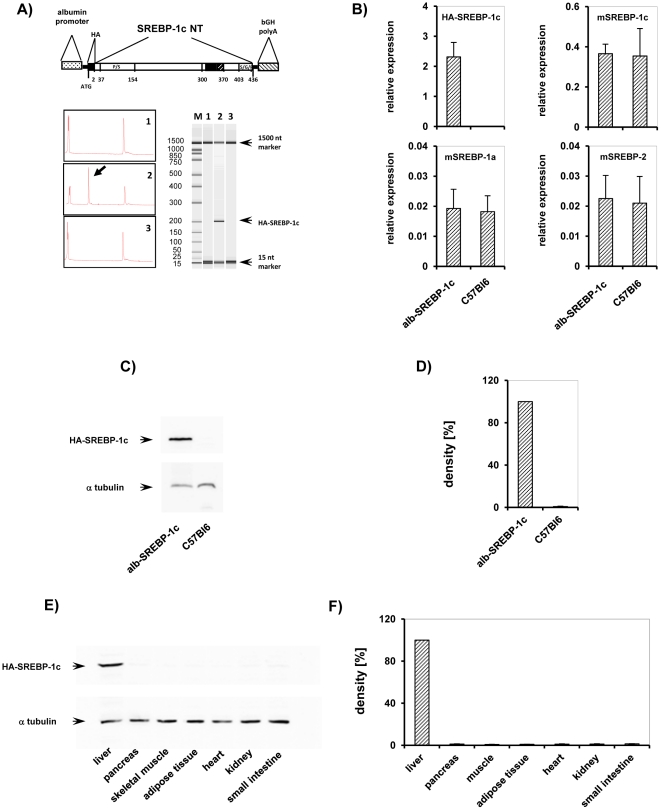
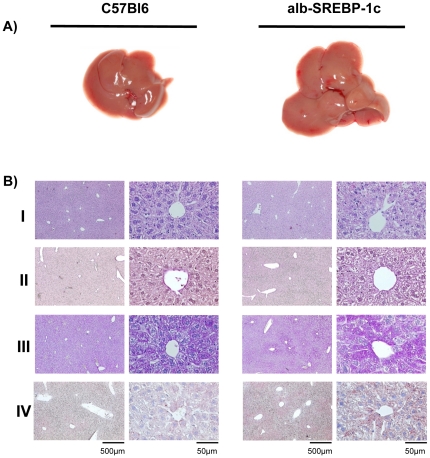
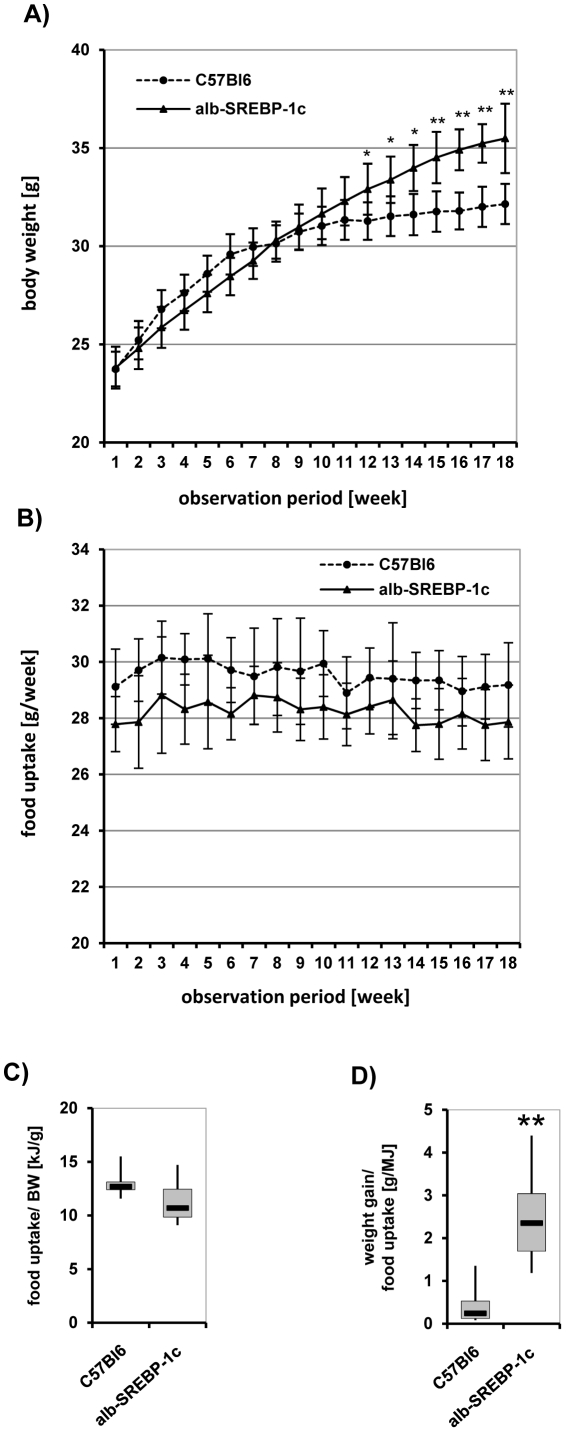
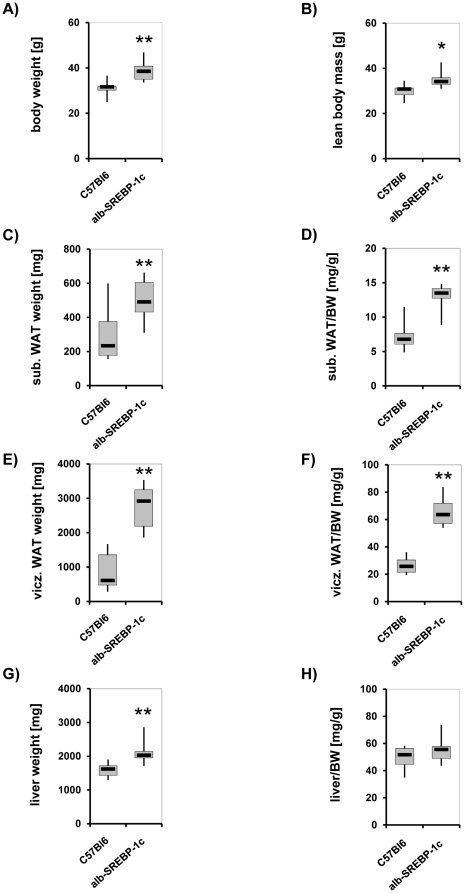
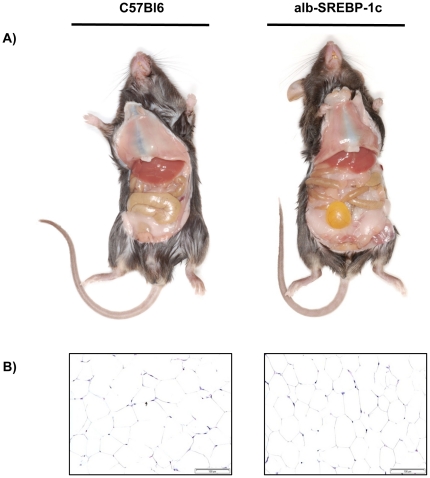
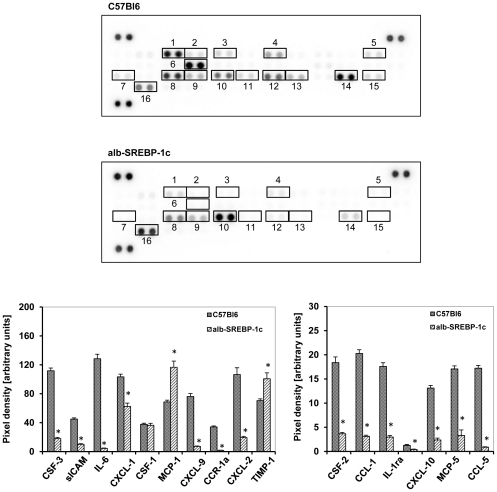
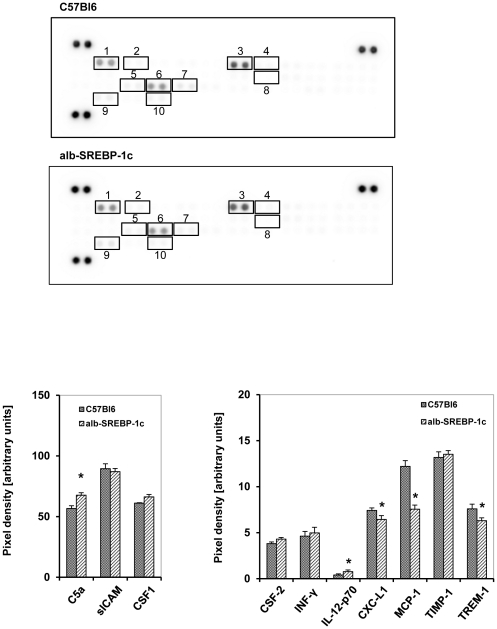
The pathogenesis of fatty liver is not understood in detail, but lipid overflow as well as de novo lipogenesis (DNL) seem to be the key points of hepatocyte accumulation of lipids. One key transcription factor in DNL is sterol regulatory element-binding protein (SREBP)-1c. We generated mice with liver-specific over-expression of mature human SREBP-1c under control of the albumin promoter and a liver-specific enhancer (alb-SREBP-1c) to analyze systemic perturbations caused by this distinct alteration. SREBP-1c targets specific genes and causes key enzymes in DNL and lipid metabolism to be up-regulated. The alb-SREBP-1c mice developed hepatic lipid accumulation featuring a fatty liver by the age of 24 weeks under normocaloric nutrition. On a molecular level, clinical parameters and lipid-profiles varied according to the fatty liver phenotype. The desaturation index was increased compared to wild type mice. In liver, fatty acids (FA) were increased by 50% (p<0.01) and lipid composition was shifted to mono unsaturated FA, whereas lipid profile in adipose tissue or serum was not altered. Serum analyses revealed a ∼2-fold (p<0.01) increase in triglycerides and free fatty acids, and a ∼3-fold (p<0.01) increase in insulin levels, indicating insulin resistance; however, no significant cytokine profile alterations have been determined. Interestingly and unexpectedly, mice also developed adipositas with considerably increased visceral adipose tissue, although calorie intake was not different compared to control mice. In conclusion, the alb-SREBP-1c mouse model allowed the elucidation of the systemic impact of SREBP-1c as a central regulator of lipid metabolism in vivo and also demonstrated that the liver is a more active player in metabolic diseases such as visceral obesity and insulin resistance.
Overview
The claims and statistics of this paper haven’t been checked yet.
Run the check — free, no account needed. It reads the open-access text and checks the sources it cites.
Integrity signals
Registry
Cites
Statistics
Figures
Verification
Claims the paper makes
The claims and statistics of this paper haven’t been checked yet.
Run the check — free, no account needed. It reads the open-access text and checks the sources it cites.
Claims other papers make about this one
Each is checked against this paper’s own text: does it say what the citing paper says it does?
In the citing paper
“In experimental models of obesity, metabolic defects involving substrate partitioning and energy expenditure may manifest without (or before) increased food intake, demonstrating the conceptual plausibility of this fundamental feature of the CIM (60, 112–114).”
From The carbohydrate-insulin model: A physiological perspective on the obesity pandemic (2021) · cites this paper as [114]
Self-check
Percentages, sums and reported differences re-computed from the paper’s own numbers.
The self-check needs the paper’s full text.
Citations
Cites
SREBPs: activators of the complete program of cholesterol and fatty acid synthesis in the liver
Horton, J. D., Goldstein, J. L., & Brown, M. S. (2002) · Journal of Clinical Investigation · doi:10.1172/jci15593 · Cited by 4,794
SREBPs: activators of the complete program of cholesterol and fatty acid synthesis in the liver
Horton, J. D., Goldstein, J. L., & Brown, M. S. (2002) · Journal of Clinical Investigation · doi:10.1172/jci0215593 · Cited by 4,092
Inflammatory Mechanisms in Obesity
Gregor, M. F., & Hotamisligil, G. S. (2011) · Annual Review of Immunology · doi:10.1146/annurev-immunol-031210-101322 · Cited by 3,754 · cited 1×
“Obesity and ectopic hepatic lipid accumulation are thought to be accompanied by increased inflammation and circulating inflammatory parameters [37,38].”
BackgroundDonnelly, K. L., Smith, C. I., Schwarzenberg, S. J., Jessurun, J., Boldt, M. D., & Parks, E. J. (2005) · Journal of Clinical Investigation · doi:10.1172/jci23621 · Cited by 3,604 · cited 3×
“Liver-specific overespression of human SREBP-1c influences parameters of systemic insulin sensitivity Excess intracellular hepatic lipid accumulation can affect insulin sensitivity in human studies and mouse models [2,3,21].”
BackgroundDiet-induced insulin resistance in mice lacking adiponectin/ACRP30
Maeda, N., Shimomura, I., Kishida, K., Nishizawa, H., Matsuda, M., Nagaretani, H., Furuyama, N., Kondo, H., Takahashi, M., Arita, Y., et al. (2002) · Nature Medicine · doi:10.1038/nm724 · Cited by 2,112
Horton, J. D., Shah, N. A., Warrington, J. A., Anderson, N. N., Park, S. W., Brown, M. S., & Goldstein, J. L. (2003) · Proceedings of the National Academy of Sciences · doi:10.1073/pnas.1534923100 · Cited by 1,270
Postic, C., & Girard, J. R. (2008) · Journal of Clinical Investigation · doi:10.1172/jci34275 · Cited by 1,242 · cited 1×
“Liver-specific overespression of human SREBP-1c influences parameters of systemic insulin sensitivity Excess intracellular hepatic lipid accumulation can affect insulin sensitivity in human studies and mouse models [2,3,21].”
BackgroundYokoyama, C., Wang, X., Briggs, M. R., Admon, A., Wu, J., Hua, X., Goldstein, J. L., & Brown, M. S. (1993) · Cell · doi:10.1016/s0092-8674(05)80095-9 · Cited by 975
Unger, R. H. (2002) · Annual Review of Medicine · doi:10.1146/annurev.med.53.082901.104057 · Cited by 875 · cited 1×
“This lipid overload has destructive effects on cell functionality and viability, as initially pronounced by Unger in the ‘‘lipoptoxicity hypothesis’’ [1].”
BackgroundFructose consumption as a risk factor for non-alcoholic fatty liver disease
Ouyang, X., Cirillo, P., Sautin, Y. Y., McCall, S. J., Bruchette, J. L., Diehl, A. M., Johnson, R. J., & Abdelmalek, M. F. (2008) · Journal of Hepatology · doi:10.1016/j.jhep.2008.02.011 · Cited by 862
Cited by
Sorted by citations
Items 101–162 of 162
Peng, X., Chen, F., Liu, W., Hu, Z., & Xu, L. (2016) · Scientific Reports · doi:10.1038/srep32110 · Cited by 14
Identification of Combined Genetic Determinants of Liver Stiffness within the SREBP1c-PNPLA3 Pathway
Krawczyk, M. J., Grünhage, F., & Lammert, F. (2013) · International Journal of Molecular Sciences · doi:10.3390/ijms141021153 · Cited by 13
“On the other hand, others showed an involvement of SREBP1c in liver diseases, most of all, hepatic steatosis [46–48], and pointed out that activation of SREBP might be critical for the development of fatty liver [49].”
Unraveling the Health Benefits and Mechanisms of Time-Restricted Feeding: Beyond Caloric Restriction
Wang, R., Liao, Y., Deng, Y., & Rong, S. (2024) · Nutrition Reviews · doi:10.1093/nutrit/nuae074 · Cited by 15
Water Extracts of Immature Rubus coreanus Regulate Lipid Metabolism in Liver Cells
Bhandary, B., Lee, G., Marahatta, A., Lee, H.-Y., Kim, S., So, B., Kwon, J., Song, J.-Y., Lee, H.-K., Kim, H., et al. (2012) · Biological and Pharmaceutical Bulletin · doi:10.1248/bpb.b12-00022 · Cited by 13
Long-term effects of a fat-directed FGF21 gene therapy in aged female mice
Anderson, J. M., Arnold, W. D., Huang, W., Ray, A., Owendoff, G., & Cao, L. (2023) · Gene Therapy · doi:10.1038/s41434-023-00422-0 · Cited by 13
“Srebp1c is an important regulator of lipid metabolism in the liver and is associated with the development of liver steatosis [64].”
Li, F., Chen, J., Liu, Y., Gu, Z., Jiang, M., Zhang, L., Chen, S., Deng, Z., McClain, C. J., & Feng, W. (2021) · Cells · doi:10.3390/cells10123333 · Cited by 12
“Hepatic de novo lipogenesis (DNL) is a fundamental biosynthetic pathway that contributes to hepatic lipid accumulation.”
BackgroundInfluentialYang, Y., Liu, H., & Liu, D. (2023) · International Journal of Obesity · doi:10.1038/s41366-023-01293-6 · Cited by 11
“Multiple lines of evidence suggest that disruption of PPARγ in liver prevents steatosis [27, 30, 31].”
BackgroundMolecular Pathways Regulating Circadian Rhythm and Associated Diseases
Ding, M., Zhou, H., Li, Y., & Zheng, Y. (2024) · Frontiers in Bioscience-Landmark · doi:10.31083/j.fbl2906206 · Cited by 14
Kwak, M., Park, M. Y., Eor, J. Y., Choi, S.-W., Whang, K., & Kim, Y. (2024) · Poultry Science · doi:10.1016/j.psj.2024.103978 · Cited by 11
Afsa, S., Maisano, M. S., Germanà, A., & Cappello, T. (2025) · Environmental Research · doi:10.1016/j.envres.2025.122236 · Cited by 12
Inoue, J., Miyata, S., Shimizu, M., & Sato, R. (2018) · Bioscience Biotechnology and Biochemistry · doi:10.1080/09168451.2018.1478715 · Cited by 11
“livers leads to the development of fatty liver, hypertriglyceridemia, and insulin resistance [9].”
BackgroundInfluence of atorvastatin on metabolic pattern of rats with pulmonary hypertension
Luo, L., Wu, J., Lin, T., Lian, G., Wang, H., Gao, G., & Xie, L. (2021) · Aging · doi:10.18632/aging.202898 · Cited by 11
“adipogenesis is controlled by the quantity of SREBP-1c mRNA, SREBP-1c can regulate fat metabolism by changing its mRNA level [32, 33].”
BackgroundFahlbusch, P., Nikolic, A., Hartwig, S., Jacob, S., Kettel, U., Koellmer, C., Al‐Hasani, H., Lehr, S., Müller‐Wieland, D., Knebel, B., et al. (2022) · International Journal of Molecular Sciences · doi:10.3390/ijms23126873 · Cited by 11
“Mice are physiologically well-characterized [1,2] and resemble an early-stage fatty liver phenotype, without hepatocellular damage, inflammation, or fibrosis [1–3], due to transgenic liver-specific overexpression of the human sterol regulatory element-binding protein (SREBP)-1c [2].”
BackgroundMethodInfluentialSelf-citationLi, Y. H., Wang, C., Chen, C., Wang, C. C. N., Lin, C., Cheng, W.-K., Shen, H.-Y., & Lim, Y.-P. (2018) · Archives of Toxicology · doi:10.1007/s00204-018-2263-3 · Cited by 10
Zhang, M. Y., Hu, P., Feng, D., Zhu, Y. Z., Shi, Q., Wang, J., & Zhu, W. (2020) · Domestic Animal Endocrinology · doi:10.1016/j.domaniend.2020.106512 · Cited by 10
Murphy, B. A., Tadin‐Strapps, M., Jensen, K., Mogg, R., Liaw, A. I., Herath, K. B., Bhat, G., McLaren, D. G., Previs, S. F., & Pinto, S. (2017) · Metabolism · doi:10.1016/j.metabol.2017.02.015 · Cited by 10
Müller‐Wieland, D., Knebel, B., Haas, J., & Kotzka, J. (2012) · Herz · doi:10.1007/s00059-012-3608-y · Cited by 10
Self-citationKoo, D.-J., & Lee, W. (2022) · Cardiovascular Prevention and Pharmacotherapy · doi:10.36011/cpp.2022.4.e17 · Cited by 9
“When SREBP-1c, which is activated in hyperinsulinemia and plays a role in promoting DNL, was overexpressed in mice, the homeostasis model assessment of IR (HOMA-IR), a metric for evaluating IR, increased [57].”
BackgroundDebate: Lipid-lowering Therapies and Diabetes Development
Brandts, J., & Müller‐Wieland, D. (2025) · Current Atherosclerosis Reports · doi:10.1007/s11883-024-01270-y · Cited by 12
“It has been shown that selective overexpression of SREBP-1 in the liver is associated with the induction of fatty liver disease and the development of severe obesity, ectopic lipid accumulation in skeletal muscle, and insulin resistance [23].”
Zhang, Y., Luo, Y., Liu, X., Kiupel, M., Li, A., Wang, H., Mi, Q., & Xiao, H. (2023) · Cellular and Molecular Gastroenterology and Hepatology · doi:10.1016/j.jcmgh.2023.09.007 · Cited by 9
“13 – 15 Among them, the mRNA level of Pparg2 was signi fi cantly increased in the livers of 10-month-old Ncoa5 D M/ þ mice compared with age-matched Ncoa5 fl / þ male mice (Figure 4 A ).”
BackgroundKnebel, B., Fahlbusch, P., Poschmann, G., Dille, M. A., Wahlers, N., Stühler, K., Hartwig, S., Lehr, S., Schiller, M., Jacob, S., et al. (2019) · International Journal of Molecular Sciences · doi:10.3390/ijms20102559 · Cited by 9
“On the other hand, we used a transgenic animal with a liver-specific overexpression of human SREBP-1c, which has previously been shown to induce obesity under isocaloric conditions due to increased hepatic DNL [7,8].”
BackgroundMethodInfluentialSelf-citationVillanueva-Ortega, E., Méndez-García, L. A., Garibay-Nieto, G. N., Laresgoiti‐Servitje, E., Medina‐Bravo, P., Olivos‐García, A., Muñoz‐Ortega, M. H., Ventura‐Juárez, J., & Escobedo, G. (2020) · Growth Hormone & IGF Research · doi:10.1016/j.ghir.2020.101332 · Cited by 10
New mechanisms contributing to hepatic steatosis: glucose, insulin, and lipid signaling
Lee, Y. J., Yu, J. H., Kim, W., & Kim, J. W. (2014) · Animal Cells and Systems · doi:10.1080/19768354.2014.906502 · Cited by 10
“SREBP-1c and its target genes are increased in fatty liver disease, and overexpression of SREBP-1c leads to TG accumulation in the liver without increasing cholesterol (Shimomura et al. 1999; Knebel et al. 2012).”
BackgroundPezzoli, A., Abenavoli, L., Scarcella, M., Rasetti, C., Svegliati‐Baroni, G., Tack, J. F., & Scarpellini, E. (2025) · Medicina · doi:10.3390/medicina61030387 · Cited by 10
“Moreover, the overexpression of SREBP-1c is linked to the upregulation of key enzymes of de novo lipogenesis and results in hepatic lipid accumulation [55].”
Li, W., & Hakkak, R. (2023) · Frontiers in Nutrition · doi:10.3389/fnut.2023.1278158 · Cited by 8
Iwase, M., Watanabe, K., Shimizu, M., Suzuki, T., Yamamoto, Y., Inoue, J., & Sato, R. (2019) · Bioscience Biotechnology and Biochemistry · doi:10.1080/09168451.2019.1608806 · Cited by 9
“SREBP-1c dysregulation is considered an important factor involved in metabolic diseases, and its overexpression in transgenic mouse liver leads to the development of fatty liver, hypertriglyceridemia, and insulin resistance [4].”
BackgroundMethodTargeting Histone Deacetylase 11 with a Highly Selective Inhibitor for the Treatment of MASLD
Zhang, F., Yue, K., Sun, S., Lu, S., Jia, G., Zha, Y., Zhang, S., Chou, C. J., Liao, C., Li, X., et al. (2025) · Advanced Science · doi:10.1002/advs.202412903 · Cited by 8
Zhang, J., Zhang, L., Chen, D., Fu, Y., Zhang, F., Yang, L., Xia, C.-M., Jiang, H., Tang, C., Xie, Z., et al. (2015) · Acta Pharmacologica Sinica · doi:10.1038/aps.2014.149 · Cited by 7
Male Marfan mice are predisposed to high-fat diet-induced obesity, diabetes, and fatty liver
Tiedemann, K., Muthu, M. L., Reinhardt, D. P., & Komarova, S. V. (2022) · American Journal of Physiology-Cell Physiology · doi:10.1152/ajpcell.00062.2022 · Cited by 7
Wang, Y., Becker, S., Finkelstein, S., Dyka, F. M., Liu, H., Eminhizer, M., Ying, H., Brush, R. S., Spencer, W. J., Arshavsky, V. Y., et al. (2024) · Communications Biology · doi:10.1038/s42003-024-06691-8 · Cited by 6
“Expression levels of these desaturases are controlled by protein products of Srebf1/Srebf2 transcriptional factors 32,61,62,70 .”
Zheng, Y., Lu, Q., Cao, J., Han, G., Liu, Y., Liu, H., Jin, J., Zhang, Z., Yang, Y., Zhu, X., et al. (2024) · Aquaculture Reports · doi:10.1016/j.aqrep.2024.102266 · Cited by 7
Cell-Type Resolved Insights into the Cis-Regulatory Genome of NAFLD
Dam, T. V., Toft, N. I., & Grøntved, L. (2022) · Cells · doi:10.3390/cells11050870 · Cited by 6
“Confirming its role in NAFLD pathogenesis, hepatocyte-specific SREBP-1c overexpression leads to induced lipogenesis and hepatosteatosis [46], while the knockout (KO) of SCAP, a protein required for SREBP-1c activity [47], inhibits the expression and rhythmicity of lipogenic genes [29].”
BackgroundChonpathompikunlert, P., Yingthongchai, P., Tateing, S., Amatachaya, A., Kaewbutra, S., Chaiyawan, N., LEKCHAOUM, T., Chaipanya, C., Malakul, W., & Khongrum, J. (2024) · Bioscience of Microbiota Food and Health · doi:10.12938/bmfh.2024-074 · Cited by 5
“Furthermore, previous efforts using animal and clinical models reported that overexpression of the SREBP family resulted in hepatic steatosis [ 31 ].”
Buyl, K., Vrints, M., Fernando, R. N., Desmae, T., Eeckhoutte, T. V., Jans, M., van der Schueren, J., Boeckmans, J., Rodrigues, R. M., Boe, V. D., et al. (2023) · European Journal of Pharmacology · doi:10.1016/j.ejphar.2023.175989 · Cited by 5
Abrahams, Y., Willmer, T., Patel, O., Samodien, E., Muller, C. J. F., Windvogel, S. L., Johnson, R., & Pheiffer, C. (2023) · Biochemical and Biophysical Research Communications · doi:10.1016/j.bbrc.2023.09.004 · Cited by 4
Correlation between epicardial fat thickness and biochemical markers of metabolic risk
Rubio-Guerra, A. F., Benítez-Maldonado, D. R., Lozano-Nuevo, J. J., Arana-Pazos, K. C., Huerta-Ramírez, S., & Narváez-Rivera, J. L. (2018) · Medicina Clínica (English Edition) · doi:10.1016/j.medcle.2018.07.008 · Cited by 4
Wan, X., Soni, K. G., Choi, J. M., Jung, S. Y., Conner, M. E., & Preidis, G. A. (2025) · American Journal of Physiology-Gastrointestinal and Liver Physiology · doi:10.1152/ajpgi.00153.2025 · Cited by 3
Bhopale, K. K., & Srinivasan, M. P. (2026) · Livers · doi:10.3390/livers6030045 · Cited by 3
HMGB2 Promotes De Novo Lipogenesis to Accelerate Hepatocyte Proliferation During Liver Regeneration
Choijookhuu, N., Yano, K., Lkham-Erdene, B., Shirouzu, S., Kubota, T., Fidya, Ishizuka, T., Kai, K., Chosa, E., & Hishikawa, Y. (2024) · Journal of Histochemistry & Cytochemistry · doi:10.1369/00221554241241569 · Cited by 3
“36,37 In our results, the significant decrease in SREBP1c expression correlated with the decreased number of lipid droplets in the hepatocytes of HMGB2-KO mouse livers, confirming that HMGB2 is essential for the accumulation of lipid droplets in hepatocytes.”
BackgroundEl-Sheikh, A. A., Mahmoud, H. A., Elkordy, E. A., Abdelsattar, A. M., Rizk, F. H., Elsharaby, R. M., Mashal, S. S., Saadany, A. A. E., Shalaby, R. H., Elshamy, A. M., et al. (2023) · Acta bio-medica dell'Ateneo parmense/Acta biomedica · doi:10.23750/abm.v94i2.14442 · Cited by 3
“ELOVL 6 gene expression has been documented in the livers of mice overexpressing sterol regulatory element binding transcription factors that modulate the expression of multiple key lipogenic genes involved in the fatty acid metabolic pathway (12, 13).”
BackgroundCorrelación entre el grosor de la grasa epicárdica y los marcadores bioquímicos de riesgo metabólico
Rubio-Guerra, A. F., Benítez-Maldonado, D. R., Lozano-Nuevo, J. J., Arana-Pazos, K. C., Huerta-Ramírez, S., & Narváez-Rivera, J. L. (2018) · Medicina Clínica · doi:10.1016/j.medcli.2018.01.019 · Cited by 3
Feng, Z., Yong, W., Zhang, R., Li, M., Pang, M., Zhang, X., Wei, Y., & Sun, G. (2025) · Journal of the Science of Food and Agriculture · doi:10.1002/jsfa.70301 · Cited by 2
“26,27 Overexpression of FAS leads to obesity.”
Sözen, E., Demirel-Yalçıner, T., DEMIR, D. D., Öznacar, B. B., & Özer, N. K. (2021) · Marmara medical journal · doi:10.5472/marumj.1009096 · Cited by 2
Lannes, W. R., de Miranda, A. C., Souza‐Mello, V., Barbosa‐da‐Silva, S., Águila, M. B., & Mandarim‐de‐Lacerda, C. A. (2015) · International Journal of Morphology · doi:10.4067/s0717-95022015000400052 · Cited by 2
“PPAR-gamma downstream effects, including induction of SREBP-1c, are responsible for regulating the genes required for de novo lipogenesis and, consequently, increased lipid accumulation (Knebel et al., 2012).”
BackgroundMüller‐Wieland, D., Schütt, K. S., Knebel, B., Kotzka, J., Lehrke, M., & Marx, N. (2017) · Die Gastroenterologie · doi:10.1007/s11377-017-0174-0 · Cited by 3
Self-citationTspo Depletion Exacerbates Steatosis Through Fatty Acid Uptake
Li, Y., Chen, L., Sottas, C. M., Patel, N. D., Raul, M. C., & Papadopoulos, V. (2025) · Journal of Cellular and Molecular Medicine · doi:10.1111/jcmm.70500 · Cited by 2
“SREBP-1c is the master regulator of lipid synthesis for DNL, which contributes to TAG build-up [13, 14].”
Morgado, J., Machado, I. F., Rolo, A. P., & Palmeira, C. M. (2026) · International Journal of Molecular Sciences · doi:10.3390/ijms27062599 · Cited by 1
“Furthermore, overexpression of this protein in the liver leads to increased hepatic lipid accumulation and DNL, as well as alterations in liver morphology and hepatic lipid profile [44].”
Rezaei, S. A. S., Amirfiroozy, A., Kohkalani, M., & Mehri, M. (2026) · Current Diabetes Reviews · doi:10.2174/0115733998443779260129064444 · Cited by 1
Ghiasi, S., Bashiri, J., Pourrazi, H., & Jadidi, R. P. (2021) · Gene Cell and Tissue · doi:10.5812/gct.115206 · Cited by 1
Toward a Mechanistic Understanding of Hepatic Insulin Action and Resistance
Cook, J. R. (2014) · doi:10.7916/d8j38r4z · Cited by 1
Fryer, L. G. D., Jones, B. S., Duncan, E. J., Hutchison, C. E., Ozkan, T., Williams, P. A., Alder, O., Nieuwdorp, M., Townley, A. K., Mensenkamp, A. R., et al. (2014)
Induction of Non-Alcoholic Fatty Liver Disease in Mice
Pimson, C. (2014) · Isan Journal of Pharmaceutical Sciences, IJPS (Isan J Pharm Sci) · doi:10.14456/ijps.2014.2
Acyl-ghrelin mediated lipid retention and inflammation within in vitro and ex vivo adipose depots
Churm, R. (2018) · Cronfa (Swansea University) · doi:10.23889/suthesis.40925
Adipogenic differentiation of culture-expanded bone marrow derived porcine mesenchymal stem cells
Dhara, S. K., Santra, L., & Gupta, S. K. (2017) · The Indian Journal of Animal Sciences · doi:10.56093/ijans.v87i3.68854
Aguilar-Salinas, C. A. (2019) · Faculty Opinions – Post-Publication Peer Review of the Biomedical Literature · doi:10.3410/f.733689584.793558336
Low Hepatic CEACAM1 Tethers Metabolic Dysfunction Steatohepatitis to Atherosclerosis
Khoury, S. E., Harake, S. N. A., Youssef, T., Risk, C. E., Helou, N., Doumet, N. M., Aramouni, K., Azar, S. T., Najjar, S. M., & Ghadieh, H. E. (2025) · Livers · doi:10.3390/livers5030034
Research Progress on TyG Index and Metabolic Diseases
肖, 泊. (2026) · Asian Case Reports in Emergency Medicine · doi:10.12677/acrem.2026.141002
Metabolic Dysregulation in Laminopathies: Implications for Heart Failure and Cardiac Health
Torfs, T., Veltrop, R. J. A., Lezzoche, G., Heymans, S. R. B., Verdonschot, J. A. J., & Nabben, M. (2026) · Current Heart Failure Reports · doi:10.1007/s11897-025-00735-8
“This results in mitochondrial dysfunction, reducing the capacity for efficient β -oxidation and ATP production [96, 103–105].”
Rôle de la kinase ATR dans la progression de la stéatose hépatique non alcoolique
Saroul-Aïnama, M. (2022) · theses.fr (ABES) · doi:10.70675/1fc5906az1637z451czab81z7529e034be63
Mechanisms of Hepatic Insulin Resistance and Its Contribution to the Pathogenesis of Type 2 Diabetes
Onyango, A. N. (2026) · Comprehensive physiology · doi:10.1002/cph4.70285
Metadata
- Authors
- Knebel, B., Haas, J., Hartwig, S., Jacob, S., Köllmer, C., Nitzgen, U., Muller–Wieland, D., & Kotzka, J.
- Affiliations
- Deutsches Diabetes-Zentrum e.V. (DE)
- Asklepios Klinik St. Georg (DE)
- Venue
- PLoS ONE
- Publisher
- Public Library of Science (PLoS)
- Published
- 2012-02-21
- Volume
- 7
- Issue
- 2
- Pages
- e31812
- ISSN
- 1932-6203 (ISSN-L)
- PMC
- PMC3283692
- OpenAlex
- W2015190417
- Cited by
- 162
- References
- 68
- Citations by year
- 2026: 7 · 2025: 8 · 2024: 12 · 2023: 12 · 2022: 12 · 2021: 11 · 2020: 14 · 2019: 11 · 2018: 17 · 2017: 12 · 2016: 11 · 2015: 9 · 2014: 13 · 2013: 9 · 2012: 4
- FWCI
- 8.35
- Type
- journal article
- Language
- en
- Open access
- gold
- doi.org
- Locations
- PLoS ONE (publishedVersion, cc-by)
- Europe PMC (PubMed Central) (publishedVersion, cc-by)
- PubMed Central (publishedVersion, cc-by)
- PubMed (publishedVersion)
- DOAJ (DOAJ: Directory of Open Access Journals) (submittedVersion, cc-by-sa)
- Topics
- Health Sciences › Medicine › Hepatology › Liver Disease Diagnosis and Treatment
- Life Sciences › Biochemistry, Genetics and Molecular Biology › Biochemistry › Lipid metabolism and biosynthesis
- Life Sciences › Biochemistry, Genetics and Molecular Biology › Cancer Research › Cancer, Lipids, and Metabolism
- Keywords
- SREBP-1c, hepatic steatosis, visceral fat, de novo lipogenesis, hepatic lipid accumulation, insulin resistance, transgenic mouse model, fatty acid composition, triglycerides, free fatty acids, lipid metabolism, metabolic disorders
- MeSH terms
- Fatty Acid Elongases, Acetyltransferases, Animals, Body Composition, Fatty Acids, Fatty Liver, Gene Expression Regulation, Humans, Insulin, Insulin Resistance, Liver, Male, Mice, Transgenic, Organ Specificity, Organ Size, Phenotype, Stearoyl-CoA Desaturase, Transcription, Genetic, Cytokines, Protein Structure, Tertiary, Adipocytes, Intra-Abdominal Fat, Adiposity, Lipogenesis, Mice, Sterol Regulatory Element Binding Protein 1
About these checks
Registry, retraction, Cites and statistics results are computed, not judged, with one exception: a printed reference that no index lists is read once by a model before it counts as a citation error. Claims are extracted by a model and kept only when their quote appears verbatim in the text; each cited source is then checked, with a model’s help, for whether it says what the claim relies on. Those verdicts can be wrong — read the claim’s quote and the cited source before relying on one.
Statistics and arithmetic are recomputed, not judged.
Confidence bands are shown only for fields calibrated on our annotated test set. None is calibrated yet, so no band is shown.
What counts as a claim ›How we measure confidence ›How we check this ›
Are you an author, or do you see a problem with this page? Request a review
