

Digital Gene Expression Analysis Based on Integrated De Novo Transcriptome Assembly of Sweet Potato [Ipomoea batatas (L.) Lam.]
Open accessThe DOI matches its Crossref record; 83 of the 90 references it cites were found in a registry or an index; 39 of the 75 sources its claims cite were checked for support.
Abstract
BACKGROUND: Sweet potato (Ipomoea batatas L. [Lam.]) ranks among the top six most important food crops in the world. It is widely grown throughout the world with high and stable yield, strong adaptability, rich nutrient content, and multiple uses. However, little is known about the molecular biology of this important non-model organism due to lack of genomic resources. Hence, studies based on high-throughput sequencing technologies are needed to get a comprehensive and integrated genomic resource and better understanding of gene expression patterns in different tissues and at various developmental stages. METHODOLOGY/PRINCIPAL FINDINGS: Illumina paired-end (PE) RNA-Sequencing was performed, and generated 48.7 million of 75 bp PE reads. These reads were de novo assembled into 128,052 transcripts (≥ 100 bp), which correspond to 41.1 million base pairs, by using a combined assembly strategy. Transcripts were annotated by Blast2GO and 51,763 transcripts got BLASTX hits, in which 39,677 transcripts have GO terms and 14,117 have ECs that are associated with 147 KEGG pathways. Furthermore, transcriptome differences of seven tissues were analyzed by using Illumina digital gene expression (DGE) tag profiling and numerous differentially and specifically expressed transcripts were identified. Moreover, the expression characteristics of genes involved in viral genomes, starch metabolism and potential stress tolerance and insect resistance were also identified. CONCLUSIONS/SIGNIFICANCE: The combined de novo transcriptome assembly strategy can be applied to other organisms whose reference genomes are not available. The data provided here represent the most comprehensive and integrated genomic resources for cloning and identifying genes of interest in sweet potato. Characterization of sweet potato transcriptome provides an effective tool for better understanding the molecular mechanisms of cellular processes including development of leaves and storage roots, tissue-specific gene expression, potential biotic and abiotic stress response in sweet potato.
Overview
CoChat Summary
TL;DR
This study generated a combined de novo transcriptome assembly for sweet potato cv. Xushu 18 from Illumina RNA-Seq and used digital gene expression profiling across seven tissues to characterize tissue- and developmental-stage-specific transcription. The final assembly contained 128,052 transcripts ≥100 bp, with 51,763 BLASTX-hit transcripts and numerous differentially and specifically expressed transcripts linked to starch metabolism, stress/insect resistance, and viral sequences.
Key findings
- RNA-Seq produced 48,716,884 paired-end 75 bp reads (>3.6 billion bp); the final CAP3 assembly had 128,052 transcripts ≥100 bp, totaling 41.13 Mbp, with average length 321 bp, N50 509 bp, maximal length 5,466 bp, 7,667 transcripts ≥1,000 bp, 9,933 ORFs ≥600 bp, and 1,695 ORFs ≥1,500 bp.
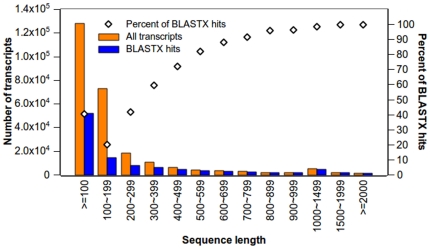
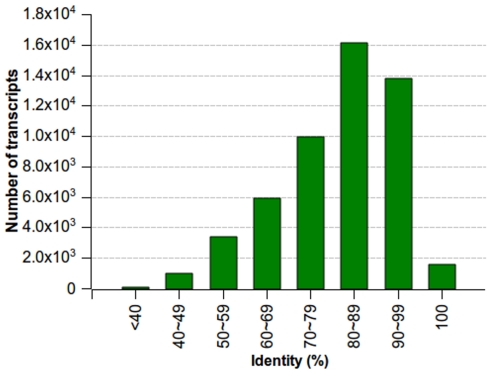
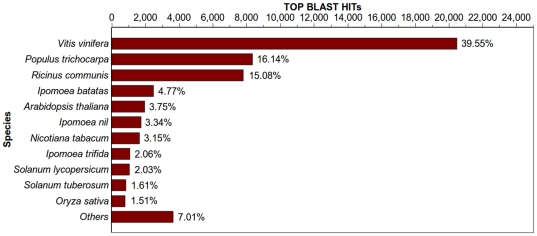
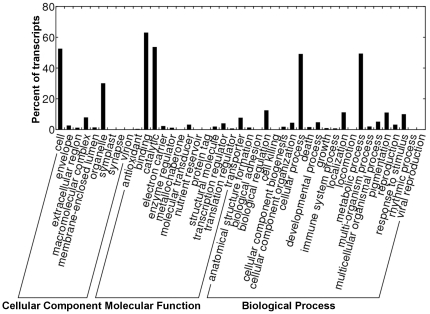
- Of 128,052 transcripts ≥100 bp, 51,763 (40.42%) had significant BLASTX hits matching 29,056 unique protein accessions; 39,677 transcripts had GO terms, and 14,117 transcripts had 17,069 ECs covering 147 KEGG pathways. Top-hit species were *Vitis vinifera* (20,472; 39.55%), *Populus trichocarpa* (8,352; 16.14%), and *Ricinus communis* (7,807; 15.08%).
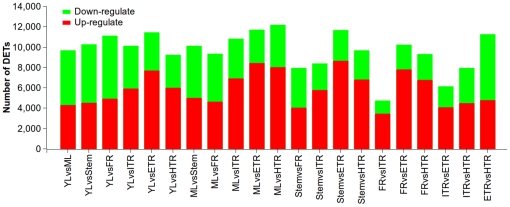
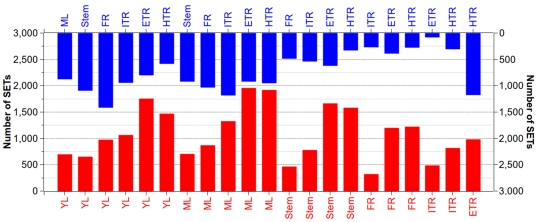
- Seven DGE libraries yielded 24,557,853 clean tags and 328,383 distinct clean tags; 48,600 transcripts were mapped by clean tags. Across 21 pairwise comparisons, 4,721–12,151 transcripts were differentially expressed (average 9,657), with the largest difference between mature leaves and harvest tuberous roots (7,994 up- and 4,157 down-regulated in ML) and the smallest between fibrous roots and initial tuberous roots (4,721 DETs).
- The study identified 4,249 potential cDNA-derived SSRs in 4,028 transcripts and 79 putative viral transcripts belonging to 12 viral species; five viruses had 100% BLASTX homology to known viruses, and most viral transcripts belonged to Sweet potato feathery mottle virus (SPFMV).
Methods
- Sweet potato cv. Xushu 18 plants were grown in Chengdu, Sichuan, China; tissues sampled were young leaves, mature leaves, stems, fibrous roots, initial tuberous roots, expanding tuberous roots, and harvest tuberous roots at 1, 1.5, 3, and 5 months after planting. Equal RNA amounts from each tissue were pooled for RNA-Seq, while individual tissue RNAs were used for DGE.
- Illumina GAII paired-end RNA-Seq reads were quality-assessed, trimmed at the 3′ end from 5 to 25 mers at 5-mer intervals to create six read sets, assembled with Edena, Velvet, and SOAPdenovo under optimized parameters, pooled with commercial assembler contigs, and merged with CAP3. Assembly quality was evaluated by BLASTN against full-length sweet potato cds from GenBank, Bowtie read mapping, ORF prediction with EMBOSS, and RT-PCR/Sanger validation of 14 transcripts; results were also compared with Trinity.
- DGE libraries were prepared using NlaIII and MmeI, sequenced on Illumina GAII, filtered to clean tags, mapped to final assembled transcripts with Bowtie allowing ≤1 mismatch, normalized to TPM, and analyzed for differential expression with edgeR using p≤0.05 and log2 fold-change ≥1; hypergeometric tests with Bonferroni adjustment were used for functional enrichment.
Limitations
- Stated: there are no standard criteria for evaluating transcriptome assemblies; the final assembly’s accuracy may be underestimated because many genes may exist as gene families and UTRs are relatively less conserved. The authors also note that 76,289 sequences (59.58%) lacked BLASTX hits, most being short fragments ≤300 bp, possibly due to low expression, new genes, and/or non-coding regions.
- Stated: some putative viral transcripts may still need confirmation because genome sequences for some viruses are lacking, although 77 of 79 putative viral transcripts had BLASTX identity >75%.
- Evident from the text: DGE expression analysis relied on mapping tags to the assembled transcriptome rather than a reference genome, and the seven DGE libraries appear to represent single tissue samples rather than independent biological replicates for each tissue; differential expression validation was indirect, based mainly on agreement with 19 of 22 previously reported storage-root-related genes.
Model-written summary. Check it against the paper before relying on it.
Integrity signals
Registry
Cites
Statistics
Figures
Verification
Claims the paper makes
30 Valid · 2 Not valid · 24 Not checked · 143 Own results and interpretations
The sources with a verdict support this claim; the rest weren’t checked yet, have no full text we could read, or their verdicts aren’t rated yet.
In the paper
“Despite the fast development of assemblers that are able to efficiently handle more reads, transcriptome assembly is still difficult [9], [14].”
§ Digital Gene Expression Analysis Based on Integrated De Novo Transcriptome Assembly of Sweet Potato [Ipomoea batatas (L.) Lam.] > Introduction
What the sources say
- Supportedcites [9] Surget-Groba Y Montoya-Burgos JI 2010 Optimization of de novo transcriptome assembly from next-generation sequencing data. Genome Res 20 1432 1440 20693479 PMC2945192 source
The Abstract explicitly states that, despite faster development of assemblers able to handle more reads, transcriptome assembly is still difficult. It identifies alternative splicing and uneven transcript coverage as reasons. (LLM, conf=0.95)
- Not checked — no full text of the sourcecites [14] Haas BJ Zody MC 2010 Advancing RNA-Seq analysis. Nat Biotechnol 28 421 423 20458303 source
plain- Asserted: passes — The authors put it forward as true.
- Checkable: passes — It can be checked against evidence.
- Load-bearing: passes — The paper’s conclusions depend on it.
- Based: passes — The paper gives a reason why it holds.
- Supported
The cited sources support only part of this claim — read each source’s verdict below.
In the paper
“Comparing with other main crops or model organisms, the genomic resources for this crop are deficient until 2010 due to its complex hexaploid genome [8].”
§ Digital Gene Expression Analysis Based on Integrated De Novo Transcriptome Assembly of Sweet Potato [Ipomoea batatas (L.) Lam.] > Introduction
What the sources say
- Partly supportedcites [8] Varshney RK Glaszmann JC Leung H Ribaut JM 2010 More genomic resources for less-studied crops. Trends Biotechnol 28 452 460 20692061 sourceExperimental — accuracy not yet measured
The resource table (Glossary, p. 2) identifies sweet potato as hexaploid and rates several of its genomic resources as moderate or unavailable; the Transcriptomic resources section (p. 4) contrasts its historically limited resources with those of better-studied cereals. The paper does not say that hexaploidy caused the resource shortfall, and it describes resources becoming available by 2010 rather than remaining deficient until then. (LLM, conf=0.86)
plainstates a cause- Asserted: passes — The authors put it forward as true.
- Checkable: passes — It can be checked against evidence.
- Load-bearing: passes — The paper’s conclusions depend on it.
- Based: passes — The paper gives a reason why it holds.
- Partly supported
The cited sources support only part of this claim — read each source’s verdict below.
In the paper
“High-throughput transcriptome sequencing and digital gene expression (DGE) tag profiling are efficient and economic choice for characterizing non-model organisms without a reference genome [9], [10].”
§ Digital Gene Expression Analysis Based on Integrated De Novo Transcriptome Assembly of Sweet Potato [Ipomoea batatas (L.) Lam.] > Introduction
What the sources say
- Partly supportedcites [9] Surget-Groba Y Montoya-Burgos JI 2010 Optimization of de novo transcriptome assembly from next-generation sequencing data. Genome Res 20 1432 1440 20693479 PMC2945192 sourceExperimental — accuracy not yet measured
The Abstract says next-generation sequencing reduces cost, labor, and time for genomic projects involving non-model organisms, and discusses de novo transcriptome assembly without a reference. It does not establish that digital gene expression (DGE) tag profiling is an efficient, economical choice for that purpose. (LLM, conf=0.87)
- Partly supportedcites [10] Wang Z Gerstein M Snyder M 2009 RNA-Seq: a revolutionary tool for transcriptomics. Nat Rev Genet 10 57 63 19015660 PMC2949280 sourceExperimental — accuracy not yet measured
The ‘RNA-Seq technology and benefits’ section says RNA-Seq is attractive for non-model organisms whose genomes have not been sequenced, permits de novo assembly, and can cost less than other transcriptome methods. But the paper’s introductory discussion says tag-based methods, while high-throughput and capable of digital expression measurement, are often expensive and have short-tag mapping limitations. It does not support calling DGE tag profiling an economical choice for organisms without a reference genome. (LLM, conf=0.89)
plain- Asserted: passes — The authors put it forward as true.
- Checkable: passes — It can be checked against evidence.
- Load-bearing: passes — The paper’s conclusions depend on it.
- Based: passes — The paper gives a reason why it holds.
- Partly supported
Every source the paper cites for this claim was checked and supports it.
In the paper
“Different assemblers have different applicability and performance [15], [16].”
§ Digital Gene Expression Analysis Based on Integrated De Novo Transcriptome Assembly of Sweet Potato [Ipomoea batatas (L.) Lam.] > Introduction
What the sources say
- Supportedcites [15] Zhang WY Chen JJ Yang Y Tang YF Shang J 2011 A practical comparison of de novo genome assembly software tools for next-generation sequencing technologies. PLoS One 6 e17915 21423806 PMC3056720 source
The Introduction says each assembly strategy has its own range of applicability. The Results compare assemblers’ runtime and memory use, and the Discussion recommends different assemblers for different datasets and computing resources. Our copy does not provide page numbers for these passages. (LLM, conf=0.94)
- Supportedcites [16] Lin Y Li J Shen H Zhang L Papasian CJ 2011 Comparative studies of de novo assembly tools for next-generation sequencing technologies. Bioinformatics 27 2031 2037 21636596 PMC3137213 source
The Conclusions and Discussions (p. 16,768) state that assembler performance depends on test conditions and give different recommendations for tool selection under varying conditions. This supports the claim that assemblers differ in both performance and applicability. (LLM, conf=0.95)
plainstates an association- Asserted: passes — The authors put it forward as true.
- Checkable: passes — It can be checked against evidence.
- Load-bearing: passes — The paper’s conclusions depend on it.
- Based: passes — The paper gives a reason why it holds.
- Supported
The cited sources support only part of this claim — read each source’s verdict below.
In the paper
“Researchers usually chose only one assembler to assembly a transcriptome [11], [12], [17]–[19].”
§ Digital Gene Expression Analysis Based on Integrated De Novo Transcriptome Assembly of Sweet Potato [Ipomoea batatas (L.) Lam.] > Introduction
What the sources say
- Partly supportedcites [11] Schafleitner R Tincopa LR Palomino O Rossel G Robles RF 2010 A sweetpotato gene index established by de novo assembly of pyrosequencing and Sanger sequences and mining for gene-based microsatellite markers. BMC Genomics 11 604 20977749 PMC3017860 sourceExperimental — accuracy not yet measured
The Methods section ('Sequence cleaning and assembly'; page not provided) says this study assembled the reads with NGen software. That supports this paper as an example of using one assembler, but it does not establish that researchers usually choose only one. (LLM, conf=0.86)
- Supportedcites [12] Wang ZY Fang BP Chen JY Zhang XJ Luo ZX 2010 De novo assembly and characterization of root transcriptome using Illumina paired-end sequencing and development of cSSR markers in sweetpotato (Ipomoea batatas). BMC Genomics 11 726 21182800 PMC3016421 source
The Results section identifies SOAPdenovo as the assembler used for this transcriptome, and the Data filtering and de novo assembly section describes assembly with SOAPdenovo. The paper therefore serves as an example of a study using one assembler, as the citing sentence’s group of citations suggests. (LLM, conf=0.88)
- Not matchedcites [17]–[19]
A range of references, not one source.
plain- Asserted: passes — The authors put it forward as true.
- Checkable: passes — It can be checked against evidence.
- Load-bearing: passes — The paper’s conclusions depend on it.
- Based: passes — The paper gives a reason why it holds.
- Partly supported
88 more claims · 4 with their cited sources checked
Create a free account to see all 199 claims and to verify the 1 reference still open.
- Probably not a substantial claim. 42
- It may state two separate claims as one. 75
- The quote only partly states this claim. 1
Claims other papers make about this one
Each is checked against this paper’s own text: does it say what the citing paper says it does?
The cited source says what the claim attributes to it.
In the citing paper
“These motifs were previously shown to occur at the highest frequency in sweet potato EST or cDNA SSRs, especially the AG/CT, AAG/CTT, and AT/TA motifs (Wang et al., 2010; Wang Z. et al., 2011; Tao et al., 2012).”
From Development and identification of SSR markers associated with starch properties and β-carotene content in the storage root of sweet potato (Ipomoea batatas L.) (2016) · cites this paper as Tao et al., 2012
The check wasn’t confident either way, so it gives no verdict — never disputed.
In the citing paper
“The protein kinase domain has been found to play an important role in linking abiotic stress tolerance and the metabolic responses of plants [31].”
From Whole Genome Analysis of Cyclin Dependent Kinase (CDK) Gene Family in Cotton and Functional Evaluation of the Role of CDKF4 Gene in Drought and Salt Stress Tolerance in Plants (2018) · cites this paper as [31]
Experimental — accuracy not yet measured
Self-check
Percentages, sums and reported differences re-computed from the paper’s own numbers.
Each contradiction between two passages listed here was confirmed by an independent check.
Rated minor: it would not touch a result — a value no result rests on, a p-value that stays on the same side of the significance level, or a conflict that is clerical, resolved elsewhere in the paper, or outside its own findings.
In the paper
§ Digital Gene Expression Analysis Based on Integrated De Novo Transcriptome Assembly of Sweet Potato [Ipomoea batatas (L.) Lam.] > Introduction
“51,736 annotated transcripts”
§ Digital Gene Expression Analysis Based on Integrated De Novo Transcriptome Assembly of Sweet Potato [Ipomoea batatas (L.) Lam.] > Results > Functional annotation and classification
“51,763 (40.42%) had significant BLASTX hits”
Citations
Cites
Controlling the False Discovery Rate: A Practical and Powerful Approach to Multiple Testing
Benjamini, Y., & Hochberg, Y. (1995) · Journal of the Royal Statistical Society Series B: Statistical Methodology · doi:10.1111/j.2517-6161.1995.tb02031.x · Cited by 109,482
Gapped BLAST and PSI-BLAST: a new generation of protein database search programs
Altschul, S. (1997) · Nucleic Acids Research · doi:10.1093/nar/25.17.3389 · Cited by 73,302
Gene Ontology: tool for the unification of biology
Ashburner, M., Ball, C. A., Blake, J. A., Botstein, D., Butler, H., Cherry, J. M., Davis, A. P., Dolinski, K., Dwight, S. S., Eppig, J. T., et al. (2000) · Nature Genetics · doi:10.1038/75556 · Cited by 43,206
Robinson, M. D., McCarthy, D. J., & Smyth, G. K. (2010) · Bioinformatics · doi:10.1093/bioinformatics/btp616 · Cited by 41,364
Ultrafast and memory-efficient alignment of short DNA sequences to the human genome.
Langmead, B., Trapnell, C., Pop, M., & Salzberg, S. L. (2009) · Genome Biology · doi:10.1186/gb-2009-10-3-r25 · Cited by 21,849 · cited 1×
“Reads were also mapped back to the assembled transcripts with length ≥100 bp using Bowtie”
MethodFull-length transcriptome assembly from RNA-Seq data without a reference genome
Grabherr, M. G., Haas, B. J., Yassour, M., Levin, J. Z., Thompson, D. A., Amit, I., Adiconis, X., Fan, L., Raychowdhury, R., Zeng, Q., et al. (2011) · Nature Biotechnology · doi:10.1038/nbt.1883 · Cited by 21,039
Differential expression analysis for sequence count data
Anders, S., & Huber, W. (2010) · Genome Biology · doi:10.1186/gb-2010-11-10-r106 · Cited by 15,581
RNA-Seq: a revolutionary tool for transcriptomics
Wang, Z., Gerstein, M., & Snyder, M. (2009) · Nature Reviews Genetics · doi:10.1038/nrg2484 · Cited by 13,174 · cited 1×
“High-throughput transcriptome sequencing and digital gene expression (DGE) tag profiling are efficient and economic choice for characterizing non-model organisms without a reference genome [9,10].”
BackgroundConesa, A., Götz, S., García-Gómez, J. M., Terol, J., Talón, M., & Robles, M. (2005) · Bioinformatics · doi:10.1093/bioinformatics/bti610 · Cited by 11,495
Velvet: Algorithms for de novo short read assembly using de Bruijn graphs
Zerbino, D. R., & Birney, E. (2008) · Genome Research · doi:10.1101/gr.074492.107 · Cited by 9,491
Cited by
Haplotype-resolved sweet potato genome traces back its hexaploidization history
Yang, J., Moeinzadeh, M.-H., Kuhl, H., Helmuth, J., Xiao, P., Haas, S., Liu, G., Zheng, J., Sun, Z., Fan, W., et al. (2017) · Nature Plants · doi:10.1038/s41477-017-0002-z · Cited by 370
Self-citationComparative Phylogenomics Uncovers the Impact of Symbiotic Associations on Host Genome Evolution
Delaux, P.-M., Varala, K., Edger, P. P., Coruzzi, G. M., Pires, J. C., & Ané, J.-M. (2014) · PLoS Genetics · doi:10.1371/journal.pgen.1004487 · Cited by 290
Firon, N., LaBonte, D., Villordon, A., Kfir, Y., Solis, J., Lapis, E., Perlman, T., Doron-Faigenboim, A., Hetzroni, A., Althan, L., et al. (2013) · BMC Genomics · doi:10.1186/1471-2164-14-460 · Cited by 182
Root architecture and root and tuber crop productivity
Villordon, A. Q., Ginzberg, I., & Firon, N. (2014) · Trends in Plant Science · doi:10.1016/j.tplants.2014.02.002 · Cited by 170
Ranjan, A., Ichihashi, Y., Farhi, M., Zumstein, K., Townsley, B. T., David‐Schwartz, R., & Sinha, N. R. (2014) · PLANT PHYSIOLOGY · doi:10.1104/pp.113.234864 · Cited by 166
Improvement for agronomically important traits by gene engineering in sweetpotato
Liu, Q. (2017) · Ikushugaku zasshi · doi:10.1270/jsbbs.16126 · Cited by 145
Fan, X.-D., Wang, J., Yang, N., Dong, Y., Liu, L., Wang, F., Wang, N., Chen, H., Liu, W., Sun, Y., et al. (2012) · Gene · doi:10.1016/j.gene.2012.09.100 · Cited by 117
Zhang, H., Zhang, Q., Zhai, H., Li, Y., Wang, X., Liu, Q., & He, S. (2017) · Scientific Reports · doi:10.1038/srep40819 · Cited by 121
Zhuang, J., Zhang, J., Hou, X., Wang, F., & Xiong, A. (2014) · Critical Reviews in Plant Sciences · doi:10.1080/07352689.2014.870420 · Cited by 110
Abiotic Stress Responses in Plants: Unraveling the Complexity of Genes and Networks to Survive
Sofia, A., de Almeida, A. M., da Silva, A. B., da Silva, J. M., Paula, A., Santos, D., Fevereiro, P., & Sousa Araujo, S. D. (2013) · Abiotic Stress - Plant Responses and Applications in Agriculture · doi:10.5772/52779 · Cited by 106
“High-throughput transcriptome sequencing and digital gene expression (DGE) profiling are cost-efficient platforms that are predicted to change transcriptomic analysis, eliminating the need for restriction enzyme digestion of DNA samples, PCR-based genomic amplification and ligation of sequence tags; they are additiona…”
BackgroundLi, M., Wang, F., Jiang, Q., Ma, J., & Xiong, A. (2014) · Horticulture Research · doi:10.1038/hortres.2014.10 · Cited by 99
Jeon, J., Bong, S. J., Park, J. S., Park, Y., Arasu, M. V., Al-Dhabi, N. A., & Park, S. U. (2017) · BMC Genomics · doi:10.1186/s12864-017-3792-5 · Cited by 100
Wadl, P. A., Olukolu, B. A., Branham, S. E., Jarret, R. L., Yencho, G. C., & Jackson, D. M. (2018) · Frontiers in Plant Science · doi:10.3389/fpls.2018.01166 · Cited by 111
RNA-Seq for Transcriptome Analysis in Non-model Plants
Garg, R., & Jain, M. (2013) · Methods in molecular biology · doi:10.1007/978-1-62703-613-9_4 · Cited by 102
Magwanga, R. O., Lu, P., Kirungu, J. N., Cai, X., Zhou, Z., Wang, X., Diouf, L., Xu, Y., Hou, Y., Hu, Y., et al. (2018) · International Journal of Molecular Sciences · doi:10.3390/ijms19092625 · Cited by 88
Sharma, D., Shree, B., Kumar, S., Kumar, V., Sharma, S., & Sharma, S. (2022) · Plant Physiology and Biochemistry · doi:10.1016/j.plaphy.2022.09.034 · Cited by 91
Kumar, A., Anju, T., Kumar, S., Chhapekar, S. S., Sreedharan, S., Singh, S., Ramchiary, N., Choi, S. R., & Lim, Y. P. (2021) · International Journal of Molecular Sciences · doi:10.3390/ijms22158093 · Cited by 102
Clarke, T. H., Garb, J. E., Hayashi, C. Y., Haney, R. A., Lancaster, A. K., Corbett, S., & Ayoub, N. A. (2014) · BMC Genomics · doi:10.1186/1471-2164-15-365 · Cited by 82
Verma, P., Shah, N., & Bhatia, S. (2013) · Plant Biotechnology Journal · doi:10.1111/pbi.12082 · Cited by 83
Recent transcriptomics advances and emerging applications in food science
Valdés, A., Ibáñez, C., Simó, C., & García‐Cañas, V. (2013) · TrAC Trends in Analytical Chemistry · doi:10.1016/j.trac.2013.06.014 · Cited by 77
Analyses of the Complete Genome and Gene Expression of Chloroplast of Sweet Potato [Ipomoea batata]
Yan, L., Lai, X., Li, X., Wei, C., Tan, X., & Zhang, Y. (2015) · PLoS ONE · doi:10.1371/journal.pone.0124083 · Cited by 68
Self-citationShi, S., Yang, M., Zhang, M., et al. (2014) · BMC Genomics · doi:10.1186/1471-2164-15-706 · Cited by 67
Unraveling gene function in agricultural species using gene co-expression networks
Schaefer, R., Michno, J., & Myers, C. L. (2016) · Biochimica et Biophysica Acta (BBA) - Gene Regulatory Mechanisms · doi:10.1016/j.bbagrm.2016.07.016 · Cited by 67
Liu, Y., Huang, Z., Ao, Y., Li, W., & Zhang, Z. (2013) · PLoS ONE · doi:10.1371/journal.pone.0074441 · Cited by 67
Arisha, M. H., Aboelnasr, H., Ahmad, M. Q., Liu, Y., Tang, W., Gao, R., Yan, H., Kou, M., Wang, X., Zhang, Y., et al. (2020) · BMC Genomics · doi:10.1186/s12864-020-6524-1 · Cited by 63
Self-citationHoang, N. V., Park, C., Kamran, M., & Lee, J. (2020) · Frontiers in Plant Science · doi:10.3389/fpls.2020.00762 · Cited by 52
Štajner, N., Radišek, S., Mishra, A. K., Nath, V. S., Matoušek, J., & Jakše, J. (2019) · International Journal of Molecular Sciences · doi:10.3390/ijms20133154 · Cited by 64
Xu, Q., Zhao, W., Chen, Y., Tong, Y., Rong, G.-H., Huang, Z., Zhang, Y., Chang, G. B., Wu, X., & Chen, G. (2013) · PLoS ONE · doi:10.1371/journal.pone.0055496 · Cited by 65
Self-citationLiu, G., Zhou, Y., Liu, D., Wang, Q., Ruan, Z., He, Q., & Zhang, L. (2015) · PLoS ONE · doi:10.1371/journal.pone.0142680 · Cited by 59
Zhu, H., Zhou, Y., Zhai, H., Shao-zhen, H. E., Zhao, N., & Liu, Q. (2019) · Journal of Integrative Agriculture · doi:10.1016/s2095-3119(18)61934-3 · Cited by 49
Molecular Regulation of Storage Root Formation and Development in Sweet Potato
Ravi, V., Chakrabarti, S. K., Makeshkumar, T., & Saravanan, R. (2014) · Horticultural Reviews: Volume 42 · doi:10.1002/9781118916827.ch03 · Cited by 53
Leslie, T. A., & Baucom, R. S. (2014) · G3 Genes Genomes Genetics · doi:10.1534/g3.114.013508 · Cited by 51
Arisha, M. H., Ahmad, M. Q., Tang, W., Liu, Y., Yan, H., Kou, M., Wang, X., Zhang, Y., & Li, Q. (2020) · Scientific Reports · doi:10.1038/s41598-020-69232-3 · Cited by 60
Self-citationPonniah, S. K., Thimmapuram, J., Bhide, K. P., Kalavacharla, V. K., & Manoharan, M. (2017) · BMC Plant Biology · doi:10.1186/s12870-016-0950-x · Cited by 51
Gao, X., Zhang, H., Li, X., Bai, Y., Peng, K., Wang, Z., Dai, Z., Bian, X., Zhang, Q., Jia, L., et al. (2022) · PLANT PHYSIOLOGY · doi:10.1093/plphys/kiac516 · Cited by 51
Self-citationAhmed, S., Khan, S., Xue, S., Islam, F., Ikram, A. U., Abdullah, M. I., Liu, S., Tappiban, P., & Chen, J. (2024) · Horticulture Research · doi:10.1093/hr/uhae014 · Cited by 53
Miao, Y., Zhu, Z., Guo, Q., Yang, X., Liu, L., Sun, Y., & Wang, C. (2016) · Journal of Plant Biology · doi:10.1007/s12374-016-0456-y · Cited by 48
An Insight into Sweet Potato Weevils Management: A Review
Hue, S.-M., & Low, M.-Y. (2015) · Psyche A Journal of Entomology · doi:10.1155/2015/849560 · Cited by 43
Rajendran, S., Lin, I. W., Chen, M., Chen, C., & Yeh, K. (2014) · BMC Plant Biology · doi:10.1186/1471-2229-14-112 · Cited by 44
Wang, Z., Fang, B., Chen, X., Liao, M., Chen, J., Zhang, X., Huang, L., Luo, Z., Yao, Z., & Li, Y. (2015) · BMC Plant Biology · doi:10.1186/s12870-015-0567-5 · Cited by 42
Kim, H. A., Lim, C. J., Kim, S., Choe, J. K., Jo, S., Baek, N.-K., & Kwon, S. (2014) · PLoS ONE · doi:10.1371/journal.pone.0092087 · Cited by 42
Mbanzibwa, D. R., Tugume, A. K., Chiunga, E., Mark, D., & Tairo, F. D. (2014) · Annals of Applied Biology · doi:10.1111/aab.12136 · Cited by 44
Zhou, X., Liu, Z., Ji, R., & Feng, H. (2017) · Molecular Genetics and Genomics · doi:10.1007/s00438-017-1324-2 · Cited by 39
Zhang, Y.-F., Li, G., Wang, X., Sun, Y., & Zhang, S. (2017) · PLoS ONE · doi:10.1371/journal.pone.0175454 · Cited by 42
Self-citationXu, T., Guo, X., Wang, H., Hao, F., Du, X., Gao, X., & Liu, D. (2013) · Gene · doi:10.1016/j.gene.2013.01.068 · Cited by 42
Self-citationOptimal assembly strategies of transcriptome related to ploidies of eukaryotic organisms
He, B., Zhao, S., Chen, Y., Cao, Q., Wei, C., Cheng, X., & Zhang, Y. (2015) · BMC Genomics · doi:10.1186/s12864-014-1192-7 · Cited by 38
Self-citationSun, P., Xiao, X.-G., Duan, L., Guo, Y., Qi, J., Liao, D., Zhao, C., Liu, Y., Zhou, L., & Li, X. (2015) · Frontiers in Plant Science · doi:10.3389/fpls.2015.00396 · Cited by 37
Self-citationChen, H., Lin, L., Xie, M., Zhang, G., & Su, W. (2014) · PLoS ONE · doi:10.1371/journal.pone.0114238 · Cited by 32
Generation and Characterization of a Sugarbeet Transcriptome and Transcript‐Based SSR Markers
Fugate, K. K., Fajardo, D. A., Schlautman, B., Ferrareze, J. P., Bolton, M. D., Campbell, L. G., Wiesman, E., & Zalapa, J. E. (2014) · The Plant Genome · doi:10.3835/plantgenome2013.11.0038 · Cited by 39
Li, R., Zhai, H., Chen, K., Liu, D., He, S., & Liu, Q. (2015) · International Journal of Genomics · doi:10.1155/2015/843802 · Cited by 38
Tao, X., Gu, Y., JIANG, Y.-S., Zhang, Y., & Wang, H. (2013) · Bioscience Biotechnology and Biochemistry · doi:10.1271/bbb.130218 · Cited by 33
Self-citationZhang, K., Wu, Z., Tang, D., Lv, C., Luo, K., Zhao, Y., Liu, X., Huang, Y., & Wang, J. (2016) · Frontiers in Plant Science · doi:10.3389/fpls.2016.00223 · Cited by 32
“…Schafleitner et al., 2010; Wang Z. et al., 2011), and mining of EST sequences derived from high-throughput RNA sequencing analyses using Illumina HiSeq 2000 sequencing or 454 pyrosequencing (Schafleitner et al., 2010; Wang et al., 2010; Wang Z. et al., 2011; Tao et al., 2012; Xie et al., 2012).”
MethodInfluentialIsolation and Abiotic Stress Resistance Analyses of a Catalase Gene fromIpomoea batatas(L.) Lam
Yong, B., Wang, X., Xu, P., Zheng, H., Fei, X., Hong, Z., Ma, Q., Miao, Y., Yuan, X., Jiang, Y., et al. (2017) · BioMed Research International · doi:10.1155/2017/6847532 · Cited by 35
Challenges to genome sequence dissection in sweetpotato
Isobe, S., Shirasawa, K., & Hirakawa, H. (2017) · Ikushugaku zasshi · doi:10.1270/jsbbs.16186 · Cited by 31
Transcriptome analysis revealed the dynamic oil accumulation in Symplocos paniculata fruit
Liu, Q., Sun, Y., Chen, J., Li, P., Li, C., Niu, G., & Jiang, L. (2016) · BMC Genomics · doi:10.1186/s12864-016-3275-0 · Cited by 34
De Novo Adult Transcriptomes of Two European Brittle Stars: Spotlight on Opsin-Based Photoreception
Delroisse, J., Mallefet, J., & Flammang, P. (2016) · PLoS ONE · doi:10.1371/journal.pone.0152988 · Cited by 27
Tsaballa, A., Nikolaidis, A. K., Trikka, F., et al. (2015) · BMC Genomics · doi:10.1186/s12864-015-1738-3 · Cited by 30
De novo transcriptome of the European brittle star Amphiura filiformis pluteus larvae
Delroisse, J., Ortega‐Martinez, O., Dupont, S., Mallefet, J., & Flammang, P. (2015) · Marine Genomics · doi:10.1016/j.margen.2015.05.014 · Cited by 28
Liu, H., Yang, X., Liao, X., Zuo, T., Qin, C., Cao, S., Dong, L., Zhou, H., Zhang, Y., Liu, S., et al. (2015) · Genomics · doi:10.1016/j.ygeno.2015.03.005 · Cited by 33
Self-citationComparative Transcriptomics of Root Development in Wild and Cultivated Carrots
Machaj, G., Bostan, H., Macko‐Podgórni, A., Iorizzo, M., & Grzebelus, D. (2018) · Genes · doi:10.3390/genes9090431 · Cited by 29
Exploring the Polyadenylated RNA Virome of Sweet Potato through High-Throughput Sequencing
Gu, Y., Tao, X., Lai, X., Wang, H., & Zhang, Y. (2014) · PLoS ONE · doi:10.1371/journal.pone.0098884 · Cited by 34
Self-citationXiang, Q., Hu, S., Ligaba‐Osena, A., Yang, J., Tong, F., & Guo, W. (2021) · Frontiers in Plant Science · doi:10.3389/fpls.2021.659645 · Cited by 26
Recent Progress in Molecular Studies on Storage Root Formation in Sweetpotato (Ipomoea batatas)
Tanaka, M. (2016) · Japan Agricultural Research Quarterly JARQ · doi:10.6090/jarq.50.293 · Cited by 33
Huang, S., Liu, Z., Yao, R., Li, D., & Feng, H. (2015) · Molecular Genetics and Genomics · doi:10.1007/s00438-015-1041-7 · Cited by 24
Li, M., Tan, H., Wang, F., Jiang, Q., Xu, Z., Tian, C., & Xiong, A. (2014) · PLoS ONE · doi:10.1371/journal.pone.0108977 · Cited by 29
Cao, Q., Li, A., Chen, J., Sun, Y., Tang, J., Zhang, A., Zhou, Z., Zhao, D., Ma, D., & Gao, S. (2016) · Tropical Plant Biology · doi:10.1007/s12042-016-9162-7 · Cited by 25
Chen, H., Lin, L., Xie, M., Zhang, G., & Su, W. (2015) · PLoS ONE · doi:10.1371/journal.pone.0127303 · Cited by 23
Parallel evolution of storage roots in morning glories (Convolvulaceae)
Eserman, L. A., Jarret, R. L., & Leebens-Mack, J. H. (2018) · BMC Plant Biology · doi:10.1186/s12870-018-1307-4 · Cited by 25
Comparative Transcriptomic Analysis of the Response to Cold Acclimation in Eucalyptus dunnii
Liu, Y., Jiang, Y., Lan, J., Zou, Y., & Gao, J. (2014) · PLoS ONE · doi:10.1371/journal.pone.0113091 · Cited by 27
Geng, L., Duan, X., Liang, C., Shu, C., Song, F., & Zhang, J. (2014) · Plant and Cell Physiology · doi:10.1093/pcp/pcu111 · Cited by 26
Jiang, L., Wijeratne, A., Wijeratne, S., et al. (2013) · PLoS ONE · doi:10.1371/journal.pone.0081389 · Cited by 25
Transcriptome sequencing and analysis of sweet osmanthus (Osmanthus fragrans Lour.)
母洪娜, Li, H. G., Wang, L. G., Yang, X. L., Sun, T., & Chen, X. (2014) · Genes & Genomics · doi:10.1007/s13258-014-0212-y · Cited by 25
Wang, Z., Li, X., Gao, X., Dai, Z., Peng, K., Jia, L.-C., Wu, Y., Liu, Q., Zhai, H., Gao, S., et al. (2023) · PLANT PHYSIOLOGY · doi:10.1093/plphys/kiad532 · Cited by 26
Self-citationJung, W. Y., Lee, S. S., Kim, C. W., Kim, H., Min, S. R., Moon, J. S., Kwon, S., Jeon, J.-H., & Cho, H. S. (2014) · PLoS ONE · doi:10.1371/journal.pone.0111982 · Cited by 25
Monden, Y., Yamamoto, A., Shindo, A., & Tahara, M. (2014) · DNA Research · doi:10.1093/dnares/dsu015 · Cited by 27
Zou, D., Chen, X., & Zou, D. (2013) · Genomics · doi:10.1016/j.ygeno.2013.02.014 · Cited by 27
Wang, Y., Yu, Y., Huang, M., Gao, P., Chen, H., Liu, M., Chen, Q., Yang, Z., & Sun, Q. (2020) · PeerJ · doi:10.7717/peerj.8306 · Cited by 22
Wei, C., Tao, X., Li, M., et al. (2015) · Molecular Genetics and Genomics · doi:10.1007/s00438-015-1034-6 · Cited by 21
Self-citationIsolation and expression studies of the ERD15 gene involved in drought-stressed responses
Shao, H., Chen, S. D., Zhang, K., Cao, Q. H., Zhou, H., Q, Q., He, B., Yuan, X., Wang, Y., Chen, Y. H., et al. (2014) · Genetics and Molecular Research · doi:10.4238/2014.december.19.6 · Cited by 22
Ji, C. Y., Bian, X., Lee, C.-J., Kim, H. S., Kim, S.-E., Park, S., Xie, Y., Guo, X., & Kwak, S. (2019) · Gene · doi:10.1016/j.gene.2019.02.097 · Cited by 25
Effects of nitrogen forms on carbohydrate metabolism and storage‐root formation of sweet potato
Si, C., Shi, C., Liu, H., Zhan, X., & Liu, Y. (2018) · Journal of Plant Nutrition and Soil Science · doi:10.1002/jpln.201700297 · Cited by 27
Lv, S., Wang, Z., Yang, X., Guo, L., Qiu, D., & Zeng, H. (2016) · Frontiers in Plant Science · doi:10.3389/fpls.2016.01818 · Cited by 24
Cai, M., Huang, H., Ni, F., Tong, Z., Lin, E., & Zhu, M. (2018) · PeerJ · doi:10.7717/peerj.5427 · Cited by 28
Zhou, Y.-X., Chen, Y.-X., Tao, X., Cheng, X.-J., & Wang, H.-Y. (2016) · Molecular Genetics and Genomics · doi:10.1007/s00438-015-1134-3 · Cited by 19
“A sweet potato transcriptome database was established from the cultivar Xushu 18 in our previous study (Tao et al. 2012).”
BackgroundMethodInfluentialSelf-citationYang, Z., Yang, H., Gong, D., Rose, S. P., Pirgozliev, V. R., Chen, X. S., & Wang, Z. (2018) · Poultry Science · doi:10.3382/ps/pey242 · Cited by 19
Chen, H., Lin, L., Xie, M., Zhang, G., & Su, W. (2015) · Comparative Biochemistry and Physiology Part D Genomics and Proteomics · doi:10.1016/j.cbd.2015.07.001 · Cited by 20
Molecular Cloning and Functional Analysis of Three CONSTANS-Like Genes from Chinese Cymbidium
Zhang, J., Zhao, X., RuiXue, T., Zeng, S., Wu, K., da Silva, J. A. T., & Duan, J. (2019) · Journal of Plant Growth Regulation · doi:10.1007/s00344-019-10044-9 · Cited by 18
Duan, W., Zhang, H., Xie, B., Wang, B., Hou, F., Li, A., Dong, S., Qin, Z., Wang, Q., & Zhang, L. (2021) · Physiologia Plantarum · doi:10.1111/ppl.13504 · Cited by 16
Kumar, A., Anju, T., Kumar, S., et al. (2021) · Preprints.org · doi:10.20944/preprints202106.0363.v1 · Cited by 17
Wang, X., Zhang, J., Liu, Z., Wang, S., Huang, B., Hu, Z., & Liu, Y. (2021) · Journal of Plant Biology · doi:10.1007/s12374-021-09304-7 · Cited by 17
Wang, T.-J., Wang, X., & Yang, Q. (2020) · Sugar Tech · doi:10.1007/s12355-019-00774-1 · Cited by 18
Development of SNP markers using RNA-seq technology and tetra-primer ARMS-PCR in sweetpotato
Kou, M., Jia-lei, X. U., Li, Q., Liu, Y., Wang, X., Wei, T. A. N. G., Yan, H., Zhang, Y., & Ma, D. (2017) · Journal of Integrative Agriculture · doi:10.1016/s2095-3119(16)61405-3 · Cited by 20
Self-citationQian, Y., Xiong, Y., Liu, J., Wen, D., Wu, X., & Yin, H. (2016) · PLoS ONE · doi:10.1371/journal.pone.0147873 · Cited by 17
Chen, Y., Zhang, H., Xiao, X., Jia, Y., Wu, W., Liu, L., Jiang, J., Zhu, B., Meng, X., & Chen, W. (2013) · International Journal of Cardiology · doi:10.1016/j.ijcard.2013.03.095 · Cited by 17
Jackson, D. J., Cerveau, N., & Posnien, N. (2024) · Frontiers in Zoology · doi:10.1186/s12983-024-00538-y · Cited by 23
Yang, Z., Liu, D., & Ji, H. (2018) · BMC Plant Biology · doi:10.1186/s12870-018-1363-9 · Cited by 16
Solis, J., Baisakh, N., Brandt, S. R., Villordon, A. Q., & Bonte, D. R. L. (2016) · PLoS ONE · doi:10.1371/journal.pone.0147398 · Cited by 16
Huang, S., Liu, Z., Li, D., Yao, R., Hou, L., Li, X., & Feng, H. (2016) · Frontiers in Plant Science · doi:10.3389/fpls.2016.00003 · Cited by 18
Self-citationTranscriptome Analysis of the Chinese Cabbage (Brassica rapa Ssp. Pekinensis) Petal Using RNA-Seq
Zhiyong, L. C. L. (2014) · Journal of Horticulture · doi:10.4172/2376-0354.1000114 · Cited by 16
Yu, J., Yang, H., Sun, Q., et al. (2023) · Journal of Animal Science · doi:10.1093/jas/skad020 · Cited by 15
Metadata
- Authors
- Tao, X., Gu, Y.-H., Wang, H.-Y., Zheng, W., Li, X., Zhao, C.-W., & Zhang, Y.-Z.
- Affiliations
- Sichuan University (CN)
- Oregon State University (US)
- ORCID
- Venue
- PLoS ONE
- Publisher
- Public Library of Science (PLoS)
- Published
- 2012-04-27
- Volume
- 7
- Issue
- 4
- Pages
- e36234
- ISSN
- 1932-6203 (ISSN-L)
- PMC
- PMC3338685
- OpenAlex
- W2002473465
- Semantic Scholar
- 0a68f75705c664c27bfb1af05d96aa3214f34d74
- Cited by
- 168
- References
- 90
- Citations by year
- 2026: 1 · 2025: 3 · 2024: 6 · 2023: 6 · 2022: 4 · 2021: 9 · 2020: 13 · 2019: 10 · 2018: 15 · 2017: 17 · 2016: 19 · 2015: 18 · 2014: 30 · 2013: 14 · 2012: 3
- FWCI
- 8.35
- Type
- journal article
- Language
- en
- Open access
- gold
- doi.org
- Locations
- PLoS ONE (publishedVersion, cc-by)
- PubMed Central (publishedVersion, cc-by)
- PubMed (publishedVersion)
- DOAJ (DOAJ: Directory of Open Access Journals) (submittedVersion, cc-by-sa)
- Figshare (submittedVersion, cc-by)
- Topics
- Life Sciences › Biochemistry, Genetics and Molecular Biology › Molecular Biology › Genomics and Phylogenetic Studies
- Life Sciences › Biochemistry, Genetics and Molecular Biology › Genetics › Chromosomal and Genetic Variations
- Life Sciences › Agricultural and Biological Sciences › Plant Science › Plant Molecular Biology Research
- Keywords
- Ipomoea batatas, de novo transcriptome assembly, digital gene expression, tissue-specific gene expression, differentially expressed transcripts, transcriptome annotation, KEGG pathways, Gene Ontology terms, starch metabolism, viral genes, stress tolerance, insect resistance, storage root development
- MeSH terms
- Animals, Base Composition, Codon, Genetic Markers, Insecta, RNA, Messenger, Stress, Physiological, Sequence Analysis, RNA, DNA, Complementary, Plant Roots, Microsatellite Repeats, Gene Expression Profiling, Genomics, Ipomoea batatas, Databases, Genetic, Carbohydrate Metabolism, Molecular Sequence Annotation
About these checks
Registry, retraction, Cites and statistics results are computed, not judged, with one exception: a printed reference that no index lists is read once by a model before it counts as a citation error. Claims are extracted by a model and kept only when their quote appears verbatim in the text; each cited source is then checked, with a model’s help, for whether it says what the claim relies on. Those verdicts can be wrong — read the claim’s quote and the cited source before relying on one.
The claim verdicts this report counts are experimental: their accuracy is not yet measured.
A language model drew the claims from the paper on 2026-10-10, under version 3 of the claim definition (model deepseek-v4.1-flash, prompt extract-v3).
A second model labelled each claim on 2026-10-10 (model jev-1.13-20260917, definition revision gold-guideline-v0.2).
Cited sources are checked with a language model’s help (gpt-6-sol).
Statistics and arithmetic are recomputed, not judged.
Confidence bands are shown only for fields calibrated on our annotated test set. None is calibrated yet, so no band is shown.
What counts as a claim ›How we measure confidence ›How we check this ›
Are you an author, or do you see a problem with this page? Request a review
Data sources
Bibliographic data: Semantic Scholar, OpenAlex, Crossref.
Contains information from the Semantic Scholar Academic Graph Datasets, made available under the ODC Attribution License (ODC-BY 1.0).
Semantic Scholar’s data is described in: Kinney, R., et al. (2023). The Semantic Scholar Open Data Platform. arXiv:2301.10140.
