

The DOI matches its Crossref record; 54 of the 55 references it cites were found in a registry or an index.
M. tuberculosis Induces Potent Activation of IDO-1, but This Is Not Essential for the Immunological Control of Infection
Open accessAbstract
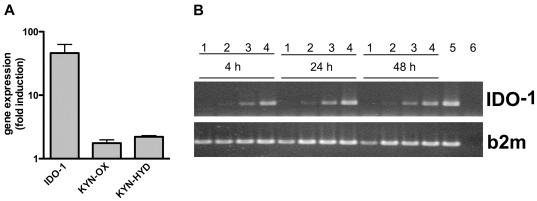
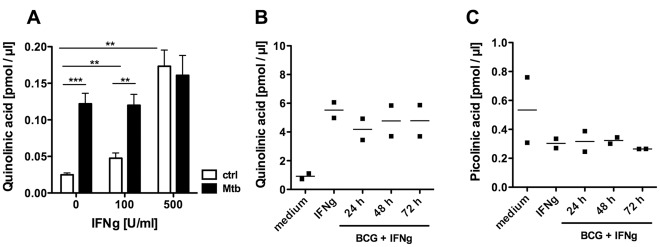
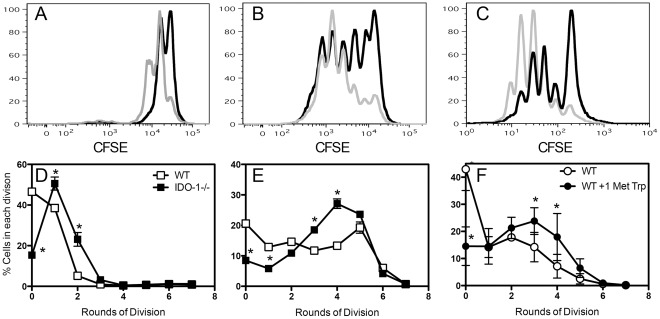
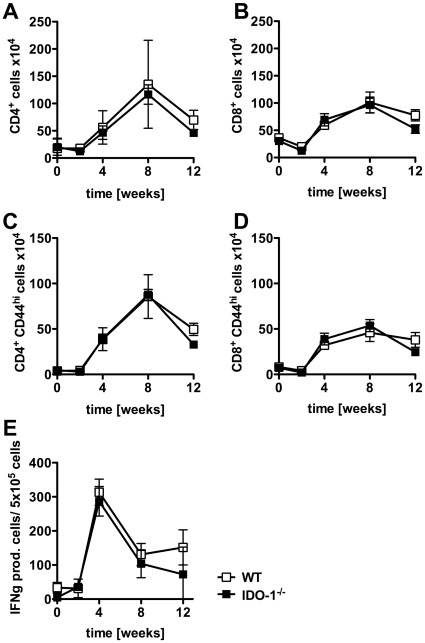
Indoleamine 2,3-dioxygenesae-1 (IDO-1) catalyses the initial, rate-limiting step in tryptophan metabolism, thereby regulating tryptophan availability and the formation of downstream metabolites, including picolinic and quinolinic acid. We found that Mycobacterium tuberculosis infection induced marked upregulation of IDO-1 expression in both human and murine macrophages in vitro and in the lungs of mice following aerosol challenge with M. tuberculosis. The absence of IDO-1 in dendritic cells enhanced the activation of mycobacteria-specific T cells in vitro. Interestingly, IDO-1-deficiency during M. tuberculosis infection in mice was not associated with altered mycobacteria-specific T cell responses in vivo. The bacterial burden of infected organs, pulmonary inflammatory responses, and survival were also comparable in M. tuberculosis-infected IDO-1 deficient and wild type animals. Tryptophan is metabolised into either picolinic acid or quinolinic acid, but only picolinic acid inhibited the growth of M. tuberculosis in vitro. By contrast macrophages infected with pathogenic mycobacteria, produced quinolinic, rather than picolinic acid, which did not reduce M. tuberculosis growth in vitro. Therefore, although M. tuberculosis induces robust expression of IDO-1 and activation of tryptophan metabolism, IDO-1-deficiency fails to impact on the immune control and the outcome of the infection in the mouse model of tuberculosis.
Overview
The claims and statistics of this paper haven’t been checked yet.
Run the check — free, no account needed. It reads the open-access text and checks the sources it cites.
Integrity signals
Registry
Cites
Statistics
Figures
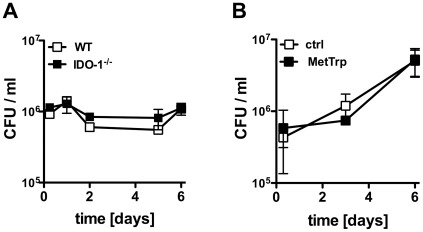
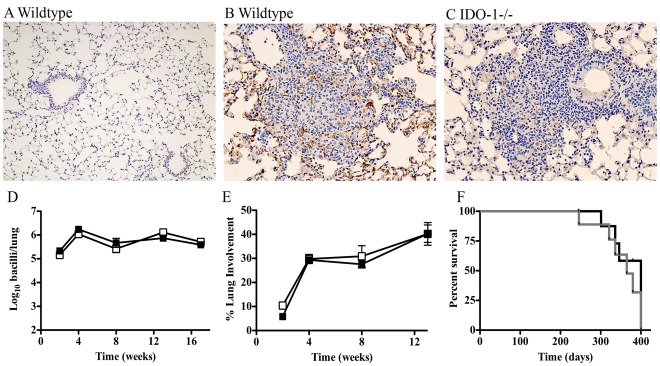
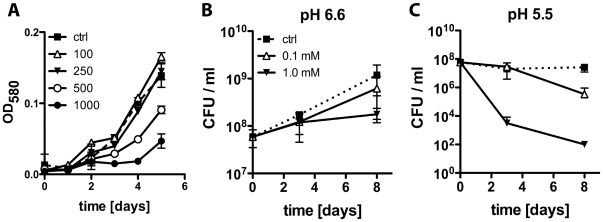
Verification
Claims the paper makes
The claims and statistics of this paper haven’t been checked yet.
Run the check — free, no account needed. It reads the open-access text and checks the sources it cites.
Claims other papers make about this one
Each is checked against this paper’s own text: does it say what the citing paper says it does?
In the citing paper
“However, in the setting of M. tuberculosis infection, IDO activation appears to be ineffective in controlling the infection.”
From Macrophage defense mechanisms against intracellular bacteria (2015) · cites this paper as [96]
In the citing paper
“IDO deficient mice were able to control M. tuberculosis infection as good as wildtype animals and lack of IDO did not affect mycobacterial specific T-cell responses (96).”
From Macrophage defense mechanisms against intracellular bacteria (2015) · cites this paper as [96]
In the citing paper
“Tryptophan is essential for M. tuberculosis growth, however, IDO deficient mice were able to control M. tuberculosis infection as good as wildtype animals and lack of IDO did not affect mycobacterial specific T-cell responses (96).”
From Macrophage defense mechanisms against intracellular bacteria (2015) · cites this paper as [96]
Self-check
Percentages, sums and reported differences re-computed from the paper’s own numbers.
The self-check needs the paper’s full text.
Citations
Cites
Prevention of Allogeneic Fetal Rejection by Tryptophan Catabolism
Munn, D. H., Zhou, M., Attwood, J. T., Bondarev, I. E., Conway, S. J., Marshall, B., Brown, C. C., & Mellor, A. L. (1998) · Science · doi:10.1126/science.281.5380.1191 · Cited by 2,589
An essential role for interferon gamma in resistance to Mycobacterium tuberculosis infection.
Flynn, J. L., Chan, J., Triebold, K. J., Dalton, D. K., Stewart, T. A., & Bloom, B. R. (1993) · The Journal of Experimental Medicine · doi:10.1084/jem.178.6.2249 · Cited by 2,468
Disseminated tuberculosis in interferon gamma gene-disrupted mice.
Cooper, A. M., Dalton, D. K., Stewart, T. A., Griffin, J. P., Russell, D. G., & Orme, I. M. (1993) · The Journal of Experimental Medicine · doi:10.1084/jem.178.6.2243 · Cited by 1,987
Inhibition of T Cell Proliferation by Macrophage Tryptophan Catabolism
Munn, D. H., Shafizadeh, E., Attwood, J. T., Bondarev, I. E., Pashine, A., & Mellor, A. L. (1999) · The Journal of Experimental Medicine · doi:10.1084/jem.189.9.1363 · Cited by 1,640
Frumento, G., Rotondo, R., Tonetti, M., Damonte, G., Benatti, U., & Ferrara, G. B. (2002) · The Journal of Experimental Medicine · doi:10.1084/jem.20020121 · Cited by 1,133
Potential Regulatory Function of Human Dendritic Cells Expressing Indoleamine 2,3-Dioxygenase
Munn, D. H., Sharma, M. D., Lee, J. R., Jhaver, K. G., Johnson, T. S., Keskin, D. B., Marshall, B., Chandler, P., Antonia, S. J., Burgess, R. E., et al. (2002) · Science · doi:10.1126/science.1073514 · Cited by 1,028
Genetic Dissection of Immunity to Mycobacteria: The Human Model
Casanova, J., & Abel, L. (2002) · Annual Review of Immunology · doi:10.1146/annurev.immunol.20.081501.125851 · Cited by 1,006
Pfefferkorn, E. (1984) · Proceedings of the National Academy of Sciences of the United States of America · doi:10.1073/pnas.81.3.908 · Cited by 870
Monitoring tryptophan metabolism in chronic immune activation
Schröcksnadel, K., Wirleitner, B., Winkler, C., & Fuchs, D. (2006) · Clinica Chimica Acta · doi:10.1016/j.cca.2005.06.013 · Cited by 551 · cited 1×
“IDO-2 remained unchanged during Plasmodium berghei ANKA infection [46] and TDO activity has also not been associated with immunerelated tryptophan metabolism [47].”
BackgroundFavre, D., Mold, J. E., Hunt, P. W., Kanwar, B., Loke, P., Seu, L., Barbour, J. D., Lowe, M. M., Jayawardene, A., Aweeka, F. T., et al. (2010) · Science Translational Medicine · doi:10.1126/scitranslmed.3000632 · Cited by 545
Guillemin, G. J., Smythe, G., Takikawa, O., & Brew, B. J. (2005) · Glia · doi:10.1002/glia.20090 · Cited by 497 · cited 1×
“This is in concordance with a previous observation showing differences in the production of quinolinic acid by different macrophage types (MDM compared to microglia), despite comparable levels of IDO1 mRNA expression [22].”
ResultSelf-citationEhrt, S., Schnappinger, D., Bekiranov, S., Drenkow, J., Shi, S., Gingeras, T., Gaasterland, T., Schoolnik, G. K., & Nathan, C. (2001) · The Journal of Experimental Medicine · doi:10.1084/jem.194.8.1123 · Cited by 467
Self-citationKynurenine is an endothelium-derived relaxing factor produced during inflammation
Wang, Y., Liu, H., McKenzie, G. A., Witting, P. K., Stasch, J., Hahn, M. G., Changsirivathanathamrong, D., Wu, B. J., Ball, H. J., Thomas, S. R., et al. (2010) · Nature Medicine · doi:10.1038/nm.2092 · Cited by 446
Characterization of an indoleamine 2,3-dioxygenase-like protein found in humans and mice
Ball, H. J., Sánchez-Pérez, Á., Weiser, S., Austin, C., Astelbauer, F., Miu, J., McQuillan, J. A., Stocker, R., Jermiin, L. S., & Hunt, N. H. (2007) · Gene · doi:10.1016/j.gene.2007.04.010 · Cited by 445
Indoleamine 2,3‐dioxygenase in T‐cell tolerance and tumoral immune escape
Katz, J. B., Muller, A. J., & Prendergast, G. C. (2008) · Immunological Reviews · doi:10.1111/j.1600-065x.2008.00610.x · Cited by 417
Expansion and function of Foxp3-expressing T regulatory cells during tuberculosis
Scott-Browne, J. P., Shafiani, S., Tucker-Heard, G., Ishida-Tsubota, K., Fontenot, J. D., Rudensky, A. Y., Bevan, M. J., & Urdahl, K. B. (2007) · The Journal of Experimental Medicine · doi:10.1084/jem.20062105 · Cited by 408
Regulation of neutrophils by interferon-γ limits lung inflammation during tuberculosis infection
Nandi, B., & Behar, S. M. (2011) · The Journal of Experimental Medicine · doi:10.1084/jem.20110919 · Cited by 385
Jouanguy, E., Lamhamedi‐Cherradi, S., Altare, F., Fondanèche, M., Tuerlinckx, D., Blanche, S., Emile, J., Gaillard, J., Schreiber, R. D., Levin, M., et al. (1997) · Journal of Clinical Investigation · doi:10.1172/jci119810 · Cited by 377
Creating immune privilege: active local suppression that benefits friends, but protects foes
Mellor, A. L., & Munn, D. H. (2007) · Nature reviews. Immunology · doi:10.1038/nri2233 · Cited by 329
Shafiani, S., Tucker-Heard, G., Kariyone, A., Takatsu, K., & Urdahl, K. B. (2010) · The Journal of Experimental Medicine · doi:10.1084/jem.20091885 · Cited by 316
Baban, B., Chandler, P., McCool, D. J., Marshall, B., Munn, D. H., & Mellor, A. L. (2004) · Journal of Reproductive Immunology · doi:10.1016/j.jri.2003.11.003 · Cited by 277
Indoleamine 2,3-dioxygenase-2; a new enzyme in the kynurenine pathway
Ball, H. J., Yuasa, H. J., Austin, C., Weiser, S., & Hunt, N. H. (2008) · The International Journal of Biochemistry & Cell Biology · doi:10.1016/j.biocel.2008.01.005 · Cited by 275
Desvignes, L., & Ernst, J. (2009) · Immunity · doi:10.1016/j.immuni.2009.10.007 · Cited by 245
Smith, D. A., Parish, T., Stoker, N. G., & Bancroft, G. J. (2001) · Infection and Immunity · doi:10.1128/iai.69.2.1442-1150.2001 · Cited by 243
Murray, H. W., Szuro-Sudol, A., Wellner, D., Oca, M. J., Granger, A. M., Libby, D., Rothermel, C. D., & Rubin, B. Y. (1989) · Infection and Immunity · doi:10.1128/iai.57.3.845-849.1989 · Cited by 216
Cantoni, C., Bottino, C., Augugliaro, R., Morelli, L., Marcenaro, E., Castriconi, R., Vitale, M., Pende, D., Sivori, S., Millo, R., et al. (1999) · European Journal of Immunology · doi:10.1002/(sici)1521-4141(199910)29:10 · Cited by 153
de Almeida, A. S., Lago, P. M., Boéchat, N., Huard, R. C., Lazzarini, L. C. O., Santos, A. R., Nociari, M., Zhu, H., Perez‐Sweeney, B., Bang, H., et al. (2009) · The Journal of Immunology · doi:10.4049/jimmunol.0801212 · Cited by 151
Saunders, B. M., Tran, S., Ruuls, S. R., Sedgwick, J. D., Briscoe, H., & Britton, W. J. (2005) · The Journal of Immunology · doi:10.4049/jimmunol.174.8.4852 · Cited by 140
Self-citationWozniak, T. M., Saunders, B. M., Ryan, A. A., & Britton, W. J. (2010) · Infection and Immunity · doi:10.1128/iai.01392-09 · Cited by 129
Self-citationSaunders, B. M., Fernando, S. L., Sluyter, R., Britton, W. J., & Wiley, J. S. (2003) · The Journal of Immunology · doi:10.4049/jimmunol.171.10.5442 · Cited by 126
Self-citationIL-17 and Therapeutic Kynurenines in Pathogenic Inflammation to Fungi
Romani, L. R., Zelante, T., LUCA, A. D., Fallarino, F., & Puccetti, P. (2008) · The Journal of Immunology · doi:10.4049/jimmunol.180.8.5157 · Cited by 123
Serum Indoleamine 2,3-Dioxygenase Activity Predicts Prognosis of Pulmonary Tuberculosis
Suzuki, Y., Suda, T., Asada, K., Miwa, S., Suzuki, M., Fujie, M., Furuhashi, K., Nakamura, Y., Inui, N., Shirai, T., et al. (2012) · Clinical and Vaccine Immunology · doi:10.1128/cvi.05402-11 · Cited by 122
Tamura, T., Ariga, H., Kinashi, T., Uehara, S., Kikuchi, T., Nakada, M., Tokunaga, T., Xu, W., Kariyone, A., Saito, T., et al. (2004) · International Immunology · doi:10.1093/intimm/dxh170 · Cited by 116
Moreau, M. M., Lestage, J., Verrier, D., Mormède, C., Kelley, K. W., Dantzer, R., & Castanon, N. (2005) · The Journal of Infectious Diseases · doi:10.1086/431603 · Cited by 104
Smythe, G. A., Braga, O., Brew, B. J., Grant, R., Guillemin, G. J., Kerr, S. J., & Walker, D. W. (2002) · Analytical Biochemistry · doi:10.1006/abio.2001.5490 · Cited by 101
Self-citationProlonged Survival of a Murine Model of Cerebral Malaria by Kynurenine Pathway Inhibition
Clark, C. J., Mackay, G., Smythe, G. A., Bustamante, S., Stone, T. W., & PHILLIPS, R. S. (2005) · Infection and Immunity · doi:10.1128/iai.73.8.5249-5251.2005 · Cited by 96
Self-citationIncreased degradation of tryptophan in blood of patients with rheumatoid arthritis.
Schroecksnadel, K., Kaser, S., Ledochowski, M., Neurauter, G., Mur, E., Herold, M., & Fuchs, D. (2003) · PubMed · Cited by 95
Candida albicans Dampens Host Defense by Downregulating IL-17 Production
Cheng, S., van de Veerdonk, F. L., Smeekens, S. P., Joosten, L. A. B., van der Meer, J. W. M., Kullberg, B. J., & Netea, M. G. (2010) · The Journal of Immunology · doi:10.4049/jimmunol.1000756 · Cited by 89
Varesio, L., Clayton, M., Blasi, E., Ruffmann, R., & Radzioch, D. (1990) · The Journal of Immunology · doi:10.4049/jimmunol.145.12.4265 · Cited by 72
Pyrrolidine dithiocarbamate protects mice from lethal shock induced by LPS or TNF-α
Lauzurica, P., Martı́nez-Martı́nez, S., Marazuela, M., Arco, P. G., Martínez‐A, C., Sánchez‐Madrid, F., & Redondo, J. M. (1999) · European Journal of Immunology · doi:10.1002/(sici)1521-4141(199906)29:06 · Cited by 71
Medana, I. M., Hien, T. T., Day, N., Phu, N. H., Mai, N. T. H., Chuong, L. V., Chau, T. T. H., Taylor, A., Salahifar, H., Stocker, R., et al. (2002) · The Journal of Infectious Diseases · doi:10.1086/339009 · Cited by 71
Self-citationMüller, A., Heseler, K., Schmidt, S. K., Spekker, K., MacKenzie, C. R., & Däubener, W. (2008) · Journal of Cellular and Molecular Medicine · doi:10.1111/j.1582-4934.2008.00542.x · Cited by 67
RP105 Facilitates Macrophage Activation by Mycobacterium tuberculosis Lipoproteins
Blumenthal, A., Kobayashi, T., Pierini, L. M., Banaei, N., Ernst, J., Miyake, K., & Ehrt, S. (2009) · Cell Host & Microbe · doi:10.1016/j.chom.2008.12.002 · Cited by 62
Self-citationPais, T. F., & Appelberg, R. (2000) · The Journal of Immunology · doi:10.4049/jimmunol.164.1.389 · Cited by 60
Tryptophan, Neurodegeneration and HIV-Associated Neurocognitive Disorder
Davies, N. W. S., Guillemin, G. J., & Brew, B. J. (2010) · International Journal of Tryptophan Research · doi:10.4137/ijtr.s4321 · Cited by 57
Self-citationTransient role of CD4+CD25+ regulatory T cells in mycobacterial infection in mice
Ozeki, Y., Sugawara, I., Udagawa, T., Aoki, T., Osada‐Oka, M., Tateishi, Y., Hisaeda, H., Nishiuchi, Y., Harada, N., Kobayashi, K., et al. (2010) · International Immunology · doi:10.1093/intimm/dxp126 · Cited by 51
Cai, S., Sato, K., Shimizu, T., Yamabe, S., Hiraki, M., Sano, C., & Tomioka, H. (2005) · Journal of Antimicrobial Chemotherapy · doi:10.1093/jac/dki418 · Cited by 49
Anti-infectious Activity of Tryptophan Metabolites in the L-Tryptophan-L-Kynurenine Pathway
Narui, K., Noguchi, N., Saito, A., Kakimi, K., Motomura, N., Kubo, K., Takamoto, S., & Sasatsu, M. (2009) · Biological and Pharmaceutical Bulletin · doi:10.1248/bpb.32.41 · Cited by 44
Johnson, G. S., Adler, C. R., Collins, J. J., & Court, D. L. (1979) · Journal of Biological Chemistry · doi:10.1016/s0021-9258(18)50621-9 · Cited by 37
Li, Q., Li, L., Liu, Y., Fu, X., Qiao, D., Wang, H., Lao, S., Huang, F., & Wu, C. Y. (2011) · Cellular and Molecular Immunology · doi:10.1038/cmi.2010.80 · Cited by 31
Modulation of indoleamine‐2,3‐dioxygenase expression and activity by HIV‐1 in human macrophages
Manéglier, B., Malleret, B., Guillemin, G. J., Spreux‐Varoquaux, O., Devillier, P., Rogez‐Kreuz, C., Porcheray, F., Thérond, P., Dormont, D., & Clayette, P. (2009) · Fundamental & Clinical Pharmacology · doi:10.1111/j.1472-8206.2009.00703.x · Cited by 21
Self-citationA potential role for indoleamine 2,3-dioxygenase (IDO) in Rhodococcus equi infection
Heller, M. C., Drew, C. P., Jackson, K. A., Griffey, S. M., & Watson, J. L. (2010) · Veterinary Immunology and Immunopathology · doi:10.1016/j.vetimm.2010.07.013 · Cited by 16
Pais, T. F., & Appelberg, R. (2004) · Microbiology · doi:10.1099/mic.0.26815-0 · Cited by 14
Li, Q., Li, L., Liu, Y., Fu, X., Wang, H., Lao, S., Yang, B., & Wu, C. Y. (2011) · Immunology Letters · doi:10.1016/j.imlet.2011.03.008 · Cited by 10
Cited by
Sorted by citations
Macrophage defense mechanisms against intracellular bacteria
Weiss, G., & Schaible, U. E. (2015) · Immunological Reviews · doi:10.1111/imr.12266 · Cited by 989
Tryptophan and indole metabolism in immune regulation
Fiore, A., & Murray, P. J. (2021) · Current Opinion in Immunology · doi:10.1016/j.coi.2020.12.001 · Cited by 269
Role of indoleamine 2,3-dioxygenase in health and disease
Yeung, A. W. S., Terentis, A. C., King, N. J. C., & Thomas, S. R. (2015) · Clinical Science · doi:10.1042/cs20140392 · Cited by 244
Addressing the tuberculosis–depression syndemic to end the tuberculosis epidemic
Sweetland, A. C., Kritski, A., Oquendo, M. A., Sublette, M. E., Norcini Pala, A., Silva, L. R. B., Karpati, A., Silva, E. C., Moraes, M. O., Silva, J. R. L. E., et al. (2017) · The International Journal of Tuberculosis and Lung Disease · doi:10.5588/ijtld.16.0584 · Cited by 177
New Insights into IDO Biology in Bacterial and Viral Infections
Schmidt, S. V., & Schultze, J. L. (2014) · Frontiers in Immunology · doi:10.3389/fimmu.2014.00384 · Cited by 176
Metadata
- Authors
- Blumenthal, A., Nagalingam, G., Huch, J. H., Walker, L., Guillemin, G. J., Smythe, G. A., Ehrt, S., Britton, W. J., & Saunders, B. M.
- Affiliations
- The University of Queensland (AU)
- Centenary Institute (AU)
- UNSW Sydney (AU)
- Cornell University (US)
- The University of Sydney (AU)
- Corresponding author
- Blumenthal, Antje
- Saunders, Bernadette M.
- ORCID
- Venue
- PLoS ONE
- Publisher
- Public Library of Science (PLoS)
- Published
- 2012-05-23
- Volume
- 7
- Issue
- 5
- Pages
- e37314
- ISSN
- 1932-6203 (ISSN-L)
- PMC
- PMC3359358
- OpenAlex
- W2025969665
- Cited by
- 105
- References
- 55
- Citations by year
- 2026: 4 · 2025: 3 · 2024: 7 · 2023: 7 · 2022: 6 · 2021: 10 · 2020: 14 · 2019: 7 · 2018: 10 · 2017: 7 · 2016: 6 · 2015: 11 · 2014: 6 · 2013: 5 · 2012: 2
- FWCI
- 5.30
- Type
- journal article
- Language
- en
- Open access
- gold
- doi.org
- Locations
- PLoS ONE (publishedVersion, cc-by)
- PubMed Central (publishedVersion, cc-by)
- PubMed (publishedVersion)
- DOAJ (DOAJ: Directory of Open Access Journals) (submittedVersion, cc-by-sa)
- Figshare (submittedVersion, cc-by)
- UTS ePRESS (University of Technology Sydney) (submittedVersion)
- Funders
- National Institutes of Health
- Medical Research Council
- National Health and Medical Research Council
- National Heart, Lung, and Blood Institute (R01HL068525, HL68525)
- Topics
- Health Sciences › Medicine › Infectious Diseases › Tuberculosis Research and Epidemiology
- Life Sciences › Immunology and Microbiology › Immunology › Immune responses and vaccinations
- Health Sciences › Medicine › Infectious Diseases › Infectious Diseases and Tuberculosis
- Keywords
- Mycobacterium tuberculosis, IDO1, tryptophan metabolism, tryptophan catabolism, picolinic acid, quinolinic acid, macrophages, dendritic cells, tuberculosis immunology, bacterial growth inhibition
- MeSH terms
- Animals, Female, Humans, Immunohistochemistry, Lung, Macrophages, Mice, Inbred C57BL, Mycobacterium tuberculosis, Picolinic Acids, T-Lymphocytes, Tryptophan, Tuberculosis, Blotting, Western, DNA Primers, Mice, Knockout, Reverse Transcriptase Polymerase Chain Reaction, Gene Expression Profiling, Microarray Analysis, Indoleamine-Pyrrole 2,3,-Dioxygenase, Mice, Kaplan-Meier Estimate, Real-Time Polymerase Chain Reaction
About these checks
Registry, retraction, Cites and statistics results are computed, not judged, with one exception: a printed reference that no index lists is read once by a model before it counts as a citation error. Claims are extracted by a model and kept only when their quote appears verbatim in the text; each cited source is then checked, with a model’s help, for whether it says what the claim relies on. Those verdicts can be wrong — read the claim’s quote and the cited source before relying on one.
Statistics and arithmetic are recomputed, not judged.
Confidence bands are shown only for fields calibrated on our annotated test set. None is calibrated yet, so no band is shown.
What counts as a claim ›How we measure confidence ›How we check this ›
Are you an author, or do you see a problem with this page? Request a review
