

The DOI matches its Crossref record; 26 of the 26 references it cites were found in a registry or an index.
Hydrogen Sulfide Lowers Proliferation and Induces Protective Autophagy in Colon Epithelial Cells
Open accessAbstract
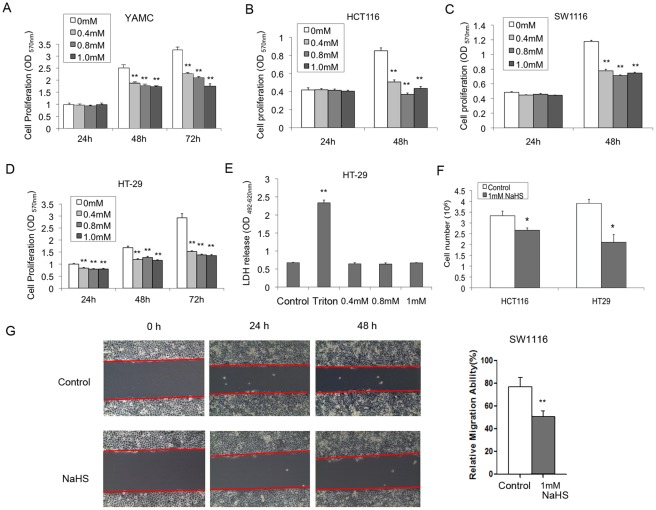
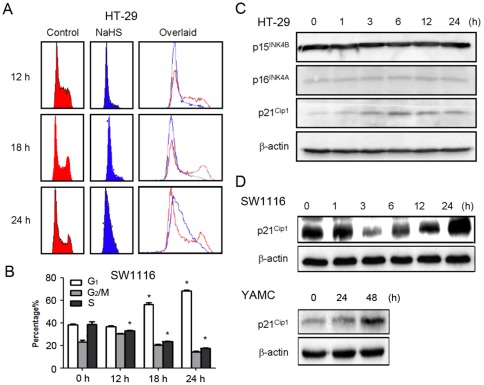
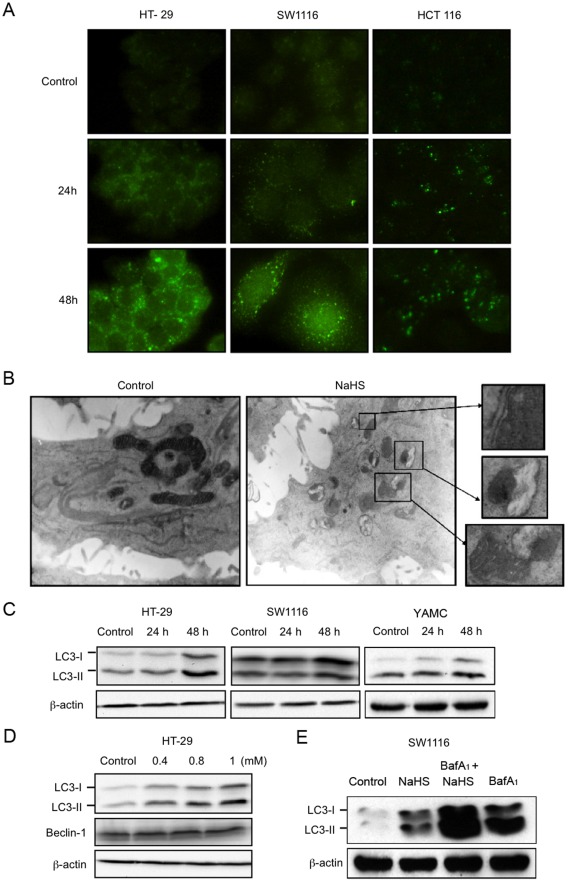
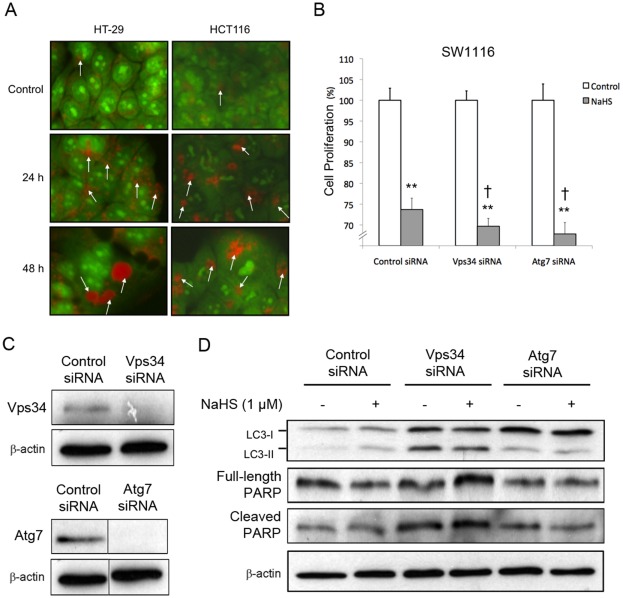
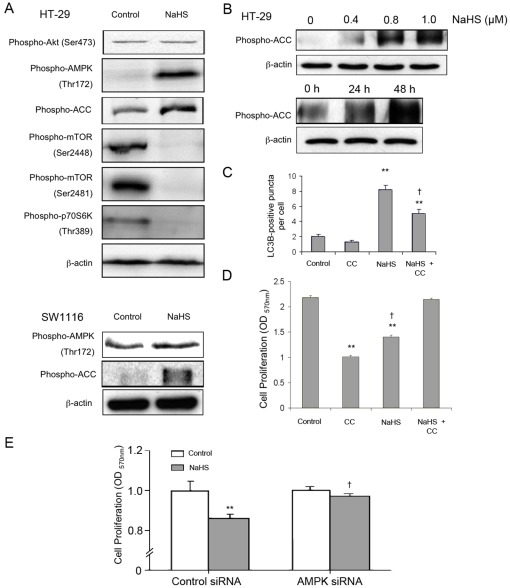
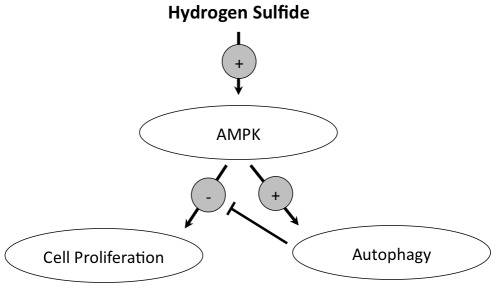
Hydrogen sulfide (H(2)S) is a gaseous bacterial metabolite that reaches high levels in the large intestine. In the present study, the effect of H(2)S on the proliferation of normal and cancerous colon epithelial cells was investigated. An immortalized colon epithelial cell line (YAMC) and a panel of colon cancer cell lines (HT-29, SW1116, HCT116) were exposed to H(2)S at concentrations similar to those found in the human colon. H(2)S inhibited normal and cancerous colon epithelial cell proliferation as measured by MTT assay. The anti-mitogenic effect of H(2)S was accompanied by G(1)-phase cell cycle arrest and the induction of the cyclin-dependent kinase inhibitor p21(Cip). Moreover, exposure to H(2)S led to features characteristic of autophagy, including increased formation of LC3B(+) autophagic vacuoles and acidic vesicular organelles as determined by immunofluorescence and acridine orange staining, respectively. Abolition of autophagy by RNA interference targeting Vps34 or Atg7 enhanced the anti-proliferative effect of H(2)S. Further mechanistic investigation revealed that H(2)S stimulated the phosphorylation of AMP-activated protein kinase (AMPK) and inhibited the phosphorylation of mammalian target of rapamycin (mTOR) and S6 kinase. Inhibition of AMPK significantly reversed H(2)S-induced autophagy and inhibition of cell proliferation. Collectively, we demonstrate that H(2)S inhibits colon epithelial cell proliferation and induces protective autophagy via the AMPK pathway.
Overview
The claims and statistics of this paper haven’t been checked yet.
Run the check — free, no account needed. It reads the open-access text and checks the sources it cites.
Integrity signals
Registry
Cites
Statistics
Figures
Verification
Claims the paper makes
The claims and statistics of this paper haven’t been checked yet.
Run the check — free, no account needed. It reads the open-access text and checks the sources it cites.
Claims other papers make about this one
Each is checked against this paper’s own text: does it say what the citing paper says it does?
The check wasn’t confident either way, so it gives no verdict — never disputed.
In the citing paper
“Several animal and human studies suggest that this is responsible for initiating esophageal mucosal injury and the development of dysmotility [13], [18], [19].”
From Cytoprotective Effects of Hydrogen Sulfide in Novel Rat Models of Non-Erosive Esophagitis (2014) · cites this paper as [19]
Experimental — accuracy not yet measured
Self-check
Percentages, sums and reported differences re-computed from the paper’s own numbers.
The self-check needs the paper’s full text.
Citations
Cites
Repertoires of Autophagy in the Pathogenesis of Ocular Diseases
Li, Y., Jiang, Q. L., Cao, G.-F., Yao, J., & Yan, B. (2015) · Cellular Physiology and Biochemistry · doi:10.1159/000373980 · Cited by 16,351
Autophagy fights disease through cellular self-digestion
Mizushima, N., Levine, B., Cuervo, A. M., & Klionsky, D. J. (2008) · Nature · doi:10.1038/nature06639 · Cited by 6,452
AMPK Phosphorylation of Raptor Mediates a Metabolic Checkpoint
Gwinn, D. M., Shackelford, D. B., Egan, D. F., Mihaylova, M. M., Mery, A., Vasquez, D. S., Turk, B. E., & Shaw, R. J. (2008) · Molecular Cell · doi:10.1016/j.molcel.2008.03.003 · Cited by 3,849
Self-eating and self-killing: crosstalk between autophagy and apoptosis
Maiuri, M. C., Zalckvar, E., Kimchi, A., & Kroemer, G. (2007) · Nature Reviews Molecular Cell Biology · doi:10.1038/nrm2239 · Cited by 3,638
Mathew, R., Karantza-Wadsworth, V., & White, E. (2007) · Nature Reviews Cancer · doi:10.1038/nrc2254 · Cited by 1,798
Hydrogen sulfide protects neurons from oxidative stress
Kimura, Y., & Kimura, H. (2004) · The FASEB Journal · doi:10.1096/fj.04-1815fje · Cited by 874
Comparison of fermentation reactions in different regions of the human colon
Macfarlane, G. T., Gibson, G. R., & Cummings, J. H. (1992) · Journal of Applied Bacteriology · doi:10.1111/j.1365-2672.1992.tb04882.x · Cited by 676
The role of TOR in autophagy regulation from yeast to plants and mammals
Díaz‐Troya, S., Pérez‐Pérez, M. E., Florencio, F. J., & Crespo, J. L. (2008) · Autophagy · doi:10.4161/auto.6555 · Cited by 392
Sato, K., Tsuchihara, K., Fujii, S., Sugiyama, M., Goya, T., Atomi, Y., Ueno, T., Ochiai, A., & Esumi, H. (2007) · Cancer Research · doi:10.1158/0008-5472.can-07-1462 · Cited by 362
Magee, E. A., Richardson, C. J., Hughes, R., & Cummings, J. H. (2000) · The American Journal of Clinical Nutrition · doi:10.1093/ajcn/72.6.1488 · Cited by 359
Cited by
Sorted by citations
Szabó, C., Coletta, C., Chao, C., Módis, K., Szczęsny, B., Papapetropoulos, A., & Hellmich, M. R. (2013) · Proceedings of the National Academy of Sciences · doi:10.1073/pnas.1306241110 · Cited by 771
Nutrients, foods, and colorectal cancer prevention
Song, M., Garrett, W. S., & Chan, A. T. (2015) · Gastroenterology · doi:10.1053/j.gastro.2014.12.035 · Cited by 700
Physiological roles of hydrogen sulfide in mammalian cells, tissues, and organs
Cirino, G., Szabó, C., & Papapetropoulos, A. (2022) · Physiological Reviews · doi:10.1152/physrev.00028.2021 · Cited by 578
Metabolic niche of a prominent sulfate-reducing human gut bacterium
Rey, F. E., Gonzalez, M. D., Cheng, J., Wu, M., Ahern, P. P., & Gordon, J. I. (2013) · Proceedings of the National Academy of Sciences · doi:10.1073/pnas.1312524110 · Cited by 426
Cao, X., Ding, L., Xie, Z., Yang, Y., Whiteman, M., Moore, P. K., & Bian, J. (2018) · Antioxidants and Redox Signaling · doi:10.1089/ars.2017.7058 · Cited by 412
Nanocatalyst‐Mediated Chemodynamic Tumor Therapy
Zhang, L., Li, C., Wan, S., & Zhang, X. (2021) · Advanced Healthcare Materials · doi:10.1002/adhm.202101971 · Cited by 265
Gasotransmitter hydrogen sulfide signaling in neuronal health and disease
Paul, B. D., & Snyder, S. H. (2017) · Biochemical Pharmacology · doi:10.1016/j.bcp.2017.11.019 · Cited by 260
Reduced methylation of PFKFB3 in cancer cells shunts glucose towards the pentose phosphate pathway
Yamamoto, T., Takano, N., Ishiwata, K., Ohmura, M., Nagahata, Y., Matsuura, T., Kamata, A., Sakamoto, K., Nakanishi, T., Kubo, A., et al. (2014) · Nature Communications · doi:10.1038/ncomms4480 · Cited by 254
The Therapeutic Potential of Cystathionine β-Synthetase/Hydrogen Sulfide Inhibition in Cancer
Hellmich, M. R., Coletta, C., Chao, C., & Szabó, C. (2014) · Antioxidants and Redox Signaling · doi:10.1089/ars.2014.5933 · Cited by 234
Hydrogen Sulfide Signaling in the Gastrointestinal Tract
Linden, D. R. (2013) · Antioxidants and Redox Signaling · doi:10.1089/ars.2013.5312 · Cited by 222
The In Situ Sulfidation of Cu2O by Endogenous H2S for Colon Cancer Theranostics
An, L., Wang, X., Rui, X., Lin, J., Yang, H., Tian, Q., Tao, C., & Yang, S. (2018) · Angewandte Chemie International Edition · doi:10.1002/anie.201810082 · Cited by 218
Hydrogen sulfide in cancer: Friend or foe?
Wu, D., Si, W., Wang, M.-J., Lv, S., Ji, A., & Li, Y. (2015) · Nitric Oxide · doi:10.1016/j.niox.2015.08.004 · Cited by 219
Hydrogen sulfide in plants: From dissipation of excess sulfur to signaling molecule
Calderwood, A., & Kopřiva, S. (2014) · Nitric Oxide · doi:10.1016/j.niox.2014.02.005 · Cited by 197
Wang, S. S., Chen, Y. H., Chen, N., Wang, L. J., Chen, D. X., Weng, H., Dooley, S., & Ding, H. (2017) · Cell Death and Disease · doi:10.1038/cddis.2017.18 · Cited by 182
Módis, K., Bos, E. M., Calzia, E., van Goor, H., Coletta, C., Papapetropoulos, A., Hellmich, M. R., Radermacher, P., Bouillaud, F., & Szabó, C. (2013) · British Journal of Pharmacology · doi:10.1111/bph.12368 · Cited by 163
Metabolic Influences of Gut Microbiota Dysbiosis on Inflammatory Bowel Disease
Sultan, S., El‐Mowafy, M., Elgaml, A., Ahmed, T. A., Hassan, H., & Mottawea, W. (2021) · Frontiers in Physiology · doi:10.3389/fphys.2021.715506 · Cited by 170
Yan, L., Gu, Q.-S., Jiang, W., Tan, M., Tan, Z.-K., Mao, G.-J., Fen, X., & Li, C. (2022) · Analytical Chemistry · doi:10.1021/acs.analchem.1c04169 · Cited by 153
Functional and Molecular Insights of Hydrogen Sulfide Signaling and Protein Sulfhydration
Sen, N. (2016) · Journal of Molecular Biology · doi:10.1016/j.jmb.2016.12.015 · Cited by 155
Lee, Z., Teo, X., Tay, E. Y., Tan, C., Hagen, T., Moore, P. K., & Deng, L. (2014) · British Journal of Pharmacology · doi:10.1111/bph.12773 · Cited by 149
Emerging roles of hydrogen sulfide in inflammatory and neoplastic colonic diseases
Guo, F.-F., Yu, T.-C., Hong, J., & Fang, J.-Y. (2016) · Frontiers in Physiology · doi:10.3389/fphys.2016.00156 · Cited by 146
Hydrogen Sulfide: From a Toxic Molecule to a Key Molecule of Cell Life
Aroca, Á., Gotor, C., Bassham, D. C., & Romero, L. C. (2020) · Antioxidants · doi:10.3390/antiox9070621 · Cited by 151
Hydrogen sulfide reduces serum triglyceride by activating liver autophagy via the AMPK-mTOR pathway
Sun, L., Zhang, S., Yu, C., Pan, Z., Liu, Y., Zhao, J., Wang, X., Yun, F., Zhao, H., Yan, S. R., et al. (2015) · American Journal of Physiology-Endocrinology and Metabolism · doi:10.1152/ajpendo.00294.2015 · Cited by 130
Hydrogen sulfide and autophagy: A double edged sword
Wu, D., Wang, H., Teng, T., Duan, S., Ji, A., & Li, Y. (2018) · Pharmacological Research · doi:10.1016/j.phrs.2018.03.002 · Cited by 124
Tian, Q., An, L., Tian, Q., Lin, J., & Yang, S. (2020) · Theranostics · doi:10.7150/thno.41882 · Cited by 122
Hydrogen Sulfide Biology and Its Role in Cancer
Khattak, S., Rauf, M. A., Khan, N. H., Zhang, Q.-Q., Chen, H., Muhammad, P., Ansari, M. A., Alomary, M. N., Jahangir, M., Zhang, C., et al. (2022) · Molecules · doi:10.3390/molecules27113389 · Cited by 118
Gut Microbiota-Derived Metabolites in Colorectal Cancer: The Bad and the Challenges
Zhang, W., An, Y., Qin, X., Wu, X., Wang, X., Hou, H., Song, X., Liu, T., Wang, B., Huang, X., et al. (2021) · Frontiers in Oncology · doi:10.3389/fonc.2021.739648 · Cited by 122
Recent progress of redox-responsive polymeric nanomaterials for controlled release
Hsu, P., & Almutairi, A. (2021) · Journal of Materials Chemistry B · doi:10.1039/d0tb02190c · Cited by 110
Drug resistance induces the upregulation of H2S-producing enzymes in HCT116 colon cancer cells
Untereiner, A. A., Pavlidou, A., Druzhyna, N., Papapetropoulos, A., Hellmich, M. R., & Szabó, C. (2017) · Biochemical Pharmacology · doi:10.1016/j.bcp.2017.10.007 · Cited by 98
Recent advances in augmenting Fenton chemistry of nanoplatforms for enhanced chemodynamic therapy
Li, S., Chu, X., Dong, H., Hou, H., & Liu, Y. (2022) · Coordination Chemistry Reviews · doi:10.1016/j.ccr.2022.215004 · Cited by 95
The role of hydrogen sulfide in aging and age-related pathologies
Perridon, B. W., Leuvenink, H. G. D., Hillebrands, J., van Goor, H., & Bos, E. M. (2016) · Aging · doi:10.18632/aging.101026 · Cited by 90
Li, L., Jiang, H., Li, Y., & Guo, Y.-P. (2015) · Journal of Biomedical Science · doi:10.1186/s12929-015-0135-1 · Cited by 81
The Hidden Role of Hydrogen Sulfide Metabolism in Cancer
Wang, R., Chu, Y.-H., & Lin, K. (2021) · International Journal of Molecular Sciences · doi:10.3390/ijms22126562 · Cited by 80
The Triple Crown: NO, CO, and H2S in cancer cell biology
Oza, P. P., & Kashfi, K. (2023) · Pharmacology & Therapeutics · doi:10.1016/j.pharmthera.2023.108502 · Cited by 81
Chen, J., Gao, J., Sun, W., Li, L., Wang, Y., Bai, S., Li, X.-X., Wang, R., Wu, L., Li, H., et al. (2016) · International Journal of Cardiology · doi:10.1016/j.ijcard.2016.06.200 · Cited by 76
Guo, J.-M., Xing, H., Cai, J., Zhang, H., & Xu, S. (2020) · Ecotoxicology and Environmental Safety · doi:10.1016/j.ecoenv.2020.111801 · Cited by 74
Youness, R. A., Assal, R. A., Motaal, A. A. A., & Gad, M. Z. (2018) · Nitric Oxide · doi:10.1016/j.niox.2018.07.004 · Cited by 72
Remodeling endogenous H2S microenvironment in colon cancer to enhance chemodynamic therapy
Liu, D., Liu, M., Wan, Y., Zhou, X., Yang, S., An, L., Huang, G., & Tian, Q. (2021) · Chemical Engineering Journal · doi:10.1016/j.cej.2021.130098 · Cited by 69
The Role of DNA Damage Response in Dysbiosis-Induced Colorectal Cancer
Rivas-Domínguez, A., Pastor, N., Martínez-López, L., Colón-Pérez, J., Bermúdez, B., & Orta, M. L. (2021) · Cells · doi:10.3390/cells10081934 · Cited by 63
Liu, P., Li, B., Fu, L., Huang, Y. L., Man, M., Qi, J., Sun, X., Kang, Q., Shen, D., & Chen, L. (2020) · ACS Sensors · doi:10.1021/acssensors.9b02205 · Cited by 57
Lou, Y.-F., Zou, Z., Chen, P., Huang, G., Li, B., Zheng, D.-Q., Yu, X., & Luo, X. (2014) · PLoS ONE · doi:10.1371/journal.pone.0097719 · Cited by 55
Sakuma, S., Minamino, S., Maya, T., Ishiyama, Y., Hosokura, H., Kohda, T., Ikeda, Y., & Fujimoto, Y. (2019) · Heliyon · doi:10.1016/j.heliyon.2019.e02244 · Cited by 55
Microbial Metabolites and Intestinal Stem Cells Tune Intestinal Homeostasis
Xing, P. Y., Pettersson, S., & Kundu, P. (2020) · PROTEOMICS · doi:10.1002/pmic.201800419 · Cited by 55
McCarty, M. F., Assanga, S. B. I., Luján, L. M. L., O’Keefe, J. H., & DiNicolantonio, J. J. (2020) · Nutrients · doi:10.3390/nu13010047 · Cited by 55
Hydrogen Sulfide as a Potential Therapeutic Target in Fibrosis
Zhang, S., Pan, C., Zhou, F., Yuan, Z., Wang, H., Cui, W., & Zhang, G. (2015) · Oxidative Medicine and Cellular Longevity · doi:10.1155/2015/593407 · Cited by 51
Talaei, F., van Praag, V. M., Shishavan, M. H., Landheer, S. W., Buikema, H. J., & Henning, R. H. (2014) · BMC Cell Biology · doi:10.1186/1471-2121-15-1 · Cited by 49
Huang, J., Deng, Z., Bi, S., Wen, X., & Zeng, S. (2022) · Advanced Science · doi:10.1002/advs.202203902 · Cited by 48
Song, M., & Chan, A. T. (2017) · Current Colorectal Cancer Reports · doi:10.1007/s11888-017-0389-y · Cited by 50
Qiu, X., Liu, K., Xiao, L., Jin, S., Dong, J., Teng, X., Guo, Q., Chen, Y., & Wu, Y. (2018) · Biochimica et Biophysica Acta (BBA) - Molecular Basis of Disease · doi:10.1016/j.bbadis.2018.09.005 · Cited by 47
Self-citationS-nitrosothiols and H2S donors: Potential chemo-therapeutic agents in cancer
Reis, A. K. C. A., Stern, A., & Monteiro, H. P. (2019) · Redox Biology · doi:10.1016/j.redox.2019.101190 · Cited by 42
Thirumalaivasan, N., Venkatesan, P., Lai, P., & Wu, S. (2019) · ACS Applied Bio Materials · doi:10.1021/acsabm.9b00481 · Cited by 42
Khan, S., Fujii, S., Matsunaga, T., Nishimura, A., Ono, K., Ida, T., Ahmed, K. A., Okamoto, T., Tsutsuki, H., Sawa, T., et al. (2018) · Cell chemical biology · doi:10.1016/j.chembiol.2018.08.007 · Cited by 41
Hydrogen sulfide in longevity and pathologies: Inconsistency is malodorous
Sokolov, A. S., Nekrasov, P. V., Shaposhnikov, M. V., & Moskalev, A. (2021) · Ageing Research Reviews · doi:10.1016/j.arr.2021.101262 · Cited by 42
Postbiotics, Metabolic Signaling, and Cancer
Vrzáčková, N., Ruml, T., & Zelenka, J. (2021) · Molecules · doi:10.3390/molecules26061528 · Cited by 41
An Update on AMPK in Hydrogen Sulfide Pharmacology
Wang, M., Tang, W., & Zhu, Y. Z. (2017) · Frontiers in Pharmacology · doi:10.3389/fphar.2017.00810 · Cited by 38
Xie, X., Dai, H., Zhuang, B., Chai, L., Xie, Y., & Li, Y. (2016) · Biochemical and Biophysical Research Communications · doi:10.1016/j.bbrc.2016.01.047 · Cited by 37
A covalent organic framework-based nanoagent for H 2 S-activable phototherapy against colon cancer
Feng, J., Ren, W.-X., Kong, F., & Dong, Y. (2021) · Chemical Communications · doi:10.1039/d1cc02258j · Cited by 37
Role of H2S Donors in Cancer Biology
Lee, Z., & Deng, L. (2015) · Handbook of experimental pharmacology · doi:10.1007/978-3-319-18144-8_13 · Cited by 37
Cytoprotective Effects of Hydrogen Sulfide in Novel Rat Models of Non-Erosive Esophagitis
Zayachkivska, O., Havryluk, O., Hrycevych, N., Bula, N., Grushka, O., & Wallace, J. L. (2014) · PLoS ONE · doi:10.1371/journal.pone.0110688 · Cited by 34
“esophageal mucosal injury and the development of dysmotility [13,18,19].”
BackgroundAnticancer effect of exogenous hydrogen sulfide in cisplatin‑resistant A549/DDP cells
Ma, Y., Yan, Z., Deng, X., Guo, J., Hu, J., Yuan, Y. J., & Jiao, F. (2018) · Oncology Reports · doi:10.3892/or.2018.6362 · Cited by 34
A Fast Hydrogen Sulfide–Releasing Donor Increases the Tumor Response to Radiotherapy
Preter, G. D., Deriemaeker, C., Danhier, P., Brisson, L., Pham, T. T. C., Grégoire, V., Jordan, B. F., Sonveaux, P., & Gallez, B. (2015) · Molecular Cancer Therapeutics · doi:10.1158/1535-7163.mct-15-0691-t · Cited by 33
Hydrogen Sulfide Switch Phenomenon Regulating Autophagy in Cardiovascular Diseases
Luo, W., Gui, D.-D., Yan, B., Ren, Z., Peng, L., Wei, D., Liu, L.-S., Zhang, D., & Jiang, Z. (2020) · Cardiovascular Drugs and Therapy · doi:10.1007/s10557-019-06927-4 · Cited by 32
Tian, Q., Wang, X., Song, S., An, L., Yang, S., & Huang, G. (2022) · Journal of Advanced Research · doi:10.1016/j.jare.2022.01.018 · Cited by 29
Greene, L. M., Nolan, D. P., Regan-Komito, D., Campiani, G., Williams, D. C., & Zisterer, D. M. (2013) · International Journal of Oncology · doi:10.3892/ijo.2013.1989 · Cited by 29
Hydrogen Sulfide Regulating Myocardial Structure and Function by Targeting Cardiomyocyte Autophagy
Zhang, Q., Jin, H., Chen, S. Y., Chen, Q., Tang, C., Du, J., & Huang, Y. (2018) · Chinese Medical Journal · doi:10.4103/0366-6999.228249 · Cited by 29
Koike, K., Yoo, S., Bleymehl, K., Omura, M., Zapiec, B., Pyrski, M. M., Blum, T. S., Khan, M., Bai, Z., Leinders‐Zufall, T., et al. (2021) · Neuron · doi:10.1016/j.neuron.2021.05.032 · Cited by 29
Tian, T., Xiong, Z., Wu, Z., Wang, X., Yang, L., Lai, B., & An, X. (2025) · Chemical Engineering Journal · doi:10.1016/j.cej.2025.164910 · Cited by 27
Emerging roles of hydrogen sulfide in colorectal cancer
Jiang, Z.-L., Liu, Y., Zhang, C., Chu, T., Yang, Y., Zhu, Y., Wang, Y., Liu, Y., Zhang, Y., Feng, Z.-F., et al. (2024) · Chemico-Biological Interactions · doi:10.1016/j.cbi.2024.111226 · Cited by 26
Ruan, Z., Liang, M., Deng, X., Lai, M., Shang, L., & Su, X. (2019) · Cell Biology International · doi:10.1002/cbin.11234 · Cited by 26
Hydrogen Sulfide: A Key Role in Autophagy Regulation from Plants to Mammalians
Aroca, Á., & Gotor, C. (2022) · Antioxidants · doi:10.3390/antiox11020327 · Cited by 25
Nin, D. S., Idres, S. B., Song, Z. J., Moore, P. K., & Deng, L. (2019) · Antioxidants and Redox Signaling · doi:10.1089/ars.2019.7896 · Cited by 24
Zhang, J., Ye, J., Yuan, C., Fu, Q., Zhang, F., Zhu, X., Wang, L., Gao, P., Shu, G., Jiang, Q., et al. (2018) · Journal of Cellular Physiology · doi:10.1002/jcp.26630 · Cited by 23
Faris, P. S., Ferulli, F., Vismara, M., Tanzi, M., Negri, S., Rumolo, A., Lefkimmiatis, K., Maestri, M., Shekha, M. S., Pedrazzoli, P., et al. (2020) · Cancers · doi:10.3390/cancers12113338 · Cited by 23
Hypoxia and hydrogen sulfide differentially affect normal and tumor-derived vascular endothelium
Bianco, S., Mancardi, D., Merlino, A., Bussolati, B., & Munaron, L. (2017) · Redox Biology · doi:10.1016/j.redox.2017.03.015 · Cited by 22
Health risk of Licorice-Yuanhua combination through induction of colonic H2S metabolism
Yu, J., Liu, Y., Guo, J., Tao, W., Chen, Y., Fan, X., Shen, J., & Duan, J. (2019) · Journal of Ethnopharmacology · doi:10.1016/j.jep.2019.01.042 · Cited by 22
Xu, W., Watanabe, K., Mizukami, Y., Yamamoto, Y., & Suzuki, T. (2021) · Archives of Biochemistry and Biophysics · doi:10.1016/j.abb.2021.109044 · Cited by 20
Cao, M., Xing, X., Shen, X., Ouyang, J., & Na, N. (2024) · Chemical Research in Chinese Universities · doi:10.1007/s40242-024-3267-6 · Cited by 19
Głowacka, U., Magierowska, K., Wójcik-Grzybek, D., Hankus, J., Szetela, M., Cieszkowski, J., Korbut, E., Danielak, A., Surmiak, M., Chmura, A., et al. (2021) · Antioxidants and Redox Signaling · doi:10.1089/ars.2020.8240 · Cited by 19
Chen, Y. X., Cao, H., Jiang, C., & Li, Y. (2024) · Journal of Colloid and Interface Science · doi:10.1016/j.jcis.2024.12.228 · Cited by 18
Nanomedicine-based multimodal therapies: Recent progress and perspectives in colon cancer
He, Y., Hao, Z.-N., Li, Z., & Gao, D. (2023) · World Journal of Gastroenterology · doi:10.3748/wjg.v29.i4.670 · Cited by 17
Fluorescent probes for detecting and imaging mitochondrial hydrogen sulfide
Zhu, Y., Ngowi, E. E., Tang, A.-Q., Chu, T., Wang, Y., Shabani, Z. I., Paul, L., Jiang, T., Ji, X., & Wu, D. (2025) · Chemico-Biological Interactions · doi:10.1016/j.cbi.2024.111328 · Cited by 19
Chen, S.-M., Yi, Y.-L., Zeng, D. L., Tang, Y.-Y., Kang, X., Zhang, P., Zou, W., & Tang, X. (2019) · Frontiers in Behavioral Neuroscience · doi:10.3389/fnbeh.2019.00244 · Cited by 15
Crohn’s Disease: Potential Drugs for Modulation of Autophagy
Azzman, N. (2019) · Medicina · doi:10.3390/medicina55060224 · Cited by 14
Hydrogen Sulfide-Responsive Self-Assembled Nanogel
Hsu, P., Kawasaki, R., Yamana, K., Isozaki, H., Kawamura, S., Ikeda, A., & Almutairi, A. (2020) · ACS Applied Polymer Materials · doi:10.1021/acsapm.0c00759 · Cited by 13
Hydrogen Sulfide and Its Donors: Keys to Unlock the Chains of Nonalcoholic Fatty Liver Disease
Li, X., Jiang, K., Ruan, Y., Zhao, S., Zhao, Y., He, Y., Wang, Z., Wei, J., Li, Q., Yang, C., et al. (2022) · International Journal of Molecular Sciences · doi:10.3390/ijms232012202 · Cited by 10
Precision nanomaterials in colorectal cancer: advancing photodynamic and photothermal therapy
Chen, Y., & Tang, D. (2025) · RSC Advances · doi:10.1039/d5ra03996g · Cited by 11
Enteral leptin administration affects intestinal autophagy in suckling piglets
Słupecka‐Ziemilska, M., Woliński, J., Gajewska, M., & Pierzynowski, S. G. (2013) · Domestic Animal Endocrinology · doi:10.1016/j.domaniend.2013.09.007 · Cited by 7
The In Situ Sulfidation of Cu2O by Endogenous H2S for Colon Cancer Theranostics
An, L., Wang, X., Rui, X., Lin, J., Yang, H., Tian, Q., Tao, C., & Yang, S. (2018) · Angewandte Chemie · doi:10.1002/ange.201810082 · Cited by 7
Dietary Manipulation on Gut Microbiome in Patients with Diabetes and Colorectal cancer
Chu, N. H. S. (2025) · Current Nutrition Reports · doi:10.1007/s13668-025-00667-8 · Cited by 6
Song, N., Yu, J. E., Ji, E., Choi, K., & Lee, S. (2023) · Molecular and Cellular Biochemistry · doi:10.1007/s11010-023-04881-2 · Cited by 6
Tahir, J., & Dijkwel, P. P. (2016) · Functional Plant Biology · doi:10.1071/fp15272 · Cited by 6
Liang, S., Li, M.-H., Cheng, L., Zhang, T.-S., Hui, H., Wang, Y., Zhang, H.-P., Liu, B., Wang, L., & Yang, Y. (2026) · Advanced Science · doi:10.1002/advs.75608 · Cited by 5
Microbiota and detrimental protein derived metabolites in colorectal cancer
González, A., Odriozola, I., Fullaondo, A., & Odriozola, A. (2024) · Advances in genetics · doi:10.1016/bs.adgen.2024.06.001 · Cited by 7
Different toxic effects of YTX in tumor K-562 and lymphoblastoid cell lines
Fernández‐Araujo, A., Sánchez, J. A., Alfonso, A., Vieytes, M. R., & Botana, L. M. (2015) · Frontiers in Pharmacology · doi:10.3389/fphar.2015.00124 · Cited by 5
Recycling the Interspecific Relations with Epithelial Cells: Bacteria and Cancer Metabolic Symbiosis
Nunes, S. C., & Serpa, J. (2020) · Advances in experimental medicine and biology · doi:10.1007/978-3-030-34025-4_4 · Cited by 5
Kurian, G. A., Sivakumar, B., & Boovarahan, S. R. (2020) · Asian Pacific Journal of Tropical Biomedicine · doi:10.4103/2221-1691.284948 · Cited by 5
Tan, J., Lü, Z., Gao, C., Zhang, Z., Sun, Z., Ling, B., Li, Z., & You, J. (2023) · Dyes and Pigments · doi:10.1016/j.dyepig.2023.111199 · Cited by 4
Zhang, J., Han, T., Sun, H., Han, Z., Shi, X., Gao, J. X., Liu, X., & Zhang, H. (2024) · Analytical and Bioanalytical Chemistry · doi:10.1007/s00216-024-05180-5 · Cited by 5
Regulation of Autophagy by Hydrogen Sulfide
Laureano‐Marín, A. M., Moreno, I., Aroca, Á., García, I., Romero, L. C., & Gotor, C. (2016) · Signaling and communication in plants · doi:10.1007/978-3-319-40713-5_3 · Cited by 4
Öztürk, A., Joha, Z., Basgoz, N., & Taşkıran, A. Ş. (2025) · Medical Oncology · doi:10.1007/s12032-025-02772-8 · Cited by 3
Song, K., Jia, X., Zhao, F., Liu, F., Jiang, C., & Li, X. (2025) · Bioconjugate Chemistry · doi:10.1021/acs.bioconjchem.5c00318 · Cited by 3
Metadata
- Authors
- Wu, Y. C., Wang, X. J., Yu, L., Chan, F. K. L., Cheng, A. S. L., Yu, J., Sung, J. J. Y., Wu, W. K. K., & Cho, C. H.
- Affiliations
- Chinese University of Hong Kong (HK)
- Corresponding author
- Wu, William K. K.
- Venue
- PLoS ONE
- Publisher
- Public Library of Science (PLoS)
- Published
- 2012-05-29
- Volume
- 7
- Issue
- 5
- Pages
- e37572
- ISSN
- 1932-6203 (ISSN-L)
- PMC
- PMC3362591
- OpenAlex
- W2088784248
- Cited by
- 109
- References
- 26
- Citations by year
- 2026: 3 · 2025: 7 · 2024: 5 · 2023: 7 · 2022: 9 · 2021: 13 · 2020: 11 · 2019: 8 · 2018: 11 · 2017: 6 · 2016: 7 · 2015: 8 · 2014: 8 · 2013: 6
- FWCI
- 3.01
- Type
- journal article
- Language
- en
- Open access
- gold
- doi.org
- Locations
- PLoS ONE (publishedVersion, cc-by)
- Europe PMC (PubMed Central) (publishedVersion, cc-by)
- PubMed Central (publishedVersion, cc-by)
- PubMed (publishedVersion)
- DOAJ (DOAJ: Directory of Open Access Journals) (submittedVersion, cc-by-sa)
- Topics
- Life Sciences › Biochemistry, Genetics and Molecular Biology › Biochemistry › Sulfur Compounds in Biology
- Life Sciences › Biochemistry, Genetics and Molecular Biology › Cell Biology › Autophagy in Disease and Therapy
- Physical Sciences › Chemical Engineering › Catalysis › Catalysis and Hydrodesulfurization Studies
- Keywords
- hydrogen sulfide, colonic epithelial cells, colon cancer, cell proliferation, autophagy, AMPK signaling, mTOR, S6 kinase, p21, G1 cell cycle arrest, Vps34, ATG7, LC3B
- MeSH terms
- Autophagy-Related Protein 7, Animals, Autophagy, Cell Cycle, Cell Line, Cell Movement, Colon, Epithelial Cells, Humans, Hydrogen Sulfide, Intestinal Mucosa, Microtubule-Associated Proteins, Phagosomes, Signal Transduction, Ubiquitin-Activating Enzymes, Cell Proliferation, Cyclin-Dependent Kinase Inhibitor p21, Mice, AMP-Activated Protein Kinases, Class III Phosphatidylinositol 3-Kinases, TOR Serine-Threonine Kinases
About these checks
Registry, retraction, Cites and statistics results are computed, not judged, with one exception: a printed reference that no index lists is read once by a model before it counts as a citation error. Claims are extracted by a model and kept only when their quote appears verbatim in the text; each cited source is then checked, with a model’s help, for whether it says what the claim relies on. Those verdicts can be wrong — read the claim’s quote and the cited source before relying on one.
Statistics and arithmetic are recomputed, not judged.
Confidence bands are shown only for fields calibrated on our annotated test set. None is calibrated yet, so no band is shown.
What counts as a claim ›How we measure confidence ›How we check this ›
Are you an author, or do you see a problem with this page? Request a review
