

Functional Characterization of an Aspergillus fumigatus Calcium Transporter (PmcA) that Is Essential for Fungal Infection
Open accessThe DOI matches its Crossref record; 56 of the 56 references it cites were found in a registry or an index.
Abstract
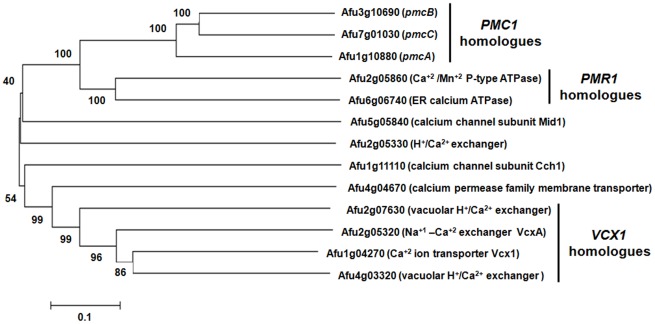
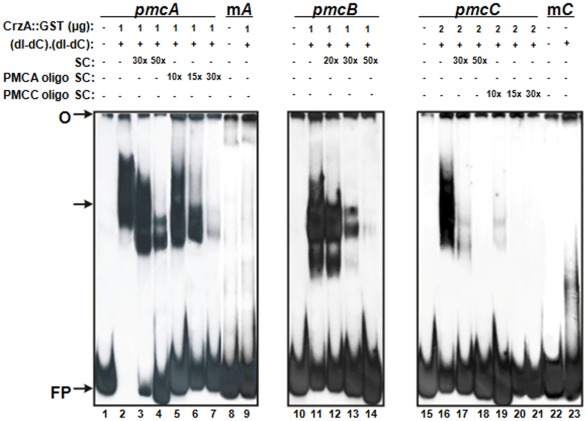
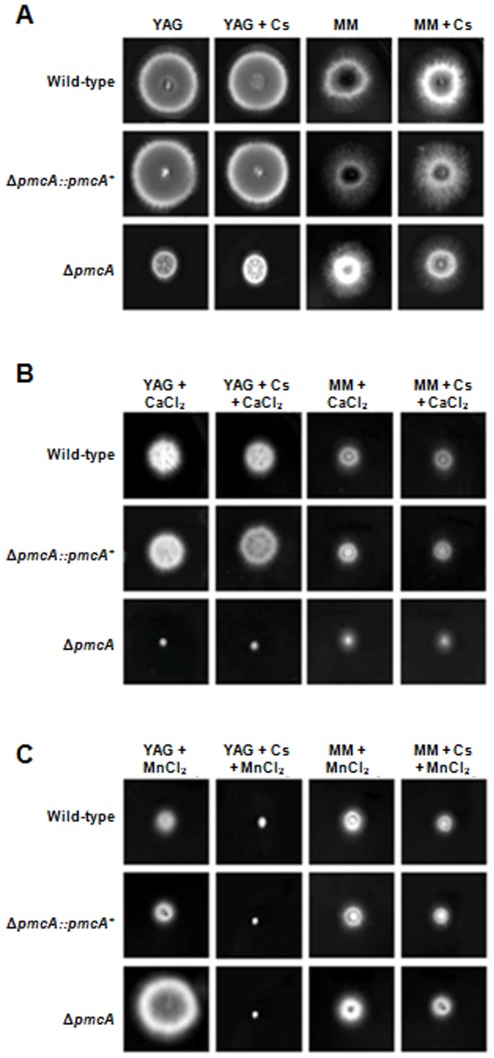
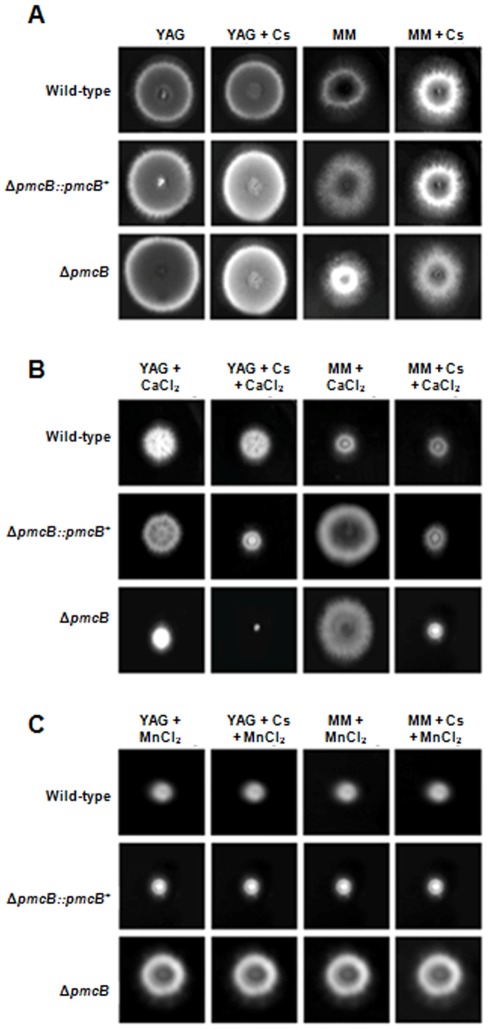
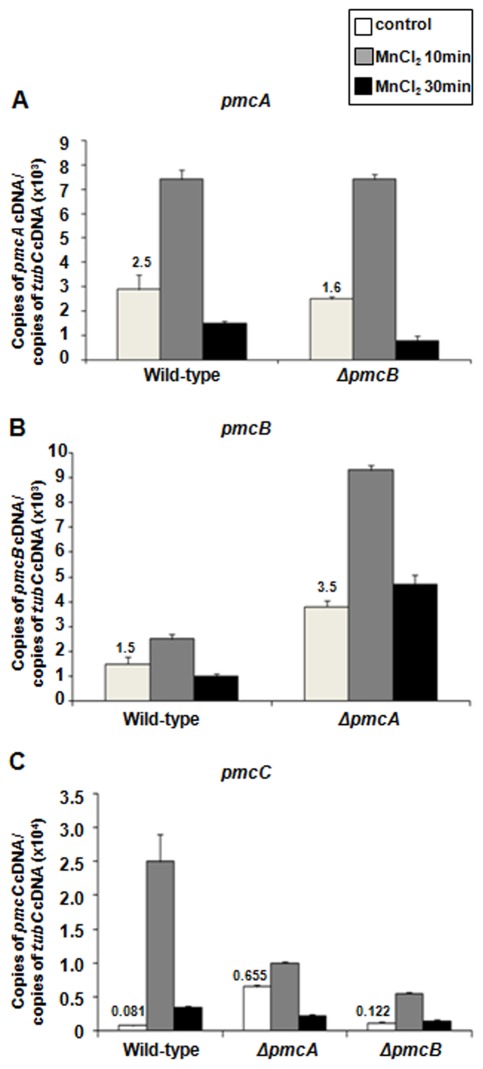
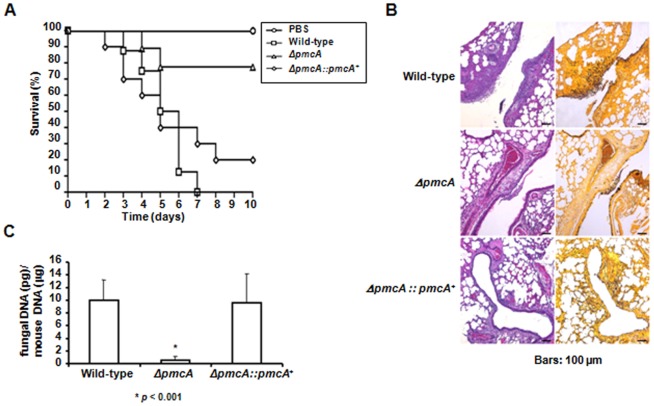
Aspergillus fumigatus is a primary and opportunistic pathogen, as well as a major allergen, of mammals. The Ca(+2)-calcineurin pathway affects virulence, morphogenesis and antifungal drug action in A. fumigatus. Here, we investigated three components of the A. fumigatus Ca(+2)-calcineurin pathway, pmcA,-B, and -C, which encode calcium transporters. We demonstrated that CrzA can directly control the mRNA accumulation of the pmcA-C genes by binding to their promoter regions. CrzA-binding experiments suggested that the 5'-CACAGCCAC-3' and 5'-CCCTGCCCC-3' sequences upstream of pmcA and pmcC genes, respectively, are possible calcineurin-dependent response elements (CDREs)-like consensus motifs. Null mutants were constructed for pmcA and -B and a conditional mutant for pmcC demonstrating pmcC is an essential gene. The ΔpmcA and ΔpmcB mutants were more sensitive to calcium and resistant to manganese and cyclosporin was able to modulate the sensitivity or resistance of these mutants to these salts, supporting the interaction between calcineurin and the function of these transporters. The pmcA-C genes have decreased mRNA abundance into the alveoli in the ΔcalA and ΔcrzA mutant strains. However, only the A. fumigatus ΔpmcA was avirulent in the murine model of invasive pulmonary aspergillosis.
Overview
The claims and statistics of this paper haven’t been checked yet.
Free: it reads the open-access text and checks the first 5 claims that cite a source we can check. Create a free account to check every claim.
Integrity signals
Registry
Cites
Statistics
Figures
Verification
Claims the paper makes
The claims and statistics of this paper haven’t been checked yet.
Free: it reads the open-access text and checks the first 5 claims that cite a source we can check. Create a free account to check every claim.
Claims other papers make about this one
Each is checked against this paper’s own text: does it say what the citing paper says it does?
The source backs part of the claim, not all of it — or backs it for a different population, condition or comparison.
In the citing paper
“A vacuolar calcium channel, YvcA, vacuolar Ca2+-ATPases PmcA, PmcB, and PmcC, the Golgi apparatus-located Ca2+/Mn2+-ATPase PmrA, a mitochondrial Ca2+ uniporter, MucA, and a mitochondrial carrier protein, AgcA, all have been identified as playing essential roles in calcium efflux and influx in A. fumigatus (378–380).”
From Aspergillus fumigatus and Aspergillosis in 2019 (2019) · cites this paper as [379]
Experimental — accuracy not yet measuredIn the citing paper
“Deletions of the genes coding for these different transporters usually affect hyphal growth; susceptibility to oxidants, azoles, and cell wall drugs; cation homeostasis; cell wall integrity; septum localization; and virulence, thereby defining the central role of Ca2+ in A. fumigatus biology.”
From Aspergillus fumigatus and Aspergillosis in 2019 (2019) · cites this paper as [379]
Self-check
Percentages, sums and reported differences re-computed from the paper’s own numbers.
The self-check needs the paper’s full text.
Citations
Cites
Cleavage of Structural Proteins during the Assembly of the Head of Bacteriophage T4
LAEMMLI, U. K. (1970) · Nature · doi:10.1038/227680a0 · Cited by 249,961
Raza, H., John, A., & Nemmar, A. (2013) · Cellular Physiology and Biochemistry · doi:10.1159/000350087 · Cited by 47,221
Hartree, E. F. (1972) · Analytical Biochemistry · doi:10.1016/0003-2697(72)90094-2 · Cited by 5,516
Schiestl, R. H., & Gietz, R. D. (1989) · Current Genetics · doi:10.1007/bf00340712 · Cited by 2,131 · cited 1×
“SC94721 by the lithium acetate method [45].”
Colot, H. V., Park, G., Turner, G. E., Ringelberg, C., Crew, C. M., Litvinkova, L., Weiss, R. L., Borkovich, K. A., & Dunlap, J. C. (2006) · Proceedings of the National Academy of Sciences · doi:10.1073/pnas.0601456103 · Cited by 1,117
Meiotic and Mitotic Recombination in Aspergillus and Its Chromosomal Aberrations
Käfer, E. (1977) · Advances in Genetics · doi:10.1016/s0065-2660(08)60245-x · Cited by 736
Allergic bronchopulmonary aspergillosis
Greenberger, P. A. (2002) · Journal of Allergy and Clinical Immunology · doi:10.1067/mai.2002.130179 · Cited by 476
Stathopoulos, A. M., & Cyert, M. S. (1997) · Genes & Development · doi:10.1101/gad.11.24.3432 · Cited by 442 · cited 2×
“Three DNA fragments of about 300-bp located upstream the putative ATG initiation codon of pmcA-C genes were used as probes (Supplementary Figure S2).”
BackgroundMethodCunningham, K., & Fink, G. (1994) · The Journal of cell biology · doi:10.1083/jcb.124.3.351 · Cited by 432
Cunningham, K. W., & Fink, G. R. (1996) · Molecular and Cellular Biology · doi:10.1128/mcb.16.5.2226 · Cited by 431
Yoshimoto, H., Saltsman, K., Gasch, A. P., Li, H. X., Ogawa, N., Botstein, D., Brown, P. O., & Cyert, M. S. (2002) · Journal of Biological Chemistry · doi:10.1074/jbc.m202718200 · Cited by 404
Calcineurin signaling in Saccharomyces cerevisiae: how yeast go crazy in response to stress.
Cyert, M. S. (2003) · Biochemical and Biophysical Research Communications · doi:10.1016/s0006-291x(03)01552-3 · Cited by 333 · cited 2×
“role in the control of cell morphology and virulence [1,2,3,4].”
BackgroundMatheos, D. P., Kingsbury, T. J., Ahsan, U. S., & Cunningham, K. W. (1997) · Genes & Development · doi:10.1101/gad.11.24.3445 · Cited by 332 · cited 1×
“transcriptional response to alkaline stress and defects in cellular morphology and mating [5,7,8,9].”
BackgroundHarnessing calcineurin as a novel anti-infective agent against invasive fungal infections.
Steinbach, W. J., Reedy, J. L., Cramer, R. A., Perfect, J. R., & Heitman, J. (2007) · Nature Reviews Microbiology · doi:10.1038/nrmicro1680 · Cited by 313 · cited 1×
“role in the control of cell morphology and virulence [1,2,3,4].”
BackgroundRispail, N., Soanes, D. M., Ant, C., Czajkowski, R., Grünler, A., Huguet, R., Perez-Nadales, E., Poli, A., Sartorel, E., Valiante, V., et al. (2009) · Fungal Genetics and Biology · doi:10.1016/j.fgb.2009.01.002 · Cited by 309 · cited 1×
“[39] have proposed that A.”
Stathopoulos-Gerontides, A., Guo, J. J., & Cyert, M. S. (1999) · Genes & Development · doi:10.1101/gad.13.7.798 · Cited by 240 · cited 7×
“Yoshimoto et al. [40] have identified the S. cerevisiae Crz1p-binding site as 59-GNGGC(G/T)CA-39 by in vitro site selection.”
BackgroundInfluentialSub-Telomere Directed Gene Expression during Initiation of Invasive Aspergillosis
McDonagh, A., Fedorova, N. D., Crabtree, J., Yu, Y., Kim, S., Chen, D., Loss, O., Cairns, T., Goldman, G., Armstrong-James, D., et al. (2008) · PLoS Pathogens · doi:10.1371/journal.ppat.1000154 · Cited by 235
Self-citationCRZ1 , a target of the calcineurin pathway in Candida albicans
Karababa, M., Valentino, E., Pardini, G., Coste, A. T., Bille, J., & Sanglard, D. (2006) · Molecular Microbiology · doi:10.1111/j.1365-2958.2005.05037.x · Cited by 231 · cited 1×
“dephosphorylates Crz1p upon an increase in cytosolic calcium, allowing its nuclear translocation [5,6].”
BackgroundRegulation of cellular Ca2+ by yeast vacuoles.
Dunn, T., Gable, K., & Beeler, T. (1994) · Journal of Biological Chemistry · doi:10.1016/s0021-9258(17)37279-4 · Cited by 190
Cramer, R. A., Perfect, B. Z., Pinchai, N., Park, S., Perlin, D. S., Asfaw, Y. G., Heitman, J., Perfect, J. R., & Steinbach, W. J. (2008) · Eukaryotic Cell · doi:10.1128/ec.00086-08 · Cited by 172 · cited 1×
“were also characterized: (i) the transcription factor CrzA [14,15],”
BackgroundFunctional characterization of the Aspergillus fumigatus CRZ1 homologue, CrzA
Soriani, F. M., Malavazi, I., Da Silva Ferreira, M. E., Savoldi, M., Von Zeska Kress, M. R., De Souza Goldman, M. H., Loss, O., Bignell, E., & Goldman, G. H. (2008) · Molecular Microbiology · doi:10.1111/j.1365-2958.2008.06122.x · Cited by 168 · cited 11×
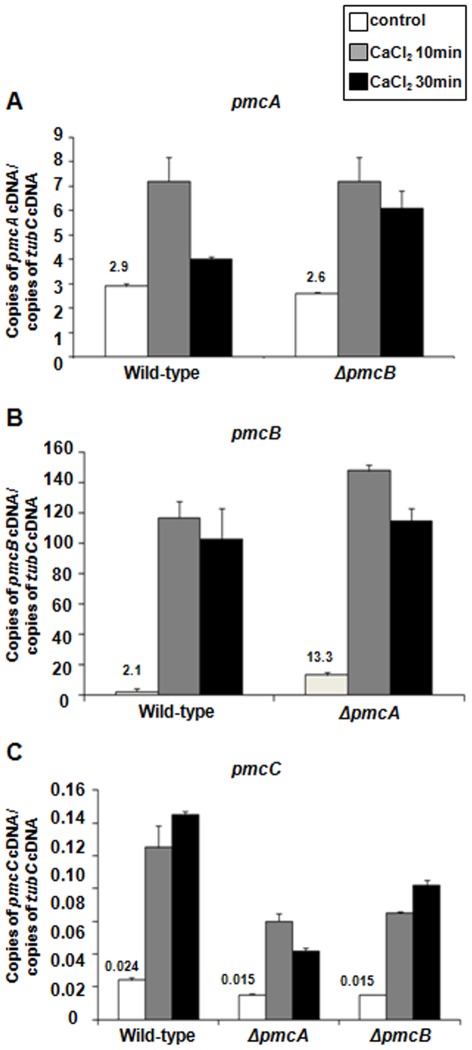
“We designed Lux fluorescent probes and used realtime RT-PCR analysis to quantify the pmcA, pmcB, and pmcC mRNA abundance in the DcalA and DcrzA germlings after bronchoalveolar lavage at 4 and 14 hours growth and compared this with their expression in the wild-type strain grown during the PLoS ONE | www.plosone.org 6 M…”
BackgroundMethodSelf-citationGoldman, G. H., dos Reis Marques, E., Duarte Ribeiro, D. C., de Souza Bernardes, L. A., Quiapin, A. C., Vitorelli, P. M., Savoldi, M., Semighini, C. P., de Oliveira, R. C., Nunes, L. R., et al. (2003) · Eukaryotic Cell · doi:10.1128/ec.2.1.34-48.2003 · Cited by 162 · cited 1×
“[46], dialysed and transformed by electroporation in Escherichia coli strain DH10B to rescue the pRS426 plasmid”
MethodSelf-citationZakrzewska, A., Boorsma, A., Brul, S., Hellingwerf, K. J., & Klis, F. M. (2005) · Eukaryotic Cell · doi:10.1128/ec.4.4.703-715.2005 · Cited by 161
Pittman, J. K. (2011) · Cell Calcium · doi:10.1016/j.ceca.2011.01.004 · Cited by 147
113 Bronchoalveolar lavage in allergic bronchopulmonary aspergillosis (ABPA)
Greenberger, P., Smith, L. J., Roberts, M. S., & Liotta, J. L. (1985) · Journal of Allergy and Clinical Immunology · doi:10.1016/0091-6749(85)90248-9 · Cited by 145
Pozos, T. C., Seller, I., & Cyert, M. S. (1996) · Molecular and Cellular Biology · doi:10.1128/mcb.16.7.3730 · Cited by 140
Good fungi gone bad: The corruption of calcineurin
Fox, D. S., & Heitman, J. (2002) · BioEssays · doi:10.1002/bies.10157 · Cited by 137 · cited 2×
“role in the control of cell morphology and virulence [1,2,3,4].”
BackgroundSemighini, C. P., Marins, M., Goldman, M. H. S., & Goldman, G. H. (2002) · Applied and Environmental Microbiology · doi:10.1128/aem.68.3.1351-1357.2002 · Cited by 126
Self-citationFunctional characterization of the Aspergillus fumigatus calcineurin
Ferreira, M. E. D. S., Heinekamp, T., Härtl, A., Brakhage, A. A., Semighini, C. P., Harris, S. D., Savoldi, M., de Gouvêa, P. F., Goldman, M. H. D. S., & Goldman, G. H. (2007) · Fungal Genetics and Biology · doi:10.1016/j.fgb.2006.08.004 · Cited by 121
Self-citationOnyewu, C., Wormley, F. L., Perfect, J. R., & Heitman, J. (2004) · Infection and Immunity · doi:10.1128/iai.72.12.7330-7333.2004 · Cited by 121 · cited 1×
“sodium dodecyl sulfate [6,11,12].”
Acidic calcium stores of Saccharomyces cerevisiae
Cunningham, K. W. (2011) · Cell Calcium · doi:10.1016/j.ceca.2011.01.010 · Cited by 119 · cited 7×
“Finally, S. cerevisiae PMR1 encodes a high affinity Ca+2/Mn+2 P-type ATPase required for Ca+2 and Mn+2 transport into the Golgi [22].”
BackgroundInfluentialBowman, B. J., Drašković, M., Freitag, M., & Bowman, E. J. (2009) · Eukaryotic Cell · doi:10.1128/ec.00174-09 · Cited by 116 · cited 3×
“In N. crassa, there are two PMC1 homologues, NCA-2 and NCA-3 [36].”
BackgroundInfluentialSpielvogel, A., Findon, H., Arst, H. N., Araújo-Bazán, L., Hernández-Ortíz, P., Stahl, U., Meyer, V., & Espeso, E. A. (2008) · Biochemical Journal · doi:10.1042/bj20080344 · Cited by 108 · cited 2×
“Interestingly, the negative regulation of vcxA by SltA is opposed by its transcriptional activation by CrzA [42].”
BackgroundMiller, T., Vogg, G., & Sanders, D. (1990) · Proceedings of the National Academy of Sciences · doi:10.1073/pnas.87.23.9348 · Cited by 103 · cited 1×
“In Neurospora crassa it was reported that active transport across the plasma membrane is important for keeping low levels of cytosolic calcium [32,33].”
BackgroundCalcineurin Regulation in Fungi and Beyond
Stie, J., & Fox, D. (2008) · Eukaryotic Cell · doi:10.1128/ec.00326-07 · Cited by 89 · cited 1×
“role in the control of cell morphology and virulence [1,2,3,4].”
BackgroundNotes High‐efficiency transformation system for the biocontrol agents, Trichoderma spp.
Herrera‐Estrella, A., Goldman, G. H., & Montagu, M. V. (1990) · Molecular Microbiology · doi:10.1111/j.1365-2958.1990.tb00654.x · Cited by 88 · cited 1×
“[47] and selecting for hygromycin resistance in MM plates with”
BackgroundSelf-citationZinc Finger Protein Prz1 Regulates Ca2+ but Not Cl− Homeostasis in Fission Yeast
Hirayama, S., Sugiura, R., Lu, Y., Maeda, T., Kawagishi, K., Yokoyama, M., Tohda, H., Giga-Hama, Y., Shuntoh, H., & Kuno, T. (2003) · Journal of Biological Chemistry · doi:10.1074/jbc.m212900200 · Cited by 87
Polyphosphate-cation interaction in the amino acid-containing vacuole of Neurospora crassa.
Cramer, C. L., & Davis, R. H. (1984) · Journal of Biological Chemistry · doi:10.1016/s0021-9258(17)42969-3 · Cited by 83 · cited 1×
“intracellular calcium levels [32,34,35].”
Santos, M., & de Larrinoa, I. F. (2005) · Current Genetics · doi:10.1007/s00294-005-0003-8 · Cited by 78 · cited 1×
“sodium dodecyl sulfate [6,11,12].”
Hagiwara, D., Kondo, A., Fujioka, T., & Abe, K. (2008) · Current Genetics · doi:10.1007/s00294-008-0220-z · Cited by 74 · cited 1×
“[41] identified and characterized the A.”
Eilam, Y., LAVI, H., & Grossowicz, N. (1985) · Microbiology · doi:10.1099/00221287-131-6-1551 · Cited by 71
Flipphi, M. J. A., Kocialkowska, J., & Felenbok, B. (2002) · Biochemical Journal · doi:10.1042/bj3640025 · Cited by 69 · cited 1×
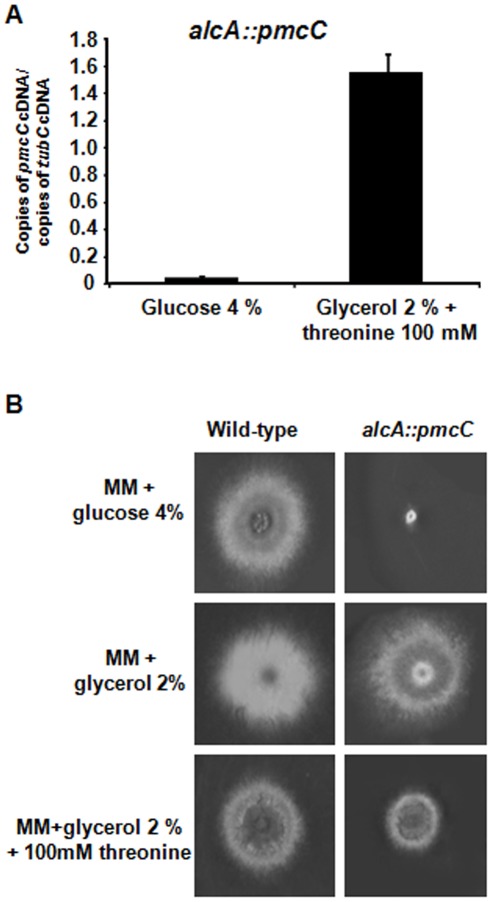
“The alcA promoter is repressed by glucose, derepressed by glycerol and induced to high levels by ethanol or L-threonine [23].”
BackgroundHalachmi, D., & Eilam, Y. (1989) · FEBS Letters · doi:10.1016/0014-5793(89)81717-x · Cited by 68
Active transport of calcium in Neurospora plasma membrane vesicles.
Stroobant, P., & Scarborough, G. A. (1979) · Proceedings of the National Academy of Sciences · doi:10.1073/pnas.76.7.3102 · Cited by 67 · cited 1×
“In Neurospora crassa it was reported that active transport across the plasma membrane is important for keeping low levels of cytosolic calcium [32,33].”
BackgroundIdentification of possible targets of the Aspergillus fumigatus CRZ1 homologue, CrzA
Soriani, F. M., Malavazi, I., Savoldi, M., Espeso, E. A., Dinamarco, T. M., Bernardes, L. Â. D. S., Ferreira, M. E. S., Goldman, M. H. S., & Goldman, G. H. (2010) · BMC Microbiology · doi:10.1186/1471-2180-10-12 · Cited by 61 · cited 1×
“…analysis and the A. nidulans CDRE consensus as a guide, we were able to identify 28 A. fumigatus genes that were repressed in DcrzA mutant strain upon CaCl2 exposure (Soriani et al., 2010), with 59-GT[T/G]G[G/C][T/A]GA[G/T]-39 as the CDREconsensus sequence for A. fumigatus AfCrzA-dependent genes.”
MethodSelf-citationEILAM, Y., LAVI, H., & Grossowicz, N. (1985) · Microbiology · doi:10.1099/00221287-131-3-623 · Cited by 50
Vacuoles Play a Decisive Role in Calcium Homeostasis in Neurospora crassa
Cornelius, G., & Nakashima, H. (1987) · Microbiology · doi:10.1099/00221287-133-8-2341 · Cited by 48 · cited 1×
“intracellular calcium levels [32,34,35].”
Bowman, B. J., Abreu, S., Margolles‐Clark, E., Drašković, M., & Bowman, E. J. (2011) · Eukaryotic Cell · doi:10.1128/ec.00239-10 · Cited by 48 · cited 1×
“GFP is located in the plasma membrane as well as in vacuolar membranes in this organism [37], suggesting NCA-2 functions to pump calcium out of the cell.”
BackgroundThe host-infecting fungal transcriptome: Infection-related gene expression in fungi
Cairns, T., Minuzzi, F., & Bignell, E. (2010) · FEMS Microbiology Letters · doi:10.1111/j.1574-6968.2010.01961.x · Cited by 45 · cited 1×
“fumigatus germlings during the initiation of murine infection [25,26].”
BackgroundPinchai, N., Juvvadi, P. R., Fortwendel, J. R., Perfect, B. Z., Rogg, L. E., Asfaw, Y. G., & Steinbach, W. J. (2010) · Eukaryotic Cell · doi:10.1128/ec.00378-09 · Cited by 43 · cited 3×
“fumigatus pmrA (Afu2g05860) was characterized [16].”
BackgroundInfluentialAnalysis of a novel calcium auxotrophy in Aspergillus nidulans
Findon, H., Calcagno-Pizarelli, A. M., Martínez, J. L., Spielvogel, A., Markina‐Iñarrairaegui, A., Indrakumar, T., Ramos, J., Peñalva, M. A., Espeso, E. A., & Arst, H. N. (2010) · Fungal Genetics and Biology · doi:10.1016/j.fgb.2010.04.002 · Cited by 33 · cited 1×
“nidulans, two null mutants constructed for the PMC1 homologues, pmcA and pmcB, displayed low-sensitivity to 700 mM CaCl2 concentrations [38].”
BackgroundFlipphi, M. J. A., Kocialkowska, J., & Felenbok, B. (2003) · European Journal of Biochemistry · doi:10.1046/j.1432-1033.2003.03738.x · Cited by 25
Eilam, Y., LAVI, H., & Grossowicz, N. (1985) · Microbiology · doi:10.1099/00221287-131-10-2555 · Cited by 25
Malavazi, I., Ferreira, M. E. D. S., Soriani, F. M., Dinamarco, T. M., Savoldi, M., Uyemura, S. A., Goldman, M. H. S., & Goldman, G. H. (2009) · Fungal Genetics and Biology · doi:10.1016/j.fgb.2009.06.009 · Cited by 24 · cited 1×
“We have been actively looking for additional components of the Ca-calcineurin pathway [14,17,27].”
BackgroundSelf-citationMolecular characterization of the Aspergillus fumigatus NCS-1 homologue, NcsA
Mota, A. O., Malavazi, I., Soriani, F. M., Heinekamp, T., Jacobsen, I. D., Brakhage, A. A., Savoldi, M., Goldman, M. H. S., Ferreira, M. E. D. S., & Goldman, G. H. (2008) · Molecular Genetics and Genomics · doi:10.1007/s00438-008-0381-y · Cited by 15 · cited 1×
“hydrocortisonacetate was injected subcutaneously at 200 mg/kg on day 23, modified from [51].”
MethodSelf-citationOlivero, I., Corbacho‐Cuello, I., & Hernández, L. M. (2003) · FEMS Microbiology Letters · doi:10.1016/s0378-1097(03)00002-8 · Cited by 11
Cited by
Aspergillus fumigatus and Aspergillosis in 2019
Latgé, J.-P., & Chamilos, G. (2019) · Clinical Microbiology Reviews · doi:10.1128/cmr.00140-18 · Cited by 1,400
Escherichia coli: an old friend with new tidings
Vila, J., Sáez-López, E., Johnson, J. R., Römling, U., Dobrindt, U., Cantón, R., Giske, C. G., Naas, T., Carattoli, A., Martínez-Medina, M., et al. (2016) · FEMS Microbiology Reviews · doi:10.1093/femsre/fuw005 · Cited by 335
De Logu, F., Nassini, R., Materazzi, S., Carvalho Gonçalves, M., Nosi, D., Rossi Degl’Innocenti, D., Marone, I. M., Ferreira, J., Li Puma, S., Benemei, S., et al. (2017) · Nature Communications · doi:10.1038/s41467-017-01739-2 · Cited by 283
Assembly, function and evolution of cyanobacterial carboxysomes
Kerfeld, C. A., & Melnicki, M. R. (2016) · Current Opinion in Plant Biology · doi:10.1016/j.pbi.2016.03.009 · Cited by 263
Alternative to FBS in animal cell culture - An overview and future perspective
Subbiahanadar Chelladurai, K., Selvan Christyraj, J. D., Rajagopalan, K., Yesudhason, B. V., Venkatachalam, S., Mohan, M., Chellathurai Vasantha, N., & Selvan Christyraj, J. R. S. (2021) · Heliyon · doi:10.1016/j.heliyon.2021.e07686 · Cited by 236
Metadata
- Authors
- Dinamarco, T. M., Freitas, F. Z., Almeida, R. S., Brown, N. A., dos Reis, T. F., Ramalho, L. N. Z., Savoldi, M., Goldman, M. H. S., Bertolini, M. C., & Goldman, G. H.
- Affiliations
- Universidade de São Paulo (BR)
- Universidade Estadual Paulista (Unesp) (BR)
- Corresponding author
- Goldman, Gustavo Henrique
- ORCID
- Venue
- PLoS ONE
- Publisher
- Public Library of Science (PLoS)
- Published
- 2012-05-23
- Volume
- 7
- Issue
- 5
- Pages
- e37591
- ISSN
- 1932-6203 (ISSN-L)
- PMC
- PMC3359301
- OpenAlex
- W2030074412
- Cited by
- 127
- References
- 56
- Citations by year
- 2026: 1 · 2025: 1 · 2024: 2 · 2023: 2 · 2022: 3 · 2021: 17 · 2020: 13 · 2019: 8 · 2018: 6 · 2017: 19 · 2016: 15 · 2015: 15 · 2014: 13 · 2013: 10 · 2012: 2
- FWCI
- 5.15
- Type
- journal article
- Language
- en
- Update notices
- correction (2012-11-20)
- Open access
- gold
- doi.org
- Locations
- PLoS ONE (publishedVersion, cc-by)
- PubMed Central (publishedVersion, cc-by)
- PubMed (publishedVersion)
- Portuguese National Funding Agency for Science, Research and Technology (RCAAP Project by FCT) (publishedVersion)
- Acervo Digital da Universidade Estadual Paulista (Universidade Estadual Paulista) (submittedVersion, other-oa)
- Americanae (AECID Library) (submittedVersion, other-oa)
- DOAJ (DOAJ: Directory of Open Access Journals) (submittedVersion, cc-by-sa)
- Figshare (submittedVersion, cc-by)
- LA Referencia (Red Federada de Repositorios Institucionales de Publicaciones Científicas) (submittedVersion, other-oa)
- Funders
- Fundação de Amparo à Pesquisa do Estado de São Paulo
- Conselho Nacional de Desenvolvimento Científico e Tecnológico
- Topics
- Life Sciences › Biochemistry, Genetics and Molecular Biology › Molecular Biology › Fungal and yeast genetics research
- Health Sciences › Medicine › Infectious Diseases › Antifungal resistance and susceptibility
- Life Sciences › Biochemistry, Genetics and Molecular Biology › Molecular Biology › Signaling Pathways in Disease
- Keywords
- Aspergillus fumigatus, calcium transporters, plasma membrane calcium ATPase, calcineurin pathway, calcium sensitivity, manganese resistance, invasive pulmonary aspergillosis, fungal virulence, gene essentiality
- MeSH terms
- Animals, Aspergillus fumigatus, Fungal Proteins, Genetic Vectors, Virulence, Gene Expression Regulation, Fungal, DNA Primers, Bronchoalveolar Lavage, Calcium Signaling, Reverse Transcriptase Polymerase Chain Reaction, Response Elements, Electrophoretic Mobility Shift Assay, Mice, Plasma Membrane Calcium-Transporting ATPases, Pulmonary Aspergillosis, Real-Time Polymerase Chain Reaction
About these checks
Registry, retraction, Cites and statistics results are computed, not judged, with one exception: a printed reference that no index lists is read once by a model before it counts as a citation error. Claims are extracted by a model and kept only when their quote appears verbatim in the text; each cited source is then checked, with a model’s help, for whether it says what the claim relies on. Those verdicts can be wrong — read the claim’s quote and the cited source before relying on one.
Statistics and arithmetic are recomputed, not judged.
Confidence bands are shown only for fields calibrated on our annotated test set. None is calibrated yet, so no band is shown.
What counts as a claim ›How we measure confidence ›How we check this ›
Are you an author, or do you see a problem with this page? Request a review
Data sources
Bibliographic data: Semantic Scholar, OpenAlex, Crossref.
Contains information from the Semantic Scholar Academic Graph Datasets, made available under the ODC Attribution License (ODC-BY 1.0).
Semantic Scholar’s data is described in: Kinney, R., et al. (2023). The Semantic Scholar Open Data Platform. arXiv:2301.10140.
