

“Even if You Know Everything You Can Forget”: Health Worker Perceptions of Mobile Phone Text-Messaging to Improve Malaria Case-Management in Kenya
Open accessThe DOI matches its Crossref record; 37 of the 38 references it cites were found in a registry or an index.
Abstract
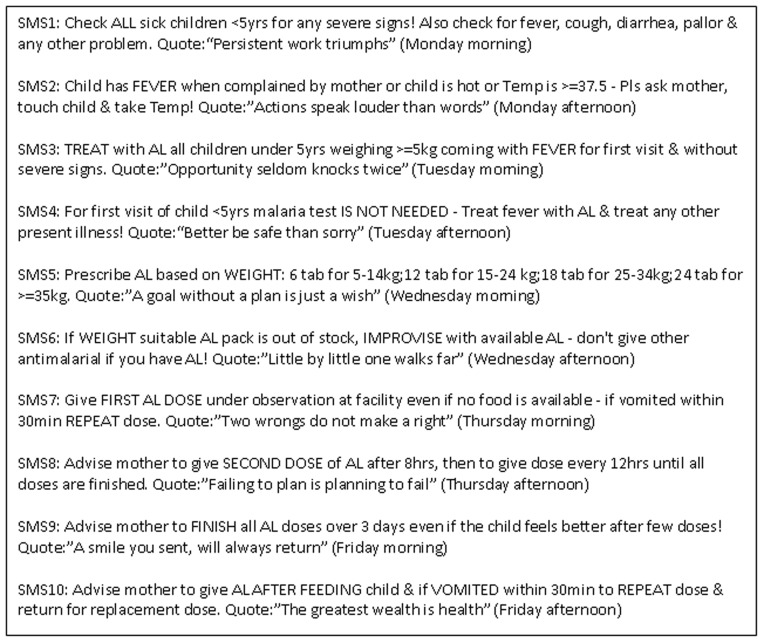
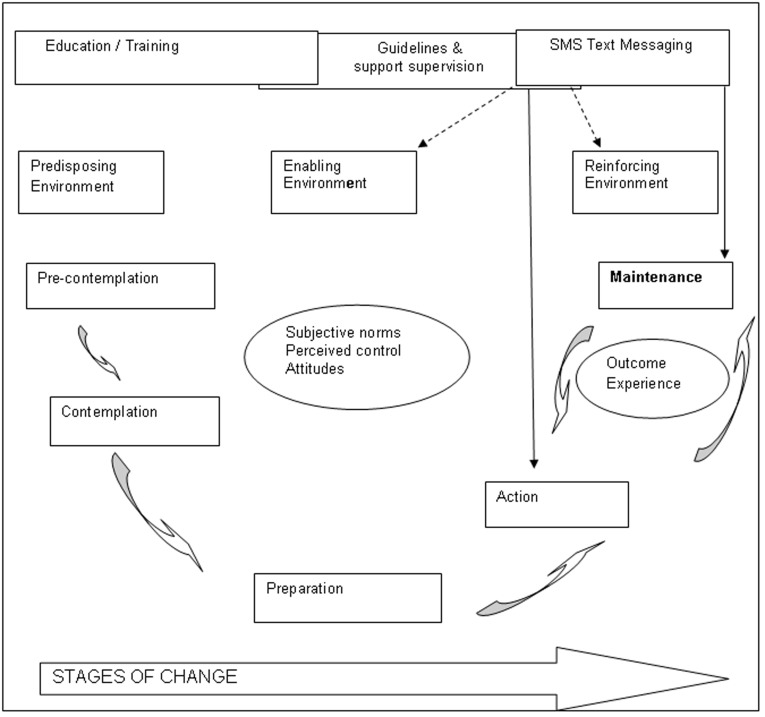
This paper presents the results of a qualitative study to investigate the perceptions and experiences of health workers involved in a a cluster-randomized controlled trial of a novel intervention to improve health worker malaria case-management in 107 government health facilities in Kenya. The intervention involved sending text-messages about paediatric outpatient malaria case-management accompanied by "motivating" quotes to health workers' mobile phones. Ten malaria messages were developed reflecting recommendations from the Kenyan national guidelines. Two messages were delivered per day for 5 working days and the process was repeated for 26 weeks (May to October 2009). The accompanying quotes were unique to each message. The intervention was delivered to 119 health workers and there were significant improvements in correct artemether-lumefantrine (AL) management both immediately after the intervention (November 2009) and 6 months later (May 2010). In-depth interviews with 24 health workers were undertaken to investigate the possible drivers of this change. The results suggest high acceptance of all components of the intervention, with the active delivery of information in an on the job setting, the ready availability of new and stored text messages and the perception of being kept 'up to date' as important factors influencing practice. Applying the construct of stages of change we infer that in this intervention the SMS messages were operating primarily at the action and maintenance stages of behaviour change achieving their effect by creating an enabling environment and providing a prompt to action for the implementation of case management practices that had already been accepted as the clinical norm by the health workers. Future trials testing the effectiveness of SMS reminders in creating an enabling environment for the establishment of new norms in clinical practice as well as in providing a prompt to action for the implementation of the new case-management guidelines are justified.
Overview
The claims and statistics of this paper haven’t been checked yet.
Free: it reads the open-access text and checks the first 5 claims that cite a source we can check. Create a free account to check every claim.
Integrity signals
Registry
Cites
Statistics
Figures
Verification
Claims the paper makes
The claims and statistics of this paper haven’t been checked yet.
Free: it reads the open-access text and checks the first 5 claims that cite a source we can check. Create a free account to check every claim.
Claims other papers make about this one
Each is checked against this paper’s own text: does it say what the citing paper says it does?
The source backs part of the claim, not all of it — or backs it for a different population, condition or comparison.
In the citing paper
“and that satisfied clients told each other about the quality of care they received through mobile devices (Jones 2012; Khan 2015)”
From Health workers' perceptions and experiences of using mHealth technologies to deliver primary healthcare services: a qualitative evidence synthesis (2020) · cites this paper as Jones 2012
Experimental — accuracy not yet measuredThe cited source says what the claim attributes to it.
In the citing paper
“Some workers described how it attracted more clients (Jones 2012; Messinger 2017; Vedanthan 2015)”
From Health workers' perceptions and experiences of using mHealth technologies to deliver primary healthcare services: a qualitative evidence synthesis (2020) · cites this paper as Jones 2012
The cited source says what the claim attributes to it.
In the citing paper
“Some health workers believed that using mobile devices helped them build a relationship with clients”
From Health workers' perceptions and experiences of using mHealth technologies to deliver primary healthcare services: a qualitative evidence synthesis (2020) · cites this paper as Jones 2012
The cited source says what the claim attributes to it.
In the citing paper
“For the seven randomised controlled trials testing effects of SMS communication on various health outcomes had reported positive effects [16, 20, 32, 33, 44–49], while the remaining trial showed no effect of mobile alarm devices on treatment adherence for HIV patients [15].”
From Assessing the feasibility of eHealth and mHealth: a systematic review and analysis of initiatives implemented in Kenya (2017) · cites this paper as [44]
Self-check
Percentages, sums and reported differences re-computed from the paper’s own numbers.
The self-check needs the paper’s full text.
Citations
Cites
Stages and processes of self-change of smoking: Toward an integrative model of change.
Prochaska, J. O., & DiClemente, C. C. (1983) · Journal of Consulting and Clinical Psychology · doi:10.1037/0022-006x.51.3.390 · Cited by 9,098 · cited 1×
“The model was first proposed by Prochaska and Di Clemente [24] and while there is little evidence to demonstrate that its use has been particularly effective in increasing the impact of behaviour change interventions [25,26] it is a useful tool in helping to identify which health worker behaviours might be most amenab…”
MethodQualitative research in health care: Analysing qualitative data
Pope, C. (2000) · BMJ · doi:10.1136/bmj.320.7227.114 · Cited by 8,131
Qualitative Research in Health Care
(2006) · Wiley eBooks · doi:10.1002/9780470750841 · Cited by 2,712
Behavior change interventions delivered by mobile telephone short message service
Fjeldsoe, B. S., Marshall, A. L., & Miller, Y. D. (2009) · American Journal of Preventive Medicine · doi:10.1016/j.amepre.2008.09.040 · Cited by 1,213 · cited 3×
“What is unclear, from both the results of this study & from the broader literature on the use of SMS text messaging in health behaviour change, is the frequency and duration of messaging that is required to create a new ‘habit’ in clinical practice [5].”
BackgroundResultInfluentialQualitative Research in Health Care
(2020) · Wiley eBooks · doi:10.1002/9781119410867 · Cited by 1,102
How can we achieve and maintain high-quality performance of health workers in low-resource settings?
Rowe, A. K., de Savigny, D., Lanata, C. F., & Victora, C. G. (2005) · The Lancet · doi:10.1016/s0140-6736(05)67028-6 · Cited by 1,045 · cited 1×
“Evidence from many studies in sub-Saharan Africa has demonstrated that in-service training alone is insufficient to ensure changes in clinical practice and any improvements after training disappear quickly if no follow-up support is provided [8,9,10,11,12,13] and yet in the public sector in sub Saharan Africa training…”
Gabbay, J., & May, A. L. (2004) · BMJ · doi:10.1136/bmj.329.7473.1013 · Cited by 986
Reyburn, H., Mbakilwa, H., Mwangi, R., Mwerinde, O., Olomi, R., Drakeley, C., & Whitty, C. J. M. (2007) · BMJ · doi:10.1136/bmj.39073.496829.ae · Cited by 435 · cited 1×
“Evidence from many studies in sub-Saharan Africa has demonstrated that in-service training alone is insufficient to ensure changes in clinical practice and any improvements after training disappear quickly if no follow-up support is provided [8,9,10,11,12,13] and yet in the public sector in sub Saharan Africa training…”
Zurovac, D., Sudoi, R. K., Akhwale, W. S., Ndiritu, M., Hamer, D. H., Rowe, A. K., & Snow, R. W. (2011) · The Lancet · doi:10.1016/s0140-6736(11)60783-6 · Cited by 403 · cited 2×
“The results from the RCT demonstrated that SMS text messaging had a significant positive impact on health worker case management of malaria in febrile children [1] and this investigation of their perceptions of the intervention found that the SMS text messaging was enthusiastically received by the participants.”
Self-citationBridging the gap between research and practice
McIntyre, D. (2005) · Cambridge Journal of Education · doi:10.1080/03057640500319065 · Cited by 366
Research works printed but not linked: 2
- Rowe AK Rowe S Peters DH Holloway KA Chalker J Ross-Degnan D 2010 Early results of a systematic review of the effectiveness and costs of strategies to improve health worker performance in low- and middle-income countries (LMICs). First Global Symposium on Health Systems Research. Montreux
- World Health Organization (WHO), editor 2010 Malaria Treatment Guidelines, Second Edition. second ed: WHO. 194 p
Cited by
Aranda-Jan, C. B., Mohutsiwa-Dibe, N., & Loukanova, S. (2014) · BMC Public Health · doi:10.1186/1471-2458-14-188 · Cited by 644
“into the healthcare system and, particularly, when there are unclear roles and responsibilities at the various different hierarchical levels (government to managers to health workers) involved in implementation and operation [45].”
BackgroundInfluentialAgarwal, S., Perry, H. B., Long, L., & Labrique, A. B. (2015) · Tropical Medicine & International Health · doi:10.1111/tmi.12525 · Cited by 498
Community Health Workers and Mobile Technology: A Systematic Review of the Literature
Braun, R., Catalani, C., Wimbush, J., & Israelski, D. (2013) · PLoS ONE · doi:10.1371/journal.pone.0065772 · Cited by 493
“For example, a study using text messaging to improve outpatient malaria care in 107 government health facilities in Kenya led to improvements in drug management both immediately after the intervention, and six months post-intervention [21].”
BackgroundChib, A., van Velthoven, M. H., & Car, J. (2015) · Journal of Health Communication · doi:10.1080/10810730.2013.864735 · Cited by 384
“Because this study focused more on outputs it was categorized accordingly (Jones et al., 2012; Zurovac et al., 2011).”
BackgroundOdendaal, W. A., Anstey Watkins, J., Leon, N., Goudge, J., Griffiths, F., Tomlinson, M., & Daniels, K. (2020) · Cochrane Database of Systematic Reviews · doi:10.1002/14651858.cd011942.pub2 · Cited by 289
Mobile phones improve antenatal care attendance in Zanzibar: a cluster randomized controlled trial
Lund, S., Nielsen, B. B., Hemed, M., Boas, I. M., Said, A., Said, K., Makungu, M. H., & Rasch, V. (2014) · BMC Pregnancy and Childbirth · doi:10.1186/1471-2393-14-29 · Cited by 301
“Most of the women in our study felt that the intervention influenced their health seeking behavior and satisfaction with the service which is in line with other studies finding mobile phone applications for reproductive health well accepted by women and health workers [28-30].”
ResultOdendaal, W. A., Goudge, J., Griffiths, F., Tomlinson, M., Leon, N., & Daniels, K. (2015) · Cochrane Database of Systematic Reviews · doi:10.1002/14651858.cd011942 · Cited by 173
Integrating mHealth at point of care in low- and middle-income settings: the system perspective
Wallis, L., Blessing, P., Dalwai, M., & Shin, S. D. (2017) · Global Health Action · doi:10.1080/16549716.2017.1327686 · Cited by 154
mHealth for Clinical Decision-Making in Sub-Saharan Africa: A Scoping Review
Adepoju, I.-O. O., Albersen, B. J. A., De Brouwere, V., van Roosmalen, J., & Zweekhorst, M. (2017) · JMIR mHealth and uHealth · doi:10.2196/mhealth.7185 · Cited by 151
“…TBTech [30], txt2MEDLINE [31], New Algorithm for Managing Childhood Illness Using Mobile Technology (ALMANACH) [32,33], electronic Integrated Management of Childhood Illness (eIMCI) [34-36], Text Messaging of Malaria Guidelines [37-39], and Quality of Maternal and Prenatal Care (QUALMAT) [40-46]).”
BackgroundHiggs, E. S., Goldberg, A. B., Labrique, A. B., Cook, S. H., Schmid, C., Cole, C. F., & Obregón, R. A. (2014) · Journal of Health Communication · doi:10.1080/10810730.2014.929763 · Cited by 124
“To date, for example, most mHealth interventions are driven by a focus on transmission of information as the primary intervening variable without sufficiently exploring change mechanisms (Jones et al., 2012).”
BackgroundmHealth Interventions in Low-Income Countries to Address Maternal Health: A Systematic Review
Colaci, D., Chaudhri, S., & Vasan, A. (2017) · Annals of Global Health · doi:10.1016/j.aogh.2016.09.001 · Cited by 115
Health Worker mHealth Utilization: A Systematic Review
White, A., Thomas, D. S. K., Ezeanochie, N., & Bull, S. (2016) · CIN: Computers, Informatics, Nursing · doi:10.1097/cin.0000000000000231 · Cited by 110
“Health worker acceptability, or the acceptance of using technology to facilitate their work, was generally very high in qualitative surveys.(13,19,20,29) In studies comparing”
BackgroundNjoroge, M., Zurovac, D., Ogara, E. A. A., Chuma, J., & Kirigia, D. (2017) · BMC Research Notes · doi:10.1186/s13104-017-2416-0 · Cited by 100
Self-citationFeedpal: Understanding Opportunities for Chatbots in Breastfeeding Education of Women in India
Yadav, D., Malik, P., Dabas, K., & Singh, P. (2019) · Proceedings of the ACM on Human-Computer Interaction · doi:10.1145/3359272 · Cited by 90
“SMSs, IVR, e-checklists have been used in improving CHWs adherence to house visits and case management guidelines [11, 28, 29, 54, 72].”
MethodKliner, M., Knight, A., Mamvura, C., Wright, J., & Walley, J. (2013) · Infectious Diseases of Poverty · doi:10.1186/2049-9957-2-12 · Cited by 82
“In addition, staff working in resource-poor settings broadly support the use of mobile phone technology [22,23].”
BackgroundZurovac, D., Larson, B. A., Sudoi, R. K., & Snow, R. W. (2012) · PLoS ONE · doi:10.1371/journal.pone.0052045 · Cited by 76
“The quantitative effects of the intervention and qualitative investigations of health workers’ perceptions have been presented elsewhere [9,10].”
BackgroundInfluentialSelf-citationWinters, N., Langer, L., & Geniets, A. (2018) · BMJ Open · doi:10.1136/bmjopen-2017-019827 · Cited by 71
BROOKER, S. J., Mwandawiro, C. S., Halliday, K. E., Njenga, S. M., Mcharo, C., Gichuki, P. M., Wasunna, B., Kihara, J. H., Njomo, D. W., Alusala, D., et al. (2015) · BMJ Open · doi:10.1136/bmjopen-2015-008950 · Cited by 79
Self-citationSangoshthi: Empowering Community Health Workers through Peer Learning in Rural India
Yadav, D., Singh, P., Montague, K., Kumar, V., Sood, D., Balaam, M., Sharma, D., Duggal, M., Bartindale, T., Varghese, D., et al. (2017) · Proceedings of the 26th International Conference on World Wide Web · doi:10.1145/3038912.3052624 · Cited by 66
“A substantial body of research exploited the power of cellular connectivity to reach the beneficiaries directly [30, 32, 20, 9].”
BackgroundMaibach, E. W., Uppalapati, S. S., Orr, M., & Thaker, J. J. (2022) · Annual Review of Earth and Planetary Sciences · doi:10.1146/annurev-earth-031621-114417 · Cited by 89
Krah, E. F., & de Kruijf, J. G. (2016) · DIGITAL HEALTH · doi:10.1177/2055207616679264 · Cited by 56
An evaluation of a family planning mobile job aid for community health workers in Tanzania
Braun, R., Lasway, C., Agarwal, S., L’Engle, K. L., Layer, E. H., Silas, L., Mwakibete, A., & Kudrati, M. (2016) · Contraception · doi:10.1016/j.contraception.2016.03.016 · Cited by 58
Can mobile phones help control neglected tropical diseases? Experiences from Tanzania
Madon, S., Amaguru, J. O., Malecela, M. N., & Michael, E. (2014) · Social Science & Medicine · doi:10.1016/j.socscimed.2013.11.036 · Cited by 52
Mobile phones improve case detection and management of malaria in rural Bangladesh
Prue, C. S., Shannon, K. L., Khyang, J., Edwards, L. J., Ahmed, S., Ram, M., Shields, T., Hossain, M. S., Glass, G. E., Nyunt, M. M., et al. (2013) · Malaria Journal · doi:10.1186/1475-2875-12-48 · Cited by 50
“One study in Kenya showed significant success in improved correct management of malaria by healthcare workers who received regular text messages with appropriate case management and motivating quotes [17].”
BackgroundHealthcare Workers’ Perspectives of mHealth Adoption Factors in the Developing World: Scoping Review
Addotey-Delove, M., Scott, R. E., & Mars, M. (2023) · International Journal of Environmental Research and Public Health · doi:10.3390/ijerph20021244 · Cited by 76
“…en t M ob il e Ph on e O w ne rs hi p A ff or da bi li ty M is ce ll an eo us Author & Year Chirambo et al., 2018 [107] √ √ √ √ √ √ Agarwal et al., 2015 [108] √ √ √ √ Jones et al., 2012 [109] √ √ √ Modi et al., 2015 [110] √ √ √ √ √ √ Shah et al., 2018 [111] √ √ Vedanthan et al., 2015 [112] √ √ √…”
Zakane, S. A., Gustafsson, L. L., Tomson, G., Loukanova, S., Sié, A., Nasiell, J., & Bastholm-Rahmner, P. (2014) · International Journal of Medical Informatics · doi:10.1016/j.ijmedinf.2014.01.013 · Cited by 48
“[25] C.”
ResultHuq, N. L., Azmi, A. J., Quaiyum, M., & Hossain, S. (2014) · Reproductive Health · doi:10.1186/1742-4755-11-52 · Cited by 46
“Many mHealth studies have documented the effort of text messaging to improve the implementation of health promotion initiatives [25] that might be overwhelming in this direct mobile communication network.”
BackgroundA review of tuberculosis at the wildlife-livestock-human interface in Zambia
Malama, S., Muma, J. B., & Godfroid, J. (2013) · Infectious Diseases of Poverty · doi:10.1186/2049-9957-2-13 · Cited by 54
Arrossi, S., Paolino, M., Orellana, L., Thouyaret, L., Kohler, R. E., & Viswanath, K. (2019) · Trials · doi:10.1186/s13063-019-3229-3 · Cited by 41
LEAP: Scaffolding Collaborative Learning of Community Health Workers in India
Yadav, D., Bhandari, A., & Singh, P. (2019) · Proceedings of the ACM on Human-Computer Interaction · doi:10.1145/3359271 · Cited by 40
“Jones et al. [43] studied the effectiveness of such SMSs by qualitatively analyzing health workers’ perceptions and highlighted the value in improving networking and communication amongst CHWs.”
BackgroundChoudhury, A., Asan, O., & Choudhury, M. (2021) · Journal of the American Medical Informatics Association · doi:10.1093/jamia/ocab172 · Cited by 45
Kaunda-Khangamwa, B. N., Steinhardt, L. C., Rowe, A. K., Gumbo, A., Moyo, D., Nsona, H., Troell, P., Zurovac, D., & Mathanga, D. P. (2018) · Malaria Journal · doi:10.1186/s12936-018-2629-2 · Cited by 36
Self-citationJoos, O., Silva, R., Amouzou, A., Moulton, L. H., Perin, J., Bryce, J., & Mullany, L. C. (2016) · PLoS ONE · doi:10.1371/journal.pone.0145238 · Cited by 39
“We observed measurable improvements in the documentation of matched pregnancy outcomes associated with regular, unidirectional SMS of two intensity levels sent to CHWs in rural Malawi.”
BackgroundInfluentialUse of an electronic Partograph: feasibility and acceptability study in Zanzibar, Tanzania
Litwin, L., Maly, C., Khamis, A. R., Hiner, C., Zoungrana, J., Mohamed, K., Drake, M., Machaku, M. D., Njozi, M., Muhsin, S. A., et al. (2018) · BMC Pregnancy and Childbirth · doi:10.1186/s12884-018-1760-y · Cited by 36
“Likewise, other studies in East Africa corroborate the perceived improvement in care amongst providers using new mobile technologies [39, 40].”
Kurumop, S. F., Bullen, C., Whittaker, R., Betuela, I., Hetzel, M. W., & Pulford, J. (2013) · PLoS ONE · doi:10.1371/journal.pone.0076578 · Cited by 30
Amoakoh, H. B., Klipstein‐Grobusch, K., Ansah, E., Grobbee, D. E., Yveoo, L., & Agyepong, I. A. (2019) · BMJ Global Health · doi:10.1136/bmjgh-2018-001153 · Cited by 37
Bruxvoort, K., Festo, C., Kalolella, A., Cairns, M., Lyaruu, P., Kenani, M., Kachur, S. P., Goodman, C., & Schellenberg, D. (2014) · The American Society of Tropical Medicine and Hygiene · doi:10.4269/ajtmh.14-0126 · Cited by 27
The effect of mobile phone short message service on maternal health in south‐west Nigeria
Omole, O., Ijadunola, M. Y., Olotu, E., Omotoso, O., Bello, B., Monsir, A. O., Phillips, A. S., & Fatusi, A. O. (2017) · The International Journal of Health Planning and Management · doi:10.1002/hpm.2404 · Cited by 38
Goga, A. E., Singh, Y., Singh, M., Noveve, N., Magasana, V., Ramraj, T., Abdullah, F., Coovadia, A. H., Bhardwaj, S., & Sherman, G. G. (2016) · Maternal and Child Health Journal · doi:10.1007/s10995-016-2074-1 · Cited by 25
“The benefits of mobile technology was also demonstrated in Kenya where short reminder cell phone messages to healthcare providers maintained knowledge and enabled the implementation of guidelines more successfully, compared with once off training only (Jones et al. 2012).”
BackgroundRassi, C., Gore‐Langton, G. R., Walimbwa, B. G., Strachan, C. E., King, R., Basharat, S., Christiansen-Jucht, C., Graham, K., & Gudoi, S. S. (2018) · PLoS ONE · doi:10.1371/journal.pone.0203554 · Cited by 26
Oliwa, J. N., Nzinga, J., Masini, E., van Hensbroek, M. B., Jones, C. O. H., English, M., & Hoog, A. H. V. (2020) · Implementation Science · doi:10.1186/s13012-020-01061-4 · Cited by 27
Self-citationOvercoming barriers to mHealth co-design in low- and middle-income countries: a research toolkit
Poulsen, A., Hickie, I. B., Alam, M., Crouse, J. J., Ekambareshwar, M., Loblay, V., Song, Y. J. C., & LaMonica, H. M. (2024) · Information Technology for Development · doi:10.1080/02681102.2023.2295480 · Cited by 22
“In Kenya, studies show that SMS communication contributes to positive health outcomes related to, for instance, sexual behaviour (Curran et al., 2013) and malaria (Jones et al., 2012).”
Blanas, D. A., Ndiaye, Y., MacFarlane, M., Manga, I., Siddiqui, A., Velez, O., Kanter, A. S., Nichols, K., & Hennig, N. (2015) · International Health · doi:10.1093/inthealth/ihu075 · Cited by 21
Amoakoh, H. B., Klipstein‐Grobusch, K., Agyepong, I. A., Amoakoh‐Coleman, M., Kayode, G. A., Reitsma, J. B., Grobbee, D. E., & Ansah, E. (2020) · BMC Pediatrics · doi:10.1186/s12887-020-02378-1 · Cited by 22
Vélez, L. F., Sanitato, M., Barry, D. J., Alilio, M., Apfel, F., Coe, G., Garcia, A. I., Kaufman, M. R., Klein, J. D., Kutlesic, V., et al. (2014) · Journal of Health Communication · doi:10.1080/10810730.2014.939313 · Cited by 21
“The findings showed significant improvements in correct medication management, which included correct dosing and counseling, both immediately after the intervention and 6 months later as compared with baseline data (Jones et al., 2012).”
ResultUmeano-Enemuoh, J. C., Uzochukwu, B. S. C., Ezumah, N., Mangham‐Jefferies, L., Wiseman, V. L., & Onwujekwe, O. E. (2015) · BMC Infectious Diseases · doi:10.1186/s12879-015-1187-2 · Cited by 18
“Effective training of health workers has been argued to be useful in empowering them with information to understand malaria treatment guidelines and provide opportunities for them to exchange ideas with their colleagues as found in other studies [13, 20, 37, 39].”
ResultKaboré, C., Ridde, V., Kouanda, S., Queuille, L., Somé, P., Agier, I., & Dumont, A. (2016) · BMC Pregnancy and Childbirth · doi:10.1186/s12884-016-1112-8 · Cited by 20
Low-Cost Mobile Learning Solutions for Community Health Workers
Yadav, D. (2017) · International World Wide Web Conference (WWW) · doi:10.1145/3041021.3053377 · Cited by 16
“[11] presented the perception of health workers for a text message based intervention for malaria case management.”
BackgroundZhou, S., Rietveld, A. E. C., Velarde, M., Ramsay, A., Zhang, S., Zhou, X., & Cibulskis, R. E. (2014) · Malaria Journal · doi:10.1186/1475-2875-13-473 · Cited by 18
“Furthermore, only a few of these projects focused on topics and activities relevant to malaria elimination, including hot spots [11-13], reactive case detection [14,15], asymptomatic parasite carriers [16,17], mobile phone-based surveillance [18-21] and the use of single low-dose primaquine [22].”
BackgroundThiha, P., Pisani, A. R., Gurditta, K., Cherry, E., Peterson, D. R., Kautz, H., & Wyman, P. A. (2016) · JMIR Public Health and Surveillance · doi:10.2196/publichealth.6207 · Cited by 19
“Programs that involve community members could use a procedure like StoryPRIME to develop compelling testimonials to add to existing public health text messaging programs, such as those used increase adherence to malaria treatment [40,41].”
MethodToda, M., Njeru, I., Zurovac, D., Kareko, D., O-Tipo, S., Mwau, M., & Morita, K. (2017) · PLOS ONE · doi:10.1371/journal.pone.0179408 · Cited by 16
Self-citationMalaria case management in Zambia: A cross-sectional health facility survey
Worges, M., Celone, M., Finn, T. P., Chisha, Z., Winters, A., Winters, B., Keating, J. A., & Yukich, J. O. (2019) · Acta Tropica · doi:10.1016/j.actatropica.2019.04.032 · Cited by 17
Thomas, D. S. K., Daly, K., Nyanza, E. C., Ngallaba, S. E., & Bull, S. S. (2020) · Digital Health · doi:10.1177/2055207620905409 · Cited by 19
Abreu, F. D. L., Bissaco, M. A. S., da Silva, A. P., Boschi, S. R. M. D. S., Scardovelli, T. A., Santos, M. F., Rodrigues, C., & Martini, S. C. (2021) · Research on Biomedical Engineering · doi:10.1007/s42600-021-00154-3 · Cited by 19
Artanian, V., Ware, P., Rac, V. E., Ross, H. J., & Seto, E. (2021) · JMIR Cardio · doi:10.2196/28259 · Cited by 19
Curran, J., Gallant, A. J., Wong, H., Shin, H. D., Urquhart, R., Kontak, J. C. H., Wozney, L., Boulos, L., Bhutta, Z. A., & Langlois, É. V. (2022) · BMJ Open · doi:10.1136/bmjopen-2021-053919 · Cited by 18
Barnor-Ahiaku, E. (2016) · Ghana Medical Journal · doi:10.4314/gmj.v50i1.8 · Cited by 14
Greenall-Ota, J., Yapa, H. M., Fox, G. J., & Negin, J. (2024) · JMIR mhealth and uhealth · doi:10.2196/55189 · Cited by 15
“Based on the World Bank 2022 Country Group by Income LMIC status [28], 8 were low income [8,9,29-34], 6 were lower middle income [10,35-39], and 6 were upper middle income [7,21,40-43].”
InfluentialArtanian, V., Rac, V. E., Ross, H. J., & Seto, E. (2020) · JMIR Research Protocols · doi:10.2196/19705 · Cited by 11
Obuobi-Donkor, G., Eboreime, E., Bond, J., Phung, N., Eyben, S., Hayward, J., Zhang, Y., MacMaster, F. P., Clelland, S. R., Greiner, R., et al. (2022) · JMIR Research Protocols · doi:10.2196/30680 · Cited by 10
Self-citationMontazeri, M., Galavi, Z., & Ahmadian, L. (2023) · Digital Health · doi:10.1177/20552076231171969 · Cited by 11
Mobile Phone Short Message Service to Improve Malaria Pharmacoadherence in Zambia
Steury, E. E. (2016) · Journal of Nursing Scholarship · doi:10.1111/jnu.12216 · Cited by 8
Ferdous, T. E., Jaman, M. J., Siddique, A. B., Sultana, N., Hossain, T., Arifeen, S. E., & Billah, S. M. (2024) · Nutrients · doi:10.3390/nu16203429 · Cited by 11
“Creating such an enabling environment motivates staff, eases their tasks, and improves task implementation [23].”
BackgroundTimler, D., Bogusiak, K., Kasielska‐Trojan, A., Neskoromna-Jędrzejczak, A., Gałązkowski, R., & Szarpak, Ł. (2015) · Disaster Medicine and Public Health Preparedness · doi:10.1017/dmp.2015.108 · Cited by 7
“The use of SMS is a cheap and rapid means of eliminating weak points in communication and could lead to improved delivery of health services and better health outcomes.(16) To some extent, these messages are better than phone calls.”
BackgroundGupta, A., Agrawal, R., Gupt, A., Guleri, R., Bajpayee, D., Joshi, N., Sarin, E., Gupta, S. K., & Kumar, H. (2021) · Journal of Family Medicine and Primary Care · doi:10.4103/jfmpc.jfmpc_466_21 · Cited by 14
“Similar treatment protocols were followed with the other conditions, consistent with other studies that mobile technology helped HWs in following standard guidelines and protocol.[19] The majority of women who required referrals were referred echoing studies that referrals improved through digital referral coordinated…”
ResultSteinhardt, L. C., Mathanga, D. P., Mwandama, D. A., Nsona, H., Moyo, D., Gumbo, A., Kobayashi, M., Namuyinga, R. J., Shah, M. P., Bauleni, A., et al. (2019) · American Journal of Tropical Medicine and Hygiene · doi:10.4269/ajtmh.18-0529 · Cited by 11
Self-citationPisani, A. R., Wyman, P. A., Petrova, M., Judd, E., Schmeelk‐Cone, K., Thiha, P., & Gurditta, K. (2019) · The Journal of Primary Prevention · doi:10.1007/s10935-019-00545-4 · Cited by 8
A pilot of the use of Short Message Service (SMS) as a training tool for anaesthesia nurses
Duys, R., Duma, S. E., & Dyer, R. A. (2017) · Southern African Journal of Anaesthesia and Analgesia · doi:10.1080/22201181.2017.1317422 · Cited by 6
Titilayo, O. D., & Okanlawon, F. A. (2014) · PubMed · Cited by 7
Adhikari, S. R., Supakankunti, S., & Khan, M. M. (2013) · Infectious Diseases of Poverty · doi:10.1186/2049-9957-2-14 · Cited by 8
Review of Key Stakeholders for an mHealth Pilot Study in Malawi Motivations and Expectations
O’Connor, Y., Heavin, C., & O’Donoghue, J. (2015) · International Journal of Reliable and Quality E-Healthcare · doi:10.4018/ijrqeh.2015040105 · Cited by 5
LeBaron, V. T., Horton, B. J., Adhikari, A., Chapagain, S., Dhakal, M., Gongal, R. N., Kattel, R., Koirala, G., Kutcher, A. M., Hass, B., et al. (2022) · Frontiers in Pain Research · doi:10.3389/fpain.2022.910995 · Cited by 7
Wang, X., Luo, R., Liu, C., Zhang, L., Yue, A., Medina, A., & Rozelle, S. (2018) · PLOS ONE · doi:10.1371/journal.pone.0191549 · Cited by 4
Impact Evaluation of an SMS Campaign to Promote Household Chlorination in Rural Haiti
Ritter, M. R., Camille, E., Velcine, C., Guillaume, R.-K., Casimir, J. M., & Lantagne, D. (2020) · Water · doi:10.3390/w12113095 · Cited by 5
“applied the stages of change theory to their experiment with health worker behavior and suggested that SMSs operated primarily by providing a prompt to action for behaviors that health workers know about but sometimes forget to do [31].”
Radovich, E., Karki, S., Das, S., Shakya, R., McCarthy, O., Shrestha, A., Calvert, C., Campbell, O. M. R., & Penn‐Kekana, L. (2024) · medRxiv · doi:10.1101/2024.05.07.24306757 · Cited by 5
Maibach, E. W., Uppalapati, S. S., Orr, M., & Thaker, J. J. (2022) · SSRN Electronic Journal · doi:10.2139/ssrn.4201560 · Cited by 2
Predicting Participant Consent in mHealth Trials – A Caregiver’s Perspective
O’Connor, Y., Heavin, C., Gallagher, J., & O’Donoghue, J. (2017) · AJIS. Australasian journal of information systems/AJIS. Australian journal of information systems/Australian journal of information systems · doi:10.3127/ajis.v21i0.1470 · Cited by 1
Where There Are No Landlines: Mobile Technology, Community Health Workers and Family Planning
Braun, R. (2013) · eScholarship (California Digital Library)
Yadav, D., & Singh, P. P. (2021)
Perlich, A. C. (2022) · eDiss (Georg-August-Universität Göttingen) · doi:10.53846/goediss-9208 · Cited by 2
Mutumba, M., Ssewamala, F. M., Namirembe, R., Bahar, O. S., Nabunya, P., Neilands, T. B., Tozan, Y., Namuwonge, F., Nattabi, J., Laker, P. A., et al. (2022) · doi:10.2196/preprints.40101
Aly, A. A., Elaal, E. M. A., & gammal, W. E. S. A. E. (2023) · Egyptian Journal of Health Care · doi:10.21608/ejhc.2023.311409 · Cited by 1
“This is especially crucial in areas with a lack of resources when a prevalent issue with subpar health worker performance exists (Jones et al., 2017).”
BackgroundAker, J. C., & Cariolle, J. (2023) · Palgrave studies in agricultural economics and food policy · doi:10.1007/978-3-031-41885-3_5
Oliwa, J. N., Nzinga, J., Masini, E., van Hensbroek, M. B., Jones, C., English, M., & Hoog, A. H. V. (2020) · Figshare · doi:10.6084/m9.figshare.13291009
Self-citationAmoakoh, H. B., Klipstein‐Grobusch, K., Agyepong, I. A., Amoakoh‐Coleman, M., Kayode, G. A., Reitsma, J. B., Grobbee, D. E., & Ansah, E. K. (2020) · Figshare · doi:10.6084/m9.figshare.13294775
Oliwa, J. N., Nzinga, J., Masini, E., van Hensbroek, M. B., Jones, C., English, M., & Hoog, A. H. V. (2020) · Figshare · doi:10.6084/m9.figshare.13291000
Self-citationOliwa, J. N., Nzinga, J., Masini, E., van Hensbroek, M. B., Jones, C., English, M., & Hoog, A. H. V. (2020) · Figshare · doi:10.6084/m9.figshare.13291006
Self-citationOliwa, J. N., Nzinga, J., Masini, E., van Hensbroek, M. B., Jones, C., English, M., & Hoog, A. H. V. (2020) · Figshare · doi:10.6084/m9.figshare.13290997
Self-citationOliwa, J. N., Nzinga, J., Masini, E., van Hensbroek, M. B., Jones, C., English, M., & Hoog, A. H. V. (2020) · Figshare · doi:10.6084/m9.figshare.13291003
Self-citationNabelsi, V., Plouffe, V., & Leclerc, M. C. (2026) · doi:10.2196/preprints.92521
Neuromodulation in Treatment of Hypertension (Preprint)Preprint
Rai, A., Sibal, R., & Kandala, A. (2026) · doi:10.2196/preprints.111706
Metadata
- Authors
- Jones, C. O. H., Wasunna, B., Sudoi, R., Githinji, S., Snow, R. W., & Zurovac, D.
- Affiliations
- Kenya Medical Research Institute (KE)
- Boston University (US)
- Corresponding author
- Jones, Caroline O. H.
- Venue
- PLoS ONE
- Publisher
- Public Library of Science (PLoS)
- Published
- 2012-06-13
- Volume
- 7
- Issue
- 6
- Pages
- e38636
- ISSN
- 1932-6203 (ISSN-L)
- PMC
- PMC3374819
- OpenAlex
- W2087402416
- Cited by
- 92
- References
- 38
- Citations by year
- 2026: 2 · 2024: 4 · 2023: 4 · 2022: 7 · 2021: 5 · 2020: 12 · 2019: 7 · 2018: 5 · 2017: 10 · 2016: 10 · 2015: 6 · 2014: 11 · 2013: 8 · 2012: 1
- FWCI
- 14.79
- Type
- journal article
- Language
- en
- Open access
- gold
- doi.org
- Locations
- PLoS ONE (publishedVersion, cc-by)
- PubMed Central (publishedVersion, cc-by)
- PubMed (publishedVersion)
- DOAJ (DOAJ: Directory of Open Access Journals) (submittedVersion)
- Funders
- Wellcome Trust (092654/Z/10/A, 092654, 084253, 079080)
- Ministry of Public Health and Sanitation
- Topics
- Health Sciences › Health Professions › General Health Professions › Mobile Health and mHealth Applications
- Physical Sciences › Computer Science › Information Systems › ICT in Developing Communities
- Health Sciences › Medicine › Public Health, Environmental and Occupational Health › Malaria Research and Control
- Keywords
- malaria case management, text messaging, SMS reminders, health worker perceptions, pediatric outpatient care, artemether-lumefantrine, clinical guideline adherence, behavior change, stages of change, enabling environment, health worker motivation, Kenya
- MeSH terms
- Artemether, Lumefantrine Drug Combination, Antimalarials, Attitude of Health Personnel, Drug Combinations, Ethanolamines, Fluorenes, Health Personnel, Humans, Kenya, Malaria, Artemisinins, Text Messaging
About these checks
Registry, retraction, Cites and statistics results are computed, not judged, with one exception: a printed reference that no index lists is read once by a model before it counts as a citation error. Claims are extracted by a model and kept only when their quote appears verbatim in the text; each cited source is then checked, with a model’s help, for whether it says what the claim relies on. Those verdicts can be wrong — read the claim’s quote and the cited source before relying on one.
Statistics and arithmetic are recomputed, not judged.
Confidence bands are shown only for fields calibrated on our annotated test set. None is calibrated yet, so no band is shown.
What counts as a claim ›How we measure confidence ›How we check this ›
Are you an author, or do you see a problem with this page? Request a review
Data sources
Bibliographic data: Semantic Scholar, OpenAlex, Crossref.
Contains information from the Semantic Scholar Academic Graph Datasets, made available under the ODC Attribution License (ODC-BY 1.0).
Semantic Scholar’s data is described in: Kinney, R., et al. (2023). The Semantic Scholar Open Data Platform. arXiv:2301.10140.
