

The DOI matches its Crossref record; 40 of the 40 references it cites were found in a registry or an index.
Role of Toll Like Receptors in Irritable Bowel Syndrome: Differential Mucosal Immune Activation According to the Disease Subtype
Open accessAbstract
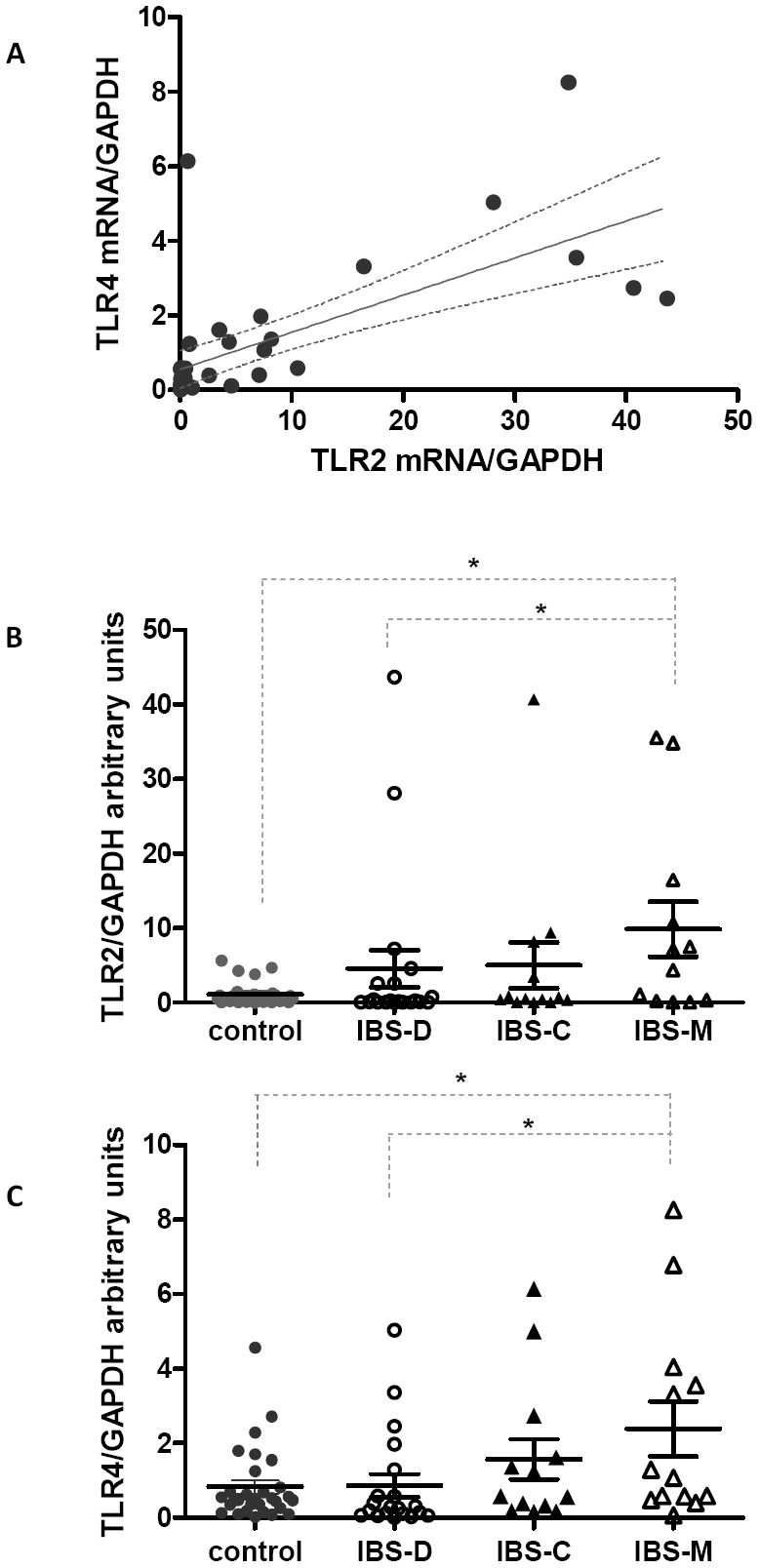
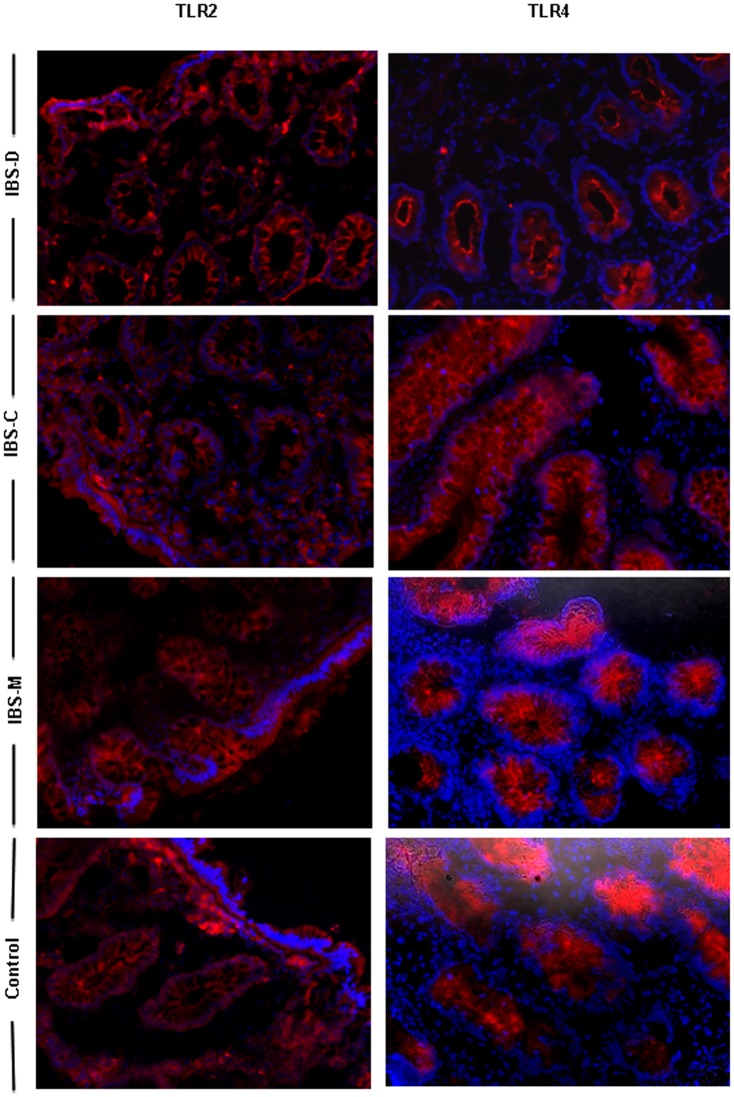
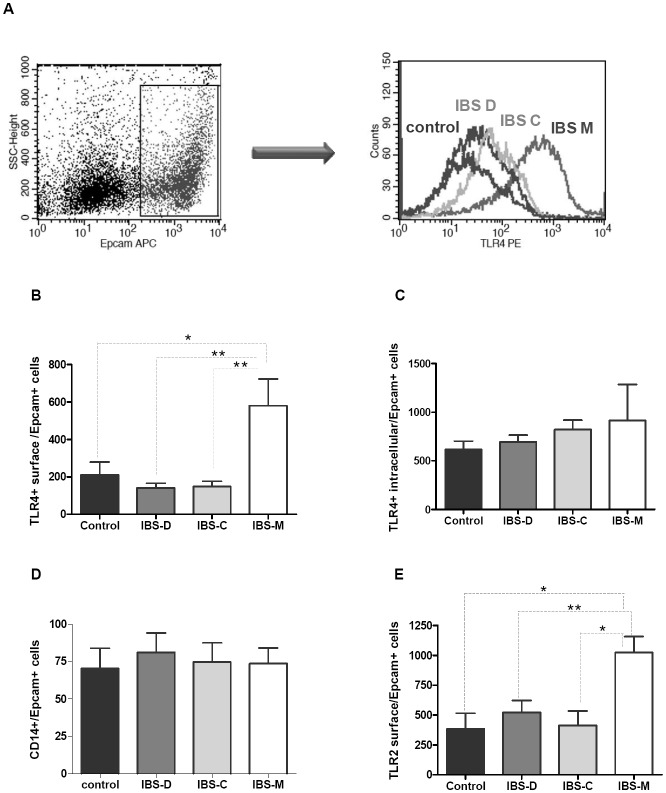
BACKGROUND: The irritable bowel syndrome (IBS) is a functional gastrointestinal disorder whose pathogenesis is not completely understood. Its high prevalence and the considerable effects on quality of life make IBS a disease with high social cost. Recent studies suggest that low grade mucosal immune activation, increased intestinal permeability and the altered host-microbiota interactions that modulate innate immune response, contribute to the pathophysiology of IBS. However, the understanding of the precise molecular pathophysiology remains largely unknown. METHODOLOGY AND FINDINGS: In this study our objective was to evaluate the TLR expression as a key player in the innate immune response, in the colonic mucosa of IBS patients classified into the three main subtypes (with constipation, with diarrhea or mixed). TLR2 and TLR4 mRNA expression was assessed by real time RT-PCR while TLRs protein expression in intestinal epithelial cells was specifically assessed by flow cytometry and immunofluorescence. Mucosal inflammatory cytokine production was investigated by the multiplex technology. Here we report that the IBS-Mixed subgroup displayed a significant up-regulation of TLR2 and TLR4 in the colonic mucosa. Furthermore, these expressions were localized in the epithelial cells, opening new perspectives for a potential role of epithelial cells in host-immune interactions in IBS. In addition, the increased TLR expression in IBS-M patients elicited intracellular signaling pathways resulting in increased expression of the mucosal proinflammatory cytokines IL-8 and IL1β. CONCLUSIONS: Our results provide the first evidence of differential expression of TLR in IBS patients according to the disease subtype. These results offer further support that microflora plays a central role in the complex pathophysiology of IBS providing novel pharmacological targets for this chronic gastrointestinal disorder according to bowel habits.
Overview
The claims and statistics of this paper haven’t been checked yet.
Run the check — free, no account needed. It reads the open-access text and checks the sources it cites.
Integrity signals
Registry
Cites
Statistics
Figures
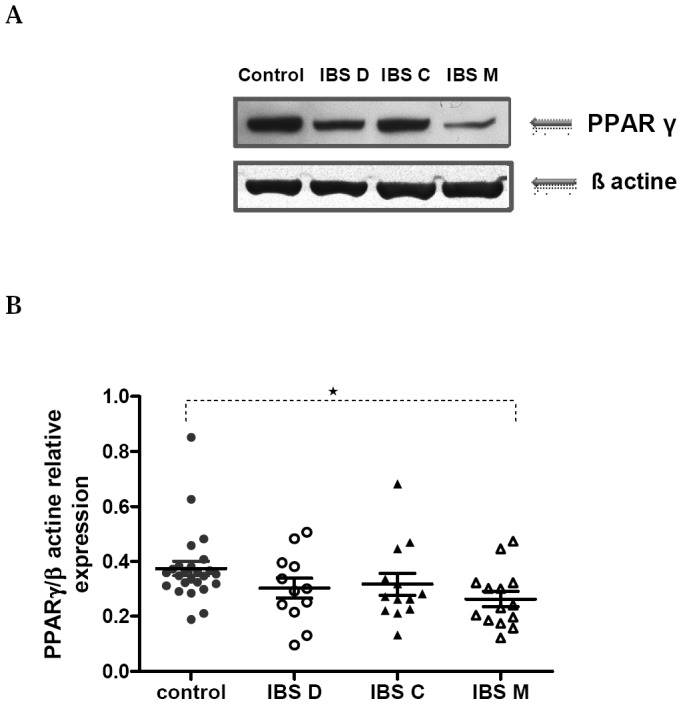
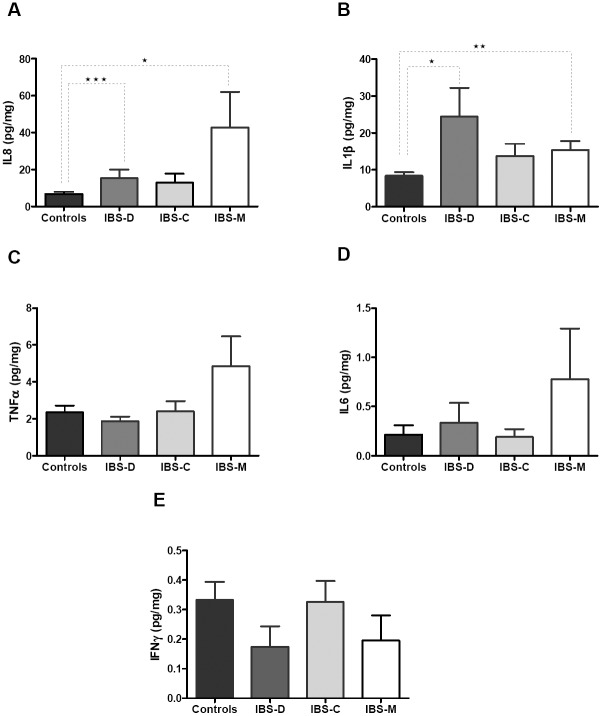
Verification
Claims the paper makes
The claims and statistics of this paper haven’t been checked yet.
Run the check — free, no account needed. It reads the open-access text and checks the sources it cites.
Claims other papers make about this one
Each is checked against this paper’s own text: does it say what the citing paper says it does?
In the citing paper
“Increased expression of proinflammatory cytokines may be elicited through interactions between bacterial components and pattern recognition receptors including TLRs such as TLR2 and TLR4 that have been associated with IBS90.”
From The gut Microbiome in adult and pediatric functional gastrointestinal disorders (2019) · cites this paper as [90]
Self-check
Percentages, sums and reported differences re-computed from the paper’s own numbers.
The self-check needs the paper’s full text.
Citations
Cites
Takeda, K., Kaisho, T., & Akira, S. (2003) · Annual Review of Immunology · doi:10.1146/annurev.immunol.21.120601.141126 · Cited by 6,143
Longstreth, G. F., Thompson, W. G., Chey, W. D., Houghton, L. A., Mearin, F., & Spiller, R. C. (2006) · Gastroenterology · doi:10.1053/j.gastro.2005.11.061 · Cited by 4,856
Toll-like receptors and innate immunity
Medzhitov, R. (2001) · Nature Reviews Immunology · doi:10.1038/35100529 · Cited by 4,308
Takeuchi, O., Hoshino, K., Kawai, T., Sanjo, H., Takada, H., Ogawa, T., Takeda, K., & Akira, S. (1999) · Immunity · doi:10.1016/s1074-7613(00)80119-3 · Cited by 3,680
Podolsky, D. K. (2002) · New England Journal of Medicine · doi:10.1056/nejmra020831 · Cited by 3,183
The gut flora as a forgotten organ
O'Hara, A. M., & Shanahan, F. (2006) · The EMBO Reports · doi:10.1038/sj.embor.7400731 · Cited by 2,791
Functional bowel disorders and functional abdominal pain
Thompson, W. G., Longstreth, G. F., Drossman, D. A., Heaton, K. W., Irvine, E. J., & Müller-Lissner, S. A. (1999) · Gut · doi:10.1136/gut.45.2008.ii43 · Cited by 2,440
Kawai, T., & Akira, S. (2006) · Cell Death and Differentiation · doi:10.1038/sj.cdd.4401850 · Cited by 1,894
Cario, E., & Podolsky, D. K. (2000) · Infection and Immunity · doi:10.1128/iai.68.12.7010-7017.2000 · Cited by 1,245
Jung, H. C., Eckmann, L., Yang, S. K., Panja, A. B., Fierer, J., Morzycka-Wroblewska, E., & Kagnoff, M. F. (1995) · Journal of Clinical Investigation · doi:10.1172/jci117676 · Cited by 1,197
Cited by
Sorted by citations
Irritable bowel syndrome: Pathogenesis, diagnosis, treatment, and evidence-based medicine
Saha, L. (2014) · World Journal of Gastroenterology · doi:10.3748/wjg.v20.i22.6759 · Cited by 500
A role for the gut microbiota in IBS
Collins, S. M. (2014) · Nature Reviews Gastroenterology & Hepatology · doi:10.1038/nrgastro.2014.40 · Cited by 351
The Intestinal Microenvironment and Functional Gastrointestinal Disorders
Barbara, G., Feinle-Bisset, C., Ghoshal, U. C., Santos, J., Vanner, S. J., Vergnolle, N., Zoetendal, E. G., & Quigley, E. M. (2016) · Gastroenterology · doi:10.1053/j.gastro.2016.02.028 · Cited by 335
Glutamatergic Signaling Along The Microbiota-Gut-Brain Axis
Baj, A., Moro, E., Bistoletti, M., Orlandi, V. T., Crema, F., & Giaroni, C. (2019) · International Journal of Molecular Sciences · doi:10.3390/ijms20061482 · Cited by 339
Irritable bowel syndrome: a gut microbiota-related disorder?
Bhattarai, Y., Muniz Pedrogo, D. A., & Kashyap, P. C. (2017) · American Journal of Physiology-Gastrointestinal and Liver Physiology · doi:10.1152/ajpgi.00338.2016 · Cited by 294
The “psychomicrobiotic”: targeting microbiota in major psychiatric disorders: a systematic review
Fond, G., Boukouaci, W., Chevalier, G., Regnault, A., Eberl, G., Hamdani, N., Dickerson, F., Macgregor, A., Boyer, L., Dargel, A., et al. (2015) · Pathologie Biologie · doi:10.1016/j.patbio.2014.10.003 · Cited by 219
Bosi, A., Banfi, D., Bistoletti, M., Giaroni, C., & Baj, A. (2020) · International Journal of Tryptophan Research · doi:10.1177/1178646920928984 · Cited by 221
Zhang, P., Yang, M., Chen, C., Liu, L., Wei, X., & Zeng, S. (2020) · Frontiers in Immunology · doi:10.3389/fimmu.2020.01455 · Cited by 219
Irritable bowel syndrome: Emerging paradigm in pathophysiology
Lee, Y. J. (2014) · World Journal of Gastroenterology · doi:10.3748/wjg.v20.i10.2456 · Cited by 190
Crosstalk at the mucosal border: importance of the gut microenvironment in IBS
Öhman, L., Törnblom, H., & Simrén, M. (2014) · Nature Reviews Gastroenterology & Hepatology · doi:10.1038/nrgastro.2014.200 · Cited by 185
Cytokine imbalance in irritable bowel syndrome: a systematic review and meta‐analysis
Bashashati, M., Rezaei, N., Shafieyoun, A., McKernan, D. P., Chang, L., Öhman, L., Quigley, E. M. M., Schmulson, M. J., Sharkey, K. A., & Simrén, M. (2014) · Neurogastroenterology & Motility · doi:10.1111/nmo.12358 · Cited by 173
Giardia duodenalis induces pathogenic dysbiosis of human intestinal microbiota biofilms
Beatty, J., Akierman, S. V., Motta, J., Muise, S. S. R., Workentine, M. L., Harrison, J. J., Bhargava, A., Beck, P. L., Rioux, K. P., McKnight, G. W., et al. (2017) · International Journal for Parasitology · doi:10.1016/j.ijpara.2016.11.010 · Cited by 172
The gut Microbiome in adult and pediatric functional gastrointestinal disorders
Shin, A., Preidis, G. A., Shulman, R., & Kashyap, P. C. (2019) · Clinical Gastroenterology and Hepatology · doi:10.1016/j.cgh.2018.08.054 · Cited by 163
Gut Microbiota as Potential Orchestrators of Irritable Bowel Syndrome
Bennet, S., Öhman, L., & Simrén, M. (2015) · Gut and Liver · doi:10.5009/gnl14344 · Cited by 144
Intestinal Microbiota and its Role in Irritable Bowel Syndrome (IBS)
Öhman, L., & Simrén, M. (2013) · Current Gastroenterology Reports · doi:10.1007/s11894-013-0323-7 · Cited by 126
Mujagić, Z., Ludidi, S., Keszthelyi, D., Hesselink, M., Kruimel, J., Lenaerts, K., Hanssen, N., Conchillo, J., Jonkers, D., & Masclee, A. (2014) · Alimentary Pharmacology and Therapeutics · doi:10.1111/apt.12829 · Cited by 115
New insights into the pathogenesis and treatment of irritable bowel syndrome
Oświęcimska, J. M., Szymlak, A., Roczniak, W., Girczys-Połedniok, K., & Kwiecień, J. (2017) · Advances in Medical Sciences · doi:10.1016/j.advms.2016.11.001 · Cited by 113
Dlugosz, A., Nowak, P., D’Amato, M., Kermani, G. M., Nyström, J., Abdurahman, S., & Lindberg, G. (2015) · Neurogastroenterology & Motility · doi:10.1111/nmo.12670 · Cited by 99
Revealing the magic of acupuncture based on biological mechanisms: A literature review
Zhang, B., Shi, H., Cao, S., Xie, L., Ren, P., Wang, J., & Shi, B. (2022) · BioScience Trends · doi:10.5582/bst.2022.01039 · Cited by 97
Interactions between Host PPARs and Gut Microbiota in Health and Disease
Hasan, A. U., Rahman, A., & Kobori, H. (2019) · International Journal of Molecular Sciences · doi:10.3390/ijms20020387 · Cited by 93
Toll-like receptor 4 (TLR4) antagonists as potential therapeutics for intestinal inflammation
Tam, J. S. Y., Coller, J. K., Hughes, P. A., Prestidge, C. A., & Bowen, J. M. (2021) · Indian Journal of Gastroenterology · doi:10.1007/s12664-020-01114-y · Cited by 91
Pinn, D. M., Aroniadis, O. C., & Brandt, L. J. (2014) · Neurogastroenterology & Motility · doi:10.1111/nmo.12479 · Cited by 93
Molecular Mechanisms of Microbiota-Mediated Pathology in Irritable Bowel Syndrome
Mishima, Y., & Ishihara, S. (2020) · International Journal of Molecular Sciences · doi:10.3390/ijms21228664 · Cited by 94
Low-level inflammation, immunity, and brain-gut axis in IBS: unraveling the complex relationships
Yuan, Y., Wang, X., Huang, S., Wang, H., & Shen, G.-M. (2023) · Gut Microbes · doi:10.1080/19490976.2023.2263209 · Cited by 104
Schrepf, A., Bradley, C. S., O’Donnell, M. A., Luo, Y., Harte, S. E., Kreder, K. J., & Lutgendorf, S. K. (2015) · Brain Behavior and Immunity · doi:10.1016/j.bbi.2015.03.003 · Cited by 85
Current insights into the innate immune system dysfunction in irritable bowel syndrome
Lazaridis, N. (2018) · Annals of Gastroenterology · doi:10.20524/aog.2018.0229 · Cited by 77
Inflammatory bowel disease and irritable bowel syndrome
Barbara, G., Cremon, C., & Stanghellini, V. (2014) · Current Opinion in Gastroenterology · doi:10.1097/mog.0000000000000070 · Cited by 72
Multispecies probiotic protects gut barrier function in experimental models
Vivinus-Nébot, M. (2014) · World Journal of Gastroenterology · doi:10.3748/wjg.v20.i22.6832 · Cited by 72
Shukla, R., Ghoshal, U., Ranjan, P., & Ghoshal, U. C. (2018) · Journal of Neurogastroenterology and Motility · doi:10.5056/jnm18130 · Cited by 69
LPS receptor subunits have antagonistic roles in epithelial apoptosis and colonic carcinogenesis
Kuo, W.-T., Lee, T.-C., Yang, H., Chen, C.-Y., Au, Y.-C., Lu, Y., Wu, L., Wei, S.-C., Ni, Y., Lin, B.-R., et al. (2015) · Cell Death and Differentiation · doi:10.1038/cdd.2014.240 · Cited by 66
Post-Infectious Irritable Bowel Syndrome
Lee, Y. Y., Chandramouli, A., & Rao, S. S. C. (2017) · Current Gastroenterology Reports · doi:10.1007/s11894-017-0595-4 · Cited by 67
Layunta, E., Buey, B., Mesonero, J. E., & Latorre, E. (2021) · Frontiers in Endocrinology · doi:10.3389/fendo.2021.748254 · Cited by 70
Lobo, B., Ramos, L., Martínez, C., Guilarte, M., González-Castro, A. M., Alonso, C., Pigrau, M., de Torres, I. M., Rodiño‐Janeiro, B. K., Salvo‐Romero, E., et al. (2017) · United European Gastroenterology Journal · doi:10.1177/2050640617691690 · Cited by 62
A role for intestinal TLR4-driven inflammatory response during activity-based anorexia
Belmonte, L., Achamrah, N., Nobis, S., Guérin, C., Riou, G., Bôle‐Feysot, C., Boyer, O., Richard, V. J., do-Rego, J.-C., Déchelotte, P., et al. (2016) · Scientific Reports · doi:10.1038/srep35813 · Cited by 59
Self-citationCamilleri, M., Carlson, P., Acosta, A. J., Busciglio, I. A., Nair, A., Gibbons, S. J., Farrugia, G., & Klee, E. W. (2014) · American Journal of Physiology-Gastrointestinal and Liver Physiology · doi:10.1152/ajpgi.00068.2014 · Cited by 60
Understanding the Gut Microbiota in Inflammatory and Functional Gastrointestinal Diseases
Sundin, J., Öhman, L., & Simrén, M. (2017) · Psychosomatic Medicine · doi:10.1097/psy.0000000000000470 · Cited by 61
Sundin, J., Rangel, I., Repsilber, D., & Brummer, R. (2015) · PLoS ONE · doi:10.1371/journal.pone.0134836 · Cited by 55
Martin‐Viñas, J. J., & Quigley, E. M. M. (2016) · Journal of Digestive Diseases · doi:10.1111/1751-2980.12379 · Cited by 57
Altered colonic sensory and barrier functions by CRF: roles of TLR4 and IL-1
Nozu, T., Miyagishi, S., Nozu, R., Takakusaki, K., & Okumura, T. (2018) · Journal of Endocrinology · doi:10.1530/joe-18-0441 · Cited by 57
Phytochemicals targeting Toll-like receptors 4 (TLR4) in inflammatory bowel disease
Dai, W., Long, L., Wang, X., Li, S., & Xu, H. (2022) · Chinese Medicine · doi:10.1186/s13020-022-00611-w · Cited by 54
Using human intestinal biopsies to study the pathogenesis of irritable bowel syndrome
Nasser, Y., Boeckxstaens, G. E., Wouters, M. M., Schemann, M., & Vanner, S. J. (2014) · Neurogastroenterology & Motility · doi:10.1111/nmo.12316 · Cited by 53
Ishihara, S., Tada, Y., Fukuba, N., Oka, A., Kusunoki, R., Mishima, Y., Oshima, N., Moriyama, I., Yuki, T., Kawashima, K., et al. (2013) · Digestion · doi:10.1159/000350054 · Cited by 51
Immune responses in the irritable bowel syndromes: time to consider the small intestine
Burns, G. L., Talley, N. J., & Keely, S. (2022) · BMC Medicine · doi:10.1186/s12916-022-02301-8 · Cited by 54
Bertrand, J., Ghouzali, I., Guérin, C., Bôle‐Feysot, C., Gouteux, M., Déchelotte, P., Ducrotte, P. R., & Coëffier, M. (2015) · Journal of Parenteral and Enteral Nutrition · doi:10.1177/0148607115587330 · Cited by 45
Self-citationCamilleri, M., Carlson, P., Acosta, A. J., & Busciglio, I. A. (2015) · American Journal of Physiology-Gastrointestinal and Liver Physiology · doi:10.1152/ajpgi.00080.2015 · Cited by 44
Immunological Biomarkers in Postinfectious Irritable Bowel Syndrome
Pike, B. L., Paden, K. A., Alcala, A. N., Jaep, K. M., Gormley, R. P., Maue, A. C., Christmann, B. S., Elson, C. O., Riddle, M. S., & Porter, C. K. (2015) · Journal of Travel Medicine · doi:10.1111/jtm.12218 · Cited by 42
Dlugosz, A., Zakikhany, K., Acevedo, N., D’Amato, M., & Lindberg, G. (2017) · BioMed Research International · doi:10.1155/2017/9624702 · Cited by 41
Emerging Role of the Gut Microbiome in Irritable Bowel Syndrome
Singh, P., & Lembo, A. J. (2021) · Gastroenterology Clinics of North America · doi:10.1016/j.gtc.2021.03.003 · Cited by 39
Bruning, E. E., Coller, J. K., Wardill, H. R., & Bowen, J. M. (2020) · Journal of Cellular Physiology · doi:10.1002/jcp.29976 · Cited by 36
Camilleri, M., Carlson, P., Valentin, N., Acosta, A. J., O’Neill, J., Eckert, D. J., Dyer, R. B., Na, J., Klee, E. W., & Murray, J. A. (2016) · American Journal of Physiology-Gastrointestinal and Liver Physiology · doi:10.1152/ajpgi.00037.2016 · Cited by 34
Gut bacteria interact directly with colonic mast cells in a humanized mouse model of IBS
Shimbori, C., Palma, G. D., Baerg, L., Lu, J., Verdu, E. F., Reed, D. E., Vanner, S. J., Collins, S. M., & Berčík, P. (2022) · Gut Microbes · doi:10.1080/19490976.2022.2105095 · Cited by 36
Tryptophan: ‘essential’ for the pathogenesis of irritable bowel syndrome?
Berstad, A., Raa, J., & Valeur, J. (2014) · Scandinavian Journal of Gastroenterology · doi:10.3109/00365521.2014.936034 · Cited by 33
The Colonic Tissue Levels of TLR2, TLR4 and Nitric Oxide in Patients with Irritable Bowel Syndrome
ak, E. K. C., Akbal, E., Köklü, S., l, B. E. U., & Can, M. (2016) · Internal Medicine · doi:10.2169/internalmedicine.55.5716 · Cited by 32
Metformin inhibits visceral allodynia and increased gut permeability induced by stress in rats
Nozu, T., Miyagishi, S., Kumei, S., Nozu, R., Takakusaki, K., & Okumura, T. (2018) · Journal of Gastroenterology and Hepatology · doi:10.1111/jgh.14367 · Cited by 32
Yang, J., Shang, B., Shi, H., Zhu, S., Lu, G., & Dai, F. (2019) · Neurogastroenterology & Motility · doi:10.1111/nmo.13583 · Cited by 32
Melchior, C., Gourcerol, G., Chastan, N., Vérin, É., Ménard, J.-F., Ducrotte, P. R., & Leroi, A. (2013) · Colorectal Disease · doi:10.1111/codi.12450 · Cited by 30
Self-citationRecent advances in pharmacological research on the management of irritable bowel syndrome
Nam, Y., Chi, Y. M., & Sohn, U. D. (2018) · Archives of Pharmacal Research · doi:10.1007/s12272-018-1068-5 · Cited by 29
Konstantis, G., Efstathiou, S., Pourzitaki, C., Kitsikidou, E., Germanidis, G. S., & Chourdakis, M. (2023) · Clinical Nutrition · doi:10.1016/j.clnu.2023.03.019 · Cited by 31
Gut Microbiota Shifting in Irritable Bowel Syndrome: The Mysterious Role of Blastocystis sp.
Olyaiee, A., Sadeghi, A., Yadegar, A., Mirsamadi, E. S., & Mirjalali, H. (2022) · Frontiers in Medicine · doi:10.3389/fmed.2022.890127 · Cited by 27
Dysbiotic infection in the stomach
Iizasa, H. (2015) · World Journal of Gastroenterology · doi:10.3748/wjg.v21.i40.11450 · Cited by 26
Videlock, E. J., Mahurkar‐Joshi, S., Hoffman, J. M., Iliopoulos, D., Pothoulakis, C., Mayer, E. A., & Chang, L. (2018) · American Journal of Physiology-Gastrointestinal and Liver Physiology · doi:10.1152/ajpgi.00288.2017 · Cited by 25
Bennet, S., Sundin, J., Magnusson, M. K., Strid, H., Tap, J., Derrien, M., Nevé, B. L., Dore, J. M., Törnblom, H., Simrén, M., et al. (2018) · Neurogastroenterology & Motility · doi:10.1111/nmo.13468 · Cited by 24
Arie, H., Nozu, T., Miyagishi, S., Ida, M., Izumo, T., & Shibata, H. (2019) · Nutrients · doi:10.3390/nu11112646 · Cited by 23
Evans, S. F., Kwok, Y., Solterbeck, A., Pyragius, C., Hull, M. L., Hutchinson, M. R., & Rolan, P. (2021) · Journal of Pain Research · doi:10.2147/jpr.s279253 · Cited by 21
The role of the gut microbiome in disorders of gut–brain interaction
Gawey, B. J., Mars, R. A. T., & Kashyap, P. (2024) · FEBS Journal · doi:10.1111/febs.17200 · Cited by 30
Close association between intestinal microbiota and irritable bowel syndrome
Fan, W.-T., Ding, C., Xu, N., Zong, S., Ma, P., & Gu, B. (2017) · European Journal of Clinical Microbiology & Infectious Diseases · doi:10.1007/s10096-017-3060-2 · Cited by 24
Toll-like receptor 4 plays a vital role in irritable bowel syndrome: a scoping review
Wan, X., Wang, L., Wang, Z., & Wan, C. (2024) · Frontiers in Immunology · doi:10.3389/fimmu.2024.1490653 · Cited by 22
Rodríguez, Ó., Hernández-Ruiz, J., López‐Vidal, Y., Charúa-Guindic, L., Bandeh-Moghaddam, H., Minzoni, A., Guzmán, C., & Schmulson, M. J. (2013) · Neurogastroenterology & Motility · doi:10.1111/nmo.12204 · Cited by 20
Shi, Y., Xu, J., Ding, B., Chen, G., Jin, L., Ke, L., Xu, X., Wang, J., Sun, Q., & Xu, X. (2020) · Journal of Immunology Research · doi:10.1155/2020/2383970 · Cited by 20
Jizhong, S., Qiaomin, W., Wang, C., & Li, Y. (2016) · Gastroenterology Research and Practice · doi:10.1155/2016/7394924 · Cited by 19
Li, A. P. (2020) · Drug Metabolism and Disposition · doi:10.1124/dmd.120.000053 · Cited by 19
Guo, J., Gao, L., Chen, L., Geng, H., Wu, X., Chen, H., Yang, L., Yuan, M., Sun, J., & Pei, L. (2021) · Acupuncture in Medicine · doi:10.1177/09645284211027892 · Cited by 19
Nozu, T., Miyagishi, S., Ishioh, M., Takakusaki, K., & Okumura, T. (2022) · Neuropeptides · doi:10.1016/j.npep.2022.102248 · Cited by 18
Beckett, E. A. H., Staikopoulos, V., & Hutchinson, M. R. (2018) · Scientific Reports · doi:10.1038/s41598-018-23717-4 · Cited by 18
Ruiz‐Malagón, A. J., Rodríguez, M. J., Rodríguez‐Sojo, M. J., Vezza, T., Pischel, I., Algieri, F., Rodríguez‐Cabezas, M. E., Rodríguez‐Nogales, A., & Gálvez, J. (2022) · Frontiers in Pharmacology · doi:10.3389/fphar.2022.967644 · Cited by 17
The role of gut microbiota in the treatment of irritable bowel syndrome
Leylabadlo, H. E., Heravi, F. S., Soltani, E., Abbasi, A., Kafil, H. S., Parsaei, M., Sanaie, S., Ahmadian, Z., & Ghotaslou, R. (2021) · Reviews in Medical Microbiology · doi:10.1097/mrm.0000000000000284 · Cited by 16
Tavares, L. C., Lopera-Maya, E. A., Bonfiglio, F., Zheng, T., Sinha, T., Marques, F. Z., Zhernakova, A., Sanna, S., & D’Amato, M. (2024) · Cellular and Molecular Gastroenterology and Hepatology · doi:10.1016/j.jcmgh.2024.04.002 · Cited by 18
PPARγ: A turning point for irritable bowel syndrome treatment
Roudsari, N. M., Lashgari, N., Zandi, N., Pazoki, B., Momtaz, S., Sahebkar, A., & Abdolghaffari, A. H. (2020) · Life Sciences · doi:10.1016/j.lfs.2020.118103 · Cited by 16
Piancone, E., Fosso, B., Marzano, M., Robertis, M. D., Notario, E., Oranger, A., Manzari, C., Bruno, S., Visci, G., Defazio, G., et al. (2022) · Scientific Reports · doi:10.1038/s41598-022-20888-z · Cited by 16
Granular cell tumor of the appendix: a new case and review of the literature
Roncati, L., Manco, G., Italia, S., Barbolini, G., Maiorana, A., & Rossi, A. (2013) · SpringerPlus · doi:10.1186/2193-1801-2-649 · Cited by 16
Kłak, K., Maciuszek, M., Michalik, A., Mazur, M., Zawisza, M., Pecio, A., Nowak, B. F., & Chadzińska, M. (2025) · Fish & Shellfish Immunology · doi:10.1016/j.fsi.2025.110301 · Cited by 17
Evans, S., Kwok, Y. H., Solterbeck, A., Liu, J., Hutchinson, M. R., Hull, M. L., & Rolan, P. E. (2020) · Journal of Pain Research · doi:10.2147/jpr.s219684 · Cited by 15
Franco, C., Gianò, M., Favero, G., & Rezzani, R. (2022) · International Journal of Molecular Sciences · doi:10.3390/ijms23158731 · Cited by 15
Jalanka, J., Lam, C., Bennett, A. J., Hartikainen, A. K., Crispie, F., Finnegan, L. A., Cotter, P. D., & Spiller, R. E. (2021) · Journal of Neurogastroenterology and Motility · doi:10.5056/jnm20205 · Cited by 16
Wang, X., Carlson, P., Chedid, V. G., Maselli, D. B., Taylor, A. L., McKinzie, S., & Camilleri, M. (2021) · Clinical and Translational Gastroenterology · doi:10.14309/ctg.0000000000000329 · Cited by 13
Ashour, D. S., Shohieb, Z. S., & Sarhan, N. (2014) · Journal of Advanced Research · doi:10.1016/j.jare.2014.08.004 · Cited by 14
Mallaret, G., Lashermes, A., Méleine, M., Boudieu, L., Barbier, J., Aissouni, Y., Gelot, A., Chassaing, B., Gewirtz, A. T., Ardid, D., et al. (2022) · World Journal of Gastroenterology · doi:10.3748/wjg.v28.i29.3903 · Cited by 13
Fond, G. B., Chevalier, G., Eberl, G., & Leboyer, M. (2015) · La Presse Médicale · doi:10.1016/j.lpm.2015.10.016 · Cited by 14
Liu, J., Ren, H., Yuan, F., Shao, M., & Luo, H.-S. (2022) · PeerJ · doi:10.7717/peerj.14390 · Cited by 10
Peng, J., Zhang, S., Han, F., & Wang, Z. (2024) · Fish & Shellfish Immunology · doi:10.1016/j.fsi.2024.109372 · Cited by 9
Camilleri, M., Magnus, Y., Carlson, P., Wang, X., Chedid, V. G., Maselli, D. B., Taylor, A. L., McKinzie, S., Nagaraj, N. K., Busciglio, I. A., et al. (2022) · American Journal of Physiology-Gastrointestinal and Liver Physiology · doi:10.1152/ajpgi.00063.2022 · Cited by 9
Wu, B.-Y., Xu, P., Cheng, L., Wang, Q., Qiu, H.-Y., Yan, X.-J., & Chen, S. (2023) · Clinical and Translational Gastroenterology · doi:10.14309/ctg.0000000000000658 · Cited by 9
Ye, Y., Liu, Y., Cheng, K., Wu, Z., Zhang, P., & Zhang, X. (2022) · Frontiers in Nutrition · doi:10.3389/fnut.2022.810453 · Cited by 8
TDAG51 deficiency attenuates dextran sulfate sodium-induced colitis in mice
Jeon, H., Amarasekara, D. S., Lee, N., Park, H., Yu, J., & Rho, J. (2022) · Scientific Reports · doi:10.1038/s41598-022-24873-4 · Cited by 8
Cytokines in the colon, central nervous system and serum of irritable bowel syndrome rats
Chao, G., Wang, Z., Chen, X., & Zhang, S. (2021) · European journal of medical research · doi:10.1186/s40001-021-00479-w · Cited by 8
Crame, E. E., Bowen, J. M., Secombe, K. R., Coller, J. K., François, M., Leifert, W. R., & Wardill, H. R. (2021) · Inflammatory Intestinal Diseases · doi:10.1159/000519200 · Cited by 8
Irritable Bowel Syndrome: Peripheral Mechanisms and Therapeutic Implications
Crisan, I. M., & Dumitrascu, D. L. (2014) · Medicine and Pharmacy Reports · doi:10.15386/cjmed-269 · Cited by 7
Ghouzali, I., Azhar, S., Bôle‐Feysot, C., Ducrotte, P. R., Déchelotte, P., & Coëffier, M. (2016) · Cytokine · doi:10.1016/j.cyto.2016.07.014 · Cited by 7
Self-citationNews in etiology and pathogenesis of irritated bowel syndrome
Sheptulin, A. A., & Анатольевна, В.-Х. М. (2016) · Clinical Medicine (Russian Journal) · doi:10.18821/0023-2149-2016-94-2-92-96 · Cited by 5
Indication of Immune Activation in Patients with Perceived Food Hypersensitivity
Lied, G. A. (2013) · Digestive Diseases and Sciences · doi:10.1007/s10620-013-2926-0 · Cited by 5
Metadata
- Authors
- Belmonte, L., Beutheu Youmba, S., Bertiaux-Vandaële, N., Antonietti, M., Lecleire, S., Zalar, A., Gourcerol, G., Leroi, A.-M., Déchelotte, P., Coëffier, M., & Ducrotté, P.
- Affiliations
- Academia Nacional de Medicina (AR)
- Centre Hospitalier Universitaire de Rouen (FR)
- Inserm (FR)
- Corresponding author
- Belmonte, Liliana
- Venue
- PLoS ONE
- Publisher
- Public Library of Science (PLoS)
- Published
- 2012-08-17
- Volume
- 7
- Issue
- 8
- Pages
- e42777
- ISSN
- 1932-6203 (ISSN-L)
- PMC
- PMC3461726
- OpenAlex
- W2080290298
- Cited by
- 126
- References
- 38
- Citations by year
- 2026: 1 · 2025: 1 · 2024: 9 · 2023: 3 · 2022: 15 · 2021: 10 · 2020: 11 · 2019: 6 · 2018: 10 · 2017: 7 · 2016: 11 · 2015: 14 · 2014: 18 · 2013: 10
- FWCI
- 13.04
- Type
- journal article
- Language
- en
- Open access
- gold
- doi.org
- Locations
- PLoS ONE (publishedVersion, cc-by)
- PubMed Central (publishedVersion, cc-by)
- PubMed (publishedVersion)
- DOAJ (DOAJ: Directory of Open Access Journals) (submittedVersion, cc-by-sa)
- Topics
- Health Sciences › Medicine › Gastroenterology › Gastrointestinal motility and disorders
- Life Sciences › Immunology and Microbiology › Immunology › Immune Response and Inflammation
- Life Sciences › Biochemistry, Genetics and Molecular Biology › Molecular Biology › Gut microbiota and health
- Keywords
- irritable bowel syndrome, Toll-like receptors, TLR2, TLR4, colonic mucosa, IBS subtypes, intestinal epithelial cells, mucosal inflammation, inflammatory cytokines, interleukin-8, IL-1β, host-microbiota interactions, innate immune response, intestinal permeability
- MeSH terms
- Adult, Aged, Colon, Female, Humans, Intestinal Mucosa, Male, Middle Aged, RNA, Messenger, Up-Regulation, Gene Expression, Case-Control Studies, Cytokines, Inflammation Mediators, Lipopolysaccharide Receptors, Irritable Bowel Syndrome, PPAR gamma, Toll-Like Receptor 2, Toll-Like Receptor 4
About these checks
Registry, retraction, Cites and statistics results are computed, not judged, with one exception: a printed reference that no index lists is read once by a model before it counts as a citation error. Claims are extracted by a model and kept only when their quote appears verbatim in the text; each cited source is then checked, with a model’s help, for whether it says what the claim relies on. Those verdicts can be wrong — read the claim’s quote and the cited source before relying on one.
Statistics and arithmetic are recomputed, not judged.
Confidence bands are shown only for fields calibrated on our annotated test set. None is calibrated yet, so no band is shown.
What counts as a claim ›How we measure confidence ›How we check this ›
Are you an author, or do you see a problem with this page? Request a review
