

A Comprehensive Survey of Retracted Articles from the Scholarly Literature
Open accessThe DOI matches its Crossref record; 77 of the 78 references it cites were found in a registry or an index.
Abstract
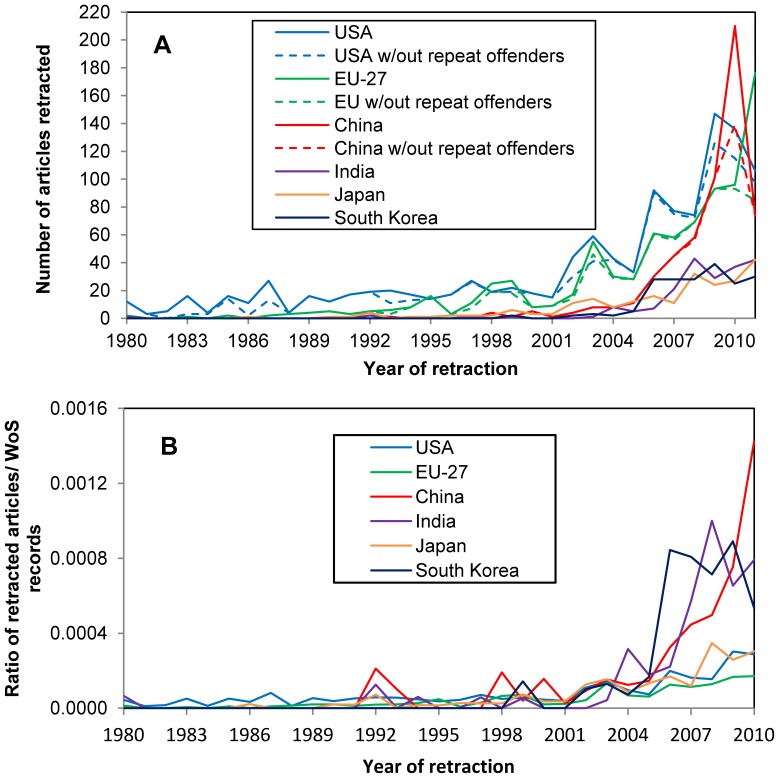
BACKGROUND: The number of retracted scholarly articles has risen precipitously in recent years. Past surveys of the retracted literature each limited their scope to articles in PubMed, though many retracted articles are not indexed in PubMed. To understand the scope and characteristics of retracted articles across the full spectrum of scholarly disciplines, we surveyed 42 of the largest bibliographic databases for major scholarly fields and publisher websites to identify retracted articles. This study examines various trends among them. RESULTS: We found, 4,449 scholarly publications retracted from 1928-2011. Unlike Math, Physics, Engineering and Social Sciences, the percentages of retractions in Medicine, Life Science and Chemistry exceeded their percentages among Web of Science (WoS) records. Retractions due to alleged publishing misconduct (47%) outnumbered those due to alleged research misconduct (20%) or questionable data/interpretations (42%). This total exceeds 100% since multiple justifications were listed in some retraction notices. Retraction/WoS record ratios vary among author affiliation countries. Though widespread, only miniscule percentages of publications for individual years, countries, journals, or disciplines have been retracted. Fifteen prolific individuals accounted for more than half of all retractions due to alleged research misconduct, and strongly influenced all retraction characteristics. The number of articles retracted per year increased by a factor of 19.06 from 2001 to 2010, though excluding repeat offenders and adjusting for growth of the published literature decreases it to a factor of 11.36. CONCLUSIONS: Retracted articles occur across the full spectrum of scholarly disciplines. Most retracted articles do not contain flawed data; and the authors of most retracted articles have not been accused of research misconduct. Despite recent increases, the proportion of published scholarly literature affected by retraction remains very small. Articles and editorials discussing retractions, or their relation to research integrity, should always consider individual cases in these broad contexts. However, better mechanisms are still needed for raising researchers' awareness of the retracted literature in their field.
Overview
The claims and statistics of this paper haven’t been checked yet.
Free: it reads the open-access text and checks the first 5 claims that cite a source we can check. Create a free account to check every claim.
Integrity signals
Registry
Cites
Statistics
Figures
Verification
Claims the paper makes
The claims and statistics of this paper haven’t been checked yet.
Free: it reads the open-access text and checks the first 5 claims that cite a source we can check. Create a free account to check every claim.
Claims other papers make about this one
Each is checked against this paper’s own text: does it say what the citing paper says it does?
The source backs part of the claim, not all of it — or backs it for a different population, condition or comparison.
In the citing paper
“through mid-2018, he was considered one of the most prolifically retracted authors (Grieneisen and Zhang 2012; The Retraction Watch Leaderboard [Internet Archive, 2018 -05 -30] 2018).”
From Continued post-retraction citation of a fraudulent clinical trial report, 11 years after it was retracted for falsifying data (2020) · cites this paper as Grieneisen and Zhang 2012
Experimental — accuracy not yet measuredThe cited source says what the claim attributes to it.
In the citing paper
“It is one of 17 papers by Wataru Matsuyama retracted from 2007 to 2010 (Grieneisen and Zhang 2012; Steen 2011a)”
From Continued post-retraction citation of a fraudulent clinical trial report, 11 years after it was retracted for falsifying data (2020) · cites this paper as Grieneisen and Zhang 2012
The cited source says what the claim attributes to it.
In the citing paper
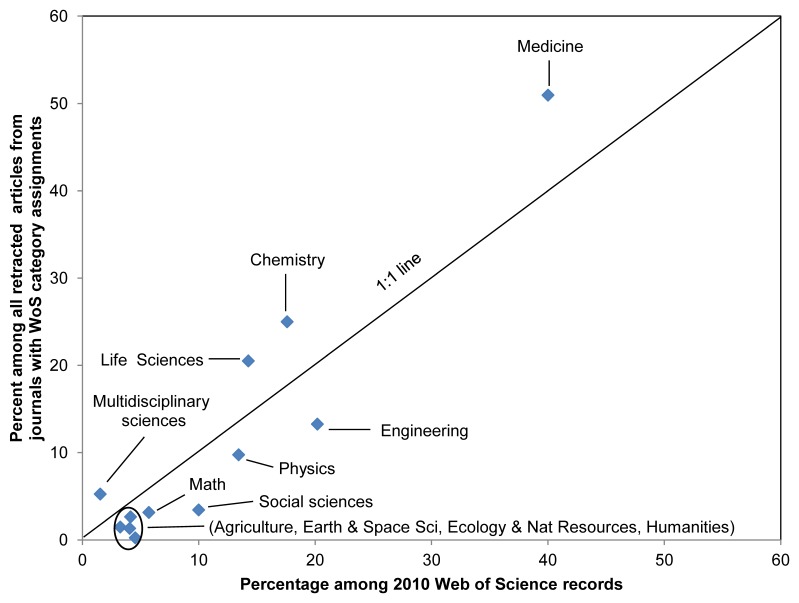
“The highest percentages of retractions are found in medicine, life sciences, and chemistry journals (Grieneisen and Zhang 2012).”
From Continued post-retraction citation of a fraudulent clinical trial report, 11 years after it was retracted for falsifying data (2020) · cites this paper as Grieneisen and Zhang 2012
Self-check
Percentages, sums and reported differences re-computed from the paper’s own numbers.
The self-check needs the paper’s full text.
Citations
Cites
8 retracted
Purification and ex vivo expansion of postnatal human marrow mesodermal progenitor cells
Reyes, M., Lund, T., Lenvik, T., Aguiar, D., Koodie, L., & Verfaillie, C. M. (2001) · Blood · doi:10.1182/blood.v98.9.2615 · Cited by 1,185 · cited 1×
“highly-cited article [31], had 740 total WoS citations, including 187 for 2009–2012.”
BackgroundRetractedRetracted Science and the Retraction Index
Fang, F. C., & Casadevall, A. (2011) · Infection and Immunity · doi:10.1128/iai.05661-11 · Cited by 405
RetractedRetraction rates are on the rise
Cokol, M., Ozbay, F., & Rodriguez‐Esteban, R. (2008) · The EMBO Reports · doi:10.1038/sj.embor.7401143 · Cited by 149 · cited 2×
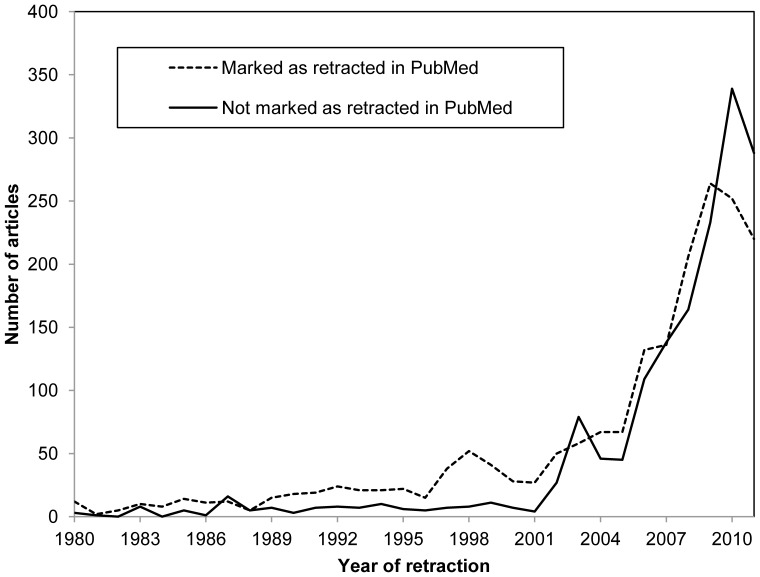
“However, studies published from 1992–2011 were somewhat limited in scope due to a sole reliance on the literature indexed in the PubMed database (Table S1), with the largest dataset examined to date comprising only 871 retracted publications [9].”
BackgroundResultRetractedThomas, J. M., Hubbard, W. J., Sooudi, S. K., & Thomas, F. T. (2008) · Immunological Reviews · doi:10.1111/j.1600-065x.2008.00667.x · Cited by 30
RetractedDavis, A. J., Im, Y. J., Dubin, J. S., Tomer, K. B., & Boss, W. F. (2007) · Journal of Biological Chemistry · doi:10.1074/jbc.m611728200 · Cited by 25
RetractedJeong, S. M., Koo, W. H., Choi, S. H., & Baik, H. K. (2005) · Organic Electronics · doi:10.1016/j.orgel.2005.03.010 · Cited by 1
RetractedJeong, S. M., Koo, W. H., Choi, S. H., & Baik, H. K. (2007) · Organic Electronics · doi:10.1016/j.orgel.2007.02.006 · Cited by 1
RetractedHu, X. Y., Xu, Y., Qiao, Y., Wu, D., Sa, Y. L., Fu, Q., Yu, J. J., Zhang, X. R., Zhang, J., Gu, B. J., et al. (2007) · Prostate Cancer and Prostatic Diseases · doi:10.1038/sj.pcan.4501016 · Cited by 1
RetractedFanelli, D. (2009) · PLoS ONE · doi:10.1371/journal.pone.0005738 · Cited by 1,911 · cited 1×
“On one hand, some feel that the rise in retractions reflects a very real and pressing issue: Although retracted publications represent only a miniscule percentage of the total literature [1], [2], surveys of researchers have suggested that only a fraction of research misconduct cases are caught and publicly discredite…”
BackgroundA global map of science based on the ISI subject categories
Leydesdorff, L., & Rafols, I. (2009) · Journal of the American Society for Information Science and Technology · doi:10.1002/asi.20967 · Cited by 506
Research works printed but not linked: 3
- Steen RG (2011) Retractions in the medical literature: Who is responsible for scientific integrity? AMWA J 26: 2– 8.
- Rasmussen LS, Yentis SM, Gibbs N, Kawamoto M, Shafer SL, et al. (2012) Joint Editors-in-Chief request for determination regarding papers published by Dr. Yoshitaka Fujii. 23 pp. Available: http://www.springer.com/cda/content/document/cda_downloaddocument/Fujii_Joint_Editorial_Request_Regarding_Dr_Yoshitaka_Fujii.pdf.
- Elsheikh E, Uzunel M, Nowak G (2011) Retraction. Blood 117: 6740.21546458
Cited by
Items 301–381 of 381
Larivée, S. J. (2017) · Revue de psychoéducation · doi:10.7202/1042258ar · Cited by 2
Sarwani, N. A. L., James, H. T., & Chakravarty, M. (2018) · Journals & Books Hosting (International Knowledge Sharing Platform) · Cited by 1
Die simulierte Moral: Fehlverhalten und Sanktion in der Wissenschaft
Heßelmann, F. (2019) · Wissen, Kommunikation und Gesellschaft · doi:10.1007/978-3-658-22978-8_9 · Cited by 1
Os desafios éticos da Razão Empreendedora
Guimarães, R. (2019) · Ciência & Saúde Coletiva · doi:10.1590/1413-81232018249.10282019 · Cited by 4
Geri Çekilen Makaleler ve Yayımlandıkları Dergiler Üzerine Bibliyometrik İnceleme
Güngör, T., & BAŞARI, N. (2021) · Türk Kütüphaneciliği · doi:10.24146/tk.784583 · Cited by 2
Management of Metadata Types in Basic Cardiological Research
Kusch, H., Kossen, R., Suhr, M., Freckmann, L., Weber, L., Henke, C., Lehmann, C. U., Rheinländer, S., Aschenbrandt, G., Kühlborn, L. K., et al. (2021) · Studies in health technology and informatics · doi:10.3233/shti210542 · Cited by 1
“However, the problem is heterogeneous as the irreproducibility is caused by very different factors [4,5], which require diverse approaches to overcome them.”
BackgroundHaug, C. J., Hofmann, B., Irgens-Jensen, H., Nagel, A., Nydal, R., Rognstad, O.-A., Solberg, B., & Kalleberg, R. (2016) · doi:10.17585/noasp.8.27 · Cited by 1
Author response: Four erroneous beliefs thwarting more trustworthy research
Yarborough, M. A., Nadon, R., & Karlin, D. (2019) · eLife · doi:10.7554/elife.45261.003 · Cited by 1
Data Fabrication in Accounting and Business Studies: A Legal ApproachPreprint
Guerra-Pujol, F. E. (2019) · SocArXiv (OSF Preprints) · doi:10.31235/osf.io/ubx7g · Cited by 1
Ganderton, P. (2022) · Oxford University Press eBooks · doi:10.1093/obo/9780199830060-0238 · Cited by 1
Reducing the inadvertent spread of retracted science: Shaping a research and implementation agenda
Schneider, J., Woods, N. D., Proescholdt, R., Fu, Y., & The RISRS Team (2021) · doi:10.7490/f1000research.1118546.1 · Cited by 4
The Retraction Epidemic in Science Across Publishers, Fields, and CountriesPreprint
Venturini, S., Urbinati, A., Gallo, P., Davis, J. T., & Vespignani, A. (2026) · arXiv (Cornell University) · doi:10.48550/arxiv.2604.02302 · Cited by 1
“What remains insufficiently and unevenly addressed is the systematic, dynamic characterization of incidence-based metrics, such as new retractions per unit of output, across fields, publishers, and geographic regions [2, 5, 9, 13, 14, 16, 17, 18, 19].”
Retraction of the published articles
Rezaeian, M. (2014) · Journal of Rafsanjan University of Medical Sciences
Mentoring the Next Generation of Academic Child Neurologists
Brumback, R. A., Foster‐Barber, A., Khakoo, Y., & Lewis, K. S. (2013) · Journal of Child Neurology · doi:10.1177/0883073813491628
“Unfortunately, the many scandals related to articles published in highly regarded medical and scientific journals indicates a need for constant vigilance and better training for those scientists and clinicians conducting investigations as well as for those providing the journal peer reviews.(9-14) Mentoring of aspirin…”
BackgroundMedical assistance in Pirava 1931 trught images
Josimovska, V. (2015) · Goce Delchev University Repository (Goce Delčev University of Štip)
Uncovering Fraud, Misconduct, and Other Data Quality Issues in Clinical Trials
Zink, R. C. (2018) · ICSA book series in statistics · doi:10.1007/978-981-10-7820-0_13
Prospero, L. D. (2013) · Journal of medical imaging and radiation sciences · doi:10.1016/j.jmir.2013.10.003
Statistics for the Clinician Scientist
Mitchell, M. A., & Perry, S. M. (2019) · Elsevier eBooks · doi:10.1016/b978-0-323-48253-0.00006-4
The Importance of Herpetological Publication by Clinicians and Academics
Mitchell, M. A., & Perry, S. M. (2019) · Elsevier eBooks · doi:10.1016/b978-0-323-48253-0.00005-2
Ethics in Conducting and Communicating Research: A Brazilian Perspective
Palácios, M., & Rêgo, S. (2019) · International library of ethics, law, and the new medicine/The international library of ethics, law, and the new medicine · doi:10.1007/978-3-030-17963-2_10
hafez, D. E. (2021) · المجلة الدولية لعلوم المكتبات و المعلومات · doi:10.21608/ijlis.2021.157855
Skill Set and Mindset which Researchers have to Learn in the Future
MATSUZAWA, T. (2021) · Journal of JSEE · doi:10.4307/jsee.69.5_126
Roy-Vallières, M. (2021) · Canadian Journal of Education / Revue canadienne de l éducation · doi:10.53967/cje-rce.v44i4.4859
“…recherche en sciences naturelles et médicales auraient donc comme particularité d’être plus à risques, de manière relative et absolue, d’offrir des connaissances erronées nécessitant le retrait d’un article pour corriger le tir (Aspura et al., 2018 ; Grieneisen et Zhang, 2012 ; Shuai et al., 2017).”
BackgroundInfluentialAMDnet: An Academic Misconduct Detection Method for Authors’ Behaviors
Zhou, S., Xu, Z., Han, J. T., Sun, X., & Cao, Y. (2022) · Computers, materials & continua/Computers, materials & continua (Print) · doi:10.32604/cmc.2022.023316 · Cited by 2
“[3] analyzed databases of multiple disciplines and collected 4449 retracted articles in 4 disciplines.”
BackgroundToma, C., Padureanu, L., & Toma, B. (2022) · bioRxiv (Cold Spring Harbor Laboratory) · doi:10.1101/2022.01.23.477400
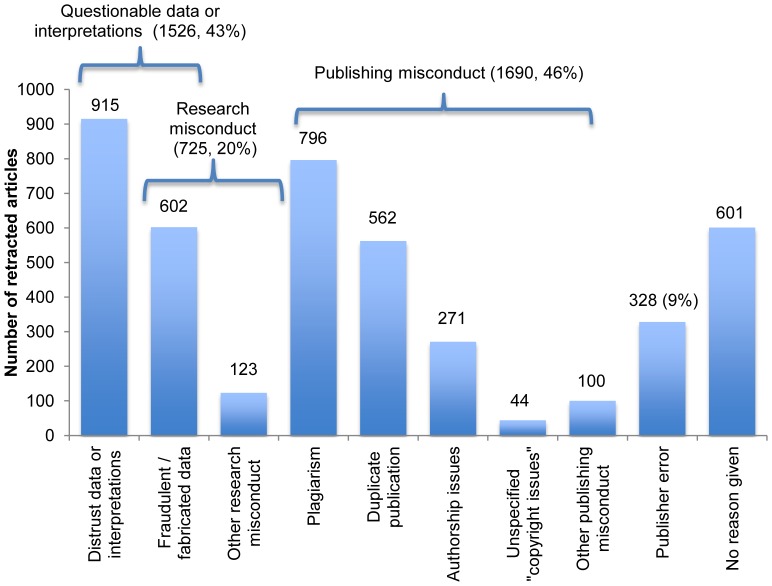
“3% (328 cases) in a 2012 study that analyzed 4449 articles retracted between 1928–2011 [32], 1.”
BackgroundInfluentialHaug, C. J., Hofmann, B., Irgens-Jensen, H., Nagel, A., Nydal, R., Rognstad, O.-A., Solberg, B., & Kalleberg, R. (2016) · doi:10.17585/noasp.8.26
Todeschini, R., & Baccini, A. (2016) · Wiley eBooks · doi:10.1002/9783527681969.biblio
Padova, K. J., & Yan, E. (2021) · iDEA - Drexel University Institutional Repository · doi:10.17918/00000893
Tools for identifying unexpectedly low microfossil count sumsPreprint
Telford, R. J. (2019) · PaleoRxiv (OSF Preprints) · doi:10.31233/osf.io/mvgc3
(2014) · Elsevier eBooks · doi:10.1016/b978-0-12-420071-5.16001-6
Message de La Rédactrice En Chef
Prospero, L. D. (2013) · Journal of medical imaging and radiation sciences · doi:10.1016/j.jmir.2013.10.010
Artículos retractados, ¿también en pandemia? Publicaciones retractadas sobre la covid-19
Torres, K. E. O. (2022) · Persona y Bioética · doi:10.5294/pebi.2022.26.1.2
Stojanovski, J. (2017) · Zenodo (CERN European Organization for Nuclear Research) · doi:10.5281/zenodo.1065655
الأبحاث المصرية المسحوبة من النشر: دراسة ببليومترية تحليلية
عثمان, إ. ر. (2022) · المجلة المصرية لعلوم المعلومات · doi:10.21608/jesi.2021.96329.1038
Do men commit more scientific misconduct than women? Evidence from retracted articles
Zheng, E., Fu, H., & Fang, Z. (2023) · International Conference on Science, Technology and Innovation Indicators (STI) · doi:10.55835/643feae1d7c4812e2f078f27
Trends in Japanese Research Ethics in the 21st Century: Research Misconduct and Related Policies
Kyu Won, L. E. E., & Kim, O.-J. (2021) · Korean Journal of Medical Ethics · doi:10.35301/ksme.2021.24.4.461
Ethics in scientific publishing
Yom, S. S. (2023) · Elsevier eBooks · doi:10.1016/b978-0-323-88423-5.00057-1 · Cited by 1
Recordkeeping, Reproducibility, and Responsibility
Humphrey, J. D., & Holmes, J. W. (2023) · Synthesis lectures on engineering, science, and technology · doi:10.1007/978-3-031-39125-5_7
العدد كاملا من المجلة المصرية لعلوم المعلومات، مج 9، ع2، اكتوبر 2022
يوسف, أ. د. ر. (2022) · المجلة المصرية لعلوم المعلومات · doi:10.21608/jesi.2022.315659
Retrakcie vo vedeckom publikovaní
Stožická, Z., & Dobbersteinová, J. (2023) · ITlib Informačné technológie a knižnice · doi:10.52036/1335793x.2023.sc.34-49
Gbagbo, F. Y. (2023) · African Journal of Bioethics · doi:10.58177/ajb230008
Research Misconduct: A Comprehensive Examination of Retracted Publications in Biomedical Literature
Shimray, S. R. (2023) · Journal of Information and Knowledge · doi:10.17821/srels/2023/v60i6/171172
Retraction Notices of COVID-19 Publications
Tripathi, M., Awasthi, S., Nisha, F., & Das, S. (2023) · Annals of Library and Information Studies · doi:10.56042/alis.v70i3.969
Kibbe, M. R. (2024) · Oxford University Press eBooks · doi:10.1093/med/9780197783030.003.0036
Analysis of Retracted Papers in Energy Discipline Based on Retraction Watch Database
杨, 赛. (2024) · Statistics and Applications · doi:10.12677/sa.2024.135184
Anikin, A. (2025) · Psychonomic Bulletin & Review · doi:10.3758/s13423-025-02740-3
“A simple objective proxy for misconduct is the annual count of retracted papers because fraud is involved in between 20% (Grieneisen & Zhang, 2012) and 94% (Fang et al., 2013) of retractions.”
Trends and Characteristics of Retracted Articles in the Smoking Field: An Observational Study
de Granda‐Orive, J. I., Jimenez-Ruiz, C. A., Aleixandre‐Benavent, R., Padilla, D. E. L., Rábade, C., Jiménez-Gómez, M., & Alonso‐Arroyo, A. (2025) · Open Respiratory Archives · doi:10.1016/j.opresp.2025.100496 · Cited by 2
Rhetorical strategies for addressing retraction stigma in retraction notices
Xu, S. B., & Hu, G. (2025) · Ethics & Behavior · doi:10.1080/10508422.2025.2560348
“…of the professional competence and academic ethics of those accountable for retractions and primarily targets the authors of retracted publications (Xu & Hu, 2024), who are held accountable for the vast majority of retractions (Barbour et al., 2017; Grieneisen & Zhang, 2012; Xu & Hu, 2022a).”
Akkaya, H. E., Kaya, E., Beyoğlu, M. M., & Gedik, M. S. (2025) · Die Radiologie · doi:10.1007/s00117-025-01523-0
Academic Misconduct in China’s Physiology and Medicine Sector: Trends and Challenges
Bo, Y., Zhang, X., & Wang, X. (2025) · Journal of Academic Ethics · doi:10.1007/s10805-025-09694-0
“Data from 2010 illustrate that the Physiology and Medicine sector had the highest number of publications, as well as the highest number and proportion of retractions (Grieneisen & Zhang, 2012).”
What Retractions Tell Us About Research Integrity in Mexican Academia
Torres, K. E. O., Litewka, S. G., & Heitman, E. (2025) · Developing World Bioethics · doi:10.1111/dewb.70011 · Cited by 1
Bordino, M., Ravizzotti, E., & Vercelli, S. (2020) · Figshare · doi:10.6084/m9.figshare.13311255
DeCoster, B. (2022) · University Libraries (University of Maryland) · doi:10.13016/lvg0-dsur · Cited by 1
Reasons for Retraction of Iranian Articles: A Systematic Review
Rajabzadeh Assarha, A., Fahimifar, S., & Naghshineh, N. (2023) · E-LIS Repository (University of Naples Federico II)
Opening Pandora’s box: Developing reviewer rhetorical sensitivity through retracted articles
Khuder, B. (2025) · Accountability in Research · doi:10.1080/08989621.2025.2607681
“Their number has increased dramatically in recent decades, rising from a few hundred annually in the early 2000s to over 10,000 in 2023, which reflects persistent vulnerabilities in the research system (Grieneisen and Zhang 2012; Petrou 2024).”
Cook, G. (2026) · arXiv (Cornell University) · doi:10.48550/arxiv.2601.04580
Yaghtin, M., Sotudeh, H., Hoseini, M., & Amiri, M. A. (2026) · Online Information Review · doi:10.1108/oir-04-2025-0270 · Cited by 2
Evaluating retractions in meta-analysis studies: a cross-sectional study
Fattah, F. H., Kakamad, F. H., Nasralla, H. A., Salih, A. M., Ahmed, J. O., Bapir, R., Mahmood, Y. M., Hasan, S. J., Mohammed, S. H., Abdalla, S. S., et al. (2025) · International Journal of Surgery Open · doi:10.1097/io9.0000000000000316
エノキ, エ., Enoki, E., & 榎木, 英. (2015) · Institutional Repositories DataBase (IRDB) · doi:10.14991/003.00150001-0340
Scientific ghosts: Life after retraction – A case of Nature Index journals
Akbulut, M. (2026) · Journal of Information Science · doi:10.1177/01655515261424867
Current Status of Research Misconduct: Causes, Consequences and Prevention Procedures
Majhi, R., Islam, E., & Dixit, P. (2026) · International Journal of Technology & Emerging Research · doi:10.64823/ijter.2604013
Retracted publications in medical journals: a cross-sectional, cross-disciplinary analysis
Sebo, P. (2026) · Swiss Medical Weekly · doi:10.57187/4685
Hussain, A., Ahmad, A., Rahman, A., & Ahmad, K. (2026) · Serials Review · doi:10.1080/00987913.2026.2663516
“On the other hand, compared with earlier cross-disciplinary retraction studies (e.g., Eldakar & Shehata, 2023; Grieneisen & Zhang, 2012), the AI/ML domain presents a more recent but sharply accelerating retraction trajectory, suggesting that integrity challenges may intensify alongside…”
Grey, A. B., Avenell, A., & Bolland, M. J. (2026) · Accountability in Research · doi:10.1080/08989621.2026.2671154
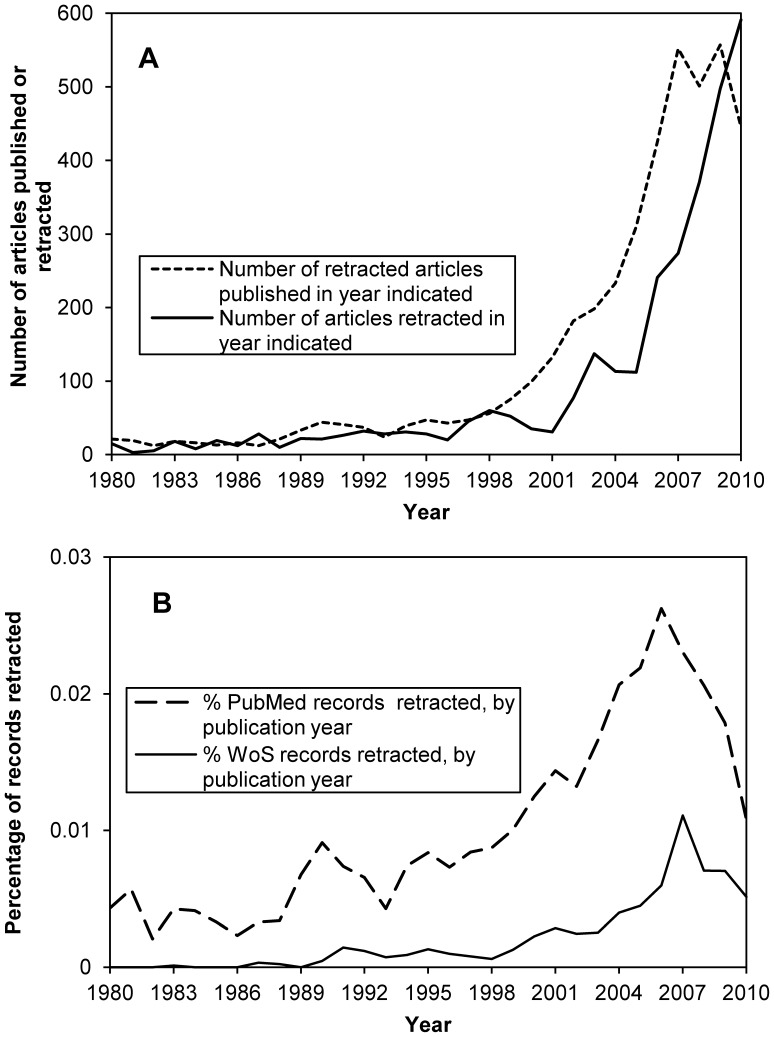
“They were very infrequent between 2000–2012 (Grieneisen and Zhang 2012; Noonan and Parrish 2008).”
Lussier, P., & Décary-Hêtu, D. (2025) · Canadian Journal of Criminology and Criminal Justice/La Revue canadienne de criminologie et de justice pénale · doi:10.3138/cjccj-2026-0201
Retractions in Neuroscience Literature: An Analytical Study Based on Retraction Watch Database
Swetha, R., & Veeraramu, K. (2026) · International journal of research and scientific innovation · doi:10.51244/ijrsi.2026.1305000066
Bočina, R., Mijatović, A., & Marušić, A. (2026) · Research Integrity and Peer Review · doi:10.1186/s41073-026-00236-9
“…and that cross‑journal and cross‑country differences in retraction patterns must be interpreted in light of variation in publi‑ cation volume, indexing practices, and the way databases and journals label retracted articles, rather than as direct proxies for misconduct prevalence [38, 39].”
Born Flawed? Publication-Time Citation Topology Improves Retraction Early-WarningPreprint
Zhang, C. (2026) · Research Square · doi:10.21203/rs.3.rs-10177352/v1
Systematic Review on Student’s Problem-Solving Skills: A Bibliometric Analysis
Banawi, A. (2024) · Journal of Propulsion Technology
Tursynali, A., Орынбасарова, К. К., Abdrakhmanova, Z., & Raushanova, A. (2026) · Central Asian Journal of Medical Hypotheses and Ethics · doi:10.47316/cajmhe.2026.7.3.13
Who gets retracted? Gendered patterns in academic article retractions in Indonesia
Kamil, R., & Rahmi, R. (2026) · Information Research · doi:10.47989/ir31356229
“Prior research has examined various aspects of retraction, including the mitigating effect of international collaboration (Zhang et al., 2019), the higher occurrence of retractions in gold open-access journals (Zheng & Fu, 2024), and disciplinary differences (Grieneisen & Zhang, 2012).”
Retractions in dentistry: reasons, time to retraction and post-retraction citations
Cabrera, L. H., Moya, M. O. C., & Ramos, N. P. (2025) · SAP Dentistry · doi:10.62486/dent2025152
An analysis of 20 years of retracted articles in psychiatry
O’Brien, A. A., Tsai, A. C., Smith, J. G., Bell, D., & Bhui, K. S. (2026) · BJPsych Bulletin · doi:10.1192/bjb.2026.10311
Mañana-Rodríguez, J., Granadino, B., & Bautista‐Puig, N. (2026) · Revista española de Documentación Científica · doi:10.3989/redc.2026.2.1949
Metadata
- Authors
- Grieneisen, M. L., & Zhang, M.
- Affiliations
- Wenzhou Medical University (CN)
- Corresponding author
- Zhang, Minghua
- Venue
- PLoS ONE
- Publisher
- Public Library of Science (PLoS)
- Published
- 2012-10-24
- Volume
- 7
- Issue
- 10
- Pages
- e44118
- ISSN
- 1932-6203 (ISSN-L)
- PMC
- PMC3480361
- OpenAlex
- W2022493637
- Cited by
- 355
- References
- 78
- Citations by year
- 2026: 15 · 2025: 37 · 2024: 20 · 2023: 30 · 2022: 30 · 2021: 29 · 2020: 23 · 2019: 32 · 2018: 25 · 2017: 26 · 2016: 22 · 2015: 25 · 2014: 20 · 2013: 18 · 2012: 2
- FWCI
- 54.09
- Type
- journal article
- Language
- en
- Open access
- gold
- doi.org
- Locations
- PLoS ONE (publishedVersion, cc-by)
- Europe PMC (PubMed Central) (publishedVersion, cc-by)
- PubMed Central (publishedVersion, cc-by)
- PubMed (publishedVersion)
- RePEc: Research Papers in Economics (submittedVersion)
- DOAJ (DOAJ: Directory of Open Access Journals) (submittedVersion, cc-by-sa)
- Figshare (submittedVersion, cc-by)
- Funders
- California Department of Pesticide Regulation
- Science and Technology Department of Zhejiang Province (2008C03009)
- Topics
- Social Sciences › Education › Academic integrity and plagiarism
- Social Sciences › Library and Information Sciences › Academic Publishing and Open Access
- Social Sciences › Library and Information Sciences › scientometrics and bibliometrics research
- Keywords
- retracted article, research misconduct, questionable research practices, research integrity
- MeSH terms
- Data Collection, Publishing, PubMed
About these checks
Registry, retraction, Cites and statistics results are computed, not judged, with one exception: a printed reference that no index lists is read once by a model before it counts as a citation error. Claims are extracted by a model and kept only when their quote appears verbatim in the text; each cited source is then checked, with a model’s help, for whether it says what the claim relies on. Those verdicts can be wrong — read the claim’s quote and the cited source before relying on one.
Statistics and arithmetic are recomputed, not judged.
Confidence bands are shown only for fields calibrated on our annotated test set. None is calibrated yet, so no band is shown.
What counts as a claim ›How we measure confidence ›How we check this ›
Are you an author, or do you see a problem with this page? Request a review
Data sources
Bibliographic data: Semantic Scholar, OpenAlex, Crossref.
Contains information from the Semantic Scholar Academic Graph Datasets, made available under the ODC Attribution License (ODC-BY 1.0).
Semantic Scholar’s data is described in: Kinney, R., et al. (2023). The Semantic Scholar Open Data Platform. arXiv:2301.10140.
