

The DOI matches its Crossref record; 52 of the 52 references it cites were found in a registry or an index.
APE1/Ref-1 regulates STAT3 transcriptional activity and APE1/Ref-1-STAT3 dual-targeting effectively inhibits pancreatic cancer cell survival
Abstract
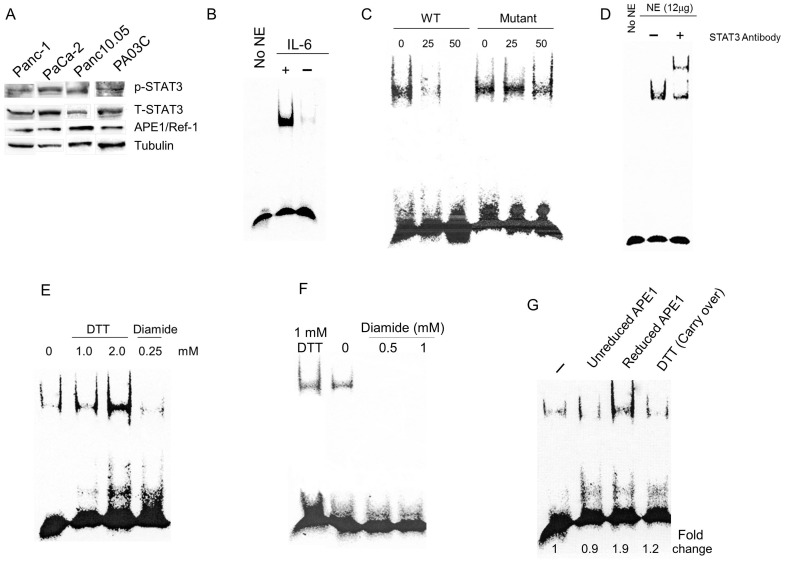
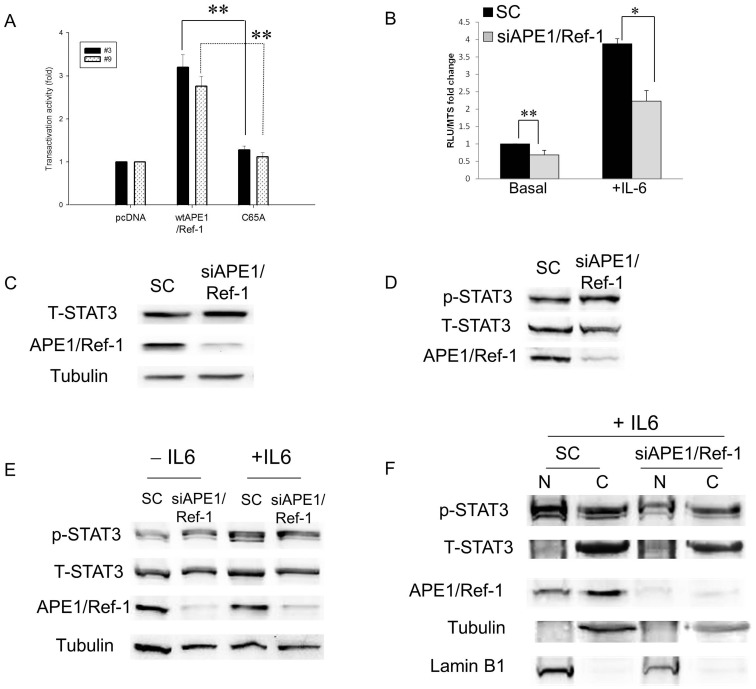
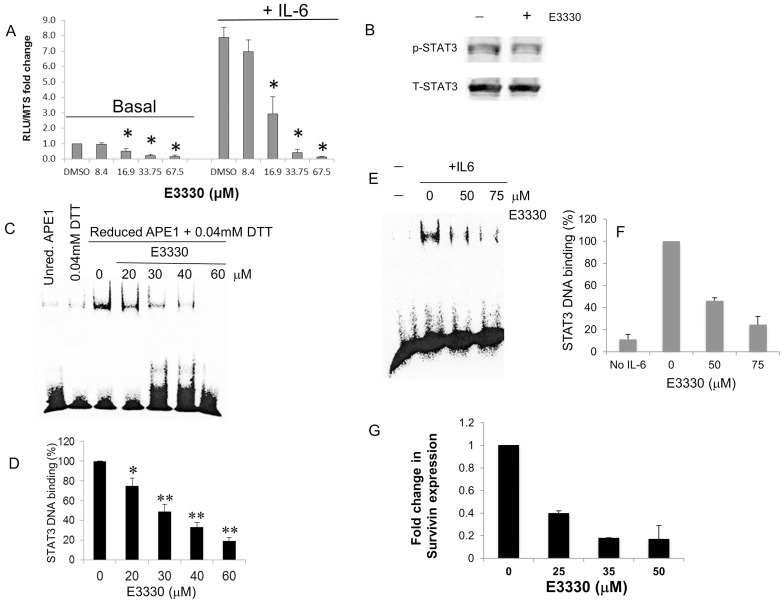
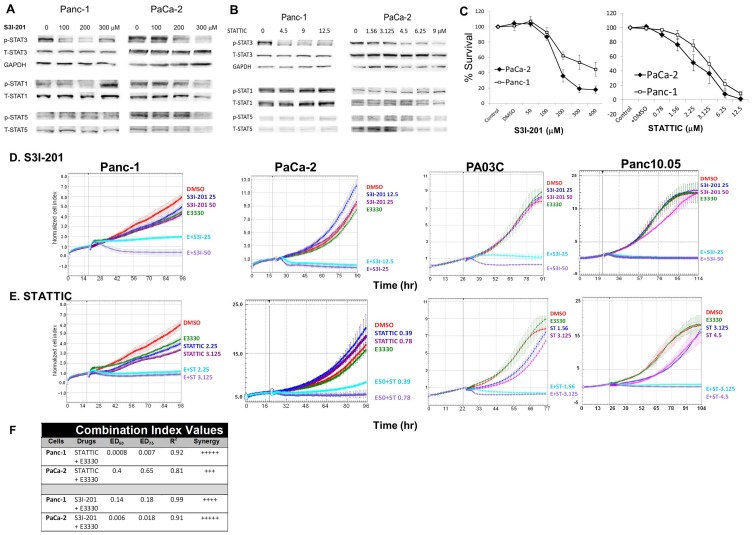
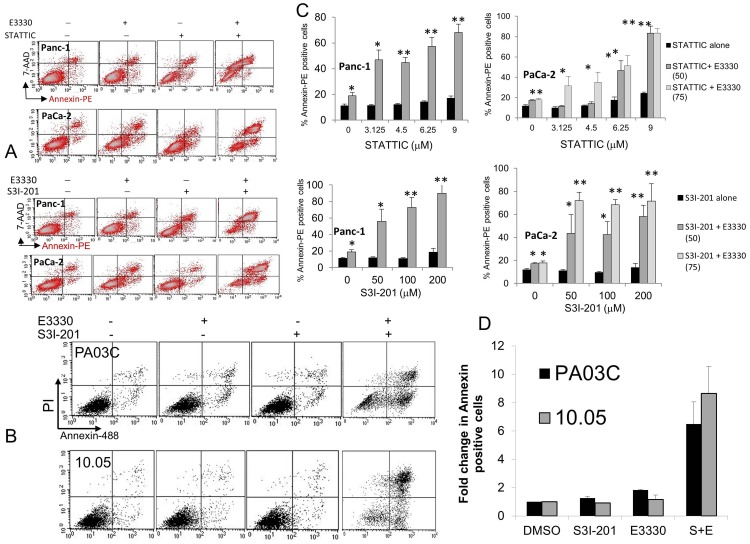
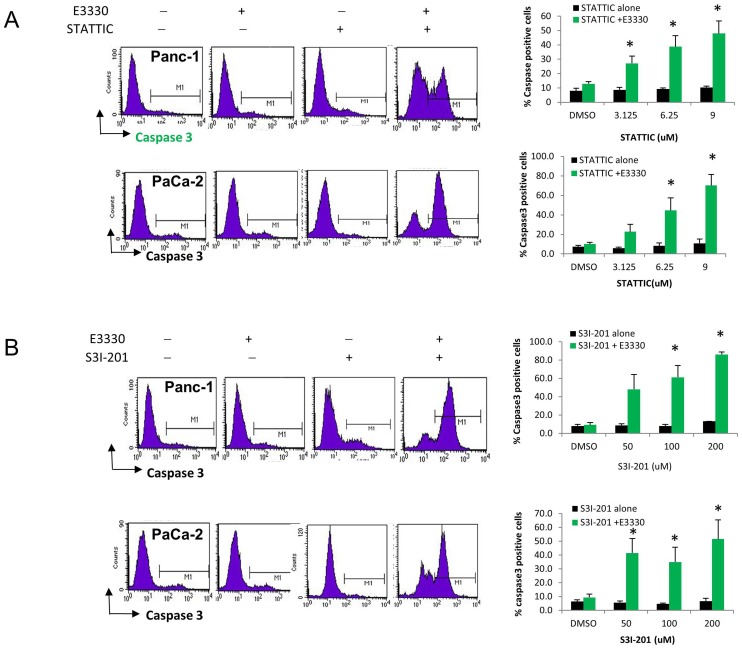
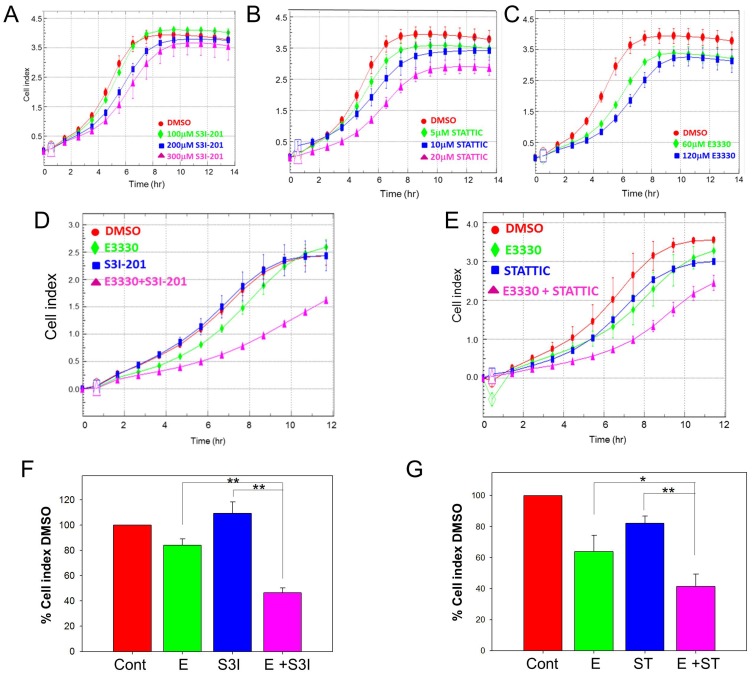
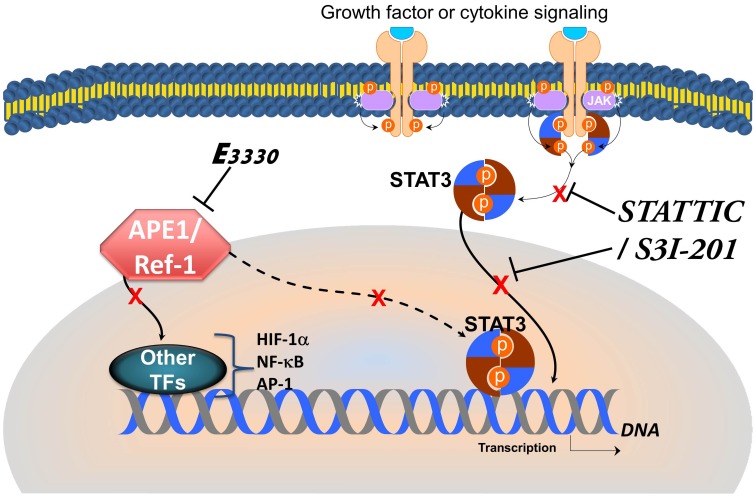
Pancreatic cancer is a largely incurable disease, and increasing evidence supports strategies targeting multiple molecular mediators of critical functions of pancreatic ductal adenocarcinoma cells. Intracellular redox state modulates the activity of various signal transduction pathways and biological processes, including cell survival, drug resistance and responsiveness to microenvironmental factors. Recently, it has been shown that the transcription factor STAT3 is under redox control, but the mechanisms involved in its regulation are unknown. Here, we demonstrate for the first time that STAT3 DNA binding and transcriptional activity is directly regulated by the redox function of the APE1/Ref-1 endonuclease, using overexpression and redox-specific mutational strategies, and gene knockdown. Also, pharmacological blockade of APE1/Ref-1 by the redox-selective inhibitor E3330 abrogates STAT3 DNA binding. Since APE1/Ref-1 also exerts redox control on other cancer-associated transcription factors, we assessed the impact of dual-targeting of STAT3 signaling and APE1/Ref-1 redox on pancreatic cancer cell functions. We observed that disruption of APE1/Ref-1 redox activity synergizes with STAT3 blockade to potently inhibit the proliferation and viability of human PDAC cells. Mechanistically, we show that STAT3-APE1/Ref-1 dual targeting promotes marked tumor cell apoptosis, with engagement of caspase-3 signaling, which are significantly increased in comparison to the effects triggered by single target blockade. Also, we show that STAT3-APE1/Ref-1 dual blockade results in significant inhibition of tumor cell migration. Overall, this work demonstrates that the transcriptional activity of STAT3 is directly regulated by the redox function of APE1/Ref-1, and that concurrent blockade of STAT3 and APE1/Ref-1 redox synergize effectively inhibit critical PDAC cell functions.
Overview
The claims and statistics of this paper haven’t been checked yet.
Run the check — free, no account needed. It reads the open-access text and checks the sources it cites.
Integrity signals
Registry
Cites
Statistics
Figures
Verification
Claims the paper makes
The claims and statistics of this paper haven’t been checked yet.
Run the check — free, no account needed. It reads the open-access text and checks the sources it cites.
Claims other papers make about this one
Each is checked against this paper’s own text: does it say what the citing paper says it does?
In the citing paper
“To further verify the role of Stat3 and Shp2 in regulating the IL-6/Morrbid axis in Tet2-KO Lin-negative cells, we treated the cells with E3330, a pan inhibitor of both NFκB and Stat3 (Cardoso et al., 2012; Jedinak et al., 2011), and SHP099, a novel selective allosteric inhibitor of Shp2 (Chen et al., 2016).”
From Inhibition of Inflammatory Signaling in Tet2 Mutant Preleukemic Cells Mitigates Stress-Induced Abnormalities and Clonal Hematopoiesis (2018) · cites this paper as Cardoso et al., 2012
Self-check
Percentages, sums and reported differences re-computed from the paper’s own numbers.
The self-check needs the paper’s full text.
Citations
Cites
Chou, T.-C., & Talalay, P. (1984) · Advances in Enzyme Regulation · doi:10.1016/0065-2571(84)90007-4 · Cited by 7,178
STATs in cancer inflammation and immunity: a leading role for STAT3
Yu, H., Pardoll, D., & Jove, R. (2009) · Nature reviews. Cancer · doi:10.1038/nrc2734 · Cited by 4,383
Core Signaling Pathways in Human Pancreatic Cancers Revealed by Global Genomic Analyses
Jones, S., Zhang, X., Parsons, D. W., Lin, J. C.-H., Leary, R. J., Angenendt, P., Mankoo, P., Carter, H., Kamiyama, H., Jimeno, A., et al. (2008) · Science · doi:10.1126/science.1164368 · Cited by 3,969
Self-citationThe STATs of cancer — new molecular targets come of age
Yu, H., & Jove, R. (2004) · Nature Reviews Cancer · doi:10.1038/nrc1275 · Cited by 2,278
The transcriptional network for mesenchymal transformation of brain tumours
Carro, M. S., Lim, W. K., Alvarez, M. J., Bollo, R. J., Zhao, X., Snyder, E. Y., Sulman, E. P., Anne, S. L., Doetsch, F., Colman, H., et al. (2010) · Nature · doi:10.1038/nature08712 · Cited by 1,259
Dangerous liaisons: STAT3 and NF-κB collaboration and crosstalk in cancer
Grivennikov, S. I., & Karin, M. (2010) · Cytokine & Growth Factor Reviews · doi:10.1016/j.cytogfr.2009.11.005 · Cited by 1,160
REDOX REGULATION OF CELLULAR ACTIVATION
Nakamura, H., Nakamura, K., & Yodoi, J. (1997) · Annual Review of Immunology · doi:10.1146/annurev.immunol.15.1.351 · Cited by 1,106
Stattic: a small-molecule inhibitor of STAT3 activation and dimerization
Schust, J., Sperl, B., Hollis, A., Mayer, T. U., & Berg, T. (2006) · Chemistry & Biology · doi:10.1016/j.chembiol.2006.09.018 · Cited by 1,105
Redox activation of Fos-Jun DNA binding activity is mediated by a DNA repair enzyme.
Xanthoudakis, S., Miao, G., Wang, F., Pan, Y. C., & Curran, T. (1992) · The EMBO Journal · doi:10.1002/j.1460-2075.1992.tb05411.x · Cited by 913
Siddiquee, K., Zhang, S., Guida, W. C., Blaskovich, M. A., Greedy, B. M., Lawrence, H. R., Yip, M. L. R., Jove, R., McLaughlin, M. M., Lawrence, N. J., et al. (2007) · Proceedings of the National Academy of Sciences · doi:10.1073/pnas.0609757104 · Cited by 745
Activation of the JAK-STAT pathway by reactive oxygen species
Simon, A. R., Rai, U., Fanburg, B. L., & Cochran, B. H. (1998) · American Journal of Physiology-Cell Physiology · doi:10.1152/ajpcell.1998.275.6.c1640 · Cited by 598
The Many Functions of APE1/Ref-1: Not Only a DNA Repair Enzyme
Tell, G., Quadrifoglio, F., Tiribelli, C., & Kelley, M. R. (2009) · Antioxidants & Redox Signaling · doi:10.1089/ars.2008.2194 · Cited by 516
Self-citationHypoxia-responsive transcription factors
Cummins, E. P., & Taylor, C. T. (2005) · Pflügers Archiv - European Journal of Physiology · doi:10.1007/s00424-005-1413-7 · Cited by 470
Holmgren, A. (1995) · Structure · doi:10.1016/s0969-2126(01)00153-8 · Cited by 436
Gray, M. J., Zhang, J., Ellis, L. M., Semenza, G. L., Evans, D. B., Watowich, S. S., & Gallick, G. E. (2005) · Oncogene · doi:10.1038/sj.onc.1208513 · Cited by 372
STAT proteins as novel targets for cancer drug discovery
Turkson, J. (2004) · Expert Opinion on Therapeutic Targets · doi:10.1517/14728222.8.5.409 · Cited by 295
The DNA base excision repair protein Ape1/Ref-1 as a therapeutic and chemopreventive target
Fishel, M. L., & Kelley, M. R. (2007) · Molecular Aspects of Medicine · doi:10.1016/j.mam.2007.04.005 · Cited by 277
Self-citationWeber, C. E., & Kuo, P. C. (2012) · Surgical Oncology · doi:10.1016/j.suronc.2011.09.001 · Cited by 271
Bhakat, K. K., Mantha, A. K., & Mitra, S. (2009) · Antioxidants & Redox Signaling · doi:10.1089/ars.2008.2198 · Cited by 255
Cleaving the oxidative repair protein Ape1 enhances cell death mediated by granzyme A
Fan, Z., Beresford, P. J., Zhang, D., Xu, Z., Novina, C. D., Yoshida, A., Pommier, Y. G., & Lieberman, J. (2003) · Nature Immunology · doi:10.1038/ni885 · Cited by 240
Brantley, E. C., & Benveniste, E. N. (2008) · Molecular Cancer Research · doi:10.1158/1541-7786.mcr-07-2180 · Cited by 240
Wang, D., Luo, M., & Kelley, M. R. (2004) · Molecular Cancer Therapeutics · doi:10.1158/1535-7163.679.3.6 · Cited by 240
Self-citationStat3 and NF-κB activation prevents apoptosis in pancreatic carcinogenesis
Greten, F. R., Weber, C. K., Greten, T. F., Schneider, G., Wagner, M., Adler, G., & Schmid, R. M. (2002) · Gastroenterology · doi:10.1053/gast.2002.37075 · Cited by 169
Luo, M., Delaplane, S., Jiang, A., Reed, A. M., He, Y., Fishel, M. L., Nyland, R. L., Borch, R. F., Qiao, X., Georgiadis, M. M., et al. (2008) · Antioxidants and Redox Signaling · doi:10.1089/ars.2008.2120 · Cited by 167
Self-citationThe function of Stat3 in tumor cells and their microenvironment
Groner, B., Lucks, P., & Borghouts, C. (2008) · Seminars in Cell and Developmental Biology · doi:10.1016/j.semcdb.2008.06.005 · Cited by 162
Synthetic Lethal Screen of an EGFR-Centered Network to Improve Targeted Therapies
Astsaturov, I. A., Ratushny, V., Sukhanova, A. L., Einarson, M. B., Bagnyukova, T., Zhou, Y., Devarajan, K., Silverman, J. S., Tikhmyanova, N., Skobeleva, N., et al. (2010) · Science Signaling · doi:10.1126/scisignal.2001083 · Cited by 144
Modulation of Gene Expression and Tumor Cell Growth by Redox Modification of STAT3
Li, L., Cheung, S., Evans, E. L., & Shaw, P. E. (2010) · Cancer Research · doi:10.1158/0008-5472.can-10-0894 · Cited by 140
Evolution of the redox function in mammalian apurinic/apyrimidinic endonuclease
Georgiadis, M. M., Luo, M., Gaur, R. K., Delaplane, S., Li, X., & Kelley, M. R. (2008) · Mutation research. Fundamental and molecular mechanisms of mutagenesis · doi:10.1016/j.mrfmmm.2008.04.008 · Cited by 140
Self-citationThe role of Stat5 transcription factors as tumor suppressors or oncogenes
Ferbeyre, G., & Moriggl, R. (2010) · Biochimica et Biophysica Acta (BBA) - Reviews on Cancer · doi:10.1016/j.bbcan.2010.10.004 · Cited by 124
Ramanathan, R. K., Abbruzzese, J., Dragovich, T., Kirkpatrick, L., Guillen, J. M., Baker, A. F., Pestano, L. A., Green, S., & Von Hoff, D. D. (2011) · Cancer Chemotherapy and Pharmacology · doi:10.1007/s00280-010-1343-8 · Cited by 122
Impact of APE1/Ref-1 Redox Inhibition on Pancreatic Tumor Growth
Fishel, M. L., Jiang, Y., Rajeshkumar, N. V., Scandura, G., Sinn, A. L., He, Y., Shen, C., Jones, D. R., Pollok, K. E., Ivan, M., et al. (2011) · Molecular Cancer Therapeutics · doi:10.1158/1535-7163.mct-11-0107 · Cited by 117
Self-citationBapat, A., Glass, L. S., Luo, M., Fishel, M. L., Long, E. C., Georgiadis, M. M., & Kelley, M. R. (2010) · Journal of Pharmacology and Experimental Therapeutics · doi:10.1124/jpet.110.169128 · Cited by 106
Self-citationPhosphorylation–acetylation switch in the regulation of STAT1 signaling
Krämer, O. H., & Heinzel, T. (2009) · Molecular and Cellular Endocrinology · doi:10.1016/j.mce.2009.10.007 · Cited by 103
Singh‐Gupta, V., Zhang, H., Banerjee, S., Kong, D., Raffoul, J. J., Sarkar, F. H., & Hillman, G. G. (2008) · International Journal of Cancer · doi:10.1002/ijc.24015 · Cited by 98
Fishel, M. L., He, Y., Reed, A. M., Chin-Sinex, H., Hutchins, G. D., Mendonca, M. S., & Kelley, M. R. (2007) · DNA repair · doi:10.1016/j.dnarep.2007.09.008 · Cited by 95
Self-citationTargeting Transcription Factors for Cancer Therapy
Redell, M. S., & Tweardy, D. J. (2005) · Current Pharmaceutical Design · doi:10.2174/1381612054546699 · Cited by 92
Synthetic Triterpenoids Prolong Survival in a Transgenic Mouse Model of Pancreatic Cancer
Liby, K. T., Royce, D. B., Risingsong, R., Williams, C. R., Maitra, A., Hruban, R. H., & Sporn, M. B. (2010) · Cancer Prevention Research · doi:10.1158/1940-6207.capr-10-0197 · Cited by 90
Self-citationA STAT3 dimer formed by inter-chain disulphide bridging during oxidative stress
Li, L., & Shaw, P. E. (2004) · Biochemical and Biophysical Research Communications · doi:10.1016/j.bbrc.2004.08.014 · Cited by 79
Su, D. G. T., Delaplane, S., Luo, M., Rempel, D. L., Vu, B., Kelley, M. R., Gross, M. L., & Georgiadis, M. M. (2010) · Biochemistry · doi:10.1021/bi101248s · Cited by 77
Self-citationQiu, Z., Huang, C., Sun, J., Qiu, W., Zhang, J., Li, H., Jiang, T., Huang, K., & Cao, J. (2007) · Cancer Science · doi:10.1111/j.1349-7006.2007.00485.x · Cited by 77
Transcriptional anti-angiogenesis therapy of human pancreatic cancer
Xie, K., WEI, D., & Huang, S. (2006) · Cytokine & Growth Factor Reviews · doi:10.1016/j.cytogfr.2006.01.002 · Cited by 66
Jiang, Y., Zhou, S., Sandusky, G. E., Kelley, M. R., & Fishel, M. L. (2010) · Cancer Investigation · doi:10.3109/07357907.2010.512816 · Cited by 64
Self-citationJordan, B. F., Runquist, M. L., Raghunand, N., Gillies, R. J., Tate, W. R., Powis, G., & Baker, A. F. (2005) · Clinical Cancer Research · doi:10.1158/1078-0432.529.11.2 · Cited by 61
Fishel, M. L., Colvin, E. S., Luo, M., Kelley, M. R., & Robertson, K. A. (2010) · Experimental Hematology · doi:10.1016/j.exphem.2010.08.011 · Cited by 43
Self-citationRabik, C. A., Fishel, M. L., Holleran, J. L., et al. (2008) · Journal of Pharmacology and Experimental Therapeutics · doi:10.1124/jpet.108.141291 · Cited by 39
Self-citationJaganathan, S., Yue, P., & Turkson, J. (2010) · Journal of Pharmacology and Experimental Therapeutics · doi:10.1124/jpet.109.162669 · Cited by 38
Retinoids and Pulmonary Hypertension
Preston, I. R., Tang, G., Tilan, J. U., Hill, N. S., & Suzuki, Y. (2005) · Circulation · doi:10.1161/01.cir.0000155254.86840.47 · Cited by 36
Ray, S., Lee, C., Hou, T., Bhakat, K. K., & Brasier, A. R. (2009) · Molecular Endocrinology · doi:10.1210/me.2009-0319 · Cited by 34
Jackson, M. W., Patt, L. E., LaRusch, G. A., Donner, D. B., Stark, G. R., & Mayo, L. D. (2006) · Journal of Biological Chemistry · doi:10.1074/jbc.m511617200 · Cited by 29
Yang, G., Huang, C., Cao, J., Huang, K., Jiang, T., & Qiu, Z. (2009) · World Journal of Gastroenterology · doi:10.3748/wjg.15.3757 · Cited by 29
Bagley, R. G. (2010) · Springer eBooks · doi:10.1007/978-1-4419-6615-5 · Cited by 28
Retinoids and Pulmonary Hypertension
Lewis, K. L. (2006) · Yearbook of Pulmonary Disease · doi:10.1016/s8756-3452(08)70135-x · Cited by 2
Cited by
Cai, Z., Kotzin, J. J., Ramdas, B., Chen, S., Nelanuthala, S., Palam, L. R., Pandey, R., Mali, R. S., Liu, Y., Kelley, M. R., et al. (2018) · Cell Stem Cell · doi:10.1016/j.stem.2018.10.013 · Cited by 394
Self-citation
Metadata
- Authors
- Cardoso, A. A., Jiang, Y., Luo, M., Reed, A. M., Shahda, S., He, Y., Maitra, A., Kelley, M. R., & Fishel, M. L.
- Venue
- PLoS ONE
- Publisher
- Public Library of Science (PLoS)
- Published
- 2012-10-19
- Volume
- 7
- Issue
- 10
- Pages
- e47462
- ISSN
- 1932-6203
- PMC
- PMC3477158
- Cited by
- 97
- References
- 52
- Language
- en
About these checks
Registry, retraction, Cites and statistics results are computed, not judged, with one exception: a printed reference that no index lists is read once by a model before it counts as a citation error. Claims are extracted by a model and kept only when their quote appears verbatim in the text; each cited source is then checked, with a model’s help, for whether it says what the claim relies on. Those verdicts can be wrong — read the claim’s quote and the cited source before relying on one.
Statistics and arithmetic are recomputed, not judged.
Confidence bands are shown only for fields calibrated on our annotated test set. None is calibrated yet, so no band is shown.
What counts as a claim ›How we measure confidence ›How we check this ›
Are you an author, or do you see a problem with this page? Request a review
Data sources
Bibliographic data: Semantic Scholar, OpenAlex, Crossref.
Contains information from the Semantic Scholar Academic Graph Datasets, made available under the ODC Attribution License (ODC-BY 1.0).
Semantic Scholar’s data is described in: Kinney, R., et al. (2023). The Semantic Scholar Open Data Platform. arXiv:2301.10140.
