

In Vitro and Ex Vivo Inhibition of Human Telomerase by Anti-HIV Nucleoside Reverse Transcriptase Inhibitors (NRTIs) but Not by Non-NRTIs
Open accessThe DOI matches its Crossref record; 50 of the 50 references it cites were found in a registry or an index.
Abstract
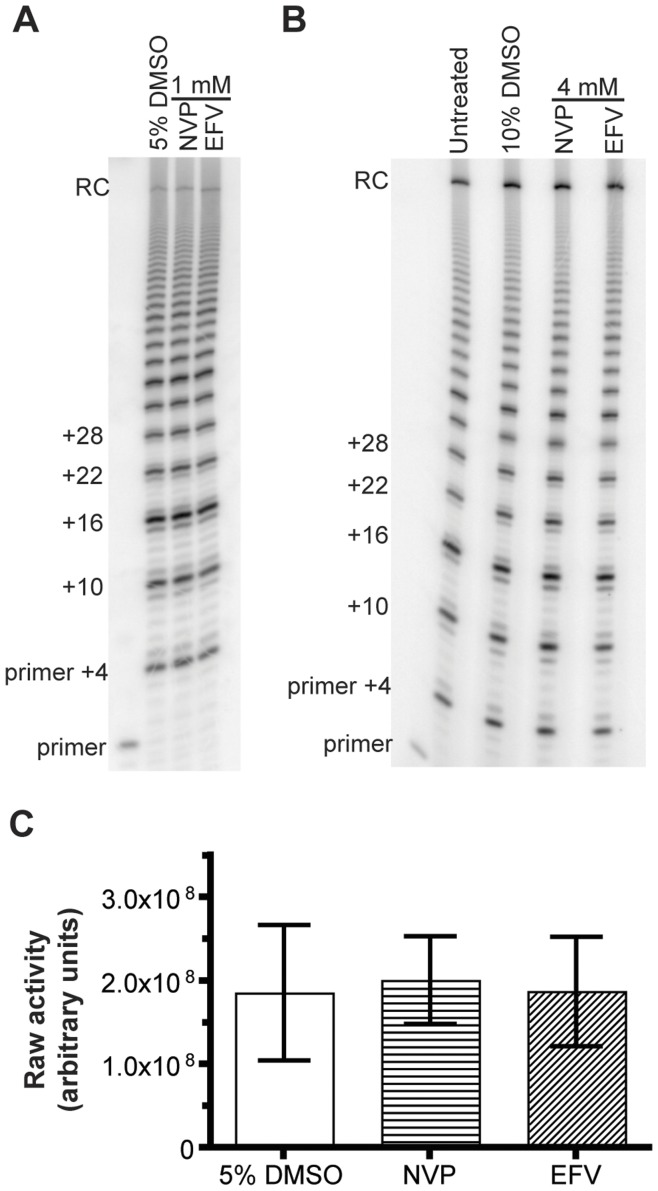
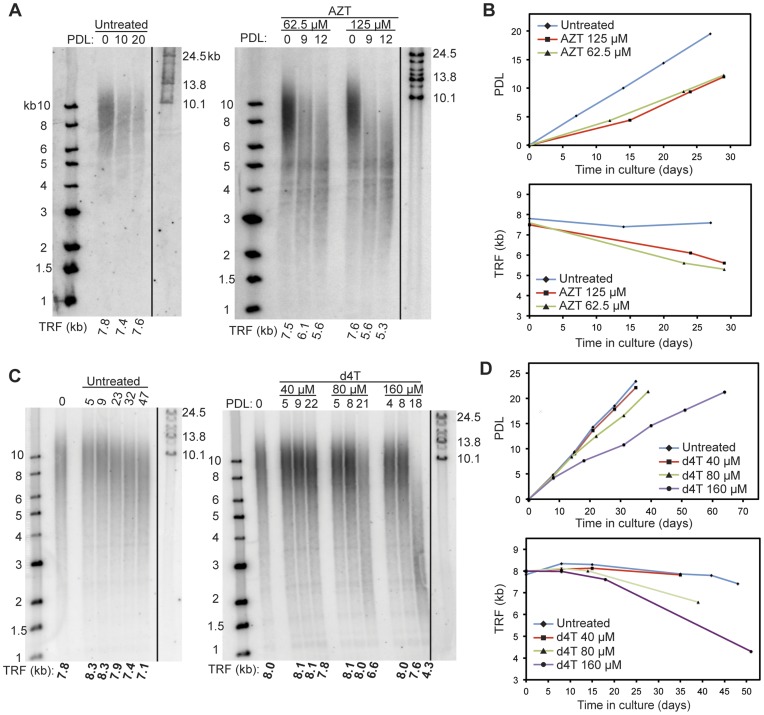
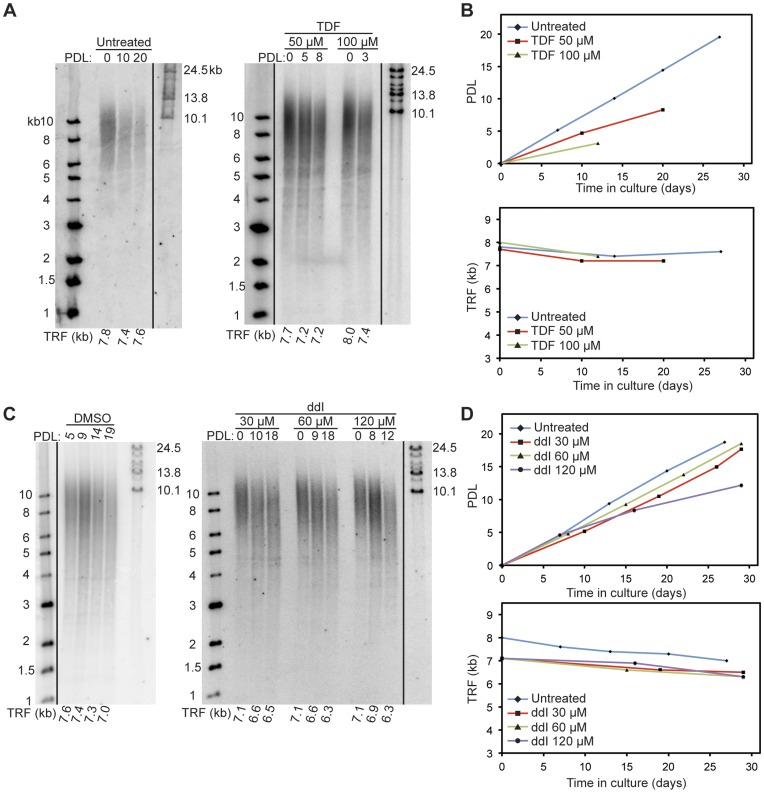
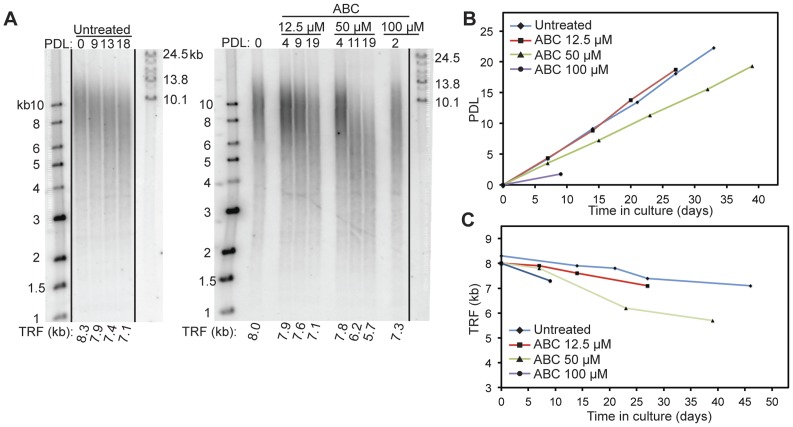
Telomerase is a specialized reverse transcriptase responsible for the de novo synthesis of telomeric DNA repeats. In addition to its established reverse transcriptase and terminal transferase activities, recent reports have revealed unexpected cellular activities of telomerase, including RNA-dependent RNA polymerization. This telomerase characteristic, distinct from other reverse transcriptases, indicates that clinically relevant reverse transcriptase inhibitors might have unexpected telomerase inhibition profiles. This is particularly important for the newer generation of RT inhibitors designed for anti-HIV therapy, which have reported higher safety margins than older agents. Using an in vitro primer extension assay, we tested the effects of clinically relevant HIV reverse transcriptase inhibitors on cellular telomerase activity. We observed that all commonly used nucleoside reverse transcriptase inhibitors (NRTIs), including zidovudine, stavudine, tenofovir, didanosine and abacavir, inhibit telomerase effectively in vitro. Truncated telomere synthesis was consistent with the expected mode of inhibition by all tested NRTIs. Through dose-response experiments, we established relative inhibitory potencies of NRTIs on in vitro telomerase activity as compared to the inhibitory potencies of the corresponding dideoxynucleotide triphosphates. In contrast to NRTIs, the non-nucleoside reverse transcriptase inhibitors (NNRTIs) nevirapine and efavirenz did not inhibit the primer extension activity of telomerase, even at millimolar concentrations. Long-term, continuous treatment of human HT29 cells with select NRTIs resulted in an accelerated loss of telomere repeats. All tested NRTIs exhibited the same rank order of inhibitory potencies on telomerase and HIV RT, which, according to published data, were orders-of-magnitude more sensitive than other DNA polymerases, including the susceptible mitochondria-specific DNA polymerase gamma. We concluded that telomerase activity could be inhibited by common NRTIs, including currently recommended RTI agents tenofovir and abacavir, which warrants large-scale clinical and epidemiological investigation of the off-target effects of long-term highly active antiretroviral therapy (HAART) with these agents.
Overview
The claims and statistics of this paper haven’t been checked yet.
Free: it reads the open-access text and checks the first 5 claims that cite a source we can check. Create a free account to check every claim.
Integrity signals
Registry
Cites
Statistics
Figures
Verification
Claims the paper makes
The claims and statistics of this paper haven’t been checked yet.
Free: it reads the open-access text and checks the first 5 claims that cite a source we can check. Create a free account to check every claim.
Claims other papers make about this one
Each is checked against this paper’s own text: does it say what the citing paper says it does?
The source backs part of the claim, not all of it — or backs it for a different population, condition or comparison.
In the citing paper
“Contrastingly, other studies have suggested that the use of NRTIs may potentially activate the tumour suppressor gene p53 in healthy cells, inhibiting telomerase to cause cell death [183,184,185].”
From Current State of Therapeutics for HTLV-1 (2024) · cites this paper as [184]
Experimental — accuracy not yet measuredIn the citing paper
“Moreover, NRTIs can also inhibit telomerase and are thought to contribute to accelerated aging phenotypes associated with HIV patients (Hukezalie et al., 2012; Leeansyah et al., 2013).”
From Cytoplasmic DNA: sources, sensing, and role in aging and disease (2021) · cites this paper as Hukezalie et al., 2012
Self-check
Percentages, sums and reported differences re-computed from the paper’s own numbers.
The self-check needs the paper’s full text.
Citations
Cites
Thompson, M. A., Aberg, J. A., Hoy, J. F., Telenti, A., Benson, C., Cahn, P., Eron, J. J., Günthard, H. F., Hammer, S. M., Reiss, P., et al. (2012) · JAMA · doi:10.1001/jama.2012.7961 · Cited by 2,469
Telomerase Catalytic Subunit Homologs from Fission Yeast and Human
Nakamura, T. M., Morin, G. B., Chapman, K. B., Weinrich, S. L., Andrews, W. H., Lingner, J., Harley, C. B., & Cech, T. R. (1997) · Science · doi:10.1126/science.277.5328.955 · Cited by 2,256
The RNA Component of Human Telomerase
Feng, J., Funk, W. D., Wang, S.-S., Weinrich, S. L., Avilion, A. A., Chiu, C.-P., Adams, R. R., Chang, E., Allsopp, R. C., Yu, J., et al. (1995) · Science · doi:10.1126/science.7544491 · Cited by 2,227 · cited 1×
“The catalytic core of the telomerase enzyme is a ribonucleoprotein composed of telomerase reverse transcriptase (TERT), the catalytic subunit [5], and telomerase RNA (TER) [6].”
BackgroundCounter, C. M., Avilion, A. A., LeFeuvre, C. E., Stewart, N. G., Greider, C. W., Harley, C. B., & Bacchetti, S. (1992) · The EMBO Journal · doi:10.1002/j.1460-2075.1992.tb05245.x · Cited by 2,096 · cited 1×
“When telomeres reach a critical length, cellular surveillance mechanisms are activated and cellular proliferation ceases, either by permanent cell-cycle arrest, known as senescence, or by apoptosis [2,3].”
BackgroundHow Shelterin Protects Mammalian Telomeres
Palm, W., & de Lange, T. (2008) · Annual Review of Genetics · doi:10.1146/annurev.genet.41.110306.130350 · Cited by 1,802 · cited 1×
“Telomeres are comprised of simple DNA repeats and are packaged in a sequence-specific manner with the six-member protein complex known as shelterin [1].”
BackgroundThompson, M. A., Aberg, J. A., Cahn, P., Montaner, J. S. G., Rizzardini, G., Telenti, A., Gatell, J. M., Günthard, H. F., Hammer, S. M., Hirsch, M. S., et al. (2010) · JAMA · doi:10.1001/jama.2010.1004 · Cited by 722
Effros, R. B., Fletcher, C. V., Gebo, K., Halter, J. B., Hazzard, W. R., Horne, F. M., Huebner, R. E., Janoff, E. N., Justice, A. C., Kuritzkes, D., et al. (2008) · Clinical Infectious Diseases · doi:10.1086/590150 · Cited by 539
Telomeric and extra-telomeric roles for telomerase and the telomere-binding proteins
Martínez, P., & Blasco, M. A. (2011) · Nature Reviews Cancer · doi:10.1038/nrc3025 · Cited by 468 · cited 1×
“changes in telomeric repeat sequences–are recognized as signals of DNA damage, leading to the temporary halt of cell proliferation, or cell death [38,39].”
BackgroundAn RNA-dependent RNA polymerase formed by TERT and the RMRP RNA
Maida, Y., Yasukawa, M., Furuuchi, M., Lassmann, T., Possemato, R., Okamoto, N., Kasim, V., Hayashizaki, Y., Hahn, W. C., & Masutomi, K. (2009) · Nature · doi:10.1038/nature08283 · Cited by 384
Haendeler, J., Dröse, S., Büchner, N., Jakob, S., Altschmied, J., Goy, C., Spyridopoulos, I., Zeiher, A. M., Brandt, U., & Dimmeler, S. (2009) · Arteriosclerosis Thrombosis and Vascular Biology · doi:10.1161/atvbaha.109.185546 · Cited by 375 · cited 2×
“The RdRP activity of TERT is associated with the enzyme’s intracellular trafficking to the mitochondria, perhaps as a response to oxidative stress [21,22,23].”
Background
Cited by
LINE1 Derepression in aged wild-type and SIRT6-deficient mice drives inflammation
Simon, M., Van Meter, M., Ablaeva, J., Ke, Z., Gonzalez, R. S., Taguchi, T., De Cecco, M., Leonova, K. I., Kogan, V., Helfand, S. L., et al. (2019) · Cell Metabolism · doi:10.1016/j.cmet.2019.02.014 · Cited by 498
Cytoplasmic DNA: sources, sensing, and role in aging and disease
Miller, K. N., Victorelli, S. G., Salmonowicz, H., Dasgupta, N., Liu, T., Passos, J. F., & Adams, P. D. (2021) · Cell · doi:10.1016/j.cell.2021.09.034 · Cited by 288
Oxidative guanine base damage regulates human telomerase activity
Fouquerel, E., Lormand, J., Bose, A., Lee, H.-T., Kim, G. S., Li, J., Sobol, R. W., Freudenthal, B. D., Myong, S., & Opresko, P. L. (2016) · Nature Structural & Molecular Biology · doi:10.1038/nsmb.3319 · Cited by 182
The Impact of HIV- and ART-Induced Mitochondrial Dysfunction in Cellular Senescence and Aging
Schank, M., Zhao, J., Moorman, J. P., & Yao, Z. Q. (2021) · Cells · doi:10.3390/cells10010174 · Cited by 171
“NRTIs, but NNRTIs, have also been shown to inhibit telomerase function both in vitro and in vivo, while also being incorporated into telomeric DNA, leading to chain termination and often cell death [131].”
BackgroundNew prospects for targeting telomerase beyond the telomere
Arndt, G. M., & MacKenzie, K. L. (2016) · Nature reviews. Cancer · doi:10.1038/nrc.2016.55 · Cited by 132
Metadata
- Authors
- Hukezalie, K. R., Thumati, N. R., Côté, H. C. F., & Wong, J. M. Y.
- Affiliations
- University of British Columbia (CA)
- Corresponding author
- Wong, Judy M. Y.
- Venue
- PLoS ONE
- Publisher
- Public Library of Science (PLoS)
- Published
- 2012-11-15
- Volume
- 7
- Issue
- 11
- Pages
- e47505
- ISSN
- 1932-6203 (ISSN-L)
- PMC
- PMC3499584
- OpenAlex
- W2149868956
- Cited by
- 84
- References
- 50
- Citations by year
- 2026: 3 · 2025: 6 · 2024: 7 · 2023: 4 · 2022: 3 · 2021: 9 · 2020: 10 · 2019: 6 · 2018: 8 · 2017: 6 · 2016: 7 · 2015: 2 · 2014: 8 · 2013: 5
- FWCI
- 3.43
- Type
- journal article
- Language
- en
- Open access
- gold
- doi.org
- Locations
- PLoS ONE (publishedVersion, cc-by)
- Europe PMC (PubMed Central) (publishedVersion, cc-by)
- PubMed Central (publishedVersion, cc-by)
- PubMed (publishedVersion)
- DOAJ (DOAJ: Directory of Open Access Journals) (submittedVersion, cc-by-sa)
- Figshare (submittedVersion, cc-by)
- Funders
- Michael Smith Health Research BC
- National Institutes of Health
- Canadian Institutes of Health Research (551_5)
- National Institute of Allergy and Infectious Diseases
- Topics
- Life Sciences › Biochemistry, Genetics and Molecular Biology › Cell Biology › Telomeres, Telomerase, and Senescence
- Health Sciences › Medicine › Infectious Diseases › HIV/AIDS drug development and treatment
- Life Sciences › Immunology and Microbiology › Virology › HIV Research and Treatment
- Keywords
- telomerase inhibition, nucleoside reverse transcriptase inhibitors, non-nucleoside reverse transcriptase inhibitors, HIV reverse transcriptase, off-target effects, tenofovir, abacavir, antiretroviral therapy, zidovudine, stavudine, didanosine, nevirapine, efavirenz, primer extension assay
- MeSH terms
- Tenofovir, Abacavir, Adenine, Alkynes, Cell Line, Cyclopropanes, Dose-Response Relationship, Drug, Humans, Zidovudine, Dideoxynucleosides, Didanosine, DNA Primers, Stavudine, Reverse Transcriptase Inhibitors, Telomerase, Anti-HIV Agents, Nevirapine, Benzoxazines, Organophosphonates, In Vitro Techniques
About these checks
Registry, retraction, Cites and statistics results are computed, not judged, with one exception: a printed reference that no index lists is read once by a model before it counts as a citation error. Claims are extracted by a model and kept only when their quote appears verbatim in the text; each cited source is then checked, with a model’s help, for whether it says what the claim relies on. Those verdicts can be wrong — read the claim’s quote and the cited source before relying on one.
Statistics and arithmetic are recomputed, not judged.
Confidence bands are shown only for fields calibrated on our annotated test set. None is calibrated yet, so no band is shown.
What counts as a claim ›How we measure confidence ›How we check this ›
Are you an author, or do you see a problem with this page? Request a review
Data sources
Bibliographic data: Semantic Scholar, OpenAlex, Crossref.
Contains information from the Semantic Scholar Academic Graph Datasets, made available under the ODC Attribution License (ODC-BY 1.0).
Semantic Scholar’s data is described in: Kinney, R., et al. (2023). The Semantic Scholar Open Data Platform. arXiv:2301.10140.
