

Cryptococcus neoformans-Derived Microvesicles Enhance the Pathogenesis of Fungal Brain Infection
Open accessThe DOI matches its Crossref record; 32 of the 32 references it cites were found in a registry or an index.
Abstract
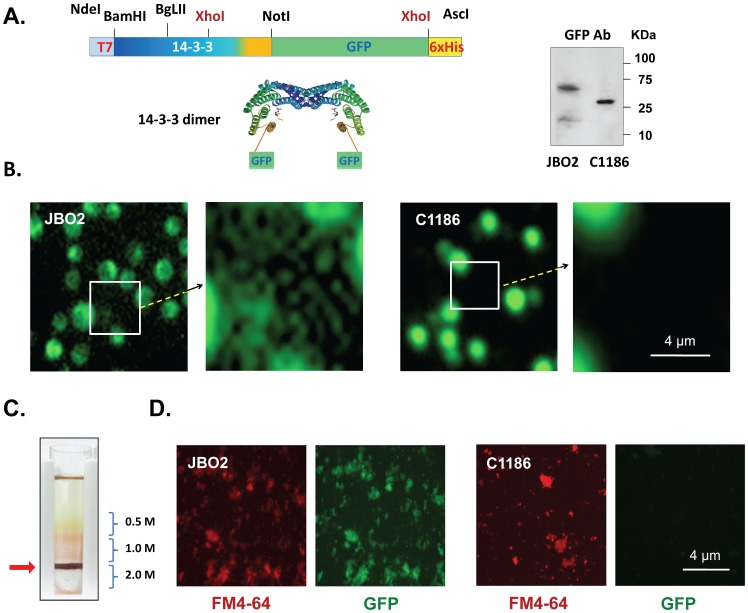
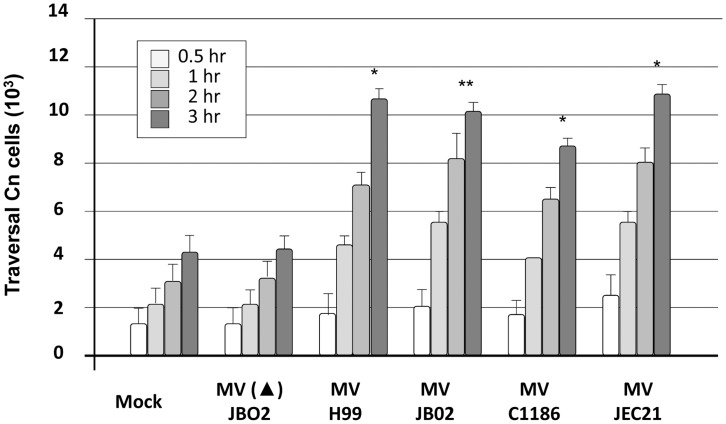
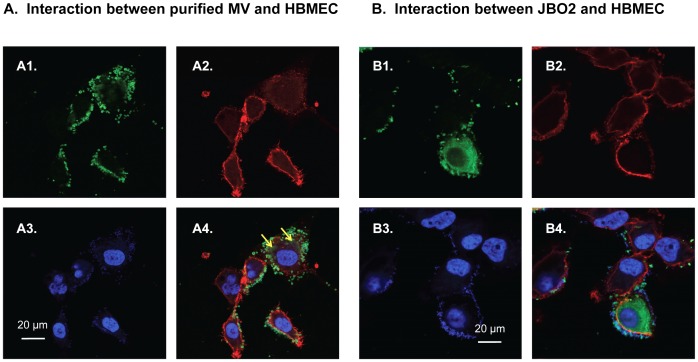
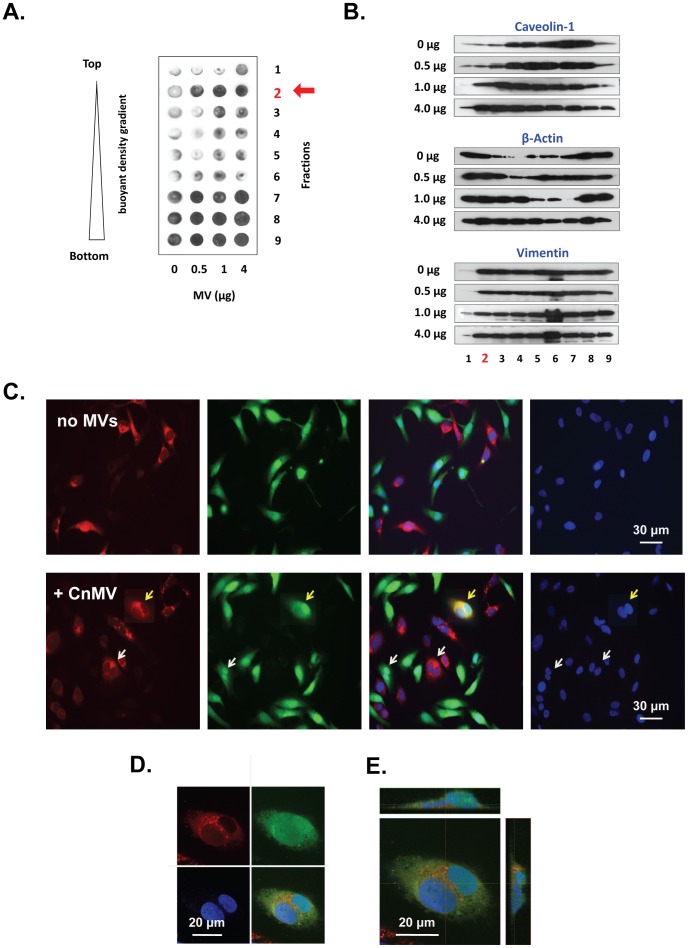
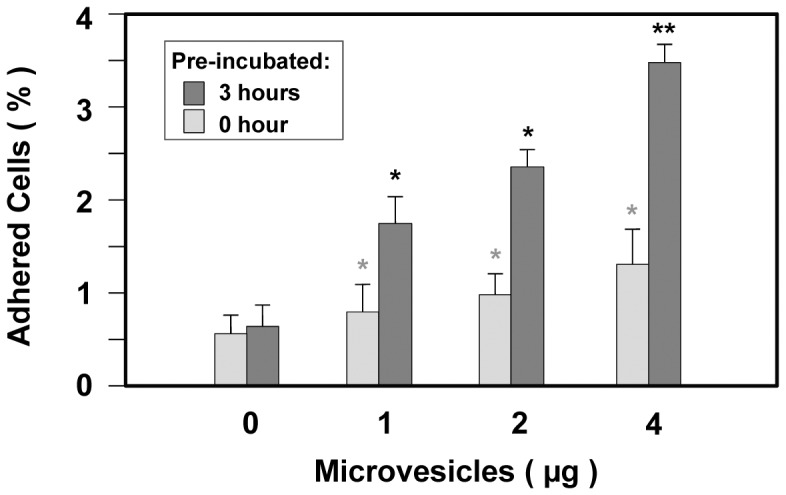
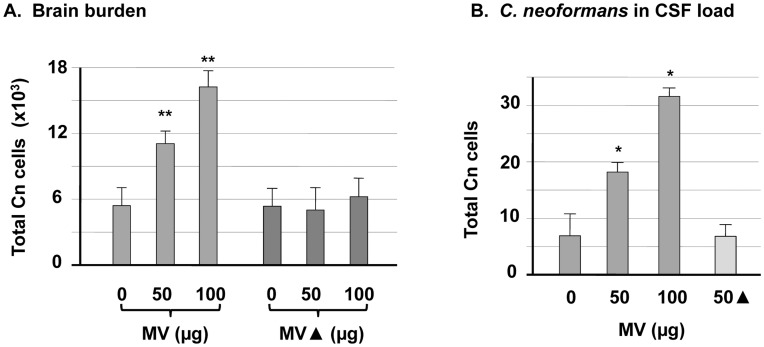
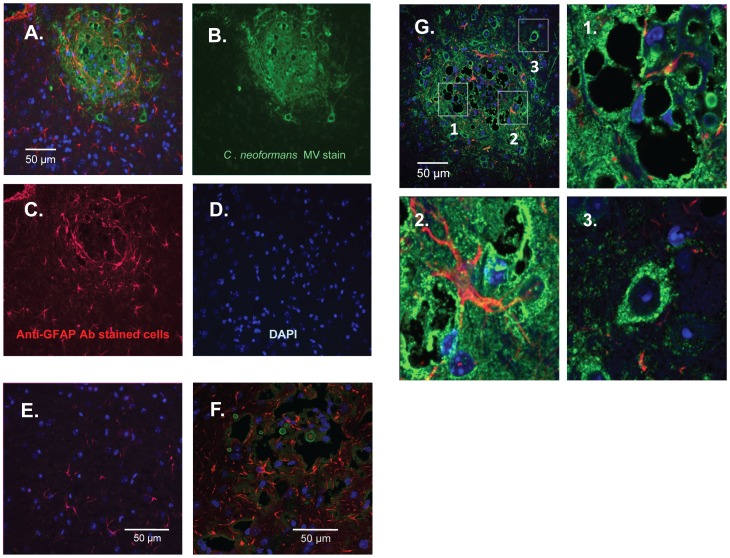
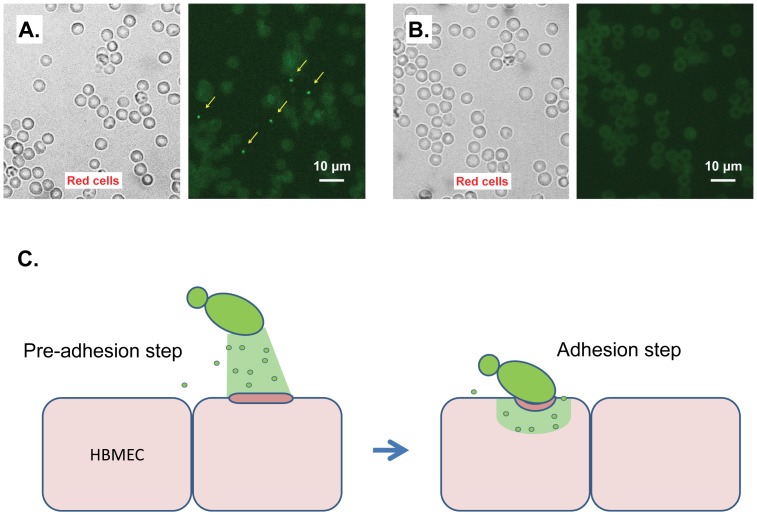
Cryptococcal meningoencephalitis is the most common fungal disease in the central nervous system. The mechanisms by which Cryptococcus neoformans invades the brain are largely unknown. In this study, we found that C. neoformans-derived microvesicles (CnMVs) can enhance the traversal of the blood-brain barrier (BBB) by C. neoformans invitro. The immunofluorescence imaging demonstrates that CnMVs can fuse with human brain microvascular endothelial cells (HBMECs), the constituents of the BBB. This activity is presumably due to the ability of the CnMVs to activate HBMEC membrane rafts and induce cell fusogenic activity. CnMVs also enhanced C. neoformans infection of the brain, found in both infected brains and cerebrospinal fluid. In infected mouse brains, CnMVs are distributed inside and around C. neoformans-induced cystic lesions. GFAP (glial fibrillary acidic protein)-positive astrocytes were found surrounding the cystic lesions, overlapping with the 14-3-3-GFP (14-3-3-green fluorescence protein fusion) signals. Substantial changes could be observed in areas that have a high density of CnMV staining. This is the first demonstration that C. neoformans-derived microvesicles can facilitate cryptococcal traversal across the BBB and accumulate at lesion sites of C. neoformans-infected brains. Results of this study suggested that CnMVs play an important role in the pathogenesis of cryptococcal meningoencephalitis.
Overview
The claims and statistics of this paper haven’t been checked yet.
Free: it reads the open-access text and checks the first 5 claims that cite a source we can check. Create a free account to check every claim.
Integrity signals
Registry
Cites
Statistics
Figures
Verification
Claims the paper makes
The claims and statistics of this paper haven’t been checked yet.
Free: it reads the open-access text and checks the first 5 claims that cite a source we can check. Create a free account to check every claim.
Claims other papers make about this one
Each is checked against this paper’s own text: does it say what the citing paper says it does?
The source backs part of the claim, not all of it — or backs it for a different population, condition or comparison.
In the citing paper
“These vesicular compartments, referred to as “virulence bags” contain polysaccharides, lipids and cytoplasmic proteins and can fuse with host cells independently of CD44 [149, 150]. This interaction increases lipid raft activity and promotes CD44 migration to membrane rafts [149].”
From Mechanisms of fungal dissemination (2021) · cites this paper as [149]
Experimental — accuracy not yet measured
Self-check
Percentages, sums and reported differences re-computed from the paper’s own numbers.
The self-check needs the paper’s full text.
Citations
Cites
Astrocytes: Biology and pathology
Sofroniew, M. V., & Vinters, H. V. (2010) · Acta Neuropathologica · doi:10.1007/s00401-009-0619-8 · Cited by 5,196 · cited 1×
“the spread of invading yeast cells inside the infected brains [25].”
BackgroundTHE CELL BIOLOGY OF THE BLOOD-BRAIN BARRIER
Rubin, L. L., & Staddon, J. M. (1999) · Annual Review of Neuroscience · doi:10.1146/annurev.neuro.22.1.11 · Cited by 1,000
Cells release prions in association with exosomes
Fevrier, B., Vilette, D., Archer, F., Loew, D., Faigle, W., Vidal, M., Laude, H., & Raposo, G. (2004) · Proceedings of the National Academy of Sciences · doi:10.1073/pnas.0308413101 · Cited by 997
Virulence and Immunomodulatory Roles of Bacterial Outer Membrane Vesicles
Ellis, T. N., & Kuehn, M. J. (2010) · Microbiology and Molecular Biology Reviews · doi:10.1128/mmbr.00031-09 · Cited by 955
Rodrigues, M. L., Nakayasu, E. S., Oliveira, D. L., Nimrichter, L., Nosanchuk, J. D., Almeida, I. C., & Casadevall, A. (2008) · Eukaryotic Cell · doi:10.1128/ec.00370-07 · Cited by 558 · cited 7×
“As described by others [20], we also detected acid phosphatase and luccase activities in the purified CnMVs.”
BackgroundMethodInfluentialRodrigues, M. L., Nimrichter, L., Oliveira, D. L., Frases, S., Miranda, K., Zaragoza, O., Alvarez, M., Nakouzi, A., Feldmesser, M., & Casadevall, A. (2007) · Eukaryotic Cell · doi:10.1128/ec.00318-06 · Cited by 491
Silverman, J. M., Clos, J., de'Oliveira, C. C., Shirvani, O., Fang, Y., Wang, C., Foster, L. J., & Reiner, N. E. (2010) · Journal of Cell Science · doi:10.1242/jcs.056465 · Cited by 464
Chapter 4 The Capsule of the Fungal Pathogen Cryptococcus neoformans
Zaragoza, O., Rodrigues, M. L., De Jesus, M., Frases, S., Dadachova, E., & Casadevall, A. (2009) · Advances in Applied Microbiology · doi:10.1016/s0065-2164(09)01204-0 · Cited by 457
Bhatnagar, S., & Schorey, J. S. (2007) · Journal of Biological Chemistry · doi:10.1074/jbc.m702277200 · Cited by 333
Silverman, J. M., Clos, J., Horakova, E., Wang, A. Y., Wiesgigl, M., Kelly, I., Lynn, M. A., McMaster, W. R., Foster, L. J., Levings, M. K., et al. (2010) · The Journal of Immunology · doi:10.4049/jimmunol.1000541 · Cited by 331
The second capsule gene of cryptococcus neoformans, CAP64, is essential for virulence
Chang, Y. C., Penoyer, L. A., & Kwon-Chung, K. J. (1996) · Infection and Immunity · doi:10.1128/iai.64.6.1977-1983.1996 · Cited by 234
Self-citationPathogenesis of Cerebral Cryptococcus neoformans Infection after Fungemia
Chrétien, F., Lortholary, O., Kansau, I., Neuville, S., Gray, F., & Dromer, F. (2002) · The Journal of Infectious Diseases · doi:10.1086/341564 · Cited by 201 · cited 1×
“invaded the brain [23] and that CnMVs are the major vesicles Figure 7.”
BackgroundChang, Y. C., & Kwon-Chung, K. J. (1998) · Infection and Immunity · doi:10.1128/iai.66.5.2230-2236.1998 · Cited by 195
Self-citationSilverman, J. M., & Reiner, N. E. (2011) · Cellular Microbiology · doi:10.1111/j.1462-5822.2010.01537.x · Cited by 194
Chen, S. H. M., Stins, M. F., Huang, S.-H., Chen, Y. H., Kwon-Chung, K. J., Chang, Y., Kim, K. S., Suzuki, K., & Jong, A. Y. (2003) · Journal of Medical Microbiology · doi:10.1099/jmm.0.05230-0 · Cited by 189 · cited 1×
“neoformans in vitro adhesion assay and transcytosis assay was performed as previously described [30].”
MethodSelf-citationAnderson, H. C., Mulhall, D., & Garimella, R. (2010) · Laboratory Investigation · doi:10.1038/labinvest.2010.152 · Cited by 176
Vesicular transport across the fungal cell wall
Casadevall, A., Nosanchuk, J. D., Williamson, P., & Rodrigues, M. L. (2009) · Trends in Microbiology · doi:10.1016/j.tim.2008.12.005 · Cited by 175
A Eukaryotic Capsular Polysaccharide Is Synthesized Intracellularly and Secreted via Exocytosis
Yoneda, A., & Doering, T. L. (2006) · Molecular Biology of the Cell · doi:10.1091/mbc.e06-08-0701 · Cited by 167
Chang, Y. C., & Kwon-Chung, K. J. (1999) · Journal of Bacteriology · doi:10.1128/jb.181.18.5636-5643.1999 · Cited by 162
Self-citationSec6‐dependent sorting of fungal extracellular exosomes and laccase of Cryptococcus neoformans
Panepinto, J., Komperda, K., Frases, S., Park, Y., Djordjevic, J. T., Casadevall, A., & Williamson, P. R. (2009) · Molecular Microbiology · doi:10.1111/j.1365-2958.2008.06588.x · Cited by 161
Signaling Pathways in Reactive Astrocytes, a Genetic Perspective
Kang, W., & Hébert, J. M. (2011) · Molecular Neurobiology · doi:10.1007/s12035-011-8163-7 · Cited by 148 · cited 1×
“In response to infection or injuries, the activation of astrocytes can be characterized by their upregulation of intermediate filaments, such as GFAP, vimentin [24].”
BackgroundJong, A., Wu, C.-H., Shackleford, G. M., Kwon-Chung, K. J., Chang, Y. C., Chen, H.-M., Ouyang, Y., & Huang, S.-H. (2008) · Cellular Microbiology · doi:10.1111/j.1462-5822.2008.01128.x · Cited by 112 · cited 2×
“neoformans cells [5], surface CnMVs did not colocalize with HBMEC CD44 (Fig.”
BackgroundMethodSelf-citationJong, A., Wu, C.-H., Gonzales-Gomez, I., Kwon-Chung, K. J., Chang, Y. C., Tseng, H.-K., Cho, W.-L., & Huang, S.-H. (2012) · Journal of Biological Chemistry · doi:10.1074/jbc.m112.353375 · Cited by 100 · cited 1×
“the cystic lesion sites in a similar manner [4].”
Self-citationSerum albumin disrupts Cryptococcus neoformans and Bacillus anthracis extracellular vesicles
Wolf, J. M., Rivera, J., & Casadevall, A. (2012) · Cellular Microbiology · doi:10.1111/j.1462-5822.2012.01757.x · Cited by 70
Huang, S.-H., Long, M., Wu, C.-H., Kwon-Chung, K. J., Chang, Y. C., Chi, F., Lee, S., & Jong, A. (2011) · Journal of Biological Chemistry · doi:10.1074/jbc.m111.219378 · Cited by 69
Self-citationCapsular Localization of theCryptococcus neoformansPolysaccharide Component Galactoxylomannan
Jesus, M. D., Nicola, A. M., Rodrigues, M. L., Janbon, G., & Casadevall, A. (2008) · Eukaryotic Cell · doi:10.1128/ec.00331-08 · Cited by 65
Long, M., Huang, S.-H., Wu, C.-H., Shackleford, G. M., & Jong, A. (2012) · Journal of Biomedical Science · doi:10.1186/1423-0127-19-19 · Cited by 64
Self-citationJong, A., Wu, C.-H., Prasadarao, N. V., Kwon-Chung, K. J., Chang, Y. C., Ouyang, Y., Shackleford, G. M., & Huang, S.-H. (2008) · Cellular Microbiology · doi:10.1111/j.1462-5822.2008.01172.x · Cited by 63 · cited 1×
“crosses the BBB through a zipper mechanism [2], and CD44 on the lipid rafts may play the role as the host receptor for C.”
BackgroundSelf-citationOliveira, D. L., Nimrichter, L., Miranda, K., Frases, S., Faull, K. F., Casadevall, A., & Rodrigues, M. L. (2009) · Fungal Genetics and Biology · doi:10.1016/j.fgb.2009.09.001 · Cited by 58
Blood–brain barrier dysfunction occurring in mice infected with Angiostrongylus cantonensis
Lee, J., Tsai, L., Chen, C., Wang, J.-J., Hsiao, J., & Yen, C. (2005) · Acta Tropica · doi:10.1016/j.actatropica.2005.11.003 · Cited by 47
Wang, L.-I., Lin, Y., Liu, K.-H., Jong, A., & Shen, W.-C. (2011) · PLoS ONE · doi:10.1371/journal.pone.0019162 · Cited by 14
Self-citationHuang, S., Wu, C.-H., Jiang, S., Bahner, I., Lossinsky, A. S., & Jong, A. (2011) · Biochemical Journal · doi:10.1042/bj20110218 · Cited by 13
Self-citation
Cited by
Through the wall: extracellular vesicles in Gram-positive bacteria, mycobacteria and fungi
Brown, L., Wolf, J. M., Prados-Rosales, R., & Casadevall, A. (2015) · Nature Reviews Microbiology · doi:10.1038/nrmicro3480 · Cited by 1,324
Extracellular Vesicles—Connecting Kingdoms
Woith, E., Fuhrmann, G., & Melzig, M. F. (2019) · International Journal of Molecular Sciences · doi:10.3390/ijms20225695 · Cited by 329
Vargas, G., Rocha, J. D. B., Oliveira, D. L., Albuquerque, P. C., Frases, S., Santos, S. S., Nosanchuk, J. D., Gomes, A. M. O., Medeiros, L. C. A. S., Miranda, K., et al. (2015) · Cellular Microbiology · doi:10.1111/cmi.12374 · Cited by 295
Neuroinfections caused by fungi
Góralska, K., Blaszkowska, J., & Dzikowiec, M. (2018) · Infection · doi:10.1007/s15010-018-1152-2 · Cited by 295
Wu, C., Li, J., Li, L., Sun, J., Fabbri, M., Wayne, A. S., Seeger, R. C., & Jong, A. Y. (2019) · Journal of Extracellular Vesicles · doi:10.1080/20013078.2019.1588538 · Cited by 200
Self-citation
Metadata
- Authors
- Huang, S.-H., Wu, C.-H., Chang, Y. C., Kwon-Chung, K. J., Brown, R. J., & Jong, A.
- Affiliations
- University of Southern California (US)
- National Institutes of Health (US)
- Corresponding author
- Jong, Ambrose
- Venue
- PLoS ONE
- Publisher
- Public Library of Science (PLoS)
- Published
- 2012-11-07
- Volume
- 7
- Issue
- 11
- Pages
- e48570
- ISSN
- 1932-6203 (ISSN-L)
- PMC
- PMC3492498
- OpenAlex
- W1978415706
- Cited by
- 125
- References
- 32
- Citations by year
- 2026: 6 · 2025: 6 · 2024: 16 · 2023: 11 · 2022: 9 · 2021: 16 · 2020: 11 · 2019: 11 · 2018: 10 · 2017: 6 · 2016: 3 · 2015: 9 · 2014: 6 · 2013: 5
- FWCI
- 4.79
- Type
- journal article
- Language
- en
- Open access
- gold
- doi.org
- Licence
- Locations
- PLoS ONE (publishedVersion, public-domain)
- Europe PMC (PubMed Central) (publishedVersion, public-domain)
- PubMed Central (publishedVersion, public-domain)
- PubMed (publishedVersion)
- DOAJ (DOAJ: Directory of Open Access Journals) (submittedVersion)
- Figshare (submittedVersion, cc-by)
- Funders
- National Institutes of Health (UL1TR000130)
- National Institute of Allergy and Infectious Diseases (R01 AI40635, R01AI040635)
- National Institute of Neurological Disorders and Stroke (R01NS047599)
- National Center for Advancing Translational Sciences
- Topics
- Health Sciences › Medicine › Infectious Diseases › Fungal Infections and Studies
- Life Sciences › Biochemistry, Genetics and Molecular Biology › Molecular Biology › Extracellular vesicles in disease
- Life Sciences › Immunology and Microbiology › Microbiology › Bacterial Infections and Vaccines
- Keywords
- Cryptococcus neoformans, microvesicles, cryptococcal meningoencephalitis, blood-brain barrier, brain microvascular endothelial cells, lipid rafts, cell fusion, fungal brain infection, astrocytes, 14-3-3 proteins, cerebrospinal fluid, fungal pathogenesis
- MeSH terms
- Animals, Blood-Brain Barrier, Brain, Cell Fusion, Cryptococcosis, Cryptococcus neoformans, Female, Fungal Proteins, Humans, Mice, Inbred C57BL, Recombinant Fusion Proteins, Biomarkers, Central Nervous System Fungal Infections, Membrane Microdomains, Cytoplasmic Vesicles, Endothelial Cells, 14-3-3 Proteins, Green Fluorescent Proteins, Mice
About these checks
Registry, retraction, Cites and statistics results are computed, not judged, with one exception: a printed reference that no index lists is read once by a model before it counts as a citation error. Claims are extracted by a model and kept only when their quote appears verbatim in the text; each cited source is then checked, with a model’s help, for whether it says what the claim relies on. Those verdicts can be wrong — read the claim’s quote and the cited source before relying on one.
Statistics and arithmetic are recomputed, not judged.
Confidence bands are shown only for fields calibrated on our annotated test set. None is calibrated yet, so no band is shown.
What counts as a claim ›How we measure confidence ›How we check this ›
Are you an author, or do you see a problem with this page? Request a review
Data sources
Bibliographic data: Semantic Scholar, OpenAlex, Crossref.
Contains information from the Semantic Scholar Academic Graph Datasets, made available under the ODC Attribution License (ODC-BY 1.0).
Semantic Scholar’s data is described in: Kinney, R., et al. (2023). The Semantic Scholar Open Data Platform. arXiv:2301.10140.
