

Increased Neural Habituation in the Amygdala and Orbitofrontal Cortex in Social Anxiety Disorder Revealed by fMRI
Open accessThe DOI matches its Crossref record; 115 of the 115 references it cites were found in a registry or an index.
Abstract
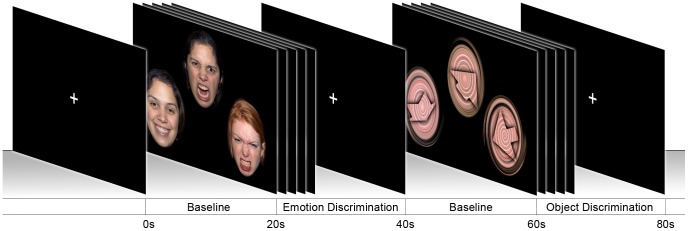
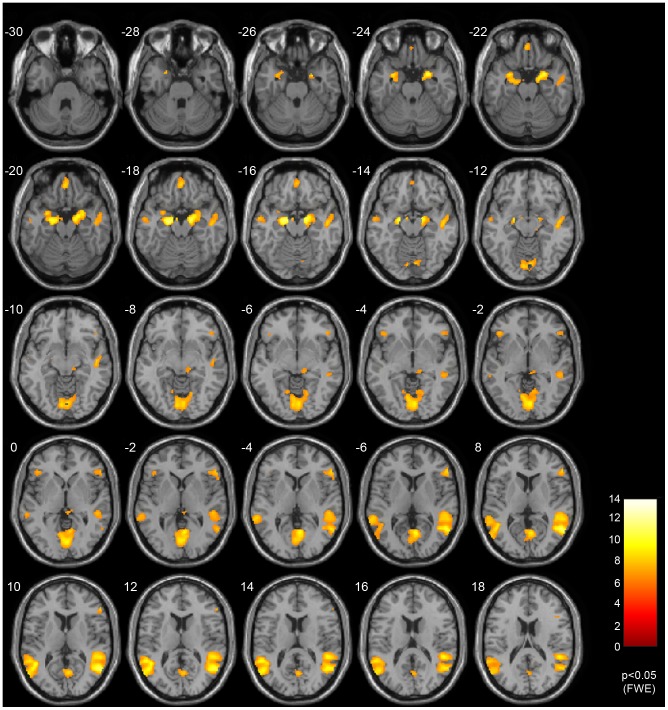
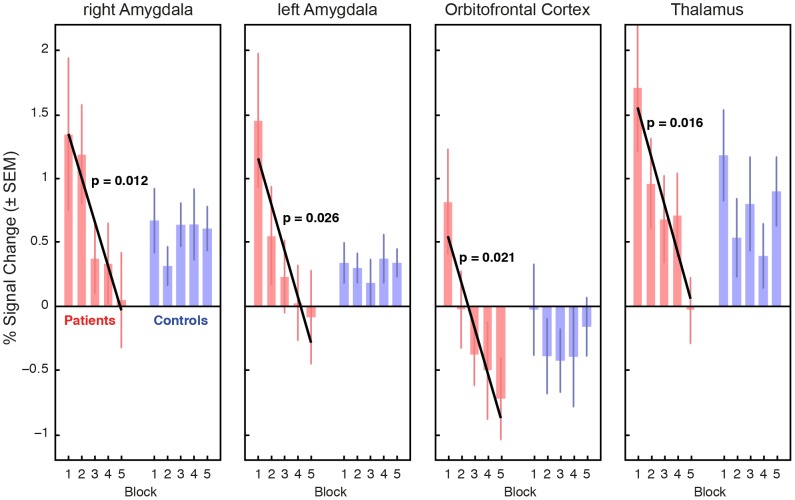
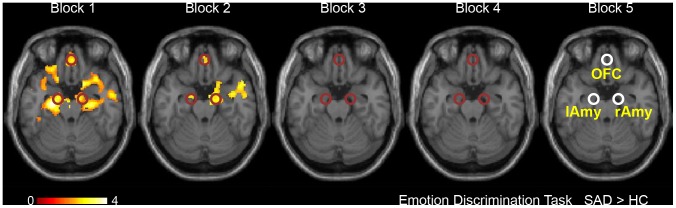
A characterizing symptom of social anxiety disorder (SAD) is increased emotional reactivity towards potential social threat in combination with impaired emotion and stress regulation. While several neuroimaging studies have linked SAD with hyperreactivity in limbic brain regions when exposed to emotional faces, little is known about habituation in both the amygdala and neocortical regulation areas. 15 untreated SAD patients and 15 age- and gender-matched healthy controls underwent functional magnetic resonance imaging during repeated blocks of facial emotion ([Formula: see text]) and object discrimination tasks ([Formula: see text]). Emotion processing networks were defined by a task-related contrast ([Formula: see text]). Linear regression was employed for assessing habituation effects in these regions. In both groups, the employed paradigm robustly activated the emotion processing and regulation network, including the amygdalae and orbitofrontal cortex (OFC). Statistically significant habituation effects were found in the amygdalae, OFC, and pulvinar thalamus of SAD patients. No such habituation was found in healthy controls. Concurrent habituation in the medial OFC and the amygdalae of SAD patients as shown in this study suggests intact functional integrity and successful short-term down-regulation of neural activation in brain areas responsible for emotion processing. Initial hyperactivation may be explained by an insufficient habituation to new stimuli during the first seconds of exposure. In addition, our results highlight the relevance of the orbitofrontal cortex in social anxiety disorders.
Overview
The claims and statistics of this paper haven’t been checked yet.
Free: it reads the open-access text and checks the first 5 claims that cite a source we can check. Create a free account to check every claim.
Integrity signals
Registry
Cites
Statistics
Figures
Verification
Claims the paper makes
The claims and statistics of this paper haven’t been checked yet.
Free: it reads the open-access text and checks the first 5 claims that cite a source we can check. Create a free account to check every claim.
Claims other papers make about this one
Each is checked against this paper’s own text: does it say what the citing paper says it does?
The cited source says what the claim attributes to it.
In the citing paper
“Another issue is that group differences may be more of a function of differential timing (e.g., Campbell et al., 2007; Goldin et al., 2009; Sladky et al., 2012).”
From Neural responses to social threat and predictors of cognitive behavioral therapy and acceptance and commitment therapy in social anxiety disorder (2017) · cites this paper as Sladky et al., 2012
Self-check
Percentages, sums and reported differences re-computed from the paper’s own numbers.
The self-check needs the paper’s full text.
Citations
Cites
Ashburner, J., & Friston, K. J. (2005) · NeuroImage · doi:10.1016/j.neuroimage.2005.02.018 · Cited by 7,507
Friston, K. J., Harrison, L., & Penny, W. (2003) · NeuroImage · doi:10.1016/s1053-8119(03)00202-7 · Cited by 4,583 · cited 1×
“Therefore, we stress the importance of further studies with advanced analysis methods, such as dynamic causal modeling [110], that enable description of the temporal and causal relationships within the highlighted network.”
BackgroundThe cognitive control of emotion
OCHSNER, K., & GROSS, J. (2005) · Trends in Cognitive Sciences · doi:10.1016/j.tics.2005.03.010 · Cited by 4,495 · cited 1×
“Besides this biased social cognition, brain networks for emotion and stress regulation [10] are assumed to be disrupted in SAD and other anxiety disorders [11–13].”
BackgroundThe size and burden of mental disorders and other disorders of the brain in Europe 2010
Wittchen, H. U., Jacobi, F., Rehm, J., Gustavsson, A., Svensson, M., Jönsson, B., Olesen, J., Allgulander, C., Alonso, J., Faravelli, C., et al. (2011) · European Neuropsychopharmacology · doi:10.1016/j.euroneuro.2011.07.018 · Cited by 3,754 · cited 1×
“According to recently published epidemiological data, social anxiety disorder (SAD) has a 12-month prevalence rate of 2:3% in Europe [1], 2:8{7:1% in the USA [2], and 0:8% in Japan [3] (for data on other regions refer to [4]).”
BackgroundMacDonald, A. W., Cohen, J. D., Stenger, V. A., & Carter, C. S. (2000) · Science · doi:10.1126/science.288.5472.1835 · Cited by 3,666 · cited 1×
“In this study, task-related (EDTwODT ) activations were observed not only in both right and left amygdalae, but also in left and right dorsolateral prefrontal cortex, which have been linked to voluntary cognitive control and performance monitoring [64].”
MethodEmotion, Decision Making and the Orbitofrontal Cortex
Bechara, A. (2000) · Cerebral Cortex · doi:10.1093/cercor/10.3.295 · Cited by 3,589 · cited 1×
“emotion regulation in regard to contextual information, long-term consequences, and voluntary emotion regulation [30–33].”
BackgroundFunctional neuroanatomy of emotion: A meta-analysis of emotion activation studies in PET and fMRI
Phan, K. L., Wager, T., Taylor, S. F., & Liberzon, I. (2002) · NeuroImage · doi:10.1006/nimg.2002.1087 · Cited by 3,502 · cited 1×
“The amygdala has been consistently identified as a core hub or gateway for emotion processing, identification, and evaluation of the affective value of a stimulus [16,17].”
BackgroundThe NimStim set of facial expressions: Judgments from untrained research participants.
Tottenham, N., Tanaka, J. W., Leon, A. C., McCarry, T., Nurse, M., Hare, T. A., Marcus, D. J., Westerlund, A., Casey, B., & Nelson, C. (2009) · Psychiatry Research · doi:10.1016/j.psychres.2008.05.006 · Cited by 3,454 · cited 1×
“The faces, displayed in Figure 1, were obtained from the NimStim facial stimulus set [111].”
MethodEtkin, A., & Wager, T. D. (2007) · American Journal of Psychiatry · doi:10.1176/appi.ajp.2007.07030504 · Cited by 3,391 · cited 1×
“In a quantitative meta-analysis of functional neuroimaging studies evaluating hyper- and hypoactivation in patients with anxiety disorders, hyperactivity of the amygdala was identified as a shared neurobiological feature in SAD, specific phobia and posttraumatic stress disorder (PTSD) [29].”
BackgroundHabituation: a model phenomenon for the study of neuronal substrates of behavior
Thompson, R. F., & Spencer, W. A. (1966) · Psychological Review · doi:10.1037/h0022681 · Cited by 2,608 · cited 1×
“One key regulation mechanism in the nervous system is habituation, which can be understood as a diminished response of a single nerve cell or a larger neuronal population to a repeatedly presented stimulus [46].”
Background
Research works printed but not linked: 1
- 14. Arnold M (1960) Emotion and personality, volume 1. New York: Columbia University Press. p. 57.
Cited by
Brühl, A. B., Delsignore, A., Komossa, K., & Weidt, S. (2014) · Neuroscience & Biobehavioral Reviews · doi:10.1016/j.neubiorev.2014.08.003 · Cited by 439
“The other study (Sladky et al., 2012) found rather a continuous decrease of activity over time in bilateral amygdala, orbitofrontal cortex (OFC) and right pulvinar, whereas in healthy controls this decrease or habituation was not detected.”
InfluentialWhat is mood? A computational perspective
Clark, J. E., Watson, S., & Friston, K. J. (2018) · Psychological Medicine · doi:10.1017/s0033291718000430 · Cited by 204
“showed that patients with social anxiety disorder demonstrated increased activation in orbitofrontal cortex and amygdala when viewing emotional faces (Sladky et al. 2012), but furthermore, in controls this network shows top-down modulation – which is reversed in patients – orbitofrontal cortex drives greater activatio…”
BackgroundBandelow, B., Baldwin, D., Abelli, M., Altamura, C., Dell’Osso, B., Domschke, K., Fineberg, N. A., Grünblatt, E., Jarema, M., Maron, E., et al. (2016) · The World Journal of Biological Psychiatry · doi:10.1080/15622975.2016.1181783 · Cited by 164
“In contrast to healthy controls, habituation to social stimuli was found in the amygdalae, orbital frontal cortex and pulvinar thalamus (Sladky et al. 2012).”
BackgroundSladky, R., Höflich, A., Küblböck, M., Kraus, C., Baldinger, P., Moser, E., Lanzenberger, R., & Windischberger, C. (2015) · Cerebral Cortex · doi:10.1093/cercor/bht279 · Cited by 152
Self-citationAmygdala habituation: A reliable fMRI phenotype
Plichta, M. M., Grimm, O., Morgen, K., Mier, D., Sauer, C., Haddad, L., Tost, H., Esslinger, C., Kirsch, P., Schwarz, A. J., et al. (2014) · NeuroImage · doi:10.1016/j.neuroimage.2014.09.059 · Cited by 131
“, 2011) and habituation (Sladky et al., 2012).”
Soleimani, G., Nitsche, M. A., Bergmann, T. O., Towhidkhah, F., Violante, I. R., Lorenz, R., Kuplicki, R., Tsuchiyagaito, A., Mulyana, B. E., Mayeli, A., et al. (2023) · Translational Psychiatry · doi:10.1038/s41398-023-02565-5 · Cited by 144
Eden, A. S., Schreiber, J., Anwander, A., Keuper, K., Laeger, I., Zwanzger, P., Zwitserlood, P., Kugel, H., & Dobel, C. (2015) · The Journal of Neuroscience · doi:10.1523/jneurosci.3659-14.2015 · Cited by 123
“, 2007), and the OFC (Zald and Kim, 1996a,b; Rauch et al., 1997; Sladky et al., 2012).”
BackgroundWellman, L. L., Forcelli, P. A., Aguilar, B. L., & Malkova, L. (2016) · The Journal of Neuroscience · doi:10.1523/jneurosci.0333-16.2016 · Cited by 110
Hyper-connectivity of subcortical resting state networks in social anxiety disorder
Arnold Anteraper, S., Triantafyllou, C., Sawyer, A. T., Hofmann, S. G., Gabrieli, J. D., & Whitfield-Gabrieli, S. (2014) · Brain Connectivity · doi:10.1089/brain.2013.0180 · Cited by 101
“Enhanced functional connectivity with striatum and regions of the OFC with SAD is equally interesting because of recent reports from task-based fMRI, highlighting the role of OFC in neural habituation in SAD (Sladky et al., 2012).”
Gray Matter Structural Alterations in Social Anxiety Disorder: A Voxel-Based Meta-Analysis
Wang, X., Cheng, B., Luo, Q., Qiu, L., & Wang, S. (2018) · Frontiers in Psychiatry · doi:10.3389/fpsyt.2018.00449 · Cited by 98
“Moreover, habituation effects to social stimuli were found in the thalamus of SAD patients (70).”
BackgroundUnreliability of putative fMRI biomarkers during emotional face processing
Nord, C. L., Gray, A., Charpentier, C. J., Robinson, O. J., & Roiser, J. P. (2017) · NeuroImage · doi:10.1016/j.neuroimage.2017.05.024 · Cited by 94
“, 2007, 2002); low and high anxious subjects also show differences in amygdala habituation (Sladky et al., 2012).”
BackgroundDirect diffusion-based parcellation of the human thalamus
Kumar, V., Mang, S. C., & Grodd, W. (2014) · Brain Structure and Function · doi:10.1007/s00429-014-0748-2 · Cited by 61
Schiepek, G., Tominschek, I., Heinzel, S., Aigner, M., Dold, M., Unger, A., Lenz, G., Windischberger, C., Moser, E., Plöderl, M., et al. (2013) · PLoS ONE · doi:10.1371/journal.pone.0071863 · Cited by 63
Self-citationNeurobiological candidate endophenotypes of social anxiety disorder
Bas-Hoogendam, J. M., Blackford, J. U., Brühl, A. B., Blair, K. S., van der Wee, N. J. A., & Westenberg, P. M. (2016) · Neuroscience & Biobehavioral Reviews · doi:10.1016/j.neubiorev.2016.08.040 · Cited by 62
“…study showing decreased habituation (Schneider et al., 1999) and an increased amygdala response during habituation in SAD patients (Veit et al., 2002), but it should be noted that two other studies did not provide evidence for failed habituation in SAD (Campbell et al., 2007; Sladky et al., 2012).”
BackgroundResultKlumpp, H., & Fitzgerald, J. M. (2018) · Current Psychiatry Reports · doi:10.1007/s11920-018-0948-1 · Cited by 51
Manning, J., Reynolds, G., Saygin, Z. M., Hofmann, S. G., Pollack, M., Gabrieli, J. D. E., & Whitfield-Gabrieli, S. (2015) · PLOS ONE · doi:10.1371/journal.pone.0125286 · Cited by 51
“The reduced relations between prefrontal and subcortical regions, such as the amygdala, could reflect decreased prefrontal regulation of subcortical regions [34].”
BackgroundA dynamical systems approach to triadic reciprocal determinism of social cognitive theory
Schiavo, M. L., Prinari, B., Saito, I., Shoji, K., & Benight, C. C. (2018) · Mathematics and Computers in Simulation · doi:10.1016/j.matcom.2018.10.006 · Cited by 72
Automatic Neural Processing of Disorder-Related Stimuli in Social Anxiety Disorder: Faces and More
Schulz, C., Mothes‐Lasch, M., & Straube, T. (2013) · Frontiers in Psychology · doi:10.3389/fpsyg.2013.00282 · Cited by 55
“After initial hyperactivation, strong habituation has been shown for anger, disgust, fear, happiness, sadness, surprise, and calmness in the amygdala,orbitofrontal cortex, and thalamus for SAD but not for healthy controls (Sladky et al., 2012).”
BackgroundComparing neural response to painful electrical stimulation with functional MRI at 3 and 7T
Hahn, A., Kranz, G. S., Seidel, E., Sladky, R., Kraus, C., Küblböck, M., Pfabigan, D. M., Hummer, A., Grahl, A., Ganger, S., et al. (2013) · NeuroImage · doi:10.1016/j.neuroimage.2013.06.010 · Cited by 52
Self-citationAmygdala Modulation During Emotion Regulation Training With fMRI-Based Neurofeedback
Barreiros, A. R., Almeida, I. A. T., Baía, B. C., & Castelo-Branco, M. S. (2019) · Frontiers in Human Neuroscience · doi:10.3389/fnhum.2019.00089 · Cited by 54
Wang, X., Cheng, B., Wang, S., Lu, F., Luo, Y., Long, X., & Kong, D. (2020) · Journal of Affective Disorders · doi:10.1016/j.jad.2020.11.057 · Cited by 50
Yokoyama, C., Kaiya, H., Kumano, H., Kinou, M., Umekage, T., Yasuda, S., Takei, K., Nishikawa, M., Sasaki, T., Nishimura, Y., et al. (2015) · NeuroImage Clinical · doi:10.1016/j.nicl.2015.05.011 · Cited by 53
Slow to warm up: the role of habituation in social fear
Avery, S. N., & Blackford, J. U. (2016) · Social Cognitive and Affective Neuroscience · doi:10.1093/scan/nsw095 · Cited by 50
“order are currently unclear (Campbell et al., 2007; Sladky et al., 2012), with differences in task demands likely contributing to variability across studies.”
BackgroundReproducibility of amygdala activation in facial emotion processing at 7T
Geissberger, N., Tik, M., Sladky, R., Woletz, M., Schuler, A., Willinger, D., & Windischberger, C. (2020) · NeuroImage · doi:10.1016/j.neuroimage.2020.116585 · Cited by 47
Self-citationSladky, R., Spies, M., Hoffmann, A., Kranz, G. S., Hummer, A., Gryglewski, G., Lanzenberger, R. R., Windischberger, C., & Kasper, S. F. (2014) · NeuroImage · doi:10.1016/j.neuroimage.2014.12.044 · Cited by 45
Self-citationMorrison, K. E., Bader, L. R., Clinard, C. T., Gerhard, D. M., Gross, S. E., & Cooper, M. A. (2014) · Behavioural Brain Research · doi:10.1016/j.bbr.2014.05.041 · Cited by 41
Hahn, A., Gryglewski, G., Nics, L., Rischka, L., Ganger, S., Sigurdardottir, H., Vraka, C., Silberbauer, L., Vanicek, T., Kautzky, A., et al. (2017) · Brain Structure and Function · doi:10.1007/s00429-017-1558-0 · Cited by 56
“This avoids repeated measurements on separate imaging systems as well as the accompanied attentional bias and adaptation, which would in turn directly affect task performance and hence brain activation (Sladky et al. 2012; Hahn et al. 2013).”
BackgroundSelf-citationPossible relation between olfaction and anxiety in healthy subjects
Takahashi, T., Itoh, H., Nishikawa, Y., Higuchi, Y., Nakamura, M., Sasabayashi, D., Nishiyama, S., Mizukami, Y., Masaoka, Y., & Suzuki, M. (2015) · Psychiatry and Clinical Neurosciences · doi:10.1111/pcn.12277 · Cited by 53
“, sensitivity) is associated with primary olfactory cortices, such as the piriform cortex and amygdala, while the orbitofrontal cortex is involved in odor discrimination or identification as a part of the secondary olfactory cortices; these brain regions have been implicated in both normal and pathological anxiety.(4,…”
ResultBurklund, L. J., Torre, J. B., Lieberman, M. D., Taylor, S. E., & Craske, M. G. (2017) · Psychiatry Research - Neuroimaging · doi:10.1016/j.pscychresns.2016.12.012 · Cited by 38
An active inference perspective for the amygdala complex
Sladky, R., Kargl, D., Haubensak, W. E., & Lamm, C. (2023) · Trends in Cognitive Sciences · doi:10.1016/j.tics.2023.11.004 · Cited by 47
“Bycontrast,exposurefacilitatesmodelupdates,manifestingasneuronal habituation, which occurs for predictable stimuli and could have an important therapeutic role in anxiety disorders [124].”
Self-citationSladky, R., Geissberger, N., Pfabigan, D. M., Kraus, C., Tik, M., Woletz, M., Paul, K., Vanicek, T., Auer, B., Kranz, G. S., et al. (2017) · NeuroImage · doi:10.1016/j.neuroimage.2016.12.024 · Cited by 43
“…have used such optimized acquisition protocols to obtain high quality activation maps from the amygdala at a field strength of 3 T (Derntl et al., 2009a 2009b; Habel et al., 2007; Hahn et al., 2011; Karlsson et al., 2010; Morawetz et al., 2010, 2016; Sladky et al., 2012, 2013, 2015a, 2015b).”
Self-citationTopography of the Anxious Self: Abnormal Rest-Task Modulation in Social Anxiety Disorder
Angeletti, L. L., Scalabrini, A., Ricca, V., & Northoff, G. (2021) · The Neuroscientist · doi:10.1177/10738584211030497 · Cited by 42
Aversive eye gaze during a speech in virtual environment in patients with social anxiety disorder
Kim, H., Shin, J. E., Hong, Y.-J., Shin, Y.-B., Shin, Y. S., Han, K., Kim, J.-J., & Choi, S.-H. (2018) · Australian & New Zealand Journal of Psychiatry · doi:10.1177/0004867417714335 · Cited by 34
“For example, the mean LSAS scores of HCs reported in other studies include Talati et al., 8.1; Sladky et al., 5.3; and Pujol et al., 11.8; cf. Liu et al., 20.0; and Ding et al., 19.2 (Ding et al., 2011; Liu et al., 2015; Pujol et al., 2013; Sladky et al., 2012; Talati et al., 2013).”
ResultInfluentialLooking at the self in front of others: Neural correlates of attentional bias in social anxiety
Choi, S.-H., Shin, J.-E., Ku, J., & Kim, J.-J. (2016) · Journal of Psychiatric Research · doi:10.1016/j.jpsychires.2016.01.001 · Cited by 33
Ekhtiari, H., Kuplicki, R., Aupperle, R. L., & Paulus, M. P. (2021) · NeuroImage · doi:10.1016/j.neuroimage.2021.118180 · Cited by 31
“…al., 2003 )). t has been reported frequently in fMRI studies that the amygdala ha- ituates to emotionally salient stimuli (emotional faces) ( Breiter et al., 996 ; Fischer et al., 2003 ; Sladky et al., 2012 ) and its habituation is a ore reliable index than its mean signal ( Plichta et al., 2014 ).”
Backgroundvan den Bulk, B. G., Somerville, L. H., van Hoof, M., van Lang, N. D. J., van der Wee, N. J. A., Crone, E. A., & Vermeiren, R. R. J. M. (2016) · Developmental Cognitive Neuroscience · doi:10.1016/j.dcn.2016.08.002 · Cited by 38
Báez, S., Tangarife, M. A., Davila-Mejia, G., Trujillo‐Güiza, M. L., & Forero, D. A. (2023) · Frontiers in Psychiatry · doi:10.3389/fpsyt.2023.1192683 · Cited by 41
Task-dependent modulation of amygdala connectivity in social anxiety disorder
Minkova, L., Sladky, R., Kranz, G. S., Woletz, M., Geissberger, N., Kraus, C., Lanzenberger, R., & Windischberger, C. (2017) · Psychiatry Research: Neuroimaging · doi:10.1016/j.pscychresns.2016.12.016 · Cited by 26
Self-citationTest–retest reliability and task order effects of emotional cognitive tests in healthy subjects
Adams, T., Pounder, Z., Preston, S., Hanson, A., Gallagher, P., Harmer, C. J., & McAllister-Williams, R. H. (2016) · Cognition and Emotion · doi:10.1080/02699931.2015.1055713 · Cited by 26
“It is important not to extrapolate the data without care into patient populations where there is evidence of differential habituation effects compared to healthy controls (Sladky et al., 2012).”
BackgroundBoehme, S., Mohr, A., Becker, M. P., Miltner, W. H., & Straube, T. (2014) · Biology of Mood & Anxiety Disorders · doi:10.1186/2045-5380-4-6 · Cited by 23
“However, findings are variable and strongly depend on task conditions [8,9] and time course parameters [18,33].”
BackgroundSaul, M. A., He, X., Black, S., & Charles, F. (2022) · Frontiers in Psychology · doi:10.3389/fpsyg.2021.568921 · Cited by 26
“, 2011), the medial prefrontal cortex (Qiu et al., 2011; Sladky et al., 2012) and pathways between the frontal and visual lobes (Liao et al.”
BackgroundAltered time course of amygdala activation during speech anticipation in social anxiety disorder
Davies, C. D., Young, K., Torre, J. B., Burklund, L. J., Goldin, P. R., Brown, L. A., Niles, A. N., Lieberman, M. D., & Craske, M. G. (2017) · Journal of Affective Disorders · doi:10.1016/j.jad.2016.11.014 · Cited by 21
“Though rapid amygdala activation and habituation to social stimuli have also been found in individuals with social anxiety (Sladky et al., 2012) and other anxiety disorders (Swartz et al., 2014), these studies have only focused on simple stimuli (images of faces) rather than complex social stimuli…”
BackgroundSwartz, J. R., Phan, K. L., Angstadt, M., Fitzgerald, K. D., & Monk, C. S. (2014) · Development and Psychopathology · doi:10.1017/s0954579414001047 · Cited by 26
“We hypothesized that we would observe one of two patterns within pediatric anxiety disorder patients: either they would evidence overall amygdala hyperactivation over the course of scanning or they would evidence an initial heightened amygdala response followed by decreases over time, similar to previous findings in a…”
ResultInfluentialVoegler, R., Peterburs, J., Bellebaum, C., & Straube, T. (2019) · Scientific Reports · doi:10.1038/s41598-019-41268-0 · Cited by 24
Traces of culture: The feedback loop between behavior, brain, and disorder
Crafa, D., & Nagel, S. K. (2020) · Transcultural Psychiatry · doi:10.1177/1363461519879515 · Cited by 30
Brain circuitry underlying the ABC model of anxiety
Bystritsky, A., Spivak, N. M., Dang, B. H., Becerra, S. A., Distler, M. G., Jordan, S. E., & Kuhn, T. P. (2021) · Journal of Psychiatric Research · doi:10.1016/j.jpsychires.2021.03.030 · Cited by 21
Neural habituation during acute stress signals a blunted endocrine response and poor resilience
Liu, Y., Zhao, X., Hu, W., Ren, Y., Wei, Z., Ren, X., Tang, Z., Wang, N., Chen, H., Yi-zhuo, L., et al. (2023) · Psychological Medicine · doi:10.1017/s0033291723001666 · Cited by 24
“Furthermore, a number of neuroimaging studies found that habituation in the prefrontal cortex and limbic system was more pronounced than that in other areas (Plichta et al., 2014; Sladky et al., 2012).”
BackgroundMartínez‐Navarro, M., Lara-Mayorga, I. M., Negrete, R., Bilecki, W., Wawrzczak‐Bargieła, A., Gonçalves, L., Dickenson, A. H., Przewłocki, R., Baños, J.-E., & Maldonado, R. J. (2019) · Neuropharmacology · doi:10.1016/j.neuropharm.2019.01.012 · Cited by 18
Thalamic morphometric changes induced by first‐person action videogame training
Momi, D., Smeralda, C. L., Sprugnoli, G., Neri, F., Rossi, S., Rossi, A., Lorenzo, G. D., & Santarnecchi, E. (2019) · European Journal of Neuroscience · doi:10.1111/ejn.14272 · Cited by 20
“, 2016), anxiety disorder (Pacheco‐Unguetti, Acosta, Marqués, & Lupiáñez, 2011; Sladky et al., 2012), attention‐deficit/hyperactivity disorder (Ivanov et al.”
Watve, A., Haugg, A., Frei, N., Koush, Y., Willinger, D., Brühl, A. B., Stämpfli, P., Scharnowski, F., & Sladky, R. (2024) · Frontiers in Neuroscience · doi:10.3389/fnins.2023.1286665 · Cited by 20
Self-citationBas‐Hoogendam, J. M., van Steenbergen, H., Blackford, J. U., Tissier, R., van der Wee, N. J. A., & Westenberg, P. M. (2019) · Depression and Anxiety · doi:10.1002/da.22962 · Cited by 18
“Although previous neuroimaging studies on habituation in patients with SAD yielded divergent results (Campbell et al., 2007; Sladky et al., 2012), potentially due to differences in task characteristics (cf., the extended discussion in Bas‐Hoogendam et al. (2016)), our findings are in line with work…”
ResultColbert, S. M. C., Funkhouser, S. A., Johnson, E. C., Morrison, C. L., Hoeffer, C. A., Friedman, N. P., Ehringer, M. A., & Evans, L. M. (2021) · American Journal of Medical Genetics Part B Neuropsychiatric Genetics · doi:10.1002/ajmg.b.32874 · Cited by 14
Basolateral and central amygdala orchestrate how we learn whom to trust
Sladky, R., Riva, F., Rosenberger, L. A., van Honk, J., & Lamm, C. (2021) · Communications Biology · doi:10.1038/s42003-021-02815-6 · Cited by 19
Self-citationCompère, L., Siegle, G. J., & Young, K. D. (2021) · Translational Psychiatry · doi:10.1038/s41398-021-01507-3 · Cited by 13
“, clinical features such as state anxiety and rumination which can account for neural activation [26,33,34,] and habituation [35].”
BackgroundTemporal trends in attention disengagement from social threat as a function of social anxiety
McGlade, A. L., Craske, M. G., & Niles, A. N. (2019) · Journal of Behavior Therapy and Experimental Psychiatry · doi:10.1016/j.jbtep.2019.101529 · Cited by 14
Ghobadi‐Azbari, P., Khayati, R. M., & Ekhtiari, H. (2023) · Frontiers in Human Neuroscience · doi:10.3389/fnhum.2023.1076711 · Cited by 12
“In particular, the amygdala, a region commonly associated with rewards valuation and emotional reactivity, rapidly habituates to repeated exposure to emotional stimuli (Breiter et al., 1996; Fischer et al., 2003; Sladky et al., 2012; Plichta et al., 2014).”
BackgroundKark, S. M., Slotnick, S. D., & Kensinger, E. A. (2016) · Journal of Cognitive Neuroscience · doi:10.1162/jocn_a_01049 · Cited by 11
“…future clinical research that focuses on patients with posttraumatic stress disorder and social anxiety, both of which show altered habituation of the amygdala to emotional stimuli (Sladky et al., 2012; Shin et al., 2005) and implicit memory biases toward negative stimuli (Coles & Heimberg, 2002).”
Neural mechanisms of face emotion processing in youths and adults with bipolar disorder
Kryza‐Lacombe, M., Brotman, M. A., Reynolds, R. C., Towbin, K. E., Pine, D. S., Leibenluft, E., & Wiggins, J. L. (2019) · Bipolar Disorders · doi:10.1111/bdi.12768 · Cited by 11
Simon, R. A., Barazanji, N., Jones, M. P., Bednarska, O., Icenhour, A., Engström, M., Hamilton, J. P., Keita, Å. V., & Walter, S. (2021) · Scientific Reports · doi:10.1038/s41598-020-80873-2 · Cited by 11
Maron, E., Lan, C.-C., & Nutt, D. (2018) · Current Topics in Behavioral Neurosciences · doi:10.1007/7854_2018_49 · Cited by 9
Yan, M., Hodgdon, E. A., Yang, R., Yu, Q., Inagaki, T. K., & Wiggins, J. L. (2022) · Social Cognitive and Affective Neuroscience · doi:10.1093/scan/nsac038 · Cited by 8
“Only the first run of the rigged task was used for this set of analyses because the amygdala and other threat/reward regions have been shown to habituate over the course of a few minutes (Sladky et al., 2012; Williams et al., 2013; Stevens et al., 2017).”
MethodEarly maternal care and amygdala habituation to emotional stimuli in adulthood
Holz, N. E., Häge, A., Plichta, M. M., Boecker-Schlier, R., Jennen-Steinmetz, C., Baumeister, S., Meyer‐Lindenberg, A., Laucht, M., Banaschewski, T., & Brandeis, D. (2021) · Social Cognitive and Affective Neuroscience · doi:10.1093/scan/nsab059 · Cited by 8
“(2008) showed that individuals with higher trait anxiety failed to habituate, the opposite was found in patients with social anxiety disorder (Sladky et al., 2012).”
BackgroundLi, Q., Zhang, X., Yang, X., Pan, N., Li, X., Kemp, G. J., Wang, S., & Gong, Q. (2023) · Neurobiology of Stress · doi:10.1016/j.ynstr.2023.100578 · Cited by 6
Ko, Y. C., Kim, H. E., Kim, B.-H., Ham, K., Lee, S., Park, B., & Kim, J. (2025) · Journal of Affective Disorders · doi:10.1016/j.jad.2025.03.104 · Cited by 5
Predicting Affective Information – An Evaluation of Repetition Suppression Effects
Trapp, S., & Kotz, S. A. (2016) · Frontiers in Psychology · doi:10.3389/fpsyg.2016.01365 · Cited by 4
“For example, Sladky et al. (2012) investigated performance in a facial discrimination task with participants suffering from social anxiety disorder (SAD).”
Yuan, Y. O. U., & Wang, L. (2020) · Advances in Psychological Science · doi:10.3724/sp.j.1042.2020.00612 · Cited by 4
Reliability of DNMSQuest as a Screening Tool for Mood Disorders in Cervical Dystonia
Rafee, S., Ndukwe, I., O’Riordan, S., & Hutchinson, M. (2021) · Movement Disorders Clinical Practice · doi:10.1002/mdc3.13273 · Cited by 4
“Aberrant amygdala activity has been noted in patients with anxiety disorder.(18) Apart from the mood disorders, the amygdala also provides rapid and automatic processing involved in social cognition.”
BackgroundImaging brain circuits in anxiety disorders
Kasper, S. F., Gryglewski, G., & Lanzenberger, R. R. (2014) · The Lancet Psychiatry · doi:10.1016/s2215-0366(14)70348-7 · Cited by 2
Self-citationJehli, E., Denier, N., Federspiel, A., Dierks, T., Strik, W. K., Soravia, L. M., & Grieder, M. (2024) · Brain Connectivity · doi:10.1089/brain.2024.0031 · Cited by 1
“…anxiety-related brain areas: amygdala (Brinkmann et al., 2017; Buff et al., 2017), hippocampus (Pedersen et al., 2017a; 2017b), orbitofrontal gyrus (Sladky et al., 2012), thalamus (Cano et al., 2018; Troyner et al., 2018), parahippocampal gyrus (Aminoff et al., 2013; Kirlic et al., 2022), striatum…”
Szczypiński, J., Golec-Staśkiewicz, K., Pluta, A., & Marchewka, A. (2024) · Social Neuroscience · doi:10.1080/17470919.2024.2437404 · Cited by 1
“Moreover, in humans, medial OFC plays a role in habituation of socially relevant sensory stimuli (Avery & Blackford, 2016; Sladky et al., 2012), yet it was not documented for lateral OFC.”
Representing Human Cultural and Biological Diversity in Neuropsychiatry: Why and How
Crafa, D., & Nagel, S. K. (2016) · International Congress of the International Association for Cross-Cultural Psychology (IACCP) · doi:10.4087/qxuw6466 · Cited by 1
Blushing and gaze avoidance in social anxiety disorder : a structural neuroanatomical investigation
der Merwe, V., & Thandiwe, N. (2014) · Open University of Cape Town (University of Cape Town)
Motor Network Organization in Frontal Lobe Epilepsy
Woodward, K. (2013) · Libraries and Cultural Resources (University of Calgary) · doi:10.11575/prism/27016
Swartz, J. R. (2013) · Deep Blue (University of Michigan)
Review of Brain Imaging Studies of Social Anxiety Disorder
Yokoyama, C., Kaiya, H., Tanii, H., & Kumano, H. (2015) · Anxiety Disorder Research · doi:10.14389/jsad.7.1_52
Valencia, H. O. (2016) · UPCommons institutional repository (Universitat Politècnica de Catalunya) · doi:10.5821/dissertation-2117-109351
“2007), especially in SAD patients (Sladky et al. 2012).”
Neuroendocrinology and Neuroimaging Studies of Social Anxiety Disorder
Phan, K. L., & Klumpp, H. (2014) · Elsevier eBooks · doi:10.1016/b978-0-12-394427-6.00012-1 · Cited by 1
The Impact of Social Anxiety during the Covid-19 Pandemic in Adolescence
Cao, R. (2021) · Journal of Frontiers in Educational Research · doi:10.23977/jfer.2021.010218
“These brain areas are associated with adolescent social anxiety disorder[9, 10].”
BackgroundSladky, R., Riva, F., Rosenberger, L. A., van Honk, J., & Lamm, C. (2021) · bioRxiv (Cold Spring Harbor Laboratory) · doi:10.1101/2021.05.03.442429
Self-citationCarving Out the Path to Computational Biomarkers for Mental Disorders
Sladky, R., Todeva-Radneva, A., & Lamm, C. (2023) · Neuromethods · doi:10.1007/978-1-0716-3230-7_10
Self-citationReaktionsebene I – Geistig Emotionale Reaktionen
Pientka, M. (2024) · Springer eBooks · doi:10.1007/978-3-658-45665-8_6
Imaging Studies of Anxiety Disorders
Mann, J. J., & Yin, H. (2015) · Elsevier eBooks · doi:10.1016/b978-0-12-397025-1.00120-2 · Cited by 1
Rochet, M. (2020) · theses.fr (ABES) · doi:10.70675/fca54068zca4ez46f7z940ezd140a60117df
Robbins, K. G., Bredbenner, A., Osbaldeston, R. A., Villafañe, K., Shin, E. E., Merkulova, E., Clevenger, A., Delean, P. B., Campos, C., Peet, G. C., et al. (2026) · Frontiers in Molecular Neuroscience · doi:10.3389/fnmol.2026.1772915 · Cited by 1
“…of diverse human neuropsychiatric conditions including autism, attention-deficit hyperactivity disorder, schizophrenia, and anxiety (Jansiewicz et al., 2004; Meincke et al., 2004; Massa and O’Desky, 2012; Sladky et al., 2012; Avery and Blackford, 2016; Jamal et al., 2021; Dwyer et al., 2023).”
van de Groep, I. H., Zijlmans, J., & Marhe, R. (2026) · Neuroimage Reports · doi:10.1016/j.ynirp.2026.100371
“…Disorder (ASD) (Kleinhans et al., 2009, 2016; Swartz et al., 2013; Wiggins et al., 2014), Social Anxiety Disorder (SAD) (Bas-Hoogendam et al., 2019; Sladky et al., 2012), Post Traumatic Stress Disorder (PTSD) (Hinojosa et al., 2023), Borderline Personality Disorder (BPD) (Bilek et al., 2019) and…”
Metadata
- Authors
- Sladky, R., Höflich, A., Atanelov, J., Kraus, C., Baldinger, P., Moser, E., Lanzenberger, R., & Windischberger, C.
- Affiliations
- Medical University of Vienna (AT)
- Corresponding author
- Windischberger, Christian
- ORCID
- Venue
- PLoS ONE
- Publisher
- Public Library of Science (PLoS)
- Published
- 2012-11-29
- Volume
- 7
- Issue
- 11
- Pages
- e50050
- ISSN
- 1932-6203 (ISSN-L)
- PMC
- PMC3510234
- OpenAlex
- W2049102355
- Cited by
- 85
- References
- 115
- Citations by year
- 2026: 2 · 2025: 1 · 2024: 4 · 2023: 7 · 2022: 2 · 2021: 11 · 2020: 5 · 2019: 6 · 2018: 6 · 2017: 5 · 2016: 12 · 2015: 7 · 2014: 10 · 2013: 7
- FWCI
- 10.30
- Type
- journal article
- Language
- en
- Open access
- gold
- doi.org
- Locations
- PLoS ONE (publishedVersion, cc-by)
- PubMed Central (publishedVersion, cc-by)
- PubMed (publishedVersion)
- DOAJ (DOAJ: Directory of Open Access Journals) (submittedVersion, cc-by-sa)
- Funders
- AstraZeneca
- Austrian Science Fund (P 23021)
- Oesterreichische Nationalbank (P23021, P12982)
- H. Lundbeck A/S
- Topics
- Social Sciences › Psychology › Experimental and Cognitive Psychology › Anxiety, Depression, Psychometrics, Treatment, Cognitive Processes
- Life Sciences › Neuroscience › Cognitive Neuroscience › Neural and Behavioral Psychology Studies
- Life Sciences › Neuroscience › Cognitive Neuroscience › Face Recognition and Perception
- Keywords
- social anxiety disorder, neural habituation, amygdala, orbitofrontal cortex, emotional face processing, object discrimination, emotion regulation, emotional reactivity, limbic system
- MeSH terms
- Adolescent, Adult, Amygdala, Anxiety Disorders, Brain Mapping, Female, Frontal Lobe, Habituation, Psychophysiologic, Humans, Magnetic Resonance Imaging, Male, Case-Control Studies, Young Adult
About these checks
Registry, retraction, Cites and statistics results are computed, not judged, with one exception: a printed reference that no index lists is read once by a model before it counts as a citation error. Claims are extracted by a model and kept only when their quote appears verbatim in the text; each cited source is then checked, with a model’s help, for whether it says what the claim relies on. Those verdicts can be wrong — read the claim’s quote and the cited source before relying on one.
Statistics and arithmetic are recomputed, not judged.
Confidence bands are shown only for fields calibrated on our annotated test set. None is calibrated yet, so no band is shown.
What counts as a claim ›How we measure confidence ›How we check this ›
Are you an author, or do you see a problem with this page? Request a review
Data sources
Bibliographic data: Semantic Scholar, OpenAlex, Crossref.
Contains information from the Semantic Scholar Academic Graph Datasets, made available under the ODC Attribution License (ODC-BY 1.0).
Semantic Scholar’s data is described in: Kinney, R., et al. (2023). The Semantic Scholar Open Data Platform. arXiv:2301.10140.
