

Cellular Catabolism of the Iron-Regulatory Peptide Hormone Hepcidin
Open accessThe DOI matches its Crossref record; 23 of the 23 references it cites were found in a registry or an index.
Abstract
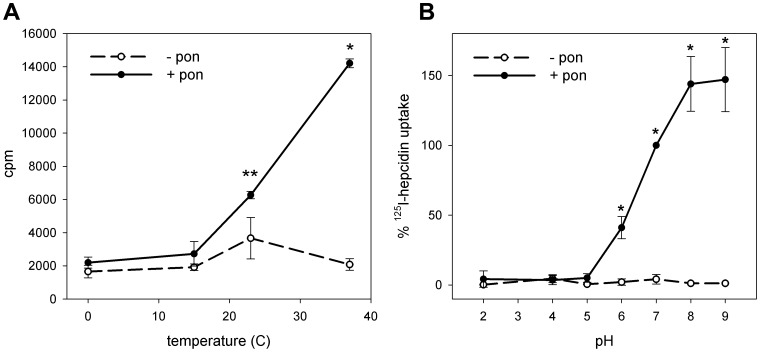
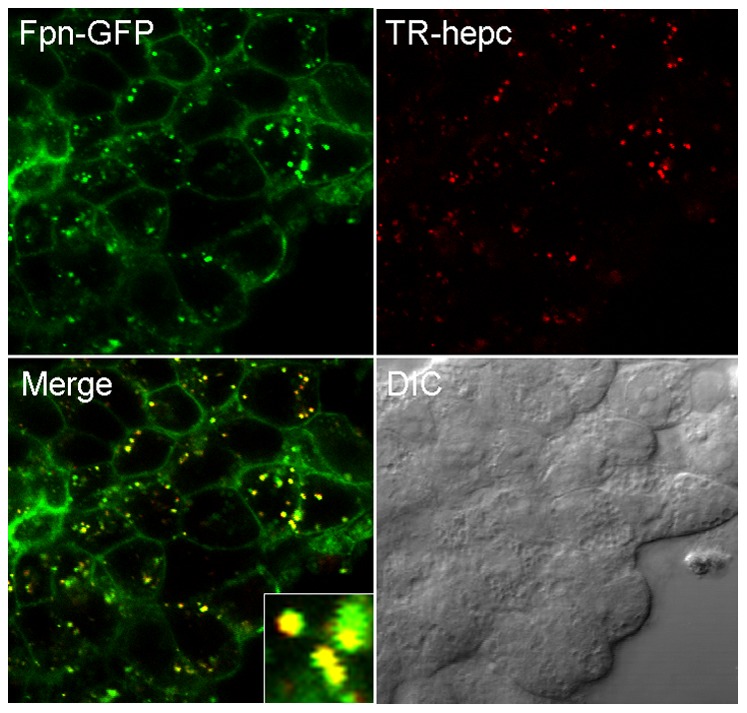
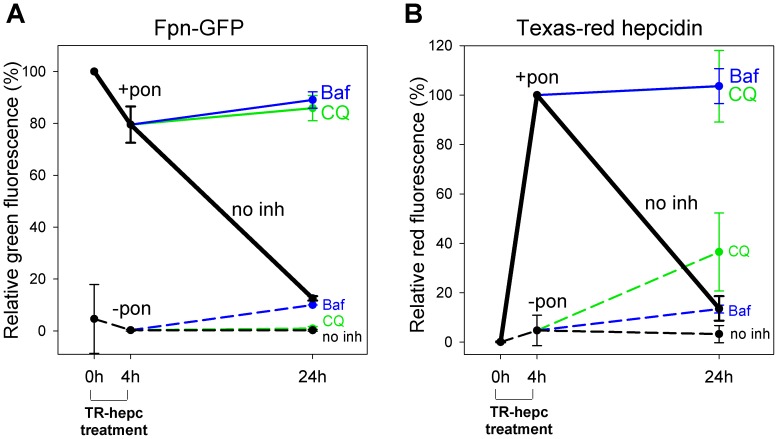
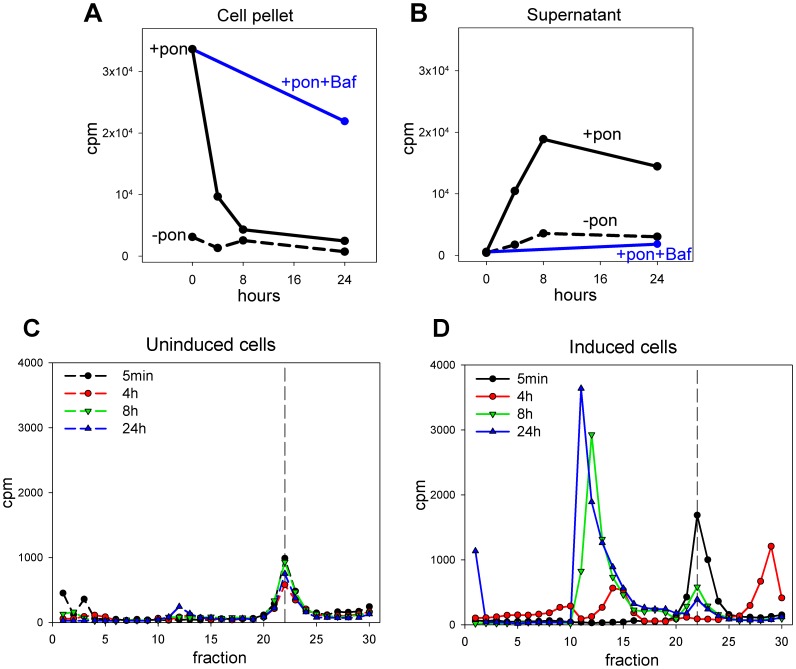
Hepcidin, a 25-amino acid peptide hormone, is the principal regulator of plasma iron concentrations. Hepcidin binding to its receptor, the iron exporter ferroportin, induces ferroportin internalization and degradation, thus blocking iron efflux from cells into plasma. The aim of this study was to characterize the fate of hepcidin after binding to ferroportin. We show that hepcidin is taken up by ferroportin-expressing cells in a temperature- and pH-dependent manner, and degraded together with its receptor. When Texas red-labeled hepcidin (TR-Hep) was added to ferroportin-GFP (Fpn-GFP) expressing cells, confocal microscopy showed co-localization of TR-Hep with Fpn-GFP. Using flow cytometry, we showed that the peptide was almost completely degraded by 24 h after its addition, but that lysosomal inhibitors completely prevented degradation of both ferroportin and hepcidin. In addition, using radio-labeled hepcidin and HPLC analysis we show that hepcidin is not recycled, and that only degradation products are released from the cells. Together these results show that the hormone hepcidin and its receptor ferroportin are internalized together and trafficked to lysosomes where both are degraded.
Overview
The claims and statistics of this paper haven’t been checked yet.
Free: it reads the open-access text and checks the first 5 claims that cite a source we can check. Create a free account to check every claim.
Integrity signals
Registry
Cites
Statistics
Figures
Verification
Claims the paper makes
The claims and statistics of this paper haven’t been checked yet.
Free: it reads the open-access text and checks the first 5 claims that cite a source we can check. Create a free account to check every claim.
Claims other papers make about this one
Each is checked against this paper’s own text: does it say what the citing paper says it does?
The source backs part of the claim, not all of it — or backs it for a different population, condition or comparison.
In the citing paper
“The second mechanism of hepcidin clearance depends on the endocytosis of the hepcidin-ferroportin complexes by the cells that express high concentrations of ferroportin [30,31].”
From Hepcidin-Ferroportin Interaction Controls Systemic Iron Homeostasis (2021) · cites this paper as [31]
Experimental — accuracy not yet measured
Self-check
Percentages, sums and reported differences re-computed from the paper’s own numbers.
The self-check needs the paper’s full text.
Citations
Cites
Hepcidin Regulates Cellular Iron Efflux by Binding to Ferroportin and Inducing Its Internalization
Nemeth, E., Tuttle, M. S., Powelson, J., Vaughn, M. B., Donovan, A., Ward, D. M., Ganz, T., & Kaplan, J. (2004) · Science · doi:10.1126/science.1104742 · Cited by 4,803 · cited 7×
“Hepcidin binding to ferroportin is temperature-dependent, with no binding seen at 0uC as described before [1], and a progressive increase in binding only at temperatures above 15uC.”
BackgroundMethodResultInfluentialSelf-citationDefensins: antimicrobial peptides of innate immunity
Ganz, T. (2003) · Nature Reviews Immunology · doi:10.1038/nri1180 · Cited by 3,066 · cited 1×
“Defensins act by embedding in the membrane and increasing membrane permeability [17].”
BackgroundSelf-citationHepcidin, a urinary antimicrobial peptide synthesized in the liver
Park, C. H., Valore, E. V., Waring, A. J., & Ganz, T. (2001) · Journal of Biological Chemistry · doi:10.1074/jbc.m008922200 · Cited by 2,168 · cited 1×
“[11,15,16].”
Self-citationLEAP-1, a novel highly disulfide-bonded human peptide, exhibits antimicrobial activity
Krause, A., Neitz, S., Mägert, H.-J., Schulz, A., Forssmann, W.-G., Schulz-Knappe, P., & Adermann, K. (2000) · FEBS Letters · doi:10.1016/s0014-5793(00)01920-7 · Cited by 1,324 · cited 1×
“[11,15,16].”
Ganz, T., & Nemeth, E. (2012) · Biochimica et Biophysica Acta (BBA) - Molecular Cell Research · doi:10.1016/j.bbamcr.2012.01.014 · Cited by 1,282 · cited 1×
“Hepcidin acts by binding to ferroportin on cell surfaces, inducing ferroportin internalization and degradation, and thereby blocking iron efflux into plasma from professional iron-exporting cells: hepatocytes, duodenal enterocytes, splenic and other macrophages and syncytiotrophoblasts [1,2].”
BackgroundSelf-citationImmunoassay for human serum hepcidin
Ganz, T., Olbina, G., Girelli, D., Nemeth, E., & Westerman, M. (2008) · Blood · doi:10.1182/blood-2008-02-139915 · Cited by 688 · cited 1×
“Detectable concentrations of hepcidin in urine, indicative of peptide that escaped proteolysis in the proximal tubules, are consistent with this mechanism [24], as is the efficient clearance of hepcidin into the dialysate during hemodialysis [25].”
BackgroundSelf-citationHepcidin-Induced Endocytosis of Ferroportin Is Dependent on Ferroportin Ubiquitination
Qiao, B., Sugianto, P., Fung, E., del-Castillo-Rueda, A., Moran-Jimenez, M.-J., Ganz, T., & Nemeth, E. (2012) · Cell Metabolism · doi:10.1016/j.cmet.2012.03.018 · Cited by 334 · cited 1×
“Previous studies have shown that binding of hepcidin to ferroportin results in ubiquitination of the receptor which leads to its internalization and subsequent degradation in lysosomes [1,4–6].”
BackgroundSelf-citationTheoretical Insights into the Mechanism for Thiol/Disulfide Exchange
Fernandes, P. A., & Ramos, M. J. (2004) · Chemistry – A European Journal · doi:10.1002/chem.200305343 · Cited by 309 · cited 1×
“The thiolate anion is the reactive species in a disulfide exchange reaction, so the rate of the reaction is greatest at alkaline pH values [18].”
BackgroundDelaby, C., Pilard, N., Gonçalves, A. S., Beaumont, C., & Canonne-Hergaux, F. (2005) · Blood · doi:10.1182/blood-2005-06-2398 · Cited by 283 · cited 1×
“Addition of the lysosomal inhibitors chloroquine and bafilomycin completely prevented degradation of both molecules, showing that the lysosomes are the main site of endocytic proteolysis for both molecules, and extending on previous reports that the lysosome is the main destination for endocytosed ferroportin [1,5,6].”
Nemeth, E., Preza, G. C., Jung, C.-L., Kaplan, J., Waring, A. J., & Ganz, T. (2006) · Blood · doi:10.1182/blood-2005-05-2049 · Cited by 273
Self-citation
Research works printed but not linked: 2
- Park CH, Valore EV, Waring AJ, Ganz T (2001) Hepcidin, a urinary antimicrobial peptide synthesized in the liver. J Biol Chem 276: 7806– 7810. 11113131 · DOI · Paper page
- Clark RJ, Tan CC, Preza GC, Nemeth E, Ganz T, et al (2011) Understanding the structure/activity relationships of the iron regulatory peptide hepcidin. Chem Biol 18: 336– 343. 21439478 PMC3073735 · DOI · Paper page
Cited by
Biomarkers of Nutrition for Development—Folate Review
Bailey, L. B., Stover, P. J., McNulty, H., Fenech, M. F., Gregory, J. F., Mills, J. L., Pfeiffer, C. M., Fazili, Z., Zhang, M., Ueland, P. M., et al. (2015) · The Journal of Nutrition · doi:10.3945/jn.114.206599 · Cited by 1,136
Hepcidin-Ferroportin Interaction Controls Systemic Iron Homeostasis
Nemeth, E., & Ganz, T. (2021) · International Journal of Molecular Sciences · doi:10.3390/ijms22126493 · Cited by 540
“The second mechanism of hepcidin clearance depends on the endocytosis of the hepcidin-ferroportin complexes by the cells that express high concentrations of ferroportin [30,31].”
BackgroundSelf-citationBiomarkers of Nutrition for Development (BOND)—Iron Review
Lynch, S., Pfeiffer, C. M., Georgieff, M. K., Brittenham, G., Fairweather-Tait, S., Hurrell, R. F., McArdle, H. J., & Raiten, D. J. (2018) · The Journal of Nutrition · doi:10.1093/jn/nxx036 · Cited by 336
“• Unregulated renal excretion is the major pathway for hepcidin clearance from the circulation, in addition to the quantity removed by receptor-mediated endocytosis primarily in hepatocytes and the macrophages of the liver, spleen, and bone marrow (119, 120).”
BackgroundAschemeyer, S., Qiao, B., Stefanova, D., Valore, E. V., Sek, A. C., Ruwe, T. A., Vieth, K. R., Jung, G., Casu, C., Rivella, S., et al. (2018) · Blood · doi:10.1182/blood-2017-05-786590 · Cited by 325
Self-citationCellular Iron Metabolism and Regulation
Gao, G., Li, J., Zhang, Y., & Chang, Y.-Z. (2019) · Advances in Experimental Medicine and Biology · doi:10.1007/978-981-13-9589-5_2 · Cited by 311
The regulation of iron transport
Frazer, D. M., & Anderson, G. J. (2014) · BioFactors · doi:10.1002/biof.1148 · Cited by 216
“crucial cysteine residue located in the fourth extracellular loop of ferroportin 1, covalently linking the two molecules together [41].”
BackgroundIron Balance and the Role of Hepcidin in Chronic Kidney Disease
Ganz, T., & Nemeth, E. (2016) · Seminars in Nephrology · doi:10.1016/j.semnephrol.2016.02.001 · Cited by 188
“Hepcidin also undergoes endocytosis with its receptor/iron transporter ferroportin and both molecules then are proteolysed.(24) In mice, injected radiolabeled hepcidin is cleared within minutes, with most of the radioactivity appearing rapidly in the kidneys and the bladder, and smaller amounts found at sites where fe…”
Self-citationMcCarthy, R. C., & Kosman, D. J. (2015) · Cellular and Molecular Life Sciences · doi:10.1007/s00018-014-1771-4 · Cited by 156
“Once internalized, however, Fpn and hepcidin are trafficked to the lysosome where both are degraded [112].”
Nutritional interventions and the IL‐6 response to exercise
Hennigar, S. R., McClung, J. P., & Pasiakos, S. M. (2017) · The FASEB Journal · doi:10.1096/fj.201700080r · Cited by 139
“The hepcidin–ferroportin complex is then endocytosed and degraded in the lysosome (36), thereby inhibiting iron efflux into circulation.”
BackgroundManipulation of the hepcidin pathway for therapeutic purposes
Fung, E., & Nemeth, E. (2013) · Haematologica · doi:10.3324/haematol.2013.084624 · Cited by 123
Self-citationMcCarthy, R. C., & Kosman, D. J. (2014) · PLoS ONE · doi:10.1371/journal.pone.0089003 · Cited by 105
Boyce, M., Warrington, S., Cortezi, B., Zöllner, S., Vauléon, S., Swinkels, D. W., Summo, L., Schwoebel, F., & Riecke, K. (2016) · British Journal of Pharmacology · doi:10.1111/bph.13433 · Cited by 82
“Hepcidin is degraded intracellularly after binding to ferroportin (Preza et al., 2013), while fractional urinary excretion is low (Swinkels et al.”
Urrutia, P. J., Hirsch, É. C., González-Billault, C. E., & Núñez, M. T. (2017) · Journal of Neurochemistry · doi:10.1111/jnc.14005 · Cited by 70
Modulation of hepcidin to treat iron deregulation: potential clinical applications
Blanchette, N. L., Manz, D. H., Torti, F. M., & Torti, S. V. (2016) · Expert Review of Hematology · doi:10.1586/17474086.2016.1124757 · Cited by 59
“din and FPN in the lysosome.[10,11] FPN expression is most prominent on the surface of enterocytes andmacrophages”
BackgroundHepcidin and risk of anemia in CKD: a cross-sectional and longitudinal analysis in the CKiD cohort
Atkinson, M. A., Kim, J. Y., Roy, C. N., Warady, B. A., White, C. T., & Furth, S. L. (2014) · Pediatric Nephrology · doi:10.1007/s00467-014-2991-4 · Cited by 47
Milner, E. M., Kariger, P. K., Pickering, A. J., Stewart, C. P., Byrd, K. A., Lin, A., Rao, G., Achando, B. S., Dentz, H. N., Null, C., et al. (2020) · International Journal of Environmental Research and Public Health · doi:10.3390/ijerph17030902 · Cited by 42
“Hepcidin effectively blocks the absorption of iron in the intestine and leads to sequestration of iron in macrophages [30].”
BackgroundTriad role of hepcidin, ferroportin, and Nrf2 in cardiac iron metabolism: From health to disease
Jayakumar, D., Narasimhan, K. K. S., & Kalaiselvi, P. (2021) · Journal of Trace Elements in Medicine and Biology · doi:10.1016/j.jtemb.2021.126882 · Cited by 35
Mechanism and regulation of iron absorption throughout the life cycle
Qiu, L., Frazer, D. M., Hu, M., Song, R., Liu, X., Qin, X., Ma, J., Zhou, J., Tan, Z., Ren, F., et al. (2025) · Journal of Advanced Research · doi:10.1016/j.jare.2025.01.002 · Cited by 38
“Following ubiquitination, the hepcidin-FPN complex is degraded in the lysosome [61], thus reducing iron export.”
Iron therapy in chronic kidney disease: Recent changes, benefits and risks
Ribeiro, S., Belo, L., Reis, F., & Santos‐Silva, A. (2015) · Blood Reviews · doi:10.1016/j.blre.2015.07.006 · Cited by 36
“Hepcidin, synthesized by the liver, acts by inhibiting cellular iron efflux from hepatocytes, enterocytes and iron recycling macrophages, through binding to ferroportin, inducing its degradation [12].”
BackgroundConnor, J. R., Zhang, X., Nixon, A. M., Webb, B., & Perno, J. R. (2015) · PLoS ONE · doi:10.1371/journal.pone.0125272 · Cited by 34
“The response to hepcidin suggested that the iron export protein ferroportin was involved because hepcidin binds to ferroportin as the mechanism to block iron export from cells [20].”
BackgroundHepcidin Attenuates Zinc Efflux in Caco-2 Cells
Hennigar, S. R., & McClung, J. P. (2016) · Journal of Nutrition · doi:10.3945/jn.116.237081 · Cited by 32
Mechanisms and Regulation of Intestinal Iron Transport
Collins, J. F., Flores, S. R., Wang, X., & Anderson, G. J. (2018) · Elsevier eBooks · doi:10.1016/b978-0-12-809954-4.00060-8 · Cited by 34
Mitophagy and iron: two actors sharing the stage in age-associated neuronal pathologies
Schiavi, A., Strappazzon, F., & Ventura, N. (2020) · Mechanisms of Ageing and Development · doi:10.1016/j.mad.2020.111252 · Cited by 24
Kohlmeier, M. (2015) · Elsevier eBooks · doi:10.1016/b978-0-12-387784-0.00011-0 · Cited by 27
Hepcidin: an important iron metabolism regulator in chronic kidney disease
Antunes, S. A., & Canziani, M. E. F. (2016) · Brazilian Journal of Nephrology · doi:10.5935/0101-2800.20160053 · Cited by 33
Ganz, T. (2025) · Advances in experimental medicine and biology · doi:10.1007/978-3-031-92033-2_3 · Cited by 25
Self-citationBone marrow stromal cell-derived hepcidin has antimicrobial and immunomodulatory activities
Krepuska, M., Mayer, B., Vitale-Cross, L. A., Myneni, V. D., Boyajian, M. K., Németh, K., Szalayova, I., Cho, T. H., MCCLAIN-CALDWELL, I., Gingerich, A. D., et al. (2024) · Scientific Reports · doi:10.1038/s41598-024-54227-1 · Cited by 18
“…reporter HEK293 cell line (referred to as hFpn-GFP cells) was used to detect hepcidin production in hBMSCs since there are no commercially available ELISA assays available 34 . hFpn-GFP cells express GFP when ferroportin (FPT), the molecule responsible for iron export from cells, is expressed 35 .”
MethodSasai, M., Iso, Y., Mizukami, T., Tomosugi, N., Sambe, T., Miyazaki, A., & Suzuki, H. (2016) · International Journal of Cardiology · doi:10.1016/j.ijcard.2016.11.147 · Cited by 16
Garrido, P., Ribeiro, S., Fernandes, J. C., Vala, H., Rocha‐Pereira, P., Bronze-da-Rocha, E., Belo, L., Costa, E. M., Santos‐Silva, A., & Reis, F. (2015) · International Journal of Molecular Sciences · doi:10.3390/ijms17010028 · Cited by 16
The role of cellular iron deficiency in controlling iron export
Link, C. J., Knopf, J. D., Marques, O., Lemberg, M. K., & Muckenthaler, M. U. (2020) · Biochimica et Biophysica Acta (BBA) - General Subjects · doi:10.1016/j.bbagen.2020.129829 · Cited by 16
Danielson, K., Westerberg, P.-A., Qureshi, A. R., Beshara, S., Sterner, G., Barany, P. F., & Linde, T. (2023) · BMC Nephrology · doi:10.1186/s12882-022-03014-z · Cited by 12
“Hepcidin is to large extent filtered freely by the glomeruli and clearance occurs by degradation in the proximal tubuli in addition to cellular endocytosis at its site of action [7, 8].”
Background[Effect of hepcidin on iron metabolism in athletes].
Domínguez, R., Garnacho‐Castaño, M. V., & Maté‐Muñoz, J. L. (2014) · PubMed · doi:10.3305/nh.2014.30.6.7440 · Cited by 14
Atkinson, M. A., Juraschek, S. P., Bertenthal, M. S., Detrick, B., Furth, S. L., & Miller, E. R. (2016) · Pediatric Nephrology · doi:10.1007/s00467-016-3563-6 · Cited by 13
“We previously described hepcidin levels in a cohort of 133 children with stage 2–4 CKD in the CKiD cohort study: the median baseline hepcidin level was higher in D-fense subjects than in the CKiD cohort ([63.2 (IQR 46.7, 130.6) vs. 41.7 (IQR 21.6, 66.4) ng/mL, respectively], despite lower median GFR in the CKiD subjec…”
BackgroundInfluentialCharacterization of hepcidin response to holotransferrin in novel recombinant TfR1 HepG2 cells
Mehta, K. J., Busbridge, M., Renshaw, D. W., Evans, R. W., Farnaud, S., & Patel, V. B. (2016) · Blood Cells Molecules and Diseases · doi:10.1016/j.bcmd.2016.06.008 · Cited by 11
“It binds to ferroportin, the iron-exporter protein on hepatocytes, duodenal enterocytes and splenic and liver macrophages [3–5] and causes intracellular degradation of both hepcidin and ferroportin [6].”
BackgroundHepcidin induces intestinal calcium uptake while suppressing iron uptake in Caco-2 cells
Phoaubon, S., Lertsuwan, K., Teerapornpuntakit, J., & Charoenphandhu, N. (2021) · PLoS ONE · doi:10.1371/journal.pone.0258433 · Cited by 7
Hepcidin Response to Exercise: A Review
Domínguez, R., Vicente-Campos, D., & Chicharro, J. L. (2014) · Endocrinology research and practice. · doi:10.4274/tjem.2438 · Cited by 10
Oxidative Stress in Iron Toxicity of the Liver
Mehta, K. J. (2018) · Elsevier eBooks · doi:10.1016/b978-0-12-803951-9.00004-5 · Cited by 9
Iron as the Key Modulator of Hepcidin Expression in Erythroid Antibody-Mediated Hypoplasia
Fernandes, J. C., Garrido, P., Ribeiro, S., Rocha‐Pereira, P., Bronze-da-Rocha, E., Belo, L., Costa, E. M., Reis, F., & Santos‐Silva, A. (2014) · BioMed Research International · doi:10.1155/2014/421304 · Cited by 7
“Hepcidin acts by inhibiting cellular iron efflux in hepatocytes, enterocytes, and macrophages, through binding to ferroportin, inducing its degradation [27].”
BackgroundFunctional Characterization of Fluorescent Hepcidin
Dürrenberger, F., Abbate, V., Ma, Y., Arno, M. C., Jaiash, D., Parmar, A., Marshall, V., Latunde-Dada, G. O., Zimmermann, T., Senn, D., et al. (2013) · Bioconjugate Chemistry · doi:10.1021/bc400121x · Cited by 8
Guo, Y., Sang, Y., Tian, P., Li, X., Wang, Y., Yu, L., Liang, Y., Wang, L., Liu, P., & Tang, L. (2021) · Frontiers in Medicine · doi:10.3389/fmed.2021.685601 · Cited by 5
“Hepcidin can induce iron internalization and degradation, reduce iron absorption and iron storage release, and lead to an increase in intracellular iron storage and a decrease in circulating iron levels by interacting with ferroportin 1 (9).”
BackgroundMolecular Effects of Alcohol on Iron Metabolism
Mehta, K. J., Farnaud, S., & Patel, V. B. (2015) · Elsevier eBooks · doi:10.1016/b978-0-12-800773-0.00028-8 · Cited by 6
Gotine, A. R. M., Xavier, S. P., Vasco, M. D., Alfane, N. W. A., & Victor, A. (2024) · medRxiv · doi:10.1101/2024.12.18.24319278 · Cited by 7
“Hepcidin effectively blocks iron absorption from the intestine [38], and this hepcidin-induced hypoferrimia can lead to iron deficiency anemia if prolonged [39].”
Characterisation of hepcidin response to holotransferrin treatment in CHO TRVb-1 cells
Mehta, K. J., Greenwell, P., Renshaw, D. W., Busbridge, M., Garcia‐Maya, M., Farnaud, S., & Patel, V. B. (2015) · Blood Cells Molecules and Diseases · doi:10.1016/j.bcmd.2015.05.002 · Cited by 5
The Central Role of the Liver in Iron Storage and Regulation of Systemic Iron Homeostasis
Rouault, T. A., Gordeuk, V. R., & Anderson, G. J. (2009) · Wiley eBooks · doi:10.1002/9780470747919.ch16 · Cited by 4
FATHY, M. D. N. A. R. M. A. (2019) · The Medical Journal of Cairo University/The Medical Journal of Cairo University · doi:10.21608/mjcu.2019.52356 · Cited by 3
Mehta, K. J., Busbridge, M., Patel, V. B., & Farnaud, S. (2020) · Molecular and Cellular Biochemistry · doi:10.1007/s11010-020-03716-8 · Cited by 3
Hepcidin and the Hormonal Control of Iron Homeostasis
Frazer, D. M., & Anderson, G. J. (2016) · Elsevier eBooks · doi:10.1016/b978-0-12-802168-2.00015-4 · Cited by 3
The Central Role of the Liver in Iron Storage and Regulation of Systemic Iron Homeostasis
Rouault, T. A., Gordeuk, V. R., & Anderson, G. J. (2020) · Wiley eBooks · doi:10.1002/9781119436812.ch19 · Cited by 2
Hennigar, S. R., Schairer, J. A., Kelley, A. M., & McClung, J. P. (2025) · Journal of Nutrition · doi:10.1016/j.tjnut.2025.10.034 · Cited by 1
Multiple Modes of Hepcidin Regulation in Breast Cancer
Farra, N. (2017) · OpenCommons - UConn (University of Connecticut) · Cited by 1
INTEGRACIÓN DE LA HEPCIDINA A LAS RESPUESTAS Y ADAPTACIONES A LA HIPOXIA EN EL DEPORTE
Herrera, R. D., Maté‐Muñoz, J. L., & Garnacho‐Castaño, M. V. (2014) · Journal of Movement & Health · doi:10.5027/jmh-vol15-issue1(2014)art69
El-Toukhy, S. E., Fadel, F. I., Elshamaa, M. F., El-Saeed, G. S. M., Abdelaziz, H., El-Sonbaty, M. M., Elghoroury, E. A., Hamza, E., & Atef, S. N. (2020) · Open Access Macedonian Journal of Medical Sciences · doi:10.3889/oamjms.2020.4268 · Cited by 1
“7-kD peptide) is a hormone that binds to ferroportin on the cell wall and diminishes expression of iron transport protein transferrin and induces erythropoietin resistance, so it inhibits intestinal absorption and mobilization of iron stores [6], [7].”
BackgroundThe role of an epigenetic regulator HP1γ(CBX3) in colon homeostasis and colorectal cancer
Xiang, Y. (2024) · theses.fr (ABES) · doi:10.70675/accc51f3zcd13z4786zab0ezec1760b1d643
Bala, V., Avedissian, S. N., Dyavar, S. R., Winchester, L. C., Mykris, T. M., Weinhold, J. A., Podany, A. T., & Fletcher, C. V. (2026) · Microchemical Journal · doi:10.1016/j.microc.2026.119971
Metadata
- Authors
- Preza, G. C., Pinon, R., Ganz, T., & Nemeth, E.
- Affiliations
- University of Southern California (US)
- University of California, Los Angeles (US)
- Corresponding author
- Nemeth, Elizabeta
- Venue
- PLoS ONE
- Publisher
- Public Library of Science (PLoS)
- Published
- 2013-03-11
- Volume
- 8
- Issue
- 3
- Pages
- e58934
- ISSN
- 1932-6203 (ISSN-L)
- PMC
- PMC3594189
- OpenAlex
- W1976587549
- Cited by
- 56
- References
- 23
- Citations by year
- 2026: 1 · 2025: 3 · 2024: 3 · 2023: 1 · 2021: 4 · 2020: 6 · 2019: 2 · 2018: 3 · 2017: 4 · 2016: 10 · 2015: 8 · 2014: 7 · 2013: 3
- FWCI
- 6.70
- Type
- journal article
- Language
- en
- Open access
- gold
- doi.org
- Locations
- PLoS ONE (publishedVersion, cc-by)
- Europe PMC (PubMed Central) (publishedVersion, cc-by)
- PubMed Central (publishedVersion, cc-by)
- PubMed (publishedVersion)
- DOAJ (DOAJ: Directory of Open Access Journals) (submittedVersion)
- eScholarship (California Digital Library) (submittedVersion)
- eScholarship (California Digital Library) (submittedVersion, cc-by)
- Funders
- National Institutes of Health
- National Institute of Diabetes and Digestive and Kidney Diseases (R01DK082717)
- Topics
- Health Sciences › Medicine › Hematology › Iron Metabolism and Disorders
- Life Sciences › Biochemistry, Genetics and Molecular Biology › Cancer Research › Ferroptosis and cancer prognosis
- Life Sciences › Biochemistry, Genetics and Molecular Biology › Cell Biology › Cellular transport and secretion
- Keywords
- hepcidin, ferroportin, iron regulation, receptor internalization, lysosomal degradation, receptor recycling
- MeSH terms
- Ferroportin, Cell Line, Humans, Hydrogen-Ion Concentration, Iron, Lysosomes, Protein Binding, Temperature, Protein Transport, Cation Transport Proteins, Intracellular Space, Proteolysis, Hepcidins
About these checks
Registry, retraction, Cites and statistics results are computed, not judged, with one exception: a printed reference that no index lists is read once by a model before it counts as a citation error. Claims are extracted by a model and kept only when their quote appears verbatim in the text; each cited source is then checked, with a model’s help, for whether it says what the claim relies on. Those verdicts can be wrong — read the claim’s quote and the cited source before relying on one.
Statistics and arithmetic are recomputed, not judged.
Confidence bands are shown only for fields calibrated on our annotated test set. None is calibrated yet, so no band is shown.
What counts as a claim ›How we measure confidence ›How we check this ›
Are you an author, or do you see a problem with this page? Request a review
Data sources
Bibliographic data: Semantic Scholar, OpenAlex, Crossref.
Contains information from the Semantic Scholar Academic Graph Datasets, made available under the ODC Attribution License (ODC-BY 1.0).
Semantic Scholar’s data is described in: Kinney, R., et al. (2023). The Semantic Scholar Open Data Platform. arXiv:2301.10140.
