

Investigating the Autonomic Nervous System Response to Anxiety in Children with Autism Spectrum Disorders
Open accessThe DOI matches its Crossref record; 47 of the 47 references it cites were found in a registry or an index.
Abstract
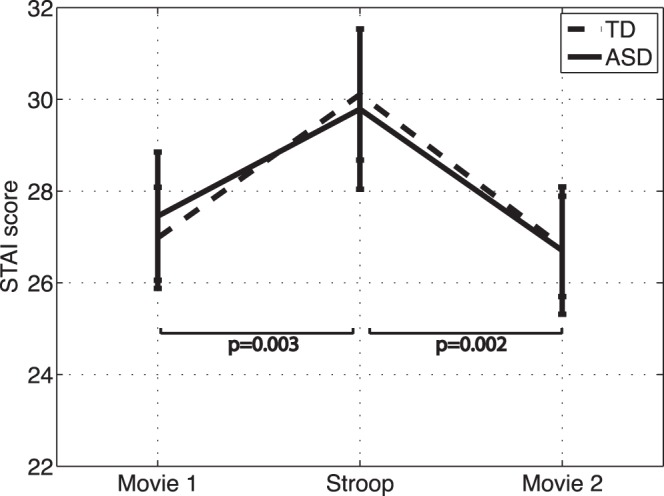
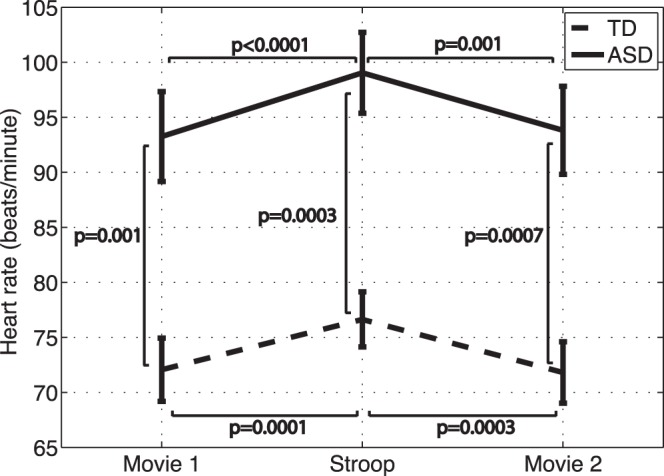
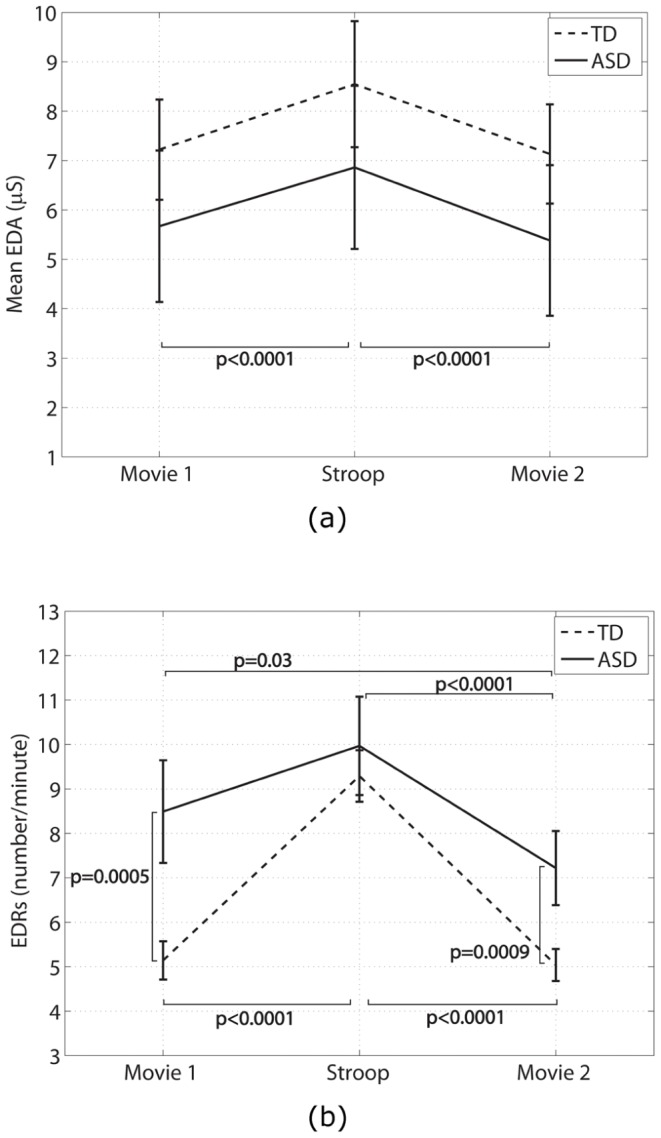
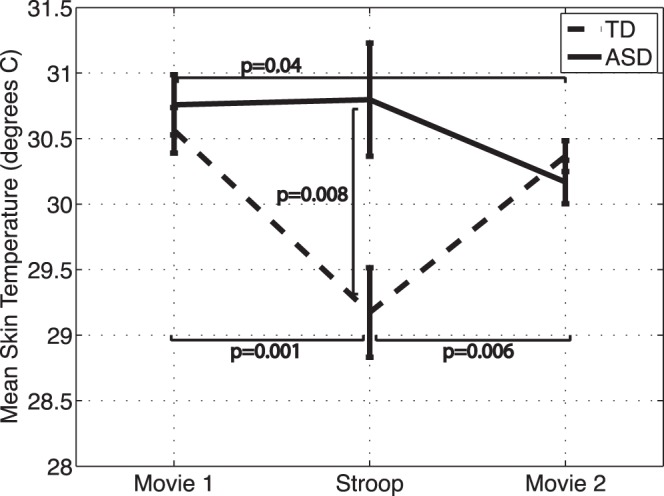
Assessment of anxiety symptoms in autism spectrum disorders (ASD) is a challenging task due to the symptom overlap between the two conditions as well as the difficulties in communication and awareness of emotions in ASD. This motivates the development of a physiological marker of anxiety in ASD that is independent of language and does not require observation of overt behaviour. In this study, we investigated the feasibility of using indicators of autonomic nervous system (ANS) activity for this purpose. Specially, the objectives of the study were to 1) examine whether or not anxiety causes significant measurable changes in indicators of ANS in an ASD population, and 2) characterize the pattern of these changes in ASD. We measured three physiological indicators of the autonomic nervous system response (heart rate, electrodermal activity, and skin temperature) during a baseline (movie watching) and anxiety condition (Stroop task) in a sample of typically developing children (n = 17) and children with ASD (n = 12). The anxiety condition caused significant changes in heart rate and electrodermal activity in both groups, however, a differential pattern of response was found between the two groups. In particular, the ASD group showed elevated heart rate during both baseline and anxiety conditions. Elevated and blunted phasic electrodermal activity were found in the ASD group during baseline and anxiety conditions, respectively. Finally, the ASD group did not show the typical decrease in skin temperature in response to anxiety. These results suggest that 1) signals of the autonomic nervous system may be used as indicators of anxiety in children with ASD, and 2) ASD may be associated with an atypical autonomic response to anxiety that is most consistent with sympathetic over-arousal and parasympathetic under-arousal.
Overview
The claims and statistics of this paper haven’t been checked yet.
Free: it reads the open-access text and checks the first 5 claims that cite a source we can check. Create a free account to check every claim.
Integrity signals
Registry
Cites
Statistics
Figures

Verification
Claims the paper makes
The claims and statistics of this paper haven’t been checked yet.
Free: it reads the open-access text and checks the first 5 claims that cite a source we can check. Create a free account to check every claim.
Claims other papers make about this one
Each is checked against this paper’s own text: does it say what the citing paper says it does?
The source backs part of the claim, not all of it — or backs it for a different population, condition or comparison.
In the citing paper
“The profile in autism is typified by high basal sympathetic (fight or flight) tone, lower parasympathetic (rest and digest) activation, and low sympathetic reactivity to certain stimuli including tests of orthostatic tolerance [105,106,107,108].”
From The Relationship between Autism and Ehlers-Danlos Syndromes/Hypermobility Spectrum Disorders (2020) · cites this paper as [105]
Experimental — accuracy not yet measured
Self-check
Percentages, sums and reported differences re-computed from the paper’s own numbers.
The self-check needs the paper’s full text.
Citations
Cites
Studies of interference in serial verbal reactions
Stroop, J. R. (1935) · Journal of Experimental Psychology · doi:10.1037/h0054651 · Cited by 18,622
Lord, C., Risi, S., Lambrecht, L., Cook, E. H., Leventhal, B. L., DiLavore, P. C., Pickles, A., & Rutter, M. (2000) · Journal of Autism and Developmental Disorders · doi:10.1023/a:1005592401947 · Cited by 7,520
Photoplethysmography and its application in clinical physiological measurement
Allen, J. (2007) · Physiological Measurement · doi:10.1088/0967-3334/28/3/r01 · Cited by 3,967 · cited 1×
“To measure BVP, a photoplethysmography [28] sensor was attached to the palmar surface of the distal phalanges of the first digit of the hand.”
MethodThe pupil as a measure of emotional arousal and autonomic activation
Bradley, M. M., Miccoli, L., Escrig, M. A., & Lang, P. J. (2008) · Psychophysiology · doi:10.1111/j.1469-8986.2008.00654.x · Cited by 1,919 · cited 2×
“In particular, pupil diameter is regulated by dilator and sphincter muscles whose activity is in turn influenced by the sympathetic and parasympathetic systems, respectively (increased sympathetic activity and/or decreased parasympathetic activity lead to pupil dilation) [44].”
BackgroundDawson, M. E., Schell, A. M., Filion, D. L., & Berntson, G. G. (2009) · Handbook of Psychophysiology · doi:10.1017/cbo9780511546396.007 · Cited by 1,720 · cited 4×
“A high correlation between the level of sympathetic activity and phasic changes in EDA has been reported [13].”
BackgroundInfluentialAnxiety in children and adolescents with autism spectrum disorders
White, S. W., Oswald, D., Ollendick, T., & Scahill, L. (2009) · Clinical Psychology Review · doi:10.1016/j.cpr.2009.01.003 · Cited by 1,427 · cited 3×
“behaviours such as aggression and self-injury [3,8,9].”
BackgroundThe Prevalence of Anxiety and Mood Problems among Children with Autism and Asperger Syndrome
Kim, J. A., Szatmari, P., Bryson, S. E., Streiner, D. L., & Wilson, F. J. (2000) · Autism · doi:10.1177/1362361300004002002 · Cited by 882 · cited 1×
“behaviours such as aggression and self-injury [3,8,9].”
The Polyvagal Theory: phylogenetic contributions to social behavior
Porges, S. W. (2003) · Physiology & Behavior · doi:10.1016/s0031-9384(03)00156-2 · Cited by 848 · cited 1×
“The vagus exerts parasympathetic control over the heart and its dysfunction has been linked to difficulties with various social engagement functions, including those associated with ASD [42].”
BackgroundBrief Report: Specific Executive Function Profiles in Three Neurodevelopmental Disorders
Ozonoff, S., & Jensen, J. (1999) · Journal of Autism and Developmental Disorders · doi:10.1023/a:1023052913110 · Cited by 724 · cited 1×
“Performance on the Stroop Task Previous literature has generally reported intact performance on the Color Stroop task for children with ASD [31–33].”
MethodBeyond Heart Rate Variability: Vagal Regulation of Allostatic Systems
THAYER, J. F., & STERNBERG, E. (2006) · Annals of the New York Academy of Sciences · doi:10.1196/annals.1366.014 · Cited by 703
Cited by
Items 101–200 of 208
Subgrouping school-aged children on the autism spectrum based on co-occurring psychiatric symptoms
Piergies, A. M. H., Hirota, T., Monden, R., & Zheng, S. (2022) · Research in Autism · doi:10.1016/j.rasd.2022.101983 · Cited by 10
Foldes, S. T., Jensen, A. R., Jacobson, A., Vassall, S. G., Foldes, E., Guthery, A., Brown, D., Levine, T. P., Tyler, W. J., & Frye, R. E. (2021) · Journal of Personalized Medicine · doi:10.3390/jpm11121307 · Cited by 12
“Multiple studies have documented autonomic nervous system (ANS) imbalances in individuals with ASD with relative sympathetic overactivation, leading to hyper-arousal, anxiety [37] and poor sleep [38].”
BackgroundMethodA Novel Machine Learning Based Framework for Detection of Autism Spectrum Disorder (ASD)
Sharif, H., & Khan, R. A. (2022) · Applied Artificial Intelligence · doi:10.1080/08839514.2021.2004655 · Cited by 10
“Intellectual properties and behavioral characteristics are accessed for the diagnosis of ASD; however, synaptic affiliations of ASD are still unknown and presents a challenging task for cognitive neuroscience and psychological researchers (Kushki et al. 2013).”
BackgroundMcCabe, S., Abbiss, C. R., Libert, J., & Bach, V. (2022) · Frontiers in Psychiatry · doi:10.3389/fpsyt.2022.866951 · Cited by 12
Chevalère, J., Jauregi, J., Copet, P., Laurier, V., Thuilleaux, D., & Postal, V. (2018) · Research in Developmental Disabilities · doi:10.1016/j.ridd.2018.11.013 · Cited by 13
Georgiou, G., & Fanti, K. A. (2020) · European Child & Adolescent Psychiatry · doi:10.1007/s00787-020-01643-z · Cited by 14
Rubido, M. D. V., Hollander, E., McCracken, J. T., Shic, F., Noeldeke, J., Boak, L. M., Khwaja, O., Sadikhov, S., da Fontoura, P. P., & Umbricht, D. (2020) · Journal of Autism and Developmental Disorders · doi:10.1007/s10803-020-04493-5 · Cited by 13
“85) suggesting a dysregulated autonomic arousal in response to environmental stimulus as a prominent phenotype in ASD (Anderson and Colombo 2009; Kushki et al. 2013; Hirstein et al. 2001; Anderson et al. 2013; Corbett et al. 2010).”
BackgroundDoi, H. (2020) · Artificial Life and Robotics · doi:10.1007/s10015-020-00614-6 · Cited by 8
Effect of prism adaptation on thermoregulatory control in humans
Calzolari, E., Gallace, A., Moseley, G. L., & Vallar, G. (2015) · Behavioural Brain Research · doi:10.1016/j.bbr.2015.08.036 · Cited by 12
“In particular, the link between several physiological arameters (heartbeat, temperature regulation, skin conductance esponses, pupil dilatation), different aspects of perception (tacile, thermal, proprioception, pain), and bodily consciousness has een investigated both in healthy participants, and…”
BackgroundThoen, A., Alaerts, K., Prinsen, J., Steyaert, J. G., & Damme, T. V. (2024) · Applied Psychophysiology and Biofeedback · doi:10.1007/s10484-024-09638-1 · Cited by 23
“Subsequently, the ‘Stroop Word-Color Interference task’ (Kushki et al., 2013) and the ‘Social Stress Recall Task’ (SSRT; Bishop-Fitzpatrick et al., 2017; Richman et al., 2007) were used as stress-provoking tasks, each followed by a 5-minute resting period.”
Sleep Dysregulation and Daytime Electrodermal Patterns in Children With Autism: A Descriptive Study
Chong, P. L. H., Abel, E., Pao, R. L. T., McCormick, C. E. B., & Schwichtenberg, A. J. (2021) · The Journal of Genetic Psychology · doi:10.1080/00221325.2021.1911919 · Cited by 10
Doi, H., Tsumura, N., Kanai, C., Masui, K., Mitsuhashi, R., & Nagasawa, T. (2021) · Frontiers in Psychiatry · doi:10.3389/fpsyt.2021.625978 · Cited by 8
“Similar atypicality has also been observed in pediatric samples (23), although the exact pattern of atypicality differs among studies (24, 25).”
BackgroundResultIsmail, N., Isa, K. A. M., & Wan Mokhtar, I. (2022) · Children · doi:10.3390/children9101526 · Cited by 6
“Blood pressure (BP) and heart rate (HR) are variables that can conveniently be measured to reflectively quantify the physiological response to anxiety and interpreted as physiological measures of stress during dental treatment [12,13].”
BackgroundVišňovcová, Z., Ferencová, N., Grendár, M., Ondrejka, I., Olexova, L. B., Bujnakova, I., & Tonhajzerová, I. (2023) · General Physiology and Biophysics · doi:10.4149/gpb_2022011 · Cited by 8
Autism and Reactions to Provocation in a Social and Non-social Context
Wagels, L., Schneider, I., Menke, S., Ponge, A. K., Kohn, N., Schneider, F. W., & Habel, U. (2019) · Journal of Autism and Developmental Disorders · doi:10.1007/s10803-019-04257-w · Cited by 9
Sasikumar, K., Doss, C. G. P., & Adalarasu, K. (2015) · Biomedical Research-tokyo · Cited by 7
Trial‐to‐Trial Variability in Electrodermal Activity to Odor in Autism
Haigh, S. M., Endevelt–Shapira, Y., & Behrmann, M. (2020) · Autism Research · doi:10.1002/aur.2377 · Cited by 8
“For example, Kushki et al. [2013] found larger EDA responses in baseline conditions and reduced responses in anxietyinducing conditions in children with autism compared to controls [Kushki et al., 2013].”
ResultAutonomic and hedonic response to affective touch in autism spectrum disorder
Capiotto, F., Cappi, G. R., Mirlisenna, I., Mazza, A., Cicinelli, G., Lauritano, C., Keller, R., & Monte, O. D. (2024) · Autism Research · doi:10.1002/aur.3143 · Cited by 10
“…levels showed an over-all lower physiological activity in ASD compared to TD subjects, bringing further evidence of the existence of a divergent functioning of ASD and TD autonomic system (Anderson et al., 2013; Anderson & Colombo, 2009; Arora et al., 2021; Kushki et al., 2013; Lory et al., 2020).”
BackgroundNabighadim, M., Mirghafourvand, M., & Maghalian, M. (2025) · Nursing Open · doi:10.1002/nop2.70122 · Cited by 12
“Non-pharmacological interventions likely influence the autonomic nervous system by inhibiting the sympathetic branch and activating the parasympathetic branch, thereby eliciting a relaxation response (Kushki et al. 2013).”
Autonomic Disequilibrium at Rest in Autistic Children and Adults
Bufo, M. R., Guidotti, M., Lemaire, M., Malvy, J., Houy‐Durand, E., Bonnet‐Brilhault, F., Briend, F., Aguillon-Hernandez, N., & Wardak, C. (2025) · Applied Psychophysiology and Biofeedback · doi:10.1007/s10484-025-09696-z · Cited by 8
“…social engagement differences (Porges, 2001), atypical sleep patterns (Liu et al., 2006), gastrointestinal disorders (Ferguson et al., 2017) or adverse health outcomes, such as cardiorespiratory dysfunction (Bricout et al., 2018; Heffernan et al., 2018; Kushki et al., 2013; Thapa et al., 2021).”
Sacrey, L.-A. R., Zwaigenbaum, L., Brian, J. A., Smith, I. M., Armstrong, V. L., Vaillancourt, T., & Schmidt, L. A. (2022) · Development and Psychopathology · doi:10.1017/s0954579422001286 · Cited by 6
“Because physiological indices of arousal can register differences in early-developing processes, they may be informative for mechanisms underlying ER development and ASD symptom emergence (Feldman, 2009; Kushki et al., 2013; Neuhaus et al., 2014).”
Soda, T., Ahmadi, A., Tani, J., Honda, M., Hanakawa, T., & Yamashita, Y. (2023) · Frontiers in Psychiatry · doi:10.3389/fpsyt.2023.1080668 · Cited by 5
Anderson, C. L., & Anderson, K. M. (2019) · Springer eBooks · doi:10.1007/978-3-319-64301-4_3 · Cited by 6
Virtual Reality Based Collaborative Multiplayer Task Platform for Children with Autism
Babu, P. R. K., Sinha, S., Arvind, R. S., & Lahiri, U. (2019) · International Conference on Computing, Communication and Networking Technologies (ICCCNT) · doi:10.1109/icccnt45670.2019.8944889 · Cited by 6
“This is because, literature indicates that one’s cardiac activity increases with an increase in the cognitive effort [17] that can occur during a collaborative task.”
BackgroundMethodInfluentialVirtual Reality for Social Phobia Treatment
Reyna, D., Caraza, R., Gonzalez-Knoell, M., Ayala, A. F., Martinez, P., Loredo, A., Rosas, R., & Reyes, P. (2018) · Lecture notes of the Institute for Computer Sciences, Social Informatics and Telecommunications Engineering · doi:10.1007/978-3-319-73323-4_16 · Cited by 8
Zhao, J., Ma, Y., Zhang, X., Lin, H., Lu, Y., Wu, R., Zhang, Z., & Zou, F. (2025) · Sensors · doi:10.3390/s25175273 · Cited by 5
Chittibabu, S. K., Chandrasekhar, A., & Krishnamoorthi, C. (2025) · Chemical Engineering Journal · doi:10.1016/j.cej.2025.169292 · Cited by 5
Eggleston, J. D., Olivas, A. N., Vanderhoof, H. R., Chavez, E. A., Alvarado, C., & Boyle, J. B. (2021) · Perceptual and Motor Skills · doi:10.1177/0031512521998280 · Cited by 6
Sinai, Y. M., Ma, Y. J. X., Daleski, M. A., Gannot, S., Bartsch, R. P., & Gordon, I. (2024) · Frontiers in Human Neuroscience · doi:10.3389/fnhum.2024.1363891 · Cited by 7
Schamong, A. S., Seven, Ü. S., Folkerts, A., Brockmeier, K., & Kalbe, E. (2024) · Journal of Child Health Care · doi:10.1177/13674935241273982 · Cited by 9
“From observation, younger siblings (10 – 13 years) seemed more nervous during the inter-views than older siblings, expressed through fi nger-chewing and chair-rocking (Kushki et al., 2013).”
Benedicto-Rodríguez, G., Bosch, F., Juan, C. G., Bonomini, M. P., Fernández‐Caballero, A., Fernández, E., & Vicente, J. M. F. (2025) · International Journal of Neural Systems · doi:10.1142/s0129065725500261 · Cited by 7
The meltdown pathway: A multidisciplinary account of autistic meltdowns.
Soden, P. A., Bhat, A., Anderson, A. K., & Friston, K. J. (2025) · Psychological Review · doi:10.1037/rev0000543 · Cited by 9
Kamal, A. K. (2015) · Journal of Neurology and Neuroscience · doi:10.21767/2171-6625.100037 · Cited by 5
Scope of Virtual Reality to Autism Intervention
Lahiri, U. (2020) · Springer eBooks · doi:10.1007/978-3-030-40237-2_4 · Cited by 6
Moodithaya, S., Bharath, R., Halahalli, H. N., Bhat, S. U., Nallilu, S., & Mirajkar, A. (2020) · Indian Journal of Psychiatry · doi:10.4103/psychiatry.indianjpsychiatry_573_19 · Cited by 5
“…activity quantified by electrodermal activity (EDA), existing findings in ASD are mixed, such as increased activity was found in works done by Kushki et al. 2013, whereas a study by Levine et al. in 2012 found unaltered responses in basal skin conductance, as well as atypical EDA reactivity…”
BackgroundAssessment of Techniques for Teaching School Children with Autism
Adalarasu, K., Jagannath, M., & James, O. (2019) · IRBM · doi:10.1016/j.irbm.2019.10.003 · Cited by 7
App4Autism: An Integrated Assistive Technology with Heart Rate Monitoring for Children with Autism
Yap, C. Y., Ng, K. H., Cheah, Y., Lim, S.-Y., Price, J., & de Vries, M. (2019) · International Visual Informatics Conference · doi:10.1007/978-3-030-34032-2_44 · Cited by 3
Thoen, A., Alaerts, K., Steyaert, J. G., Pleysier, S., & Damme, T. V. (2023) · Research in Autism · doi:10.1016/j.rasd.2023.102166 · Cited by 6
Resting state arousal and functional connectivity in autism spectrum disorder
Kleberg, J. L. (2014) · Journal of Neurophysiology · doi:10.1152/jn.00292.2014 · Cited by 6
“This would be consistent with previous studies that found hyperarousal during periods of direct gaze toward emotional faces in subjects with ASD (Kylliäinen and Hietanen 2006) and a blunted arousal response during an anxietyevoking task (Kushki et al. 2013).”
BackgroundResultPotential Effect of Pharmacotherapy on Sympathetic Arousal in Autism
Bujnakova, I., Ondrejka, I., Mestanik, M., Flešková, D., Sekaninova, N., Farský, I., & Tonhajzerová, I. (2017) · Acta Medica Martiniana · doi:10.1515/acm-2017-0013 · Cited by 6
Hammud, G., Avital-Magen, A., Jabareen, H., Adler-Tsafir, R., & Engel‐Yeger, B. (2025) · Children · doi:10.3390/children12020187 · Cited by 7
“Therefore, anxiety and hyper-arousability may be elevated, as manifested in objective physiological measures such as electrodermal activity (EDA) [15], higher cortisol levels [16], and elevated heart rate [17–20].”
Autonomic nervous system in children with autism spectrum disorder
Bujnakova, I., Ondrejka, I., Mestanik, M., & Tonhajzerová, I. (2015) · Cognitive Remediation Journal · doi:10.5507/crj.2015.003 · Cited by 4
Muscatello, R. A., Kim, A., Vandekar, S., & Corbett, B. A. (2021) · Journal of Autism and Developmental Disorders · doi:10.1007/s10803-021-05224-0 · Cited by 6
DiCriscio, A. S., Wain, K., Smith, J. D., Beiler, D. L., Walsh, L., Holdren, K., & Troiani, V. (2022) · Brain and Behavior · doi:10.1002/brb3.2813 · Cited by 5
Cortisol Responsivity to Social Play in Children with Autism: A Systematic Review
Alagendran, K., Hitch, D., Wadley, C., & Stagnitti, K. E. (2019) · Journal of Occupational Therapy Schools & Early Intervention · doi:10.1080/19411243.2019.1604285 · Cited by 4
“…have found that children with ASD aged 2 −18 years showed generalized and more prolonged hyper-arousal when exposed to non-social sensory stressors, the Stoop Test or emotional video sequences (Bal et al., 2010; Goodwin et al., 2006; Kushki et al., 2013; Watson et al., 2011; Woodard et al., 2012).”
BackgroundInfluentialJain, N., Ahamed, S. I., Bozdag, S., Dolan, B. K., McVey, A. J., Willar, K. S., Pleiss, S. S., Murphy, C. C., Casnar, C. L., Potts, S., et al. (2019) · bioRxiv (Cold Spring Harbor Laboratory) · doi:10.1101/582676 · Cited by 4
Irritability in autism examined through network analysis of phenotypic and physiological correlates
Alatrash, S., Paul, T., Andrade, B. F., Monga, S., Brian, J. A., Anagnostou, E. A., Penner, M., Fekr, A. R., & Kushki, A. (2025) · Scientific Reports · doi:10.1038/s41598-025-28408-5 · Cited by 3
“This is an important area of investigation as differences in autonomic arousal modulation have been linked with difficulties in domains that overlap with irritability (e.g., emotion dysregulation and anxiety 18,19 .”
Self-citationSokhadze, E. M., Kelly, D. P., Lamina, E. V., & Casanova, M. F. (2021) · Contemporary clinical neuroscience · doi:10.1007/978-3-030-54564-2_15 · Cited by 7
Cheah, C., Lavery, C., Johnson, A. R., Clarke, P., Hyett, M. P., & McEvoy, P. M. (2024) · Journal of Anxiety Disorders · doi:10.1016/j.janxdis.2024.102960 · Cited by 5
Chapter 15 Behavioral signal processing and autism: Learning from multimodal behavioral signals
Bone, D., Chaspari, T., & Narayanan, S. S. (2016) · CRC Press eBooks · doi:10.1201/9781315371375-16 · Cited by 5
Thoen, A., Steyaert, J. G., Alaerts, K., & Damme, T. V. (2021) · Trials · doi:10.1186/s13063-021-05709-4 · Cited by 4
“ASD (Bishop-Fitzpatrick et al., 2017; Kushki et al., 2013; Richman et al., 2007).”
MethodIs autonomic function during resting-state atypical in Autism: A systematic review of evidencePreprint
Arora, I., Bellato, A., Ropar, D., Hollis, C. P., & Groom, M. J. (2020) · PsyArXiv (OSF Preprints) · doi:10.31234/osf.io/cs94b · Cited by 4
“Two studies (Keith et al., 2019b; Kushki et al., 2013) reported marginally significant effects (p-values of the effect being 0.1 and 0.06 respectively) on their group comparison and have been included in the significant group differences category.”
InfluentialPreoperative Anxiety and Information Needs Among Patients in the Preoperative Holding Area
Li, W. C., He, Q., Hu, L., An, N., Wang, H., & Zeng, Q. (2025) · Journal of PeriAnesthesia Nursing · doi:10.1016/j.jopan.2024.10.001 · Cited by 4
Li, R., Liu, H., & Nagai, Y. (2026) · PLoS ONE · doi:10.1371/journal.pone.0344235 · Cited by 2
Bell, B. (2021) · Journal of Rehabilitation Practices and Research · doi:10.33790/jrpr1100115 · Cited by 2
“It is known that individuals with ASD display decreased basal vagal tone levels [22-25] and that vagal tone is associated with a variety of social behaviors [7, 26].”
BackgroundYarger, H. A., Sarkar, M., Harrington, E., & Redcay, E. (2024) · Review Journal of Autism and Developmental Disorders · doi:10.1007/s40489-024-00449-y · Cited by 3
“…in response to stress relative to nonautis-tic individuals was observed when using other varied and less commonly used tasks including elevated HR (Kushki et al., 2013) and a blunted HR response to the psychosocial stressor (Kushki et al., 2014) in the autistic group relative to the nonautistic…”
Ahmed, M. M., Alawna, M., Youssef, A. S. A., Amin, W. M., Alajam, R. A., Morsy, W. E., Fayed, E., & Mohamed, A. A. (2024) · BMJ Open Sport & Exercise Medicine · doi:10.1136/bmjsem-2023-001822 · Cited by 6
Bishop, L. (2015) · D-Scholarship@Pitt (University of Pittsburgh) · Cited by 2
Haokip, S. G. T., Shah, G., & Lahiri, U. (2017) · International Conference on Computing, Communication and Networking Technologies (ICCCNT) · doi:10.1109/icccnt.2017.8204153 · Cited by 4
“5) BPM) as shown in literature [25] [34].”
MethodTheoharides, T. C., & Tsilioni, I. (2016) · Springer eBooks · doi:10.1007/978-3-319-44022-4_40 · Cited by 5
Wong, A. S. K., Burns, S., & Woodruff, E. (2022) · BMJ Open · doi:10.1136/bmjopen-2021-060048 · Cited by 5
Thoen, A., Alaerts, K., Prinsen, J., Steyaert, J. G., & Damme, T. V. (2023) · medRxiv · doi:10.1101/2023.05.31.23290775 · Cited by 2
“; https://doi.org/10.1101/2023.05.31.23290775doi: medRxiv preprint 2017; Kushki et al., 2013).”
MethodInfluentialHashiguchi, D., Dias, A. L. A., & Romcy-Pereira, R. N. (2026) · PLoS ONE · doi:10.1371/journal.pone.0353839 · Cited by 1
A Systematic Survey of Technology Driven Diagnosis for Autism Spectrum Disorder
Singh, U., Shukla, S., & Gore, M. M. (2025) · SN Computer Science · doi:10.1007/s42979-025-04393-4 · Cited by 1
“According to a study [116 ], emotional states are created by the Autonomic Nervous System (ANS), which comprises two primary components: the Parasympathetic Nervous System (PSN) and the Sympathetic Nervous System (SNS).”
Basal Sympathetic Nervous System Functioning in Autism: A Systematic Review of Neurochemical Studies
Neupane, K., Pillalamarri, S., & Anderson, G. M. (2025) · Journal of Autism and Developmental Disorders · doi:10.1007/s10803-025-07105-2 · Cited by 1
Mo, K., Foster, J. A., Cleary, S. R., Anagnostou, E. A., Lerch, J. P., Lin, H., Taylor, M. J., Szatmári, P., Crosbie, J., Schachar, R. J., et al. (2025) · Journal of Neural Transmission · doi:10.1007/s00702-025-03079-8 · Cited by 1
Self-citationSheth, S. A. M., Lemoniatis, E., Ejaz, T., Kennedy, E., & Charalambous, G. (2026) · Journal of Autism and Developmental Disorders · doi:10.1007/s10803-026-07276-6 · Cited by 2
Adaptive VR intervention on social-cognitive skills in children with ASD: a feasibility study
Maddalon, L., Altozano, A., Minissi, M. E., Marín‐Morales, J., Romero, G. L., Parsons, T. D., Hervas, A., & Alcañíz, M. (2026) · International Journal of Clinical and Health Psychology · doi:10.1016/j.ijchp.2026.100675 · Cited by 3
“Importantly, children with ASD often display lower initial autonomic reactivity to novel environments (Hocking et al., 2022; Kushki et al., 2013), so gradual increases across repeated exposures may signal a shift toward an optimal arousal range rather than overload.”
Bancroft, E., & Spicer, L. (2026) · Neurodiversity · doi:10.1177/27546330261428233 · Cited by 1
Maddalon, L., Altozano, A., Minissi, M. E., Romero, G. L., Martínez, S. G., Marín‐Morales, J., Hervas, A., & Alcañíz, M. (2026) · Frontiers in Psychology · doi:10.3389/fpsyg.2026.1827283 · Cited by 4
Behavioral And Heart-Defined Attention in Infants at High Genetic Risk for Autism
Tonnsen, B. L. (2015) · Scholar Commons (University of South Carolina) · Cited by 1
Amelioration of Aggression and Echolalia With Propranolol in Autism Spectrum Disorder
Schelke, M. W. (2017) · American Journal of Psychiatry Residents Journal · doi:10.1176/appi.ajp-rj.2017.120205 · Cited by 1
Caring for Persons with Intellectual and Developmental Disabilities
Nizamie, A. (2016) · Indian journal of clinical psychology · Cited by 1
Autism Spectrum Disorder, Fear Response, and Environmental Exposures
Theoharides, T. C., Sant, J., & Giota, M.-E. (2019) · Advances in human services and public health (AHSPH) book series · doi:10.4018/978-1-5225-7635-8.ch002 · Cited by 1
Development of Adaptation Tools for Pupils on the Autism Spectrum in Microsystems
Galkienė, A., & Puškorienė, G. (2020) · Research in Social Sciences and Technology · doi:10.46303/ressat.05.02.1 · Cited by 4
“An important circumstance has been established, namely, that children on the AS with higher IQ values experience prolonged stress, and the stress levels of seemingly calm children never reach zero (Kushki et al., 2013).”
BackgroundPhysiological Responses and Coping Strategies of Sensory Defensive Adults
Cohen, B. (2020) · doi:10.33015/dominican.edu/2020.ot.09 · Cited by 1
“During a sensory experience, a person’s limbic system activates their sympathetic nervous system (SNS) or parasympathetic nervous system (PSNS) which causes physiological responses (Kushki et al., 2013).”
BackgroundMethodInfluentialThoen, A., Steyaert, J. G., Alaerts, K., & Damme, T. V. (2021) · Research Square · doi:10.21203/rs.3.rs-480300/v1 · Cited by 1
Improving Anxiety Assessment in Autism: A Potential Use for Heart Rate Variability and Heart Rate
Muskett, A. (2018) · VTechWorks (Virginia Tech)
The role of attention in learning for pupils with and without autism
McDougal, E. (2019) · Durham e-Theses (Durham University) · Cited by 1
An empirical evaluation of executive function in Autism Spectrum Disorder
Demetriou, E. (2018) · The Sydney eScholarship Repository (The University of Sydney) · Cited by 1
Wong, A. S. K., Burns, S., & Woodruff, E. (2021) · Research Square · doi:10.21203/rs.3.rs-907926/v1
Castañeda, D. P. M., & Torres, L. I. N. (2022) · International Journal of Health Science · doi:10.22533/at.ed.1592422229077
A Systematic Survey of Technology Driven Diagnosis for ASDPreprint
Singh, U., Shukla, S., & Gore, M. M. (2022) · Research Square · doi:10.21203/rs.3.rs-2137274/v1
The role of MRI in diagnosing autism: a machine learning perspective.
Elnakieb, Y. A. (2022) · ThinkIR: The University of Louisville's Institutional Repository (University of Louisville) · doi:10.18297/etd/4003
Effect of Emoji on Autonomic Nervous System: Evidence from EDA and RSA studiesPreprint
Patel, D., Dixit, A., & Bhagat, O. L. (2024) · bioRxiv (Cold Spring Harbor Laboratory) · doi:10.1101/2024.04.13.589339
Heart Rate Variability Metrics during Sleep in Children with Asperger’s Syndrome
Alcantara, B. E. D. O., Guerrero*, F. A., & Salgado, E. L. M. (2024) · Journal of Cardiovascular Medicine and Cardiology · doi:10.17352/2455-2976.000209
Autism and Medical Comorbidities
Megerian, J. T., Golla, S., Pionk, M. J., Amin, H., & Kim, A. (2024) · Autism and child psychopathology series · doi:10.1007/978-3-031-64499-3_25
Syed, B., Vandewouw, M. M., Cardy, R. E., Carbone, J., Niroomand, K., Bokadia, H., Paul, T., Monga, S., Brian, J. A., Andrade, B. F., et al. (2025) · SSRN Electronic Journal · doi:10.2139/ssrn.5270022
Self-citationPerspectives d’avenir dans l’évaluation et le traitement des troubles du spectre de l’autisme
Smith, I. C., Pugliese, C. E., Corbett, B. A., & White, S. W. (2020) · Elsevier eBooks · doi:10.1016/b978-2-294-76574-2.00015-3
Tarumi, W., Iwanaga, R., & Nakahata, Y. (2025) · Acta Psychologica · doi:10.1016/j.actpsy.2025.106124 · Cited by 1
Affective computing in the area of autism
Jain, N. (2015) · e-Publications@Marquette (Marquette University)
Approaches for meltdown detection in children with autism: a scoping review
Turabee, Z. B., Brown, D., Mahmud, M., Oikonomou, A., Burton, A. M., Shopland, N., & Rahman, M. A. (2025) · Journal of Enabling Technologies · doi:10.1108/jet-12-2023-0042 · Cited by 2
Thoen, A., Steyaert, J. G., Alaerts, K., & Damme, T. V. (2021) · Figshare · doi:10.6084/m9.figshare.16851298
Thoen, A., Steyaert, J. G., Alaerts, K., & Damme, T. V. (2021) · Figshare · doi:10.6084/m9.figshare.16851304
Thoen, A., Steyaert, J. G., Alaerts, K., & Damme, T. V. (2021) · Figshare · doi:10.6084/m9.figshare.16851295
Thoen, A., Steyaert, J. G., Alaerts, K., & Damme, T. V. (2021) · Figshare · doi:10.6084/m9.figshare.16851310
Utilizzo di dispositivi digitali in bambini con autismo: stato dell'arte e indagine conoscitiva
Bianchi, V., Rosi, E., Baù, I., Nuzzo, R., Valsecchi, S., Molteni, M., & Colombo, P. (2026) · RICERCHE DI PSICOLOGIA · doi:10.3280/rip2025oa20821
Brouche, S., Rigal, N., Paroissin, C., Bouaziz, N., Baleyte, J., & de la Combe, F. C.-J. (2026) · Frontiers in Psychiatry · doi:10.3389/fpsyt.2026.1783075
“Several studies have already addressed the issue of anxiety and identi fi ed an atypical electrodermal signature in autistic individuals (67, 68).”
Particularités des réponses émotionnelles dans le trouble bipolaire et chez l'adulte avec autisme
Lemaire, M. (2017) · theses.fr (ABES) · doi:10.70675/d1e69884z9a6bz4a1fzb2e5zf627a85ed5ad
Bahameish, M., Ali, A. A. M., Tabassum, A., Al‐Thani, D., Qaraqe, M., Abd-alrazaq, A., Kanne, S. M., Sheikh, J. I., & Ahmed, A. (2026) · doi:10.2196/preprints.100417
Metadata
- Authors
- Kushki, A., Drumm, E., Pla Mobarak, M., Tanel, N., Dupuis, A., Chau, T., & Anagnostou, E.
- Affiliations
- Holland Bloorview Kids Rehabilitation Hospital (CA)
- Hospital for Sick Children (CA)
- University of Toronto (CA)
- Corresponding author
- Kushki, Azadeh
- Venue
- PLoS ONE
- Publisher
- Public Library of Science (PLoS)
- Published
- 2013-04-05
- Volume
- 8
- Issue
- 4
- Pages
- e59730
- ISSN
- 1932-6203 (ISSN-L)
- PMC
- PMC3618324
- OpenAlex
- W2023198468
- Cited by
- 209
- References
- 47
- Citations by year
- 2026: 15 · 2025: 16 · 2024: 15 · 2023: 13 · 2022: 13 · 2021: 21 · 2020: 26 · 2019: 18 · 2018: 12 · 2017: 14 · 2016: 13 · 2015: 19 · 2014: 12 · 2013: 2
- FWCI
- 8.41
- Type
- journal article
- Language
- en
- Open access
- gold
- doi.org
- Locations
- PLoS ONE (publishedVersion, cc-by)
- Europe PMC (PubMed Central) (publishedVersion, other-oa)
- PubMed Central (publishedVersion, cc-by)
- PubMed (publishedVersion)
- DOAJ (DOAJ: Directory of Open Access Journals) (submittedVersion, cc-by-sa)
- Funders
- Ontario Brain Institute
- Bloorview Research Institute
- Topics
- Life Sciences › Neuroscience › Cognitive Neuroscience › Autism Spectrum Disorder Research
- Health Sciences › Medicine › Cardiology and Cardiovascular Medicine › Heart Rate Variability and Autonomic Control
- Social Sciences › Psychology › Clinical Psychology › Child and Adolescent Psychosocial and Emotional Development
- Keywords
- autism spectrum disorder, anxiety, autonomic nervous system, heart rate, electrodermal activity, skin temperature, Stroop task, children
- MeSH terms
- Adolescent, Anxiety, Autonomic Nervous System, Behavior, Child, Child Development Disorders, Pervasive, Female, Galvanic Skin Response, Heart Rate, Humans, Male, Skin Temperature, Stroop Test
About these checks
Registry, retraction, Cites and statistics results are computed, not judged, with one exception: a printed reference that no index lists is read once by a model before it counts as a citation error. Claims are extracted by a model and kept only when their quote appears verbatim in the text; each cited source is then checked, with a model’s help, for whether it says what the claim relies on. Those verdicts can be wrong — read the claim’s quote and the cited source before relying on one.
Statistics and arithmetic are recomputed, not judged.
Confidence bands are shown only for fields calibrated on our annotated test set. None is calibrated yet, so no band is shown.
What counts as a claim ›How we measure confidence ›How we check this ›
Are you an author, or do you see a problem with this page? Request a review
Data sources
Bibliographic data: Semantic Scholar, OpenAlex, Crossref.
Contains information from the Semantic Scholar Academic Graph Datasets, made available under the ODC Attribution License (ODC-BY 1.0).
Semantic Scholar’s data is described in: Kinney, R., et al. (2023). The Semantic Scholar Open Data Platform. arXiv:2301.10140.
