

Investigating the Autonomic Nervous System Response to Anxiety in Children with Autism Spectrum Disorders
Open accessThe DOI matches its Crossref record; 47 of the 47 references it cites were found in a registry or an index.
Abstract
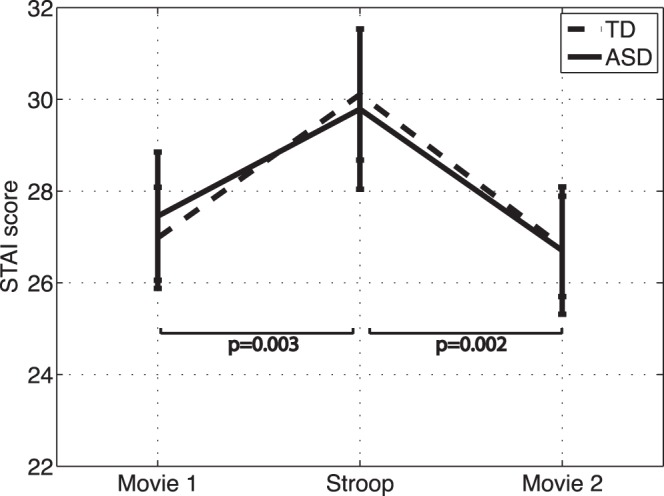
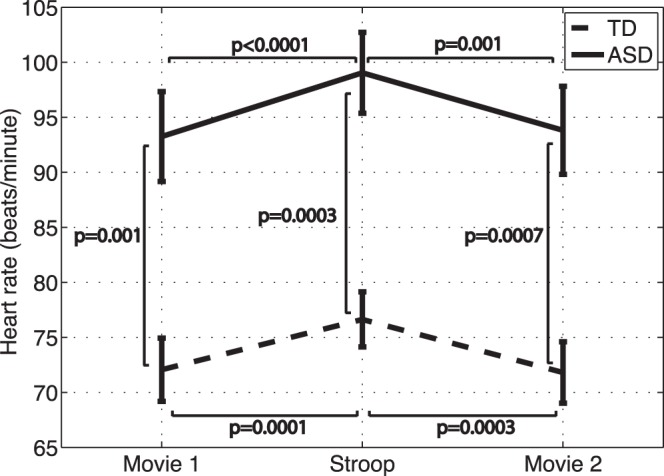
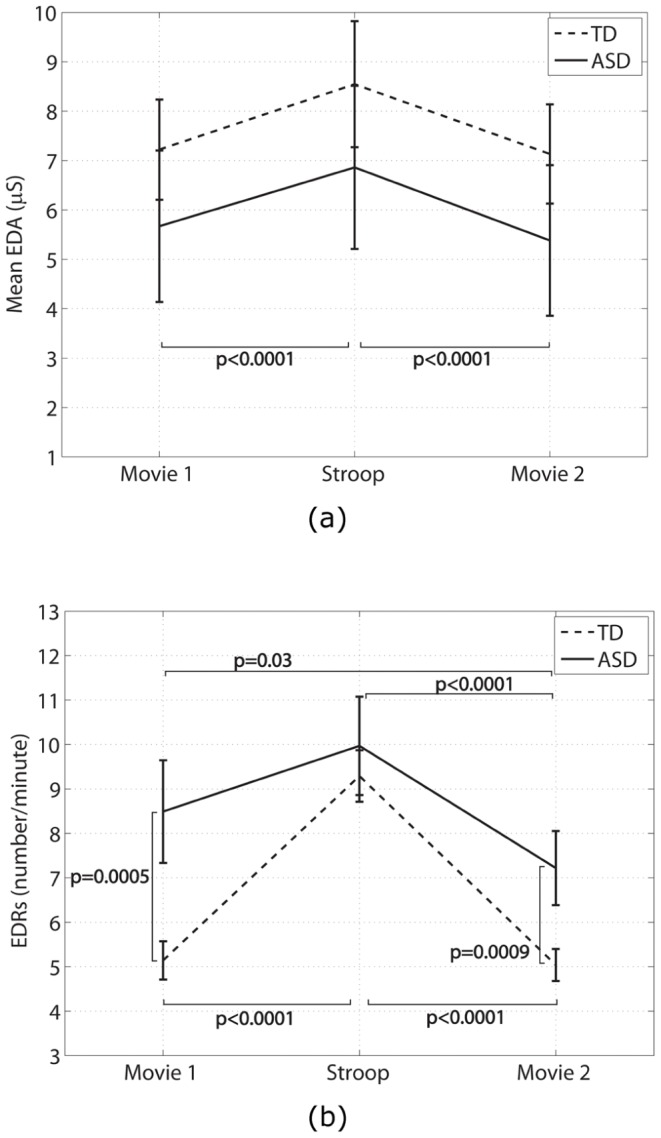
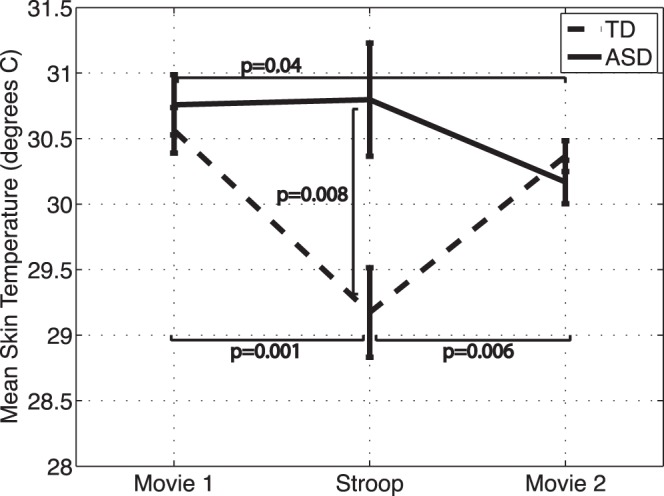
Assessment of anxiety symptoms in autism spectrum disorders (ASD) is a challenging task due to the symptom overlap between the two conditions as well as the difficulties in communication and awareness of emotions in ASD. This motivates the development of a physiological marker of anxiety in ASD that is independent of language and does not require observation of overt behaviour. In this study, we investigated the feasibility of using indicators of autonomic nervous system (ANS) activity for this purpose. Specially, the objectives of the study were to 1) examine whether or not anxiety causes significant measurable changes in indicators of ANS in an ASD population, and 2) characterize the pattern of these changes in ASD. We measured three physiological indicators of the autonomic nervous system response (heart rate, electrodermal activity, and skin temperature) during a baseline (movie watching) and anxiety condition (Stroop task) in a sample of typically developing children (n = 17) and children with ASD (n = 12). The anxiety condition caused significant changes in heart rate and electrodermal activity in both groups, however, a differential pattern of response was found between the two groups. In particular, the ASD group showed elevated heart rate during both baseline and anxiety conditions. Elevated and blunted phasic electrodermal activity were found in the ASD group during baseline and anxiety conditions, respectively. Finally, the ASD group did not show the typical decrease in skin temperature in response to anxiety. These results suggest that 1) signals of the autonomic nervous system may be used as indicators of anxiety in children with ASD, and 2) ASD may be associated with an atypical autonomic response to anxiety that is most consistent with sympathetic over-arousal and parasympathetic under-arousal.
Overview
The claims and statistics of this paper haven’t been checked yet.
Free: it reads the open-access text and checks the first 5 claims that cite a source we can check. Create a free account to check every claim.
Integrity signals
Registry
Cites
Statistics
Figures

Verification
Claims the paper makes
The claims and statistics of this paper haven’t been checked yet.
Free: it reads the open-access text and checks the first 5 claims that cite a source we can check. Create a free account to check every claim.
Claims other papers make about this one
Each is checked against this paper’s own text: does it say what the citing paper says it does?
The source backs part of the claim, not all of it — or backs it for a different population, condition or comparison.
In the citing paper
“The profile in autism is typified by high basal sympathetic (fight or flight) tone, lower parasympathetic (rest and digest) activation, and low sympathetic reactivity to certain stimuli including tests of orthostatic tolerance [105,106,107,108].”
From The Relationship between Autism and Ehlers-Danlos Syndromes/Hypermobility Spectrum Disorders (2020) · cites this paper as [105]
Experimental — accuracy not yet measured
Self-check
Percentages, sums and reported differences re-computed from the paper’s own numbers.
The self-check needs the paper’s full text.
Citations
Cites
Studies of interference in serial verbal reactions
Stroop, J. R. (1935) · Journal of Experimental Psychology · doi:10.1037/h0054651 · Cited by 18,622
Lord, C., Risi, S., Lambrecht, L., Cook, E. H., Leventhal, B. L., DiLavore, P. C., Pickles, A., & Rutter, M. (2000) · Journal of Autism and Developmental Disorders · doi:10.1023/a:1005592401947 · Cited by 7,520
Photoplethysmography and its application in clinical physiological measurement
Allen, J. (2007) · Physiological Measurement · doi:10.1088/0967-3334/28/3/r01 · Cited by 3,967 · cited 1×
“To measure BVP, a photoplethysmography [28] sensor was attached to the palmar surface of the distal phalanges of the first digit of the hand.”
MethodThe pupil as a measure of emotional arousal and autonomic activation
Bradley, M. M., Miccoli, L., Escrig, M. A., & Lang, P. J. (2008) · Psychophysiology · doi:10.1111/j.1469-8986.2008.00654.x · Cited by 1,919 · cited 2×
“In particular, pupil diameter is regulated by dilator and sphincter muscles whose activity is in turn influenced by the sympathetic and parasympathetic systems, respectively (increased sympathetic activity and/or decreased parasympathetic activity lead to pupil dilation) [44].”
BackgroundDawson, M. E., Schell, A. M., Filion, D. L., & Berntson, G. G. (2009) · Handbook of Psychophysiology · doi:10.1017/cbo9780511546396.007 · Cited by 1,720 · cited 4×
“A high correlation between the level of sympathetic activity and phasic changes in EDA has been reported [13].”
BackgroundInfluentialAnxiety in children and adolescents with autism spectrum disorders
White, S. W., Oswald, D., Ollendick, T., & Scahill, L. (2009) · Clinical Psychology Review · doi:10.1016/j.cpr.2009.01.003 · Cited by 1,427 · cited 3×
“behaviours such as aggression and self-injury [3,8,9].”
BackgroundThe Prevalence of Anxiety and Mood Problems among Children with Autism and Asperger Syndrome
Kim, J. A., Szatmari, P., Bryson, S. E., Streiner, D. L., & Wilson, F. J. (2000) · Autism · doi:10.1177/1362361300004002002 · Cited by 882 · cited 1×
“behaviours such as aggression and self-injury [3,8,9].”
The Polyvagal Theory: phylogenetic contributions to social behavior
Porges, S. W. (2003) · Physiology & Behavior · doi:10.1016/s0031-9384(03)00156-2 · Cited by 848 · cited 1×
“The vagus exerts parasympathetic control over the heart and its dysfunction has been linked to difficulties with various social engagement functions, including those associated with ASD [42].”
BackgroundBrief Report: Specific Executive Function Profiles in Three Neurodevelopmental Disorders
Ozonoff, S., & Jensen, J. (1999) · Journal of Autism and Developmental Disorders · doi:10.1023/a:1023052913110 · Cited by 724 · cited 1×
“Performance on the Stroop Task Previous literature has generally reported intact performance on the Color Stroop task for children with ASD [31–33].”
MethodBeyond Heart Rate Variability: Vagal Regulation of Allostatic Systems
THAYER, J. F., & STERNBERG, E. (2006) · Annals of the New York Academy of Sciences · doi:10.1196/annals.1366.014 · Cited by 703
Cited by
Autism spectrum disorders: a meta-analysis of executive function
Demetriou, E. A., Lampit, A., Quintana, D. S., Naismith, S. L., Song, Y. J. C., Pye, J. E., Hickie, I., & Guastella, A. J. (2018) · Molecular Psychiatry · doi:10.1038/mp.2017.75 · Cited by 841
Autism, oxytocin and interoception
Quattrocki, E., & Friston, K. (2014) · Neuroscience & Biobehavioral Reviews · doi:10.1016/j.neubiorev.2014.09.012 · Cited by 393
White, S. W., Mazefsky, C. A., Dichter, G. S., Chiu, P. H., Richey, J. A., & Ollendick, T. H. (2014) · International Journal of Developmental Neuroscience · doi:10.1016/j.ijdevneu.2014.05.012 · Cited by 252
Baribeau, D. A., & Anagnostou, E. (2015) · Frontiers in Neuroscience · doi:10.3389/fnins.2015.00335 · Cited by 222
“This finding may be of relevance in ASD given emerging evidence of aberrant autonomic functioning and heart rate reactivity in this condition (Ming et al., 2005; Kushki et al., 2013).”
BackgroundSelf-citationHeart rate variability metrics for fine-grained stress level assessment
Pereira, T., Almeida, P. R., Cunha, J. P. S., & Aguiar, A. (2017) · Computer Methods and Programs in Biomedicine · doi:10.1016/j.cmpb.2017.06.018 · Cited by 175
An update on anxiety in youth with autism spectrum disorders
Vasa, R. A., & Mazurek, M. O. (2015) · Current Opinion in Psychiatry · doi:10.1097/yco.0000000000000133 · Cited by 142
Functional autonomic nervous system profile in children with autism spectrum disorder
Kushki, A., Brian, J., Dupuis, A., & Anagnostou, E. (2014) · Molecular Autism · doi:10.1186/2040-2392-5-39 · Cited by 145
“Baseline differences Previous literature on cardiac measures of ANS have reported either hyperarousal [10-13,62] or no baseline atypicalities in ASD [47].”
BackgroundMethodResultInfluentialSelf-citationMast cells, brain inflammation and autism
Theoharides, T. C., Stewart, J. M., Panagiotidou, S., & Melamed, I. (2016) · European Journal of Pharmacology · doi:10.1016/j.ejphar.2015.03.086 · Cited by 138
A systematic review of physiological reactivity to stimuli in autism
Lydon, S., Healy, O., Reed, P., Mulhern, T., Hughes, B. M., & Goodwin, M. S. (2016) · Developmental Neurorehabilitation · doi:10.3109/17518423.2014.971975 · Cited by 120
“public speaking task and Trier Social Stress test) and a blood draw stressor [84–86, 89, 92–95]; demonstrated increased PR in cortisol and HR (25%) when exposed to a nonsocial environmental stressor, a psychosocial stressor, an anxiety inducing task and blood draw stressors [82, 84, 87, 90, 91]; decreased PR in HR, co…”
BackgroundInfluentialInteractive Technologies for Autism
Kientz, J. A., Goodwin, M. S., Hayes, G. R., & Abowd, G. D. (2013) · Synthesis lectures on assistive, rehabilitative, and health-preserving technologies · doi:10.2200/s00533ed1v01y201309arh004 · Cited by 160
The Relationship between Autism and Ehlers-Danlos Syndromes/Hypermobility Spectrum Disorders
Casanova, E. L., Baeza-Velasco, C., Buchanan, C. B., & Casanova, M. F. (2020) · Journal of Personalized Medicine · doi:10.3390/jpm10040260 · Cited by 109
Emotional language processing in autism spectrum disorders: a systematic review
Lartseva, A., Dijkstra, T., & Buitelaar, J. K. (2015) · Frontiers in Human Neuroscience · doi:10.3389/fnhum.2014.00991 · Cited by 106
“This is in agreement with yet other studies showing absent or reversed responses of the autonomous nervous system in an anxiety-provoking situation in people with ASD (Kushki et al., 2013).”
ResultCardiac autonomic regulation in autism and Fragile X syndrome: A review.
Klusek, J., Roberts, J. E., & Losh, M. (2015) · Psychological Bulletin · doi:10.1037/a0038237 · Cited by 98
“For instance, Kushki et al. (2013) measured the perceived anxiety of children with autism (n =12) and Klusek et al. Page 26 Psychol Bull.”
BackgroundMethodInfluentialKeith, J. M., Jamieson, J. P., & Bennetto, L. (2019) · Journal of Abnormal Child Psychology · doi:10.1007/s10802-018-0455-1 · Cited by 93
Psychophysiological associations with gastrointestinal symptomatology in autism spectrum disorder
Ferguson, B. J., Marler, S., Altstein, L. L., Lee, E. B., Akers, J., Sohl, K., McLaughlin, A., Hartnett, K., Kille, B., Mazurek, M., et al. (2017) · Autism Research · doi:10.1002/aur.1646 · Cited by 84
Heart Rate Variability and Skin Conductance During Repetitive TMS Course in Children with Autism
Wang, Y., Hensley, M. K., Tasman, A., Sears, L. L., Casanova, M. F., & Sokhadze, E. M. (2015) · Applied Psychophysiology and Biofeedback · doi:10.1007/s10484-015-9311-z · Cited by 94
“…HR reactivity; they showed unusually small deceleratory HR responses and generally low cardiac reactions to auditory stimulation including socially relevant speech, phrases and tones (Chang et al. 2012; Corona et al. 1998; Kushki et al. 2013; Palkovitz and Wiesenfeld 1980; Zahn et al. 1987).”
BackgroundPanju, S., Brian, J., Dupuis, A., Anagnostou, E., & Kushki, A. (2015) · Molecular Autism · doi:10.1186/s13229-015-0057-5 · Cited by 79
“The Stroop task requires participants to name the color of words that spell out names of colors.”
BackgroundMethodInfluentialSelf-citationChronic Pain-Associated Cardiovascular Disease: The Role of Sympathetic Nerve Activity
Reynolds, C. A., & Minić, Ž. (2023) · International Journal of Molecular Sciences · doi:10.3390/ijms24065378 · Cited by 92
Autism spectrum disorder is associated with autonomic underarousal
BUJNAKOVA, I., ONDREJKA, I., MESTANIK, M., VISNOVCOVA, Z., MESTANIKOVA, A., HRTANEK, I., FLESKOVA, D., CALKOVSKA, A., & TONHAJZEROVA, I. (2016) · Physiological Research · doi:10.33549/physiolres.933528 · Cited by 75
“In particular, increased heart rate was repeatedly found in children with ASD compared to typically developing controls under resting conditions as well as during mental stress (e.g. Kushki et al. 2013, Porges et al. 2013).”
BackgroundMethodResultE-textiles in Clinical Rehabilitation: A Scoping Review
Fleury, A., Sugar, M., & Chau, T. T. (2015) · Electronics · doi:10.3390/electronics4010173 · Cited by 83
“In clinical rehabilitation, electrodermal measurements may serve as a complementary access pathway to a motor-based switch [91] or brain-computer interface [92], an indicator of autonomic nervous system response to anxiety in children with autism spectrum disorders [93], and a quantitative measure of motor imagery abi…”
BackgroundSelf-citationMetacognition in Autism Spectrum Disorder: Digital Technologies in Metacognitive Skills Training
Mitsea, E., Drigas, A. S., & Skianis, C. (2022) · Technium Social Sciences Journal · doi:10.47577/tssj.v31i1.6471 · Cited by 145
Is autonomic function during resting-state atypical in Autism: A systematic review of evidence
Arora, I., Bellato, A., Ropar, D., Hollis, C., & Groom, M. J. (2021) · Neuroscience & Biobehavioral Reviews · doi:10.1016/j.neubiorev.2021.02.041 · Cited by 66
Kuriakose, S., & Lahiri, U. (2015) · IEEE Transactions on Neural Systems and Rehabilitation Engineering · doi:10.1109/tnsre.2015.2393891 · Cited by 62
“The skin temperature also can be considered as an indicator of one's anxiety level [14].”
BackgroundInfluentialReduced heart rate variability in adults with autism spectrum disorder
Thapa, R., Alvares, G. A., Zaidi, T. A., Thomas, E. E., Hickie, I. B., Park, S. H., & Guastella, A. J. (2019) · Autism Research · doi:10.1002/aur.2104 · Cited by 61
“Perturbations in any branch of the ANS are known to be associated with a wide range of health risks, such as tachycardia and hypertension and an increased risk of later cardiovascular disease (CVD) [Kushki et al., 2013].”
BackgroundStress System Activation in Children and Adolescents With Autism Spectrum Disorder
Makris, G., Agorastos, A., Chrousos, G. P., & Pervanidou, P. (2022) · Frontiers in Neuroscience · doi:10.3389/fnins.2021.756628 · Cited by 75
Kushki, A., Khan, A., Brian, J. A., & Anagnostou, E. A. (2014) · IEEE Transactions on Biomedical Engineering · doi:10.1109/tbme.2014.2377555 · Cited by 64
“Previous studies have shown that movie watching is effective in returning heart rate data to baseline levels [10].”
BackgroundMethodSelf-citationHeart rate variability during sleep in children with autism spectrum disorder
Harder, R., Malow, B. A., Goodpaster, R. L., Iqbal, F., Halbower, A., Goldman, S. E., Fawkes, D. B., Wang, L., Shi, Y., Baudenbacher, F., et al. (2016) · Clinical Autonomic Research · doi:10.1007/s10286-016-0375-5 · Cited by 57
“They concluded that ASD may be associated with an atypical autonomic response to anxiety that is most consistent with sympathetic over-arousal and parasympathetic under-arousal, similar to our findings during REM sleep [5].”
Design of a Physiology-Sensitive VR-Based Social Communication Platform for Children With Autism
Kuriakose, S., & Lahiri, U. (2017) · IEEE Transactions on Neural Systems and Rehabilitation Engineering · doi:10.1109/tnsre.2016.2613879 · Cited by 56
Davis, M. L., Ferguson, M. A., & Zachariah, J. P. V. (2014) · Journal of the American Society of Hypertension · doi:10.1016/j.jash.2014.05.011 · Cited by 54
Mast Cells, Stress, Fear and Autism Spectrum Disorder
Theoharides, T. C., Kavalioti, M., & Tsilioni, I. (2019) · International Journal of Molecular Sciences · doi:10.3390/ijms20153611 · Cited by 67
“Anxiety in children with ASD was consistent with sympathetic over-arousal, and increased hypothalamic-pituitary-adrenal (HPA) activation [171,172].”
BackgroundDe Witte, N. A. J., Sütterlin, S., Braet, C., & Mueller, S. C. (2016) · PLOS ONE · doi:10.1371/journal.pone.0164615 · Cited by 47
Brief Report: Reduced Heart Rate Variability in Children with Autism Spectrum Disorder
Lory, C., Kadlaskar, G., Keehn, R. M., Francis, A. L., & Keehn, B. (2020) · Journal of Autism and Developmental Disorders · doi:10.1007/s10803-020-04458-8 · Cited by 59
Özcan, B., Caligiore, D., Sperati, V., Moretta, T., & Baldassarre, G. (2016) · International Journal of Social Robotics · doi:10.1007/s12369-016-0373-8 · Cited by 46
“These will support the detection of HR, HRV, EDA, Skin Temperature (SKT), and movement [6,21,27,52, 53].”
BackgroundMethodResultWagner, J., Luyster, R., Tager-Flusberg, H. B., & Nelson, C. A. (2016) · Infancy · doi:10.1111/infa.12128 · Cited by 52
“Work has also looked at atypicalities in the sympathetic responses of individuals with ASD, with several studies suggesting heightened physiological states, or hyperarousal, in ASD (e.g., Dalton et al., 2005; Joseph et al., 2008; Kushki et al., 2013; Kushki et al., 2014).”
BackgroundPuli, A., & Kushki, A. (2019) · IEEE Transactions on Biomedical Engineering · doi:10.1109/tbme.2019.2919273 · Cited by 55
“This task has been used previously to induce anxiety in many studies [12], [27], [33]–[35].”
BackgroundMethodSelf-citationThapa, R., Pokorski, I., Ambarchi, Z., Thomas, E., Demayo, M., Boulton, K., Matthews, S., Patel, S., Sedeli, I., Hickie, I. B., et al. (2021) · Autism Research · doi:10.1002/aur.2437 · Cited by 44
“Moreover, and in line with the extant literature, our results also demonstrated that children with ASD had significantly elevated heart rates when compared with the neurotypical controls [Porges et al., 2013; Kushki et al., 2013; Ming, Julu, Brimacombe, Connor, & Daniels, 2005; Bal et al., 2010; Neuhaus et al., 2014].”
BackgroundResultInfluentialBiomusic: An Auditory Interface for Detecting Physiological Indicators of Anxiety in Children
Cheung, S. T., Han, E. S., Kushki, A., Anagnostou, E. A., & Biddiss, E. A. (2016) · Frontiers in Neuroscience · doi:10.3389/fnins.2016.00401 · Cited by 47
“Children with ASD have been reported to have atypical anxiety-modulated physiological responses and difficulty recognizing and expressing emotional state (Kushki et al., 2013).”
InfluentialSelf-citationAssessing a hyperarousal hypothesis of insomnia in adults with autism spectrum disorder
Baker, E. K., Richdale, A. L., Hazi, A., & Prendergast, L. A. (2019) · Autism Research · doi:10.1002/aur.2094 · Cited by 42
Keith, J. M., Jamieson, J. P., & Bennetto, L. (2019) · Journal of Autism and Developmental Disorders · doi:10.1007/s10803-018-3685-8 · Cited by 41
Makary, M. M., Lee, J., Lee, E., Eun, S., Kim, J., Jahng, G., Kim, K., Youn, Y., Lee, J., & Park, K. (2018) · Scientific Reports · doi:10.1038/s41598-017-18870-1 · Cited by 53
Jyoti, V., & Lahiri, U. (2019) · Computers in Human Behavior · doi:10.1016/j.chb.2019.106163 · Cited by 49
London, E. (2018) · Frontiers in Neurology · doi:10.3389/fneur.2018.01120 · Cited by 41
“There is evidence that in ASD there is an imbalance of autonomic functioning with an overactive sympathetic system and a blunted parasympathetic system (119).”
BackgroundCasanova, M. F., Sokhadze, E. M., Casanova, M., & Li, X. (2020) · Seminars in Pediatric Neurology · doi:10.1016/j.spen.2020.100832 · Cited by 47
Goyal, D. K., & Miyan, J. A. (2014) · Frontiers in Endocrinology · doi:10.3389/fendo.2014.00029 · Cited by 43
Patterns of Food Selectivity among Children with Autism Spectrum Disorders
Byrska, A., Błażejczyk, I., Faruga, A., Potaczek, M., Wilczyński, K. M., & Janas-Kozik, M. (2023) · doi:10.20944/preprints202307.0875.v1 · Cited by 37
“A significant intersection is evident between the dysregulations of the autonomic nervous system in ASD [12].”
BackgroundPhysiological Arousal and Its Dysregulation in Child Maladjustment
Scarpa, A. (2015) · Current Directions in Psychological Science · doi:10.1177/0963721415588920 · Cited by 41
“In comparison to typically developing peers, for example, children with ASD exhibit increased basal heart rate (e.g., Goodwin et al., 2006; Kushki et al., 2013) and decreased basal heart rate variability (e.”
BackgroundAndrikopoulos, D., Vassiliou, G., Fatouros, P., Tsirmpas, C., Pehlivanidis, A., & Papageorgiou, C. (2024) · BMC Psychiatry · doi:10.1186/s12888-024-05987-7 · Cited by 52
“This could be attributed to the fact that the selected data modalities convey information about various aspects of the ANS [5, 13, 61, 63–66] and better capture the multifaceted effect of ADHD in autonomic functioning [107].”
BackgroundReynolds, K. C., Patriquin, M. A., Alfano, C. A., Loveland, K. A., & Pearson, D. A. (2017) · Research in Autism · doi:10.1016/j.rasd.2017.04.003 · Cited by 40
Anesiadou, S., Makris, G., Michou, M., Bali, P., Papassotiriou, I., Apostolakou, F., Korkoliakou, P., Papageorgiou, C., Chrousos, G., & Pervanidou, P. (2021) · Stress and Health · doi:10.1002/smi.2971 · Cited by 34
Screen Time and Children with Autism Spectrum Disorder
Westby, C. E. (2020) · Folia Phoniatrica et Logopaedica · doi:10.1159/000506682 · Cited by 56
Computer Aided Autism Diagnosis Using Diffusion Tensor Imaging
Elnakieb, Y. A., Ali, M. T., Soliman, A., Mahmoud, A. H., Shalaby, A. M., Alghamdi, N. S., Ghazal, M. A., Khalil, A., Switala, A. E., Keynton, R. S., et al. (2020) · IEEE Access · doi:10.1109/access.2020.3032066 · Cited by 53
“We might hypothesize that the increased stress response seen in ASD [37] is normal hypothalamic activation triggered by abnormal sensory processing.”
BackgroundEdmiston, E. K., Blain, S. D., & Corbett, B. A. (2016) · Autism Research · doi:10.1002/aur.1660 · Cited by 37
“Our findings are situated in a broader literature that shows atypical arousal in ASD, including work that shows altered sympathetic [Kushki et al., 2013; Neuhaus, Bernier, & Beauchaine, 2015], and parasympathetic function both at basal levels [Tomarken, Han, & Corbett, 2015] and in response to stressors [Guy, Sounders…”
BackgroundChan, R. Y.-Y., Wong, C. M. V., & Yum, Y. N. (2023) · IEEE Access · doi:10.1109/access.2023.3288695 · Cited by 49
“the typically developed student groups [42].”
Sanders, A. F. P., Hobbs, D. A., Stephenson, D. D., Laird, R. D., & Beaton, E. A. (2017) · Journal of Autism and Developmental Disorders · doi:10.1007/s10803-016-3011-2 · Cited by 37
Hegarty, J. P., Ferguson, B. J., Zamzow, R., Rohowetz, L. J., Johnson, J. D., Christ, S. E., & Beversdorf, D. Q. (2016) · Brain Imaging and Behavior · doi:10.1007/s11682-016-9604-8 · Cited by 33
Pergantis, P., Bamicha, V., Doulou, A., Christou, A. I., Bardis, N. G., Skianis, C. A., & Drigas, A. S. (2025) · Technologies · doi:10.3390/technologies13040144 · Cited by 41
Autism Spectrum Disorders: Autonomic Alterations with a Special Focus on the Heart
Ellenbroek, B. A., & Sengul, H. K. (2017) · Heart and Mind · doi:10.4103/hm.hm_5_17 · Cited by 33
“These include simple sensory stimuli,[24,31] pictures or video of social interactions,[27,28,33] interactions with adults,[20] cognitive tests,[19,42] public speaking, and role playing.”
BackgroundResultMuscatello, R. A., Andujar, J. D., Taylor, J. L., & Corbett, B. A. (2020) · Journal of Autism and Developmental Disorders · doi:10.1007/s10803-020-04516-1 · Cited by 33
Anxiety‐associated and separation distress‐associated behaviours in Angelman syndrome
Wheeler, A., Okoniewski, K. C., Wylie, A. C., DeRamus, M., Hiruma, L., Toth, D., & Christian, R. B. (2019) · Journal of Intellectual Disability Research · doi:10.1111/jir.12635 · Cited by 28
Social Worries and Difficulties: Autism and/or Social Anxiety Disorder?
White, S. W., Schry, A. R., & Kreiser, N. L. (2014) · Autism and child psychopathology series · doi:10.1007/978-3-319-06796-4_9 · Cited by 37
Goodwin, M. S., Özdenizci, O., Cumpanasoiu, D. C., Tian, P., Guo, Y., Stedman, A., Peura, C. B., Mazefsky, C. A., Siegel, M. S., Deniz Erdogmus, B., et al. (2018) · International Conference on Pervasive Computing Technologies for Healthcare · doi:10.1145/3240925.3240980 · Cited by 35
Associations between physiological and neural measures of sensory reactivity in youth with autism
Jung, J., Zbozinek, T. D., Cummings, K. K., Wilhelm, F. H., Dapretto, M., Craske, M. G., Bookheimer, S. Y., & Green, S. A. (2021) · Journal of Child Psychology and Psychiatry · doi:10.1111/jcpp.13387 · Cited by 30
Effect of propranolol on facial scanning in autism spectrum disorder: A preliminary investigation
Zamzow, R., Christ, S. E., Saklayen, S. S., Moffitt, A. J., Bodner, K. E., Higgins, K. F., & Beversdorf, D. Q. (2014) · Journal of Clinical and Experimental Neuropsychology · doi:10.1080/13803395.2014.904844 · Cited by 29
“…& Mendoza, 2010; Tordjman et al., 1997), sympathetic nervous system arousal (Anderson & Colombo, 2009; Hirstein, Iversen, & Ramachandran, 2001; Kushki et al., 2013; Ming, Julu, Brimacombe, Connor, & Daniels, 2005; Van Hecke et al., 2009) and anxiety (Gillot, Furniss, & Walter, 2001; Kim,…”
Zantinge, G., van Rijn, S., Stockmann, L., & Swaab, H. (2018) · Autism · doi:10.1177/1362361318766439 · Cited by 33
“Another study also reported significant changes in heart rate from baseline to a non-social stimulus (Stroop task) in children with ASD equal to TD children aged 8–15 years (Kushki et al., 2013).”
London, E., Yoo, J. H., Fethke, E. D., & Zimmerman-Bier, B. (2020) · Journal of Clinical Psychopharmacology · doi:10.1097/jcp.0000000000001175 · Cited by 25
IQ and Internalising Symptoms in Adolescents with ASD
Edirisooriya, M., Dykiert, D., & Auyeung, B. (2020) · Journal of Autism and Developmental Disorders · doi:10.1007/s10803-020-04810-y · Cited by 31
Stephenson, K. G., Quintin, E., & South, M. (2015) · Journal of Autism and Developmental Disorders · doi:10.1007/s10803-015-2624-1 · Cited by 33
“…response and behavioral manifestations of anxiety is less straightforward in ASD and may depend much more than usual on context, such as degree of uncertainty (Chamberlain et al. 2013), available social cues (Riby et al. 2014), or the specific physiological measure (Kushki et al. 2013).”
BackgroundBellato, A., Arora, I., Kochhar, P., Hollis, C. P., & Groom, M. J. (2021) · Journal of Attention Disorders · doi:10.1177/1087054720972793 · Cited by 27
Assessment of Anxiety in Youth With Autism Spectrum Disorder
Moskowitz, L. J., Rosen, T. E., Lerner, M. D., & Levine, K. (2017) · Elsevier eBooks · doi:10.1016/b978-0-12-805122-1.00005-3 · Cited by 28
Granovetter, M. C., Burlingham, C. S., Blauch, N. M., Minshew, N. J., Heeger, D. J., & Behrmann, M. (2020) · Journal of Neuroscience · doi:10.1523/jneurosci.2680-19.2020 · Cited by 26
Heart rate-defined sustained attention in infants at risk for autism
Tonnsen, B. L., Richards, J. E., & Roberts, J. E. (2018) · Journal of Neurodevelopmental Disorders · doi:10.1186/s11689-018-9224-2 · Cited by 25
Bellato, A., Arora, I., Kochhar, P., Ropar, D., Hollis, C. P., & Groom, M. J. (2021) · Journal of Autism and Developmental Disorders · doi:10.1007/s10803-021-05244-w · Cited by 28
Specificity of autonomic arousal to anxiety in children with autism spectrum disorder
Chiu, T. A., Anagnostou, E. A., Brian, J. A., Chau, T. T., & Kushki, A. (2015) · Autism Research · doi:10.1002/aur.1528 · Cited by 26
Self-citationAtypical Emotional Electrodermal Activity in Toddlers with Autism Spectrum Disorder
Vernetti, A., Shic, F., Boccanfuso, L., Macari, S., Kane‐Grade, F., Milgramm, A., Hilton, E., Heymann, P., Goodwin, M. S., & Chawarska, K. (2020) · Autism Research · doi:10.1002/aur.2374 · Cited by 20
“This could be achieved by combining more than a few physiological indicators such as heart rate variability or blood pressure [Kushki et al., 2013; Levine et al., 2012; Schupak et al., 2016] to get a more complete picture of the full autonomic response profiles present in toddlers with ASD.”
BackgroundResultMuscatello, R. A., Pachol, A., Romines, A., Smith, I., & Corbett, B. A. (2022) · Journal of Autism and Developmental Disorders · doi:10.1007/s10803-022-05664-2 · Cited by 22
Stevanovic, M., Henttonen, P., Koskinen, E., Peräkylä, A., von-Wendt, T. N., Sihvola, E., Tani, P., Ravaja, N., & Sams, M. E. (2019) · PLoS ONE · doi:10.1371/journal.pone.0222084 · Cited by 25
González‐Herrero, B., Happe, F. G. E., Nicholson, T. R., Morgante, F., Pagonabarraga, J., Deeley, Q., & Edwards, M. J. (2024) · Brain and Behavior · doi:10.1002/brb3.70168 · Cited by 22
Atypical autonomic nervous system complexity accompanies social cognition task performance in ASD
Saghir, H., Dupuis, A., Chau, T. T., & Kushki, A. (2017) · Research in Autism · doi:10.1016/j.rasd.2017.04.004 · Cited by 24
Self-citationPerson‐Oriented Research Ethics to Address the Needs of Participants on the Autism Spectrum
Cascio, M. A., Weiss, J. A., & Racine, É. (2020) · Ethics & Human Research · doi:10.1002/eahr.500064 · Cited by 25
Working Together: Ethnographic Observations on Participatory Design Involving Adults with Autism
Cascio, M. A., Grond, F., Motta‐Ochoa, R., Tembeck, T., Veen, D. T., & Blain‐Moraes, S. (2020) · Human Organization · doi:10.17730/0018-7259.79.1.1 · Cited by 18
de Araujo, T. V., Rüesch, A., Monn, A., Rufer, M., Kleim, B., & Olbrich, S. (2023) · Journal of Psychiatric Research · doi:10.1016/j.jpsychires.2023.06.006 · Cited by 22
Assistive technology for autism spectrum disorder children that experiences stress and anxiety
Pergantis, P., & Drigas, A. S. (2023) · Brazilian Journal of Science · doi:10.14295/bjs.v2i12.426 · Cited by 54
“In another study by Kushki et al. (2013) the purpose of the study was first to determine whether or not anxiety affects measurable changes in ANS indices in a population of individuals with ASD and subsequently to describe the pattern of these changes that are presented in ASD.”
BackgroundSokhadze, G. E., Casanova, M. F., Kelly, D. P., Casanova, M., Russell, B. T., & Sokhadze, E. M. (2017) · NeuroRegulation · doi:10.15540/nr.4.2.65 · Cited by 21
“According to recent studies, ASD may be associated with autonomic arousal typical for anxiety that is most consistent with sympathetic overarousal and parasympathetic underarousal (Kushki et al., 2013).”
BackgroundInfluentialBufo, M. R., Guidotti, M., Mofid, Y., Malvy, J., Bonnet‐Brilhault, F., Aguillon-Hernandez, N., & Wardak, C. (2022) · Journal of Clinical Medicine · doi:10.3390/jcm11237146 · Cited by 19
“[135], and contrary to previous studies reporting higher [85] or lower [88] SCR baseline values.”
ResultProposed Toxic and Hypoxic Impairment of a Brainstem Locus in Autism
McGinnis, W. R., AUDHYA, T. K., & Edelson, S. B. (2013) · International Journal of Environmental Research and Public Health · doi:10.3390/ijerph10126955 · Cited by 18
“A recent study suggested that heart rate, electrodermal activity, and skin temperature measurements point to an atypical autonomic response to anxiety in ASDs that is consistent with sympathetic overarousal and parasympathetic under-arousal [107].”
BackgroundWang, X., Xing, Q., Jin, Q., & Wang, D. (2023) · International Journal of Human-Computer Interaction · doi:10.1080/10447318.2022.2163783 · Cited by 19
“…spectrum disorders (ASD), researchers explored these children ’ s elec-trodermal and behavioral responses to sensory and repetitive stimuli (McCormick et al., 2014; Schoen et al., 2008) and investigated their autonomic nervous system response to anxiety (Kushki et al., 2013) based on EDA data.”
BackgroundKildal, E. S.-M., Quintana, D. S., Szabó, A., Tronstad, C., Andreassen, O. A., Nærland, T., & Hassel, B. (2023) · BMC Psychiatry · doi:10.1186/s12888-023-04757-1 · Cited by 18
Pergantis, P., & Drigas, A. S. (2023) · Brazilian Journal of Science · doi:10.14295/bjs.v2i12.422 · Cited by 48
Perdue, K. L., Edwards, L. A., Tager-Flusberg, H. B., & Nelson, C. A. (2017) · Journal of Autism and Developmental Disorders · doi:10.1007/s10803-017-3167-4 · Cited by 19
Özdenizci, O., Cumpanasoiu, D. C., Mazefsky, C. A., Siegel, M. S., Deniz Erdogmus, B., Ioannidis, S., & Goodwin, M. S. (2018) · Annual International Conference of the IEEE Engineering in Medicine and Biology Society (EMBC) · doi:10.1109/embc.2018.8513524 · Cited by 16
Greenlee, J. L., Lorang, E. K., Olson, R. H., Rodriquez, G., Yoon, D. M., & Hartley, S. L. (2024) · Developmental Psychobiology · doi:10.1002/dev.22461 · Cited by 15
Theory of Mind: Towards an Evolutionary Theory
Tsoukalas, I. (2017) · Evolutionary Psychological Science · doi:10.1007/s40806-017-0112-x · Cited by 20
“Several studies have shown that they suffer from a general over-activation of their sympathetic nervous system and a corresponding under-activation of their parasympathetic nervous system (Kushki et al. 2013; Hollocks et al. 2014).”
BackgroundCASANOVA, E. L., SHARP, J. L., EDELSON, S. M., KELLY, D. P., SOKHADZE, E. M., & CASANOVA, M. F. (2019) · Journal for ReAttach Therapy and Developmental Diversities · doi:10.26407/2019jrtdd.1.20 · Cited by 13
Neurophysiological Correlates of Sensory-Based Phenotypes in ASD
DeBoth, K. K., Reynolds, S., Lane, S. J., Carretta, H. J., Lane, A. E., & Schaaf, R. C. (2021) · Child Psychiatry & Human Development · doi:10.1007/s10578-021-01266-8 · Cited by 15
Petropoulos, A., Anesiadou, S., Michou, M., Lymperatou, A., Roma, E. S., Chrousos, G. P., & Pervanidou, P. (2024) · Nutrients · doi:10.3390/nu16101538 · Cited by 16
“Environmental stressors and sensory deficits may contribute to stress dysregulation [12,13].”
BackgroundImpacts of adverse childhood experiences on individuals with autism spectrum disorder
Takeda, T., Makinodan, M., Toritsuka, M., & Iwata, N. (2024) · Current Opinion in Neurobiology · doi:10.1016/j.conb.2024.102932 · Cited by 17
“Moreover, their phasic responses to stress, including social stressors, are markedly blunted, suggesting a hyper-sympathetic state indicative of response saturation [29,30].”
BackgroundLorang, E. K., Hartley, S. L., & Sterling, A. M. (2020) · Journal of Intellectual Disability Research · doi:10.1111/jir.12714 · Cited by 14
“…research has shown that children with other developmental disabilities, such as autism spectrum disorder (ASD) and fragile X syndrome, evidence atypical physiological arousal (Hall et al. 2009; Kushki et al. 2013), which has implications for engagement and learning during parent-child interactions.”
BackgroundTéllez, A. M., Cibrian, F. L., Castro, L. A., & Tentori, M. E. (2021) · Personal and Ubiquitous Computing · doi:10.1007/s00779-020-01512-1 · Cited by 14
“ANS dysautonomia includes increased heart rate [7, 23, 32], decreased initial vagal tone [32], and increased breathing rate [19, 20, 49].”
BackgroundKalfiřt, L., Su, C., Fu, C.-P., Lee, S., & Yang, A. (2023) · Healthcare · doi:10.3390/healthcare11131898 · Cited by 13
“Some studies have demonstrated elevated resting HR in children with ASD [12,13,34], whereas other studies did not detect any differences in resting HR between children with ASD and TD children [33,35].”
BackgroundResultSignificance of electrodermal activity response in children with autism spectrum disorder
Airij, A. G., Sudirman, R., Sheikh, U. U., Khuan, L. Y., & Zakaria, N. A. (2020) · Indonesian Journal of Electrical Engineering and Computer Science · doi:10.11591/ijeecs.v19.i2.pp1113-1120 · Cited by 17
“This is because one research [18] states that children with ASD have increased EDA response during high-anxiety (stressing) situations whereas the other research [19] suggests that they have a blunt EDA response during these situations.”
BackgroundResultInfluential
Metadata
- Authors
- Kushki, A., Drumm, E., Pla Mobarak, M., Tanel, N., Dupuis, A., Chau, T., & Anagnostou, E.
- Affiliations
- Holland Bloorview Kids Rehabilitation Hospital (CA)
- Hospital for Sick Children (CA)
- University of Toronto (CA)
- Corresponding author
- Kushki, Azadeh
- Venue
- PLoS ONE
- Publisher
- Public Library of Science (PLoS)
- Published
- 2013-04-05
- Volume
- 8
- Issue
- 4
- Pages
- e59730
- ISSN
- 1932-6203 (ISSN-L)
- PMC
- PMC3618324
- OpenAlex
- W2023198468
- Cited by
- 209
- References
- 47
- Citations by year
- 2026: 15 · 2025: 16 · 2024: 15 · 2023: 13 · 2022: 13 · 2021: 21 · 2020: 26 · 2019: 18 · 2018: 12 · 2017: 14 · 2016: 13 · 2015: 19 · 2014: 12 · 2013: 2
- FWCI
- 8.41
- Type
- journal article
- Language
- en
- Open access
- gold
- doi.org
- Locations
- PLoS ONE (publishedVersion, cc-by)
- Europe PMC (PubMed Central) (publishedVersion, other-oa)
- PubMed Central (publishedVersion, cc-by)
- PubMed (publishedVersion)
- DOAJ (DOAJ: Directory of Open Access Journals) (submittedVersion, cc-by-sa)
- Funders
- Ontario Brain Institute
- Bloorview Research Institute
- Topics
- Life Sciences › Neuroscience › Cognitive Neuroscience › Autism Spectrum Disorder Research
- Health Sciences › Medicine › Cardiology and Cardiovascular Medicine › Heart Rate Variability and Autonomic Control
- Social Sciences › Psychology › Clinical Psychology › Child and Adolescent Psychosocial and Emotional Development
- Keywords
- autism spectrum disorder, anxiety, autonomic nervous system, heart rate, electrodermal activity, skin temperature, Stroop task, children
- MeSH terms
- Adolescent, Anxiety, Autonomic Nervous System, Behavior, Child, Child Development Disorders, Pervasive, Female, Galvanic Skin Response, Heart Rate, Humans, Male, Skin Temperature, Stroop Test
About these checks
Registry, retraction, Cites and statistics results are computed, not judged, with one exception: a printed reference that no index lists is read once by a model before it counts as a citation error. Claims are extracted by a model and kept only when their quote appears verbatim in the text; each cited source is then checked, with a model’s help, for whether it says what the claim relies on. Those verdicts can be wrong — read the claim’s quote and the cited source before relying on one.
Statistics and arithmetic are recomputed, not judged.
Confidence bands are shown only for fields calibrated on our annotated test set. None is calibrated yet, so no band is shown.
What counts as a claim ›How we measure confidence ›How we check this ›
Are you an author, or do you see a problem with this page? Request a review
Data sources
Bibliographic data: Semantic Scholar, OpenAlex, Crossref.
Contains information from the Semantic Scholar Academic Graph Datasets, made available under the ODC Attribution License (ODC-BY 1.0).
Semantic Scholar’s data is described in: Kinney, R., et al. (2023). The Semantic Scholar Open Data Platform. arXiv:2301.10140.
