

The C. elegans Male Exercises Directional Control during Mating through Cholinergic Regulation of Sex-Shared Command Interneurons
Open accessThe DOI matches its Crossref record; 74 of the 74 references it cites were found in a registry or an index.
Abstract
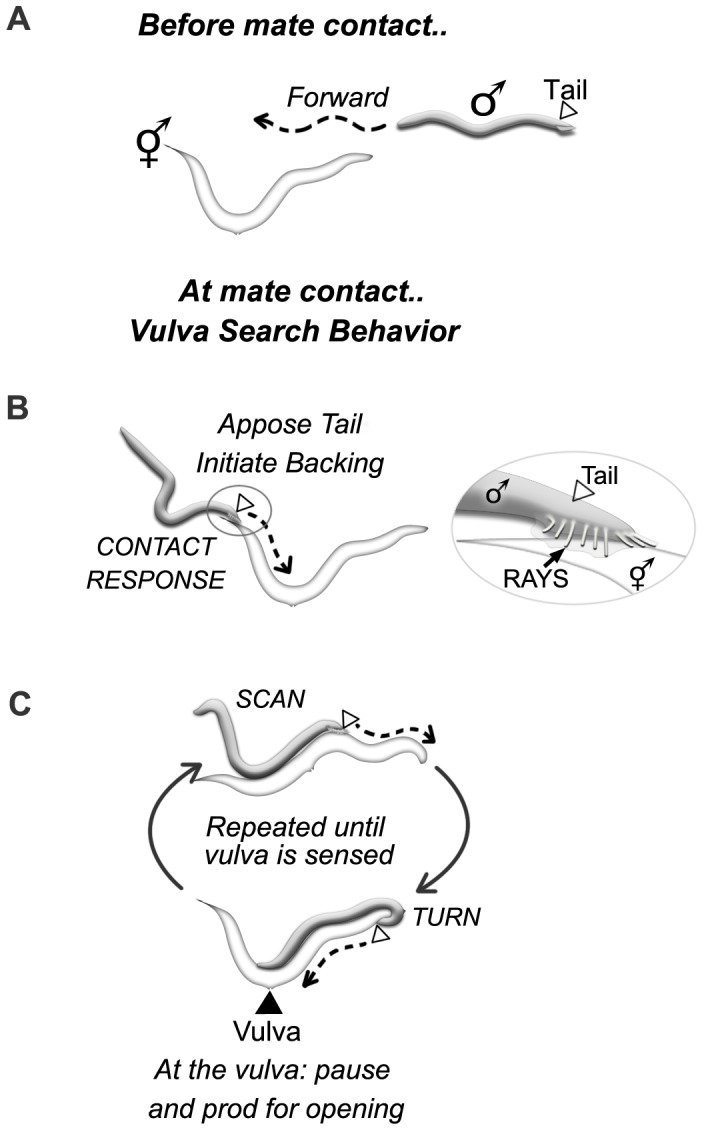
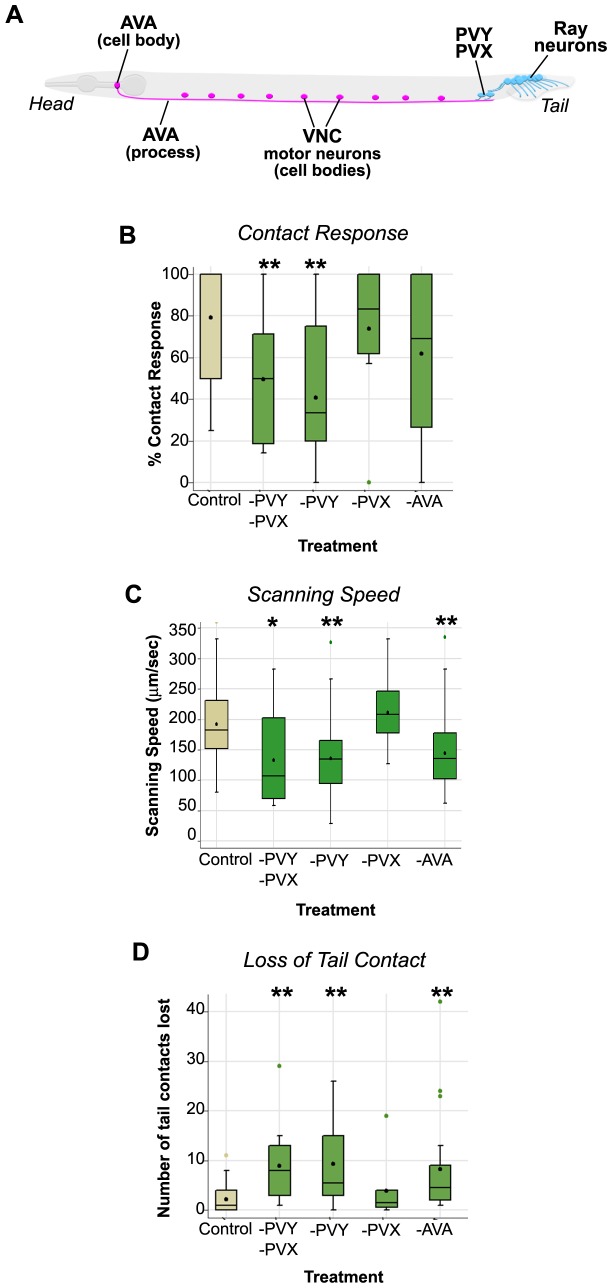
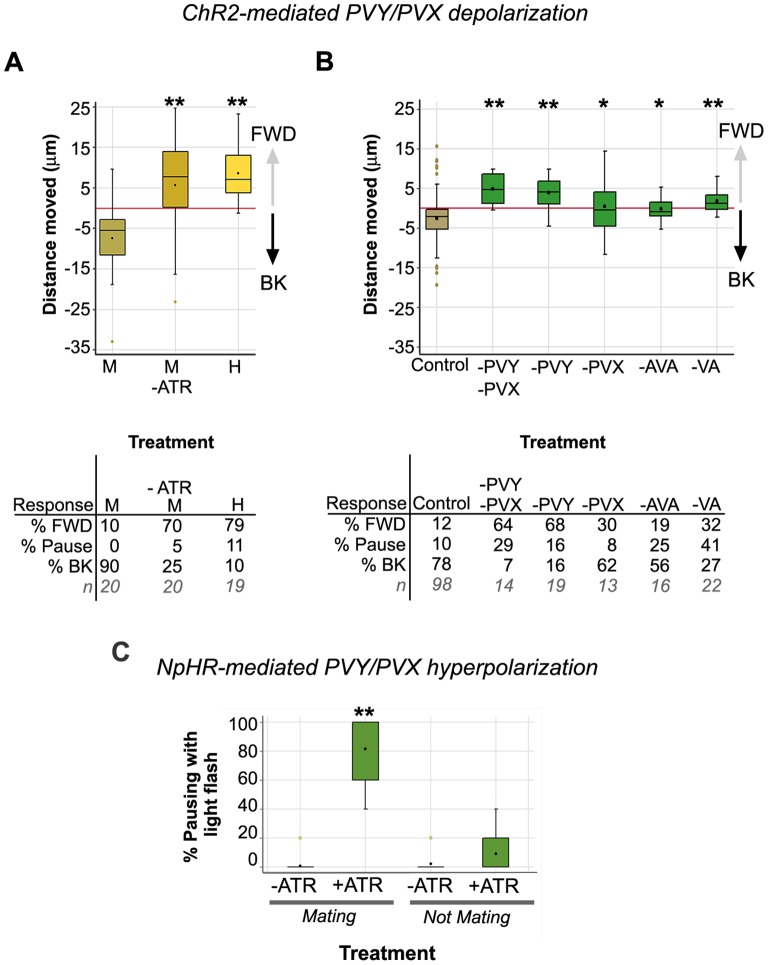
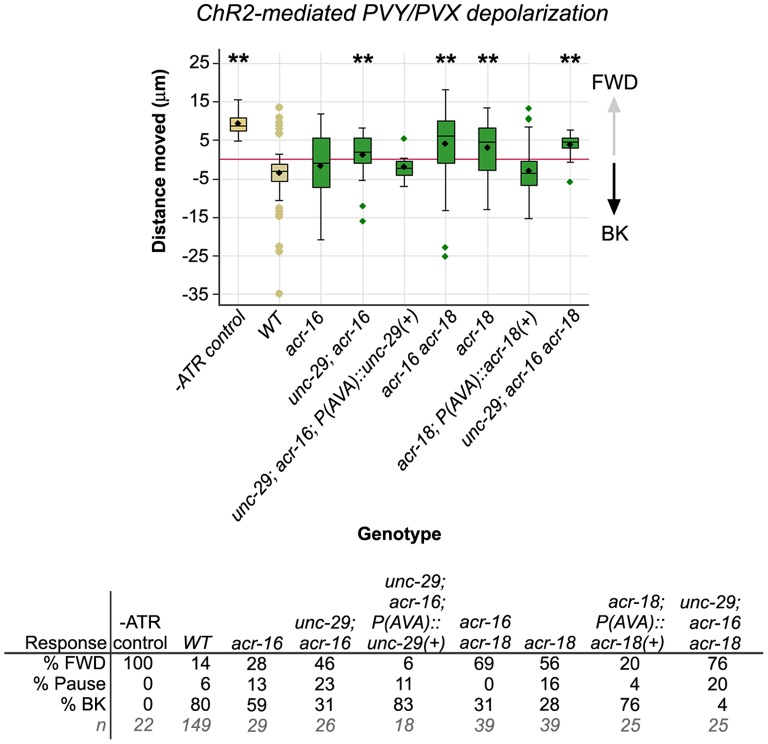
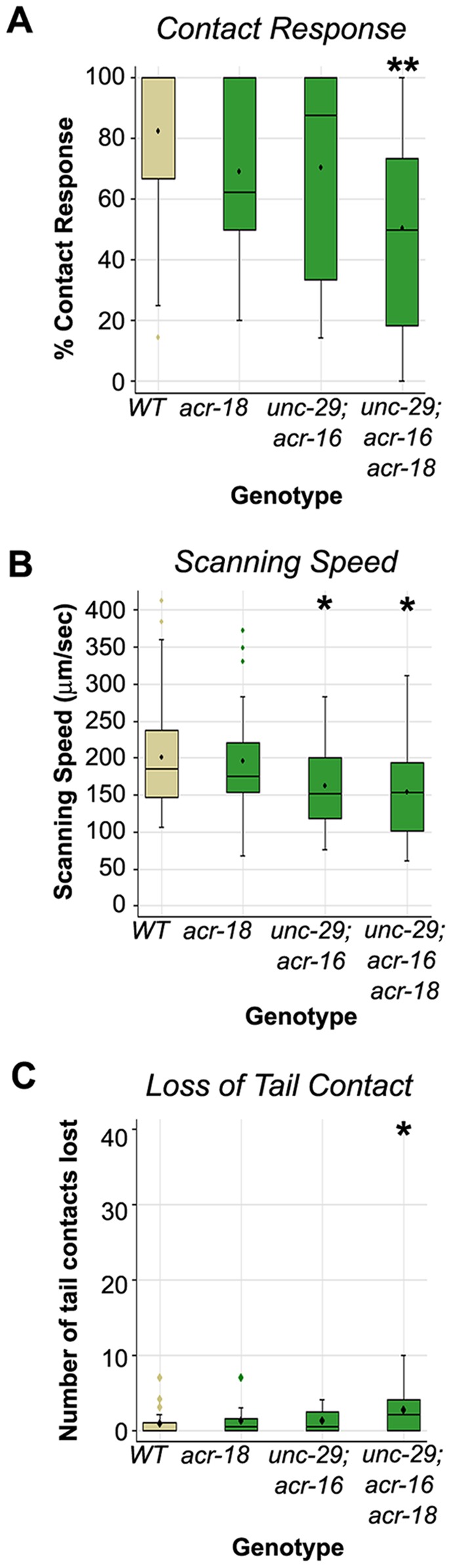
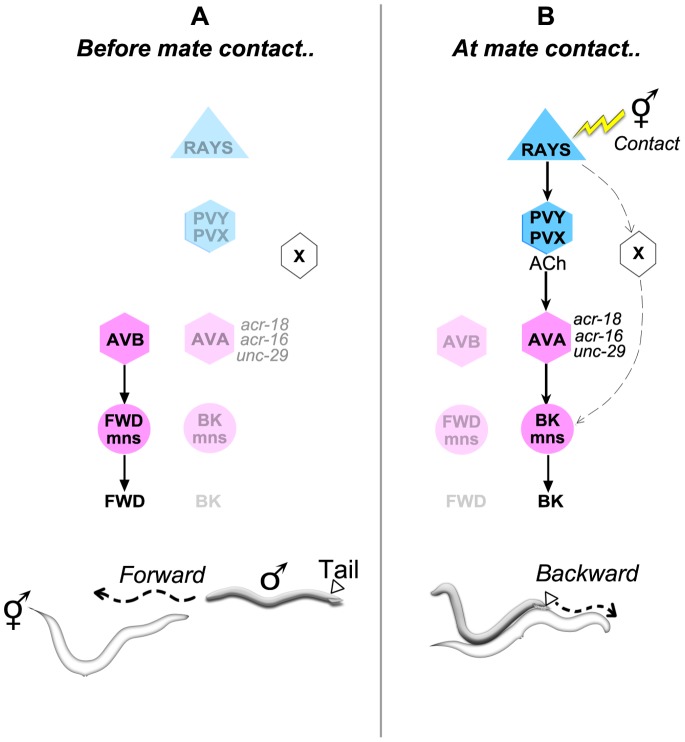
BACKGROUND: Mating behaviors in simple invertebrate model organisms represent tractable paradigms for understanding the neural bases of sex-specific behaviors, decision-making and sensorimotor integration. However, there are few examples where such neural circuits have been defined at high resolution or interrogated. METHODOLOGY/PRINCIPAL FINDINGS: Here we exploit the simplicity of the nematode Caenorhabditis elegans to define the neural circuits underlying the male's decision to initiate mating in response to contact with a mate. Mate contact is sensed by male-specific sensilla of the tail, the rays, which subsequently induce and guide a contact-based search of the hermaphrodite's surface for the vulva (the vulva search). Atypically, search locomotion has a backward directional bias so its implementation requires overcoming an intrinsic bias for forward movement, set by activity of the sex-shared locomotory system. Using optogenetics, cell-specific ablation- and mutant behavioral analyses, we show that the male makes this shift by manipulating the activity of command cells within this sex-shared locomotory system. The rays control the command interneurons through the male-specific, decision-making interneuron PVY and its auxiliary cell PVX. Unlike many sex-shared pathways, PVY/PVX regulate the command cells via cholinergic, rather than glutamatergic transmission, a feature that likely contributes to response specificity and coordinates directional movement with other cholinergic-dependent motor behaviors of the mating sequence. PVY/PVX preferentially activate the backward, and not forward, command cells because of a bias in synaptic inputs and the distribution of key cholinergic receptors (encoded by the genes acr-18, acr-16 and unc-29) in favor of the backward command cells. CONCLUSION/SIGNIFICANCE: Our interrogation of male neural circuits reveals that a sex-specific response to the opposite sex is conferred by a male-specific pathway that renders subordinate, sex-shared motor programs responsive to mate cues. Circuit modifications of these types may make prominent contributions to natural variations in behavior that ultimately bring about speciation.
Overview
The claims and statistics of this paper haven’t been checked yet.
Free: it reads the open-access text and checks the first 5 claims that cite a source we can check. Create a free account to check every claim.
Integrity signals
Registry
Cites
Statistics
Figures
Verification
Claims the paper makes
The claims and statistics of this paper haven’t been checked yet.
Free: it reads the open-access text and checks the first 5 claims that cite a source we can check. Create a free account to check every claim.
Claims other papers make about this one
Each is checked against this paper’s own text: does it say what the citing paper says it does?
The source backs part of the claim, not all of it — or backs it for a different population, condition or comparison.
In the citing paper
“For example, the major layer 1 pre-motor interneurons AVA and AVB, which promote backward and forward locomotion, respectively, are targeted by three major male-specific interneurons, PVV, PVX and PVY, that regulate the locomotion of the male during copulation37,38.”
From Whole-animal connectomes of both Caenorhabditis elegans sexes (2019) · cites this paper as [37]
Experimental — accuracy not yet measured
Self-check
Percentages, sums and reported differences re-computed from the paper’s own numbers.
The self-check needs the paper’s full text.
Citations
Cites
THE GENETICS OF CAENORHABDITIS ELEGANS
Brenner, S. (1974) · Genetics · doi:10.1093/genetics/77.1.71 · Cited by 15,081
The structure of the nervous system of the nematode Caenorhabditis elegans
White, J. G., Southgate, E., Thomson, J. N., & Brenner, S. (1986) · Philosophical Transactions of the Royal Society of London. B, Biological Sciences · doi:10.1098/rstb.1986.0056 · Cited by 5,589 · cited 1×
“hermaphrodite nervous system has been described with single cell resolution [6,7] and, recently, an equally detailed map of the male”
BackgroundPost-embryonic cell lineages of the nematode, Caenorhabditis elegans
Sulston, J. E., & Horvitz, H. R. (1977) · Developmental Biology · doi:10.1016/0012-1606(77)90158-0 · Cited by 3,475
Neurodegenerative Disorders: Parkinson's Disease and Huntington's Disease
Hague, S., Klaffke, S., & Bandmann, O. (2006) · IMPERIAL COLLEGE PRESS eBooks · doi:10.1142/9781860948961_0007 · Cited by 2,767
Multimodal fast optical interrogation of neural circuitry
Zhang, F., Wang, L.-P., Brauner, M., Liewald, J. F., Kay, K., Watzke, N., Wood, P. G., Bamberg, E., Nagel, G., Gottschalk, A., et al. (2007) · Nature · doi:10.1038/nature05744 · Cited by 1,738 · cited 1×
“To test this, we used the heterologous light-inducible hyperpolarizing channel NpHR, from Natronomonas pharaonis [32,33], to inhibit PVY and PVX while the male was performing the search.”
MethodMello, C., & Fire, A. (1995) · Methods in Cell Biology · doi:10.1016/s0091-679x(08)61399-0 · Cited by 1,144
The neural circuit for touch sensitivity in Caenorhabditis elegans
Chalfie, M., Sulston, J., White, J., Southgate, E., Thomson, J., & Brenner, S. (1985) · The Journal of Neuroscience · doi:10.1523/jneurosci.05-04-00956.1985 · Cited by 1,093 · cited 2×
“AVA interneurons stimulate backward movement by activating the VA and DA backward motor neurons of the ventral nerve cord [15,20,21].”
BackgroundResultNagel, G., Brauner, M., Liewald, J. F., Adeishvili, N., Bamberg, E., & Gottschalk, A. (2005) · Current Biology · doi:10.1016/j.cub.2005.11.032 · Cited by 1,001 · cited 2×
“After restriction digestion, this fragment was exchanged with the ChR2-YFP BamH1/EcoR1 fragment in Pmec-4::ChR2-YFP [29].”
MethodA circuit for navigation in Caenorhabditis elegans
Gray, J. M., Hill, J. J., & Bargmann, C. I. (2005) · Proceedings of the National Academy of Sciences · doi:10.1073/pnas.0409009101 · Cited by 811 · cited 1×
“uncovered a small group of interneurons that play a prominent role in the choice between backward and forward locomotion [15–18].”
BackgroundNONDISJUNCTION MUTANTS OF THE NEMATODE CAENORHABDITIS ELEGANS
Hodgkin, J., Horvitz, H. R., & Brenner, S. (1979) · Genetics · doi:10.1093/genetics/91.1.67 · Cited by 764
Cited by
Whole-animal connectomes of both Caenorhabditis elegans sexes
Cook, S. J., Jarrell, T. A., Brittin, C. A., Wang, Y., Bloniarz, A. E., Yakovlev, M. A., Nguyen, K. C. Q., Tang, L. T.-H., Bayer, E. A., Duerr, J. S., et al. (2019) · Nature · doi:10.1038/s41586-019-1352-7 · Cited by 921
A cellular and regulatory map of the cholinergic nervous system of C. elegans
Pereira, L., Kratsios, P., Serrano-Saiz, E., Sheftel, H., Mayo, A. E., Hall, D. H., White, J. G., LeBoeuf, B., Garcia, L. R., Alon, U., et al. (2015) · eLife · doi:10.7554/elife.12432 · Cited by 365
Wang, J., Silva, M., Haas, L. A., Morsci, N. S., Nguyen, K. C. Q., Hall, D. H., & Barr, M. M. (2014) · Current Biology · doi:10.1016/j.cub.2014.01.002 · Cited by 227
Encoding of Both Analog- and Digital-like Behavioral Outputs by One C. elegans Interneuron
Li, Z., Liu, J., Zheng, M., & Xu, X. Z. S. (2014) · Cell · doi:10.1016/j.cell.2014.09.056 · Cited by 168
“We decided to examine UNC-29 and ACR-16 because they both are expressed in RIB (Feng et al., 2006; Sherlekar et al., 2013).”
MethodCiliary ectosomes: transmissions from the cell's antenna
Wood, C. R., & Rosenbaum, J. L. (2015) · Trends in Cell Biology · doi:10.1016/j.tcb.2014.12.008 · Cited by 153
Sex-specific pruning of neuronal synapses in Caenorhabditis elegans
Oren-Suissa, M., Bayer, E. A., & Hobert, O. (2016) · Nature · doi:10.1038/nature17977 · Cited by 121
Sexual Dimorphism and Sex Differences in Caenorhabditis elegans Neuronal Development and Behavior
Barr, M. M., Garcia, L. R., & Portman, D. (2018) · Genetics · doi:10.1534/genetics.117.300294 · Cited by 92
“As a consequence, the male moves backward along the hermaphrodite until it approaches the terminus of the hermaphrodite or senses the vulva (Sherlekar et al. 2013).”
BackgroundNatural sensory context drives diverse brain-wide activity during C. elegans mating
Susoy, V., Hung, W., Witvliet, D. K., Whitener, J. E., Wu, M., Park, C. F., Graham, B. J., Zhen, M., Venkatachalam, V., & Samuel, A. D. T. (2021) · Cell · doi:10.1016/j.cell.2021.08.024 · Cited by 76
Molina-García, L., Lloret-Fernández, C., Cook, S. J., Kim, B., Bonnington, R. C., Sammut, M., O’Shea, J. M., Gilbert, S. P. R., Elliott, D. J. S., Hall, D. H., et al. (2020) · eLife · doi:10.7554/elife.48361 · Cited by 63
Bhat, U. S., Shahi, N., Surendran, S., & Babu, K. (2021) · Frontiers in Molecular Neuroscience · doi:10.3389/fnmol.2021.786471 · Cited by 65
Neural Circuits of Sexual Behavior in Caenorhabditis elegans
Emmons, S. W. (2018) · Annual Review of Neuroscience · doi:10.1146/annurev-neuro-070815-014056 · Cited by 55
“The function of PVX, PVY, and PVZ in stimulating backward locomotion after hermaphrodite contact has been experimentally confirmed (Koo et al. 2011, Sherlekar et al. 2013).”
BackgroundLeBoeuf, B., Correa, P., Jee, C., & García, L. R. (2014) · eLife · doi:10.7554/elife.02938 · Cited by 50
Lawson, H., Vuong, E., Miller, R. M., Kiontke, K. C., Fitch, D. H. A., & Portman, D. (2019) · eLife · doi:10.7554/elife.43660 · Cited by 44
Past experience shapes sexually dimorphic neuronal wiring through monoaminergic signalling
Bayer, E. A., & Hobert, O. (2018) · Nature · doi:10.1038/s41586-018-0452-0 · Cited by 39
Sexual modulation of sex‐shared neurons and circuits in Caenorhabditis elegans
Portman, D. (2016) · Journal of Neuroscience Research · doi:10.1002/jnr.23912 · Cited by 40
“The innervation of shared neurons, particularly premotor “command” interneurons, is necessary for this step (Sherlekar et al., 2013).”
BackgroundBlanco, M. G., Gurovic, M. S. V., Silbestri, G. F., Garelli, A., Giunti, S., Rayes, D., & Rosa, M. J. D. (2018) · PLoS neglected tropical diseases · doi:10.1371/journal.pntd.0007021 · Cited by 32
Polli, J. R., Dobbins, D. L., Kobet, R. A., Farwell, M. A., Zhang, B., Lee, M., & Pan, X. (2014) · NeuroToxicology · doi:10.1016/j.neuro.2014.12.005 · Cited by 30
LeBoeuf, B., & Garcia, L. R. (2017) · G3 Genes Genomes Genetics · doi:10.1534/g3.116.036756 · Cited by 26
“While previous work has primarily focused on how defecation or mating is integrated with movement (Sherlekar et al. 2013; Nagy et al. 2015), itself a sexually dimorphic behavior (Mowrey et al.”
BackgroundInfluentialJee, C., Goncalves, J. F., LeBoeuf, B., & Garcia, L. R. (2016) · Nature Communications · doi:10.1038/ncomms11957 · Cited by 27
“The AVA promotes copulatory backwards scanning locomotion 62 .”
Correa, P. A., Gruninger, T. R., & Garcia, L. R. (2015) · Journal of Neuroscience · doi:10.1523/jneurosci.0940-15.2015 · Cited by 25
“The 18 sensory ray neuron pairs (termed R1A/B through R9A/B) induce male tail contact with the hermaphrodite (Koo et al., 2011) and promote backward locomotion as he searches for the vulva (Sherlekar et al., 2013).”
BackgroundNeural circuits for sexually dimorphic and sexually divergent behaviors in Caenorhabditis elegans
Garcia, L. R., & Portman, D. (2016) · Current Opinion in Neurobiology · doi:10.1016/j.conb.2016.02.002 · Cited by 24
Luo, J., Bainbridge, C., Miller, R. M., Barrios, A., & Portman, D. (2024) · Current Biology · doi:10.1016/j.cub.2024.02.036 · Cited by 23
“94 Other kinds of surface-associated cues are also important in male mate preference (Figure 7B).”
Synaptogenesis Is Modulated by Heparan Sulfate in Caenorhabditis elegans
Lázaro‐Peña, M. I., Díaz-Balzac, C. A., Bülow, H. E., & Emmons, S. W. (2018) · Genetics · doi:10.1534/genetics.118.300837 · Cited by 24
“1 cDNA was cloned under control of the followingpromoters: hypodermal Pdpy-7 (Gilleard et al. 1997), body wall muscle Pmyo-3 (Okkema et al. 1993), pan-neuronal Prgef-1 (Altun-Gultekin et al. 2001), the B-type ray neurons Ppkd-2 (Barr and Sternberg 1999), EF interneurons Pnlg-1 (this study), dopaminergic neurons Pcat-2…”
InfluentialOrcokinin neuropeptides regulate sleep in Caenorhabditis elegans
Honer, M. A., Buscemi, K., Barrett, N., Riazati, N., Orlando, G., & Nelson, M. D. (2020) · Journal of Neurogenetics · doi:10.1080/01677063.2020.1830084 · Cited by 22
“…& Homberg 2006; Wulff et al., 2017), rhythmic smooth muscle contractions of insects and crustaceans (Li et al., 2002; Skiebe, Dreger, Meseke, Evers, & Hucho, 2002; Stangier et al., 1992) and decision making behaviors and male mating in C. elegans (Hapiak et al., 2013; Sherlekar et al., 2013).”
BackgroundNovel Technological Advances in Functional Connectomics in C. elegans
DiLoreto, E. M., Chute, C. D., Bryce, S., & Srinivasan, J. (2019) · Journal of Developmental Biology · doi:10.3390/jdb7020008 · Cited by 19
“When there is a lack of food as a juvenile L1, the male neuronal pruning is altered, affecting reproduction efficacy as the male does not maintain contact with the hermaphrodite [125].”
BackgroundNematode Tango Milonguero – The C. elegans male's search for the hermaphrodite vulva
Sherlekar, A. L., & Lints, R. (2014) · Seminars in Cell and Developmental Biology · doi:10.1016/j.semcdb.2014.05.009 · Cited by 16
Self-citationHua, K., & Ferland, R. J. (2018) · BioEssays · doi:10.1002/bies.201700132 · Cited by 13
Sexual modulation of neural circuits and behavior in Caenorhabditis elegans
Fagan, K. A., & Portman, D. (2014) · Seminars in Cell and Developmental Biology · doi:10.1016/j.semcdb.2014.06.007 · Cited by 13
“For example, male-specific circuitry in the tail can modulate general locomotion programs to generate reversals when required during mating [50].”
BackgroundTranscription Factors That Control Behavior—Lessons From C. elegans
Godini, R., Handley, A., & Pocock, R. (2021) · Frontiers in Neuroscience · doi:10.3389/fnins.2021.745376 · Cited by 12
Yu, W. C., Macias, L. G.-F., & Garcia, L. R. (2024) · PNAS Nexus · doi:10.1093/pnasnexus/pgae032 · Cited by 5
“Around the same time, genes essential for the behavior were identified by mutant screenings for easily identifiable defects in mating steps such as response and vulva location (8 – 11), backing and turning (7, 10, 12), or abnormal behaviors such as spontaneous spicule protraction (6, 13 – 15).”
BackgroundUrushihata, T., Wakabayashi, T., Osato, S., Yamashita, T., & Matsuura, T. (2016) · Biochemistry and Biophysics Reports · doi:10.1016/j.bbrep.2016.08.008 · Cited by 5
Pervasive homeobox gene function in the male-specific nervous system of Caenorhabditis elegans
Fernandez, R. W., Digirolamo, A. J., Valperga, G., Aguilar, G. R., Molina-García, L., Kersh, R. M., Wang, C., Pe, K., Ramadan, Y. H., Loer, C. M., et al. (2025) · Development · doi:10.1242/dev.204958 · Cited by 3
“The lin-11-and ttx-1-expressing PVX and PVY interneurons have been shown to be involved in the male’s contact-based scanning of the hermaphrodite’s surface for the vulva (Sherlekar et al., 2013).”
Systematic discovery of DNA-binding tandem repeat proteins
Hu, X., Zhang, X. J., Sun, W. C., Liu, C., Deng, P., Cao, Y., Zhang, C., Xu, N., Zhang, T., Zhang, Y. E., et al. (2024) · Nucleic Acids Research · doi:10.1093/nar/gkae710 · Cited by 3
“Previous studies have reported nlp-14 (cid:5) s role in modulating cholinergic signaling during male mating, mediating decision-making during nociceptive behaviors and regulating sleep ( 117–119 ), whereas no DNA binding activity has been suggested.”
BackgroundWang, X., Liu, H., Yang, W., Yang, J., Sun, X., Liu, Q., Zhu, Y., Sun, Y., Liu, C., Shi, G.-Y., et al. (2026) · eLife · doi:10.1101/2024.12.13.628461 · Cited by 3
Glia in Invertebrate Models: Insights from Caenorhabditis elegans
Purice, M. D., Severs, L. J., & Singhvi, A. (2024) · Advances in neurobiology · doi:10.1007/978-3-031-64839-7_2 · Cited by 4
Sexual Dimorphisms in the Nervous System of the Nematode Caenorhabditis elegans
Oren‐Suissa, M., & Hobert, O. (2017) · Principles of Gender-Specific Medicine · doi:10.1016/b978-0-12-803506-1.00044-9 · Cited by 2
Antoł, W., Byszko, J., Dyba, A., Palka, J. K., Babik, W., & Prokop, Z. M. (2023) · PeerJ · doi:10.7717/peerj.14572 · Cited by 1
Novel Strategies for Glutamate Clearance in the Glia-Deprived Synaptic Hub of C. elegansPreprint
Chan, J., Lee, K. K., Wong, J. C. Y., Morocho, P., & Mano, I. (2019) · bioRxiv (Cold Spring Harbor Laboratory) · doi:10.1101/645812 · Cited by 1
“However, we had some reservations on using tetramisole in our specific studies because of nAChR expression in AVA (Feng et al., 2006; Sherlekar et al., 2013), though spontaneous activity and indirect odor responses of AVA remain intact in the presence of tetramisole (Schrödel et al., 2013; Gordus…”
MethodOrcokinin neuropeptides regulate sleep in Caenorhabditis elegans
Honer, M. A., Buscemi, K., Barrett, N., Riazati, N., Orlando, G., & Nelson, M. D. (2022) · CRC Press eBooks · doi:10.1201/9781003239758-30
Dimorphic Neural Network Architecture Prioritizes Sexual-related Behaviors in Male C. elegansPreprint
Wang, X., Liu, H., Yang, W., Yang, J., Sun, X., Liu, Q., Zhu, Y., Sun, Y., Liu, C., Shi, G.-Y., et al. (2025) · eLife · doi:10.7554/elife.102309.1 · Cited by 2
Developmental Continuity of Brain Network Core Organization in C. elegansPreprint
Yadav, P., & Singh, A. (2026) · bioRxiv (Cold Spring Harbor Laboratory) · doi:10.64898/2026.06.12.730308
Metadata
- Authors
- Sherlekar, A. L., Janssen, A., Siehr, M. S., Koo, P. K., Caflisch, L., Boggess, M., & Lints, R.
- Affiliations
- Texas A&M University (US)
- Arizona State University (US)
- Corresponding author
- Lints, Robyn
- Venue
- PLoS ONE
- Publisher
- Public Library of Science (PLoS)
- Published
- 2013-04-05
- Volume
- 8
- Issue
- 4
- Pages
- e60597
- ISSN
- 1932-6203 (ISSN-L)
- PMC
- PMC3618225
- OpenAlex
- W2092489329
- Cited by
- 46
- References
- 74
- Citations by year
- 2026: 1 · 2025: 3 · 2024: 4 · 2023: 5 · 2022: 1 · 2021: 3 · 2020: 2 · 2019: 4 · 2018: 6 · 2017: 3 · 2016: 5 · 2015: 3 · 2014: 6
- FWCI
- 2.29
- Type
- journal article
- Language
- en
- Open access
- gold
- doi.org
- Licence
- Locations
- PLoS ONE (publishedVersion, public-domain)
- Europe PMC (PubMed Central) (publishedVersion, other-oa)
- PubMed Central (publishedVersion, public-domain)
- PubMed (publishedVersion)
- Arizona State University Library Digital Repository (Arizona State University) (submittedVersion)
- DOAJ (DOAJ: Directory of Open Access Journals) (submittedVersion, cc-by-sa)
- Figshare (submittedVersion, cc-by)
- OakTrust (Texas A&M University Libraries) (submittedVersion)
- ResearchSpace (University of Auckland) (submittedVersion, cc-by)
- Funders
- National Science Foundation (0436308, 0818595)
- California Institute of Technology
- Institute of Genetics
- Topics
- Life Sciences › Neuroscience › Cellular and Molecular Neuroscience › Neurobiology and Insect Physiology Research
- Life Sciences › Neuroscience › Cellular and Molecular Neuroscience › Neuroscience and Neuropharmacology Research
- Life Sciences › Biochemistry, Genetics and Molecular Biology › Molecular Biology › Nicotinic Acetylcholine Receptors Study
- Keywords
- Caenorhabditis elegans, male mating behavior, sex-specific behavior, cholinergic neurotransmission, cholinergic receptors, optogenetics, speciation
- MeSH terms
- Animals, Choline, Decision Making, Female, Interneurons, Locomotion, Male, Synaptic Transmission, Sexual Behavior, Animal, Sex Characteristics, Vulva, Caenorhabditis elegans, Optogenetics
About these checks
Registry, retraction, Cites and statistics results are computed, not judged, with one exception: a printed reference that no index lists is read once by a model before it counts as a citation error. Claims are extracted by a model and kept only when their quote appears verbatim in the text; each cited source is then checked, with a model’s help, for whether it says what the claim relies on. Those verdicts can be wrong — read the claim’s quote and the cited source before relying on one.
Statistics and arithmetic are recomputed, not judged.
Confidence bands are shown only for fields calibrated on our annotated test set. None is calibrated yet, so no band is shown.
What counts as a claim ›How we measure confidence ›How we check this ›
Are you an author, or do you see a problem with this page? Request a review
Data sources
Bibliographic data: Semantic Scholar, OpenAlex, Crossref.
Contains information from the Semantic Scholar Academic Graph Datasets, made available under the ODC Attribution License (ODC-BY 1.0).
Semantic Scholar’s data is described in: Kinney, R., et al. (2023). The Semantic Scholar Open Data Platform. arXiv:2301.10140.
